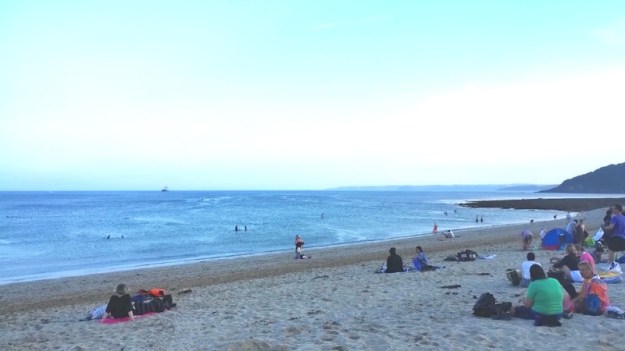
Lime was first to arrive, soon followed by Blue and Pink, and then Pine who were all delighted to see the return of our favourite bar staff. There was a lot of chat about the recent changes at The Jockey (which is currently managed by the Healy Group who also run the Punch Bowl in Abingdon), and as everyone else arrived, people seemed more interested in gossiping than playing games. It was a relatively quiet night with quite a few people away. Black and Purple sent a message to say they were thinking of us, but when Green received a photo from Black and Purple of their current view, it just made everyone else jealous.
 |
| – Image by Black |
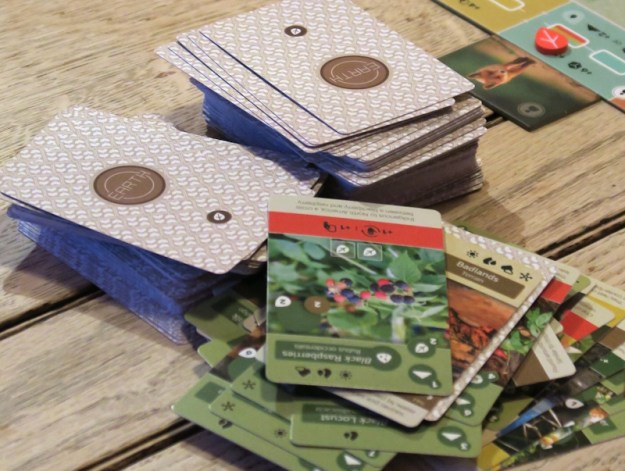
Jade arrived with his shiny new copy of Earth which he’d picked up from UK Games Expo. It is a game where players are building themselves an ecosystem and was to be the “Feature Game“. Earth is a sumptuously illustrated, card-driven engine-builder that is often compared to Wingspan. We played that Last time after a bit of a break, and remembered how much we liked it, so had decided to give Earth a go this time. The heat was getting to some people, but Ivory was quite keen to give Earth a go, and they were soon followed to the next table by Green (who had played it online) and then Teal. Everyone was pretty new to the game: Ivory and Teal had not played it before and Green and Jade had only played a couple of times.
 |
| – Image by boardGOATS |
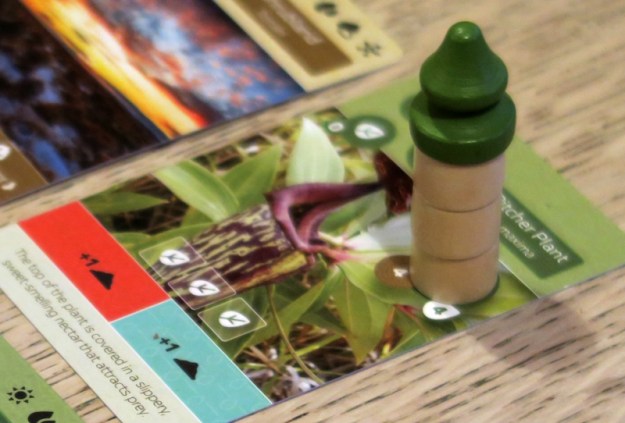
Although there is a lot to explain before starting, Earth itself is not actually all that complicated. Players are building a four by four grid of Flora and Terrain cards which represents their island and during the game they will plant flora, water it and allow it to grow. On their turn, players do one of four things: Planting (paying the cost in Soil tokens), Composting (gaining Soil and placing cards from the deck in their discard pile), Watering (place Sprouts and gain Soil) & Growing (draw new cards and place growth tokens). A bit like Puerto Rico, once the active player has chosen which action they are taking, everyone else gets to do a subsidiary, slightly weaker version of the same action. For example, when Planting, the active player plants two cards, draws four and keeps one, while the other players plant one and draw one.
 |
| – Image by boardGOATS |
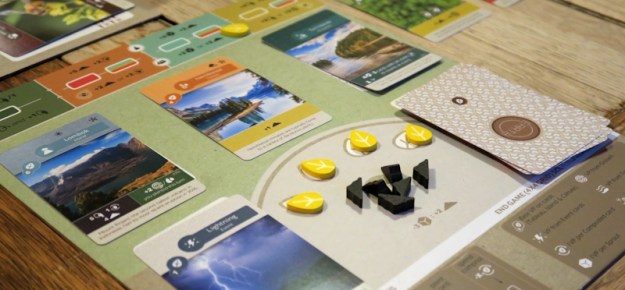
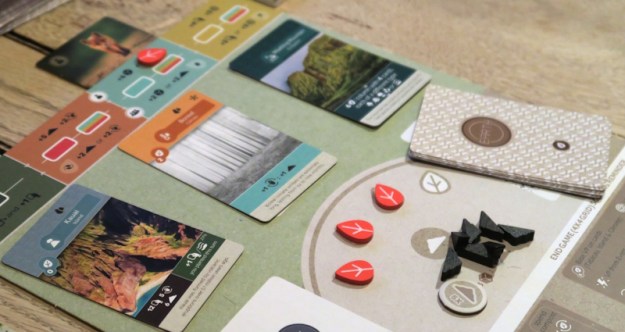
Once everyone has completed the action for the turn, everyone activates all the cards in their island that match the colour of the action chosen, starting with the card in the top left and working across each row in turn. This means, not only is it important which cards are played, but also where they are located in the player’s island. At the end of the game (triggered when one player has completed their island), players score points for each flora card, any Trunks and Canopies they have grown, their Sprouts and their pile of “Composted” or discarded cards. Players also score points for achieving objectives on the Fauna cards revealed at the start of the game and for completing their island first.
 |
| – Image by boardGOATS |
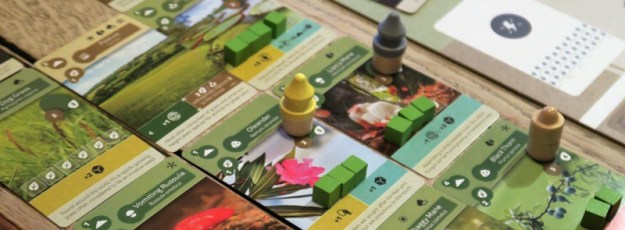
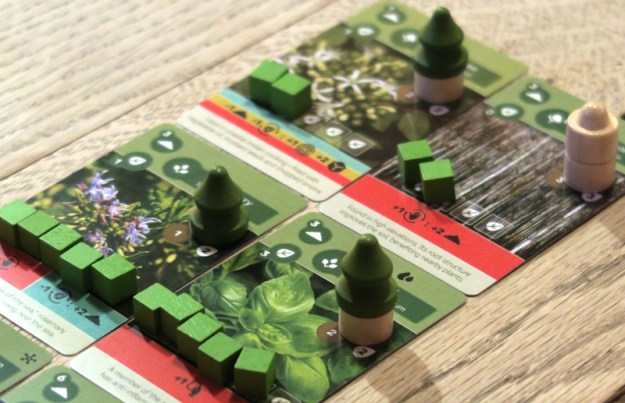
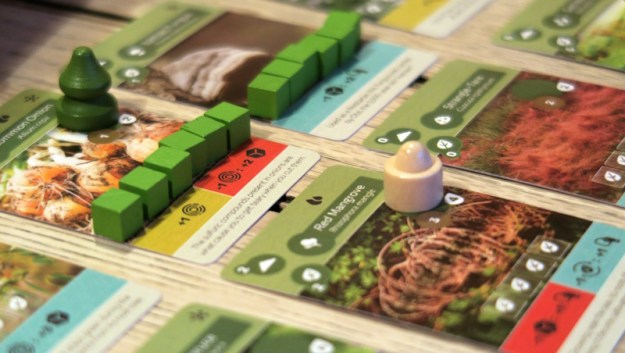
As in Wingspan, Flora cards have actions that take effect when they are planted and when activated, many of the Terrain cards have ongoing effects and/or end-game scoring opportunities. When Planting, players must place the cards either orthogonally or diagonally adjacent to an existing card, and although they can never exceed a four by four grid, like in Kingdomino, players can extend on either side of their island until the maximum size is reached. Each Flora card has a maximum growth and when this is achieved the final wooden Growth token placed on it is a Canopy showing it will score extra points at the end of the game.
 |
| – Image by boardGOATS |
The challenge in Earth is really in deciding what actions to do and which cards to play into your tableaux. Teal found that simply building his tableaux was enough to think about without considering the extra goal cards and end game scoring. Jade and Green both agreed that was the same for their first game too. Ivory started and played his first few turns, selecting the green Plant action, so his tableaux filled up quickly. The rest of the group needed to choose other actions in order to get the soil and cards to play, so by the time it came back to ivory he was able to plant again. He had already had his eye on the bonus cards and was quickly planting as many cards as he could, successfully—he was the first to claim a bonus.
 |
| – Image by boardGOATS |
Green started with a high scoring climate card which gave him fewer cards at the start, but better in game bonuses, an approach to the game that nearly paid off. He went for the brown scoring cards, but Ivory just pipped him at the post for that particular shared bonus, which helped up his score as well. Teal spent the first half of the game, learning and began to fall behind. It wasn’t until Ivory claimed the first shared bonus that he remembered those cards. Early on he gained lots of Sprouts which are worth points, however, it is possible to gain a whole lot of Sprouts in the latter stage of the game and use those early actions for other more beneficial things.
 |
| – Image by boardGOATS |
Jade was quietly working away to build a tableaux engine that worked for him, but was falling behind Ivory and Green on the shared bonuses. Jade managed to pick up some of the Fauna bonuses later, but mostly after the others so they weren’t as highly scoring. Green went for brown scoring cards because he kept picking them up from his nearest pile (there were two draw piles), and eventually reverted to the other pile to find green Flora cards. Unfortunately, he just couldn’t find the double powers he needed for the shared bonus. On the opposite side of the table, Teal didn’t come across any brown scoring cards, only realising why at the end of the game—it seams the shuffling had left something to be desired. The Event cards also seemed to be clustered towards the bottom of the draw pile.
 |
| – Image by boardGOATS |
Ivory came out on top with a very high score of two hundred and thirty-six with Green just eighteen points behind and Jade in third. There was much discussion about similarities between Earth and other games. Green felt it was similar to Terraforming Mars, the others thought it was more like Wingspan. After some thought, Green came round to this idea as it is about playing cards which then provide more actions and bonuses that can be played on those cards (eggs in Wingspan, Sprouts in Earth; tucked cards & cached food in Wingspan, Growth in Earth). The others could also see Green’s thoughts about Terraforming Mars though as the game has lots of pretty and individual cards that can be played or rejected, with some providing actions, some bonuses and the all important Events. Everyone really liked it and definitely wanted to play it again, though better shuffling would be a good idea.
 |
| – Image by boardGOATS |
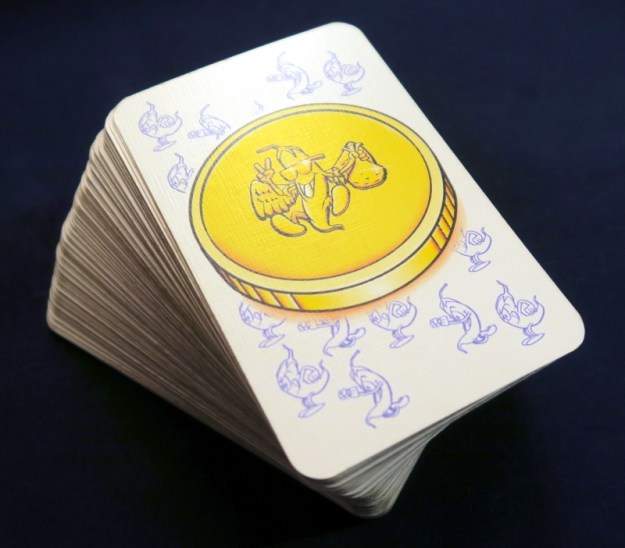
Meanwhile, the rest of the group carried on chatting all agreeing they should play something, but nobody terribly keen to commit to anything. Eventually, Blue suggested Bohnanza, and as Pine agreed, Pink had to go along with it. This is an old favourite, though Pink had gone off it a bit as he felt he always did badly—unfortunate really given the number of copies of the game that he owns. The game is very simple: keeping their cards in the order they are drawn, players must plant the first bean card from their hand and may plant the second if they have space. They then turn over the top two cards from the deck and can play these or trade them as they prefer.
 |
| – Image by boardGOATS |
Finally, once both of these have been planted, the active player may trade cards from their hand before drawing three replacement cards. Players can harvest their Bean Fields whenever they like, but the amount of money they get depends on how many Bean cards it has in it and what the beans are—scarce ones give a better return, but are harder to get. Everyone knows the game quite well, though Lime had recently acquired and been playing a new anniversary edition and it seems some of the rules are slightly different for that.
 |
| – Image by boardGOATS |
This time, everyone bought a third Bean Field (which makes it easier to hang on to the rarer beans a little longer). Indeed, Lime was so determined to use his, he ended up not trading, just so that he had something to plant! As usual it was quite a close game with fine margins. So little things like Blue harvesting her Red Beans only to immediately draw another and Pine gifting Pink a Wax Bean or Lime trading with Pine instead of Blue made a difference in the final score, though nobody knew it at the time. Ultimately, Pink was the victor, beating Blue by just two Bean Thalers with Lime a couple behind her in third. On the plus-side, Pink can’t complain that he never wins any more.
 |
| – Image by boardGOATS |
Earth was still underway, and for once in a way, Bohnanza had played relatively quickly, so there was plenty of time for something else. Nobody was very focused, and eventually the group settled on the cooperative game, Forbidden Desert. This is a sort of sequel to Forbidden Island, which itself is a simplified version of the popular gateway game, Pandemic. All three of these games use the same mechanism as Zoo Break, which we played recently. Essentially, the active player carries out actions and then they reveal cards from a deck which generally make life difficult: releasing wild animals, causing the island to gradually sink, spreading disease, or in the case of Forbidden Desert, burying the play area with sand.
 |
| – Image by boardGOATS |
The premise of Forbidden Desert is that the team have crash-landed in the desert and need to find the components of a flying machine and take them to the launch pad to escape. The game is played on a five by five grid of square Tiles, with a gap in the centre representing the sand storm. Each player has a character with special powers. This time, Lime was the Climber, Pink was the Navigator, Pine was the Explorer, and Blue was the Water Carrier. On their turn, players can take up to four actions: Move (one action per Desert Tile), Remove Sand from the Desert Tile they are on or an adjacent one, Excavate a Desert Tile (i.e. turn it over), or Pick up one of the four component parts of the flying machine.
 |
| – Image by boardGOATS |
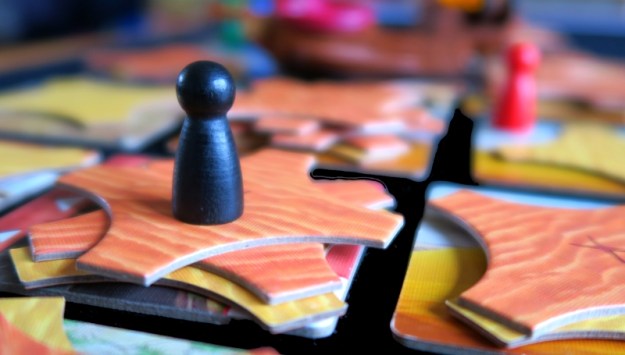
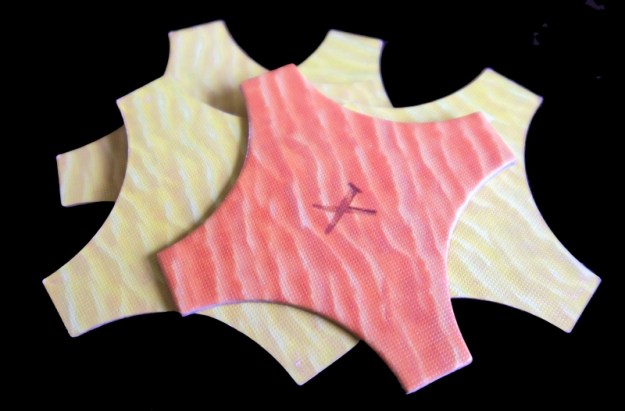
Lime started. Once he had cleared some sand and turned over a couple of Desert Tiles, he started turning over Sand Storm Cards. These indicate which direction Tiles should move to fill the hole, and how many Tiles should be moved, one, two or three. Each of the Desert Tiles moved then have a Sand Tile placed on them—a single Sand Tile needs to be cleared before the Desert Tile can be Excavated, but two or more additionally obstruct players preventing them from passing (except for Lime who, as the Climber, can cross Sand Dunes of any height).
 |
| – Image by boardGOATS |
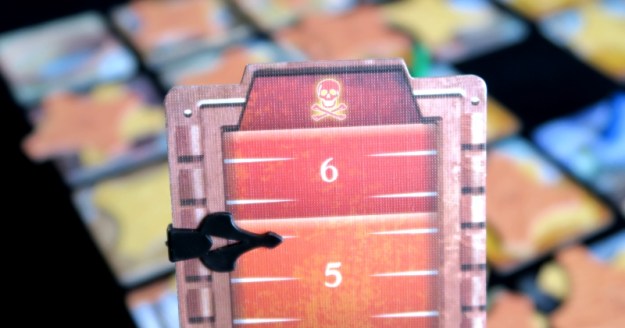
Pine went next and used his special ability—everyone else could clear orthogonally adjacent Tiles, but he could to work diagonally as well. It wasn’t long before the first “Sun Beats Down” card appeared. These cause everyone to use water, so as the water carrier (and the only one who could make multiple visits to the Oases and collect water, Blue topped up Lime, who had started with less water than everyone else. The group gradually started revealing tiles, finding a Duneblaster, a Solar Shield and a Time Throttle, but the Storm picked up and before long the group were turning over more Sand Storm Cards. Pink located the Propeller for the flying machine and then the engine, the group were making progress, but it was all too slow.
 |
| – Image by boardGOATS |
Before long it became apparent that the Sand Storm was getting the better of the group and the hiding in the Tunnels wasn’t helping. Determinedly, the group fought against the rising tide of Sand making good use of their Duneblaster, but it only delayed the inevitable. Blue, Pine and Lime were discussing a plan to play a Storm Tracker, but when they were briefly side-tracked, Pink played on without it and everyone suffered as a result. So Pine labelled him as a Saboteur as a consequence. In such a finely balanced game at such a critical point, it could have made a difference, but in all probability it only hastened the inevitable demise as the group were sadly buried under the ever growing sand dunes and ran out of Sand Tiles (one of the end game conditions). It was a deflating end to the evening, but given the heat, probably appropriate.
 |
| – Image by boardGOATS |
Learning outcome: Shuffling is an important skill.
 boardGOATS