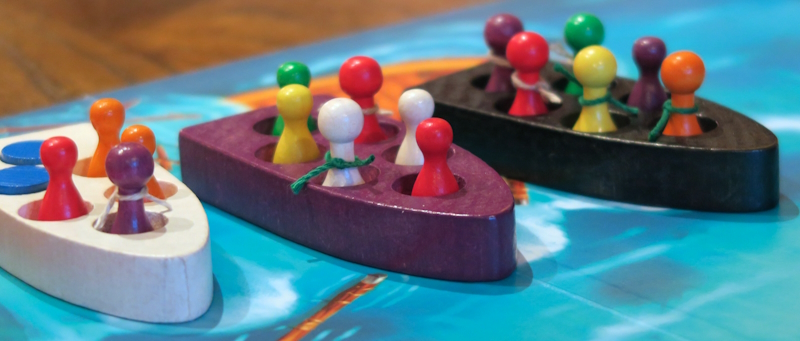
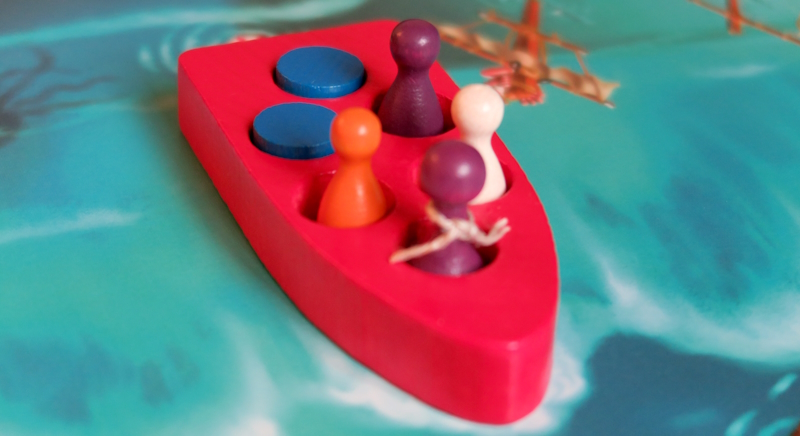
To mark the upcoming General Election, the “Feature Game” was to be Lifeboats, an older game which features lots of voting (as well as boating…). Blue and Pink were still eating as the others arrived, so those that wanted to join them staked their claim and waited and the others took themselves off to play something else, but it wasn’t long before the voting and boating was underway. Lifeboats is a fairly simple, if savage game, where players are trying to get their sailors from the sinking wreck of the Santa Timea to shore. Unfortunately, the lifeboats are old and leaky and as the water comes in and the boats begin to sink, players vote to decide which boats to move and who to throw overboard.
 |
| – Image by boardGOATS |
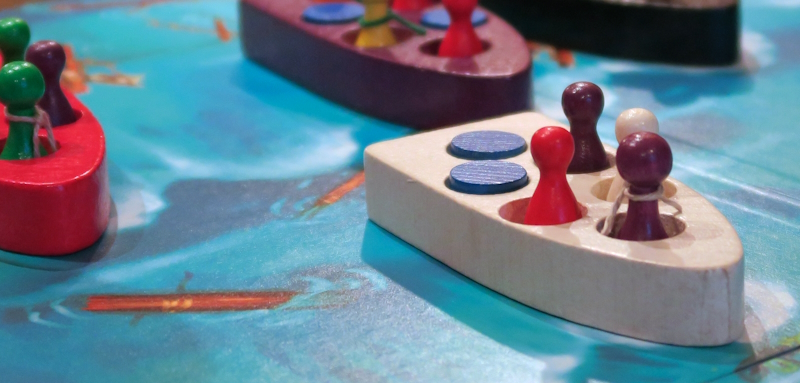
There are three phases to each round in Lifeboats: firstly one boat develops a leak, then one boat moves forwards, and then finally, one seaman in each boat jumps overboard and then climbs back into a different boat. In the first phase, players vote to decide which craft develops a leak and a blue wooden disk is placed in an empty spot in that boat—if there isn’t an empty space, the occupants vote to decide who is going over the side. Once that has been resolved, players vote again, this time to decide which boat is going to move; it’s only three spaces to reach land, but that can seem an awfully long way.
 |
| – Image by boardGOATS |
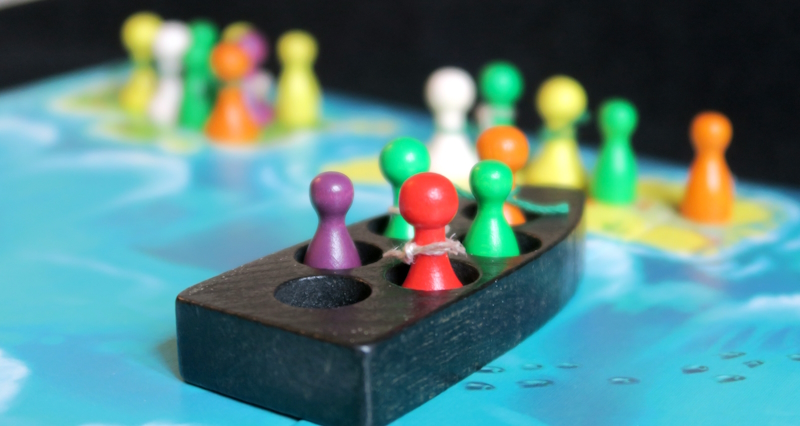
In the final phase of the round, beginning with the start player, players take it in turns to take one of their seamen from a boat into the water and then in reverse order the swimmer climbs into a different boat. And it must be a different boat—if there isn’t a different boat with space, the unfortunate sailor drowns in the attempt. All that is quite straight forward, but there are a some little tweaks that add interest to the game. Firstly, each player has two Officers and a number of Sailors: deciding who is going to be thrown overboard, players have one vote per Sailor in the boat and two per Officer. Seamen that make it to land score points, but Officers score more, all this also makes them a target though.
 |
| – Image by boardGOATS |
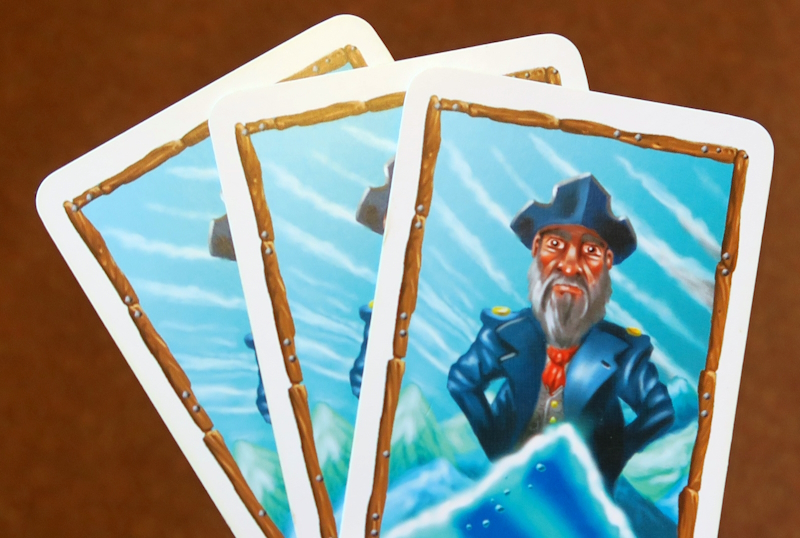
Even though the Santa Timea is headed for Davey Jones’ Locker, the Captain is still in command. So, during any vote, players may invoke his name to get their way by playing a Captain’s Hat card. Players only have three of these though, and they are single use so must be used with care. Worse, if more than one player plays a Captain’s Hat, they cancel out, and a bit like ties in Las Vegas all the tied players lose out, so they also have to be well timed to be effective. The winner is the player to score the most points by getting their seamen back to land before the last boat sinks (and the different islands give different numbers of points for Sailors and Officers).
 |
| – Image by boardGOATS |
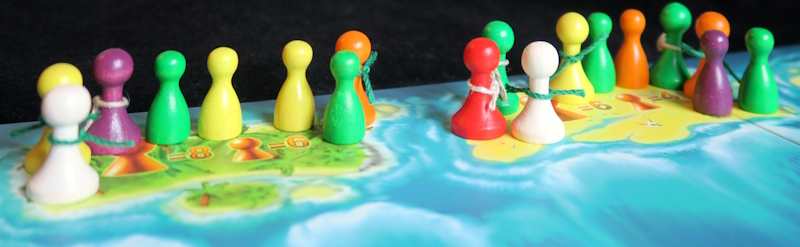
A key part of the game is the negotiation before votes, so the group played with “The Stick Variant” whereby the Start Player controls how long players have for debate. The other advantage of being the Start Player is they have the casting vote in the event of a tie. This time, Ivory went first and began with the Start Token. As he was playing white, to maintain the election theme, he was representing Independent candidates. Blue played with orange who were therefore the Liberal Democrats; Lime had purple UKIP pieces; Pine directed the Greens, Black Labour and Pink the SNP.
 |
| – Image by boardGOATS |
Nobody was quite sure what to do at the start, but Ivory’s Independent boat was the first to spring a leak. Although players have no control over boats of their colour, they are a tie-break at the end of the game where players finish with equal points. In the second round, Black opined that there were too many boats and rather than share the leaks around, the group should concentrate on sinking one boat. Everyone else obligingly agreed and the vote was carried, so before long the Independent boat was heading to the bottom of the deep-blue sea. In contrast, the Liberal Democrat boat danced over the waves making it to shore first, carrying two Green Sailors, and one Sailor each for UKIP and the Independents, all led by one SNP and one Independent Officer.
 |
| – Image by boardGOATS |
From there, things got more savage as the spaces in the boats became more scarce and everyone realised that the SNP (Pink) was on course for a landslide. Ivory “spoiled his ballot” when he chose to throw his own Sailor overboard, and Lime was sufficiently confused by proceedings that he wound up voting to move a candidate forward when it had already withdrawn (by sinking). The last boat to go down was Labour, but by that point, it was already clear that the Greens (in the guise of Pine) had the majority with a vote share of thirty-two, six more than the SNP (Pink) in second and twelve more than the third party, the Liberal Democrats (Blue).
 |
| – Image by boardGOATS |
It had been a lot of fun, if quite nasty, and as such, is a game with an older feel to it, as befits a game that is thirty years old. It wasn’t the only thing that was showing it’s age, as the Blackadder quote got several outings too (“Lord Nelson has a vote…” “He has a BOAT, Baldrick…”). There had also been an large element of gerrymandering leading to Pine’s victory which, as he said, would not have happened if Lilac had been there as she would have really enjoyed drowning all his seamen. As it was, he was the only player to get all his men to safety, so deserved his term in Parliament.
 |
| – Image by boardGOATS |
The other games were still underway, so the group played a couple of quick rounds of the old favourite, No Thanks!. This is a super-quick filler, where players choose to take the face-up card, or pay a chip to pass the problem on to the next player. At the end of the game, players score for the lowest card in each run, minus the number of chips they have left—the player with the lowest total is the winner. In the first game, Black top-scored with forty-eight and the winner was Lime with nine, pipping Blue by one. In the second game, Pine finished with the highest total (though it wasn’t a patch on Black’s). Blue thought she had this one when her total came to just three, but much to her chagrin, Lime finished with two, again beating her by a solitary point.
 |
| – Image by boardGOATS |
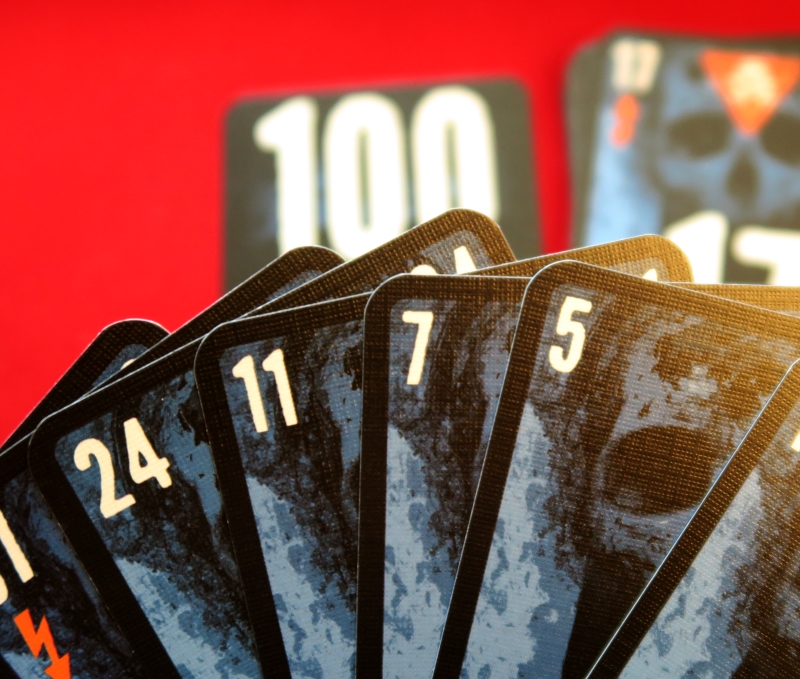
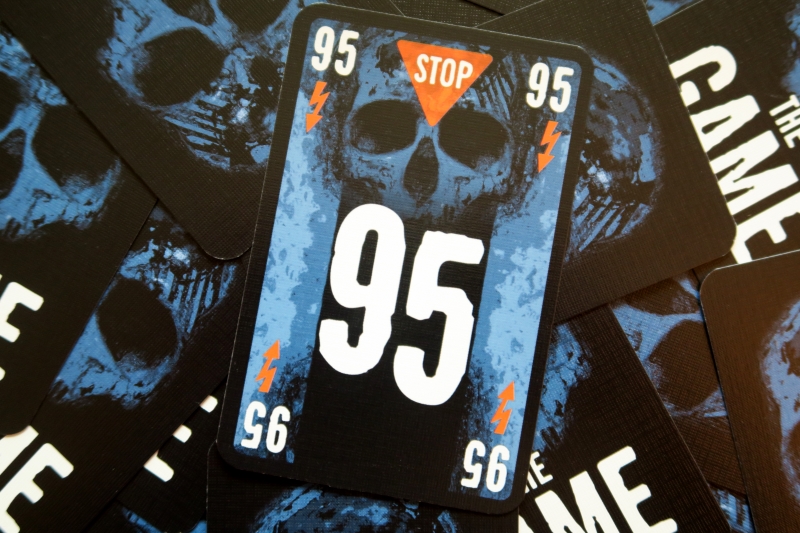
Ivory took his leave, and the remaining five managed one more game, this time of The Game. This cooperative effort used to be a popular filler in the group, though it is a few years since it last got an outing. The team have a deck of cards numbered from two to ninety-nine (in our case, from a copy of The Game: Extreme, but ignoring the special symbols), and play each card on one of four piles, two ascending and two descending. There are just three rules: the active player can play as many cards as they like, but must play at least two cards before replenishing their hand, and players can say anything they like but must not share “specific number information”.
 |
| – Image by boardGOATS |
There is the so-called “Backwards Rule” where players can reverse a deck as long as the card they play is exactly ten above or below the previous card played on that pile. The game ends when, either all the cards have been played onto the four piles, or a player cannot play a card. As is often the way, things started to go wrong from the start and pretty much kept going wrong. The game finally cam to an end when, shortly after depleting the draw deck several people said there wasn’t anything they could play, and after the last possible card had been played the group had seventeen cards left.
 |
| – Image by boardGOATS |
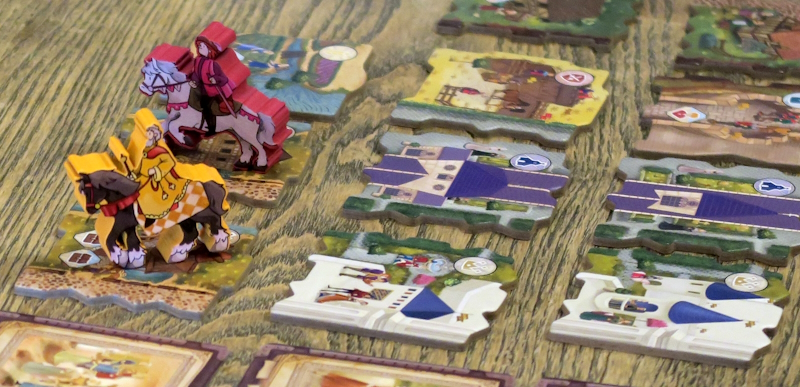
Meanwhile, Jade, Plum and Byzantium had started out playing one of Jade’s acquisitions from the recent UK Games Expo. Middle Ages (a reimplementation of Majesty: For the Realm) is a quick little game where players are the head of a fiefdom. The idea is that players use their Lord-eeple (or perhaps that should be lord-muman) to take tiles, placing them on their player board and gain its rewards, which change depending on the type of the piece. The game is based around a market, similar to that in Kingdomino, where tiles are arranged in ascending order with players taking tiles in that order and placing their Lord-eeple on their chosen tile from the next row. Thus, the player has to choose between an early choice in the next round and a low value tile, or a high value tile, with less or no choice.
 |
| – Image by boardGOATS |
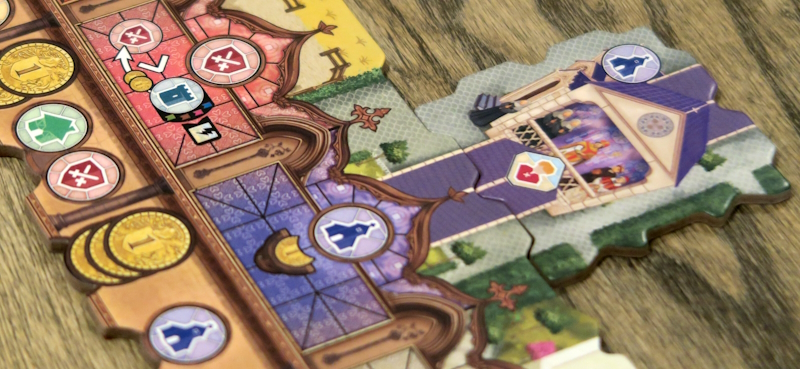
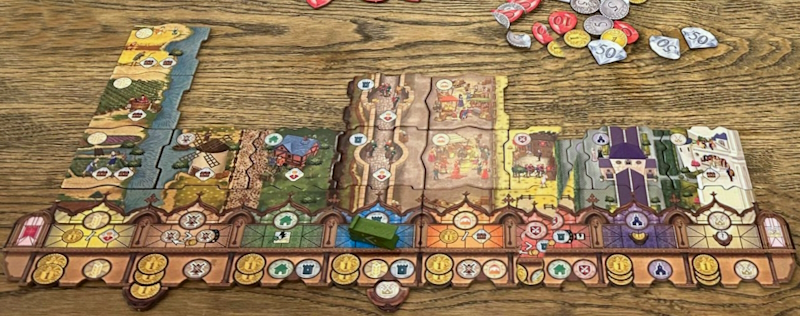
Players then carry out the tile’s special effect and take the associated income. The payout increases payout the more tiles of the same type a player has. Every four rounds, there is an event and the game ends after the sixteenth round when players lose ten points for each type of tile they don’t have in their city and the person with the most points is the winner. This time, Byzantium went all in for Windmills (players with fewer Windmill tiles had to give him two Coins) while Jade built some Barracks. The Barracks enabled Jade to attack everyone with fewer Rampart tiles than he had Barracks tiles forcing them to give him money. Plum opted for a more balanced approach that allowed her to improve her income stream significantly due to the Churches and Palace buildings she played.
 |
| – Image by boardGOATS |
Plum’s Church gave her a coin bonus which she placed on a Village, which enabled her to repair a broken building. There was some discussion about whether that was voluntary or not, but it didn’t seem to be written like it was a choice. Although not planning for it, Plum did well out of the third Event, “Restoration”, giving her coins for having three broken buildings. Jade, on the other hand, had interpreted the rule as compulsory and had therefore mended his broken building a turn earlier so wasn’t able to benefit from the Event. It was close between Jade and Byzantium with Jade just edging it. Someway ahead, however, was Plum, who finished with one hundred and thirty-one points.
 |
| – Image by boardGOATS |
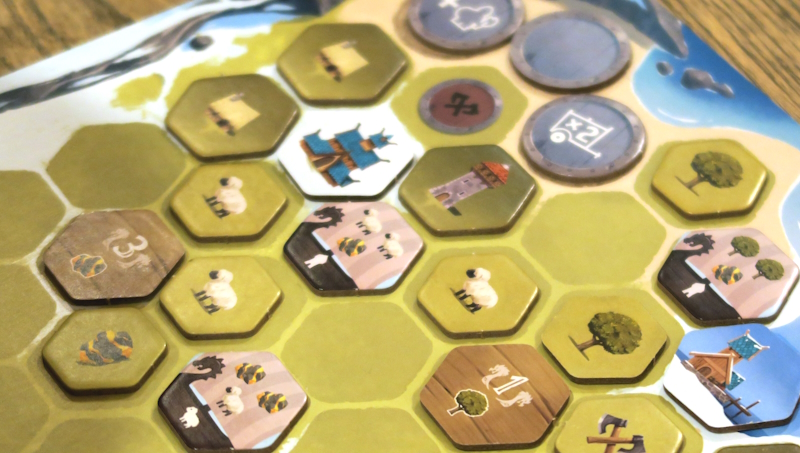
Middle Ages is a quick little game, and the trio then moved on to another UK Games Expo game, the slightly meatier Looot. This is a game where players gather resources and capture buildings to develop their fjord, fill their longships and complete buildings to rack up victory points. The player with the most riches is crowned Jarl of the Vikings. Like Middle Ages, this was new to both Plum and Byzantium, so after teaching the group got down to the serious pillaging. The game is played over several rounds until each player has played all their Vikings, giving a maximum of thirteen turns, each with a simple structure.
 |
| – Image by boardGOATS |
First, a player places their Viking on a Resource tile on the central board adjacent to another Viking of any colour and take the Resource and place it on their personal board. If possible, they then capture a Building and place that on their board, take a Long Ship and also place it on their board, use a Shield, complete a Construction Site and finally grab a Trophy. Plum felt she wasn’t going to be able to complete all three of her initial goal hexes, but hedged her bets and left space, just in case. She used the “occupy the same space as another” option fairly early on to make sure she connected at least two Towers—Towers were the more difficult requirements for the two easier home hexes.
 |
| – Image by boardGOATS |
Byzantium’s higher scoring home hex needed two Castles. He failed to complete one of his hexes, but did achieve the most difficult one giving him only slightly fewer points than the other two for this aspect. Jade thought the others were likely to take the spots he was aiming for a few times, but he needn’t have worried as a closer look at the others’ boards would no doubt have told him. Byzantium got quite a good engine going early game with optimal placements of his first four to five Long Ships, which give bonuses for Resources and Buildings on the player’s map. In order to complete a Long Ship it needs to be adjacent to three specific resources, however.
 |
| – Image by boardGOATS |
Each Long Ship taken and left incomplete leads to a five point penalty, so it is important not to over commit, but equally players don’t want to leave prime location Long Ships for their opponents either. Byzantium’s Long Ships made great use of the Looot he had pillaged, but for some reason he lost his way a little and ended up with a lot of low scoring Looot at the end of the game. It felt really close, but Jade thought he would just sneak it as he had increased his Castle scoring to seven points per Castle and had he three of them. In the end though, Plum ended up winning by quite a significant margin, her hundred and eleven were eight points more than Jades total for second place.
 |
| – Image by boardGOATS |
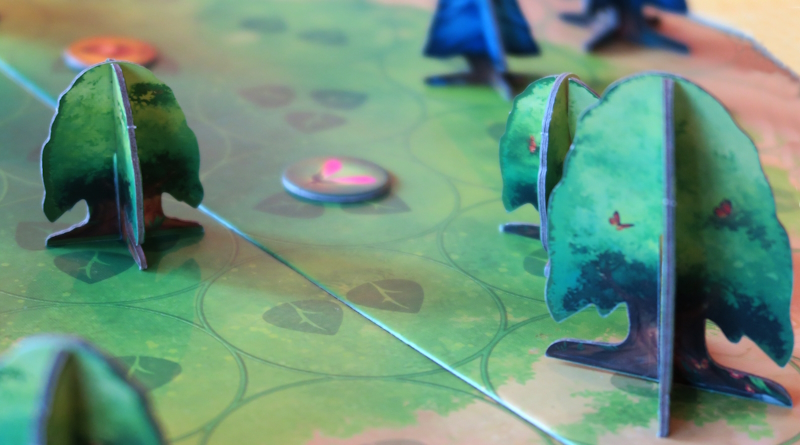
It was an evening for playing games from Expo, as Teal led Purple and Sapphire in a game of Photosynthesis. This game is a few years old now, but Teal had been really delighted to find a copy for a very good price in the “Bring and Buy”. In Photosynthesis, players collect light points based on the trees they have on the board and the direction of the sun gaining light points for any of their trees that aren’t in the shadow of another tree. By collecting light, players can grow and further their species’ dominance over the forest. Each round, the sun moves creating the direction of light for the round. Players begin by placing two small trees on the board.
 |
| – Image by boardGOATS |
Small trees collect one light point and cast a shadow over one space. Players can then spend light points to grow a tree, plant a new seed, and eventually harvest a tree once it has reached full size. As well as a unique spacial puzzle, the game is quite beautiful with mechanics that fit the theme giving simple but meaningful choices. Like a lot of puzzle-games, Photosynthesis can be quite hard to get one’s head round on the first play. This time the game was really quite tight between Teal and and Sapphire, but Sapphire just had the edge, beating Teal by one point with final total of fifty-four.
 |
| – Image by boardGOATS |
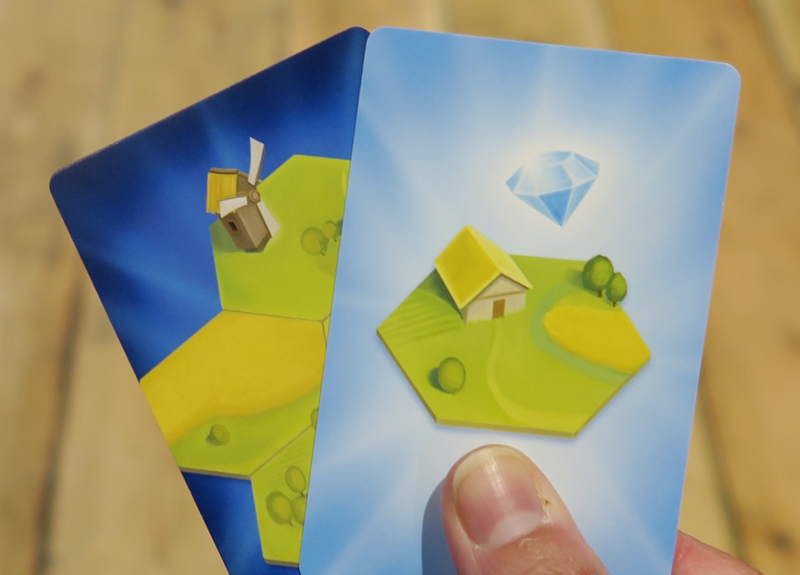
Lifeboats and Looot were still going, so Purple pulled out another Expo special, that first got a run-out last time, a game called Rome in a Day. This is a cute little “I divide, you choose” game, where players draw five land tiles at random and place two buildings on tiles one and two. They then divide the five tiles into two groups—a bigger and a smaller one (in any ratio) and add a crystal to the smaller land set before offering the choice to their neighbour. During the four rounds the game is played over this neighbour alternates, right, left, right, left. So, each round, players choose a set from their neighbour and these and the tiles they were left with are added to their domain.
 |
| – Image by boardGOATS |
At the end of the game, any building that stands on or adjacent to land of its own colour will score for each tile in the group and then players score for the diamonds they have collected—the player with the most points is the winner. It was a really close game, in fact, it was a tie for second place between Purple and Teal who both scored twenty-seven points. Sapphire did rather better, however, finishing with thirty-five points having concentrated on yellow Wheat Fields and green Olive Groves to the complete exclusion of blue-purple Vineyards and red Towns.
 |
| – Image by boardGOATS |
Learning outcome: Politics can be savage, but it is important everyone votes.
 boardGOATS