Next Meeting, 19th March 2024

Our next meeting will be on Tuesday 19th March 2024.  As usual, we will start playing shorter games from 7.30pm as people arrive, until 8pm when we will start something a little longer.  The pub is doing food, and the table is booked from 6.30pm for those that would like to eat first.

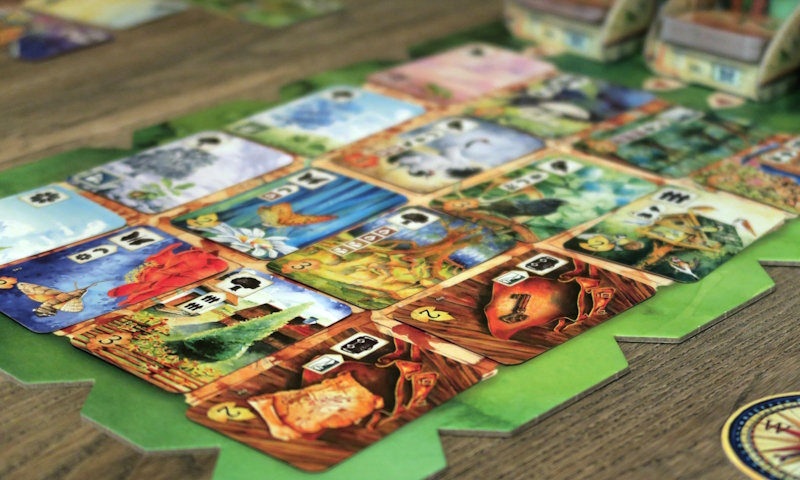
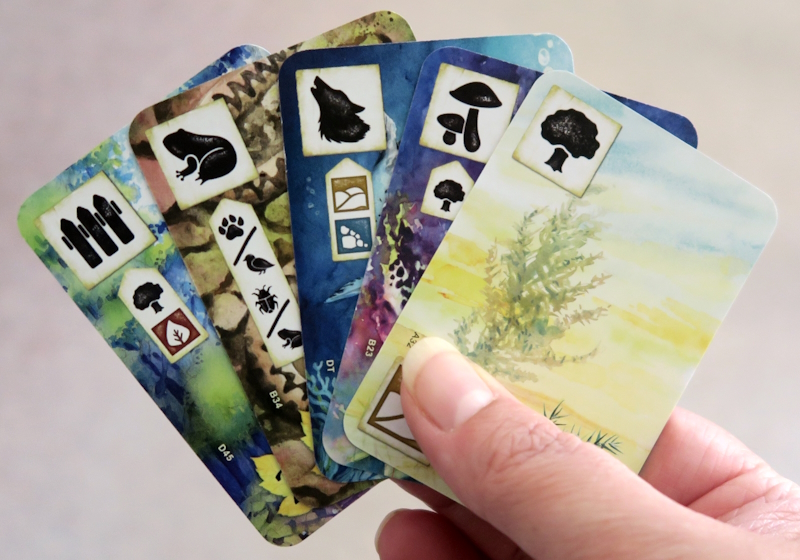
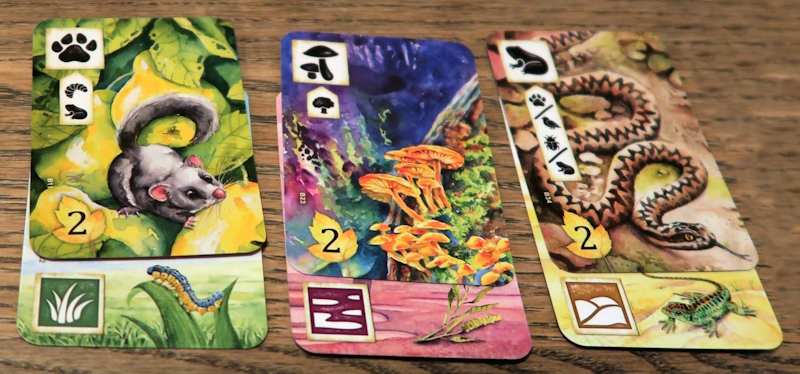
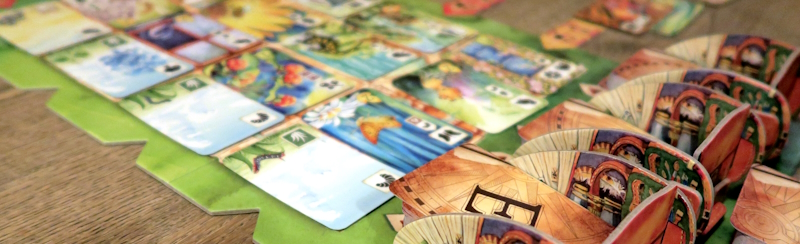
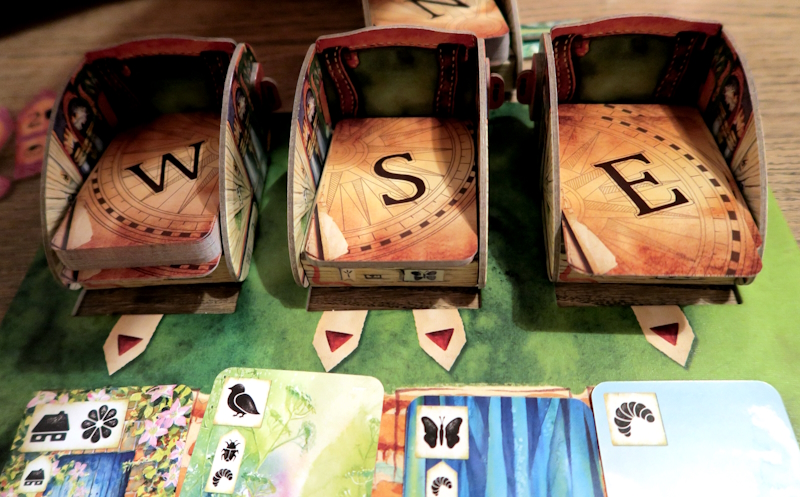
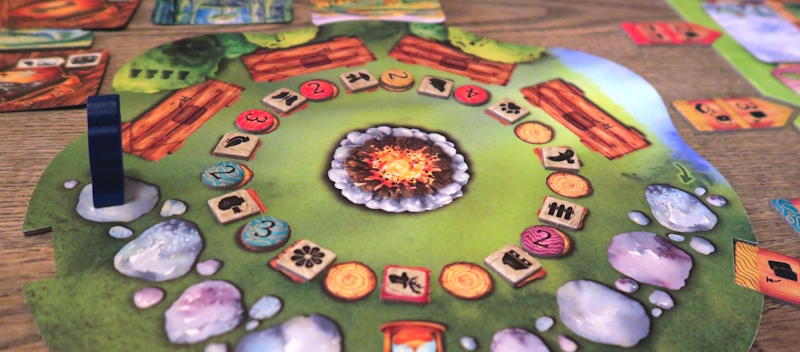
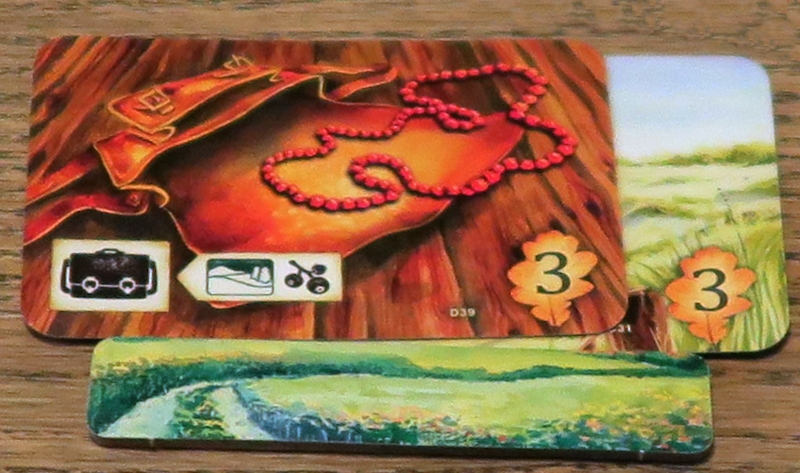
This week, the “Feature Game” will be Meadow (review, rules, and how-to-play video).  This is a very smooth, engine building, set-collection card game with charming artwork, where players take the role of explorers competing for the title of the most skilled nature observer.

Meadow
– Image by boardgamephotos

And speaking of meadows…

A horse and a chicken were playing in a meadow. Suddenly the horse fell into a muddy hole and started sinking. He told the chicken to go and get Farmer Jeff to help pull him to safety. The chicken ran to the farm, but Farmer Jeff couldn’t be found.

So, the chicken drove Farmer Jeff’s Mercedes back to the hole, tied some rope around the bumper, threw the other end of the rope to his friend, and drove the car forward saving the horse from sinking. A few days later, however, the chicken and horse were playing in the meadow again, when the chicken fells into the mud hole. The chicken told the horse to go and get some help from Farmer Jeff. The horse replied, “I think I can get you out.”

So, the horse stretched over the width of the hole and said, “Grab hold, and pull yourself up.” The chicken did as he was told and grabbed the horse’s tackle and was pulled to safety.

The moral of the story: If you are hung like a horse, you don’t need a Mercedes to pick up chicks.

5th March 2024

The evening started with everyone unsure who was coming, so the nine players present split into three groups of three, with Blue, Pine and Lime starting with the “Feature Game“. This was the very short, light, Make the Difference, a game that is basically “spot-the-difference” in board game form.  The idea is that each player gets a pre-printed picture and simultaneously add five extra “features” to their pictures.  Once everyone has added their “extras”, players take it in turns to place their pictures in the centre of the table (covered with a sheet of acetate to make it a little more difficult to spot the difference between printing and drawing), together with an unadulterated copy.

Make the Difference
– Image by boardGOATS

Players have one minute (timed with a slightly grumpy egg-timer), during which a player spotting an addition gets a point, then a second minute, during which both the spotter and the modifier get a point.  After the two minutes, any un-spotted additions are assessed for size, and if they are large enough, the modifier gets two or three points.  The additions have to be a single line, may extend an existing feature, and can’t just increase the width of an existing line.  This time, Pine went first with his picture, and the slightly mardy timer gave Lime and Blue a few extra seconds to spot his additions as Pine encouraged it to behave.  Most of his additions were spotted, partly as a result.

Make the Difference
– Image by boardGOATS

Lime went next, and players were slower to spot his additions giving him extra points.  Blue was the last, but this time Pine and Lime really struggled.  For some reason, Blue seemed to be better hiding hiding her additions, taking six points for lines that weren’t spotted during the two minutes of play.  In contrast, her poor spotting let her down, giving her a total of eight points, and just enough for second place.  The winner was Lime, however, with ten points.  There was a little chatter while they packed away, but as there were no new arrivals, the trio moved on to play something else, and quickly chose to give the recent Northern Lights edition of Ticket to Ride another outing.

Ticket to Ride: Northern Lights
– Image by boardGOATS

Ticket to Ride: Northern Lights has had a couple of outings since it’s group debut last summer, and has been quite popular in the group.  The game is a fairly standard edition of Ticket to Ride (take cards from the market, or play cards to place trains), but the map is set around the Scandinavian countries of Denmark, Norway, Sweden and Finland.  Like all the variant games, this one has a couple of minor rules tweaks, principally, the addition of bonus cards which give points at the end of the game and bonuses for completing some of the longer Ferry routes.  Locomotives are also handled slightly differently as the market is not refreshed when saturated by them, and for Ferry routes only, they can be replaced by any two cards of the same colour.

Ticket to Ride: Northern Lights
– Image by boardGOATS

This time, the bonus cards drawn at random were the Locomotive Collector (A), International Tycoon (G), Polar Express (H) and the Ferry Master (J).  Pine went first and started placing trains much to Lime and Blue’s horror.  A few turns later, Lime headed up the Norwegian cost, while Blue started building an extended route from Bergen in the west through Stockholm to Tallin in the east.  It was then that Pine, with his north-south route got in her way and began costing her points thanks to the fact that with only three players the double routes weren’t in play.

Ticket to Ride: Northern Lights
– Image by boardGOATS

As he had done last time the group played, Lime churned through his trains remarkably quickly catching Pine and Blue on the hop slightly. After the last few turns had been played, the bonus points were allocated with each player winning one (Lime for the most Ferry routes; Pine for the most tickets ending in the Arctic Circle and Blue connecting the most countries while nobody had any Locomotive cards at the end of the game).  Pine claimed a completed Ticket for eighteen points which he had almost completed when he drew it (AGAIN!).  Also like time, Lime finished with a nice round hundred points, and once again was pipped pipped to victory by Pine, albeit by a larger margin (ten points rather than three).

Ticket to Ride: Northern Lights
– Image by boardGOATS

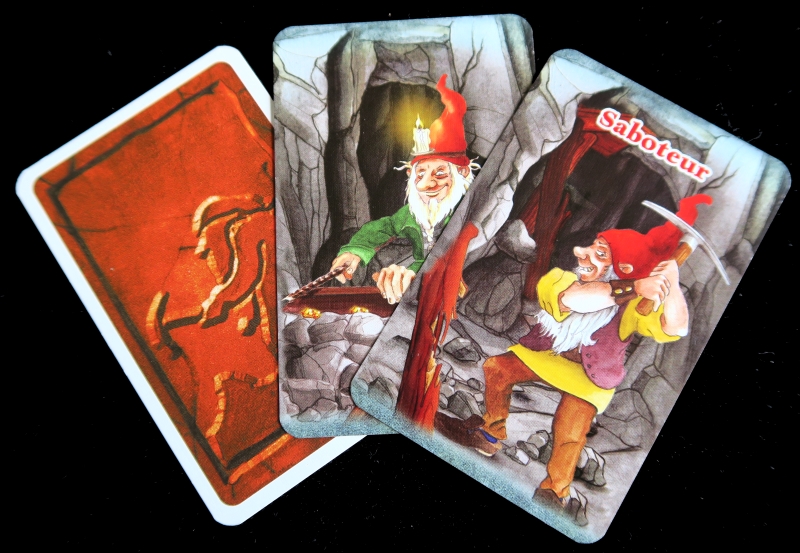
With that over, Lime headed home, leaving Blue and Pine to kill time while waiting for one of the other games to finish.  In this, they played a little “wallet game” called Circle the Wagons.  This is a simple, quick game where players take cards from a market and add them to their player area, building a map, scoring points according to the largest areas of each terrain type and three addition scoring criteria selected at random.  These scoring criteria are printed on the reverse of the cards and are drawn at random at the start of the game.  The first bonus card drawn was “Boom or Bust which gives points for two or fewer Mines/Pickaxes, none for three to six and four or five points for seven or eight (or more).

Circle the Wagons
– Image by boardGOATS

The other bonus cards were Claim Jumpers which gives the player with the most Mines/Pickaxes nine points (though they lose five if their opponent as more Guns), and Bootleggers which give two points for each Beer Bottles next to a Wagon (and minus one for any not next to a Wagon).  Once the bonus cards had been picked, the remaining fifteen cards were shuffled and arranged in a circle.  The first player, in this case Pine, could then choose to either take the first card, or take another, later card, leaving any that had been skipped for his opponent, Blue, who then had the same choice.  Play continues until all the cards had been taken.

Circle the Wagons
– Image by boardGOATS

This time, Pine started prioritising Pickaxes, given the fact that two of the bonus points scored for them.  Blue was slow to get started with these and ultimately scored nothing for Boom and Bust and for Claim Jumpers.  She collected Beer Bottles instead and prioritised scoring for her terrain.  Blue’s thirteen points for Beer Bottles exactly matched Pine’s for his Pickaxes, though he picked up half a dozen points for his Beer as well.  Blue took six points for her Forest and four for her Plains, while Pine got five points for each of his Desert and Water terrain.  It was closer than it seemed during the game, however, with Pine finishing with thirty-five points, just three more than Blue.

Circle the Wagons
– Image by boardGOATS

By this time, Pink, Teal and Ivory were bringing Viticulture to a close.  This is one of the group’s most popular worker-placement games and a particular favourite amongst Pink and Teal who have been promising each other a game for months.  The game is quite simple and doesn’t really do anything fancy, it just does what it does very well.  The idea is that players are making wine, which they do by placing their workers on spaces on the central board.  Each space has a limit to how many workers can occupy it, with each player having a “Grande” worker who can muscle in anywhere.  This time, the group played with the Tuscany expansion, which adds a few little extras.

Tuscany
– Image by boardGOATS

Firstly, whereas the base game has essentially two seasons spring and autumn (with visitors in summer and winter), the Tuscany expansion has actions for all four seasons.  Players can also build special buildings (which give additional powers and special options for those that make the effort to build them), and claim regions to gain influence (and bonuses) which scores points at the end of the game.  The player order works slightly differently to the base game and the end of the game is triggered when someone passes twenty-five points (rather than twenty in the original game).  This time, however, nobody took advantage of the opportunity that Tuscany provides to build buildings, instead focusing on the basics of planting grapes and harvesting them.

Viticulture
– Image by boardGOATS

There is a now a well-known and frequently used tactic of selling a field at the start of the game to provide equity in the early part of the game.  Teal and Ivory both went down this route while Pink decided to try something else, but that didn’t go well for him.  His problems were exacerbated by his inability to get access to fulfilling orders later in the game.  Ivory started acquiring points early taking an early lead.  Teal wasn’t far behind, but never quite managed to overhaul Ivory who triggered the end of the game and finished with thirty-one points, seven more than Teal in second place.

Tuscany
– Image by boardGOATS

When Viticulture finished, Ivory and Teal headed home, leaving Pink to join Blue and and Pine in a couple of quick games of Botswana.  This is a sort of simple stock-holding game where players are collecting animals.  The idea is that there are five suits of animal cards, each numbered from zero to five—these are shuffled and dealt out to the players with a small number left out for ambiguity.  Matching the suits, there are five sets of five plastic animals.  Players take it in turns to play a card (any card) and then take an animal (any animal) until someone plays the sixth card in any suit.

Botswana
– Image by boardGOATS

When the last card is played in any suit, the game ends immediately and players score points for their animals with each animal being worth the face value of the last card played in that suit.  Thus, Zebras might have been worth five points each, right up until the last card was played which could be a zero, rendering them totally, point-less.  Somehow, it is a hard game to understand—far from random, a bit like 6 Nimmt!, it is very hard to control and manipulate the scoring in a particular direction.  This was quite evident in the two rounds played this time.

Botswana
– Image by boardGOATS

In the first round, Blue held a few key Elephant cards and was able to manipulate the game end to ensure they scored well.  With a couple of high scoring Lions added to her menagerie, she ended the game, ensuring she finished with thirty-five points.  It was very tight between Pink and Pine, but Pink just edged second place with twenty-two.  The second round was also close with just two points between Pink and Pine, but this time they were vying for victory.  In the end it was Pink again, this time triggering the end of the game allowing him to ensure his Leopards scored well.

Botswana
– Image by boardGOATS

Botswana is a lot of fun and as they packed up, there was quite a bit of chatter.  Pine pointed out that the backs of the cards said “Wildlife Safari” and wondered why.  Blue commented that there were lots of different versions, but couldn’t remember the differences.  A little bit of research shows that the game was originally released as “Flinke Pinke” and then “Quandary” and eventually “Loco!”, all with simple colour suits.  Then, in 2010, the boring colour suits were changed for animals by Eagle-Gryphon Games, who initially republished the game as “Botswana”, before increasing the size of the box and calling it “Wildlife Safari”.  Presumably this particular copy was released when small boxes were still available, but the company had run out of matching cards…

Botswana
– Image by boardGOATS

Meanwhile, on the next table, Cobalt had persuaded Plum and Byzantium to join him playing the rather epic-looking Nightmare Cathedral. This is a card-driven action-selection area-control game set in the fantasy world of late Polish surrealist painter and sculptor Zdzisław Beksiński. The game is adorned with his artwork and beautifully sculpted miniatures. Players control Units, which act as a resource, whilst an imposing Cathedral is built in the centre of the board. Once the Cathedral is completed, two Nightmares (out of a selection of eight) appear next to the Cathedral and can be controlled by a player on their turn if a certain condition is met. Each Nightmare, represented by a unique sculpt, has varying abilities such as converting or devouring units as they move around the map.

Nightmare Cathedral
– Image by boardGOATS

The game ends when a certain number of Units have been devoured, or, less likely, after completing three rounds. The winner is determined by points, which can be obtained from climbing the Ritual track, building Forts, Devouring the most Units, or completing objectives on Dream cards (the latter being the largest source of points). On a their turn, the active player selects an action with their Dreamer from one of five on the day/night action track, although they cannot select an action adjacent to their dreamer’s current space. After performing the action, other players get to follow, either Conforming or Dissenting depending on whether their dreamer is adjacent to the current action space.

Nightmare Cathedral
– Image by boardGOATS

The active player then moves their Dreamer to the adjacent Night space, a section of the Cathedral is built, the turn marker moves to the subsequent space and the next player takes their turn.  Each player starts with a tableau of five cards, one for each action type, that details how each action can be performed, as well as the Conform/Dissent actions. The players also have a hand of cards, which come in two forms: action Upgrades or one-time Effects; each card also contains combat symbols.  The five basic actions are: Ritual (spending/removing followers to move up the Ritual track); Summon (producing Followers); Fortify (spending Followers to Build/Upgrade Forts); Manoeuvre (moving Units and/or Shaper, performing a conversion and then initial Conflicts); Develop (playing Development cards from hand, either to Upgrade actions or gain one-time benefits).

Nightmare Cathedral
– Image by boardGOATS

A player controls an area if they have a Fort present, or if there is no Fort and they have the most Units in the area. The board is also populated with a “neutral” player, called The Shadows, that can participate in conflicts and be Devoured for benefits. Each area is associated with one of four symbols, with the active symbol being determined by the turn marker (which changes every turn, cycling through each symbol). Certain actions refer to these symbols, for example when moving up the Ritual track, players must spend Units from areas matching the symbol on the next level of the track, or areas marked active by the turn marker produce if that action is selected. When producing Units by marked areas, the unit is produced by the player who controls the area, not by the active player.

Nightmare Cathedral
– Image by boardGOATS

A player may forgo the action on the card to draw two Development cards to hand. Each player may have up to two Dream (objective) cards at any time, and may complete them on their or another player’s turn provided they match the criteria at the appropriate time as specified on the objective card.  However, they may only draw new cards at a specific point in their turn from a display. Once the Cathedral is nearly complete, the Level II Development and Dream cards are mixed in with the initial Level I cards to provide enhanced benefits and more points. When a player initiates Conflicts, they get to choose which of the valid areas the Conflict(s) occur, and they do not need to participate in the conflict themselves.

Nightmare Cathedral
– Image by boardGOATS

To resolve a Conflict, the two players involved reveal a number of Development cards from hand—the number determined by the number of units present in the Conflict area (plus one if they also have a Fort). Each card depicts claws and shields: a Unit is removed for each claw that was not deflected by a shield. The winner of the Conflict is the player who has a Fort remaining, or, failing that, the most Units in the area; the looser must retreat all remaining Units to adjacent areas.  Each player starts with one action upgraded, drawn at random—each player drew an upgraded summons card.

Nightmare Cathedral
– Image by boardGOATS

Cobalt played first, and was able to complete one of his Dream cards immediately. In the first few turns, Byzantium managed to pin Cobalt in one corner of the board, which severely limited his ability to expand and produce Units, whereas Plum was able to grow relatively peacefully on the opposite side of the board. Byzantium, and to some extent Plum, were able to make use of their expansion to move up the Ritual track. Plum was also able to expand her Forts to several areas. Cobalt was able to upgrade his forts in the limited areas he controlled, as well as draw up to the hand limit of eight development cards over the first half of the game.

Nightmare Cathedral
– Image by boardGOATS

During the second half of the game, after the Cathedral was built and the Nightmares came out, Cobalt was able to make use of his Development cards (especially due to a very well timed fortunate draw) to control both Nightmares in a single turn to Convert and then Devour a sufficient number of his own Units to claim a high-scoring Dream card as well as ensure he had the most Devoured units for end-game scoring.  Unfortunately, this time, the group ran out of time so had to end the game early, stopping after everyone had completed an equal number of turns (time which Byzantium used to move up the Ritual track and Plum used to built a few more Forts).

Nightmare Cathedral
– Image by boardGOATS

Long before the game finished, it was clear that Cobalt was miles ahead and nobody was going to catch him.  Plum held on to he Dreams for too long, while Cobalt and Byzantium were better at completing theirs.  She did manage to get a Fort in the fourth corner of the map fairly early on which gave her somewhere to spawn her Units from, though.  Ending the game early meant players didn’t get to make as much of their Upgraded Action Cards as they might have done and there were cards left in hand which could have come into play with another few more rounds. As a taster game, it proved quite different, however, and deserving of another try sometime, as long as there is time to complete it.

Nightmare Cathedral
– Image by boardGOATS

Learning Outcome:  You are never too old to play “Spot-the-Difference”, but that doesn’t make you good at it.

Next Meeting, 5th March 2024

Our next meeting will be on Tuesday 5th March 2024.  As usual, we will start playing shorter games from 7.30pm as people arrive, until 8pm when we will start something a little longer.  The pub is doing food, and the table is booked from 6.30pm for those that would like to eat first.

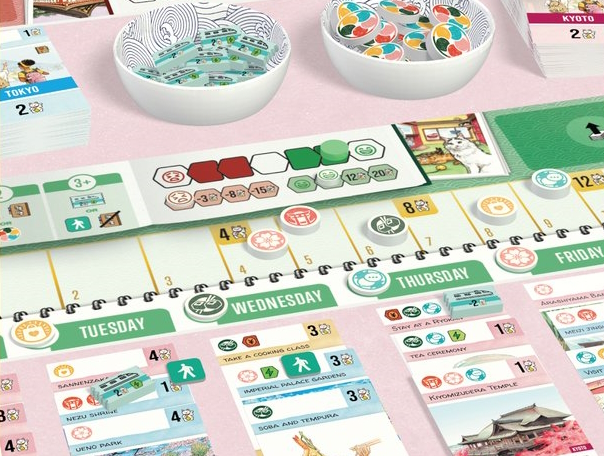
This week, the “Feature Game” will be Make the Difference (review and how-to-play video) a very quick, “spot-the-difference” game that should allow plenty of time for people to play something more substantial afterwards.

Make the Difference
– Image from oinkgames.com

And speaking of differences…

Jeff and Joe were in the pub chatting when Jeff asked, “So, what’s the difference between a spider and a spider plant?”

Joe thought for a moment before replying, “Well, my Mum loves having spider plants in her house…”

20th February 2024

Once everyone had finished eating, we moved on to the usual difficult decision of who was going to play what.  The “Feature Game“, Wyrmspan which is a very new stand-alone game, based on the mechanisms of one of the group’s favourite games, Wingspan, with dragons instead of birds.  It was not as popular as expected, though that was at least partly because it was a relatively quiet night and many of those who would have enjoyed it were away.  In the end, Blue, Black and Pink settled down to play leaving two other groups of three to sort themselves out.

Wyrmspan
– Image by boardGOATS

Wyrmspan is very closely related to Wingspan, though it is less forgiving, that is to say, the consequences of mistakes can be much more severe.  Like Wingspan, players are playing cards from their hand onto a player board, and activating the habitats in turn.  In Wingspan, the cards are Bird cards played in three different habitats, Woodland, Grassland and Wetland, whereas, in Wyrmspan, the cards feature Dragons and they are placed in three different cave networks, the Crimson Cavern, the Golden Grotto, and the Amethyst Abyss.  The differences are more than simply cosmetic, however.  Firstly, before a Dragon card can be played, it is necessary to explore the cave which involves playing a card (and claiming a Bonus).

Wyrmspan
– Image by boardGOATS

This is one way of getting Resources, there are others (playing dragon cards for example as well as activating the Crimson Cavern).  One of the key differences is that these typically provide only one Resource at a time.  So, whereas in Wingspan, if a player needs a resource, they activate their Woodland habitat and visit the Birdfeeder, claiming the resource they want and a couple of extras, in Wyrmspan, they don’t have extras so every move as to be made to count.  And this is all the more critical as “Planting Dragons” requires a lot of Resources and can be difficult to do, so it is important that the Dragon planted is then exploited as much as possible.

Wyrmspan
– Image by boardGOATS

Further, one of the Bonuses is movement on a new, separate board, the Dragon Guild.  A step around this Rondel typically gives a Resource as a reward, and when players reach half-way round and all the way round, they get a more valuable bonus which depends on the Guild in play.  The distribution of cards is very different too, in Wingspan, the majority of the cards have an effect when the terrain is activate, but in Wyrmspan, these are in the minority with most card effect happening when played or at the end of the round/game.  That is not to say they are not important—their very presence enables players to do more when the cave network is activated.

Wyrmspan
– Image by boardGOATS

Further, in Wingspan, players have a fixed number of actions per round (with fewer in the later rounds), whereas, in Wyrmspan, players get a set number of coins at the start of each round and an action typically costs one coin.  Some do cost more though, and occasionally players can pickup extra coins, which leads to variable length rounds.  Thus, although Wyrmspan is very definitely Wingspan at its core (players pay Resources to play cards and then activate habitats) there are lots of differences which give the game a very different feel, and make it a tighter, slightly more challenging game to play.  All that said, there has been a lot of discussion online saying it is much more difficult, but that is not how we found.

Wyrmspan
– Image by boardGOATS

Blue went first and playing a Spirited Hydraptere Dragon in the first round which gave her two extra coins and then she proceed to plan her strategy from there.  Black prioritised progress around the Dragon Guild (Seafarers), which, as that was also high on Blue’s priority list, set them in competition.  Meanwhile, Pink had started with two Hatchlings (Kindly Sea Serpent and Algal Lindworm) which looked like they would synergise well, so he worked towards playing them.  Unfortunately, he came to the conclusion that this was a mistake as it slowed the start of his game and that he would have done better if he had ditched one of them.

Wyrmspan
– Image by boardGOATS

It is interesting to note, that many of the online comments have suggested that Hatchlings come at too heavy a price.  However, discussion after the game suggested that all three players felt they were essential to the “engine” and were worth the effort albeit needing some care to choose the right dragon.  As the game progressed, Black powered round the Dragon Guild with Blue snapping at his heels. Black took the straight six points from under Blue’s nose, so she took a free excavation instead.  Then, towards the end of the game when Blue and Black were heading for their third Dragon Guild bonus Pink grabbed the three point for each completed column and then Black took the straight three point bonus.

Wyrmspan
– Image by boardGOATS

Blue was most unimpressed as between them they had cost her eight points by leaving her with a solitary straight single point, though she picked up a few more from her Tawney Northern Drake (which gave her two points for each marker in the Guild at the end of the game).  Pink did well with his Guild points (despite only placing two tokens), but unfortunately it wasn’t enough.  As well as his points from the Guild, Black had also prioritised the end of round Public Objectives.  In a game with small margins, it looked like this might be enough for victory, however, Blue had a few more eggs, some more valuable Dragons, more tucked Cards and cached Resources.  As a result, she just edged it with eighty-eight points to his eighty.

Wyrmspan
– Image by boardGOATS

Meanwhile, Green who had considered joining the Wyrmspan game, eventually joined Cobalt and Ivory in a three-player game of Terraforming Mars.  This game is quite popular within the group, though it doesn’t get an outing very often.  The game is set in the 2400s, when mankind begins to Terraform the planet Mars. Players take the role of corporations sponsored by the World Government on Earth to initiate huge projects to raise the Temperature, raise the Oxygen level, and increase the Ocean coverage until the environment is habitable.  Victory points that are awarded for contributions to the terraforming, but also for advancing human infrastructure throughout the solar system, and doing other commendable things.

Terraforming Mars
– Image by boardGOATS

The players purchase Project Cards which can give immediate bonuses, as well as increasing production of different resources. Some of the Cards only become playable when the Temperature, Oxygen, or Ocean coverage increases enough. Buying Cards is costly, so there is a balance between buying Cards and actually playing them. There are six different Resources: MegaCredits (money), Steel, Titanium, Plants, Energy, and Heat and players keep track of these on their personal player board. Players compete for the best places to build Cities, place Ocean tiles, and develop Greenery. They also compete for different Milestones and Awards worth many points.

Terraforming Mars
– Image by boardGOATS

At the start of each round (or Generation) players purchase cards from four drawn privately.  Then players take it in turns to carry out one or two actions:  playing a card, claiming a Milestone, funding an Award, using a Standard Project, converting Plants into Greenery tiles, converting Heat into a Temperature increase, or using the action of a Card already in play.  Once all players have passed, players get Resources according to their Terraform rating and production parameters.  When the three global parameters (Temperature, Oxygen, Ocean) have all reached their goal, Terraforming is complete, and the game ends—the winner is the player with the most points.

Terraforming Mars
– Image by boardGOATS

This time, the group played the Elysium map (from the Hellas & Elysium map pack), with the “quick-start” Prelude expansion (but without the Incorporation Cards) and with Card Drafting (after the initial starting hand).  Ivory had the Valley Trust Corporation giving him increased money production which was further increased by his Research Network Prelude Card, ensuring that finance was not going to be a problem for him.  Green had Tharsis Republic, giving him an injection of cash when any city was planned on Mars.  Cobalt had Cheung Shing which gave him a two MegaCredit discount on Building Cards.

Terraforming Mars: Hellas & Elysium
– Image by boardGOATS

Green and Ivory both placed early Cities; Ivory got built the Research Station giving him a discount on all future Cards.  From there, Cobalt and Green then began focusing on Terraforming.  Green used his initial Titanium (from Prelude Cards) to play several powerful Event Cards early on. Cobalt then played several action cards including Regolith Eaters, Aquifer Pumping, Extreme Cold Fungus and CHG Producing Bacteria which he was able to combine together well to climb the Terraforming Track, although Green’s Event Cards meant he was never far behind.

Terraforming Mars: Prelude
– Image by boardGOATS

While Green and Cobalt were busy Terraforming, Ivory focused on getting his Plant production up and running as well as further increasing his money production (partly through building another city on Olympus Mons, refilling his hand). Although the other two had sped ahead on Terraforming, during income everyone was getting similar income thanks to Ivory’s increased money production. However, the other were generating lots of Energy/Heat and getting a lot of other resources.  As a result, Green took the first Temperature Bonus and Cobalt the second.  Turn order meant Cobalt wasn’t able to grab the Oxygen Bonus, which went to Ivory.  The Oceans were complete very early in the game, so there was no third Temperature Bonus.

Terraforming Mars: Hellas & Elysium
– Image by boardGOATS

Ivory’s focus on money production as well as Plant and Micro-cards, allowed him to grab the Specialist and Ecologist awards in one turn.  This forced Green’s hand to take the final milestone, Legend (for playing at least five events). Green then quickly grabbed the Legend award after.  From there, Cobalt continued to focus on Terraforming (particularly Temperature), placing only one City and a handful of Forests, whereas Green and Ivory started placing Greenery tiles. Ivory managed to get to his plant production up to eight, giving him a Greenery tile each round. Ivory and, to a less of extent, Green also started building more Cities.

Terraforming Mars
– Image by boardGOATS

Although this was going to score Ivory a lot of points at the end of the game, each City built was feeding Green’s engine, increasing his money production, quickly getting well into the teens.  From there, the Awards were the focus.  Ivory jumped first for Desert Settler, Green shortly after for Celebrity.  Noting he had very little end-game scoring, Cobalt had to spend 20 MegaCredits to grab the last award, the Industrialist.  All three players scored the maximum five points for each of the Awards they funded.  It then became apparent that the end of the game was approaching:  Ivory’s Greenery tiles were rapidly pushing the Oxygen to its maximum, the Oceans had been completed early by Green and Cobalt and Cobalt had focused on Temperature.

Terraforming Mars
– Image by boardGOATS

Ivory picked up a number of Animal Cards (Livestock and Fish) and focused on getting animals on them while Green’s huge money production allowed him to play a large number of Cards.   It looked like the game was about to end after Generation Seven, but taking that final Award prevented Cobalt from raising the Temperature the final step, forcing one last Generation.  That allowed Ivory to get more Animals and Greenery tiles and Green more cards with points before Cobalt finally triggered the end of the game.  Both Green and Cobalt were way ahead on Terraforming and everyone scored similarly for Milestones and Awards, but Ivory’s Greenery tiles, Cities and Animals got him victory just ahead of Green.

Terraforming Mars: Hellas & Elysium
– Image by boardGOATS

This demonstrated how important it is to develop a really robust engine, which together with some other scoring Resources will generally allow the funding of awards.  It is also key to keep an eye on the milestones and awards, since they can disappear almost instantly before you get the opportunity.  Cobalt had only really played Terraforming Mars solo before this.  In the solo game it is a race to Terraform the planet alone before the clock runs out (fourteen generations with the Prelude expansion).  This requires a very different strategy to multiplayer Terraforming Mars, however, where it is much better to concentrate on a strong plant engine with some cities to add to the score, as demonstrated by Ivory.

Terraforming Mars
– Image by boardGOATS

While Mars was being Terraformed and Wyrms were being “Spanned”, Teal, Purple and Pine were playing Glow, a strange little game which visually inhabits the domain of the graphic novel, the roman graphique, much beloved in France. Ben Basso and Vincent Dutrait’s appealing black and white line art is unique and stylised and sets the tone of gentle strangeness, which contrasts well with the brightly coloured dice and other game elements.  In Cedrik Chaboussit’s Glow, players take the role  of animal leaders recruiting a band of up to eight companions to make a journey to bring shards of light back  to a dark world. The game ends after eight days and the winner is the player with the most Light Shards.

– Image by BGG Contributor Propi

Players start by selecting one Leader Card from a choice of seven and take the accompanying big dice noted on the Card. Dice in the game have elemental symbols on them, Cloud, Water, Leaf, Flame and Gem.  The colour of the die gives an extra face of that coloured symbols, for example, the green die has two Leaf symbols on it.  On day one and every subsequent day players select a Companion Card from the “Meeting Track” (Marketplace) which is refreshed every day with new Cards. Players take the selected Card into their tableau next to their Leader group to form their growing band.  Players also take any small temporary dice that have been placed on the Marketplace card.

– Image by BGG Contributor a2b2c517

Once the recruitment phase is over, players simultaneously roll all their dice. Players can re-roll one or two of their dice if they either play a re-roll token (acquired through in-game actions) or move their scoring track token back to the next re-roll space, effectively losing points for this benefit. The dice results are then used to purchase actions at the base of each character card.  For example two Flame symbols provides three Sparks, or a Gem and a Water symbol provides a re-roll token. Each die can only be used once on each card, but each card can be triggered multiple times if dice are available, and each die can be used on each card if legal.

– Image by BGG Contributor Propi

In addition to scoring point Sparks, players can earn re-roll Tokens, Footprints and Glow-Worms. Unused Feet score one Spark at the end, but have another use in the Journeying phase. If a player has glow-worms equal to or more than their Companions, they receive a ten Spark bonus at the end.  The scoring track surrounds a map of the game world with multiple branching paths. Players start in one corner and in the Journeying phase, attempt to move their band meeple to point-scoring campsites of progressively higher value secured by pitching their tent on scoring spaces. To move along the paths players pay the indicated cost, such as a Leaf symbol, from the revealed symbols in their dice pool. Footprint tokens can be used as jokers to by-pass costs.

Glow
– Image by boardGOATS

At the round end, five new Companion Cards are dealt to the Meeting Track and players give back their temporary small dice by placing them on the matching symbols in the Meeting Track above the Cards. These dice are then taken when the Card is selected in the following round, thus increasing the value of certain Cards.  Although the game phases are played simultaneously after the recruitment phase, this time, Teal, Pine and Purple opted to play sequentially to assist with learning the game.

– Image by BGG Contributor Propi

The complexity of the game comes from selecting Cards from the Meeting Track and weighing up potential Card actions against increasing a player’s dice pool.  Choices include denying opponents Cards, weighing up the cost of re-rolls, planning for action combinations  or focusing more on the Journey board for points.  Pine selected the starting card of Braccio, giving two big green dice, and the action of two leaves providing a Footprint and three Sparks at the game end. During the game Pine got an extra big green dice with a Sketal follower early on to assist with maximising the Braccio special action focussing on Leaf generation for points.

– Image by BGG Contributor rascozion

Purple selected starting card Noctiluca with two big purple dice—the sixth face gives two Footprints and the action of three wild symbols scoring five Sparks. Purple went for a corvid strategy, selecting three crow-like birds.  One of these, Kaar, effectively curses other players dice by locking away from use one symbol per turn if the black die is chosen along with the other dice. Teal selected Tocana, with three big red dice and four Sparks at game end. As the game developed Teal went for a wild symbol strategy and acquired two Torke cards to generate guaranteed points each round, or so he mistakenly thought at the time…

Glow
– Image by boardGOATS

Progress was made on the journey board by all, with Purple and Pine getting to the better quality campsite netting fifteen points each, inspiring reminiscences about woeful tales of camping experiences.  At game end Teal scored a hundred and six, some fifteen ahead of Purple in second place.  Unfortunately, when playing Glow later on BoardGameArena, Teal realised that while the “wild” multi-coloured cost symbols powering actions could represent any symbol, they ALL had to match each other to trigger the benefits.

– Image by BGG Contributor Propi

Because Teal had more of this type of card than other players and acquired them early on, Teal had been unfairly gaining a point advantage by triggering Spark acquisition using mixed symbols.  This explained Teal’s high score and he insisted on being relegated, recording his score as null and void—that left Purple to take the golden crown and Pine the silver medal.  It had been a good game which has lovely presentation with immersive art. There’s lots of risk-reward decision-making, and another game would be great now that the rules are better understood, especially as simultaneous play should reduce playing time to the advertised forty-five minutes.

Glow
– Image by boardGOATS

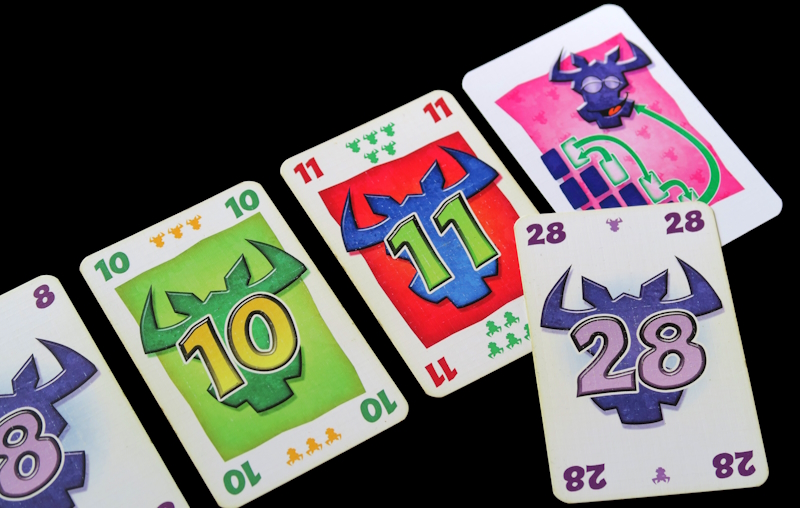
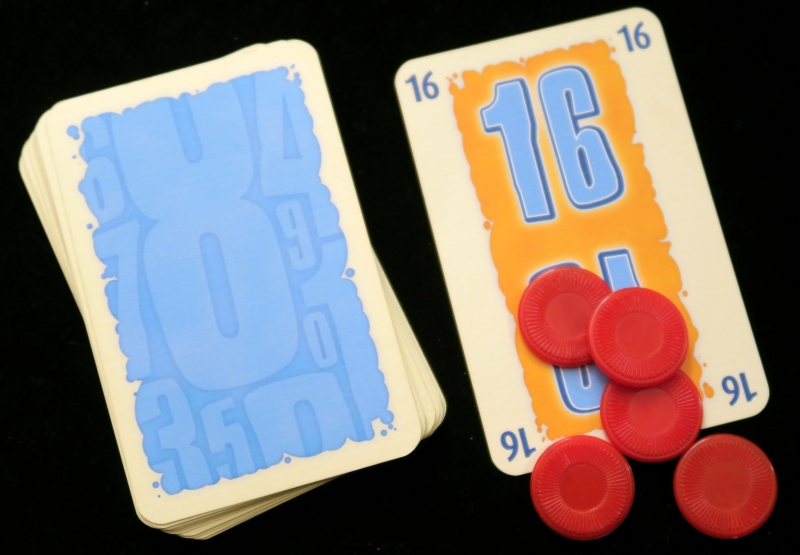
With both Glow and Wyrmspan finished, there was just time for something quick before home time.  There was some discussion about what to play, but eventually, the player count of six and the short time available fixed the decision as the old favourite, No Thanks!.  This is a very simple “push-your-luck” game where players take it in turns to choose whether to take the face-up Card, or pay a Chip to pass the problem on to the next player.  At the end of the game, players add up the face value of their cards and subtract the number of Chips to give them a total—the player with the smallest total is the winner.

No Thanks!
– Image by boardGOATS

There are two additional rules that make the game work: firstly, if a player has a run of Cards with consecutive numbers, they only count the lowest number.  This is tensioned by the second rule, which is that roughly one third of the Cards are removed from the deck at random before the start.  This means players have to gamble on whether a card in a run is still available and it can make things go very wrong for people.  This time, it went very wrong for Blue who finished with forty-eight and for Black who top scored with a massive one hundred and twelve!  The winner, with a very reasonable twelve, however, was Pink, two ahead of Pine who finished with fourteen.

No Thanks!
– Image by boardGOATS

Learning Outcome:  Wyrms are more challenging to handle than Birds.

Next Meeting, 20th February 2024

Our next meeting will be on Tuesday 20th February 2024.  As usual, we will start playing shorter games from 7.30pm as people arrive, until 8pm when we will start something a little longer.  The pub is doing food, and the table is booked from 6.30pm for those that would like to eat first.

This week, the “Feature Game” will be Wyrmspan (rules, review and How to Play video).  This is a shiny new stand-alone game, based on the mechanisms of one of the group’s favourite games, Wingspan, with dragons instead of birds.

– Image from stonemaiergames.com

And speaking of dragons…

When Jeff was a little boy, he asked Santa Claus for a dragon for Christmas. Santa told him that it was impossible, dragons were very rare and did not like to be kept as pets and asked what he would like instead.  So Jeff asked for peace on earth.

Santa sighed and said, “What color do you want your dragon to be?”


6th February 2024

People were still eating when Ivory rolled up nice and early to start setting up Ark Nova.  Although it was not the “Feature Game“, we are planning to feature the Marine Worlds expansion in the next few weeks and wanted to play the base game before we did.  So, Ivory was soon joined by Cobalt, Plum and Green on the other side of the table, leaving the rest to decide who would play the “Feature Game”, CuBirds, and what everyone else would play while they did.  Before long, Pine, Pink, Lime and Blue were dealing out the bird cards while Purple, Black and Teal moved to the next table and rummaged through the game bags to decide what to get out.

CuBirds
– Image by boardGOATS

CuBirds is a fairly simple set-collecting game built round a central market.  Players start with a hand of seven cards and, on their turn must place cards from their hand.  They have to place all the cards they have of one type, adding them to one of the four rows on the table, at either end.  If there is already a card of this type in that row, then they take all the cards between that card and the newly added cards into their hand.  Optionally, if they have enough cards of a given type in their hand, they can complete a flock of them, that is play the cards, keeping one or two in their display (a bit like harvesting a been field in Bohnanza, where harvesting a field of five beans might leave a player with two Bean Thalers).

CuBirds
– Image by boardGOATS

The game ends immediately when one player’s collection has either three cards of each of two bird types, or seven different bird types (of the eight available) in front of them.  It should play out in about half an hour, though inevitably, the first play through took longer as everyone felt their way through.  When any player places the last card in their hand, everyone has to ditch their whole hand which can be quite brutal with players losing partial sets and having to start collecting again. Pink was the first to upset everyone’s plans, quickly followed by Pine.

CuBirds
– Image by boardGOATS

A lot of fun was had identifying the bird types, and nobody got close to guessing what the tall, thin, “little brown job” was, which turned out to be a reed warbler, but was soon universally known as “WeirdBird”.  When the end of the game was triggered, both Blue and Lime had a magpie apiece with Lime’s paired with four toucans and Blue’s with three robins, while Pink just had two little ducks.  Fittingly, as by far the most dedicated birder in the group, the winner was Pine with three flamingos and three “wols” with a spare parrot.  It had been fun, but rather than play again, as he’d missed out on both the previous plays, Pink had been keen to give the new full-sized, Scandinavian Northern Lights version of Ticket to Ride a go.

Ticket to Ride: Northern Lights
– Image by boardGOATS

Like the other variants, Ticket to Ride: Northern Lights has slight changes to the rules and a new map, which in this case, similar to the older, festive themed Nordic Countries, though it plays up to five instead of just three.  The base rules are quite simple: on their turn, players either take train cards from the face-up market (or the blind draw deck), or spend cards to place trains on the map for points. Once or twice during the game, players may instead choose to draw Tickets, which give players points at the end of the game if they are completed (i.e. the owner has connected the two locations with their trains) and score negative points if they are not.

Ticket to Ride: Northern Lights
– Image by boardGOATS

Northern Lights additionally has some triple routes (which only take effect with five players) and some routes have a “+X” next to them and when trains are laid on these the player takes X train cards from the face down pile.  In general, Locomotive (wild) cards can replace any other card but for ferry routes they can be replaced with a pair of the same colour (that doesn’t have to be the same as the rest of the cards used).  Unlike most of the other versions, however, if there are three or more face-up Locomotive cards in the market, the market is not refreshed.  The biggest differences are the addition of Bonus cards, however, which extra points at the end.

Ticket to Ride: Northern Lights
– Image by boardGOATS

This time the Bonus cards used were Capital Investment (B), Local Area Network (F), International Tycoon (G) & Ferry Master (J).  These gave Bonus points for completing Tickets to the capital cities (Stockholm, Copenhagen, Oslo and Helsinki); completing the most short Tickets; connecting to the most countries; and completing the most Ferry routes.  The map is very tight with a lot of short routes, spread over a fairly long thin map and a wide variety of Ticket lengths.  Everyone complained that their starting Tickets weren’t compatible, though Blue and Lime both kept all three of theirs, even so Pink surprised everyone when he took his first set of Tickets very early.

Ticket to Ride: Northern Lights
– Image by boardGOATS

Pine soon followed and his sniggering as he kept all the new Tickets was ominous, signalling that he’d already completed all three—a fact confirmed when he drew more on his next turn too.  Blue and Lime covered similar spaces,connecting the north-west to the south-east, while Pine’s network dominated the east and Pinks sprawled over the south.  Everyone was getting on with doing their thing when suddenly, Lime brought the game to a rather abrupt end, catching everyone else out.  As a result, Pink and Pine both had an incomplete ticket that costing them fourteen and twelve points respectively, while Blue had two giving her a combined loss of sixteen points (though part of that was her own fault as she’d overstretched her self and would have run out of trains anyhow).

Ticket to Ride: Northern Lights
– Image by boardGOATS

In spite of that, it was a very, very tight finish with just six points between first and third place, meaning the Bonus cards became much more critical than might have been expected earlier in the game.  Lime set the target with a nice round hundred points, but he did not take any of the Bonus points and was just pipped by Pine who took several of them with Blue making up the podium.  It had been an imperious game from Lime, and he was unlucky to have lost to Pine who was the first to admit that he’d got very lucky with his Tickets, especially the draw where he’d already completed the Tickets, quite remarkable given how spread out the network is on this map.

Ticket to Ride: Northern Lights
– Image by boardGOATS

Meanwhile Purple, Black and Teal had been playing Azul.  This is a favourite game within the group, which is unusual as we tend to eschew abstract games. Players are mosaic building, taking tiles from a shared array of factories, adding them to their Storage on their personal player boards.  At the end of the round, any full rows are scrapped with one tile progressing into the player’s mosaic.  Players score when the tiles added form rows or columns, and the longer they are, the more points players get.  The catch is that each Storage space can only hold one tiles of one colour.  If there is nowhere to put tiles taken from the Factories, left over tiles go into the Scraps bin costing players points which can be very costly as Black found out when he lost fourteen in the final round.

Azul
– Image by boardGOATS

For a little variation, the trio added the Joker tiles and the five double score markers from the Special Factories Promo tiles.  The Joker tiles are a set of ten beautiful promotional tiles that can serve as a proxy for any of the other tiles, though their aesthetic comes at a price as players can’t use them for end of game color Bonuses.  The five double score markers allow players to double the points scored for a row or column, by taking the marker of the matching colour.  Everyone took one of these during what was a hard-faught game where Purple and Black tied for with seventy points.  The clear victor was Teal, however, with eighty-eight points.

Azul
– Image by boardGOATS

Teal and Pine took their leave, so after some chatter, Purple and Black joined Lime, Pink and Blue in another game of CuBirds.  This time, Black collected magpies but twice had enough for sets but kept losing them.  Pueple got three WeirdBirds and was busy collecting parrots when the game came to an end.  Both Lime and Blue tried to collect a set of seven different birds, but while Blue got close with five (and a duplicat “wol”), Pink was imperious.  Before his final turn he had a set of three toucans and two sets of two (flamingos, ducks and robins), pretty-much guaranteeing him victory, regardless what he was left with, though he chose to check-out with another flock of flamingos.

CuBirds
– Image by boardGOATS

While all this was going on, on the other side of the room an epic game of Ark Nova was underway between Ivory, Cobalt, Green and Plum.  This is a much longer game than we usually play with an advertised playing time of upwards of two hours and reputedly considerably more with inexperienced players and setup time included.  It is all about planning and designing a modern, scientifically managed zoo, but the game-play is more like Terraforming Mars with animals, than Zoo Break or Zooloretto.  That said, although it is quite complex, functionally it is not difficult to play on a turn by turn basis, though there is quite a lot to manage and keep a track of.

Ark Nova
– Image by boardGOATS

On their turn, players take one of six possible actions:  activating one of the five action cards (Cards, Build, Animals, Association and Sponsor) with a strength equal to the number above the card, or move a card back to the first space and take a cross token instead.  When activating a card players perform the action based on its power level which is dictated by its position in the row.  Once a card has been played, it is moved the first space in the player’s five card row (i.e.to the lowest power position on the left) moving the other cards to the right to replace the card removed, effectively incrementing their power by one.  During the game, players can upgrade and turn over the action cards to a more powerful second side using various Bonuses.

Ark Nova
– Image by boardGOATS

The Cards action is the simplest action, which lets players draw cards from the deck (the number depending on strength) then advance the marker two spaces along the break track which defines when the round ends.  The Build action allows players to pay to construct one building on their zoo map.  Players can build basic enclosures with a size of one to five, but they can also build a petting zoo for animal storage or pavilions and kiosks (which give players Appeal and money respectively based on adjacent filled enclosures).  With the upgraded build action, players can build multiple different buildings and have access to the large bird aviary and reptile house which allow the storage of multiple animals.

Ark Nova
– Image by boardGOATS

The Animals action allows players to add animals into enclosures in their zoo. Some animals have a special requirement and need a symbol in their tableau and/or the upgraded animal card. Adding an animal to an enclosure has a cost, and then the player turns over the empty enclosure of at least the size needed or places the listed cubes into a special enclosure (an aviary or a reptile house).  The player then adds the animal card to their tableau and resolves the abilities on it and receives ticket sales along with possibly Conservation points and Reputation.

Ark Nova
– Image by boardGOATS

The Association action allows players to take one task on the Association board with different tasks available based on their power level.  This allows people to gain Reputation points, acquire a partner zoo they don’t already own, gain a partner university, or support a Conservation.  Finally the Sponsor action allows players to play exactly one Sponsor from their hand which offer ongoing abilities.  They can allow players to place unique tiles in their zoo and offer end game Conservation point opportunities. Some Sponsor cards have conditions on their play similar to the animal cards.

Ark Nova
– Image by boardGOATS

Players take it in turns to take actions, resetting every time a break occurs, until the end game has been triggered.  There are two tracks, Appeal (Tickets) and Conservation that follow the same course, but in opposite directions.  The game end is triggered when one player’s pair of scoring markers cross, after which, everyone gets one more turn and then the end-game cards are scored.  The player with the largest overlap between their Conservation and Appeal values is the winner.  Everyone was familiar with the game and had watched the rules refresher video, so the group could make a fast start, however, Cobalt and Green had played a lot online and Plum had only played once, so there was a difference in experience levels.

Ark Nova
– Image by boardGOATS

Green and Plum took early Association actions taking the two Reputation universities, scuppering Cobalt’s first turn who couldn’t make use of the double science university.  Cobalt therefore took a partner zoo and snapped a Conservation project from the display in the first few turns. Early game sponsors included: “Veterinarian” by Green (grabbing him an additional university and allowing Conservation projects to be performed at Association level four instead of five, although he didn’t make use of this throughout the game); “Quarantine Lab” by Plum (providing her immunity to venom, constriction, hypnosis and pilfering); “Expert in small animals” by Cobalt (reducing the cost of two-sized animals by three); and “Expert in Herbivores” by Ivory (providing three money each time a herbivore is placed into any zoo).

Ark Nova
– Image by boardGOATS

Plum was very pleased with her “Quarantine Lab” as it meant she didn’t really have to bother with the effects of red tokens that say you have been bitten or poisoned because it meant there was one less thing to get in here way and complicate her game.  Cobalt used his expertise in small animals to good effect, especially when combined with partner zoos, with a petting zoo and several small animals, allowing his money to stockpile. Ivory concentrated on reptiles while Green played several negative effect cards early (e.g. boa constrictor), which hit Ivory and Cobalt (the latter multiple times, and grabbing some of that stockpiled cash). Plum appeared to take an early lead possibly due to her Quarantine Lab which kept her out of all the early pilfering and poisoning.

Ark Nova
– Image by boardGOATS

Cobalt was first to complete a Conservation project, using the snapped card to release a herbivore into the wild and gaining the two-enclosure Bonus, immediately followed by Ivory.  In the middle-game, the African Bush elephant and Serengeti National Park appeared side-by-side in the display, so Cobalt took the risky decision to nab these over two consecutive rounds, but was forced to discard five or six cards from an unexpected break. Having kept the elephant and Conservation project, Cobalt played these to grab an extra scoring card and race up the Conservation track and triggered the scoring card discard. Ivory and Plum took to the Appeal track. Green remained languishing on both tracks, particularly the Conservation track where he barely moved all game.

Ark Nova
– Image by boardGOATS

Cobalt was first to upgrade his cards, leaving only the Association action not upgraded, whereas Green concentrated on Sponsors and Association actions. Plum was working through some difficult choices, ultimately deciding to having to flip the Animals card so that she could play the Elephant she had been nursing. She left the Reputation as the non-upgraded card, which unfortunately removed some of the better options that the Elephant gave.  Plum was just a Europe icon away from being able to take the multi-regional goal, but ultimately forgot that having high Appeal is the negative element to the score and didn’t do the things to convert her Appeal to give her points.

Ark Nova
– Image by boardGOATS

Green was slow to get going, but eventually, managed a master move with his first Conservation project and flew up the scoring to overtake Plum, and began chasing down Ivory and Cobalt.  It was very close between Ivory and Cobalt on who would trigger the end game: Cobalt managed to keep his counters from crossing, causing Ivory to trigger the end game and allowing Cobalt one last turn. Although Ivory scored well on the final turn, Cobalt covered his zoo (giving him seven more Appeal) and scored more than twenty points in the final turn.  In end game scoring, it became apparent that Plum had misunderstood her end game scoring card.  She had thought it gave points for empty enclosures in her zoo (rather than empty spaces) and had set about building lots of them towards the end.  Without this, her game would have ended very differently.

Ark Nova
– Image by boardGOATS

Ivory took the third place on the podium having realised Green was closing and decided to end the game perhaps a turn or two earlier than he really wanted which may have inadvertently caused himself more damage as Green needed some three turns to score anymore.  Green did exceptionally well taking a full four Conservation points from his Bonus card and three extra points from Sponsors, and with it, almost taking victory with a total of eighteen points.  However, Cobalt’s final turn plus two scoring cards (one of which was for small animals) meant he won with a convincing score of thirty.

Ark Nova
– Image by boardGOATS

It had been quite stressful getting the game completed in time, especially with some long turns where actions were chained together, for example Plum played one card which enabled another full turn, but with two new cards it was tough to decide which gave the better option.  All that said, it had been very enjoyable and everyone had got on with their game and helped each-other where necessary.  The group clearly demonstrated that the game can be played in around four hours even with four, so long as everyone knows what they are doing and keeps moving.  It will be a few weeks before the Marine Worlds expansion gets an outing, but it will be exciting when it does.

Ark Nova
– Image by boardGOATS

Learning Outcome:  Reed warblers are weird warblers.

Next Meeting, 6th February 2024

Our next meeting will be on Tuesday 6th February 2024.  As usual, we will start playing shorter games from 7.30pm as people arrive, until 8pm when we will start something a little longer.  The pub is doing food, and the table is booked from 6.30pm for those that would like to eat first.

This week, the “Feature Game” will be CuBirds (rules, review and How to Play video).  This is a very light and quick set collecting game, which should allow plenty of opportunity to play other popular games like PARKS, Ticket to Ride: Northern Lights, Azul etc..  In addition, we are planning to Feature Ark Nova: Marine Worlds in the coming weeks, so we also plan to play the base game this week in preparation, starting at 7.30pm.

– Image by BGG contributor Haffner

And speaking of birds…

A Blue Jay applied for a receptionists job. Jeff who was interviewing, was a bit non-plussed, so told the Jay that the candidate had to be able to type at least eighty words per minute. The Jay didn’t look bothered and proceeded to demonstrate that he could type one hundred words a minute.

Not wanting to hire a BIRD for the job, Jeff told the Jay that the candidate had to be able to take dictation, but again, the Jay surpassed all other candidates.

Finally, Jeff thought he’d be able to get rid of the Jay by explaining, “The candidate must be bilingual.”

The Jay replied, “Meow!!”

23rd January 2024

Despite missing a few people, we were still well into double figures, and more than enough for two groups to play the “Feature Game“, the Kittens module from the Kittens + Beasts expansion to The Isle of Cats.  The Isle of Cats is a tile laying game where players are trying to rescue Cats and place them on their Ship while scoring points for completing Lessons (aka end of game goals). The game is played over five rounds, with each round starting with players getting twenty Fish and a hand of seven Cards.  These Cards are drafted two at a time, that is to say, players keep two Cards and pass the rest to their neighbour and repeat until they have none left.  Players then choose which Cards they want to use, paying their cost in Fish and discarding the rest.

The Isle of Cats
– Image by boardGOATS

There are five different types of Card:  blue bordered Lessons; green bordered Rescue Cards; yellow bordered Treasure Cards, brown bordered Oshax Cards and purple edged “Anytime” Cards (which can be played at anytime).  Lesson Cards are objective cards and come in two types, Private and Public, with Private Lessons being secret, personal objectives and Public Lessons being revealed and available for everyone.  These are revealed before anything else happens.  Next players decide which Rescue Cards they are going to play—unlike the Lesson Cards, these can be held over for later rounds.  Rescue Cards feature either “Boots”, or “Baskets” or a combination of both.

The Isle of Cats
– Image by boardGOATS

Boots dictate player order, whereas Baskets allow players to rescue more Cats; players start the game with one permanent Basket which can be used once per round to rescue one Cat, but these can be augmented by temporary Baskets from the Rescue Cards.  Once the Rescue Cards have been played, then, starting with the player at the top of the mountain (the one who played the most Boots), players start to rescue Cats.  The Cat Tiles are drawn at random from a bag before the start of the round, placing Cats on both the left and right sides of the island.  Players then take it in turns to use Fish to lure Cats into their Baskets and relocate them on their Ship.

The Isle of Cats
– Image by boardGOATS

The first Cat can be placed anywhere on the player’s Ship, but thereafter, new Cats must be placed next to another Cat.  At the end of the game, players score points for groups of adjacent Cats of the same breed (colour), with negative points for each room on their Ship which hasn’t been filled and any Rats on the deck which haven’t been covered.  Finally, once everyone has rescued all the cats they can, players then take it in turns to play any Rare Finds Cards they choose from their hand—these are brown edged Oshax Cards and yellow bordered Treasure Cards.  Oshax are friendly Cat-like creatures that are added to the player’s Ship and adopt the colour of a breed of the player’s choice.

The Isle of Cats: Kittens + Beasts
– Image by boardGOATS

The Kittens module from the Kittens + Beasts expansion adds cute little Kitties that the fastest player (the one who played the most Boots), can rescue instead of fully grown cats. Being smaller they are are more flexible when it comes to placing them on the player’s boat and two can be rescued at a time, using only one basket.  At the end of the game, they behave just like full-sized Cats for scoring and therefore can be highly lucrative, while adding little complexity to the game.  Players also score for their completed Lessons and the player with the most points after the five rounds of the game is the winner.

The Isle of Cats: Kittens + Beasts
– Image by boardGOATS

The first thing everyone had to do was decide who was going to play what and where. In an effort to separate couples who usually play together, Blue led one game with Sapphire, Ivory, Pine and Yellow (on his first visit), while Pink was persuaded to join Jade on the other side of the room along with Purple, Plum and Lime.  That left Black, Byzantium, Cobalt and Teal who took themselves off to a third table.  The first game (led by Blue) got going quite quickly, while the second (led by Jade) quickly realised that discretion is sometimes the better part of valour, and decided to skip the Kittens expansion and stick to playing the base game.

The Isle of Cats: Kittens + Beasts
– Image by boardGOATS

Blue began by eschewing Boots and sitting repeatedly at the bottom of the hill, hoping to save them all for one large push later in the game.  This was a plan reinforced by one of her Lessons which would give her extra points if she finished the game as the first player.  Pine, Yellow and Ivory all had a shot at collecting Kittens, while Yellow and Ivory got lucky getting several Oshax cards in the deal which they prioritised buying and playing.  It is always difficult to get a feel for who is winning in this game, but going into the final stages, it all felt quite tight.  Blue played all her Boots and a load of baskets in the final round, but was trampled by Sapphire who played a massive fourteen Boots to take the lead and much to his delight, costing Blue a massive Cat Carrier full of points.

The Isle of Cats: Kittens + Beasts
– Image by boardGOATS

Her problems were made worse by the fact she didn’t realise her Lesson giving her a two points for each visible rat at the end of the game was in addition to rather than instead of the negative point they usually accrue.  In a close game, such loses are costly, and this was quite close with only twenty points between between first and last place and only three points separating third and fifth.  There was more of a gap to Pine with seventy-five points in second, but the winner on his first game with the group was Yellow, thanks to a large clowder of blue Cats and only one room on his boat unfilled.  The game on the next table was considerably less close, however.

The Isle of Cats
– Image by boardGOATS

Teaching had taken quite a bit longer and the group also played more slowly, so as a result, as round three came to a close with no end in sight, the group chose to finish the game after four rounds instead of five.  For some, this was not a huge problem as they were able to modify their game plan so they could complete their Lessons.  For example, Plum wouldn’t have fulfilled more of her Lessons with more time, but successfully completed her five-by-five grid of purely green Cats (though she had one too many touching the central one for her “five Cats touching one” Lesson to score.  In the final scoring, the difference between first and last was a massive sixty-five points, probably not helped by shortening the game, though that wasn’t the only cause.

The Isle of Cats
– Image by boardGOATS

Jade had concentrated on teaching and trying to keep the game on track while Purple had struggled reading the cards without her glasses.  Plum who singularly failed in her duty of of providing residents for the box lids took third some way behind Pink in second.  The runniest of runaway winners, despite never having played before, was Lime thanks to a huge number of successfully completed Private Lessons.  These considerably more than offset his negative points from Rats and unfilled rooms on his Ship.  It was a slow game that led to some to comment that there was a lot to be said for the lighter, more streamlined, roll and write version of the game, Isle of Cats: Explore & Draw.

The Isle of Cats
– Image by boardGOATS

Meanwhile, Teal had found three people who were prepared to give the epic game, Root, a go—something he’d been keen to play with the group for a long time, but had not happened due to its reputation as a long game.  With Cobalt being familiar with the game too and Byzantium and Black keep to play as well, the group decided to give it a try.  Root is a board game of competitive area control in a fictional woodland setting. Players adopt the role of one of four asymmetric factions (increased to ten in expansions) – roughly split between area control and insurgency play-styles. In our game we used the four factions from the base set.

Root
– Image by boardGOATS

The Eyrie Dynasties are aristocratic Birds of the old regime (think Greece in decline following Roman expansion), the faction of the Marquise de Cat control the whole board with an empire of Cats at the start but are thinly spread (like the height of the Roman Empire on the brink of collapse). The Woodland Alliance are like a Peasant’s revolt faction, reacting to mistreatment by their rulers with outrage and sometimes acts of extreme violence. The Vagabond is a solo actor represented by a single piece, out for themselves—a mix of Robin Hood, folk hero, mercenary for hire and outlaw just doing their own thing.

Root
– Image by boardGOATS

The basic rules of movement, combat (and gaining points for destroying opponent tokens and buildings), use of cards for crafting items for points and bonuses and ruling the twelve settlements connected by paths are common to all. The game immediately ends when one player achieves thirty victory points. Each faction has a unique play-style, breaks the standard rules in their own way and has their unique process of gaining victory points. One of the challenges of playing asymmetric games is that players need to not only learn their own unique rules, but also have to understand their opponents’ strategies and abilities to effectively counter them.  Cobalt and Teal jointly taught the game to Black and Byzantium, which was helped by the clear player boards which take a step-by-step approach to what a player can do on their turn.

Root
– Image by boardGOATS

The Marquise de Cat gains points each time they construct a building even if these are re-builds after they have been destroyed. In the early stages of the game, Byzantium with the Cats shored up his defenses by retreating to a front-line which he could hold against bird incursion. The Cats then focused on a steady building programme, starting with Sawmills to generate timber tokens to enable even more building. Each time a Workshop, Recruiting Post and Sawmill is built on the map board and removed from the player board it reveals a point value of increasing value.  With the production engine in place Byzantium steadily increased the Cats’ building construction rate and the points flowed in.

Root
– Image by boardGOATS

The Eyrie gain their points by the number or Nests which they have on the board at the end of each round. The Birds of the Eyrie, under guidance of Black steamrollered around the board with a massed horde, dominating clearings and building Nests.  At one point this ended up in a massive ongoing siege with the Cats into which both players poured Warriors. The Eyrie have to add cards to it’s decree each turn locking it into committing to a certain number of moves, battles, recruitments and builds in the allocated clearings.  Failure to complete any of these orders each turn immediately results in the Eyrie government going into Turmoil and concomitant loss of points and a new flavour of Leader (with unique abilities) being selected.

Root
– Image by boardGOATS

The Eyrie eventually suffered one great Turmoil, like a playing card pyramid toppling after becoming too unstable. But Black quickly managed to use the refresh of the decree cards to their advantage by choosing cards which provided greater flexibility of actions and was nearly able to catch the Cat’s tail.  The Woodland Alliance gain points by uprisings of popular support across the board expressed by placing of Sympathy tokens. The Alliance under the control of Cobalt steadily built up support in a corner of the board gradually establishing rebel bases for more control—these grant wipe-out of all other pieces in a clearing when established and unlock new abilities for the faction including recruiting Warriors, battling and converting Warriors into Sympathy tokens.

Root
– Image by boardGOATS

The more Sympathy tokens placed in clearings, the more points they generate. The Woodland Alliance eventually managed to build all three bases and also to place eight Sympathy tokens (the eighth now generating four victory points). To move into areas with Sympathy tokens the Cats and Eyrie had to pay a card tax (Outrage) to Cobalt, who could then use these cards as “Followers” to produce more Sympathy for points. This snowballing engine of points was just getting into gear promising to pay dividends when the Cats building rate pushed into the lead.

Root
– Image by boardGOATS

The Vagabond earns points by exploring ruins for items, fulfilling mini-missions (by exhausting items tokens in their Satchel) and trading with other players. Teal as The Vagabond, spent the early game exploring ruins to locate useful items and trading cards for crafted items from other players—being a friend to all and posing no threat. Vagabond trading gradually upped their status with the Eyrie so that they had become an ally meaning that each time a card trade resulted in two points. All was set to for a strategy of fulfilling missions to generate cards, to gift to the Eyre and gain points, when the Cats won!

Root
– Image by boardGOATS

Byzantium, The Marquis de Cat achieved the thirty points he needed to win with Black as the Eryie taking second with twenty-seven and Cobalt and the Woodland Alliance pipping The Vagabond, Teal to third by one point.   In spite of the game being new to two people, the turns passed fairly quickly and momentum gathered with point-scoring as the game progressed. When the game concluded all were happy to have completed the game with time to spare before the pub closing bell.  It had been a successful teach and timely play of a game which has a reputation for being difficult to introduce to new players for a one-off session without prior preparation.  Hats off to the quick learners and to the group as a whole for resisting analysis paralysis in the interests of game-play.

Root
– Image by boardGOATS

Learning Outcome:  Every game should come with “Cat Setup” instructions.

Next Meeting, 23rd January 2024

Our next meeting will be on Tuesday 23rd January 2024.  As usual, we will start playing shorter games from 7.30pm as people arrive, until 8pm when we will start something a little longer.  The pub is doing food, and the table is booked from 6.30pm for those that would like to eat first.

This week, the “Feature Game” will be the Kittens module from the Kittens + Beasts expansion to The Isle of Cats (rules, review and How to Play video).  The Isle of Cats is a tile laying game where players are trying to rescue cats and place them on their ship while scoring points for completing Lessons.  The Kittens module (expansion overview and How to Play video) adds cute little kitties that the fastest player can rescue instead of fully grown cats, but being smaller are more flexible and two can be rescued at a time.

The Isle of Cats
– Image by boardGOATS

And speaking of Cats…

Jeff was at the cinema watching the new release of Jane Austin’s “Emma”, when he noticed what looked like a cat sitting next to him.

“Are you a cat?” asked Jeff, surprised.

“Yes,” the cat replied.

“What are you doing at the cinema?” asked Jeff.

“Well,” replied the cat, “I liked the book…”

9th January 2024

Blue and Pink were just finishing their supper when Pine arrived, soon followed by Cobalt.  There was a lot of discussion about the road closure to the A420 (due to an accident) and whether this would delay those coming from the west, but Jade, Plum, Sapphire and Byzantium soon arrived with their tales of countryside detours in the dark.  Inevitably, that led to more stories of road closures due to accidents and flooding, and the horror-show that driving anywhere has been over the last week or so.  With almost everyone present, with more proactivity than usual, the group split into three, with two tables playing the “Feature Game“, the Landmarks expansion to the 2022 Spiel de Jahres winner, Cascadia.

Cascadia: Landmarks
– Image by boardGOATS

Cascadia is one of the group’s most popular tile laying games.  The mechanisms of the base game are simple enough:  on their turn, players take a Habitat Tile/Animal pair from the market and add them to their territory.  The Habitat Tile can be placed anywhere, but the Animal Token must be placed on a Habitat Tile which depicts that Animal.  The market is then replenished back to four pairs until the Tile pile is depleted and the game ends.  The Tiles and Animals are drawn and paired at random, and players have to take the prearranged pair, they cannot freely mix and match unless they have a Nature Token, which they can spend to either change all the Animals, or to take an Animal from a different pair.

Cascadia
– Image by boardGOATS

Nature tokens are rewards for adding animals to Keystone Habitat Tiles, which, in general, are more difficult to fill because they can only hold one animal type (other tiles can take two or three).  While the mechanism is quite simple, the guts of the game is in the scoring.  Players score for each of the five Animals, Bears, Elk, Foxes, Salmon and Eagles, but the clever part is that the way each of these scores depends on which card is drawn at random from each of the five Animal decks.  Thus, the game plays very differently depending on the combination of Animal scoring cards drawn.

Cascadia
– Image by boardGOATS

In addition to animal scoring, players also score one point for each tile in their largest corridor of each of the five Terrain types, as well as earning bonuses if their largest area is the largest overall.  The Landmarks expansion consists of three new modules, one which increases the the potential player count, one which adds more variety to the scoring (more Animal scoring cards) and finally, the titular Landmarks.  The first of these adds a Personal Market of five Habitat Tile/Animal pairs for each player to give them something to think about (and potentially play) between turns.  This can be played at lower player counts, but is essential in larger numbers as it reduces perceived downtime.

Cascadia: Landmarks
– Image by boardGOATS

The second module is simply some more scoring cards, which adds more variety, but also a little more complexity as some of these are slightly more challenging to work with.  The final module, the Landmarks, changes things a little more.  These can be added to a Habitat Tile when the once the area of Terrain is large enough (spreads over five tiles or more).  These Landmarks also come with a choice of the available cards (drawn at random) which give bonus points at the end of the game, for example, for every Bear in the player’s Forests.  Each player can only build one Landmark on each Terrain type, and because the Landmarks occupy space, players start the game with one additional Keystone Tile.

Cascadia: Landmarks
– Image by boardGOATS

Blue, Pink, Plum, Black and Lime played with all three modules, making a point of choosing scoring cards from the expansion.  In contrast, although the Personal Market can be used for any player count, the four on the other table, Jade, Byzantium, Sapphire and Pine, only added the Landmarks module, choosing scoring cards solely from the base game.  Jade et al. got going first and were four or five rounds in before Blue’s Crew had even started, as the latter had more rules to cover and were a little later to start as they were too busy gossiping.  On the other hand, despite the fact that there were a lot of rules queries, at least they mostly got them right, in contrast, to the little rules malfunction on the other table.

Cascadia: Landmarks
– Image by boardGOATS

The rules for the Landmarks state that players may take a Landmark when they add their fifth or tile to a Terrain, or any subsequent addition, whereas Jade, Byzantium, Sapphire and Pine played that the Landmark had to be taken when the fifth Terrain Tile is added.  It was just a very little thing, but actually had quite a large knock-on effect. The problem was, if a Landmark is added to a Keystone Tile, then players don’t get the Nature token.  Worse, in some cases, players were taking Landmarks when the cards weren’t in-line with their strategy, just because they had to.

Cascadia
– Image by boardGOATS

As the games progressed, both groups realised that taking Landmarks can really restrict a player’s options, especially towards the end of the game when things can get very tight.  And forcing players to take unhelpful Landmarks just exacerbated this effect and meant some Terrains were stuck at four just to avoid some of the issues.  The games both progressed quite merrily, however.  Blue concentrated on a mixture of Animals and Terrain, going for Landmarks early in the proceedings. Plum, misunderstood and didn’t realise that players scored a point for each tile in their largest Terrain, so she concentrated on Animals, but did very well with her Terrain anyhow, by virtue of trying to get bonus points for having the largest areas.

Cascadia: Landmarks
– Image by boardGOATS

Pink asked a lot of questions and got a bit confused between when he could add Landmarks and when he could take tiles from his Personal Market.  So, he ended up concentrating on Foxes instead, “as he was a foxy sort of fellow” (and there aren’t any Pandas in the game).  Black meanwhile collected Elk, but all-round concentrated on animals rather than Terrain.  Lime commented, “Birds are difficult to understand, so I’m not going to bother with them; if I score at the end of the evening, so be it…” though he probably didn’t mean it to come out quite like that!  On the other table, Sapphire was collecting Elk, and Byzantium was focussing on Eagles while Pine concentrated on building his Terrain and Jade capitalised on the Landmarks.

Cascadia: Landmarks
– Image by boardGOATS

With or without the Landmarks expansion, Cascadia is a little bit of a “multi-player solitaire” game, that is to say, players can mostly quietly get on with their own thing without upsetting each others’ plans.  However, with Blue, Black and Plum all having a full set of five salmon, Pink and Lime struggled to get the last few they needed.  In the four-player base game, all the tiles and therefore all the animals are used and Lime hadn’t realised the expansion added more tiles, some of which had been removed and therefore, there was no guarantee that any of the lovely juicy salmon left in the bag were going to come out.  And much to Lime’s chagrin, so it proved, as he was left one short of the full set at the end of the game.

Cascadia: Landmarks
– Image by boardGOATS

The five-player game, despite starting later and having the extra player, finished at much the same time as the four-player game, demonstrating how the new mechanism in the Landmarks expansion really does speed the game up.  Despite the perceived, increased challenge associated with the new Landmark scoring cards, the five-player game was generally more highly scoring, with the Blue and Plum sharing victory, tied on a hundred and seven points (some fifteen more than Black in third) and tied on the tie-breaker too.  The other game was much closer, with a spread of just eleven points and with Pine finishing in first place with ninety-nine, only two points ahead of Byzantium who was the runner up.

Cascadia
– Image by boardGOATS

All in all, both groups liked the base game and enjoyed the game with the Landmarks expansion.  The group playing with all three Landmarks modules felt it was much more of a struggle, though both groups felt the Landmarks didn’t give all that many points unless you knew what you were going for and were able to really make them count.  Certainly, adding lots of Landmarks made things very difficult at the end of the game causing players to reject Animal Tokens, so although the rules say add an extra Terrain Tile, there was some discussion regarding the merits of “house ruling” the addition of a second in future, to encourage people to build Landmarks.

Cascadia: Landmarks
– Image by boardGOATS

Meanwhile, on the next table, Ivory had enticed Cobalt, Purple and Teal to play his new Christmas acquisition, Lost Ruins of Arnak.  It turns out that he wasn’t the only person in the group to receive this game over the holidays—Green had also been given a copy and would no doubt have been keen to play had he been able to come.  The game is set on an uninhabited island  where explorers have found traces of a great civilization. Players lead an expedition to explore the island, find lost artifacts, and face fearsome guardians in a quest to learn the island’s secrets.

Lost Ruins of Arnak
– Image by boardGOATS

The game combines deck-building and worker placement with resource management.  Players start with six cards in their deck, two Money, two Compasses and two Fear cards, and draw five to play.  As in the original deck-builder, Dominion, or in the racing games, Flamme Rouge and Snow Tails, Fear cards clog up players’ decks and more are acquired as the game progresses.  But also as in Dominion, there are ways to “exile” cards during the game.  So, players can try to keep a tight deck with minimal cards, or try to buy lots of cards that work well together.  Players then have two meeples each that can be sent to locations on the map, to either discover or use an action Location.  These generally give Resources plus some additions like draw a card, or gain a Fear card etc.. Each new site also has a Creature guarding it, which, if beaten, will give points and a small one-time bonus.
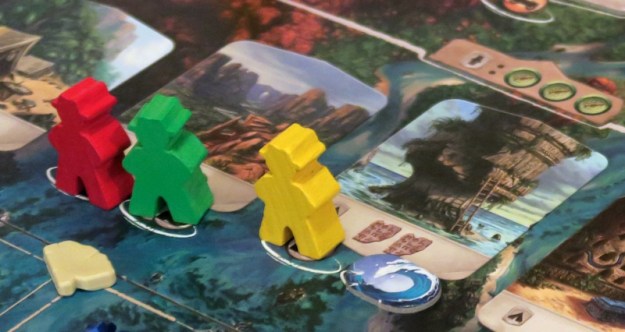
Lost Ruins of Arnak
– Image by boardGOATS

The Research Track is where players spend three of the resources, Tablets, Arrows and Jewels. Each player has two tokens which move up the same track giving different rewards as it ascends. Thematically, you can’t write stuff in the notebook until you find it with your magnifying glass, so the former can never overtake the latter on the track. And of course, the notebook gives cooler rewards. Players get one action each per turn, until everyone has passed and the game finishes after five rounds.  At the end of the game, Points are awarded for Cards, for progress on the Research Track, for discovering Locations and for beating Creatures; the player with the most points at the end is the winner.
Lost Ruins of Arnak
– Image by boardGOATS

The first round was very slow as there was only limited spaces to go and everyone had weak cards in hand. Purple, Cobalt and Teal all focused on building up resources and buying tool cards for future rounds where Ivory did something a little different and started progressing along the Research Track as well as opening up new Dig sites. The issue with this was that he picked up a Fear card, though fortunately he had already got rid of one of his initial Fear cards through the site he opened so there was no net negative effect.  In the second round, things picked up and strategies started to become apparent.

Lost Ruins of Arnak
– Image by boardGOATS

Cobalt continued to focus on getting Tools, especially ones that allowed him to draw extra cards (and hence allowed additional actions) and he started making headway on the Research Track and was first to unlock an Assistant. He also did a little exploring, but did not overcome the Guardian. Ivory wasn’t far behind on the Research Track and also continued to explore new areas (and this time overcome the Guardian) and make up for lost ground in getting tool cards. Teal went for a very different strategy and started to focus purely on exploring and overcoming Guardians, netting him three points for exploring and gaining the idol and five points for overcoming the Guardian. Purple, on the other hand, continued to focus mainly on building her supply of resources.

Lost Ruins of Arnak
– Image by boardGOATS

The third round continued in much the same vein with everyone continuing to pick up Tools and starting to gain Artifacts. Ivory focused almost exclusively on the Research Track and was able to catch Cobalt and had picked up all the bonuses, while both unlocked their second assistant. Teal was continuing his exploring strategy to great effect, whilst Purple continued to bide her time building up resources, including a significant amount of Rubies (the most valuable resource).  And so it continued into the next round too, except Cobalt began spending his Compasses on Artifacts while Ivory continued to hoard them for the last round.

Lost Ruins of Arnak
– Image by boardGOATS

And it was in the final round that Ivory’s plan became apparent as, in true Ivory style, he used all his Compasses to explore a level two Dig Site. Hitherto, exploration had been limited to level one sites and Ivory was the first to explore a higher level, thinking this would be a fun thing to do. In the end, this ironically might have been the critical move that influenced the outcome of the game. The level two site gave Ivory valuable resources, helping him complete the Research Track just after Cobalt and also overcome the newly uncovered Guardian. With two idols on a level two site, this gave Ivory eleven points.

Lost Ruins of Arnak
– Image by boardGOATS

Teal continued with his strategy and also explored a level two site and began moving along the Research Track too. Purple used all her carefully collected resources and make a late dash to the top of the Research Track, gaining valuable points.  It should be said the whole work placement element of the game felt very tight with limited spaces at the start and then difficulty knowing whether to take the optimal route planning cards first, but potentially missing out on a valuable space to other players, or taking the sub-optimal route and placing your workers first guaranteeing the activity, but at a cost of efficiency.

Lost Ruins of Arnak
– Image by boardGOATS

Everyone got blocked at some point (except perhaps Teal who was opening up new sites), and certainly towards the end of the game everyone wished they had more than two workers!  Teal with his explore/overcome Guardian strategy led to him defeating a very impressive impressive six Guardians and gave him a total of sixty-eight points.  In the end, however, the fact Ivory completed the Research Track and was also able to explore and overcome Guardians gave him the victory by just three points with a winning total of seventy-one.  It was a very good game though, one greatly enjoyed by all involved.

Lost Ruins of Arnak
– Image by boardGOATS

Learning Outcome:  Now we know what Bears do in the Woods!