Tag Archives: Ticket to Ride: Berlin

10th June 2025 (Report)

The evening started with a lot of chat about the new and used games people had picked up at UK Games Expo a few days ago, with everyone very keen to play their new acquisitions.  The “Feature Game” was to be one of these, a a shiny new pre-release copy of Sierra, flown in specially for the fair by a chap from Hachette Boardgames UK called Flavien Loisier who was recognisable by his memorable, playable, MicroMacro suit.  Sierra is card game about traveling the Andes that received a UK preview at UK Games Expo, and is a very unusual game.  There are several different ways to play the game including cooperatively and competitively, but this time the group went with working in pairs, playing with the person opposite.
Sierra
– Image by boardGOATS

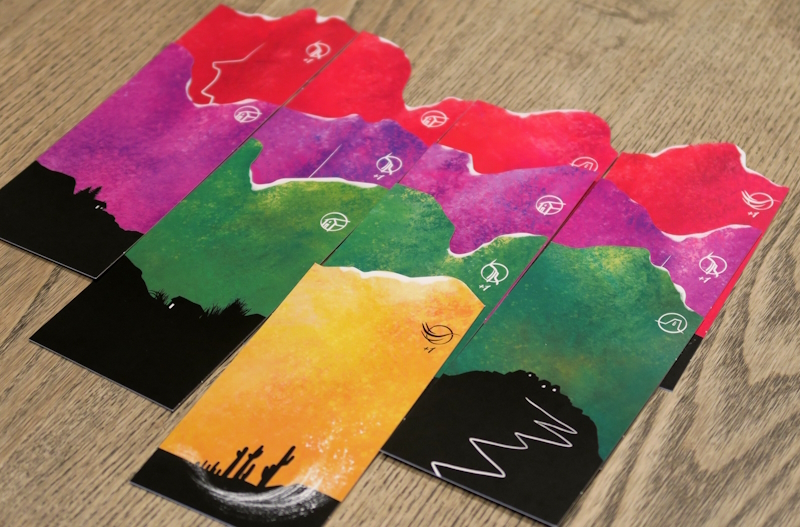
The pairs were Jade & Sapphire, Blue & Ivory, Black & Byzantium, and Purple & Plum.  The idea is that in their pairs players place cards from their shared hand to create a landscape and earn points for satisfying their objectives.  The catch is that while the Landscape cards are shared, all but one of the objectives are not.  In each round, the player with the Landscape cards draws two and plays two, while the other player draws two Objective cards and keeps one for themselves.  At the end of the round, the player with the Landscape cards passes them onto the next couple and the player who drew the Objective cards receives two Landscape cards—thus, the roles are swapped over for the next round.
Sierra
– Image by boardGOATS

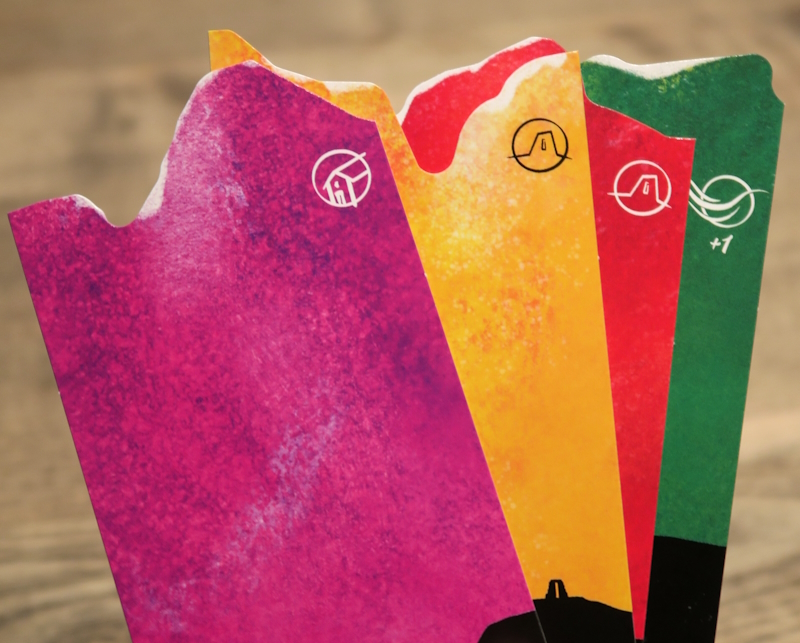
The Landscape cards come in four different colours and can be placed at either end so that the colours match, or they can start a new row.  The tops of the cards makes them look like mountain ranges, the cards form an interesting tableau.  As well as the colour, each card also has one of six symbols: Mammals, Birds, Houses, Ruins, Rivers and Wind—these are used for scoring.  After eight rounds each player will have four Objective cards and each pair’s shared Landscape will contain sixteen Landscape cards.  The game play was very different with so many players and playing in pairs.  The cards and the Landscapes the formed were beautiful.  Everyone who was new to the game started feeling their way somewhat, but eight rounds doesn’t last long and it was all over really very quickly.
Sierra
– Image by boardGOATS

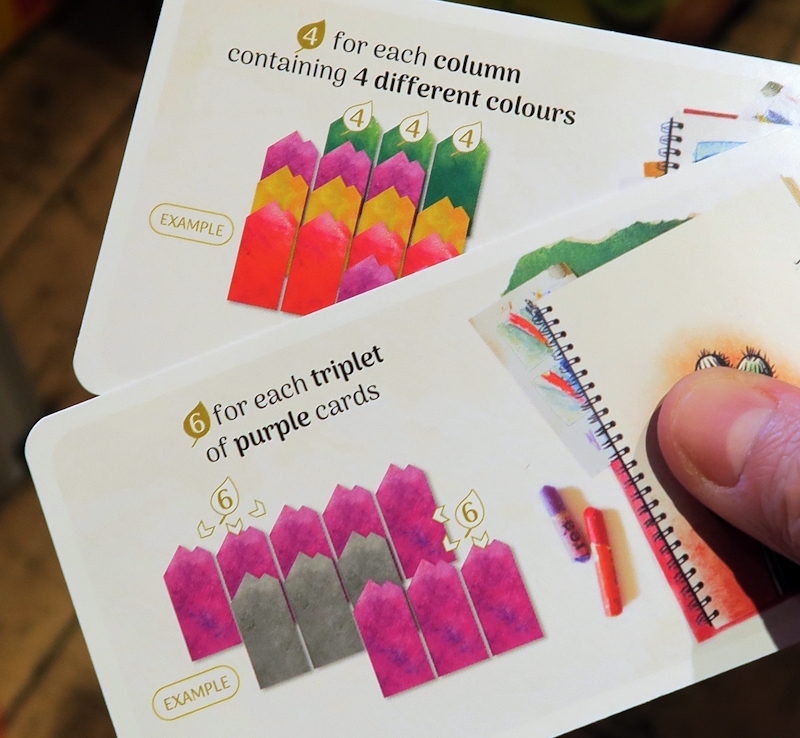
The scoring turned out to be a little quirky and in the end took almost as long as the game.  Each player then scores one point for each River and Wind cards in their shared Landscape and scores for their shared Objective.  Players then count the number of points they have earned  for their individual objectives.  The player with the highest total wins, however, the partner of the player with the largest total receives a bonus of five points If, with this bonus, the partner has more points than anyone else, then the pair win as a team.  This time, Blue and Ivory scored the most for their shared Landscape.  Individually though, it was a tie between Plum and Ivory  as Plum scored much more for her personal Objectives (as indeed did Purple).

Sierra
– Image by boardGOATS

Because the individual winner was tied, there were no “team bonuses” awarded, which left the scoring feeling a little unsatisfying somehow and nobody fancied playing again straight away.  Instead, the group split into two groups with Ivory, Sapphire, Jade and Blue deciding to squeeze in a quick game of Ticket to Ride with the Japan map.  This had an outing fairly recently (when Pink hilariously took a fifty point hit when Purple played a single train claiming the route from Hiroshima to Okayama and blocked all his Tickets), but all the people involved in that game were elsewhere.

Ticket to Ride Map Collection: Volume 7 – Japan & Italy
– Image by boardGOATS

The Japan map is played exactly the same way as all the other versions of Ticket to Ride (i.e. take cards from the market or spend them to place trains in order to fulfill Tickets), but on a map of Japan and with the addition of the Shinkansen or “Bullet Train”.  Once a player has completed a section of Bullet Train, any player can use it to complete Tickets, but the player who completed that section moves along the Bullet Train Track. At the end of the game, the player who progressed the furthest, who contributed the most to this shared project receives the largest bonus, with the player who contributed least being penalised.
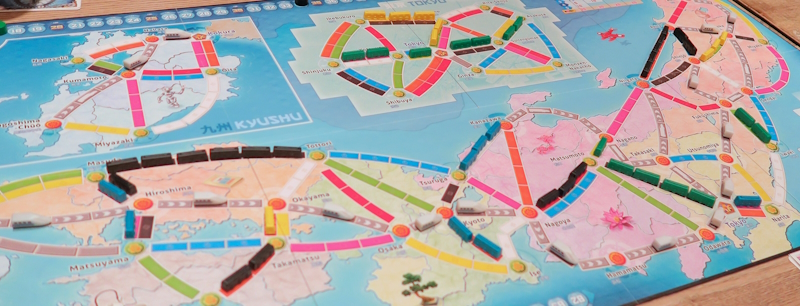
Ticket to Ride Map Collection: Volume 7 – Japan & Italy
– Image by boardGOATS

This time, everyone went for the Bullet Train early, so much so that there was quite a battle and by the time Sapphire realised what was going on, it was too late and he was left with the penalty.  That forced him to switch tack however, which might actually have done him a favour as he left Blue and Ivory to fight for the biggest, twenty-point bonus.  It was all really tight, but Sapphire was some way out in front as the Shinkansen points were evaluated.  And despite picking up a five point penalty, there he stayed to claim victory—Ivory who finished in third, pipped Blue on the Bullet Track, leaving her runner up with an eight point deficit (instead of a two point lead).
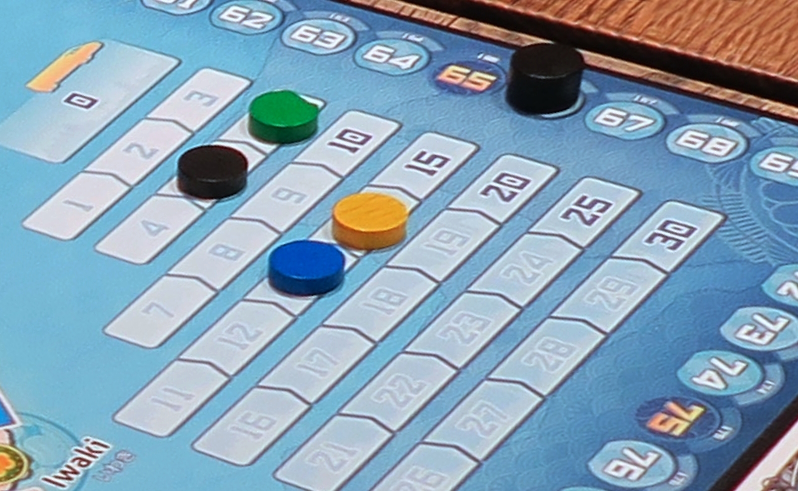
Ticket to Ride Map Collection: Volume 7 – Japan & Italy
– Image by boardGOATS

The other half of the Sierra group had moved on to play another game picked up at UK Games Expo, Tegula.  This is a very beautiful game played with beech wood hexagonal tiles with artwork based on Roman mosaics.  The idea is that players have to match the edges in order to place them.  Players can use actions to swap tiles, give tiles or play extra tiles and the first player to run out is the winner.  This time that was Black, with Purple the best of the rest (i.e. the player with the fewest tiles left, and Plum and Byzantium tied for third.

Tegula
– Image by boardGOATS

Meanwhile, Mint had also brought her new acquisition from the UK Games Expo, Intarsia, and taught it to Pink and Pine.  Although this had a most uninspiring box cover and the uninteresting theme of polishing wooden floors, the game itself is really pretty and fun to play.  Like Tegula, it is also made out of wood, the game is played over three rounds with eacvh round comprising three phases. First, each player takes the ten Material Cards depicted on their Starting Hand Card from the general supply. Players then take it in turns placing wooden elements onto their Flood Boards by paying the necessary Material Cards and taking new ones where possible and claiming and scoring Tool Tiles when their requirements are complete.

Intarsia
– Image by boardGOATS

Finally, players score points based on the number of connectors they’ve placed and choose a new Starting Hand Card to begin the next round. At the end of the game, players calculate their scores for the number of intarsias they’ve built and add them to their running total and the winner is the player with the most points.  The game was very tight… for second place!  In the end Pine pipped Pink’s ninety by a single point, but Mint took victory by a bit of a landslide with a hundred and eight, as she had four intarsias, compared with three and two for the others.  It had been a very enjoyable, lovely tactile game though and that hadn’t out-stayed its welcome.
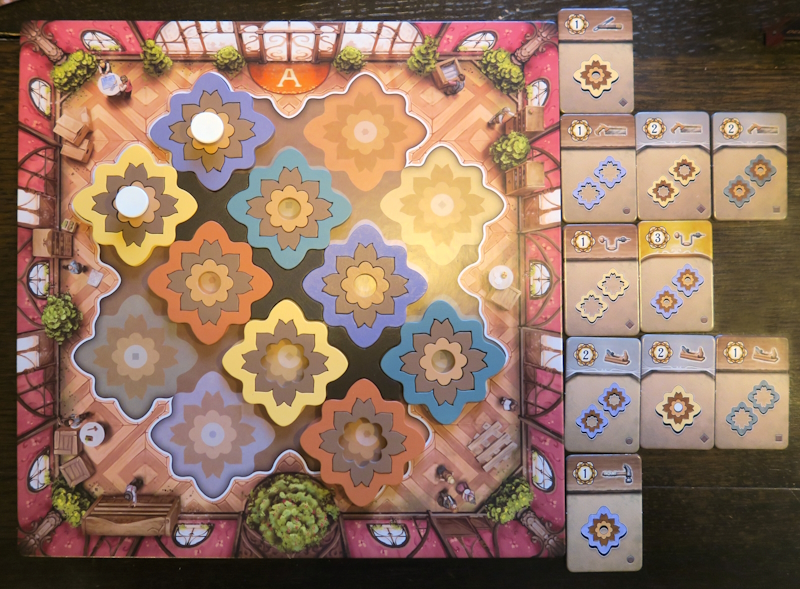
Intarsia
– Image by boardGOATS

With the floor duly polished, the trio moved on to introduce Mint to the weird and wonderful game that is Botswana.  This is a sort of stocks and shares game played with cards and plastic animals.  Players start with a hand of cards and, on their turn, choose one to play taking a plastic animal of their choice from the central supply to add to their holding.  At the end of the game, each player scores for each animal with points equal to the total number of animals of the type they hold, multiplied by the face value of the last card of that type that was played.  Thus a player with five elephants might be scoring twenty-five points until another player replaces the “Five of Elephants” with a zero and crashes their value.
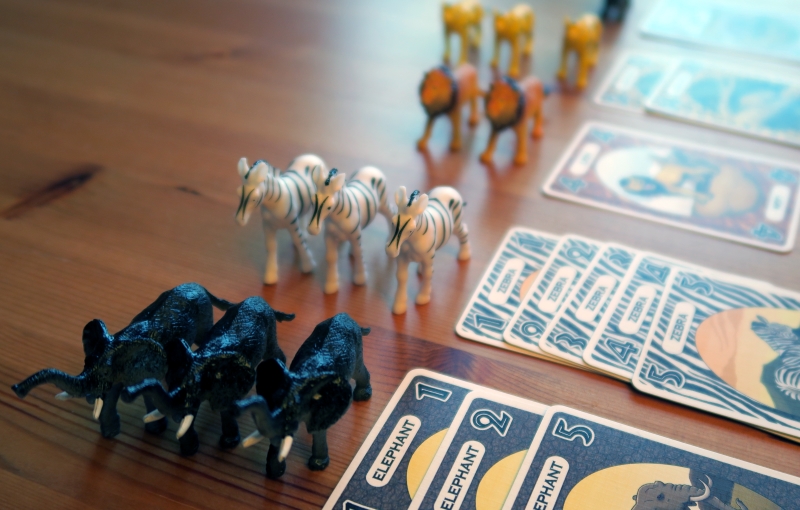
Botswana
– Image by boardGOATS

This game went down to the wire, but Pine just got his nose in front, with twenty points for his lions and fifteen for his rhinos giving him a total of thirty-five, on point more than Mint, while Pink finished a few points behind that.  There was just time for another very quick game and the game they chose was Ticket to Ride: Berlin—one of the city versions of Ticket to Ride.  These are much quicker to play, but still follow the same collect cards and spend them to place pieces in order to complete Tickets pattern. However, in Berlin, players have two different kinds of train car to place—trams and U-bahn trains.  On the board, there are specific single-space routes that can only be filled using an U-bahn train.
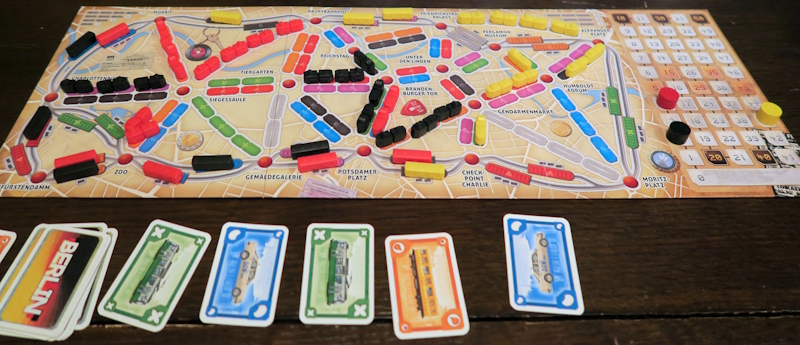
Ticket to Ride: Berlin
– Image by boardGOATS

The number of coloured cards required to complete the U-bahn is indicated on the game board (up to three), but similar to the Bullet Train in Japan, players only ever place one piece on than U-bahn route. Players only have a total of five U-bahn carriages to work with and their placement is critical, which makes Berlin one of the more interesting of the city games.  Once again, this was a close game with everyone using all their pieces.  Pink was the victor however, beating Pine into second by two points, but that meant that all three of them had won a game, so everyone went home basking in the warm glow of success.

Flavien Loisier
– Image from facebook.com
adapted by boardGOATS

Learning Outcome:  You can get some great games from UK Games Expo.
31st October 2023

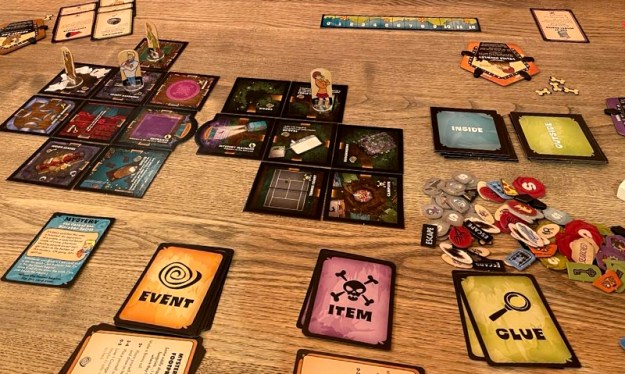
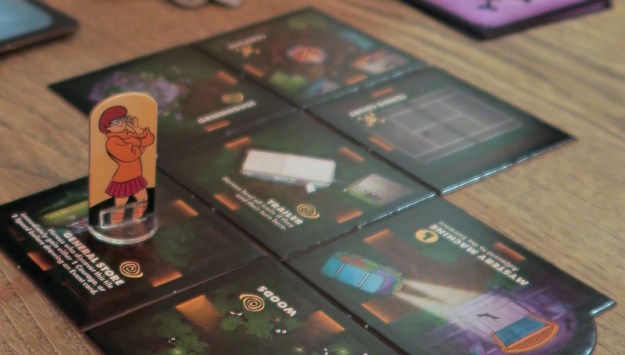
With it being Halloween, there were lots of treats and some very fine spooky-themed attire to go along with the “Feature Game“, Betrayal at Mystery Mansion.  This is a Scooby-Doo themed re-implementation of Betrayal at House on the Hill, a semi-cooperative game, where players work together until there is a haunting and one player takes on the role of the bad guy.  So, the first task for the evening was to decide who was going to take on the roles of Mystery Inc., which precipitated lots of discussion about which was the best character.  Scrappy got short-shift from Pink, though others were less dismissive.  In any case, Scrappy was not an option, and before long, Sapphire, Pink and Pine joined Jade to solve the mystery.

Betrayal at Mystery Mansion
– Image by boardGOATS

Jade, as the group leader, took the role of Fred, while Pink and Pine enthusiastically engaged in the game as Scooby Doo and Shaggy.  That left Sapphire to choose from Velma or Daphne and he went for brains over bimbette.  The group spent quite a bit of time exploring the mansion collecting clues and the like, before the haunt finally started.  As Sapphire was the one to trigger the haunt, Velma was “temporarily lost in the woods” as he took on the roles of the bad guys, a Spectre and a female character called Sharon who was being possessed and controlled by the Spectre.  As the game progressed, it became apparent that the Spectre was her great uncle who was trying to control her to gain access to documents that would enable him to take control of the family fortune.

Betrayal at Mystery Mansion
– Image by boardGOATS

The Scooby Gang (minus Scrappy Doo, Daphne and the now lost Velma) had to track down and battle the Spectre and try break the spell controlling Sharon.  As the villain, Sapphire rolled very well and it was very hard for the Gang to pin him down.  Fred ended up stunned at one point, but thankfully revived after missing a turn.  Shaggy scoffed piles of Scooby Snacks in order to re-roll, but the dice weren’t with him.  Scooby himself, however, did very well and survived his battle with the Spectre then was able to recharge in one of the special rooms of the mansion.  In the end the Mystery Inc. won the day and the great uncle was unmasked and announced that he “would’ve gotten away with it if it weren’t for you pesky kids”!

Betrayal at Mystery Mansion
– Image by boardGOATS

Meanwhile, there were two other games underway on the neighbouring tables.  Blue, Plum and Byzantium eschewed Witch’s Brew (which plays better with more people) and opted for the slightly bigger, beefier, boardgame version of the same game, Broom Service.  Both games rely on the players having a personal deck of Character cards and a lead and follow mechanism.  Each player starts by choosing a set number of Characters from their deck, each with different actions.  The first player then chooses one to lead with and announces that they are either “Brave” or “Cowardly”.  If they choose Cowardly, they can take the action straight away, whereas, if they choose Brave, they must wait until everyone has played to see if they can take the more powerful action.

Broom Service
– Image by boardGOATS

The next player must follow if they have the card in hand, and has the same decision to make—be a Coward and take the weaker action, or be Brave, and risk being gazumped by a later player, as there can only be one Brave player taking the powerful action.  The Brave player (or the most recent Brave player) then leads with another card.  In the card game, Witch’s Brew, players are collecting tokens to give them points, however, in Broom Service, there is an additional “Travelling Salesman” pick-up and deliver type of mechanism.  Players have two Witch-meeples which travel the land collecting potions and delivering them locations to get points.  This time, it was a really, really close game, despite everyone doing different things.

Broom Service
– Image by boardGOATS

Byzantium prioritised collecting Lightening Bolts and Blue concentrated on collecting potions and delivering them.  While they both headed south and contrived to get in each-other’s way, Plum headed north and fell foul of one of the events which left her stuck with no good move in the final round.  Blue kept forgetting about the “Bewitched Roles” which can be used but with a hefty three point penalty and lost six points as a result.  Byzantium assumed he would be the only one to consciously choose to take the hit and thus guarantee he could be Brave, but happened to do that exactly when Blue picked them as well and lost the advantage when he led with those roles.

Broom Service
– Image by boardGOATS

As the game came to a close, it was clear it was going to be close with Blue ahead by a single point with sixty points scored during the game.  She lots of resources left while Byzantium had none but lots of Lightening Bolts, and Plum had some of both.  Initially, Blue and Byzantium tied with seventy-three, just two points ahead of Plum.  That gave Blue victory with the tie break (the most left over resources), but that was only until the miss-count was spotted and Blue lost one point and with it her Winning Witch Medal, instead taking second place by a single point.

Broom Service
– Image by boardGOATS

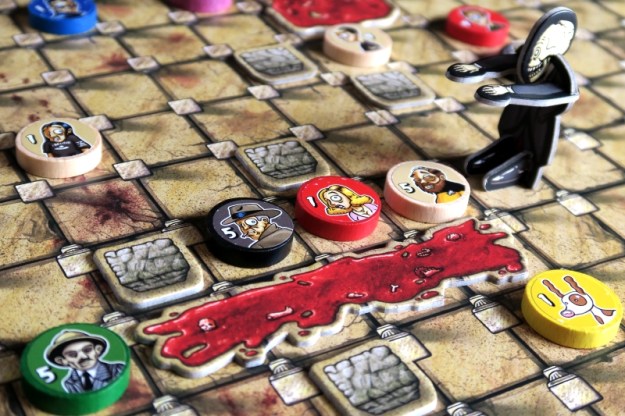
While the first two tables were playing spooky-themed games, Black and Purple led Teal and Cobalt in the monster-mad Finstere Flure (aka Fearsome Floors).  This is a game where players are trying to escape from Fürst Fieso before the castle collapses and without getting eaten.  The idea is very simple: first players move all their pieces the number of spaces shown on their visible side, then the Monster moves.  The Monster moves according to a stack of tiles, either moving a set number or moving until he eats.  The Monster moves one step forwards then looks straight ahead, left and then right. If he sees a player, he turns and moves towards them.

Finstere Flure
– Image by boardGOATS

Thus, the Monster looks, moves, looks, moves until he either runs out of spaces to move, or eats someone.  The game ends after fifteen rounds.  It is simple enough, but there are a few little elements that add to the fun.  Firstly, each player piece moves a total of seven spaces over two turns, but while some alternate three and four space moves, others are more variable, with the most extreme moving six spaces and then one space on the next turn; these different pieces require different tactics.  Players can’t land on another player, if they walk into a rock they push it and if you step in a pool of blood, they slide across it.

Finstere Flure
– Image by boardGOATS

Finally, if the Monster walks into a wall he appears elsewhere on the board adding a further layer of unpredictability.  The game opened with a bang when the first Monster tile revealed was a “Two Kill”, that is to say, the monster keeps moving until he’s eaten twice.  From there, it was carnage.  Everyone had someone eaten, with some multiple times.  There were people who managed to escape from Fürst Fieso, though it wasn’t easy of course.  Everyone managed to get at least one piece out of the castle, with Purple and Cobalt managing to get two pieces out.  The winner, however, was Black who liberated three of his people.

Finstere Flure
– Image by boardGOATS

They were the first to finish, so moved on to play the recent release, Ticket to Ride: Ghost Train.  This is really just a variant of First Journey, a simpler version of the group favourite, Ticket to Ride, aimed at children and non-gamers with super-sized pieces.  Like the original game, players take it in turns to either take “two parade float” cards (in this case blind), or pay cards to place trains on the map.  However, instead of scoring points for placing trains, the game is essentially a race game.  Players start with three Tickets and every time they complete one, they draw a replacement.  The winner is the player who completes the most Tickets.

Ticket to Ride: Ghost Train
– Image by boardGOATS

This time, Teal took an early night, but Black, Purple and Cobalt went at it with spooky enthusiasm.  As a different take on the original, they found this a very enjoyable alternative.  As well as Tickets, players can also win “Trick or Treat” bonuses for connecting the Dark Forest region to the Seashore region.  Black and Purple both took a “Trick or Treat” bonus, but the winner was Cobalt who finished with six Tickets, one more than Purple who would have taken another if she’d had just a little more time.  That wasn’t the only Ticket to Ride game of the night however, as the Scooby Gang played a quick game of Ticket to Ride: Berlin once they had solved their mystery.

Ticket to Ride: Ghost Train
– Image by boardGOATS

Ticket to Ride: Berlin is one of the mini versions, and there was a little chat about these and which ones people had played.  The first mini version was a “demo” game the publisher used to introduce people to the game at conventions.  Since then, there have been a series of City versions, with New York, London, Amsterdam and San Francisco all featuring and Berlin being the most recent (with Paris to come next year).  These all feature the same basic mechanism as the original game (including the scoring of points for placing trains unlike the First Journey type games), but they have fewer train pieces and a smaller map.  The Berlin map, is long and thin, but the big difference is that players have mixture of Trams and U-Bahn pieces.

Ticket to Ride: Berlin
– Image by boardGOATS

Tram and U-Bahn routes are paid for in similar ways, though only one U-Bahn piece is needed to mark them and they score slightly more points.  Once the differences had been highlighted by Pine and Pink (who played this together a few weeks back), everyone got down to business.  Jade and Sapphire dominated the West while Pink and Pine concentrated on the East, though the geography of the map meant everyone had to include East-West connections in their network.  It was a hard-faught close game with both Jade and Sapphire taking negative points due to incomplete Tickets.  Pine completed five Tickets and Pink finished six.

Ticket to Ride: Berlin
– Image by boardGOATS

Pine’s Tickets were more lucrative, however, and he took victory with sixty-one points, while Jade with forty-nine just pipped Pink by two points in the struggle for second place.  Everyone had enjoyed the game, and Jade commented that it was one of his favourite renditions of Ticket to Ride so far—indeed, the addition of a second set of transport seems to have been much more successful in this mini version than it was in the full-sized Rail & Sails where it made it longer and more fiddly without making it significantly better.  While everyone else was playing and then discussing the merits of different versions of Ticket to Ride, the Crafty Trio, Plum, Blue and Byzantium had finished Broom Service and squeezed in a quick game of Dinosaur Drafting with Draftosaurus.

Draftosaurus
– Image by boardGOATS

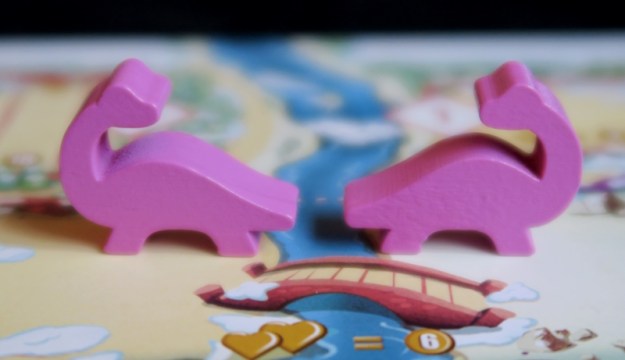
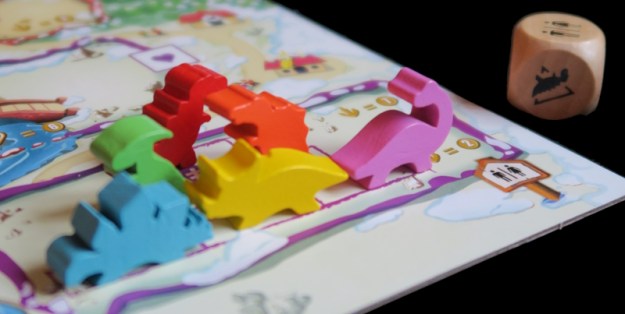
This is a fun little game that we play quite a bit, where players choose one Dinosaur from a handful, add it to their Park and then pass the rest on.  Dino-placement is slightly restricted by the roll of a die, with everyone getting points for how they occupy their pens.  Usually, the group plays with the Summer board, but with the cold weather, the group decided to play with the alternate, Winter board which introduces new and different pens.  These include the Well-Ordered Wood (Dinosaur types must alternate); Lovers’ Bridge (giving six points for each pair of Dinosaurs separated by the bridge); the Lookout (contains one Dinosaur and scores two points for each one of that type in their right neighbour’s pen).

Draftosaurus
– Image by boardGOATS

The most challenging, however is the Pyramid, which holds up to six Dinosaurs in a layered structure, but dinosaurs of the same species may not be placed adjacent to each other (horizontally or vertically).  Blue got into a mess with this, and was stuck with a Dinosaur she could not place at the end as a result.  Plum and Byzantium did slightly better and were able to capitalise more on the Quarantine Zone, which allows players to move the single occupant at the end of the game.  In the end, it was a tight game (though not as tight as Broom Service), in which Plum ran out the victor, three points ahead of Byzantium.

Draftosaurus
– Image by boardGOATS

Learning outcome: They’d have got away with it if it weren’t for those pesky kids!

3rd October 2023

Black, Purple, Byzantium, Plum, Blue and Pink all arrived early for food, and were soon joined by Pine, Lime and finally Ivory.  The “Feature Game“, was to be Crappy Birthday, a party game where players give each other comedy birthday presents and the recipient has to decide who gave them the best and worst gifts.  A bit like the better known game, Dixit, the idea is to be the master of non-mediocrity, with the best and worst gifts netting points for the person who gave them.  It was our birthday party, so as is now traditional, everyone shared cake (this year, meeple topped carrot cup cakes), before Plum started off the year of GOATS crappy birthdays, receiving her first gift from Byzantium.

2023 Birthday Cupcakes
– Image by boardGOATS

This year we discovered that Plum fancied a custom chopper, Byzantium liked the idea of visiting a radioactive swamp (so long as it wasn’t too active) and Lime would gratefully accept a gift Monster Truck weekend.  Unusually, Pine didn’t get horses and a pile of meat, and picked skiing in Alaska (finding the Alaska bit more appealing than the skiing), and Black chose a Safari as his favourite gift.  Plum picked a chick-flick marathon over a litter of puppies and Ivory opted for a catapult over several space-based options.  Finally, much to everyone’s surprise, Blue picked a garden chess set and Pink chose a set of cuddly penguins over a pet vulture (who is very friendly, but stares at you while you are sleeping).

Crappy Birthday
– Image by boardGOATS

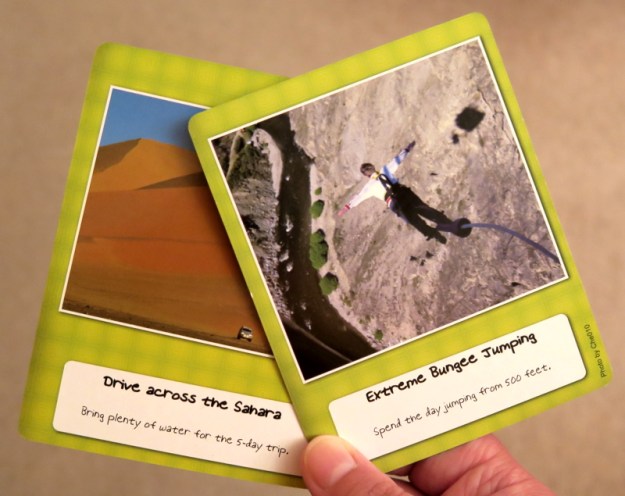
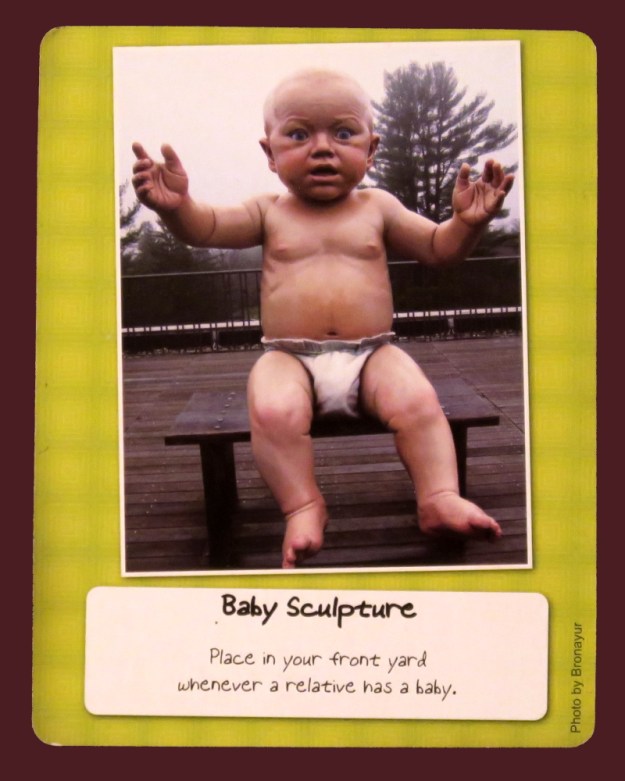
Less popular were singing the national anthem a the baseball, extreme bungee jumping, face piercing, a flexible trainer, and perkiness training.  The horrific baby sculpture was pretty much guaranteed to be rejected (and Lime had the opportunity for a second time), but others were more specific.  For example, Purple eschewed the drive across the Sahara because she dislikes the heat while others felt they would quite like a visit to the desert.  Similarly, Pink couldn’t imagine anything worse than mime camp, although most of the others couldn’t really see his problem.  Most people managed at least one or two loved or loathed gifts, nobody came close to matching Plum, who took a massive six points—a remarkable seventy-five percent of her potential maximum, quite a record for a worthy winner.

Crappy Birthday
– Image by boardGOATS

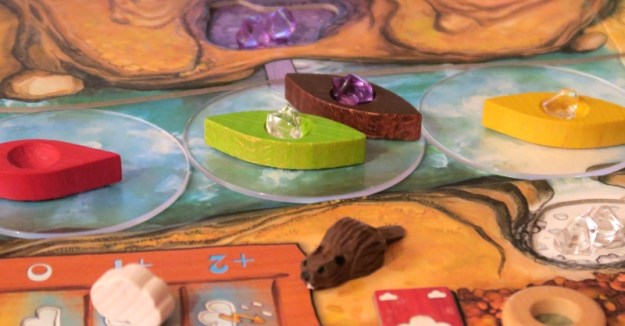
With our birthday suitably marked, the question was whether to continue to play light, large-group games or to break the group up and play something slightly more serious.  Pink suggested Niagara, and although Blue, Black and Purple warned against it, Plum showed an interest and that suckered in Byzantium, Lime and Pine.  The idea of Niagara is that players are rowing their canoes along the river to collect gems and then safely row them back to shore.  Players do this by simultaneously choosing a Paddle tile to play, then taking it in turns to activate their chosen Paddle to move their canoe (or canoes), trying to avoid losing them over the cataract and turning them into match-wood.  The winner is the player who manages to get seven different coloured gems or five gems of the same colour safely to shore.

Niagara
– Image by boardGOATS

The reason for the warnings and large amount of reticence form some of the group was after an online game some two years ago when Pink had the temerity to steal gems from everyone else and collective punishment failed to correct his appalling behaviour, winning the game in spite of it all.  This time, fore-warned and fore-armed the game started mean and got meaner, with the gem stealing starting in the very first round.  As a result, three out of the five finished the game with nothing.  Although Pink ended the game with two red gems, at least he didn’t win—that honour went to Byzantium, who by hook or by crook (mostly crook to be honest), managed to get five purple gems and ended the game.

Niagara
– Image by boardGOATS

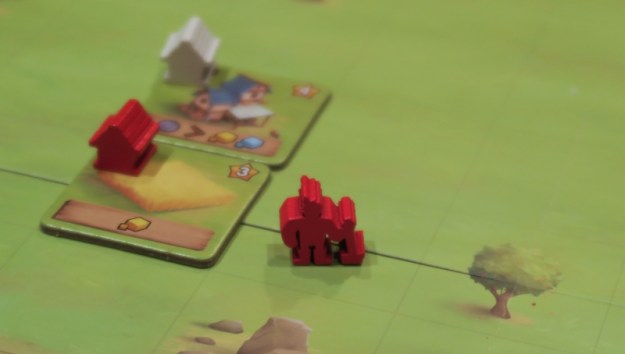
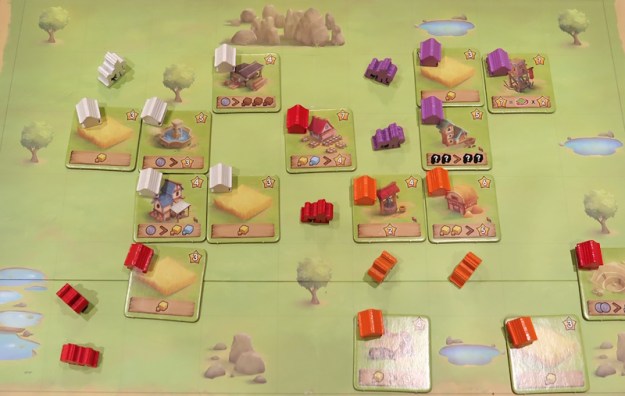
Meanwhile, on the next table, Black and Purple were introducing Blue and Ivory to Little Town.  Despite the similarity in names (and inevitable resulting confusion), this is nothing to do with Tiny Towns. In this game, players acquire resources like wood, stone, fish, and wheat from the surrounding squares by placing workers on the board. When a worker is placed, the owner acquires the resources available from all eight surrounding spaces. They can then build buildings by using these resources, and the owner (or indeed any other player), can gain the effect of the building when they place a worker next to it, although when claiming a resource from a building owned by another player, they must pay a them a coin.

Little Town
– Image by boardGOATS

The game is deliciously tight—each player gets one action per turn, three turns per round and the game lasts just four rounds. Players collect victory points by using the powers of buildings, by constructing buildings taken from the market (which is not refilled), and by achieving goals dealt to them at the beginning of the game. After the fourth and final round, whoever has the most victory points wins.  Ivory started building an engine based on turning money into points, but then he realised the flaw in his plan:  there was no additional source of money in the game, so once he’d spent his cash, he was reliant on others paying to use his facilities, a source that rapidly diminished.  So he moved on to collecting wheat instead.

Little Town
– Image by boardGOATS

Blue built an engine to turn fish and wheat into points.  Black also built a wheat into points engine and pinched the last wheat field that both Blue and Ivory had their eye on.  Purple on the other hand did something completely different, converting resources into other resources to satisfy her goal card.  Ultimately though, none of it really mattered as the game was really, really tight and all four players finished within three points of each other.  Black’s experience with the game told and his thirty-two points just edged him one point clear of Blue who took second and she in turn finished one point ahead of Ivory.  It had been an enjoyable game though, definitely deserving of another outing, especially as the variety in the buildings would make it play very differently every time.

Little Town
– Image by boardGOATS

While the Little Town was being explored, Niagara had already finished and Lime, Plum and Byzantium rowed their respective ways home, leaving Pine and Pink to play a quick game of the new mini-version of Ticket to Ride, Berlin.  This is the latest in the “City Series”, smaller versions of the game that play more quickly, but still keep the essence of the original game.  Each game (full-sized or smaller), has some unique “hook” as well as a new map and features designed to bring a flavour of the new location.  Like all the other game, players have a choice on their turn to either take coloured cards from the market, or pay cards to place pieces on the map.

Ticket to Ride: Berlin
– Image by boardGOATS

In the Berlin version, players have both subway trains and trams to place. Tram routes are claimed in the usual way, but only one underground carriage is placed to claim a Subway or U-bahn route. When a player has one or none of their pieces left in their supply (either Tram or U-bahn carriages), each player, including that player, gets one last turn, then tickets are scored as usual.  One of the differences between this game and the other variants is the shape of the map, with it being very elongated in the east/west direction.  Pine built his routes along the north side and into the centre while Pink stretched his network along the south bank and into the centre.

Ticket to Ride: Berlin
– Image by boardGOATS

It was a very enjoyable game, and both Pink and Pine said they would definitely play this one again.  Perhaps part of the reason was that it was very close, but neither player realised how close until the final scoring.  In fact, it was so close that they double checked the score and confirmed that it was a tie with both players finishing with fifty-four points.  After a bit of chat, they had a rummage through the rules to find out what the tie breaker was, only to discover that it was the number of completed tickets, and both had finished with five.  So remarkably, it was a real tie, but while they shared victory this time, there will almost certainly be a rematch in the not too distant future.

Ticket to Ride: Berlin
– Image by boardGOATS

Learning Outcome: Everyone loves a nice birthday gift.