Tag Archives: Earth

29th April 2025

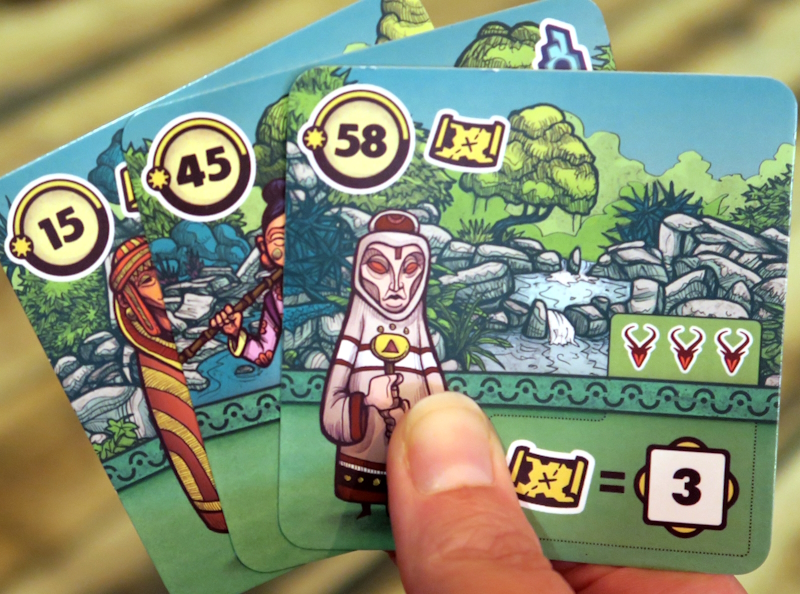
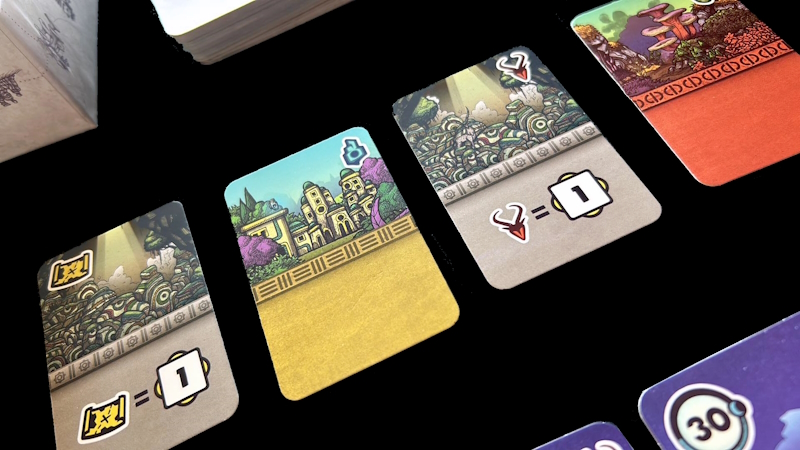
The evening began with a quick game of the popular Blackjack based game, Flip 7.  This is a quick, push-your-luck card game along the lines of Port Royal where players turn over cards and gamble on not revealing the same number twice taking it in turns to decide whether they want to “flip” or ” stick”. The catch is that each numbered card appears in the deck that number of times (i.e there is one one, two twos and so on). Flipping over seven different cards in a succession gives fifteen bonus points.  There are also some action cards in the deck, “Flip Three”, “Freeze”, “Second Chance” and modifier cards which give extra points. The game ends when players have reached the pre-agreed total.

Flip 7
– Image by boardGOATS

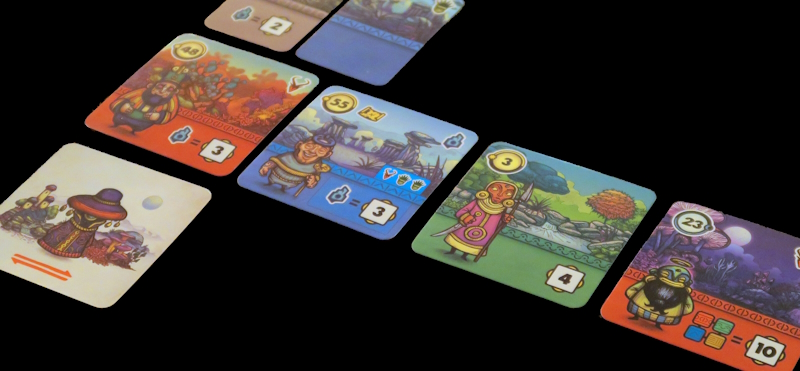
Ivory was keen to get in a little practice as “Little-Ivory” was getting it for his birthday in the next few days.  Although the game plays up to eight (with one box), there were just the four as Ivory was joined by Jade, Sapphire and Mint.  Mint went bust early and Sapphire started fast, but the victor was Ivory who didn’t go bust at all during the game.  With that over quite quickly Jade and Sapphire were joined by Pine, Plum and Byzantium to play the “Feature Game“, Creature Comforts.  In this game, players spend Spring, Summer, and Autumn gathering different resources from the forest and spending them to collect items that will home a more inviting place while the world outside is covered in a layer of snow in the Winter.

Creature Comforts
– Image by boardGOATS

Creature Comforts is a worker placement game with a twist:  the workers can be placed at various locations, but dice of specific values (or sum-totals) are required to activate the locations. Thus, the players need access to dice of specific values when it comes to triggering those workers.  Jade explained the rules to Pine, Plum, Byzantium and Sapphire, some of whom were new to the game.  Played over twelve months, at the start of each month or round, a Traveler “event” card is revealed which either applies an instant effect or one that lasts the duration of the month.  Simultaneously, players then roll their two Family dice and place them on their Home Boards.
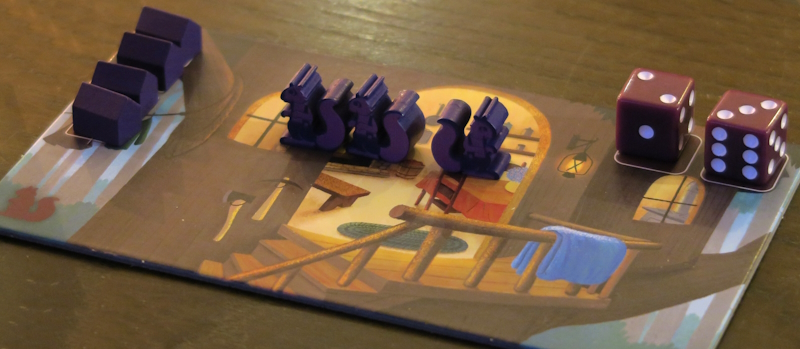
Creature Comforts
– Image by boardGOATS

Then, players simultaneously place their Workers at their choice of the twelve locations.  Although the locations can hold any number of Workers, players can only place a single worker at each one.  Each location will either require a dice of a specific value or multiple dice that add to a given sum (or have a particular requirement e.g. feature all odds or evens).  The catch is that at this point, players only know the values of the two dice that they have access to, their Family dice.  So, placing Workers requires some astute planning mixed with some luck when the four communal Village dice are rolled next, by the start player for the month.  Players then take it in turns to allocate the six dice at their disposal to activate as many of the locations their Workers are at as possible.

Creature Comforts
– Image by boardGOATS

Each Worker that a player cannot activate gets them a Lesson token, which can be used to modify dice values in later turns (for only that player).  Finally, players finish their turn by crafting any creature comfort cards they can, keeping in mind that only three can be carried over to the next round.  After eight months (six if playing a shorter version of the game), players can craft any left-over cards they might have in their hand if they can afford to and then score for their Comfort Cards, Improvement Cards, for empty Cottage spaces and left-over resources.  The first problem was that there were a lot of locations to get to grips with.  Pine, who was new to the game, struggled initially, but by the end was wanting to play again soon!
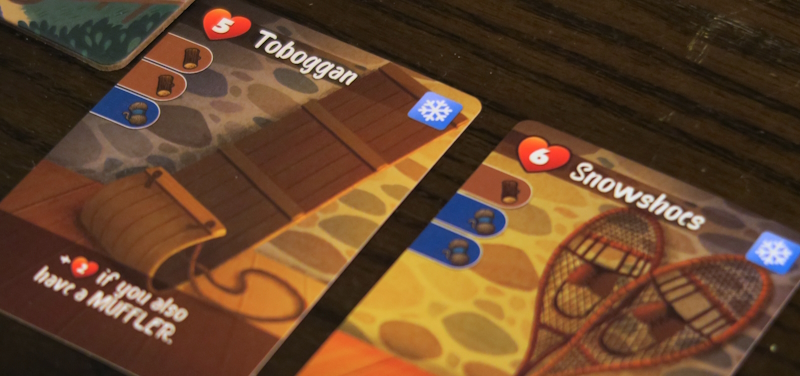
Creature Comforts
– Image by boardGOATS

Sadly, although the game was a lot of fun and enjoyed by all, it was marred by the fact that “Last Orders” was called sooner than expected.  This meant the last couple of rounds were played at something of a rush and points were missed and some of the scores might not have been correctly counted.  There are a lots of odd points to be counted, but the bulk come from the eponymous Creature Comfort cards.  Byzantium top-scored for these with forty-three points, some ten more than anyone else, so it was no surprise that he ran out the winner by a sizeable margin, with everyone else left fighting for second.  That battle was won by Sapphire with Pine taking third.

Creature Comforts
– Image by BGG contributor hipopotam

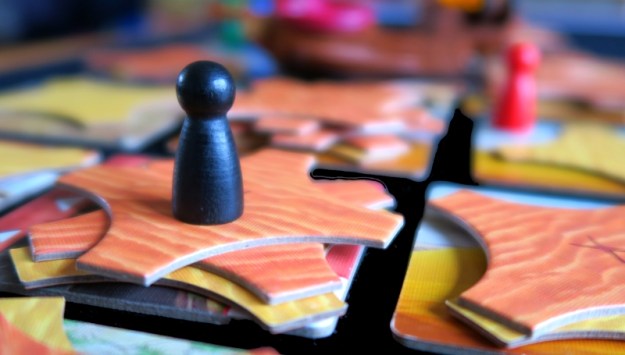
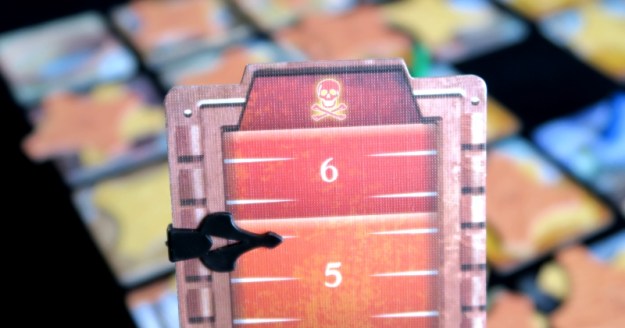
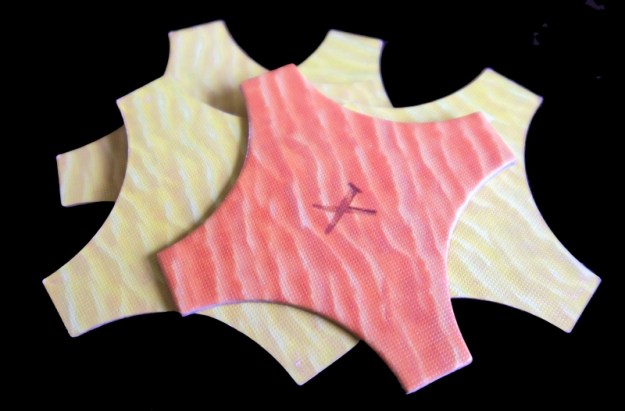
Meanwhile, Mint introduced Blue and Ivory to the really cool, three-dimensional game, Planet.  This is quite a simple game, but really clever:  each player receives a dodecahedral planet core with twelve pentagonal spaces and a magnet in the centre of each one.  On their turn, players choose a pentagonal tile with different terrains (Mountain, Ice, Forest and/or Desert) on them and stick it to their planet. The player who fulfills the most conditions for the appearance of certain animals gains its card.  There are public, animal objectives and each player has a private objective, their “Natural Habitat”.
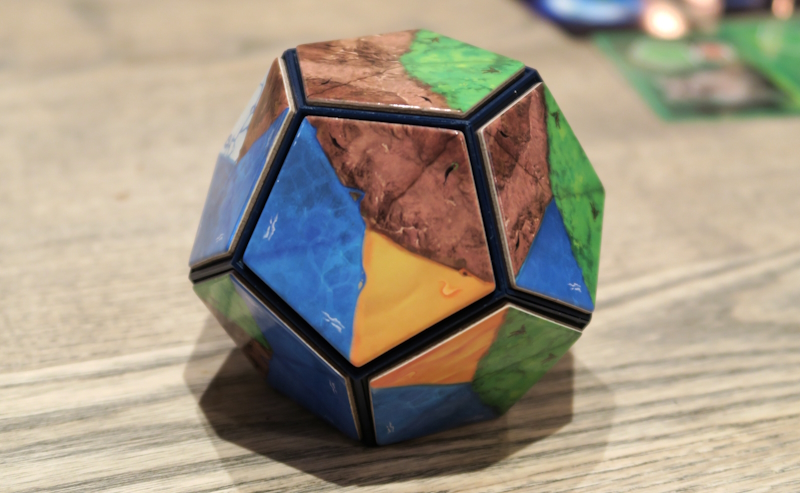
Planet
– Image by boardGOATS

Players score points for the size of their Natural Habitat, and also for each animal card they claim.  Animals that live in an area that is not the player’s Natural Habitat score extra points which creates sort of opposing incentives to cover the planet with Natural Habitat tiles while also creating the right conditions to score animal cards.  And as the Planet fills up, this gets more and more complex.  Although everyone loved it, the game didn’t quite click for Blue, but it was close between Ivory and Mint.  There were only two points between them in the final totals, with Ivory taking his second victory of the night with twenty points.

Planet
– Image by boardGOATS

From there, the trio went on to play the Golden GOAT Award winning game, Stamp Swap.  In spite of the theme (which didn’t really set anybody’s imagination on fire), this has proved to be a really popular game within the group—it is just very smooth and doesn’t outstay its welcome.  Everyone had played it before, so there was only the barest minimum of a rules run-down.  The game takes place over three rounds, each split into two parts:  Firstly players take it in turns to choose from a central pool, then players divide their pile into two and the first player chooses one pile from another player to take, who keeps their other pile and chooses one from another play—and thus the piles of stamps are swapped.

Stamp Swap
– Image by boardGOATS

Players score points at the end of each round for their achievements and at the end of the game, for the face-value of the stamps and for end game objectives.  Despite everyone having played it before, there was a rules malfunction that might happened before and could have made a significant difference, to Mint and Blue especially.  Each player has an “Exhibitor” which gives players a point for each stamp they have of a given theme.  The group scored this at the end of the game, however, it is supposed to give points at the end of each round.  Everyone played by the same rules, so Ivory was the deserved winner with a hundred and eighteen points, but the scores would have been closer if the Exhibitors had been played correctly.
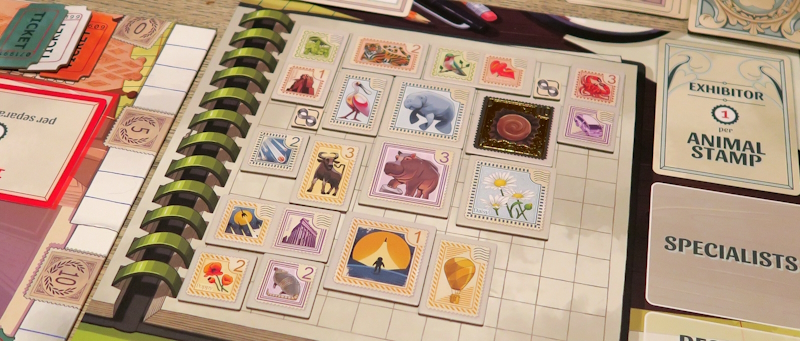
Stamp Swap
– Image by boardGOATS

On a night when there were four tables, the third consisted of Pink, Black, Pine and Purple, started with a game of Little Town.  This is a really cute little game of Worker placement, resource collection and management, and building tile placement.  The game lasts for four rounds, during which players collect resources (wood, stones, fish, and wheat) from the eight surrounding squares by placing Workers on central map.  Players can then build buildings using these resources, players can then gain the effect of the building by placing a Worker next to it.  Placing a Worker next to a building owned by another has a cost though, and the player must pay a coin before you can collect resources.
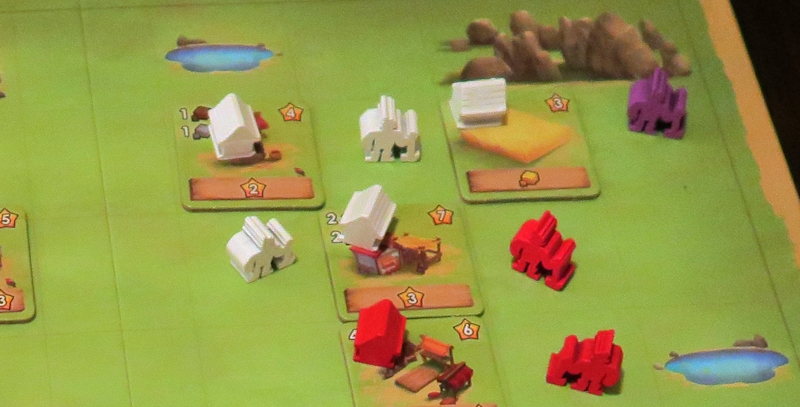
Little Town
– Image by boardGOATS

Players collect victory points using the powers of buildings, by constructing buildings, and by achieving objectives dealt at the beginning of the game. This time, Pink played a really pragmatic game essentially simply repeatedly activating the Well and the Bar (giving him two and three points each respectively).  As a result, the game was a bit of a land-slide with Pink taking victory with thirty-nine points, eleven ahead of Black in second with Pine a few points behind that.  With everyone else otherwise engaged, the group went on to play a quick game of Ticket to Ride: New York.  This is one of the first of the very small editions of Ticket to Ride, in fact, the first of the “Cities“, as it was preceded only by the Demo version.
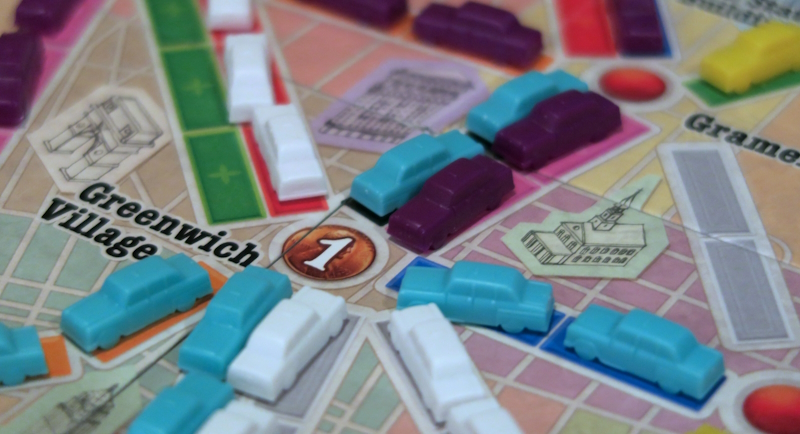
Ticket to Ride: New York
– Image by boardGOATS

The game is played much the same as the full version of Ticket to Ride, with players taking coloured cards from the market and spending them to place pieces (in this case taxis) with the aim of completing tickets.  Black took the most points for the Tourist Attractions he made connections with, but had a bit of a ‘mare elsewhere, failing to complete a large pile of tickets which left him losing fifteen points.  This almost entirely wiped out the rest of his points, but it was relatively close between the others.  Pink was once again the victor though, taking the most points for placing taxis and for his tickets giving him a total of thirty-four points, with Pine taking second place just ahead of Purple.
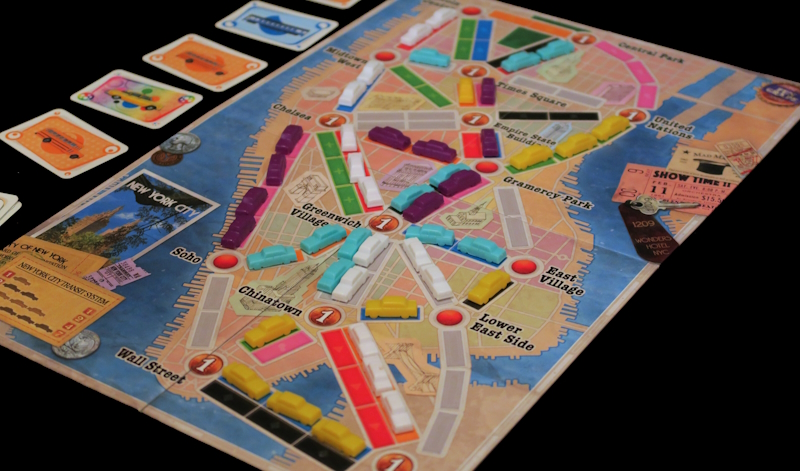
Ticket to Ride: New York
– Image by boardGOATS

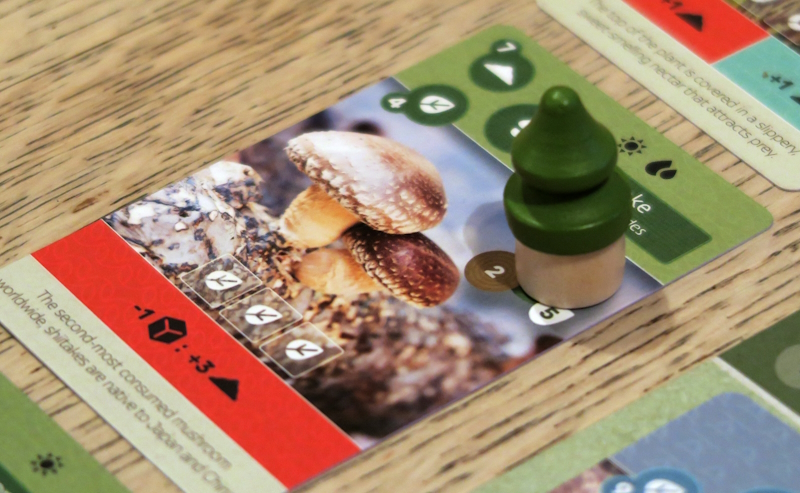
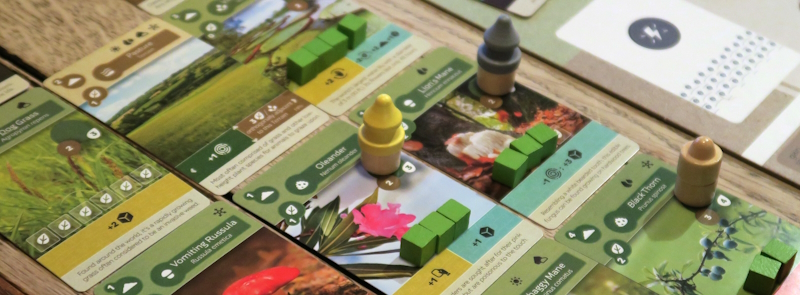
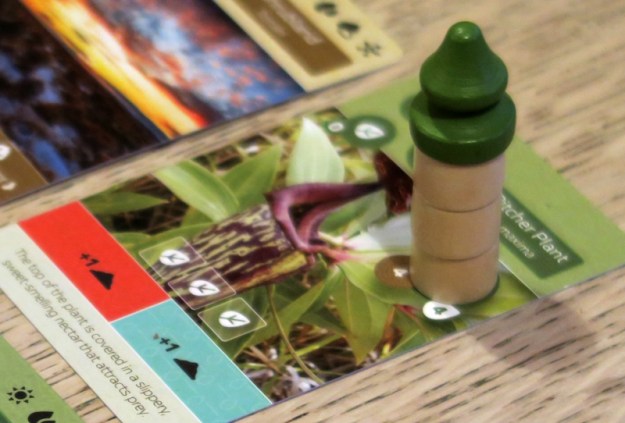
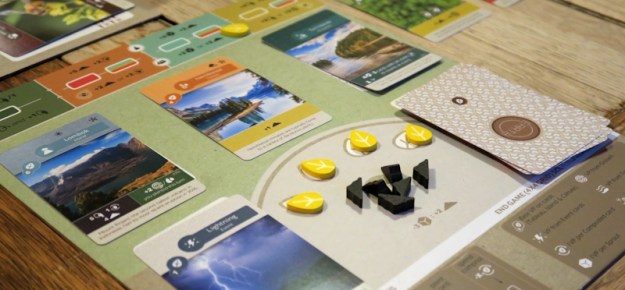
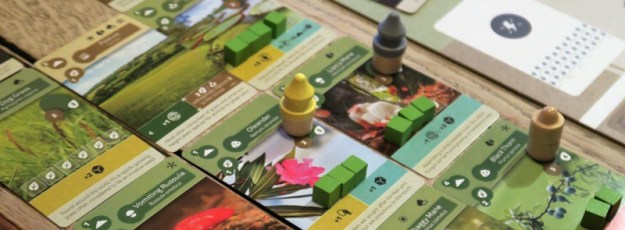
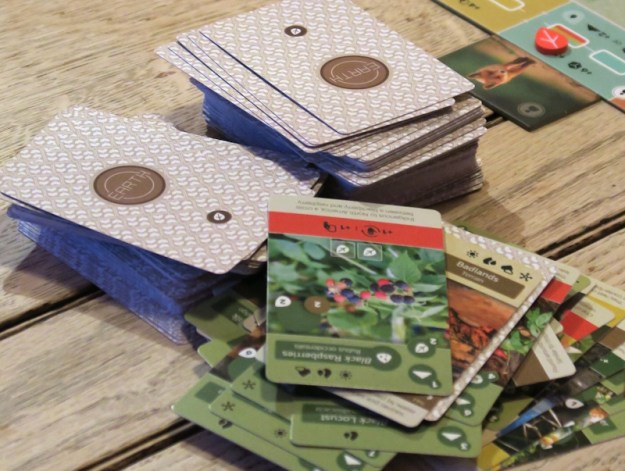
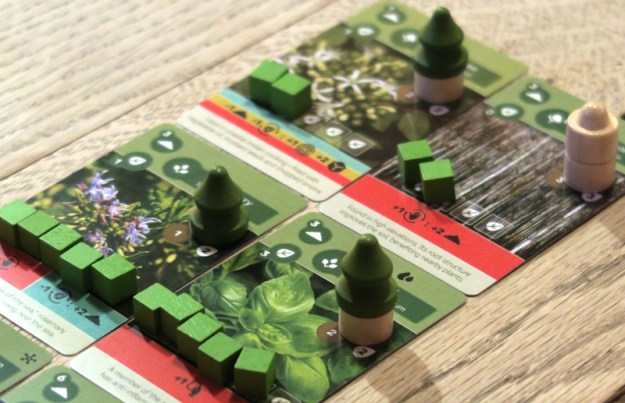
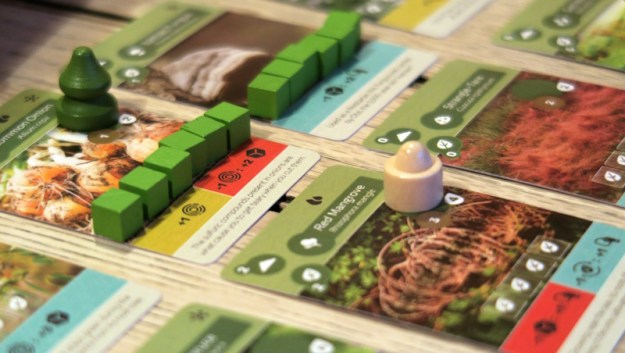
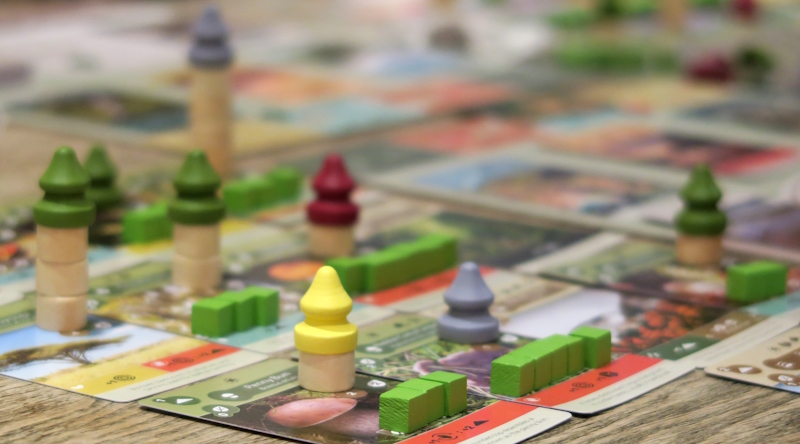
The fourth table consisting of Green, Teal, Salmon and Flint, only played the one game, but it was one of the most beautiful of recent times:  Earth.  This is a card-driven engine-builder where players are building themselves an ecosystem.  Often compared to Wingspan, although there is a lot to understand, the game itself is not actually all that complicated. Players are building a four by four grid of Flora and Terrain cards which represents their island; during the game they will plant flora, water it and allow it to grow.
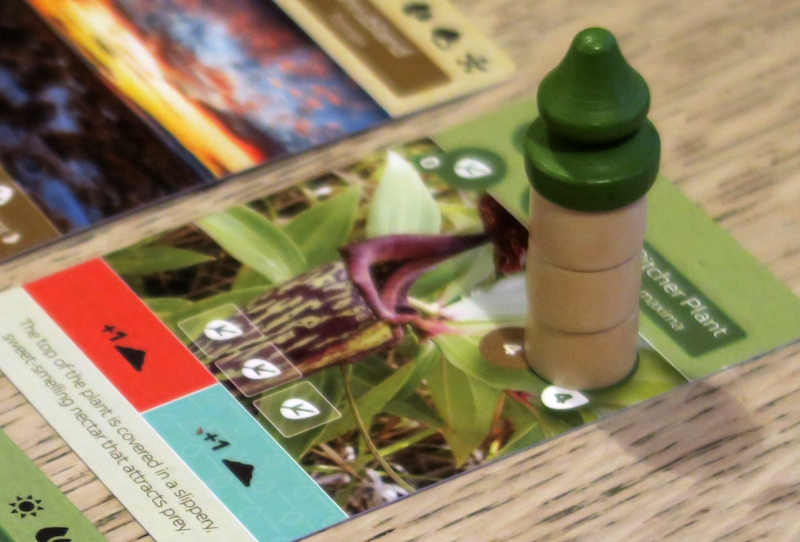
Earth
– Image by boardGOATS

On their turn, players do one of four things: Planting (paying the cost in Soil tokens), Composting (gaining Soil and placing cards from the deck in their discard pile), Watering (place Sprouts and gain Soil) & Growing (draw new cards and place growth tokens).  A bit like Puerto Rico, once the active player has chosen which action they are taking, everyone else gets to do a subsidiary, slightly weaker version of the same action.  For example, when Planting, the active player plants two cards, draws four and keeps one, while the other players plant one and draw one.
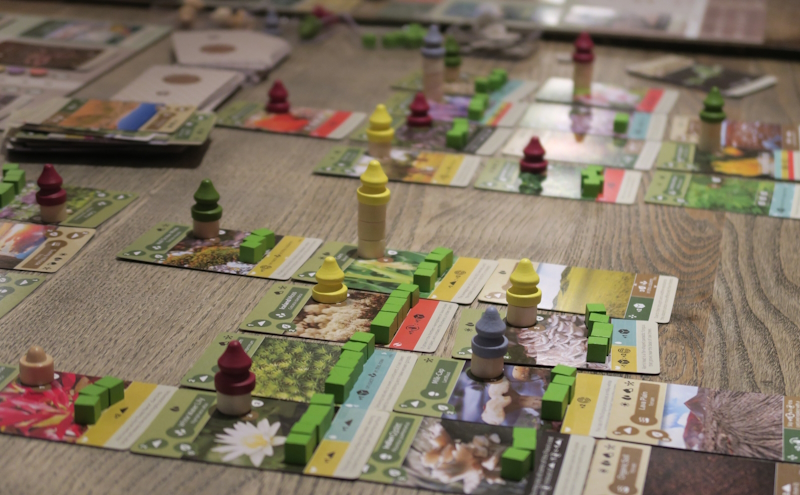
Earth
– Image by boardGOATS

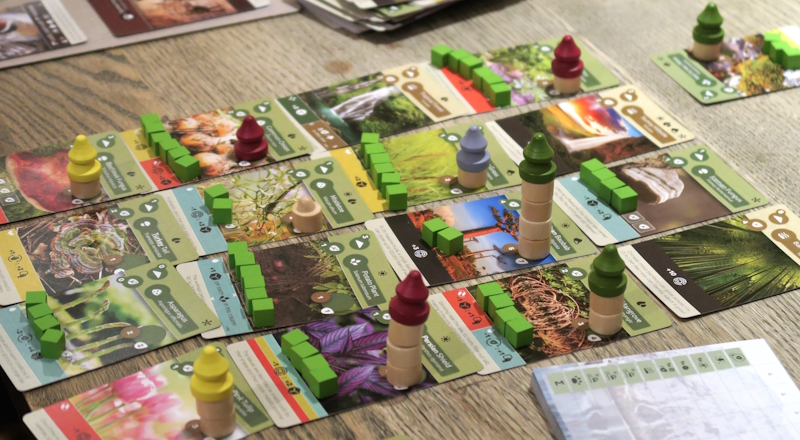
Once everyone has completed the action for the turn, everyone activates all the cards in their island that match the colour of the action chosen, starting with the card in the top left and working across each row in turn.  So, not only is it important which cards are played, but also where they are located in the player’s island.  At the end of the game (which is triggered when one player has completed their island), players score points for each Flora card, any Trunks and Canopies they have grown, their Sprouts and their pile of “Composted” or discarded cards.  Players also score points for achieving objectives on the Fauna cards revealed at the start of the game and for completing their island first.
Earth
– Image by boardGOATS

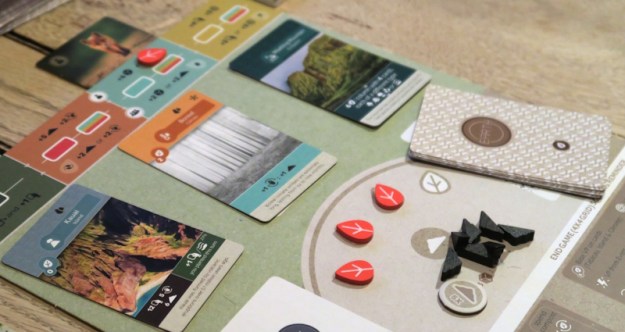
This was another game that turned out to be a bit of a land-slide.  The base scores for the islands was pretty consistent, but as with many games, it’s about what you do with the cards you get that makes the difference.  Green “Composted” fewer cards, but scored more for his Sprouts.  Players had ups and down, but otherwise it was fairly even.  The biggest difference, however, was the number of Leaf Tokens on the Fauna board—Green had more than twice as many as anyone else with sixty.  As a result, his total of two-hundred and forty-four was nearly fifty more than that of Teal who took second ahead of Flint in third.
Earth
– Image by boardGOATS

Learning outcome:  Rushing the end of a game can take the shine off it.
8th April 2025

By the time everyone else started to arrive, Cobalt was already most of the way through losing his game of 20 Strong.  This is a solo-player deck-based game where the object is to progress through a shuffled deck of cards, each of which bears a unique challenge. This challenge could be in the form of an enemy, a unique scenario, or some other requirement which are completed by rolling a set of seventeen dice with different odds for a hit.  These dice, along with three adjustable stat dice, make up titular twenty dice.  Cobalt continued rolling his dice while others ordered food, chatted and ate.

20 Strong
– Image by boardGOATS

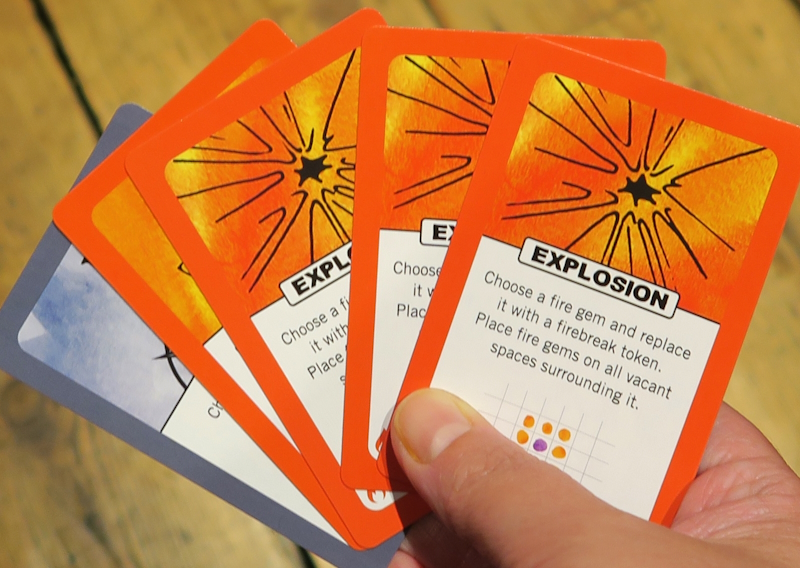
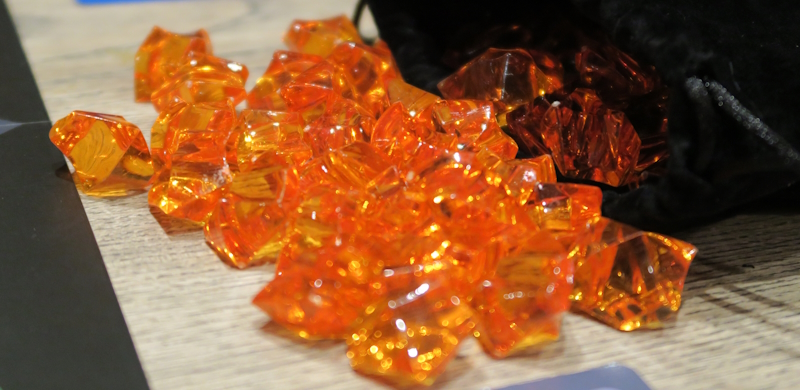
Before long players began splitting into groups, deciding what to play.  The first group was Blue, Pine, Mint and Pink playing the “Feature Game” which was to be Fire Tower.  This is a competitive game where players order air drops of water, and plan the building of firebreaks in order to combat a woodland blaze.  The rules are very simple:  players begin their turn by spreading the fire in the current wind direction then play one card from their hand (or discard all their cards) and replenish their hand.  There are four different types of cards, Wind, Fire, Water, and Firebreak cards.  Wind cards can be used to change the Direction of the Wind which affects which direction the fire spreads in.

Fire Tower
– Image by boardGOATS

This can either be by playing the card and changing the Wind Direction to that on the card, or by rolling the Wind die and leaving it up to fate.  Alternatively, the player may place a fire gem on one empty space orthogonally adjacent to an existing fire space (or the central Eternal Flame), in the wind direction indicated on the card.  Fire, Water and Firebreak cards give a pattern of spaces that the fire must either spread in, is removed from, or fire break tokens can be placed in.  Firebreaks prevent fire from landing on or jumping over the spaces they occupy and can only be removed using a card that includes the De/Reforest action and cannot be placed in orthogonally adjacent to another Firebreak token.

Fire Tower
– Image by boardGOATS

Each player took the Fire Tower on one corner of the board with Pine sitting opposite Blue and Mint opposite Pink.  Blue went first followed by Mint, then Pine and finally Pink.  The base game is an elimination game, with the winner the being the last player who’s Fire Tower has not be burnt down.  The group decided to play without the events and keep the game as simple as possible to see how things worked.  Pink was the first to get knocked out with Firestorms proving to be disastrous for his Tower.  Pine quickly followed with before there was a long, determined rear-guard action by Blue.

Fire Tower
– Image by boardGOATS

Unfortunately, Mint started in a better position and despite her best efforts, eventually Blue’s Tower was also a moldering ruin.  Since Pink and Pine had spent quite a lot of time as spectators, the group decided to give it a second go, but this time working in pairs.  This time, Blue’s Tower was first to be destroyed with Mint’s next.  Eventually, only Pink’s tower was still standing giving a second victory to Mint, which was shared with Pink.  The game had been quite enjoyable, if very different to the usual fare.  There was still plenty of time left for something else though, so the group had a rummage in the bags and came up with Draftosaurus.

Draftosaurus
– Image by boardGOATS

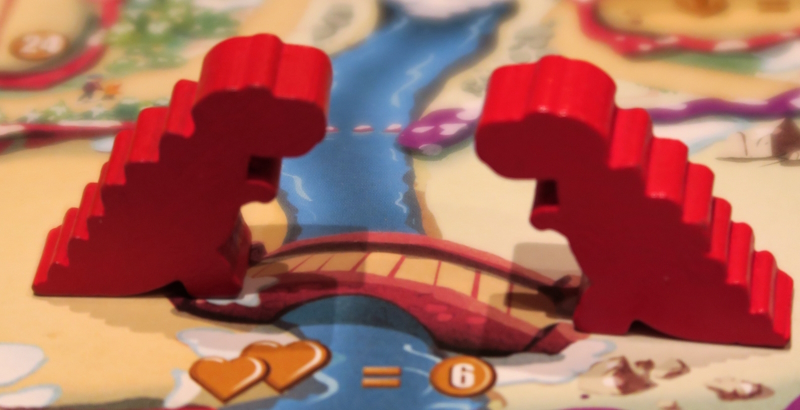
This is a very popular game where players start with a hand of dino-meeples, choose one and pass the rest on before placing them in their dinosaur park.  It frequently gets outings within the group, but on this occasion, for variety, the group decided to play with the winter setting which gives slightly different pens with slightly different placement conditions.  It was very tight, but as is often the case, Pine, who just seems to “get” this game emerged the victor with thirty-six points.  He was only one point ahead of Mint and Pink though, who tied for second place.

Draftosaurus
– Image by boardGOATS

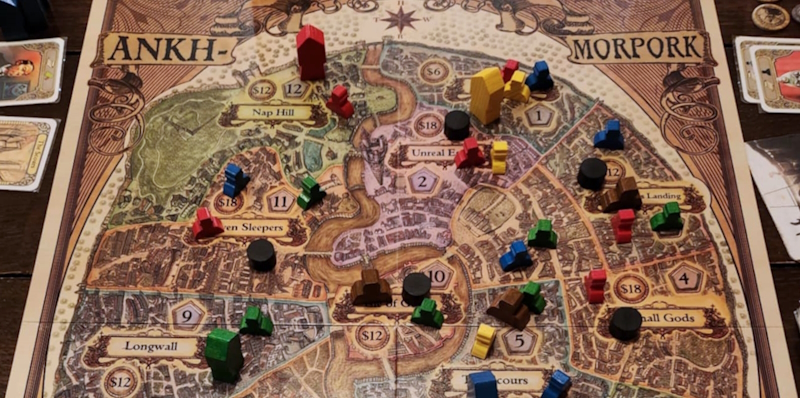
Meanwhile, on the next table, Green putting in a rare, but welcome appearance, was leading Black, Purple and Plum in a game of Discworld: Ankh-Morpork.  In this game, Lord Vetinari has disappeared and players control different factions which are trying to take control of the city.  Game play is quite quick and simple with players playing a card and doing what it says.  Most cards have more than one action on them, and players can choose to do some or all of these actions. Some cards also allow people to play a second card, so they can chain actions together.

Discworld: Ankh-Morpork
– Image by boardGOATS

In this game, Black was the Dragon King of Arms, looking for trouble, Green was Chrysoprase, trying to amass lots of money, Plum was Commander Vimes who was trying to play through the deck and Purple was Lord Rust, with an area control remit.  The game was over quite quickly with Black running out the winner in a game that is much under-rated and sadly very out of print due to IP issues.  This copy was a much cherished one, as it had belonged to Burgundy so it was nice for it to get another outing within the group.  There was time for a second game and this ended up being Faraway, a very clever, much more recent, card-driven game that has had a few outings since its release last year.

Faraway
– Image by boardGOATS

The idea is that players simultaneously chose one of the numbered cards from their hand and starting with the the player that played the lowest card (similar to 6 Nimmt! or Kingdomino), everyone takes it in turns to choose one from the market to add to their hand.  Players then simultaneously choose another card, and again, choose one to add to their hand.  The game ends after everyone has played a total of eight cards, and then everyone scores.  The clever part is that the cards are played left to right, but the scoring is from right to left.

Faraway
– Image by boardGOATS

At first glance, this looks like it makes things easy, because early in the game players find out what they need to get points and can then focus on getting the resources they need as the game progresses, but of course that is not the case.   This time, Purple had a really bad run where she kept getting the highest number cards, which meant she picked last, and then picked up the higher number cards left by others.  Once again, the winner was Black making it two out of two for him, while Plum was second by seven points with Green a little way behind her.

Faraway
– Image by boardGOATS

Meanwhile, the third group comprising Jade (fresh from his birthday celebrations), Sapphire, Teal, Byzantium and Cobalt spent the evening playing a five-playergame of Earth.  This is a is a sumptuously illustrated card-driven engine-builder game that is often compared to Wingspan, where players are building themselves an ecosystem.  The game itself is not actually all that complicated. Players are building a four by four grid of Flora and Terrain cards which represents their island and during the game they will plant flora, water it and allow it to grow.  On their turn, players do one of four things: Planting (paying the cost in Soil tokens), Composting (gaining Soil and placing cards from the deck in their discard pile), Watering (place Sprouts and gain Soil) & Growing (draw new cards and place growth tokens).

Earth
– Image by boardGOATS

A bit like Puerto Rico, once the active player has chosen which action they are taking, everyone else gets to do a subsidiary, slightly weaker version of the same action.  Once everyone has completed the action for the turn, everyone activates all the cards in their island that match the colour of the action chosen, starting with the card in the top left and working across each row in turn.  At the end of the game (triggered when one player has completed their island), players score points for each flora card, any Trunks and Canopies they have grown, their Sprouts and their pile of “Composted” or discarded cards.  Players also score points for achieving objectives on the Fauna cards revealed at the start of the game and for completing their island first.

Earth
– Image by boardGOATS

During the game, Cobalt built up the most points; his forty-two were some five ahead of Byzantium.  By far the most points come in the end-game scoring however.  A bit of a point salad there are seven scoring sections:  Teal scored best for Compost; Jade scored most highly for completing his Canopies; Byzantium top-scored for Terrain, and Cobalt out-scored everyone else for his Fauna.  As well as getting the most points for his Sprouts and Ecosystem Objectives, Sapphire also scored well in many of the other categories giving him a clear victory with one hundred and sixty-eight points, thirteen more than Byzantium who pipped Cobalt for second by a single point.

Earth
– Image by boardGOATS

Learning outcome:  Playing with fire may be fun, but you risk getting burnt.

Golden GOAT Award Winners – 2023

The boardGOATS love a good party, so once again, they met just before Christmas for their annual Un-Christmas Dinner and to decide the winners of the GOAT Awards.  After food, crackers and writing GOAT Christmas Cards, the group voted for two awards:  the Golden GOAT for our favourite game played during the year and the “GOAT Poo” award for our least favourite.  Everyone had the usual three points to hand out for the Golden GOAT Award (plus a bonus if wearing Festive Attire), though a maximum of two points could be given to any individual game.  Everyone could also nominate up to two individual games for the GOAT Poo Prize.

7 Wonders
– Image by boardGOATS

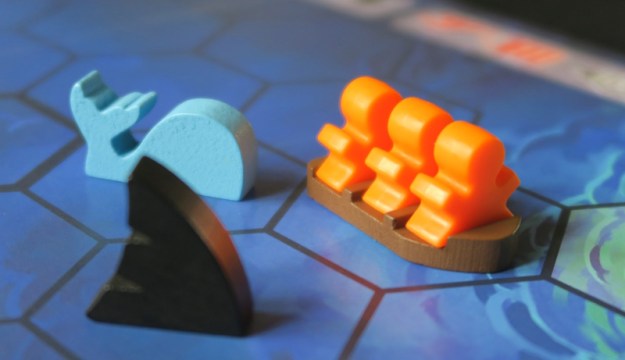
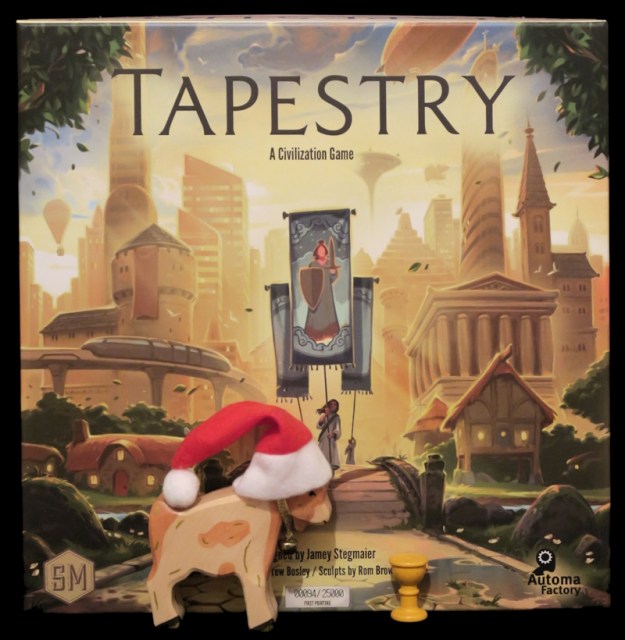
This year, there were a handful of games that received the unofficial “Marmite Award”, that is to say they received nominations for both the Golden GOAT and the GOAT Poo prizes.  These included Challengers!, Kites and SCOUT.  For the GOAT Poo Prize itself, this year there were no outstanding candidates, with a tie between 2019 winner 7 Wonders and Dice Hospital, with two votes each.  Nominations for “Moment of the Year included the game of Challengers!, which was likened to “Speed Dating”, and the massacre in Survive: Escape from Atlantis!, but the winner was the three way tie in the epic game of Tapestry with the Fantasies & Futures expansion.

Survive: Escape from Atlantis!
– Image by boardGOATS

And finally, there was the Golden GOAT Award for the best game played in the year.  Previous winners including Wingspan and 6 Nimmt! were ruled out, but there were plenty of options remaining. Earth, Fantastic Factories, SCOUT and Zoo Break all received three votes, but the clear winner was Tapestry.  Over the years, we’ve played this quite a bit, but it is a game that doesn’t suit a significant number of the group.  This year, however, with a slight shift in those eligible to vote, heavier games were in with a better chance and Tapestry was the beneficiary.  We will have to make sure it gets another outing in the new year.

Golden GOAT - 2023
– Image by boardGOATS

Deutscher Spiele Preis – 2023

The 2023 Deutscher Spiele Preis awards have been announced at the International Spieltage in Essen.  These recognise the “Best Children’s Game” and a top ten list of the “Best Family and Adult Games”, the results of an open vote by games clubs, gamers and people in the industry.  As annual awards, the games named in the Deutscher Spiele Pris lists often intersect with the winners and nominees of Spiel des Jahres Award, but in many other ways, the awards differ as Spiel des Jahres winners are chosen by a committee with a list of strict criteria whereas the Deutscher Spiele Preis is more a list of the most popular games of the preceding year.

Deutscher Spielepries 2023 Logo
– Image from
spiel-essen.com

This year, the top ten list includes the both the winners and some of the nominees of the Spiel and Kennerspiel des Jahres awards, but the top spot went to the Kennerspiel nominee, Planet UnknownDorfromantic (winner of the Spiel de Jahres) took second place on the list with the car racing game, Heat, taking third place.  Challengers!, winner of the Kennerspiel des Jahres award, featured further down the list as did Marrakesh, Earth, Woodcraft, Next Station: London, HITSTER and Tiletum.  The winner of the best children’s games was Mysterium Kids, which also won the Kinderspiel des Jahres earlier this year. Congratulations to all the award winners.

Planet Unknown
– Adapted from Image by f-p-p-m

13th June 2023

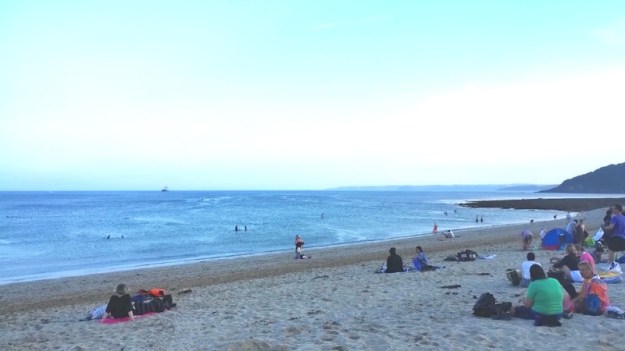
Lime was first to arrive, soon followed by Blue and Pink, and then Pine who were all delighted to see the return of our favourite bar staff.  There was a lot of chat about the recent changes at The Jockey (which is currently managed by the Healy Group who also run the Punch Bowl in Abingdon), and as everyone else arrived, people seemed more interested in gossiping than playing games.  It was a relatively quiet night with quite a few people away.  Black and Purple sent a message to say they were thinking of us, but when Green received a photo from Black and Purple of their current view, it just made everyone else jealous.

Black and Purple in Cornwall
– Image by Black

Jade arrived with his shiny new copy of Earth which he’d picked up from UK Games Expo.  It is a game where players are building themselves an ecosystem and was to be the “Feature Game“.  Earth is a sumptuously illustrated, card-driven engine-builder that is often compared to Wingspan.  We played that Last time after a bit of a break, and remembered how much we liked it, so had decided to give Earth a go this time.  The heat was getting to some people, but Ivory was quite keen to give Earth a go, and they were soon followed to the next table by Green (who had played it online) and then Teal.  Everyone was pretty new to the game:  Ivory and Teal had not played it before and Green and Jade had only played a couple of times.

Earth
– Image by boardGOATS

Although there is a lot to explain before starting, Earth itself is not actually all that complicated. Players are building a four by four grid of Flora and Terrain cards which represents their island and during the game they will plant flora, water it and allow it to grow.  On their turn, players do one of four things: Planting (paying the cost in Soil tokens), Composting (gaining Soil and placing cards from the deck in their discard pile), Watering (place Sprouts and gain Soil) & Growing (draw new cards and place growth tokens).  A bit like Puerto Rico, once the active player has chosen which action they are taking, everyone else gets to do a subsidiary, slightly weaker version of the same action.  For example, when Planting, the active player plants two cards, draws four and keeps one, while the other players plant one and draw one.

Earth
– Image by boardGOATS

Once everyone has completed the action for the turn, everyone activates all the cards in their island that match the colour of the action chosen, starting with the card in the top left and working across each row in turn.  This means, not only is it important which cards are played, but also where they are located in the player’s island.  At the end of the game (triggered when one player has completed their island), players score points for each flora card, any Trunks and Canopies they have grown, their Sprouts and their pile of “Composted” or discarded cards.  Players also score points for achieving objectives on the Fauna cards revealed at the start of the game and for completing their island first.

Earth
– Image by boardGOATS

As in Wingspan, Flora cards have actions that take effect when they are planted and when activated, many of the Terrain cards have ongoing effects and/or end-game scoring opportunities.  When Planting, players must place the cards either orthogonally or diagonally adjacent to an existing card, and although they can never exceed a four by four grid, like in Kingdomino, players can extend on either side of their island until the maximum size is reached.  Each Flora card has a maximum growth and when this is achieved the final wooden Growth token placed on it is a Canopy showing it will score extra points at the end of the game.

Earth
– Image by boardGOATS

The challenge in Earth is really in deciding what actions to do and which cards to play into your tableaux.  Teal found that simply building his tableaux was enough to think about without considering the extra goal cards and end game scoring.  Jade and Green both agreed that was the same for their first game too.  Ivory started and played his first few turns, selecting the green Plant action, so his tableaux filled up quickly. The rest of the group needed to choose other actions in order to get the soil and cards to play, so by the time it came back to ivory he was able to plant again.  He had already had his eye on the bonus cards and was quickly planting as many cards as he could, successfully—he was the first to claim a bonus.

Earth
– Image by boardGOATS

Green started with a high scoring climate card which gave him fewer cards at the start, but better in game bonuses, an approach to the game that nearly paid off. He went for the brown scoring cards, but Ivory just pipped him at the post for that particular shared bonus, which helped up his score as well.  Teal spent the first half of the game, learning and began to fall behind.  It wasn’t until Ivory claimed the first shared bonus that he remembered those cards.  Early on he gained lots of Sprouts which are worth points, however, it is possible to gain a whole lot of Sprouts in the latter stage of the game and use those early actions for other more beneficial things.

Earth
– Image by boardGOATS

Jade was quietly working away to build a tableaux engine that worked for him, but was falling behind Ivory and Green on the shared bonuses.  Jade managed to pick up some of the Fauna bonuses later, but mostly after the others so they weren’t as highly scoring.  Green went for brown scoring cards because he kept picking them up from his nearest pile (there were two draw piles), and eventually reverted to the other pile to find green Flora cards.  Unfortunately, he just couldn’t find the double powers he needed for the shared bonus.  On the opposite side of the table, Teal didn’t come across any brown scoring cards, only realising why at the end of the game—it seams the shuffling had left something to be desired. The Event cards also seemed to be clustered towards the bottom of the draw pile.

Earth
– Image by boardGOATS

Ivory came out on top with a very high score of two hundred and thirty-six with Green just eighteen points behind and Jade in third.  There was much discussion about similarities between Earth and other games. Green felt it was similar to Terraforming Mars, the others thought it was more like Wingspan.  After some thought, Green came round to this idea as it is about playing cards which then provide  more actions and bonuses that can be played on those cards (eggs in Wingspan, Sprouts in Earth; tucked cards & cached food in Wingspan, Growth in Earth).  The others could also see Green’s thoughts about Terraforming Mars though as the game has lots of pretty and individual cards that can be played or rejected, with some providing actions, some bonuses and the all important Events.  Everyone really liked it and definitely wanted to play it again, though better shuffling would be a good idea.

Earth
– Image by boardGOATS

Meanwhile, the rest of the group carried on chatting all agreeing they should play something, but nobody terribly keen to commit to anything.  Eventually, Blue suggested Bohnanza, and as Pine agreed, Pink had to go along with it.  This is an old favourite, though Pink had gone off it a bit as he felt he always did badly—unfortunate really given the number of copies of the game that he owns.  The game is very simple:  keeping their cards in the order they are drawn, players must plant the first bean card from their hand and may plant the second if they have space.  They then turn over the top two cards from the deck and can play these or trade them as they prefer.

Bohnanza
– Image by boardGOATS

Finally, once both of these have been planted, the active player may trade cards from their hand before drawing three replacement cards.  Players can harvest their Bean Fields whenever they like, but the amount of money they get depends on how many Bean cards it has in it and what the beans are—scarce ones give a better return, but are harder to get.  Everyone knows the game quite well, though Lime had recently acquired and been playing a new anniversary edition and it seems some of the rules are slightly different for that.
Bohnanza
– Image by boardGOATS

This time, everyone bought a third Bean Field (which makes it easier to hang on to the rarer beans a little longer).  Indeed, Lime was so determined to use his, he ended up not trading, just so that he had something to plant!  As usual it was quite a close game with fine margins.  So little things like Blue harvesting her Red Beans only to immediately draw another and Pine gifting Pink a Wax Bean or Lime trading with Pine instead of Blue made a difference in the final score, though nobody knew it at the time.  Ultimately, Pink was the victor, beating Blue by just two Bean Thalers with Lime a couple behind her in third.  On the plus-side, Pink can’t complain that he never wins any more.

Bohnanza
– Image by boardGOATS

Earth was still underway, and for once in a way, Bohnanza had played relatively quickly, so there was plenty of time for something else.  Nobody was very focused, and eventually the group settled on the cooperative game, Forbidden Desert.  This is a sort of sequel to Forbidden Island, which itself is a simplified version of the popular gateway game, Pandemic.  All three of these games use the same mechanism as Zoo Break, which we played recently.  Essentially, the active player carries out actions and then they reveal cards from a deck which generally make life difficult: releasing wild animals, causing the island to gradually sink, spreading disease, or in the case of Forbidden Desert, burying the play area with sand.

Forbidden Desert
– Image by boardGOATS

The premise of Forbidden Desert is that the team have crash-landed in the desert and need to find the components of a flying machine and take them to the launch pad to escape.  The game is played on a five by five grid of square Tiles, with a gap in the centre representing the sand storm.  Each player has a character with special powers.  This time, Lime was the Climber, Pink was the Navigator, Pine was the Explorer, and Blue was the Water Carrier.  On their turn, players can take up to four actions:  Move (one action per Desert Tile), Remove Sand from the Desert Tile they are on or an adjacent one, Excavate a Desert Tile (i.e. turn it over), or Pick up one of the four component parts of the flying machine.

Forbidden Desert
– Image by boardGOATS

Lime started.  Once he had cleared some sand and turned over a couple of Desert Tiles, he started turning over Sand Storm Cards.  These indicate which direction Tiles should move to fill the hole, and how many Tiles should be moved, one, two or three.  Each of the Desert Tiles moved then have a Sand Tile placed on them—a single Sand Tile needs to be cleared before the Desert Tile can be Excavated, but two or more additionally obstruct players preventing them from passing (except for Lime who, as the Climber, can cross Sand Dunes of any height).

Forbidden Desert
– Image by boardGOATS

Pine went next and used his special ability—everyone else could clear orthogonally adjacent Tiles, but he could to work diagonally as well.  It wasn’t long before the first “Sun Beats Down” card appeared.  These cause everyone to use water, so as the water carrier (and the only one who could make multiple visits to the Oases and collect water, Blue topped up Lime, who had started with less water than everyone else.  The group gradually started revealing tiles, finding a Duneblaster, a Solar Shield and a Time Throttle, but the Storm picked up and before long the group were turning over more Sand Storm Cards.  Pink located the Propeller for the flying machine and then the engine, the group were making progress, but it was all too slow.

Forbidden Desert
– Image by boardGOATS

Before long it became apparent that the Sand Storm was getting the better of the group and the hiding in the Tunnels wasn’t helping.  Determinedly, the group fought against the rising tide of Sand making good use of their Duneblaster, but it only delayed the inevitable.  Blue, Pine and Lime were discussing a plan to play a Storm Tracker, but when they were briefly side-tracked, Pink played on without it and everyone suffered as a result.  So Pine labelled him as a Saboteur as a consequence.  In such a finely balanced game at such a critical point, it could have made a difference, but in all probability it only hastened the inevitable demise as the group were sadly buried under the ever growing sand dunes and ran out of Sand Tiles (one of the end game conditions).  It was a deflating end to the evening, but given the heat, probably appropriate.

Forbidden Desert
– Image by boardGOATS

Learning outcome:  Shuffling is an important skill.

UK Games Expo 2023

It is hard to believe that it is a whole week since the start of the sixteenth UK Games Expo.  With the Friday falling in half-term week for most schools, attendance reached an all-time high with reports of 32,000 unique visitors over the three days of the event—a remarkable bounce back from the 10,671 in 2021 (the first Expo after the cancellation in 2020).  As in previous years there was a viking encampment outside the NEC, and the queues to get in to the main halls were substantial.

UKGE 2023
– Image by Jade

Inside, though busy things were more manageable, gamers from boardGOATS managed to run into each other by accident, which was quite remarkable considering the massive crowds.  Queue conversations were quite a thing this year, especially in the queue for the Bring and Buy which was spacious and well laid out.  The Bring and Buy itself was especially good for Buyers this year as there were constantly new items being put out (though it was perhaps more frustrating for Bringers as their items weren’t put on display until there was space).

Hegemony: Lead Your Class to Victory
– Image by Teal

There were some great demonstrations of new games. One highlight was playing as the State in Hegemony: Lead Your Class to Victory, a great, new, heavy-weight, political board game.  There were also demonstrations of Undaunted: Stalingrad as well as for Vivarium and Vaalbara from the marvelous folks on the Hachette Boardgames UK stand (all of which came out last year).  There was a hilarious reading of Ian Livingstone’s City of Thieves and foiling a dastardly aristocrat’s demon-summoning plans in the new, one-shot RPG, Candela Obscura was memorable too.

UKGE 2023
– Image by Jade

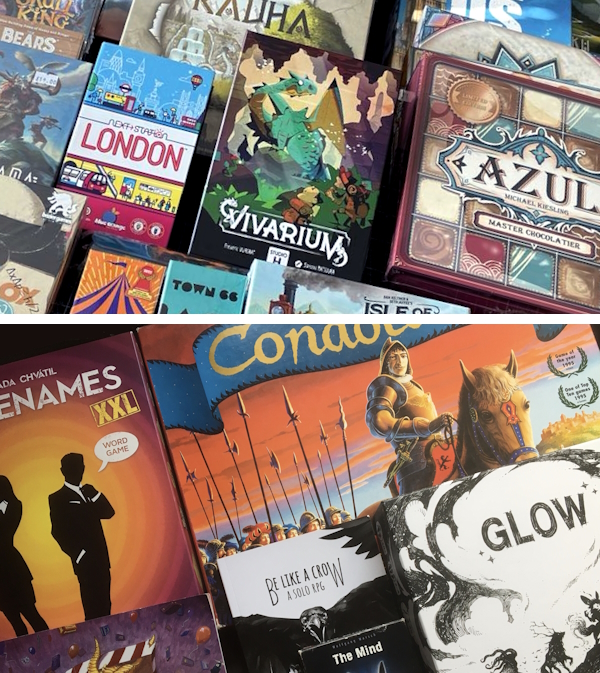
As usual, there were also a lot of designers about, including Tony Boydell, Alan Paul, Andy Hopwood, Bez Shahriari, Rob Harper, Gav Thorpe, Florian Sirieix and Morten Billcliff all sharing their games, chatting with gamers and signing boxes.  Copies of Condottiere, Azul: Master Chocolatier, Next Station London, Earth, Tiwanaku and After Us were also acquired amongst other things, and will likely be played over the coming weeks.

UKGE 2023
– Images by Teal and Jade