Tag Archives: Elfenland

Essen 2023

Today is the final day of this edition of the largest games fair in Europe and arguably the world, the Internationale Spieltage.  Known to gamers worldwide simply as “SPIEL” or “Essen”, the annual fair is of particular significance as many new releases are scheduled to coincide with the event just in time for Christmas sales.  Following the recent change in management, this year there were quite a few changes.  Aside from the logo, the most noticeable was the layout in the halls—according to one game designer, every stand except his was in a new location in an effort to theme the halls.  For the most part, this seemed to work, though inevitably some people will feel they lost out in the great shuffle.

Essen 2023
– Image from spiel-essen.com

One thing that hasn’t changed, is the lack of general gaming space, especially when compared with the likes of the UK Games Expo and Gen ConSPIEL is a games fair, not a convention—it’s purpose is to showcase new and up-coming games and sell them to the general public, but also small and medium-sized resellers.  Additionally, there is a lot of business going on behind the scenes, including designers demoing games to publishers, and publishers meeting with producers and other publishers to discuss contracts.  It is arguable that large amounts of playing space are counter to SPIEL’s priorities, but they could definitely do with providing more chairs—not everyone has the stamina of a twenty year old, and the number of people just sitting on the ground suggests more seating is an essential.
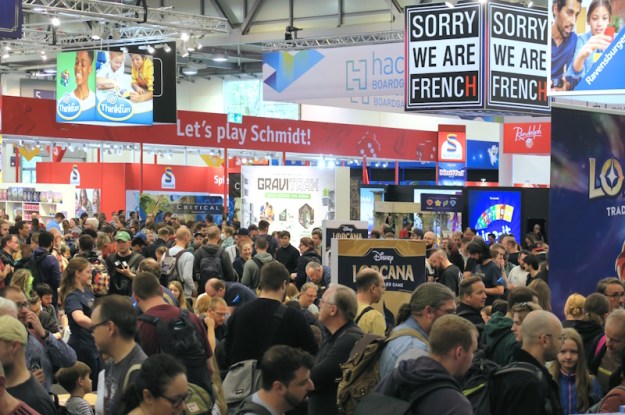
Essen 2023
– Image by boardGOATS

Following the cancellation of SPIEL in 2020, there were restrictions on numbers for 2021 and Covid mandates in 2022 leading to reduced numbers (93,600 and 147,000  respectively), so 2023 was the first year when things were back to normal.  One question therefore, has been whether numbers would return to the levels, or even exceed those of 2019, when there were 209,000 entries.  It will be a few days before the statistics for 2023 are reported, but anecdotally, the answer is yes, with some exhibitors commenting that Friday was the busiest it had ever been, and the annual no-ship Maths Trade and Auction was as mad as ever.
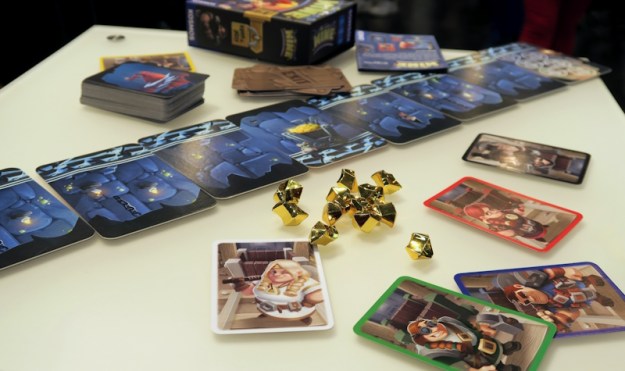
My Gold Mine
– Image by boardGOATS

This year there is the usual selection of the latest releases including, The White Castle, Nucleum, Kutná Hora: The City of Silver, Evacuation, The Glade, My Gold Mine, Amygdala, Forest Shuffle and Footprints.  There are also expansions for previous games like Cascadia (Landmarks), Ark Nova (Marine Worlds), Lost Ruins of Arnak (The Missing Expedition) as well as this year’s winners of the Deutscher Spiele Preis, Planet Unknown (Supermoon).
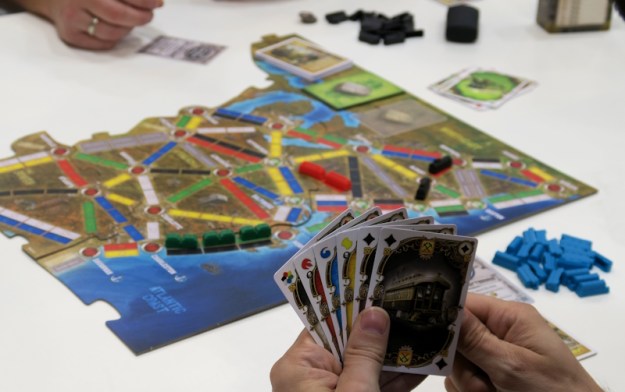
Ticket to Ride Legacy: Legends of the West
– Image by boardGOATS

A common theme are the re-releases and reimplementations of old favourites and there are a lot of these this year, like Ticket to Ride (Legacy: Legends of the West) Elfenland, Zooloretto, Dixit (Disney Edition), Shipyard (Second Edition) and NMBR 9.  As usual, there are also loads of mini promotional expansions available for games like Flamecraft, Die Wandelnden Türme, Keyflower, Underwater Cities, Dorfromantik and 2022 Golden GOAT, Praga Caput Regni, amongst others.  There truly is something there for everyone.
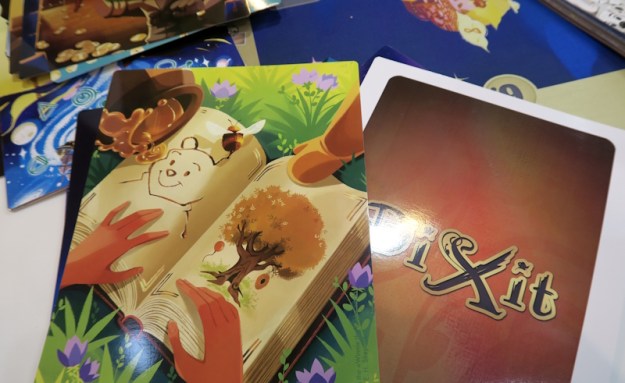
Dixit: Disney Edition
– Image by boardGOATS

Boardgames in the News: The Hobby Grows and Grows

In the UK in the 1960s and 1970s, boardgames were only available from toy shops, and the range was limited to a relatively small number of “traditional” games, like Chess, Monopoly, Game of Life or Cluedo.  With the appearance of bigger, supermarket-like stores like Toys “R” Us in the 1980s and 1990s, a wider range became available and, occasionally, games like the early Spiel des Jahres winner, Rummikub, made their way onto our shelves.  As children grew up, they might graduate into playing Risk and eventually move onto longer, more complex games like those produced by Avalon Hill.  However, if you liked playing games, but war themes were not for you, it was quite difficult to find good alternative games to play.  They were there though:  games like Acquire and the 18xx railway games had been about for a long time, but these were the exception rather than the rule and were still an acquired taste.

Rummikub
– Image by BGG contributor OldestManOnMySpace

In contrast, in Germany, games like Scotland Yard were starting to become readily available and genuinely very popular.  The success of the Spiel des Jahres, which rewarded good games like Ra, El Grande, Tikal, and the 1995 winner, The Settlers of Catan, meant that boardgames were receiving a lot of publicity in Continental Europe.  The characteristics of these “German Games” (or “Euro Games”) typically include balance, with only a small amount of luck, and lack of player elimination.  As the market developed, beautiful boards and lots of wooden pieces also became an essential component.  Unlike war games, “Euro Games” tend to be less confrontational and much more suitable for family gaming.

The Settlers of Catan
– Image used with permission of BGG contributor kilroy_locke

In the 1990s, UK designers like Alan R. Moon and Richard Breese started publishing small numbers of “designer games”.  These were often largely assembled by hand and generally had a limited print run.  For example, only 1,200 copies of Elfenroads (precursor to the later, Spiel des Jahres winner Elfenland) were ever made and Keywood, the first of the highly acclaimed “Key Series“, was hand-made and had a print-run of just 200.  Given the exclusive nature of these games, it was not surprising then, that many teenagers either gave up on boardgames or moved on to collectable card games, like Magic: The Gathering or Role-Playing Games.

Elfenroads
– Image by BGG contributor dougadamsau

So it was with the growth of the internet that “Euro Games”, or designer boardgames became available to people in the UK.  Firstly, this was because it enabled people to find out about the games that were available, with sites like UseNet and eventually BoardGameGeek in 2000, providing a valuable source of information.  Secondly, internet shopping made “German Games” much more accessible.  The growth of the hobby meant an increase in boardgame publishers, and the appearance of designers like Reiner Knizia who were sufficiently prolific and successful to make a living from designing games.  Over the last fifteen years or so, the hobby has grown and grown and games like Carcassonne and The Settlers of Catan are now available in Waterstones and WHSmith, there are regular comments in The Guardian, there are repeatedly TV appearances, and boardgame cafés are sprouting up all over the place.  The question is, will it continue to grow, or have we reached a high water line?

Ernie
– Image from boardgamegeek.com