Tag Archives: Flip 7

27th May 2025 (Report)

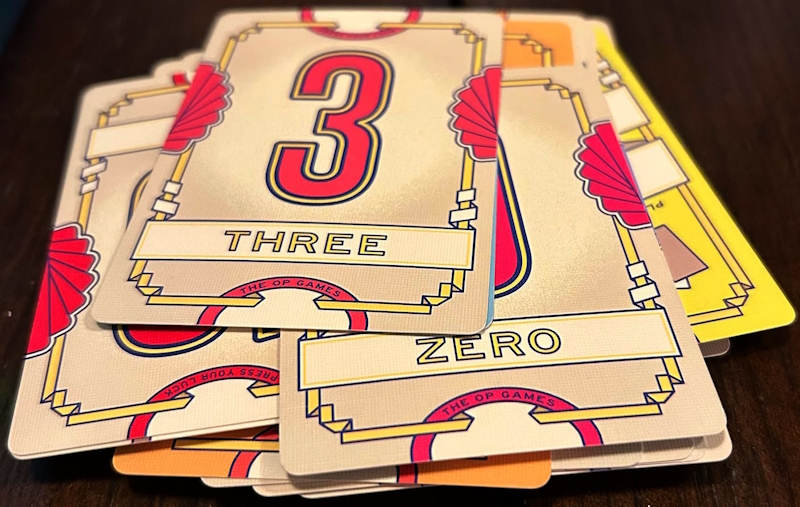
This week, Jade was proactive and quickly got a group together to play the “Feature Game“, which was to be Flip 7.  This is a quick, push-your-luck card game along the lines of Blackjack and recently won a Golden Geek award and received a nomination for the Spiel des Jahres.  The group have already played it a couple of times on a Tuesday, but we wanted to raise its profile and share it more widely amongst our people by making it the Feature Game.  The idea is really simple:  players turn over cards and gamble on not revealing the same number twice.  Unlike Blackjack, the game is played turn-wise, so the the dealer starts by dealing one card to each player.  Then players take it in turns to decide whether they want to “flip” or ” stick”.

Flip 7
– Image by boardGOATS

This mode of play is critical to the game’s popularity because it keeps everyone involved and the turns short. If players stick, they score the total of the face value of their cards.  There are a couple of other things that make the game tick, in particular the fact that each numbered card appears in the deck that number of times (i.e there is one one, two twos and so on).  Thus, the highest scoring cards are also the most risky.  Further driving push to gample, flipping over seven cards in a row gives fifteen bonus points.  There are also some action cards in the deck, “Flip Three”, “Freeze”, “Second Chance” and modifier cards which give extra points, all of which break the rhythm and add interest without adding significantly to the downtime.
Flip 7
– Image by boardGOATS

The game ends when players have reached the pre-agreed total (two hundred, according to the rules, though games can easily be made longer or shorter as desired).  This time, the group played the game as written, to a total of two hundred, which took seven rounds.  Sapphire  and Flint managed to go bust five and six and seven rounds respectively, though Flint did manage to push his luck to get seventy—the most in a single round.   Jade achieved a new low, however, failing to score at all.  The front runner was Teal, but going bust in the sixth round left the door open to Ruby who had been matching him step for step, scoring in every round and triggering the end of the game with her unsurpassed two-hundred and thirteen.

Flip 7
– Image by boardGOATS

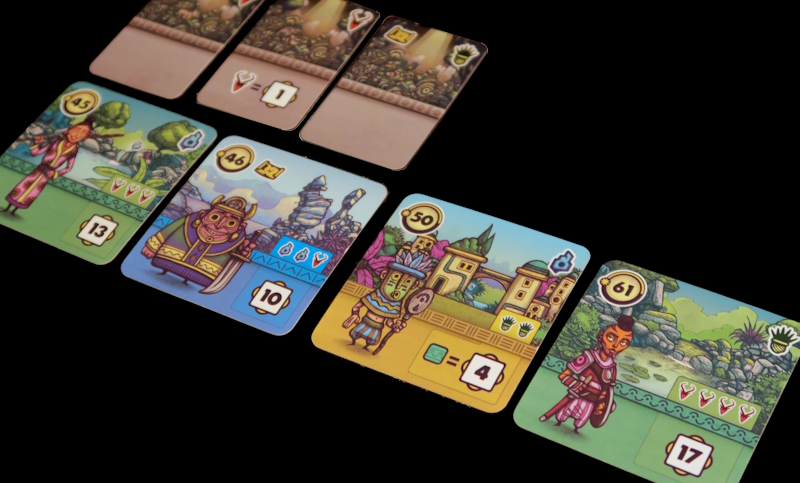
Everyone else was playing a longer game, so with six, that left the choice of another six player game or splitting into two groups of three.  The party feel of Flip 7 had got everyone in the mood for playing in a larger group, leaving a fairly limited choice, though there are a couple of really good options.  Bohnanza is one, but instead, the group chose Faraway—another game that received a Spiel des Jahres nomination this year, that we first played in the group over a year ago and has proved very popular since.  This is another relatively simple game, this time  with a market and a trick-taking type element, but with a really clever twist, and one that really messes with the head.
Faraway
– Image by boardGOATS

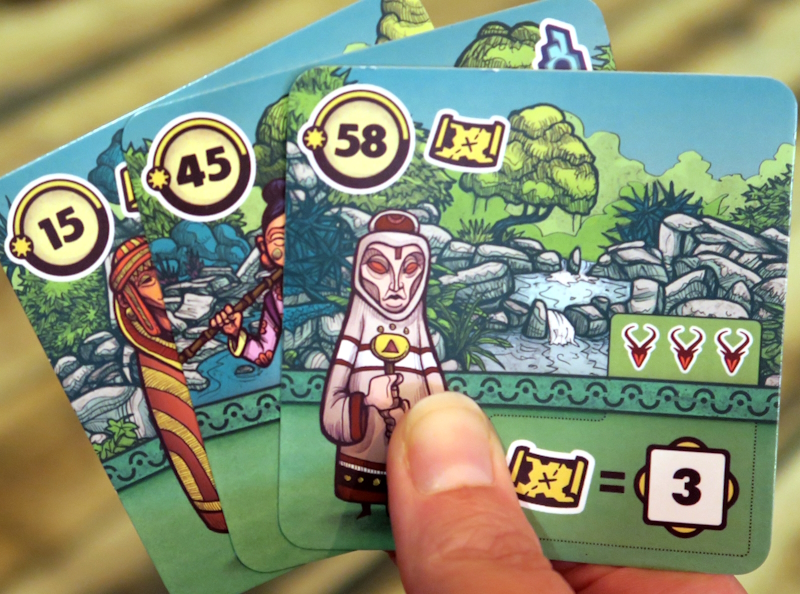
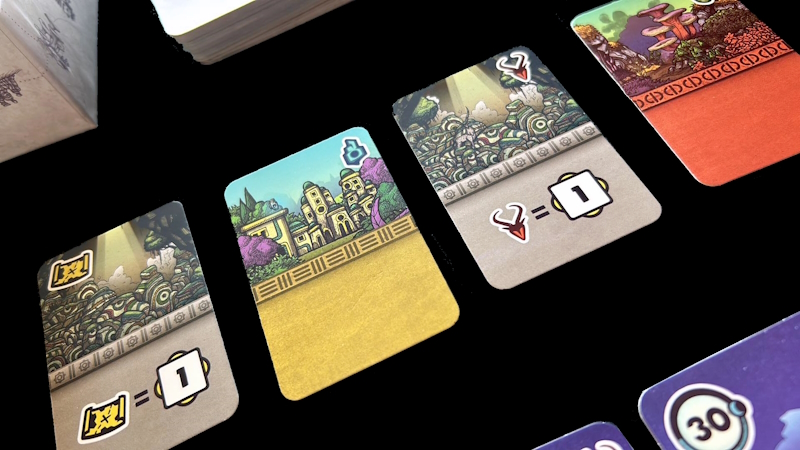
The story is that players are exploring the mysterious land of Alula in search of its secrets, meeting its inhabitants and listing its wonders in order to gain more fame than everyone else.  Players simultaneously chose one of the numbered cards from their hand to add to their tableau then, starting with the the player that played the lowest card (similar to 6 Nimmt! or Kingdomino), everyone takes it in turns to choose one from the market to add to their hand.  Players then simultaneously choose another card to play, and again, choose one to add to their hand.  The game ends after everyone has played a total of eight cards, and then everyone scores.
Faraway
– Image by boardGOATS

The scoring is the really clever part, because although the cards are played into tableaux from left to right, the scoring is from right to left.  At first glance, this looks like it makes things easy, because early in the game players find out what they need to get points and can then focus on getting the resources they need as the game progresses.  However, the desire to play scoring cards early is tensioned against card choice (the player who placed the lowest numbered card goes first) and the ability to get Sanctuary bonus cards.  Scoring cards are generally higher number and Sanctuary cards are gained when the card played has a higher value than the previous one in their tableau.
Faraway
– Image by boardGOATS

It is always hard to see how players are doing with this game, because if a player has played a high value scoring card early it can be worth a lot, but if the player fails to gain the necessary resources it can be worthless.  In the event, it was quite close with four of the six players scoring over sixty.  The winner, however, was Pink who got lucky early when he played card number fifty-nine first to start a map strategy and finished with five of them.  Sapphire was only two points behind in second though, and Teal two points behind that.

Faraway
– Image by boardGOATS

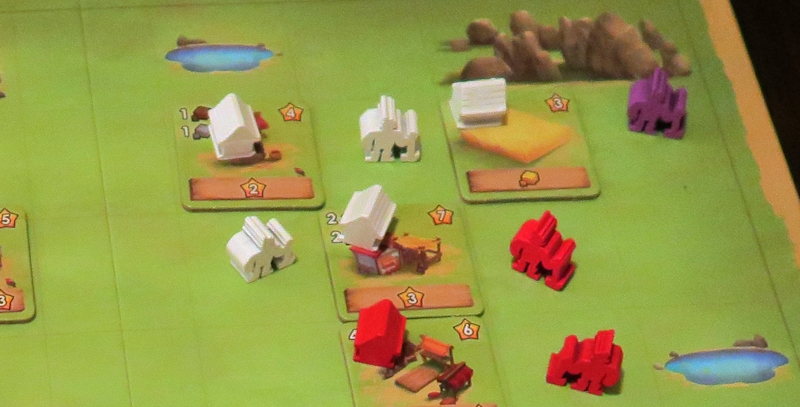
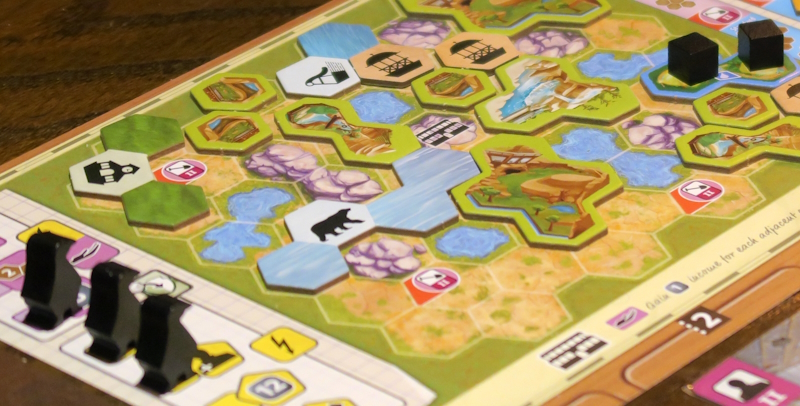
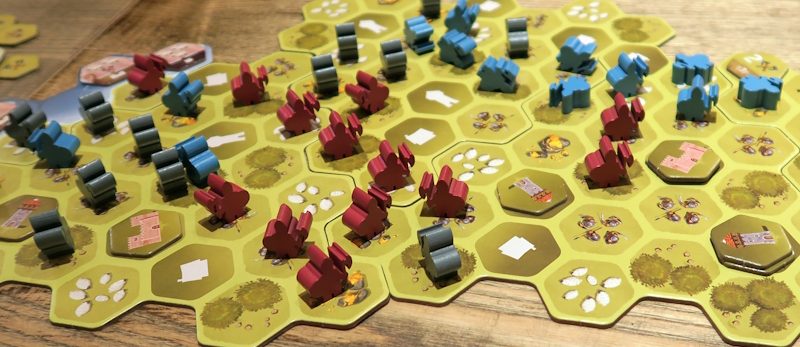
Meanwhile, on the other side of the room, Black and Purple were introducing Pine to Looot, another game that received a nomination, this time for Kennerspiel des Jahres, the “Expert” or “Connoisseur’s” game.  This is a game where players gather resources and capture buildings to develop their fjord, fill their Long Ships and complete buildings to rack up victory points. The player with the most riches is crowned Jarl of the Vikings.  The game is played over several rounds until each player has played all their Vikings, giving a maximum of thirteen turns.  In each, a player first places their Viking on a Resource tile on the central board adjacent to another Viking of any colour and takes the Resource and place it on their personal board.

Looot
– Image by boardGOATS

If possible, they then capture a Building and place that on their board, take a Long Ship and also place it on their board, use a Shield, complete a Construction Site and finally grab a Trophy.  At the end of the game, scoring is a bit of a point salad with points awarded for Castles, Watchtowers, Houses, Gold, Sheep, Trees, Construction Sites, any Trophies the player may have claimed and a five-point penalty for any unfilled Long Ships.  Purple raked in points for her Houses, Construction Sites and Trophies, while Black did better for his Watchtowers and Gold, and Pine top-scored for Trees.  The winner, however, was Purple whose total of ninety-one was five ahead of Black in second.
Looot
– Image by boardGOATS

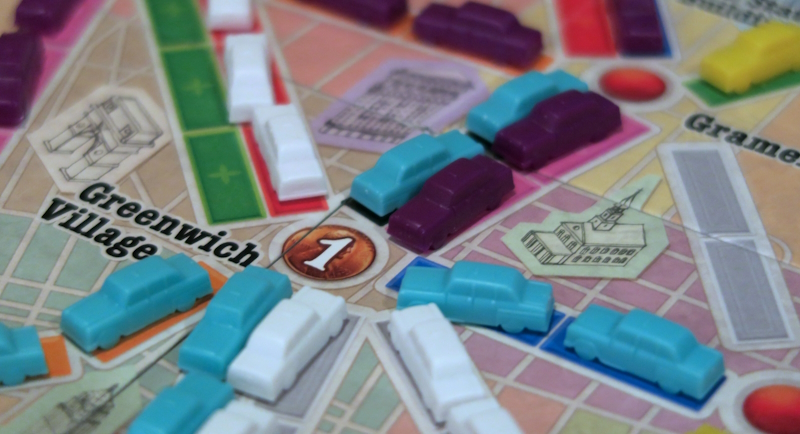
The trio followed this with a shorter game, the Paris version of the 2004 Spiel des Jahres winner, Ticket to Ride (aka Zug um Zug).  Like the original, game-play is very quick and simple:  players take it in turns to take Cards from the market, or spend them to place Trains on the map with the aim of completing Tickets.  Players score points for placing Trains and completing Tickets with penalties for any incomplete Tickets.  Each game variant has its own special rules.  In the case of Paris, when players score bonus points each time they complete a Tricolor: a set of blue, white, and red routes.  This time it was a very close game.  Pine had the most points collected during play (including Tricolors), but Black picked up more for his Tickets and edged it by a single point.
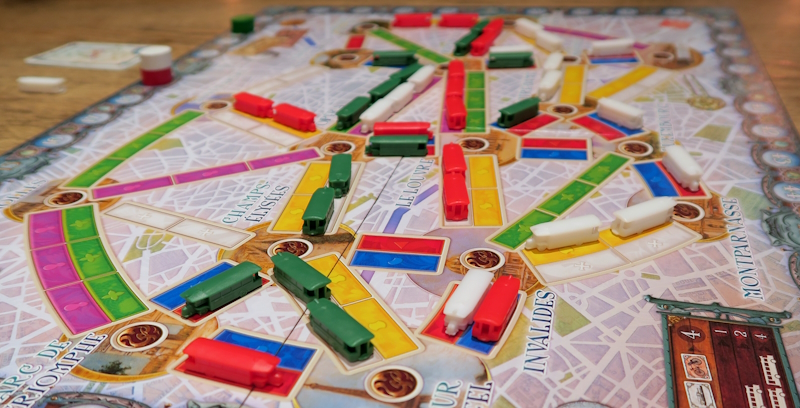
Ticket To Ride: Paris
– Image by boardGOATS

The final game of the night took all evening and was the only one that that has not had a nomination for the Spiel des Jahres, Century: A New World.  This is the final game in the Century Trilogy (preceded by Spice Road, Eastern Wonders), but as they all use some of the same components, Plum and Byzantium had managed to squeeze all three games into one box (with an extra set of cubes so two could be played at once).  In A New World, players are exploring the Americas at the dawn of the 16th century trading with local inhabitants, recording their findings, and hunting and gathering to survive.

Century: A New World
– Image by boardGOATS

The game uses the resource trading mechanisms (Collect, Upgrade and Exchange) found in the rest of the Century series, but instead of using cards as in Spice Road, this is combined with with a worker placement mechanism.  On their turn, players can either Work (place Workers) or Rest (retrieve Workers).  Workers can work at Locations that have neither an Exploration tile nor Workers of their own colour.  If a Location is vacant, they can activate it by placing the number or workers depicted on the space; if it is occupied, the current occupants must be evicted and returned home by placing one extra Worker.
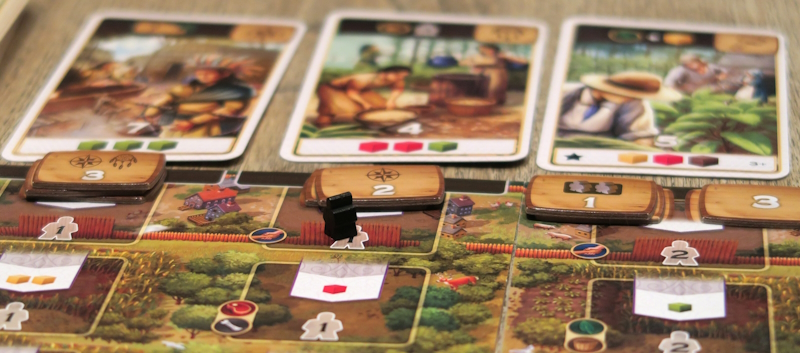
Century: A New World
– Image by boardGOATS

There are four locations types, thee allow players to Collect, Upgrade and Exchange Resource cubes, while the fourth (Forts) allows them to use Resources to claim Points Cards and Bonus Tiles.  Players can only have a limited total number of Bonus Tiles, and can only claim the Points Card associated with the particular Fort.  These Cards are supposed to slide along a conveyor belt so that they move from one Location to another, but thanks to a rules malfunction, this time the didn’t until more than halfway through the game.  The game finishes when one player has their eighth Points Card, so it can end quite suddenly, as players can pick up cards quit quickly due to special powers.

Century: A New World
– Image by boardGOATS

These games are basically race games, and it felt like Byzantium had a good start with points from his Exploration tiles, the only one to have any.  However, as Plum built her engine, she galloped up on the rail, ultimately taking the most points from her Cards. She also took the most points from Bonus Tiles.  In such a tight game, left over resources were critical and they enabled Cobalt to leap-frog Byzantium into second.  Plum was the winner, though by just two points.  It had been fun, though Plum’s comment that she actually preferred the second of the trilogy meant Blue who had not played it would take the opportunity to grab a copy at the UK Games Expo Bring and Buy a couple of days later.

Century: A New World
– Image by boardGOATS

Learning Outcome:  The Spiel des Jahres Jury can spot a good game.

Spiel des Jahres Winners – 2025

Last weekend, this year’s Spiel des Jahres (German Game of the Year) winner was announced as Bomb Busters, by Hisashi Hayashi, the designer of Trains, MetroX (aka Voll Verplant), String Railway and Yokohama.  Based on the earlier Bomb Squad by the same designer, this is a cooperative, card driven game, where players work together to try to defuse a bomb before it explodes.  Players begin with a hand of numbered Wire cards (four each, numbered one to twelve) and then take turns pointing at each others’ wires and guessing their values.  Correct guesses lead to wires being cut, incorrect guesses and the detonator advances…

Bomb Busters
– Adapted from image by BGG contributor spiritraw

The winners of the Kinderspiel des Jahres (Children’s Game) and the Kennerspiel des Jahres (“Expert” or “Connoisseur’s” Game) were announced at the same time. The Kinderspiel des Jahres went to Topp die Torte!, which is a tile laying game by Wolfgang Warsch—a previous winner of the Kennerspiel de Jahres in 2018 with Die Quacksalber von Quedlinburg (aka The Quacks of Quedlinburg) and designer of The Mind, Ganz Schön Clever and Quacks & Co., all of which have received recognition from the jury in recent years.  This year, the Kennerspiel des Jahres award went to Endeavor: Deep Sea by New Zealand designers Carl de Visser and Jarratt Gray, a game where players explore the deep sea using the action mechanism from Endeavour: Age of Sail (and its predecessor Endeavor).

Endeavor: Deep Sea
– Image from kickstarter.com

Endeavor: Deep Sea can be played competitively or cooperatively with up to five players (using the Deluxe edition). This means that as last year, both the “senior awards” have gone to cooperative games.  Indeed, the last four Spiel des Jahres awards (Sky Team, Dorfromantic, MicroMacro and Just One) and three of the last five Kennerspiel awards (Paleo and The Crew as well as e-Mission/Daybreak) have gone to cooperative games.  This style of game is clearly very popular with families (where arguments are often best avoided), but can be less so with more traditional gamers who prefer a bit of competition.  As such, cooperative games very much have the “Marmite Factor”, but in such cases, the nominees and recommended lists cater for every taste, with games like Looot, Castle Combo, Faraway and Flip 7.

Bomb Busters
– Image from spiel-des-jahres.de

29th April 2025

The evening began with a quick game of the popular Blackjack based game, Flip 7.  This is a quick, push-your-luck card game along the lines of Port Royal where players turn over cards and gamble on not revealing the same number twice taking it in turns to decide whether they want to “flip” or ” stick”. The catch is that each numbered card appears in the deck that number of times (i.e there is one one, two twos and so on). Flipping over seven different cards in a succession gives fifteen bonus points.  There are also some action cards in the deck, “Flip Three”, “Freeze”, “Second Chance” and modifier cards which give extra points. The game ends when players have reached the pre-agreed total.

Flip 7
– Image by boardGOATS

Ivory was keen to get in a little practice as “Little-Ivory” was getting it for his birthday in the next few days.  Although the game plays up to eight (with one box), there were just the four as Ivory was joined by Jade, Sapphire and Mint.  Mint went bust early and Sapphire started fast, but the victor was Ivory who didn’t go bust at all during the game.  With that over quite quickly Jade and Sapphire were joined by Pine, Plum and Byzantium to play the “Feature Game“, Creature Comforts.  In this game, players spend Spring, Summer, and Autumn gathering different resources from the forest and spending them to collect items that will home a more inviting place while the world outside is covered in a layer of snow in the Winter.

Creature Comforts
– Image by boardGOATS

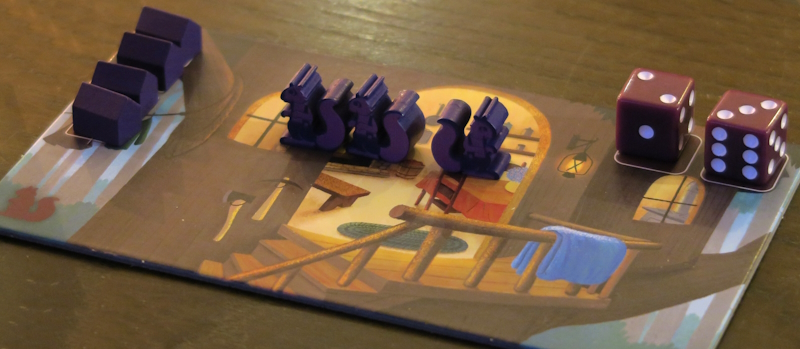
Creature Comforts is a worker placement game with a twist:  the workers can be placed at various locations, but dice of specific values (or sum-totals) are required to activate the locations. Thus, the players need access to dice of specific values when it comes to triggering those workers.  Jade explained the rules to Pine, Plum, Byzantium and Sapphire, some of whom were new to the game.  Played over twelve months, at the start of each month or round, a Traveler “event” card is revealed which either applies an instant effect or one that lasts the duration of the month.  Simultaneously, players then roll their two Family dice and place them on their Home Boards.

Creature Comforts
– Image by boardGOATS

Then, players simultaneously place their Workers at their choice of the twelve locations.  Although the locations can hold any number of Workers, players can only place a single worker at each one.  Each location will either require a dice of a specific value or multiple dice that add to a given sum (or have a particular requirement e.g. feature all odds or evens).  The catch is that at this point, players only know the values of the two dice that they have access to, their Family dice.  So, placing Workers requires some astute planning mixed with some luck when the four communal Village dice are rolled next, by the start player for the month.  Players then take it in turns to allocate the six dice at their disposal to activate as many of the locations their Workers are at as possible.

Creature Comforts
– Image by boardGOATS

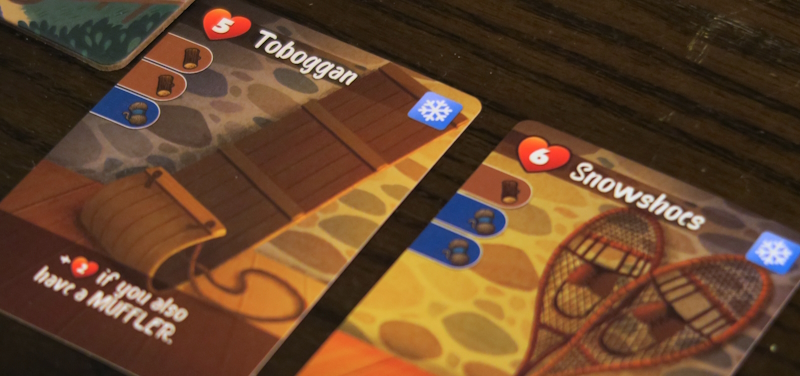
Each Worker that a player cannot activate gets them a Lesson token, which can be used to modify dice values in later turns (for only that player).  Finally, players finish their turn by crafting any creature comfort cards they can, keeping in mind that only three can be carried over to the next round.  After eight months (six if playing a shorter version of the game), players can craft any left-over cards they might have in their hand if they can afford to and then score for their Comfort Cards, Improvement Cards, for empty Cottage spaces and left-over resources.  The first problem was that there were a lot of locations to get to grips with.  Pine, who was new to the game, struggled initially, but by the end was wanting to play again soon!

Creature Comforts
– Image by boardGOATS

Sadly, although the game was a lot of fun and enjoyed by all, it was marred by the fact that “Last Orders” was called sooner than expected.  This meant the last couple of rounds were played at something of a rush and points were missed and some of the scores might not have been correctly counted.  There are a lots of odd points to be counted, but the bulk come from the eponymous Creature Comfort cards.  Byzantium top-scored for these with forty-three points, some ten more than anyone else, so it was no surprise that he ran out the winner by a sizeable margin, with everyone else left fighting for second.  That battle was won by Sapphire with Pine taking third.

Creature Comforts
– Image by BGG contributor hipopotam

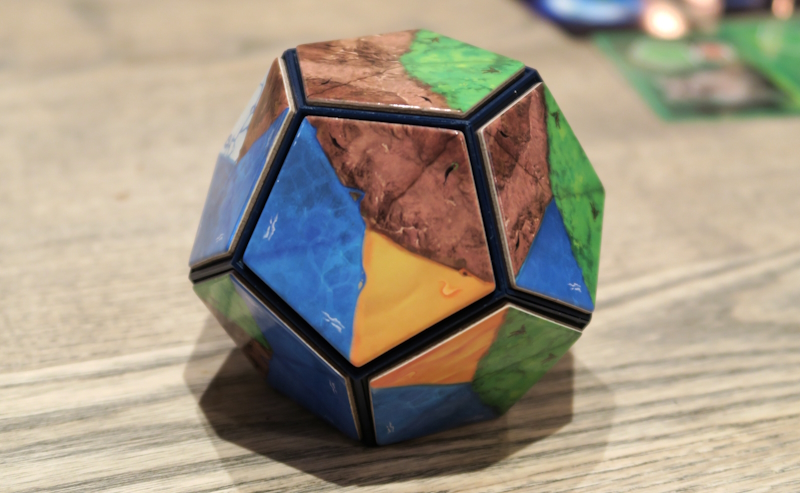
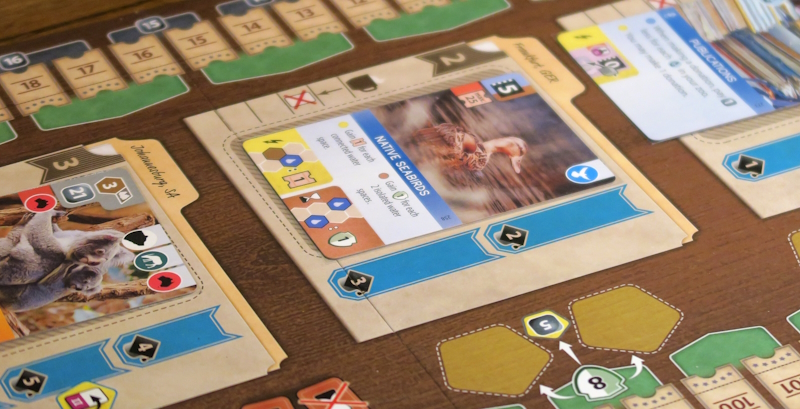
Meanwhile, Mint introduced Blue and Ivory to the really cool, three-dimensional game, Planet.  This is quite a simple game, but really clever:  each player receives a dodecahedral planet core with twelve pentagonal spaces and a magnet in the centre of each one.  On their turn, players choose a pentagonal tile with different terrains (Mountain, Ice, Forest and/or Desert) on them and stick it to their planet. The player who fulfills the most conditions for the appearance of certain animals gains its card.  There are public, animal objectives and each player has a private objective, their “Natural Habitat”.

Planet
– Image by boardGOATS

Players score points for the size of their Natural Habitat, and also for each animal card they claim.  Animals that live in an area that is not the player’s Natural Habitat score extra points which creates sort of opposing incentives to cover the planet with Natural Habitat tiles while also creating the right conditions to score animal cards.  And as the Planet fills up, this gets more and more complex.  Although everyone loved it, the game didn’t quite click for Blue, but it was close between Ivory and Mint.  There were only two points between them in the final totals, with Ivory taking his second victory of the night with twenty points.

Planet
– Image by boardGOATS

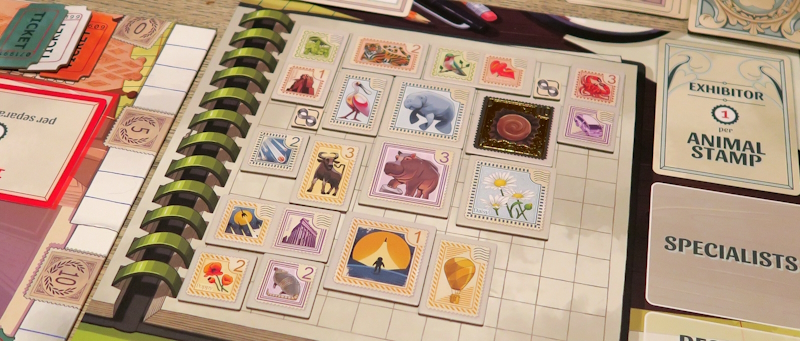
From there, the trio went on to play the Golden GOAT Award winning game, Stamp Swap.  In spite of the theme (which didn’t really set anybody’s imagination on fire), this has proved to be a really popular game within the group—it is just very smooth and doesn’t outstay its welcome.  Everyone had played it before, so there was only the barest minimum of a rules run-down.  The game takes place over three rounds, each split into two parts:  Firstly players take it in turns to choose from a central pool, then players divide their pile into two and the first player chooses one pile from another player to take, who keeps their other pile and chooses one from another play—and thus the piles of stamps are swapped.

Stamp Swap
– Image by boardGOATS

Players score points at the end of each round for their achievements and at the end of the game, for the face-value of the stamps and for end game objectives.  Despite everyone having played it before, there was a rules malfunction that might happened before and could have made a significant difference, to Mint and Blue especially.  Each player has an “Exhibitor” which gives players a point for each stamp they have of a given theme.  The group scored this at the end of the game, however, it is supposed to give points at the end of each round.  Everyone played by the same rules, so Ivory was the deserved winner with a hundred and eighteen points, but the scores would have been closer if the Exhibitors had been played correctly.

Stamp Swap
– Image by boardGOATS

On a night when there were four tables, the third consisted of Pink, Black, Pine and Purple, started with a game of Little Town.  This is a really cute little game of Worker placement, resource collection and management, and building tile placement.  The game lasts for four rounds, during which players collect resources (wood, stones, fish, and wheat) from the eight surrounding squares by placing Workers on central map.  Players can then build buildings using these resources, players can then gain the effect of the building by placing a Worker next to it.  Placing a Worker next to a building owned by another has a cost though, and the player must pay a coin before you can collect resources.

Little Town
– Image by boardGOATS

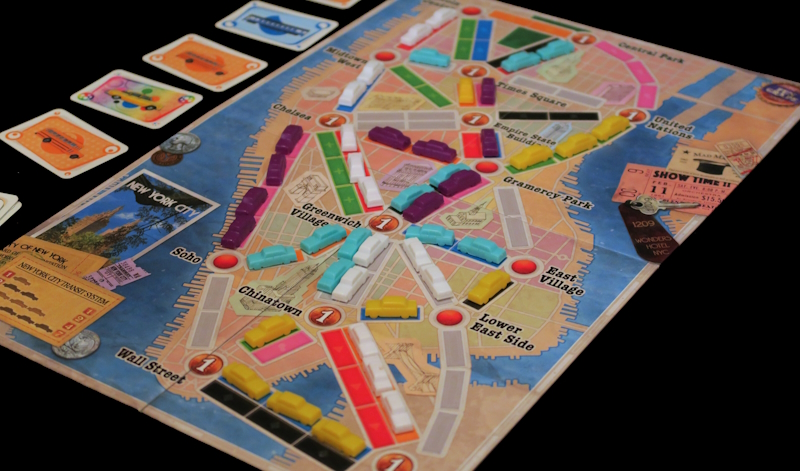
Players collect victory points using the powers of buildings, by constructing buildings, and by achieving objectives dealt at the beginning of the game. This time, Pink played a really pragmatic game essentially simply repeatedly activating the Well and the Bar (giving him two and three points each respectively).  As a result, the game was a bit of a land-slide with Pink taking victory with thirty-nine points, eleven ahead of Black in second with Pine a few points behind that.  With everyone else otherwise engaged, the group went on to play a quick game of Ticket to Ride: New York.  This is one of the first of the very small editions of Ticket to Ride, in fact, the first of the “Cities“, as it was preceded only by the Demo version.

Ticket to Ride: New York
– Image by boardGOATS

The game is played much the same as the full version of Ticket to Ride, with players taking coloured cards from the market and spending them to place pieces (in this case taxis) with the aim of completing tickets.  Black took the most points for the Tourist Attractions he made connections with, but had a bit of a ‘mare elsewhere, failing to complete a large pile of tickets which left him losing fifteen points.  This almost entirely wiped out the rest of his points, but it was relatively close between the others.  Pink was once again the victor though, taking the most points for placing taxis and for his tickets giving him a total of thirty-four points, with Pine taking second place just ahead of Purple.

Ticket to Ride: New York
– Image by boardGOATS

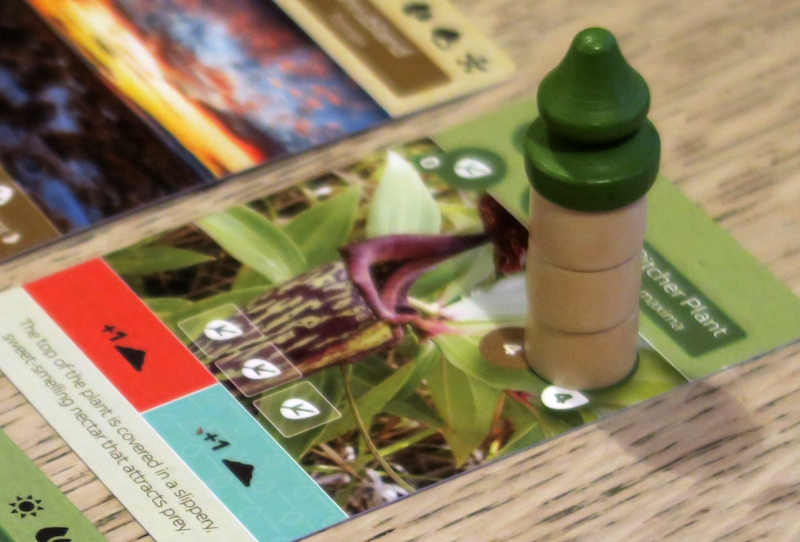
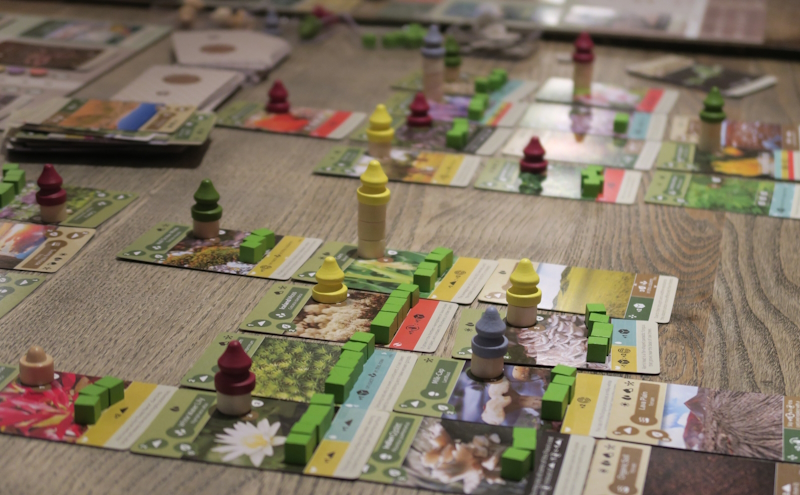
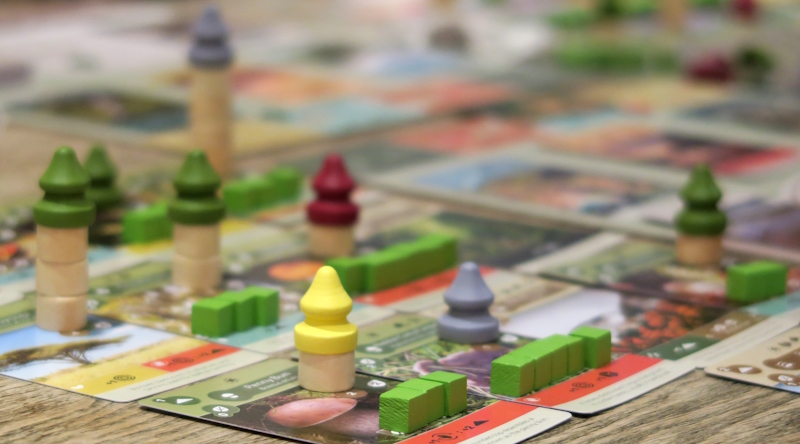
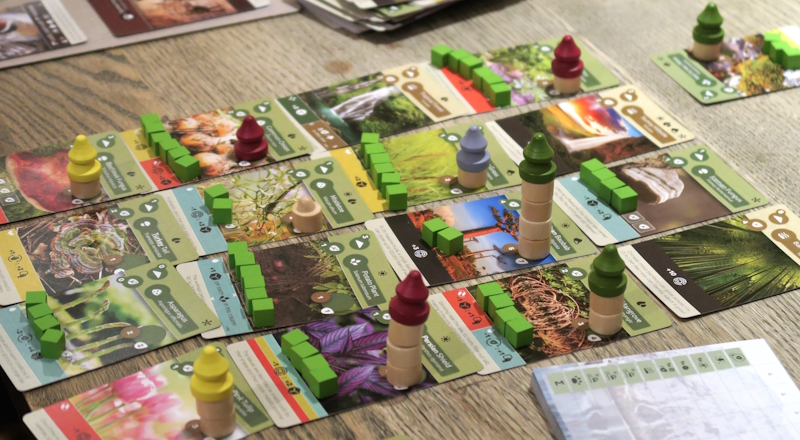
The fourth table consisting of Green, Teal, Salmon and Flint, only played the one game, but it was one of the most beautiful of recent times:  Earth.  This is a card-driven engine-builder where players are building themselves an ecosystem.  Often compared to Wingspan, although there is a lot to understand, the game itself is not actually all that complicated. Players are building a four by four grid of Flora and Terrain cards which represents their island; during the game they will plant flora, water it and allow it to grow.

Earth
– Image by boardGOATS

On their turn, players do one of four things: Planting (paying the cost in Soil tokens), Composting (gaining Soil and placing cards from the deck in their discard pile), Watering (place Sprouts and gain Soil) & Growing (draw new cards and place growth tokens).  A bit like Puerto Rico, once the active player has chosen which action they are taking, everyone else gets to do a subsidiary, slightly weaker version of the same action.  For example, when Planting, the active player plants two cards, draws four and keeps one, while the other players plant one and draw one.

Earth
– Image by boardGOATS

Once everyone has completed the action for the turn, everyone activates all the cards in their island that match the colour of the action chosen, starting with the card in the top left and working across each row in turn.  So, not only is it important which cards are played, but also where they are located in the player’s island.  At the end of the game (which is triggered when one player has completed their island), players score points for each Flora card, any Trunks and Canopies they have grown, their Sprouts and their pile of “Composted” or discarded cards.  Players also score points for achieving objectives on the Fauna cards revealed at the start of the game and for completing their island first.

Earth
– Image by boardGOATS

This was another game that turned out to be a bit of a land-slide.  The base scores for the islands was pretty consistent, but as with many games, it’s about what you do with the cards you get that makes the difference.  Green “Composted” fewer cards, but scored more for his Sprouts.  Players had ups and down, but otherwise it was fairly even.  The biggest difference, however, was the number of Leaf Tokens on the Fauna board—Green had more than twice as many as anyone else with sixty.  As a result, his total of two-hundred and forty-four was nearly fifty more than that of Teal who took second ahead of Flint in third.

Earth
– Image by boardGOATS

Learning outcome:  Rushing the end of a game can take the shine off it.

Next Meeting, 27th May 2025

Our next meeting will be on Tuesday 27th May 2025.  As usual, we will start playing shorter games from 7.30pm as people arrive, until 8pm when we will start something a little longer.  Due to a recent change of hands, the pub is NOT doing food at the moment.

This week, the “Feature Game” will be Flip 7 (rules, tutorial video, review).  This is a quick, push-your-luck card game along the lines of Blackjack that recently won a Golden Geek award and received a nomination for the Spiel des Jahres.

Flip 7
– Image by boardGOATS

And speaking of card games…

Jeff was chatting to Joe over a pint one evening.

“My wife says she’s leaving because of my obsession with Poker,” said Jeff.  “But I think she’s bluffing…”

Spiel des Jahres Nominations 2025

The nominations for the 2025 Spiel des Jahres Awards have just been announced.  Although there are now other lots of other awards (including the recently announced Golden Geek Awards), this is still the most prestigious award in board gaming and certainly the one that carries the most weight when it comes to casual gamers.  There are three categories, the Kinderspiel (children’s game) , the Kennerspiel (“expert’s” game) and the most desirable of all, the family award, the Spiel des Jahres or “Red Poppel”.  The nominees for this year’s awards have been announced as:

  • Kennerspiel des Jahres
    Kennerspiel des Jahres 2025 - Nominees
    Endeavor: Die Tiefsee (aka Endeavor: Deep Sea) by Carl de Vissser
    & Laurent Escoffier
    Faraway by Johannes Goupy & Corentin Lebrat
    Neuland (aka Looot) by Charles Chevalier & Laurent Escoffier


In recent years, there has been a shift in both the family and expert awards, away from traditional Euro-style board to lighter, more innovative games.  Gone are the days of El Grande, Tikal and The Settlers of Catan (all winners from the 1990s) with recent winners including MicroMacro: Crime City (from 2021) Pictures (from 2020), Challengers! (from 2023).  It may be that there has been a concerted effort to “freshen” the brand and subvert the conventional idea of what a board game is.  Last year’s winners, were Sky Team and Daybreak which were unusual in that both are cooperative games with Sky Team also being a two-player game (unusual for a “family game”).

– Image by BGG Contributor JuiceNeutron

In addition to the nominees, there are always a number of recommendations, which in this year include Castle Combo and Cities.  The Spiel des Jahres Awards are still the industry’s headline award and therefore are of great significance; it will be interesting to see which direction the awards go in this year when they are announced on Sunday 13th July in Berlin.

The Spiel des Jahres Awards
– Image from spiel-des-jahres.de

Golden Geek Awards – 2025

The winners of BoardGameGeek‘s Golden Geek Awards have been announced this month.  There are many Game awards, with the foremost being the Spiel des Jahres Awards and Deutscher Spiele Preis, Both of these are German in origin, with the Spiel des Jahres awards chosen by a panel of experts and the Deutscher Spiele Preis resulting from an open vote by games clubs, gamers and people in the industry.  In contrast, the Golden Geek Awards are voted on by the users of the BoardGameGeek websiteflavour which gives them a slightly different .  There are over a dozen categories, but winners include Arcs, Castle Combo, Harmonies, SETI and Flip 7 with Fromage, Let’s Go! To Japan, Captain Flip, Heat: Heavy Rain, and Forest Shuffle: Alpine featuring among the runners up.

– from youtube.com

4th February 2025

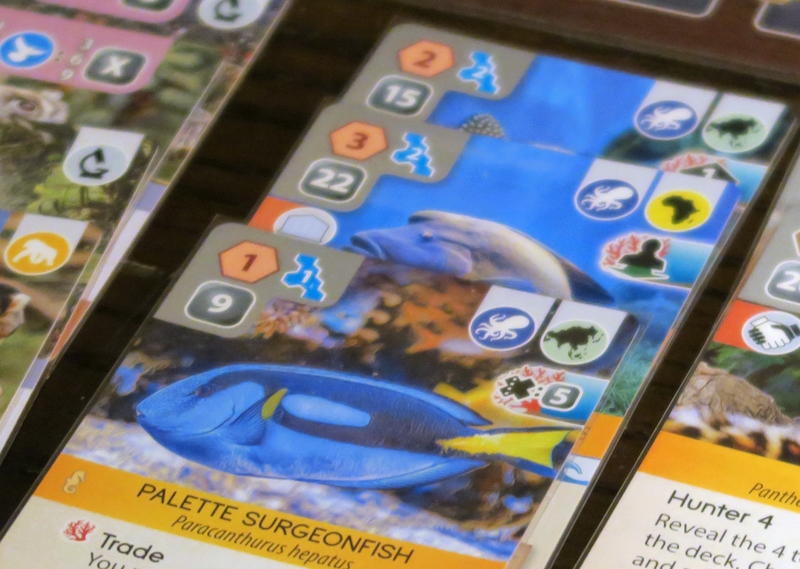
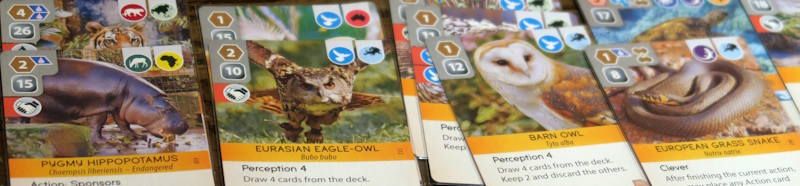
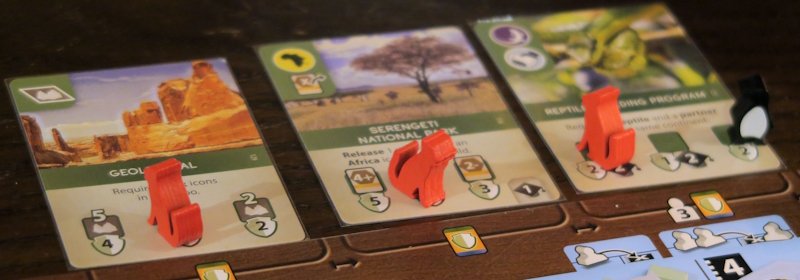
Blue and Pink were just finishing their supper when not one, but three copies of Ark Nova walked in, escorted by Ivory, Cobalt and Green.  This was because the “Feature Game” was to be its Marine Worlds expansion and, as Ark Nova is a substantial game that doesn’t get as many outings as it deserves, everyone was keen to give their copy a bit of an airing.  The game is much longer than those we usually play on a Tuesday so everyone who was keen to play was early and started setting up promptly.  Given the length, we also erred on the lower end of the player count, with just Ivory, Cobalt and Green playing.  The game is all about planning and designing a modern, scientifically managed zoo, but the game-play is more like Terraforming Mars with animals, than Zoo Break or Zooloretto.

Ark Nova
– Image by boardGOATS

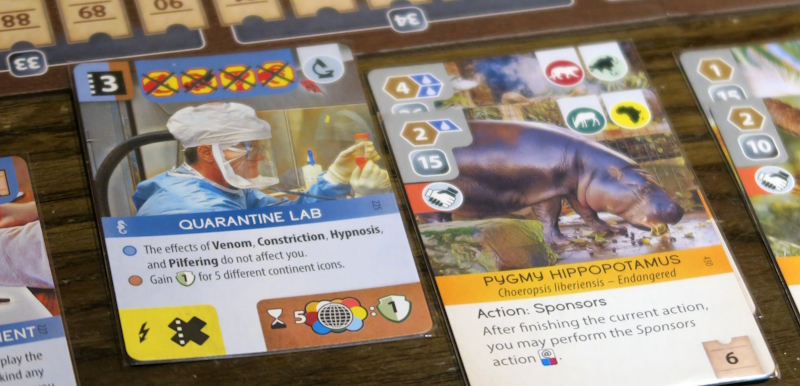
Although it is quite a complex game, functionally it is not difficult to play on a turn by turn basis, though there is quite a lot to manage and keep a track of.  On their turn, players take one of six possible actions:  activating one of the five action cards (Cards, Build, Animals, Association and Sponsor) with a strength equal to the number above the card.  When activating a card players perform the action based on its power level which is dictated by its position in the row.  During the game, players can upgrade and turn over the action cards to a more powerful second side using various Bonuses.  The Marine Worlds expansion introduces several new elements to the game.

Ark Nova: Marine Worlds
– Image by boardGOATS

Firstly, there are sea animals that have to be played in new special enclosures that must be built adjacent to water.  Roughly half the sea animals are reef dwellers, and whenever a player adds a reef dweller to their zoo, they trigger the ability of all reef dwellers in that zoo. To deal with the dilution of the deck (caused by adding more cards), all sea cards feature a wave icon, and whenever it is revealed in the display, you discard the first card in the row, then replace it.  For each of the five Action cards there are four alternate versions with a little twist. Players draft these action cards at the start of play, replacing two of their standard action cards with these new ones, increasing the asymmetry in the game.

Ark Nova: Marine Worlds
– Image by boardGOATS

A new fourth University option is also available on the Association board.  If a player takes it, they claim one of six special Universities from the Reserve that feature one Research icon and one of six animal icons.  When a player takes this, they reveal Cards from the top of the deck and keep the first revealed card with an animal icon that matches their chosen University.  There are also new bonus tiles and other little bits and pieces to smooth out the game play.  Although the Marine Worlds expansion comes is modular, the group chose to play with all the components (Marine animals, asymmetric maps and drafted action cards).

Ark Nova: Marine Worlds
– Image by boardGOATS

Ivory took a Sponsor Card that gave him extra money for breaks and an Association Card that gave him the ability to hire workers.  This coupled with the lake map which gave extra money for building around the lake meant Ivory had access to lots of cash as the game developed.  Both Cobalt and Green took a Sponsor and an Animal Card, with Cobalt taking a map that allowed him to discard cards for money while Green had the map with the park restaurant.  While Cobalt was also able to build up a lot of cash, Green spent most of the game playing the poor relation, just scraping by.  The game started slowly, with initial conservation projects devoted to Australian animals, Birds, and African Animals.

Ark Nova: Marine Worlds
– Image by boardGOATS

Both Green and Ivory wound up spending all their early money, trying to get Animals out, whereas Cobalt focused on the Association board and playing Sponsor cards.  After struggling with money for the first couple of rounds, Ivory managed to get two Australian animals, allowing him to put a token on the conservation card, giving an additional Zoo Dollars at each break/income step and from then on, money wasn’t too much of an issue for him. Green however, struggled for money for most of the game, where Cobalt continued to focus on Sponsor Cards and Association Actions, and as a result, he took an early lead on the Research track which gave him a much greater card choice. Cobalt did build an early aquarium, however, and started filling it up with fish.

Ark Nova: Marine Worlds
– Image by boardGOATS

After a quick start, both on the conservation track and appeal track, Ivory’s game slowed down significantly—he was too focused on animals, compared to Green and Cobalt.  They had both spent time taking Association actions, leading them to Upgrade cards and progress up the Reputation track. Cobalt was able to significantly move up the Conservation track in the middle game using his Sponsor Cards, whereas Green focused on one big move by having lots of birds in his zoo.  Much to Pink’s disgust, although the panda was an option at one point in the game, the “wave” added by expansion pushed it on, so nobody got the Panda.  Instead, by the end of the game, Ivory had quite a collection of monkeys, Green had a few some birds and Cobalt had a lot of fish.

Ark Nova: Marine Worlds
– Image by boardGOATS

Going into the end game, Cobalt some way ahead on the Conservation track, followed by Green, while Green and Ivory were fairly similar in Appeal.  Cobalt then started playing lots of animals in his zoo and managed to completely fill it moving rapidly along the Appeal track.  It was clear he was soon going to bring the game to a close, due in part to both his (and Green’s) ability to make donations by upgrading the Association card. Green was also moving forwards on both tracks while Ivory was lagging behind albeit with three conservation cards in hand. Fortunately, Ivory had lots of “x tokens”, allowing him to play all his conservation cards (and gain the additional worker he needed, shooting up the conservation track, though sadly, it was too little too late.  From there, It wasn’t long before Cobalt’s Tokens to crossed, ending the game.

Ark Nova: Marine Worlds
– Image by boardGOATS

Everyone had made some mistakes reading their cards and/or abilities which cost a little bit, but was probably fairly balanced out.  Everyone managed to get the full four Conservation points on their personal scoring cards, but Green picked up quite a few extra points from the Sponsorship cards leaving him level with Cobalt.  Inevitably, this led to a hunt for tie-breakers—the rules state that the tied player who supported the most Conservation Projects wins the game.  As Green and Cobalt had also supported the same number of Conservation projects the rules dictated they should share the victory.  That said, Green magnanimously said he felt Cobalt had the edge by virtue of having way more coin at the end of the game.

Ark Nova: Marine Worlds
– Image by boardGOATS

On the next table, Blue, Pink and Mint had finally got underway playing Kavango.  This is a conservation, card-drafting game.  A bit like games like Sushi Go! and 7 Wonders, players draft cards to build their Reserve.  Like games like Terraforming Mars, however, cards can only be added to a player’s Reserve if they have its requirements.  These might be the food supply, or enough protection (environmental, poaching or climate).  Climate protection is unique because, as in real life, players have to work on that together.  At the end of the game, after three rounds, players add up the value of their animals, and any bonuses together with any points scored during the game for Research, and the player with the most points is the winner.

Kavango
– Image by boardGOATS

Pine joined them briefly and expressed an interest in playing another time, but decided this week he would take himself home to better acquaint himself with his C-vitamins and avoid unnecessarily sharing his bugs.  Mint was the nominal first player, though mostly the game is played simultaneously.  Blue started hard and fast building up lots of income, however, she was forced to invest heavily in Climate protection—honourable, but not necessarily lucrative.  Pink and Mint were a little slower to start, but made good progress.  Both got caught out by a very minor rules malfunction that had a significant impact:  Cards not used at the end of the round are supposed to go into a discard pile, but instead were returned to their decks.

Kavango
– Image by boardGOATS

Towards the end of the game, this suddenly became significant as some types of card are not available in the final rounds.  So, those that needed, for example, termites (like Mint), were unable to get them.  Pink and Mint were most obviously affected, though everyone got caught in some way or another.  The card draw hindered Blue as she struggled to find any migratory animals at all and had to abandon her personal objective as unachievable.  In contrast, Mint and Pink both did really well with theirs (birds and toxic creatures respectively), making the result much closer than it would otherwise have been with Blue the victor with a hundred and seventy-one, a single point more than Mint.

Kavango
– Image by boardGOATS

Meanwhile, Plum and Byzantium had kindly agreed to take Lime to the other side of the room to play the Golden GOAT Award 2024 Winner, Stamp Swap.  Somehow, despite the flurry of outings it received towards the end of last year, Lime had missed out on playing it.  This is also a drafting-type game, but this time with stamps (mostly).  The game takes place over three rounds, each split into two parts:  Firstly players take it in turns to choose from a central pool, then players divide their pile into two and the first player chooses one pile from another player to take, who keeps their other pile and chooses one from another play—and thus the piles of stamps are swapped.

Stamp Swap
– Image by boardGOATS

On previous outings, Byzantium had managed to annoy Blue by just beating her.  It had been his birthday at the weekend, so the question was whether he would get another, albeit slightly belated, birthday gift in the form of another victory.  Sadly for Byzantium, it was not to be though.  Plum took ten more points than him during the game and another ten more in the end game scoring between them, giving poor Lime quite a trampling on his first game.  Stamp Swap wasn’t the only popular new game to get an outing this evening.  On the next table, Jade and Sapphire were introducing Purple and Black to Fromage, a sort of cheesy worker placement game with simultaneous play and a time component, not completely unlike Tzolk’in.

Fromage
– Image by boardGOATS

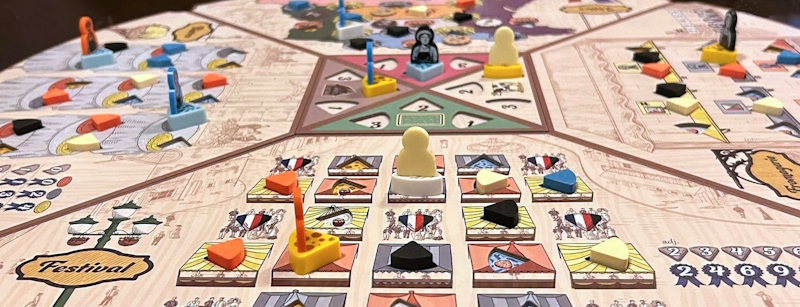
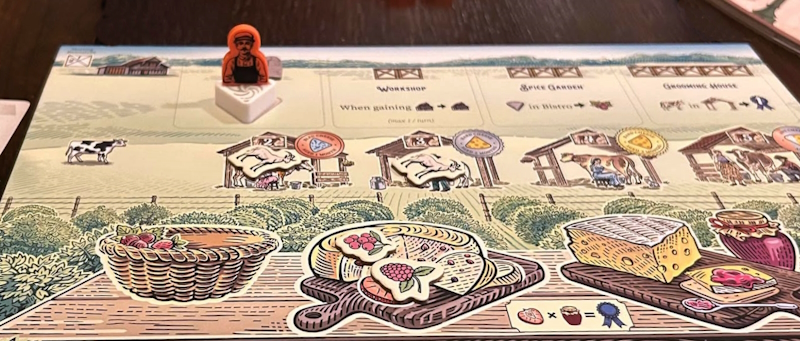
The actions are tied up in four “mini-games” which players take it in turns to participate in.  It has proven quite a popular little game because once everyone knows how to play, there is relatively little down time and despite playing different areas at different times, quite a lot of interaction.  Players simultaneously choose where to place their workers, in their quadrant of the board, and once everyone is done, the board is turned and then players retrieve any workers they can and then place workers on their next quadrant.  Players score points for occupying tables in the Bistro quadrant, holding the majority in regions in the Villes quadrant, filling different tables in the Fromagerie quadrant, occupying contiguous areas in the Festival quadrant, and for fulfilling Orders.

Fromage
– Image by boardGOATS

This time, Purple and Jade made a bit of a killing in the bistro taking nearly thirty points each, while Sapphire took twenty-two points in the Villes.  Black’s strategy was somewhat different, picking up points more evenly across the board and focusing particularly on fruit.  In the end, despite the differences in approaches, the scores were very similar, with only three points covering second to fourth.  The winner was Jade, however, some twenty points clear of Sapphire, who just nicked second, but a single point.  The game had been well received, and the group ended up “Doing a Lime” and playing it a second time.

Fromage
– Image by boardGOATS

The second game was also tight, although everyone was much more even in where they scored their points.  Sapphire just edged it though, again by a single point, again from Black, pushing Jade into third.  There was still time after the second game for something else, something new, something quick—Flip 7.  This is a really simple “Push your Luck” game reminiscent of Port Royal, where players simply turn over cards and gamble on not revealing the same number twice.  The catch is that each numbered card appears in the deck that number of times (i.e there is one one, two twos and so on).  Flipping over seven in a row gives fifteen bonus points.

Flip 7
– Image by boardGOATS

There are also some action cards in the deck, “Flip Three”, “Freeze”, “Second Chance” and modifier cards which give extra points.  Players take it in turns to decide whether they want to “flip” or ” stick”.  The game ends when players have reached the pre-agreed total (two hundred, according to the rules, though games can easily be made longer or shorter as desired).  In the first round, three players scored well, but the rest of the game did not go so well.  In fact, the only player who managed to score in every round was Black with a fairly consistent total around thirty.  It was no surprise that he was the first to pass two hundred and was therefore the winner, ahead of Sapphire and Purple, who were joint second with a hundred and seventy-six.

Flip 7
– Image by boardGOATS

Learning Outcome:  Zoos are even more fun with sea creatures.