Tag Archives: Fromage

Golden Geek Awards – 2025

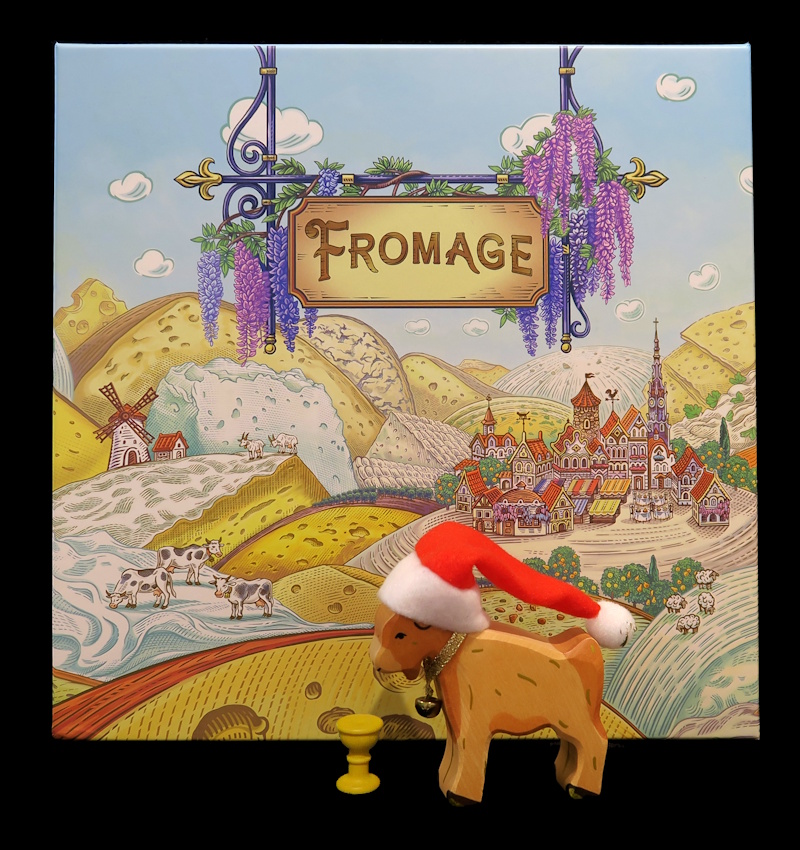
The winners of BoardGameGeek‘s Golden Geek Awards have been announced this month.  There are many Game awards, with the foremost being the Spiel des Jahres Awards and Deutscher Spiele Preis, Both of these are German in origin, with the Spiel des Jahres awards chosen by a panel of experts and the Deutscher Spiele Preis resulting from an open vote by games clubs, gamers and people in the industry.  In contrast, the Golden Geek Awards are voted on by the users of the BoardGameGeek websiteflavour which gives them a slightly different .  There are over a dozen categories, but winners include Arcs, Castle Combo, Harmonies, SETI and Flip 7 with Fromage, Let’s Go! To Japan, Captain Flip, Heat: Heavy Rain, and Forest Shuffle: Alpine featuring among the runners up.

– from youtube.com

4th February 2025

Blue and Pink were just finishing their supper when not one, but three copies of Ark Nova walked in, escorted by Ivory, Cobalt and Green.  This was because the “Feature Game” was to be its Marine Worlds expansion and, as Ark Nova is a substantial game that doesn’t get as many outings as it deserves, everyone was keen to give their copy a bit of an airing.  The game is much longer than those we usually play on a Tuesday so everyone who was keen to play was early and started setting up promptly.  Given the length, we also erred on the lower end of the player count, with just Ivory, Cobalt and Green playing.  The game is all about planning and designing a modern, scientifically managed zoo, but the game-play is more like Terraforming Mars with animals, than Zoo Break or Zooloretto.

Ark Nova
– Image by boardGOATS

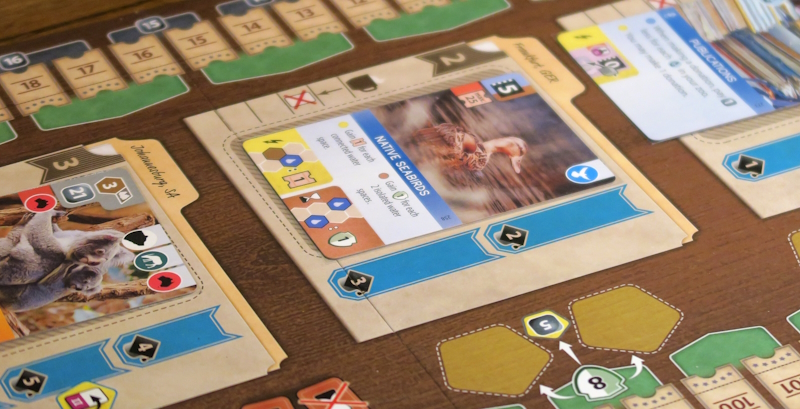
Although it is quite a complex game, functionally it is not difficult to play on a turn by turn basis, though there is quite a lot to manage and keep a track of.  On their turn, players take one of six possible actions:  activating one of the five action cards (Cards, Build, Animals, Association and Sponsor) with a strength equal to the number above the card.  When activating a card players perform the action based on its power level which is dictated by its position in the row.  During the game, players can upgrade and turn over the action cards to a more powerful second side using various Bonuses.  The Marine Worlds expansion introduces several new elements to the game.
Ark Nova: Marine Worlds
– Image by boardGOATS

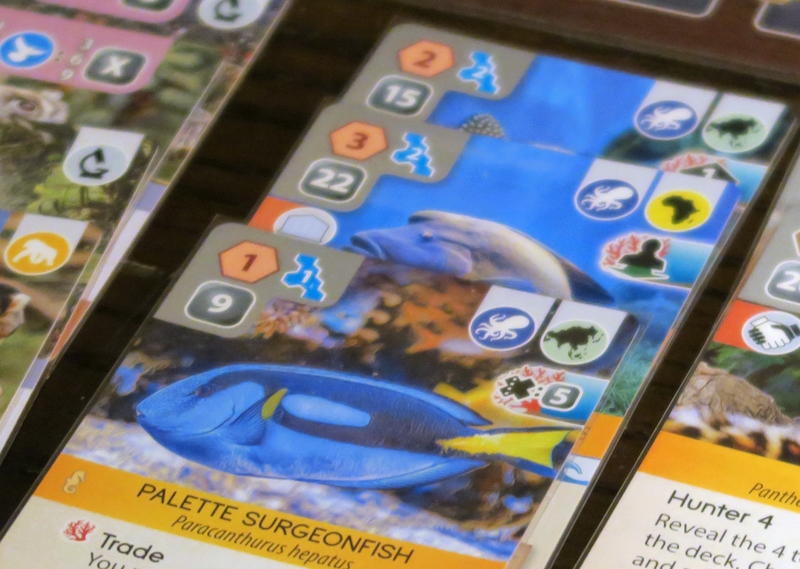
Firstly, there are sea animals that have to be played in new special enclosures that must be built adjacent to water.  Roughly half the sea animals are reef dwellers, and whenever a player adds a reef dweller to their zoo, they trigger the ability of all reef dwellers in that zoo. To deal with the dilution of the deck (caused by adding more cards), all sea cards feature a wave icon, and whenever it is revealed in the display, you discard the first card in the row, then replace it.  For each of the five Action cards there are four alternate versions with a little twist. Players draft these action cards at the start of play, replacing two of their standard action cards with these new ones, increasing the asymmetry in the game.
Ark Nova: Marine Worlds
– Image by boardGOATS

A new fourth University option is also available on the Association board.  If a player takes it, they claim one of six special Universities from the Reserve that feature one Research icon and one of six animal icons.  When a player takes this, they reveal Cards from the top of the deck and keep the first revealed card with an animal icon that matches their chosen University.  There are also new bonus tiles and other little bits and pieces to smooth out the game play.  Although the Marine Worlds expansion comes is modular, the group chose to play with all the components (Marine animals, asymmetric maps and drafted action cards).

Ark Nova: Marine Worlds
– Image by boardGOATS

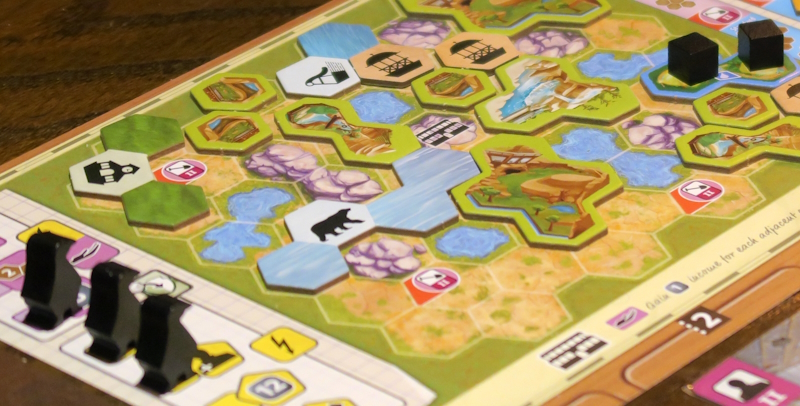
Ivory took a Sponsor Card that gave him extra money for breaks and an Association Card that gave him the ability to hire workers.  This coupled with the lake map which gave extra money for building around the lake meant Ivory had access to lots of cash as the game developed.  Both Cobalt and Green took a Sponsor and an Animal Card, with Cobalt taking a map that allowed him to discard cards for money while Green had the map with the park restaurant.  While Cobalt was also able to build up a lot of cash, Green spent most of the game playing the poor relation, just scraping by.  The game started slowly, with initial conservation projects devoted to Australian animals, Birds, and African Animals.
Ark Nova: Marine Worlds
– Image by boardGOATS

Both Green and Ivory wound up spending all their early money, trying to get Animals out, whereas Cobalt focused on the Association board and playing Sponsor cards.  After struggling with money for the first couple of rounds, Ivory managed to get two Australian animals, allowing him to put a token on the conservation card, giving an additional Zoo Dollars at each break/income step and from then on, money wasn’t too much of an issue for him. Green however, struggled for money for most of the game, where Cobalt continued to focus on Sponsor Cards and Association Actions, and as a result, he took an early lead on the Research track which gave him a much greater card choice. Cobalt did build an early aquarium, however, and started filling it up with fish.
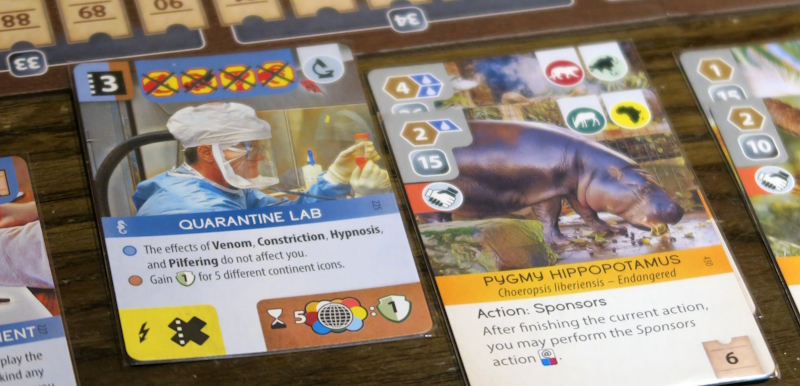
Ark Nova: Marine Worlds
– Image by boardGOATS

After a quick start, both on the conservation track and appeal track, Ivory’s game slowed down significantly—he was too focused on animals, compared to Green and Cobalt.  They had both spent time taking Association actions, leading them to Upgrade cards and progress up the Reputation track. Cobalt was able to significantly move up the Conservation track in the middle game using his Sponsor Cards, whereas Green focused on one big move by having lots of birds in his zoo.  Much to Pink’s disgust, although the panda was an option at one point in the game, the “wave” added by expansion pushed it on, so nobody got the Panda.  Instead, by the end of the game, Ivory had quite a collection of monkeys, Green had a few some birds and Cobalt had a lot of fish.
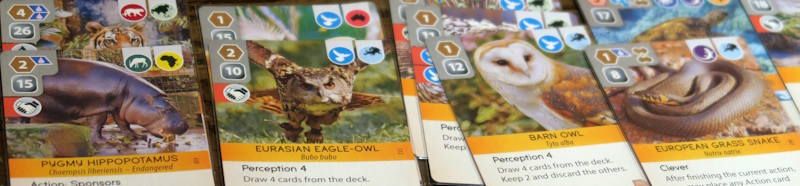
Ark Nova: Marine Worlds
– Image by boardGOATS

Going into the end game, Cobalt some way ahead on the Conservation track, followed by Green, while Green and Ivory were fairly similar in Appeal.  Cobalt then started playing lots of animals in his zoo and managed to completely fill it moving rapidly along the Appeal track.  It was clear he was soon going to bring the game to a close, due in part to both his (and Green’s) ability to make donations by upgrading the Association card. Green was also moving forwards on both tracks while Ivory was lagging behind albeit with three conservation cards in hand. Fortunately, Ivory had lots of “x tokens”, allowing him to play all his conservation cards (and gain the additional worker he needed, shooting up the conservation track, though sadly, it was too little too late.  From there, It wasn’t long before Cobalt’s Tokens to crossed, ending the game.
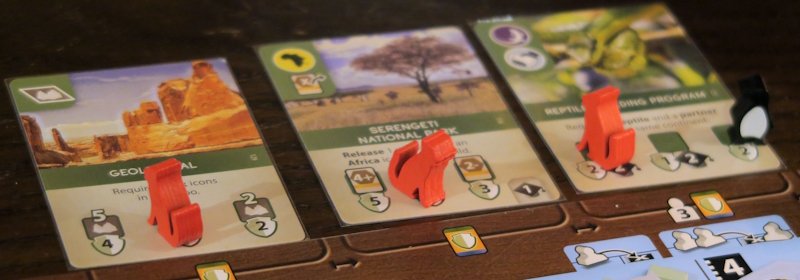
Ark Nova: Marine Worlds
– Image by boardGOATS

Everyone had made some mistakes reading their cards and/or abilities which cost a little bit, but was probably fairly balanced out.  Everyone managed to get the full four Conservation points on their personal scoring cards, but Green picked up quite a few extra points from the Sponsorship cards leaving him level with Cobalt.  Inevitably, this led to a hunt for tie-breakers—the rules state that the tied player who supported the most Conservation Projects wins the game.  As Green and Cobalt had also supported the same number of Conservation projects the rules dictated they should share the victory.  That said, Green magnanimously said he felt Cobalt had the edge by virtue of having way more coin at the end of the game.

Ark Nova: Marine Worlds
– Image by boardGOATS

On the next table, Blue, Pink and Mint had finally got underway playing Kavango.  This is a conservation, card-drafting game.  A bit like games like Sushi Go! and 7 Wonders, players draft cards to build their Reserve.  Like games like Terraforming Mars, however, cards can only be added to a player’s Reserve if they have its requirements.  These might be the food supply, or enough protection (environmental, poaching or climate).  Climate protection is unique because, as in real life, players have to work on that together.  At the end of the game, after three rounds, players add up the value of their animals, and any bonuses together with any points scored during the game for Research, and the player with the most points is the winner.

Kavango
– Image by boardGOATS

Pine joined them briefly and expressed an interest in playing another time, but decided this week he would take himself home to better acquaint himself with his C-vitamins and avoid unnecessarily sharing his bugs.  Mint was the nominal first player, though mostly the game is played simultaneously.  Blue started hard and fast building up lots of income, however, she was forced to invest heavily in Climate protection—honourable, but not necessarily lucrative.  Pink and Mint were a little slower to start, but made good progress.  Both got caught out by a very minor rules malfunction that had a significant impact:  Cards not used at the end of the round are supposed to go into a discard pile, but instead were returned to their decks.

Kavango
– Image by boardGOATS

Towards the end of the game, this suddenly became significant as some types of card are not available in the final rounds.  So, those that needed, for example, termites (like Mint), were unable to get them.  Pink and Mint were most obviously affected, though everyone got caught in some way or another.  The card draw hindered Blue as she struggled to find any migratory animals at all and had to abandon her personal objective as unachievable.  In contrast, Mint and Pink both did really well with theirs (birds and toxic creatures respectively), making the result much closer than it would otherwise have been with Blue the victor with a hundred and seventy-one, a single point more than Mint.

Kavango
– Image by boardGOATS

Meanwhile, Plum and Byzantium had kindly agreed to take Lime to the other side of the room to play the Golden GOAT Award 2024 Winner, Stamp Swap.  Somehow, despite the flurry of outings it received towards the end of last year, Lime had missed out on playing it.  This is also a drafting-type game, but this time with stamps (mostly).  The game takes place over three rounds, each split into two parts:  Firstly players take it in turns to choose from a central pool, then players divide their pile into two and the first player chooses one pile from another player to take, who keeps their other pile and chooses one from another play—and thus the piles of stamps are swapped.

Stamp Swap
– Image by boardGOATS

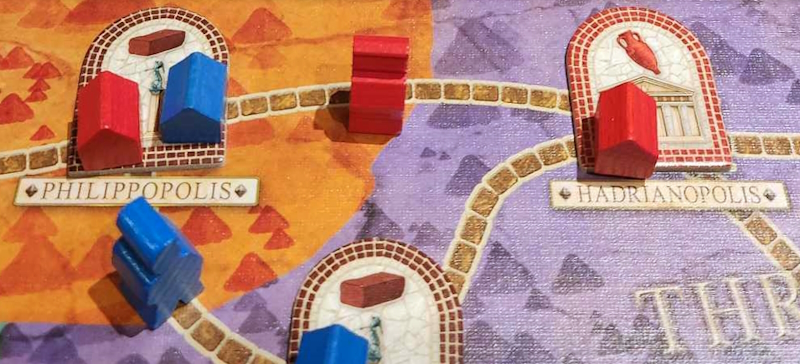
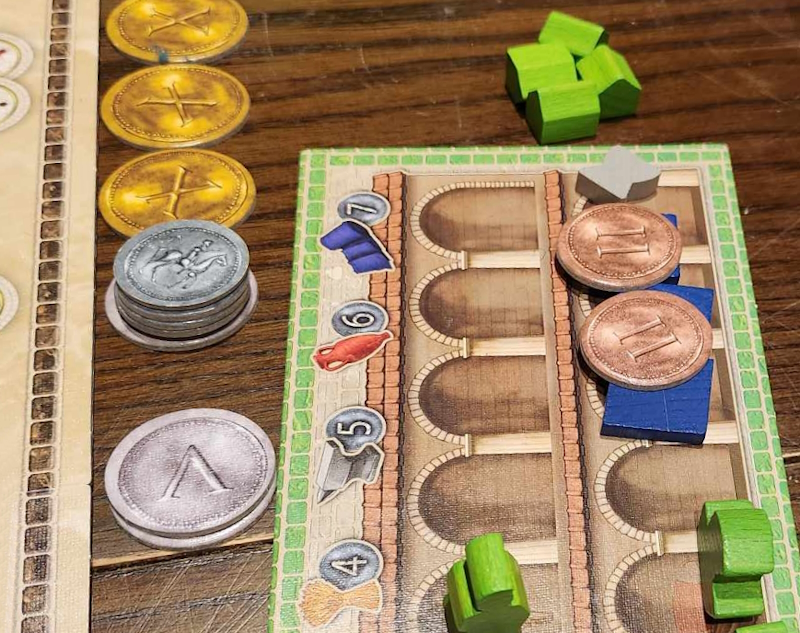
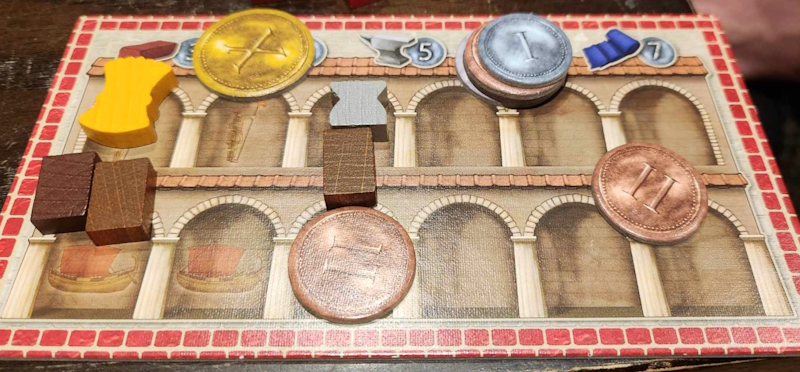
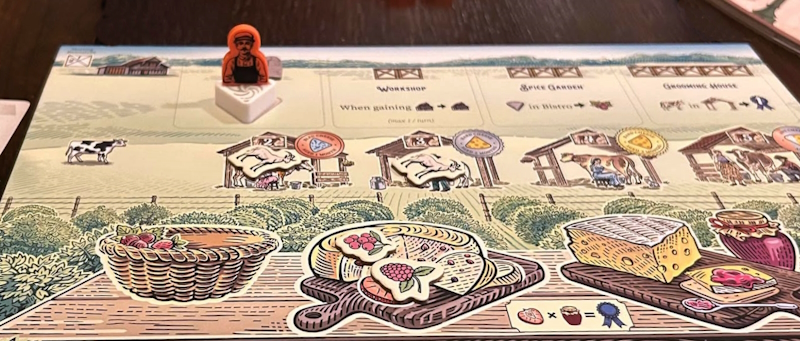
On previous outings, Byzantium had managed to annoy Blue by just beating her.  It had been his birthday at the weekend, so the question was whether he would get another, albeit slightly belated, birthday gift in the form of another victory.  Sadly for Byzantium, it was not to be though.  Plum took ten more points than him during the game and another ten more in the end game scoring between them, giving poor Lime quite a trampling on his first game.  Stamp Swap wasn’t the only popular new game to get an outing this evening.  On the next table, Jade and Sapphire were introducing Purple and Black to Fromage, a sort of cheesy worker placement game with simultaneous play and a time component, not completely unlike Tzolk’in.
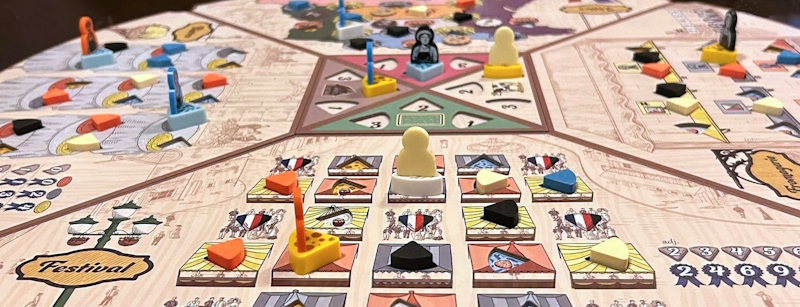
Fromage
– Image by boardGOATS

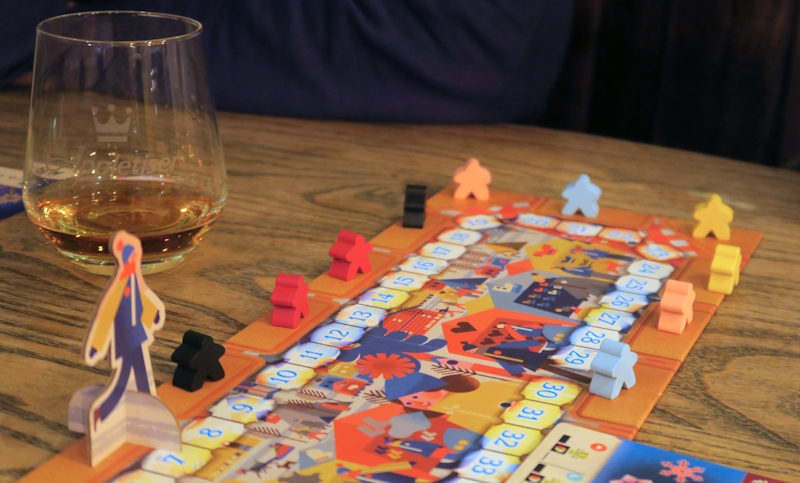
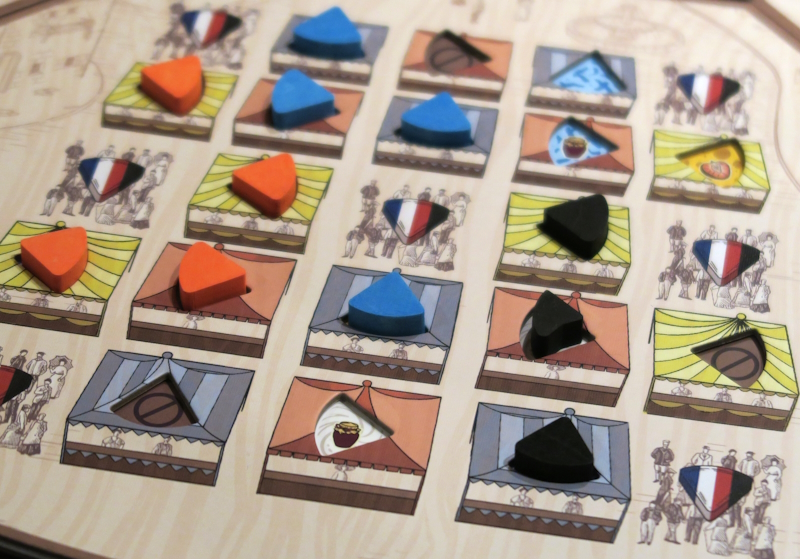
The actions are tied up in four “mini-games” which players take it in turns to participate in.  It has proven quite a popular little game because once everyone knows how to play, there is relatively little down time and despite playing different areas at different times, quite a lot of interaction.  Players simultaneously choose where to place their workers, in their quadrant of the board, and once everyone is done, the board is turned and then players retrieve any workers they can and then place workers on their next quadrant.  Players score points for occupying tables in the Bistro quadrant, holding the majority in regions in the Villes quadrant, filling different tables in the Fromagerie quadrant, occupying contiguous areas in the Festival quadrant, and for fulfilling Orders.
Fromage
– Image by boardGOATS

This time, Purple and Jade made a bit of a killing in the bistro taking nearly thirty points each, while Sapphire took twenty-two points in the Villes.  Black’s strategy was somewhat different, picking up points more evenly across the board and focusing particularly on fruit.  In the end, despite the differences in approaches, the scores were very similar, with only three points covering second to fourth.  The winner was Jade, however, some twenty points clear of Sapphire, who just nicked second, but a single point.  The game had been well received, and the group ended up “Doing a Lime” and playing it a second time.

Fromage
– Image by boardGOATS

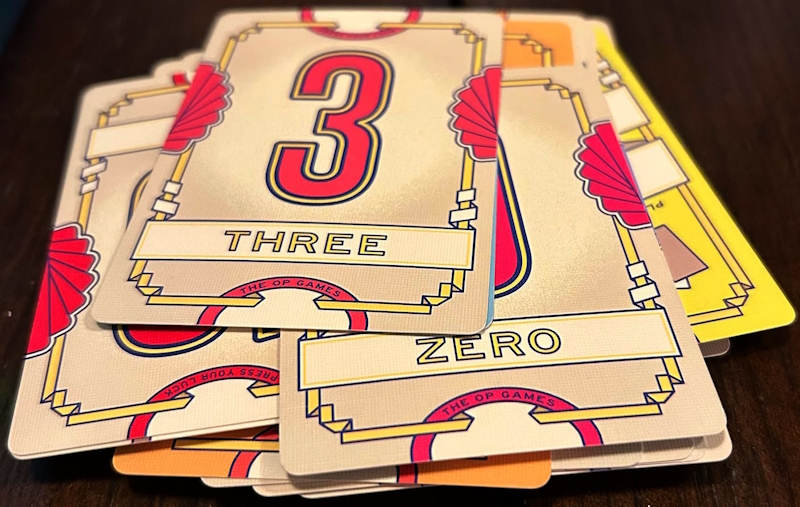
The second game was also tight, although everyone was much more even in where they scored their points.  Sapphire just edged it though, again by a single point, again from Black, pushing Jade into third.  There was still time after the second game for something else, something new, something quick—Flip 7.  This is a really simple “Push your Luck” game reminiscent of Port Royal, where players simply turn over cards and gamble on not revealing the same number twice.  The catch is that each numbered card appears in the deck that number of times (i.e there is one one, two twos and so on).  Flipping over seven in a row gives fifteen bonus points.

Flip 7
– Image by boardGOATS

There are also some action cards in the deck, “Flip Three”, “Freeze”, “Second Chance” and modifier cards which give extra points.  Players take it in turns to decide whether they want to “flip” or ” stick”.  The game ends when players have reached the pre-agreed total (two hundred, according to the rules, though games can easily be made longer or shorter as desired).  In the first round, three players scored well, but the rest of the game did not go so well.  In fact, the only player who managed to score in every round was Black with a fairly consistent total around thirty.  It was no surprise that he was the first to pass two hundred and was therefore the winner, ahead of Sapphire and Purple, who were joint second with a hundred and seventy-six.
Flip 7
– Image by boardGOATS

Learning Outcome:  Zoos are even more fun with sea creatures.

7th January 2025

Blue and Pink were early for a change and had mostly finished their supper when everyone else arrived.  The “Feature Game” was to be Concordia Venus which is a reimplementation of Concordia, but can also be played with an upgrade-expansion to the original game.  Concordia is a strategy game of economic development in Roman times and although the rules are relatively simple, the game has a lot of depth.  Plum had been super-keen to play this, and, as it turned out, there were several others who were also very keen to give it a go, so as a result, there were soon two games underway.

Concordia: Venus
– Image by boardGOATS

The first of these involved Plum, Sapphire and Teal, playing with Burgundy‘s copy of the original Concordia with the Venus expansion.  This was one of Burgundy‘s favourite games and many people in the group fondly remember being taught it by him.  Game play is super-simple:  each player has a hand of cards, so on their turn, they play one and do what it says.  And that is all there is to it.  Players start with a hand of seven Personality Cards which provide a simple array of actions:  move Colonists and build, produce Resources, trade Resources, use another player’s most recently played Card, buy more Cards, recycle their Card deck.

Concordia: Venus
– Image by boardGOATS

Players use their Consul card to buy more Personality Cards during the game.  As well as providing more and increasingly powerful options, they are also key to scoring.  Each card is related to an ancient god who rewards its owner with victory points according to different scoring criteria.  This reward is then multiplied by the number of Cards the player has that are dedicated to that god.  For example, Saturnus rewards players for having buildings in different provinces.  If a player has built in seven different provinces and has four cards dedicated to Saturnus, they receive twenty-eight points.

Concordia: Venus
– Image by boardGOATS

The game ends either after a player purchases the last card from the display, or after one player builds their fifteenth house after which everyone else completes their final turn before scoring.  One of the things that is very clever about the game is how much variety is achieved from very little variation.  Players all begin with the same starting cards and the same resources; the only change from game to game is the order the Cards appear in the market and the distribution of City Resource tiles at the start of the game which dictate which cities produce what.  With these small variations the game can change hugely as players fight to control the area that gives the most lucrative cities during the game and when combined with their Cards to give the most points.

Concordia: Venus
– Image by boardGOATS

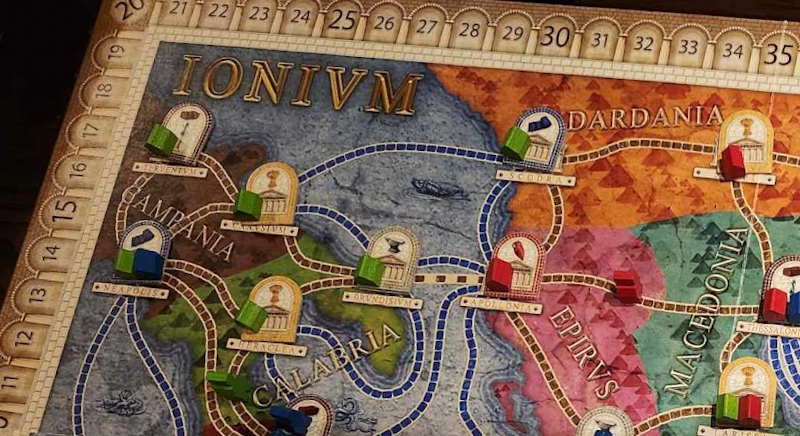
There is even more variation to be had with alternative maps, but the reimplementation of Concordia, Venus, introduces an eighth Card to the starting hand (the Magister, which allows a player to repeat their previous action), the addition of the Minerva scoring Cards (which give players extra points for each city of the type indicated by the specialist), as well as three new maps (Cyprus, Hellas and Ionium).  These can also be added to the base game using a combination of the Venus expansion and the Balearica / Cyprus expansion; this was was the version Plum, Sapphire and Teal played, which meant they started by sorting out what they needed to play the game.

Concordia: Venus
– Image by boardGOATS

The group chose to use the Ionium map from the Venus expansion as it plays well with three.  Sapphire had a positively storming game—he was perhaps helped by the fact that Teal and Plum started the game by heading east leaving Sapphire to explore the west unopposed, but he still had to make it work for him.  And make it work he did, with two turns in which he claimed four cities.  Later in the game, he made good use of his Diplomat Card to copy the Consul Plum had used.  Sapphire had a couple of Provinces to himself so Prefecting in those areas helped only him. Teal and Plum had both built in a couple of Cloth-rich areas, but Plum wasn’t always able to make the best of hers and on two occasions her storage are was full when she could have received goods.

Concordia: Venus
– Image by boardGOATS

In the end game scoring, Sapphire led in the Jupiter, Saturn and Venus scoring and jointly in the Mars scoring.  To top that, he also triggered the end of the game giving him the Concordia Card (and seven points) as well as getting fifteen points for the Minerva scoring with his Smith card.  As a result, he finished with a hundred and twenty-nine points, sixteen more than Teal who finished a very creditable third in a game where it is notoriously hard to to well in the first game.  Meanwhile, Black and Byzantium were leading another game of Concordia, with Purple and Cobalt.

Concordia
– Image by boardGOATS

As Cobalt was new to the game, this group played with the classic Imperium map and included the intermediate individual scoring for each player when they played their Tribune card for the first time.  Black spread out over the board while Purple and Byzantium were more restrained, with Byzantium only spreading his tentacles at the end of the game  Cobalt collected a lot of Cards, although Byzantium had most of the Colonist Cards.  Despite the differences in approach, this game was really tight, so much so that Black and Byzantium tied for victory on one hundred and forty-nine points with Cobalt some fifteen points behind.

Concordia
– Image by boardGOATS

As is always the case when there is a tie, there was a rummage in the rule book for a tie-break.  In this case, the tie is won by the player owning the Præfectus Magnus Card, or by the tied player who would receive him next in the course of the game.  This nominally went to Black, but it was agreed this was a rubbish tie-break rule as players can’t plan for this and just get given it when someone else plays their Prefect Card.  While all this harmony was on-going, Jade was introducing Ivory to Fromage, with the help of Blue and Pink who had both played it once before elsewhere. This is a really cool worker placement game where the actions have a time component to them.

Fromage
– Image by boardGOATS

This sort of thing is not new—Tzolk’in does something similar where players place workers on wheels which are turned at the end of each round and, the longer the workers stay, the more powerful the action they can do.  In the case of Fromage, this is sort of reversed in that players do the action and, if they do a more powerful action, then their workers stay on the board for longer.  The peril here is that, whereas in Tzolk’in players can always do a less powerful action and take workers off early if they have to, in Fromage players only have four workers and it is very easy to end up with all of them sat on the board leaving people unable to do anything at all.  Fromage has proved popular since its release just before Christmas, and as a result, it is on its second Tuesday outing already.

Fromage
– Image by boardGOATS

The actions are tied up in four “mini-games” which players take it in turns to participate in.  It has proven quite a popular little game because once everyone knows how to play, there is relatively little down time and despite playing different areas at different times, quite a lot of interaction.  Players simultaneously choose where to place their workers, in their quadrant of the board, and once everyone is done, the board is turned and then players retrieve any workers they can and then place workers on their next quadrant.  Players score points for occupying tables in the Bistro quadrant, holding the majority in regions in the Villes quadrant, filling different tables in the Fromagerie quadrant, occupying contiguous areas in the Festival quadrant, and for fulfilling Orders.

Fromage
– Image by boardGOATS

This time, the game was very close, especially between Ivory and Pink, despite there being a lot of different strategies at play.  Pink, for example, scored very heavily for the Bistro getting forty-five points (more than half his total) from the one location.  In contrast, Blue scored thirty points for her contracts and nineteen from the Fromagerie, but very little anywhere else, while Ivory and Jade scored much more evenly in the different categories.  There was only one point between Pink and Ivory in the final reckoning, however, with Pink’s eighty-one just giving him victory.  With the rest of the group remembering Burgundy while playing Concordia, it seemed only fitting that this group should move on to another of Burgundy’s favourites: Splendor.

Splendor
– Image by boardGOATS

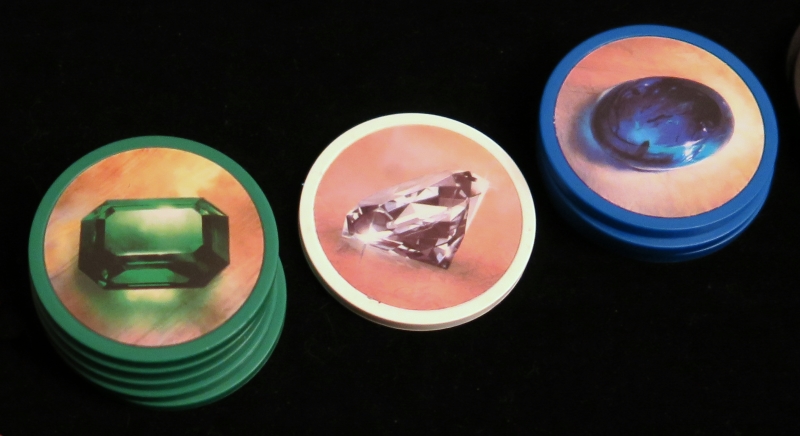
Burgundy was almost unbeatable at Splendor and at one point had a two-year unbeaten run on Tuesdays—so much so that others in the group would choose to play Splendor when he was occupied elsewhere, just to break the monotony!  The game is quite simple:  on their turn, players either take Gem-stone chips, or use them to buy Cards.  The Cards act as a perpetual source of Gems.  Thus, the aim of the game is to build a robust engine to enable players to buy the more expensive Cards that also give points, or allow players to collect Noble tiles for having sets of Cards associated with particular combinations of Gems.  This was another close game with Jade looking like he was going to end the game for a couple of rounds and Blue and Ivory looking for a couple of large turns.

Splendor
– Image by boardGOATS

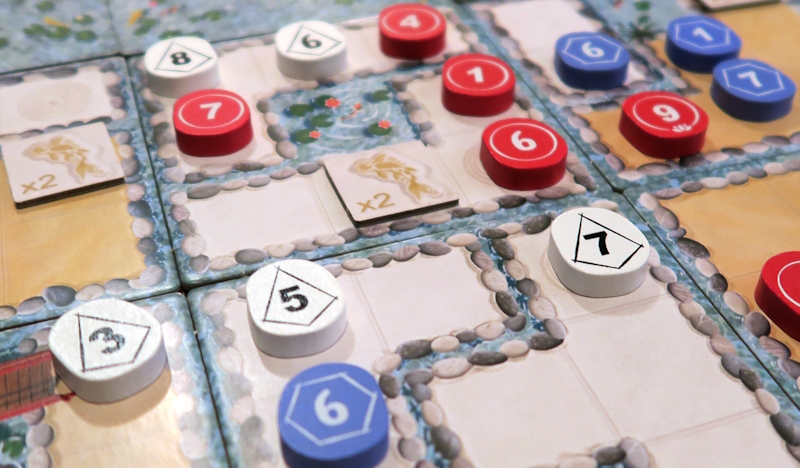
That was until Pink did it for him by ending his turn with sixteen points and as he was last in the round, that meant nobody else got another turn.  So Jade finished second with fourteen with Blue in third.  Ivory decided to call it a night there, leaving Blue, Pink and Jade to play one last game, which ended up being Hiroba.  This is a sort of area-control filler game, where players take it in turns to place one of their nine Stones in the nine-by-nine grid following some simple, Sudoku-like rules.  Each Stone is numbered one to nine, but they are numbered on both sides such that the total adds up to ten.

Hiroba
– Image by boardGOATS

After players have placed their first Stone, others must be placed in the same row or column as one they have already placed, while ensuring that none of the Stones in any row, column or Garden has the same number.  There are typically two Gardens on each of the nine, three-by-three tiles that make up the board and players are trying to win control of them.  At the end of the game, the player with the highest total face value in each Garden will score points equal to the total size of that Garden.  However, for each Koi Pond on the board, a “times two” token is awarded to the player with the lowest value orthogonally adjacent pebble.

Hiroba
– Image by boardGOATS

Players who are awarded one of these place them in any empty square in any garden on the board, where it will double the points scored for that garden.  Thus, while players want to place the highest value stones to win control of Gardens this is tensioned by the desire to place low value Stones near Ponds in order to gain the multipliers and get a good score.  This game was less close than the previous ones, well—it was close for second place, but Blue who had finally woken up manged to take a couple of large areas and winning a lot of “times two” multipliers, she finished with an unassailable total of thirty-seven points.  This was some twelve more than Pink who won the battle for second.

Hiroba
– Image by boardGOATS

Learning Outcome:  Burgundy had great taste in games.

23rd December 2024

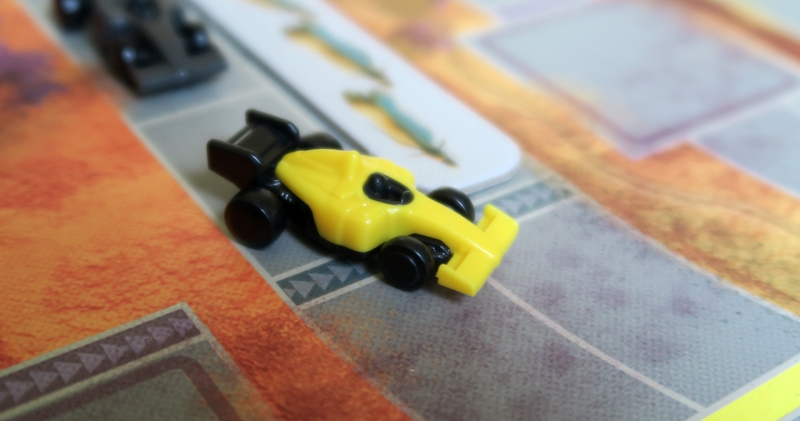
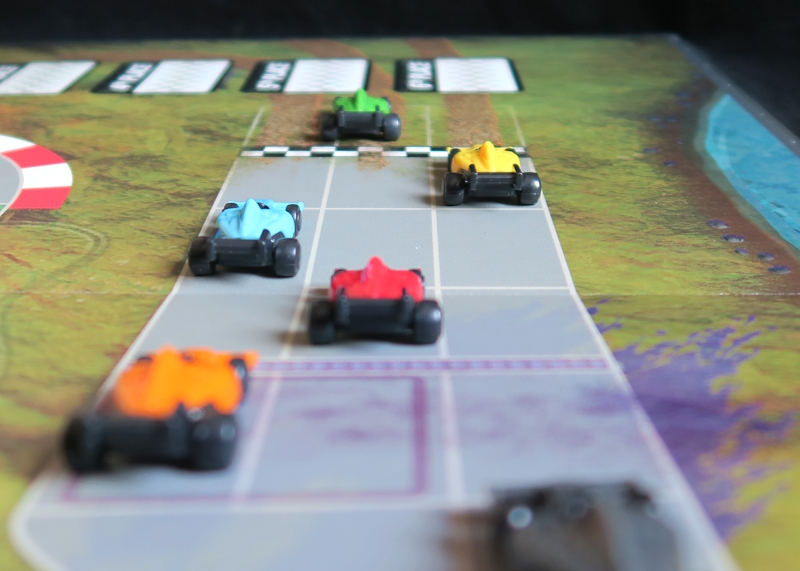
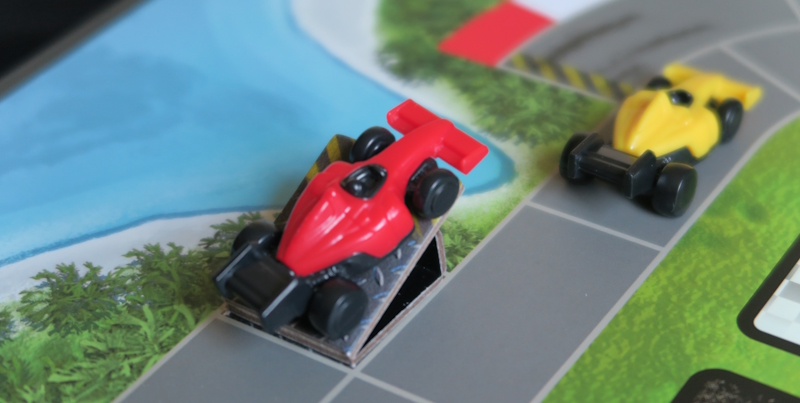
Being an extraordinary Monday meeting and only two days before Christmas, we didn’t really know who or what to expect, so didn’t have a “Feature Game” planned.  In the event, almost everyone expected turned up and we played some of our all-time favourite games.  Pink was first out of the traps, and persuaded Black, Lime and Pine to join him in a game of his favourite race game, Downforce.  This is a fun car racing game where players bet on cars as well as try to win the race.  What makes it special is that players play cards, but, whereas in other race games players can only influence their own car, in Downforce, the cards can be used to play anything from only the player’s own card, to every car on the track (depending on the card).

Downforce: Wild Ride
– Image by boardGOATS

This time, the group played with the Aloha Sands track from the Wild Ride expansion which features water jumps. Cars can use these ramps if they are moving fast enough which lets players pass other cars and move more efficiently. Thus, hand management to take full advantage of the different speed cards is crucial.  The game begins with an auction of cars.  This is after players have been dealt their hand of cards, and this time, the blue car was popular and went to “determined” Lime, who outbid “cunning” Pink.  With six cars on the grid, and four players, there is the possibility of some getting more than one vehicle—although one car (green) went unclaimed, Lime ended up with orange as a second.

Downforce: Wild Ride
– Image by boardGOATS

The Aloha Sands only has two betting lines, and the group chose to use the first two featuring on the betting variant score sheet.  In this “odds” variant, players get better “odds” for a car that is at placed less well than one that is currently winning.  The red car, owned by Pine took an early lead, but by the time the cars made it to the second (and final) betting line, it had dropped to third.  Pink had a fist full of cards that favoured to the blue car, and although he had been outbid for it, he had decided to push it along anyhow and bet on it.  As a result, with both Lime and Pink favouring it, the blue car moved through the field (aided by some double jumps) and crossed the finishing line first.

Downforce: Wild Ride
– Image by boardGOATS

Second place went to Black’s little black car with Pine’s red roadster completing the podium.  Betting and car costs have a huge impact on the final scores though, as can the initial outlay for the vehicle.  In this case, despite paying for two cars at the start, the fact that Lime owned the winning car and had also bet on it, meant he had an unassailable twenty-one million dollars, eight million more than Pink in second place.  With the race over, the quartet chose to move onto a more festive game, Jokkmokk—a cute little set collecting game that went down really well when it got its first outing last year.

Jokkmokk: The Winter Market
– Image by boardGOATS

In this game, players move one of their two family members, the one furthest back, to an empty space and claim the associated card before resoling its effect and refilling the empty space.  Some cards score points in the middle, others only at the end, so the sets of cards used can really change the game.  As this was the second game, the group chose to use the “Second Game” set, featuring the Fika (a Swedish custom of enjoying a coffee and a treat with friends), Aurora Borealis, Snowflake, Patchwork, Mystery Box decks.  Of these, the Snowflake cards scored during the game giving Black and early lead with fifteen points, five more than Pine in second.

Jokkmokk: The Winter Market
– Image by boardGOATS

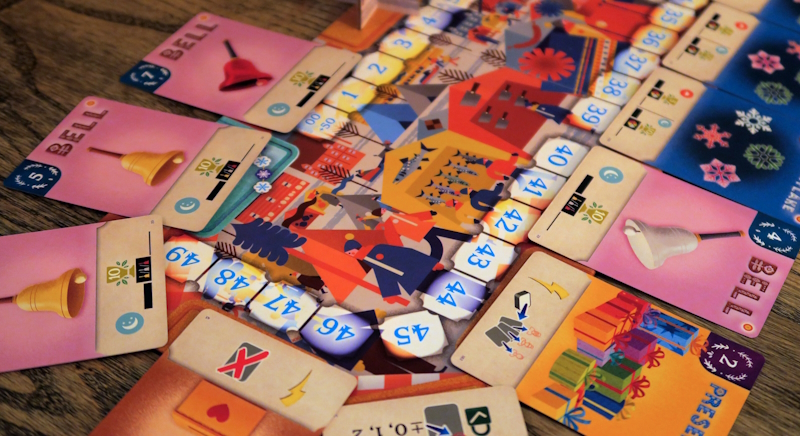
The mid-game points were chicken-feed compared to the end game scoring, however, with lots of points available for Fika and Patchwork scoring and for the face value of the cards themselves.  The winner was Pine with a total of one hundred and twenty-eight, eight more than Pink in second and eighteen more than Black in third.  Everyone had enjoyed the game so much, that when Lime inevitably suggested playing again, everyone else agreed.  This time the group used the “Gift of Giving” set of cards, including the Donation, Bell, Sparkler, Snowflake, Mystery Box and Presents decks.

Jokkmokk: The Winter Market
– Image by boardGOATS

The game followed a similar pattern to the first, with Black and leading at the midpoint with Pine in second and Pine taking overall victory.  This time, Lime was the runner-up, however, with Black taking third again.  Meanwhile, on the next table, Blue, Plum, Byzantium and Purple were playing Blue’s favourite game, Keyflower.  This is it’s second outing of the year, but Plum and Byzantium had missed out last time.  They had played it before, but had felt that it didn’t shine with two players and were keen to see how it played with more.

Keyflower
– Image by boardGOATS

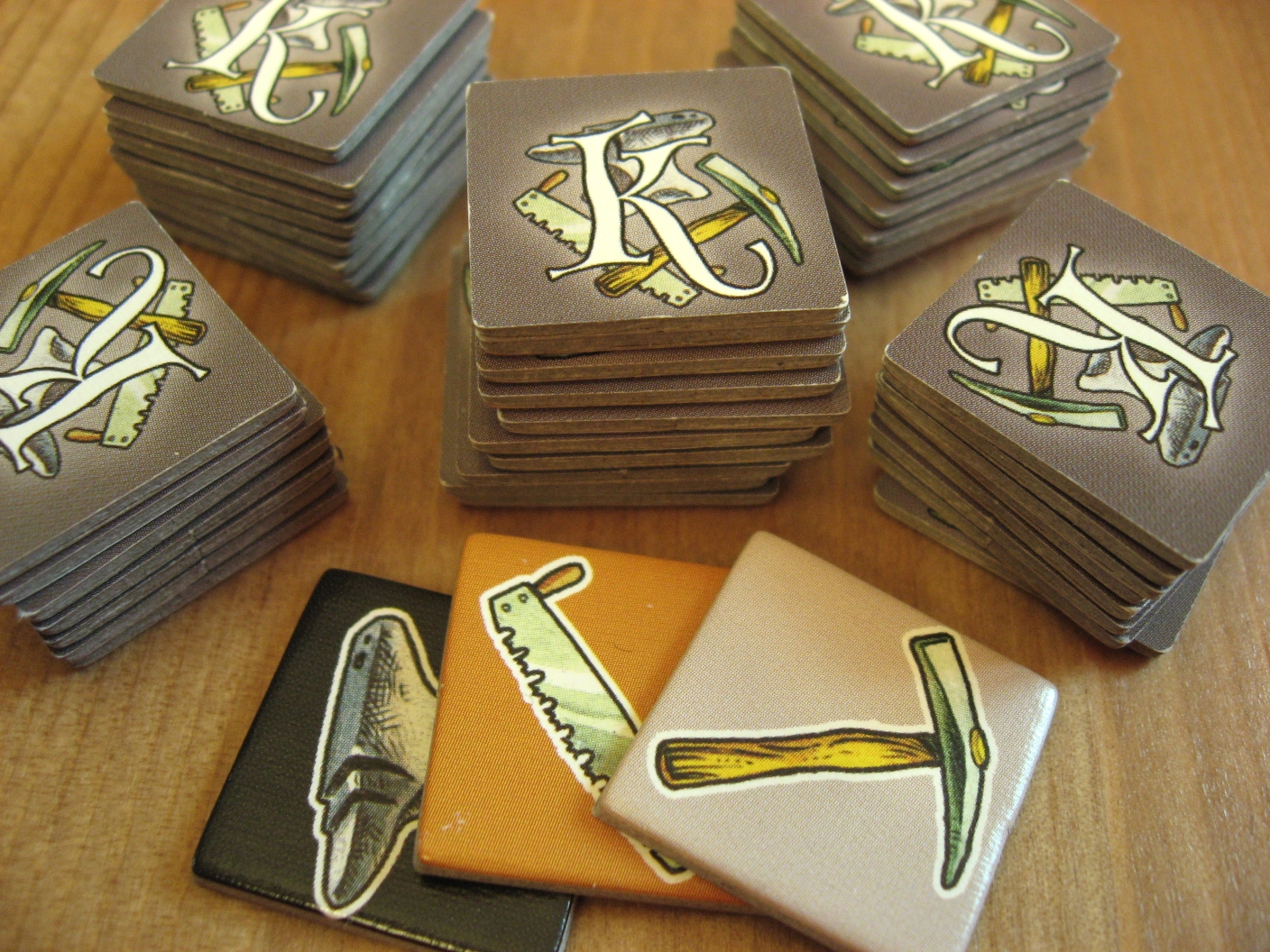
Keyflower is an auction and worker placement, with elements of set collection and even network building.  Although everyone had played it before, Blue went through the rules.  The idea is that players use meeples to bid on tiles, but can also use them to activate tiles to gain their benefit (usually Resources, Skill tiles or the ability to move resources around their Village).  At the end of each of the four rounds players add the tiles they have won to their Village and get any meeples back that were used to activate tiles in their own village.

Keyflower
– Image by boardGOATS

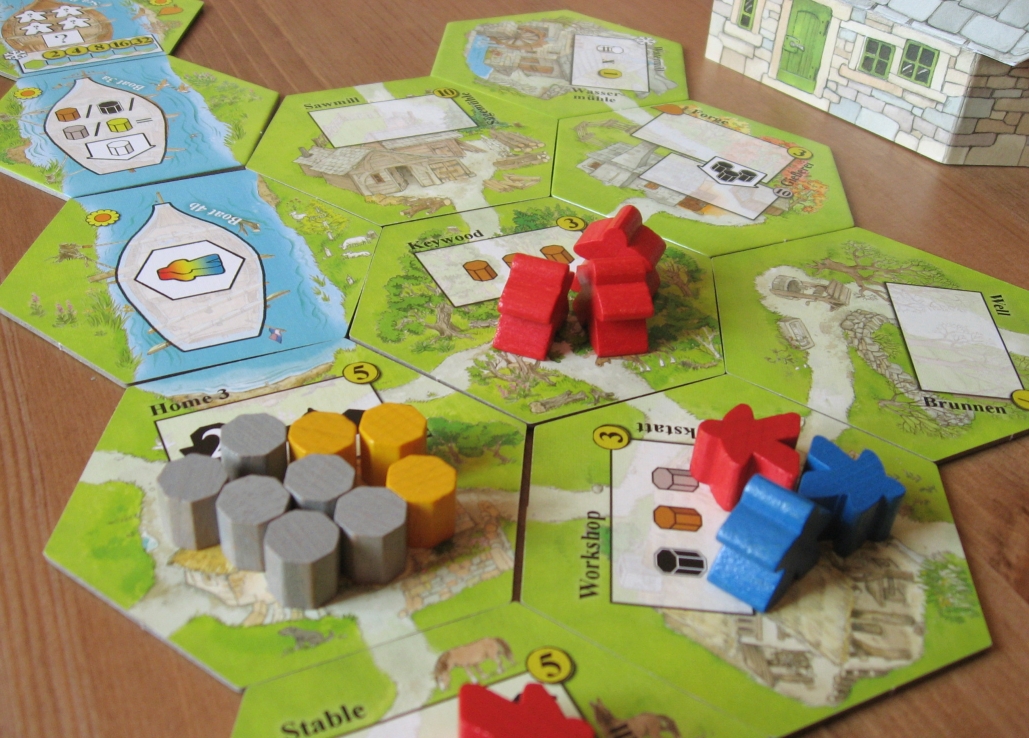
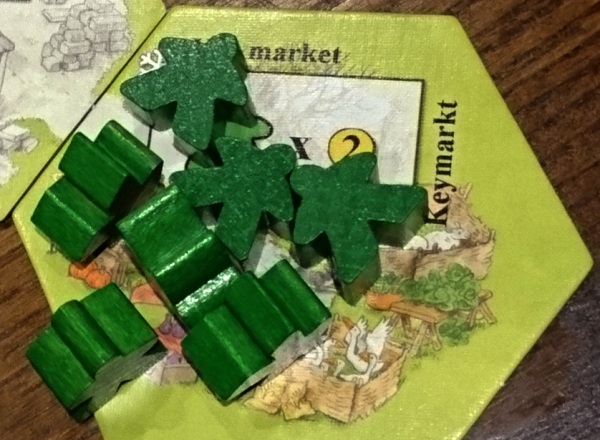
One of the key aspects of the game is the colour of the meeples, as players have to “follow” when bidding or activating a tile. As a result controlling the number of blue, red and yellow meeples they have is a key part of the game.  More, green meeples, which are special and can only be acquired by activating specific tiles, can be really valuable.  Blue had a Winter tile that gave points for having green meeples at the end of the game, so started bidding on the Peddlar which came out in Spring.  Byzantium had other ideas, however, and outbid Blue.  In fact, that was just the start of a tight game where there was a lot of competition for many tiles.


Keyflower
– Image by boardGOATS

Keyflower is a game that typically rewards players who keep their options open, but this time, Blue found her options quickly narrowed and ended up going for sets of three Skills tiles.  This can be lucrative, but can also be difficult to make work, so like many things in Keyflower is a bit of a gamble and with all her eggs in the one basket, she had no choice but to ensure she won the Scribes tile by ensuring she went first in the final round and had a large pile of red meeples to back it up.  Tension mounted as players fought for the tiles they needed.  The Keythedral changed hands several times, and the Jeweller, the Village Hall and the Watermill were all strongly contested.

Keyflower
– Image by boardGOATS

In the final scoring, it was clear that the Scribes tiles made all the difference, with Blue finishing with eighty-six points, fifteen more than Byzantium in second with Plum taking third.  As the tiles were packed away, there was some discussion about the game, with Plum and Byzantium commenting that the balance of tiles is less swingy in four-player Keyflower than with two  While they were packing up, the second of two games on the next table was coming to an end.  In the first of these, Jade led Sapphire and Cobalt in the hot-off-the-press game, Fromage, a worker placement game about cheese-making in France.

Fromage
– Image by boardGOATS

This is a clever game with a “time” element, similar in feel to Tzolk’in.  In both these games, workers left on the board for longer give more valuable actions, however, in Tzolk’in, players place their workers and the options become better the longer they stay on the board with players making the decision as to what they get when they remove workers from the board.  Players can also only place workers or remove them, not both.  In Fromage, there is more flexibility, and the action is carried out when the workers are placed and then remain on the board for longer for the more valuable actions.

Fromage
– Image by boardGOATS

Game play is simultaneous, with all players placing their workers at the same time working on their quarter of the board.  Once everyone has finished, the board is rotated, and any workers who have finished their spell on the board are returned to their owner to be placed again in the next round.  Workers can stay on the board for one, two or three turns, so a key part of the game is planning and with only three workers, making sure that players don’t end up with all of them stuck on the board.  This was another tight game with players scoring fairly evenly in the four areas of the board, the Bistro, Festival, Fromagerie and Ville.

Fromage
– Image by boardGOATS

Cobalt just edged it on Fruit and Orders, however, giving him a four-point victory over Jade in second with Sapphire not far behind.  There was just time for one last game and the choice was another recent popular game, Looot.  This is a clever management game, using a double placement mechanism where Vikings conquer territory on the central player board, allowing players to gain resources, buildings and objective tiles while they build their village on their personal board using tiles from the common board to gain victory points.  This was another tight game, especially between first and second place.

Looot
– Image by boardGOATS

It was backwards and forwards between Cobalt and Jade and finished with just two points between them.  Once again though, Cobalt just had the edge, his hundred and six points just pushing Jade into second again.  It had been a good night though and a fitting end to the evening, and the last meeting of the year at the pub.  As the last Christmas cards were handed out and final Season’s Greetings shared, people headed off into the darkness and with just two sleeps till the big day.

Santa's Workshop
– Image by boardGOATS

Learning outcome:  You don’t have to play Festive games at Christmas to have fun.