Tag Archives: Ice Flow

Boardgames in the News: When is a Meeple not a Meeple?

Answer:  When it’s not a Hans im Glück Meeple, apparently.  The term Meeple was allegedly coined nearly quarter of a century ago by Alison Hansel while paying the tile laying game, Carcassonne.  It was a conjunction of “my” and “people” and was used to refer to the characteristic wooden people-shaped pieces.  Since then it has been modified and the suffix “-eeple” has now come to mean game token (usually one that is wooden and shaped).
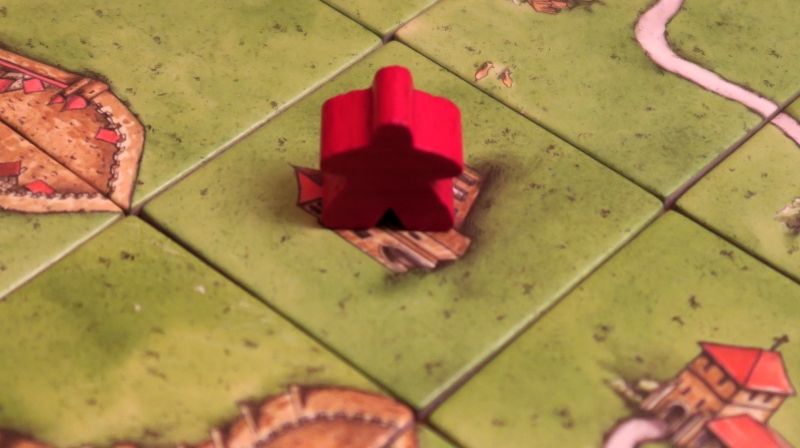
Carcassonne
– Image by boardGOATS

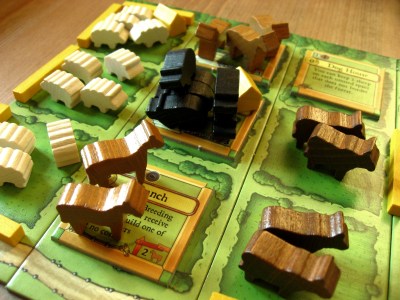
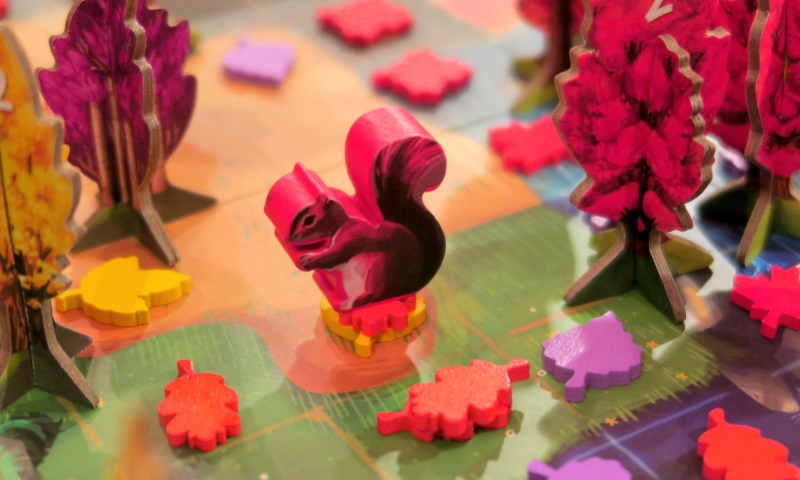
In this way, The term “Meeple” is now used to refer to all sorts of other wooden game pieces.  This includes the sheep, pigs and cows in Agricola or Keyper, which are often collectively referred to as “animeeples”; wheat and vegetable resource tokens which are commonly called “vegimeeples” (or even “vegeeples”), and players of Ice Flow or Salmon Run might talk about “fish-eeples” while those with Bosk might move their “squirreeple”.  As such, one might well be forgiven for thinking that the term Meeple is open source and can be used freely.
Bosk
– Image by boardGOATS

So Cotswold Games (formerly Cogito Ergo Meeple) might be forgiven for thinking the same when they crowdfunded their game, Meeple Inc..  That was until they received a “cease and desist” request from “a company” asking them “to remove all references to ‘meeples’ from the game as they have registered the word (and the shape) as an intellectual property in the EU.”  As a result, the a worker placement game where players compete to build the greatest board games in the world has been renamed Tabletop Inc. and now features “Mumans”.

– Image by boardGOATS

Whether this was necessary and whether Hans im Glück actually have the right to do this would need to be tested in court, but given the nature of the creation ans widespread use of the word “Meeple”, it is questionable.  Further, they only claim it as Intellectual Property in the EU—what about the rest of the world?  This point has exercised Corey Thompson (co-owner of YouTube channel Above Board TV and co-host of the industry-focused Board Games Insider podcast) and Marian McBrine (Gen Con Event Manager), who have responded by applying for the trademark in the US.

– Image by boardGOATS

Although they intend to protect the US trademark from predatory action (should they be successful in their application), Corey Thompson and Marian McBrine also plan to make it available to anyone who wishes to use it.  In the long term, this may prove unnecessary.  The trademark eventually issued in the EU in 2019 was for a range of of products (including software, jewellery, books, tableware and sporting goods), but not for toys and games.  This was limit followed an objection from board game publisher CMON, who argued (with considerable evidence) that the word was already in widespread use for general board game playing pieces.
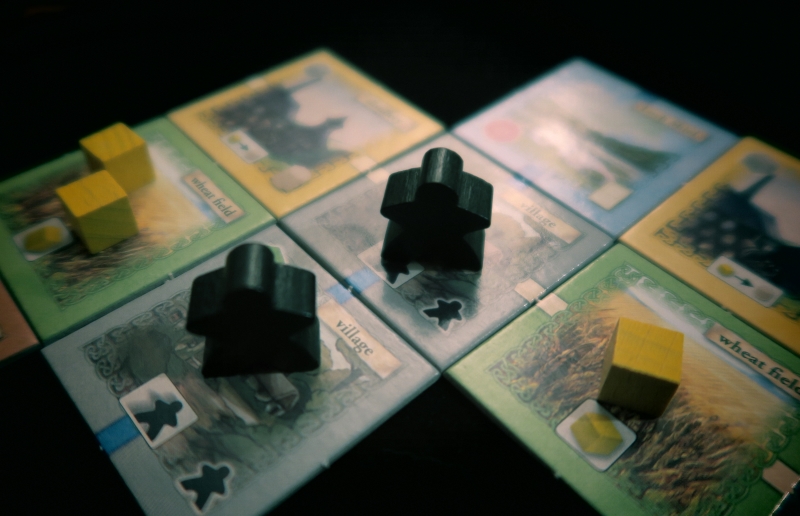
Glen More
– Image by boardGOATS

This objection was partially accepted by the EU Intellectual Property Office, but Hans im Glück has since registered “Meeple” as a trademark in Germany covering toys and games.  It was under this and the EU trademark covering the shape of the “original” Meeple figure that they issued the “Cease and Desist” to the folks at Cotswold Games/Cogito Ergo Meeple.  Although they are the first to publicly declare that they have received notification from lawyers, there are a huge number of well known games that could be affected (including Meeple Circus, A Fistful of Meeples, Meeple War, Meeple Quest and Rampage (aka Terror in Meeple City)), but also Oxford’s own board game café, Thirsty Meeples.
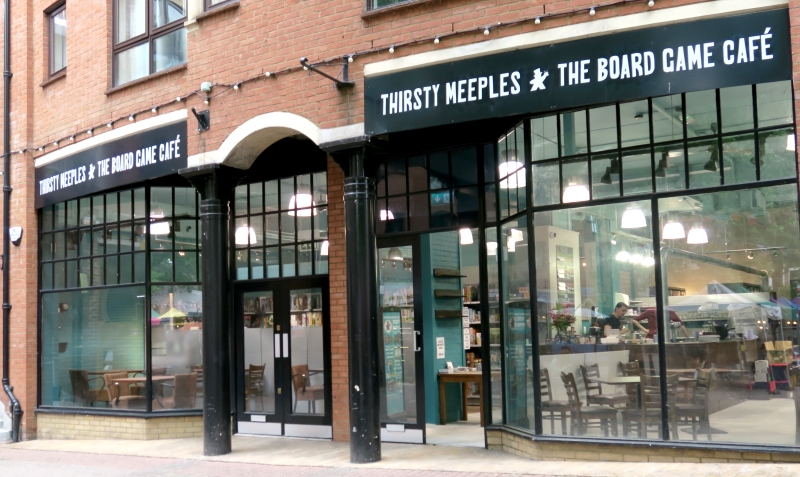
Thirsty Meeples
– Image by boardGOATS

There has been considerable community backlash though, so maybe Hans im Glück will adopt a gentler approach going forward.  At some point, however, it is likely that someone will test this in court and, in the meantime, there is a lot of ill-feeling which may lead to a loss of custom.

Boardgames in the News: What is a Meeple?

Reading our game reports, a fairly commonly used term is “Meeple”.  The word is used so widely amongst Euro gamers, that it was adopted for the name of the Oxford boardgame café, Thirsty Meeples, however, non-gamers are completely unfamiliar with it.  So, what does it mean and where does it come from?

Carcassonne
– Image used with permission of BGG contributor wizardless

The term was allegedly coined in 2000 by Alison Hansel while paying the tile laying game, Carcassonne. In Carcassonne, players draw a tile and then add it to a growing map before placing a wooden figure on the tile. Thus, meeple was a conjunction of “my” and “people” and was used specifically to refer to the characteristic wooden people-shaped pieces used in Carcassonne and more recently, games like Keyflower. Since then, the range of game pieces available has increased hugely and the term has been adapted and broadened.

Keyflower
– Image used with permission of BGG contributor punkin312

For example, Agricola has a wide range of resource tokens, including sheep, pigs and cows, which are often collectively referred to as “animeeples”. Similarly, the wheat and vegetable resource tokens are often referred to as “vegimeeples” or even “vegeeples”. So, the suffix “-eeple” has now come to mean game token, interestingly, usually one that is shaped. Thus, people playing games like Ice Flow or Salmon Run might talk about “fish-eeples”, devotees of Caverna may discuss “dog-eeples” and “donkeeples”, and players of the Arctic Bounty expansion for Fleet might comment on “crab-eeples”, though they may also be collectively referred to, simply as meeples.

Agricola: All Creatures Big and Small
– Image by boardGOATS

So, generically, a meeple is a game piece, usually made of wood, and often, but not necessarily with two arms, two legs and a head…

Meeples
– Image by boardGOATS


28th May 2013

The first game of the evening was Ice Flow, the cute strategy game where players have to cross the Bering Straight from Alasaka to Siberia by jumping from ice floe to ice floe.  We had played a quick game last time just before we finished, and this game started the same way as that one with Black making all the running and Red following on behind.  The first explorer home was Black  with a Yellow explorer was hot on her heels.  Black’s  remaining two explorers were very close to home though and ready to pounce.  This meant that Yellow was forced to try a bit of blocking to prevent Black and Red getting home, but unfortunately it needed a couple of moves too many and it was an easy win for the Black as the youngest player, with Red a close second.

Ice Flow

The other game we played was the “Feature Game”, Agricola, which is a highly regarded game about farming in the middle ages and since half the players hadn’t played it before, it was very much a learning game.  The idea is that players are medieval farmers living in a two room wooden hut with their spouse.  Life is hard, and success is measured by the quality and size of your home, the number of animals you keep, and your ability to put your land to good use.  However, your priority is simply to get enough food to survive and survival is difficult without resorting to begging.  Each round, the family go out to work to try to obtain materials to improve their homestead or to work on the land to avoid starvation, but there are always lots of things players want to do, and never enough turns.  To make matters worse, at intervals during the game, there is a harvest when the animals breed and the grain is brought in, but everyone has to be fed.

It was quite difficult for the players who had not played it before to grasp how to start, but Cyan and White started out collecting all the wood, while Green hoarded all the clay.  In the absence of anything better, Blue scraped together enough wood to extend her hut and decided engaged in a little procreation which meant she could send the children out to work on the land and an early age.  Meanwhile Cyan moved into animal husbandry building lots of fences and breeding sheep while Green got all house proud building a clay oven and extending and renovating his hut from a wooden shack to a brick cottage.    Unfortunately Green failed to use his shiny new oven before harvest so famine arrived and his burgeoning family had to beg to survive.  Although Cyan had a very impressive flock of sheep, without an oven, her family were forced to live on fish and it showed in the final score.  Green’s large family and building a huge paddock in the last round offset some of his five begging cards and he came home a close third, however, Blue ran out clear winner 11 points ahead of  White in second place.

Agricola

Learning Outcome:  You needed to do a little bit of everything to be a successful farmer in the middle ages.

14th May 2013

The first game we played this week was our “Feature Game”, the card game, Saboteur which is a little like a cross between two games we’ve played before:  Avalon and Incan Gold. In this game players are dwarves working together mining for gold, with the catch that there could be a saboteur in their midst…  Since nobody had ever played it before, the first round was a bit of an experiment for all of us and we all started out “honest” playing path cards and maps.  However, suspicion arose a when one player claimed to have run out of useful paths and had to play a broken pick-axe, with inevitable reprisals.  Unfortunately, he HAD been honest and there were no saboteurs, but as we just managed to get to the gold, it didn’t really matter.

Since we felt we were starting to get the hang of it, we went went for a second round and this time correctly identified the saboteur and pinned him down with a pile of broken picks, lanterns and wagons while we dug up the gold.  When we picked on the same player for the third time, however, he was understandably distressed and protested his innocence.  Nevertheless, since he had very obviously shut off one of optional tunnels we had been carefully building, the pleading fell on deaf ears and failed to prevent the hail-storm of broken tools, only for it to become apparent that, once again, he was innocent.  When we asked why he had behaved in such a treacherous way, he forlornly explained that he was trying to stop us going the wrong way as he knew where the gold was.  Next time I suppose we might listen to him…

Saboteur

Next, we played the Scandinavian Ticket to Ride, a game we were all reasonably familiar with.  This is a really beautiful edition of “the train game”, but with slight twists to the usual rules.  White and Purple took the first few points, but Black joined in quickly and play continued pretty much evenly.  Black ran out of trains first which stymied Purple’s attempt to get the long track into Murmansk, however, we were all within ten points or so when we went into the final scoring.  Unfortunately, it turned out that Black and Purple had accidentally conspired to block White making her take a sizeable detour.  This had consequences for the number tickets she could complete.  Black and Purple jointly took the Globetrotter bonus with five completed tickets each, but it was the magnitude of the completed tickets that made the difference and Black ran out the winner by some fifty points.

Ticket to Ride:  Nordic Countries

Next we returned to semi-cooperativity with a quick game of The Great Balloon Race.  This is a great little race game (albeit with a ridiculously large box), where players have three different coloured balloons and the first to get them all home wins.  The snag is that nobody knows who owns which colour and it is highly likely that players will share at least one balloon with other players.  We last played this back in October and Blue and Orange got a bit victimised.  This time it was Blue and Pink…

The Great Balloon Race

Finally, we squeezed in a game of Ice Flow.  This is a really pretty strategy game where players direct teams of three explorers that are trying to get from Alaska to Siberia, climbing pack-ice, dodging polar bears, catching fish and occasionally jumping in for a quick swim.  Although this is a new game to boardGOATS, we were all familiar with it, so with a quick reminder of the rules we were off, jumping from ice floe to ice floe.  The game has a bit of a tendency for players to get stuck unable to get fish or rope, but we were wise to this and managed to control the resources quite successfully.  Black got an explorer home first, followed by a couple of Red meeples, however, while Black’s last piece dodged a hungry polar bear, Red managed to get his final one home for the win.

Ice Flow

Learning Outcome:  A clever move can sometimes be mistaken for a guilty one, however much you protest.