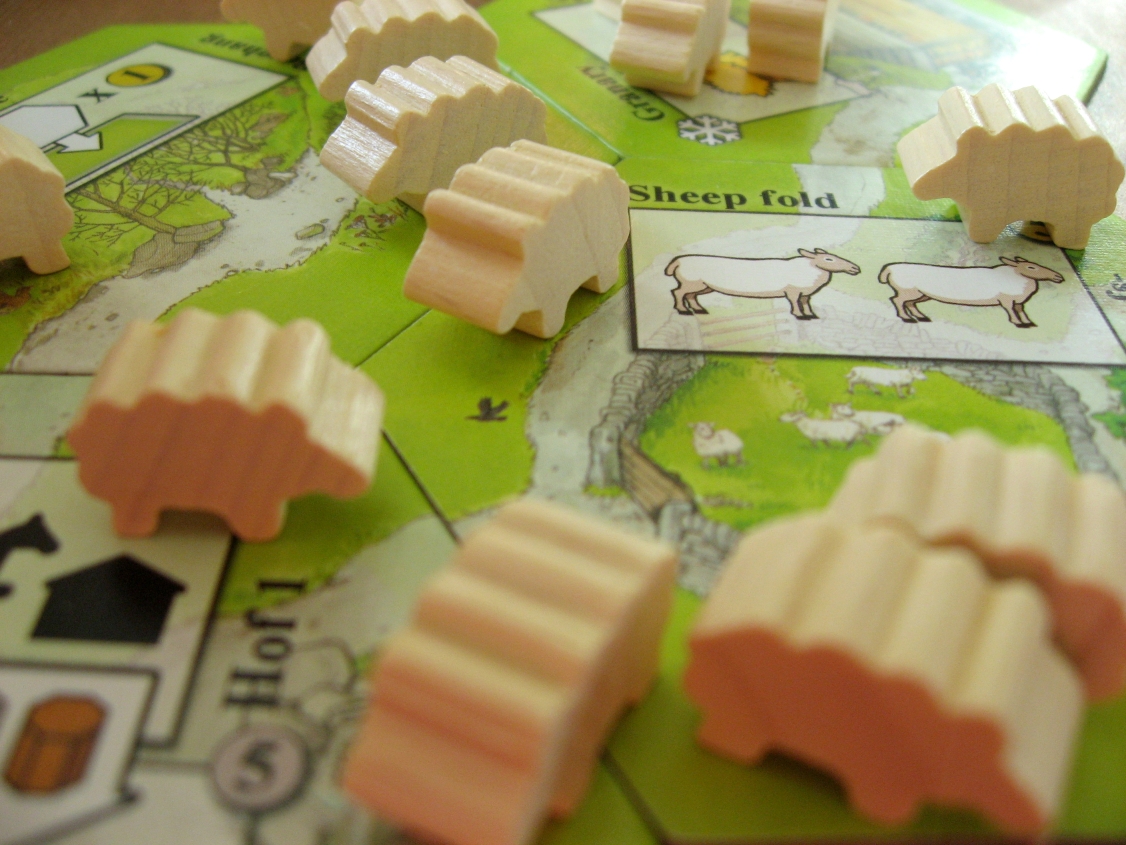
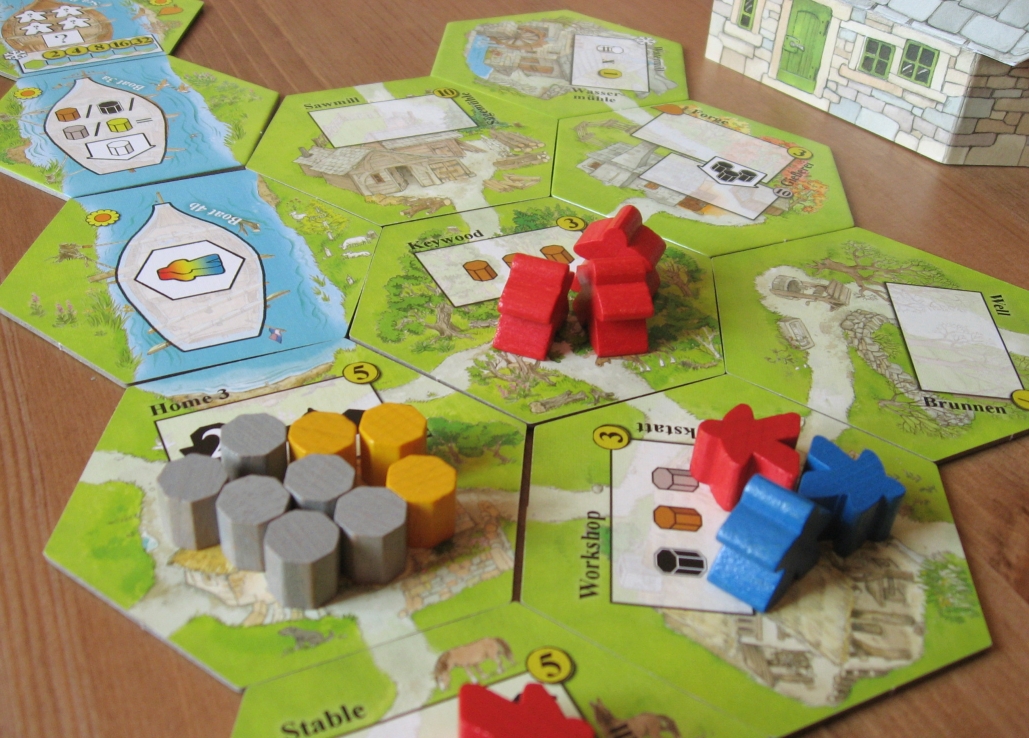
Tag Archives: Keyflower: The Farmers

9th July 2024

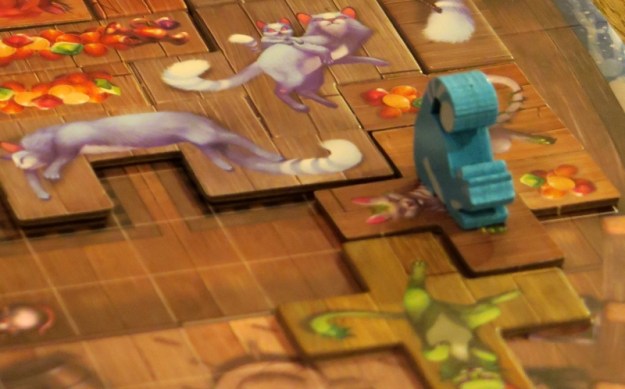
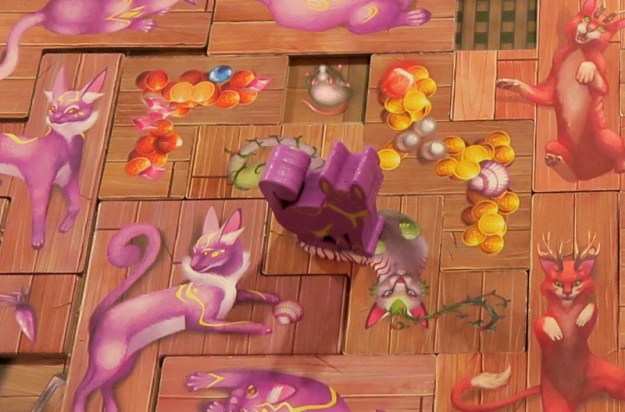
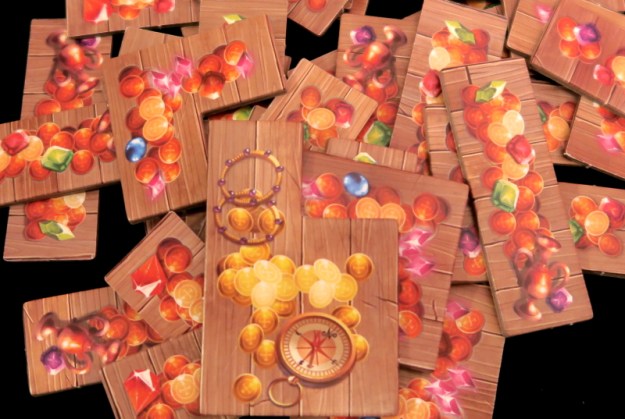
When Blue and Pink arrived, Crimson and Cyan were already there on their first visit, finishing their supper and playing a game of Molehill Meadows.  This is a new game by the designer of Zuuli, that they had picked up at the UK Games Expo (meeting the designer Chris Priscott and his delightful family in the process).  In Molehill Meadows, players take on the personality of Mika the Mole, who has an affinity for shiny things, a hunger for juicy worms and an innate desire to dig  A flip-and-write game, players dig tunnels using polyomino shapes to carefully expand their molehill home.

Molehill Meadow
– Image by boardGOATS

Their game was somewhat interrupted as people arrived and were introduced and they were surrounded by the general chatter of arrival and Blue and Pink munching their pizzas.  Crimson and Cyan carried on playing, flipping polyomino cards and then drawing the shapes on their map.  Extending their tunnel to find Worms gave both players four “Worm Powers”, and fining treasure gave them points.  Cyan collected twice as much treasure and picked up more than twice the number of bonus points than Crimson (for collecting all of the two sets of flowers on the Objective Cards) and thus was the eventual victor by something of a landslide (or should it have been a tunnel collapse?).

Molehill Meadow
– Image by boardGOATS

Then, while everyone else generally gossiped and caught up with the events of the last week or so, Jade and Sapphire joined Crimson and Cyan for a quick couple of rounds of the trick-taking, climbing game, SCOUT.  We’ve played this a few times on a Tuesday and everyone has always enjoyed it.  The game is simple in that on their turn, the active player either plays a set of cards to beat and replace the set on the table (a run or a meld), or take one card from either end of the set on the table and add it to their hand.  The round ends if a player plays the last card in their hand, or if it is a player’s turn and they played the current active set of cards on the table.
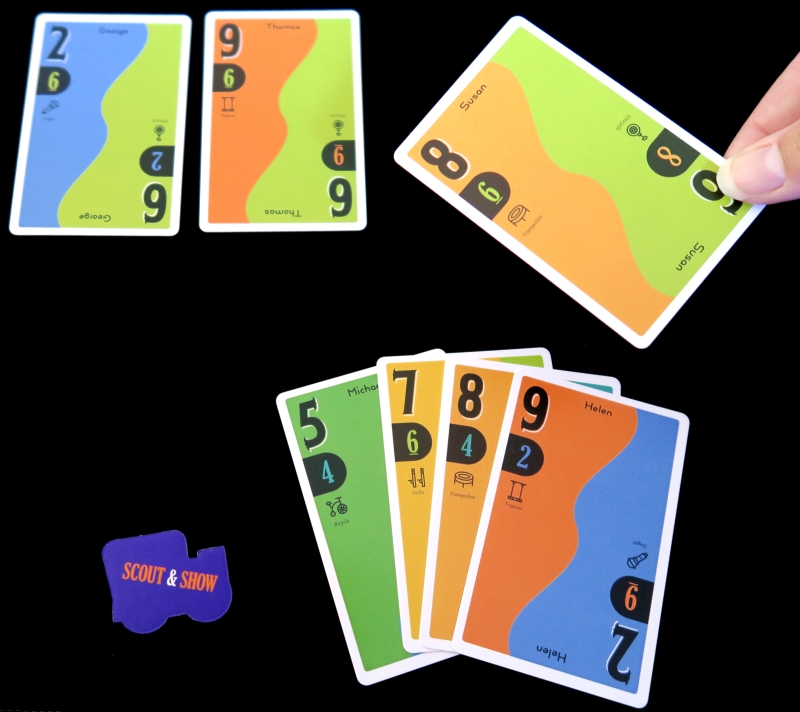
SCOUT
– Image by boardGOATS

At this point, player score for cards in their scoring pile (cards they have beaten during the round), for “chocolate bars” (rewards given when another player takes a card from their active set), and deducts a point for every card left in hand.  The clever part of the game is that, like Bohnanza, cards cannot be rearranged in hand, this with the fact that cards have different values depending which way up they are make this little card game really clever.  In the interests of time, the group only played two rounds, and although the scores can be very disparate, this time it was really tight with only five points between first and last and Sapphire taking the honours one point ahead of Crimson.

SCOUT
– Image by boardGOATS

By this time, Blue and Pink had just about finished eating and everyone else had mostly finished chatting, so with twelve, the group split into three groups of four, starting with Pine, Sapphire and Cyan who joined Jade in the “Feature Game“, Happy Home.  This is another polyomino game, with similarities to games like New York Zoo and Bärenpark, but with a theme of home decorating rather than building an animal park.  Like New York Zoo (or indeed Jokkmokk), the game has a central market, in this case representing a Store, which players move their Meeple round.
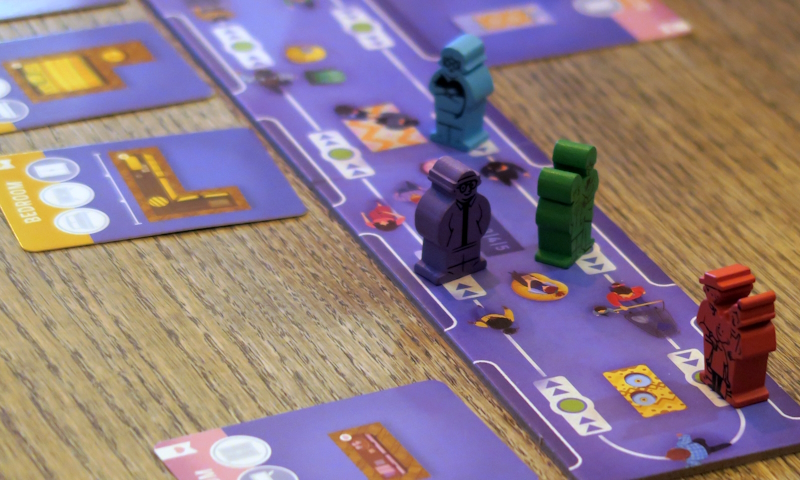
Happy Home
– Image by boardGOATS

On their turn, the active player moves their Meeple (or should that be Muman?) to an available space, takes the card and matching tile and then adds it to their home.  When all the cards are used up, players instead place a “Welcome Mat” on their doorstep to show they are ready to welcome visitors.  When everyone has finished , the game is over and players score their Home for Furniture, Colours, Pot Plants, their Welcome Mat and Design Objectives, losing points for any scratches still visible and not covered up by Furniture.
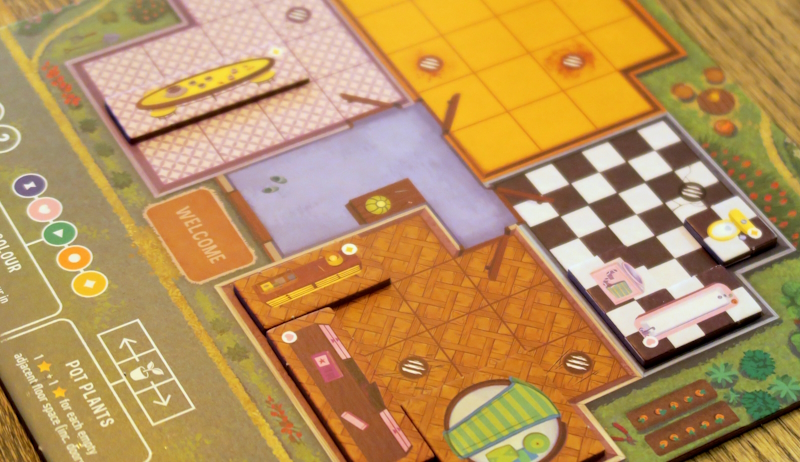
Happy Home
– Image by boardGOATS

There was a wee bit of misunderstanding on how the scoring worked even though Jade had done his best to explain it at the beginning.   Each Room scores one, three or six points if it has one, two or all three different core pieces of Furniture in it, and each Pot Plant is worth a point plus a bonus point for each empty space orthogonal to it.  That wasn’t where the problem was however, that was with the Colour scoring. Essentially players need to have the same Colour across at three different rooms to get two points and across four rooms to get five points, but somehow, this caused more confusion than it should have done.
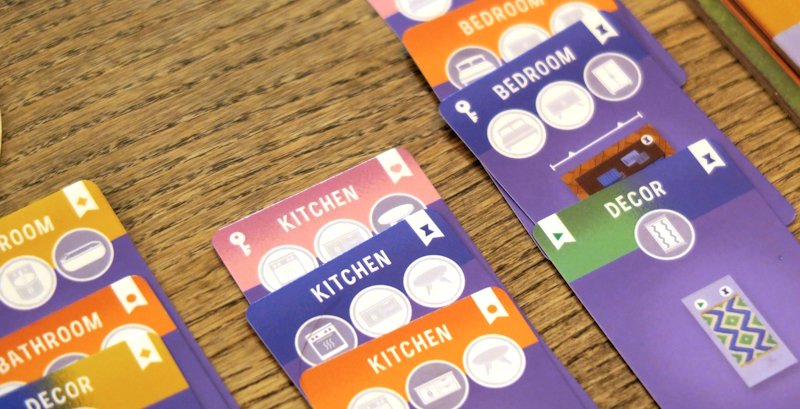
Happy Home
– Image by boardGOATS

The group also made life more difficult for themselves by shuffling the cards and removing twenty-four cards as per the rules for the four-player game, but somehow the bulk of those removed seemed to be Furniture for just one of the rooms, the Bathroom.  It was a good learning game as the value of Rugs, for example, became evident later on—players were a bit confused as they don’t score in their own right, but they add Colour to a Room and thus can score at the end of the game.
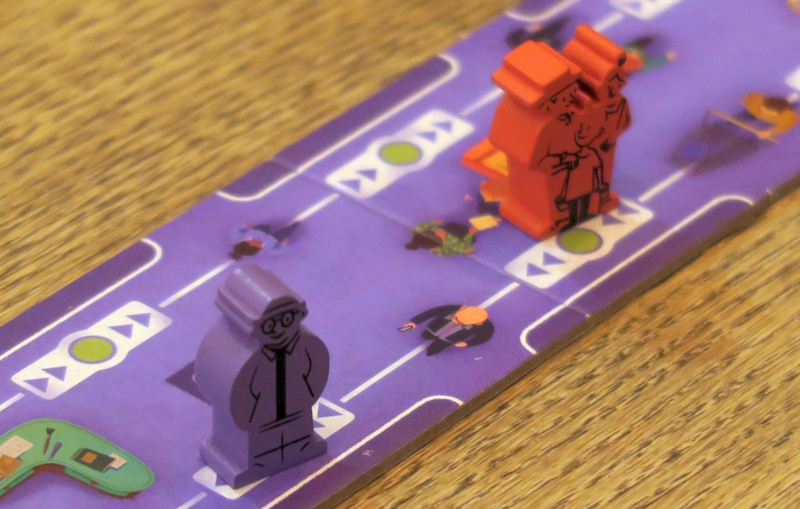
Happy Home
– Image by boardGOATS

This time the Design Objective was “Bigger is Better”, so players lost a point for each empty floor space in their Room with the most empty spaces.  The lack of Bathroom fittings, meant Pine didn’t have a loo in his house and had to resort to “wafflestomping“, but he did have what looked like two pink ironing boards furnishing his Lounge.  Next door, Sapphire filled his Living Room with a pink sofa and an enormous matching pink widescreen TV (that was the same size as the sofa!).  In the end, the victor was a bit of a runaway winner.
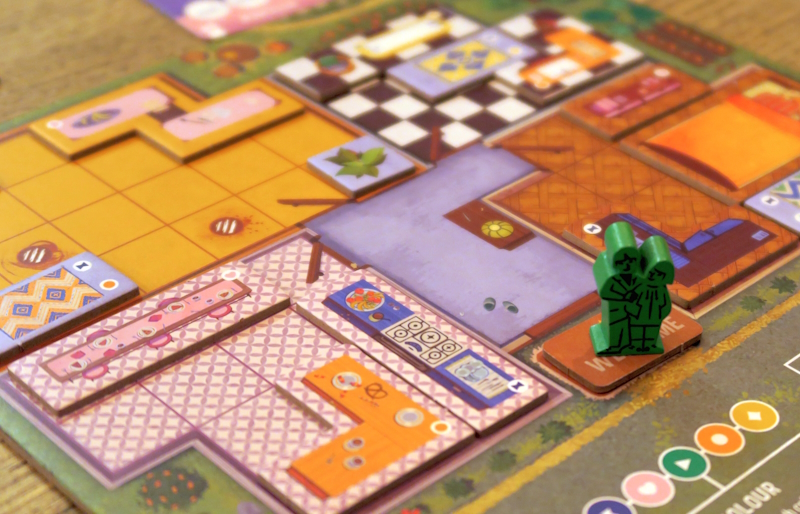
Happy Home
– Image by boardGOATS

In spite of his lack of toilet facilities, Pine finished with twenty-four points, some seven ahead of Sapphire in second, with Jade taking the last place on the podium.  Before the game, Pine had said he wasn’t sure about it from the description, but in the event he really enjoyed it, as indeed did everyone else.  Meanwhile, there were two other games underway.  The first of these was Keyflower—a very popular game with certain members of the group, but one that hasn’t had an outing for a long time, in fact the last time the group played it was online in 2020, and the much-missed Burgundy was involved.
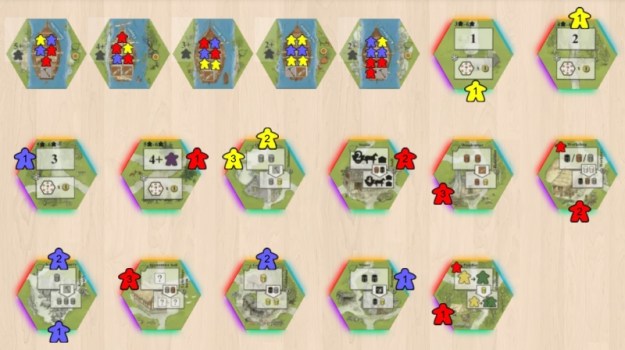
Keyflower on boardgamearena.com
– Image by boardGOATS from boardgamearena.com

This time, the four players were Blue, Pink, Black and Ivory, all of whom had played Keyflower before (albeit a while ago).  The game is fairly simple in terms of concepts, but like many good games, challenging to play well.  Each round, players take it in turns to bid on a tile, or activate a tile.  The clever part of the game is that both bidding and activating is done with red, blue, yellow or occasionally green Keyples (Meeple-shaped workers).  In each of the four rounds (or Seasons), a set number of tiles are put out for players to bid on.  Players take it in turns to bid or activate and when everyone passes in succession, any tiles won are added to the winner’s village, any losing bids and any Keyples used for activating return to their owner.

Keyflower: The Farmers
– Image by boardGOATS

At the end of each round, a boatload of new Keyples arrive in each village (players can bid to get the one of their choice), before the tiles for the next Season are set out.  In general, tiles are drawn at random, and in the first season, Spring, mostly provide Resources with Summer and Autumn tiles providing special powers and Autumn and Winter tiles providing scoring opportunities.  The Winter tiles are different to those for the other Seasons in that instead of being drawn at random at the start of the Season, they are dealt our to each player at the start of the game.  Then, at the start of Winter, players choose from their pile which ones they want to make available—in this way, the Winter tiles act as sort of objective tiles.
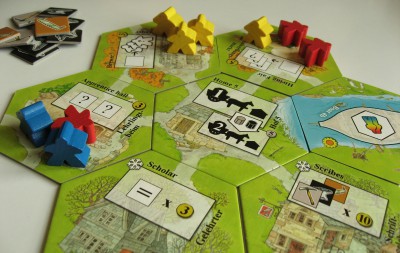
Keyflower
– Image by boardGOATS

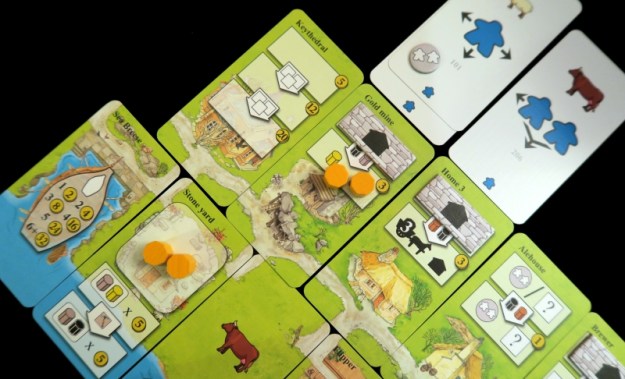
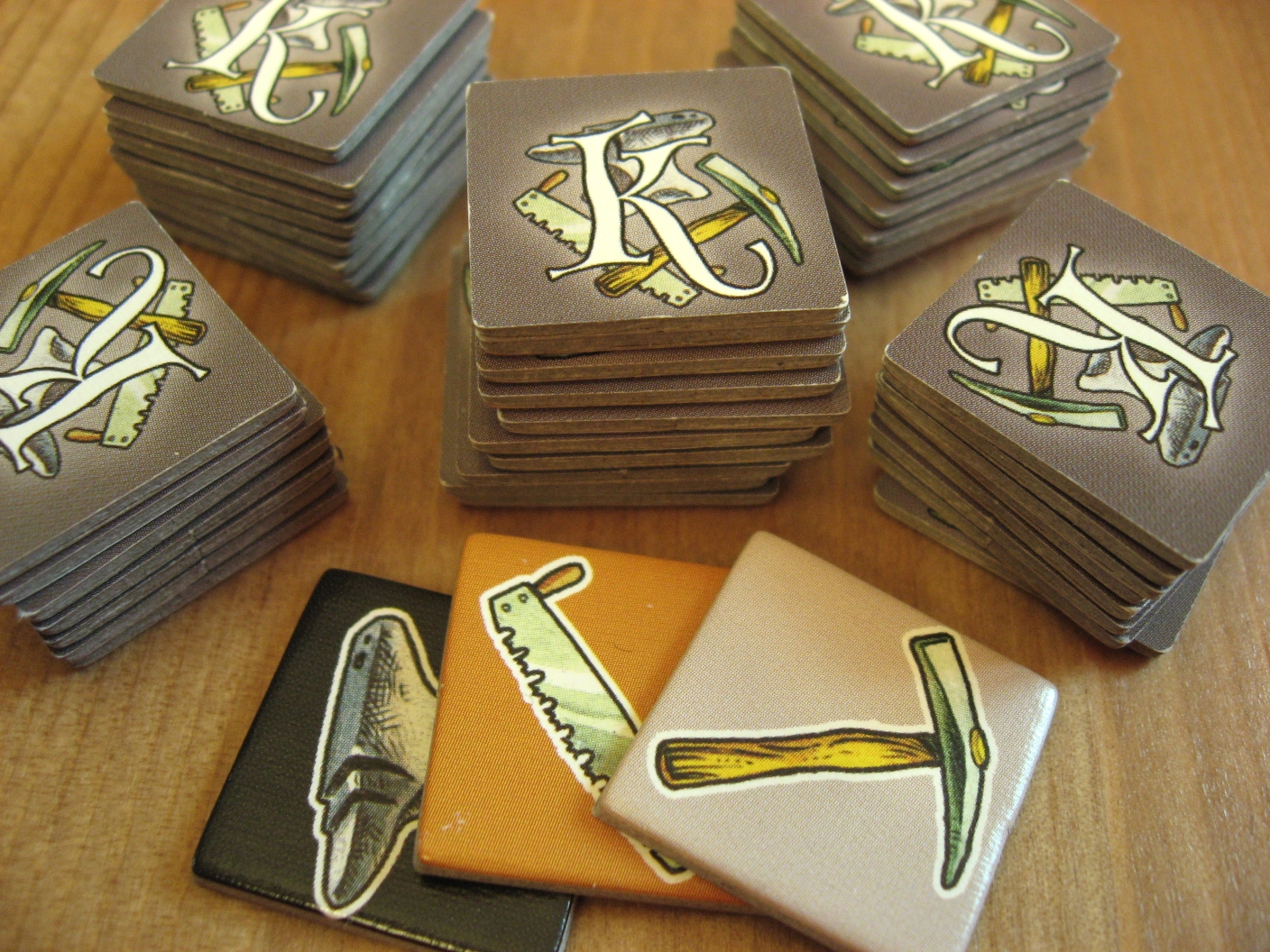
The Keyflower box also contained The Farmers expansion and the question arose whether to include it or not.  Blue, Pink and Ivory were on the fence until Black said he’d never played with the Farmers, so of course that was a problem they had to urgently fix.  In the base game, the different tiles are connected by roads which are used for transporting goods to places where they can be used to upgrade tiles or score points.  In The Farmers expansion, these roads now define fields where animals can be left to graze and with each occupied field scoring points at the end of the game.
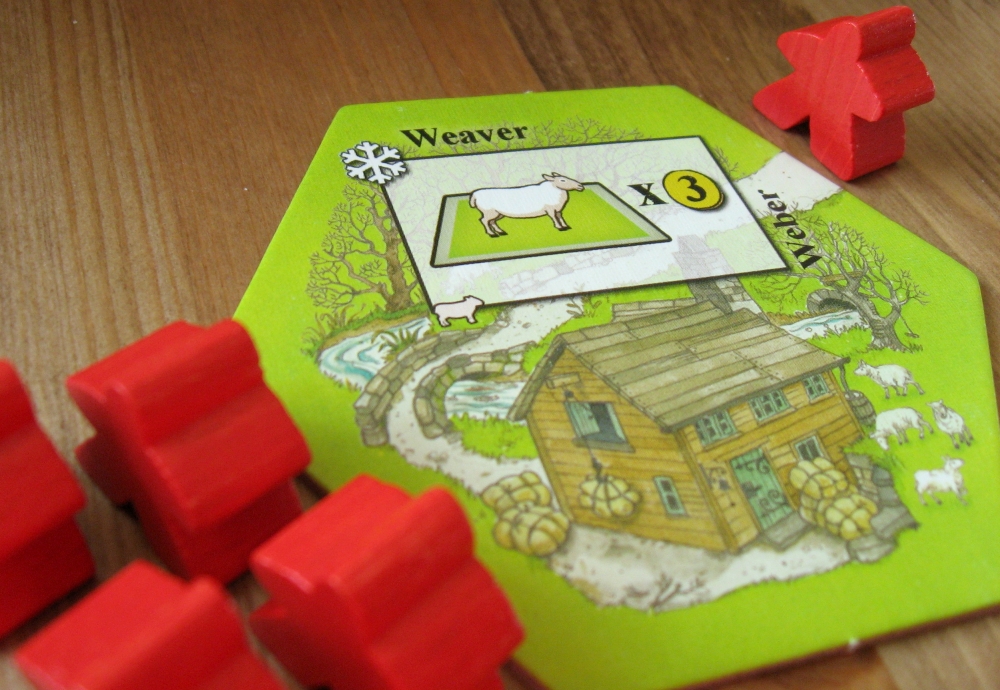
Keyflower: The Farmers
– Image by boardGOATS

Additionally, The Farmers expansion introduces wheat as a new resource, which can be used to add distance/quantity to the movement action, enabling players to move more animals and resources further.  There are several ways to set up the game with The Farmers expansion, but this time the group used The Farmers Variant, where all the tiles from the expansion are used and the number made up with tiles from the base game.  After setting up and explaining the additional rules to Black, Ivory went first, taking the waving purple start-player Keyple, and began the bidding.

Keyflower: The Farmers
– Image by boardGOATS

In Spring, Blue failed to get anything useful at the start of the game (or so she thought) taking just the Key Mine tile which gives Coal and didn’t match any of her Winter tiles.  Pink started off taking the Sheep Fold which gave him a source of sheep and the Paddock which gave him more Movement and upgrade ability together with some Wheat.  Then, he took the Workshop which gave him one resource of his choice from Wood, Coal or Stone, upgradeable to three resources, one of each, which matched his Winter tile, the Mercer’s Guild.  Ivory won the Quarryman, which gave him some very useful gold, and in Summer took the Shepherd’s Hut which gave him Wheat and Sheep and then embarked on a concerted breeding and movement programme.

Keyflower
– Image by boardGOATS

Black picked up a few tiles early in the game, which ultimately led to a lightly sprawling Village by the end of the game.  These included the Wheatfield in Spring and the Tavern, the Smelter and Boat 3a in the Summer.  By this time, Pink had decided that the sheep weren’t doing it for him so moved on to pigs, with the Pigsty.  Blue, having missed out on the Tavern which converts one Keyple into two, instead took the only tile that generated green Keyples, the Store which went well with one of her Winter tiles, the Key Market, but gave the added power of preventing other players from following if she was the first to Bid with Green, as they were highly unlikely to have any.

Keyflower: The Farmers
– Image by boardGOATS

In Autumn, Blue discovered the value of the Key Mine tile she had picked up in the first round, when the Blacksmith tile appeared which gave points for each Coal on the tile at the end of the game.  She added the Ranch to this which gave Cows and Wheat, and then began mining Coal in earnest and hoarding large numbers of sheaves for a super-movement move later in the game to get everything where it was needed as efficiently as possible.  Black got the Goldsmith which went well with his Smelter which gave him the Gold he needed to upgrade it and get ten points, while Ivory and Pink continued their procreation programmes.
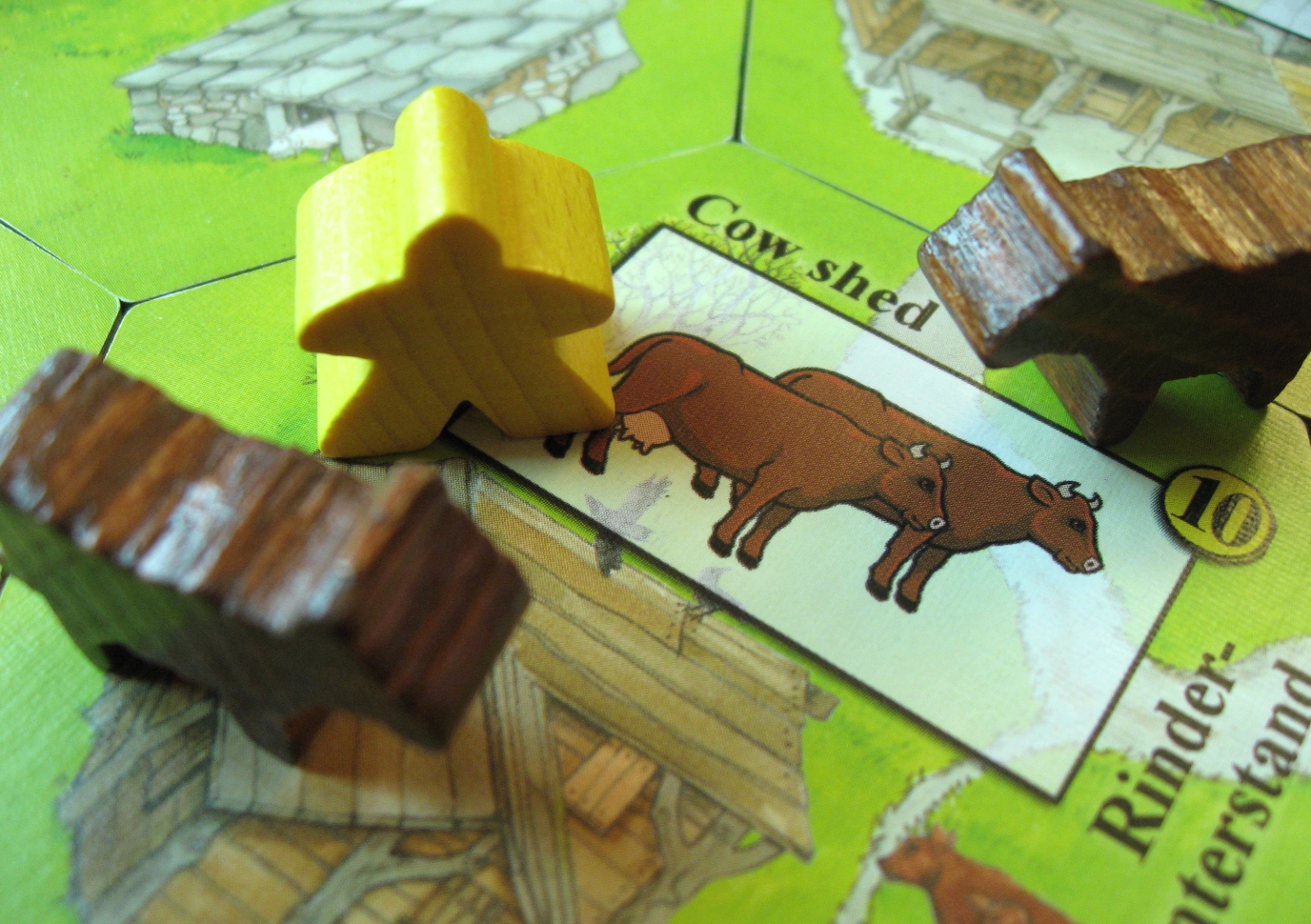
Keyflower: The Farmers
– Image by boardGOATS

As the game progressed there were several visits from the other gamers in the room, many of whom, much to the people who were playing it’s surprise, had not played Keyflower. It is, of course, Blue’s favourite game and was a favourite of Burgundy’s, as well as being generally very popular with almost all of the regulars pre-2020.  So as the game continued into Winter, it was clear it would have to get another outing or two reasonably soon to rectify the situation. There is also The Merchants expansion which has not been played with the group, so that might be the “Feature Game” in the coming months.

Keyflower: The Farmers
– Image by boardGOATS

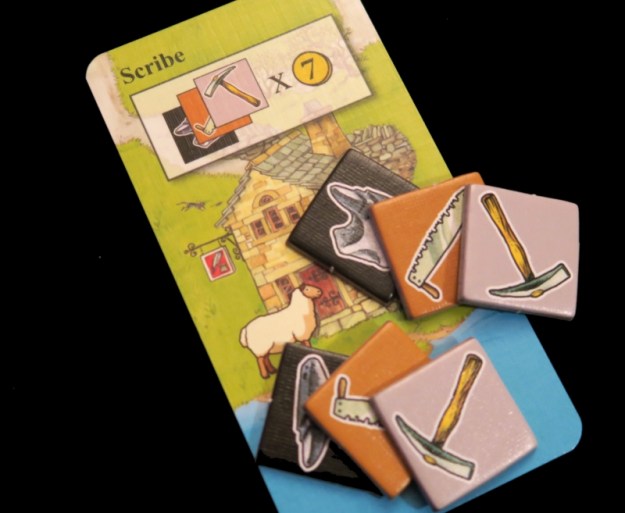
Only eight out of a possible sixteen Winter tiles were introduced by the players and the Scribes, which Ivory commented usually ensured victory was not there (it turned out nobody had started with it).  Black took the Granary which gave him points for his Wheat and Pink got his Mercer’s Guild that he’d been working towards.  Ivory won the Cathedral giving him a straight twelve points; the Weaver giving two extra points per sheep field, and the Bakery giving four points for each set of a Resource, a Skills tile and a Wheat Sheaf.  Blue had lots of options, so concentrated on building her piles of resources before bidding for her end of game scoring.
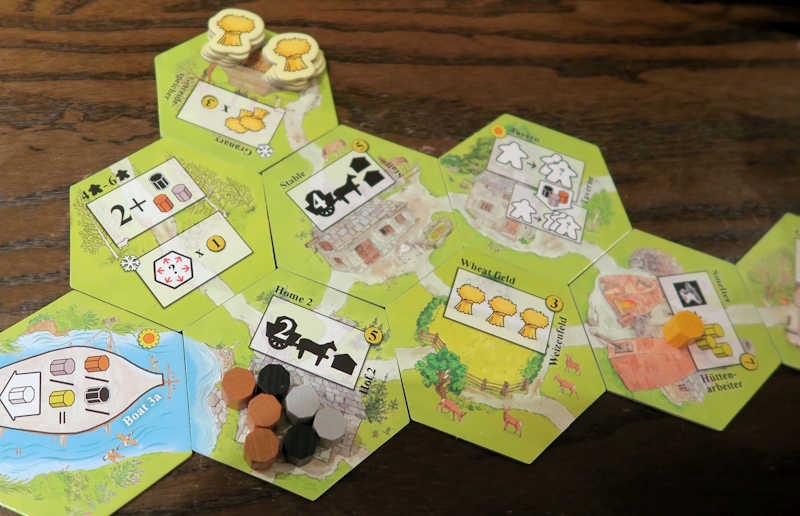
Keyflower: The Farmers
– Image by boardGOATS

This required a lot of nerve as Ivory had there wherewithal to take some of the tiles she obviously wanted.  Ivory hummed and hawed over it and as Black and Pink passed, twice he had the chance to begin a war, but decided not to as “that’s not very nice” and it can also backfire spectacularly.  Instead he generated the odd Gold for a point (“in case it was close”) and waited and watched.  In the end he passed and then Blue passed and that was that bar the counting.  And as it turned out, it was close, very close, but Blue just took victory, by a mere three points, with a total of ninety-five.
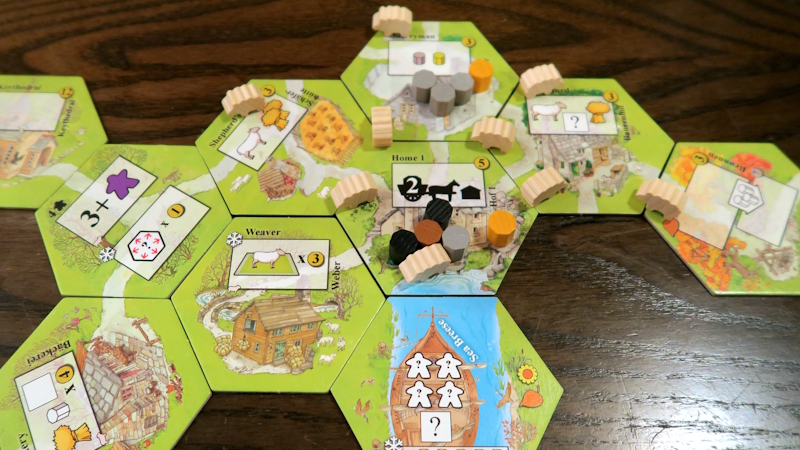
Keyflower: The Farmers
– Image by boardGOATS

The jury is out as to whether it was Ivory’s kindness that cost him the game because Blue did, of course, have contingency plans if someone had tried to take some of the tiles she wanted, and she could have cost him a lot of points.  However, by the end, Blue had no Keyples left and Ivory had a couple that he could have used, so depending on how things had panned out, he might have just nicked it or still lost.  Instead, his kindness and generous good nature won him a lot more respect from his fellow gamers, especially given that everyone knew how fond Blue is of Keyflower successfully destroying her plans might have made her just a little bit sad.
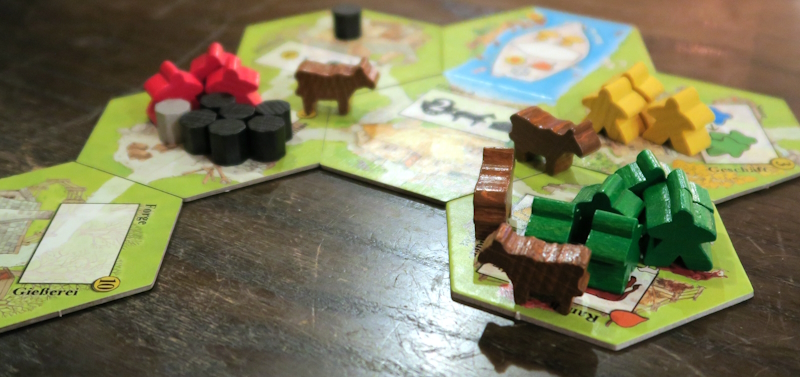
Keyflower: The Farmers
– Image by boardGOATS

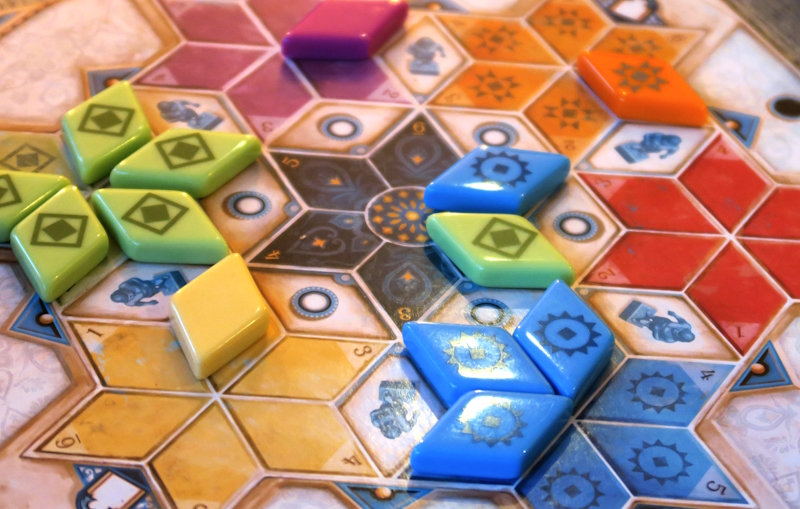
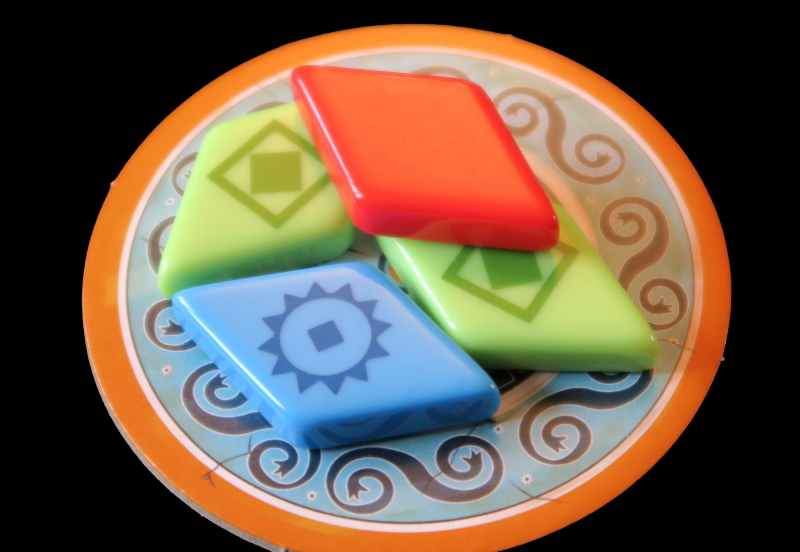
Finally, the third table began their evening with Azul: Summer Pavillion, the third in the series based on the essentially abstract game of tile collecting, Azul.  Crimson kindly obliged in offering to lead the game with Lime, Teal and Purple, none of whom had played this variant before.  This is more similar to the original than the second in the series (Stained Glass of Sintra), but is built on lozenge-shaped pieces that make up hexagons.  Like the original, players take tiles from a central market and add them to their player-boards claiming points as they do so.  In contrast to the original, players store the tiles and add them all to their board at the end of the round (taking it in turns to do so).
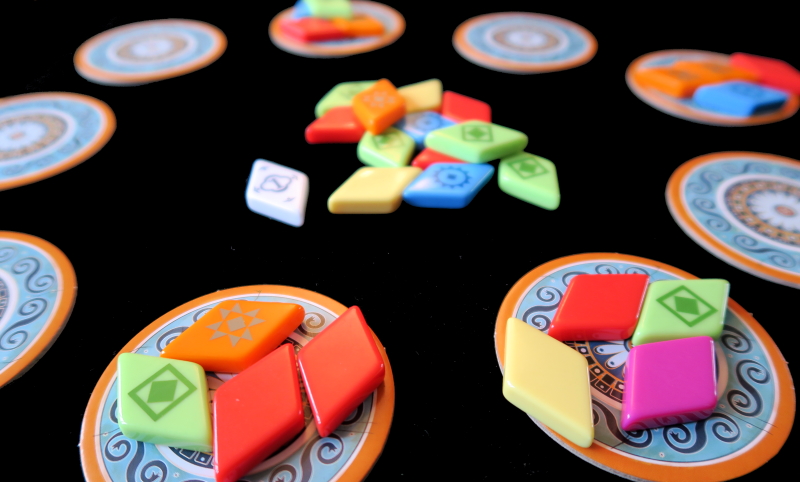
Azul: Summer Pavilion
– Image by boardGOATS

After some initial confusion caused by the additional bag and player boards from the Objective Tiles and Glazed Pavillion expansions, the game got underway.  Unfortunately, there was a bit of a rules malfunction:  initially it was thought that every time a tile was placed it scored one point for itself, two for one next to it and three for a third one in sequence (totalling six).  The group soon realised this wasn’t right though.  So they then thought you scored at the end of the round after playing all the tokens, however, they soon realised there was no way anyone could remember when a new tile that round had been placed.
Azul: Summer Pavilion
– Image by boardGOATS

At this point, they then read the rules and from that decided players score one point for the tile and one for each tile it was adjacent to, thus scoring from one to three points per tile as they were placed and this is how they continued to play.  Cyan immediately identified they had come a cropper when he looked at the low end-game scores. He explained that they should have scored one point for the tile placed and one point for each tile connected to that group, so potentially up to six points could be scored for some tiles!
Azul: Summer Pavilion
– Image by boardGOATS

Although it wasn’t played by “the rules as written”, everyone had the same disadvantage, and the group resolved to give it another go again soon, but with the right rules next time.  As it was, it was a very close game with Crimson, beating Lime by a single point and Teal finishing some half a dozen points behind.  It is a very pretty game, and despite the issues, players had enjoyed making patterns and pushing the tactile bright tiles around, which was very therapeutic after a hard day at work.

Azul: Summer Pavilion
– Image by boardGOATS

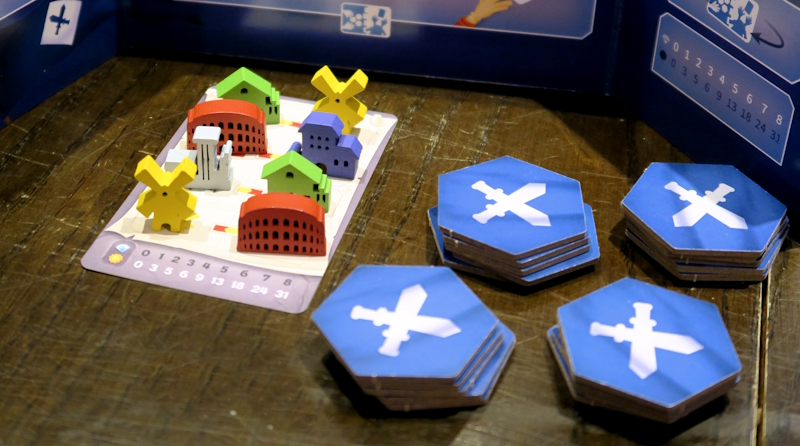
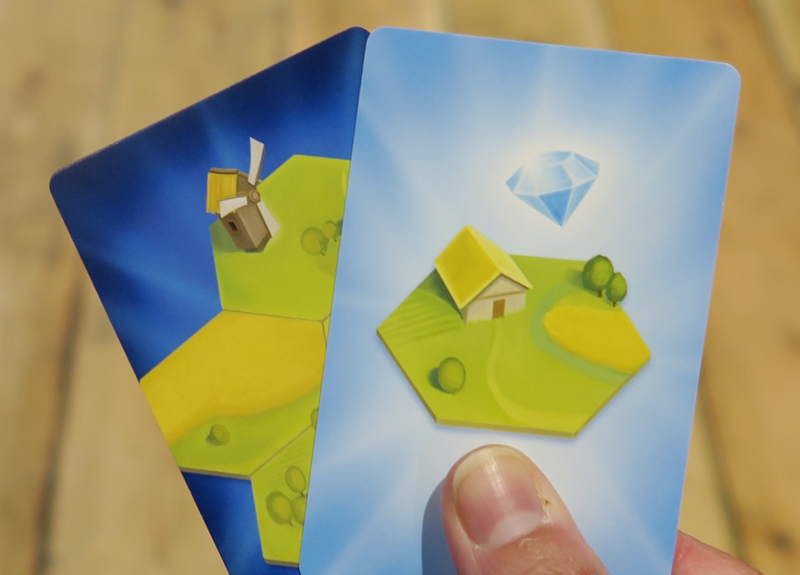
Keyflower was ongoing (and would be for the rest of the evening), but Happy Home had finished so there was a quick game of musical chairs and Purple began by leading Lime, Cyan and Pine in a game of the group’s currently popular filler, Rome in a Day.  This is a little tile laying game built round the “I divide, you choose” mechanism.  The idea is that players draw five land tiles at random and place two buildings on tiles one and two. They then divide the five tiles into two groups—a bigger and a smaller one (in any ratio), and add a Crystal Gem to the smaller land set before offering the choice to their neighbour.
Rome in a Day
– Image by boardGOATS

During the four rounds that the game is played over this neighbour alternates, right, left, right, left. So, each round, players choose a set from their neighbour and these and the tiles they were left with are added to their domain.  At the end of the game, any building that stands on or adjacent to land of its own colour will score for each tile in the group and then players score for the diamonds they have collected—the player with the most points is the winner.  The game has had a couple of outings recently after Black and Purple picked it up at UK Games Expo a few weeks back.  Pine, Lime and Cyan had not been part of those games, so Purple explained the rules.
Rome in a Day
– Image by boardGOATS

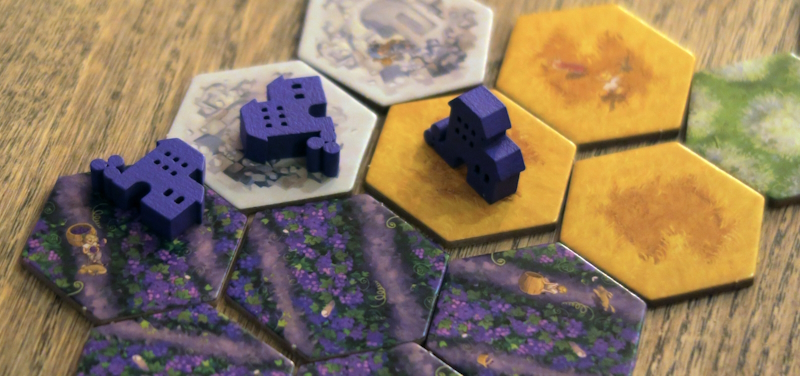
The game was a bit of a struggle, probably not helped by the fact that on both the previous occasions the rules have not been strictly adhered to.  This is partly because the rules are not the best written and partly because when the game was explained to Black and Purple at UK Games Expo they were different to those published online.  Although it wasn’t entirely clear to everyone during the game, it was actually very close.  In fact, Lime and Cyan finished tied for first place with forty-four points each despite quite different tactics with Cyan prioritising collecting Gems and Lime making hay in his Wheat fields and wine in his Vineyards.
Rome in a Day
– Image by boardGOATS

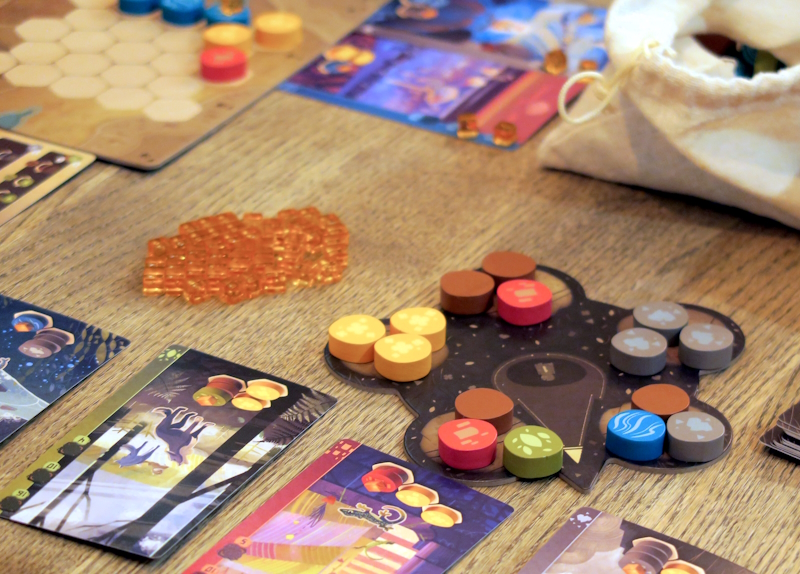
While the group were fighting their way through Rome in a Day and Keyflower was coming to an end, Jade led Sapphire and Crimson in the 2024 Spiel des Jahres recommended game, Harmonies.  This was described by Jade as a sort of cross between Splendor and Cascadia, with an Azul-type market.  On their turn, the active player takes three wooden Tokens from one of the spaces on the central player board and places them on their player board. These Tokens represent Mountains, Trees, Buildings, Water and Fields.  Some tokens can stack, others cannot: the reasons why are thematic (e.g. tall Mountains and Forests, no tall Rivers etc.), but otherwise Tokens can be placed on any empty space.

Harmonies
– Image by boardGOATS

Players may then take an Animal card from the central display—they can have a maximum of four at any one time and each has a number of Animal cubes on them.  Each time the pattern on an Animal card is fulfilled, one of these Animal cubes is removed and placed on the token indicated on the card.  At the end of the game, players score for the highest achieved Animal on each card and for each Mountain, Tree, Building, Field and River (or Island, depending on  which side of the board players are using).  Mountains are made of stacks of up to three Rock Tokens, while Trees are a green Leaf Token on zero, one or two Wood Tokens.
Harmonies
– Image by boardGOATS

Taller Mountains and Trees give more points (one, three or seven points), while Buildings (made of two Tokens, at least one Brick and a Wood, Rock or another Brick), and Fields (two adjacent Wheat Tokens) score five points each.  Finally, depending which side of the board is used, players score points for the length of their River, or five points for each Island they make.  This time, the group played with “Side A” which scores for Rivers.  It was a learning game for Crimson, but was quite close quite between Jade and Sapphire, but Sapphire’s one hundred and eight gave him victory in what is an interesting point-salad tile-placement game that deserves another outing soon.

Harmonies
– Image by boardGOATS

Learning Outcome:  You don’t need a toilet to have a Happy Home.
18th February 2020

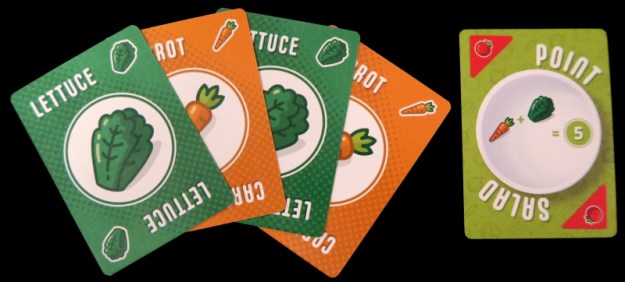
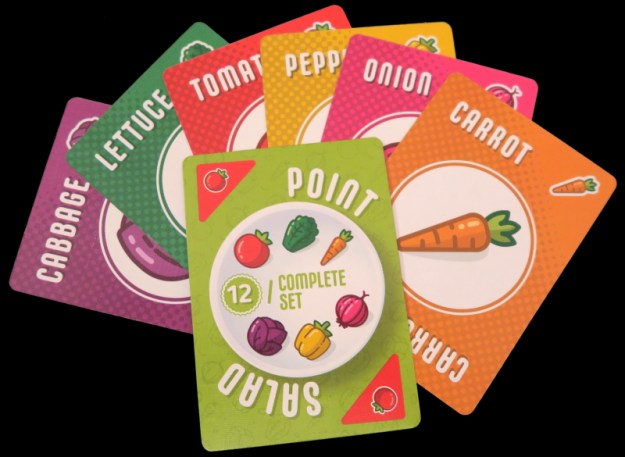
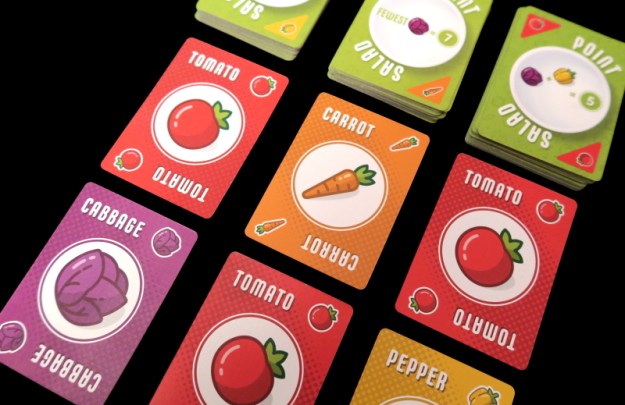
Food was a little delayed, so we decided to start playing something.  Food was clearly on our collective minds though, because we opted for a starter of Point Salad.  This is a very simple set collecting game where players take cards from the market.  The cards are double sided with brightly coloured vegetables on one side and scoring conditions on the other.  The market consists of three piles of cards showing the scoring condition sides, and six cards showing the reverse, the vegetable side.  The number of cards a player can take depends on where they take it from:  one scoring card or two vegetable cards.

Point Salad
– Image by boardGOATS

Each pile of cards feeds one pair of vegetables.  So, when a vegetable is taken, a scoring condition card is turned over to reveal its vegetable side, and that scoring condition is no longer available.  Players can also, once per turn, turn over one of their scoring cards so it becomes a vegetable, but they may never turn over a vegetable to make it a scoring card.  The game is over when all the cards have been distributed, and the scores have been totaled.  One of the more unusual things about this game is that both vegetable and scoring cards can be used more than once.  So, a player with a card giving points for sets of onion, cabbage and carrot (i.e. coleslaw), can score it as many times as they have sets.  Furthermore, if they also have a card that scores for pairs of carrots and lettuces (i.e. rabbit food), they can reuse the carrot cards and count them a second time.
Point Salad
– Image by boardGOATS

Pine began collecting lettuces, an obsession with green things that ended up lasting the whole evening.  Burgundy was more obsessed with red things, specifically tomatoes, so Mulberry, Black and Purple took great delight in snaffling them first, even when they didn’t help.  Blue only needed mayonnaise for her coleslaw as she collected onions, cabbages and carrots and generally made a nuisance of herself with Mulberry, sat to her left.  Food arrived before the game finished, and with people getting distracted by pizza and chips (always more appealing than salad) it is possible there were some missed opportunities.  It was tight finish at the front with only six points between the winner and third place.  Sadly, despite everyone else’s best efforts, Burgundy top-scored with fifty-six, ahead of Mulberry and then Blue.
Point Salad
– Image by boardGOATS

Once everyone had finished eating, it was time to decide who would play what.  The “Feature Game” was The Isle of Cats, a tile-laying game where players are rescuing cats and packing them onto their ship.  There were a lot of takers, none of which were keen to back down (even though Mulberry misunderstood and thought it was called “Pile of Cats” which, on reflection, does sound very exciting).  The game is not terribly complicated though we did make a bit of a meal of it. It is played over five rounds, each of which starts with card drafting.  Players are dealt seven cards and keep two passing the rest to their neighbour; this is repeated until they receive only one single card.

The Isle of Cats
– Image by boardGOATS

The cards come in five different colours: blue, green, yellow, brown and purple.  Blue cards are Lesson cards which are really just Objective cards, but these come in two types, personal and public.  Yellow cards depict some combination of “Boots”, “Cat Baskets” and “Broken Baskets”.  Boots are useful because they dictate where you come in the turn order, while Baskets are needed to used to “pay” to rescue Cats.  Yellow cards are treasure cards, brown cards are special “Oshax” cat cards and purple cards are instant effect cards that can be played at any time.

The Isle of Cats
– Image by boardGOATS

At the start of every round, each player receives twenty Fish which are used to pay for both cards and Cats.  So, once the cards have been drafted, players choose which ones they want to buy. with prices varying from free to five Fish.  The rest are discarded.  It is imprudent to over-spend, as Fish are also needed later in the round to lure cats off the island and onto the players’ ships; some cats are easier to lure than others, with cats on one side of the island costing three Fish and others costing five Fish.

The Isle of Cats
– Image by boardGOATS

Once everyone has paid for their cards, they must play any blue Lesson cards they kept in the round.  Any Public Lessons are revealed while Private Lessons are kept to one side face down.  Players then play their green cards—this is the guts of the game.  Players do not have to play all their green cards straight away, some can be kept for later rounds.  The number of Boots played are counted up, and the turn order is adjusted according to the number of Boots played so that the player with the most goes first and so on.  Player then take it in turns to spend one of their baskets and the appropriate amount of Fish to take one of their Cats and place it on their ship.

The Isle of Cats
– Image by boardGOATS

Each player starts the game with one “Permanent Basket” which they can use once per round, aside from this, the other Baskets usually come from the cards played or other Permanent Baskets acquired later in the game.  The Cats come in five different colours and are depicted on polyomino tiles which are placed on the players’ Ship-player boards.  At the end of the game players score points for grouping Cats of the same colour together in Families:  the larger the Family the more points.  So, a group of three Cats of the same colour will score eight points, while a Family of ten Cats scores a massive forty points.  In addition, players lose one point for each rat they have failed to cover with a cat, and lose five points for each room they fail to fill.

The Isle of Cats
– Image by boardGOATS

Thus, perfectly tessellating Cats is the aim of the game, but additional points are also available from the Lesson-objective cards.  It would be quite a challenge to perfectly tessellate tiles while keeping cats of the same colour together and conforming to the arbitrary objectives given in the Lessons, however, there are a couple of things to help grease the wheels.  Players who cover Scrolls on their Ships with a Cat of the same colour can add a Treasure tile to their ship for free—these are small tiles that are very useful for filling in holes.  There are only five scrolls though, one of each colour.

The Isle of Cats
– Image by boardGOATS

Additionally, however, once everyone has run out of Baskets, they can also play their Rare Treasure, yellow and brown cards.  The yellow cards enable players to place more Treasure tiles while brown cards allow players to place the very rare Oshax Cats (or “Oh, shucks!” Cats as we mostly called them).  These are very friendly Cats and will join any Cat Family of the player’s choice, though they have to pick the colour when they place it.  The cards are quite rare and very expensive, but a couple of these can be a really good way to boost the size of a Family.

The Isle of Cats
– Image by boardGOATS

In addition to Baskets on cards, each player starts with one Permanent Basket which they can use once per round.  Blue started the game quickly, by playing two lesson cards followed by a special card which enabled her to swap them for a second Permanent Basket.  Everyone looked on agog, envious of the advantage that would give, however, it had cost a  lot of Fish, and she spent the rest of the game trying to recover. Mulberry struggled to get some useful cards, but eventually managed to get a Permanent Basket of her own while Burgundy managed to get a couple of his own and he concentrated on trying to make sure there were no gaps round the edge of his boat to fulfill Lesson 113 to give him twelve points.

The Isle of Cats
– Image by boardGOATS

Pine meanwhile, continued his obsession with green and hogged all the green cats.  Since cards are drafted most of the cards are seen by some of the other players, so when he said he wasn’t sure how one of his Lesson cards worked, Blue and Burgundy knew exactly what his problem was.  The Lesson in question was Card 222 which gave ten points for each row of twelve containing at least twelve cats of the same colour.  Green’s queries concerned whether the row had to be continuous or whether they could be broken up by treasure, and whether Oshax cats counted.  We said they didn’t have to be continuous and Oshax cats counted so long as they were the right colour.  As a result, Pine’s green car family continued to grow, now forming long rows, lots of them.

The Isle of Cats
– Image by boardGOATS

It was in the final round that Mulberry turned nasty playing Public Lesson Card 235 which meant anyone  who didn’t have seven treasures would lose five  points, which inconvenienced Blue quite a bit.  When it came to scoring, it turned out that we weren’t quite right with the rule for Card 222—the rows should have been continuous.  That might have cost Pine ten or even twenty points, though of course had he known that, he would likely have been able to offset that a little.  It wouldn’t have mattered anyhow as finished with ninety points and a huge lead.  Over thirty points behind, it was close for second, but Burgundy, who just managed to ensure there were no gaps at the edge of his boat, pipped Blue, by two points.

The Isle of Cats
– Image by boardGOATS

There are a number of really nice things about The Isle of Cats.  Firstly the production quality is stellar and there are some really, really nice touches.  The cat artwork is fantastic and the fancy screen-printed cat-eeples from the deluxe upgraded version are quite special.  Unquestionably, we made a mistake playing with five the first time round—we were slow, with a lot of people spending a lot of time checking whether tiles would fit and that made the game even slower.  Mulberry commented that she disliked variable turn order as a mechanism:  it is common in lots of games, but tends to encourage a lot of pauses followed by queries about whose turn it is.  The are other little things like the fact the purple and brown cards could have been more distinct.  Overall, it definitely deserves another chance, but it might be hard to get some of the players from the first time to give it a second try.

The Isle of Cats
– Image by boardGOATS

Meanwhile, on the next table, Ivory, Black and Lime, started off with Key Flow.  This was particularly sad for Blue to see, because Key Flow is a sort of card game of Keyflower, one of her favourites.  That said, Key Flow had been played at our sister group, the Didcot Games Club, just a few days previously, so she consoled herself with the memory of that and concentrated on The Isle of Cats.  Although Key Flow has a lot in common with Keyflower, it has a very different feel.  Where Keyflower is really an auction game (using meeples as currency), Key Flow is a card drafting game.  So, in Key Flow, players start with a handful of cards, simultaneously choose one and place it face down, passing the rest on.

Key Flow
– Image by boardGOATS

Players then simultaneously reveal their card and add it to their village before picking up the hand they’ve just been given, selecting another card and so on.  Like Keyflower, the game is played over four seasons, and like Keyflower players receive some of the Winter offerings  at the start of the game which they can then use to drive their strategies.  The iconography is very similar too, so a player who is familiar with Keyflower generally feels at home with Key Flow.  The cards come in three flavours:  village buildings, riverside buildings and meeples.  Village cards are placed in a player’s village, in a row extending either side of their starting home card.  Riverside tiles are placed in a row below, slightly off-set.

Key Flow
– Image by boardGOATS

Meeple cards are used to activate Village cards by placing them above the relevant building.  As in Keyflower, buildings provide resources, skill tiles, transport and upgrades.  They also provide meeple tokens which can be used to increase the power of meeple cards or activate a player’s own buildings at the end of the round.  Arguably the clever part is how the meeple cards work.  At the centre of each card there are a number of meeples which dictate the power of the card.  A single meeple card can be played on any empty building; a double meeple card can be played on an empty building or one where one other card has already been played.

Key Flow
– Image by boardGOATS

If two cards have already been played, a triple meeple card is required to activate it a third and final time.  Alternatively, a lower power meeple card can be played with one of the meeple tokens, which upgrade a single meeple card to a triple meeple card.  Double meeple cards can also be upgraded, but each building can only be activated a maximum of three times per round.  The really clever part is that the meeple cards have arrows on them indicating where they can be played:  in the player’s own village, in the neighbouring village to the right, the village to the left, or some combination.

Key Flow
– Image by boardGOATS

Black began the game by adding the Key Mine to his village which provided him with iron (wooden, black octagonal prisms).  In summer he added the Smelter which added more iron producing capacity (converting skill tiles), but he quickly upgraded this to give gold instead as it is more versatile and can be used instead of any other resource and any left overs are worth a point each at the end of the game.  Ivory also had resource providers in the shape of the Workshop which provided him with a wood, an iron and a stone every time it was activated.  He then added an Apprentice Hall which generated skill tiles.

Key Flow
– Image by boardGOATS

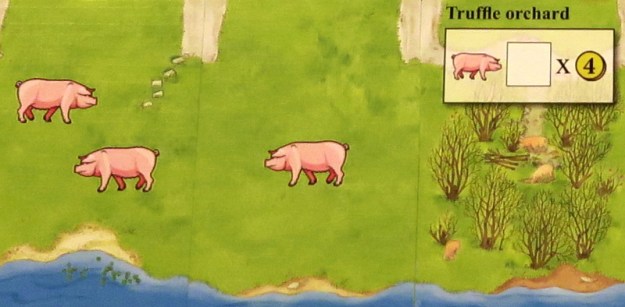
Meanwhile, Lime built a village strong in gold production, with the Gold Mine and Brewer and potentially the Carpenter too if he could upgrade it.  To his village, Black added a flock of sheep on his river bank while Ivory added a heard of pigs; Lime was more of a mixed farmer though with a bit of everything.  As the game progressed into the scoring rounds, Ivory added a Truffle Orchard which gave him four points for each pig and skill tile pair, allowing him to put all his pigs to good use netting twenty-four points.

Key Flow
– Image by boardGOATS

Lime and Black pulled in similar points tallies with their Emporium (four points for each green meeple and gold pair) and Traveller’s Lodge (points for transport and boats) respectively.   With similar points for their upgraded buildings as well, it was close and the smaller contributors became really important.  Ivory’s Trader which scored him fifteen points for stone and axe skill tiles, while both Black and Lime scored ten points for their Autumn stores (Stone and Timber Yards respectively).

Key Flow
– Image by boardGOATS

Perhaps it was the points he got from the meeples (Winter Fair and Craftsmen’s Guild), but there was only two points between first and second in the end. Black finished with a total of seventy-one points, just enough for victory—a couple of points more than Ivory, with Lime not far behind.  It had been a hard fought game, and Ivory was impressed how the Scribe, which in Keyflower he felt was always a winner, had little effect.  For him, this made the game more interesting, though he had really enjoyed the last time the group played Keyflower with the Farmers expansion, as that had also mixed things up.

Key Flow
– Image by boardGOATS

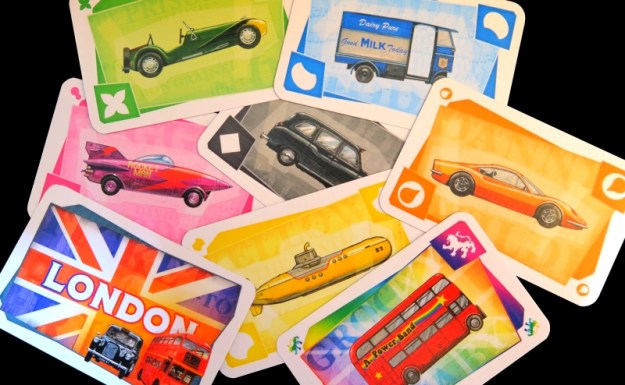
Given the recent game with the Didcot group it was inevitable that a comparison was going to be made.  This time Black won, but he scored fewer points than he had the previous week when he had come second.  Perhaps the most marked difference was how much quicker the three player game of Key Flow had been than the six player game a few days earlier.  Where the six player game had taken all evening, there was still time for something small, and with Lime taking an early bath, Ivory and Black chose to play a head-to-head of Ticket to Ride: London.

Ticket to Ride: London
– Image by boardGOATS

Ticket to Ride is a train game with an inexplicable alure, which everyone in the group loves and we’ve found that the small versions of the game, New York and London make excellent fillers.  The rules and game play are very similar to the full versions, but the take half the time, and with just two players, that makes it a very short game indeed.  On their turn, players take coloured cards or spend them to place their pieces on the map.  Points are awarded for completing tickets, but critically, failing to connect two locations marked on a ticket will score negative points.  The player with the most points at the end of the game wins.

Ticket to Ride: London
– Image by boardGOATS

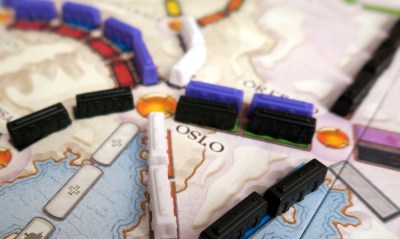
This time, Ivory built a network connecting Brick Land and the Tower of London in the East with Hyde Park in the West, while Black joined Regent’s Park in the North with Waterloo and Elephant & Castle in the South.  The crunch point came in the area around Covent Garden, but despite this, both players managed to complete all four of their tickets.  This meant it was down to the length of the tickets and the number of pieces placed—Ivory had the edge on both of these.  His revenge for the result in Key Flow was completed by a four point bonus for connecting all four in the St. Paul’s district resulting in a ten point victory.  With that, Ivory headed home, leaving Back to watch the end of The Isle of Cats.

Ticket to Ride: London
– Image by boardGOATS

Learning Outcome:  Games take longer with more players.

Golden GOAT Award Winners – 2018

The inaugural Golden GOAT award was announced at the boardGOATS annual “Un-Christmas Dinner”.  There was also an award acknowledging the worst game of the year, known as the “GOAT Poo” award.  The rules were quite simple, only games played at a GOATS games night in 2018 (i.e. appearing in the log book) could be nominated, and everyone got just one vote in each category.  It was clear from the audience response that many of nominees were very popular choices, including Yokohama and Keyflower: The Farmers.  A couple of games managed the feat of appearing in both lists winning the unofficial “GOAT Marmite-factor” Award, namely Endeavor and Yardmaster.  The winner of the “GOAT Poo” award was Queendomino, with one third of the group nominating it (remarkable since only four people had actually played it).  There was also a special award for “possibly the best and worst moments of the year” which went to Purple and Green’s inability to play Rock-Paper-Scissors (during Walk the Plank! a few weeks back), and Burgundy appearing as the perennial Saboteur at the end of November.  The deserving winner of the “Golden GOAT 2018”, however, was Altiplano which turned out to be a very popular choice.

Golden GOAT - 2018
– Image by boardGOATS

11th December 2018

Since this was the last meeting before Christmas, we did what we did last year and arranged to eat a little earlier so we could all share an “Un-Christmas Dinner” together, complete with festive crackers and party poppers.  Plans were nearly derailed by gridlock in Oxford that delayed Blue (and by extension the crackers, party poppers, cards and the “Feature Game”), and motorway traffic that slowed Pink in his long trip from the frozen north.  Between their arrival and food appearing, there was just time to play a little game of “Secret Christmas Cards” – the idea being that everyone got a suitably festive goaty card and a name, and write the card to that person signing it on behalf of the group.  Once we’d got over the lack of pens, the “game” seemed to go very well, though a lot of people didn’t open their card, saving the excitement for later.  Green arrived and his announcement that his divorce had come through was greeted with a round of applause.

Pizza at the Horse and Jockey
– Image from horseandjockey.org

Once the cards, pizza, “half a side of pig with egg and chips”, burgers and ice-cream had been dealt with, it was time for crackers.  We had been just about to pull them when food arrived, and knowing what was in them, Blue suggested they’d be better left till the end of the meal as people might not want cracker contents as a topping to their pizza!  It was just as well, because when everyone finally grabbed a couple of cracker ends and pulled, there was an explosion of dice, mini-meeples, wooden resources, tiny metal bells, bad jokes, party hats and festive confetti that went everywhere.  The table went from mostly ordered to complete devastation at a stroke, to which party popper detritus was quickly added.  It was immediately followed by everyone trying to work out where the bits from their cracker had ended up and as some people ferreted under the table, others began to read the jokes (which turned out to be quite repetitive).  While the table was being cleared, subject of the “Golden GOAT” award came up.  This had first been mentioned a few weeks back by Ivory who had suggested we should have a game that we’d played during the year that deserved an award (presumably he was completely unaware that “Golden Goat” is also a strain of marijuana).

"Un-Christmas Party" 2018
– Image by boardGOATS

Pine suggested that there should also be an award acknowledging the worst game of the year, which eventually became the “GOAT Poo” award.  Unfortunately there wasn’t really a plan for how to go about doing this.  In the end, Ivory and Green tore up some slips of paper and passed them round with the book so everyone could “vote”.  The rules were quite simple, only games played at a GOATS games night in 2018 (i.e. appear in the log book) could be nominated and everyone got just one vote. There was real concern that we were just going to end up with a list of different titles and two nine-way ties, but surprisingly, that did not happen.  As the votes were read out, it became clear from the appreciative noises round the table that many of the picks were very popular choices, including Yokohama and Keyflower: The Farmers.  A couple of games managed the feat of appearing in both lists winning the unofficial “GOAT Marmite-factor” Award, namely Endeavor and Yardmaster.  The winner of the “2018 Golden GOAT” however was AltiplanoQueendomino took the “GOAT Poo” award with a third of the group nominating it (remarkable since only four of the people present had actually played it).

Golden GOAT - 2018
– Image by boardGOATS

There was also a special award for “possibly the best and worst moments of the year” which went to Purple and Green’s inability to play Rock-Paper-Scissors (during Walk the Plank! a few weeks back) and Burgundy, the perennial Saboteur name last time.  Eventually, the table was cleared and the inaugural “Golden GOAT” awards had been announced, so people’s thoughts turned to playing games.  This year Ticket to Ride: Nordic Countries was a hot choice and with two copies, two games were quickly underway.  This is a variant of the very popular train game, but with a nice tight map designed specifically for two or three players and featuring a snowy festive theme.  The game play is almost exactly the same as the other versions, with players taking it turns to either draw carriage cards, or spend sets of carriage cards in appropriate colours to place plastic trains on the map.  There are a couple of things that really make the Ticket to Ride games work:  firstly, the longer the route, the more points it gets.  This often makes the longer routes very enticing, but this has to be set against the desirability of tickets (the second thing).

Ticket to Ride: Nordic Countries
– Image by boardGOATS

At the start of the game everyone chooses from a handful of ticket cards each depicting two cities and a value: players who manage to join routes together to connect the two cities get the depicted number of points at the end of the game.  The catch is that any tickets that players keep that are not completed successfully score negatively, and the swing can be quite devastating.  Ticket to Ride is a game everyone knows well and although we don’t play it often it is always enjoyable (perhaps because we don’t play it too frequently).  The familiarity means that everyone always fancies their chances at it though, which tends to make for very competitive games and the group really benefits from the variation that the different maps and versions offer.  On the first table, the game started out in much the same way as all Ticket to Ride games.  Ivory placed trains first, but Mulberry and Green followed soon after.  It wasn’t long before Ivory was drawing more ticket cards (instead of taking carriage cards or placing trains) and Green soon followed with Mulberry taking a little longer.

Ticket to Ride: Nordic Countries
– Image by boardGOATS

As is usual, the colour cards that players wanted, just seemed to refuse to come up and everyone’s individual hand of cards grew even as the board filled with more tickets taken at regular intervals.   In the early stages the trio were fairly well matched.  Green was starting to pull ahead and then for some reason abruptly stopped and his hand of cards grew and grew.  He had said that he was going for it and it would either pay off or he would lose abysmally. Mulberry and Ivory had nearly twice as many points as Green when he finally laid a train:  the nine-carriage route giving him twenty-seven points and propelling him into the lead by more than his previous deficit.  Everyone still had lots of trains left though, so the game was far from over.  Eventually, Mulberry brought the game to a sudden halt when she placed her last three trains, catching the others by surprise.

Ticket to Ride: Nordic Countries
– Image by boardGOATS

With their last turn they scrabbled for the longest route they could manage.  Since Green still had a handful of cards he was able to take a six-carriage route for a healthy fifteen points, however, that meant he had to abandon his twenty-four point ticket as he still needed two, very small routes to complete it.  The group decided to forgo recounting the points for placing trains and decided to assume they had kept on top of the scores during play.  Green was ahead in points for train placement by quite a margin, but Ivory and Mulberry had completed more tickets and Green was crippled by the forty-eight point swing caused by his incomplete ticket.  Mulberry took bonus for the the most completed tickets (by only one) and ended just one point behind Ivory.  With the score at the top so close they decided they had to double check all the scores and after a complete recount, there was a reversal and Mulberry edged Ivory out by one solitary point.

Ticket to Ride: Nordic Countries
– Image by boardGOATS

On the next table the story was a little different, with Pink, the “Prophet of Doom” goading Pine offering him advice to give in before he’d even started as he was in for a torrid time playing against Blue and Burgundy.  Pine didn’t see it like that however, and as he likes the game, he really fancied his chances.  Fortune favours the brave, and he was out of the blocks like a greyhound with a fifteen point placement in just his second turn.  From then on, it was fast and furious with players fighting to secure the routes they needed to complete their tickets.  Blue and Pine kept fairly level and began to pull away from Burgundy, but neither of them dared to get complacent as he usually has a master-plan that he’s waiting for the perfect moment to enact.

Ticket to Ride: Nordic Countries
– Image by boardGOATS

Pine drew more ticket cards and Blue followed, keeping pace every step of the way while Burgundy kept drawing carriage cards.  Eventually Blue drew ahead in the “taking tickets” race, but it was one set of tickets too far for her as she drew three moderate to high scoring cards that were all unplayable.  Fearing she’d pushed her luck one step too far, she kept the lowest scoring card (i.e. the one with the fewest negative points) and pondered her options.  Pine took tickets and it was clear he had hit a similar problem though at least two of his were playable, if difficult.  In the end, he took a twenty-one point ticket that needed a little work, giving Blue an interesting choice.  In addition to the unplayable ticket, she had one low-ish scoring ticket left that she only needed one card to complete.  She’d been waiting for that single yellow carriage for a while though and persisting could allow Pine time to complete his new ticket.

Ticket to Ride: Nordic Countries
– Image by boardGOATS

Although she didn’t know the value or difficulty of Pine’s final ticket Blue felt sure it was high scoring and that he would need a few turns to complete it.  With a large set of pink cards and not many trains left, it gave her a chance; by placing a largely arbitrary route she triggered the end of the game.  Burgundy squeaked, although it had looked for all the world like he was trying for the long route, in fact he was really hunting for a locomotive (wild) card or a single orange carriage to complete his route into Narvik (though he came very close to getting nine cards necessary for the long route by accident).  The irony was that Blue had picked up loads of locomotive cards in her hunt for the single yellow, but hadn’t wanted them and had been unable to find yellow cards because Burgundy had them all!  In his penultimate turn, Burgundy had finally drawn his last orange card enabling him to finish his final, long ticket on his very last go.  Pine on the other hand was less fortunate and fell short, taking a swing of forty-two points which more than off-set Blue’s incomplete tickets.

Ticket to Ride: Nordic Countries
– Image by boardGOATS

The group recounted the train points and found a few extra points for Blue, but it was still very close and all down to the tickets.  Blue had mostly low-scoring cards; where Pine had one fewer, they were more valuable.  In the end, Blue finished twenty-three points ahead of Pine, but she had managed to complete one extra ticket which had given her the ten point bonus – had it gone to Pine there would have been a twenty point swing and the second group might have had a recount too.  Both Ticket to Ride games finished at much the same time and while the third game was finishing off, the two groups compared notes.  It was then that the first group realised they had not played quite correctly, as there is a rules change in this version that means locomotive cards can only be used as wilds on tunnel and ferry routes, not on ordinary routes.  This explained why Green had managed to succeed at his long route when Burgundy had failed. While playing correctly would have changed the game, there was no accusation of cheating as Ivory and Mulberry who had been playing that game had played by the same rules.

Christmas Tree
– Image by boardGOATS

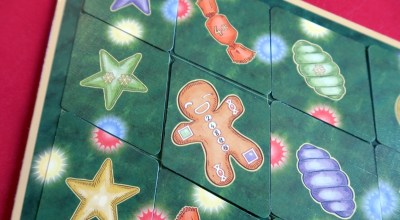
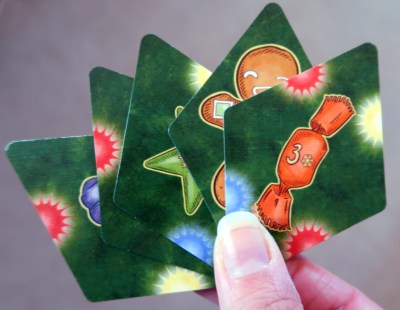
Meanwhile, while the two ends of the table were playing with their train-sets, the trio in the middle were decorating their Christmas Tree.  This game is a cute little card drafting game that originated in Hungary.  The game takes place over three rounds during which Christmas decoration cards are drafted. After each card is chosen, the player puts it anywhere they like on their tree.  After seven cards, the round ends and the trees are evaluated.  Decorations include gingerbread men, glass ornaments in different shapes, wrapped sweets and, of course, festive lights.  The gingerbread men have different markings on their hands and feet and the more that match the adjacent decorations, the more points they score.  Some glass ornaments and all the sweets score points directly; lights only score if both halves match.

Christmas Tree
– Image by boardGOATS

The decorations only score at the end of the game though;  objective cards are evaluated at the end of each round.  At the start of the game each player receives four objective cards and at the start of each round everyone chooses one; these are shuffled and before the round begins.  The trees are therefore evaluated at the end of each round according to these objectives.  and then decorations score at the end.  One of the things about this scoring mechanism is that it’s often not obvious who is in the lead during the game as there are so many points awarded at the end.  This game was no exception, and was ultimately very close as a result.  It is one of those games that benefits from experience, and Black and Purple’s who had both played before took first and second, in that order.

Christmas Tree
– Image by boardGOATS

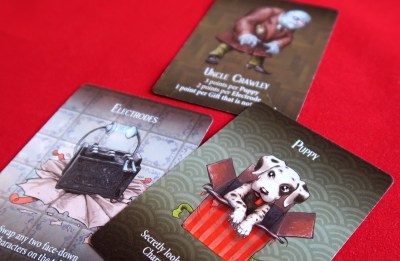
There was time for something else.  Inevitably, we threatened Pink with Bohnanza (he has possibly the smallest amount of love for the game per copy owned), but it’s lack of festiveness, meant it was a hollow threat.  We still had the “Feature Game” to play anyhow, which was Giftmas at Dungeon Abbey.  This is a mad game by a local gamer and member of the Didcot Games Club, Rob Harper set in a world that is a sort of cross between Downton Abbey and the Adams Family.  The artwork is suitably gruesome, though it was very clear from the start who the Countess D’Ungeon was a caricature of!  Played over several short rounds, each player takes the role of one of the various eccentric and unpleasant family members grasping for whatever feels like the best present.  To this end, players begin with a character card and a couple of gift cards, all face down on the table in front of them.  On their turn, the active player may either swap one of their face-down cards with one elsewhere on the table, or turn a card face-up, possibly activating a special action on the gift cards.

Giftmas at Dungeon Abbey
– Image by boardGOATS

The round ends when all a player’s cards are face up at the start of their turn or a bomb is revealed, at which point everyone scores points if they have collected the gifts wanted by their characters.  With six people playing nobody had a clue what was going on and mayhem reigned.  Ivory and Pine jointly took the first round giving them a point each, but after that, the gloves were off.  Purple took one round and Pine and Ivory took another each, so it was all down to the last round.  Green had spent most of the game trying to furnish Little Eugenia with two bombs, so when Blue realised he had the cards he needed to win the round, she made it her business to try to obstruct his plans.  Needless to say he spent the round getting his cards back.  With Blue and Green playing silly beggars in the corner, everyone else fought it out, but there was nothing everyone else could do to stop Ivory taking the point he needed to win.

Giftmas at Dungeon Abbey
– Image by boardGOATS

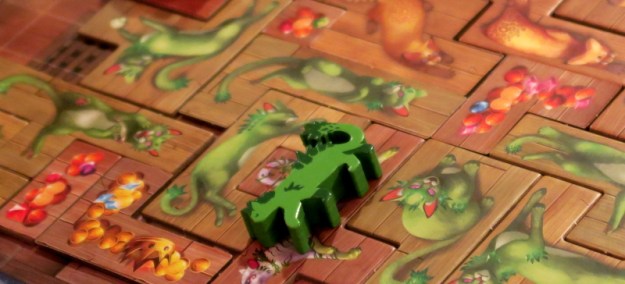
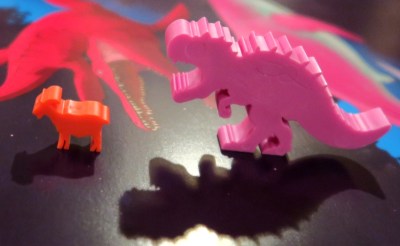
There was still time to play something else, but nobody was really in the mood so, instead, Blue and Ivory drooled over the fabulous pink dinosaurs from Ivory’s new arrival, Dinosaur Island.  Blue had nearly KickStarted the second edition, but had withdrawn when she’d heard Ivory was already committed to the project.  Needless to say, Ivory had brought his copy to show it off at the earliest opportunity, including plastic goats as well as dinosaurs.  And of course it will undoubtedly be a “Feature Game” sometime in the new year.

Dinosaur Island
– Image by boardGOATS

Learning Outcome:  Christmas Crackers can make an awful lot of mess.

4th September 2018

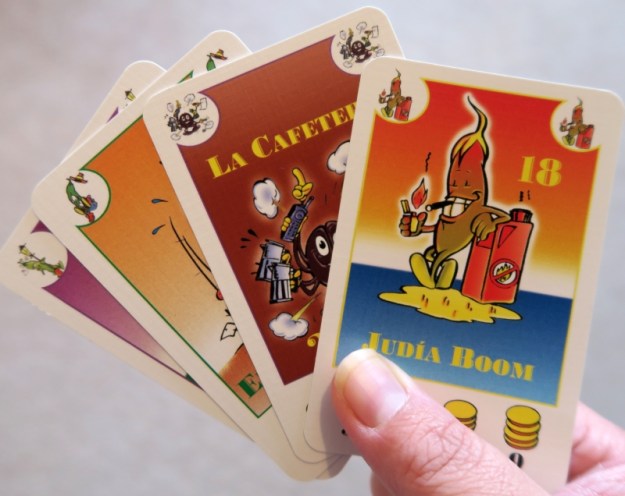
Blue, Red, Burgundy and newcomer, Mulberry, were finishing their food when Pink arrived after a long drive from the north-east.  While he was waiting for his food he opened a very special present Red had brought back from Spain for him.  Pink and Blue have quite a few games and for various reasons there are one or two that they have multiple copies of.  However, there is one game that they have many, many copies of.  Ironically it is a game Pink doesn’t even like playing very much, and yet, it has become a bit of “a thing” that every time Pink goes to Essen he comes back with yet another copy (ideally in a different language, but often just another German copy).  Red has strong opinions about this particular game though, and believes that by far the best language to play it in is Spanish, so kindly brought Pink a copy back from Spain to add to his burgeoning collection.  As he began to unwrap it, Pink took a few moments to realise what it was, but was really touched by this very special gift of Bohnanza.

Bohnanza
– Image by boardGOATS

There wasn’t time to play it before food arrived, then everyone else was turning up and the “who’s going to play what” debate began.  The “Feature Game”, Keyflower with the Farmers expansion had been Pink’s request and Keyflower is one of Blue’s favourite games, so they were a bit of a foregone conclusion.  They were quickly joined by Burgundy who is also very fond of the game, and Ivory who was keen to see if the expansion changed the balance and the strategies available.  Since that was likely to be the long game, they got on with it while everyone else sorted themselves out.  Keyflower itself is not a complicated game mechanistically, though it has an awful lot of depth.  Over four seasons, players are simply taking it in turns to bid for tiles to add to their village or use tiles available in the villages or the central display.  The clever part is that bidding and using tiles are both done with meeples as currency and players must “follow suite”, that is to say, use the same colour if the tile has already been activated.

Keyflower: The Farmers
– Image by boardGOATS

In Keyflower, the depth is generated by the actions available on from the tiles and their interaction, added to the fact that except when playing with a full compliment of six, only a subset are used, and these are drawn at random.  This means that one of the most important aspects of game play is to keep as many options open as possible since everything is likely to change in the final round.  This is not only because some tiles don’t appear, but also the fact that there is always someone who will make it their business obstruct even the best laid plans.  Thus it is vital to have at least two ways ways out.  Adding The Farmers expansion exacerbates this as it introduces lots more tiles so each one is less likely to be revealed.  This is a potential problem when trying to “play with the expansion” as it is perfectly possible that none of the Farmer tiles are introduced into the game.  To prevent this, some tiles were drawn explicitly from the Farmers set.

Keyflower
– Image by boardGOATS

The Farmers expansion doesn’t change game play much, it just adds depth by the addition of farm animals as another means to score points.  The idea is that animals are kept in the fields that are formed by the roads in a village.  Each field that is occupied scores points depending on the type of animal or animals in it.  Thus each field with sheep in it scores one point, each field with pigs scores two and each with with cows scores three points.  These scores are increased for villages with special tiles, like the Weaver, which increases the sheep score to three per field.  Animals in a field another of the same type breed at the end of each season and can be moved in a similar way to resources.  The expansion also introduces Corn to the game, which allows players to enhance their movement actions.  Otherwise, the game with the expansion plays in much the same way as the basic Keyflower game, takes a similar amount of time and requires a similar blend of tactical decision making and strategic planning.

Finca
– Image used with permission of BGG contributor garyjames

Meanwhile, everyone else had divided themselves into two groups of three and had begun to play.  Pine joined Red and Mulberry in a game of Finca.  Pine had played it before, but a long time ago so Blue took time out from setting up Keyflower to explain how to it worked.  It’s a very simple game of set collection with beautiful wooden fruit that’s now nearly ten years old.  At its heart is an interesting rondel mechanism.  On their turn, players choose one of three possible actions:  move around the rondel and collect fruit; use a donkey cart to deliver fruit; or carry out an action with one of the special, single use tokens that each player starts the game with.  There are some lovely features about the game.  For example, players move as many spaces round the rondel as there are workers on the space they started on and the number of fruit they get depends on the number of workers on the space they finish on.  As players have four workers each, there are lots of factors to consider when choosing which worker to move.

Finca
– Image by BGG contributor kneumann

Investing wisely is the key to the game, and Pine went for variety while Mulberry specialised more, particularly in figs and oranges.  It was the figs and oranges that won the day with Mulberry finishing with fifty-one points, just four ahead of Red who’d had lots of fruity fun with Finca.  With that finished, Red spotted Yardmaster in a bag, one of her favourite games, and decided to introduce Mulberry to it.  It is quite a simple game and was described by Mulberry as “UNO with trains”.  Players are building a locomotive by drawing cargo cards and using them to buy railcar cards from the four face up cards in the middle.  The game was very close, but it was Red’s experience that was key, giving her a two-point winning margin over Mulberry in second place.  With that done, they moved onto another old favourite, 6 Nimmt!.

Yardmaster
– Image used with permission of BGG contributor moonblogger

6 Nimmt! gets played a lot, but it’s unusual that we play it with so few players.  The idea is that everyone chooses a card and then players add them to one of the rows, in ascending order adding them to the row ending in the highest card that is below the card they are playing.  The catch is that when a sixth card is added to a row, that player picks up the first five cards.  The game really is at its best with more players where the simultaneous card selection adds mayhem.  They just played the one round; perhaps Mulberry misunderstood and thought the idea was to collect “nimmts”, but either way, she top scored with twenty-one – quite an achievement with only three players and only one round!  Red did rather better and finished the winner with just two “nimmts”.

6 Nimmt!
– Image by boardGOATS

On the neighbouring table, Green had joined Black and Purple and they started out with this year’s Spiel des Jahres winner, Azul.  This is a really an abstract game with only a loose theme of tiling a palace, but unusually, nobody seems to mind and we’ve played the game a lot with multiple copies in the group.  The game is really just a set collection game, similar to Finca and Yardmaster, but with an added spacial factor as tiles have to be placed to score points.  Tiles are chosen from “factories” with those that aren’t taken going into a central pool.  Since players can only take one colour at a time and must always take all the tiles of that colour in that location, they can easily end up with not quite enough, or even too many scoring negative points. Although it is not really an aggressive game, it is remarkable how much damage players can do to each other.  Landing too many tiles is bad, but it is arguably worse to get “not quite enough” as it inhibits options in the next round too and therefore can affect the whole game.  As we’ve played it a lot, we all have a good understanding of how to play, so unless someone gets things very wrong, games are often close, making them quite tense affairs.  This was no exception, with Purple just taking the honours with sixty-three points.

Azul
– Image used with permission of boardgamephotos

To alleviate the stress of Azul, the trio moved on to play Om Nom Nom, a light “dice-chucker”  This needs a similar sort of double think to 6 Nimmt!.  The idea is that the board is seeded with dice populating the lower levels of three separate food chains.  Then players simultaneously select an animal card to play, populating the higher levels of the food chains.  The idea is that cards played at the top of a food chain will eat those immediately beneath it.  So if there is a juicy bunch of carrots rolled, is it best to play the rabbit and risk getting eaten by a fox, or is it better to play a fox and gamble on everyone else being tempted to play rabbit cards?  Often the wisest move is not to get involved, but if everyone adopts that approach, the carrots get left and everyone is now playing in the more confined space of two food chains.  Sometimes the game is very tight, but this was not one of those times.  Black took five cheeses in one round and finished some twenty points ahead of everyone else.

Om Nom Nom
– Image used with permission of BGG contributor msaari

The other games were still going and nobody fancied anything particularly taxing, so after a brief hiatus, Splendor got the nod.  Yet another set collecting game, it is also very simple and surprisingly popular in our group.  There is a remarkable amount of thought necessary for the apparently simple choose three different tokens or buy a card.  Many people seem to think it is a trivial game, but for us, it has the right balance of strategy and tactical thinking to make it the perfect game when people are tired but still want something that provides a little bit of interest.  We’ve played it a lot, and almost inevitably, Burgundy wins.  One of the factors in choosing the game was the guarantee that he wouldn’t win this time as he was engaged elsewhere.  In the event, it was another close game, with Green and Black very close to finishing, but Purple just getting to fifteen points first and ending the game before they could catch her – her second win of the night.

Splendor
– Image used with permission of boardgamephotos

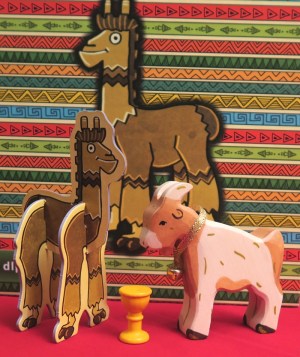
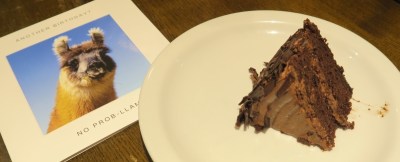
We were about an hour into our respective games and Blue was concentrating deeply on her next turn in Keyflower, when her village was suddenly and unexpectedly improved by the addition of a very fine chocolate cake complete with candles.  Much to her embarrassment, it was also accompanied by singing.  There was a brief interlude while Blue blew out her candles and cut up the cake, admired her quite a-llama-ing card, everyone consumed the really rather delicious cake (Waitrose finest no less), and Burgundy made sure there wasn’t even a pattern left on his plate.  And with all that done, the games continued.

Cake!
– Image by boardGOATS

Keyflower continued after cake and the strategies were beginning to become clear.  Ivory, Blue and Pink were going for animals, while Burgundy’s plans had been undermined by both Blue and Ivory and was trying to make something from his very, very small village.  With the arrival of Winter, players had to put in their choice of the tiles they’d been given at the start.  Much to Ivory’s disgust, someone had put in the Dairy which increases the score for fields with cows in them.  Since neither the Cow Shed tile nor the Ranch tile had been drawn in Autumn, nobody had any cows so the Dairy was a waste of a Winter tile.  This meant there was even more competition for the other tiles, and there weren’t many of those as players can put only one tile into the mix.  Burgundy got his Key Market which nobody else had any real interest in, Blue took the Hillside, but lost out on the lucrative Truffle Orchard to Pink.

Keyflower
– Image by boardGOATS

Ivory took the Mercer’s Guild and the Scribes after a brief tussle with Blue.  It was quite tight with everyone getting points from different places and it was clear the tiles everyone picked up in the final round made all the difference.  Ivory, Blue and Burgundy had spread their points about, while Pink put all his eggs (or rather pigs) in one basket, but it paid off, giving him a massive forty points and seventy-three points overall, four more than Blue in second place.  Everyone had enjoyed playing with the expansion, particularly Ivory who felt it had added more depth.  Although Ivory had to go, there was just time for a quick game of 6 Nimmt!, so Pine took his place and the foursome played a couple of hands.  In the first round Burgundy and Pine competed for the highest score with twenty-five and twenty-seven points respectively.  In the second round, Pine picked up what might be a record score of forty-five.  At the other extreme, Blue managed to keep her score down to eleven, and added to the three in the first round that gave her a clear victory—just in time for her birthday at the end of the week.

An Empty Plate!
– Image by boardGOATS

Learning Outcome:  Sometimes a pig strategy brings home the bacon!

11th February 2014

One of our regulars is moving pastures new, so as this was probably her last week, we played games she said she liked.  We started off with Parade, which is a little card game with an Alice in Wonderland theme where you add cards to a row, but the cards that you place dictate what cards you pick up.  In general, cards score their face value and the object of the game is to have the lowest score, however, for the person who has the most of a colour, that colour scores only one for each card. So, the game starts with everyone trying to minimise what they pick up and then, once the writing is on the wall, everyone scrabbles to pick up as more cards than everyone else.  We first played it a few weeks ago and our leaver came second by just one point, so this had an element of a re-match.  The winner from last time was quickly forced out of the running and ended up with twenty-eight points, and the battle was between our leaver and the player who came last in the previous game.  Sadly, our leaver once again finished in second place with twenty points after being forced to pick up a couple of tens, but, with fourteen points, the win went to someone who claims he always looses “little games”.

Parade

Next we started setting up the “Feature Game” which was Keyflower with the Farmers expansion and then a couple more people arrived.  Keyflower is one of our most played games, but there is one player who usually wins, so the rest of us made a point of ensuring that Green didn’t have it all his own way this time.   Like the last time we played with the expansion, we used all the farming tiles.  Winter tiles were doled out and the rules were passed round as people checked and double checked what they had.  Spring tiles were then revealed and Red and Blue went for the sheep tiles.  Red and White won them, but Blue had placed a couple of workers on the tiles before the end of the round giving her a breeding pair.  By the end of the summer both Red and Blue had a large flock of sheep and it was only then that Blue dissolved into fits of giggles as she realised that sheep weren’t pink and she had been collecting the wrong animal…

Keyflower

Meanwhile, Green had been acquiring resources, Yellow had been trading tiles getting two for one on each occasion, and White had been busy building up a healthy stock of green meeples and pigs.  In the last round, the winter tiles were revealed.  The Hillside tile came out and it suddenly became apparent why Green had such a strange shaped village, so Yellow took it off him.  The only other animal tile that came out was the cow tile which Blue made a play for to try to redeem her earlier spell of colour blindness.  Red pointed out a couple of turns in that it was worth a lot and promptly started to bid for it too.  In revenge for “stealing” his Hillside, Green took the Scribe which rewards players for collections of skill tiles, so Yellow took the Windmill which rewards players for collecting resources…

Keyflower

Despite Red’s efforts, Blue managed to sneak under the radar and nabbed the Keythedral (which is worth twelve points).  The collective efforts of Yellow, White and Red had succeeded in preventing Green from winning.  However, despite having a chronic shortage of meeples throughout (due to squandering them on sheep in the first two seasons) and therefore a very small village, and almost no points from anything else, the combination of a heard of cows, the Keythedral and the damage the other players had done to each other, meant Blue finished with seventy-one points, seven ahead of Yellow in second and twelve ahead of Red in her last, quite epic game with us.

Keyflower

Learning Outcome:  Beef is very nourishing!

17th December 2013

We planned to start early and get in a quick game of the “Feature Game”, Morels, however, we had just finished going through the rules and were just about to start when the late arrivals arrived early.  So, we left the mushrooms for another day and moved on to one of our favourites, Keyflower.  The reason why we were all especially keen to play this, is that the expansion, Keyflower:  The Farmers was released at Essen and we had been waiting since October for a good opportunity to give it an outing.  There are two documented ways to integrate the expansion with the main game:  you can choose tiles randomly from those available in the base game and the expansion, or you can use all the farming tiles and just use random base game tiles to “top up” the numbers.  Since it was the first time any of us had played the expansion, we chose to use this latter, “Farmers Variant”.

Keyflower

The idea behind the expansion is so simple that it is really very clever, and it is hard to believe that it wasn’t designed at the same time as the base game (though according to the designer, it was not).  In summary, the structure of the game remains the exactly same, but the new tiles give you access to animals which you place in the fields defined by the roads and the edge of the village.  There are a handful of rules associated with the animals (they breed at the end of spring, summer and autumn, but not winter because its too cold; they don’t breed if they are sharing with other animals because they are too shy), and the expansion also introduces wheat (which can be used to entice animals from one field to another or to encourage the horse pulling the cart enabling it to move more resources), but otherwise the game is essentially the same.  Or not…

Keyflower

As usual, we handed out our winter tiles and a handful of meeples (or Keyples as they are called in this game), before the spring tiles were laid out for everyone to look at.  With the farmers expansion, sheep are introduced in spring, pigs in summer, and cows in autumn.  So sheep came out first and Blue and Green got the key sheep producing tiles, and everyone with sheep tried to make sure they had at least two so that they could profit from the end of season breeding.  Unusually, almost no resource production tiles came out as these were of course displaced by the animal tiles, and this was the way it stayed for the rest of the game.  On the other hand, all the “green Keyple” tiles came out making them more abundant than usual.

Keyflower

In summer and autumn, Yellow tried to get into the animal husbandry business breeding pink cows and got into a tussle for it with Blue, who largely lost out and played most of the game with a village of just four tiles.  Meanwhile, the other sheep-farmer, Green, eschewed pigs and cows and concentrated on expanding his flock to nearly epic proportions.  By winter, Blue, with her hamlet and miniscule fields, was stacking pigs and cows in a way that would not have won favour from the RSCPA and Green (the shepherd) was trying to obtain the services of a weaver to increase the value of his flock.  Meanwhile, Yellow was trying to expanded his cattle business and Red, the only player who had managed to get resource production tiles was mining for gold, employing a jeweller to maximise her the outcome from her gold and moving iron from one side of her village to the other.  In the dying moves of the game, the Yellow outbid Blue for the dairy who in turn placed a large bid for the weaver which Green was unable to match.  This cost Green somewhere in the region of twenty points and forced him to take the hillside tile and try to make the best use of it he could.  Despite the inconvenience, Green still romped away with the win some twenty points ahead of Blue and Yellow who came joint second.  Even so, somehow this didn’t seem quite as much of a white-wash as last time

Keyflower

Learning Outcome:  Trying to breed pink cows does not make you a better farmer!