Pink and Blue were late arriving thanks to a debate as to whether the actor Gary Lewis was in the Roland Emmerich film The Day After Tomorrow. Eventually Blue and IMDb were proved right when Pink found the guy who WAS in the film (Richard McMillan, who bore no resemblance to Gary Lewis whatsoever), but that meant they were late arriving and Plum and Byzantium were already there. Unfortunately, due to a mix up, the Jockey wasn’t serving food, so Blue headed off to get chips for everyone from Darren at The Happy Plaice. As the chips were consumed, everyone else arrived and it was just a question of who would play the “Feature Game“, the Wild Ride expansion to our go-to motor racing game, Downforce, and what everyone else would play.
 |
| – Image by boardGOATS |
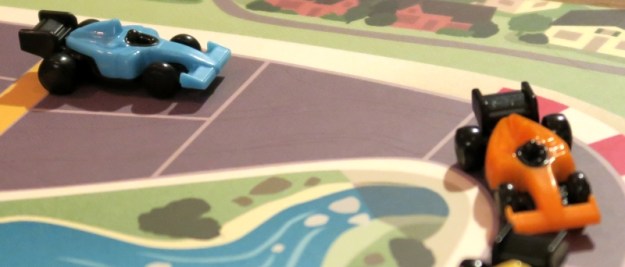
Eventually Pink and Green committed to Downforce, and were joined by Pine (who claimed that after doing well the first time he played, he’d come last ever since), Black and Lime (as long as the other group weren’t playing Wingspan). Pink and Green reminded people of the rules of the base game, which are simple enough: after being dealt their hand of cards, players bid for cars, with the player who pays the most deducting the cost from their final score. Once the bidding is over, the race takes place. Players take it in turns to play one card from their hand, and then move all the cars depicted on it in turn.
 |
| – Image by boardGOATS |
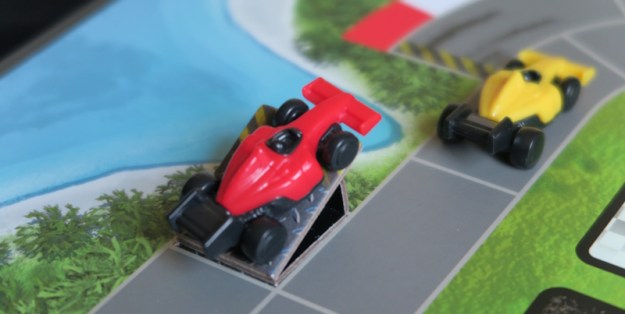
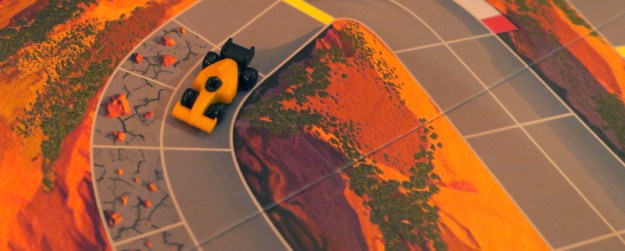
When the first car crosses a betting line, the race is paused while everyone bets on which car will win the race. There are three betting lines, but the winnings for betting decrease the closer they are to the finish line. At the end of the game, players total their winnings from the race with those from the betting, deducting the cost of their car and the player with the most cash is the winner. The Wild Ride expansion adds two new tracks: Aloha Sands and Savanna Stretch. Aloha Sands adds water jumps which cars can use if they are moving fast enough. The jumps allow players to pass other cars and get round the track more efficiently, but timing is everything.
 |
| – Image by boardGOATS |
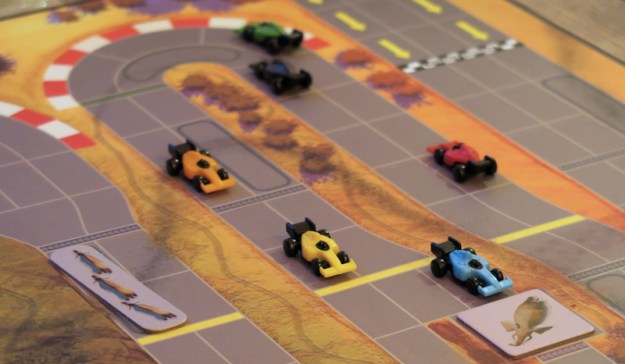
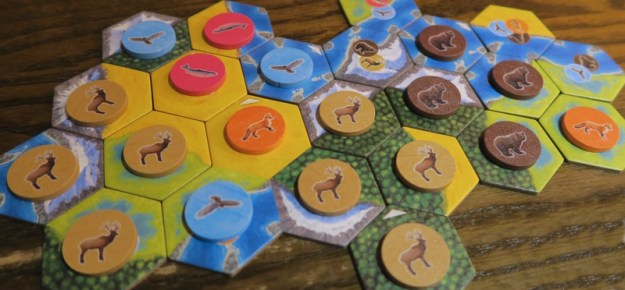
In contrast, Savanna Stretch features wild animals that block the track. Once the first car has passed an animal, they are moved to another part of the track, as such, they help to prevent the “runaway leader” problem that can sometimes be an issue in the base game. It was this track that players chose to use this time. The inclusion of extra animals on the track caused a little confusion initially, but the group soon worked out two of the important features of this track. Firstly, the animal tile only moves after the first car is fully past it and all other the cars have finished their movements for that card, which means that the animal is really only an impediment for the first few cars.
 |
| – Image by boardGOATS |
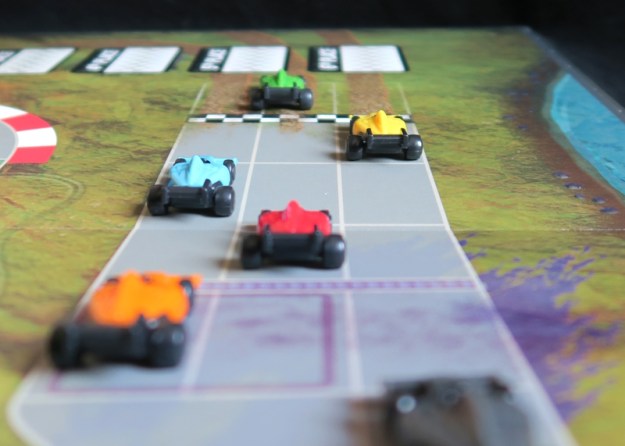
The other the slightly unusual aspect of this track is that the pole position car starts at the rear of the pack. With five players and six cars, there was always a chance that someone would get two, and that someone was Lime. While this can be a huge advantage, especially if the cars are cheap, it can also be a risky strategy as it can be difficult to manipulate two cars and they can also become a target for other players. Unfortunately for Lime, his cars were among the most expensive, leaving him with a deficit of $11M before the racing began, compared with Pink and Green for example, who paid just $2M for theirs. Once everyone had got to grips with the rules and the cars had been allocated, the race was underway.
 |
| – Image by boardGOATS |
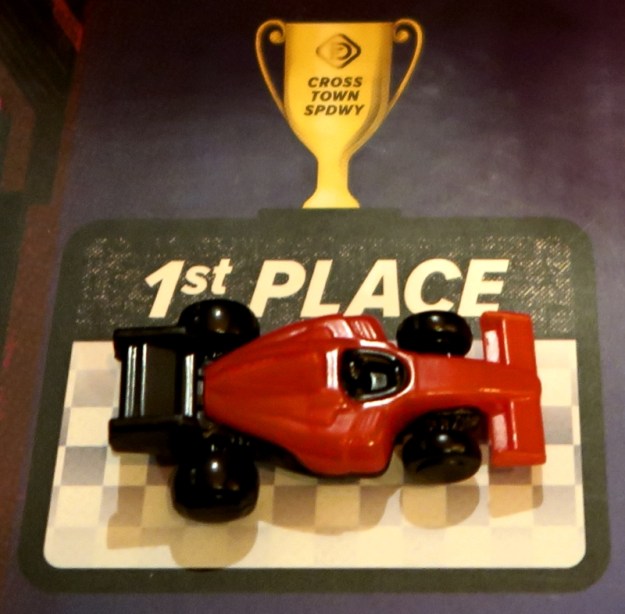
For a track with so many tight sections it was not surprising that there was a lot of blocking going on—most of it, to be fair, totally deliberate… Pink (in the red car) found his early push to the front to be a mistake, as he was instantly the target for blocking maneuvers from turn two until the final straight. Green (in orange) used his online experience from Board Game Arena to keep himself in the pack, but not at the front. Luckily for him several other players selected his car to win the race at the first two check points, which helped keep him out of trouble and pushed forwards.
 |
| – Image by boardGOATS |
However after the halfway mark, Black (driving the blue car) and Pink both surged forward causing Green and Pine to lose their nerve and bet on Black (instead of Green) at the last checkpoint. However, they should not have worried, as very soon after that, Green’s car surged forward weaving between the cars in front to race for the line and victory. Pine was close behind, followed by the first of Lime’s cars (the other brought up the rear). With the race done, there were just the winnings to claim from the bookies. Because Green had got away with paying little for his car and won the race, he had a significant prize pot even before betting was paid out.
 |
| – Image by boardGOATS |
There wasn’t a huge difference in the results from the betting, but it was enough for Green to extend his lead. Pine also raked in millions as his betting pattern was the same as Green’s (perhaps someone should investigate them for race fixing). As a result, Pine come in clear second with Black completing the podium. Since there was still some time left for a “proper” game, the group hunted around for something that wasn’t too long and could play five. In the end, they settled on the simple little “push your luck” game, Port Royal, as much because no one could find anything better for five players, than because anyone really wanted it specifically.
 |
| – Image by boardGOATS |
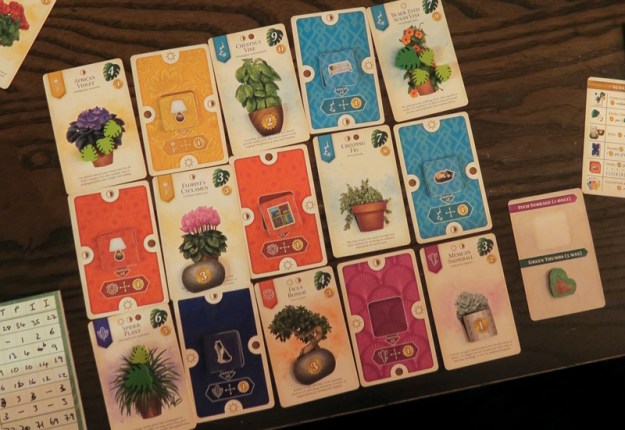
It had been a little while since most of the group had played, though the rules are simple enough. On their turn, the active player chooses to “twist” and turn over the top card of the deck, or “stick” and keep the current card set. The deck of cards consist of coloured ship cards and character cards. The first decision is to decide whether to risk a “twist” because if second ship card of a colour is drawn the player goes bust and their turn ends. If a player “sticks” they can take a ship and add its treasure to their stash, or they can use their gold to buy the support of characters. These give players victory points and special powers, but also can be used to claim contracts and give more points.
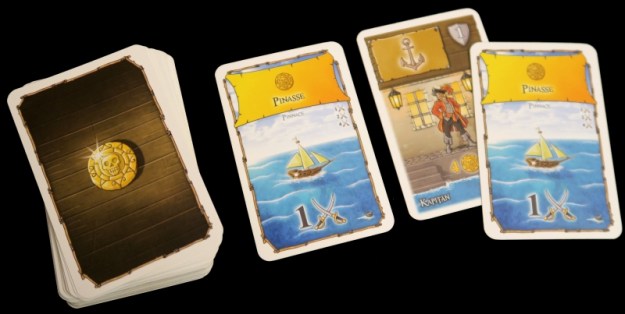 |
| – Image by boardGOATS |
Once the active player has taken a card, players round the table can take a card too. The cards are double-sided like those in San Juan or Bohnanza, so in the same way, keeping an eye on the discard pile and the money in players’ hoard is also key. Although Black and Green did their best to quickly explain the rules, Pine and Lime were still both a little unsure, and perhaps with good reason. Part way through the second round Black and Green realised something was amiss and re-read the rules and spotted a “rules malfunction”: they had forgotten that when a player takes a card on another player’s turn, they pay the active player one coin, thus encouraging players to push their luck further to give more players more choice.
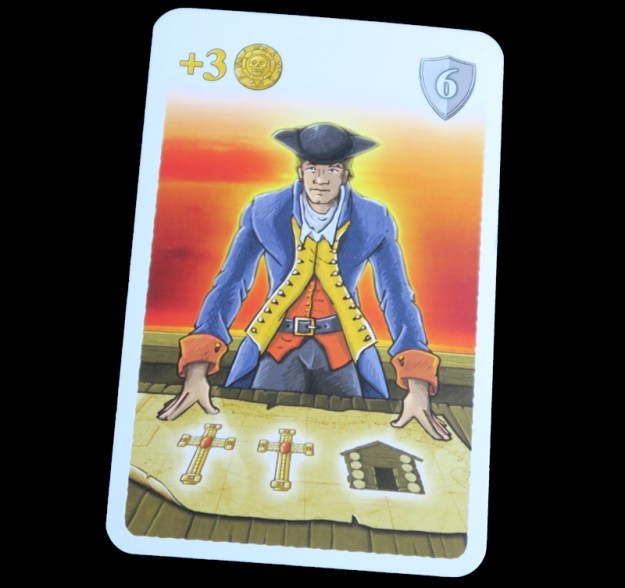 |
| – Image by boardGOATS |
So from the second round on-wards they group started playing correctly. Pink’s strategy involved ignoring the Sailors and trusting to luck with turning the cards while spending his money on symbols to make up Expedition cards. That gained him the first Expedition card, but ultimately, this single minded approach wasn’t very successful, at least in this game. Green went for a strategy of collecting fighting cards, in order to fight off the pirate ships. This worked initially, but by the time he had five fighters (and seven points), he kept going bust on his turn as he turned up skull bearing Pirate Ships against which there is no defence!
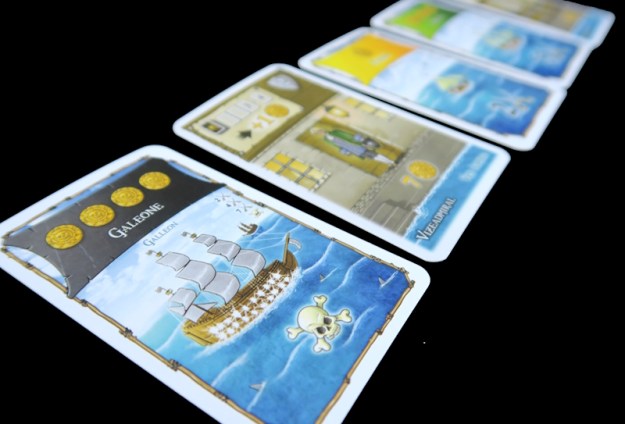 |
| – Image by boardGOATS |
This meant that everyone else was able to gradually build their wealth and cards to catch him up. Green then collected two more fighters and in preparation for one final attack, but would he get the chance? Black had managed to accumulate a lot of points, not least because he collected money for both a large array of cards and for when it went bust thanks to the Admiral and the Jester. If Black could collect another special symbol he could claim an expedition and win the game before Green could make his mega move with a full fighting force. Unfortunately for Pine, he wasn’t able to collect the symbol he needed to claim a expedition as he went bust.
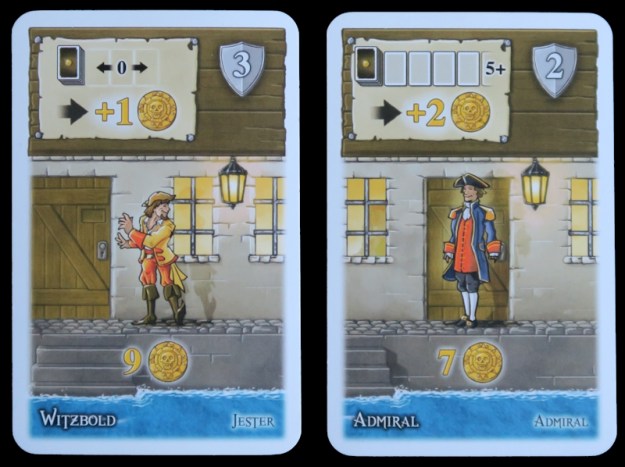 |
| – Image by boardGOATS |
So it was Green’s turn again and he started to pull out cards, with a huge line of cards. After defeating every lower value Pirate Ship he came across, he managed a full five different coloured ships. From there he was able to collect another five coins and purchase the two crosses on display, which gave him an expedition card and enough points for victory. At the conclusion of the game, Pine confirmed his early feelings that he did not really like this game, and Lime felt it was all a bit too confusing, never really sure what he was doing. This was an older game that we used to play a lot of at the club, but it seems to have lost its lustre now and will probably forever remain an occasional play game.
 |
| – Image by boardGOATS |
Meanwhile, on the next table there was a lot of debate as to what they’d play. With five, the options were quite restricted, Burgle Bros. almost made it, until Teal realised it only played four, which left Tiny Towns. Plum wasn’t so keen, so in the end, the group went for the old favourite Wingspan (having said to Lime that they weren’t going to play it… Sorry Lime!). There was some debate as to whether there was time for the game with five players, and options of playing three rounds instead of four were briefly discussed, but since everyone knew what they were doing, the group decided to give it a go and see if they could squeeze in a full-length game.
 |
| – Image by boardGOATS |
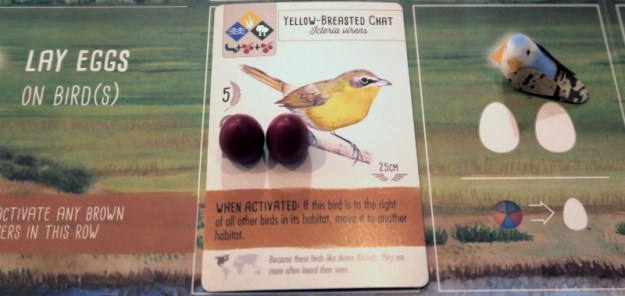
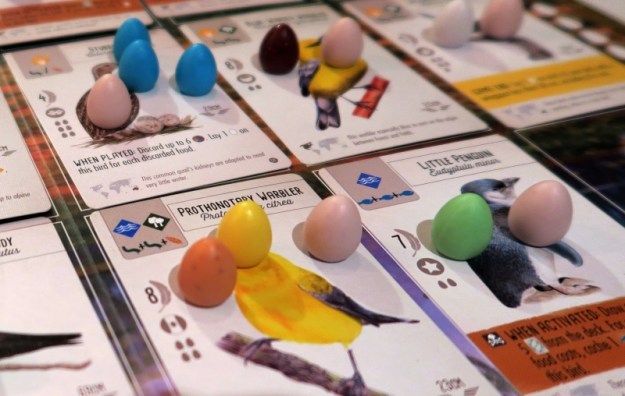
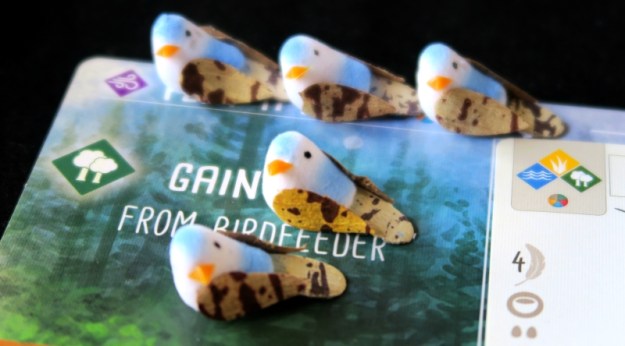
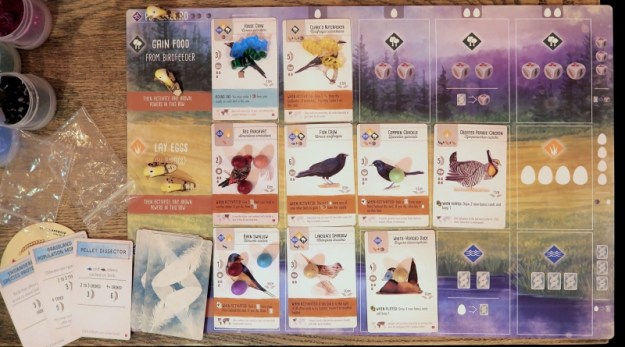
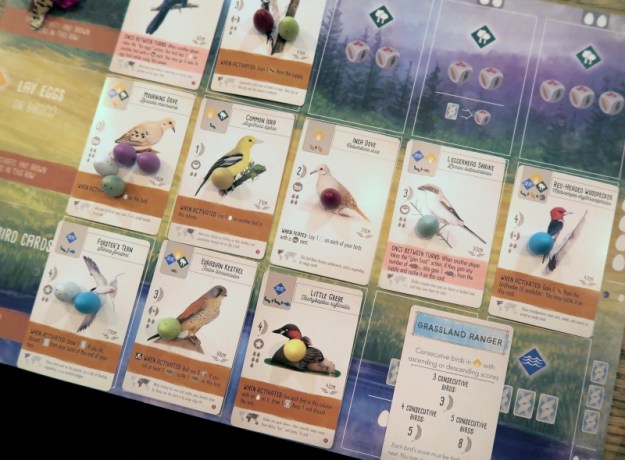
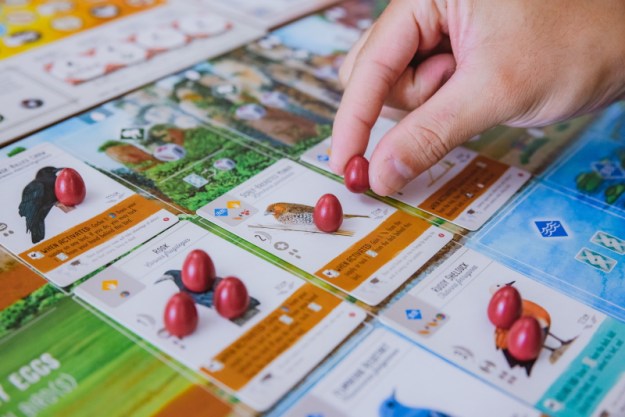
The game is an engine builder that is quite simple in theory, but quite difficult to play well. Players are collecting birds for their sanctuary, scoring points for exciting birds, eggs, cached food and cards tucked under birds (representing flocks of birds or prey caught), as well as bonus points for achieving particular goals during the game and at the end of the game. The idea is that, on their turn, players either play a bird card from their hand into their tableau, or carry out the action associated with one of the three habitats (Woodland, Grassland or Wetland) and then activate each bird in that habitat. While that is all there is to it, it’s all in the cards and getting them to work together.
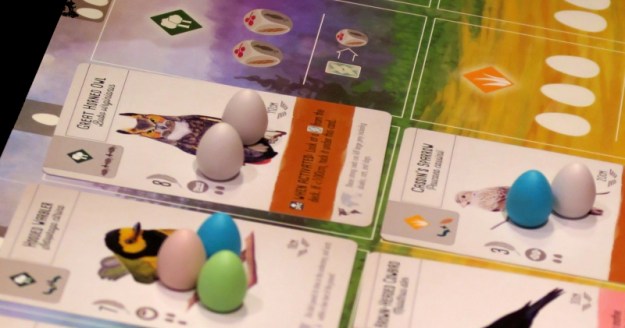 |
| – Image by boardGOATS |
Wingspan can be a little “multi-player solitaire”, that is to say, there can be very little interaction between players in some games. For some players this is preferred as it means players don’t have their carefully laid plans destroyed by others, while others feel they might just as well be sitting alone and interaction between players is what makes playing games important. It had been a while since it’s last outing, but the group were quick to get going and were happy to play with the European Expansion which was already mixed in. Plum in particular, got off to a flying start with her opening hand, four of which were coloured birds and matched her chosen Bonus card (the Photographer).
 |
| – Image by boardGOATS |
In contrast, Blue had cards that didn’t match at all. The Rodentologist was her best Bonus card giving her two points for each bird in her sanctuary that ate a rodents, but not one card in her starting hand qualified. Teal started out with a strategy to maximise his egg production and prioritised birds with brown powers and resource conversion to assist that aim. The first card Plum played helped him in this, and everyone else too as it happens as it was a very generous Ruby-throated Hummingbird that gave everyone food every time it was activated. Teal returned the favour as he laid eggs at every opportunity and Plum had a bird that rewarded “once between turns” if anyone laid eggs.
 |
| – Image by boardGOATS |
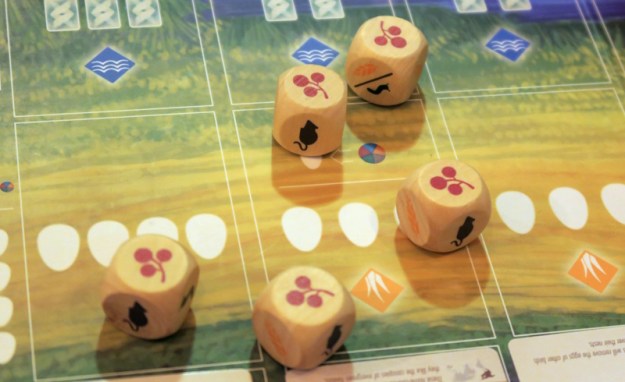
As the game progressed, players worked on the end of round bonuses. Three of the four birds Plum had kept from the start also happened to have bowl nests which contributed towards the fourth round goals, as long she could ensure they had eggs on them. She didn’t really aim for anything else, but Blue, Byzantium and especially Teal did well in the early rounds. Plum picked up some more birds with colours in their names, but also managed to play the Yellowhammer end of round card which she was able to use to great effect as it enabled her to play an extra bird card if she had used all four actions during the round. Byzantium had issues with the dice which repeatedly wouldn’t give him what he wanted.
 |
| – Image by boardGOATS |
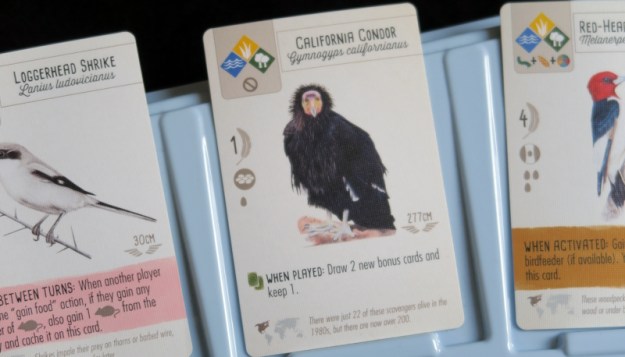
Then to compound Byzantium’s woes, he got himself in a bit of a mess when he played his migrating bird into the wrong habitat meaning he didn’t get the advantage of moving the bird straight away and costing him more eggs into the bargain. Purple had different dice issues when she rolled five berries and called “Yahtzee!” Blue had improved her hand and acquired some more helpful cards, including one that gave her an extra Bonus card, the Behaviourist, which gave her three points for each column with three different power colours. As people sifted through the deck trying to find cards they liked the look of, the California Condor appeared, which everyone agreed looked like a monkey.
 |
| – Image by boardGOATS |
Towards the end of the game, partly as a result of Plum’s Hummingbird, Byzantium ended up with a surfeit of food and nothing to spend it on. So, he switched tactics and took the Condor hoping to get a bonus card that would improve his fortunes. It didn’t. Blue tried the same and didn’t do any better. After the final round Plum activated her Yellowhammer again and was left with the choice of playing a bird that gave her a Bonus card or one that gave two extra points. She also went for the Bonus card, the Fishery Manager, but only one of her birds ate fish. Time was ticking on, but the game was over well within two and a half hours with just the scoring to go as last orders chimed.
 |
| – Image by boardGOATS |
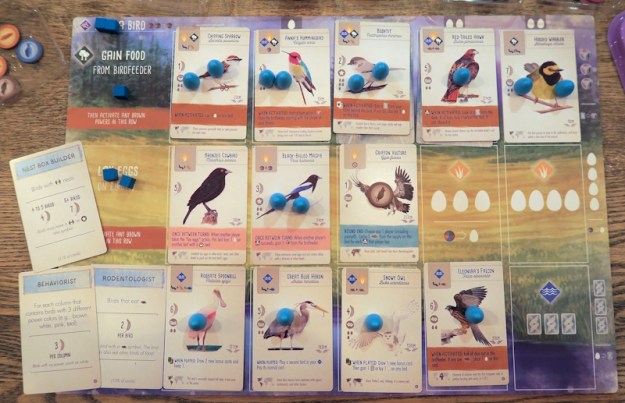
Blue had some high scoring birds, but not as many as Plum who took fifty-five points for them alone. Blue had quite a lot of eggs too, but not as many as Teal who had twenty-three. Everyone else was concentrating on counting, when Purple (aided by Black who had come along to lend a few fingers), gave her score for her bonus cards: thirty-four points, more than twice that of anyone else. Unfortunately for her though, prioritising her Backyard Birder Bonus which gave her points for birds scoring fewer than four points left her with lots of low scoring birds. It was a close scoring game, but first place went to Blue who finished a handful of points ahead of Plum with Teal a little way behind in third.
< |
| – Image by boardGOATS |
Learning Outcome: Forget snakes on a train, what about snakes on a race track?!?!












:strip_icc()/pic6895245.jpg)

 boardGOATS