23rd January 2024

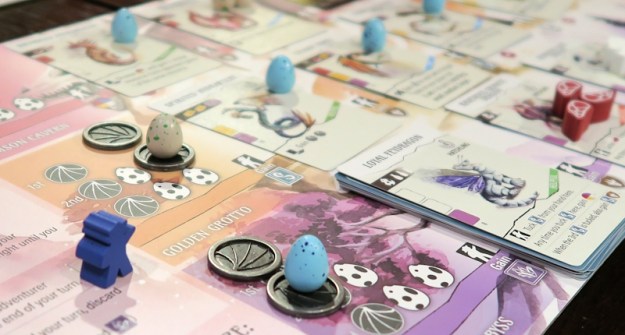
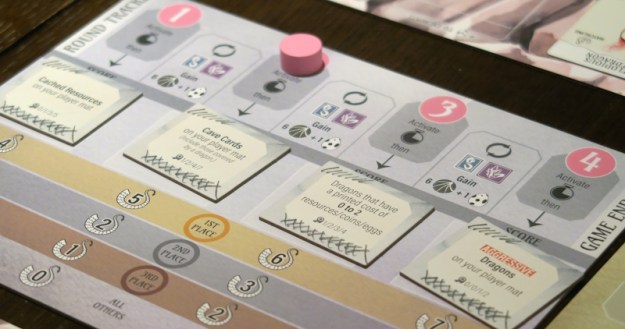
Despite missing a few people, we were still well into double figures, and more than enough for two groups to play the “Feature Game“, the Kittens module from the Kittens + Beasts expansion to The Isle of Cats.  The Isle of Cats is a tile laying game where players are trying to rescue Cats and place them on their Ship while scoring points for completing Lessons (aka end of game goals). The game is played over five rounds, with each round starting with players getting twenty Fish and a hand of seven Cards.  These Cards are drafted two at a time, that is to say, players keep two Cards and pass the rest to their neighbour and repeat until they have none left.  Players then choose which Cards they want to use, paying their cost in Fish and discarding the rest.

The Isle of Cats
– Image by boardGOATS

There are five different types of Card:  blue bordered Lessons; green bordered Rescue Cards; yellow bordered Treasure Cards, brown bordered Oshax Cards and purple edged “Anytime” Cards (which can be played at anytime).  Lesson Cards are objective cards and come in two types, Private and Public, with Private Lessons being secret, personal objectives and Public Lessons being revealed and available for everyone.  These are revealed before anything else happens.  Next players decide which Rescue Cards they are going to play—unlike the Lesson Cards, these can be held over for later rounds.  Rescue Cards feature either “Boots”, or “Baskets” or a combination of both.

The Isle of Cats
– Image by boardGOATS

Boots dictate player order, whereas Baskets allow players to rescue more Cats; players start the game with one permanent Basket which can be used once per round to rescue one Cat, but these can be augmented by temporary Baskets from the Rescue Cards.  Once the Rescue Cards have been played, then, starting with the player at the top of the mountain (the one who played the most Boots), players start to rescue Cats.  The Cat Tiles are drawn at random from a bag before the start of the round, placing Cats on both the left and right sides of the island.  Players then take it in turns to use Fish to lure Cats into their Baskets and relocate them on their Ship.

The Isle of Cats
– Image by boardGOATS

The first Cat can be placed anywhere on the player’s Ship, but thereafter, new Cats must be placed next to another Cat.  At the end of the game, players score points for groups of adjacent Cats of the same breed (colour), with negative points for each room on their Ship which hasn’t been filled and any Rats on the deck which haven’t been covered.  Finally, once everyone has rescued all the cats they can, players then take it in turns to play any Rare Finds Cards they choose from their hand—these are brown edged Oshax Cards and yellow bordered Treasure Cards.  Oshax are friendly Cat-like creatures that are added to the player’s Ship and adopt the colour of a breed of the player’s choice.

The Isle of Cats: Kittens + Beasts
– Image by boardGOATS

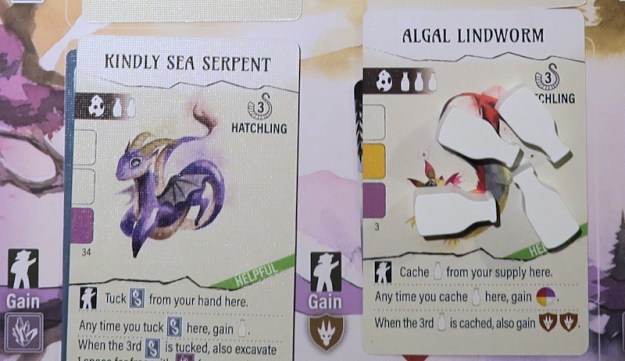
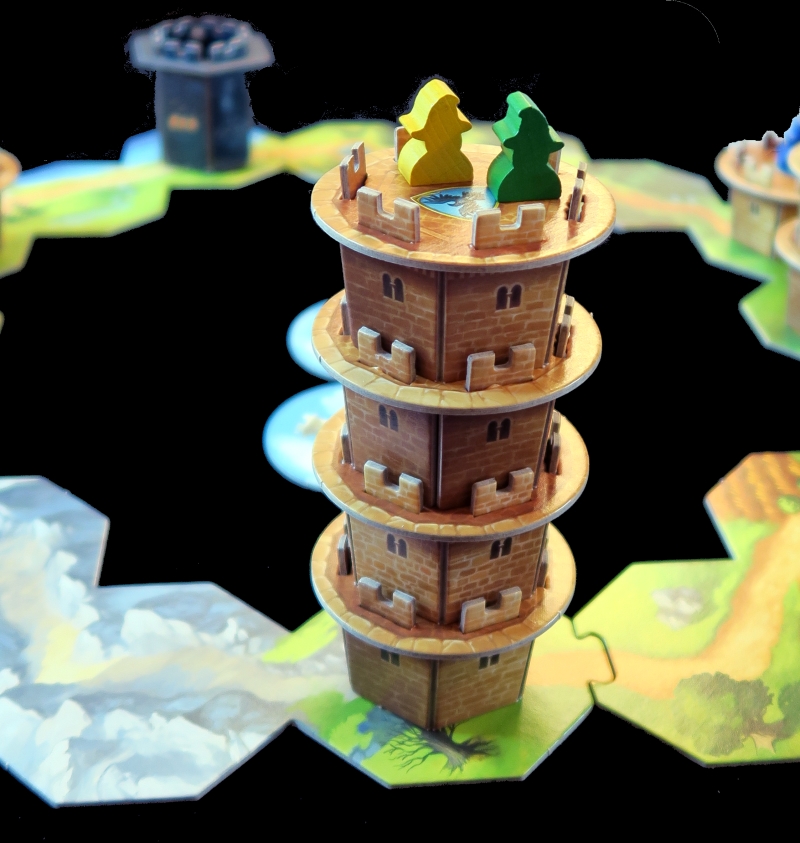
The Kittens module from the Kittens + Beasts expansion adds cute little Kitties that the fastest player (the one who played the most Boots), can rescue instead of fully grown cats. Being smaller they are are more flexible when it comes to placing them on the player’s boat and two can be rescued at a time, using only one basket.  At the end of the game, they behave just like full-sized Cats for scoring and therefore can be highly lucrative, while adding little complexity to the game.  Players also score for their completed Lessons and the player with the most points after the five rounds of the game is the winner.

The Isle of Cats: Kittens + Beasts
– Image by boardGOATS

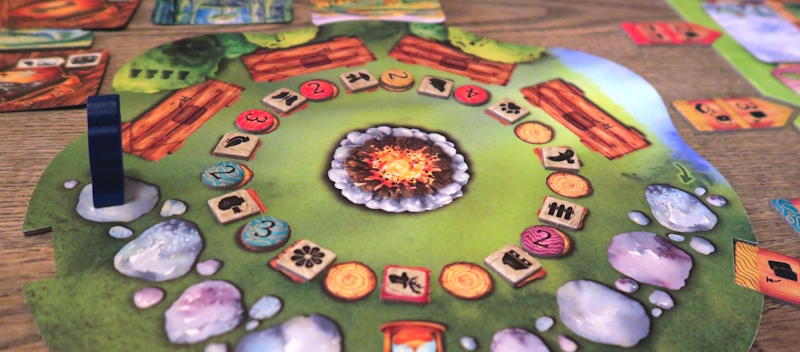
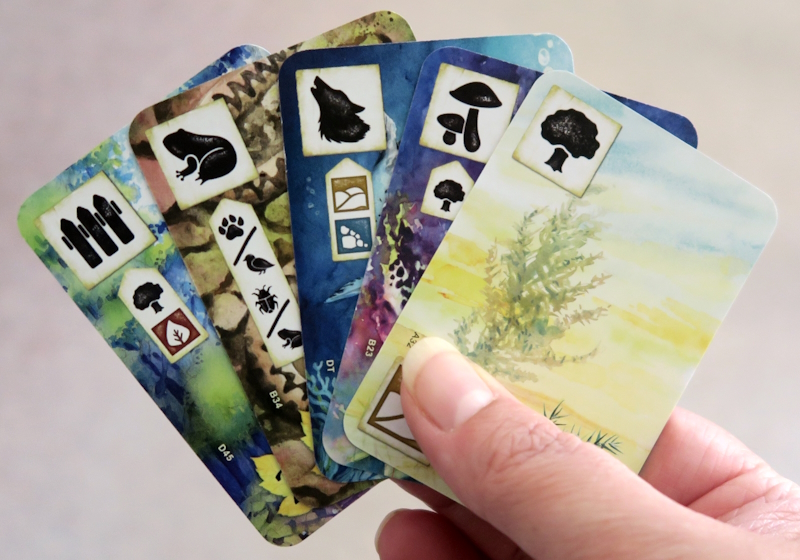
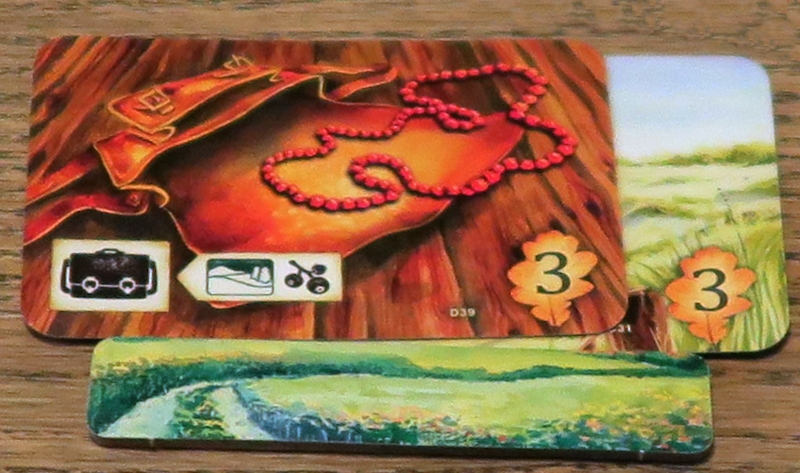
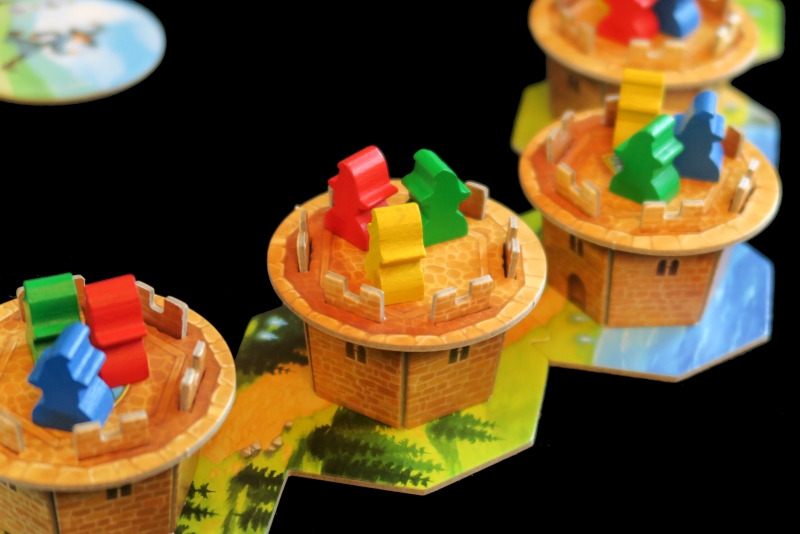
The first thing everyone had to do was decide who was going to play what and where. In an effort to separate couples who usually play together, Blue led one game with Sapphire, Ivory, Pine and Yellow (on his first visit), while Pink was persuaded to join Jade on the other side of the room along with Purple, Plum and Lime.  That left Black, Byzantium, Cobalt and Teal who took themselves off to a third table.  The first game (led by Blue) got going quite quickly, while the second (led by Jade) quickly realised that discretion is sometimes the better part of valour, and decided to skip the Kittens expansion and stick to playing the base game.

The Isle of Cats: Kittens + Beasts
– Image by boardGOATS

Blue began by eschewing Boots and sitting repeatedly at the bottom of the hill, hoping to save them all for one large push later in the game.  This was a plan reinforced by one of her Lessons which would give her extra points if she finished the game as the first player.  Pine, Yellow and Ivory all had a shot at collecting Kittens, while Yellow and Ivory got lucky getting several Oshax cards in the deal which they prioritised buying and playing.  It is always difficult to get a feel for who is winning in this game, but going into the final stages, it all felt quite tight.  Blue played all her Boots and a load of baskets in the final round, but was trampled by Sapphire who played a massive fourteen Boots to take the lead and much to his delight, costing Blue a massive Cat Carrier full of points.

The Isle of Cats: Kittens + Beasts
– Image by boardGOATS

Her problems were made worse by the fact she didn’t realise her Lesson giving her a two points for each visible rat at the end of the game was in addition to rather than instead of the negative point they usually accrue.  In a close game, such loses are costly, and this was quite close with only twenty points between between first and last place and only three points separating third and fifth.  There was more of a gap to Pine with seventy-five points in second, but the winner on his first game with the group was Yellow, thanks to a large clowder of blue Cats and only one room on his boat unfilled.  The game on the next table was considerably less close, however.

The Isle of Cats
– Image by boardGOATS

Teaching had taken quite a bit longer and the group also played more slowly, so as a result, as round three came to a close with no end in sight, the group chose to finish the game after four rounds instead of five.  For some, this was not a huge problem as they were able to modify their game plan so they could complete their Lessons.  For example, Plum wouldn’t have fulfilled more of her Lessons with more time, but successfully completed her five-by-five grid of purely green Cats (though she had one too many touching the central one for her “five Cats touching one” Lesson to score.  In the final scoring, the difference between first and last was a massive sixty-five points, probably not helped by shortening the game, though that wasn’t the only cause.

The Isle of Cats
– Image by boardGOATS

Jade had concentrated on teaching and trying to keep the game on track while Purple had struggled reading the cards without her glasses.  Plum who singularly failed in her duty of of providing residents for the box lids took third some way behind Pink in second.  The runniest of runaway winners, despite never having played before, was Lime thanks to a huge number of successfully completed Private Lessons.  These considerably more than offset his negative points from Rats and unfilled rooms on his Ship.  It was a slow game that led to some to comment that there was a lot to be said for the lighter, more streamlined, roll and write version of the game, Isle of Cats: Explore & Draw.

The Isle of Cats
– Image by boardGOATS

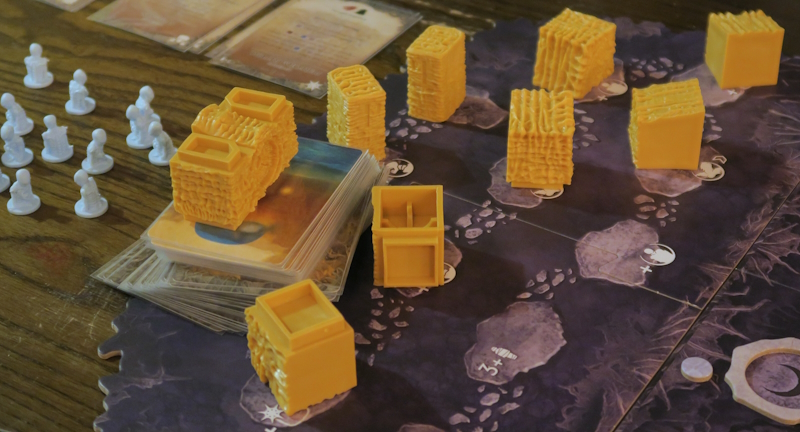
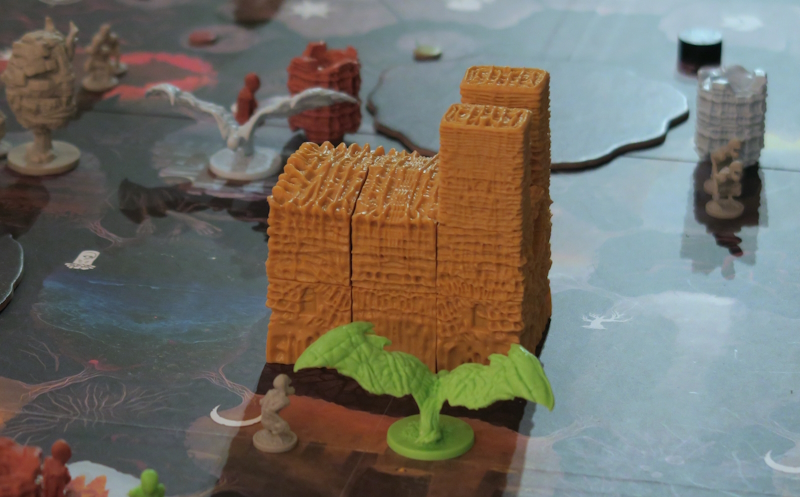
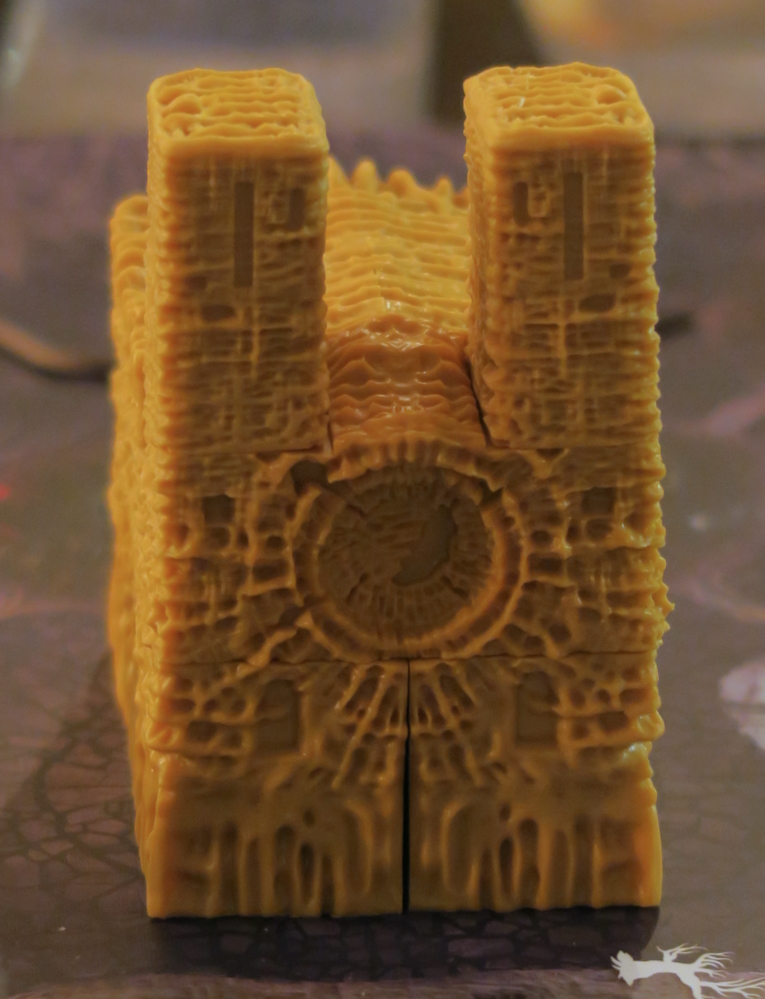
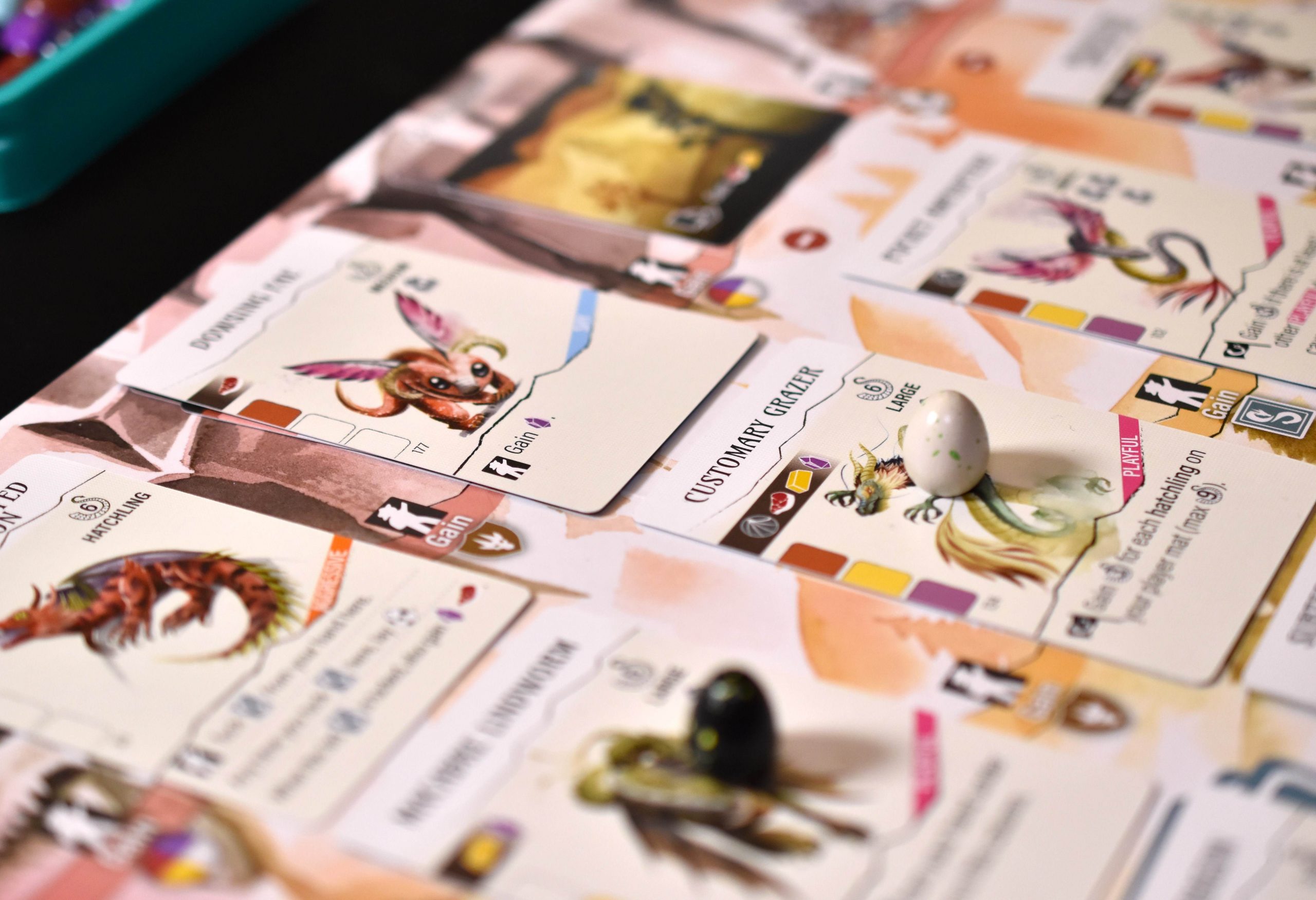
Meanwhile, Teal had found three people who were prepared to give the epic game, Root, a go—something he’d been keen to play with the group for a long time, but had not happened due to its reputation as a long game.  With Cobalt being familiar with the game too and Byzantium and Black keep to play as well, the group decided to give it a try.  Root is a board game of competitive area control in a fictional woodland setting. Players adopt the role of one of four asymmetric factions (increased to ten in expansions) – roughly split between area control and insurgency play-styles. In our game we used the four factions from the base set.

Root
– Image by boardGOATS

The Eyrie Dynasties are aristocratic Birds of the old regime (think Greece in decline following Roman expansion), the faction of the Marquise de Cat control the whole board with an empire of Cats at the start but are thinly spread (like the height of the Roman Empire on the brink of collapse). The Woodland Alliance are like a Peasant’s revolt faction, reacting to mistreatment by their rulers with outrage and sometimes acts of extreme violence. The Vagabond is a solo actor represented by a single piece, out for themselves—a mix of Robin Hood, folk hero, mercenary for hire and outlaw just doing their own thing.

Root
– Image by boardGOATS

The basic rules of movement, combat (and gaining points for destroying opponent tokens and buildings), use of cards for crafting items for points and bonuses and ruling the twelve settlements connected by paths are common to all. The game immediately ends when one player achieves thirty victory points. Each faction has a unique play-style, breaks the standard rules in their own way and has their unique process of gaining victory points. One of the challenges of playing asymmetric games is that players need to not only learn their own unique rules, but also have to understand their opponents’ strategies and abilities to effectively counter them.  Cobalt and Teal jointly taught the game to Black and Byzantium, which was helped by the clear player boards which take a step-by-step approach to what a player can do on their turn.

Root
– Image by boardGOATS

The Marquise de Cat gains points each time they construct a building even if these are re-builds after they have been destroyed. In the early stages of the game, Byzantium with the Cats shored up his defenses by retreating to a front-line which he could hold against bird incursion. The Cats then focused on a steady building programme, starting with Sawmills to generate timber tokens to enable even more building. Each time a Workshop, Recruiting Post and Sawmill is built on the map board and removed from the player board it reveals a point value of increasing value.  With the production engine in place Byzantium steadily increased the Cats’ building construction rate and the points flowed in.

Root
– Image by boardGOATS

The Eyrie gain their points by the number or Nests which they have on the board at the end of each round. The Birds of the Eyrie, under guidance of Black steamrollered around the board with a massed horde, dominating clearings and building Nests.  At one point this ended up in a massive ongoing siege with the Cats into which both players poured Warriors. The Eyrie have to add cards to it’s decree each turn locking it into committing to a certain number of moves, battles, recruitments and builds in the allocated clearings.  Failure to complete any of these orders each turn immediately results in the Eyrie government going into Turmoil and concomitant loss of points and a new flavour of Leader (with unique abilities) being selected.

Root
– Image by boardGOATS

The Eyrie eventually suffered one great Turmoil, like a playing card pyramid toppling after becoming too unstable. But Black quickly managed to use the refresh of the decree cards to their advantage by choosing cards which provided greater flexibility of actions and was nearly able to catch the Cat’s tail.  The Woodland Alliance gain points by uprisings of popular support across the board expressed by placing of Sympathy tokens. The Alliance under the control of Cobalt steadily built up support in a corner of the board gradually establishing rebel bases for more control—these grant wipe-out of all other pieces in a clearing when established and unlock new abilities for the faction including recruiting Warriors, battling and converting Warriors into Sympathy tokens.

Root
– Image by boardGOATS

The more Sympathy tokens placed in clearings, the more points they generate. The Woodland Alliance eventually managed to build all three bases and also to place eight Sympathy tokens (the eighth now generating four victory points). To move into areas with Sympathy tokens the Cats and Eyrie had to pay a card tax (Outrage) to Cobalt, who could then use these cards as “Followers” to produce more Sympathy for points. This snowballing engine of points was just getting into gear promising to pay dividends when the Cats building rate pushed into the lead.

Root
– Image by boardGOATS

The Vagabond earns points by exploring ruins for items, fulfilling mini-missions (by exhausting items tokens in their Satchel) and trading with other players. Teal as The Vagabond, spent the early game exploring ruins to locate useful items and trading cards for crafted items from other players—being a friend to all and posing no threat. Vagabond trading gradually upped their status with the Eyrie so that they had become an ally meaning that each time a card trade resulted in two points. All was set to for a strategy of fulfilling missions to generate cards, to gift to the Eyre and gain points, when the Cats won!

Root
– Image by boardGOATS

Byzantium, The Marquis de Cat achieved the thirty points he needed to win with Black as the Eryie taking second with twenty-seven and Cobalt and the Woodland Alliance pipping The Vagabond, Teal to third by one point.   In spite of the game being new to two people, the turns passed fairly quickly and momentum gathered with point-scoring as the game progressed. When the game concluded all were happy to have completed the game with time to spare before the pub closing bell.  It had been a successful teach and timely play of a game which has a reputation for being difficult to introduce to new players for a one-off session without prior preparation.  Hats off to the quick learners and to the group as a whole for resisting analysis paralysis in the interests of game-play.

Root
– Image by boardGOATS

Learning Outcome:  Every game should come with “Cat Setup” instructions.

Next Meeting, 23rd January 2024

Our next meeting will be on Tuesday 23rd January 2024.  As usual, we will start playing shorter games from 7.30pm as people arrive, until 8pm when we will start something a little longer.  The pub is doing food, and the table is booked from 6.30pm for those that would like to eat first.

This week, the “Feature Game” will be the Kittens module from the Kittens + Beasts expansion to The Isle of Cats (rules, review and How to Play video).  The Isle of Cats is a tile laying game where players are trying to rescue cats and place them on their ship while scoring points for completing Lessons.  The Kittens module (expansion overview and How to Play video) adds cute little kitties that the fastest player can rescue instead of fully grown cats, but being smaller are more flexible and two can be rescued at a time.

The Isle of Cats
– Image by boardGOATS

And speaking of Cats…

Jeff was at the cinema watching the new release of Jane Austin’s “Emma”, when he noticed what looked like a cat sitting next to him.

“Are you a cat?” asked Jeff, surprised.

“Yes,” the cat replied.

“What are you doing at the cinema?” asked Jeff.

“Well,” replied the cat, “I liked the book…”

9th January 2024

Blue and Pink were just finishing their supper when Pine arrived, soon followed by Cobalt.  There was a lot of discussion about the road closure to the A420 (due to an accident) and whether this would delay those coming from the west, but Jade, Plum, Sapphire and Byzantium soon arrived with their tales of countryside detours in the dark.  Inevitably, that led to more stories of road closures due to accidents and flooding, and the horror-show that driving anywhere has been over the last week or so.  With almost everyone present, with more proactivity than usual, the group split into three, with two tables playing the “Feature Game“, the Landmarks expansion to the 2022 Spiel de Jahres winner, Cascadia.

Cascadia: Landmarks
– Image by boardGOATS

Cascadia is one of the group’s most popular tile laying games.  The mechanisms of the base game are simple enough:  on their turn, players take a Habitat Tile/Animal pair from the market and add them to their territory.  The Habitat Tile can be placed anywhere, but the Animal Token must be placed on a Habitat Tile which depicts that Animal.  The market is then replenished back to four pairs until the Tile pile is depleted and the game ends.  The Tiles and Animals are drawn and paired at random, and players have to take the prearranged pair, they cannot freely mix and match unless they have a Nature Token, which they can spend to either change all the Animals, or to take an Animal from a different pair.

Cascadia
– Image by boardGOATS

Nature tokens are rewards for adding animals to Keystone Habitat Tiles, which, in general, are more difficult to fill because they can only hold one animal type (other tiles can take two or three).  While the mechanism is quite simple, the guts of the game is in the scoring.  Players score for each of the five Animals, Bears, Elk, Foxes, Salmon and Eagles, but the clever part is that the way each of these scores depends on which card is drawn at random from each of the five Animal decks.  Thus, the game plays very differently depending on the combination of Animal scoring cards drawn.

Cascadia
– Image by boardGOATS

In addition to animal scoring, players also score one point for each tile in their largest corridor of each of the five Terrain types, as well as earning bonuses if their largest area is the largest overall.  The Landmarks expansion consists of three new modules, one which increases the the potential player count, one which adds more variety to the scoring (more Animal scoring cards) and finally, the titular Landmarks.  The first of these adds a Personal Market of five Habitat Tile/Animal pairs for each player to give them something to think about (and potentially play) between turns.  This can be played at lower player counts, but is essential in larger numbers as it reduces perceived downtime.

Cascadia: Landmarks
– Image by boardGOATS

The second module is simply some more scoring cards, which adds more variety, but also a little more complexity as some of these are slightly more challenging to work with.  The final module, the Landmarks, changes things a little more.  These can be added to a Habitat Tile when the once the area of Terrain is large enough (spreads over five tiles or more).  These Landmarks also come with a choice of the available cards (drawn at random) which give bonus points at the end of the game, for example, for every Bear in the player’s Forests.  Each player can only build one Landmark on each Terrain type, and because the Landmarks occupy space, players start the game with one additional Keystone Tile.

Cascadia: Landmarks
– Image by boardGOATS

Blue, Pink, Plum, Black and Lime played with all three modules, making a point of choosing scoring cards from the expansion.  In contrast, although the Personal Market can be used for any player count, the four on the other table, Jade, Byzantium, Sapphire and Pine, only added the Landmarks module, choosing scoring cards solely from the base game.  Jade et al. got going first and were four or five rounds in before Blue’s Crew had even started, as the latter had more rules to cover and were a little later to start as they were too busy gossiping.  On the other hand, despite the fact that there were a lot of rules queries, at least they mostly got them right, in contrast, to the little rules malfunction on the other table.

Cascadia: Landmarks
– Image by boardGOATS

The rules for the Landmarks state that players may take a Landmark when they add their fifth or tile to a Terrain, or any subsequent addition, whereas Jade, Byzantium, Sapphire and Pine played that the Landmark had to be taken when the fifth Terrain Tile is added.  It was just a very little thing, but actually had quite a large knock-on effect. The problem was, if a Landmark is added to a Keystone Tile, then players don’t get the Nature token.  Worse, in some cases, players were taking Landmarks when the cards weren’t in-line with their strategy, just because they had to.

Cascadia
– Image by boardGOATS

As the games progressed, both groups realised that taking Landmarks can really restrict a player’s options, especially towards the end of the game when things can get very tight.  And forcing players to take unhelpful Landmarks just exacerbated this effect and meant some Terrains were stuck at four just to avoid some of the issues.  The games both progressed quite merrily, however.  Blue concentrated on a mixture of Animals and Terrain, going for Landmarks early in the proceedings. Plum, misunderstood and didn’t realise that players scored a point for each tile in their largest Terrain, so she concentrated on Animals, but did very well with her Terrain anyhow, by virtue of trying to get bonus points for having the largest areas.

Cascadia: Landmarks
– Image by boardGOATS

Pink asked a lot of questions and got a bit confused between when he could add Landmarks and when he could take tiles from his Personal Market.  So, he ended up concentrating on Foxes instead, “as he was a foxy sort of fellow” (and there aren’t any Pandas in the game).  Black meanwhile collected Elk, but all-round concentrated on animals rather than Terrain.  Lime commented, “Birds are difficult to understand, so I’m not going to bother with them; if I score at the end of the evening, so be it…” though he probably didn’t mean it to come out quite like that!  On the other table, Sapphire was collecting Elk, and Byzantium was focussing on Eagles while Pine concentrated on building his Terrain and Jade capitalised on the Landmarks.

Cascadia: Landmarks
– Image by boardGOATS

With or without the Landmarks expansion, Cascadia is a little bit of a “multi-player solitaire” game, that is to say, players can mostly quietly get on with their own thing without upsetting each others’ plans.  However, with Blue, Black and Plum all having a full set of five salmon, Pink and Lime struggled to get the last few they needed.  In the four-player base game, all the tiles and therefore all the animals are used and Lime hadn’t realised the expansion added more tiles, some of which had been removed and therefore, there was no guarantee that any of the lovely juicy salmon left in the bag were going to come out.  And much to Lime’s chagrin, so it proved, as he was left one short of the full set at the end of the game.

Cascadia: Landmarks
– Image by boardGOATS

The five-player game, despite starting later and having the extra player, finished at much the same time as the four-player game, demonstrating how the new mechanism in the Landmarks expansion really does speed the game up.  Despite the perceived, increased challenge associated with the new Landmark scoring cards, the five-player game was generally more highly scoring, with the Blue and Plum sharing victory, tied on a hundred and seven points (some fifteen more than Black in third) and tied on the tie-breaker too.  The other game was much closer, with a spread of just eleven points and with Pine finishing in first place with ninety-nine, only two points ahead of Byzantium who was the runner up.

Cascadia
– Image by boardGOATS

All in all, both groups liked the base game and enjoyed the game with the Landmarks expansion.  The group playing with all three Landmarks modules felt it was much more of a struggle, though both groups felt the Landmarks didn’t give all that many points unless you knew what you were going for and were able to really make them count.  Certainly, adding lots of Landmarks made things very difficult at the end of the game causing players to reject Animal Tokens, so although the rules say add an extra Terrain Tile, there was some discussion regarding the merits of “house ruling” the addition of a second in future, to encourage people to build Landmarks.

Cascadia: Landmarks
– Image by boardGOATS

Meanwhile, on the next table, Ivory had enticed Cobalt, Purple and Teal to play his new Christmas acquisition, Lost Ruins of Arnak.  It turns out that he wasn’t the only person in the group to receive this game over the holidays—Green had also been given a copy and would no doubt have been keen to play had he been able to come.  The game is set on an uninhabited island  where explorers have found traces of a great civilization. Players lead an expedition to explore the island, find lost artifacts, and face fearsome guardians in a quest to learn the island’s secrets.

Lost Ruins of Arnak
– Image by boardGOATS

The game combines deck-building and worker placement with resource management.  Players start with six cards in their deck, two Money, two Compasses and two Fear cards, and draw five to play.  As in the original deck-builder, Dominion, or in the racing games, Flamme Rouge and Snow Tails, Fear cards clog up players’ decks and more are acquired as the game progresses.  But also as in Dominion, there are ways to “exile” cards during the game.  So, players can try to keep a tight deck with minimal cards, or try to buy lots of cards that work well together.  Players then have two meeples each that can be sent to locations on the map, to either discover or use an action Location.  These generally give Resources plus some additions like draw a card, or gain a Fear card etc.. Each new site also has a Creature guarding it, which, if beaten, will give points and a small one-time bonus.

Lost Ruins of Arnak
– Image by boardGOATS

The Research Track is where players spend three of the resources, Tablets, Arrows and Jewels. Each player has two tokens which move up the same track giving different rewards as it ascends. Thematically, you can’t write stuff in the notebook until you find it with your magnifying glass, so the former can never overtake the latter on the track. And of course, the notebook gives cooler rewards. Players get one action each per turn, until everyone has passed and the game finishes after five rounds.  At the end of the game, Points are awarded for Cards, for progress on the Research Track, for discovering Locations and for beating Creatures; the player with the most points at the end is the winner.

Lost Ruins of Arnak
– Image by boardGOATS

The first round was very slow as there was only limited spaces to go and everyone had weak cards in hand. Purple, Cobalt and Teal all focused on building up resources and buying tool cards for future rounds where Ivory did something a little different and started progressing along the Research Track as well as opening up new Dig sites. The issue with this was that he picked up a Fear card, though fortunately he had already got rid of one of his initial Fear cards through the site he opened so there was no net negative effect.  In the second round, things picked up and strategies started to become apparent.

Lost Ruins of Arnak
– Image by boardGOATS

Cobalt continued to focus on getting Tools, especially ones that allowed him to draw extra cards (and hence allowed additional actions) and he started making headway on the Research Track and was first to unlock an Assistant. He also did a little exploring, but did not overcome the Guardian. Ivory wasn’t far behind on the Research Track and also continued to explore new areas (and this time overcome the Guardian) and make up for lost ground in getting tool cards. Teal went for a very different strategy and started to focus purely on exploring and overcoming Guardians, netting him three points for exploring and gaining the idol and five points for overcoming the Guardian. Purple, on the other hand, continued to focus mainly on building her supply of resources.

Lost Ruins of Arnak
– Image by boardGOATS

The third round continued in much the same vein with everyone continuing to pick up Tools and starting to gain Artifacts. Ivory focused almost exclusively on the Research Track and was able to catch Cobalt and had picked up all the bonuses, while both unlocked their second assistant. Teal was continuing his exploring strategy to great effect, whilst Purple continued to bide her time building up resources, including a significant amount of Rubies (the most valuable resource).  And so it continued into the next round too, except Cobalt began spending his Compasses on Artifacts while Ivory continued to hoard them for the last round.

Lost Ruins of Arnak
– Image by boardGOATS

And it was in the final round that Ivory’s plan became apparent as, in true Ivory style, he used all his Compasses to explore a level two Dig Site. Hitherto, exploration had been limited to level one sites and Ivory was the first to explore a higher level, thinking this would be a fun thing to do. In the end, this ironically might have been the critical move that influenced the outcome of the game. The level two site gave Ivory valuable resources, helping him complete the Research Track just after Cobalt and also overcome the newly uncovered Guardian. With two idols on a level two site, this gave Ivory eleven points.

Lost Ruins of Arnak
– Image by boardGOATS

Teal continued with his strategy and also explored a level two site and began moving along the Research Track too. Purple used all her carefully collected resources and make a late dash to the top of the Research Track, gaining valuable points.  It should be said the whole work placement element of the game felt very tight with limited spaces at the start and then difficulty knowing whether to take the optimal route planning cards first, but potentially missing out on a valuable space to other players, or taking the sub-optimal route and placing your workers first guaranteeing the activity, but at a cost of efficiency.

Lost Ruins of Arnak
– Image by boardGOATS

Everyone got blocked at some point (except perhaps Teal who was opening up new sites), and certainly towards the end of the game everyone wished they had more than two workers!  Teal with his explore/overcome Guardian strategy led to him defeating a very impressive impressive six Guardians and gave him a total of sixty-eight points.  In the end, however, the fact Ivory completed the Research Track and was also able to explore and overcome Guardians gave him the victory by just three points with a winning total of seventy-one.  It was a very good game though, one greatly enjoyed by all involved.

Lost Ruins of Arnak
– Image by boardGOATS

Learning Outcome:  Now we know what Bears do in the Woods!

Boardgames in the News: Role-playing Climate Resilience

It was nearly ten years ago that Stuart West, a Professor of Evolutionary Biology in the Department of Zoology, Oxford, used playing board games as a teaching tool to understand evolution and published his results in the prestigious scientific journal, Nature.1 Now, Matt Leacock‘s new game, Daybreak has been reviewed in the journal Science.2

Daybreak
– Image from amazon.com

Matt Leacock is best known for the cooperative game, Pandemic.  However, while thirty of his forty-seven published games are cooperative (including the well popular Forbidden Games series), he has also been instrumental in the innovation of legacy games, co-designing both the Pandemic Legacy series of games and the recent Ticket to Ride Legacy: Legends of the West.

Daybreak
– Image from amazon.com

Daybreak is cooperative game about climate action where players controls a world power, Europe, the United States, China, and the Majority World, each of which has different energy demand and sources, emissions, resilience, and vulnerable populations.  The idea is that players deploy policies and technologies to deal with the engine of global heating and to try to build resilient societies that protect people from life-threatening crises.

Daybreak
– Image from amazon.com

The author of the article is Science‘s books and culture editor, Valerie Thompson who concludes that the trade-offs in the game reflect those seen in real life.  Most importantly, however, where climate change is concerned, we only stand a chance if we work together.

1 West, S., Nat. (2015), 528, 192; doi:10.1038/528192a.
2 Thompson, V., Science. (2023), 382(6673), 890; doi:10.1126/science.adl4244.

Next Meeting, 9th January 2024

Our first meeting of the New Year will be on Tuesday 9th January 2024.  As usual, we will start playing shorter games from 7.30pm as people arrive, until 8pm when we will start something a little longer.  The pub is doing food, and the table is booked from 6.30pm for those that would like to eat first.

This week, the “Feature Game” will be Cascadia: Landmarks (rules, review and How to Play video), the new expansion to one of the group’s favourite tile laying games, the 2022 Spiel de Jahres winner, Cascadia.  This adds more players and additional end game scoring opportunities as well as more scoring cards and habitat tiles.

Cascadia
– Image by boardGOATS

Speaking of landmarks…

Jeff was on a flight over Arizona on a clear day and the pilot was providing his passengers with a running commentary about the landmarks they were passing.

“Coming up on the right, you can see the Meteor Crater, which is a major tourist attraction in northern Arizona. It was formed when a lump of nickel and iron, roughly a hundred and fifty feet in diameter and weighing three hundred thousand tons, struck the earth at about forty thousand miles an hour, scattering white-hot debris for miles in every direction. The hole measures nearly a mile across and is nearly six hundred feet deep.”

Jeff turned to the passenger next to him and excitedly exclaimed, “Wow! And it only just missed the highway too…!”

31st December 2023

First to arrive, on the dot of 7pm, were Purple and Black together with Black’s mum, Sable.  So they got the dubious honour of setting up the PitchCar track for the “Feature Game”.  They chose one of the standard tracks from the second Extension (number five, which includes the tunnel from the first extension), and re-christened it, “Purple’s Hatch”.  They hadn’t finished setting up when Jade arrived as a scout on behalf of the party from Swindon, checking they’d got the right house.  In due course, Sapphire, Plum and Byzantium found their way round the back, eventually followed by Pine making a total of ten, and leaving so many shoes by the back door that it looked like a millipede was visiting.

PitchCar Track 31/12/23
– Image by boardGOATS

Over picky bits (Devils-on-Horseback, Pigs-in-Blankets, crisps, crudites and dips), the group began playing PitchCar.  A simple race game, starting with the player at the front, players take it in turns to flick their wooden puck-car.  The first player to cross the finish line after a set number of laps (in this case, two), is the winner.  If a player “offs it” or finishes wheel-side up, they go back to where they were (losing stroke and distance), however, if they knock someone else, the victim gains the distance, regardless of where they land or whether they are rolled.  To decide the order on the grid, there was a flick off, which was won by Sable on her debut.

PitchCar
– Image by boardGOATS

Unfortunately, although Sable started really well with a super-flick to give her pole position, she was soon over-taken as her inexperience told.  In fact, starting at the front of the grid seemed to be a bit of a poison chalice this time, and Purple who started second and Plum who started third were also quickly overtaken by the rest of the field.  Amid the mayhem, Byzantium started fourth and somehow remained in fourth place for pretty much the whole race.  Similarly, Jade started in sixth and gained a single place finishing just behind him.  The battle for the lead was therefore between Pine, Black and Sapphire the latter two starting from the very back of the grid.

PitchCar
– Image by boardGOATS

At the half-way point, Sapphire had the lead with Black in second and Pine in third, but by the end of the second lap, Black had caught and passed Sapphire to take the chequered flag, soon followed by Sapphire and Pine.  The rest of the pack eventually all crossed the line, with Purple, some way behind who suddenly started playing brilliantly after everyone else had finished, ending the game with the longest and best distance past the finish line.  By then, food was pretty much ready, so everyone engaged in the close-packing problem of re-packing PitchCar into its flight cases before settling down for Moroccan themed stews served with couscous, millet, roast cauliflower, meatballs and bread.

PitchCar
– Image by boardGOATS

After tea there was a bit of chatter, but with an hour or so to midnight, Pink was keen to play one of his favourite party games, Ca$h ‘n Guns.  This is a silly game where players are a mafia gang dividing up their ill-gotten gains by playing a variant on “Chicken“.  After loading their guns with either blanks or live bullets, on a count-down from the Godfather, players simultaneously point their foam guns at each other.  The Godfather then gives another countdown, after which, people can back out, avoiding any bullets, but also withdrawing their claim to the loot for the round.  The remaining players reveal their bullet cards and anyone still standing after the shoot-out takes their share of the loot.  The player with the most after eight rounds is the winner.

Ca$h 'n Guns
– Image by boardGOATS

Pink started off as the Godfather, but soon lost that advantage and discovered that although people don’t gang up on the Mafia Leader, it’s shocking how they turn on you once you are no longer in power.  Black began building his art collection, until people spotted that was what he was trying to do, and then targeted him as well.  He was the first to be knocked out, taking his third and final hit in the penultimate round, round seven.  Sapphire soon followed and was taken out in the final round—it later became apparent that was not something he was going to forget quickly!  Purple and Pink amassed substantial totals, enough to give them second and third respectively.

Ca$h 'n Guns
– Image by boardGOATS

It was Pine, however, who won by a bit of a landslide, though.  He was helped along by the Gem Dealer bonus of $60,000, however, which made the majority of the difference between him and Purple, though he would have just pipped her to mafia-stardom without it.  By this time, it was just ten minutes to midnight, so Pink went to find the champagne (generously supplied by Jade), while everyone else packed away the foam firearms.  The GOATS countdown to midnight was slightly off compared to Jools Holland (who was on iPlayer and therefore lagging behind somewhat) and everyone toasted the new year and remembered those who were not able to be with us (in particular Green, Lilac, Lime and Burgundy).  Plum marked new year by fighting her way into the chocolate piñata with a ladle.

New Year 2023
– Image by boardGOATS

Blue and Plum stood outside on the step watching for fireworks, but although they heard some, there was a disappointing lack spectacle.  At the time, they thought they had just missed them, but it later turned out that this was at least in part due to anonymous, slightly threatening letters, from someone worried about their pooch.  Eventually, Plum and Blue gave up and came in from the cold and everyone played a mad and quite random game of 6 Nimmt! together as the first game of 2024.  In this game, everyone simultaneously chooses and then reveals a card from their hand.  In order from lowest to highest, these cards are then added to the four rows in the centre of the table.

6 Nimmt!
– Image by boardGOATS

Each card is added to the row that ends in the highest value card that is still lower than the card played.  The addition of this card makes the row longer—if it is the sixth card added, the owner takes the first five into their scoring pile.  Each card has a number of Bulls Heads (or “Nimmts”) on it, and the aim of the game is to be the player with the fewest.  Normally we play two rounds, but with so many players, we played one round with everyone starting with ten cards.  This turned out to be a strange combination of very random and slightly predictable as players could count cards, and it would probably have been better to start with hands of nine instead.

6 Nimmt!
– Image by boardGOATS

Jade and Purple competed for the highest score, but both lost out when the wooden spoon went to Black.  Blue and Pink did well only picking up five Nimmts apiece, while Pine did slightly better with four.  The clear winner was Plume, however, who somehow managed to avoid picking up any Nimmts at all, and on her first try too.  As the evening wound up, there was a lot of gentle chatter, nibbling of chocolate and sweets, and finishing off drinks, before  everyone eventually headed off to their beds having given 2024 a very warm welcome.

6 Nimmt!
– Image by boardGOATS

Learning Outcome:  GOATS can party like it’s 1999 every year.

Next Meeting, 31st December 2023

Following the success of the previous New Year parties, we are having another one this year on Tuesday 31st December.  As it is New Year’s Eve we will be meeting at a private house in Stanford and starting at 7pm with food later.

The plan is to start off early with the “Feature Game”, which, as has become traditional, will be the gorgeous, dexterity car-racing game, PitchCar.  After that, we will be eating, playing more games and watching the village fireworks at midnight as we can’t be bothered to set off our own!

PitchCar
– Image by boardGOATS

And talking of cars…

It was a Sunday afternoon, and like many fathers before him, Jeff was washing the car with his son.  After a moment, his son asked, “Do you think we could use a sponge instead?”

Golden GOAT Award Winners – 2023

The boardGOATS love a good party, so once again, they met just before Christmas for their annual Un-Christmas Dinner and to decide the winners of the GOAT Awards.  After food, crackers and writing GOAT Christmas Cards, the group voted for two awards:  the Golden GOAT for our favourite game played during the year and the “GOAT Poo” award for our least favourite.  Everyone had the usual three points to hand out for the Golden GOAT Award (plus a bonus if wearing Festive Attire), though a maximum of two points could be given to any individual game.  Everyone could also nominate up to two individual games for the GOAT Poo Prize.

7 Wonders
– Image by boardGOATS

This year, there were a handful of games that received the unofficial “Marmite Award”, that is to say they received nominations for both the Golden GOAT and the GOAT Poo prizes.  These included Challengers!, Kites and SCOUT.  For the GOAT Poo Prize itself, this year there were no outstanding candidates, with a tie between 2019 winner 7 Wonders and Dice Hospital, with two votes each.  Nominations for “Moment of the Year included the game of Challengers!, which was likened to “Speed Dating”, and the massacre in Survive: Escape from Atlantis!, but the winner was the three way tie in the epic game of Tapestry with the Fantasies & Futures expansion.

Survive: Escape from Atlantis!
– Image by boardGOATS

And finally, there was the Golden GOAT Award for the best game played in the year.  Previous winners including Wingspan and 6 Nimmt! were ruled out, but there were plenty of options remaining. Earth, Fantastic Factories, SCOUT and Zoo Break all received three votes, but the clear winner was Tapestry.  Over the years, we’ve played this quite a bit, but it is a game that doesn’t suit a significant number of the group.  This year, however, with a slight shift in those eligible to vote, heavier games were in with a better chance and Tapestry was the beneficiary.  We will have to make sure it gets another outing in the new year.

Golden GOAT - 2023
– Image by boardGOATS

19th December 2023

It was party time so everyone was arrived early for the Un-Christmas Dinner—everyone that is, but Blue and Pink who eventually arrived armed with piles of Christmas crackers, party poppers, tree decorations, Christmas cards, raffle prizes, GOAT Award ballot papers, mince pies and festive cake.  Opening the crackers was a necessity before food arrived to avoid the bits landing in people’s supper, so when food arrived, it nestled amongst all sorts of gaming detritus.  As the staff at The Jockey served pizzas, pies, baguettes, cheese with crudités, burgers and chips, gamers called out the awful GOATy jokes from the crackers.

"Un-Christmas Party" 2023
– Image by boardGOATS

During the interval between main courses and dessert, GOAT Award voting forms and Christmas cards were handed out and people began thinking about the games we’ve played over the year.  Ivory collected Christmas Cards and Green collated the ballots before he announced the winners.  The GOAT Poo prize, for the worst game of the year went Dice Hospital when 7 Wonders was relegated as a previous winner.  The Golden GOAT went to Tapestry, while the epic three-way tie in Tapestry won “Moment of the Year”.  With the formalities and food finally complete, there was just the raffle, a copy of Carcassonne: Winter Edition and the Ukraine Map, which were won by Sapphire, then everyone abandoned the carnage (and Purple who helped clean up), to play something festive.

"Un-Christmas Party" 2023
– Image by boardGOATS

There was a bit of the usual indecisiveness, but eventually Blue, Ivory, Pink, Green and Pine settled down to play the “Feature Game” which was Jokkmokk: The Winter Market while Black, Cobalt, Jade, Sapphire and Lime set up Snow Tails.  Jokkmokk is a very simple game that makes use of the time-track mechanism seen in Tokaido and Namiji (played last time)—that is to say, it is an extended game of leap-frog where the player at the back jumps into an empty space of their choice and then carries out the action associated with it.  Like those games, the compromise is between moving to a preferred space which may be further forward and will ultimately will give fewer turns.  It is much simpler than both Tokaido and Namiji, however.

Jokkmokk: The Winter Market
– Image by boardGOATS

Jokkmokk is a card-driven set collecting game and is made more interesting by a large number of mini-decks, five or six of which are combined for each game.  For the first game, the group chose to use the “First Game” selection of decks (Dalecarlian Horse, Antique, Hot Dog, Patchwork, Present).  Blue went for the Patchwork cards while everyone else fought over kettles (Antiques) and Hot Dogs).  Blue’s strategy nearly paid off giving her ninety-nine points and second place, but Ivory was more efficient than everyone else with his mixture of Horses, Hot Dogs and Kettles, which gave him a hundred and one points and victory.  The game was bright and breezy and, although simple, really didn’t outstay its welcome, so the group decided to “do a Lime” and play it again.

Jokkmokk: The Winter Market
– Image by boardGOATS

This time, this time the group played with the “Gift of Giving” selection of decks (Donation, Bell, Sparkler, Snowflake, Mystery Box, Presents).  Pink went for Sparklers, knowing he would lose half his points if he had the most, but hoping to have so many that it wouldn’t matter.  Green started collecting Bells, as did Blue and Ivory, going for different colours.  Lots of Gifts were given and a good time was had visiting the fair.  Pink’s ninety points were just three more than Ivory’s total, but Blue’s hundred and seven points gave her victory at the second attempt.  Meanwhile, on the next table, the others had finally started playing Snow Tails, spectated by Purple, who had finished helping clear the table after dinner.

Snow Tails
– Image by boardGOATS

Snow Tails is a very popular game in the group, but somehow, one that is a little tricky to get to grips with.  The games is a card-driven sled-race with the winner the first to navigate the course.  Unfortunately, the course they chose was the one depicted in the main rules, which isn’t really intended to be a course design as it is quite long and features a Chasm right at the start, a couple of hairpins and some Saplings as well.  Each player starts with their own personal deck of cards, with five in hand.  On their turn, players can play up to three cards as they can so long as they are all the same value:  one for each sled dog, and one on the break.

Snow Tails
– Image by boardGOATS

The speed, the number of spaces the sled moves forward, is the total for the dogs minus the value for the Break.  Sleds will additionally drift sideways the difference between the dog speeds, and if the sled is balanced (i.e. the dogs are pulling equally), the player gets a bonus speed equal to the players position in the race.  Each time a sled exceeds the Speed Limit on a corner, hits the side of the track or a Sapling, the player takes a Dent card—a useless card that just blocks the player’s hand making things difficult.  The more Dent cards a player has, the more difficult the game gets, as Black soon demonstrated.  The first game of Jokkmokk had already finished and the sleds were only just off the Start line and through the first Chasm.

Snow Tails
– Image by boardGOATS

Lime claimed the “Big Paws” token for the player with the most “Analysis Paralysis”, though to be fair, everyone suffered a bit.  Jade commented that he’d been planning to play it with his nieces, but was now rethinking the idea.  As a result, the group shortened the track (to give them a chance to finish before midnight), and from there, the game went a bit more smoothly.  Jade was first to cross the Finish line, chased by Cobalt and then Sapphire in what had been a quite epic game.  And with that, the party was over for another year, though people lingered and chatted for quite a while before everyone left the pub staff to lock up.

"Un-Christmas Party" 2023
– Image by boardGOATS

Learning Outcome:  Always plan your Christmas shopping early.

Next Meeting, 19th December 2023

Our next meeting will be Tuesday 19th December 2023 at the Horse and Jockey pub in Stanford-in-the-Vale.

As this is our last meeting before Christmas
we will be meeting early from 7pm for food and Christmas festivities.

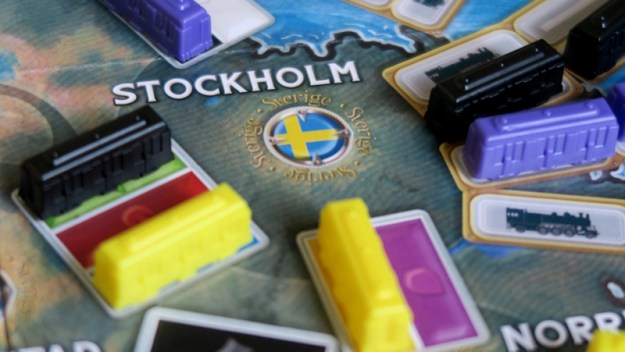
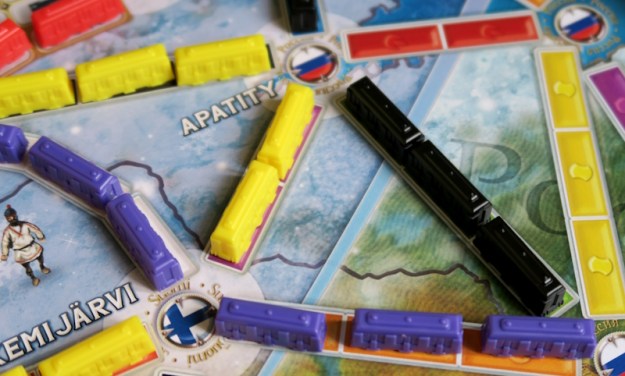
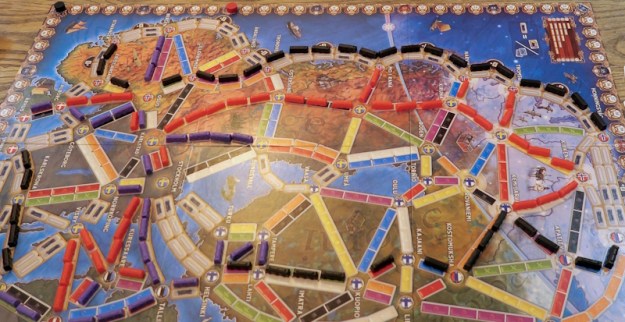
This week, the “Feature Game” will be Jokkmokk: The Winter Market (review & play through video, rules), followed by a range of Christmas and winter themed games like Santa’s Workshop, Christmas TreeSnow Tails, Carcassonne: Winter Edition, Gingerbread House and Ticket to Ride: Nordic Countries.   Jokkmokk is a city in the north of Sweden that holds an annual folk festival and winter market, the latter of which is the subject of the game.

Jokkmokk: The Winter Market
– Image by boardGOATS

Speaking of Christmas shopping…

Before buying Christmas gifts for his niece, Jeff asked her what she would like.

The little girl was really into Disney princesses, but her favourite was Elsa, so she answered that she would love “anything Frozen”.

Jeff was delighted as it was the easiest Christmas shopping he’d ever done and he bought her a bag of peas and some oven chips.