Next Meeting, 8th August 2023

Our next meeting will be Tuesday 8th August 2023.  As usual, we will start playing shorter games from 7.30pm as people arrive, until 8pm when we will start something a little longer.  The pub is now doing food once more, so we we will be meeting from 6.30pm for those who would like to eat.

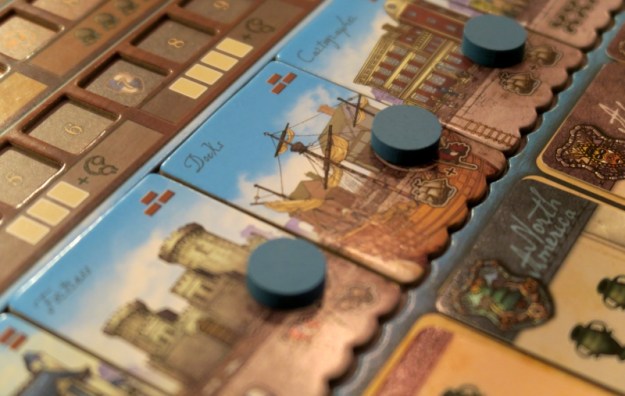
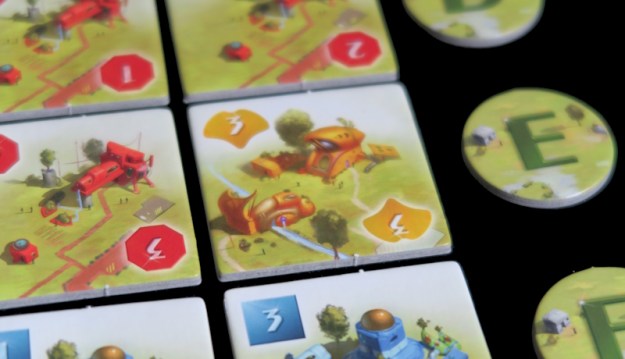
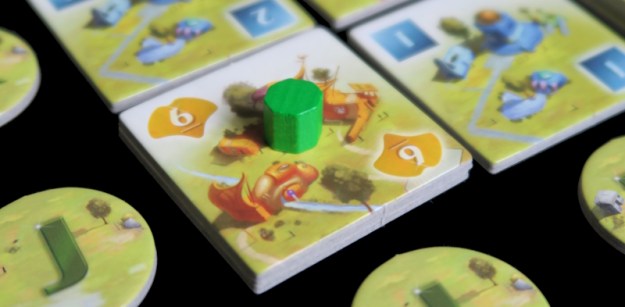
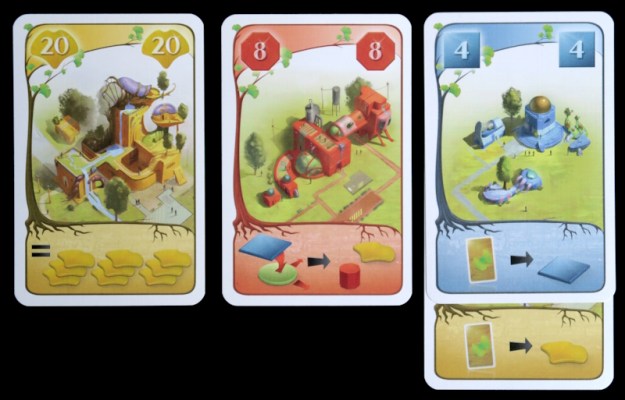
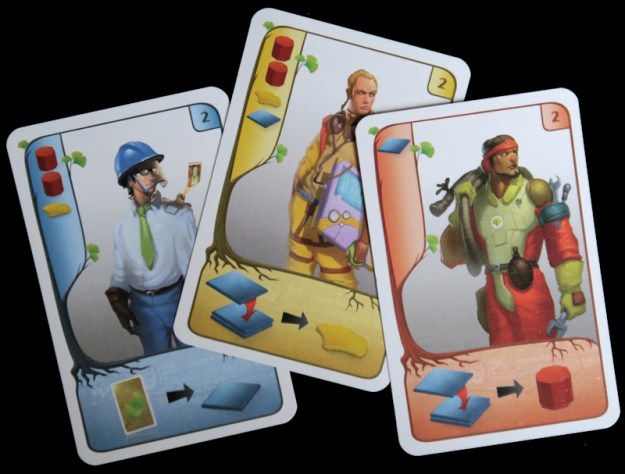
This week, the “Feature Game” will be Ginkopolis (rules, review; how-to-play video).  This is a tile-laying game with an area control element.  It is a medium-weight game that should suit everyone and is set in 2212 where players are urban planners trying to building the eco-city, Ginkgopolis.

Ginkgopolis
– Image by boardGOATS

Speaking of urban planners…

Jeff was working as in the planning department and, after a liquid lunch with some colleagues all three had popped to the gents and were standing at the urinals. The first, an architect, finished and walked over to the sink to wash his hands. He then proceeded to dry his hands very carefully. He used paper towel after paper towel and ensured that every single spot of water on his hands was dried. Turning to the other two, he said, “As architects, we are trained to be extremely thorough.”

The second, an engineer finished at much the same time and he proceeded to wash his hands. He used a single paper towel and made sure that he dried his hands using every available portion of the paper towel. He turned to his colleagues, “Engineers, are not only are we trained to be extremely thorough, but we are also trained to be extremely efficient.”

As Jeff finished, he walked straight for the door, and commented, “In the Planning Department, we don’t pee on our hands.”

25th July 2023

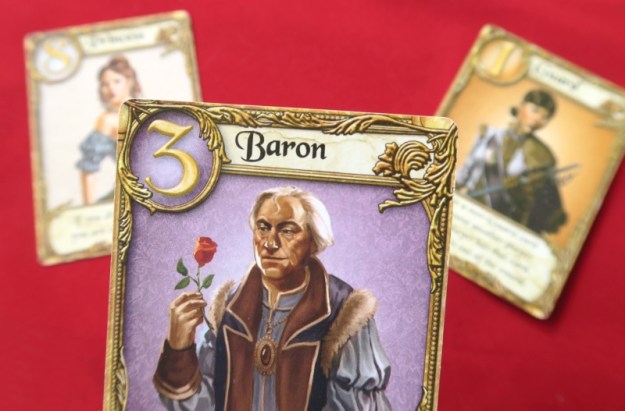
After Blue and Pink had sampled the new pizza menu at The Jockey, people started to roll up and join them for the usual chatter.  There were a total of nine, which was one more than  required for the “Feature Game“, the recently announced Kennerspiel des Jahres winner, Challengers!.  This is a deck-building, dueling “capture the flag” game where players battle head-to-head to find the winner.  It is a very light game, with a largely random element, at least on the face of it, so it was always going to be a bit of a “Marmite” game.  Green commented that he wasn’t very interested in it, but as everyone else was quite keen to give something novel a go, he sportingly joined in.

Challengers!
– Image by boardGOATS

The game is very simple, and seems, at first glance to be quite random.  Players start with a hand of cards, and then draw five more and choose a set number to add to their hand.  The clever part is that (with eight players) the game is played over seven rounds, and each round the decks players draw from and/or the number of cards they can keep changes.  There are three decks, A, B and C, and the cards become increasingly powerful as the game progresses.  Once players have fettled their deck, they duel against their designated opponent by drawing the cards from their deck.  In this, one player starts by playing a card and taking the Flag, then the other plays cards until their total equals or exceeds that of their opponent.

Challengers!
– Image by boardGOATS

This initially seems quite random in that players have no agency in this element of the game.  There is a suggested variant that can change this by allowing players to draw two cards and choose one to play—this was an option for later in the game, but in the end, the group stuck to the rules as written.  The game focuses on this duel aspect, but really it is more about building card combinations during the first part of the game and deciding what cards to shed and how many.  Shedding cards is just as important as acquiring cards as, as the winner of a duel is the last player with the flag, so running out of cards can lose a match.

Challengers!
– Image by boardGOATS

Having too many cards can be a problem as well though—when they take the Flag, players move all their cards except the last played to the “Bench”.  The Bench has six seats, and when a card needs a seat and there isn’t one, that player loses.  The winner of the match, the last player with the Flag, then takes a winner’s token which is worth points at the end of the game.  The game is all about the cards which make it less random than it seems at first; some cards have special powers, while others give points.  Additionally, identical cards can share a seat on the Bench, so effectively allow players to have more cards, however, those tend to be weaker cards from the A deck.

Challengers!
– Image by boardGOATS

As such, Challengers! should perhaps be thought of more as a programming game, more in the mold of games like Colt Express, rather than a dueling “capture the flag” game.  After each match, players play musical chairs and after seven rounds (with eight players), the players with the most points duel for overall honours.  Although the idea is very simple, it took a little while for people to get to grips with the procedure.  Blue, who was suffering with the after-effects of a bad cold, acted as much needed umpire and guide, explained the rules and demonstrated how the duel worked using Pink’s hand of cards.

Challengers!
– Image by boardGOATS

Possibly thanks to her fuzzy head, but Pink despite the fact that he was sat in front of her, was onto the second round before Blue realised that something wasn’t right.  Instead of taking his starting hand back after the demo, he had just drawn five blind cards from the A deck, making his hand immensely over-powered.  There were the usual tongue-in-cheek cries of “Cheat!”, but it was a genuine error, albeit one that wasn’t easy to fix by this time.  As a result, the quickest and easiest solution was for him to forfeit the first round and fix his hand before re-starting the second round.

Challengers!
– Image by boardGOATS

One of the nicest aspects of the game was the way everyone played against everyone else.  The GOATS are a nice, friendly group, and although some people end up playing together more often, the group always makes a point of trying to avoid cliques caused by the same people playing together all the time.  The Musical Chairs element of the game meant everyone played against everyone else which gave it a fun, party feel that we usually only experience in October (when we play Crappy Birthday).  It was clear that some people enjoyed it more than others though.  Ivory, Teal and Black, really got to grips with the deck-building element and found the game exceeded their expectations, Ivory in particular really enjoyed it.

Challengers!
– Image by boardGOATS

Lime, Pink, Pine and Purple were a little less enthusiastic, while Green felt it was a clever little game enjoyable for a short while, but that it out-stayed it’s welcome—too long for the game-play within it, he couldn’t wait for it to finish.  It wasn’t much of a surprise, therefore, that Ivory, Teal and Black were the winners of the “Round Robin” tournament phase, finishing with thirty-five, thirty-three and thirty-one points respectively (some way ahead of Lime in fourth with twenty-three).  The play off between Ivory and Teal, therefore, was quite close and tense, but Ivory ran out the eventual winner, largely thanks to his handful of yellow Vendor cards.

Challengers!
– Image by boardGOATS

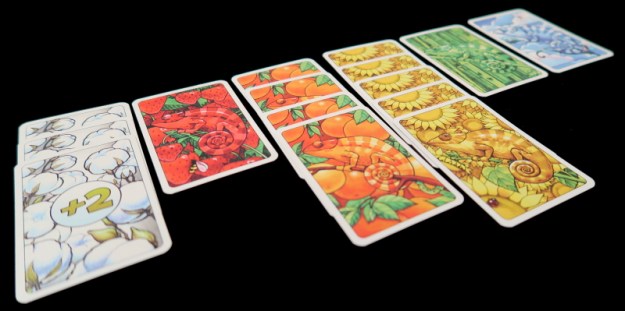
From there, everyone was keen to play something they were familiar with, but it had to be something quite quick.  Teal suggested SCOUT, which Blue was keen to give another try (having played appallingly last time) and Ivory and Purple were very happy to join them.  This is a very simple, but clever hand management game that was nominated for the Spiel des Jahres award last year.  The theme is almost non-existant (something to do with circus performers), and isn’t even reflected in the card art, which is not unpleasant, but very functional (and therefore useful).  The idea is that players have a hand of cards which, like in Bohnanza, they cannot rearrange.

SCOUT
– Image by boardGOATS

Unlike Bohnanza, on their turn players may play any set of adjacent cards from their hand as long as they beat the current winning set, taking any cards they beat into their scoring pile.  Cards can be a a run of cards with consecutive numbers, or a meld of the same number.  Sets are ranked by size and value and a meld always beats a run of the same size.  Players take it in turns to play, and if they can’t or choose not to “Show” a set of cards that beats the current winning set, they instead “Scout”, taking one of the two cards from either end of the set on the table, adding it to their hand (paying the former owner a point from the supply).

SCOUT
– Image by boardGOATS

And this is where the game gets clever:  all the cards have two values, one for each end, so players can add any cards to their hand anywhere they like and either way up (i.e. making either value active).  In this way, players can manipulate their hand making larger melds or longer runs.  The round ends when either every body “Scouted” in succession, or where one player has run out of cards.  Players then score points for each card in their scoring pile and for each chip for cards taken by “Scouting” with negative points for any cards left in hand.  The first time we played this with the group, it had all been a bit of a voyage of discovery, and last time, Ivory gave everyone a bit of a spanking, so Teal and Blue were keen to prevent that from happening again.

SCOUT
– Image by boardGOATS

Things started off well, with Blue beating Ivory in the first round, though Teal and Purple did less well ending up with a hand of cards.  The second and third rounds went better with everyone taking positive points and it was very close going into the final round leaving it all to play for.  Sadly for everyone else, Ivory brought his A-game to the last round ending the round swiftly leaving Purple and Teal with a hand that more or less off-set their takings and Blue with a positive score, though one with fewer points than Ivory.  The end result wasn’t really very close, though it felt less of a stomping than last time:  Ivory finished with fifty-five points and Blue took second with forty-one, ahead of Purple and Teal who tied for third.

SCOUT
– Image by boardGOATS

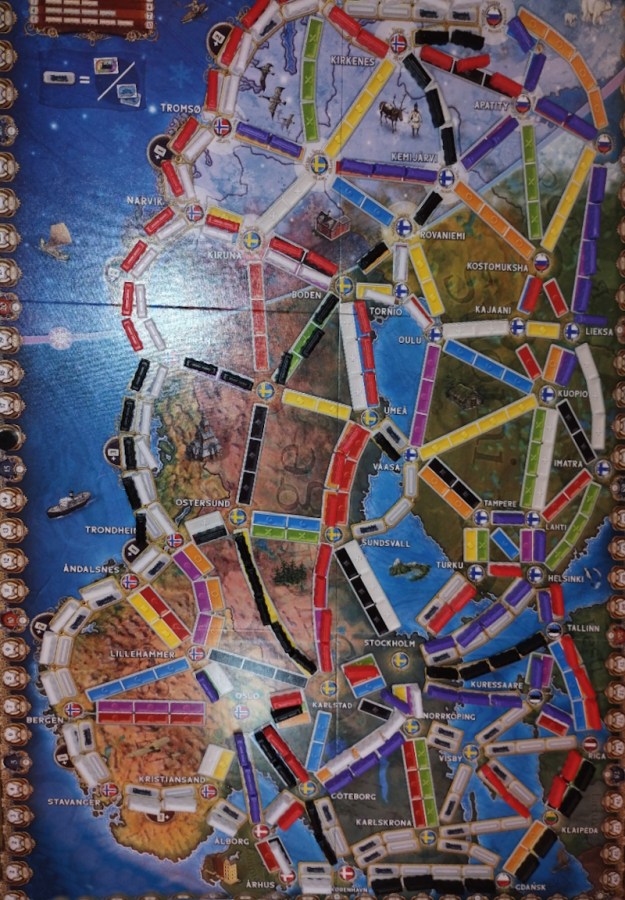
On the next table, Green, Pink, Pine and Black played a close fought enjoyable game of Les Aventuriers du Rail Express, a variant of the Spiel des Jahres winning Ticket to Ride series, but one that is a sort of half-way house between the original full versions of the game and the mini “city” games (like Ticket to Ride: London).  The game only plays four and takes less time, but is quite a nice variant and has a couple of differences to the original, being shorter without losing too much of the main game’s challenge.  As in the original, players can either take two cards from the market (face up cards, or the draw deck), or pay cards to place trains on the board.  Unusually, however, the Locomotive “wild” cards are kept in a single pile and therefore are always available.  This is quite a nice variation, as it means that players never feel forced to take blind cards because what they need isn’t available.

Les Aventuriers du Rail Express
– Image by boardGOATS

This effectively means players are guaranteed to get at least one train card they want.  The other major difference is the presence of the long route ticket.  This is one route that everyone can claim, however the highest scores go to the first to claim it.  It additionally means that failing to complete it does not lead to negative points, so players can ignore it and concentrate on normal short route tickets if they prefer.  There was a moment when the group had three identical coloured cards in the face up market which made them whether they should be scrubbed (as with three Locomotive cards in the base game).  It couldn’t be found in the rules and it was pointed out that in the original games it is possible to have five cards of the same colour, so they stayed and someone eventually found a use for them.

Les Aventuriers du Rail Express
– Image by boardGOATS

Pine took an early point lead which he maintained for quite a while until Green and Pink caught up, and not long after, Black too.  However, as the game neared its conclusion Pine pulled ahead again. Pink had completed the long route already and, at the cost of not being able lay his last two trains, Green decided to get the game finished before anyone else managed it. That long route helped Pink finish in front with sixty-four points, while Black’s slow start demonstrated that getting trains down early is no guarantee of success.  That said, he managed to pull into the station in second place with sixty-one points. Green and Pine fought to not be last and ended up tied just a couple points behind with fifty-nine points.

Ticket to Ride: Europe
– Image by boardGOATS

Learning Outcome:  Winning the Spiel des Jahres award means a game is good, but doesn’t mean it will suit everyone.

Next Meeting, 25th July 2023

Our next meeting will be Tuesday 25th July 2023.  As usual, we will start playing shorter games from 7.30pm as people arrive, until 8pm when we will start something a little longer.  The pub is now doing food, we we will be meeting from 6.30pm for those who would like to eat.

To mark the recent announcement of the Spiel des Jahres winners, this week, the “Feature Game” will be the Kennerspiel winner, Challengers! (rules, review; how-to-play video).  This is a deck-building, dueling “capture the flag” game where players battle head-to-head to find the winner.  This is a very light game, but that should give us opportunity to play other games, perhaps some that have won (or been nominated for) the Spiel des Jahres awards in the past.

Challengers!
– Image by boardGOATS

Speaking of duels…

Jeff had offended his friend Joe, who, being a man of honour challenged him to a duel.

“As I am the challenger, I will let you choose our weapons, ” said Joe, opening a case with two swords and two guns. “Would you like to duel with swords, or guns?”

Jeff was a terrified, but he knew his skills with a sword were vastly superior to Joe’s. As such, he chose to give himself the advantage. “I choose to duel with swords,” he exclaimed.

Joe nodded at this choice. “Very well then.”  He solemnly handed both swords to his opponent. “Here are your swords; that just leaves me with the guns…”

11th July 2023

Blue and Pink were really late arriving, and were much amused by the cheers and applause when they came through the door.  Slightly embarrassed, and after a quick explanation, everyone started splitting into groups.  First was the “Feature Game“, the Fantasies & Futures expansion for one of our more popular, heavier games, Tapestry. On the surface, Tapestry has simple mechanisms, but they combine to make a complex game.  Basically, on their turn, players move one step along one of the four Civilisation tracks around the board: Science, Exploration, Military, Technology and carry out the action (or actions associated with it).  Each space requires payment of resources, and the further along the track, the more expensive the spaces become.

Tapestry: Fantasies & Futures
– Image by boardGOATS

If a player cannot afford to pay (or chooses not to), then they instead take income, which gives them more resources.  They also gain points and play a tapestry card, which usually provides a power for the next round.  So, at its heart, Tapestry is an engine building and resource management game:  players carry out actions and get resources so they can get more resources and ultimately, points.  We have played the first two expansions, Plans and Ploys and Arts & Architecture, but this time the “Feature Game” was the Fantasies & Futures expansion, which is the smallest, adding new Fantasy Civilizations, advanced Capital City mats, new Tapestry and Tech cards.

Tapestry: Fantasies & Futures
– Image by boardGOATS

Ivory was joined by Green, Plum and Byzantium.  Along with the Fantasies & Futures expansion, the group decided to add the “Plans” from the Plans and Ploys expansion as a sort of mini expansion, a private goal, where players get their own, special building they can build.  They also left the Tapestry cards and Civilisations in the mix from the first two expansions and really only left out Arts Advancement track from the Arts & Architecture expansion as they thought it would add too much complexity to the game overall.

Tapestry: Plans and Ploys
– Image by boardGOATS

Tapestry is one of those games that sometimes comes in for criticism for being multiplayer solitaire.  Although that’s not true, there is a strong element of players “getting on with their own thing”.  Although they were each very much playing their own game, there was still quite a bit of interaction which definitely gave the game teeth.  Green’s Civilisation (“Spies”), had him perusing over his neighbours positions and cards each income turn.  Luckily for him Ivory’s Civilisation (“Aliens”) gave him four starting space tiles, and one bonus he could choose was the benefit on an unused tile in a neighbours supply which gave a nice healthy early bonus.

Tapestry: Plans and Ploys
– Image by boardGOATS

Plum’s “Islanders” Civilisation was focused on collecting area tiles and placing them on her Civilisation mat.  So she started out prioritising collecting landscape tiles, looking for ones with water on more edges as these would give her more points in the final income phase.  She got a bit lucky right from the start getting two out of three.  From there she went for an expansionists strategy as did Byzantium (with his “Riverfolk” Civilisation), and from there, throughout the game they found themselves trying to conquer each others territories on the central island.

Tapestry
– Image by boardGOATS

Plum started the game with two Tapestry cards, so chose to use the standard one for her first era.  The second was from one of the expansions and “charmed”, so much to Byzantium’s annoyance when he tried to topple Plum’s Tower in the middle of the map, his attempt was thwarted by Plum’s Trap card which also gave her an extra benefit.  When Plum later attempted to Conquer Byzantium’s tile, he was delighted to be able to repay the earlier battle with his own Trap card. That satisfaction didn’t last, however, as Plum proceeded to play her charmed Anti-trap card which not only stopped the trap dead, but also gave her yet another bonus.

Tapestry
– Image by boardGOATS

That bonus was a random Tapestry card from Byzantium’s hand—he had two, and the one she picked just happened to be the one he had been working towards maximising the effect of (moving up each track once and getting the bonus action for free).  Plum felt pretty bad about picking it, but it was too late by then.   So, all round, it was quite a frustrating game for Byzantium, who started the game with a large forty-eight point bonus from his landscape board (“Forest”), and his first conquering dice rolls, time after time, gave him the choice between a resource or seven points—quite a dilemma in the early part of the game.  Initially he took the seven points (the highest that dice could give him), but found he wasn’t getting as many turns as the others, so later switched to taking the resource.

Tapestry: Fantasies & Futures
– Image by boardGOATS

Ivory, meanwhile, managed to make good use of the charmed Tapestry cards, keeping himself well stocked with resources throughout the game.  The rest of the group barely saw any charmed Tapestry cards (aside from Plum’s Trap and Anti-trap cards), but did find the new Civilisations and Landscape boards quite an interesting addition.  As the endgame approached, Green was last man standing, and for his last few turns he was able to grab an extra Civilisation (“Urban Planner”) which was to reward him handsomely.

Tapestry: Arts & Architecture
– Image by boardGOATS

The game which had been a quite sedate affair, started speeding up a little towards the end.  Pretty much everyone did something that if they had thought just a little a bit more would have gained them another point or so—Green put a cube on another player’s map, Plum put a building somewhere where it could have completed a row if she’d considered a little longer.  As the game came to a close, Ivory and Plum counted their remaining income scores to amazingly find themselves both on two-hundred and thirty-five points.

Tapestry: Fantasies & Futures
– Image by boardGOATS

Then Green counted his final points, giving him the lead by a solitary point. That was until he realised that he’d added thirty-six to one hundred and ninety-nine and discovered he was part of a three-way tie with Ivory and Plum!  Nobody was quite sure how they all managed to have an identical score in such a high scoring game.  If the tie-break had been resources remaining, then Green would have won and if it was Tapestry cards remaining, then Plum would have been the victor.  However, a quick check of the rules suggested the tie-break was in favour of the player with the tallest building (which everyone agreed that was a rubbish tie break), and although Ivory narrowly had a taller building that Green, he graciously agreed that everyone should just share victory.

Tapestry: Plans and Ploys
– Image by boardGOATS

While Tapestry was setting up, on the next table Jade was introducing Black, Purple and Pine (who chose to spectate) to Fantastic Factories.  This is a game where players compete against each other trying to build the most efficient set of factories as quickly as possible.  Players have to carefully manage their blueprints, train their workers, and manufacture as many goods as possible in order to achieve industrial dominance.  Each round consists of two phases:  the market phase and the work phase. In the market phase each player in turn order can either gain a blueprint card from the four available in the market or hire a contractor.

Fantastic Factories
– Image by boardGOATS

To hire a contractor players must pay one card (that matches the tool symbol associated with the contractor’s location on the board) and any additional costs listed.  Contractors have various benefits mostly related to gaining extra resources or extra dice workers for the work phase later in the round.  In the work phase, all players perform actions in their play area simultaneously starting by rolling their four coloured dice (and any additional ones gained from contractors).  Players can use their actions to build cards (which cost various resources matching the building type); while players can build as many cards as they wish in a turn, they may one of each type of building.

Fantastic Factories
– Image by boardGOATS

Dice can be used to take actions on a player’s main Headquarter board or on building cards you have constructed.  A player’s Headquarter board allows them to generate metal and energy.  Players can also activate their buildings once per round. If any player has built ten buildings or produced twelve goods that triggers the end of the game and one final round takes place before end game scoring. Players add up the prestige value of their buildings to their produced goods and the winner is the player with the highest total.  The game was a fairly typical learning game, but was quite close.  Both Purple and Black took thirteen points for their buildings, and while Purple was yet to get her engine going, Black took nine points for his goods.

Fantastic Factories
– Image by boardGOATS

Jade, on the other hand, had fewer points for his buildings (nine), but they were functioning more efficiently.  His total of twenty-three was just one point more than Black who took second.  While they were packing up, the group chatted and Jade showed off Vaalbara, another of his acquisitions from UK Games Expo, which he described this as a nice little set collection, and semi-interactive card game.  Then they chatted while they waited for Tapestry to finish.  And waited some more as the clock ticked and it turned out that Tapestry was no-where as near to finishing as everyone had thought…

Tapestry: Arts & Architecture
– Image by boardGOATS

Meanwhile, Teal was introducing Blue, Pink and Lime to a much older game, Condottiere.  This is a sort of trick taking, battle game.  Set in 13th century Italy, where the wealthy city-states had weak armies.  The Condottiere were veteran English soldiers returned from the Crusades who were contracted to fight for individual city-states by an agreement known as a condotta, the most elite fighters were the mercenary leaders known as the Condottiere.  During each round, control of a State is put up for auction, and players bid the number of troops they are willing to lose in order to win the province.  Players bid with cards that represent Mercenaries, Seasons, Scarecrows, and Political Figures, in an effort to try to take control of four adjacent States.

Condottiere
– Image by boardGOATS

Each player starts with a hand of cards, and one player starts the bidding by choosing a State and a starting bid, playing the card or cards from their hand, face up on the table. Other players follow, playing cards each round.  When a player either cannot play another card (or chooses not to), they “stick”, but unlike many other auctions, in which only the highest bidder loses their bid, at the end, everyone loses all the cards they played, whether they finish with the highest value hand or not.  Mercenary cards have values one to six or ten, while the other cards have special powers that take effect when they are played, but it is how the cards work together that is key.

Condottiere
– Image by boardGOATS

For example, the Drums double’s the value of all that player’s Mercenary cards, but this effect can be offset by another player placing a Winter card reduce every Mercenary card played to a value of one, while a Scarecrow can be used to return a card to its owner’s hand, making it available to play later.  There is also the Heroine, which is untouched by either the Drums or Winter, but also cannot be returned by the Scarecrow.  Perhaps the cleverest cards, however, are the Surrender and Bishop cards;  the Surrender ends the battle immediately (with the current leader winning the battle), and the Bishop ends the battle in peace with no-one winning.

Condottiere
– Image by boardGOATS

While there are some clear uses for some cards (the Bishop is only likely to be played by someone who is losing badly, and the Surrender card is usually played when the active player holds the lead), the meta-game is also important.  Although winning is obviously the aim of the game, as battles become head-to-head, players sometimes end up playing with emotion rather than strategy.  Once a battle has been won, the winner chooses the next city-state to be auctioned and starts the bidding.  Unlike other games, however, play continues with the cards they have left until all players but one have run out of cards, and only then do players get more cards (before they start the next battle).

Condottiere
– Image by boardGOATS

Teal explained the game, and that, although he understood the rules, he had no idea how to win.  Indeed, despite having played Condottiere a lot in the weeks since he acquired it at UK Games Expo, he had never won, a situation that was destined not to change this time.  Teal and Lime won a couple of States, giving them extra cards in the refresh.  Blue and Pink realised they were at a disadvantage, so set out to rectify things.  They took a couple of States and redressed the balance.  Then Pink stole a march when he forced Lime to lead out in a battle he could not win.  With this giving him three adjacent states, the writing was on the wall.  Lime, Teal and Blue tried to work together to prevent Pink from taking the last one, but without success.

Condottiere
– Image by boardGOATS

It had been a very enjoyable game, and given its success, the group went on to play another of Teal’s UK Games Expo acquisitions—Burgle Bros..  This is a cooperative game, a style the group traditionally eschew, though recently have played more often (including Scotland Yard last year, The Lost Expedition about six months ago, Zoo Break twice in quick succession, and Forbidden Dessert a couple of weeks ago).  Burgle Bros. works in a similar way to the other games of this type.  Players are a team of robbers, attempting to enter a building from the ground floor, raiding the safes on each floor before escaping by helicopter from the roof.  In addition to finding and cracking the safes, players also have to avoid the Security Guards that patrol the building.

Burgle Bros.
– Image by boardGOATS

In the game, players each have three Stealth tokens. Whenever they are on the same tile with a Guard, they lose one and if any player is caught without a stealth token, the game is over.  On their turn, players have four actions (move, preparing a safe for cracking by putting some dice on its tile, rolling dice to attempt to crack the code etc.).  Once the player has taken their turn, the Guard takes their turn, moving towards their target room (assigned by the route deck and marked with an orange die).  So to win, players first have to find the safe and then crack the code and all without triggering the motion detectors, heat sensors, fingerprint scanners, laser fields, open walkways, deadbolt rooms, and of course avoiding the guards…

Burgle Bros.
– Image by boardGOATS

The group decided to play on the beginner’s level which meant they only had two floors to explore before they could escape the building.  They got lucky right at the start as they popped up from the ground floor right next to the safe. That meant they only had to reveal all the orthogonal tiles and then roll dice to match the code. They were luckier still as the security guard was on the other side of the building and there were very few walls obstructing their way.  As a general rule, cooperative games of this type give each player unique special powers and using these effectively is usually critical to success.

Burgle Bros.
– Image by boardGOATS

So, Pink (who was “The Hacker” and didn’t trigger alarms) was sent off to reveal tiles while Blue (“The Spotter”) started setting up the safe for Lime, who was “The Peterman” and got to roll an additional die when trying to crack the safe.  Before long, things on the first floor looked pretty much under control with just the last few numbers left to crack the safe, so Teal (“The Juicer”) took himself off to the second floor to start hunting for the safe there.  This was a risky strategy as it triggered the Guard moving on the second floor.  However, with fewer people on both floors, the Guards effectively moved slower and gave players more chance to avoid them.

Burgle Bros.
– Image by boardGOATS

Things were slightly more challenging on the second floor—the Security Guard was a little more proactive, stepping it out more and, of course, the group didn’t find the safe at the top of the stairs this time.  It didn’t take him long to find it though, and with nothing better to do, Pink joined Teal on the second floor, ducking under the risky laser trap at the top of the stairs.  Meanwhile, Lime had finally managed to crack the safe, so Blue headed up the stairs only to find the second floor security guard heading her way, so she escaped to the roof toting their loot (a very annoying large and heavy bust and a particularly yappy dog) .

Burgle Bros.
– Image by boardGOATS

There was a bit of shenanigans as Lime joined Teal and Pink and also dodged the Security Guard (and lost a couple of Stealth tokens), but although there were a couple of near misses, it wasn’t long before all four were on the roof awaiting their lift to safety.  It was another fun game, but with time marching, Lime and Teal headed for home, leaving Blue and Pink to join Jade, Purple and Black who were still waiting for Tapestry to finish.  It was nice to chat though, and eventually Tapestry did finish and everyone who needed one got their lift home (without having to climb on to the roof…).

Burgle Bros.
– Image by boardGOATS

Learning Outcome:  New games are fun, but there are lots of good, slightly older games to be had as well at places like Expo.

Spiel des Jahres Winners – 2023

The 2023 Spiel des Jahres (German Game of the Year) winner has been been announced as the cooperative campaign game, Dorfromantik: The Board Game which is based on the video game of the same name.  Players work together to together to lay hexagonal tiles to create a beautiful landscape trying to make the train track and river as long as possible while also fulfilling the orders of the population.  There is a legacy element where points earned can be used to access new tiles that are hidden in locked boxes, which give new, additional tasks and make higher and higher scores possible.  The game is very simple (as draw a tile, place a tile, fulfill tasks), but the hook is the changing strategy that comes with the expanding pool of tiles.

Dorfromantik: The Board Game
– Adapted by boardGOATS from image
by BGG contributor Rugerfred

The winner of the Kennerspiel des Jahres, the “Expert” or “Connoisseur’s” game was announced at the same time and was Challengers!.  This is a sort of “capture the flag” tournament game where players first draw cards and build a deck, then shuffle and duel against another player.  The winner of the match takes the trophy and points, and at the end, the players with the most points duel in the final to decide the overall winner.  Although this is supposed to be a more advanced, it is not in the same league as previous winners of the Kennerspiel award like Village or Wingspan, or even previous Spiel des Jahres winners like El Grande and Settlers of Catan.

Challengers!
– Image by boardGOATS

The thing to remember though is that these games are intended to be family games and the awards are intended to cater for three different ages of families, those with very small children (Kinderspiel—this year won by Mysterium Kids); those with young children (Spiel des Jahres, or “Red Pöppel”), and those with slightly older children (Kennerspiel des Jahres, sometimes known as the “Grey Pöppel”).  This doesn’t mean these games are not suitable for more dedicated gamers, just that they not the target audience, so they should not be surprised if they are not a great fit.  This situation is not going to change in the near future, as the ultimate purpose of these awards is to sell games and advertise them to the general (German) public.

Dorfromantik: The Board Game
– Image from spiel-des-jahres.de

That said, with the right mindset, anyone can enjoy all these games, and they are some of the best of their type available.  So, as usual, congratulations to all the winners and nominees.

Boardgames in the News: From Ludo to Tennis

For many people, board games can be a great way to escape and relax from the pressures of the real world and it seems this is also a good way to prepare for the pressures of a match at Wimbledon too.  At least, it seems to work for Novak Djokovic who apparently likes to play a game of Ludo as part of his pre-match preparation, while waiting to go on court.  He has been seen several times on the players terrace with members of his team including friend Carlos Gómez-Herrera, his physiotherapist, and his coach, Goran Ivanišević.

– from twitter.com

Next Meeting, 11th July 2023

Our next meeting will be Tuesday 11th July 2023.  As usual, we will start playing shorter games from 7.30pm as people arrive, until 8pm when we will start something a little longer.  There is currently no food available, so everyone will be eating before they come out.

This week, the “Feature Game” will be the Fantasies & Futures expansion (rules, review; play-through video) to one of our more popular heavier games, Tapestry (rules; review; how to play video).  We have played Tapestry lots times since it first came out five years ago and this is the third expansion we will have tried which introduces new civilizations, advanced capital city mats, and more tapestry and technology cards.  Although Tapestry is a heavier game, there should be plenty of people to play one or maybe two lighter games in parallel.

Tapestry: Fantasies & Futures
– Image from stonemaiergames.com

Speaking of fantasy…

Over the years, Jeff had been caught by his wife in illicit liaisons with two elves, and more recently a witch. His marriage had just about withstood his misdemeanors because after the last affair he had promised he wouldn’t do it again. But then, one night Jill came home to find Jeff in bed with a young, female halfling.

She screamed at him, “You said you wouldn’t cheat on me anymore!”

Jeff answered, “I know, I know… But can’t you see I’m trying to cut down?”

27th June 2023

Lime was the first to arrive, soon followed by Blue, Pink with Purple, then Pine, Jade, Plum, Ivory, and Teal.  Jade and Teal were armed with some of their toys from UK Games Expo, so the first two games were the “Feature Game“, the Aerial expansion to Draftosaurus and the 2022 Spiel des Jahres nominated SCOUT.  There was the usual chatter at the start while Blue and Plum tried to work out some of the details of the Draftosaurus expansion where the rules were unclear.  Then there was the usual hiatus to sort out who was playing what, but eventually Plum led Purple, Jade, Pine and Pink passing Pterodactyls round the table.

Draftosaurus
– Image by boardGOATS

Draftosaurus is a lot like Sushi Go!, but with wooden dinosaurs.  It’s one of our most popular games that we first played online in 2021 and have since played lots of times in person, drafting real, cute, miniature, wooden dinosaurs.  Instead of sushi cards, players start each round with a handful of wooden dino-meeples, choose one to keep and add to their dino-park, and pass the rest on to the next player.  The active player rolls a location die, which applies a restriction to where dinosaurs can be placed that everyone except the active player has to observe.  There are various pens, each of which score players points in different ways.  For example, the Meadow of Differences can only hold one of each type/colour and scores for each different type.

Draftosaurus: Marina
– Image by boardGOATS

In contrast, the Forest of Sameness can only hold one type/colour of dinosaur, but also scores more the higher the occupancy.  The Prairie of Love needs pairs of dinosaurs of the same type, each of which score five points, while the Woody Trio will score seven points if it contains precisely three dinosaurs at the end of the game (otherwise it scores nothing).  The King of the Jungle and the Solitary Island only hold one dinosaur each, but the King of the Jungle scores if nobody else has more of that type of dinosaur, while the Solitary Island only scores if it contains the only dinosaur of that type in the Park.

Draftosaurus
– Image by boardGOATS

At any time, players can place dinosaurs in the River that runs through the middle of their Park instead of placing them in an enclosure.  There, they will only score a single point, except for any that are the red tyranosaurus Rex which increase the score of any pen they are in by one.  Played over two rounds (passing clockwise and then anti-clockwise, scores are calculated at the end of the game and the player with the most points is the winner.  There is a bit of variety in the base game with double-sided Park boards, though we’ve rarely if ever played the winter side.  There are also two expansions;  a month ago, we played the Marina expansion which adds an extension to the river and plesiosaurs, but this time we wanted to try the Aerial expansion which adds nests on Mountain extension boards and pterodactyls.

Draftosaurus: Aerial Show
– Image by boardGOATS

Pterodactyls can only be placed in the nests on the Mountain expansion board, but when they are placed the player gets some sort of bonus.  The nests are all numbered, one, two or three.  The rules say that before a pterodactyl can be placed in a nest numbered two, one must be placed in nest numbered one.  It was not clear, however, whether players could place dinosaurs in multiple nests numbered one, or whether a second pterodactyl had to be placed into nest numbered two (and by extension, a third should be placed in a nest numbered three).  After much searching online, Plum concluded players had to start with a nest numbered one, before they had the option to use a nest numbered two—an interpretation that was later found to be correct.

Draftosaurus: Aerial Show
– Image by boardGOATS

The Aerial extension boards are double-sided, so things were further complicated by the fact that the board chosen had two nests marked 2a and one marked 2b.  It was suggested that perhaps players had to do both the 2a nests before progressing on to the third nest, but Plum thought that was not the case and that was the choice.  After the event, it was found that the third nest could only be used once one of the 2a nests had been filled (but was not accessible via nest 2b).  Plum did best finishing with a massive thirty-eight, but as everyone was still getting to grips with the new rules and the game is not a long one, the group decided to give it another go with the reverse side of the Mountain board.

Draftosaurus: Aerial Show
– Image by boardGOATS

This time it went better for everyone except Plum and Pink (who had come second in the first game, with thirty-four).  Plum had prioritised placing three pterodactyls so she would be able to ignore the restriction imposed by the placement die, perhaps at the expense of all else.  Lime (who always likes to play games twice in quick succession) and Pine had got the hang of the game and took first and second respectively with thirty-six and thirty-two points.  Although everyone had played Draftosaurus quite a bit during 2020/2021, nobody had been familiar with the expansions.  While they certainly add something new, the Marina expansion is probably the better of the two, though it would be interesting to see how the game would play with both expansions in use too.

Draftosaurus: Marina
– Image by boardGOATS

From there, the group went on to play Mamma Mia!, which is a hand-management card game from Uwe Rosenberg, the designer of the king of all hand-management games, Bohnanza.   Mamma Mia! is quite an old game and we played it quite a bit some years back, but the last time was nearly six years ago and those that knew how to play it had forgotten, and others hadn’t played it then or since.  Purple did her best to explain the rules from memory, but was somewhat hampered by Plum and Lime who kept interjecting, trying to guess how the game might play.  Meanwhile, Pink spent the time trying to read the rules and make sense of them, that said, the game is not all that complex, though really very clever, like all of Uwe Rosenberg’s games.

Mamma Mia!
– Image by boardGOATS

The idea is that each player starts with a hand of pizza topping cards and a deck of order cards.  On their turn, the active player puts pizzas in the oven by placing ingredients cards on top of the central pizza deck and then, optionally, follows it with an order card (which are colour coded for each player) before replenishing their hand from the supply deck.  Unfortunately, in the rushed rules reading, there were a couple of, er, malfunctions:  the group omitted to include the restriction that only one type of ingredient could be played per turn and only one order could be placed, and after placing the toppings cards.  Further, when drawing cards, a player may take them from either the central ingredient deck or from their personal order stack, but not both in the same turn—another rule that, er, malfunctioned.

Mamma Mia!
– Image by boardGOATS

Once the ingredients supply deck is empty, the pizzas are thematically taken out of the oven, by flipping the pile of cards over and placing the cards face up in separate piles for each ingredient i.e. in the order they were played.  When an order is reached the ingredients piles are examined to see if there are sufficient to fill the order.  If so, the cards are removed from the piles, if not, the owner of the order card may add any missing ingredients from their hand to ensure the order is fulfilled.  If they choose not to do so, the incomplete order card is discarded.  After three rounds, the player with the most fulfilled orders is the winner.

Mamma Mia!
– Image by boardGOATS

It was all a bit mad, and with players (incorrectly as it turned out) placing assortments of ingredients cards in the oven, they called out what cards they were adding to the deck.  The cry of “Four chilies and an olive,” was met with the comment from the next table, “That sounds like a mariachi band—who’s the olive?”  It was clear that a lot of fun was had.  Plum succeeded in completing an order of requiring fifteen ingredients that everyone else thought was very risky, but that was pretty much all she managed in the whole game.  Pink, who finished with six clearly thought he should have won, as he commented that Lime was “apparently” the winner with seven and Pine responded, that Pink was “apparently” second, “apparently” followed by Purple in third…

Mamma Mia!
– Image by boardGOATS

Pine commented that before the game started they’d had three different variations and he wasn’t sure which they were going to play, and as it turned out, the one they chose wasn’t quite right!  Despite all the rules issues, however, it had been a lot of fun.  The card-counting memory play worked well, though without a bit of luck in the ingredients department, players could keep playing cards hoping to replenish the hand with better once, without success.  Still, it is clearly fun little card game that we should play again and see if the game is better with the rules played as written.

Mamma Mia!
– Image by boardGOATS

On the next table, Ivory, Teal, Jade and Blue started with SCOUT.  This is a ladder-climbing game with a very nominal theme of circus owners collecting acts for their show.  This theme isn’t really reflected in the art or the game leading Blue to comment that it was the most theme-less game she had ever seen and she wondered why they had bothered.  Not that this made it a bad game, by any means—indeed, when the group played it last year both she and Teal had really enjoyed it.  The game is quite simple, the first player leads with either a run of consecutively numbered cards or a meld of cards of the same number.  The next player can play either a larger set of cards or has cards, or one of the same size but of a higher value (melds always beat runs of the same size).

SCOUT
– Image by boardGOATS

If they beat the cards on the table, the active player takes the beaten cards into their score pile and leads with a new set.  Alternatively, the next player can “Scout” i.e. take a card from either end of the set on the table and add it to their hand.  And this is where the game gets really clever—like Bohnanza, players can only play consecutive cards from their hand, but when they add a card to their hand, they can add it anywhere.  Further, the cards are double-headed, that is to say, they have different values depending on which way up they are.  At the start of the game, players are dealt a hand and, as in Bohnanza must not rearrange their cards, though they can choose which way up the whole hand is, and thus the quality of the hand as a whole.

SCOUT
– Image by boardGOATS

When Scouting, the player can choose which way up it goes into their hand as well as where, and it retains that value in their hand and when played.  Once per round, players can “Scout and Play”, taking a card from the display and immediately playing a set of cards for the cost of a single point.  Playing this at the right time can be critical to winning the game.  The round ends when either a player plays their last card or when play gets back to the player who last played a set and everyone else in between Scouted.  Players score for each card they have taken, but any remaining cards in their hand give negative points, often the decisive factor.

SCOUT
– Image by boardGOATS

This time, the first round was quite close.  Ivory finished the round and also took the most points.  This was the case for much of the rest of the game, and it was soon clear that everyone else was playing for second place.  In that, it was actually quite close.  Blue did particularly badly in the penultimate round, and looked to be cruising for a bruising.  However, she ended the final round very quickly with a very long run leaving both Jade and Teal with negative points (though Ivory still top-scored).  These negative point proved critical, and Blue took second with twenty-seven points, two more than both Teal and Jade.  They were all miles behind Ivory though, who finished with nearly twice that with forty-nine.

SCOUT
– Image by boardGOATS

From there, the foursome moved onto an equally theme-less card game that Jade had come back from UK Games Expo, but one that is also very good, Cat in the Box.  The game that was preceded by a quick game of Snap when Ivory pulled the same game out of his bag.  The game is essentially Hearts, but with the twist that the cards exist in all suits until they are played (analogous with Schrodinger’s cat where the it is both alive and dead until the box it is in is opened—hence the name of the game).  The cards are all black and there are five cards of each value.  As in Hearts, the first player leads with a card of there choice declaring its suit.  The players have a pile of tokens and, when they play a card they mark that card on a tally board so nobody else can play the same card.

Cat in the Box
– Image by boardGOATS

At a time of their choosing, players can declare they no-longer have cards of a suit by marking that on their cat card, but although that enables them to play a red trump card, it also limits what cards they are left with in their hand.  The round ends either when a player creates a Paradox because they cannot play any of the remaining cards in their hand, or when the last player plays their final card.  At the end of the game, players score one point for each trick they took during the round.  However, in a sort of solo-Bridge fashion, players make a contract at the start of each round, declaring how many tricks they think they will take.  If they successfully take exactly this number, they get bonus points equal to the largest contiguous group on the tally board, introducing an area control element.

Cat in the Box
– Image by boardGOATS

The catch is that if the round ends with a Paradox (and it usually does), then the player that caused the Paradox does not score any bonus points and additionally scores minus one for each trick they won.  This is particularly savage as a player can go from doing very well to doing very badly in a heartbeat, as Blue discovered in the first round. Not appreciating the risk, she made a contract for three tricks, which she achieved and with the bonus points would have taken seven or eight in the round until she went bust and ended up with minus three!  So, the risk of Paradoxes introduces a lot of tension, but there is also an element of tactics in forcing players to take tricks they don’t want to

Cat in the Box
– Image by boardGOATS

Teal was more circumspect and played very cautiously, so although he caused two paradoxes, they only cost him a total of two points.  Unfortunately for him, he only picked up one point in each of the other two rounds leaving him with a round fat zero.  Jade started cautiously, but then went for bonus points, successfully taking seven points twice, but unfortunately, for him his paradox in the third round was costly, losing him three points, he still finished with ten points, one more than Blue.  Ivory just managed to avoid triggering a Paradox, which is a key part of the game of course.  So with his moderately high, consistent scoring in the second, third and final rounds he finished with fifteen points and his second victory of the night in what was a fun, if quite nasty game.

Cat in the Box
– Image by boardGOATS

Learning Outcome: Little card games can be an awful lot of fun.

Next Meeting, 27th June 2023

Our next meeting will be Tuesday 27th June 2023.  As usual, we will start playing shorter games from 7.30pm as people arrive, until 8pm when we will start something a little longer.  There is currently no food available, so everyone will be eating before they come out.

This week, the “Feature Game” will be the Aerial expansion (rules; review; how to play video) to one of our most popular little games, Draftosaurus (rules; review; how to play video).  Since the group first played it online in 2021, we have played it lots of times in person, drafting real, cute, miniature, wooden dinosaurs.  This expansion adds a mountain board and wooden Pterodactyls.  We’ve picked this game because it we know it well and it plays quickly, allowing lots of options for the rest of the evening.

Draftosaurus: Aerial Show
– Image by boardGOATS

Speaking of Pterodactyls…

Jeff and Joe were visiting the Natural History Museum and were staying in a cheap hotel in London.  Joe came into the bedroom and Jeff asked him where he’d been.

Joe said, “I was in the bathroom—can’t a guy go to the loo in peace?”

Jeff apologised, “Sorry, it’s just that it’s a small hotel room and the walls are made of cardboard, and, well, I just didn’t hear you pee.”

“Of course you didn’t,” Joe answered quickly, “That’s because I’m like a Pterodactyl.”

Jeff was utterly confused by this, so asked, “How on earth are you like a Pterodactyl?”

Joe explained, “Because my P is silent…”

13th June 2023

Lime was first to arrive, soon followed by Blue and Pink, and then Pine who were all delighted to see the return of our favourite bar staff.  There was a lot of chat about the recent changes at The Jockey (which is currently managed by the Healy Group who also run the Punch Bowl in Abingdon), and as everyone else arrived, people seemed more interested in gossiping than playing games.  It was a relatively quiet night with quite a few people away.  Black and Purple sent a message to say they were thinking of us, but when Green received a photo from Black and Purple of their current view, it just made everyone else jealous.

Black and Purple in Cornwall
– Image by Black

Jade arrived with his shiny new copy of Earth which he’d picked up from UK Games Expo.  It is a game where players are building themselves an ecosystem and was to be the “Feature Game“.  Earth is a sumptuously illustrated, card-driven engine-builder that is often compared to Wingspan.  We played that Last time after a bit of a break, and remembered how much we liked it, so had decided to give Earth a go this time.  The heat was getting to some people, but Ivory was quite keen to give Earth a go, and they were soon followed to the next table by Green (who had played it online) and then Teal.  Everyone was pretty new to the game:  Ivory and Teal had not played it before and Green and Jade had only played a couple of times.

Earth
– Image by boardGOATS

Although there is a lot to explain before starting, Earth itself is not actually all that complicated. Players are building a four by four grid of Flora and Terrain cards which represents their island and during the game they will plant flora, water it and allow it to grow.  On their turn, players do one of four things: Planting (paying the cost in Soil tokens), Composting (gaining Soil and placing cards from the deck in their discard pile), Watering (place Sprouts and gain Soil) & Growing (draw new cards and place growth tokens).  A bit like Puerto Rico, once the active player has chosen which action they are taking, everyone else gets to do a subsidiary, slightly weaker version of the same action.  For example, when Planting, the active player plants two cards, draws four and keeps one, while the other players plant one and draw one.

Earth
– Image by boardGOATS

Once everyone has completed the action for the turn, everyone activates all the cards in their island that match the colour of the action chosen, starting with the card in the top left and working across each row in turn.  This means, not only is it important which cards are played, but also where they are located in the player’s island.  At the end of the game (triggered when one player has completed their island), players score points for each flora card, any Trunks and Canopies they have grown, their Sprouts and their pile of “Composted” or discarded cards.  Players also score points for achieving objectives on the Fauna cards revealed at the start of the game and for completing their island first.

Earth
– Image by boardGOATS

As in Wingspan, Flora cards have actions that take effect when they are planted and when activated, many of the Terrain cards have ongoing effects and/or end-game scoring opportunities.  When Planting, players must place the cards either orthogonally or diagonally adjacent to an existing card, and although they can never exceed a four by four grid, like in Kingdomino, players can extend on either side of their island until the maximum size is reached.  Each Flora card has a maximum growth and when this is achieved the final wooden Growth token placed on it is a Canopy showing it will score extra points at the end of the game.

Earth
– Image by boardGOATS

The challenge in Earth is really in deciding what actions to do and which cards to play into your tableaux.  Teal found that simply building his tableaux was enough to think about without considering the extra goal cards and end game scoring.  Jade and Green both agreed that was the same for their first game too.  Ivory started and played his first few turns, selecting the green Plant action, so his tableaux filled up quickly. The rest of the group needed to choose other actions in order to get the soil and cards to play, so by the time it came back to ivory he was able to plant again.  He had already had his eye on the bonus cards and was quickly planting as many cards as he could, successfully—he was the first to claim a bonus.

Earth
– Image by boardGOATS

Green started with a high scoring climate card which gave him fewer cards at the start, but better in game bonuses, an approach to the game that nearly paid off. He went for the brown scoring cards, but Ivory just pipped him at the post for that particular shared bonus, which helped up his score as well.  Teal spent the first half of the game, learning and began to fall behind.  It wasn’t until Ivory claimed the first shared bonus that he remembered those cards.  Early on he gained lots of Sprouts which are worth points, however, it is possible to gain a whole lot of Sprouts in the latter stage of the game and use those early actions for other more beneficial things.

Earth
– Image by boardGOATS

Jade was quietly working away to build a tableaux engine that worked for him, but was falling behind Ivory and Green on the shared bonuses.  Jade managed to pick up some of the Fauna bonuses later, but mostly after the others so they weren’t as highly scoring.  Green went for brown scoring cards because he kept picking them up from his nearest pile (there were two draw piles), and eventually reverted to the other pile to find green Flora cards.  Unfortunately, he just couldn’t find the double powers he needed for the shared bonus.  On the opposite side of the table, Teal didn’t come across any brown scoring cards, only realising why at the end of the game—it seams the shuffling had left something to be desired. The Event cards also seemed to be clustered towards the bottom of the draw pile.

Earth
– Image by boardGOATS

Ivory came out on top with a very high score of two hundred and thirty-six with Green just eighteen points behind and Jade in third.  There was much discussion about similarities between Earth and other games. Green felt it was similar to Terraforming Mars, the others thought it was more like Wingspan.  After some thought, Green came round to this idea as it is about playing cards which then provide  more actions and bonuses that can be played on those cards (eggs in Wingspan, Sprouts in Earth; tucked cards & cached food in Wingspan, Growth in Earth).  The others could also see Green’s thoughts about Terraforming Mars though as the game has lots of pretty and individual cards that can be played or rejected, with some providing actions, some bonuses and the all important Events.  Everyone really liked it and definitely wanted to play it again, though better shuffling would be a good idea.

Earth
– Image by boardGOATS

Meanwhile, the rest of the group carried on chatting all agreeing they should play something, but nobody terribly keen to commit to anything.  Eventually, Blue suggested Bohnanza, and as Pine agreed, Pink had to go along with it.  This is an old favourite, though Pink had gone off it a bit as he felt he always did badly—unfortunate really given the number of copies of the game that he owns.  The game is very simple:  keeping their cards in the order they are drawn, players must plant the first bean card from their hand and may plant the second if they have space.  They then turn over the top two cards from the deck and can play these or trade them as they prefer.

Bohnanza
– Image by boardGOATS

Finally, once both of these have been planted, the active player may trade cards from their hand before drawing three replacement cards.  Players can harvest their Bean Fields whenever they like, but the amount of money they get depends on how many Bean cards it has in it and what the beans are—scarce ones give a better return, but are harder to get.  Everyone knows the game quite well, though Lime had recently acquired and been playing a new anniversary edition and it seems some of the rules are slightly different for that.

Bohnanza
– Image by boardGOATS

This time, everyone bought a third Bean Field (which makes it easier to hang on to the rarer beans a little longer).  Indeed, Lime was so determined to use his, he ended up not trading, just so that he had something to plant!  As usual it was quite a close game with fine margins.  So little things like Blue harvesting her Red Beans only to immediately draw another and Pine gifting Pink a Wax Bean or Lime trading with Pine instead of Blue made a difference in the final score, though nobody knew it at the time.  Ultimately, Pink was the victor, beating Blue by just two Bean Thalers with Lime a couple behind her in third.  On the plus-side, Pink can’t complain that he never wins any more.

Bohnanza
– Image by boardGOATS

Earth was still underway, and for once in a way, Bohnanza had played relatively quickly, so there was plenty of time for something else.  Nobody was very focused, and eventually the group settled on the cooperative game, Forbidden Desert.  This is a sort of sequel to Forbidden Island, which itself is a simplified version of the popular gateway game, Pandemic.  All three of these games use the same mechanism as Zoo Break, which we played recently.  Essentially, the active player carries out actions and then they reveal cards from a deck which generally make life difficult: releasing wild animals, causing the island to gradually sink, spreading disease, or in the case of Forbidden Desert, burying the play area with sand.

Forbidden Desert
– Image by boardGOATS

The premise of Forbidden Desert is that the team have crash-landed in the desert and need to find the components of a flying machine and take them to the launch pad to escape.  The game is played on a five by five grid of square Tiles, with a gap in the centre representing the sand storm.  Each player has a character with special powers.  This time, Lime was the Climber, Pink was the Navigator, Pine was the Explorer, and Blue was the Water Carrier.  On their turn, players can take up to four actions:  Move (one action per Desert Tile), Remove Sand from the Desert Tile they are on or an adjacent one, Excavate a Desert Tile (i.e. turn it over), or Pick up one of the four component parts of the flying machine.

Forbidden Desert
– Image by boardGOATS

Lime started.  Once he had cleared some sand and turned over a couple of Desert Tiles, he started turning over Sand Storm Cards.  These indicate which direction Tiles should move to fill the hole, and how many Tiles should be moved, one, two or three.  Each of the Desert Tiles moved then have a Sand Tile placed on them—a single Sand Tile needs to be cleared before the Desert Tile can be Excavated, but two or more additionally obstruct players preventing them from passing (except for Lime who, as the Climber, can cross Sand Dunes of any height).

Forbidden Desert
– Image by boardGOATS

Pine went next and used his special ability—everyone else could clear orthogonally adjacent Tiles, but he could to work diagonally as well.  It wasn’t long before the first “Sun Beats Down” card appeared.  These cause everyone to use water, so as the water carrier (and the only one who could make multiple visits to the Oases and collect water, Blue topped up Lime, who had started with less water than everyone else.  The group gradually started revealing tiles, finding a Duneblaster, a Solar Shield and a Time Throttle, but the Storm picked up and before long the group were turning over more Sand Storm Cards.  Pink located the Propeller for the flying machine and then the engine, the group were making progress, but it was all too slow.

Forbidden Desert
– Image by boardGOATS

Before long it became apparent that the Sand Storm was getting the better of the group and the hiding in the Tunnels wasn’t helping.  Determinedly, the group fought against the rising tide of Sand making good use of their Duneblaster, but it only delayed the inevitable.  Blue, Pine and Lime were discussing a plan to play a Storm Tracker, but when they were briefly side-tracked, Pink played on without it and everyone suffered as a result.  So Pine labelled him as a Saboteur as a consequence.  In such a finely balanced game at such a critical point, it could have made a difference, but in all probability it only hastened the inevitable demise as the group were sadly buried under the ever growing sand dunes and ran out of Sand Tiles (one of the end game conditions).  It was a deflating end to the evening, but given the heat, probably appropriate.

Forbidden Desert
– Image by boardGOATS

Learning outcome:  Shuffling is an important skill.