Next Meeting, 22nd August 2023

Our next meeting will be Tuesday 22nd August 2023.  As usual, we will start playing shorter games from 7.30pm as people arrive, until 8pm when we will start something a little longer.  The pub is doing food, and the table is booked from 6.30pm for those that would like to eat first.

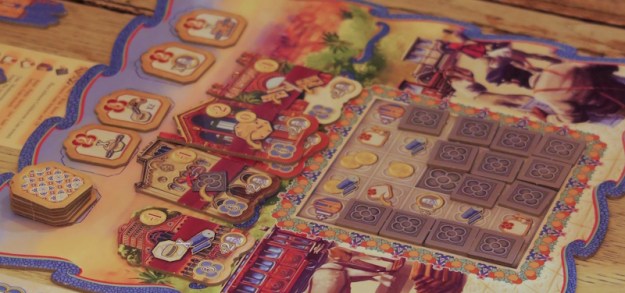
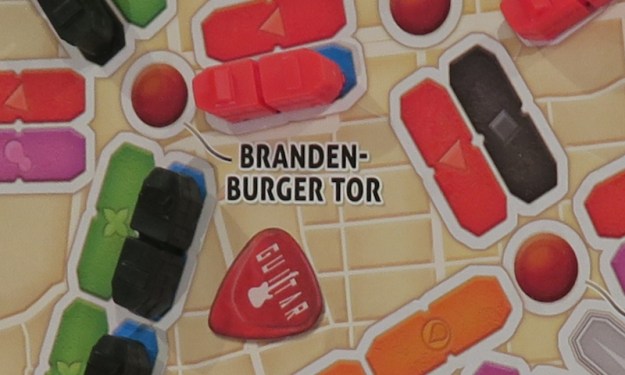
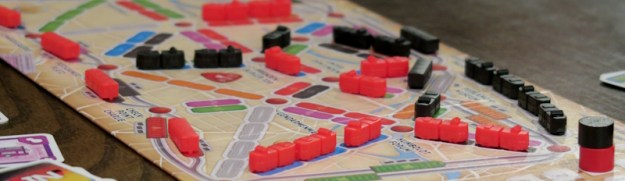
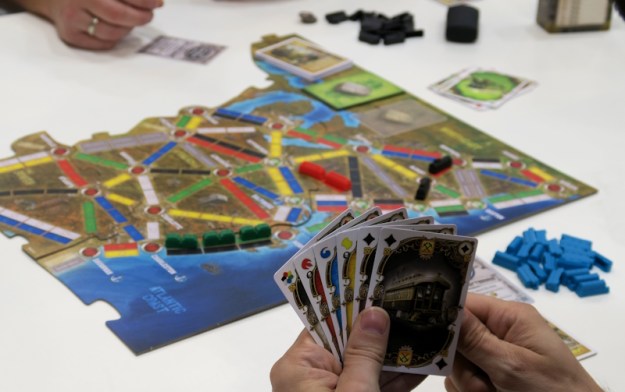
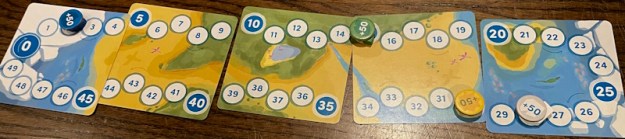
This week, the “Feature Game” will be Ticket to Ride: Northern Lights (rules, review).  This is the latest version of one of our favourite games, Ticket to Ride, and is similar to the Nordic Countries stand-alone game that we often play at Christmas, except that more people can play, there are a few rules tweaks, and the artwork is less festive (though still very, very beautiful).

Ticket to Ride: Northern Lights
– Image by boardGOATS

Speaking of the Northern Lights…

Jeff’s mate Joe was telling him about the recent trip he’d made to Norway with his girlfriend, Alice. He explained how seeing the Northern Lights was one of the things he’d always wanted to do. He’d found a romantic log cabin and they stayed there together for a few nights. Joe explained that he’d loved his time there and seeing the Northern lights, but his girlfriend Alice, had admitted that she hadn’t found the trip at all interesting.

Jeff replied, “I guess it must have been really hard watching the Aurora boring Alice…”

8th August 2023

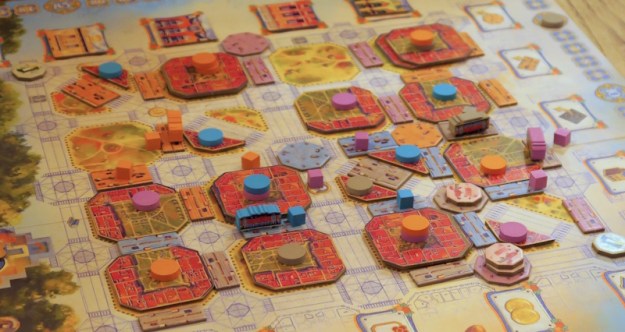
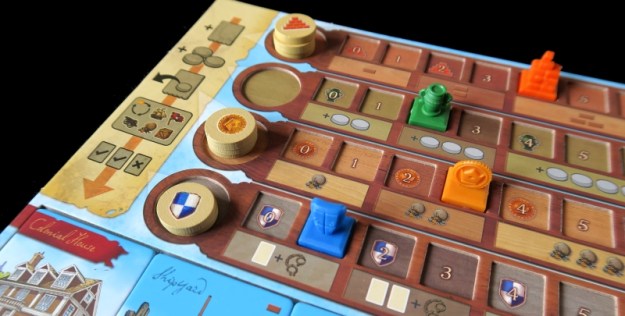
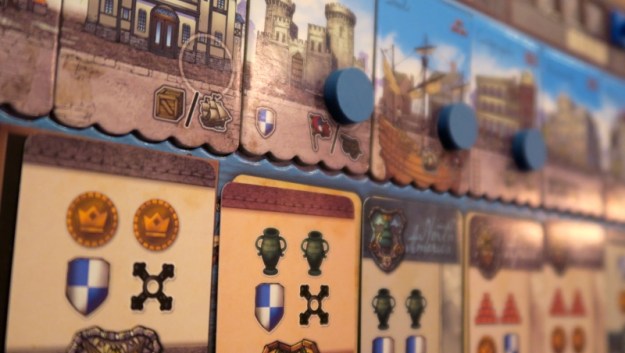
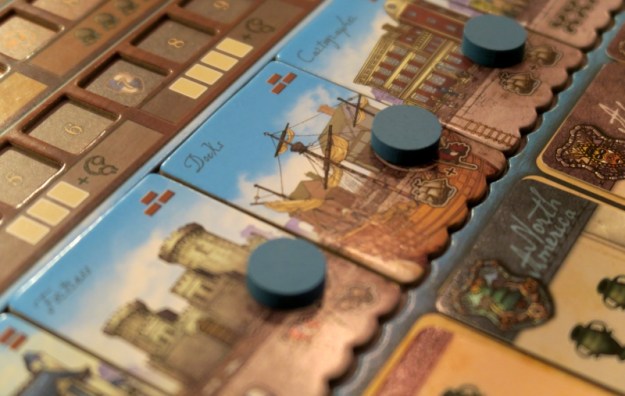
Blue and Pink were first to arrive, and, as they finished their pizza, others began to turn up too.  It was a slow start on a relatively quiet night, but eventually Blue Ivory, Black and Jade were settling down to play the “Feature Game“, Ginkopolis.  This is a medium weight tile-laying game with an area control element.  Blue explained that it was one of those games that had been through a phase of being very out of print and therefore inevitably in high demand, though now was much more available.  The game is set in 2212 where players are urban planners trying to building the eco-city, Ginkgopolis, though the theme is quite loose and in reality, it is much more more abstract that that.

Ginkgopolis
– Image by boardGOATS

The game is card-driven, with players simultaneously choosing a card and any tiles they are going to play with it, and then, starting with the first player, taking it in turns to carry out one of three possible actions: Urbanise, Construct or Exploit.  There are two different sorts of cards in the game, Urbanisation cards which feature a letter, and Construction cards which come in three different colour suits, red, blue and orange, and are numbered one to twenty. When choosing either an Urbanise action or a Construct action, players additionally choose a Tile to play from their personal stash.  Urbanising involves placing a tile in the space matching the letter on their Urbanise card, adding a wooden Resource block in their colour to claim it.

Ginkgopolis
– Image by boardGOATS

There is a little upkeep, in that they move the Urbanisation letter marker to a space orthogonally adjacent to the Tile they placed and mark it with a grey cylinder.  As a reward for urbanising, players get to Activate all orthogonally adjacent buildings.  This is claiming a number of  Tiles, Resources or Ginkgo Points (a sort of currency used in the game), with the item dependent on the colour and the number received equal to the height of the Building activated.  Constructing is similar, except the Tile chosen is placed on top of another Tile, returning any Resources on the tile to their owner and claiming Ginkgo Points from the bank for each one.

Ginkgopolis
– Image by boardGOATS

In addition to this immediate reward, there are also costs:  if the Constructed Tile has a lower number than the tile it is built on, they must pay the difference in Ginkgo Points and if the colour is different, they must also pay one Resource to the general supply.  In addition to these potential costs, the active player must also place Resources from their stash on top of the newly expanded building to claim it (with the number equal to the height).  This can make Constructing expensive, though as the game progresses, they get Resources back as other players build on buildings they have Urbanised or Constructed.  Still, particularly early in the game, players can find themselves running out of supplies, in which case, they can Exploit.

Ginkgopolis
– Image by boardGOATS

Exploiting involves playing cards (without a tile) to gain Tiles, Resources, or Ginkgo Points.  How they Exploit depends on whether the card they are Exploiting is an Urbanisation card or a Construction card.  For Urbanisation cards, players just take either a Resource or a Tile from the supply, whereas for Construction cards, players Activate the building on the card to receive Tiles, Resources or Ginkgo Points equal to the height of the building. This is not the only way to get resources, however.  Once a player has carried out their chosen action, they either recycle the card (if they Urbanised or Exploited) or, if they Constructed, they keep it in front of them.  Each Construction card has an action as well as a number and a colour, and these are activated during the game, most after carrying out actions, with some providing end-game Points.

Ginkgopolis
– Image by boardGOATS

And scoring is where the game gets tricky.  The winner is the player with the most Ginkgo Points at the end of the game, but in addition to chips acquired during the game and end-game points from Construction cards, the majority of the points come from the area control element of the game.  The city is divided into districts with districts defined as areas containing at least two buildings of the same colour.  The player with the most Resources in the district wins control and takes Ginkgo Points equal to the total number of Resources in the district.  The player to take second gets Ginkgo Points equal to the number of their Resources in the district.  Ties are broken in favour of the player with the highest building.

Ginkgopolis
– Image by boardGOATS

There is quite a lot of critical upkeep in the game, but the most important it to remember to put a grey construction cylinder on buildings during Urbanisation and Construction.  This is because at the end of each turn, players top their hand back up to four cards drawn at random—when the draw deck is empty, however, the discard deck is recycled and topped up with cards that correspond to the newly constructed buildings.  Since cards that correspond to buildings are kept when the building is over-built, and everything else is recycled, the draw deck (and the cards in hand) comprise all the buildings currently visible, together with all the Urbanisation cards, and nothing else.

Ginkgopolis
– Image by boardGOATS

Getting this wrong, breaks the game spectacularly, as Blue and Ivory had found out on the one other occasion they played it (with Pink, during one of the sporadic meetings in the pub late in the Summer of 2020).  This time, they were aware of the importance of placing the grey markers and mostly managed to stay on top of that so everything went a bit smoother, allowing players to concentrate on the nuances of the game.  And there are lots of nuances.  For example, over-building can help a player to take control of a district, or, if they change its colour, break one up, but it also gives Resources to the previous owner.  Similarly, Urbanising expands the city, but provides a cheap way for other players to expand districts and perhaps muscle in.

Ginkgopolis
– Image by boardGOATS

The game started with everyone feeling their way, trying to make the most of the Character cards they were dealt at the start of the game.  These give bonuses to players to get them going in the early stages of the game.  It is possible to draft these character cards, but the group began with the preconstructed sets:  Ivory got set one, Black got set six, Jade got set two and Blue got set five.  These give players a strategy steer in the early part of the game, for example, Blue and Black’s cards gave them two bonuses for Exploiting while Jade and Ivory both benefited twice for Constructing.  Quite early in the game, it became clear that there was one building towards the middle that was going to be quite critical in the area control battle and Blue, Black and then Ivory all over-built and tried to claim it for their own.

Ginkgopolis
– Image by boardGOATS

The game has the ability to feel very swingy, and lacking in control, and yet it is actually an extremely smart, tactical game—one clever tile placement can completely change the game by breaking up a district or joining two districts together and totally change the balance of power.  This game was no different in that regard, though it took a little time for everyone to really start to see its potential.  There were other elements of the game that players gradually came to appreciate.  For example, Black ran into the unexpected difficulty of running out of Resource markers, because he had a lot in the city.  This gave the others a problem—building over his buildings relieved that pressure, but because he had so many on the board, it was hard to avoid doing it.

Ginkgopolis
– Image by boardGOATS

Jade also had difficulties getting the tiles he wanted to match his cards, while Ivory had difficulties getting the cards he wanted (and was the only one to spend one of his refresh hand tokens, which cost him two points in the end-game scoring).  The game ebbed and flowed, and although it vastly exceeded its advertised forty-five minutes, it wasn’t long before the stack of tiles dwindled and triggered the end of the game.  At this point, players could choose whether to add tiles from their hand back into the game.  Jade was aghast at the idea having struggled to get tiles throughout, but Ivory had an enormous stack and put a few back into the supply to keep things going for another couple of rounds.

Ginkgopolis
– Image by boardGOATS

As the game drew to a close, the question was whether anyone would be able to make a move on the largest districts.  The highest building that had been long fought over now belonged to Ivory, but had been cut off, leaving it pointless, which left two large red and one large blue district as well as some smaller efforts.  Key was the number of Ginkgo points picked up during the game—everyone thought Ivory had a lot, but it turned out Black was the king of the Ginkgo tokens with a massive thirty-six. Blue was a little way behind him, but made up for this with her city scoring, which ultimately gave her victory with sixty-six points, nine more than Black in second who was well clear of Jade and Ivory who tied for third.

Ginkgopolis
– Image by boardGOATS

Meanwhile, on the next table, Purple, Green and Pink were deciding what to play while they waited for Pine who was running late.  Green commented that he didn’t want to play something new, so in the end the group settled on Splendor.  This is an old favourite, though one with poignant memories for most in the group as it was a favourite of Burgundy who sadly passed away eighteen months ago—it would have been his sixty-fifth birthday at the end of the month.  As always, with Burgundy in mind, the trio set the game up.  It is a very simple, tactical engine builder, where players take it in turns to either take chips from the supply, use chips to buy a face up card from the market or, occasionally, reserve a card.

Splendor
– Image by boardGOATS

Players win points for the higher value cards, or for collecting enough cards of specified colours to claim a Noble.  This time, Pink tried a strategy that concentrated on going for cheap cards with the primary aim of scoring for Nobles.  This had the benefit of giving him lots of cards which builds the engine quickly making other cards cheaper.  The strategy worked well, but not as well as Pink needed it to for him to beat Green who ended the game, with a lead of three points.  As Splendor came to a close, Pine rocked up, so the newly expanded, now quartet looked for something fairly light to play, and Pink suggested one of his favourites, For Sale.

For Sale
– Image by boardGOATS

As Pink described it, like football, For Sale is a game of two halves.  In the first half, players bid for properties which they then sell in the second half of the game.  This time, Purple became a bit of a tent specialist (with tents of various quality), which turned out not to work so well for her.  Pine ended up with the outside netty (one of the lowest value cards), but one that you are almost guaranteed not to loose money on.  Once again, however, the winner was Green with Pink taking his second second place.  So the question was, could anything upset that pattern?

For Sale
– Image by boardGOATS

The group moved on to Botswana, a sort of set collection stock-holding card game that it is really hard to get your head round despite actually being very simple.  The five animal suites each have six cards, which are shuffled together and dealt out.  Players then play a card from their hand, and take any one of the animals on the table.  The round is over when any one of the five animals has the sixth card played, at which point players score points for each animal they have, equal to the final card played.  After three rounds, the player with the most points is the winner.

Botswana
– Image by boardGOATS

This time, all three rounds were remarkably even.  Purple was just one point behind green going into the final round, though Pink had some ground to make up if he was going to continue his run of second places.  In the end, Green made it three from three, and relatively poor final rounds from both Pink and Purple left Pine to take second with Purple just behind.  Green decided three was enough, and didn’t fancy tarnishing his winning streak, so headed off while Purple and Pink waited for their other halves to finish Ginkopolis, and looked round for a suitable filler.

Coloretto
– Image by boardGOATS

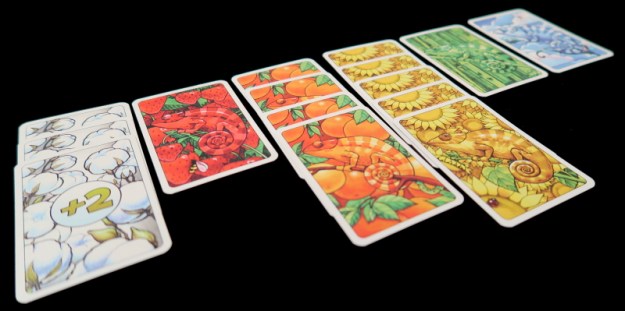
Coloretto is another old favourite, and one that plays really well with three.  A really simple set collecting game, on their turn, players either turn over a coloured chameleon card and place it on a truck, or take a truck.  At the end of the game (when the draw deck has been mostly depleted), players score points for each coloured set of cards.  In general, the larger sets score more, but only the largest three score positively, everything else gives negative scores.  For a bit of variety, the group used the scoring card from the Limit Cards/Extra Cards mini expansion (but without any of the other rules and cards).  This gives low scores for the small groups, but very high scores for the large sets.

Coloretto: The Extra Cards
– Image by
boardGOATS

Aside from a query about the Golden Joker (which like the normal multi-coloured Joker can be added to any set at the end of the game, but additionally gives an extra card drawn at random from the deck), there was no real need to revise the rules.  It was a good game, though Pink blotted his copy book with quite a lot of negative points and wasn’t able to improve on his two second places as a result.  The run-away winner was Purple though, who finished with forty-eight points, eight more than Pine in second place.  And with Ginkopolis coming to an end too, that was it for another week.

Coloretto
– Image by boardGOATS

Learning Outcome:  In some games, you have to start building right from the gink-go…

Next Meeting, 8th August 2023

Our next meeting will be Tuesday 8th August 2023.  As usual, we will start playing shorter games from 7.30pm as people arrive, until 8pm when we will start something a little longer.  The pub is now doing food once more, so we we will be meeting from 6.30pm for those who would like to eat.

This week, the “Feature Game” will be Ginkopolis (rules, review; how-to-play video).  This is a tile-laying game with an area control element.  It is a medium-weight game that should suit everyone and is set in 2212 where players are urban planners trying to building the eco-city, Ginkgopolis.

Ginkgopolis
– Image by boardGOATS

Speaking of urban planners…

Jeff was working as in the planning department and, after a liquid lunch with some colleagues all three had popped to the gents and were standing at the urinals. The first, an architect, finished and walked over to the sink to wash his hands. He then proceeded to dry his hands very carefully. He used paper towel after paper towel and ensured that every single spot of water on his hands was dried. Turning to the other two, he said, “As architects, we are trained to be extremely thorough.”

The second, an engineer finished at much the same time and he proceeded to wash his hands. He used a single paper towel and made sure that he dried his hands using every available portion of the paper towel. He turned to his colleagues, “Engineers, are not only are we trained to be extremely thorough, but we are also trained to be extremely efficient.”

As Jeff finished, he walked straight for the door, and commented, “In the Planning Department, we don’t pee on our hands.”

25th July 2023

After Blue and Pink had sampled the new pizza menu at The Jockey, people started to roll up and join them for the usual chatter.  There were a total of nine, which was one more than  required for the “Feature Game“, the recently announced Kennerspiel des Jahres winner, Challengers!.  This is a deck-building, dueling “capture the flag” game where players battle head-to-head to find the winner.  It is a very light game, with a largely random element, at least on the face of it, so it was always going to be a bit of a “Marmite” game.  Green commented that he wasn’t very interested in it, but as everyone else was quite keen to give something novel a go, he sportingly joined in.

Challengers!
– Image by boardGOATS

The game is very simple, and seems, at first glance to be quite random.  Players start with a hand of cards, and then draw five more and choose a set number to add to their hand.  The clever part is that (with eight players) the game is played over seven rounds, and each round the decks players draw from and/or the number of cards they can keep changes.  There are three decks, A, B and C, and the cards become increasingly powerful as the game progresses.  Once players have fettled their deck, they duel against their designated opponent by drawing the cards from their deck.  In this, one player starts by playing a card and taking the Flag, then the other plays cards until their total equals or exceeds that of their opponent.

Challengers!
– Image by boardGOATS

This initially seems quite random in that players have no agency in this element of the game.  There is a suggested variant that can change this by allowing players to draw two cards and choose one to play—this was an option for later in the game, but in the end, the group stuck to the rules as written.  The game focuses on this duel aspect, but really it is more about building card combinations during the first part of the game and deciding what cards to shed and how many.  Shedding cards is just as important as acquiring cards as, as the winner of a duel is the last player with the flag, so running out of cards can lose a match.

Challengers!
– Image by boardGOATS

Having too many cards can be a problem as well though—when they take the Flag, players move all their cards except the last played to the “Bench”.  The Bench has six seats, and when a card needs a seat and there isn’t one, that player loses.  The winner of the match, the last player with the Flag, then takes a winner’s token which is worth points at the end of the game.  The game is all about the cards which make it less random than it seems at first; some cards have special powers, while others give points.  Additionally, identical cards can share a seat on the Bench, so effectively allow players to have more cards, however, those tend to be weaker cards from the A deck.

Challengers!
– Image by boardGOATS

As such, Challengers! should perhaps be thought of more as a programming game, more in the mold of games like Colt Express, rather than a dueling “capture the flag” game.  After each match, players play musical chairs and after seven rounds (with eight players), the players with the most points duel for overall honours.  Although the idea is very simple, it took a little while for people to get to grips with the procedure.  Blue, who was suffering with the after-effects of a bad cold, acted as much needed umpire and guide, explained the rules and demonstrated how the duel worked using Pink’s hand of cards.

Challengers!
– Image by boardGOATS

Possibly thanks to her fuzzy head, but Pink despite the fact that he was sat in front of her, was onto the second round before Blue realised that something wasn’t right.  Instead of taking his starting hand back after the demo, he had just drawn five blind cards from the A deck, making his hand immensely over-powered.  There were the usual tongue-in-cheek cries of “Cheat!”, but it was a genuine error, albeit one that wasn’t easy to fix by this time.  As a result, the quickest and easiest solution was for him to forfeit the first round and fix his hand before re-starting the second round.

Challengers!
– Image by boardGOATS

One of the nicest aspects of the game was the way everyone played against everyone else.  The GOATS are a nice, friendly group, and although some people end up playing together more often, the group always makes a point of trying to avoid cliques caused by the same people playing together all the time.  The Musical Chairs element of the game meant everyone played against everyone else which gave it a fun, party feel that we usually only experience in October (when we play Crappy Birthday).  It was clear that some people enjoyed it more than others though.  Ivory, Teal and Black, really got to grips with the deck-building element and found the game exceeded their expectations, Ivory in particular really enjoyed it.

Challengers!
– Image by boardGOATS

Lime, Pink, Pine and Purple were a little less enthusiastic, while Green felt it was a clever little game enjoyable for a short while, but that it out-stayed it’s welcome—too long for the game-play within it, he couldn’t wait for it to finish.  It wasn’t much of a surprise, therefore, that Ivory, Teal and Black were the winners of the “Round Robin” tournament phase, finishing with thirty-five, thirty-three and thirty-one points respectively (some way ahead of Lime in fourth with twenty-three).  The play off between Ivory and Teal, therefore, was quite close and tense, but Ivory ran out the eventual winner, largely thanks to his handful of yellow Vendor cards.

Challengers!
– Image by boardGOATS

From there, everyone was keen to play something they were familiar with, but it had to be something quite quick.  Teal suggested SCOUT, which Blue was keen to give another try (having played appallingly last time) and Ivory and Purple were very happy to join them.  This is a very simple, but clever hand management game that was nominated for the Spiel des Jahres award last year.  The theme is almost non-existant (something to do with circus performers), and isn’t even reflected in the card art, which is not unpleasant, but very functional (and therefore useful).  The idea is that players have a hand of cards which, like in Bohnanza, they cannot rearrange.

SCOUT
– Image by boardGOATS

Unlike Bohnanza, on their turn players may play any set of adjacent cards from their hand as long as they beat the current winning set, taking any cards they beat into their scoring pile.  Cards can be a a run of cards with consecutive numbers, or a meld of the same number.  Sets are ranked by size and value and a meld always beats a run of the same size.  Players take it in turns to play, and if they can’t or choose not to “Show” a set of cards that beats the current winning set, they instead “Scout”, taking one of the two cards from either end of the set on the table, adding it to their hand (paying the former owner a point from the supply).

SCOUT
– Image by boardGOATS

And this is where the game gets clever:  all the cards have two values, one for each end, so players can add any cards to their hand anywhere they like and either way up (i.e. making either value active).  In this way, players can manipulate their hand making larger melds or longer runs.  The round ends when either every body “Scouted” in succession, or where one player has run out of cards.  Players then score points for each card in their scoring pile and for each chip for cards taken by “Scouting” with negative points for any cards left in hand.  The first time we played this with the group, it had all been a bit of a voyage of discovery, and last time, Ivory gave everyone a bit of a spanking, so Teal and Blue were keen to prevent that from happening again.

SCOUT
– Image by boardGOATS

Things started off well, with Blue beating Ivory in the first round, though Teal and Purple did less well ending up with a hand of cards.  The second and third rounds went better with everyone taking positive points and it was very close going into the final round leaving it all to play for.  Sadly for everyone else, Ivory brought his A-game to the last round ending the round swiftly leaving Purple and Teal with a hand that more or less off-set their takings and Blue with a positive score, though one with fewer points than Ivory.  The end result wasn’t really very close, though it felt less of a stomping than last time:  Ivory finished with fifty-five points and Blue took second with forty-one, ahead of Purple and Teal who tied for third.

SCOUT
– Image by boardGOATS

On the next table, Green, Pink, Pine and Black played a close fought enjoyable game of Les Aventuriers du Rail Express, a variant of the Spiel des Jahres winning Ticket to Ride series, but one that is a sort of half-way house between the original full versions of the game and the mini “city” games (like Ticket to Ride: London).  The game only plays four and takes less time, but is quite a nice variant and has a couple of differences to the original, being shorter without losing too much of the main game’s challenge.  As in the original, players can either take two cards from the market (face up cards, or the draw deck), or pay cards to place trains on the board.  Unusually, however, the Locomotive “wild” cards are kept in a single pile and therefore are always available.  This is quite a nice variation, as it means that players never feel forced to take blind cards because what they need isn’t available.

Les Aventuriers du Rail Express
– Image by boardGOATS

This effectively means players are guaranteed to get at least one train card they want.  The other major difference is the presence of the long route ticket.  This is one route that everyone can claim, however the highest scores go to the first to claim it.  It additionally means that failing to complete it does not lead to negative points, so players can ignore it and concentrate on normal short route tickets if they prefer.  There was a moment when the group had three identical coloured cards in the face up market which made them whether they should be scrubbed (as with three Locomotive cards in the base game).  It couldn’t be found in the rules and it was pointed out that in the original games it is possible to have five cards of the same colour, so they stayed and someone eventually found a use for them.

Les Aventuriers du Rail Express
– Image by boardGOATS

Pine took an early point lead which he maintained for quite a while until Green and Pink caught up, and not long after, Black too.  However, as the game neared its conclusion Pine pulled ahead again. Pink had completed the long route already and, at the cost of not being able lay his last two trains, Green decided to get the game finished before anyone else managed it. That long route helped Pink finish in front with sixty-four points, while Black’s slow start demonstrated that getting trains down early is no guarantee of success.  That said, he managed to pull into the station in second place with sixty-one points. Green and Pine fought to not be last and ended up tied just a couple points behind with fifty-nine points.

Ticket to Ride: Europe
– Image by boardGOATS

Learning Outcome:  Winning the Spiel des Jahres award means a game is good, but doesn’t mean it will suit everyone.

Next Meeting, 25th July 2023

Our next meeting will be Tuesday 25th July 2023.  As usual, we will start playing shorter games from 7.30pm as people arrive, until 8pm when we will start something a little longer.  The pub is now doing food, we we will be meeting from 6.30pm for those who would like to eat.

To mark the recent announcement of the Spiel des Jahres winners, this week, the “Feature Game” will be the Kennerspiel winner, Challengers! (rules, review; how-to-play video).  This is a deck-building, dueling “capture the flag” game where players battle head-to-head to find the winner.  This is a very light game, but that should give us opportunity to play other games, perhaps some that have won (or been nominated for) the Spiel des Jahres awards in the past.

Challengers!
– Image by boardGOATS

Speaking of duels…

Jeff had offended his friend Joe, who, being a man of honour challenged him to a duel.

“As I am the challenger, I will let you choose our weapons, ” said Joe, opening a case with two swords and two guns. “Would you like to duel with swords, or guns?”

Jeff was a terrified, but he knew his skills with a sword were vastly superior to Joe’s. As such, he chose to give himself the advantage. “I choose to duel with swords,” he exclaimed.

Joe nodded at this choice. “Very well then.”  He solemnly handed both swords to his opponent. “Here are your swords; that just leaves me with the guns…”

11th July 2023

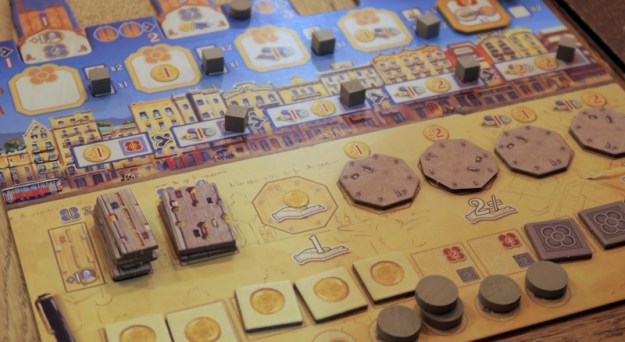
Blue and Pink were really late arriving, and were much amused by the cheers and applause when they came through the door.  Slightly embarrassed, and after a quick explanation, everyone started splitting into groups.  First was the “Feature Game“, the Fantasies & Futures expansion for one of our more popular, heavier games, Tapestry. On the surface, Tapestry has simple mechanisms, but they combine to make a complex game.  Basically, on their turn, players move one step along one of the four Civilisation tracks around the board: Science, Exploration, Military, Technology and carry out the action (or actions associated with it).  Each space requires payment of resources, and the further along the track, the more expensive the spaces become.

Tapestry: Fantasies & Futures
– Image by boardGOATS

If a player cannot afford to pay (or chooses not to), then they instead take income, which gives them more resources.  They also gain points and play a tapestry card, which usually provides a power for the next round.  So, at its heart, Tapestry is an engine building and resource management game:  players carry out actions and get resources so they can get more resources and ultimately, points.  We have played the first two expansions, Plans and Ploys and Arts & Architecture, but this time the “Feature Game” was the Fantasies & Futures expansion, which is the smallest, adding new Fantasy Civilizations, advanced Capital City mats, new Tapestry and Tech cards.

Tapestry: Fantasies & Futures
– Image by boardGOATS

Ivory was joined by Green, Plum and Byzantium.  Along with the Fantasies & Futures expansion, the group decided to add the “Plans” from the Plans and Ploys expansion as a sort of mini expansion, a private goal, where players get their own, special building they can build.  They also left the Tapestry cards and Civilisations in the mix from the first two expansions and really only left out Arts Advancement track from the Arts & Architecture expansion as they thought it would add too much complexity to the game overall.

Tapestry: Plans and Ploys
– Image by boardGOATS

Tapestry is one of those games that sometimes comes in for criticism for being multiplayer solitaire.  Although that’s not true, there is a strong element of players “getting on with their own thing”.  Although they were each very much playing their own game, there was still quite a bit of interaction which definitely gave the game teeth.  Green’s Civilisation (“Spies”), had him perusing over his neighbours positions and cards each income turn.  Luckily for him Ivory’s Civilisation (“Aliens”) gave him four starting space tiles, and one bonus he could choose was the benefit on an unused tile in a neighbours supply which gave a nice healthy early bonus.

Tapestry: Plans and Ploys
– Image by boardGOATS

Plum’s “Islanders” Civilisation was focused on collecting area tiles and placing them on her Civilisation mat.  So she started out prioritising collecting landscape tiles, looking for ones with water on more edges as these would give her more points in the final income phase.  She got a bit lucky right from the start getting two out of three.  From there she went for an expansionists strategy as did Byzantium (with his “Riverfolk” Civilisation), and from there, throughout the game they found themselves trying to conquer each others territories on the central island.

Tapestry
– Image by boardGOATS

Plum started the game with two Tapestry cards, so chose to use the standard one for her first era.  The second was from one of the expansions and “charmed”, so much to Byzantium’s annoyance when he tried to topple Plum’s Tower in the middle of the map, his attempt was thwarted by Plum’s Trap card which also gave her an extra benefit.  When Plum later attempted to Conquer Byzantium’s tile, he was delighted to be able to repay the earlier battle with his own Trap card. That satisfaction didn’t last, however, as Plum proceeded to play her charmed Anti-trap card which not only stopped the trap dead, but also gave her yet another bonus.

Tapestry
– Image by boardGOATS

That bonus was a random Tapestry card from Byzantium’s hand—he had two, and the one she picked just happened to be the one he had been working towards maximising the effect of (moving up each track once and getting the bonus action for free).  Plum felt pretty bad about picking it, but it was too late by then.   So, all round, it was quite a frustrating game for Byzantium, who started the game with a large forty-eight point bonus from his landscape board (“Forest”), and his first conquering dice rolls, time after time, gave him the choice between a resource or seven points—quite a dilemma in the early part of the game.  Initially he took the seven points (the highest that dice could give him), but found he wasn’t getting as many turns as the others, so later switched to taking the resource.

Tapestry: Fantasies & Futures
– Image by boardGOATS

Ivory, meanwhile, managed to make good use of the charmed Tapestry cards, keeping himself well stocked with resources throughout the game.  The rest of the group barely saw any charmed Tapestry cards (aside from Plum’s Trap and Anti-trap cards), but did find the new Civilisations and Landscape boards quite an interesting addition.  As the endgame approached, Green was last man standing, and for his last few turns he was able to grab an extra Civilisation (“Urban Planner”) which was to reward him handsomely.

Tapestry: Arts & Architecture
– Image by boardGOATS

The game which had been a quite sedate affair, started speeding up a little towards the end.  Pretty much everyone did something that if they had thought just a little a bit more would have gained them another point or so—Green put a cube on another player’s map, Plum put a building somewhere where it could have completed a row if she’d considered a little longer.  As the game came to a close, Ivory and Plum counted their remaining income scores to amazingly find themselves both on two-hundred and thirty-five points.

Tapestry: Fantasies & Futures
– Image by boardGOATS

Then Green counted his final points, giving him the lead by a solitary point. That was until he realised that he’d added thirty-six to one hundred and ninety-nine and discovered he was part of a three-way tie with Ivory and Plum!  Nobody was quite sure how they all managed to have an identical score in such a high scoring game.  If the tie-break had been resources remaining, then Green would have won and if it was Tapestry cards remaining, then Plum would have been the victor.  However, a quick check of the rules suggested the tie-break was in favour of the player with the tallest building (which everyone agreed that was a rubbish tie break), and although Ivory narrowly had a taller building that Green, he graciously agreed that everyone should just share victory.

Tapestry: Plans and Ploys
– Image by boardGOATS

While Tapestry was setting up, on the next table Jade was introducing Black, Purple and Pine (who chose to spectate) to Fantastic Factories.  This is a game where players compete against each other trying to build the most efficient set of factories as quickly as possible.  Players have to carefully manage their blueprints, train their workers, and manufacture as many goods as possible in order to achieve industrial dominance.  Each round consists of two phases:  the market phase and the work phase. In the market phase each player in turn order can either gain a blueprint card from the four available in the market or hire a contractor.

Fantastic Factories
– Image by boardGOATS

To hire a contractor players must pay one card (that matches the tool symbol associated with the contractor’s location on the board) and any additional costs listed.  Contractors have various benefits mostly related to gaining extra resources or extra dice workers for the work phase later in the round.  In the work phase, all players perform actions in their play area simultaneously starting by rolling their four coloured dice (and any additional ones gained from contractors).  Players can use their actions to build cards (which cost various resources matching the building type); while players can build as many cards as they wish in a turn, they may one of each type of building.

Fantastic Factories
– Image by boardGOATS

Dice can be used to take actions on a player’s main Headquarter board or on building cards you have constructed.  A player’s Headquarter board allows them to generate metal and energy.  Players can also activate their buildings once per round. If any player has built ten buildings or produced twelve goods that triggers the end of the game and one final round takes place before end game scoring. Players add up the prestige value of their buildings to their produced goods and the winner is the player with the highest total.  The game was a fairly typical learning game, but was quite close.  Both Purple and Black took thirteen points for their buildings, and while Purple was yet to get her engine going, Black took nine points for his goods.

Fantastic Factories
– Image by boardGOATS

Jade, on the other hand, had fewer points for his buildings (nine), but they were functioning more efficiently.  His total of twenty-three was just one point more than Black who took second.  While they were packing up, the group chatted and Jade showed off Vaalbara, another of his acquisitions from UK Games Expo, which he described this as a nice little set collection, and semi-interactive card game.  Then they chatted while they waited for Tapestry to finish.  And waited some more as the clock ticked and it turned out that Tapestry was no-where as near to finishing as everyone had thought…

Tapestry: Arts & Architecture
– Image by boardGOATS

Meanwhile, Teal was introducing Blue, Pink and Lime to a much older game, Condottiere.  This is a sort of trick taking, battle game.  Set in 13th century Italy, where the wealthy city-states had weak armies.  The Condottiere were veteran English soldiers returned from the Crusades who were contracted to fight for individual city-states by an agreement known as a condotta, the most elite fighters were the mercenary leaders known as the Condottiere.  During each round, control of a State is put up for auction, and players bid the number of troops they are willing to lose in order to win the province.  Players bid with cards that represent Mercenaries, Seasons, Scarecrows, and Political Figures, in an effort to try to take control of four adjacent States.

Condottiere
– Image by boardGOATS

Each player starts with a hand of cards, and one player starts the bidding by choosing a State and a starting bid, playing the card or cards from their hand, face up on the table. Other players follow, playing cards each round.  When a player either cannot play another card (or chooses not to), they “stick”, but unlike many other auctions, in which only the highest bidder loses their bid, at the end, everyone loses all the cards they played, whether they finish with the highest value hand or not.  Mercenary cards have values one to six or ten, while the other cards have special powers that take effect when they are played, but it is how the cards work together that is key.

Condottiere
– Image by boardGOATS

For example, the Drums double’s the value of all that player’s Mercenary cards, but this effect can be offset by another player placing a Winter card reduce every Mercenary card played to a value of one, while a Scarecrow can be used to return a card to its owner’s hand, making it available to play later.  There is also the Heroine, which is untouched by either the Drums or Winter, but also cannot be returned by the Scarecrow.  Perhaps the cleverest cards, however, are the Surrender and Bishop cards;  the Surrender ends the battle immediately (with the current leader winning the battle), and the Bishop ends the battle in peace with no-one winning.

Condottiere
– Image by boardGOATS

While there are some clear uses for some cards (the Bishop is only likely to be played by someone who is losing badly, and the Surrender card is usually played when the active player holds the lead), the meta-game is also important.  Although winning is obviously the aim of the game, as battles become head-to-head, players sometimes end up playing with emotion rather than strategy.  Once a battle has been won, the winner chooses the next city-state to be auctioned and starts the bidding.  Unlike other games, however, play continues with the cards they have left until all players but one have run out of cards, and only then do players get more cards (before they start the next battle).

Condottiere
– Image by boardGOATS

Teal explained the game, and that, although he understood the rules, he had no idea how to win.  Indeed, despite having played Condottiere a lot in the weeks since he acquired it at UK Games Expo, he had never won, a situation that was destined not to change this time.  Teal and Lime won a couple of States, giving them extra cards in the refresh.  Blue and Pink realised they were at a disadvantage, so set out to rectify things.  They took a couple of States and redressed the balance.  Then Pink stole a march when he forced Lime to lead out in a battle he could not win.  With this giving him three adjacent states, the writing was on the wall.  Lime, Teal and Blue tried to work together to prevent Pink from taking the last one, but without success.

Condottiere
– Image by boardGOATS

It had been a very enjoyable game, and given its success, the group went on to play another of Teal’s UK Games Expo acquisitions—Burgle Bros..  This is a cooperative game, a style the group traditionally eschew, though recently have played more often (including Scotland Yard last year, The Lost Expedition about six months ago, Zoo Break twice in quick succession, and Forbidden Dessert a couple of weeks ago).  Burgle Bros. works in a similar way to the other games of this type.  Players are a team of robbers, attempting to enter a building from the ground floor, raiding the safes on each floor before escaping by helicopter from the roof.  In addition to finding and cracking the safes, players also have to avoid the Security Guards that patrol the building.

Burgle Bros.
– Image by boardGOATS

In the game, players each have three Stealth tokens. Whenever they are on the same tile with a Guard, they lose one and if any player is caught without a stealth token, the game is over.  On their turn, players have four actions (move, preparing a safe for cracking by putting some dice on its tile, rolling dice to attempt to crack the code etc.).  Once the player has taken their turn, the Guard takes their turn, moving towards their target room (assigned by the route deck and marked with an orange die).  So to win, players first have to find the safe and then crack the code and all without triggering the motion detectors, heat sensors, fingerprint scanners, laser fields, open walkways, deadbolt rooms, and of course avoiding the guards…

Burgle Bros.
– Image by boardGOATS

The group decided to play on the beginner’s level which meant they only had two floors to explore before they could escape the building.  They got lucky right at the start as they popped up from the ground floor right next to the safe. That meant they only had to reveal all the orthogonal tiles and then roll dice to match the code. They were luckier still as the security guard was on the other side of the building and there were very few walls obstructing their way.  As a general rule, cooperative games of this type give each player unique special powers and using these effectively is usually critical to success.

Burgle Bros.
– Image by boardGOATS

So, Pink (who was “The Hacker” and didn’t trigger alarms) was sent off to reveal tiles while Blue (“The Spotter”) started setting up the safe for Lime, who was “The Peterman” and got to roll an additional die when trying to crack the safe.  Before long, things on the first floor looked pretty much under control with just the last few numbers left to crack the safe, so Teal (“The Juicer”) took himself off to the second floor to start hunting for the safe there.  This was a risky strategy as it triggered the Guard moving on the second floor.  However, with fewer people on both floors, the Guards effectively moved slower and gave players more chance to avoid them.

Burgle Bros.
– Image by boardGOATS

Things were slightly more challenging on the second floor—the Security Guard was a little more proactive, stepping it out more and, of course, the group didn’t find the safe at the top of the stairs this time.  It didn’t take him long to find it though, and with nothing better to do, Pink joined Teal on the second floor, ducking under the risky laser trap at the top of the stairs.  Meanwhile, Lime had finally managed to crack the safe, so Blue headed up the stairs only to find the second floor security guard heading her way, so she escaped to the roof toting their loot (a very annoying large and heavy bust and a particularly yappy dog) .

Burgle Bros.
– Image by boardGOATS

There was a bit of shenanigans as Lime joined Teal and Pink and also dodged the Security Guard (and lost a couple of Stealth tokens), but although there were a couple of near misses, it wasn’t long before all four were on the roof awaiting their lift to safety.  It was another fun game, but with time marching, Lime and Teal headed for home, leaving Blue and Pink to join Jade, Purple and Black who were still waiting for Tapestry to finish.  It was nice to chat though, and eventually Tapestry did finish and everyone who needed one got their lift home (without having to climb on to the roof…).

Burgle Bros.
– Image by boardGOATS

Learning Outcome:  New games are fun, but there are lots of good, slightly older games to be had as well at places like Expo.

Spiel des Jahres Winners – 2023

The 2023 Spiel des Jahres (German Game of the Year) winner has been been announced as the cooperative campaign game, Dorfromantik: The Board Game which is based on the video game of the same name.  Players work together to together to lay hexagonal tiles to create a beautiful landscape trying to make the train track and river as long as possible while also fulfilling the orders of the population.  There is a legacy element where points earned can be used to access new tiles that are hidden in locked boxes, which give new, additional tasks and make higher and higher scores possible.  The game is very simple (as draw a tile, place a tile, fulfill tasks), but the hook is the changing strategy that comes with the expanding pool of tiles.

Dorfromantik: The Board Game
– Adapted by boardGOATS from image
by BGG contributor Rugerfred

The winner of the Kennerspiel des Jahres, the “Expert” or “Connoisseur’s” game was announced at the same time and was Challengers!.  This is a sort of “capture the flag” tournament game where players first draw cards and build a deck, then shuffle and duel against another player.  The winner of the match takes the trophy and points, and at the end, the players with the most points duel in the final to decide the overall winner.  Although this is supposed to be a more advanced, it is not in the same league as previous winners of the Kennerspiel award like Village or Wingspan, or even previous Spiel des Jahres winners like El Grande and Settlers of Catan.

Challengers!
– Image by boardGOATS

The thing to remember though is that these games are intended to be family games and the awards are intended to cater for three different ages of families, those with very small children (Kinderspiel—this year won by Mysterium Kids); those with young children (Spiel des Jahres, or “Red Pöppel”), and those with slightly older children (Kennerspiel des Jahres, sometimes known as the “Grey Pöppel”).  This doesn’t mean these games are not suitable for more dedicated gamers, just that they not the target audience, so they should not be surprised if they are not a great fit.  This situation is not going to change in the near future, as the ultimate purpose of these awards is to sell games and advertise them to the general (German) public.

Dorfromantik: The Board Game
– Image from spiel-des-jahres.de

That said, with the right mindset, anyone can enjoy all these games, and they are some of the best of their type available.  So, as usual, congratulations to all the winners and nominees.

Boardgames in the News: From Ludo to Tennis

For many people, board games can be a great way to escape and relax from the pressures of the real world and it seems this is also a good way to prepare for the pressures of a match at Wimbledon too.  At least, it seems to work for Novak Djokovic who apparently likes to play a game of Ludo as part of his pre-match preparation, while waiting to go on court.  He has been seen several times on the players terrace with members of his team including friend Carlos Gómez-Herrera, his physiotherapist, and his coach, Goran Ivanišević.

– from twitter.com

Next Meeting, 11th July 2023

Our next meeting will be Tuesday 11th July 2023.  As usual, we will start playing shorter games from 7.30pm as people arrive, until 8pm when we will start something a little longer.  There is currently no food available, so everyone will be eating before they come out.

This week, the “Feature Game” will be the Fantasies & Futures expansion (rules, review; play-through video) to one of our more popular heavier games, Tapestry (rules; review; how to play video).  We have played Tapestry lots times since it first came out five years ago and this is the third expansion we will have tried which introduces new civilizations, advanced capital city mats, and more tapestry and technology cards.  Although Tapestry is a heavier game, there should be plenty of people to play one or maybe two lighter games in parallel.

Tapestry: Fantasies & Futures
– Image from stonemaiergames.com

Speaking of fantasy…

Over the years, Jeff had been caught by his wife in illicit liaisons with two elves, and more recently a witch. His marriage had just about withstood his misdemeanors because after the last affair he had promised he wouldn’t do it again. But then, one night Jill came home to find Jeff in bed with a young, female halfling.

She screamed at him, “You said you wouldn’t cheat on me anymore!”

Jeff answered, “I know, I know… But can’t you see I’m trying to cut down?”