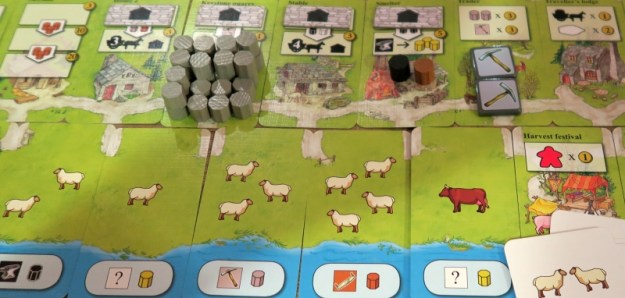
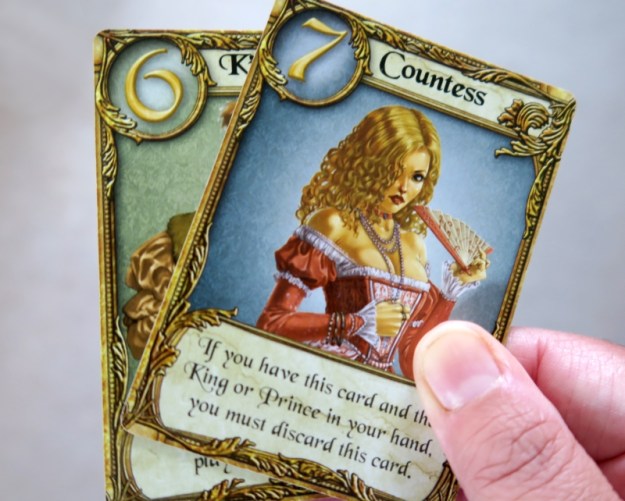
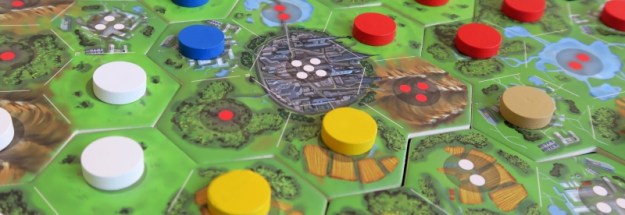
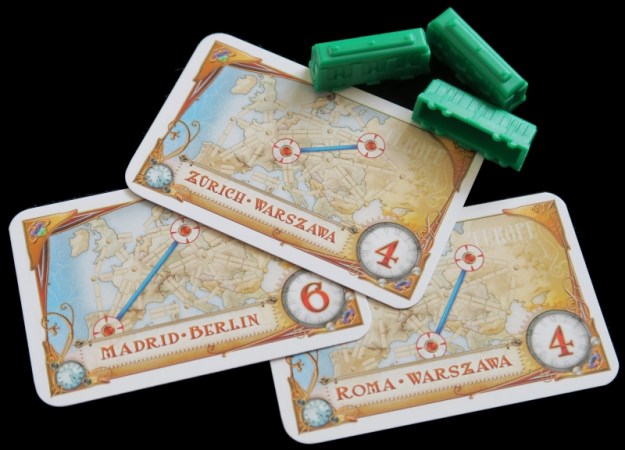
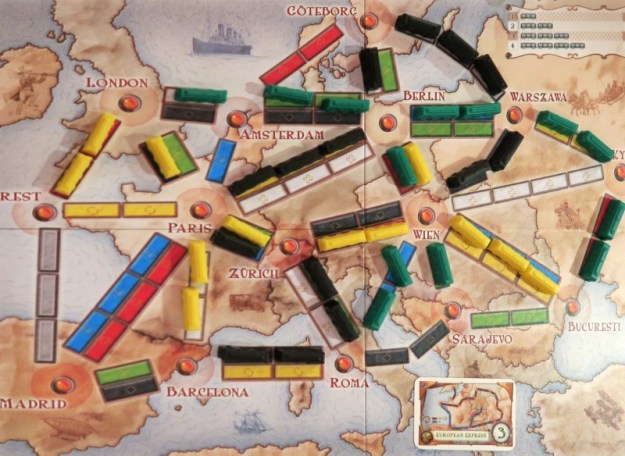
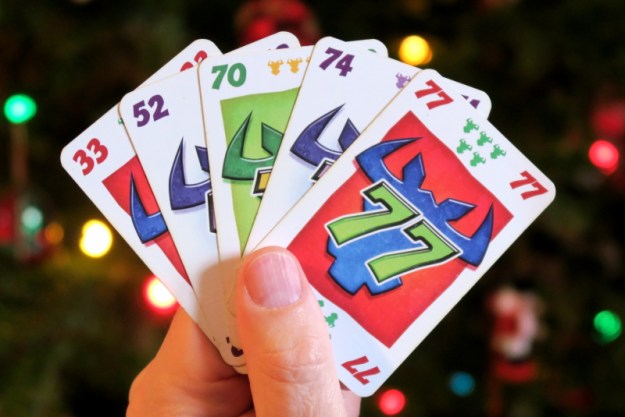
Nine is Fine – Happy Birthday to Us!

Nine Today

BoardGOATS is Nine Years Old Today!

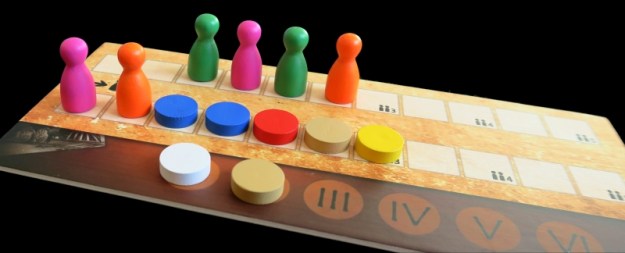
It really is nine years since our first meeting.  After a really tough year, we are finally back at The Jockey, and for the moment, we are definitely doing “fine”.  Somehow, we managed to keep things going through the challenge of remote gaming and have come out the other side.  After partying online last year, we are really looking forward to celebrating surviving another year, by meeting in person this week.

Next Meeting, 23rd September 2021

Following much discussion, as the Horse and Jockey are not currently serving food on a Tuesday, we are meeting on Thursdays for the time being.  Therefore, our next meeting will be on THURSDAY 23rd September 2021.  We will start playing shorter games from 7.30pm as people arrive, until 8pm when we will start something a little longer (table is booked from 6.30pm for those who would like to eat first).

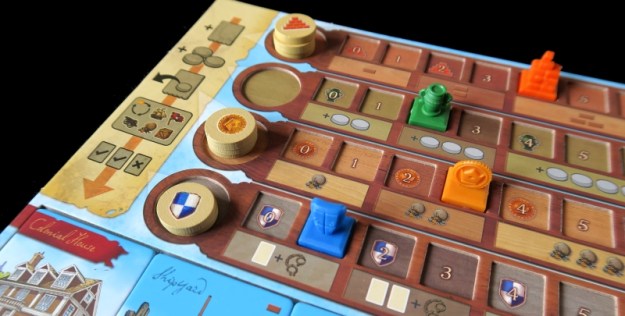
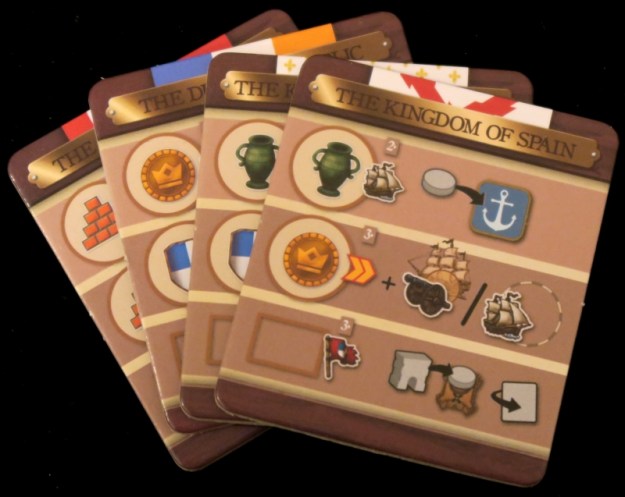
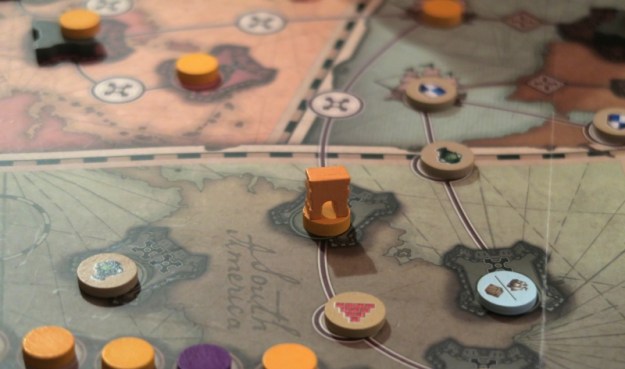
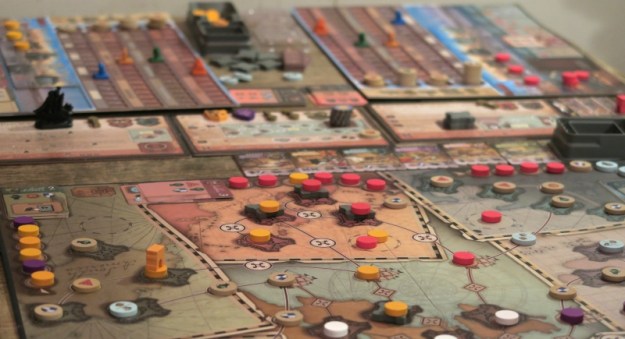
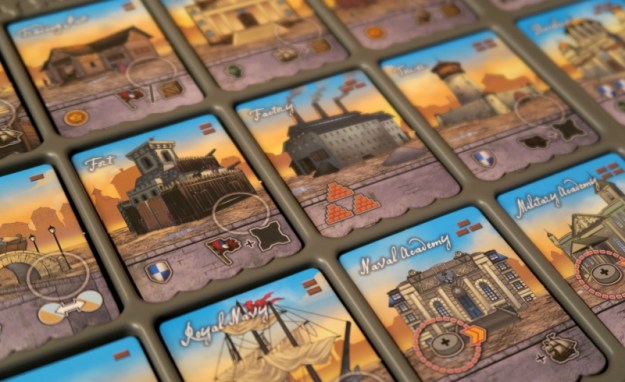
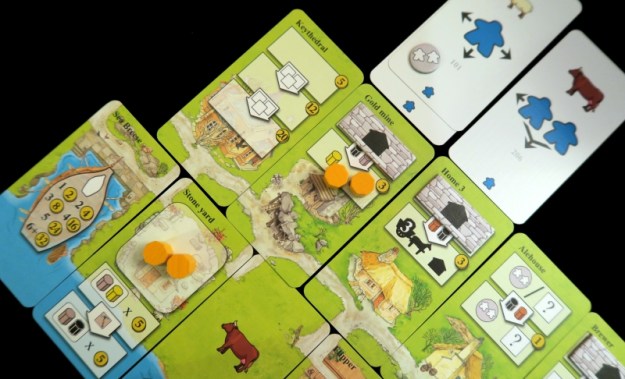
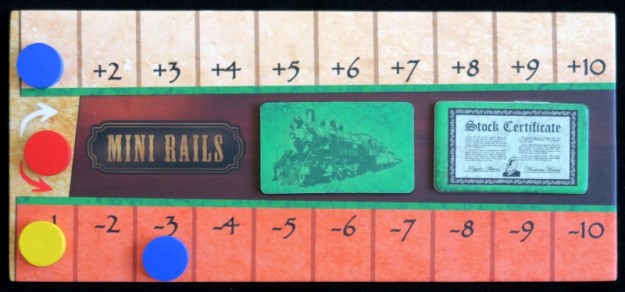
This week, the “Feature Game” will be Mini Rails, which is a stock-buying and track-laying train game that compresses a lot of the game play of long and complicated games like the 18xx series into under an hour.

Mini Rails
– Image by boardGOATS

And speaking of trains…

Jeff was travelling by train with his mate Joe. Joe took an apple out of his pocket, cut it open, picked out the seeds and started chewing them.

“Why are you chewing the seeds?” asked Jeff.

“They make me smarter,” replied Joe.

Jeff was interested. “Really? Could I have some?”

“Sure,” answered Joe, “I can let you have some at a pound each.”

Jeff agreed and handed over three pounds and got his three apple seeds in return. He chewed them for a while, then said, “Hang on a minute, for that money I could’ve bought half a dozen apples!”

“See?” Joe responded, “It’s working already…”

9th September 2021

Burgundy, Pink, Blue, Green and Lilac arrived early for food, and while they were waiting squeezed in a very quick game of No Thanks!.  Lilac was new to the game, but it didn’t take long to explain: take the card in the middle and any chips on it, or add a chip to the pile to pass the problem on to the next person.  At the end of the game, players total up the face value of their cards and the winner is the player with the lowest score.  The clever part is that any runs only score for the lowest card, but some cards are removed from the deck before the start.

No Thanks!
– Image by boardGOATS

Blue started off picking up cards, but unfortunately for her she continued picking up cards and was unable to connect them leaving her with a massive score of eighty two.  Lilac finished a very creditable joint second with fourteen, tying with Burgundy.  Green was the eventual winner though with only ten points for his cards and seven chips left over giving a final score of just three.  As the game came to an end food arrived and as they tucked in, everyone else started to arrive too.  It was about then that Pink got himself into a spot of bother, appearing to suggest that Blue should look more like Keira Knightley…

No Thanks!
– Image by boardGOATS

Everyone was aghast, and as Pink tried to explain that he was referring to how organised she was in The Devil Wears Prada, until Burgundy commented, “When you reach the centre of the earth you should stop digging.  It was only some considerable time afterwards that Pink realised that Ms Knightley wasn’t in Devil Wears Prada after all, but it was actually Anne Hathaway (she of cottage fame).

Fossilis
– Image by boardGOATS

After a bit of ribbing and some shenanigans with gnocchi and ice cream, the group split into two and settled down for the “Feature Game“, which was Fossilis.  This is a game with an unusual theme where players are collecting dinosaur fossils for their museum.  It uses an “action point” mechanism which is perhaps best known from the “Mask Trilogy” of games (Tikal, Java, Mexica), but has been widely used over the last twenty years in games as varied as Torres, Bus, Pandemic, Tawantinsuyu, Takenoko, Dinosaur Island and many more.

Fossilis
– Image by boardGOATS

It is a very simple idea: each action has a cost and players have a set number of “points” they can spend doing actions on their turn.  In some games this mechanism is present, but hidden, while in others it is the main driver of the game; Fossilis falls into the latter category.  Players have four action points to spend on their turn, using them to move stone, clay or sand (dig), collect plaster (for making fossils) or use tweezers to fish in a nearby pit (in a manner reminiscent of Operation) to find a hammer or use plaster to claim a fossilised bone.  Once per turn, players can also trade eggs, resin and “footprints” for Tool or resource cards, and take a dinosaur card from the market and add it to their lab.

Fossilis
– Image by boardGOATS

The idea of the dinosaur cards is that they allow players to exchange fossilised bones for identified dinosaur bones which are more valuable.  If a player manages to collect all the bones for a given dinosaur, they are more valuable still.  At any point during their turn a player can claim a dinosaur from the market if they can complete it fully, otherwise, dinosaurs have to go via their lab. This is not the only way to score points though—dinosaurs also have three characteristics and at the end of the game, players who have more than three of a type score points for it.

Fossilis
– Image by boardGOATS

Players also score points for a full set of nine and having the majority of in a characteristic.  The game uses an interesting timer, where a set amount of plaster is made available and when this has been used an event card is revealed.  After the event has been resolved, the pool of plaster is replenished and the game continues.  Once the third event has been revealed, there is one final pool and one last round before the final scoring.  The player with the most points is the winner.  This time we had two games running, one with Pine, Ivory, Green and Lilac, while Burgundy, Blue, Purple, Pink and Black played on the next table.

Fossilis
– Image by boardGOATS

On the first table, Ivory & Pine were new to the game. Pine said he had always been useless at Operation, but liked the dinosaur theme, while Ivory admitted to being initially sceptical about it. Ivory went through the game without any additional hammer bonuses instead concentrating on getting all nine of the dinosaur characteristics using the supplies to good effect.  Pine took an early lead collecting artefacts for tools and supplies.  Green obtained the Jack Hammer power tool and in the later part of the game used it to open up centre of the dig site only to destroy the first skull found in the game and mangle a hammer, thus making that square useless.

Fossilis
– Image by boardGOATS

Lilac had won her previous game of Fossilis (played against Green, Purple and Black a few days earlier) and tried the same strategy of gaining extra points for complete dinosaurs. Unfortunately she got the bonus too late in the game to make it work for her and with Pine and Green targeting the same dinosaur characteristics they ended up cancelling each other out.  That left only one winner, Ivory, who trampled Pine as he passed leaving him in second place.  Although the game clearly took longer than the advertised forty-five minutes the game moved along swiftly and finished well before the other table.

Fossilis
– Image by boardGOATS

Adding the fifth player clearly slowed things down for several reasons.  Firstly, although people tried to plan their turn in advance, inevitably the game state changed meaning players had to start again.  Worse, players struggled to see into the dig site to see what was available in the pits.  This meant players often had to wait for their turn and have the dig site passed to them and plan from there.  The length of the game was exacerbated when the Patronage event card appeared and everyone except Purple took six pieces of plaster.  Purple and Black had played the game a few days before, but Burgundy, Pink and Blue were new to the game, though Burgundy had done some research online.

Fossilis
– Image by boardGOATS

Burgundy’s research suggested that the best strategy was not to focus on completing dinosaurs fully, but to concentrate on getting as many dinosaurs as possible.  This leads to a loss of value for the dinosaurs when they are scored during the game, but can pay off at the end of the game when the bonuses for characteristics are scored.  This is because each dinosaur has three characteristics each of which can score three times:  once if the player has three, twice if they also have the most, and three times if they have a full set of nine.  This can more than make up for points “lost” by failing to complete it fully.

Fossilis
– Image by boardGOATS

Pink had not done any research in advance so tried the opposite and focussed on completing his dinosaurs and took a skill tile that enabled him to pick up the top tool tile for free every time he did so.  Blue took a skill tile which allowed her to move stone for one less action point while Black took a skill which allowed him to work on two dinosaurs in his lab at once.  Purple could have done with a skill tile that would help her stay on the dig site or get back on for free, because people kept pushing he off, but unfortunately there wasn’t anything like that available.

Fossilis
– Image by boardGOATS

In the closing stages, Blue and Pink had a significant advantage, but Burgundy picked up a few more dinosaurs at the end of the game and then started raking in the bonus points.  He finished some twenty points ahead of Blue and Pink who were separated by a single point and took second and third.  There was quite a bit of chit chat about the game as they ended.  Ivory said he liked it, much more than he was expecting and would definitely like to play it again. As for Pine, well, the game has dinosaurs and anything with dinosaurs gets his approval, even if some of them look like they’ve been drawn by that kids, playing that game where they drawing different parts and put them together at the end.

Fossilis
– Image by boardGOATS

Blue was less impressed.  The feeling on the other table was that the scoring was off a little and there wasn’t a strategy that would beat the “get as many dinosaurs as you can” plan.  Certainly five players was too many and perhaps three would be a sweet-spot.  Pink was keen to give it another go, but although everyone else on that table would play it again if someone else wanted to, they all said there were other games they would choose first.  That said, it is a fantastic theme and very unusual and the deluxe edition of the game comes with a lot of expansions to add variety, and it is possible that they might add changes to the balance of scoring too.

Fossilis
– Image by boardGOATS

Green, Lilac, Ivory and Pine finished a long way ahead of the other table, and as Lilac had never played Love Letter, it got its third outing in as many sessions. They were a tired little group though and in the end, Lilac chose to sit it out and watch.  The game is a really simple one where players start their turn with a card, then draw another and choose one to play.  The aim of the game is to be the player with the highest card at the end of the round, or in practice, be the last player standing.  The winner of each round gets a token and the first to a given number is the winner.

Love Letter
– Image by boardGOATS

Pine started well, guessing Green’s card before he even had a chance to play. He went on to win the first two rounds. In the third round, Pine did it again to Green, but Ivory won the round.  There was one more each to both Pine and Ivory and Green was beginning to wonder if he’d ever get a go.  Green then promptly won two rounds on the trot; with three players, the winning line is five tokens, so suddenly Green thought he was in with a chance.  Then Pine won two more rounds to complete his rout, winning his fifth token and with it, the game.

Love Letter
– Image by boardGOATS

Learning Outcome:  The thigh bone is not necessarily still connected to the hip bone…

Boardgames in the News: The Museum of Board Games in Newent

On 28th August, in the small Gloucestershire market town of Newent, The Museum of Board Games opened its doors for the first time.  The owner-curator is Tony Boydell, highly regarded designer of Snowdonia, Ivor the Engine, Guilds of London and Scandaroon amongst other games.  The exhibition is largely the boardgame ephemera he has been collecting over years of designing and playing games with friends and family.

Museum of Board Games in Newent
– Image by boardGOATS

At first sight it doesn’t seem like much—it is very compact, but actually contains a really surprising amount, and the games table front and centre, draws in unsuspecting visitors.  There are always a couple of games out on this table for people to fondle and play.  This could be anything from the fantastic War of the Daleks to Tiddley-Golf or Froschkönig.  As well as exhibits available to play, there are also little quizzes to encourage people to explore the displays and everything is labelled and tagged by the museum cat.

Museum of Board Games in Newent
– Image by boardGOATS

For the most part The Museum of Board Games comprises games from the 20th century, but there are also copies of The History of England (until George III) from 1803 and more recent games like Glory to Rome and Ticket to Ride: The Card Game.  The most unusual and rare pieces are on display in cases, but one of the nicest things about the museum are the stacks of game boxes ready to be taken off the shelf and looked at in detail.

Museum of Board Games in Newent
– Image by boardGOATS

When anyone shows an interest in something, it will readily will come out of its box for closer inspection.  There is a remarkable number of games with a tie-in to TV shows, but also unusual items like a beautiful home-made copy of Monopoly themed round Richmond (London) and copies of L’Attaque! (which became better known when it was reimplemented as Stratego).

Museum of Board Games in Newent
– Image by boardGOATS

In recent years, there have been exhibitions at the V&A Museum of Childhood and The British Museum, but this is a much better experience.  Although the exhibits are (of course) the centre of the museum, what makes a visit really special is the curator, Tony Boydell himself, and his remarkable knowledge of the games on display and of games in general.  Tony can talk for hours on the subject (and he will, if you let him), and as conversation meanders, he will reveal more treasures from the nooks and crannies of the museum.

Museum of Board Games in Newent
– Image by boardGOATS

As an afternoon out, the Museum of Board Games is well worth a visit, though speculative visitors should be aware that it is currently only open on Fridays and Saturdays (10am-4pm).  It is also exceptional value, but anyone who really wants to support the venture, should visit the museum’s Patreon page.  For those who can’t visit in person, there are a couple of reports on the BBC as well as Tony’s Blog on Board Game Geek.

Museum of Board Games in Newent
– Image by boardGOATS

Goats in the News: The Danger of Goaty Selfies

Over the last couple of years, Llandudno has made the news thanks to visits from a flock of Kashmir goats.  The infamous goats are once more causing problems, but this time it is a result of their newfound fame.  The goats have returned to the Great Orme peninsula, a nature reserve in Conwy, but their notoriety has attracted tourists taking selfies inspiring the Llandudno Coastguard to comment:

We are particularly concerned about reports that people are placing themselves in danger to view the goats up close and to take photos.  The goats are safe, they aren’t trapped and are just exploring a new part of the Great Orme.  We urge you not to place yourselves in danger to view the goats and to stay on Marine Drive where it is safe and a great vantage point to see the goats.

Llandudno Goats
– Image from facebook.com

Next Meeting, 9th September 2021

Following the test event at the Horse and Jockey and much discussion, as the pub are not currently serving food on a Tuesday, we have decided to move to Thursdays for the time being.  Therefore, our next meeting will be on THURSDAY 9th September 2021.  We will start playing shorter games from 7.30pm as people arrive, until 8pm when we will start something a little longer (table is booked from 6.30pm for those who would like to eat first).

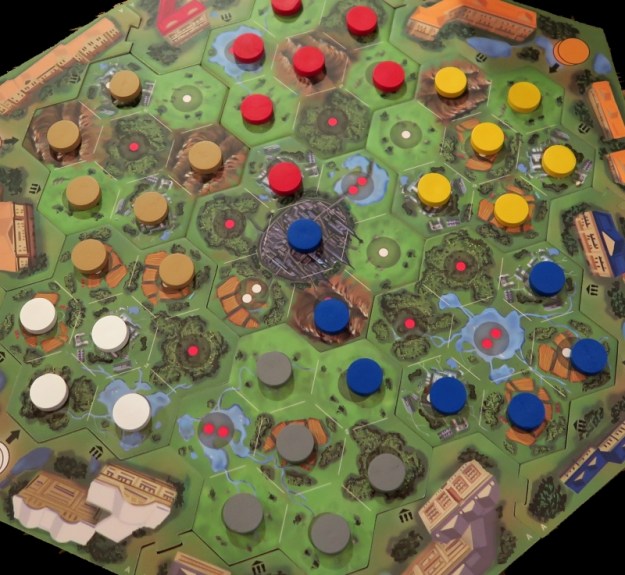
This week, the “Feature Game” will be Fossilis, which is a game about palaeontology with players digging for dinosaur bones and collecting fossils.

Fossilis
– Image by boardGOATS

And speaking of palaeontologists…

Jeff was the palaeontologist at an archaeological dig.  With no bones to study, he’d had little to do so had been set to work in the least exciting corner of the site.  He’d been shifting soil for weeks and found not so much as an old penny, when suddenly his luck changed and he found a leg bone. He was so excited about what he’d found, that he invited all the other archaeologists over to help him remove it.  It turned out to be quite a shin-dig…

26th August 2021 (Back at the Jockey!)

Following the test event at the Horse and Jockey and much discussion, we decided to try meeting in person once again.  As the pub are not currently serving food on a Tuesday, we decided to move to Thursdays, at least in the short term, especially as times are so uncertain.  This week, the “Feature Game” was Red Rising, a new card collecting game inspired by Fantasy Realms and themed round the books by Pierce Brown.  The books are set in a dystopian future on Mars following low-born miner Darrow, a Red, as he infiltrates the ranks of the elite Golds.

Red Rising
– Image by boardGOATS

In the books, society follows a fourteen-colour caste system from Gold at the top to Red at the bottom.  Red Rising the board game takes this colour hierarchy and adds elements of hand-management and card-combo building.  The idea of the game is very simple:  players start with a hand of five cards and on their turn, play one card onto the game board and pick up another.  The aim is to improve the quality of their hand and with it, its value.  Cards are played on one of four locations on the central game board and have an additional deployment action when played, the effect of which can be dependent on the location they are played in or the card they are played on top of.

Red Rising
– Image by boardGOATS

The card picked up must be the top card from another different location except where enabled by the played card.  The location from which the card is collected dictates an additional bonus action:  Move along the Fleet track, Collect helium, Increase one’s presence in the Institute, or Claim the Sovereign token.  There are a couple of other options:  play a card and then take a card blind from the Character deck and roll a die to decide what their bonus action will be.  Alternatively, instead of playing a card, just draw a Character card from the deck and place it, then take the bonus action.  In practice, these two options are relatively rare and only taken if there is nothing to pick up, or the player likes the hand they have.

Red Rising
– Image by boardGOATS

The game ends when either seven is reached in all three of the Fleet track, helium and the Institute, or one player has reached seven in two of them.  At the end of the game, players sum their total score from each card, the scores from combining effects of cards, ten points if they finished with the Sovereign token, three points for each helium, their score for progressing along the Fleet track, and points for each of their tokens in the institute (four per token for the player with the most, two and one for less committed players). Anyone over the seven card hand-limit loses ten points per card over the limit.

Red Rising
– Image by boardGOATS

There is a large deck of cards of which only a relatively small number are seen in each game.  The nature of the game changes dramatically depending on which cards come out.  This time Blue, Pink, Burgundy and Pine made up one table while Ivory, Green, Black and Purple made the other, both playing with the Collector’s Edition.  The first difficulty, was that although beautiful, some of the colours in the Collector’s Edition are difficult to tell apart.  The Influence and Fleet tokens in blue and green, and pink and red, were a particular problem which was made worse in low light.  This was not too much of a problem in practice, however, because influence tokens can be grouped together and we weren’t playing with the maximum number of players so could ditch the worst clashes.

Red Rising
– Image by boardGOATS

A bigger problem was the amount of text on the cards.  Pine and Burgundy both had issues with this, which could be got round by passing cards if people wanted to read them.  Additionally, the cards used in a game tend to circulate with one player playing it and another picking it up before playing it themselves.  So the burden is not as heavy as it seems at first.  Despite it not being complicated, the one table seemed to have a significant issue with rules.  Pine struggled with whether the action was associated with the location a cards was played or the location it was collected from.

Red Rising
– Image by boardGOATS

Pink, meanwhile, developed an inexplicable habit of taking the action at both locations.  Adding insult to injury, Pink also repeatedly distracted Blue by complaining that he couldn’t see a way of increasing the number of cards in his hand and asking advice.  On the next table, however, Green felt he was being got at.  This is actually quite a normal state of affairs because we all love to pick on Green, but in this case that wasn’t what was happening.  Green’s special power that meant he was able to place an Influence token in the institute every time he took the Sovereign token, but he had a card that meant he would lose points if he had the Sovereign token at the end of the game.

Red Rising
– Image by boardGOATS

So, for this reason, Green concentrated on collecting red helium gems instead.  Unfortunately, random draw meant that on this occasion the game had an awful lot of cards that penalised players with the most helium or a player of choice, which Green felt was mostly him.  Worse, the nature of the game is that players play these cards then others pick them up and play them again, which can make it feel like there are more cards like this than there really are.  Black’s influence dominated the Institute, while everyone competed for points on the Fleet track.  It was an extremely close game with four points between first and third.  Purple channelled her inner “Magic: The Gathering” player and with a lot of helium, sneaked ahead of Ivory to take second.

Red Rising
– Image by boardGOATS

Despite struggling to get Gold cards and feeling the game was against him, Green finished just ahead with two hundred and fifty two points.  The other game was nowhere near as close and clearly played out very differently.  Blue, also lost some helium thanks to Burgundy, but it only happened once, there was no real shortage of Gold cards, and the game seemed to take a lot longer.  Part of this was because Pine spent a lot of time checking what he was doing and insisting it wasn’t his sort of game, yet he dominated both the Institute and the Fleet track.

Red Rising
– Image by boardGOATS

There were over a hundred points between first and last in this game, but the scores didn’t feel as disparate while playing.  In spite of his complaints, it was Pine who came out on top with a massive three hundred and nine points.  Overall, both games were a bit of a mixed bag with Burgundy saying it didn’t gel for him, Pine feeling bewildered (not withstanding his success), Green feeling “got at”, and even Pink (who had played it twice before) made a bit of a hash of things. Ivory, Pink and Blue had played it before, and all three had been unconvinced after the first game, but more positive after the second.  So it is definitely a game that benefits from multiple plays, if people are prepared to give it a second chance…

Red Rising
– Image by boardGOATS

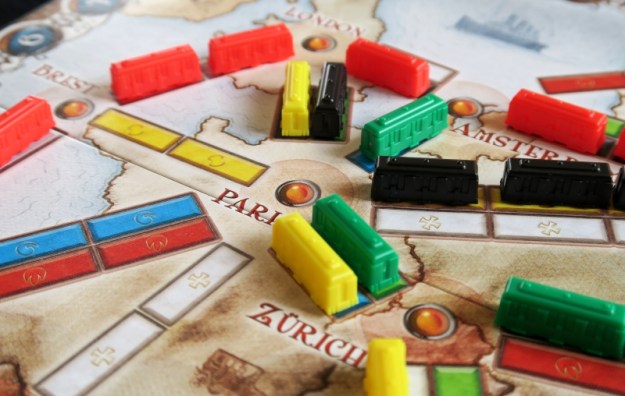
Ivory, Green, Black and Purple finished first and, at the time it looked like the other group wouldn’t finish for ages.  So after some discussion, they started another game and chose Ticket to Ride: Amsterdam.  This is one of the “little” spin-off games based on the original Ticket to Ride.  Themed round a city rather than a country or continent, these are smaller and quicker to play than the bigger games, but lots of fun.  This one is based on the Dutch capital, but the game play is essentially the same as the other editions.

Ticket to Ride: Amsterdam
– Image by boardGOATS

On their turn, players either collect coloured cards from the market, or spend them to place plastic carts and score points.  Players start the game with three tickets (of which they must keep at least two), which depict two locations.  Players who can connect these locations score points at the end of the game; failure to do so leads to negative points.  Each variant has a little tweak.  So, in addition to scoring points from placing pieces and successfully completing tickets, in the Amsterdam edition, players can pick up goods cards when they complete a route marked with carts.

Ticket to Ride: Amsterdam
– Image by boardGOATS

The player with the most of these at the end of the game scores an extra eight points with other players scoring fewer with the amount depending on the number of players.  This time, Purple built her routes through the middle of Amsterdam and to the north.  Everyone else went for the potentially lucrative goods routes in the south, east and west.  The problem with this was the competition, with Green the main casualty.  Although Green managed to get three goods cards he failed to complete his second ticket.

Ticket to Ride: Amsterdam
– Image by boardGOATS

Ivory also went for two tickets and completed them, but managed to add five goods cards giving him the most and adding a valuable eight points to his score.  Both Purple and Black largely eschewed goods cards (collecting just one) and concentrated on finishing their three tickets.  In a tight game, which this was, those solitary tickets and the tie-breaker for them was critical.  It was a tie for second between Black and Ivory, but it was Purple, who just edged in front, winning by a single point.

Ticket to Ride: Amsterdam
– Image by boardGOATS

While the others were playing with their trains carts, the second table had finally finished their game of Red Rising, so they picked up where they had left off last time with another game of the filler, Love Letter.  This “micro game” consists of just sixteen cards.  Players start with one, draw a second and play one of them doing the associated action.  The player with the highest value card, or the last player standing is the winner of the round.  The first player to win three rounds is the winner.

Love Letter
– Image by boardGOATS

Last time, it was all about Blue and Burgundy, with Poor Pine being knocked out every single round.  This time it was a bit different, and it was all about Pine and Blue.  Pink and Burgundy failed to take a single round, but it was tight between Pine and Blue.  There was a bit of ebb and flow with one taking a round and then the other, but it was Pine who took his third round first and with it revenge for last time as he left Blue languishing with just two love tokens.

Love Letter
– Image by boardGOATS

Although Ticket to Ride: Amsterdam and Love Letter finished at about the same time, Purple, Black, Green and Ivory all decided it was time to make a move.  The others felt there was still time for one quick game of …Aber Bitter mit Sahne, a fun little game based on the simple “I divide, you choose” mechanism.  On their turn as Master Baker, the active player constructs a “pie” from pieces drawn at random and divides it into portions, each consisting of several pieces.  Starting with the player to the Baker’s left, each person takes a portion of their choice and decides which pieces to keep and which pieces of cake to eat.

…Aber Bitte Mit Sahne
– Image by boardGOATS

When all the cake has been distributed, the player with the most of each type scores the number shown on that type, while each piece that has been eaten scores for the number of blobs of cream, sahne.  The clever part is that the number of cake pieces of each type in the game is the number shown on the pieces, thus the most common types are the most valuable, but also need the most pieces to score.  Thus the aim of the game is to collect sets, but only the largest of each type scores, everything else is worthless unless it has been eaten.

…Aber Bitte Mit Sahne
– Image by boardGOATS

Players tend to wind up collecting different sets.  This time, Pine won nine points for his gooseberry pie, Burgundy won seven for his blackberry flan and Pink took twenty-one points for his strawberry tart and chocolate gateaux.  That was without counting the cream though.  Pink thought he’d done enough, but was just beaten by Burgundy who, as well as a lot of cream, also shared the points for a lot of the lower scoring cakes. His final total of thirty-four was one more than Pink with Pine and Blue tied for third.  And on that sweet note, it was home time.

…Aber Bitte Mit Sahne
– Image by boardGOATS

Learning Outcome:  It will take a little time to get used to playing face-to-face again.

Next Meeting, THURSDAY 26th August 2021 – Back at the Jockey!

Following the test event at the Horse and Jockey and much discussion, we have decided to try meeting in person again.  As the pub are not currently serving food on a Tuesday, we have decided to move to Thursdays for the time being.  Therefore, our next meeting will be on THURSDAY 26th August 2021.  We will start playing shorter games from 7.30pm as people arrive, until 8pm when we will start something a little longer (table is booked from 6.30pm for those who would like to eat first).

This week, the “Feature Game” will be Red Rising, which is a new card collecting game themed round the books by Pierce Brown.  The books are set in a dystopian future on Mars following lowborn miner Darrow, a Red, as he infiltrates the ranks of the elite Golds.

Red Rising
– Image by boardGOATS

And speaking of colours…

Jeff was showing Joe his new pen. “It’s magic, see?” Jeff explained, “It can can write any colour. Red, Pink, Brown, Orange, Violet, Yellow, Blue, Gold…  And even words that aren’t colours…!”

19th August 2021 – “Unofficial boardGOATS”

We’d had such fun at the “Post-Covid Test Event” at the Horse and Jockey and some were so disappointed to have missed it, that we decided to have another, this time “unofficial” meeting at the pub before our formal return.  As we chattered away and waited for food to arrive, we told Lime what we’d played last time.  He said he was sorry to have missed Sushi Go! as he really enjoyed it, and in a trice, a real, hardcopy of the game was out and cards were being shuffled and dealt.  We’ve played Sushi Go! plenty of times both online and in person, but as usual, we had a very quick run-through of the rules.

Sushi Go!
– Image by boardGOATS

Players start with a hand of seven cards, and choose one to keep, passing the rest on to the player on their left.  Players repeat this with the aim of the game being to end up with the set of cards that score the most points.  The game is played over three rounds with the player with the highest total winning. The final round was coming to an end when pizza arrived, but we just had time to get to the end.  It was close, but Blue made up for her disastrous showing earlier in the week online with a win, just a single point ahead of Pine (who had missed out completely on the previous game).

Pizza
– Image by boardGOATS

Food was summarily dispatched and Ivory arrived, and after some discussion about what to play and whether to split into two groups, we all settled down together to play the dice-drafting game, Sagrada, with the 5-6 player expansion.  This is another game that most of us are reasonably familiar with and we thought it would be a good game to play to help dust some more of the cobwebs off our gaming skills which had proven to be decidedly rusty at the “Test Event”.  The base game is quite simple:  the starting player draws dice from the bag and players take it in turns to take one and add it to their stained glass window.

Sagrada
– Image by boardGOATS

As well as following the restrictions given on the players’ window cards which specify colours and numbers for some spaces, players must place new dice next to already played dice while avoiding placing dice of the same colour or number in adjacent spaces.  Depending on the difficulty of the player’s window card, players get a number of “cheat tokens” which are worth points at the end, or can be spent to use “Tools” to enable players to improve their move dice, change dice numbers and otherwise break the rules.  This time the Tools cards drawn at random were the Eglomise Brush, the Copper Foil Burnisher and the Cork-backed Straightedge.

Sagrada
– Image by boardGOATS

The Eglomise Brush and the Copper Foil Burnisher allowed players to move dice ignoring any colour/number restrictions printed on their window card, while the Cork-backed Straightedge allowed players to place their chosen die in a location not adjacent to another die.  The Tools are really useful as they allow players to improve their scores. These come from individual goal cards, and shared goal cards drawn at random.  This time we drew one objective card rewarding dice of the same colour arranged diagonally and two that scored points for pairs of dice (ones and twos/threes and fours).

Sagrada
– Image by boardGOATS

The 5-6 player expansion, tweaks the rules a little.  In the base game, in each round, the draft goes one way and then returns so that the first player gets to choose first and last with the last player taking two dice one after the other (similar to the initial settlement placement in The Settlers of Catan).  With large numbers of players this can lead to a lot of down-time, partly because of the sheer number of decisions (which are taken sequentially), but also because there are more dice giving players a larger number of options to consider.  To avoid this, players start the game with their own personal dice pool consisting of two of each colour, rolled to give random numbers.  Players then take one die from the draft and one from their personal dice pool.

Sagrada
– Image by boardGOATS

Pink began, drawing seven dice from the bag, but we were only a few rounds in when Lime thought he might have dropped one.  This queued a mad session of dice counting as well as fond recollections of the time Pine dropped a No Thanks! token between the floor boards which is probably still there.  Fortunately, the dice, though small, would not fit through the gap and it turned out nothing had been dropped anyhow.  Meanwhile, Blue and Burgundy discussed how to interpret the “diagonals” in the objective card as it was unclear from the rules.  We decided to use the generous interpretation and score for each diagonal line, counting dice multiple times, but checking online after proved this incorrect and each diagonally adjacent die of the same colour scores just once.

Sagrada
– Image by boardGOATS

Lime was first to use his cheat tokens, though almost everyone else soon joined him.  The exception was Pine who, despite starting with one of the most difficult Window cards, still had all six cheat tokens left at the end.  Ivory pointed out that Pink’s window seemed to have a lot of high scoring green dice, making it likely that green was his personal objective and giving him a high score that would be hard to beat.  And so it proved, though Ivory scored only one less for his personal, purple objective.  Scores for pairs of dice were mostly similar, though Ivory, who started out with a hatful of ones managed to pair these with five twos giving him ten points.

Sagrada
– Image by boardGOATS

In the end, Burgundy and Pink were both close with fifty-six and fifty-eight points, but Ivory was five points clear with sixty-three.  Lime had a horrifically early morning so reduced the numbers to five, and giving the mess we’d made with Bohnanza last time, the rest of the group decided to give it another go.  This is a fantastic trading game where players first plant beans from their hand, then draw two beans from the deck which can be planted or traded (and planted by the recipient) and finally harvest beans.  The key point about the game is that cards in hand must not be rearranged.

Bohnanza
– Image by boardGOATS

There are some really clever aspects to the game, for example, because the beans become money, the distribution of beans in the deck changes as the game progresses, but players can manipulate that by choosing when they harvest.  Harvesting just before the deck is shuffled means more cards of that sort become available in the next round.  With slightly fewer players, this becomes increasingly significant.  This time, Burgundy’s shuffling got the blame when Blue started with a handful of green beans and then turned over more.

Bohnanza
– Image by boardGOATS

Green beans continued to fall into her lap and punctuated by a full set of garden beans, some black-eyed beans and a small number of others, she harvested significantly more than the fourteen cards available.  Pine managed to gather a full set of four cocoa beans, which felt all the more special as they often not in the game because they are removed for many player counts.  Pink repeatedly demonstrated how he was unable count, trying to taking four cards to refill his hand each round instead of three.  A couple of rounds in, Blue, bought herself a third bean field and nearly underpaid for that too (the cost varies depending on the number of players).

Bohnanza
– Image by boardGOATS

As the game came to an end, players tried to maximise their final scores, and then started counting.  Twelve was beaten by thirteen, which in turn was beaten by fourteen and then Ivory’s score of fifteen.  But Blue was still counting, and counting—the green beans and her third bean field had done their job and she finished with a massive twenty-one.  With that, Ivory left leaving four players and just enough time for a quick game of Love Letter, a game that is available online, but we’ve eschewed playing as it loses all it’s fun.

Love Letter
– Image by boardGOATS

One of the most successful of the micro-games, there are just sixteen cards.  Each player starts with one card, draws a second from the deck and then plays one.  The aim of the game is to end with the highest value card, or be the last player standing when the deck is exhausted.  Some cards allow players to assassinate others if they correctly guess what they are holding, or if they compare cards and have the lower value.  The game is played until one wins three rounds.  Burgundy and Blue took the first and second rounds, before Pink took one round and Blue took another and with it, the lead.

Love Letter
– Image by boardGOATS

Pine had been knocked out of every round and when Pink picked him again he protested that Blue would be a better target.  His protests were in vain, however, with Pink correctly suggesting Pine was “The Princess”, he was knocked out once more.  Pink’s comment, “Don’t worry, you’ll always be a princess to me,” received a disgruntled, “Eat my tiara!” in reply.  When Burgundy eliminated Pink, that gave Blue the last card and she went for the jugular taking what was the final round and with it, the game.

Love Letter
– Image by boardGOATS

Learning Outcome:  Anyone can be a princess.

17th August 2021 (Online)

Although the test event at the Horse and Jockey was very successful last week, we decided to continue online for another week.  So, after the usually chatter (mostly centred on the subject of revenge for the drubbing some of us got from Pine in playing the Heart of Africa expansion to Ticket to Ride), we moved on to the evening’s “Feature Game“.  One of the more popular games that we have played online is the “Roar and Write” type game, Welcome to Dino World.  We only played it once and then in “Lite Mode”, but there had been a lot of interest in the more exciting sounding “Danger Mode”, so we decided to give it a try this week.

Welcome to Dino World
– Image by boardGOATS

The basics of the game is that three dice are rolled giving a number of “pips” which players can spend on up to three actions.  These actions are to:  build paths; build a dinosaur pen (with generators), or build a facility.  The relatively novel aspect of this is that as well as choosing actions to do, players can also combine two or more dice together and use the increased value to do fewer, more powerful actions.  Thus a roll of one, three, and four can be used to do three separate actions of that level, or two actions of value, four say, or a single action of level eight.

Welcome to Dino World
– Image by boardGOATS

Playing the game with a large number of players (and remotely to boot), instead of players having goal cards that are scored at the end of each round, we use the variant where there are communal goal cards (called “Visitor Cards”) which are scored at the end of the game.  The game lasts just eight rounds, after which everyone adds up their scores for visitors, facilities, unused generators and, of course, each dinosaur pen.  This “Lite” version of the game is made considerably more complex when the game is played on the “Danger” board with the addition of Threat and Security Tracks and a modification to the way generators are built.

Welcome to Dino World
– Image by boardGOATS

The idea of the Threat Track is that every time a dinosaur pen is added the park, the threat level increases by one for a herbivore and two for a carnivore.  Once per round, players can also increase their Security Level, by crossing off boxes on the Security Track.  These boxes contain points, which if unused at the end of the game, are added to the player’s score.  After the building phase is the malfunction phase when a single six-sided, (d6) “Threat Die” is rolled.  The value of the Threat Die is added to each player’s Threat Level minus the Security Level to give the Danger Level.  If the Danger Level is six or above, disaster strikes, generators malfunction, and dinosaurs start to rampage.

Welcome to Dino World
– Image by boardGOATS

Although both use 4 MW generators, they work slightly differently in the Danger and Lite Modes.  In Lite Mode, each generator will supply a maximum of four pens (the ones sharing a side with the generator), so a pen that requires a total of 3 MW must be adjacent to three different generators.  In Danger Mode, one generator can supply a maximum of 4 MW, but it can supply more than 1 MW to an individual adjacent pen indicated by a power line drawn between the two.  Thus, the amount of power a generator supplies can change during the game—it is the generators that are working closer to full capacity that are most likely to fail…

Welcome to Dino World
– Image by boardGOATS

If the Danger Level in a park reaches six, any generators that are working at maximum capacity fail.  It is a brief power-outage, but as a result, any pens that rely on these generators are affected and one square of these pens is lost (crossed out).  The problem really comes, however, when the final square in a pen is lost and and the pen fails completely, because now the dinosaurs break out and cause damage to all the neighbouring pens causing a cascade reaction.  And any pen that is destroyed completely no longer scores.

Welcome to Dino World
– Image by boardGOATS

Thus, the game is a matter of achieving a fine line between getting the most out of a limited number of generators with the minimum amount of security while still avoiding rampaging dinosaurs.  The rules explanation took longer than expected as there was quite a bit more to Danger Mode, and worse, it was a while since we last played the game in Lite Mode, so we had to revise that too.  Eventually we were going, however, only for a hiatus after the first round for a rules-check.

Welcome to Dino World
– Image by boardGOATS

Burgundy was right to point out that although the rules say players can carry out the three actions in any order, each one could only be carried out once per turn, in particular building dinosaur pens and building facilities.  Around half the players had already built two pens in the first round, so we decided that any player that had not done so, could build a second pen in the second round if they chose, and thereafter we would adhere to the rules “as written”.

Welcome to Dino World
– Image by boardGOATS

As last time, the first couple of rounds were very slow as players tried to assimilate the Visitor cards and work out a plan to maximise the points they could get from them.  This time they were:

  • ≥3 Protoceratops pens (worth four points);
  • ≥2 Different facilities touching orthogonally (worth four points);
  • ≥1 Protoceratops pen, ≥1compsognathus pen, and ≥1 stegosaurus pen all within four paths of any entrance (worth six points);
  • ≥1 T. rex pen and ≥1 brachiosaurus pen (worth six points);
  • ≥4 Brachiosaurus pens (worth ten points);
  • ≥2 Velociraptor pens and ≥3 herbivore pens (worth ten points).

The Facilities were the Viewing Platform and the Ranger Lookout which score points equal to the number of undamaged spaces in one neighbouring pen at the end of the game, and one point per pen visible orthogonally (respectively).

Welcome to Dino World
– Image by boardGOATS

In addition to the variety from the Visitor and Facility cards, there are also Research cards which are there to mitigate bad luck.  In Lite Mode, Research is just six opportunities to adjust a die by ±1, but these are replaced by three cards, X, Y, and Z which players can use three times, twice and once respectively.  This time, these were:

  • Calculated Risk: When building a carnivore pen, only add one to the threat track but add one damage to the pen (X);
  • Alternate Funding: Use one die as if it were any value (Y);
  • Docile Gene Editing: Do not increase the threat when building a pen this round (Z).

While minimising generators and security gives players more points at the end of the game, there is no benefit in not using their Research, so while most players kept some back in case of emergencies, others started using them from the very beginning.

Welcome to Dino World
– Image by boardGOATS

Although we were slow to get started and the first few rounds were also very slow, once we got going the rounds were much quicker.  And then came the maths.  Without Ivory to set an early (usually unbeatable) target, Pine stepped up with a score of one hundred and seven.  This was soon topped by Burgundy with a hundred and twenty-seven, then by Black with a hundred and twenty-nine.  However, on recount, Burgundy excitedly announced that he also had a hundred and twenty-nine, while Black sadly revised his score down to a hundred and twenty-seven.  All was not lost as both players recounted again and Black’s score returned to one hundred and twenty-nine while Burgundy’s third and final count proved to be the lowest at a hundred and twenty-six, “Bah!”.

Welcome to Dino World
– Image by boardGOATS

At this point, Black and Burgundy gave in as Pink’s verified score was a hundred and thirty, and it was clear they were battling for the minor places.  Pink, who thought he had won, however, was decidedly unimpressed when he was beaten by two points by Blue.  There must have been something in the air, or maybe it was the fumes from the vast amount of Tipp-Ex that Blue had used.  Pink’s check of Blue’s score initially increased her tally by six, only for him to reduce it again on a second recount, but the changes weren’t enough to give Pink victory.

Welcome to Dino World
– Image by boardGOATS

Pine was suffering with screen-eyes so took an early night leaving six to move onto Board Game Arena.  Six is an important number as a lot more games become available, but after some discussion where people expressed the desire to play something different yet light, we chose Go Nuts for Donuts!, which Pine had said he had been playing and had found light and entertaining.  It was indeed very, very simple:  each donut has a number and players simultaneously choose a card to “bid” for them.  The catch is that a bit like Om Nom Nom, if more than one person chooses the same donut, it cannot be shared and nobody gets it.

– Image used with permission
of boardgamephotos

The different types of donuts score points in different ways and the player with the most points after all seventy cards in the deck have been exhausted is the winner.  Some just give points, others score if you have more (or less) than a certain number of one type of cards, while others allow players to take cards from the deck or discard pile.  The clever part is the simple decision, however:  which card to choose.  It is not as simple as it first seems.  Sometimes a player wants the card that gives the most points, but then other players may want that, so perhaps it is better to choose something else, even a card someone else wants simply to stop them getting it.  And which one is best if there is more than one donut of the same type?

Go Nuts for Donuts! on Board Game Arena
– Image by boardGOATS from boardgamearena.com

Go Nuts for Donuts! is quite a brutal game in that it is perfectly possible to end up with no cards much less cards you actually want.  It is a lot of fun though, and would probably be even more fun in person when players get to see the whites of each other’s eyes and read their body-language.  This time, although Purple got the most cards with eleven, it was only enough for second place.  Burgundy’s six cards worked better together, and thanks largely to his fine set of four Boston Cream donuts, Burgundy’s score of eighteen just gave him victory by a single point.

Go Nuts for Donuts! on Board Game Arena
– Image by boardGOATS from boardgamearena.com

The appearance, style and set-collection nature of Go Nuts for Donuts! is very reminiscent of Sushi Go!, so with Green’s departure, the rest of the group settled down for one last food-related game.  We’ve played Sushi Go! quite a bit, mostly because it is very quick and simple.  The archetypal card drafting game, players start with a hand of cards and pass the rest on, trying to collect sets to give them the most points at the end of the game.  Played over three rounds, we played with a widdershins draft in the second round, and included the Soy Sauce mini-expansion for extra flavour.

Sushi Go!
– Image by boardGOATS

Pink took the first round largely thanks to a full set of three sashimi cards (which give ten points).  Players always fight for the wasabi cards as these can give a significant points boost, multiplying the next nigiri by three, but Purple was the only one to get any and she couldn’t make the best use of it as she had to pair it with egg nigiri (only worth one point).  The second round was pretty much a repeat of the first with Pink taking another sashimi trio and Blue scoring the egg nigiri with wasabi.

Sushi Go! on Board Game Arena
– Image by boardGOATS from boardgamearena.com

With Pink well ahead with thirty-six, the final round was really about limiting losses.  Purple took a full six for her puddings and Pink took six points for his maki rolls, but overall, the takings in the final round were pretty similar.  The rest of the group were actually quite close together with Purple (again) the best of the rest, but despite losing three points for tying for the least puddings, Pink’s final total of forty-two was unbeatable.

Sushi Go! on Board Game Arena
– Image by boardGOATS
from boardgamearena.com

Learning Outcome:  If the fences of dinosaur pens lose power, things can go very wrong (though perhaps that was already well known).