Tag Archives: Brass: Birmingham

13th May 2025 (Report)

For some, the evening began early with fish and chips in the garden to mark a special visit from Plum’s Aunt Damson.  The evening took an even more special turn as it was the day before Pine’s Big Birthday, so there was cake.  Green also put in one of his special appearances, bringing his mum, Saffron, with him.  Salmon came for the second time, and lastly, Orange, who had acquired a motorbike and was therefore now able to travel, also came for the first time in about eighteen months.  So with all these extras as well as the usual suspects, the room was packed and the group split into four with Jade leading the “Feature Game” which was to be Moon, a card drafting game where players construct bases, vying to build the new lunar capital.
Moon
– Image by boardGOATS

Moon is played over three rounds or Eras, collectively representing the first hundred years of populating the Moon.  Each Era is divided into three parts:  first players produce Resources, Rovers and Hearts from their Settlements.  Then comes the drafting where players choose a card from their hand to Build or discard, then pass their hand to the next player, repeating until there are no cards left.  Finally, players claim the Hearts on the central Flag Reward Board, and score any Hearts placed on their Structures and Reputation Cards.  At the start of the drafting phase, each player has one Expedition cards while the rest of the cards are Structure cards—this hand of cards represents an expedition from Earth that travels between settlements on the Moon.
Moon
– Image by boardGOATS

Unlike most card-drafting games, turns are taken sequentially with, players a Structure card from their hand and placing it in their Settlement paying any Resources and making sure any Flag Requirements are fulfilled.  Alternatively, instead of playing a card, they can discard (or “Assimilate”) a card, taking the Resources, Rovers or Hearts depicted in the discard line.  There are also four optional actions that players can carry out once each in any order before or after their mandatory action (Building or Assimilating)—use the Bonus Action on their Expedition Card; park a Rover; claim a Reputation card, or turn over a pink Action card.
Moon
– Image by boardGOATS

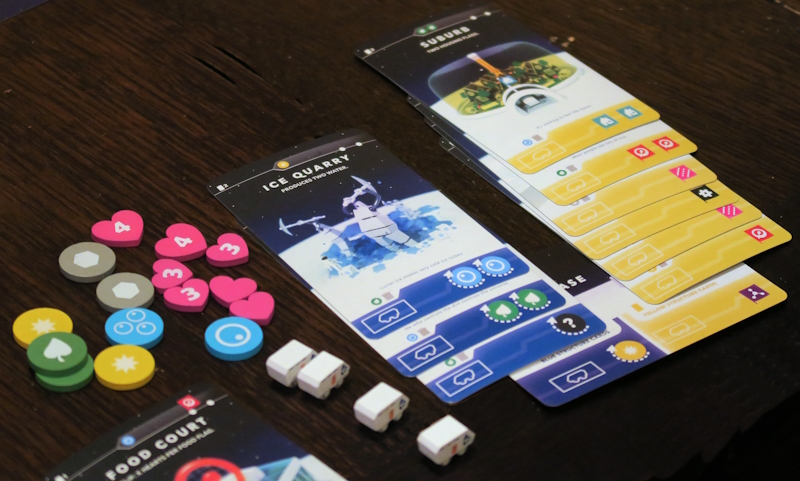
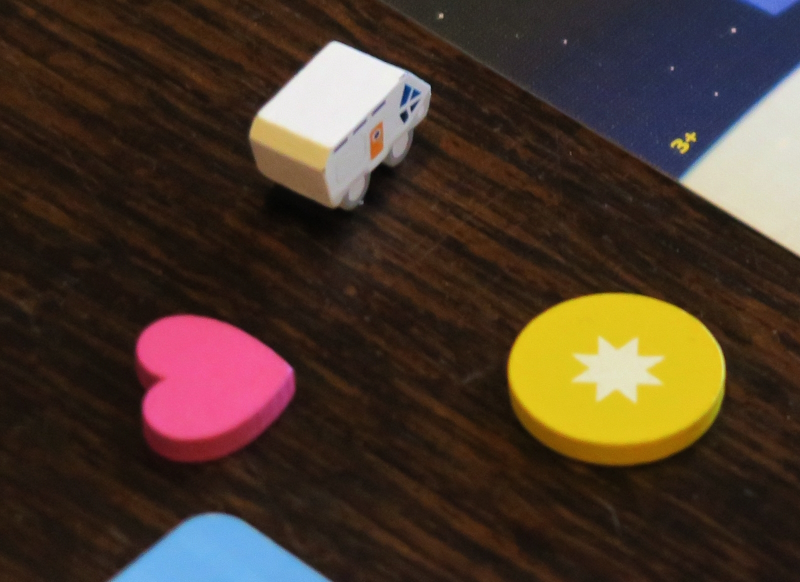
Once all players have taken their turn, all players pass their hands (including the Expedition card) to the player seated to their left and the player who now has the First Expedition Card starts the next round.  There are some similarities with Terraforming Mars, with cards having “Flags” (akin to the “Tags”), with some cards needing some Flags as a prerequisite while others display and therefore provide them.  There are five different Flags, Industry, Science, Food, Housing, and Transportation.  There are also four different types of Resource, Energy, Water, Biomass and Metal which are represented by wooden tokens, or Resource-eeples.
Moon
– Image by boardGOATS

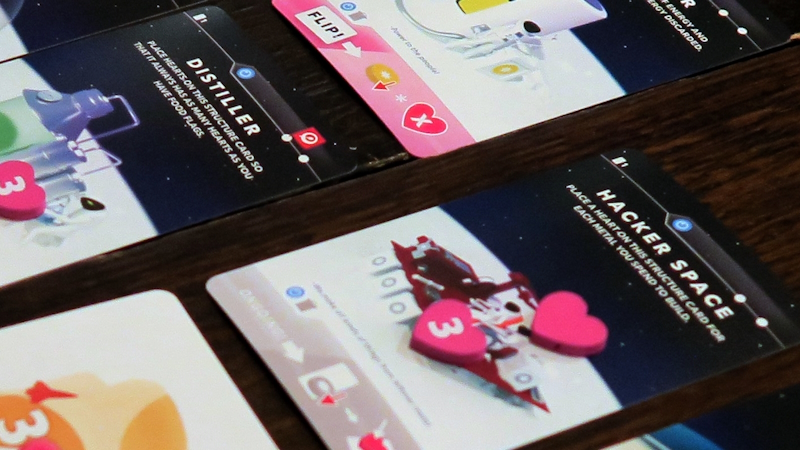
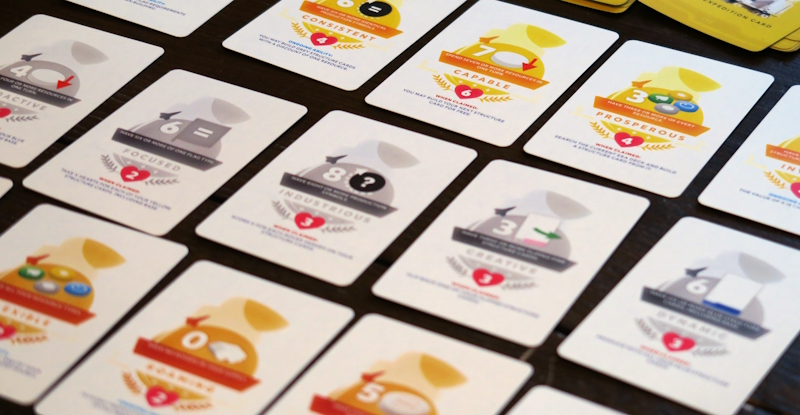
The guts of the game are the cards—there are five different types:  blue Production cards, yellow Flag cards, pink Ability cards, grey Excitement cards and red Special cards.  Blue and yellow Structure cards also display a Rover parking space.  Players begin the game with two Rover-eeples, but can acquire more during the game.  Players can park Rovers on other players’ Structures to either use the card to immediately gain its Resources (blue) or use the Flags on it to fulfill a Flag Requirement when Building (yellow). Pink Ability cards provide an ability players can use once per Era by flipping the card while grey Excitement cards provide Hearts, which are victory points—some of these just give points at the end of the game while others give Hearts during the game.
Moon
– Image by boardGOATS

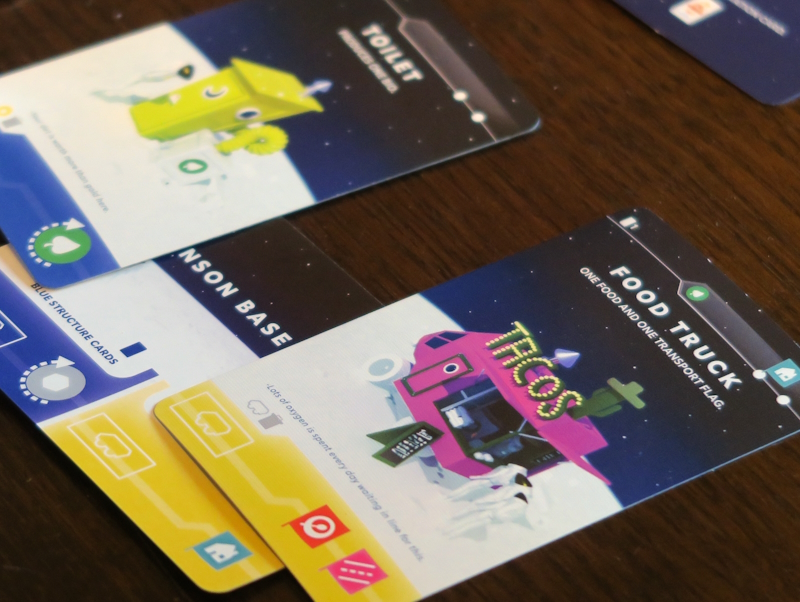
There was some hilarity over the card names, especially when Orange built a Toilet right next to his food van, Just in case!  Jade who was the most familiar with the game, took an early lead in the Hearts and finished with what appeared at first glance to be an unassailable lead with fifty-six of them, fifteen more than anyone else.  There are other scoring opportunities however, with points available for Grey Structures and Reputation Cards, and Jade came off worst for both of these.  Black picked up the most points for his Grey Structures with thirty followed by Pine with twenty-seven.  Scores were much lower for Reputation with Black, Sapphire and Pine with a similar tally.  In the end, it was very close, but the victory was Sapphire with a combined total of seventy-nine, just two more than Black in second, with Jade completing the podium.

Moon
– Image by boardGOATS

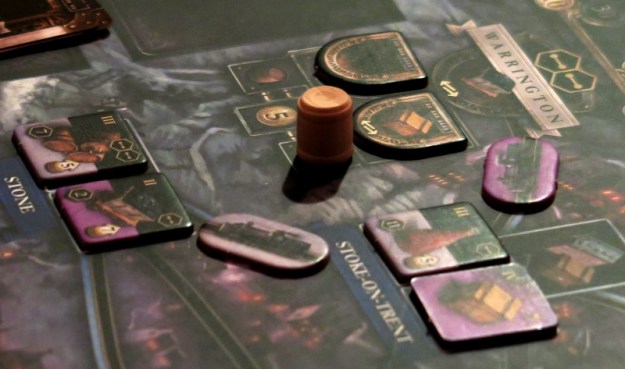
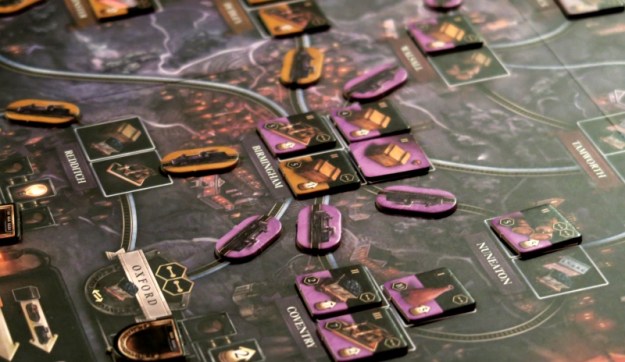
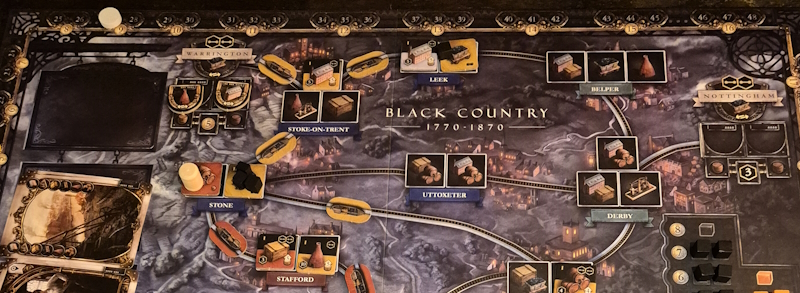
On the next table, Ivory and Byzantium were introducing Salmon to Brass: Birmingham.  There was a concern after last time that they might be a bit pushed to finish it in time (especially after last time), but with only three and with Birmingham being quicker to play than the original Lancashire version, they felt it was worth a go.  Ivory explained the rules while Byzantium set up the board.  In both games, players develop, build and establish their industries and network in an effort to exploit low or high market demands.  Players take turns according to the turn order track, paying two cards (from their hand of eight) to take any two actions from a possible six: Build, Network, Develop, Sell (cotton, manufactured goods or pottery), Borrow, and Scout.
Brass: Birmingham
– Image by boardGOATS

Building involves paying the required resources to place an industry tile while Networking is placing a Rail or Canal Link.  When Developing, players increase the point value of an industry, while Borrowing involves taking a £30 loan and a reduction in income.  The Scout action is new to the Birmingham game and replaces the Double Action Build in original, instead discarding three cards and taking a wild location and wild industry card.  Played in two halves, when the deck runs out players score, remove all the Canal Links then play on but this time building Rails.  The game ends when the deck runs out for the second time.

Brass: Birmingham
– Image by boardGOATS

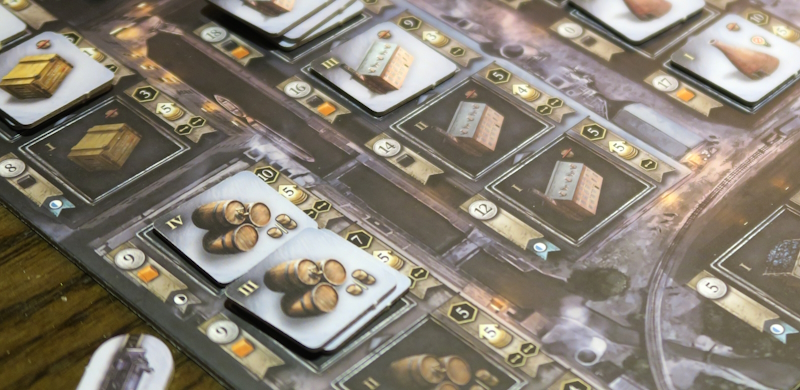
Ivory went first.  Due to Shrewsbury accepting all goods (this was randomly determined as part of set up) and selling goods being critical to scoring points, initially everyone focused on building near there and building industries that gave resources (i.e. coal and iron) that were going to be need to build further industries.  So Ivory, who went first began by building a Coal Mine in Coalbrookdale, while Byzantium added an Iron Works at the same location and Salmon placed a Coal Mine next door in Wolverhampton. At the start it looked like all three would all be competing in the same area, but once they continued building their networks (via Canals) and more industries, everyone started to spread out.  Ivory headed south, building Cotton Mills in Kidderminster and Worcester and was the first player to Sell, Selling to Shrewsbury and gaining four points for consuming Beer there (Beer being a prerequisite to Selling) and filling the tile to increase his income.
Brass: Birmingham
– Image by boardGOATS

Byzantium went north and sold Cotton to Warrington, gaining £5 as his “Beer Bonus”, and increased his income. Seeing the opportunity Byzantium was building, Ivory took the opportunity using a Leek card he had which allowed him to build outside his network, to build a Cotton Mill in Leek and immediately Selling, using the remaining Beer there to also gain £5. Salmon went more central (Cannok and Walsall), focusing on Coal Mines and Iron Works, but as no one was consuming the resources (both Byzantium and Ivory were slightly self-sufficient), he was unable to flip his industries and increase his income. This became a major issue for him as the game progressed. Everyone ran out of money quite quickly and were forced to take out Loans, decreasing their income making it negative so that they had to pay money to the bank at the end of each round.

Brass: Birmingham
– Image by boardGOATS

Whereas Byzantium and Ivory promptly Sold some Goods, flipped tiles and increased their  income so it was positive again, Salmon got caught in a debt trap, having to take further Loans to take actions and service his debt. When required to take a third Loan (and then pay £9 each in upkeep), it was agreed that he should take the Loan without the drop in income, allowing him to take actions and sell goods and ultimately get back to a positive income. After a late era focus on breweries to get the Beer to Sell further goods, cotton and in Byzantium’s case, Pottery, the Canal Era came to an end. After scoring flipped tiles and Canal Links, Ivory had a slight lead.
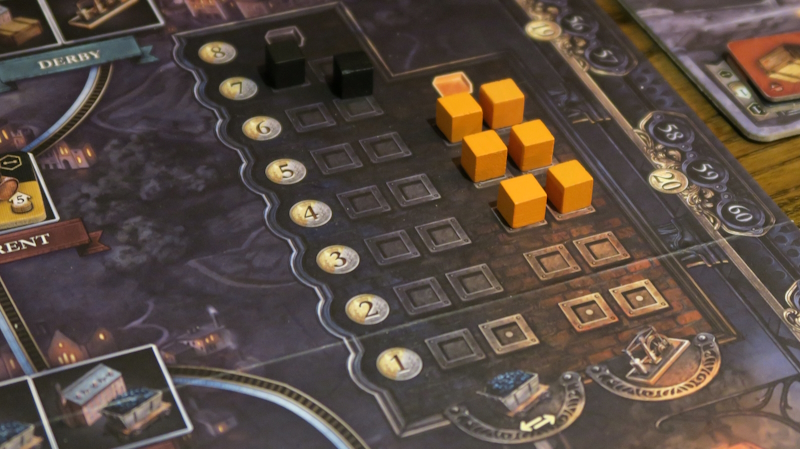
Brass: Birmingham
– Image by boardGOATS

At the end of the Canal Era and going into the Rail Era, as well as all the Canals, all Level 1 tiles are removed from the board, representing obsolete technologies.  This wiped out everything Ivory had and most of Byzantium and Salmon’s tiles, so the start of the Rail Era was similar to the beginning of the game.  That said, Byzantium and Salmon were tied to their positions because, without a named card, players always have extend their Network from an existing position if they can.  That meant, Byzantium and Salmon always had something that was going to score twice though, where as Ivory had to build from scratch, but was free to start anywhere.
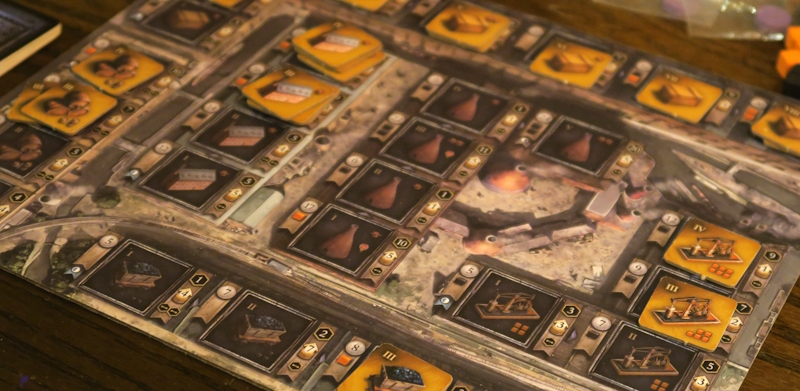
Brass: Birmingham
– Image by boardGOATS

With Rail connections requiring Coal to build, and because the cards in Ivory’s hand were all close to Shrewsbury (which that accepted all goods), he began the second Era almost exactly the same action way as he started the first, building a Coal Mine in Coalbrookdale. Although he had nothing on the board, Ivory was able to rebuild very quickly, partly because he had a good income, but also because he had taken a Loan as his very last action in the Canal Era.  Salmon and Byzantium also built their Networks in similar areas to the first Era. Byzantium’s core strategy was building and selling pottery to Warrington.
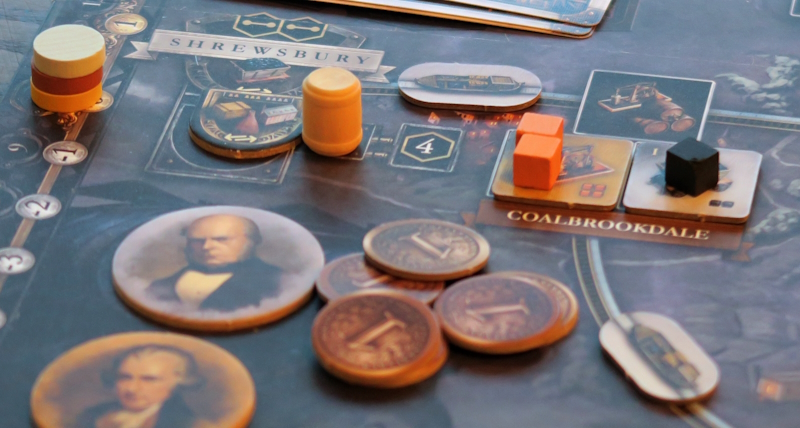
Brass: Birmingham
– Image by boardGOATS

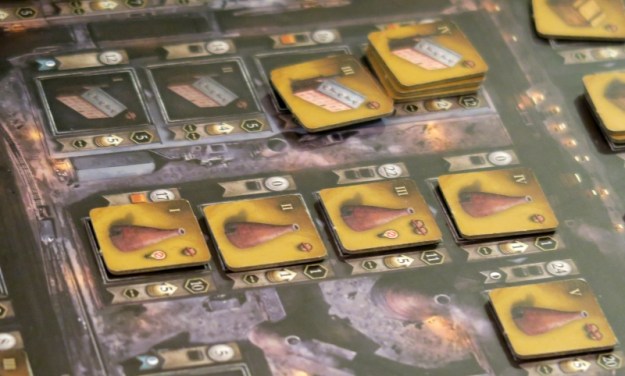
Pottery is a unique resource in Brass: Birmingham, with the first pottery title being worth a large amount of points when flipped, the next being worth very little, the next giving big points etc.. Players are also restricted in developing Pottery, which mean they can’t skip the low point value titles. However, the big scoring tiles are worth a lot and Byzantium was able to get the highest level title out and flipped for a total of twenty points. Ivory again focused on the more standard cotton Mills, and each title being worth more points than the last, he was able to get multiple titles placed and Cotton sold, flipping the tiles to Shrewsbury. He also spent actions building lots of rail links next to his flipped tiles.
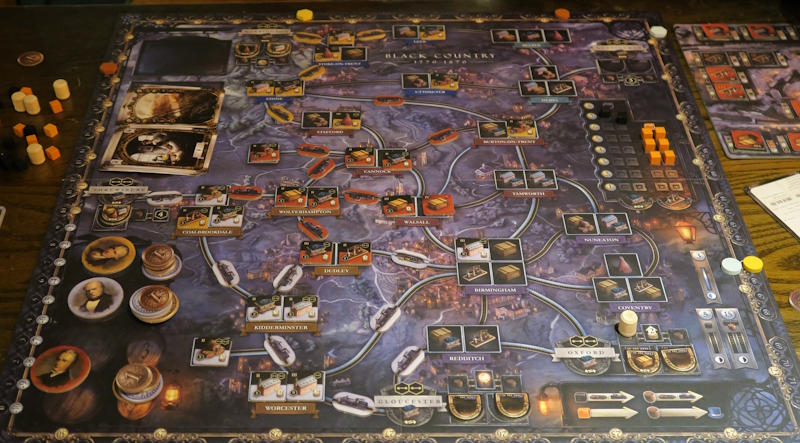
Brass: Birmingham
– Image by boardGOATS

Salmon again took a different approach, focusing on goods, the easiest to build and flip (especially as some don’t need beer), but these are not worth as many points. The game ended after all the cards had been played (for a second time), with Ivory’s focus on rail links and Cotton giving him victory over Byzantium by about twenty points.  Meanwhile, Teal beginning to explain the rules for Cottage Garden to Plum, Plum’s Aunt Damson and Blue, but then Ruby arrived.  Blue had cake to dispense and had a curiosity about Brass, so quickly offered her seat to Ruby and the Teal began again.  Cottage Garden is a fairly straight-forward Tetrissy, puzzle-type, polyomino game with a similar feel to Patchwork, but with more people.

Cottage Garden
– Image by boardGOATS

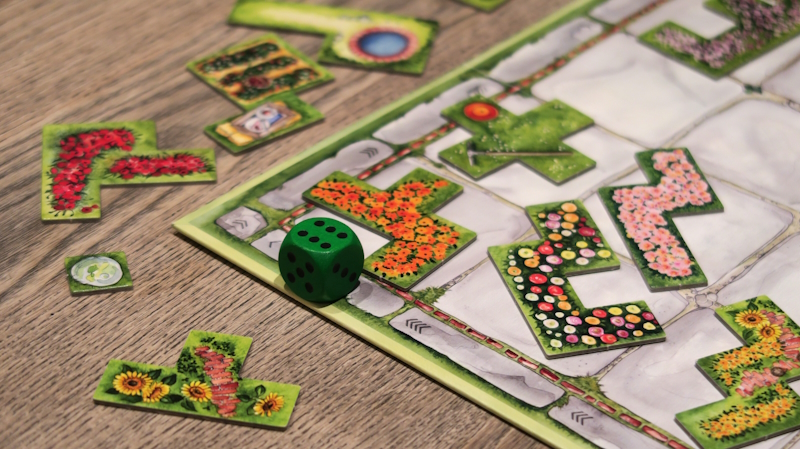
In Cottage Garden, players are competing in the art of gardening and are working two beds with a variety of flowers.  To do this, players select polyomino tiles of flower beds from a central market grid (restricted by the location of the “Gardener”), then place them on one of their two personal garden boards. Each board has several garden elements that are worth points when not planted over, and these are scored (on two different tracks) as soon as a garden has been completed. There are points “bars” on each track, and when these are passed players receive bonus tokens that can fill in empty spaces or give players a better selection of the flower bed tiles.

Cottage Garden
– Image by boardGOATS

Once a garden is finished, the player receives a new one to complete. After the Gardener completes her fifth lap around the market, the game enters its final round, after which, the player with the most points from their completed gardens is the winner.  The received wisdom is that the problem with the game is that it doesn’t change or intensify, which some people find boring.  However it also means that players have time to “get their eye in” and learn how to play without the game evolving beneath them and catching them out as they spend whole time playing chase.  As such, it was pretty much the perfect game for the occasion.

Cottage Garden
– Image by boardGOATS

Everyone did pretty well—Ruby picked up the scoring quickest, but Aunt Damson got the first beehive.  Teal wasn’t far behind though, getting the second.  In the final round, Plum just scored her current flower bed and discarded the second so that she didn’t get any negative points, something that turned out to be a critical decision in a very tight game.Plum and Teal had the edge in scoring for Pots, but that was off-set by Ruby’s scoring for her Cloches and and Aunt Damson’s Beehives.  Teal, Ruby and Aunt Damson were all within a couple of points, but the victor, was Plum with fifty-six, just three points clear of Ruby who edged second from Teal.
Cottage Garden
– Image by boardGOATS

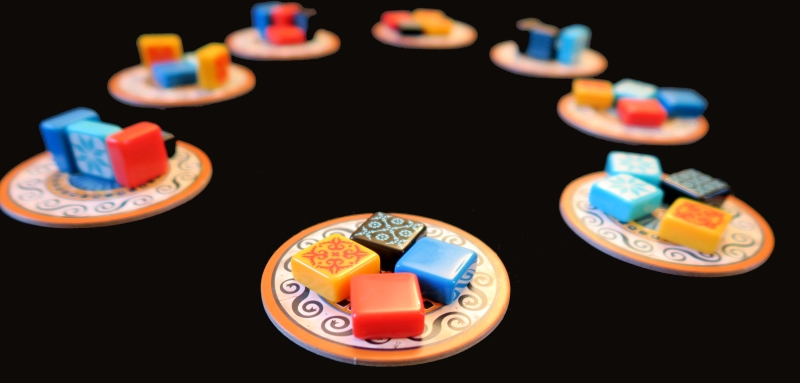
In addition to Aunt Damson, Green had brought his mother, Saffron who was visiting. the area  Saffron was quite well known to some of the group so there was quite a bit of chatter before she joined Green, Lime and Purple in a game of Azul.  This is a game that is well known within the group and with everyone familiar, the rules explanation could be kept short:  the game uses a very simple, but very clever market mechanic where players take all the tiles of one colour from a market stall and put the rest into a the centre, or take all the tiles of one colour from the centre.
Azul
– Image by boardGOATS

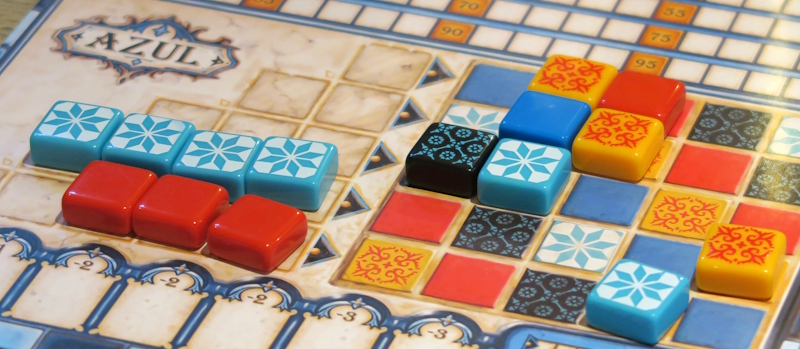
As soon as they have taken the tiles, players add them to one of the rows on their player board.  At the end of the round, one tile in each full row is moved into their mosaic.  The game ends when one player completes one full row of their mosaic.  Players score points when they add tiles to their mosaic (one point for each tile in the row and column it forms), and receive bonuses for completed rows, columns and any completed sets in their mosaic.  The catch is that each feeder row can only contain one colour and and if there are left-overs when they add to it, these score negative points.  Further, each row in a player’s mosaic can only have one tile of each colour.
Azul
– Image by boardGOATS

This time, Lime nearly got caught out, however, after Blue was summoned for a rules adjudication.  The question was, was he able to have more than one feeder row in a colour?  If they all had to be different he would be forced to place a lot of tiles in his overflow space and pick up a pile of negative points.  As the rules are clear and players can have as many feeder rows of the same colour as they like at any point during the game (they can only put each colour in a row of the mosaic once), Lime dodged a bit of a bullet.  As a result, he just edged it taking victory by three points from Green with Saffron a few points behind him.

Azul
– Image by boardGOATS

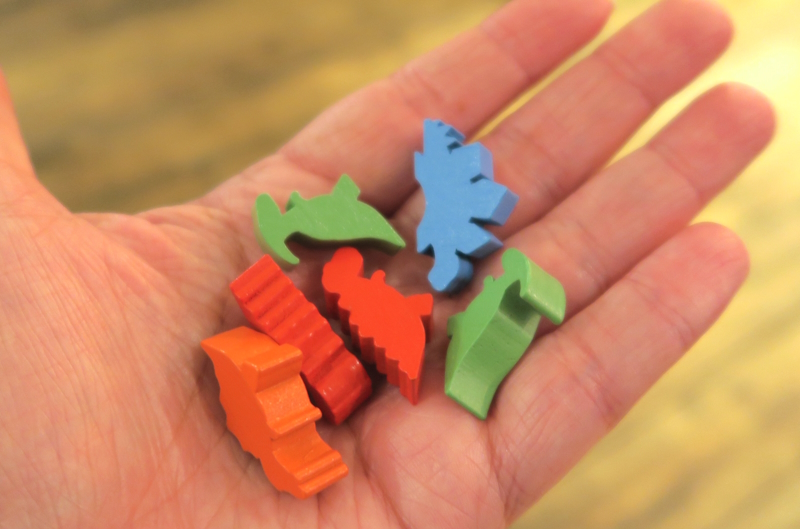
With everything else still going, when Azul finished, Blue joined the table to introduce Saffron to another one of the groups favourite games, Draftosaurus.  This is a very simple drafting game (similar to games like Sushi Go! where players choose from a hand of cards and pass the hand on), but in this case players are drafting cool dino-meeples and adding them to their dinosaur park, with different locations scoring for different combinations of dinosaurs. The game is played over two rounds, each placing six dinosaurs.  The first game was a bit of a land-slide although it ended in a tie between Green and his mum, Saffron, both scoring thirty-seven points.
Draftosaurus
– Image by boardGOATS

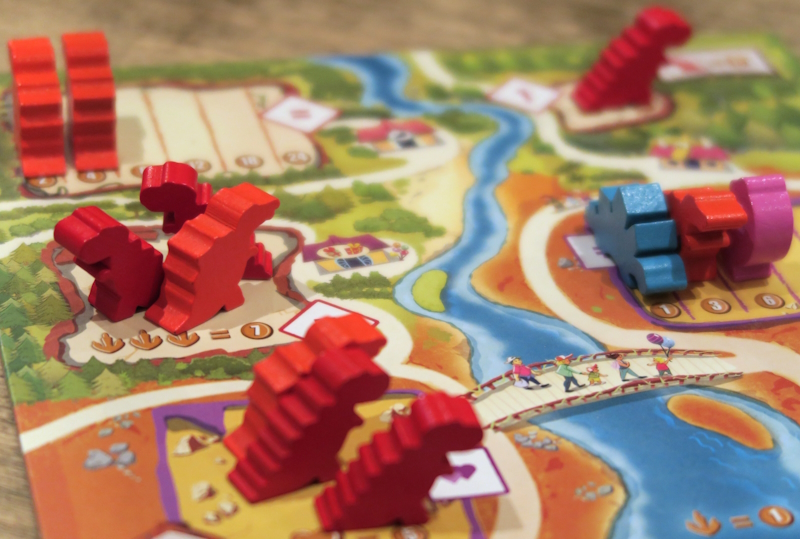
It couldn’t be left there of course, so the group “did a Lime” and played again.  This time it wasn’t until the scoring that Green realised why he hadn’t seen a single T. rex—Blue sat to his right had nabbed them all before he got to see them!  T. rex is a special dinosaur in general, but especially in Draftosaurus, giving an extra point for each one, but also having some placement restrictions.  Blue is generally very bad at this game, but even a park full of dinosaur kings (and queens) didn’t help, although it was a very close game with four players within a couple of points.  The clear victory though was Purple with thirty-eight, three points ahead of Lime who led the rest of the pack.
Draftosaurus
– Image by boardGOATS

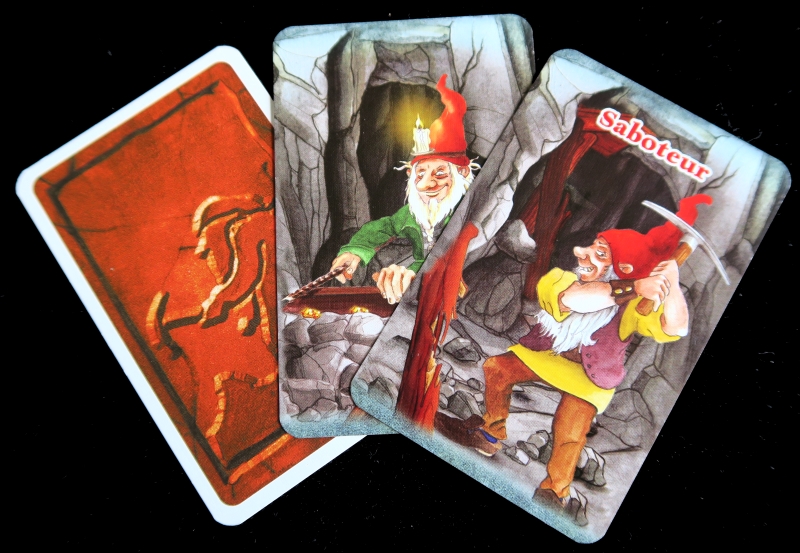
From there, there was a bit of chatter, but by the time Cottage Garden had finished, Teal, Lime, Green and Saffron all decided it was time to head home, leaving Purple to join Ruby, Plum and Aunt Damson.  There was some question about that they would play, but in the end they decided on one of Purple’s favourites, the hidden traitor game, Saboteur.  In truth, this is not at its best with four, but despite that, the group really enjoyed it.  The idea of the game is that players are Dwarves building a network of Tunnels in order to find treasure.  They do this simply by playing a card to extend the Tunnel and drawing a replacement.  The catch is that there is a traitor, an Evil Saboteur, in their midst.
Saboteur
– Image by boardGOATS

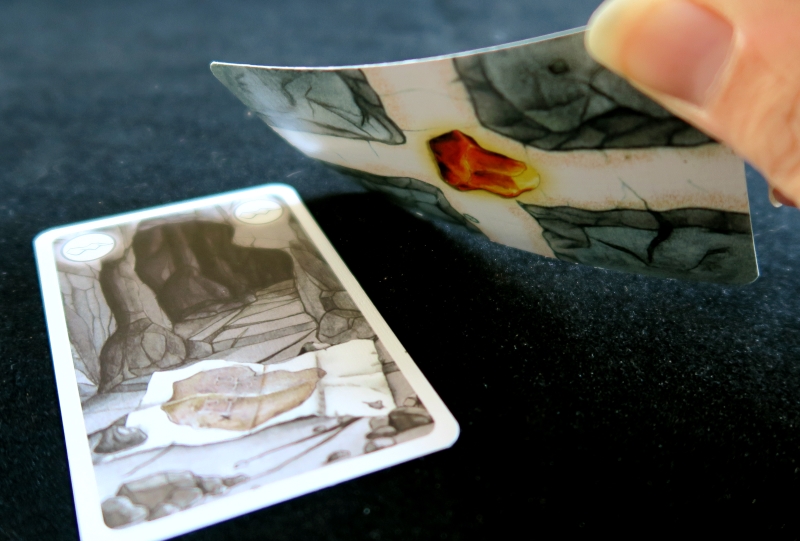
So, if the Dwarves have not found the treasure by the time the deck runs out, then they have lost and victory goes to the Evil Saboteur.  In addition to Tunnel cards, the deck also contains Special Map, Rock Fall, Broken Tool and Fixed Tool Cards which Dwarves and Saboteurs can use as they feel appropriate.  With four players, Ruby put two Saboteur cards in the pile used to assign the roles, but as it happened only one came out—Ruby.  Plum seemed to get the all map cards and checked the target nearest her first: Coal.  She then tried the the middle target card, but finally found gold in the one furthest from her.
Saboteur
– Image by boardGOATS

Ruby chose to strike out at Aunt Damson first, but that left Purple and Plum to continue digging for the gold.  Ruby then played a tunnel card with a dead-end which exposed her as a Saboteur, and as the only one, the writing was on the wall.  The game is formally played over three rounds, but we don’t like the way that plays and treat one round as a game in its own right.  Everyone enjoyed the game, but Aunt Damson in particular—she had watched and enjoyed The Traitors, so the overall concept particularly appealed.  It had been a lovely evening with a slightly different set of people and lots of games played.

Saboteur
– Image by boardGOATS

Learning Outcome:  It’s lovely to host family and old friends.

Boardgames in the News: Is there a Hidden Cost of Board Gaming?

A recent report about falling fertility rates and increasing childlessness from the BBC has created some discussion online.  The controversy centres on the headline image which shows a young man in front of his games collection.  These include games of some significance including Scythe, Root, Brass and the Suburbia Collector’s Edition, and none of which are cheap.  The implication in the discussion is that he can’t afford to have children because he spends too much on games.  Of course, they may not be his games and nobody has the right to criticise how someone else chooses to spend their money anyhow.  It is often observed, however, that the cost of everything has increased significantly—board games are no exception—and our hobby-spending unquestionably affects our other choices in life.

Kari Aaron Clark
– Image from bbc.co.uk


Boardgames in the News: The Best Game EVAR?!?!

BoardGameGeek is the largest and most comprehensive website dedicated to board and card games, with a database comprising nearly a hundred and fifty thousand games.  These games have a ranking based on ratings submitted by account holders.  While these rankings are obviously skewed by the characteristics of the contributors, the number one ranking game clearly has significance.  In the twenty-two years that the rankings have been in place, there have been just ten games to achieve the top rank, but as of today, there is an eleventh, with Brass: Birmingham taking the top spot from Gloomhaven.

Brass: Birmingham
– Image from boardgamegeek.com

Of these now eleven games, three held the top rank briefly, for a day or two only.  The first of these was The Game of Life, and it’s top rank was the result of a software bug when on 25th February 2006, a User gave it a rating of sixty-five thousand five-hundred and thirty-five out of ten.  Just over a year later, as an April Fool, another User encouraged his friends to give Monkey Auto Races a rating of ten.  With just three hundred ratings, this game went from unranked to number one overnight, only to plummet back down the rankings just a day or so later.  Three years later, the site owner pulled his own April Fool stunt and set the ranking equal to the data base number, making Die Macher number one for a day.

The list of eight genuine Number One Games and the date they first achieved the top ranking are:

Brass: Birmingham
– Image by boardGOATS

3rd May 2022

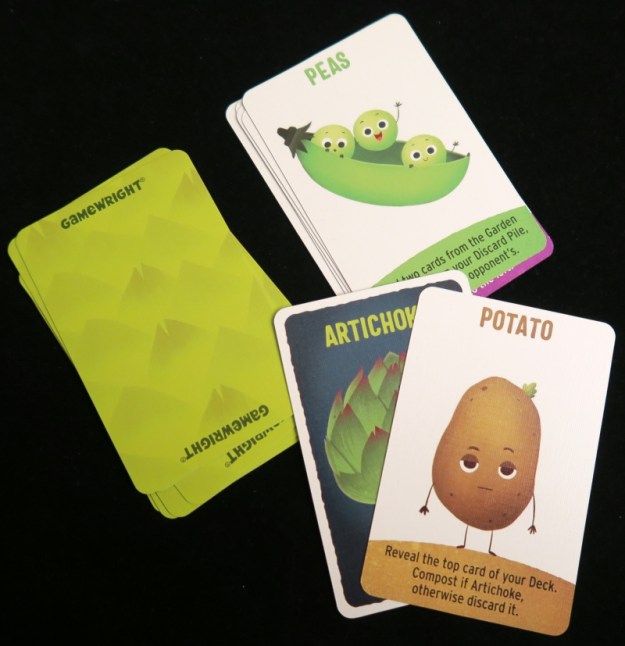
Like the last few games nights, this one started with Pink and Blue playing the deck-shedding game, Abandon All Artichokes.  This is a very simple game where players start with a deck of ten artichoke cards from which they draw a hand of five, then, on their turn, they take one card from the face up market, play as many cards as they can, before discarding their hand to their personal discard pile.  If, on drawing their new hand of five cards they have no artichokes, the game ends and they win.  In the first couple of games a few weeks back, Pink struggled somehow, and Blue won.

Abandon All Artichokes
– Image by boardGOATS

Then Pink got the hang of it, and won several games on the trot, but this time it was Blue’s turn to finally get back on terms, just before supper arrived.  They were just finishing when Black and Purple, and then Teal arrived.  Although it was still very early, it was a perfect opportunity to play the “Feature Game” as it was Moneybags, a quick little social deduction, filler game. The premise is similar to that of Ca$h ‘n Guns, where players are thieves dividing up the spoils from a robbery, stealing from each other and generally trying to deceive everyone so that they come out on top.

Moneybags
– Image by boardGOATS

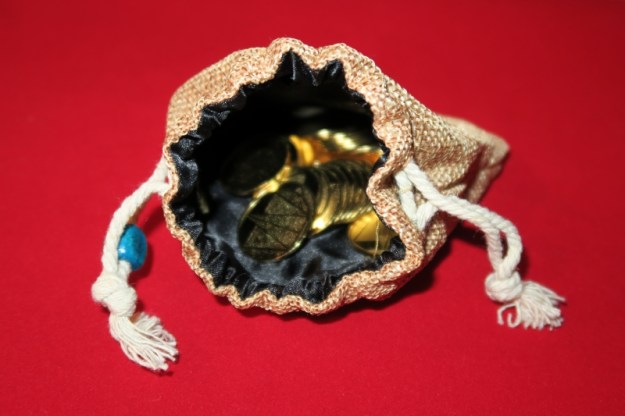
In Moneybags, one player takes the role of the Godfather, divides the loot “evenly” amongst the players’ small hessian sacks.  Holding only the top of their sack, each player takes it in turns to Pass, Stick, or Rob another player.  Pass and Stick are simple actions (pass and remain in the game, pass and stick with the total in their sack so they can neither Rob nor be Robbed), but Rob is the interesting one.  The active player can Rob any other player that is still “in”, taking some or none of the loot from their sack.  The thief mustn’t be too greedy, however, as the victim can challenge—the protagonists compare their loot and the one with the largest stack loses, the winner takes all the loot and the loser is eliminated.

Moneybags
– Image by boardGOATS

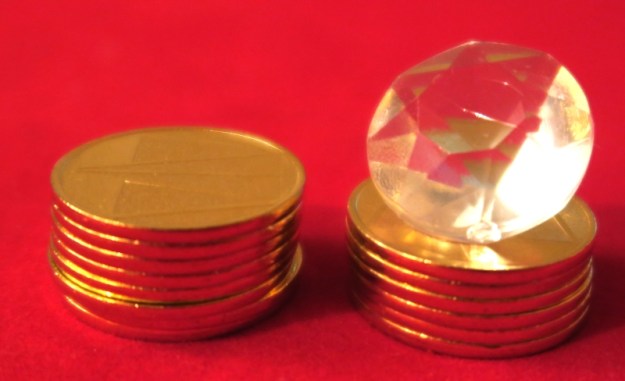
After two turns round the table, the game ends with the Godfather (or arguably Godmother), taking their second turn.  The winner is the player with the most loot.  Moneybags can be played over three rounds, though like Saboteur it is probably best when one round is considered “the game” rather than playing in campaign mode.  Pink started as the Godfather and divvied up the money.  In addition to coins, there is also a Diamond in the loot; this is worth roughly ten coins. When comparing spoils, the coins are stacked with the Diamond placed on top so that the tallest stack loses when Robbed or wins at the end of the game.  The Diamond is comparatively light, so it adds a little bit of additional ambiguity to the proceedings.

Moneybags
– Image by boardGOATS

Pink, made a point of taking note of where the Diamond went and then stole it back later in the game giving him the first round, slightly ahead of Teal in second.  Lime arrived during towards the end of the game, so the rules were explained to him.  Then Ivory joined the party so Blue swapped out and gave him a quick summary as well, while Purple, as Godmother, divided up the spoils.  With a slightly better idea of how the game played, the second round went even better with more players Robbing and challenging each other.  As a result, the Diamond went round the table several times.  There was much hilarity as players tried to guess how much cash people had, and Pink showed his age when he commented that someone’s stash “chinked like a bus conductor’s money bag”.

Moneybags
– Image by boardGOATS

Once again, the Godparent finished with the Diamond, but Purple had very little cash to go with it and therefore only made third place.  This time the winner was Ivory, in a very, very tight finish, just ahead of Black.  It had been a lot of fun and although we could easily have played another round or two, we also wanted to play some longer games.  Moneybags fills a similar role to 6 Nimmt! though, so it will get another outing soon.  In the meantime, Viticulture (Essential Edition), Roll for the Galaxy, and Brass: Birmingham were all suggested for the next game, but Pink always loves playing Viticulture and Teal has been keen for a while, so Ivory took them off to play that while the others decided what to play.

Viticulture
– Image by boardGOATS

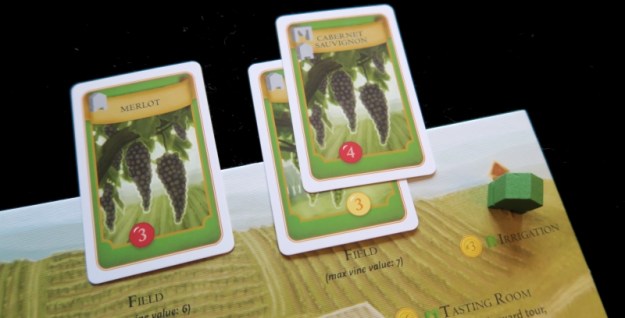
Viticulture is a worker placement game where players plant and harvest grapes, make them into wine and fulfill contracts to get points.  The first player to reach twenty points triggers the end of the game, and at the winner is the player with the most points at the end of that round.  Although Viticulture is not particularly novel or innovative, it is widely respected as one of the best worker placement games around, succeeding in being both smooth to play and relatively easy to learn, though it takes real skill to be good at it.  This time, everyone sold land to fund worker training; although we haven’t done this when we played previously, it would seem to be an accepted tactic in most games now.

Viticulture
– Image by boardGOATS

At the start of the game, players get choice of a couple of “Mama” and “Papa” cards (taking one of each)—these give people starting resources, workers, money, Visitor cards or a starting building.  Pink took a Trellis from his Mama card which meant he could just plant grapes that needed a Trellis and not worry about building any cultivation infrastructure.  The others prioritised money. Playing two worker cards at the same time (using the on-board bonus) was a popular.  Though it required care not to overrate the feature and wind up playing some slightly naff workers, when perhaps it might have been better to wait until the next round.

Viticulture
– Image by boardGOATS

The grey, extra-worker meeple was also popular, with players seemingly happy to be last in the turn order if that meant they got an extra “turn”.  Although everyone had played the game before (though Teal only online), there were some rules that needed “ironing out” as years of playing with the Tuscany expansion meant that Pink had forgotten many of the differences between that and the base game (Tuscany will get an outing as the “Feature Game” in a few weeks). The game was brought to an unexpected (and obviously skillful) conclusion by Teal, who finished the game just before Ivory and Pink had the chance to deploy their big scores.

Viticulture
– Image by boardGOATS

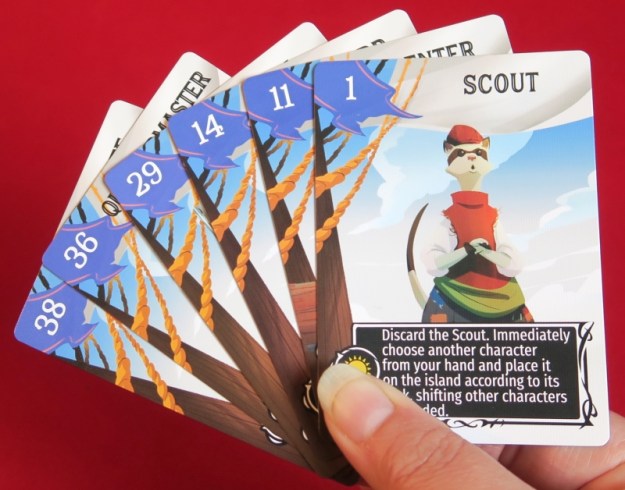
On the next table, Libertalia: Winds of Galecrest got a second outing, largely as Black and Lime had missed out last time, but also as Purple and Blue had enjoyed it.  This is also a fairly simple game to play, with a lot of depth.  Players start with the same hand of Character cards chosen from a larger deck.  This provides a lot of variability, while also ensuring that nobody has an advantage caused by random card draw.  The cards are numbered from one to forty, each with different actions—some daytime, some dusk, and some nighttime.  The idea is that everyone simultaneously chooses a card to play, then the cards are activated in ascending order during the day, descending order at dusk and simultaneously at night.

Libertalia: Winds of Galecrest
– Image by boardGOATS

Some of the cards can have a huge impact on other players’ games.  For example, the Brute causes the highest value card in play to be discarded, which means the player that played that card doesn’t get actions on that round.  In addition to night time actions, any players whose characters survive the day, also get to take some loot, if there is enough available of course.  Some of the loot is extremely valuable, some of it can be used to assassinate other Characters and and some can be more of a curse than an advantage.  As a result, rounds can go well or badly.

Libertalia: Winds of Galecrest
– Image by boardGOATS

The game is played over three voyages, lasting four, five and six days respectively.  At the end of each voyage, players bank their takings and are paid a small amount based on their reputation at the start of the next round, which then acts as their kitty.  This time, Blue had an appalling first round.  This meant she was some twenty to thirty doubloons behind the others from the start, but also meant that when when others threatened, she was able to point to her lack of funds and how she was “not the threat”.  In contrast, Lime took an early lead and therefore attracted a lot of hostility, missing a lot of turns as a result.

Libertalia: Winds of Galecrest
– Image by boardGOATS

By the start of the final voyage, Blue was still some way behind, but hadn’t given up, Purple was fighting to get to the front, Lime was getting a bit fed up of being picked on and Black knew he was likely to be next in line.  It was all to play for, especially as the final voyage is the longest so players have time to plan and work card combinations.  Blue managed an amazing final round and nearly made it in what was a very tight finish—she ended just two doubloons behind Lime and Black who tied with eighty-six.  Lime could have won outright if he had played his Captain in the final round, but as it was, Black’s Aristocrat left him third on the Reputation track, one place ahead of Lime, giving him victory on the tie-breaker.

Libertalia: Winds of Galecrest
– Image by boardGOATS

Remarkably, Viticulture had finished first, so after discussing and admiring Roll for the Galaxy and comparing it with Race for the Galaxy (which Teal was more familiar with), the trio squeezed in a quick game of Love Letter.  This is a super-quick micro card game played with just sixteen cards that celebrates its tenth anniversary this year.  When it was first released it was very innovative, but since has inspired a lot of similar games, it is still great in its own right, as a simple, quick filler though.  The idea is players are trying to finish with the highest ranking card, so on their turn, they take a card from the deck adding it to their hand, then play one of their two cards.

Love Letter
– Image by boardGOATS

Each card has a rank, but also an action that takes effect when played.  For example, these allow players to look at others’ cards, force others to discard their card, or make them compare cards with the lowest being eliminated.  The last player standing wins the round, the first to three is the winner of the game.  This time, Pink and Ivory got their revenge on Teal for ending Viticulture too soon.  Between them, they shared the five rounds, with Pink just taking the balance and with it, victory as Libertalia and the evening as a whole, came to an end.

Love Letter
– Image by boardGOATS

Learning Outcome:  There’s no such thing as honour amongst thieving gamers.

1st December 2021

It was a relatively quiet night with no Burgundy, Lilac or Teal.  However, that was slightly offset by the arrival of Lime who had missed the last few and Beige, who is much cuter in real life than on Teams.  The first game of the evening, as Blue and Pink finished their supper, was No Thanks!.  A very simple game where players take a card or pay a chip to pass the problem on, it is easy to play when attention is elsewhere.

No Thanks!
– Image by boardGOATS

At the end of the game, players sum the face value of the cards they collect and the player with the lowest score wins.  The clever part is that if players have a run of cards, they only score the lowest, and the fact that some cards are missing encourages players to gamble.  This time, Blue “top scored” with a massive sixty-six having tried and failed to make a run out of high scoring cards.  Green won with a careful game that gave him thirty points and Pink was took second place, four points behind.

No Thanks!
– Image by boardGOATS

As people arrived, the group split into two with the one group playing the “Feature Game“, Draftosaurus.  This is a very light drafting game, a bit like Sushi Go!, but with dinosaurs (because everyone, especially Beige, likes dinosaurs).  We have played this quite a bit, but mostly online over the last year or so, but the tactile wooden dino-meeples add a lot to the experience.  The basic idea is that players start with a handful of wooden dinosaurs, pick one to keep and then pass the rest on.

Draftosaurus
– Image by boardGOATS

Players then choose which pen to place the dinosaur in obeying the restrictions the pens have for example, each dinosaur placed in the Meadow of Differences must be different.  Players also take it in turns to roll the Placement Die and have to additionally follow the conditions imposed it (e.g placing the dinosaur in an empty pen or a pen that does not contain a Tyrannosaurus rex).  The game is played over two rounds and at the end of the game, when all the dino-meeples have been placed, players add up their scores.

Draftosaurus
– Image by boardGOATS

Each pen scores according to its specialism, with players scoring an extra point for each Tyrannosaurus rex they have have.  Draftosaurus is a very quick and light game, but is also very enjoyable, and this time the scoring was very tight too with just five pints separating first and last places.  Blue just managed to edge it though finishing one point ahead of Pine with Purple and Lime tied in third.

Draftosaurus
– Image by boardGOATS

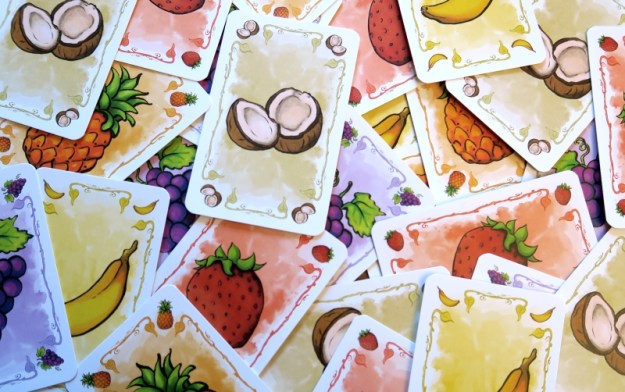
With five players the options were a little limited, but Pink effectively made the decision as he was keen to play Fabled Fruit, a game we last played two and a half years ago.  This is a game he’s very fond of because he likes the cute animal artwork and bright primary colours.  It is a light card game, with the unusual feature that the game evolves and changes each time it is played.  This “Legacy” style was made popular by Rob Daviau and Matt Leacock with Pandemic Legacy, a game that divided gamers as it required them to destroy components and write over the board, an anathema to people who are accustomed to looking after their games, sometimes to an extreme degree.

Pandemic Legacy: Season 1
– Adapted from image by BGG contributor Muse23PT

Once Pandemic Legacy has been played out, the end product is a personalised copy of Pandemic which embodies the memories of the campaign.  This further irritates some gamers because they feel they are left with a comparatively unplayable copy of the game or at least one that is less well be unbalanced and may have design flaws.  Fabled Fruit is different from the Legacy games as the changes are not destructive, so the game can be reset and played again from the beginning, in this case by simply sorting the cards.

Fabled Fruit
– Image by boardGOATS

The game is quite simple—it starts with six decks of four cards in the central play area and on their turn players move their worker from one pile to another and either carry out the action associated with the cards, or buy a card.  Each card has a cost in fruit and, when bought represents a fruit smoothy.  When a player buys their third card (in the five player game) they trigger the end of the game and the player with the most smoothies at the end of the round wins.

Fabled Fruit
– Image by boardGOATS

The starting decks include simple actions like “take two fruit cards from the deck” and “give one banana to any other player and get two fruits in exchange”.  As the game evolves though, the actions become more interesting with the introduction of a fruit card market and more complex interactions.  This time Blue got out of the blocks quickest and was the first to three with Pine and Purple tied for second.  It was a very enjoyable game and people were just starting to get interested in how the actions were changing and what animal would be introduced next, so the group decided to play it a second time and see what happened.

Fabled Fruit
– Image by boardGOATS

By the second round there was lots of talk about how the some fruit looked like hemorrhoids and from there the conversation deteriorated into a discussion of bum grapes and hairy nuts.  This time, Lime was the victor with Pine taking second place.  As it was packed away and Pink sorted the cards to reset it, the group lamented the “problem” with “Legacy-type” games.  Sadly, they really shine with a small group like a family or household that play together frequently.  The problem with a group like boardGOATS is that people play in different groups each time, so it isn’t really possible to work through a campaign properly.

Fabled Fruit
– Image by boardGOATS

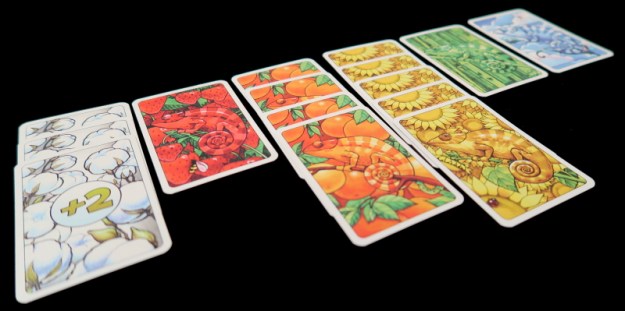
With that, Lime took his leave and there was just time for the remaining foursome (plus Beige) to play a quick game of Coloretto. This distills the essence of the, arguably, better known board game, Zooloretto, into a simple yet clever little card game.  We’ve all played it a lot, so it needed little introduction:  on their turn, players either turn a card and add it to a truck, or take one of the trucks.  The aim is to collect sets, but only the three score positively, the others all score negative points with the player with the most winning.  This time, Blue picked up a couple of full sets and won by a bit of a landslide with Pink in second.

Coloretto
– Image by boardGOATS

Meanwhile, on the next table, Black, Green and Ivory were playing Brass: Birmingham, the Sequel to Brass (Lancashire).  It is an economic strategy game that tells the story of competing entrepreneurs in Birmingham during the industrial revolution, 1770-1870.  Each round, players take turns according to the turn order track, receiving two action points to perform any of the actions:  Build, Network, Develop, Sell, Loan and Scout.  The game is played over two halves: the canal era (years 1770-1830) and the rail era (years 1830-1870).

Brass: Birmingham
– Image by boardGOATS

The game is quite complex so Ivory’s explanation took a little while.  Black had previously read the rules, but Green came in with no prior knowledge, so it was typical that the Start Player application chose Green to go first.  He started the first, Canal part of the game building in the North West, while Ivory went for the Midlands and Black the Mid-South. Black and Ivory were soon linking their routes and connected up to the board edge trading towns. Ivory’s experience of the game meant he was first to use it and collect the Beer barrel.

Brass: Birmingham
– Image by boardGOATS

Green’s routes remained separate from the other two for a while, and although that gave him relatively uninterrupted growth in the region, he found himself limited to only one trade. Thus he pushed south to join up with the other two.  At the halfway point, Ivory was narrowly in the lead over a surprised Green, with Black a few points behind. The board was then cleared and reset. Everyone had managed to build at least a couple of stage two buildings.

Brass: Birmingham
– Image by boardGOATS

As the second, Rail part of the game went on it became clear that everyone had switched places.  Green was building up in the South East, and Ivory was working in the North and Black even further South.  It took much longer to join up the routes so it wasn’t until the very end that players started to build and use resources that others had planned for.  By the end of the game and after the final scoring, Ivory had romped away to a comfortable win, with Black leapfrogging Green into a comfortable second place.

Brass: Birmingham
– Image by boardGOATS

It had been enjoyable, though it was a bit of a rush at the end as time was pressing.  Brass is an unusual game in the way that players can each use the others resources, which is an interesting twist.  With many different options to planning, this makes for quite a thinky game which leaves players feeling they can do so much better the next time.

Brass: Birmingham
– Image by boardGOATS

Learning Outcome:  Beige is a lot smaller in real life.