The evening began with the sad news that Kath and Ian and their daughters were leaving for a new pub in Shipton Abbot (or was that Newton Abbot?). They have been good to the group and worked hard to give us an environment that conducive to gaming, so it is sad to see them moving on, though Devon is quite a nice place. Everdell is also reputed to be a nice place, and one that some of the group were to travel to perhaps using its new railway station, as the Newleaf expansion to Everdell was the to be the week’s “Feature Game“. The game got going after about fifteen minutes of general faffing about and reminding everyone of the rules to the base game and explaining the additional features of the expansion.
 |
| – Image by boardGOATS |
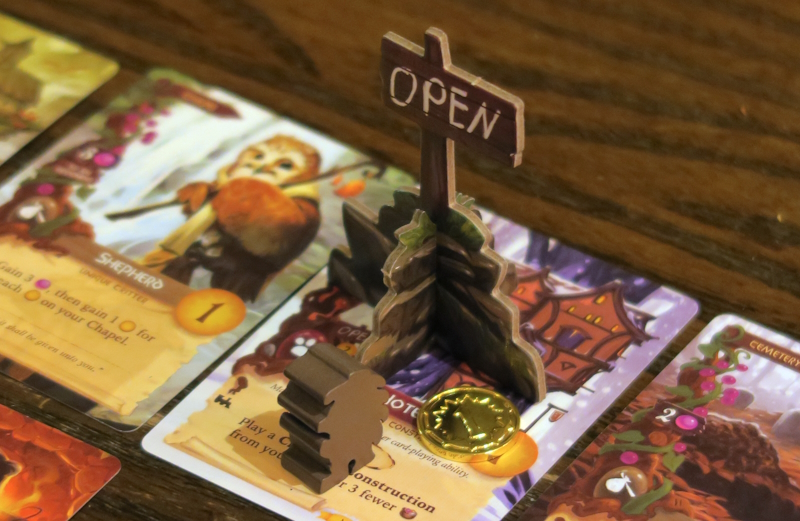
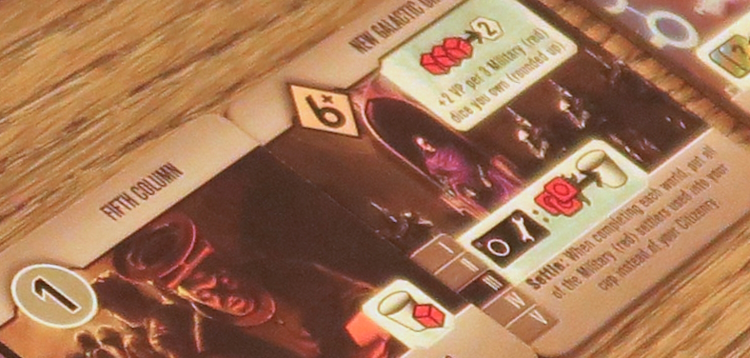
The base game is a fairly simple one of worker placement to collect Resources and spend them to place Cards. Players keep playing until they run out of workers when they get them all back (vacating the associated Action spaces), and then start again. The game is played over four rounds (or Seasons), with players with the most points from Construction and Critter Cards as well as Event (end-game scoring) Cards. The Newleaf expansion adds new Critter, Construction and Event Cards, but more obviously, it a new railway station. This and associated Visitor Cards, Freight Trucks (which provide an alternative way to get Resources), Travel Tickets, and Reservation Tokens.
 |
| – Image by boardGOATS |
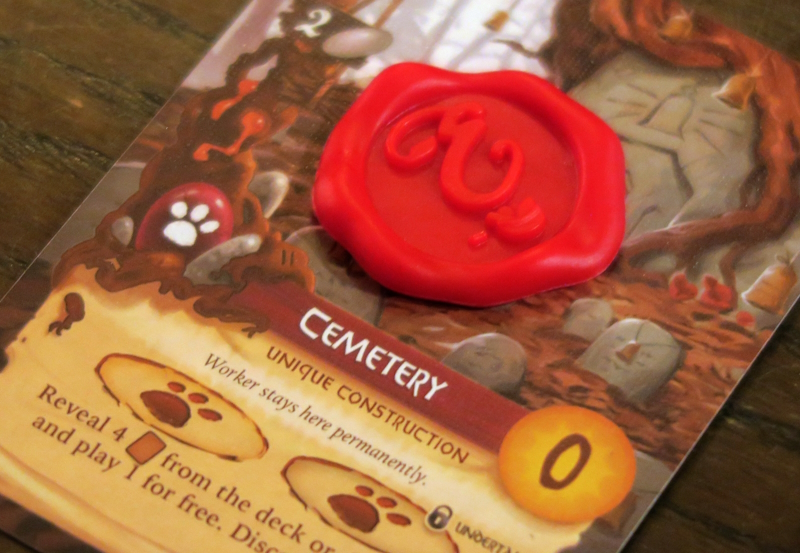
Plum (who obviously chose to play with Cat-eeple Workers) went first, grabbing some Resources, followed by Purple (Butterfly-eeples), Cobalt (Hedgehog-eeples) and then Ivory (Duck-bill Platypus-eeples). Everyone started setting up their town, particularly focusing on green Constructions and Critters that could give income in spring. Plum built up a large pile of Resources and grabbed a Freight Truck with Resources loaded on it and her choice of discount when producing (paid in part using the Reserve Token to gave her a discount) . Purple didn’t go for green Cards, but red Cards with additional worker spots (in particular the Hotel and Chapel), whereas Cobalt and Ivory both got a Mine and Miner Mole, giving them access to valuable pebbles.
 |
| – Image by boardGOATS |
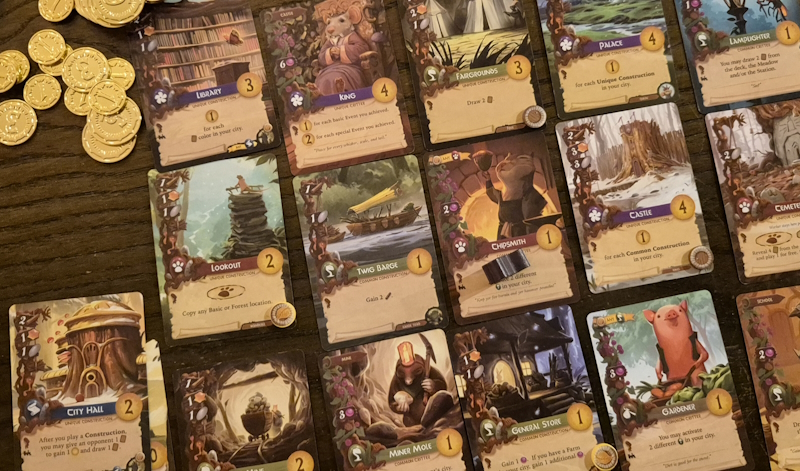
The length of Seasons in this game is variable, with some players doing more than others before they are forced to reclaim their Workers. Purple passed on to Spring first, followed by Plum and then, sometime later, Cobalt and Ivory. Cobalt gained a few blue Cards which had given him Resources (and in particular Cards) when playing Constructions and Critters, whereas Ivory had built quite a collect of green Cards, giving him a significant pile of Resources going into Spring. Spring was very similar to Winter, with everyone focusing on engine building, although Purple was beginning to struggle, due to a shortage of green Cards. Ivory made an early grab for Harvest Festival Event which gives a points bonus for having four green Cards in his city—he was already building quite a big tableau including a Castle.
 |
| – Image by boardGOATS |
Cobalt was taking things slightly more slowly, still focusing on blue Cards, which was enabling him to draw three cards every time he played a Card, so he was always at the hand limit. Moving into Summer, Cobalt significantly stepped up his building, as did Plum. She grabbed the Ever Wall Tower card which rewarded her for having nine Constructions. Having already taken Grand Tour event for having three red Constructions, Ivory was eyeing up the Royal Tea special event for having three green and two purple Cards in his town. However, whilst focusing on collecting resources for buildings to complement his already built Castle and the Palace Card he had in his hand, he failed to notice Cobalt had already played three purple Critters/Constructions.
 |
| – Image by boardGOATS |
As a result, Cobalt beat Ivory to both the Royal Tea and the Scenic Flight awards. Much to Ivory’s disgust, Cobalt was then also able to claim the Sunflower Parade achievement award for having three Events too. So, Ivory went into damage limitation mode, and began focusing on the passengers at Newleaf station as an alternative way to score points. Purple was first to move into Autumn and as everyone else followed the focus was firmly on points. Cobalt was able to collect the Juniper Jig Dance Contest Event card for having nine Critters (in part due to Ivory giving him the Fool!). Ivory was collecting more passengers using his special ticket to enable him to take a worker back, something everyone had from the from the expansion while Plum was building as many building as possible.
 |
| – Image by boardGOATS |
It was all a bit of a rush at the end as it was nearly midnight when the game finally finished. Largely due to the scores for his huge number of Events, the winner was Cobalt with ninety-three points. Ivory took second some ten points behind, closely followed by Plum who got over half her points for Critters and Constructions. The game had taken all evening, but during this time, Pink, Pine and Lime had managed to get through no less than five games. The first was one of Pink’s favourites, Zoo Break. In this game, players work cooperatively to try to prevent the escape of animals from their zoo. It is one of Pink’s favourite games, but this time it was very, very short-lived.
 |
| – Image by boardGOATS |
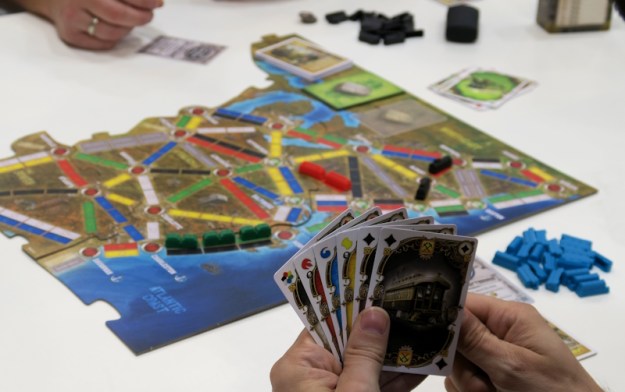
Things started well as the group locked up the Capuchins, Snakes and the Rhino. But then the Meerkats, who were partying in the fountain, decided to make a bid for freedom. Three tigers and four elephants were already on the loose and rampaging round the zoo and while Pink put two Pandas back in their cage, five of the Meerkats made it to the exit and headed out. And thus a handful of mischievous Meerkats led to the sad demise of Bedlam Zoo (which really had been Bedlam this time). To help get over the disappointment of the epic failure, the group decided to go on a a train ride around France with Les Aventuriers du Rail Express, a light version of one of the group’s favourite games, Ticket to Ride.
 |
| – Image by boardGOATS |
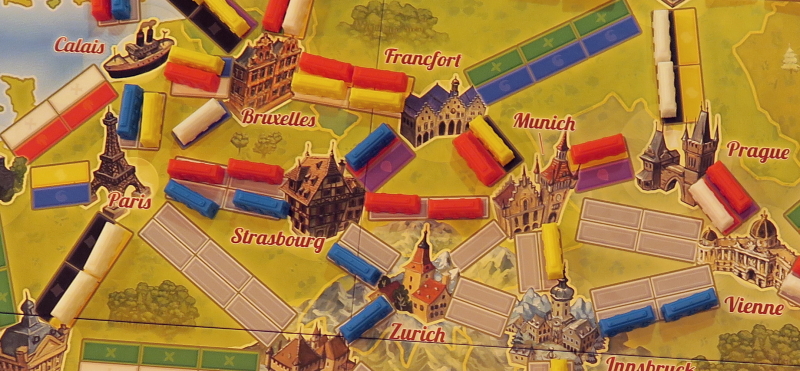
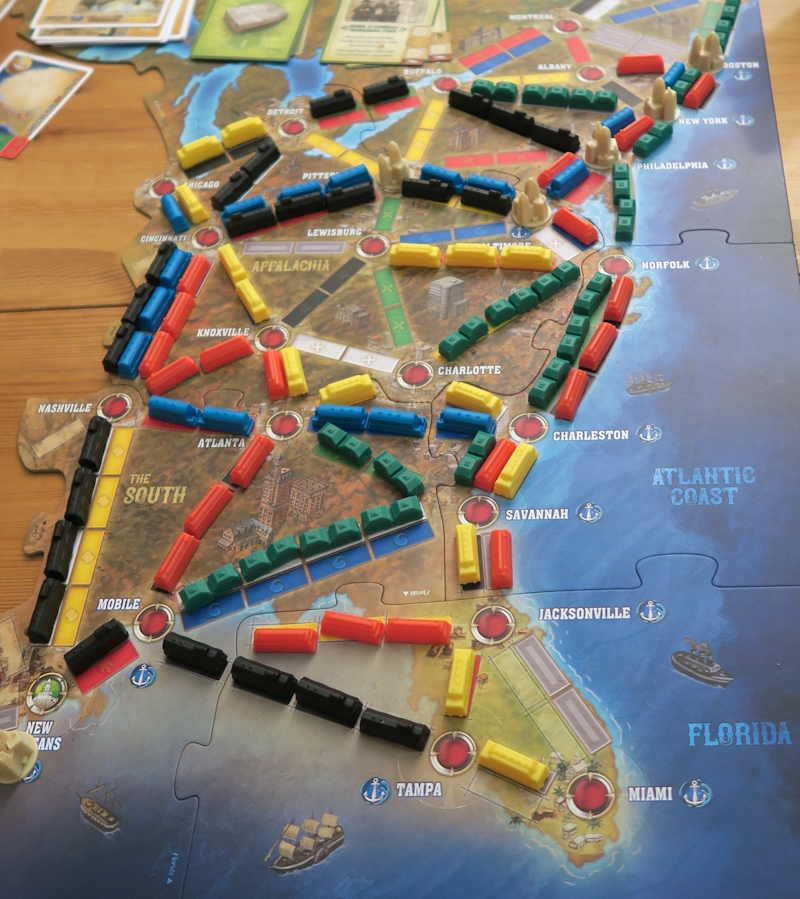
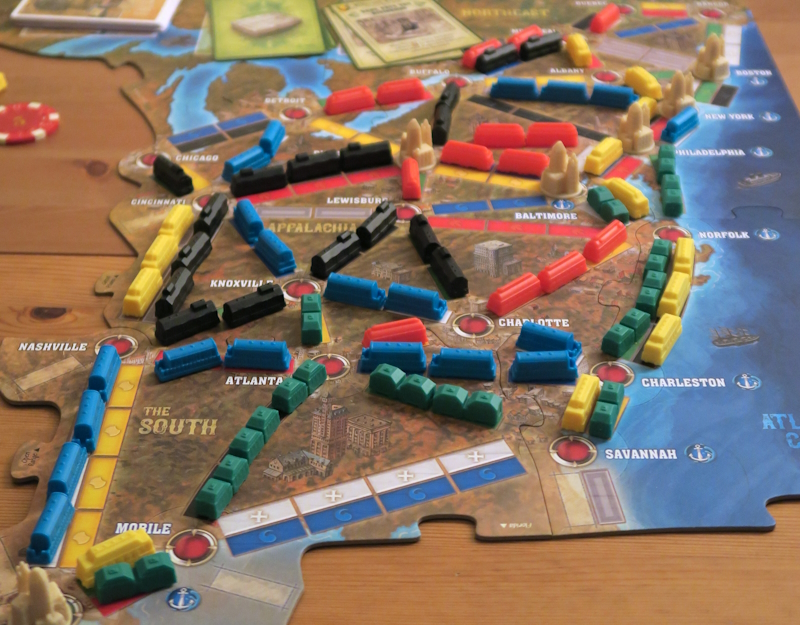
There are lots of versions of Ticket to Ride, from the teeny-tiny city editions through to the rather epic Rails & Sails and Legacy versions. Les Aventuriers du Rail Express is a French map that is a step up from the city editions and fits between the standard games (Like Europe) and First Journey, making it slightly quicker than the full games, as it is played on a slightly smaller map with slightly fewer trains. Aside from that, it is essentially very similar in game play to all the others: on their turn players either take cards from the market, or spend them to place plastic train pieces on the map.
 |
| – Image by boardGOATS |
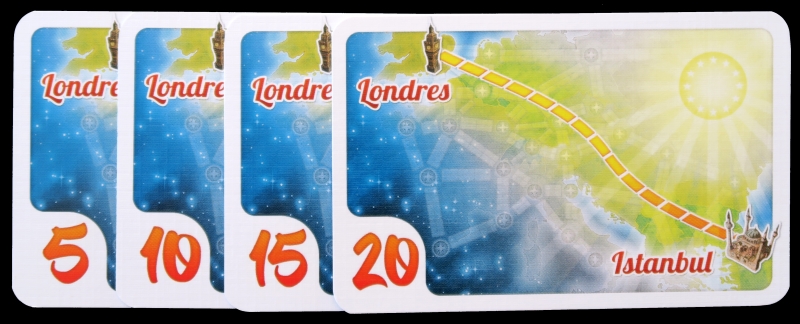
As in the larger version players can also take tickets, but this has to be balanced with the bonus for completing a route from London to Istanbul, the most distant pair of cities. The first player do so gets twenty points, the second gets fifteen and the third gets ten. Additionally, the wild Locomotive cards also work slightly differently in this game in that, instead of being mixed in with the market, they are always available from a separate stack, but as usual, players can only take one per turn. Being a quick game, and with everyone feeling they knew the game and was in with a chance of winning, the group ended up playing it twice.
 |
| – Image by boardGOATS |
The first time, Lime finished with the most points from placing Trains, but both he and Pine carried negative points from incomplete Tickets. Incomplete tickets are a real drag as they effectively, carry a swing double their face-value. As a result, Pine just pipped Lime to second place. The winner was Pink, however, despite the fact that he had the lowest points for his tickets; he did finish the London to Istanbul connection first though. In the second game, the roles were somewhat reversed with Pink taking the most points for placing trains, but failing to complete the London to Istanbul route at all. The winner was Pine who, like Pink in the first game, also claimed the maximum of twenty bonus points, while Lime was the runner up.
 |
| – Image by boardGOATS |
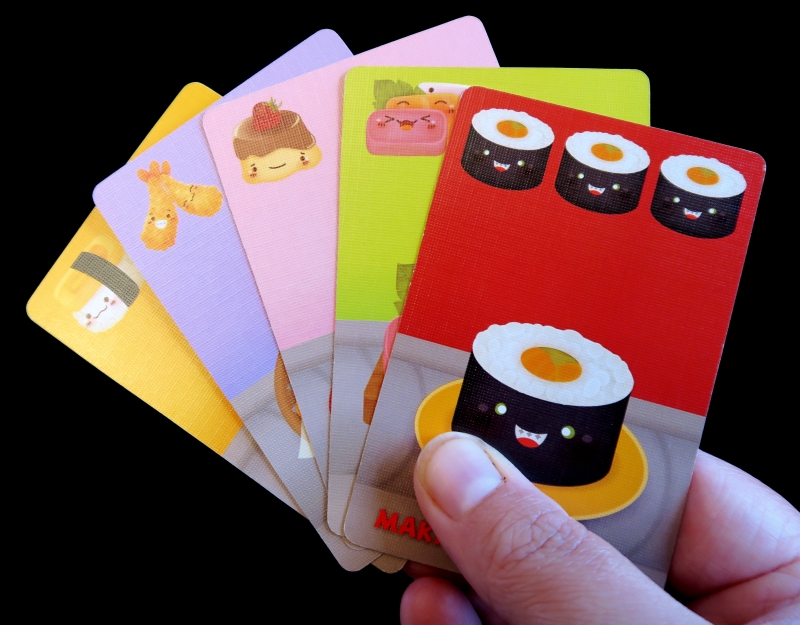
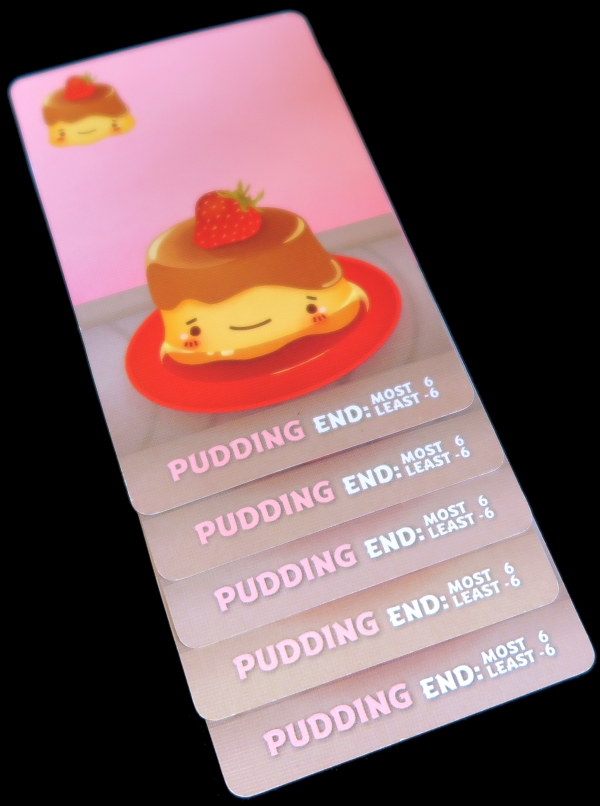
Everyone else was still playing, so the trio managed a quick couple of games of the card-drafting game, Sushi Go!. This is a very simple game, where players start with a hand of cards and choose one to add to their tableau before passing the rest on. Played over three rounds, players collect points for collecting Maki Rolls, Sashimi and Nagiri (which is all the better when combined with Wasabi). At the end of the game, players with the most Pudding cards score an extra six points, while those with the least lose six points. The player with the highest total is the winner. The points throughout both games were fairly even with nobody crashing out or having a golden round.
 |
| – Image by boardGOATS |
Despite this, the winner of the first game took it by a bit of a land-slide. It’s true that Lime top-scored in two of the three rounds, but they were all really close. The real difference, therefore, was made by the Puddings which he had the most of and left him with a total of forty-five, a dozen more than Pink, the runner-up. It was fairly inevitable then that in the second game, there was quite a battle for the Pudding cards. The scores were close again, and again Lime won two out of the three rounds. The overall winner was arguably Pink, who despite losing all three rounds had the most Puddings and therefore took victory from Lime on a tie-break.
 |
| – Image by boardGOATS |
The final table for the evening, consisted of Jade, Sapphire, Black and Blue playing Meadow with the Adventure Book expansion. Meadow is a clever little card game where players collect cards to add to their tableau from a central market. On their turn players place one of their tokens next to the grid with the type of token and the location combining to dictate which card they take. Players can then add a card from their hand (which may or may not be the one they picked up) to their tableau. In the base game, there is an additional campfire board, but the Adventure Book replaces this. Each “page” from the book changes the mechanics to a greater or lesser extent.
 |
| – Image by boardGOATS |
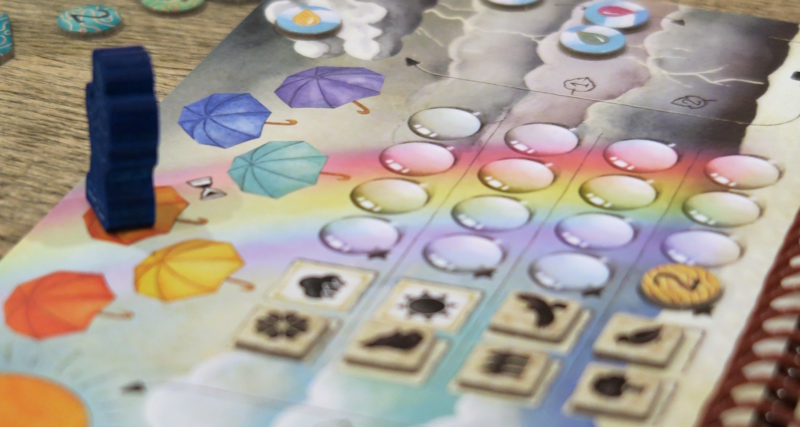
The group played with the first scenario, which introduces Weather. There are two token that indicate a row and a column in the market, and every time a card is taken from these, players can move along the appropriate Weather track. Reaching the end of these gives players extra cards. Additionally, placing a token in a space in the Book allows players to claim rewards if they have fulfilled the criteria and have the two symbols shown visible in their tableau. These give extra points at the end of the game. There was a lot of faffing about and getting to grips with the rules changes, especially as initially, the wording in the rules for the expansion was a little unclear. Added to which, Black hadn’t played the base game at all before.
 |
| – Image by boardGOATS |
Once the rules had been fathomed out and explained, the group got the game underway. Different players targeted different card types with some going for the harder to place higher up the food-chain cards, while others tried to diversify. Blue tried to get as many of the bonus points for collecting pairs of symbols as she could and as a result finished at the back of the pack. The game is not a high scoring one though and those bonus points made a big difference. It was not quite enough to give her the victory, however, and she finished one point behind Jade who topped the rankings with forty-six points, with Black in third. It had been a very enjoyable evening all round though, regardless of the number or type of game played.
 |
| – Image by boardGOATS |
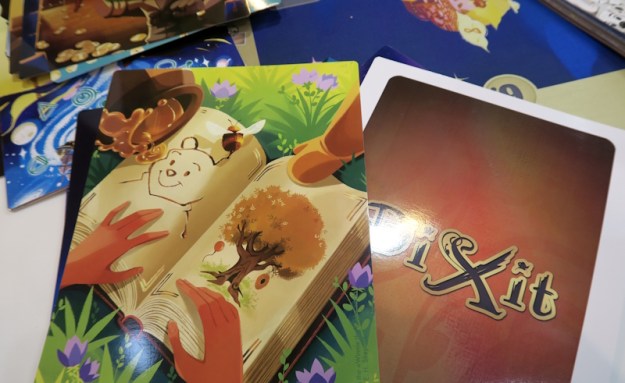
Learning Outcome: Cards are a critical part of most modern games.




















 boardGOATS