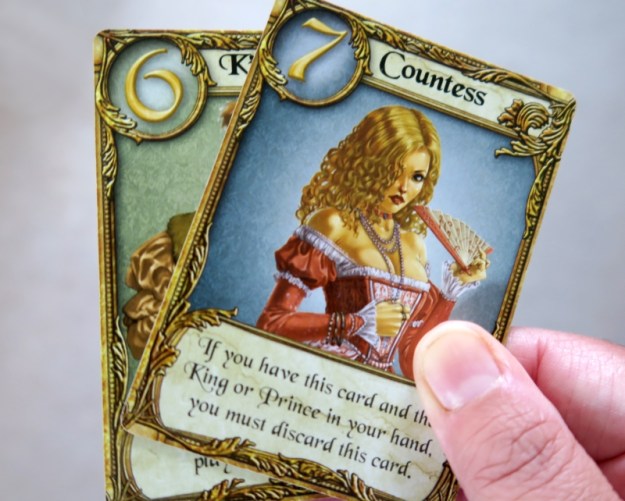
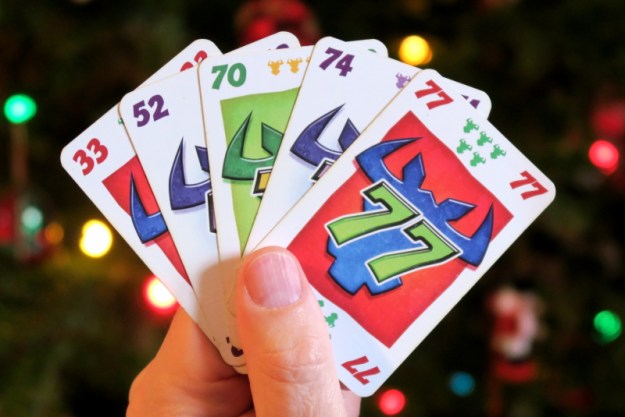
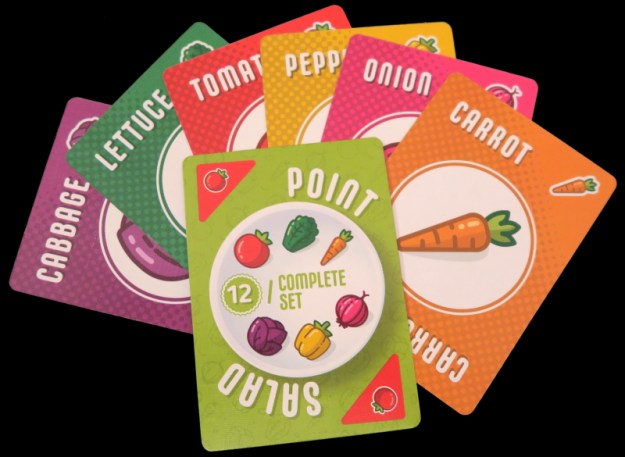
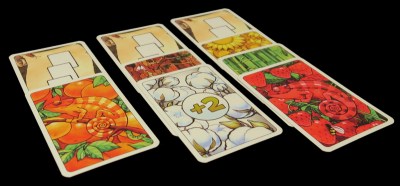
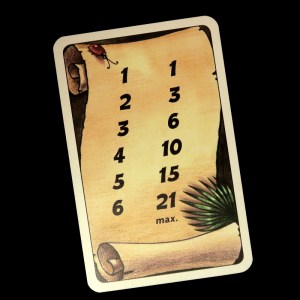
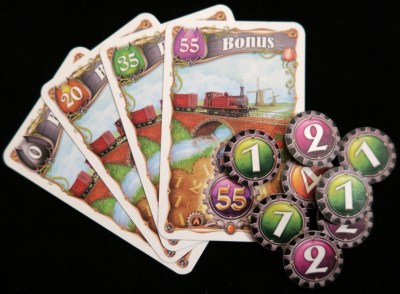
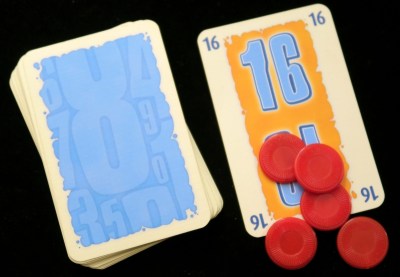
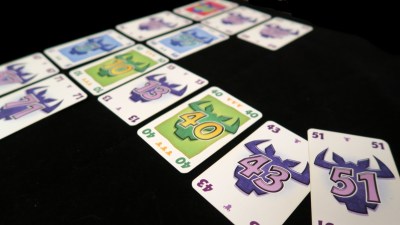
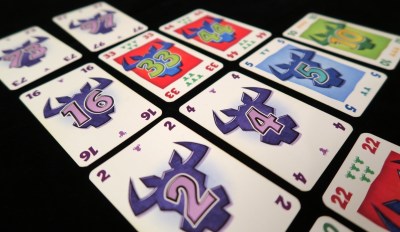
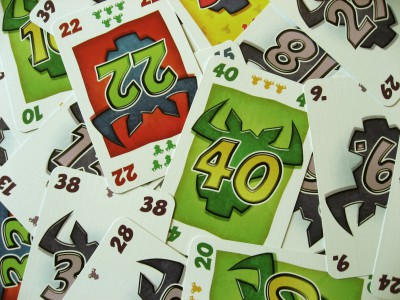
The evening began with a quick game of the popular Blackjack based game, Flip 7. This is a quick, push-your-luck card game along the lines of Port Royal where players turn over cards and gamble on not revealing the same number twice taking it in turns to decide whether they want to “flip” or ” stick”. The catch is that each numbered card appears in the deck that number of times (i.e there is one one, two twos and so on). Flipping over seven different cards in a succession gives fifteen bonus points. There are also some action cards in the deck, “Flip Three”, “Freeze”, “Second Chance” and modifier cards which give extra points. The game ends when players have reached the pre-agreed total.
 |
| – Image by boardGOATS |
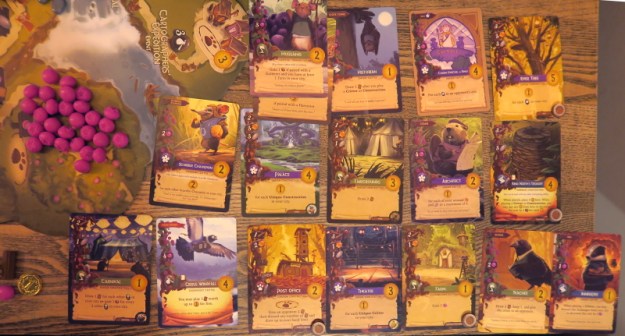
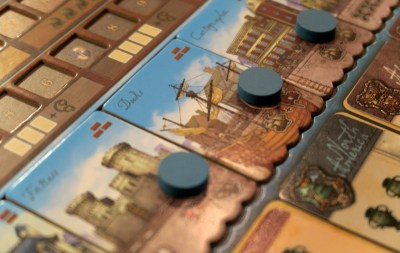
Ivory was keen to get in a little practice as “Little-Ivory” was getting it for his birthday in the next few days. Although the game plays up to eight (with one box), there were just the four as Ivory was joined by Jade, Sapphire and Mint. Mint went bust early and Sapphire started fast, but the victor was Ivory who didn’t go bust at all during the game. With that over quite quickly Jade and Sapphire were joined by Pine, Plum and Byzantium to play the “Feature Game“, Creature Comforts. In this game, players spend Spring, Summer, and Autumn gathering different resources from the forest and spending them to collect items that will home a more inviting place while the world outside is covered in a layer of snow in the Winter.
 |
| – Image by boardGOATS |
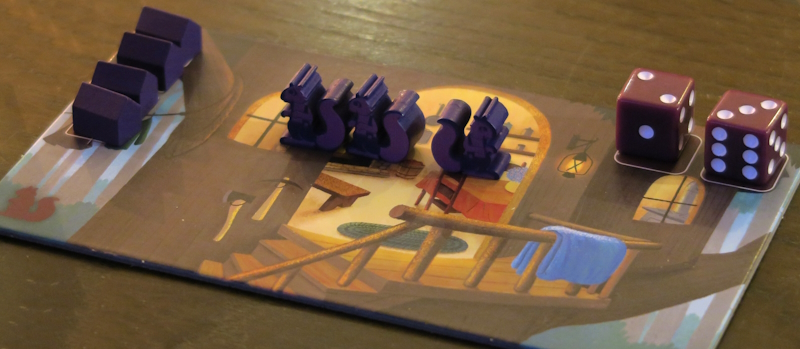
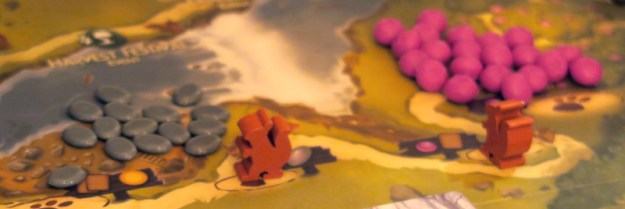
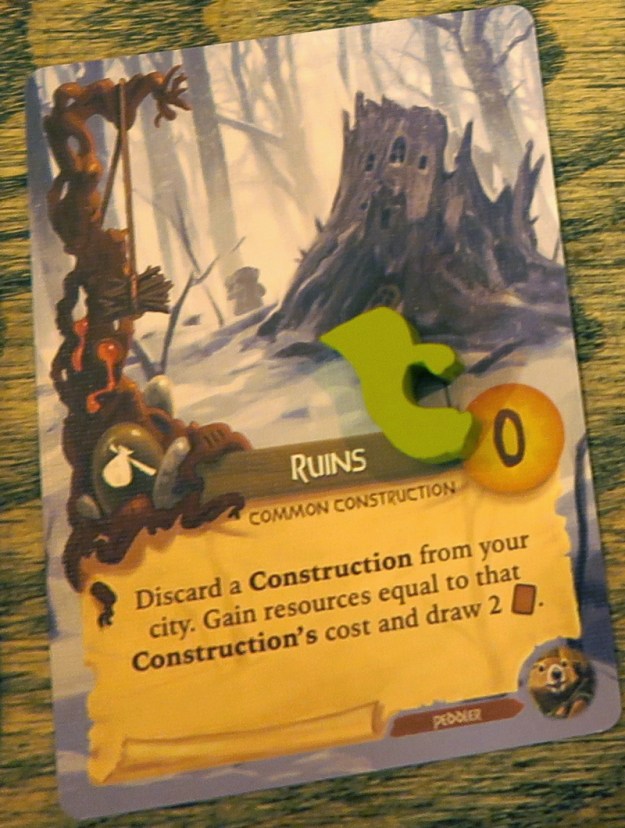
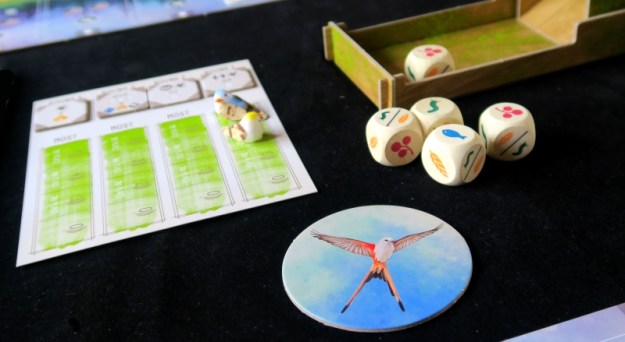
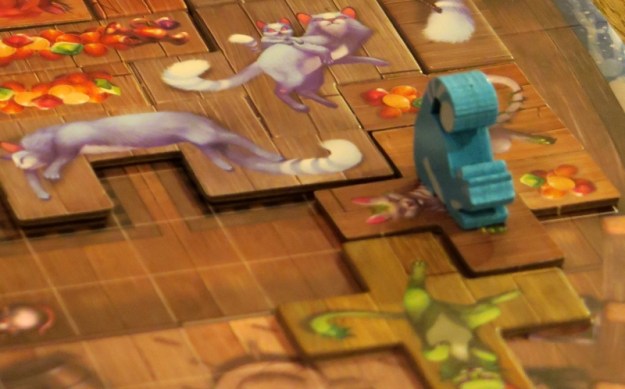
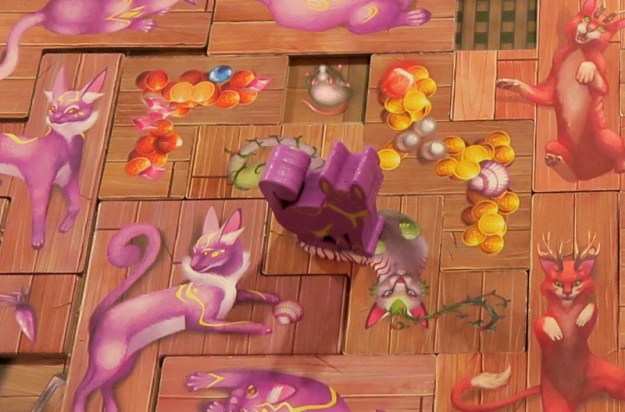
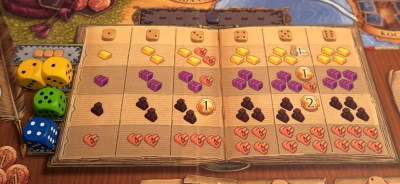
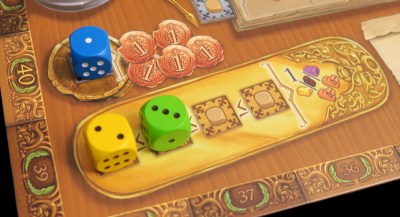
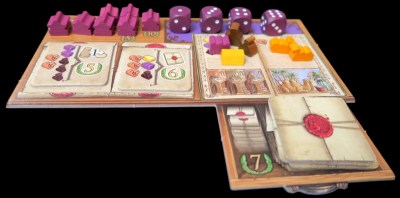
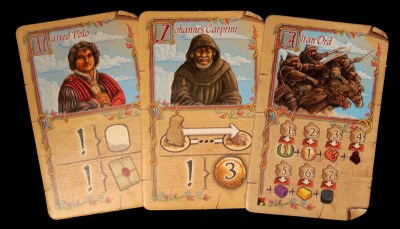
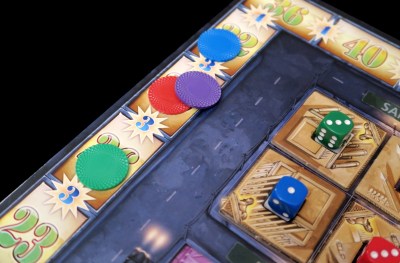
Creature Comforts is a worker placement game with a twist: the workers can be placed at various locations, but dice of specific values (or sum-totals) are required to activate the locations. Thus, the players need access to dice of specific values when it comes to triggering those workers. Jade explained the rules to Pine, Plum, Byzantium and Sapphire, some of whom were new to the game. Played over twelve months, at the start of each month or round, a Traveler “event” card is revealed which either applies an instant effect or one that lasts the duration of the month. Simultaneously, players then roll their two Family dice and place them on their Home Boards.
 |
| – Image by boardGOATS |
Then, players simultaneously place their Workers at their choice of the twelve locations. Although the locations can hold any number of Workers, players can only place a single worker at each one. Each location will either require a dice of a specific value or multiple dice that add to a given sum (or have a particular requirement e.g. feature all odds or evens). The catch is that at this point, players only know the values of the two dice that they have access to, their Family dice. So, placing Workers requires some astute planning mixed with some luck when the four communal Village dice are rolled next, by the start player for the month. Players then take it in turns to allocate the six dice at their disposal to activate as many of the locations their Workers are at as possible.
 |
| – Image by boardGOATS |
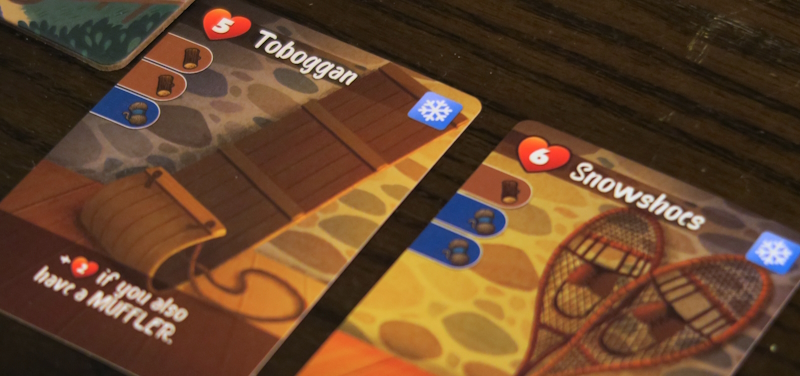
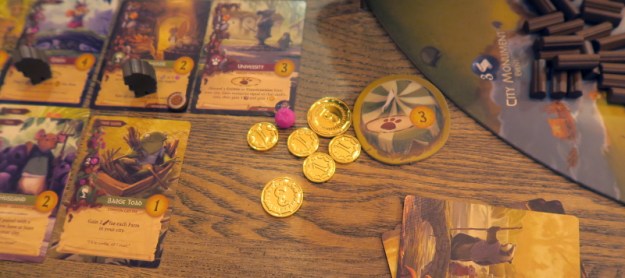
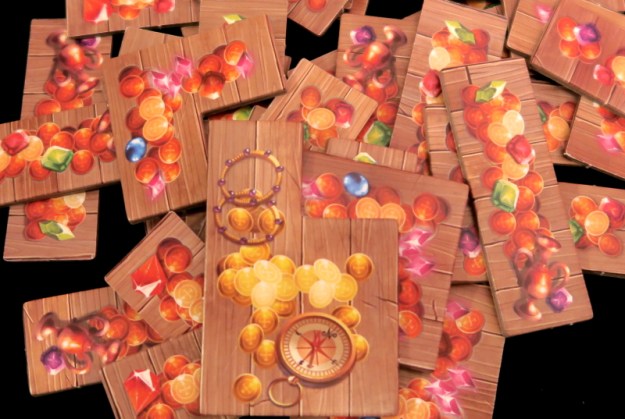
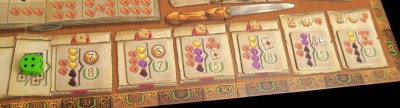
Each Worker that a player cannot activate gets them a Lesson token, which can be used to modify dice values in later turns (for only that player). Finally, players finish their turn by crafting any creature comfort cards they can, keeping in mind that only three can be carried over to the next round. After eight months (six if playing a shorter version of the game), players can craft any left-over cards they might have in their hand if they can afford to and then score for their Comfort Cards, Improvement Cards, for empty Cottage spaces and left-over resources. The first problem was that there were a lot of locations to get to grips with. Pine, who was new to the game, struggled initially, but by the end was wanting to play again soon!
 |
| – Image by boardGOATS |
Sadly, although the game was a lot of fun and enjoyed by all, it was marred by the fact that “Last Orders” was called sooner than expected. This meant the last couple of rounds were played at something of a rush and points were missed and some of the scores might not have been correctly counted. There are a lots of odd points to be counted, but the bulk come from the eponymous Creature Comfort cards. Byzantium top-scored for these with forty-three points, some ten more than anyone else, so it was no surprise that he ran out the winner by a sizeable margin, with everyone else left fighting for second. That battle was won by Sapphire with Pine taking third.
 |
| – Image by BGG contributor hipopotam |
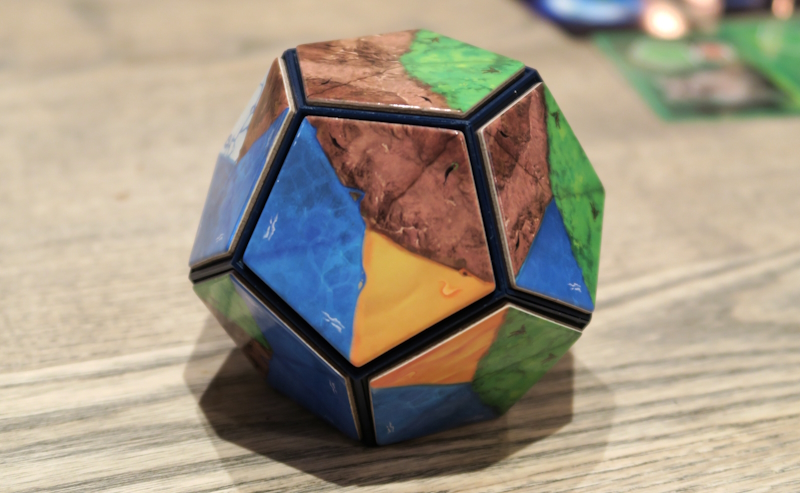
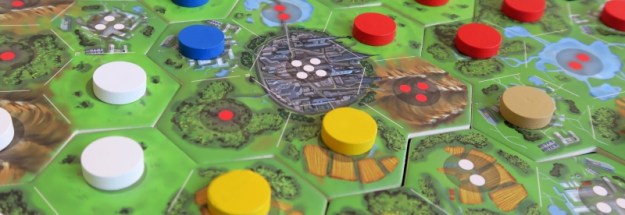
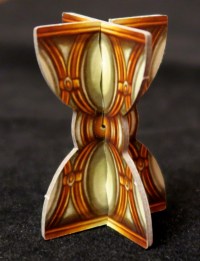
Meanwhile, Mint introduced Blue and Ivory to the really cool, three-dimensional game, Planet. This is quite a simple game, but really clever: each player receives a dodecahedral planet core with twelve pentagonal spaces and a magnet in the centre of each one. On their turn, players choose a pentagonal tile with different terrains (Mountain, Ice, Forest and/or Desert) on them and stick it to their planet. The player who fulfills the most conditions for the appearance of certain animals gains its card. There are public, animal objectives and each player has a private objective, their “Natural Habitat”.
 |
| – Image by boardGOATS |
Players score points for the size of their Natural Habitat, and also for each animal card they claim. Animals that live in an area that is not the player’s Natural Habitat score extra points which creates sort of opposing incentives to cover the planet with Natural Habitat tiles while also creating the right conditions to score animal cards. And as the Planet fills up, this gets more and more complex. Although everyone loved it, the game didn’t quite click for Blue, but it was close between Ivory and Mint. There were only two points between them in the final totals, with Ivory taking his second victory of the night with twenty points.
 |
| – Image by boardGOATS |
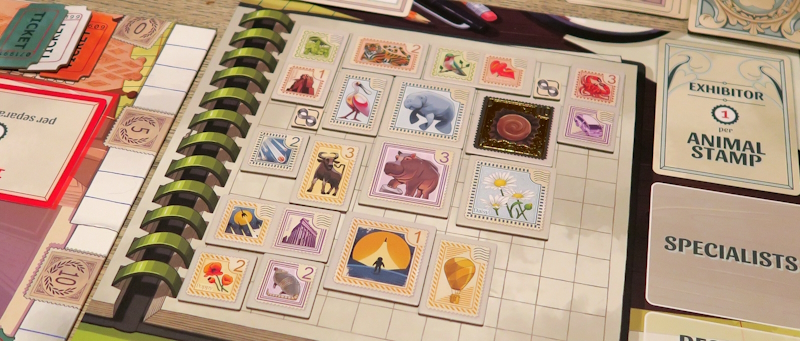
From there, the trio went on to play the Golden GOAT Award winning game, Stamp Swap. In spite of the theme (which didn’t really set anybody’s imagination on fire), this has proved to be a really popular game within the group—it is just very smooth and doesn’t outstay its welcome. Everyone had played it before, so there was only the barest minimum of a rules run-down. The game takes place over three rounds, each split into two parts: Firstly players take it in turns to choose from a central pool, then players divide their pile into two and the first player chooses one pile from another player to take, who keeps their other pile and chooses one from another play—and thus the piles of stamps are swapped.
 |
| – Image by boardGOATS |
Players score points at the end of each round for their achievements and at the end of the game, for the face-value of the stamps and for end game objectives. Despite everyone having played it before, there was a rules malfunction that might happened before and could have made a significant difference, to Mint and Blue especially. Each player has an “Exhibitor” which gives players a point for each stamp they have of a given theme. The group scored this at the end of the game, however, it is supposed to give points at the end of each round. Everyone played by the same rules, so Ivory was the deserved winner with a hundred and eighteen points, but the scores would have been closer if the Exhibitors had been played correctly.
 |
| – Image by boardGOATS |
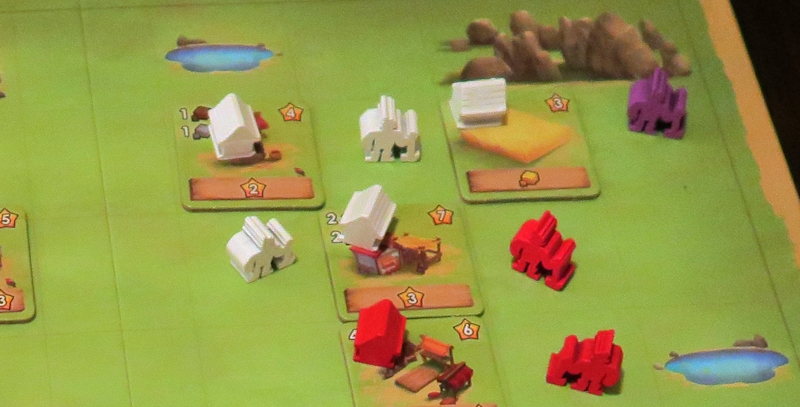
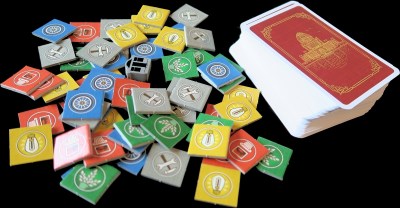
On a night when there were four tables, the third consisted of Pink, Black, Pine and Purple, started with a game of Little Town. This is a really cute little game of Worker placement, resource collection and management, and building tile placement. The game lasts for four rounds, during which players collect resources (wood, stones, fish, and wheat) from the eight surrounding squares by placing Workers on central map. Players can then build buildings using these resources, players can then gain the effect of the building by placing a Worker next to it. Placing a Worker next to a building owned by another has a cost though, and the player must pay a coin before you can collect resources.
 |
| – Image by boardGOATS |
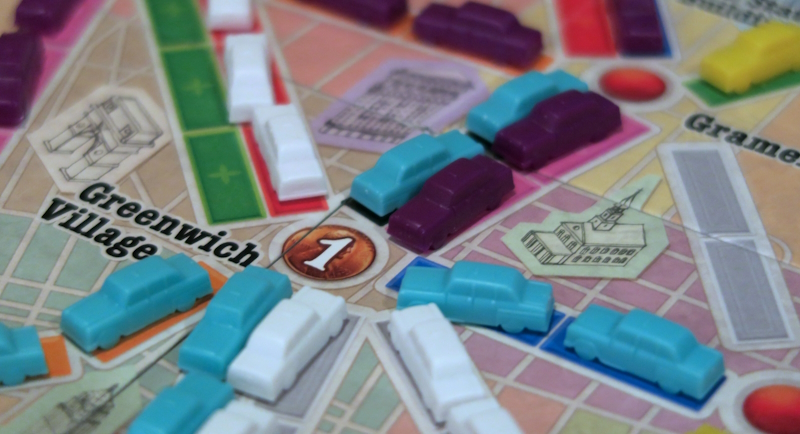
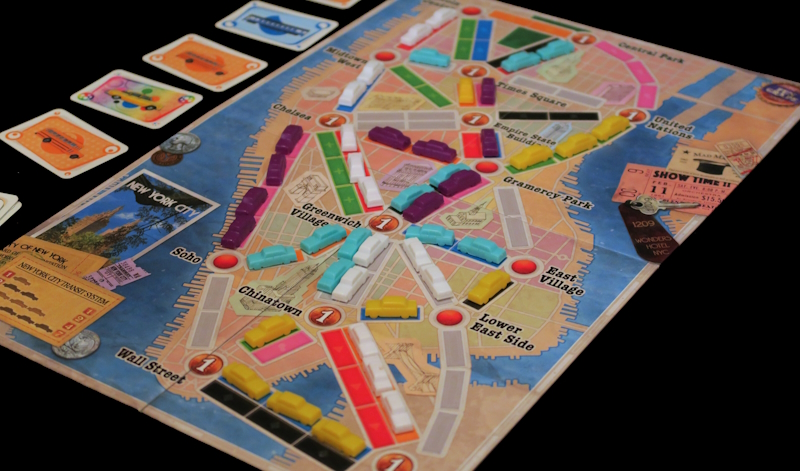
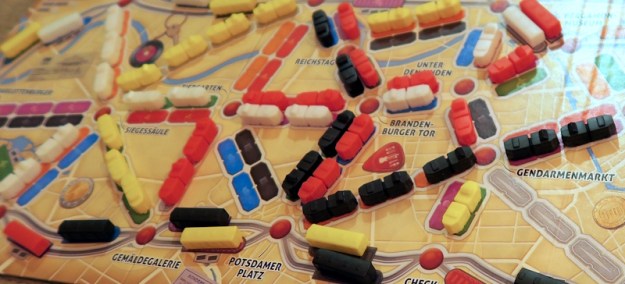
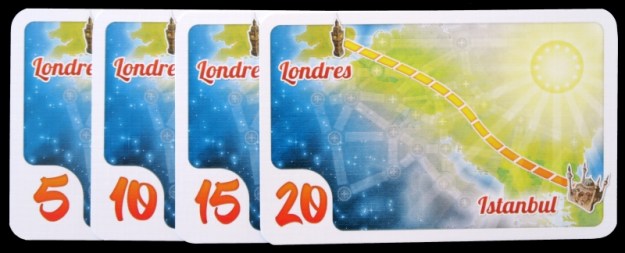
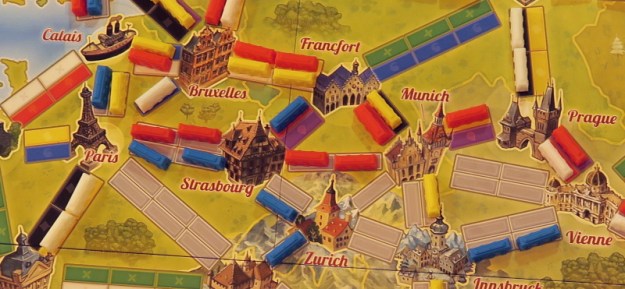
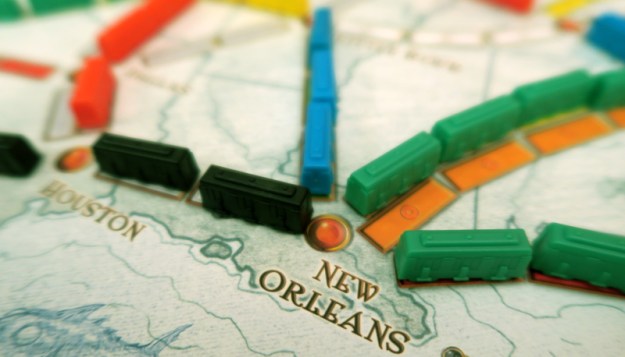
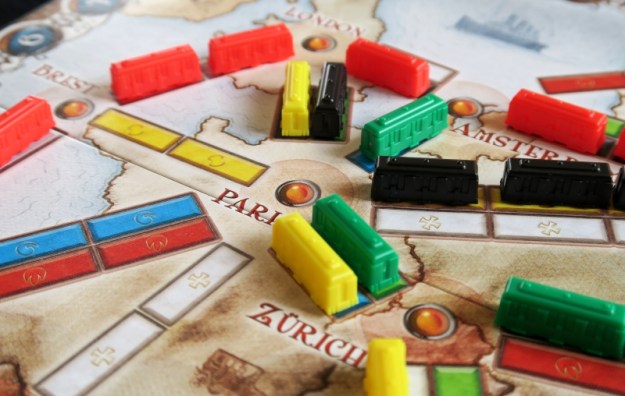
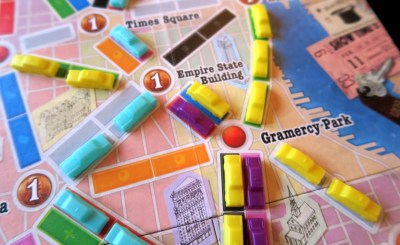
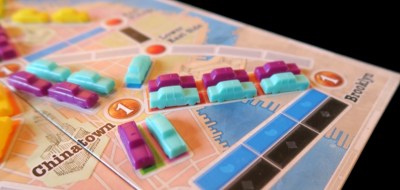
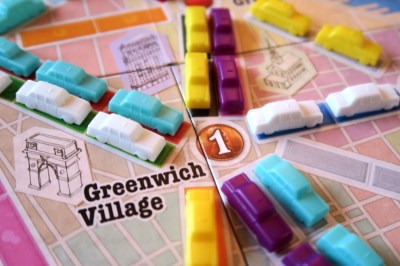
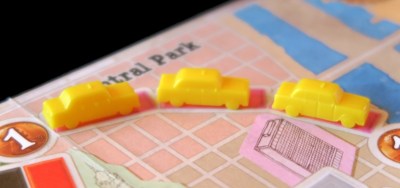
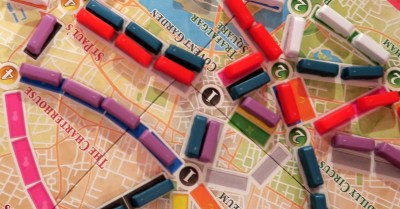
Players collect victory points using the powers of buildings, by constructing buildings, and by achieving objectives dealt at the beginning of the game. This time, Pink played a really pragmatic game essentially simply repeatedly activating the Well and the Bar (giving him two and three points each respectively). As a result, the game was a bit of a land-slide with Pink taking victory with thirty-nine points, eleven ahead of Black in second with Pine a few points behind that. With everyone else otherwise engaged, the group went on to play a quick game of Ticket to Ride: New York. This is one of the first of the very small editions of Ticket to Ride, in fact, the first of the “Cities“, as it was preceded only by the Demo version.
 |
| – Image by boardGOATS |
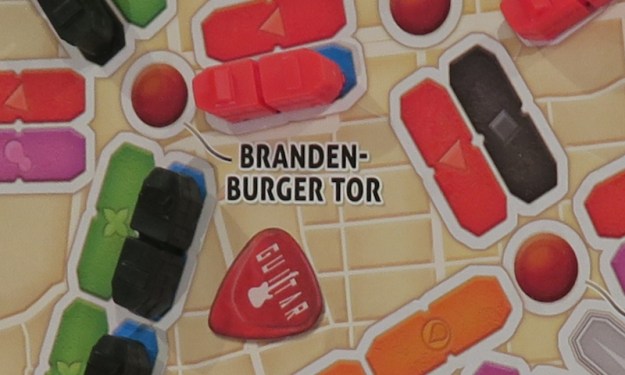
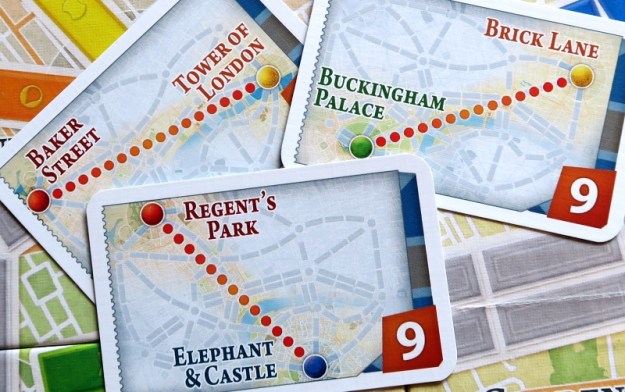
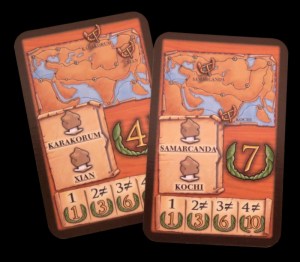
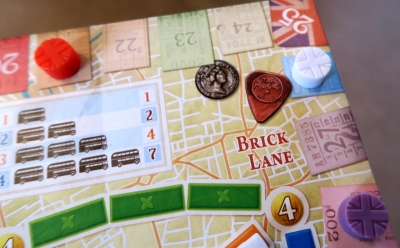
The game is played much the same as the full version of Ticket to Ride, with players taking coloured cards from the market and spending them to place pieces (in this case taxis) with the aim of completing tickets. Black took the most points for the Tourist Attractions he made connections with, but had a bit of a ‘mare elsewhere, failing to complete a large pile of tickets which left him losing fifteen points. This almost entirely wiped out the rest of his points, but it was relatively close between the others. Pink was once again the victor though, taking the most points for placing taxis and for his tickets giving him a total of thirty-four points, with Pine taking second place just ahead of Purple.
 |
| – Image by boardGOATS |
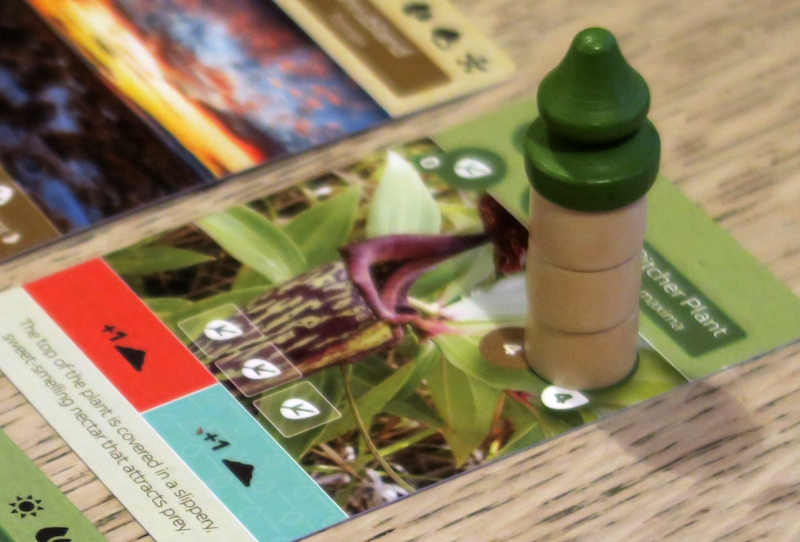
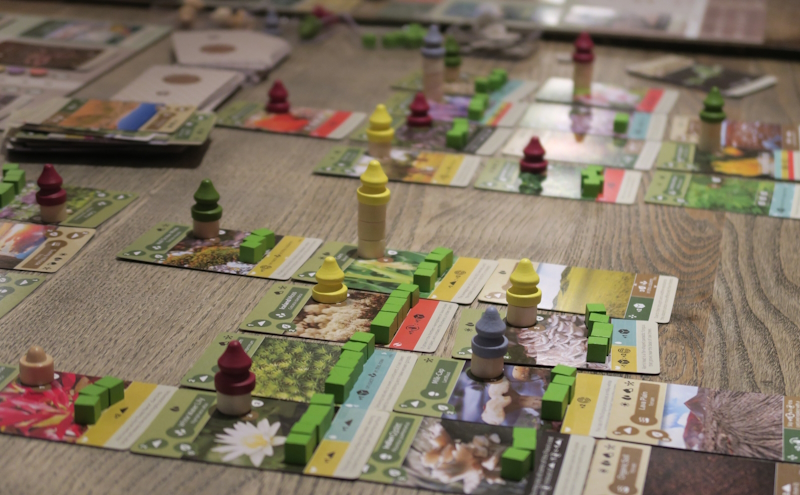
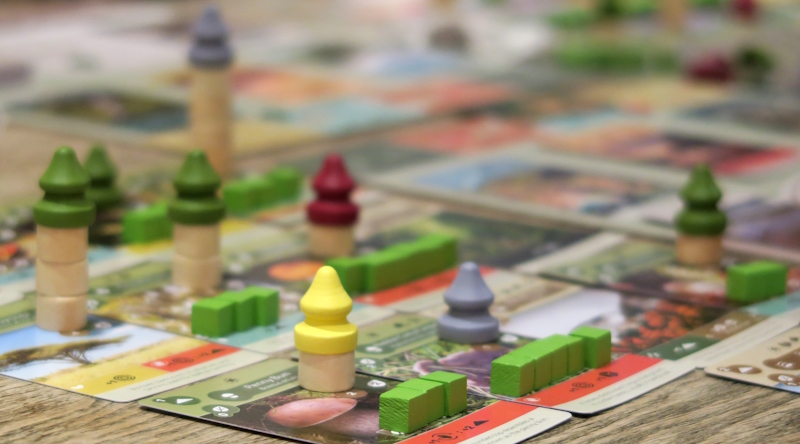
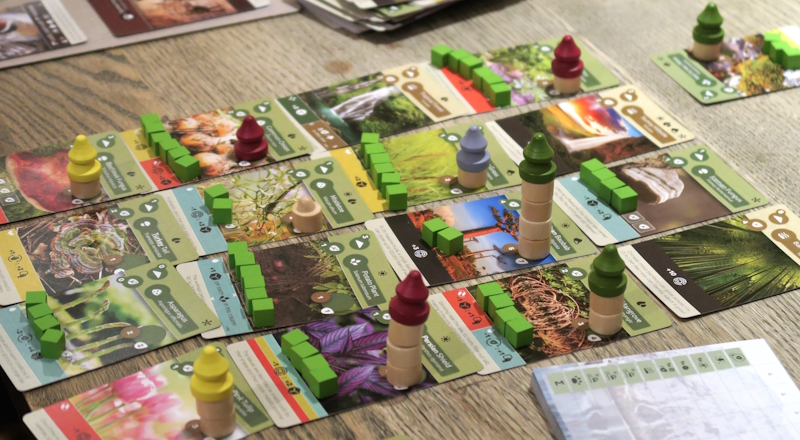
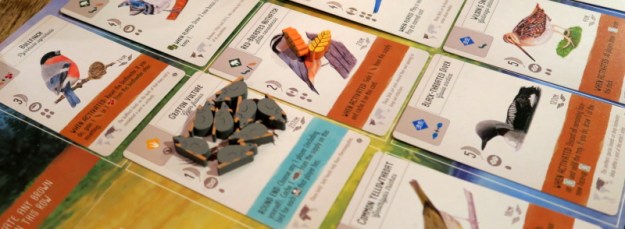
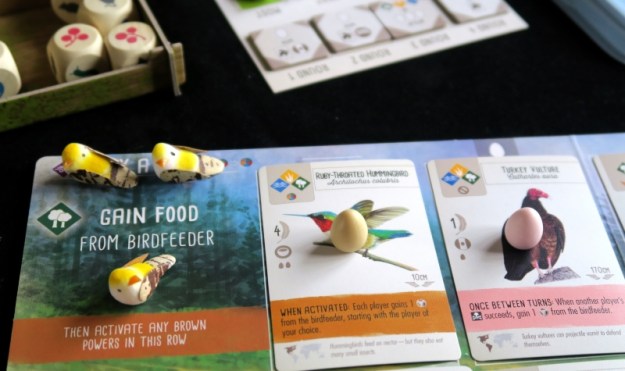
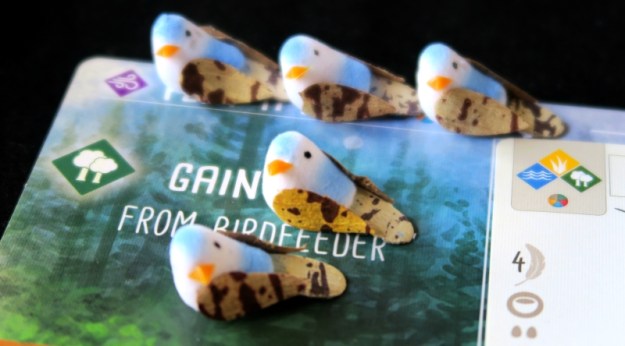
The fourth table consisting of Green, Teal, Salmon and Flint, only played the one game, but it was one of the most beautiful of recent times: Earth. This is a card-driven engine-builder where players are building themselves an ecosystem. Often compared to Wingspan, although there is a lot to understand, the game itself is not actually all that complicated. Players are building a four by four grid of Flora and Terrain cards which represents their island; during the game they will plant flora, water it and allow it to grow.
 |
| – Image by boardGOATS |
On their turn, players do one of four things: Planting (paying the cost in Soil tokens), Composting (gaining Soil and placing cards from the deck in their discard pile), Watering (place Sprouts and gain Soil) & Growing (draw new cards and place growth tokens). A bit like Puerto Rico, once the active player has chosen which action they are taking, everyone else gets to do a subsidiary, slightly weaker version of the same action. For example, when Planting, the active player plants two cards, draws four and keeps one, while the other players plant one and draw one.
 |
| – Image by boardGOATS |
Once everyone has completed the action for the turn, everyone activates all the cards in their island that match the colour of the action chosen, starting with the card in the top left and working across each row in turn. So, not only is it important which cards are played, but also where they are located in the player’s island. At the end of the game (which is triggered when one player has completed their island), players score points for each Flora card, any Trunks and Canopies they have grown, their Sprouts and their pile of “Composted” or discarded cards. Players also score points for achieving objectives on the Fauna cards revealed at the start of the game and for completing their island first.
 |
| – Image by boardGOATS |
This was another game that turned out to be a bit of a land-slide. The base scores for the islands was pretty consistent, but as with many games, it’s about what you do with the cards you get that makes the difference. Green “Composted” fewer cards, but scored more for his Sprouts. Players had ups and down, but otherwise it was fairly even. The biggest difference, however, was the number of Leaf Tokens on the Fauna board—Green had more than twice as many as anyone else with sixty. As a result, his total of two-hundred and forty-four was nearly fifty more than that of Teal who took second ahead of Flint in third.
 |
| – Image by boardGOATS |
Learning outcome: Rushing the end of a game can take the shine off it.

























































/pic3966102.jpg)







 boardGOATS