Category Archives: Games Night

25th March 2025

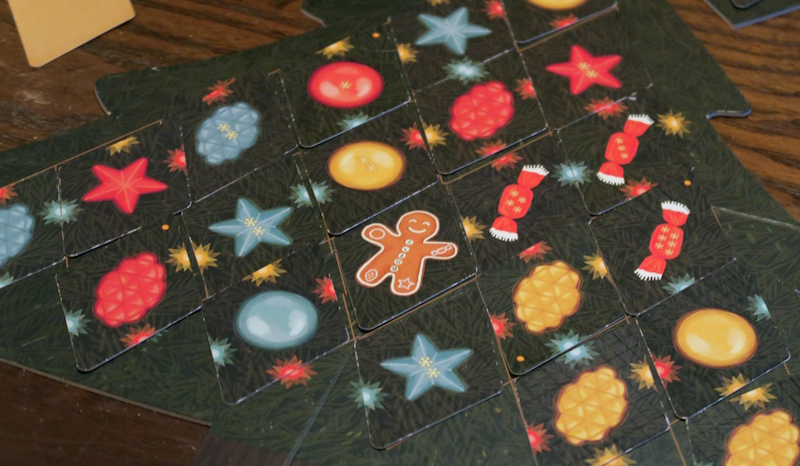
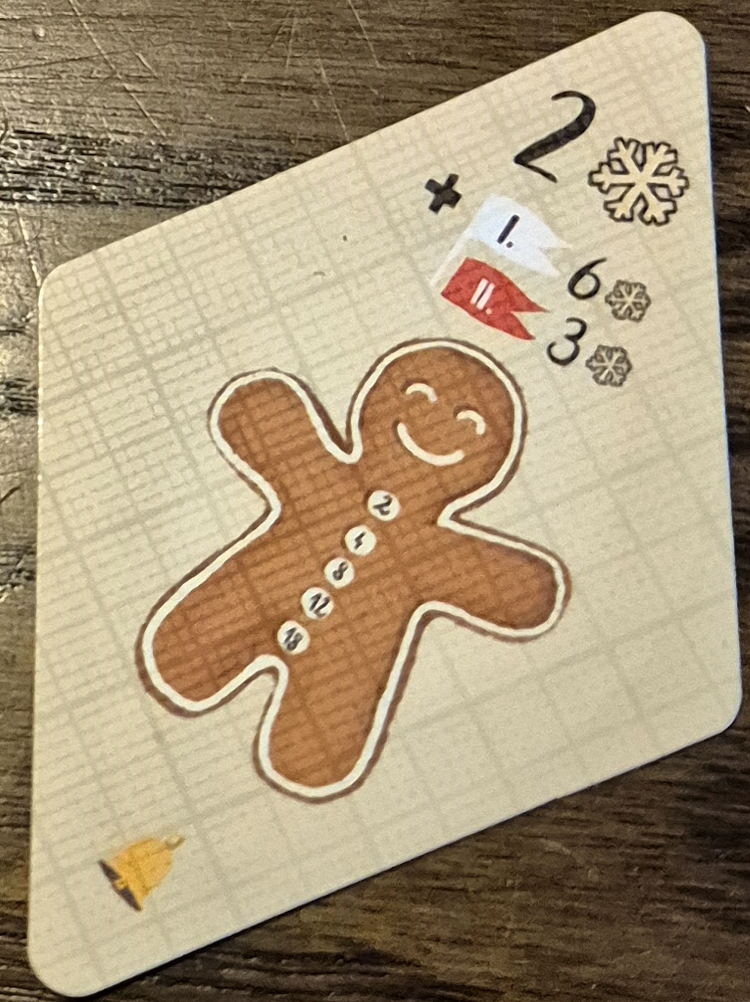
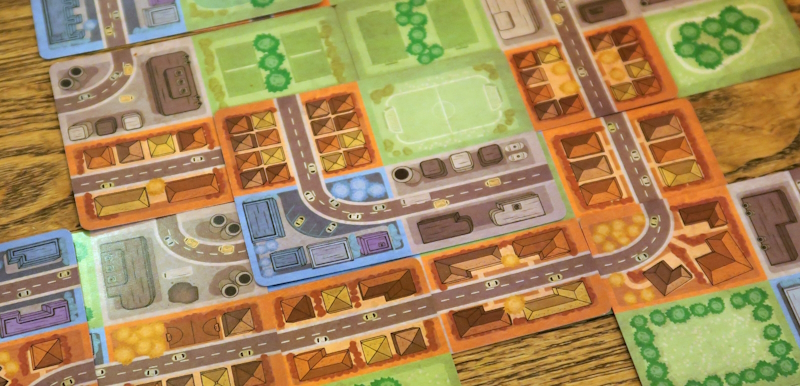
With a generally Japanesey theme planned for the evening to mark the official start of the Japanese Cherry Blossom Season, Blue and Pink, the early arrivals considered 5×5 Zoo, Songbirds and Honshū which were all abandoned variously because the rules were in Japanese, the game was too complex, or it didn’t natively play two.  In the end, they settled on Sprawlopolis, which although very definitely not Japanese, did at least have a bit of a Japanese feel to it.  The game is a simple quick cooperative micro-game where players take it in turns to at to their city by placing cards.
Sprawlopolis
– Image by boardGOATS

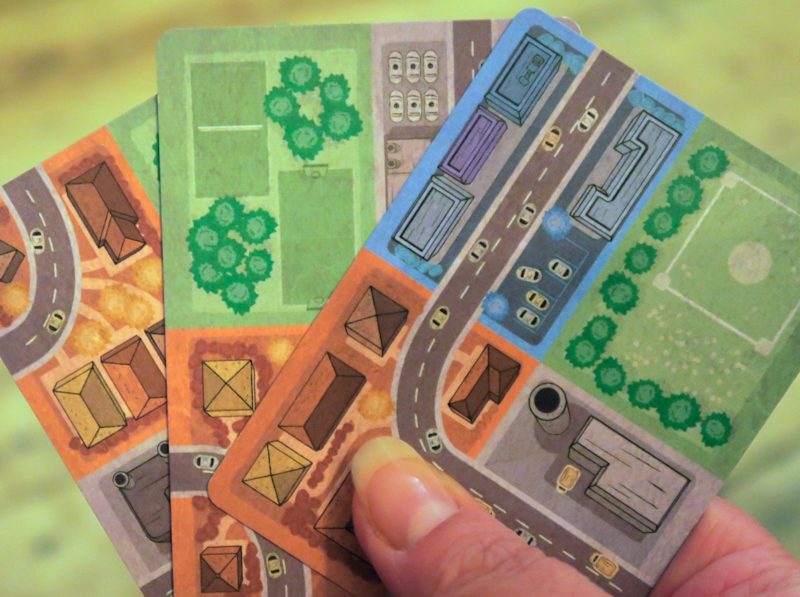
Each card is quartered with each section showing one of the four different zones, green Parks, brown Residential, grey Industry and blue Offices.  The players score a point for each piece in the largest region of each city zone minus the number of roads, plus scores for each objective.  This time the objectives were “Master Planned”, “The Outskirts” and “Sprawlopolis” giving a points target of twenty-five.  It was close and, as Blue and Pink weren’t quite on the same wavelength with their planning (communication is allowed without describing the cards in hand) it was didn’t look like they were going to make it, but in the end, they topped the target by two points.
Sprawlopolis
– Image by boardGOATS

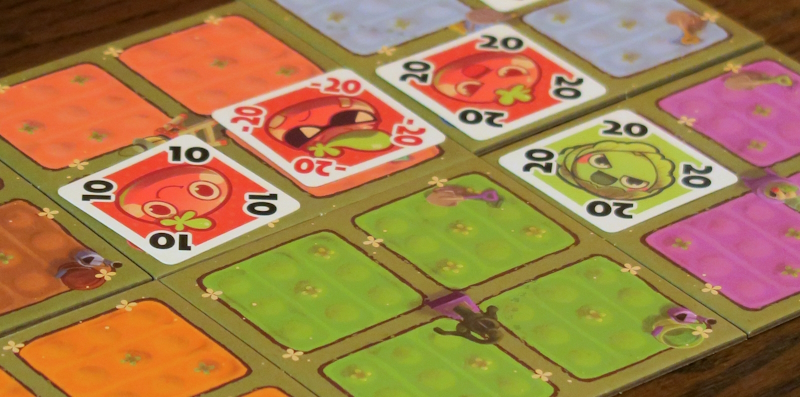
By this time, everyone else had arrived so the group split into three with the first group, a large group of six playing the “Feature Game” which was Habesuto (aka ハーベスト) which translates as “Harvest”.  This is a quick game from Japan about building a farm, growing vegetables and distributing produce. On their turn players play a card onto the central board and then replenish their hand.  Each player owns a field in the central play area; if that field is empty then players must play a card into their own field, thereafter, they can play anywhere.  When a row of three or more cards is created, the cards are scored, with the cards, and therefore points, going to the owner of the field, but points can be positive or negative.
Habesuto (aka ハーベスト or Harvest)
– Image by boardGOATS

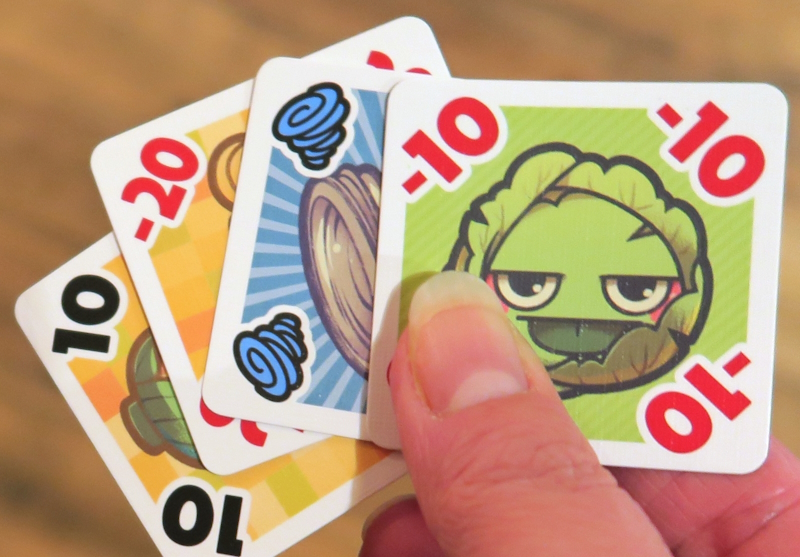
There are special cards like the Tornado which removes cards and the wild Harvest card.  There are three vegetable suits of cards (red, yellow and green) each with five denominations, ten, twenty, forty, and minus ten and minus twenty.  At the end of the game, when everyone has run out of cards or is unable to play, players score the value of each card in their score pile.  To this they add fifty points if their field is empty, but subtract fifty points for each special card left in their hand.The game is really quick and nasty.  Initially everyone felt their way through and began playing nicely.  The niceness was reflected in the scores which were very even—Teal was the winner with a hundred points, but it was a three-way tie for second between Sapphire, Ruby and Lime.
Habesuto (aka ハーベスト or Harvest)
– Image by boardGOATS

Everyone had got the feel of the game and wanted to play again, but this time, the gloves were off.  Second time round, Ruby was the victor with Teal increasing his score, but dropping down the rankings into second with a hundred and sixty.  Jade came in third, twenty points behind.  The third round was a bit more evenly balanced, with Lime taking first place with a hundred and thirty and Flint the only other player to make it into three figures.  Teal went from hero to zero and finished the final game with minus ten.  From there, the group decided to move away from Japan and into a world inhabited by cute animals with River Valley Glassworks, which got its first outing just a week ago.
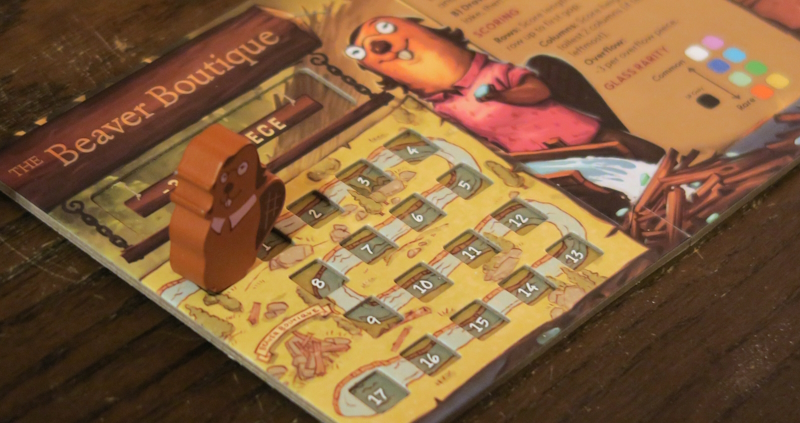
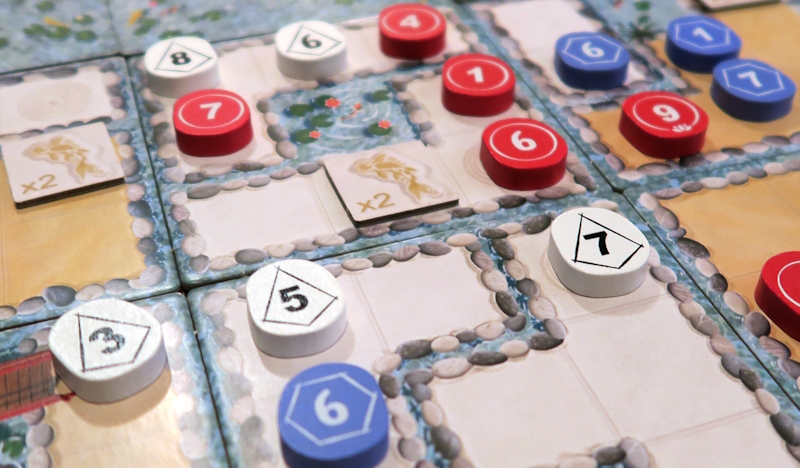
River Valley Glassworks
– Image by boardGOATS

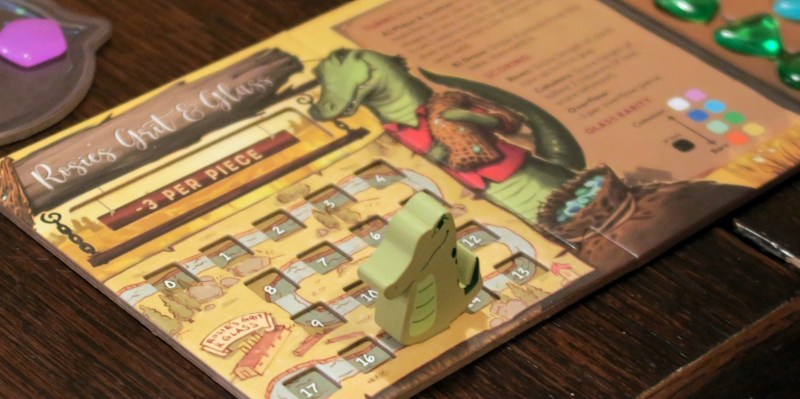
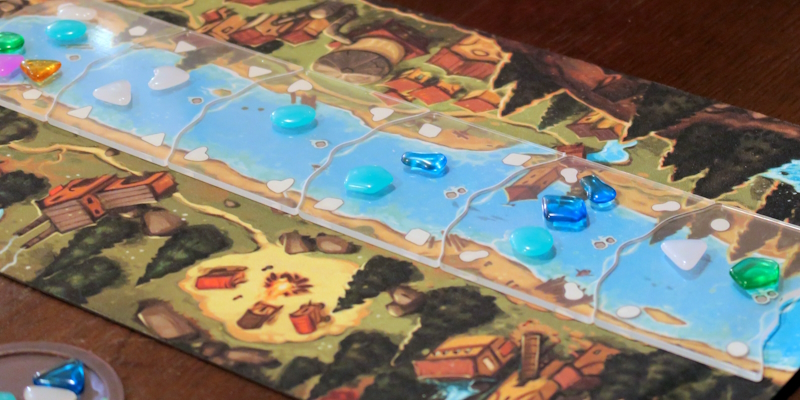
As River Valley Glassworks plays a maximum of five, Jade taught and acted as umpire.  In this game, players take it in turns to play a piece from their inventory into the river. Each river tile can take only a specific shape, and players have to play into a space adjacent to where they want to draft from. After claiming their glass, the river shifts forward revealing new pieces.  Glass is stored in players’ shops, and the scores depend on where the glass is placed with completed rows and columns giving bonus points.  However, too many of one type gives negative points.

River Valley Glassworks
– Image by boardGOATS

The game process is simple enough:  either place a piece of glass onto a river tile or draw exactly four pieces from the lake with the aim of collecting a rainbow of glass pieces but the challenge is getting the balance right.  In the end, the group did a “Lime”, that is, played it once and then decided to give it another go.  First time round, the battle was between Ruby, Sapphire and Teal with Ruby holding off Sapphire by four points who in turn, just pipped Teal by one.  By the second time, Teal had got the hang of things and won by a bit of a land-slide, finishing with sixty-six, eighteen more than Lime in second.

River Valley Glassworks
– Image by boardGOATS

Meanwhile, on the other side of the room, Plum, Ivory, Byzantium and Blue settled down to play another Japanese game, which turned out to be something of a secret favourite amongst them: Yokohama.  This is a sort of path building game, almost like a heavier version of the popular game, Istanbul.  Players operate a Merchant who travels around building their business.  They also have Assistants, Shops and Trading Houses.  On their turn, players deploy one Assistant in three different areas or two Assistants in one area, then they move their Merchant.  Merchants can move as far as they like, but can only travel through locations occupied by their Assistants and cannot finish in an area already occupied by another Merchant.
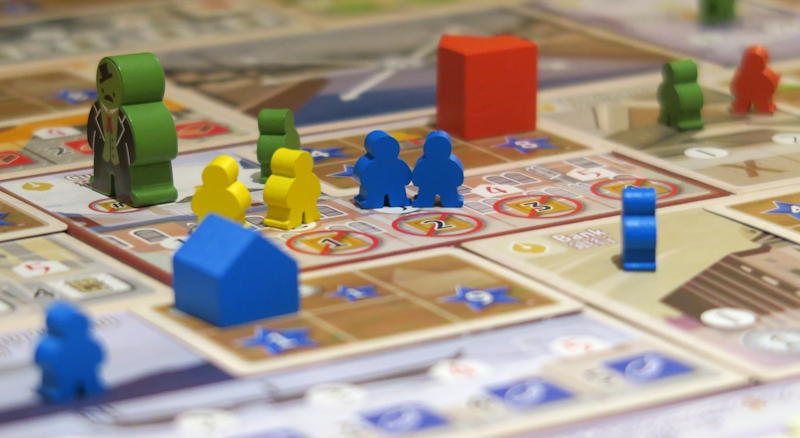
Yokohama
– Image by boardGOATS

Players then perform the action associated with their destination, with the level depending on the Power of that player at that location.  The Power is the player’s presence in that location, i.e. the sum of the President (equal to one), any Assistants and any Buildings.  The more Power, the better the resultant benefit.  A Power of four or more enables the player to build a Shop or Trading house at the location which will earn additional points or other rewards as well as providing more Power on future visits.  Any Assistants at the location are “used” and returned to the player to be placed on a later turn.

Yokohama
– Image by boardGOATS

As in Istanbul, the different locations provide different benefits.  There are locations that provide resources (Tea, Copper, Silk and Fish), some that provide Order cards (Dock or Port) or Technology cards (Laboratory or Research centre) and others that enable players to get more Assistants, Shops or Trading Houses (Employment Agency), Money (Bank) or points (Church and Customs).  Ivory started quickly, grabbing early points for the game focuses (lots of Tea) and getting some buildings placed, while Blue ended up with a pile of initially unwanted Fish and Plum spent some time tripping over everyone else.  Byzantium, didn’t seem to be doing much but Plum rather ominously said that was the way he played the game, just before winning by a huge margin.

Yokohama
– Image by boardGOATS

Ivory made great headway getting the goods to give him twenty-two points from the Customs House, but just as the game came to a conclusion he ran out of steam having spent lots of turns playing only two Assistants as opposed to three.  It was a close run thing in the end with barely ten points between first and last, indeed, Ivory finished a single coin away from getting the ten point Technology that would have given him the game.  As it was, Plum’s prediction proved right and victory was taken by Byzantium who had quietly got on with his game, mostly unnoticed by everyone else.  It wasn’t the landslide foretold though, as his hundred and six points was only three points ahead of Plum in second.

Yokohama
– Image by boardGOATS

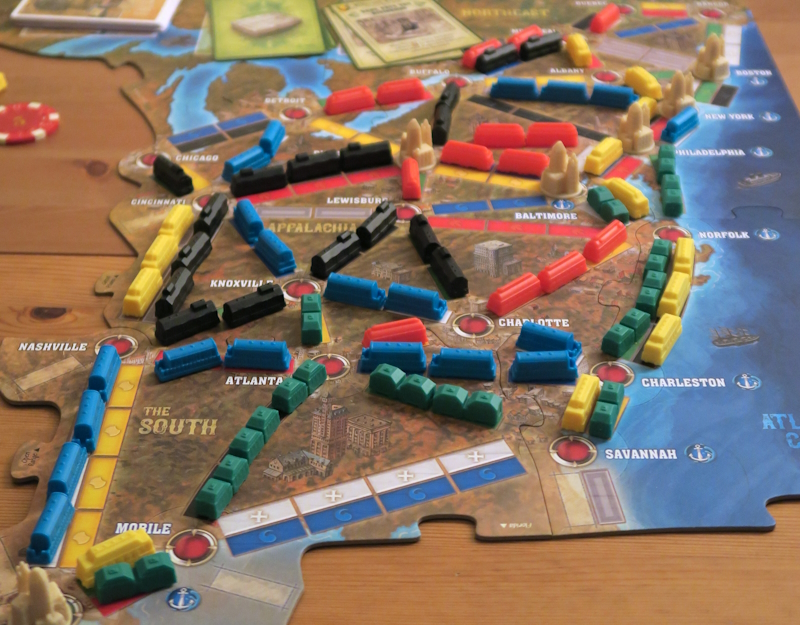
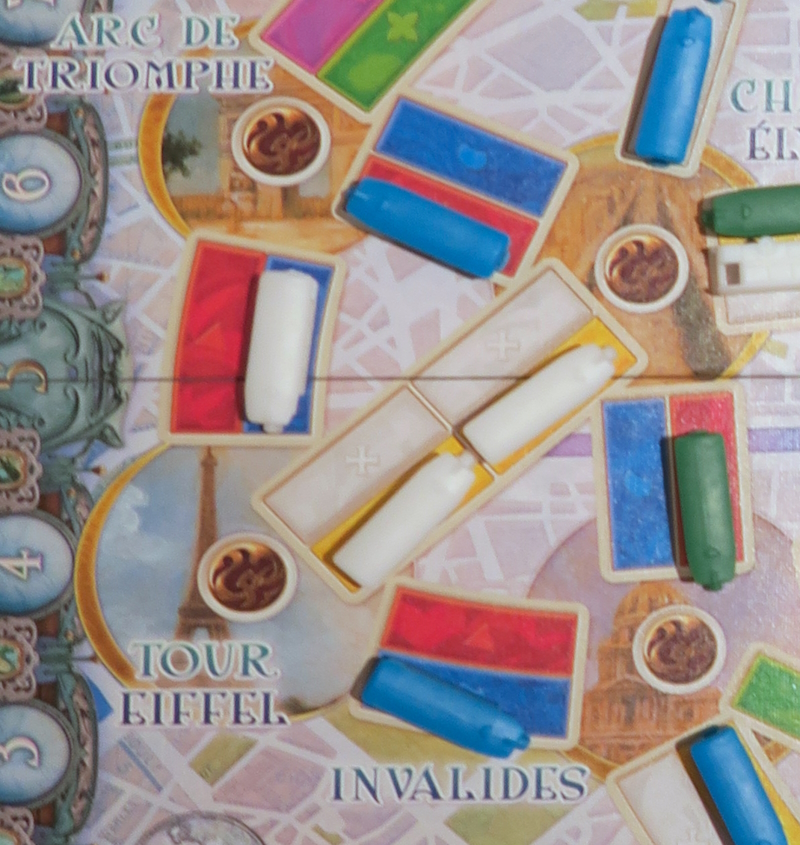
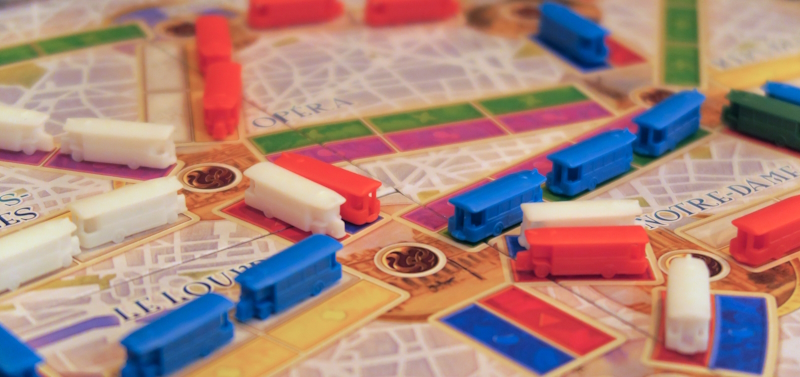
The last group were Blue, Pine, Purple and Black who started off with a game of Ticket to Ride with the Japan expansion.  This is played much like the original base game i.e. players take cards from the market or play cards to place trains; score points for placing trains and completing Tickets.  Like all the expansion maps, the Japan map has its own set of additional features, in this case, these a mostly focused on the Bullet Train which runs through the centre of the long thin board.  Once these routes have been claimed, they can be used by all players to complete destination tickets.  Instead of scoring points for such routes, players progress along the Bullet Train track.  Whoever has contributed most to this shared project at the end of the game receives the largest bonus, with the player who contributes least being penalised.
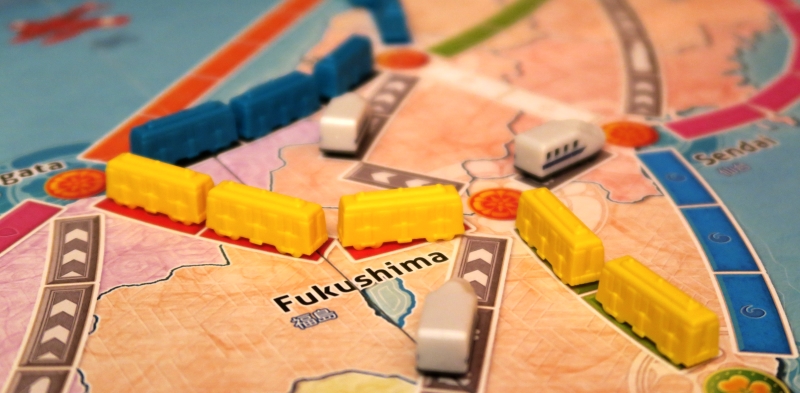
Ticket to Ride Map Collection: Volume 7 – Japan & Italy
– Image by boardGOATS

Last time we played this game there was a rules malfunction associated with the Bullet Train, but this time, that wasn’t a problem.  Much hilarity ensued when Purple place a single train route from Hiroshima to Okayama and entirely unintentionally prevented Pink from completing his four long Tickets costing him a total of fifty-two points leaving him with a final score of minus twenty-four.  Pine found this so amusing that he went round the room telling everyone else.  Besides this the minor aspect of the winner seemed immaterial, but that was Pine thanks mostly to his completed Tickets, double Black’s total which gave him second place.

Ticket to Ride Map Collection: Volume 7 – Japan & Italy
– Image by boardGOATS

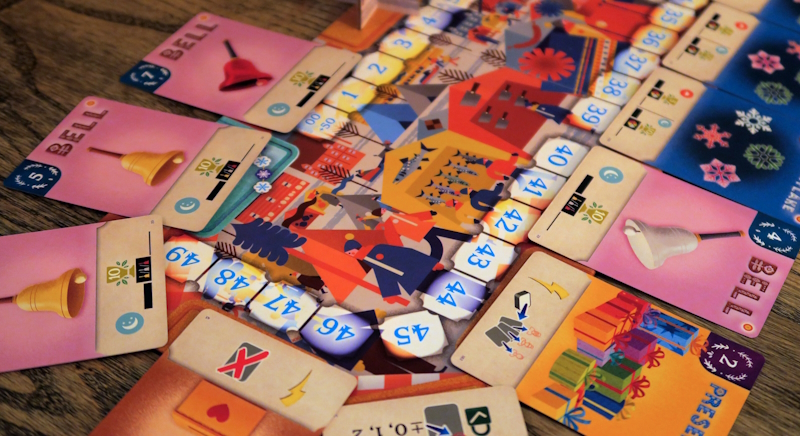
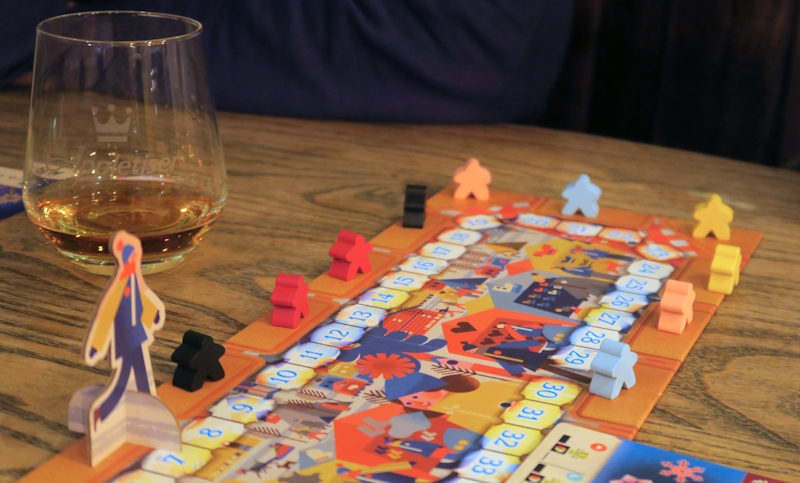
Once the dust had settled, Pine, Pink, Purple and Black rounded off the evening with a game of the Summer Pavilion version of our old favourite, Azul.  This uses the same market mechanism as in the base game, but instead of taking square tiles and placing them straight away, players take lozenge shaped tiles and and put them to one side for the second phase when players place them on their player board.  The pieces a positioned according to colour to form seven coloured “stars”. Each location is numbered according to the cost to play it—thus a space numbered five needs five pieces one of which is placed on the board while the others are discarded.
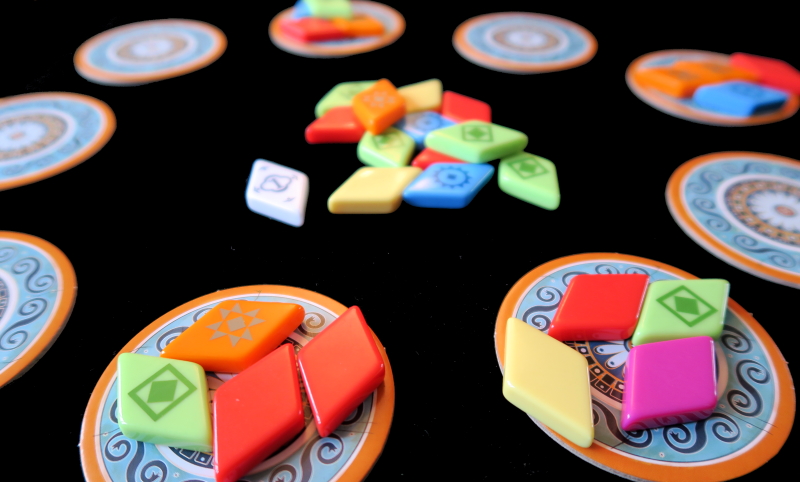
Azul: Summer Pavilion
– Image by boardGOATS

Placing one gives a single point while placing a second next to the first scores two and so on until the placing the sixth scores six points.  So a priority is placing tiles to expand groups, however, surrounding statues give bonus tiles.  Additionally, played over six rounds, each colour takes its turn as wild, though at least one tile of the required colour has to be played.  At the end of the game, players score a bonus for each of the seven stars that they’ve filled completely and bonuses for completing all seven spaces of value one, two, three or four.

Azul: Summer Pavilion
– Image by boardGOATS

Pink couldn’t remember the rules, so summoned Blue to explain, but her brain wasn’t on the right page so Jade, who, by this time was just adjudicating, explained instead.  The in-game  scoring was quite close with just two points between Pine and Pink, and Purple and Black not far behind.  So it all came down to the bonus points.  Pine picked up points for completing his green star and all the seven spaces with the value one giving him twenty-two additional points.  Pink’s fourteen points for completing his red star together with his twenty-four number bonus points more than off-set Pine’s small advantage, giving a modicum of revenge for the delight everyone got from his earlier misfortune in Ticket to Ride.

Azul: Summer Pavilion
– Image by boardGOATS

Learning outcome: Bad things that happen can make good memories, for some people at least.
18th March 2025

The evening began with the arrival Ruby and Flint, friends of Teal, who had come along despite the fact he wasn’t able to be there to introduce them to everyone himself.  They introduced themselves as people finished their supper and prepared to play the “Feature Game” which was to be Cartographers Heroes, the standalone sequel to Cartographers.  Cartographers was probably the best of the roll and write games the group played online during the global coronavirus pandemic, so we chose to play it to mark the fifth anniversary of our last meeting in the pub before we moved online.  It was a very difficult time for everyone, though as a group we stuck to it and tried to look after each other, continuing to meet fortnightly, online.

Setting up for online gaming
– Image by boardGOATS

Strictly, Cartographers is a “flip” and write rather than roll and write game as it is card-driven.  Played over four seasons, cards are turned over to reveal choice of “Tetris-like” shapes and/or terrains that players draw on their map.  The game is played over four rounds, each with a different scoring criteria—a total of four during the game, with two active in each round (similar to Isle of Skye).  In addition to the normal terrain cards, there are also Ambush cards, which are nasty as they score negatively with a point lost for each empty space next to an Ambush space at the end of each round.  They can be played in two ways depending on the number of players and the circumstances of the game.

Cartographers: A Roll Player Tale
– Image by boardGOATS

Online, we played these using the Automa rules, where the Ambush “pieces” are placed via a set of rules, whereas in person, players pass their map to a neighbour who places the Ambush piece in as awkward a place as possible.  In addition to Ambush cards, the Heroes game adds Hero cards which can be used to off-set the effect of the monsters from the Ambush cards.  The distribution of cards is also slightly different and the map layout is slightly different too.  This time, although the game can play up to a hundred people simultaneously, because of the difficulty seeing the cards, the group chose to split and play two separate games.

Cartographers Heroes
– Image by boardGOATS

The first of these included Blue, Pink, Flint, Ruby, Purple and Lime, while the other comprised Jade, Sapphire, Pine, Byzantium and Mint.  The first group were using the Collector’s Edition which comes with pencils in colours that match the different terrains.  The second group cast envious eyes on the pretty maps as the games started, but despite offers, refused to take a set and stuck to the slightly more elegant monochrome maps relying on symbols to indicate the different terrain types.  Although the original Cartographers and the Heroes games can be mixed, both groups used the decks and maps from the Heroes game.

Cartographers Heroes
– Image by boardGOATS

The first group began with a sequence of woodland terrain, which fitted with their first objective, but the shapes wrapped nicely round the mines.  The mines give money—when surrounded by terrain, players can tick off a one of the coins marked at the bottom of the map, which gives a point at the end of each round.  Thus collecting them early makes them more valuable each giving up to four points throughout the game.  So, most people started by prioritising them as an easy way forward.  Consequently everyone’s first rounds gave similar scores, but by the second round Lime and Pink had edged a bit of a lead.  Nobody scored particularly well in the third round, so it was all down to the final round to make the real difference.

Cartographers Heroes
– Image by boardGOATS

Most people scored around twice what they’d picked up in earlier rounds, but it was Pink who top scored with a massive fifty-five, giving him a bit of a landslide with a grand total of a hundred and thirteen (after a couple of recounts).  Blue just edged into second, ahead of Lime, but they were some twenty points adrift.  The second game followed a similar pattern with massive scores in the final round, though it was a much closer game, with it possible to cover the top three with a postage stamp.  The scores were generally higher than for the first game, but the victor was Mint who finished with a hundred and twenty-six, three more than Jade in second who pipped Byzantium by a single point.

Cartographers Heroes
– Image by boardGOATS

With the second game finishing first, the group moved on to play River Valley Glassworks, a re-implementation of the card game Subastral.  In River Valley Glassworks, players take the role of entrepreneurial of woodland creatures drafting glass from the market of river tiles by playing a piece from their inventory into the river. Each river tile can take only a specific shape, and players have to play into a space adjacent to where they want to draft from. After claiming their glass, the river shifts forward (in a way that is vaguely reminiscent of Niagara), revealing new pieces.

River Valley Glassworks
– Image by boardGOATS

Glass is stored in players’ shops, and the scores depend on where the glass is placed—completed rows and columns gain bonus points, but too many of one type gives negative points.  The game is generally cosy, quick and fun, and this time was no exception.  Jade explained the rules which are simple enough: either place a piece of glass onto a river tile or draw exactly four pieces from the lake with the aim of collecting a rainbow of glass pieces. Getting the balance right can be a little tricky, so it was no surprise that the most experienced players came out best with Jade taking victory with eighty points nearly ten ahead of the other person who had played it before, Sapphire.

River Valley Glassworks
– Image by boardGOATS

When the other game of Cartographers finished, the group continued with the roll and write theme, moving on to another game that went down well online, Second Chance.  This is a similar “Tetris-like” card driven game, but much simpler.  Everyone has a square grid and as cards are turned revealing shapes, they add them to their grid.  Players are eliminated when they can no-longer add the latest shape.  The game gets its name from the fact that when a player gets stuck, they get one card flipped, just for them, and can carry on if they can add that shape to their grid.  The player with the fewest gaps at the end, is the winner.  This time, Purple was eliminated first, but it still got quite close to the wire and the tension was palpable.  The winner was Flint, however, who very nearly managed to fill his whole grid, leaving just two spaces unfilled.

Second Chance
– Image by boardGOATS

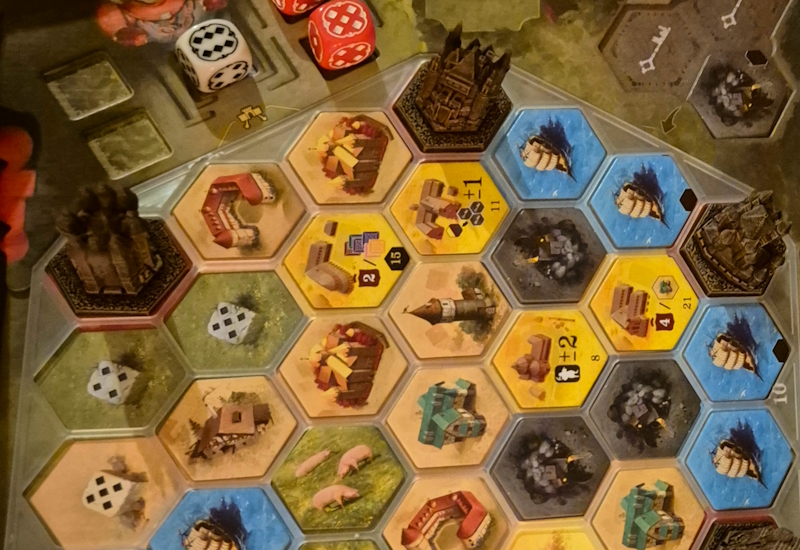
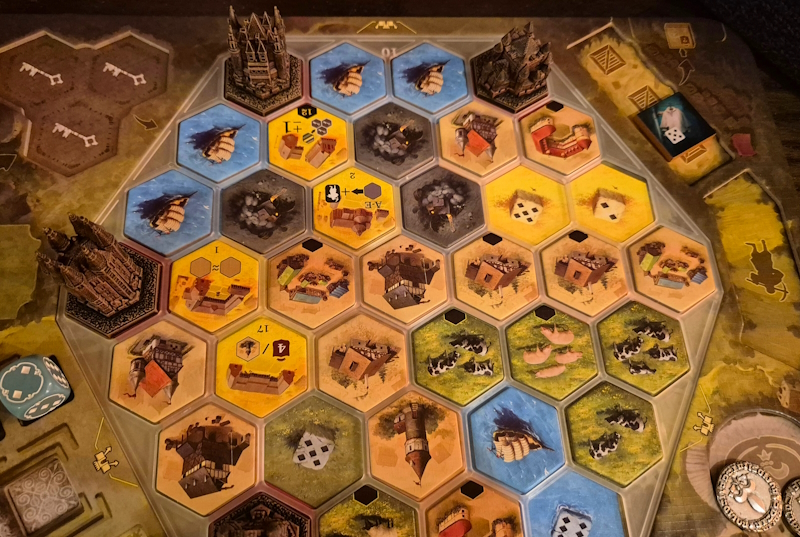
Meanwhile, on the third table, Cobalt was joined by Black, Plum and Ivory in a game of Castles of Burgundy using the new fancy “Special Edition”.  In Castles of Burgundy, players take on the role of an aristocrat controlling a small princedom, building settlements and castles, trading along the river, mining silver, and use knowledge of travelers.  The game is a tile playing game that is played in five phases, each consisting of five rounds. At the start of each round all players roll their two dice, and first player also rolls a goods placement die.  During their turn, players carry out two of the four possible types of action.  These include: take a settlement tile from the numbered location corresponding to one of their dice and place it in storage; take a settlement tile from storage and place it on their player board on a space with a number matching one of their dice;  deliver goods with a number matching one of their dice, or take worker tokens (which allow players to adjust the roll of their dice).

Castles of Burgundy
– Image by boardGOATS

Additionally, players may buy a settlement tile from the central depot and place it in their storage area. The Settlements offer benefits, additional actions, money, advancement on the turn order track, more goods tiles, die roll adjustment or victory points with bonus points awarded for filling a region with tiles.  Cobalt and Black both started on the east side of the map, with Black building to the south with Ships to move up the turn order.  He also got a mine to start generating coins at the end of each of the four rounds. He also managed to completed an area to move up in points (Ships). Cobalt went the other way with yellow and beige buildings and managed to get a second castle (and effectively an extra turn), whilst also completing areas for early points.

Castles of Burgundy
– Image by boardGOATS

Plum started at the bottom and managed to get a Mine, setting up for the future, as well as Ships to move up the turn order, but started accruing points more slowly.  Ivory on the other hand started in the north and went for a different strategy, grabbing animals (specifically goats!) and made a faster start with regards to points, at the expense of turn order.  In the second round, Ivory continued to focus on animals, grabbing more animal tiles and end of game tiles giving points for different animals, to go along with his yellow tile from the first round giving him extra points when scoring animals. He also built his second castle and started to fill the eight beige area, needing one of each beige building in that area for a challenging thirty points.

Castles of Burgundy
– Image by boardGOATS

Plum focused on engine building, getting two more Mines, giving her significant income for the rest of the game, as well as a building which allowed her to build duplicate buildings in an area, making it much easier to achieve thirty points in the eight beige area, as well as a tile allowing her more flexibility in getting tiles (as it allowed her plus/minus one on the die).  Black was also engine building and doing a little bit of everything else, while Cobalt, Like Plum and Ivory was focusing on the beige “Eight” area.  Cobalt also had tiles that allowed him to spend workers to get a tile (as well as change die results) and also get extra workers when he took that action and gain a coin—a very efficient engine! At the end of the round, Cobalt and Ivory had taken the lead, followed by Black and then Plum.

Castles of Burgundy
– Image by boardGOATS

In the third round, Ivory managed to fill all his animal spaces and get the bonus for doing so as well as get more points from his animals, but was generally slowed down by the fact he’d stopped developing his engine.  In contrast, Plum’s engine had kicked in, giving her lots of points and bumping her up the rankings leaving her snapping at Ivory’s heels by the end of the round.  Black was continuing to do a bit of everything, but now had an end game objective for different goods while Cobalt continued to develop his engine.  In the penultimate round, Ivory continued to struggle due to his lack of engine development and his ships paucity of ships meant he had taken his turn last for most of the game, although he was “building beige” where possible for the thirty points.

Castles of Burgundy
– Image by boardGOATS

Plum on the other hand, stormed ahead, filling the “Eight” area and taking thirty-four points as she was able to fill it with the same building.  With other scoring opportunities as well (like animals), it looked like she was a certainty to win being as she had a lead of over thirty points at the end of the round. Cobalt and Black also pushed past Ivory with Cobalt having focused on mines and Black completing all four of his castles, taking bonus points for doing so.  In the final round, Cobalt and Ivory both managed to fill their beige area for thirty-two points and Ivory finally got his first ships, albeit too little too late for anything other than a few points. Plum, having filled in the large beige area, slowed down a little, lacking a focus having done so much in the previous round, but still managed to score significantly.

Castles of Burgundy
– Image by boardGOATS

Black was still doing a bit of everything, particularly focusing on goods, but failure to score the large beige area cost him dearly.  By this time, Cobalt, on the other hand, was using his engine to maximum effect, with his ability to grab tiles using workers to give him more actions than everyone else, filling in almost all of his map. This also allowed him to slowly catch up and eventually overtake Plum, taking lots of bonus points for filling in each colour area, giving him the victory with a grand total of two-hundred and forty-four points, some fifteen more than Plum with Ivory some distance behind her.

Castles of Burgundy
– Image by boardGOATS

Learning Outcome:  Some Roll and Write games are much better than our slightly tarnished memories of them.

18th February 2025

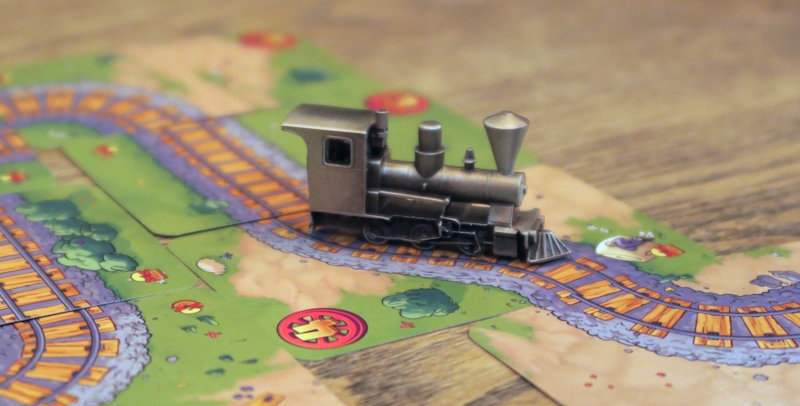
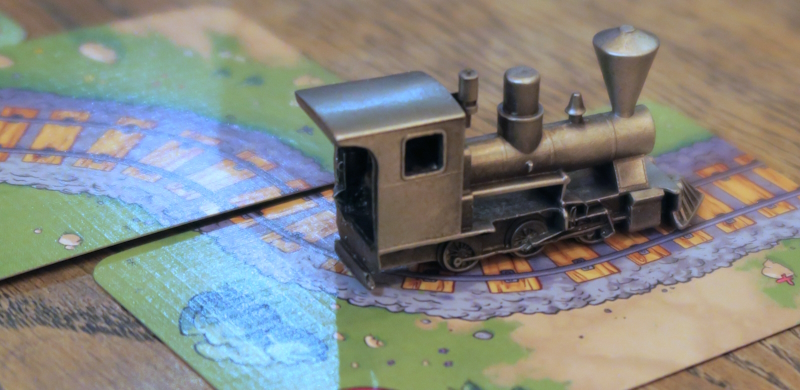
Blue and Pink began the evening, while they waited for their supper to arrive, messing about with a little card game called Rollecate which is about a historic steam locomotive built in 1967 by a famous Dutch engineer.  The idea of this little game is that players take it in turns to play Track cards to extend Rollecate’s line by placing cards.  They can play as many cards as they want, as long as they all have the same number.  When laying new track, the difference between the numbers on the last card and the first new card placed must not have a difference of two (thus one cannot be followed by three and four cannot be followed by two etc.). Cards must not overlap when played and cannot force impossible play.

Rollecate
– Image by boardGOATS

Once the Track cards have been played, the active player rolls dice equal to the sum of all numbers on the cards they played, and Rollecate moves forward one step for each Wheel rolled on the dice.  Thus, if a player places two threes, they roll six dice. If Rollecate reaches the end of the track, she hits the brakes.  For every step she’s short, the player take one card from behind the train places them on their penalty pile one by one in any order they want. Any time the card placed matches the number of the top card on the pile, both are removed from the deck.  At the end of the game the everyone adds up the face value of their cards and the player with the lowest total wins.

Rollecate
– Image by boardGOATS

By the time Blue had explained the rules to Pink, their food had arrived, and by the time they had finished their supper, Cobalt had joined them.  Blue was just finishing explaining the rules when Pine joined them and eventually they all finally managed to play the game.  There were a few “teething issues”, but before long the delightful little metal miniature was progressing along the track.  Blue and Pink got unlucky and picked up a lot of cards, some high scoring, and weren’t able to remove them.  Cobalt and Pin did rather better with Pine finishing with five penalty points and Cobalt with four.

Rollecate
– Image by boardGOATS

By this time, almost everyone had arrived, and Pink began to set up the “Feature Game” which was to be Viticulture World, the cooperative expansion to the popular wine-producing worker placement game, Viticulture.  This is one of Pink’s and Teal’s favourite games, but also very popular with other members of the group.  No-one had played the cooperative expansion, however, but despite some apprehension that the changes might spoil a favourite, there were a lot of interested parties.  In the end, Pink was joined by Teal, Ivory, Plum and Cobalt, all of whom were very familiar with the base game.

Viticulture
– Image by boardGOATS

There isn’t really anything particularly special about the base game, it is just a worker-placement game where players are growing grapes and making and selling wine.  However, it is just done very, very well.  In general, there are two types of worker spaces—restricted, that only a limited number of workers can use per round, and open spaces which can be used by as many workers as players want.  Each player also has one Grande worker who can be placed anywhere, even on fully occupied spaces.  The cooperative game is essentially much the same as the original Viticulture, with some small rules changes and a different target:  players have six years to goal: each player must reach twenty-five victory points and the shared influence token must reach the end of the influence track.

Viticulture World: Cooperative Expansion
– Image by boardGOATS

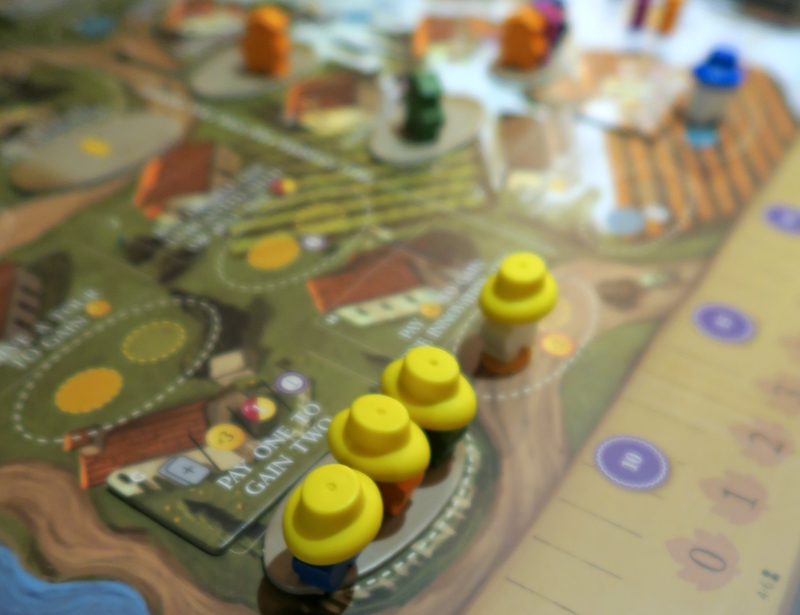
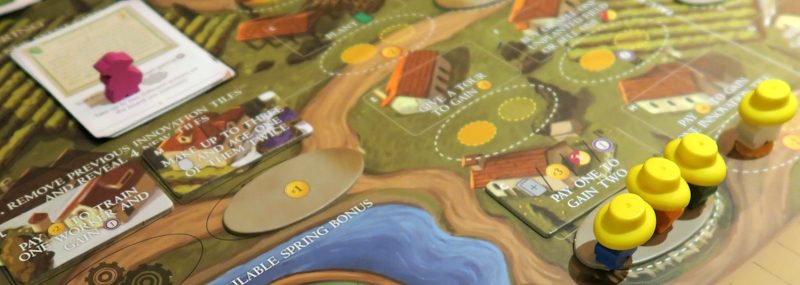
There are seven different packs of cards and the group began this time with the easiest, Green Gully, which as advertised, is a very good introduction to Viticulture World.  This is designed to make sure everyone is successful on their first time out (though it may be easier with more players).  Each player has four workers plus one Grande and unlike the original, there is no mechanism to get more.  Two of these workers have yellow hats to indicate they are summer workers and two have blue hats and these can only operate in winter, training however, allows them to remove their hat and play in other seasons.  There was a little concern prior to play that as only certain types of workers are able to claim certain bonuses it might make the game a touch fiddly, but this was not the case.

Viticulture World: Cooperative Expansion
– Image by boardGOATS

As the game progresses, there are Event cards which give special action and also increase the number of workers that can be placed on some locations. There was some confusion at the start of the game as to whether the Grande worker could be used to claim the special actions.  It was felt this would make the game way too easy though, because if everyone was able to take advantage of the bonus with their Grande this would make the game too easy; a quick online check confirmed that this was not allowed.  The group found the game fairly straight-forward, though everyone was quit experienced and therefore knew where the areas of tension were, in particular making wine, harvesting grapes and fulfilling orders, so made a point of upgrading these early.

Viticulture World: Cooperative Expansion
– Image by boardGOATS

The group had a lot of fun, and as is not uncommon with this game, there were lots of “getting my cock out now” comments (especially from Ivory), when it came to claiming the turn-order.  Ivory was the first to achieve his required twenty-five points, but he went on to get thirty in order to claim an extra influence point for the team.  Cobalt was next to make his target and everyone else followed the next round.  Despite the initial reservations, everyone enjoyed the game and would be keen to try some of the more challenging regions on another occasion in the not too distant future.

Viticulture World: Cooperative Expansion
– Image by boardGOATS

While the oenophiles were playing Viticulture, the other four were revisiting Kavango.  This is a medium weight card drafting and tableau building game which has something of the feel of Wingspan.  This was the “Feature Gamelast September, when it went down well with those that played it, one of whom was Pine.  It had a second outing two weeks ago, when Blue promised Pine and others it would come back.  Pine was keen to give it another go, and this time they were joined by Purple and Black.  The game is fairly straightforward to play, though a monumental table-hog, so the group started by moving to a larger table on the other side of the room.  Blue outlined the rules:  Players start with a hand of twelve cards and choose one before putting the rest to one side.

Kavango
– Image by boardGOATS

This card is then either added to the player’s tableau if it is an animal card, or activated if it is an action card.  Once the card has been played, players have the opportunity to invest in protection or claim rewards (money and points) for completing targets.  In the early part of the game, the cards that are dealt are mostly from the bottom of the food chain, what the game refers to as “Producers”, rodents and the like.  As the game progresses, the creatures get bigger and require the presence of other animal types or terrain as food and protection (Habitat, Poaching and Climate).  This time, Blue (who was playing the game for the third time) stole a bit of a march, picking up more points during the game than anyone else.

Kavango
– Image by boardGOATS

Pine who was on his second play, did a god job of collecting valuable animals and finished with a massive one hundred and twenty-six points, but failed to pick up the bonuses for the protection.  Purple didn’t do so well with her animals, but had every type and picked up all the bonus points available for protection too, while Black didn’t take any points for that, but did well on his personal objectives.  The winner, (unsurprisingly given her extra experience) was Blue followed by Pine with Purple in third.  The consensus from Purple and Black was that the game (like Wingspan) felt a too random, though Blue and Pine commented that it felt less so after multiple plays.

Kavango
– Image by boardGOATS

Learning outcome:  Making wine is just as much fun as a team.

4th February 2025

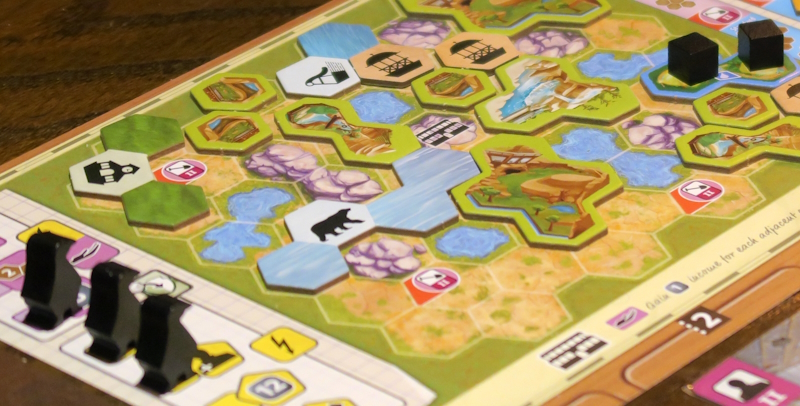
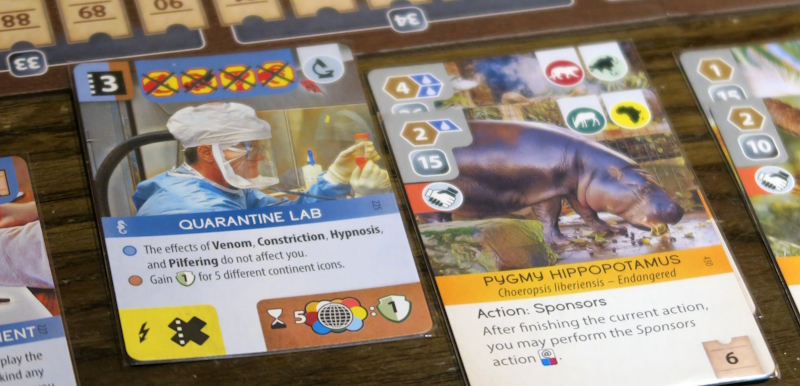
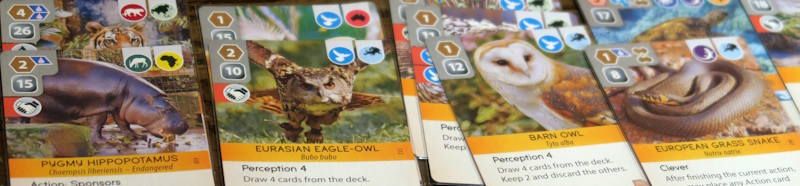
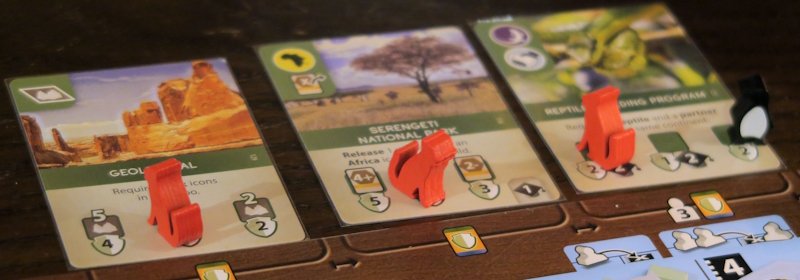
Blue and Pink were just finishing their supper when not one, but three copies of Ark Nova walked in, escorted by Ivory, Cobalt and Green.  This was because the “Feature Game” was to be its Marine Worlds expansion and, as Ark Nova is a substantial game that doesn’t get as many outings as it deserves, everyone was keen to give their copy a bit of an airing.  The game is much longer than those we usually play on a Tuesday so everyone who was keen to play was early and started setting up promptly.  Given the length, we also erred on the lower end of the player count, with just Ivory, Cobalt and Green playing.  The game is all about planning and designing a modern, scientifically managed zoo, but the game-play is more like Terraforming Mars with animals, than Zoo Break or Zooloretto.

Ark Nova
– Image by boardGOATS

Although it is quite a complex game, functionally it is not difficult to play on a turn by turn basis, though there is quite a lot to manage and keep a track of.  On their turn, players take one of six possible actions:  activating one of the five action cards (Cards, Build, Animals, Association and Sponsor) with a strength equal to the number above the card.  When activating a card players perform the action based on its power level which is dictated by its position in the row.  During the game, players can upgrade and turn over the action cards to a more powerful second side using various Bonuses.  The Marine Worlds expansion introduces several new elements to the game.

Ark Nova: Marine Worlds
– Image by boardGOATS

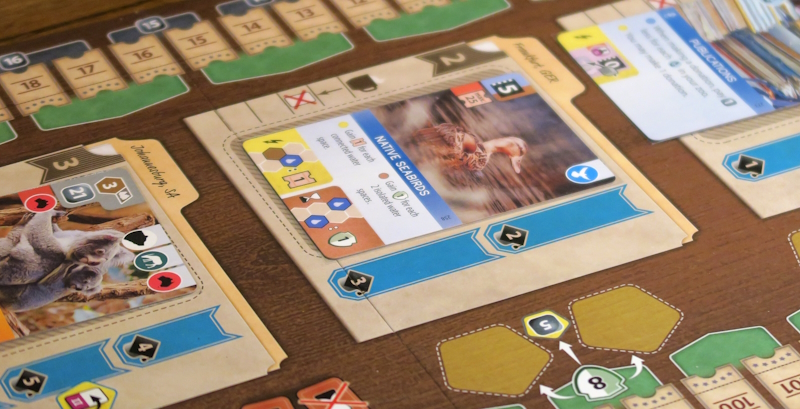
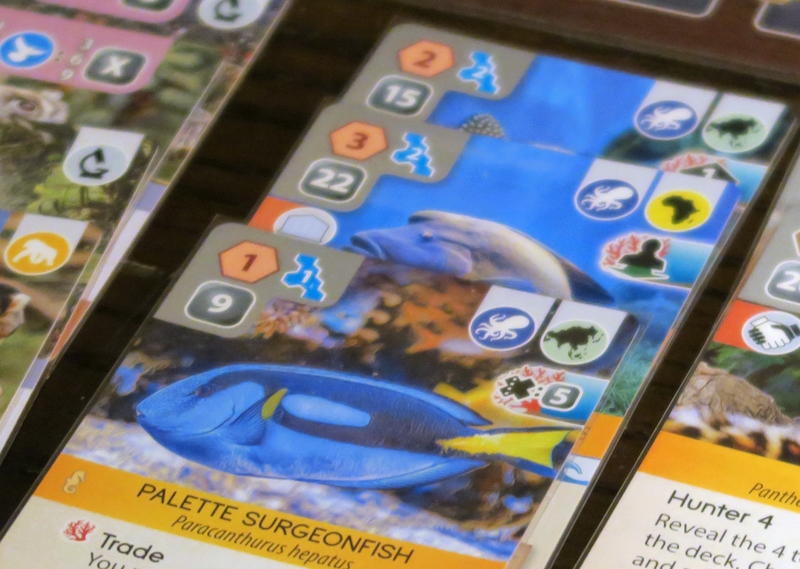
Firstly, there are sea animals that have to be played in new special enclosures that must be built adjacent to water.  Roughly half the sea animals are reef dwellers, and whenever a player adds a reef dweller to their zoo, they trigger the ability of all reef dwellers in that zoo. To deal with the dilution of the deck (caused by adding more cards), all sea cards feature a wave icon, and whenever it is revealed in the display, you discard the first card in the row, then replace it.  For each of the five Action cards there are four alternate versions with a little twist. Players draft these action cards at the start of play, replacing two of their standard action cards with these new ones, increasing the asymmetry in the game.

Ark Nova: Marine Worlds
– Image by boardGOATS

A new fourth University option is also available on the Association board.  If a player takes it, they claim one of six special Universities from the Reserve that feature one Research icon and one of six animal icons.  When a player takes this, they reveal Cards from the top of the deck and keep the first revealed card with an animal icon that matches their chosen University.  There are also new bonus tiles and other little bits and pieces to smooth out the game play.  Although the Marine Worlds expansion comes is modular, the group chose to play with all the components (Marine animals, asymmetric maps and drafted action cards).

Ark Nova: Marine Worlds
– Image by boardGOATS

Ivory took a Sponsor Card that gave him extra money for breaks and an Association Card that gave him the ability to hire workers.  This coupled with the lake map which gave extra money for building around the lake meant Ivory had access to lots of cash as the game developed.  Both Cobalt and Green took a Sponsor and an Animal Card, with Cobalt taking a map that allowed him to discard cards for money while Green had the map with the park restaurant.  While Cobalt was also able to build up a lot of cash, Green spent most of the game playing the poor relation, just scraping by.  The game started slowly, with initial conservation projects devoted to Australian animals, Birds, and African Animals.

Ark Nova: Marine Worlds
– Image by boardGOATS

Both Green and Ivory wound up spending all their early money, trying to get Animals out, whereas Cobalt focused on the Association board and playing Sponsor cards.  After struggling with money for the first couple of rounds, Ivory managed to get two Australian animals, allowing him to put a token on the conservation card, giving an additional Zoo Dollars at each break/income step and from then on, money wasn’t too much of an issue for him. Green however, struggled for money for most of the game, where Cobalt continued to focus on Sponsor Cards and Association Actions, and as a result, he took an early lead on the Research track which gave him a much greater card choice. Cobalt did build an early aquarium, however, and started filling it up with fish.

Ark Nova: Marine Worlds
– Image by boardGOATS

After a quick start, both on the conservation track and appeal track, Ivory’s game slowed down significantly—he was too focused on animals, compared to Green and Cobalt.  They had both spent time taking Association actions, leading them to Upgrade cards and progress up the Reputation track. Cobalt was able to significantly move up the Conservation track in the middle game using his Sponsor Cards, whereas Green focused on one big move by having lots of birds in his zoo.  Much to Pink’s disgust, although the panda was an option at one point in the game, the “wave” added by expansion pushed it on, so nobody got the Panda.  Instead, by the end of the game, Ivory had quite a collection of monkeys, Green had a few some birds and Cobalt had a lot of fish.

Ark Nova: Marine Worlds
– Image by boardGOATS

Going into the end game, Cobalt some way ahead on the Conservation track, followed by Green, while Green and Ivory were fairly similar in Appeal.  Cobalt then started playing lots of animals in his zoo and managed to completely fill it moving rapidly along the Appeal track.  It was clear he was soon going to bring the game to a close, due in part to both his (and Green’s) ability to make donations by upgrading the Association card. Green was also moving forwards on both tracks while Ivory was lagging behind albeit with three conservation cards in hand. Fortunately, Ivory had lots of “x tokens”, allowing him to play all his conservation cards (and gain the additional worker he needed, shooting up the conservation track, though sadly, it was too little too late.  From there, It wasn’t long before Cobalt’s Tokens to crossed, ending the game.

Ark Nova: Marine Worlds
– Image by boardGOATS

Everyone had made some mistakes reading their cards and/or abilities which cost a little bit, but was probably fairly balanced out.  Everyone managed to get the full four Conservation points on their personal scoring cards, but Green picked up quite a few extra points from the Sponsorship cards leaving him level with Cobalt.  Inevitably, this led to a hunt for tie-breakers—the rules state that the tied player who supported the most Conservation Projects wins the game.  As Green and Cobalt had also supported the same number of Conservation projects the rules dictated they should share the victory.  That said, Green magnanimously said he felt Cobalt had the edge by virtue of having way more coin at the end of the game.

Ark Nova: Marine Worlds
– Image by boardGOATS

On the next table, Blue, Pink and Mint had finally got underway playing Kavango.  This is a conservation, card-drafting game.  A bit like games like Sushi Go! and 7 Wonders, players draft cards to build their Reserve.  Like games like Terraforming Mars, however, cards can only be added to a player’s Reserve if they have its requirements.  These might be the food supply, or enough protection (environmental, poaching or climate).  Climate protection is unique because, as in real life, players have to work on that together.  At the end of the game, after three rounds, players add up the value of their animals, and any bonuses together with any points scored during the game for Research, and the player with the most points is the winner.

Kavango
– Image by boardGOATS

Pine joined them briefly and expressed an interest in playing another time, but decided this week he would take himself home to better acquaint himself with his C-vitamins and avoid unnecessarily sharing his bugs.  Mint was the nominal first player, though mostly the game is played simultaneously.  Blue started hard and fast building up lots of income, however, she was forced to invest heavily in Climate protection—honourable, but not necessarily lucrative.  Pink and Mint were a little slower to start, but made good progress.  Both got caught out by a very minor rules malfunction that had a significant impact:  Cards not used at the end of the round are supposed to go into a discard pile, but instead were returned to their decks.

Kavango
– Image by boardGOATS

Towards the end of the game, this suddenly became significant as some types of card are not available in the final rounds.  So, those that needed, for example, termites (like Mint), were unable to get them.  Pink and Mint were most obviously affected, though everyone got caught in some way or another.  The card draw hindered Blue as she struggled to find any migratory animals at all and had to abandon her personal objective as unachievable.  In contrast, Mint and Pink both did really well with theirs (birds and toxic creatures respectively), making the result much closer than it would otherwise have been with Blue the victor with a hundred and seventy-one, a single point more than Mint.

Kavango
– Image by boardGOATS

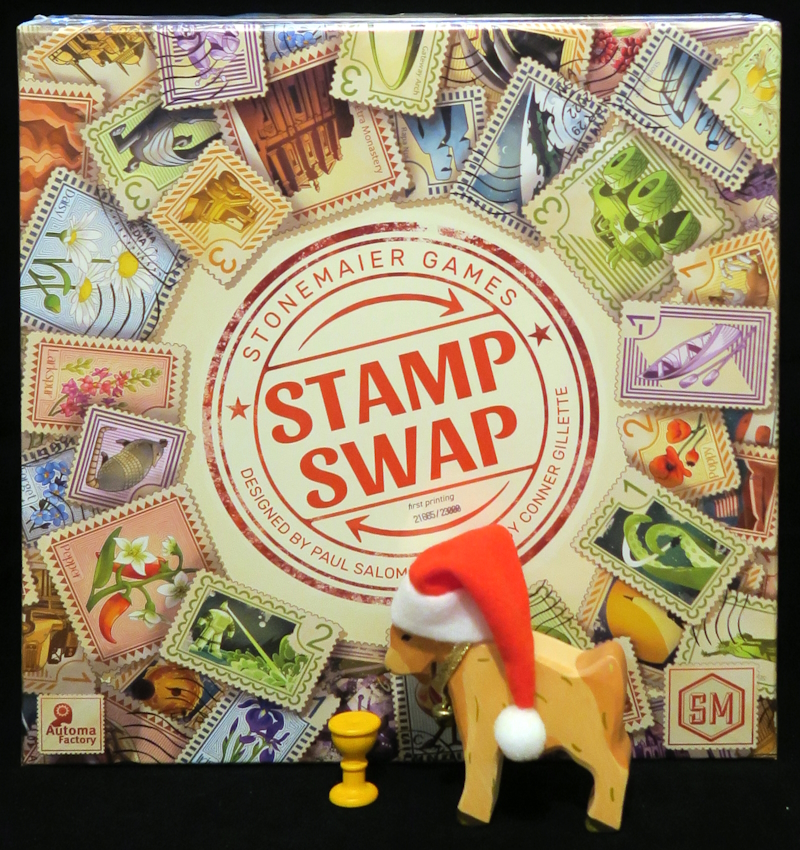
Meanwhile, Plum and Byzantium had kindly agreed to take Lime to the other side of the room to play the Golden GOAT Award 2024 Winner, Stamp Swap.  Somehow, despite the flurry of outings it received towards the end of last year, Lime had missed out on playing it.  This is also a drafting-type game, but this time with stamps (mostly).  The game takes place over three rounds, each split into two parts:  Firstly players take it in turns to choose from a central pool, then players divide their pile into two and the first player chooses one pile from another player to take, who keeps their other pile and chooses one from another play—and thus the piles of stamps are swapped.

Stamp Swap
– Image by boardGOATS

On previous outings, Byzantium had managed to annoy Blue by just beating her.  It had been his birthday at the weekend, so the question was whether he would get another, albeit slightly belated, birthday gift in the form of another victory.  Sadly for Byzantium, it was not to be though.  Plum took ten more points than him during the game and another ten more in the end game scoring between them, giving poor Lime quite a trampling on his first game.  Stamp Swap wasn’t the only popular new game to get an outing this evening.  On the next table, Jade and Sapphire were introducing Purple and Black to Fromage, a sort of cheesy worker placement game with simultaneous play and a time component, not completely unlike Tzolk’in.

Fromage
– Image by boardGOATS

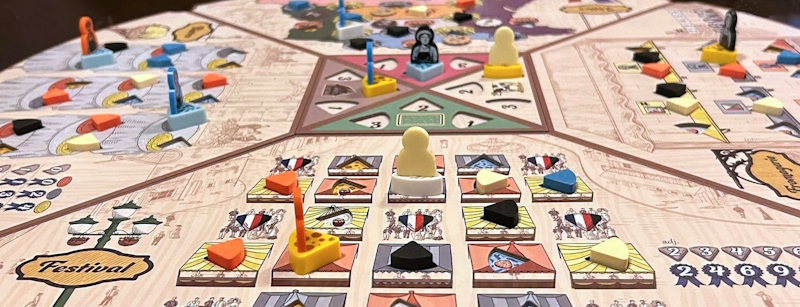
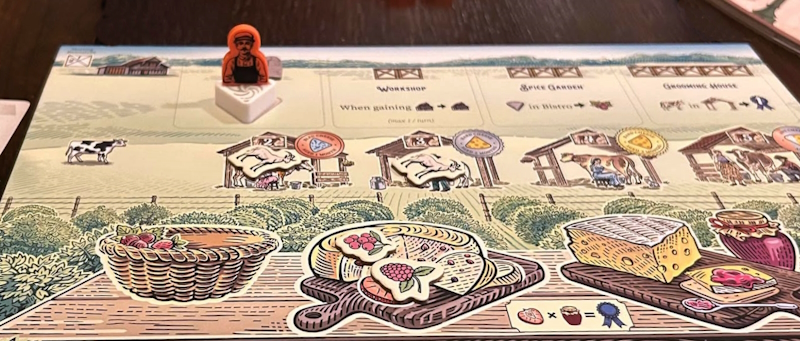
The actions are tied up in four “mini-games” which players take it in turns to participate in.  It has proven quite a popular little game because once everyone knows how to play, there is relatively little down time and despite playing different areas at different times, quite a lot of interaction.  Players simultaneously choose where to place their workers, in their quadrant of the board, and once everyone is done, the board is turned and then players retrieve any workers they can and then place workers on their next quadrant.  Players score points for occupying tables in the Bistro quadrant, holding the majority in regions in the Villes quadrant, filling different tables in the Fromagerie quadrant, occupying contiguous areas in the Festival quadrant, and for fulfilling Orders.

Fromage
– Image by boardGOATS

This time, Purple and Jade made a bit of a killing in the bistro taking nearly thirty points each, while Sapphire took twenty-two points in the Villes.  Black’s strategy was somewhat different, picking up points more evenly across the board and focusing particularly on fruit.  In the end, despite the differences in approaches, the scores were very similar, with only three points covering second to fourth.  The winner was Jade, however, some twenty points clear of Sapphire, who just nicked second, but a single point.  The game had been well received, and the group ended up “Doing a Lime” and playing it a second time.

Fromage
– Image by boardGOATS

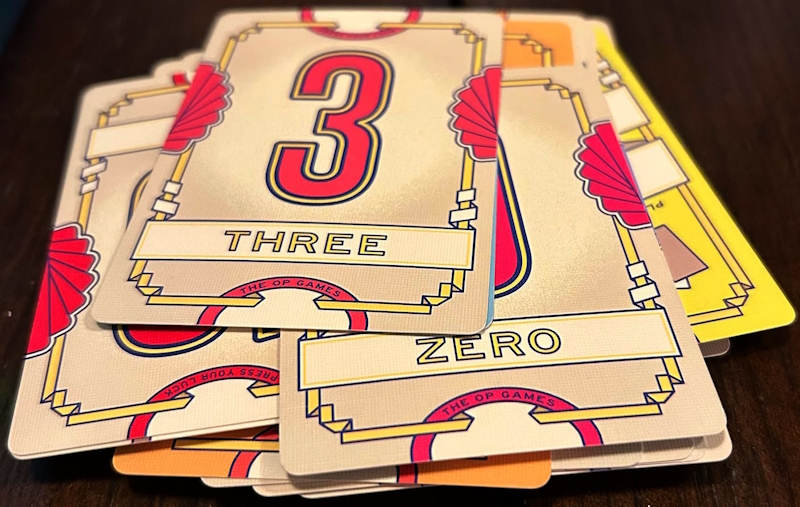
The second game was also tight, although everyone was much more even in where they scored their points.  Sapphire just edged it though, again by a single point, again from Black, pushing Jade into third.  There was still time after the second game for something else, something new, something quick—Flip 7.  This is a really simple “Push your Luck” game reminiscent of Port Royal, where players simply turn over cards and gamble on not revealing the same number twice.  The catch is that each numbered card appears in the deck that number of times (i.e there is one one, two twos and so on).  Flipping over seven in a row gives fifteen bonus points.

Flip 7
– Image by boardGOATS

There are also some action cards in the deck, “Flip Three”, “Freeze”, “Second Chance” and modifier cards which give extra points.  Players take it in turns to decide whether they want to “flip” or ” stick”.  The game ends when players have reached the pre-agreed total (two hundred, according to the rules, though games can easily be made longer or shorter as desired).  In the first round, three players scored well, but the rest of the game did not go so well.  In fact, the only player who managed to score in every round was Black with a fairly consistent total around thirty.  It was no surprise that he was the first to pass two hundred and was therefore the winner, ahead of Sapphire and Purple, who were joint second with a hundred and seventy-six.

Flip 7
– Image by boardGOATS

Learning Outcome:  Zoos are even more fun with sea creatures.

21st January 2025

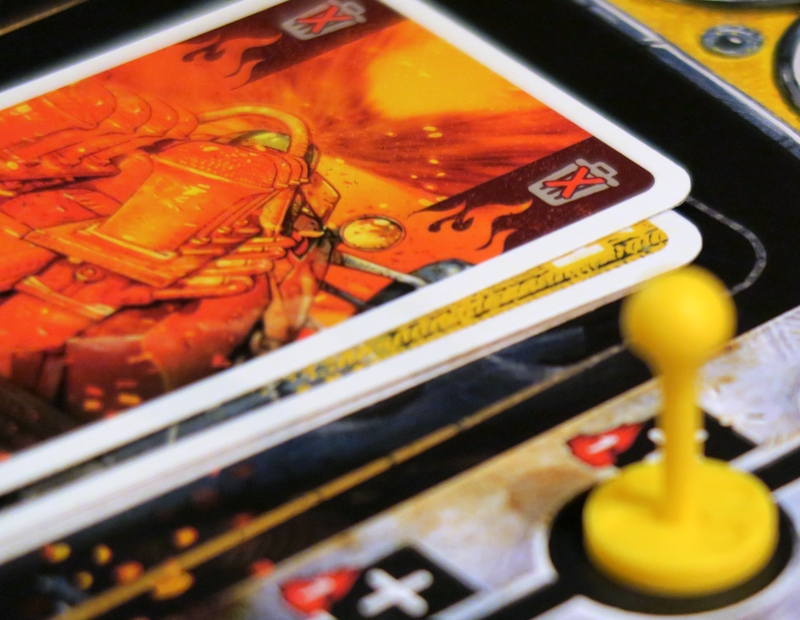
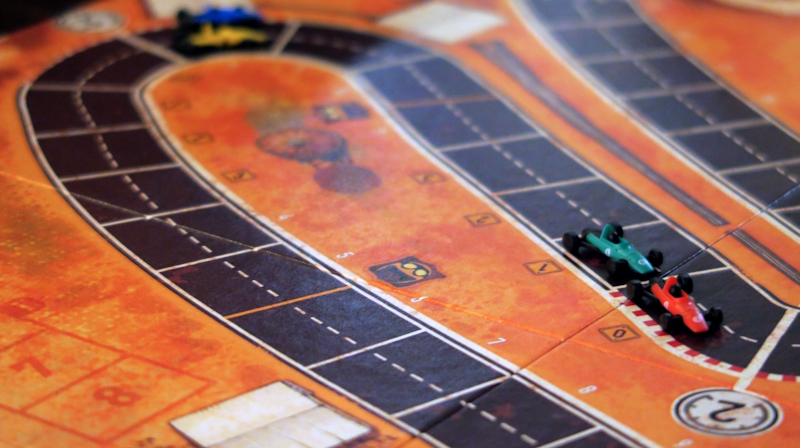
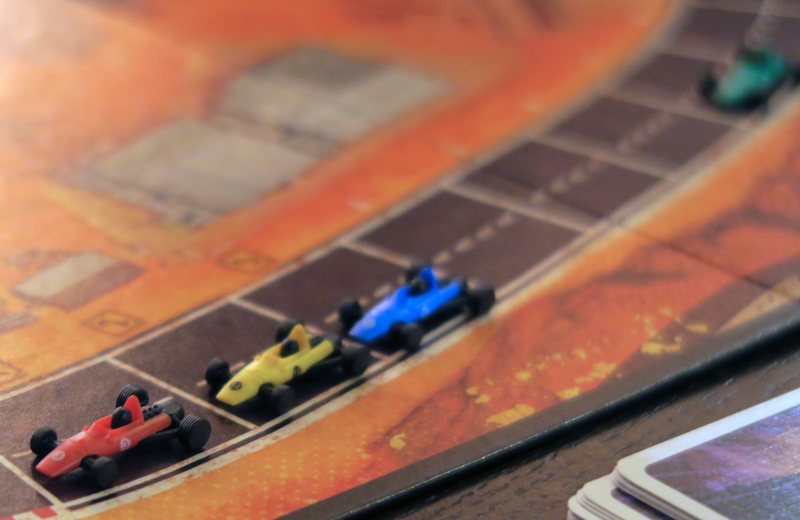
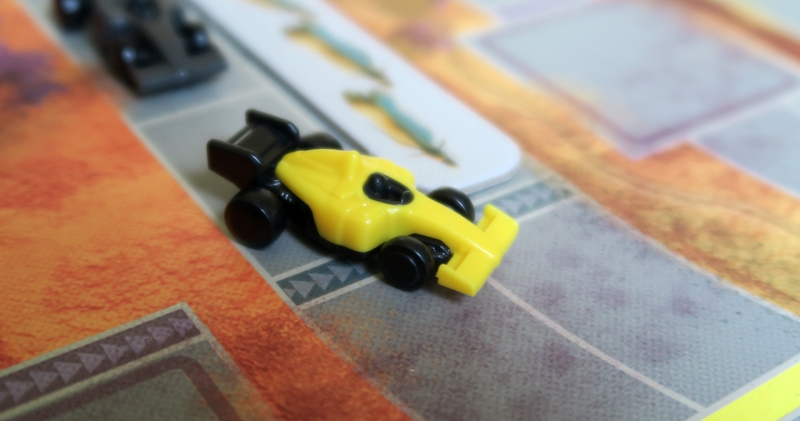
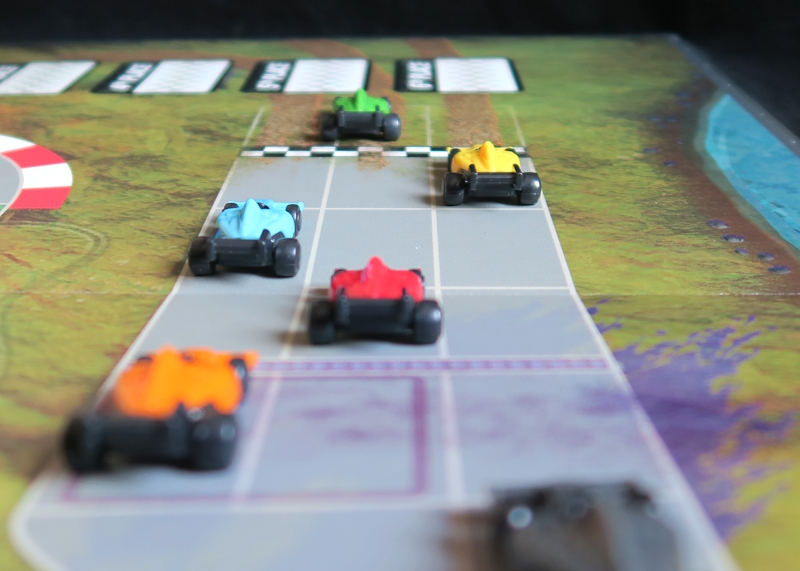
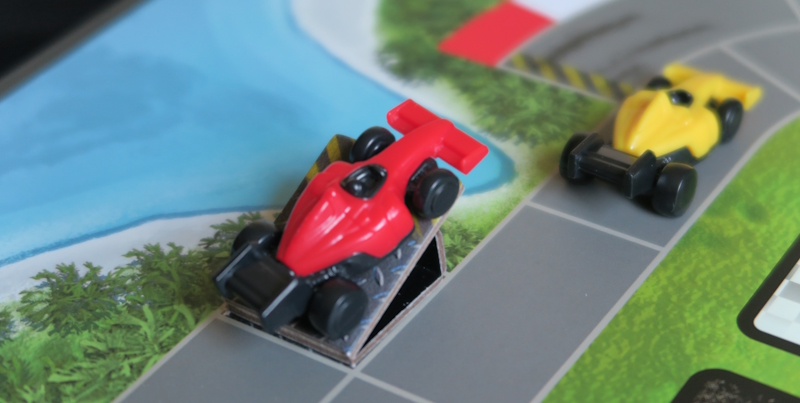
Blue and Pink were still eating as everyone else rolled up.  But as they did, like last time, there was an unusual amount of interest in the “Feature Game“, which, in a change to previous plans, was to be Heat: Pedal to the Metal.  This is a car racing game, in a similar vein to other games popular within the group like Flamme Rouge, Snow Tails, and Downforce.  Like Flamme Rouge and Snow Tails, as well as a racing game, Heat is also a hand management game.  The idea is that players simultaneously choose cards to play and then these are activated from the front of the pack (much like PitchCar).

Heat: Pedal to the Metal
– Image by boardGOATS

Players have a hand of seven cards drawn from their personal deck.  During the game, certain actions that are bad for their engine cause it to heat up meaning they pick up cards that block their hand.  Initially, Heat cards go into players discard pile, simulating the delayed effect engine damage can have, blocking their hand later in the game as the deck is recycled.  There are ways to cool the engine down, but these Heat cards cannot be discarded or played in the normal way.  What makes Heat slightly different to some of the other hand-management-racing games is that there is formally simultaneous play to choose cards and then players take it in turns to activate their cards and take a series of optional mini-actions.

Heat: Pedal to the Metal
– Image by boardGOATS

Players start by simultaneously adjusting their gear, staying put or shifting up or down one without penalty, or shifting two and picking up a Heat card.  The gear dictates how many cards a player must play – second gear means they have to play two cards for example.  Players then take it in turns to reveal their cards and move their car.  There are then five “situational” options: Adrenaline, React, Slipstream, Corner Check, and Discard, before the player replenishes their hand back to seven cards.  Adrenaline is a catch-up mechanism, where the player at the back can move one extra Space while adding one to their Speed value and/or gain one extra “Cool down”.

Heat: Pedal to the Metal
– Image by boardGOATS

“Cool down” is an important aspect of the game because it allows players to remove a Heat card from their hand and return it to their engine deck.  In React, players activate any additional symbols on the cards they have played or from the gear they are currently in or from the Adrenaline.  These include picking up cards because of Stress—players start the game with three Stress cards in the deck which represent lapses of concentration.  When a player plays these, they then have to draw cards from their deck to add an essentially random amount to their speed.  Of course it is not random, and a player who has an idea of what cards are still in their deck will be able to mitigate this.

Heat: Pedal to the Metal
– Image by boardGOATS

Further, Stress cards can also be used to postpone the effects of Heat, as any non-movement cards go straight into the discard pile.  Players can also control their engine heat by spending a period of time in a low gear by “Cooling down” their and removing Heat cards from their hand (three for first gear, two for second).  In contrast, players that have Heat cards available, may add an extra one to their discard pile to boost their speed by drawing an extra card as for Stress cards.  Once all these have been activated, players who end their movement along-side or immediately behind another car can Slipstream, that is move two spaces forward (this does not add to speed, it simply means the car moves further because it is moving more efficiently).

– Image by boardGOATS

If the player has crossed a Speed restriction line typically at a corner, they have to evaluate their Speed by summing the value of their cards and adding one for any Adrenaline bonus if they used it.  If this is more than the limit, players add the difference to their discard pile in Heat Cards.  Players that do not have enough Heat to pay for their excess Speed, pay all the Heat they have and then immediately spin out—move their car back to the last available space before the Speed limit line, take one or two extra Stress cards and change down to first gear.  Once all this is done, players can discard any cards they want that are not Stress or Heat cards before replenishing their hand, shuffling their discard pile if necessary.  The first player to cross the finish line triggers the end of the game and the player that travels the furthest is the winner.

Heat: Pedal to the Metal
– Image by boardGOATS

Although Blue and Ivory were keen to play, numbers meant they missed out and instead, Jade, led Teal, Pink and Lime.  A slight rules malfunction where the group were trying to play all the steps simultaneously meant the safety car did a lap before a restart, then they were off in earnest.  The group were playing on the USA track, which is generally recommended for a first play and is raced over two laps.  One thing that seems to be true for all race games is that once someone has got in front, it is very hard to haul them back, making it critical to get a good fast start.  This time, the good fast start was had by Jade and before long he had built that up and had gone one corner ahead, everyone else felt they were playing for placings and trying to work out how best to approach the corners.
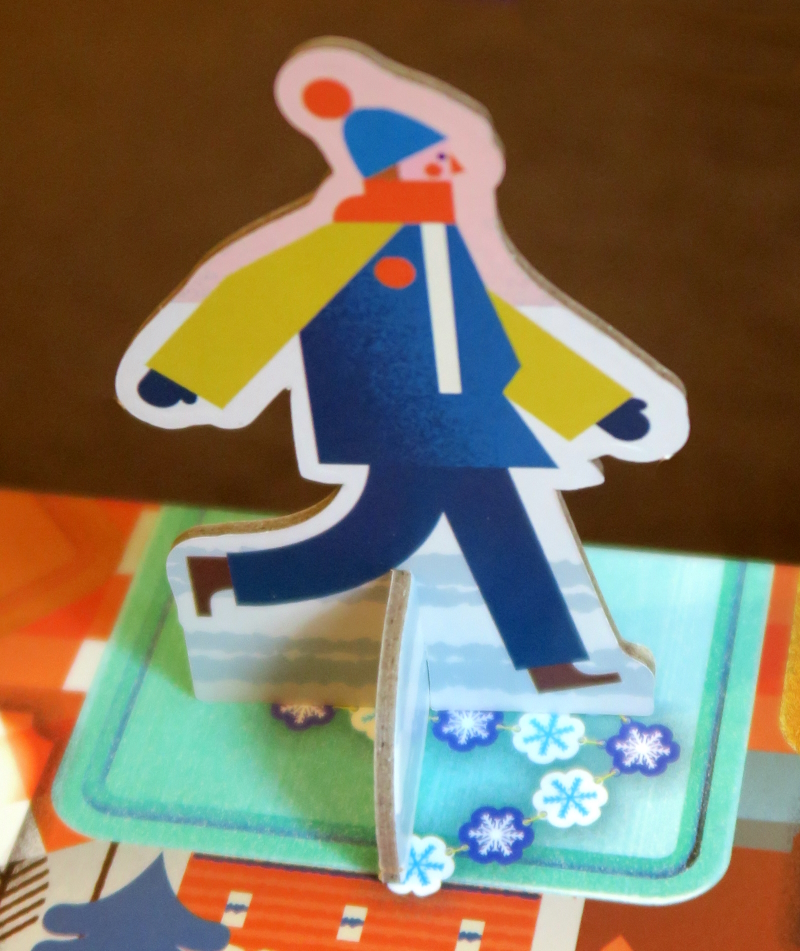
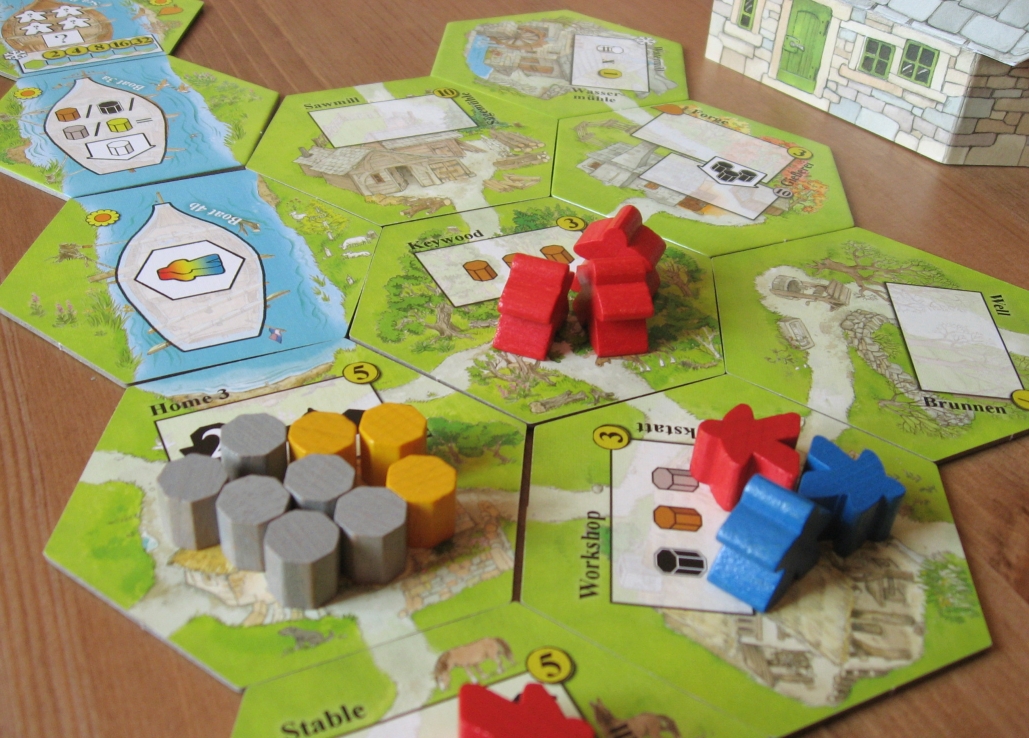
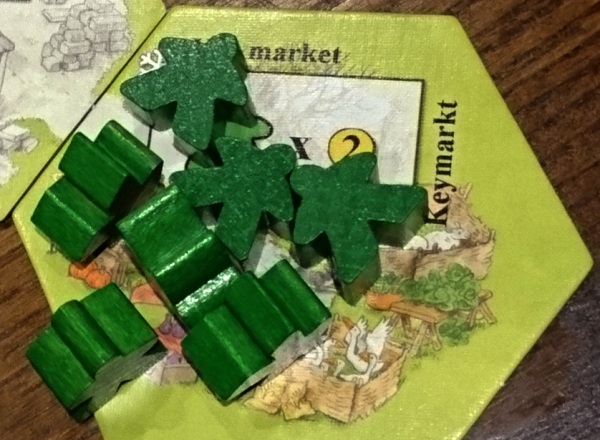
Heat: Pedal to the Metal
– Image by boardGOATS

Instead of playing the end-game as written, the group decided to play it until everyone had crossed the line, so the game continued for some time after Jade had claimed victory.  Lime crossed the line second with Pink in hot pursuit, so much so that although Pink crossed the line in third, he finished his turn ahead of Lime and therefore was awarded runner-up (or first loser) status.  Teal just crossed the line, claiming a sympathy vote ensuring that everyone finished the race.  It had been a bit of a trial and Blue was still keen to give it a go, so Jade, who had been looking to pass it on, sold it to Blue on the spot, which means it will likely get a few more tries over the coming year.

Heat: Pedal to the Metal
– Image by boardGOATS

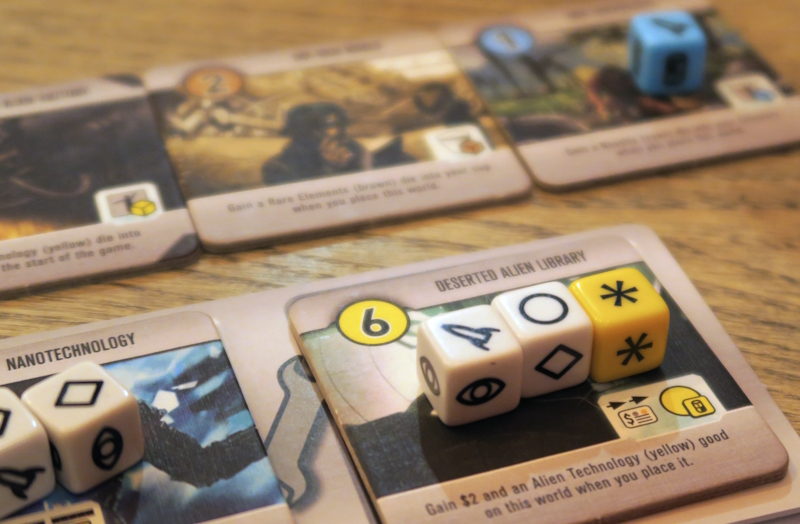
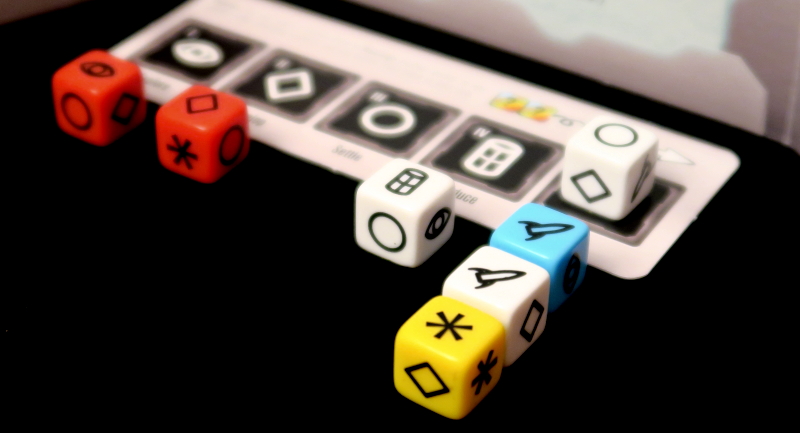
Blue and Ivory meanwhile, although keen to play Heat, had also been tempted by Roll for the Galaxy.  So, when Byzantium had commented that he hadn’t understood his first and only play, but had enjoyed it, the decision was made.  Roll for the galaxy is a dice game based on the card game Race for the Galaxy, which is itself a sort of space themed, card game version of Puerto Rico.  The thing all these games have in common is “Role (or Action) Selection”—the games have five or six phases or Roles and each player chooses one which will happen in the round.  Thus some things happen, and others do not.  A large part of these games is correctly gambling on others picking certain Roles or Actions and making them happen, so they can be piggy-backed.

Roll for the Galaxy
– Image by boardGOATS

The smaller the number of players, the more critical this can be.  So with just three players in Roll for the Galaxy, at least two will not be happening, possibly more.  The Actions are Explore (acquire world tiles); Develop (progress on building Development worlds); Settle (progress on building Production worlds); Produce (use Production Worlds to produce Goods), and Ship (sell Goods for money, or consume them for victory points).  In this game, the actions are all carried out using dice which are rolled in secret and placed behind the players screen to choose where those dice will get used.  This placement depends on the face shown, though any one die can be used to choose which Action will happen.

Roll for the Galaxy
– Image by boardGOATS

The dice are then moved to the Development or Settlement piles of tiles in their respective phases to progress building those worlds, or placed on Production worlds as goods.  Alternatively, they can be spent to pay for Exploring or Shipping in which case, they (along with any dice from any completed building projects or shipped goods) are placed back in their Citizenry.  Dice can be purchased into the player’s cup at a rate of one dollar each, so it is important for players to ensure their finances are healthy or their game will rapidly stagnate.  The game ends when, either someone has built their twelfth World, or the the pool of victory point chips has been exhausted.

Roll for the Galaxy
– Image by boardGOATS

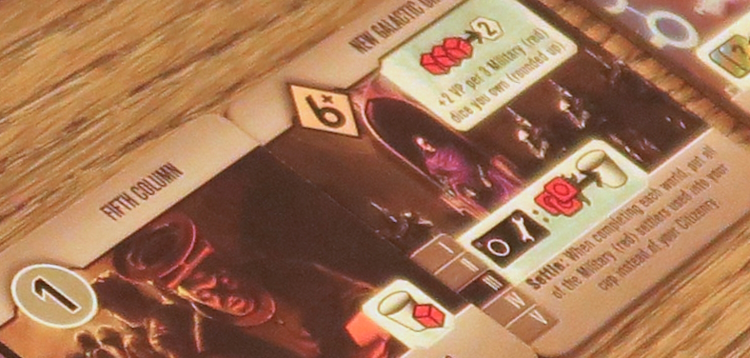
The game was slow to get going at the start, but then Ivory raced to an early lead getting a nice array of Worlds in his tableau leaving Blue and Byzantium trailing in his wake.  But then, instead of finishing the game by building his final World, he appeared to pull up.  This gave Blue and Byzantium the illusion of a chance, but was of course because he had a plan.  Ivory had the Galactic Reserves Development World which gave an extra victory point for every Goods item on a World at the end of the game while also allowing each Production World to hold an extra Goods item.

Roll for the Galaxy
– Image by boardGOATS

So, the couple of extra rounds was to enable him to fill his Production Worlds and in the end, the game was brought to a close by Byzantium building his twelfth planet, although the victory point chips were also depleted by the end of that round.  Blue had taken a sizeable twenty-four of those victory points through trading goods, but hadn’t been able to build enough.  As a result, her planets were worth only eighteen points, barely twice those of Ivory’s and Byzantium’s thirty.  Byzantium had five victory point chips and a couple of points from his New Galactic Order, but Ivory was some distance in front, thanks to his thirteen points for his Galactic Reserves and Galactic Bankers Developments together with his eight victory point chips.

Roll for the Galaxy
– Image by boardGOATS

There was time to play something else, but rather than go through rules, as Roll for the Galaxy was already out, the trio decided to give it another go.  This time, with an element of time pressure, it was arguable that some of the decisions made weren’t as sharp and the scores were all lower the second time, though that might have been partly because there were notably fewer rounds.  Blue kept dipping into the bag to try to get Rare Element (brown) Worlds to go with her Mining League, but failed repeatedly and eventually gave up.  Ivory triggered the end game with his twelfth World and this time it was Byzantium who struggled to build enough.

Roll for the Galaxy
– Image by boardGOATS

The scores were a bit closer on the second attempt, though the end result was still much the same, with Ivory again taking victory, though with half the winning margin.  By this time, the other games had also finished.  The first of these was Forests of Pangaia, in which Mint was joined by Pine and Plum.  This is a truly beautiful, tactile game, where players are trying to meet objectives to score Life Points; the player with the most Life Points at the end of the game is the winner.  The game has elements of set collection and area control and is played on a central map made of terrain hexagons.  Players take turns to perform three phases: Grow Seeds, take a Spirit Action, and finally add Treetops.  Once Seeds have grown and been turned into Trees, players carry out one of three possible Spirit actions.

Forests of Pangaia
– Image by boardGOATS

These are: Plant (moving their Spirit Pawn to a Lake space and planting seeds in adjacent spaces); Gather (moving their Spirit Pawn back to their player board and receiving a resource), and Prey (moving their Spirit Pawn back to their player board and playing their Ritual Card).  There are fourteen Rituals the Spirits can perform to collect Gaia’s Life Energy.  Once the Ritual card has been scored all the player’s Trees that were involved in the Ritual then partially or fully Decay (depending on the Ritual), either losing a level or rotting back to nothing and leaving a Seed.  The player then discards their Ritual card and draws a new one.  The game ends when the last Ritual card is taken by any player.

Forests of Pangaia
– Image by boardGOATS

Plum went first and spent most of the game collecting Sun tokens.  In contrast, Pine collected lots of Wind tokens inspiring lots of jokes about using wind to spread his seed.  The winner, however, was Mint with a nine point Trail Ritual due to excessive seed spreading giving her a total of twenty-eight points.  Pine just pipped Plum for second place by a single point.  It had been a really enjoyable game, however, made all the better by the gorgeous pieces. Meanwhile, on the other end of the same, albeit long table, Black, Purple and Sapphire played a game of last year’s winner of the Golden GOAT Award, Stamp Swap.

Stamp Swap
– Image by boardGOATS

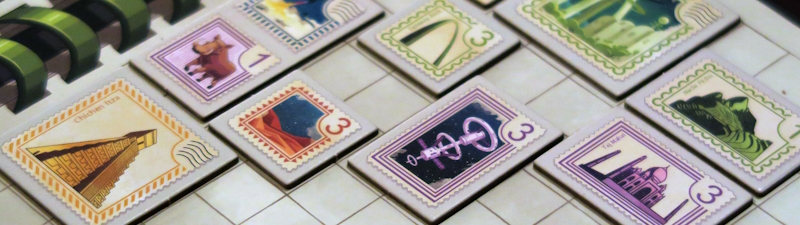
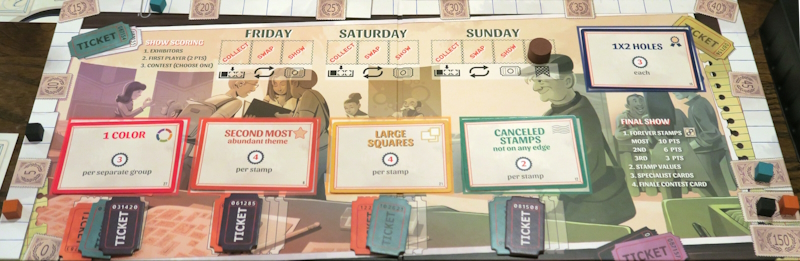
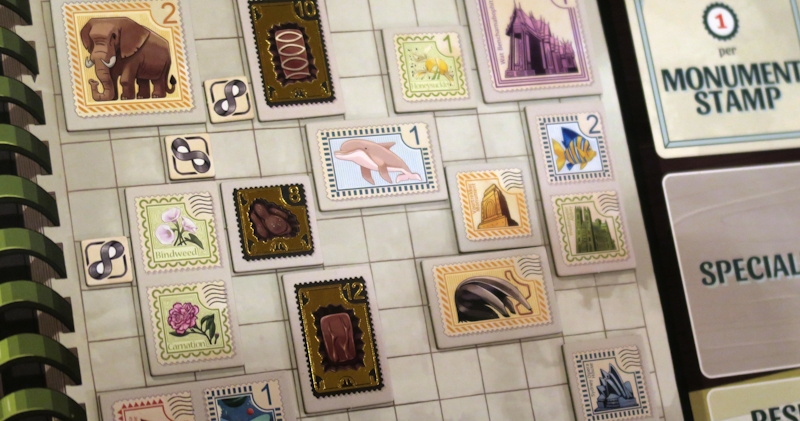
This is a really smooth tile placement centred around stamp collecting.  There is a lot of simultaneous play, which is nice because it minimises down time.  First, players take it in turns to choose items from the central Pool, then simultaneously divide them into two piles of offerings.  The player with the first player token, chooses and takes one of the piles offered by their opponents.  The opponent keeps their other pile and then chooses a pile from one of their opponents and so on.  Once everyone has two piles, players arrange the Stamps in their Album and then choose which of the four available end of round cards to score this time.

Stamp Swap
– Image by boardGOATS

After three rounds, players score the end of game objective card and the player with the most points is the winner.  One of the clever parts about this game is how much difference the objective cards make to the way players arrange their Stamps.  The end-game scoring gave three points for each enclosed gap two spaces in size (i.e. a one-by-two hole).  More points were available during the game for cancelled stamps not on the edge of the page; for large square stamps; for each stamp in a player’s second most abundant theme, and for groups of a chosen colour.

Stamp Swap
– Image by boardGOATS

This time the game was very close.  Purple (specialising in Flowers) struggled to get the stamps she needed and Sapphire (specialising Space stamps) kept getting confused which way the turn went.  It didn’t seem to inconvenience him too much however as he and Black (Monuments) fought it out for first and second place.  Black picked up a lot of his points for Special Stamps—just three accounted for a quarter of his points, which contributed to his total of one hundred and seven points, just four more than Sapphire.

Stamp Swap
– Image by boardGOATS

While everyone else was finishing up, there was some discussion about the continuation of the Ticket to Ride Legacy campaign that Blue, Pink, Black, Purple and Pine embarked on at New Year.  The campaign is played over twelve rounds and the group had managed the first two games on the first outing with the next two more recently on Saturday evening.  Spoiler alert—hover HERE to see details. The winner of the third round was Black, very closely chased by Pink with Blue taking third.  After a break for tea (lamb and vegetable tagines with millet), the group began their fourth game. Spoiler alert—hover HERE to see details.

Ticket to Ride Legacy: Legends of the West
– Image by boardGOATS

This was much less close than the third game. The winner was Pine, with Black six dollars behind and Pink a further fourteen points behind him, in third. Spoiler alert—hover HERE to see details. While chatting with the others, out of curiosity, Pine went through The Book and totaled up the scores for the first four rounds, which gave Black a lead of some twenty dollars. Something the rest of the group need to give some thought to next time, before he gets an unassailable advantage although there is a suspicion that as the campaign progresses, the games get longer and more points will be available in each round giving players a chance to catch up.  We shall see.

Ticket to Ride Legacy: Legends of the West
– Image by boardGOATS

Learning Outcome:  However you roll, when you race you need a fast start.

7th January 2025

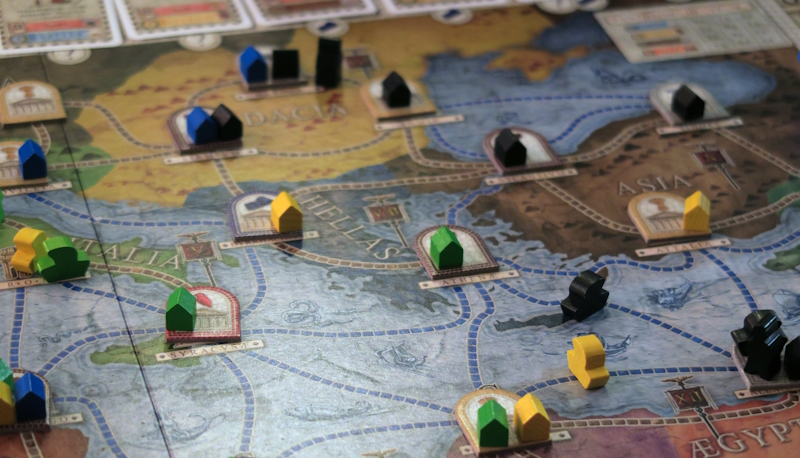
Blue and Pink were early for a change and had mostly finished their supper when everyone else arrived.  The “Feature Game” was to be Concordia Venus which is a reimplementation of Concordia, but can also be played with an upgrade-expansion to the original game.  Concordia is a strategy game of economic development in Roman times and although the rules are relatively simple, the game has a lot of depth.  Plum had been super-keen to play this, and, as it turned out, there were several others who were also very keen to give it a go, so as a result, there were soon two games underway.

Concordia: Venus
– Image by boardGOATS

The first of these involved Plum, Sapphire and Teal, playing with Burgundy‘s copy of the original Concordia with the Venus expansion.  This was one of Burgundy‘s favourite games and many people in the group fondly remember being taught it by him.  Game play is super-simple:  each player has a hand of cards, so on their turn, they play one and do what it says.  And that is all there is to it.  Players start with a hand of seven Personality Cards which provide a simple array of actions:  move Colonists and build, produce Resources, trade Resources, use another player’s most recently played Card, buy more Cards, recycle their Card deck.

Concordia: Venus
– Image by boardGOATS

Players use their Consul card to buy more Personality Cards during the game.  As well as providing more and increasingly powerful options, they are also key to scoring.  Each card is related to an ancient god who rewards its owner with victory points according to different scoring criteria.  This reward is then multiplied by the number of Cards the player has that are dedicated to that god.  For example, Saturnus rewards players for having buildings in different provinces.  If a player has built in seven different provinces and has four cards dedicated to Saturnus, they receive twenty-eight points.

Concordia: Venus
– Image by boardGOATS

The game ends either after a player purchases the last card from the display, or after one player builds their fifteenth house after which everyone else completes their final turn before scoring.  One of the things that is very clever about the game is how much variety is achieved from very little variation.  Players all begin with the same starting cards and the same resources; the only change from game to game is the order the Cards appear in the market and the distribution of City Resource tiles at the start of the game which dictate which cities produce what.  With these small variations the game can change hugely as players fight to control the area that gives the most lucrative cities during the game and when combined with their Cards to give the most points.

Concordia: Venus
– Image by boardGOATS

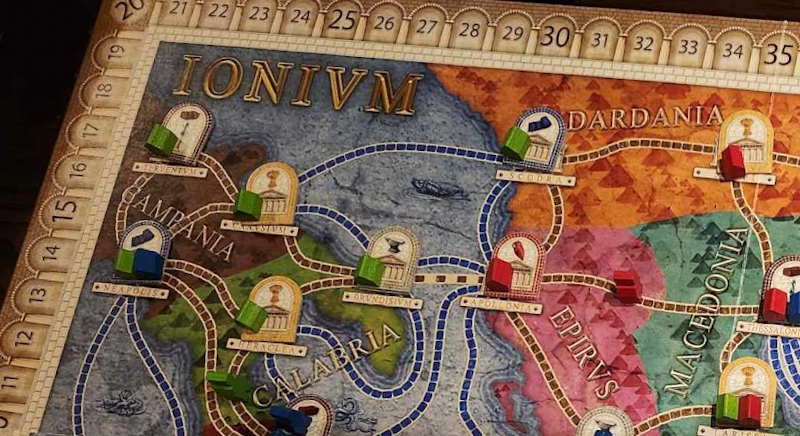
There is even more variation to be had with alternative maps, but the reimplementation of Concordia, Venus, introduces an eighth Card to the starting hand (the Magister, which allows a player to repeat their previous action), the addition of the Minerva scoring Cards (which give players extra points for each city of the type indicated by the specialist), as well as three new maps (Cyprus, Hellas and Ionium).  These can also be added to the base game using a combination of the Venus expansion and the Balearica / Cyprus expansion; this was was the version Plum, Sapphire and Teal played, which meant they started by sorting out what they needed to play the game.

Concordia: Venus
– Image by boardGOATS

The group chose to use the Ionium map from the Venus expansion as it plays well with three.  Sapphire had a positively storming game—he was perhaps helped by the fact that Teal and Plum started the game by heading east leaving Sapphire to explore the west unopposed, but he still had to make it work for him.  And make it work he did, with two turns in which he claimed four cities.  Later in the game, he made good use of his Diplomat Card to copy the Consul Plum had used.  Sapphire had a couple of Provinces to himself so Prefecting in those areas helped only him. Teal and Plum had both built in a couple of Cloth-rich areas, but Plum wasn’t always able to make the best of hers and on two occasions her storage are was full when she could have received goods.

Concordia: Venus
– Image by boardGOATS

In the end game scoring, Sapphire led in the Jupiter, Saturn and Venus scoring and jointly in the Mars scoring.  To top that, he also triggered the end of the game giving him the Concordia Card (and seven points) as well as getting fifteen points for the Minerva scoring with his Smith card.  As a result, he finished with a hundred and twenty-nine points, sixteen more than Teal who finished a very creditable third in a game where it is notoriously hard to to well in the first game.  Meanwhile, Black and Byzantium were leading another game of Concordia, with Purple and Cobalt.

Concordia
– Image by boardGOATS

As Cobalt was new to the game, this group played with the classic Imperium map and included the intermediate individual scoring for each player when they played their Tribune card for the first time.  Black spread out over the board while Purple and Byzantium were more restrained, with Byzantium only spreading his tentacles at the end of the game  Cobalt collected a lot of Cards, although Byzantium had most of the Colonist Cards.  Despite the differences in approach, this game was really tight, so much so that Black and Byzantium tied for victory on one hundred and forty-nine points with Cobalt some fifteen points behind.

Concordia
– Image by boardGOATS

As is always the case when there is a tie, there was a rummage in the rule book for a tie-break.  In this case, the tie is won by the player owning the Præfectus Magnus Card, or by the tied player who would receive him next in the course of the game.  This nominally went to Black, but it was agreed this was a rubbish tie-break rule as players can’t plan for this and just get given it when someone else plays their Prefect Card.  While all this harmony was on-going, Jade was introducing Ivory to Fromage, with the help of Blue and Pink who had both played it once before elsewhere. This is a really cool worker placement game where the actions have a time component to them.

Fromage
– Image by boardGOATS

This sort of thing is not new—Tzolk’in does something similar where players place workers on wheels which are turned at the end of each round and, the longer the workers stay, the more powerful the action they can do.  In the case of Fromage, this is sort of reversed in that players do the action and, if they do a more powerful action, then their workers stay on the board for longer.  The peril here is that, whereas in Tzolk’in players can always do a less powerful action and take workers off early if they have to, in Fromage players only have four workers and it is very easy to end up with all of them sat on the board leaving people unable to do anything at all.  Fromage has proved popular since its release just before Christmas, and as a result, it is on its second Tuesday outing already.

Fromage
– Image by boardGOATS

The actions are tied up in four “mini-games” which players take it in turns to participate in.  It has proven quite a popular little game because once everyone knows how to play, there is relatively little down time and despite playing different areas at different times, quite a lot of interaction.  Players simultaneously choose where to place their workers, in their quadrant of the board, and once everyone is done, the board is turned and then players retrieve any workers they can and then place workers on their next quadrant.  Players score points for occupying tables in the Bistro quadrant, holding the majority in regions in the Villes quadrant, filling different tables in the Fromagerie quadrant, occupying contiguous areas in the Festival quadrant, and for fulfilling Orders.

Fromage
– Image by boardGOATS

This time, the game was very close, especially between Ivory and Pink, despite there being a lot of different strategies at play.  Pink, for example, scored very heavily for the Bistro getting forty-five points (more than half his total) from the one location.  In contrast, Blue scored thirty points for her contracts and nineteen from the Fromagerie, but very little anywhere else, while Ivory and Jade scored much more evenly in the different categories.  There was only one point between Pink and Ivory in the final reckoning, however, with Pink’s eighty-one just giving him victory.  With the rest of the group remembering Burgundy while playing Concordia, it seemed only fitting that this group should move on to another of Burgundy’s favourites: Splendor.

Splendor
– Image by boardGOATS

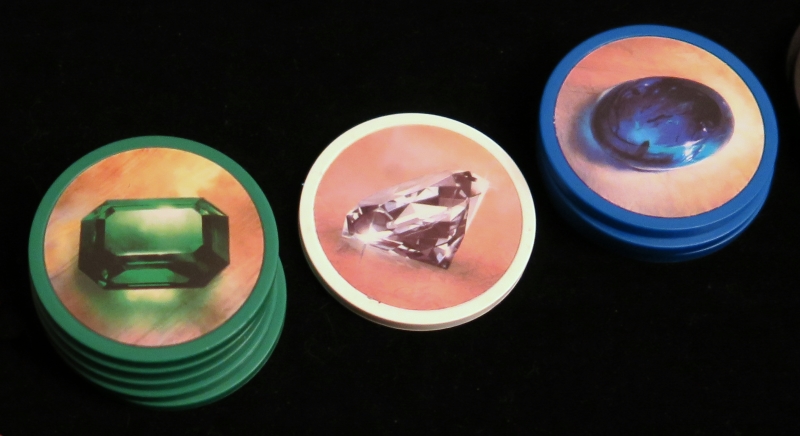
Burgundy was almost unbeatable at Splendor and at one point had a two-year unbeaten run on Tuesdays—so much so that others in the group would choose to play Splendor when he was occupied elsewhere, just to break the monotony!  The game is quite simple:  on their turn, players either take Gem-stone chips, or use them to buy Cards.  The Cards act as a perpetual source of Gems.  Thus, the aim of the game is to build a robust engine to enable players to buy the more expensive Cards that also give points, or allow players to collect Noble tiles for having sets of Cards associated with particular combinations of Gems.  This was another close game with Jade looking like he was going to end the game for a couple of rounds and Blue and Ivory looking for a couple of large turns.

Splendor
– Image by boardGOATS

That was until Pink did it for him by ending his turn with sixteen points and as he was last in the round, that meant nobody else got another turn.  So Jade finished second with fourteen with Blue in third.  Ivory decided to call it a night there, leaving Blue, Pink and Jade to play one last game, which ended up being Hiroba.  This is a sort of area-control filler game, where players take it in turns to place one of their nine Stones in the nine-by-nine grid following some simple, Sudoku-like rules.  Each Stone is numbered one to nine, but they are numbered on both sides such that the total adds up to ten.

Hiroba
– Image by boardGOATS

After players have placed their first Stone, others must be placed in the same row or column as one they have already placed, while ensuring that none of the Stones in any row, column or Garden has the same number.  There are typically two Gardens on each of the nine, three-by-three tiles that make up the board and players are trying to win control of them.  At the end of the game, the player with the highest total face value in each Garden will score points equal to the total size of that Garden.  However, for each Koi Pond on the board, a “times two” token is awarded to the player with the lowest value orthogonally adjacent pebble.

Hiroba
– Image by boardGOATS

Players who are awarded one of these place them in any empty square in any garden on the board, where it will double the points scored for that garden.  Thus, while players want to place the highest value stones to win control of Gardens this is tensioned by the desire to place low value Stones near Ponds in order to gain the multipliers and get a good score.  This game was less close than the previous ones, well—it was close for second place, but Blue who had finally woken up manged to take a couple of large areas and winning a lot of “times two” multipliers, she finished with an unassailable total of thirty-seven points.  This was some twelve more than Pink who won the battle for second.

Hiroba
– Image by boardGOATS

Learning Outcome:  Burgundy had great taste in games.

31st December 2024

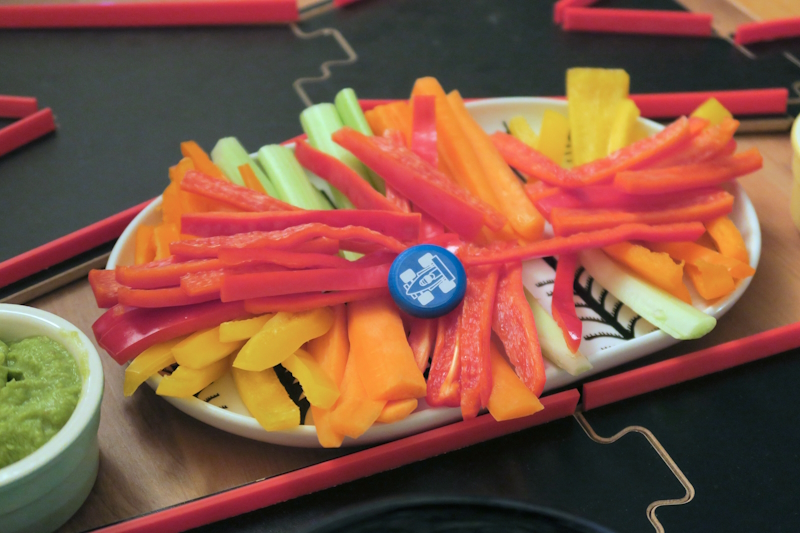
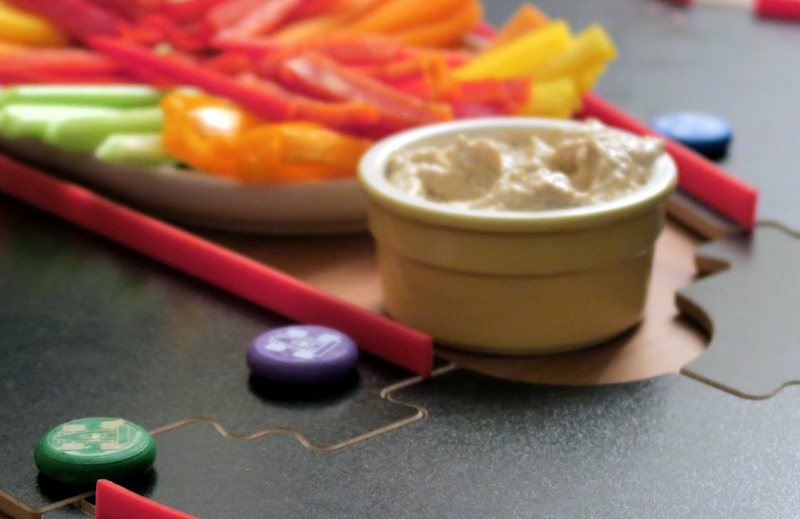
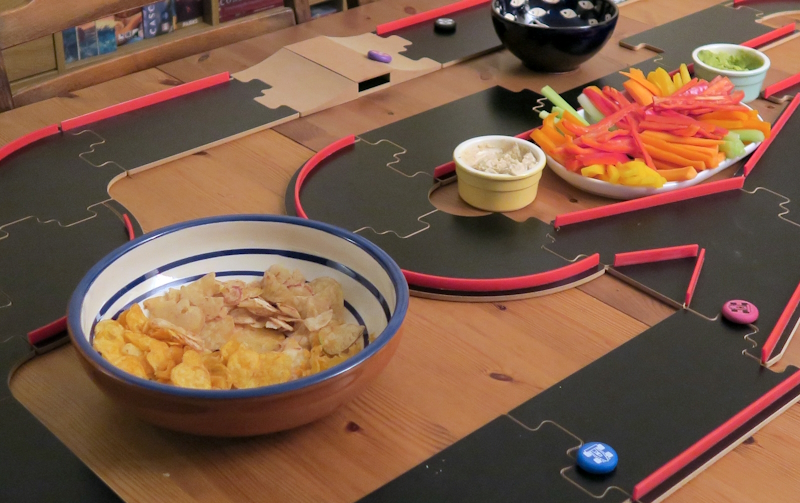
Black and Purple were the first to arrive and for once in a way, Blue and Pink were ready with pigs in blankets already in the oven and all the other food as prepared as it could be. They still had to move the table and set up PitchCar though, a task which Black and Purple went at with a will.  By the time Pine arrived, the track was built and the table was mostly laid with crudites, crisps, dips, and a cheese and pineapple hedgehog, with just cheesy mushrooms, pigs in blankets and devils on horseback to come.  Purple started and began with a superb flick to take an early lead, somewhat in contrast to black who shot up the jump (from the first extension) and off the track.

PitchCar Track 31/12/24
– Image by boardGOATS

Purple carried on with her quality flicking, while Black continued jumping off the track and/or landing upside down (costing him stroke and thus returning him to the start line each time).  Eventually, Purple got a little stuck, and Black finally managed to remain rubber-side down for a few flicks, as Pink began an ominous move through the field, eventually taking the lead.  Everyone seemed to find the fork-in-the-road (back to back “Upsilons“) challenging, variously getting stuck in the corners or ending up more in the wrong lane than the right one.  Blue who started last also began to progress through the field though she struggled with the narrow sections on the inner loop (from the No Limit extension), on one occasion ending up with her car sitting in a dish of raw vegetable sticks.

PitchCar
– Image by boardGOATS

She made it into second place eventually though and starting to chase down Pink, however, he had a substantial lead and shot round the fast section of the course to complete his first lap well in front.  As the enchiladas weren’t ready though, the group decided to push on for a second lap.  By this time Pink was in front with Blue in second.  Towards the end of the first lap, Black who had been some way behind was just starting to catch Purple and Pine who, hitherto, had been fighting it out for third.  As the cars rocketed into the second lap, Purple tried to rocket her car into orbit off the bridge, ceding third place to Pine and then fourth place to Black in the process.

PitchCar
– Image by boardGOATS

It remained mostly tight for the first half of the second lap, however, with Black, Pine and Purple generally getting in each other’s way, allowing Pink to increase his lead and Blue, who had been caught up, eventually pulled clear in second place.  Every now and then Purple managed to pull out a truly fantastic flick, but then got stuck again, while the others were generally a little more consistent and edged in front.  Coming out of the inner loop, Pink shot onto the fat section chased by Blue, who managed to catch and bumper-shunt him, but alas, not overtake, as he cruised over the line in first.  Blue followed leaving what looked like a tight race for third until Black broke free.

PitchCar
– Image by boardGOATS

In the end, Black was some way clear in third before Pine eventually broke free from his race-long tussle with Purple.  Purple finished much as she started with some spectacular long, fast flicks, interjected with a couple of “off-track incidents”, as the track was pulled up just behind her because supper was ready.  After veggie and non-veggie enchiladas followed by Traffic-Light jellies, Pink excitedly got out his Christmas present:  Ticket to Ride Legacy: Legends of the West.  This is an epic game based on the original Ticket to Ride game play, but where the cards and boards are changed during the twelve game campaign.  Pink had eyed it up at Essen in 2023, but the box size and price, which are both also epic had put him off getting it.  Santa had been more generous however…

Ticket to Ride Legacy: Legends of the West
– Image by boardGOATS

The idea is that, in the usual Ticket to Ride way, players collect coloured train cards and spend them to place trains on the board with the aim of connecting the cities shown on their Tickets.  Unlike the base game, players don’t score points instead they receive money when they complete certain tasks, like successfully completing Tickets at the end of the game, but also when some Event cards are drawn during the game. Spoiler alert—hover HERE to see details.  After each game, players fill out a Bank Slip with their earnings and place it in their “Vault” so their winnings can be totaled at the end of the game.

Ticket to Ride Legacy: Legends of the West
– Image by boardGOATS

Playing with five, was always going to make the games tight, but the first game was still a bit of a baptism of fire.  Nobody seemed happy, even Pine who picked up loads of money and lots of Tickets during the game, seemed to think he wasn’t doing well. Spoiler—hover HERE to see details.  Blue was blocked at least three times trying to get from Knoxville to New Orleans and was beginning not to enjoy herself, so decided the best solution to all her problems was to end the game as quickly as possible.  This she did quite successfully and fairly abruptly leaving Pink with one incomplete Ticket worth eleven dollars, and Pine with two worth a total of fifteen!

Ticket to Ride Legacy: Legends of the West
– Image by boardGOATS

The night was still young, and it was some time before midnight, so everyone filled in their Bank Slip and the first “Pause” card read.  Spoiler—hover HERE to see details.  With this finally resolved, the group began their second game.  This time, the battleground was along the eastern seaboard, specifically between the large cities of Boston, New York and Philadelphia.  First one player would claim one of the three tracks, then the next player would panic and claim one before the third was also claimed.  In this way, it took barely three rounds for all nine spaces to go.  Pine again took more Tickets, as did Pink and Black.

Ticket to Ride Legacy: Legends of the West
– Image by boardGOATS

In the second game, Black took victory, with Blue in second.  Spoiler—hover HERE to see details. By this time New Year had been and gone, and although Blue pointed out midnight with plenty of advanced warning, everyone was far too engrossed in the game to give more than a cursory Happy New Year toast (most with empty glasses!), before continuing to play.  There was quite a lot of chit-chat as players set things up for the next game and munched Lebkuchen while Blue put together “Doggy Bags” of enchiladas to make sure nobody starved in the coming cold snap.  With that, and a formal bidding farewell to 2024 and hello to 2025, Pine, Purple and Black headed out into the dark night.

Ticket to Ride Legacy: Legends of the West
– Image by boardGOATS

Learning outcome:  Small parties can be as much fun as large ones.

23rd December 2024

Being an extraordinary Monday meeting and only two days before Christmas, we didn’t really know who or what to expect, so didn’t have a “Feature Game” planned.  In the event, almost everyone expected turned up and we played some of our all-time favourite games.  Pink was first out of the traps, and persuaded Black, Lime and Pine to join him in a game of his favourite race game, Downforce.  This is a fun car racing game where players bet on cars as well as try to win the race.  What makes it special is that players play cards, but, whereas in other race games players can only influence their own car, in Downforce, the cards can be used to play anything from only the player’s own card, to every car on the track (depending on the card).

Downforce: Wild Ride
– Image by boardGOATS

This time, the group played with the Aloha Sands track from the Wild Ride expansion which features water jumps. Cars can use these ramps if they are moving fast enough which lets players pass other cars and move more efficiently. Thus, hand management to take full advantage of the different speed cards is crucial.  The game begins with an auction of cars.  This is after players have been dealt their hand of cards, and this time, the blue car was popular and went to “determined” Lime, who outbid “cunning” Pink.  With six cars on the grid, and four players, there is the possibility of some getting more than one vehicle—although one car (green) went unclaimed, Lime ended up with orange as a second.

Downforce: Wild Ride
– Image by boardGOATS

The Aloha Sands only has two betting lines, and the group chose to use the first two featuring on the betting variant score sheet.  In this “odds” variant, players get better “odds” for a car that is at placed less well than one that is currently winning.  The red car, owned by Pine took an early lead, but by the time the cars made it to the second (and final) betting line, it had dropped to third.  Pink had a fist full of cards that favoured to the blue car, and although he had been outbid for it, he had decided to push it along anyhow and bet on it.  As a result, with both Lime and Pink favouring it, the blue car moved through the field (aided by some double jumps) and crossed the finishing line first.

Downforce: Wild Ride
– Image by boardGOATS

Second place went to Black’s little black car with Pine’s red roadster completing the podium.  Betting and car costs have a huge impact on the final scores though, as can the initial outlay for the vehicle.  In this case, despite paying for two cars at the start, the fact that Lime owned the winning car and had also bet on it, meant he had an unassailable twenty-one million dollars, eight million more than Pink in second place.  With the race over, the quartet chose to move onto a more festive game, Jokkmokk—a cute little set collecting game that went down really well when it got its first outing last year.

Jokkmokk: The Winter Market
– Image by boardGOATS

In this game, players move one of their two family members, the one furthest back, to an empty space and claim the associated card before resoling its effect and refilling the empty space.  Some cards score points in the middle, others only at the end, so the sets of cards used can really change the game.  As this was the second game, the group chose to use the “Second Game” set, featuring the Fika (a Swedish custom of enjoying a coffee and a treat with friends), Aurora Borealis, Snowflake, Patchwork, Mystery Box decks.  Of these, the Snowflake cards scored during the game giving Black and early lead with fifteen points, five more than Pine in second.

Jokkmokk: The Winter Market
– Image by boardGOATS

The mid-game points were chicken-feed compared to the end game scoring, however, with lots of points available for Fika and Patchwork scoring and for the face value of the cards themselves.  The winner was Pine with a total of one hundred and twenty-eight, eight more than Pink in second and eighteen more than Black in third.  Everyone had enjoyed the game so much, that when Lime inevitably suggested playing again, everyone else agreed.  This time the group used the “Gift of Giving” set of cards, including the Donation, Bell, Sparkler, Snowflake, Mystery Box and Presents decks.

Jokkmokk: The Winter Market
– Image by boardGOATS

The game followed a similar pattern to the first, with Black and leading at the midpoint with Pine in second and Pine taking overall victory.  This time, Lime was the runner-up, however, with Black taking third again.  Meanwhile, on the next table, Blue, Plum, Byzantium and Purple were playing Blue’s favourite game, Keyflower.  This is it’s second outing of the year, but Plum and Byzantium had missed out last time.  They had played it before, but had felt that it didn’t shine with two players and were keen to see how it played with more.

Keyflower
– Image by boardGOATS

Keyflower is an auction and worker placement, with elements of set collection and even network building.  Although everyone had played it before, Blue went through the rules.  The idea is that players use meeples to bid on tiles, but can also use them to activate tiles to gain their benefit (usually Resources, Skill tiles or the ability to move resources around their Village).  At the end of each of the four rounds players add the tiles they have won to their Village and get any meeples back that were used to activate tiles in their own village.

Keyflower
– Image by boardGOATS

One of the key aspects of the game is the colour of the meeples, as players have to “follow” when bidding or activating a tile. As a result controlling the number of blue, red and yellow meeples they have is a key part of the game.  More, green meeples, which are special and can only be acquired by activating specific tiles, can be really valuable.  Blue had a Winter tile that gave points for having green meeples at the end of the game, so started bidding on the Peddlar which came out in Spring.  Byzantium had other ideas, however, and outbid Blue.  In fact, that was just the start of a tight game where there was a lot of competition for many tiles.


Keyflower
– Image by boardGOATS

Keyflower is a game that typically rewards players who keep their options open, but this time, Blue found her options quickly narrowed and ended up going for sets of three Skills tiles.  This can be lucrative, but can also be difficult to make work, so like many things in Keyflower is a bit of a gamble and with all her eggs in the one basket, she had no choice but to ensure she won the Scribes tile by ensuring she went first in the final round and had a large pile of red meeples to back it up.  Tension mounted as players fought for the tiles they needed.  The Keythedral changed hands several times, and the Jeweller, the Village Hall and the Watermill were all strongly contested.

Keyflower
– Image by boardGOATS

In the final scoring, it was clear that the Scribes tiles made all the difference, with Blue finishing with eighty-six points, fifteen more than Byzantium in second with Plum taking third.  As the tiles were packed away, there was some discussion about the game, with Plum and Byzantium commenting that the balance of tiles is less swingy in four-player Keyflower than with two  While they were packing up, the second of two games on the next table was coming to an end.  In the first of these, Jade led Sapphire and Cobalt in the hot-off-the-press game, Fromage, a worker placement game about cheese-making in France.

Fromage
– Image by boardGOATS

This is a clever game with a “time” element, similar in feel to Tzolk’in.  In both these games, workers left on the board for longer give more valuable actions, however, in Tzolk’in, players place their workers and the options become better the longer they stay on the board with players making the decision as to what they get when they remove workers from the board.  Players can also only place workers or remove them, not both.  In Fromage, there is more flexibility, and the action is carried out when the workers are placed and then remain on the board for longer for the more valuable actions.

Fromage
– Image by boardGOATS

Game play is simultaneous, with all players placing their workers at the same time working on their quarter of the board.  Once everyone has finished, the board is rotated, and any workers who have finished their spell on the board are returned to their owner to be placed again in the next round.  Workers can stay on the board for one, two or three turns, so a key part of the game is planning and with only three workers, making sure that players don’t end up with all of them stuck on the board.  This was another tight game with players scoring fairly evenly in the four areas of the board, the Bistro, Festival, Fromagerie and Ville.

Fromage
– Image by boardGOATS

Cobalt just edged it on Fruit and Orders, however, giving him a four-point victory over Jade in second with Sapphire not far behind.  There was just time for one last game and the choice was another recent popular game, Looot.  This is a clever management game, using a double placement mechanism where Vikings conquer territory on the central player board, allowing players to gain resources, buildings and objective tiles while they build their village on their personal board using tiles from the common board to gain victory points.  This was another tight game, especially between first and second place.

Looot
– Image by boardGOATS

It was backwards and forwards between Cobalt and Jade and finished with just two points between them.  Once again though, Cobalt just had the edge, his hundred and six points just pushing Jade into second again.  It had been a good night though and a fitting end to the evening, and the last meeting of the year at the pub.  As the last Christmas cards were handed out and final Season’s Greetings shared, people headed off into the darkness and with just two sleeps till the big day.

Santa's Workshop
– Image by boardGOATS

Learning outcome:  You don’t have to play Festive games at Christmas to have fun.

10th December 2024

Everyone had already arrived and was waiting in anticipation when Blue and Pink arrived with piles of gamers crackers, Christmas tree decorations, party poppers, paper parcels, mince pies, festive cakes (with carrot meeples on top) and GOAT Award voting forms.  Food quickly followed along with a volley of noise as people tried to pull their crackers and party poppers first so the contents didn’t land in their supper.  As people munched, there was some discussion about the games played and voting forms were filled in.  In the absence of Green, Pine kindly offered to act as returning officer and collate the statistics.

"Un-Christmas Party" 2024
– Image by boardGOATS

While cake and mince meat parcels were shared round, toasts were offered by Lime to the organisers, and in the memory of Burgundy.  He is much missed and will never be forgotten, but we always make a special point of remembering at this time of year, especially as the Un-Christmas Dinner was his last games night with us.  The GOAT Awards were then announced.  Moment of the Year was when Pine got the end game rule wrong for Tonga Bonga, so that Pink thought he’d won, but then didn’t.  The GOAT Poo Prize for the least popular game of the year went to Ca$h ‘n Guns—not a game the group plays often and its only outing over the last year was at the New Year Party.

"Un-Christmas Party" 2024
– Image by boardGOATS

Then it was time for the Golden GOAT.  Previous winners were ruled out, but other contenders included Akropolis, Kavango, Flamme Rouge and Ticket to Ride: Rails & Sails.  The clear winner of the 2024 Golden GOAT Award, however, was Stamp Swap.  There was much discussion about how this was the third winner from Stonemaier Games (after Tapestry last year and Wingspan in 2019) and how we should invite Jamey Stegmaier, to collect the award in person.  Email correspondence over the following few days suggested that while it was unlikely he would be able to come to GOATS, he will be in the UK next year and just might make it as far as Oxford.  In the meantime, he has highlighted the award on his website.

Golden GOAT - 2024
– Image by boardGOATS

With the festive business over, the group broke into three to play some games.  Pink, Blue, Black and Jade began with the “Feature Game“, Courses De Rennes (aka Reindeer Races), a fun little game where players control a team of four reindeer, racing along four different tracks to try to get the highest-scoring tiles.  On their turn, each player can either draw two cards (with a hand limit of seven) or play as many cards of the same type as they can to move one reindeer along one of the tracks.  The cards are numbered and have suit that corresponds to one of the tracks (or are Elfy, and “wild”).  If two and a three of Gifts is played, the player may move one of its reindeer along the Gift track.

Course des Rennes
– Image by boardGOATS

If a reindeer lands on the same space as another reindeer, it slides forward a space.  If that is occupied too, it continues to slide.  If, however, the owner cries “Thump!” as it lands, the reindeer slithers an extra space forward.  The first reindeer to arrive at the end of a track claims the highest value token.  The game ends when two of the tracks have run out of tokens.  Pink too the first points, and with it a strong early lead.  A few rounds later, Jade took the last token from one of the tracks and with it ended the game.  He got very unimpressed looks from Black and Blue as he gifted victory to Pink, so once this was pointed out, Jade revised his move and play carried on.

Course des Rennes
– Image by boardGOATS

Ultimately, however, it didn’t really change things as Pink still took victory with twenty-two points.  He was long way clear of Jade who won the tight fight for second with fifteen just one point ahead of Black who, in turn, took third by a single point.  Everyone else was still playing, so the group looked for something else to play.  Black had won a copy of Ticket to Ride: Paris in the raffle and, although it wasn’t very festive, it seemed appropriate to give it an outing.  Some of the GOATS had played this mini-city variant of the popular train game earlier in the year when we marked the Olympics with sport and France themed games.  However, none of the current quartet had been part of that group.

Ticket To Ride: Paris
– Image by boardGOATS

The rules are much the same as all the others (take two cards from the market; play cards to place pieces on the map; collect Ticket cards to score points at the end), but like all the variants, Paris has a special rule.  When players claim a red, white, or blue track, they get a card, when they get all three colours they get four “Tricolore” bonus points.  When the game first came out, there had been comments about how this felt very bolted on, but in practice, it was much more interesting than it sounded.  This time, the in game scoring was quite tight, though Blue, with her trains across the city centre got her nose in front and led by six points.  Tickets can make a huge difference to scores though, as they can give a lot of points, both positive and negative.

Ticket To Ride: Paris
– Image by boardGOATS

Black, Pink and Jade all picked up similar points for their completed Tickets (ten, eleven and eight respectively), though Jade was unlucky and unable to complete his last one.  Blue, however, made good use of concurrent routes and scored a massive twenty-four points for hers giving her something of a landslide victory with a total of forty-six.  It was much closer for second which went to Pink who finished with twenty-nine, two points ahead of Black.  Meanwhile, on the other side of the room, Purple was leading Ivory, Plum and Byzantium in one of her favourite Christmas themed games, Christmas Tree.

Christmas Tree
– Image by boardGOATS

This is a fairly simple little card-drafting game played over thee rounds, where players are “decorating their Christmas Tree” with diamond-shaped cards, where players score points for the Objective cards everyone contributed to a central pool at the start of the round.  This time, the group played from the advanced set of Objective cards (including all three levels) although the first round, the cards were all levels one and two.  These gave one point for each blue or “nobbly” ornament, four points for each pair of ornaments of the same colour and shape arranged in a vertical pair and six points for three specific shapes in a given arrangement.

Christmas Tree
– Image by boardGOATS

The first round started off slowly with everyone looking to fulfill some of the Objectives—everyone was successful, but Plum and Byzantium got off to a better start.  Plum placed her first Gingerbread man and then concentrated on placing vertical pairs although she only managed that once.  In the second round the Objectives were from the more complicated sets, including six points for three specific colours in a given arrangement, six points for the same three shapes or colours in a set pattern, or eight points for four ornaments with the same point value arranged in two set formations.  This time, Byzantium significantly out scored everyone with multiple objectives scored multiple times and, as a result, built a big lead.

Christmas Tree
– Image by boardGOATS

Plum used one of her Biscuits to move baubles around to make a row of four contain the three colours of glass bauble.and thus scored well, whereas Ivory was focusing on picking up high value Sweets and surrounding his Gingerbread men.  The final set of Objectives included six points for a set arrangement of certain point values, eight points for four ornaments with the same point value arranged in a particular arrangement and five points for each row in which the total points of the glass were above the given amount. Finally, there were two points for each Gingerbread man, with bonuses of six and three points for the player with the most/second most Gingerbread men.

Christmas Tree
– Image by boardGOATS

In the third and final round, Byzantium again out scored everyone, scoring multiple times for the set arrangement of certain point values.  At this point, Ivory was full committed to Sweets and Gingerbread men, especially knowing he was putting in the Gingerbread man Objective, which he scored well for.  Plum and Purple also scored well in the final round, with Plum following a strategy similar to Byzantium, whereas was Purple was collecting sweets like Ivory.  It looked like Byzantium was going to win by a large amount, as he was fifty points ahead of everyone else and was scoring more than anyone else for Lights and Baubles too.

Christmas Tree
– Image by boardGOATS

Ivory’s focus on surrounding his Gingerbread men gave him over fifty points and with more than thirty for his sweets he finished with one hundred and seventy one points, pipping Byzantium to victory by just two, with Plume in third some twenty points adrift.  The puzzly nature of the the game had gone down well and with the Christmas theme everyone had enjoyed playing Christmas Tree.  On the next table, the festive link was much more tenuous, however.  Teal, Pine, Sapphire and Indigo had chosen 6 Nimmt!, because there was a twelve in it, representing the Twelve Days of Christmas (or perhaps they had just wanted to play the game and if you can’t play a daft party game at Christmas, when can you?).

6 Nimmt!
– Image by boardGOATS

6 Nimmt! is a popular game with the group at any time of year, though it is usually played with more than four people.  Either way, the game is very simple to play, though tough to play well.  Some say this is because there is a lot of chance in the game, but they are usually the people who do badly…  The idea is that players simultaneously choose a card to play and these are then added, in order, to the rows of cards on the table.  The player adding the sixth card, instead, takes the first five cards into their scoring pile.  Usually, we deal out half the cards for the first round and the rest for the second and the winner is the player with the fewest “nimmts” (or points), at the end of the two rounds.

6 Nimmt!
– Image by boardGOATS

This time, however, the group decided to play the multiple-hand variant where each hand has ten cards, and the game ends when someone’s score passes sixty-six.  And that was Sapphire, who finished with an exceptional total of ninety-five.  The winner was Teal with forty-four, however, who was just two points better off than Pine.  The other games were still ongoing, but there was still time for one last game for this group (who were joined by Navy) before everyone went home warmed by the Christmas Gaming Spirit—and their choice of game was Coloretto (apparently this is a  festive game because it includes red, green and gold Chameleons).

Coloretto
– Image by boardGOATS

This is another simple filler game, where players either take a card and add it to a truck, or take a truck.  Each truck can take a maximum of three Chameleons, with players collecting coloured sets.  The largest three sets score positive points (according to the Triangular Number Series), while all the others score negative points.  In this way, the bigger the series the more additional cards will score, so the aim is to collect three large sets and ensure the others are as small as possible.  This game was really tight, with Sapphire claiming victory with twenty-seven and Teal and Indigo tying for second on twenty-four.  And with that, people began to drift off, many not to be seen until 2025.

Coloretto
– Image by boardGOATS

Learning outcome:  GOATS love a Cracker!

26th Movember 2024

Plum, Jade, Sapphire and Mint were first arrive, and while they were waiting for food, settled down to a game of Hiroba, a sort of board game “Sudoku” where players place their numbered pebbles to take control of the most gardens.  As in Sudoku, players must never have two pebbles of identical value in the same garden, row or column.  After a couple of false starts the group eventually figured out the rules.  This time, Sapphire got in early with the lowest stone number between two Koi carp ponds, ensuring he got both. Plum only got two ponds, so although she got a reasonable number of areas, others overtook her by using the Koi pond multipliers.

Hiroba
– Image by boardGOATS

Food arrived during the game, and some were still eating when the final count (and recounts) took place.  Despite Sapphire’s great start, Mint’s total of thirty-five gave her victory by a single point pushing Sapphire into second and leaving Plum in third.  Meanwhile, since Hiroba was underway when Cobalt arrived, he settled down to a solo game of Explore & Draw, the Roll & Write version of Isle of Cats.  The game play is similar with players now drawing polyomino shapes on their ship board, but choosing a set of cards each round instead of drafting them.  In the solo game, the player is competing against his “sister” and this time won by forty points to her thirty-six.

Isle of Cats: Explore & Draw
– Image by boardGOATS

Once everyone had arrived (except Teal who had given up battling the crazy flood-water and gone home) and had finished eating, it was time for the “Feature Game” which was to be Rolling Realms/Rolling Realms Redux. This was advertised as a light roll and write game, but turned out to be rather more involved than everyone expected.  It was developed during the global pandemic as a print-and-play game, but has since been released as two professionally produced games.  Each game consisting of a number of small games based loosely on other games, with more are available to be purchased separately.

Rolling Realms
– Image by boardGOATS

The idea is that players choose three “mini-games”, or “Realms” for each of three rounds.  Then, two dice are rolled and allocated separately to two of the three games.  After nine rolls, players add up the number of starts they’ve achieved in the round.  The winner is the player with the most points after three rounds.  With three copies of the game and several people familiar with it, it should have been a relatively straight-forward game, but with so many different mini-games, players effectively had to learn the rules each round.  As the games play six and there were three copies, the group decided to play one large game. and started with the same three mini-games, based on three of our favourite games, Tapestry, Meadow and Flamecraft.

Rolling Realms
– Image by boardGOATS

And this was where the first problem arose.  The Tapestry mini-game was quite straight-forward, with players trying to fill their grid using polyomino shapes.  However, Meadow and especially Flamecraft, both from the Redux version of the game were more difficult to understand.  The Meadow mini-game was based on the card market with players choosing “cards” and using them to score points and collect resources.  The Flamecraft mini-game caused a lot of confusion with different “Enchant” and “Gather” actions, which are loosely based on the actual game, but it took a while to work out what they did and how to use them.

Rolling Realms
– Image by boardGOATS

All three games involved players doing things to collect Stars, but the real aim of the game is to collect resources (Pumpkins, Hearts and Coins).  These allow players to modify dice, use them both on the same Realm, and most importantly, gain extra dice to give extra actions—these are essential as without them, players don’t get enough turns to get the more challenging Stars.  With so many people playing and the difficulties in getting heads round rules, the group ended up splitting into three tables.  Plum, Jade, Sapphire and Mint were first to get going and were first to finish the first round.  Plum was the victor, and the group went on to play Dinosaur Island, Stamp Swap and Ark Nova for their second round.

Rolling Realms
– Image by boardGOATS

The second group consisting of Blue, Pink, Ivory, Lime and Pine, were a bit slower as they struggled a bit more with the rules, particularly Pine.  As a result, they were a bit slower to get to the end of the first round, with Blue and Ivory leading the way.  This group decided to reduce the rules overhead by keeping one of the Realms from the first round, the easiest to understand, Tapestry.  To this, they added Between Two Castles and My Little Scythe, both from the original Rolling Realms game, as they thought these might be easier to grok, which they generally were.  In their second round, Ivory and Blue were still fighting it out, but this time they were joined by Pink, with Pine not far behind.

Rolling Realms
– Image by boardGOATS

The comparative success of the second round and keeping one Realm and choosing two from the original game, meant they repeated the strategy for the last round.  This time they kept the Between Two Castles Realm and added Between Two Cities and Scythe.  By the final round, everyone seemed to have got the hang of things as the scores were much closer.  In terms of totals though, Blue just had the edge over Ivory, with Pink in third.  The other table had finished first though, with Tidal Blades, Between Two Cities and Euphoria as the Realms in their final round.  Plum had continued her success in the first round winning both the second and third rounds and therefore, taking overall victory.

Rolling Realms
– Image by boardGOATS

Second place was less clear, however, with Sapphire just beating Mint for second place.  The third table consisted of Cobalt, Black and Purple.  Cobalt had played before, but online while Purple and Black were new to it.  They also struggled a bit and took a more leisurely approach to the game, playing just two rounds.  Their second round Realms consisted of Scythe, Potion Explosion and A Feast for Odin, the last two both add-on packs, and therefore possibly more challenging than those from the base game.  Cobalt won the first round by a bit of a land-slide, but the second round was very close between all three players, with Purple just beating Cobalt (who took overall victory).

Rolling Realms
– Image by boardGOATS

Learning Outcome:  Sometimes, one person’s simple game can be another’s nemesis.