27th October 2020 (Online)

Blue had been up really early so took a nap after supper.  Far from leaving her refreshed though, she woke cold and disorientated, and was a bit dopey for the rest of the evening as a result.  She wasn’t the only one it seemed, as others struggled too and some didn’t make it at all: Mulberry was double-booked thanks to the time difference; Violet forgot and had an essay to finish, and Lime was away on holiday with the family.  The absences weren’t obvious though, thanks to the noisy presence of Little Green, putting in a special appearance for half term.

Tiny Towns
– Image by boardGOATS

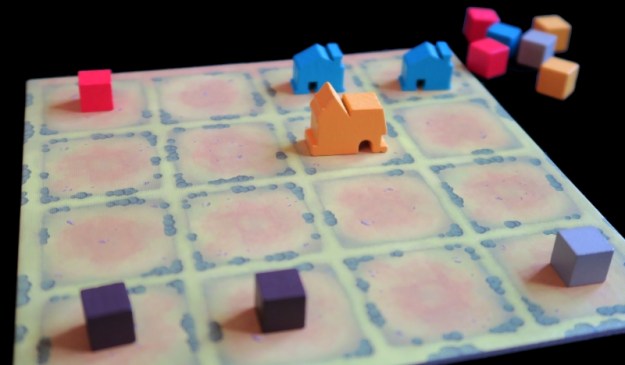
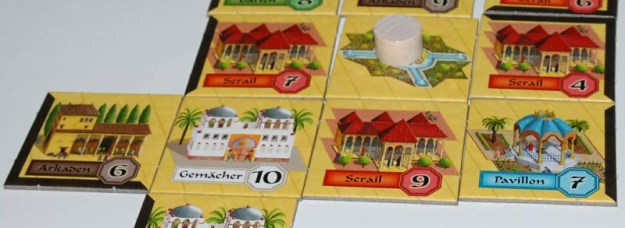
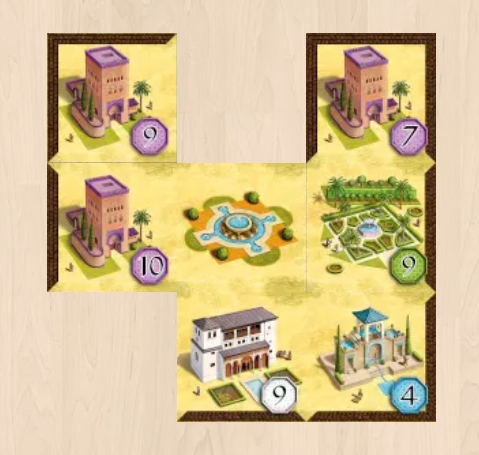
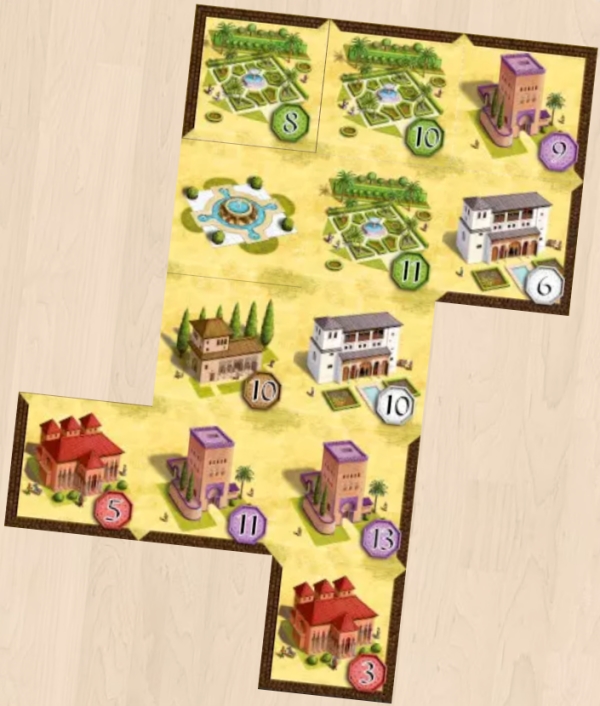
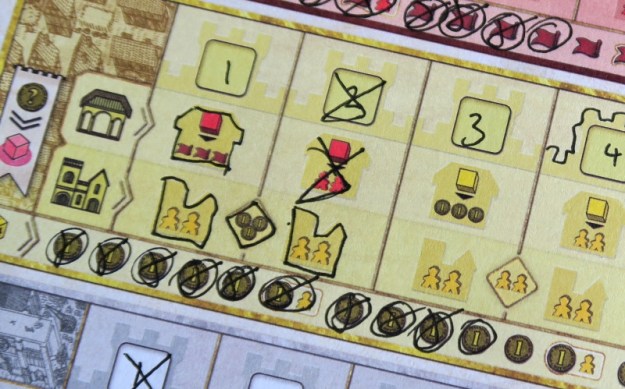
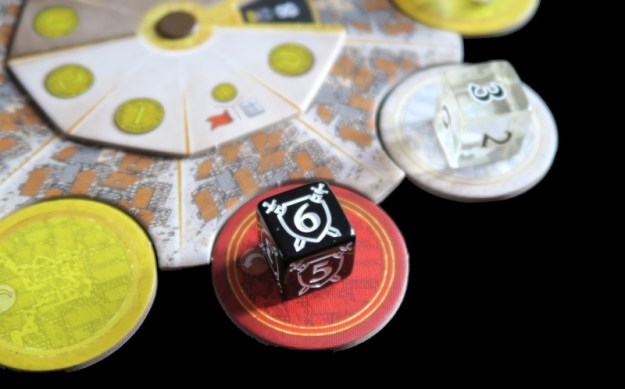
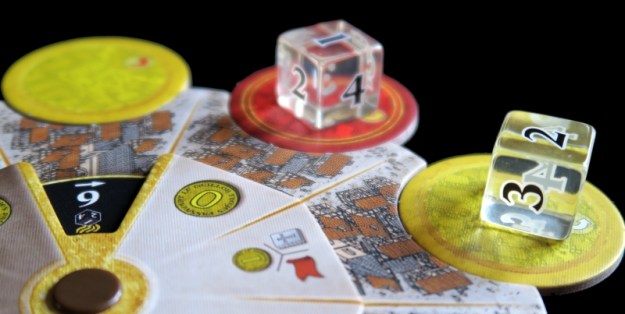
As the absentees were confirmed, everyone shared some Goaty Entertainment before starting the “Feature Game“.  This was Tiny Towns, played with some of the pieces from the birthday boxes everyone opened last time.  Unusually in the current climate, this is not a “Roll and Write” game, though it has some similar elements and was played more as a sort of “Roll and Write” variant on this occasion.  At its heart, Tiny Towns is an area control and resource management game where players are planning and building a town on a four-by-four player board.

Tiny Towns
– Image by boardGOATS

Game play is fairly straight forward:  Players receive a resource cube and place it on their board, then they if they wish they can swap resources for a building.  Beneath this very simple process is a lot of clever game play underpinned by a Tetris-like mechanic.  To build a building, players  require a particular combination of resources in a very specific arrangement.  The building is then placed on one of the spaces liberated by the removed resources, freeing up more spaces.

Tiny Towns
– Image by boardGOATS

The buildings are different shapes, but all give different scoring possibilities.  For example, each Cottage is worth three points, but only if players have built a Farm to feed them.  Chapels increase the score of each “fed” Cottage, while each Well scores points for each adjacent Cottage.  Theatres score for each different building in the same row or column.  Thus the combination of buildings is important, but so is their location.  Planning is therefore really, really critical.

Tiny Towns
– Image by boardGOATS

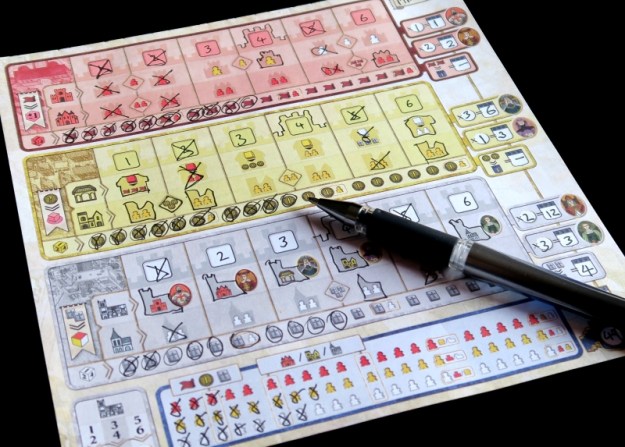
Putting a building or resource in slightly the wrong place can completely negate any other good planning by blocking off an area of the board potentially  making it totally unplayable.  Because the game can be so unforgiving in this respect, we played with the “Cavern Variant” where players can set aside one unwanted resource just twice during the game.  With so many players, this was coupled with the “Town Hall Variant” where resource cards are used to determine two of the resources and players choose their own for every third round.  Also, instead of placing wooden buildings, players were to draw their constructions on their printout.

Tiny Towns
– Image by boardGOATS

Pink was keen to get the game moving, but others struggled to get their heads round the planning element at the start.  Green started patiently re-explaining to Little Green, while some players were ready to move on, and others were trying to concentrate on working out what strategies might work best or were variously delayed by beautifying their artwork.  As a result, it took a while for everyone to get on the same page and feel the rhythm of the game.

Tiny Towns
– Image by boardGOATS

By this time it was too late for poor Lilac who had got herself in a mess and had taken an early shower as a result.  Green had also somehow got himself an extra resource, and once he noticed, didn’t take his next “free choice”. Things weren’t helped by Green’s internet that chose to throw a bit of a wobbly and just added to the frustration and confusion all round.  Meanwhile Blue, who wasn’t very with it and had focussed what little energy she had on keeping everyone else on track, realised she had forgotten to build herself a farm.

Tiny Towns
– Image by boardGOATS

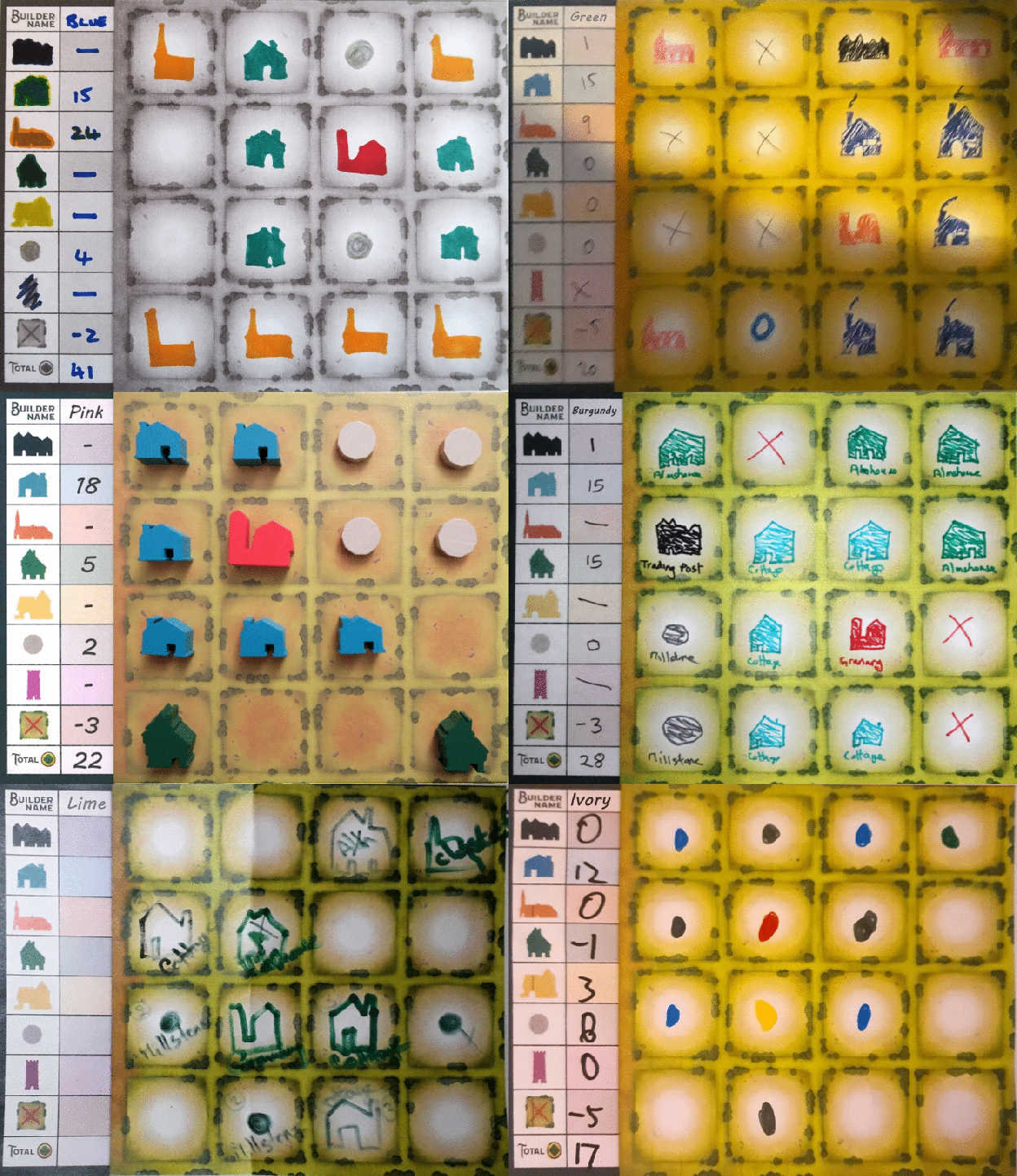
Belatedly, Blue tried to rectify things without success and as a result was first to be eliminated with what she thought was a final score of minus four (although this was corrected to one on a recount).  By this time Green had sorted his internet issues and it wasn’t long before other players were putting resources in their Caverns or reporting that it there were only certain resources they could use.  Burgundy was next to be eliminated closely followed by Pine and then everyone else shortly after.

Tiny Towns
– Image by boardGOATS

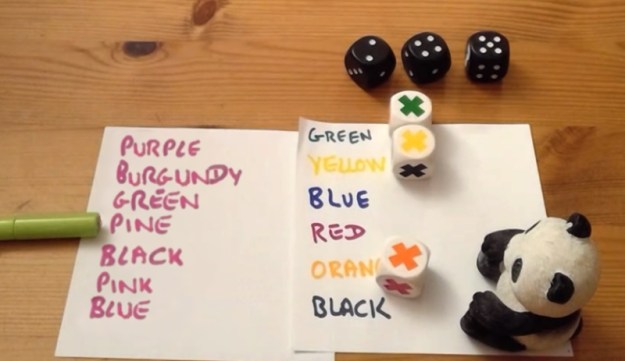
Pink was the last GOAT standing, but longevity doesn’t necessarily mean a high score, though obviously it does help.  In the end, it was a tie between Green and Pink who both finished with thirty points, three points ahead of Burgundy in third.  A quick rules check suggested that Green should take victory on the tie-break, but there was also some discussion as to whether Green should forfeit his position because of his “cheating”, but in the end, Pine offered him a lifeline in a “Guess the colour of the cube” challenge.  When Green called it correctly though, it was clear from the response of the other players that it was best to call it a tie and leave it at that.

Tiny Towns
– Image by boardGOATS

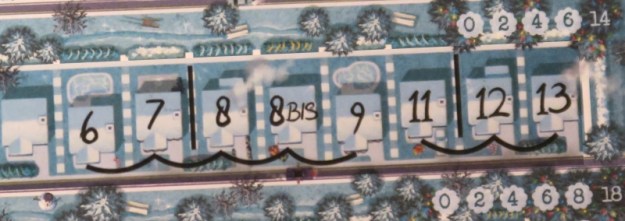
From there the group moved on to the Halloween version of Welcome To…, which is a game we played for the first time a few weeks back.  Welcome To… is one of the most popular of the “Roll and Write” style games and is the highest ranked on the Board Game Geek website.  This Halloween themed version is a little step up in complexity with a couple of minor added features, but otherwise is very similar to the original.

Welcome To...
– Image by boardGOATS

Like Tiny Towns, Welcome To… is played with cards which give people actions.  Rather than building a town though, players are building a 1950s US housing estate.  The top card is turned on each of three decks of cards, and players chose one to use.  The cards are numbered one to fifteen which reflect the house numbers players write on one of three streets on their play-sheet. They must increase from left to right—if a player can’t write one of the three numbers available, they must take a “Building Permit Refusal”—when someone takes their third, that triggers the end of the game.

Welcome To...
– Image by boardGOATS

As well as the house number, players also get a special action, based on the colour of the reverse of the previous card.  These include rule-breaking actions, like allowing players to alter the number the write down by one or two, or allowing them to build a second house with the same number in a street.  They also enable players to build walls and parks, and increase the number of points they will get for different sized completed estates.  Last time we played we had found that swimming pools were particularly lucrative, but this time they just did not appear.  Everyone patiently waited, but they just didn’t arrive, so everyone had to make the best they could of all the parks they could build.

Welcome To...
– Image by boardGOATS

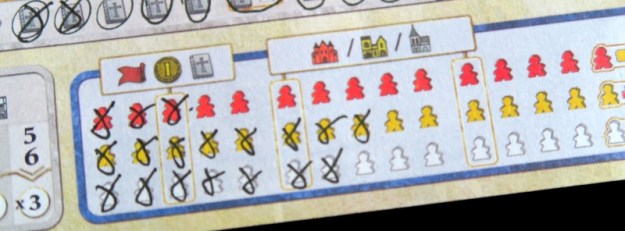
The Halloween version adds other features—every time players build a house with a ghost or a candy corn in the garden, they can choose one to circle.  Collecting a set of four, six or nine candy corn gives points, while similar sets of ghosts give special actions.  The catch is that each of these can only be claimed once during the game.  Given the difficulties we have seeing what everyone else is doing, we “house ruled” it that each per player could only claim these on the turn they achieved it giving them the option to stick or to gamble in the hope of getting enough for a more valuable.

Welcome To... Halloweeen
– Image by boardGOATS

As well as the ghosts and candy corn, there was also a special City Plan that players could target.  Since the one drawn at random gave points for circling all five ghosts in the bottom street, it was no surprise that several players went hard and fast for collecting ghosts. Blue and Green both got six ghosts and claimed two extra swimming pools, while Burgundy got the full set of nine, but got himself in an almighty mess trying to get the best from them.

Welcome To... Halloweeen
– Image by boardGOATS

People struggled with the change in rules and the darker colours in the printout as well as just generally struggling because it was one of those nights.  Although they didn’t know it at the time, Green and Blue followed almost identical strategies both going for the City Plans (the one with ghosts and the other two with a four and a five estate and two five estates respectively).  Somehow, Blue just edged Green into second, three points ahead of his score of seventy with Black in third just ahead of Pink.

Welcome To... Halloweeen
– Image by boardGOATS

With that, Ivory bade goodnight and left the rest of the group to play what turned out to be a rather savage game of Saboteur on Board Game Arena.  Saboteur is great fun with a lot of players, but although we only had seven this time, we decided we’d take a break from our usual game of choice at this point, 6 Nimmt!.  The game is really simple:  players take it in turns to play a card from their hand, either to extend the tunnel or a special action, breaking or repairing a player’s tools or causing a rockfall.

Saboteur
– Image by boardGOATS

What a player chooses to play depends on which team they are on, a Good Dwarf, trying to find the gold, or an Evil Saboteur who’s sole aim is to stop the dwarves.  The first thing the Dwarves have to do therefore is always establish who the Evil Dwarves are.  So, when Purple played a tunnel card in a sub-optimal place, that was immediately labelled as a “Saboteury move” and she immediately attracted a broken pick-axe and then a broken trolley.  Although she tried to retaliate, Purple and her silent partner Black, failed to prevent the Dwarves getting to the gold.

Saboteur
– Image by boardGOATS

The rules for Saboteur, as written (and as implemented on Board Game Arena) consist of three rounds with gold cards distributed at the end of each, so the group began another round.  Nobody believed that Purple could be an Evil Saboteur two rounds in a row, but when she started with another “Saboteury move”, everyone reappraised the situation and she quickly attracted another broken pick-axe.  The Dwarves struggled a bit more this time, largely due to the cards they’d been dealt.  The situation was summed up by Burgundy when he commented, “If anyone wants anything breaking or fixing, then I’m your Dwarf.”  But as the Dwarves desperately needed tunnels building, that wasn’t much help….

Saboteur on Board Game Arena
– Image by boardGOATS

Purple confirmed her allegiance by playing a rockfall card on a critical crossroads.  Fortunately, Black was able to repair albeit with an inconvenient T-junction that prevented the dwarves heading straight for the gold.  It wasn’t immediately obvious who Purple’s partner was and everyone was very surprised when it turned out to be Black and the Evil Saboteurs had been the same for two games on the bounce.  Surely that wouldn’t be the the same for the final round, would it?

Saboteur on Board Game Arena
– Image by boardGOATS

The final round was much longer and much closer.  Purple tried desperately to get everyone to believe that she was a Good Girl this time, but after the last two rounds everyone was cautious.  Black quickly revealed that he was an Evil Saboteur yet again, and it soon became apparent that Green, who is always a suspect, was his partner.  While Black messed about with the tunnel, Green damaged the Dwarves tools and generally made a nuisance of himself.  Eventually the Good Guys won though some excellent teamwork, resulting in Burgundy finding the gold.

Saboteur
– Image by boardGOATS

There is so much luck in the allocation of gold cards at the end of the rounds that we don’t really pay much attention to the result, but this time, it was a tie between Pine and Burgundy.   With that, Pine and Green left the others to play Sushi Go!, a card drafting game that we’ve recently discovered the implementation of on Board Game Arena.  The game is really simple and very quick, so was ideal given that everyone was quite tired.

Sushi Go!
– Image by boardGOATS

In this game, players start each round with a hand of sushi cards, then keep one and pass the rest on, with the aim of collecting sets to give points.  In the first round, Pink top-scored with Blue and Black not far behind, though that was probably because Purple and Burgundy prioritised starting their collection of puddings.

Sushi Go! on Board Game Arena
– Image by boardGOATS

In the second round, Burgundy managed a massive twenty points—not quite beating his record of twenty-five, but still more than anyone else.  Consistency is the key to this game though and Pink’s fifteen meant he still had the lead going into the final round.  And it was a tough round, that was ultimately all about the puddings.  Blue starved Pink of dessert, saving her from last place and leaving him with the minus six and almost nothing from the round.  Burgundy had the most puddings and with it took the bonus six points and, as a result finished six points clear of Black in second.  And with that, it was bedtime.

Sushi Go! on Board Game Arena
– Image by boardGOATS

Learning Outcome:  One should never ignore the offer of pudding.

Boardgames in the News: Learning to Drive in Sierra Leone

In the UK, there are two significant hurdles to learning to drive:  the theory test and the practical examination.  In Sierra Leone, there is a third step, playing the board game.  The game is called The Driver’s Way and is a “Roll and Move” type game where players to roll traffic-light-themed dice and move model cars around a board.  The game aims to teach learners the rules of the road in a more entertaining way than standard textbooks.

The Driver's Way
– Image from autoevolution.com

Sierra Leone is a country with limited infrastructure where road fatalities are high.  The creator of the game, police chief Morie Lenghor, said that ignorance of the highway code is the root cause of most crashes, and that “most drivers don’t even understand half the road signs”.  Learners are recommended to spend a few months practicing with the game, which costs less than £10 (although that doesn’t take into account differences in living costs and earning power).

Next Meeting, 27th October 2020 – Online!

It is at times of stress that people need social contact more than ever, and board games are a great medium for that.  Despite the limitations of “remote gaming”, the overwhelming impression is that it is important to stay in touch, so we are persisting with online meetings.  Therefore, our next meeting will be on Tuesday 27th October 2020; we will gather from around 7.30pm, and start playing at 8pm.

This week, the “Feature Game” will be Tiny Towns.  Unusually, this is not a “Roll and Write” game, though it has some similar elements and is played with some of the pieces from the birthday boxes everyone opened last time.  It is an area and resource management game where players are planning and building a town.

Tiny Towns
– Image by boardGOATS

And talking of planners…

Jeff went to see a planning consultant to ask for help building his new house.  As he arrived and was being introduced to the consultant, he asked, “What’s your least expensive fee?”

The consultant answered, “£150 for three questions.”

Jeff looked quite shocked and exclaimed, “That’s very expensive, isn’t it?

“Yes, it is,” replied the consultant. “So what’s your third question?”

13th October 2020 (Online)

The evening began slowly, with people signing in and confirming they had their parcels and had not yet opened them.  There was a bit of chatter about isolating, and about Green and Lilac’s new house (which had very similar decor to the previous one).  Pink had acquired yet another Panda and proudly had it on display.

A Panda not crossing, with details of a Panda Crossing
– Image by boardGOATS

From there the conversation took a bizarre turn on to the subject of Panda Crossings, which really did exist (along with the other “Animal Crossings”), in the 1960s.  It was no surprise they were phased out after just five years, though, given how complicated they were, and the fact that safe operation relied on the difference between a “Pulsating” Amber and a “Flashing” Amber…

Elizabeth
– Image from cronkshawfoldfarm.co.uk

At 8pm, the Special Guest arrived; Elizabeth and some of her buddies from Cronkshaw Fold Farm in Lancashire joined the meeting.  Elizabeth is very talented and has a particular penchant for yoga.  So much so, in fact that she and her friends have been the subject of a half hour documentary filmed last summer.  As Elizabeth and friends galloped about and showed us their delightful home, everyone sang “Happy Birthday” and then opened their boxes.

2020 Birthday Box
– Image by boardGOATS

The boxes were part of the celebration of our eighth birthday.  As is now traditional, the “Feature Game” was Crappy Birthday, a silly little filler/party game that is great fun when played very occasionally (and about once a year is perfect).  The idea is that each player takes it in turns to receive gifts from everyone else and then they choose the best and the worst; the players who gifted the selected presents get a point.  So in this game players are aiming for extremes making it almost the opposite of games like Dixit or Just One where players are aiming for the centre-ground.

Crappy Birthday
– Image by boardGOATS

With the current challenge of “remote gaming” we had to play Crappy Birthday a little differently this year.  So, everyone “wrapped their parcels” last time we met and this time everyone took it in turns to unwrap them.  While people ate their treats, names were drawn out of the Crappy Birthday box lid and everyone took it in turns to “open their gifts”, while everyone else ate their cake, biscuits and chocolate.

2020 Birthday Biscuits
– Image by boardGOATS

Blue went first to show those that hadn’t experienced a GOATS birthday party how to play.  As always, it was a learning experience all round.  This time, we learnt that Blue would quite like a trip to the middle east (complete with riding camels), but that Monopoly toilet paper might block her drain and everyone else was concerned about the possibility of paper cuts.  Green and Lilac both dislike smoking and have been to a Star Wars wedding and Lilac would like a ferret.  Black quite fancied unicycle lessons and Purple thought a giant fake bear rug would really add to the ambience in their living room.  Although Black likes fish, a hundred pounds is a lot especially when raw, but as he could put it in the freezer, he decided that the persistence of his own Mariachi band would be worse.

Crappy Birthday
– Image by boardGOATS

Ivory disliked the sound of “Organ Holiday by Ethel Smith”, and would not be swayed even by Pine’s hurt protest that it had pride of place in his collection.  Then he saw the hideous living room tapestry, and although he loves the game (and had really enjoyed playing it with the Plans and Ploys Expansion and Pink and Blue recently), he said it was also not for him.  Since the LP would be for just a year and the tapestry was permanent, the wall covering was therefore rejected as his least favourite.

Crappy Birthday
– Image by boardGOATS

A lot of people seemed to think that Burgundy would really appreciate physical extreme sports but the one he rejected was bungee jumping.  Unlike everyone else who seemed to reject any long term, life-changing experiences, his Burgundy’s preferred gift was a an eagle as a life-long companion, though Blue was concerned it might interfere with Games Night.

Crappy Birthday
– Image by boardGOATS

Mulberry calling in from California fancied a fighter jet ride and rejected a bus ride to Florida, and not only because it was such a long way away.  Meanwhile, animal gifts were quite popular and although Pine would have loved the opportunity to be licked by a giraffe or go on an African safari, those gifts were received by Violet, calling in from Aberystwyth.  She accepted the safari, but, not being a child of the 70s, was unimpressed by the fluffy dice.

Crappy Birthday
– Image by boardGOATS

Pine’s wildlife gifts were in the form of hairless cat, a weekend with some monkeys in a hot spring and the chance to hunt and and clean his own Thanksgiving turkey.  Having had a landlady with a cat with galloping alopecia, Pine spurned the unfortunate moggy.  Then, despite the fact the turkey was the vegetarian’s obvious least favourite, that was Pine’s preferred choice as there was nothing to say he couldn’t give it it’s freedom once it’d had a wash.

Crappy Birthday
– Image by boardGOATS

After some rude comments about his taste in clothing, Pink explained that being on the reality show “Can America Disco” was his idea of a nightmare and that he quite fancied an Easter Island moʻai statue for his front garden.  And then, the last player, Lime, also rejected publicity in the form of his own personal paparazzi posting hourly updates on his doings.  Like Pink, he also chose the garden ornament, as Lime wanted a new patio and thought a giant chess board would be just the job.

Crappy Birthday
– Image by boardGOATS

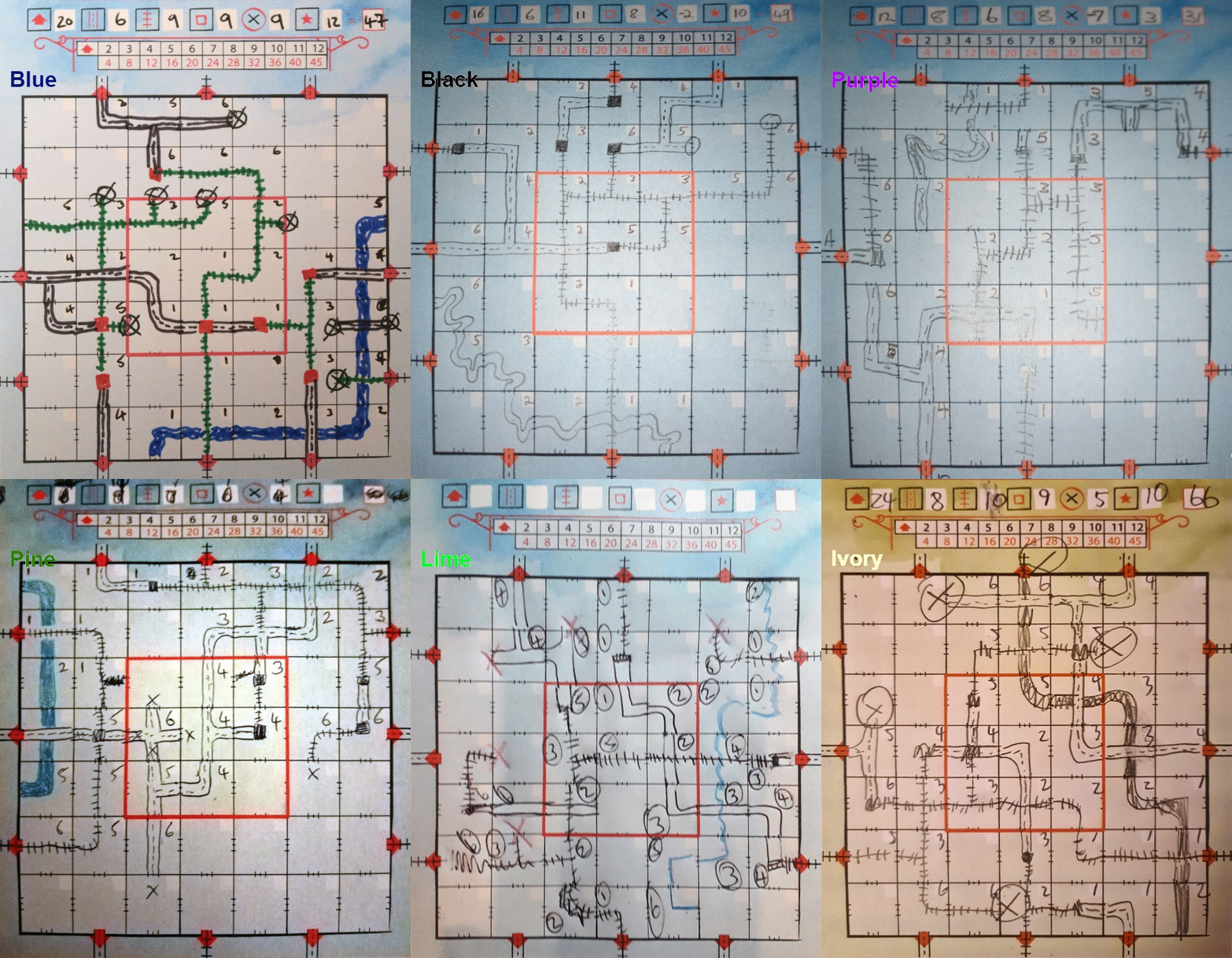
And with that, all that was left was the scores.  This time, we found that Team Greeny-Lilac and Pink were particularly good at this game, but it was Lime who seemed to take a point every time, taking seven out of a possible eleven points.  That said, it was remarkable how many people gave gifts they thought people would like that ended up winning a point for being the most disliked.  That’s half the fun though.  With the birthday celebration dealt with, we then moved on to playing other games.  We are getting better at this, though our repertoire is still quite limited.  There had been a few requests to play Railroad Ink again, however, so we started with that.

Railroad Ink: Deep Blue Edition
– Image by boardGOATS

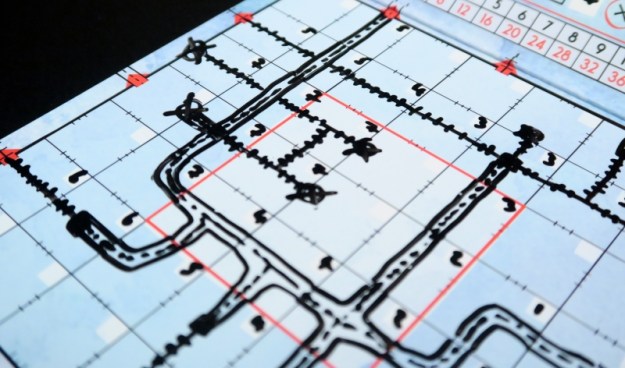
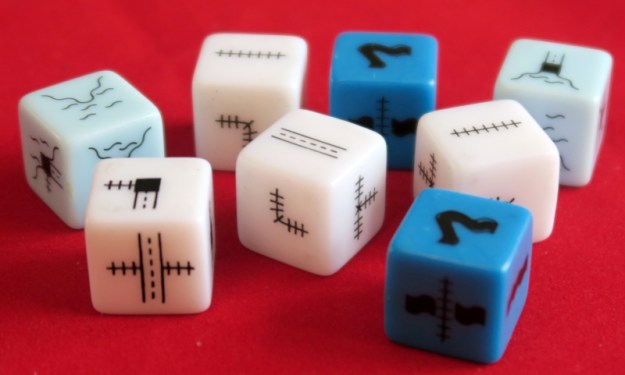
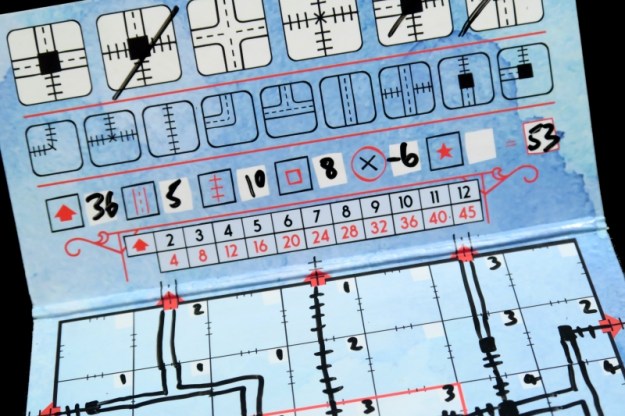
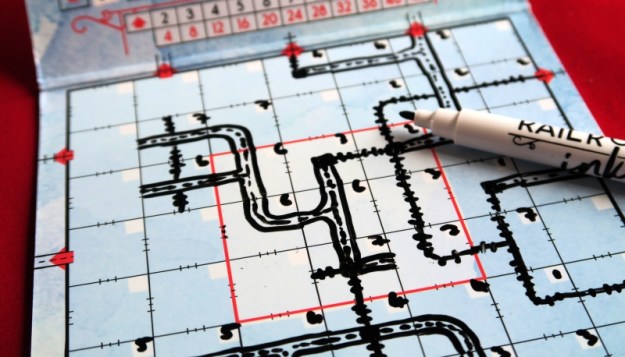
Railroad Ink is a very simple “Roll and Write” route planning game.  The idea is that four dice are rolled and everybody adds all four to their map.  Three of the dice show straight and curved sections and T-junctions for road and rail.  The other, the fourth die shows stations connecting road to rail, and a fly-over (crossing, but not connecting).  The game is played over seven rounds, after which players score points for their longest road segments, their longest rail segments, the number of locations on the edge of the board have been connected, and the number of spaced in the central grid that have been filled.

Railroad Ink: Deep Blue Edition
– Image by boardGOATS

Having played it before, it didn’t take too long to get going and there was a sort of focussed silence as everyone concentrated, punctuated by occasional moans when the dice didn’t give people what they wanted.  Sadly, these games are very much “multiplayer solitaire”, and we really only found out how people did when adding up the scores.  This time, it was really close with just five points separating the top six players.  Initially it looked like it was a tie between Blue and Pink, but a recount pushed Blue into second just ahead of Green and then Pine.

Railroad Ink: Deep Blue Edition
– Image by boardGOATS

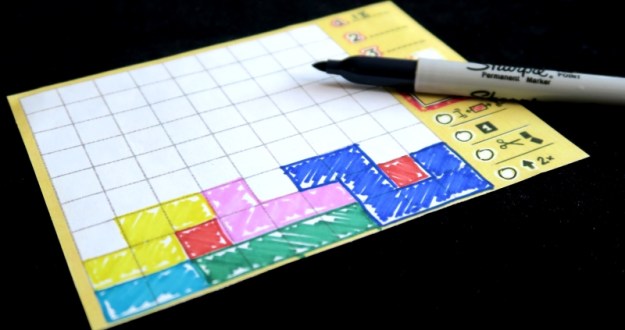
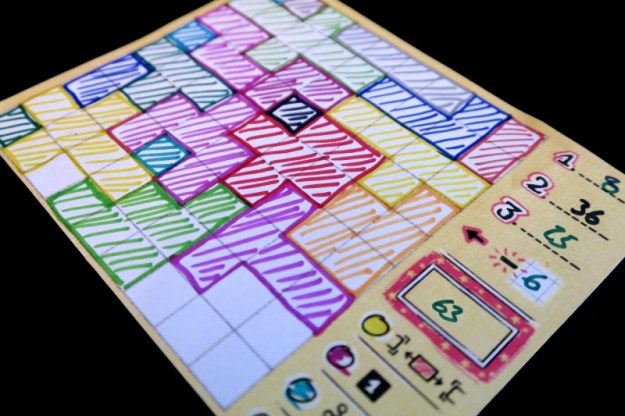
Ivory and Lime followed Mulberry taking their leave, and everyone else settled down to something quick and light in the form of Second Chance.  This is a very simple Tetris-style game where two cards are revealed and players chose one of the two shapes to add to their tableau.  Players can add shapes anywhere and in any orientation.  If they can’t use either of the shapes they get a second chance—another card is revealed, but if they can’t add that shape either, then they are eliminated.

Second Chance
– Image by boardGOATS

The winner is the player with the fewest unused spaces, so the winner is not necessarily the player that stays in the longest.  This and the fact that the game is not over-long means that player elimination is not a huge problem.  This time, all the large and awkward shapes came out first which meant there was sudden and catastrophic collapse as almost everyone crashed out together.  As a result, the scores were really close.  Lilac’s beautiful colouring earned her a worthy second place and she was unfortunate to be beaten by the very jammy Pink, who sailed through with several second chances and finished with just three unfilled spaces.

Second Chance
– Image by boardGOATS

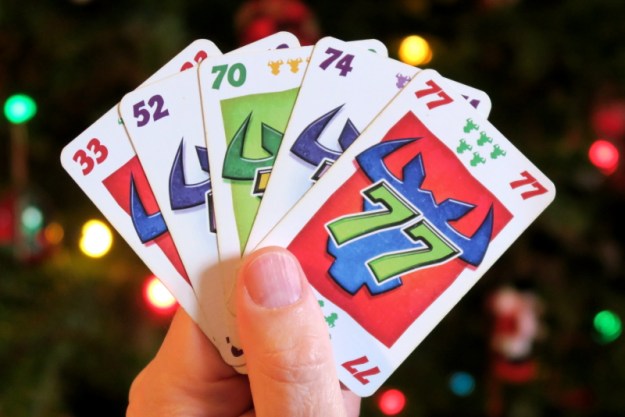
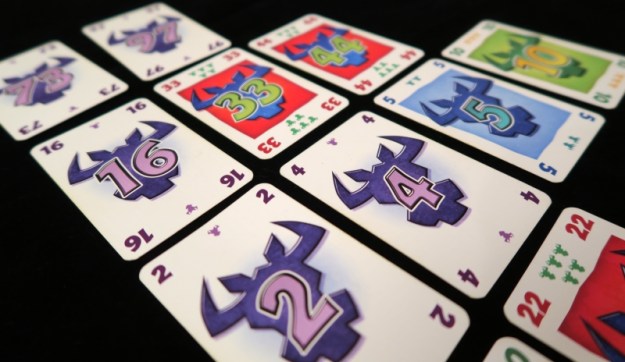
By this time, it was starting to get late and people drifted off leaving just five for our, now regular, game of 6 Nimmt! on Board Game Arena.  It is very simple:  simultaneously, players choose a card, then starting with the lowest value, these are added to one of the four rows.  The player who adds the sixth card takes the other five and the player with the most “nimmts” at the end loses.  It is very random, but somehow gives the illusion of control, right until the wheels drop off…

6 Nimmt!
– Image by boardGOATS

We play this so much because it is light and great fun, with no downtime.  And with the “Professional Variant” that we now use where cards are added to both ends of the rows, the game has had a new lease of life for us.  It works really well with fewer players too.  This time, Black was first and second to pick up, and it didn’t get much better as the game wore on and it wasn’t a surprise when he triggered the end of the game leaving Burgundy to taste victory, just ahead of Green.

6 Nimmt! on Board Game Arena
– Image by boardGOATS from boardgamearena.com

Then, Green said good night leaving just four.  Having enjoyed several games of Sushi Go! last time, we decided to give it another try, this time with the Soy Sauce mini expansion.  This is one of the simplest of the card drafting games—players have hand of cards, keep one and pass the rest on.  With Sushi Go!, players are collecting sets with a sushi theme and trying to collect the most points over three rounds.

Sushi Go!
– Image by boardGOATS

This was another close game.  Burgundy and Blue tied the first round, one devoid of puddings, but Black and Purple weren’t far behind.  The second round was much less even though and was taken by Blue with a massive eighteen points.  She wasn’t able to keep it up for the final round which Black took with sixteen points.  It wasn’t quite enough, to overtake Blue though and she finished with a total of forty-three, just two ahead of Black, in a game where there just wasn’t enough dessert to go round.

Sushi Go! on Board Game Arena
– Image by boardGOATS from boardgamearena.com

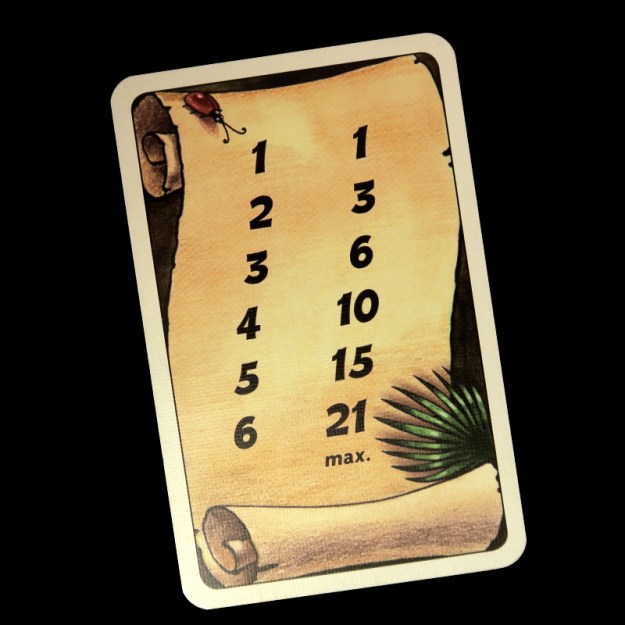
There was just time for one more game, so after a brief discussion, the group opted for another set collecting game, Coloretto.  This is another very simple game where players have the simple choice:  Take a card and add it to a truck, or take a truck and add the cards to their collection.  Players score positive points for their three top scoring sets, and negative points for all the others.  Normally, the scoring is according to the Triangular Number Series, where more cards score increasingly more points (one, three, six, ten, fifteen and twenty-one).

Coloretto
– Image by boardGOATS

This time we decided to play with the alternative, “Difficult” scoring, where small sets score the most and their value peaks at eight points for three cards, falling gradually for larger sets.  This changes the game significantly, as taking a fourth or fifth card has the same impact on a player’s score as starting another set.  And everyone has fewer points to play with…  It took a couple of rounds for people to realise the implications of this change to scoring.  Then players started taking trucks when they were almost empty and when a “+2” card came up it was taken straight away.

Coloretto on Board Game Arena
– Image by boardGOATS from boardgamearena.com

As a result, there were more rounds and the game became one of avoiding things going wrong.  And for most people, once it started going wrong, things generally went from bad to worse.  First was Purple, then Black, then just before the end, Blue was landed with pile of cards she didn’t want.  So, it wasn’t a huge surprise that Burgundy, who had managed to avoid falling off the precipice, finished with the most points.  Purple was by far the best of the rest though having been most successful at stemming the flood of unwanted cards.  Then it was time for the last of the birthday boys and girls to go to bed.

Coloretto on Board Game Arena
– Image by boardGOATS from boardgamearena.com

Learning Outcome: A gift’s worth is in the eye of the recipient.

Next Meeting, 13th October 2020 – Online!

It is at times of stress that people need social contact more than ever, and board games are a great medium for that.  Despite the limitations of “remote gaming”, the overwhelming impression is that it is important to stay in touch, so we are persisting with online meetings.  Therefore, our next meeting will be on Tuesday 13th October 2020; we will gather from around 7.30pm, and start playing at 8pm.

To celebrate our eighth birthday, as is now traditional, the “Feature Game” will be Crappy Birthday.  This is a silly little filler/party game that is great fun when played rarely—about once a year is perfect.  With the current challenge of “remote gaming” we have had to play it a little differently this year.  So, everyone “wrapped their parcels” last time and this time we will be unwrapping them together…

Crappy Birthday
– Image by boardGOATS

And speaking of birthdays…

It was Jeff’s birthday and, as it was a special birthday, his brother had bought him a special present.  Before opening the gift, Jeff shook it slightly, and noticed that it was wet in the corner.  Touching his finger to the wet spot and tasting it, he asked, “Is it a bottle of wine?”

His brother shook his head, “No…” So, again, Jeff touched his finger to the box and tasted the liquid.

“A bottle of Scotch then?” he asked, beginning to get all excited – this was way better than he’d expected.  Again his brother shook his head though, “No, not a bottle of Scotch…”

Eventually, Jeff said, “OK, I give in, what is it?”

His brother paused for effect, before answering, “A puppy!”

29th September 2020 (Online)

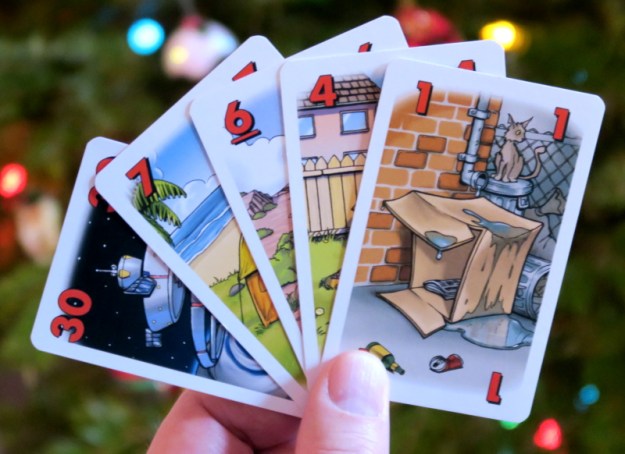
This week it was Ivory’s turn to share his pizza with everyone, while Blue and Pink shared ice creams with Purple and Black.  With the food over, Blue explained how we were going to prepare for our birthday next time, by “wrapping parcels” for Crappy Birthday.  This is a silly party game that we play every year to celebrate the anniversary of our first meeting in 2012.  Basically, players take it in turns to have their birthday, and everyone else chooses a gift from a hand of five cards.

Crappy Birthday
– Image by boardGOATS

Unfortunately, this doesn’t really lend itself to playing online, but as so many things have been cancelled this year, we didn’t want this to be one of them.  So, to get round the difficulties, we decided to play it over two evenings:  firstly wrapping cards, then opening them two weeks later.  Each player had a set of electronic files containing cards.  Everyone opened the first file and chose a card to give to the player whose name was drawn out of the box lid, making a note of what they were giving and to whom.

Crappy Birthday
– Image by boardGOATS

When people had gifted two parcels, they closed the file and opened the next one which included the same cards as the first file and a couple of new ones, thus simulating drawing two more cards.  Once everyone’s name had been drawn, everyone emailed the list of gifts to Blue for her to arrange delivery ready for next time.  And then it was on to the “Feature Game” which was Welcome To….

Welcome To...
– Image by boardGOATS

Welcome To… is another “Roll and Write” style game, though without the colouring-in element of some of the games we’ve played recently, and as a result is a bit more complex.  In this game, players are planing and building housing estates in 1950s USA.  This time, the player board depicts three rows of houses and a scoring table.  The idea is that there are three decks of double sided cards with a house number on one side and an action on the other.  At the start of each round, the top card is turned over to show the action side.  Players then choose one of the three house number/action pairs to use.

Welcome To...
– Image by boardGOATS

Players must write a house number on any one of the three streets, but the numbers can only feature once on each, and must be ascending from left to right.  Players may then carry out the associated action, which could be building a fence, building a swimming pool or park, adding a number a second time (“Bis!”), modifying the number by one or two (using the Temping Agency) or increasing the value of houses on “Estates” of certain sizes.

Welcome To...
– Image by boardGOATS

At the end of the game, players score points for building swimming pools and parks, having used the “Temping Agency” the most, and also for different sized “Estates”.  An Estate is a continuous group of houses (i.e. no gaps) with a fence at each end.  Estates of size one up to six score different numbers of points and one of the actions players can use is selectively increase the value of some of these.

Welcome To...
– Image by boardGOATS

Additionally, players score points for completed “City Plans”.  These are three cards revealed at the start of the game. which give points to people who complete their requirements.  The catch is, a bit like Noch Mal!, the first person (or people) to be successful get more points, usually around double that of anyone who finishes them later in the game.  This is also one of three “game timers”, with the game ending when someone completes all three Plans.

Welcome To...
– Image by boardGOATS

The game also ends if someone manages to fill in all the houses in all three streets, which is not easy.  More likely, players are going to find they cannot build any of the three houses being offered.  If this happens, players player take a “Building Permit Refusal”—when someone takes their third, that also triggers the end of the game.

Welcome To...
– Image by boardGOATS

There are lots of little rules that make the game more complex than most of the “Roll and Write” games we’ve played.  For example, players can build fences anywhere, but parks must be on the street they built their house on, and pools can only be built in the garden of the house if it was on the plan.  That said, it is not actually difficult, but there is a lot to think about and if players are going to score well.

Welcome To...
– Image by boardGOATS

There were a lot of questions from the group, and people clearly found it difficult to understand, not helped by the difficulties of learning a game over MS Teams.  Nevertheless, teaching and learning through a computer is a skill lots of school teachers, pupils, university lecturers and students have had to develop this year, and it turns out it is useful for gamers too.  So eventually, Pink finished shuffling and turned over the first set of cards to start the game.

Welcome To...
– Image by boardGOATS

Everything went quiet as people put their “Game Face” on and concentrated.  It wasn’t long before the silence was broken by Burgundy sighing, Pine grumbling and Blue checking how people were getting on.  To reduce the waiting and questions whether everyone was ready, we used the “hands up” function to indicate when players had finished writing.  This was really helpful to keep track of things with so many people playing.

Welcome To...
– Image by boardGOATS

The City Plans in play were all from the basic game (and we weren’t playing with roundabouts either), so all three were based on estate sizes:  1) two of size four; 2) a six and three ones; 3) a four and a three.  Green was first to complete a City Plan taking number three, and was soon followed by Pink and Ivory taking the lucrative second Plan giving them eleven points each.

Welcome To...
– Image by boardGOATS

Gradually, as the game progressed others claimed more City Plans and there was a feeling that the game was coming to a close.  Increasingly, people found their choices were becoming more limited adding to the tension.  This feeling was heightened when Purple became the first to be unable to play, and took a Building Refusal Permit.  A few rounds later, and Mulberry ended the game by completing her third City Plan and everyone started adding up their scores.

Welcome To...
– Animation by boardGOATS

Despite people finding it difficult at first, the scores were surprisingly close with a winning score of ninety-five and most of the group not far behind.  It is definitely a game that rewards a little experience especially as it is quite different to the other games we’ve been playing recently, so it wasn’t surprising that Pink ran out the winner.  Green ran him close though, with an excellent ninety-two.  There was a bit of chatter while some said their “good byes” and the rest of the group decided to play Saboteur on Board Game Arena.

Saboteur
– Image by boardGOATS

The game is easy to play and everyone knows what they are doing, so it is always quick to get started.  Each player has a hand of cards and take it in turns to either play a tunnel card, or play an action card.  The aim of the game is to help the team build a tunnel to whichever of the three terminal cards holds the gold.  Unless you are a Saboteur of course, in which case, your aim is to hinder the efforts made by everyone else, but without being spotted…

Saboteur
– Image by boardGOATS

Saboteur is usually better with more players, but the group had sort of decided they were going to play it before they realised how many people there were left.  With just six there were either one or two Evil Saboteurs and the rest were Lovely Dwarves.  This makes it hard for the Saboteur team and they have to get their act together quickly to make the most of what little time they have.

Saboteur
– Image by boardGOATS

In the first round, Pine made it very clear he was going to make the most of his time and bluntly said he thought Blue was a saboteur and broke her pick axe for her, preventing her doing any tunnelling.  This was apparently in response to her playing a map card in her first turn which he decreed was “A very Saboteury Move”.  Everyone else felt that Pine’s move was much more “Saboteury” and jumped on him in response.  Everyone except Purple that is, who ran to his aid.

Saboteur on Board Game Arena
– Image by boardGOATS from boardgamearena.com

It wasn’t long before Purple’s true colours were flying when she joined Pine and blocked the tunnel with dead-ends.  However, the Dwarves, now knowing there wasn’t a traitor hiding in their midst, got their act together, dealt with the blockage and headed for the gold.  Before long, it was 1-0 to the Dwarves.

Saboteur on Board Game Arena
– Image by boardGOATS from boardgamearena.com

The Evil Saboteurs were a little more cagey in the second round.  Purple looked at the bottom card and indicated it was Gold.  After last time, nobody trusted her so first Pink and then Pine double checked and all concurred.  The Dwarves were one card away from an easy run to the Gold when Burgundy’s rockfall card told everyone else which side he was on.  It was too little too late, however, and nothing he or his partner in crime, Black, could do could prevent the Brave Dwarves repainting the tunnel and finding the gold.

Saboteur on Board Game Arena
– Image by boardGOATS from boardgamearena.com

Early in the third and final round, Burgundy started by looking at the middle card which he claimed was coal.  By this time, suspicion was a currency everyone was rich in, so Pink double-checked and concurred, then checked the bottom target card.  Burgundy claimed suspicion and immediately verified that they’d found Gold.  Purple announced that she thought Pink was behaving suspiciously and broke his pickaxe for him—an extremely Saboteury move!

Saboteur on Board Game Arena
– Image by boardGOATS from boardgamearena.com

Burgundy attempted to redeem his behaviour in the previous round by repairing Pink’s tools, while Black repaid Purple by smashing Purple’s lamp.  Although Purple was able to fix it herself, it looked like the Dwarves were home safe and sound until Pine’s turn.  As discussed with the team, he played a card between the middle and bottom cards, but when it connected the carefully dug tunnel to the middle, coal, everyone was sure that they’d found the second Saboteur.

Saboteur on Board Game Arena
– Image by boardGOATS from boardgamearena.com

Pine protested that it was incompetence rather than malice that meant he’d put the card in upside down.  The Dwarves had to fix his “mistake” though, and their cards were running out.  Black discarded a card and Blue had no choice but to smash some more of Purple’s tools, leaving it down to Pink to finish things.

Saboteur
– Image by boardGOATS

In the end, it turned out that the Saboteurs were Black and Purple, and Pine just had a sausage-finger-moment.  That left Blue as the “winner”, but the scoring is very random and highly dependent on turn order, so really all that can be said is that it was 3-0 to the Loyal Dwarves.  There was time for something else before Pink’s bedtime, and given the shortage of time, the group bowed to the inevitable and moved on to 6 Nimmt!.

6 Nimmt!
– Image by boardGOATS

This has become one of our favourite games, especially since we’ve been forced to play online as it is light and fun and fast to play, and helps us to forget the current situation.  The game is so simple, and yet so much fun, with almost no downtime.  Players simply choose a card and Board Game Arena does the rest.  Of course, everyone like to think they have control and their strategy is working, right up until it isn’t.

6 Nimmt!
– Image by boardGOATS

The idea is that the card chosen is played on the end of one of four rows, with players trying to avoid placing the sixth card as that means the points on the other five cards are deducted from their total.  So the aim of the game is to try to second-guess what everyone else is doing and stay safe.  Recently, we’ve been playing the “Professional” variant which allows players to add cards to either end of the rows, adding more “strategy” and more chaos, and a whole lot more fun.

6 Nimmt!
– Image by boardGOATS

Things started to go wrong Blue first, when she cheered thinking she’d got away without a pick-up, only to discover she’d got nine “nimmts”.  Purple picked up nine in the same turn, however, while Blue managed to stabilise her game, Purple’s went from bad to worse when she managed what might be a new record, picking up nineteen nimmts in a single turn!

6 Nimmt! on Board Game Arena
– Image by boardGOATS from boardgamearena.com

Fairly inevitably, Purple triggered the end of the game, but the other end was less clear.  That was until the end of the game, when Blue, who had somehow managed to avoid picking up anything else, just pipped Burgundy to the win.  With that, Pine and Pink bade everyone else good night and the remaining foursome looked for something else to play.

6 Nimmt! on Board Game Arena
– Image by boardGOATS from boardgamearena.com

There were a few options, but they were limited by the fact that nobody wanted to play anything long or too intense. In the end, they decided to give Sushi Go! a try.  This is a game we’ve all played before, but nobody had played on Board Game Arena.  is a pure card drafting game: players start with a hand of cards and keep one and pass the rest on.  The aim is to collect cards in combinations to give them points.

Sushi Go!
– Image by boardGOATS from boardgamearena.com

In Sushi Go!, it is all about collecting the right cards at the right time.  For example, three Sashimi cards are worth ten points, but two are worthless.   There is also a significant “hate drafting” aspect though.  This is where players take cards to inconvenience others rather than to benefit one’s own game.  This is mostly because Maki Roll and Pudding points are awarded to those with the most cards, but can also be because causing another player to finish with worthless cards can sometimes be as effective as scoring points oneself.

Sushi Go!
– Image by boardGOATS

The first round was one of rediscovery since it was a very long time since anyone had played it.  Blue rediscovered the perils of trying to collect Sashimi, when she got stuck with only two which scored her nothing.  Burgundy, on the other hand, just before her in turn order, collected three and claimed ten points.  Purple collected lots of Nigiri and Black made hay out of Maki Rolls.  So, going into the second round it was pretty much a three-way tie with all to play for.

Sushi Go! on Board Game Arena
– Image by boardGOATS from boardgamearena.com

In the second and third rounds, Black and Purple made a lot of points from playing Nigiri cards after wasabi cards which is a multiplier and can be very lucrative.  Although Black was in the lead going into the final round, the fact Burgundy took two Wasabi/Nigiri combos meant he took a fine victory.  The game plays so quickly though and the Board Game Arena rendition is so good that everyone fancied trying giving it another go.

Sushi Go! on Board Game Arena
– Image by boardGOATS from boardgamearena.com

The second game was much closer, the competition for Wasabi and Maki Rolls got more intense with everyone now well aware of how lucrative they could be.  Although it was very close, in the end, Burgundy just managed to keep his crown, beating Black into second place by a single point and everyone else just a couple of points behind.  With such a tight finish, a third game was inevitable.  Blue who had come last in the previous two games was determined not to this time.  However, a grotty starting had meant she was forced to start with lot of puddings.

Sushi Go! on Board Game Arena
– Image by boardGOATS from boardgamearena.com

By this time, everyone was looking more carefully at what they were passing on, so Blue finished with a bit of hate-drafting, ensuring that Burgundy couldn’t get a full set of Sashimi and that ensured she avoided the wooden spoon.  Purple and Black started out with Wasabi and really managed to make their cards count.  In the end, there were still only two points in it, but this time it was Black and Purple fighting out for first place, which Black just took.  And then it was definitely time for bed.

Sushi Go! on Board Game Arena
– Image by boardGOATS from boardgamearena.com

Learning Outcome: Swimming pools are not as common as you might think.

Eight is Great – Happy Birthday to Us!

Eight Today

BoardGOATS is Eight Years Old Today!

Although it doesn’t feel “Great” this year, given the challenges we are all currently facing, it is perhaps even more of an achievement that we are still going.  Although we are not able to meet properly at the Horse and Jockey in Stanford-in-the-Vale, the group is still going. Five of those who were at the first meeting are still turning up fortnightly, and we are all patiently sitting through the progression of “Roll and Write” games and challenges of Tabletop Simulator that games nights have now turned into.  Let’s hope next year we can celebrate in person, and with our friends at the Jockey!

Goats in the News: Saving the Icelandic Goat

The Icelandic Goat or “settlement goat”, is an ancient breed of domestic goat thought to be of Norwegian origin and dating back to the settlement of Iceland over a thousand years ago.  Around a hundred years ago, numbers began to dwindle and the breed was on the verge of extinction.  Although numbers fluctuated, by the end of the twentieth century, numbers were in what appeared to be terminal decline.

Casanova the Icelandic Goat
– Image from indiegogo.com

That was until Jóhanna Bergmann Þorvaldsdóttir made it her mission to save them, pretty much single handedly.  She left her job as a nurse, and began breeding goats.  Although the income was small, the flock grew to several hundred.  However, following Iceland’s financial collapse, the family farm of Háafell in Borgarbyggðthe, was at risk of foreclosure.  As a last ditch effort to save the flock, the family launched a crowdfunding campaign.  Partly thanks to a starring appearance in the fourth series of Game of Thrones, nearly £90,000 was raised to keep the dragon from the door.

– Video by Shinonoiru on youtube.com

So the story has a happy ending:  the farm is now thriving with sales of milk, cheese and meat and the media flock to see the flock and report the tale.  And the numbers of Icelandic Goats have increased from less than a hundred in 1962, to nearly 1,500 today.  Even Casanova, the goat that was snatched by Drogon the Dragon, lived to tell the tale.

Jóhanna Bergmann Þorvaldsdóttir with an Icelandic Goat
– Image by Art Bicnick