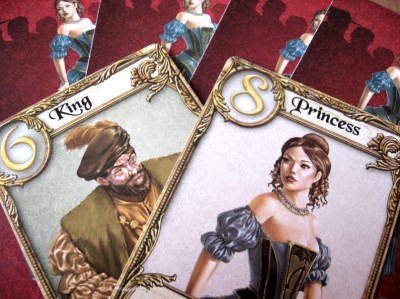
Tag Archives: King of Tokyo

Golden GOAT Award Winners – 2024

This week was the annual boardGOATS Un-Christmas Dinner including the voting to decide the winners of the GOAT Awards.  There are two main awards:  the Golden GOAT for our favourite game played during the year and the GOAT Poo Prize for our least favourite.  Everyone had the usual three points to hand out for the Golden GOAT Award (plus a bonus if wearing Festive Attire), though a maximum of two points could be given to any individual game.  Everyone could also nominate up to two individual games for the GOAT Poo Prize.

Tonga Bonga
– Image by boardGOATS

This year, the unofficial “Marmite Award” went to Viticulture—something many people seemed to find quite a surprise as it is generally not a divisive game and one that few would usually take offense at.  There had been a lot of fun throughout the year, but one of the more memorable moments was Pine getting the end game rule wrong for Tonga Bonga, so that Pink thought he’d won, but then didn’t.  There were several nominations for the GOAT Poo Prize, including King of Tokyo, Rolling Realms and Ark Nova, but the winner was another surprise: Ca$h ‘n Guns—not a game the group plays often, indeed it doesn’t get played at all at the pub (for obvious reasons), so its only outing over the last year was at the New Year Party.  It can be a lot of fun, but it is also easy to see how some might not like the game.

Ca$h 'n Guns
– Image by boardGOATS

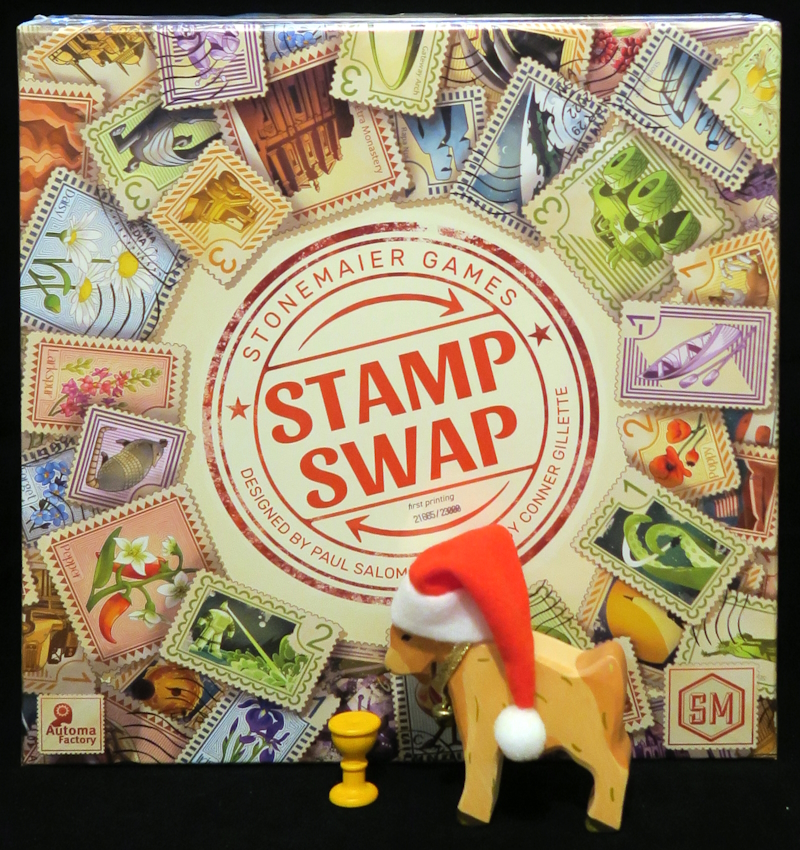
Then finally, there was the Golden GOAT Award for the best game played in the year.  Previous winners were ruled out, but there were plenty of other great games to choose from.  The most popular of these were Akropolis, Kavango, Flamme Rouge and Ticket to Ride: Rails & Sails.  However, the clear winner was Stamp Swap.  This is a new game, only released in September, but was an immediate hit, largely thanks to its silky-smooth game play.  As one person commented, “I wouldn’t have thought a game about stamp collecting would be up my street, and yet…”

Stamp Swap
– Image by boardGOATS

Perhaps more remarkably, this is the third winner from Stonemaier Games after Tapestry last year and Wingspan in 2019—three very different games.  This led to the perhaps slightly tongue-in-cheek suggestion that the group should invite Jamey Stegmaier to visit so we could present him with the actual Golden GOAT in the manner of the Jules Rimet Trophy

Golden GOAT - 2024
– Image by boardGOATS

19th March 2024

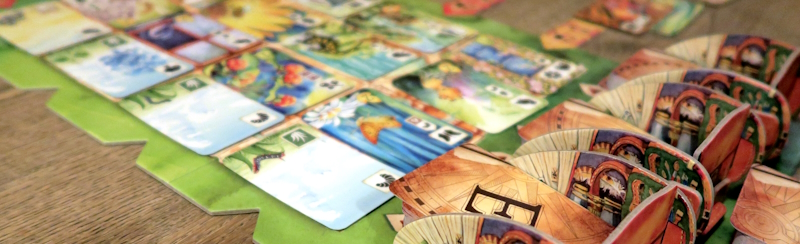
There were a few absentees again, but the group still made it into double-figures.  So, after the usual chit-chat, the group split into two—the first group playing the “Feature Game“, Meadow, while the other, larger group, played a couple of lighter games.  Meadow is a very smooth, engine building, set-collection card game with charming artwork.  Players take on the roles of explorers competing for the title of the most skilled nature observer.  Reviews refer to it as a “Splendor Killer”, that is to say, these people feel it has a similar feel to Splendor, but is a better game.  It is also considerably more complex, though not especially difficult in its own right.

Meadow
– Image by boardGOATS

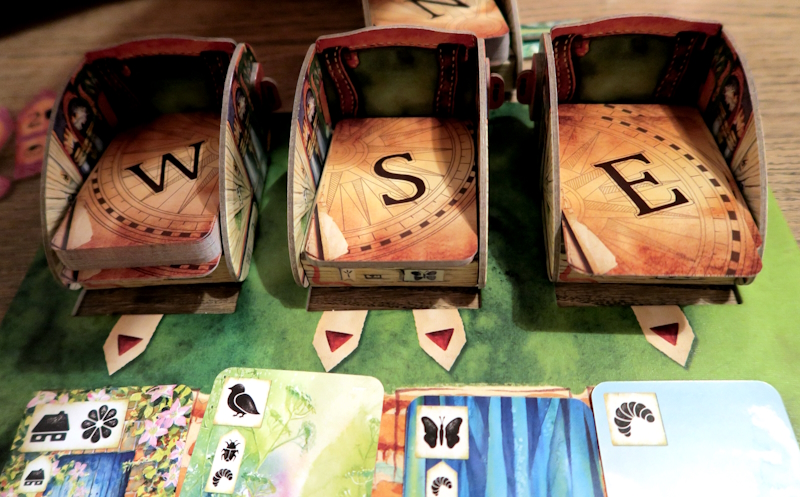
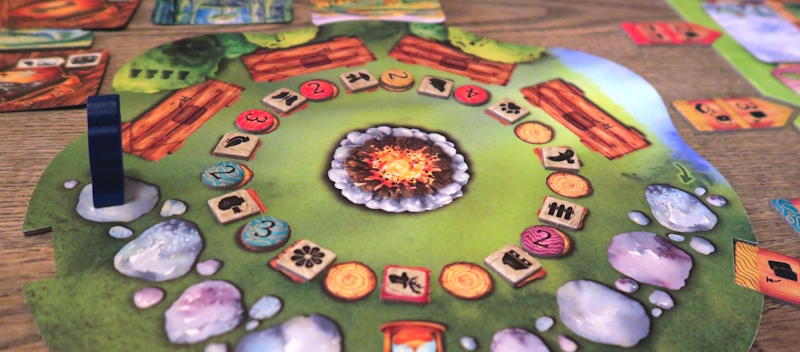
Players start with four or five Action tokens (depending on player count), a Road token and a double-sided Ground card.  There are four decks of cards, North, South, East and West, and players also begin with a card from each of the North, East and West decks and two from the South deck.  Players then take it in turns to play one of their Action tokens either in the Market or round the Campfire, and complete the associated Actions.  The Market is the simplest: this consists of a four by four grid of face up cards.  Players choose a notch along the edge of the board to play their token in and this defines a row or column and the number on the token dictates which card they will take from that row.

Meadow
– Image by boardGOATS

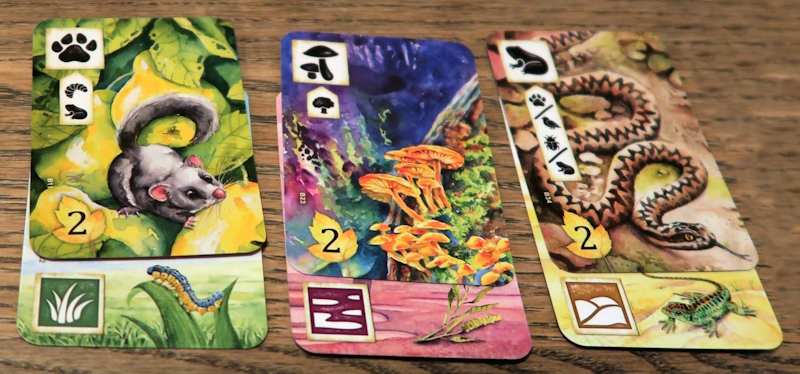
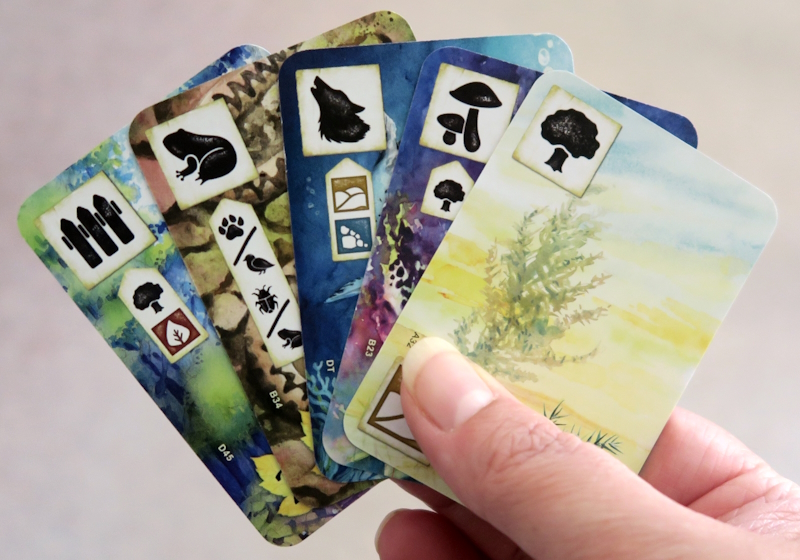
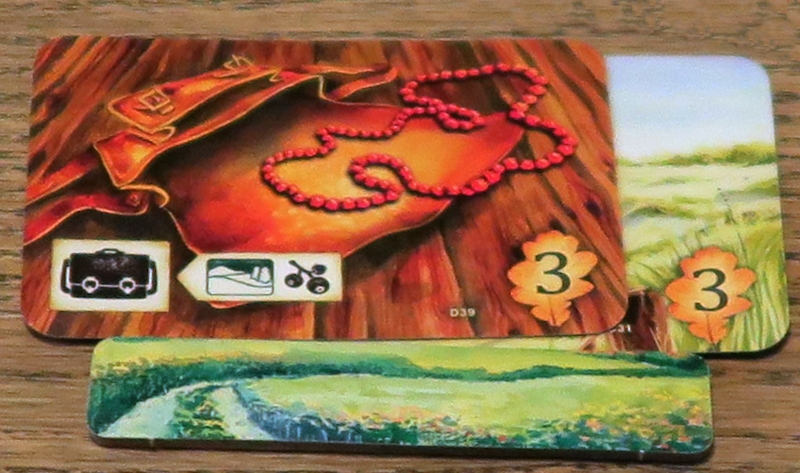
There are four types of cards: Ground, Observations, Landscapes and Discoveries.  After taking a card from the Market, the active player then plays a card from their hand or the card drawn into the play area in front of them.  In general, each card has a large symbol in the top left corner usually with smaller symbols below—these smaller symbols are prerequisites for playing a card and the player must already have them in their area before they can play the new card. Ground cards are just played in the players’ Meadows and are the lowest cards in the Meadow stacks.

Meadow
– Image by boardGOATS

Landscape cards are similar, but require a Road tile, and are played in the Surroundings area, above the player’s Meadow.  Observation and Discovery cards are played on top of existing cards (in the Meadow and Surroundings respectively), such that the new symbol replaces one of the old ones.  Instead of collecting a card from the Market and playing a card, players can play their Action token in one of the notches around the Campfire.  This activates the special Action shown on the token (take one card from the Market; take two Road tokens; take three cards blind from any deck and keep one; play two cards).

Meadow
– Image by boardGOATS

Players taking the Campfire option can additionally place a bonus point token on a tree-stump between any pair of symbols as long as they are displayed in their play area.  Players have three tokens (valued two, three and four points) giving a total of nine extra points at the end of the game if they manage to place them all.  Finally, in the absence of anything else they can do, players can place their Action token on a bench on the Campfire board and play one card.  This is really very much a last resort as this is a much weaker action, giving half or less than the other options give.

Meadow
– Image by boardGOATS

Pink led explaining the rules to Plum, Lime and Teal, and was roundly chastised by Pine from the next table for not knowing what a Meadow was, and confusing it with “normal grassland”.  The first round was a little slow as the group found their feet, but then it was all go.  Plum started with a Badger card which is quite high value and features a Wolf icon, so she planned her strategy round that.  As the game progressed, everyone was collecting Satchel icons and expected  them to be needed for something in the second half of the game.  However, after the South cards were swapped for the North deck at the half-way stage, there was a slow realisation that they were just the final step on the path (though that could change with the inclusion of expansions of course).

Meadow
– Image by boardGOATS

Plum’s Badger card turned out to be quite difficult to place, so as players can have a hand of ten cards, she filled her hand to give her the most options.  Someone else took the space around the campfire on one side of the wolf before she got to it, but as the the icons on either side weren’t as rare she was able to take the other easily enough and followed it with two more to get the full nine Bonus points, the only one to do so.  There was a problem with an odd token around the fireplace that featured a Stag with a red border, that turned out to be from Envelop U: Big Encounters.  This is a mini-expansion that comes with the base game, and had been confused with the core game as one token had been accidentally left at home.

Meadow
– Image by boardGOATS

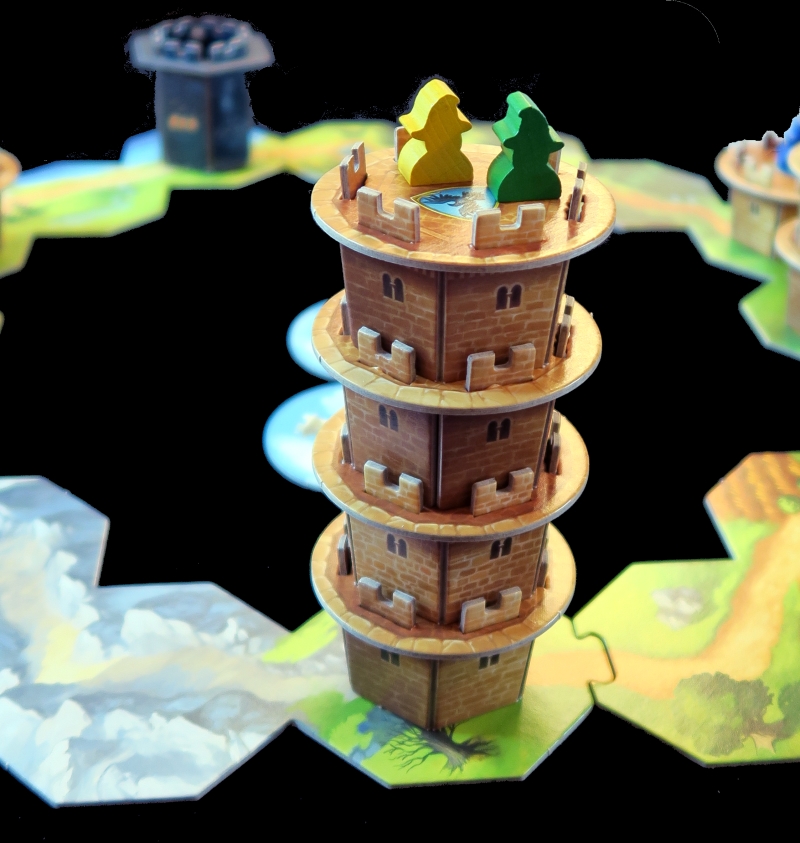
The game was enjoyed by all, though with four it perhaps slightly over-stayed its welcome a little.  The eventual winner was Plum with sixty-one points nearly ten points ahead of Pink in second.  Meanwhile, on the next table, the rest of the group were having a light evening, playing as a group of six.  First up was Die Wandelnden Türme (aka Wandering Towers)—a game that has been very popular in the group since it first came out a eighteen months ago.  The idea behind this game is that on their turn, players play two cards from their hand of three cards, one after another, performing all the moves if at all possible.  There are three types of cards, those that move a Wizard, those that move a Tower and those that move either a Wizard or a Tower; in each case, the number of movement spaces is given.

Die Wandelnden Türme
– Image by boardGOATS

Players can only move their own Wizard and each Tower and empty space can hold up to
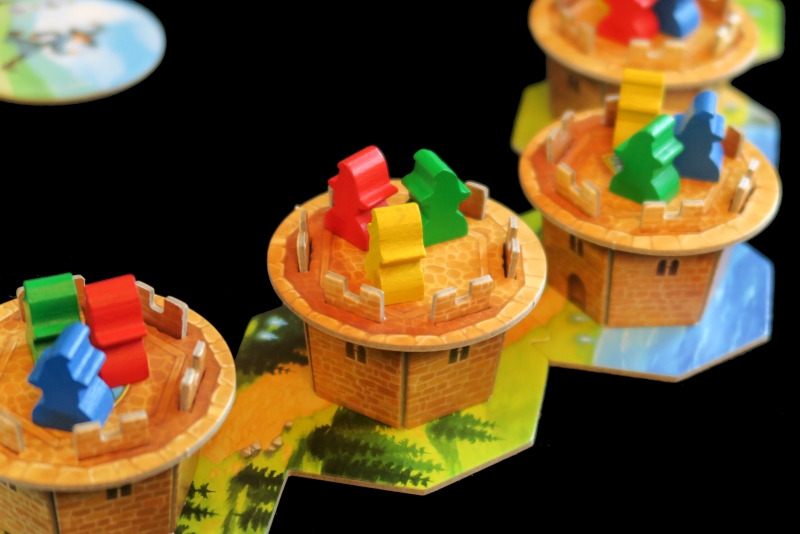
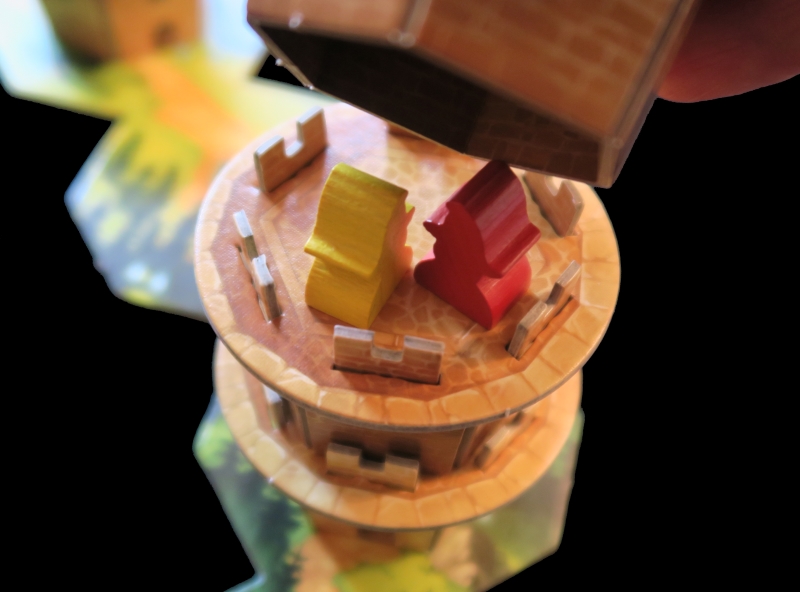
six wizards (if a move would exceed that limit, it cannot be made).  Whenever a Wizard’s move ends in the space with the Ravenskeep, the player drops the Wizard into the keep—this is one of the key targets during the game as the winner must have all their Wizards trapped in the Ravenskeep.  In contrast to Wizards, players can move any Tower segment along with everything on top of it (Tower segments and Wizards).  Whenever a Tower’s move ends in a space with Tower segments already in it, the new Tower goes on top, imprisoning all the Wizards it covers—all nine towers and the Ravenskeep could end up in the same space!

Die Wandelnden Türme
– Image by boardGOATS

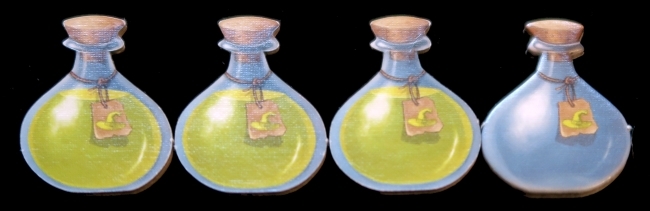
Whenever a Tower covers Wizards, imprisoning them players get to fill one of their Potion Vials, turning it over—this is the other key target during the game as the winner must have all filled all their Potion Vials.  The player with both, all their Wizards in the Ravenskeep and all their Vials full of Potion, triggers the end of the game, with play continuing until everyone has had the same number of turns and all players that fulfill the criteria share victory.  Jade led the group, reminding everyone of the rules and explaining them to those who had not played before.

Die Wandelnden Türme
– Image by boardGOATS

Cobalt managed to tease a few extra rules out of the rule book , in particular that no more than six Wizards can sit on any one Tower segment, and a player’s turn finishes immediately if they place a Wizard in the Ravenskeep.  Aside from this, much amusement was had, especially as the stacks of Towers got really tall, they didn’t quite make it to the maximum of nine plus the Ravenskeep, but they did reach a good six or seven segments in one stack.  Black was the first to fulfill both the end-game criteria and Cobalt trapped dropped the last of his Wizards into the keep before the round finished.

Die Wandelnden Türme
– Image by boardGOATS

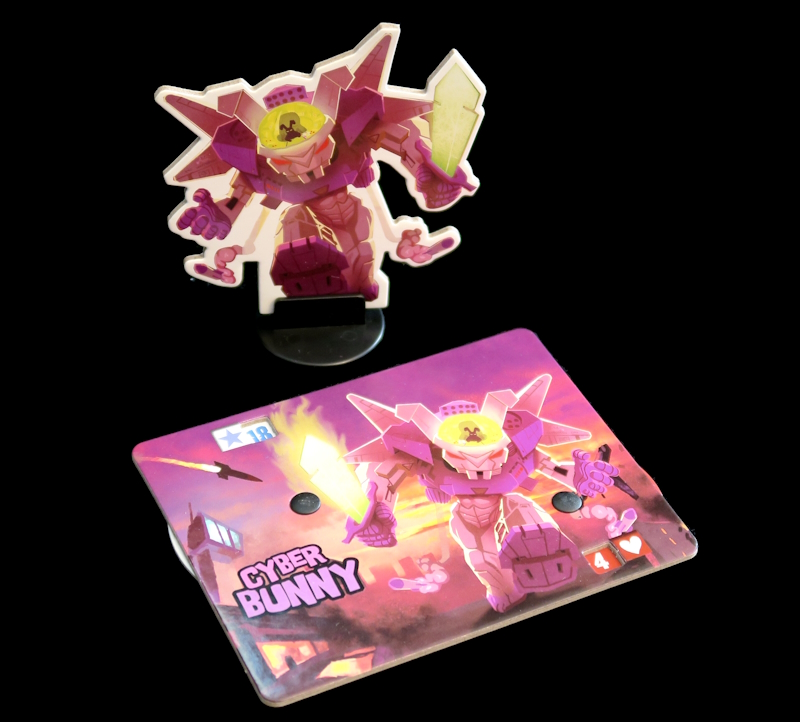
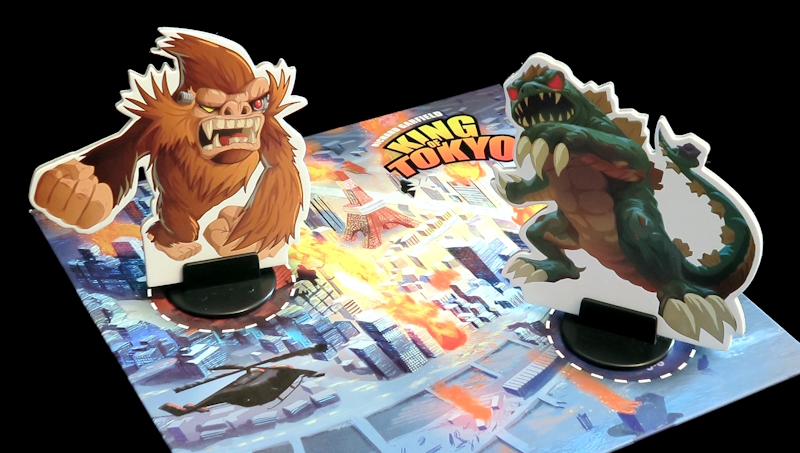
As Cobalt still had two empty Vials, he took second place with Sapphire and Jade taking joint third.  Staying together as a group of six, they then went on to play King of Tokyo, a fast dice roller along the lines of Yahtzee where players control a monster try to destroy more of the city than their opponents while also attacking the other monsters to either take them out or keep them down long enough to enable the attacker to take victory.  Players each have a Monster and two dials which are used to track their Monster’s health (starting at ten) and the number of Victory Points they have gained.  The winner is either the first player to earn twenty Victory Points or by being the last Monster standing.

King of Tokyo
– Image by boardGOATS

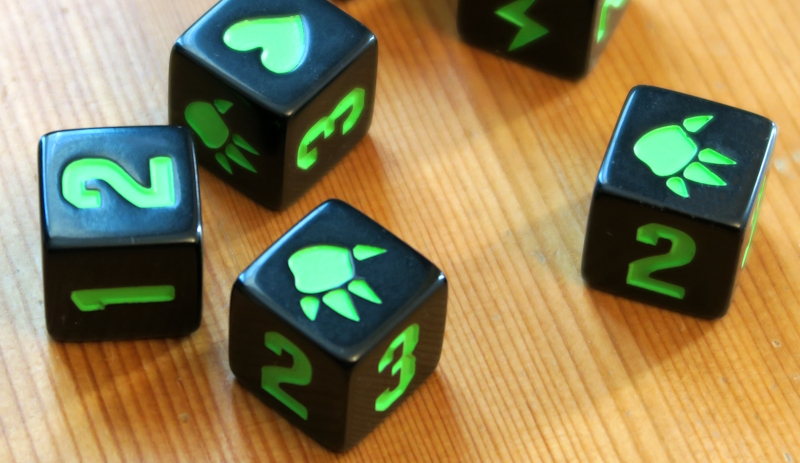
Players take turns before passing the Dice on, clockwise.  They get a maximum of three rolls, but can stop early and any number of Dice can be put aside after each roll.  The Dice are not locked, so Dice set aside after the first round can be rolled in the third if desired.  The dice feature numbers one, two and three, a Claw, a Lightening Bolt, and a Heart.  The numbers give the player Victory Points and the Claw indicates damage inflicted on a chosen opponent.  The Lightening Bolt gives the player an energy cube which can be spent on Power Cards, and the Heart increases the Monster’s Health (though the Monster must be outside the City to be able to take advantage of this).

King of Tokyo
– Image by boardGOATS

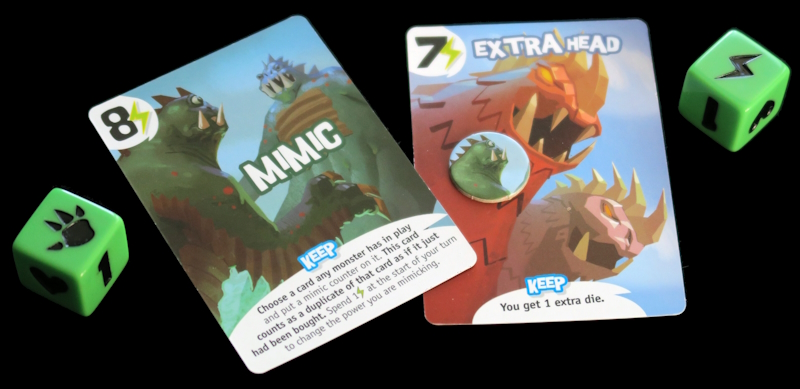
Once the dice have been rolled and resolved, players can buy Power Cards from the face-up display—these typically cost between two and eight Energy, and can be very useful at helping to control the game.  The other key part of the game is the Monsters’ locations: they can be “In Tokyo” or “Outside Tokyo”.  To enter Tokyo a player must roll one or more Claws; when a monster in Tokyo is attacked they will take damage and the player has to decide whether to stay in Tokyo or not.  If they Yield Tokyo, they allow/force the attacking monster to enter Tokyo in their place.  This is critical because Monsters deal damage based on their location and any Monsters in Tokyo deal damage to all monsters outside Tokyo and vice versa.

King of Tokyo
– Image by boardGOATS

One of the handicaps of being in Tokyo is the fact that a player cannot heal whilst in Tokyo.  However, when a Monster enters Tokyo it earns a Victory Point for doing so and if it starts its turn in Tokyo, then it earns two Victory Points.  These points help a player inch towards that winning total of twenty.  With six players the Tokyo Bay location on the game board is also used, effectively meaning that two Monsters can be in Tokyo at the same time, improving the balance and preventing five monsters ganging up on one, while also discouraging everyone outside Tokyo to try and displace them rather than just focus on collecting Energy, Healing or Victory Points.

King of Tokyo
– Image by boardGOATS

Unusually for the games the group plays, King of Tokyo has player elimination—when a player’s health falls to zero, they are out, a fate suffered by half the players in the game this time.  Jade was first to be knocked out, but Sapphire and Cobalt weren’t far behind.  With six players, Black’s stay in Tokyo which lasted three full rounds was quite remarkable.  It was perhaps no surprise therefore that he was the eventual victor, collecting the full twenty Victory Points, some way ahead of Pine in second with eight and Purple just behind him in third.

King of Tokyo
– Image by boardGOATS

Learning Outcome:  A meadow is grassland which is not regularly grazed instead being left to grow to produce hay.

4th April 2023

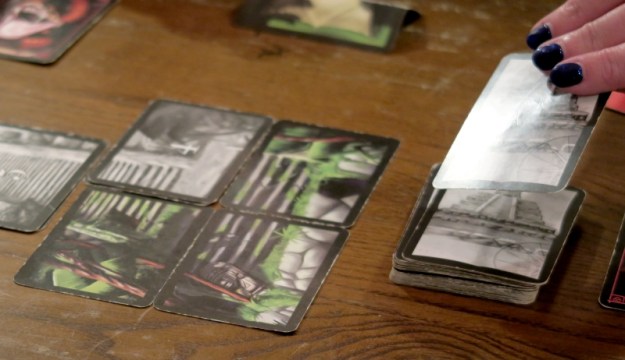
While Blue was off getting fish and chips for people, Pink chatted with Pine and Green and his family as they arrived.  Green had just got out Incan Gold and was explaining the rules, when food arrived, so it was hastily put away while food was consumed, only to be got out again as soon as the chips had disapparated.  Incan Gold is a very simple “push your luck” type game where players are exploring a mine and trying to get out with treasure before disaster strikes.  Each round a card is revealed and players simultaneously choose whether to stay or leave and share what spoils they already have.  There are three types of card:  Treasure, Artifact, and Disaster.
Incan Gold
– Image by boardGOATS

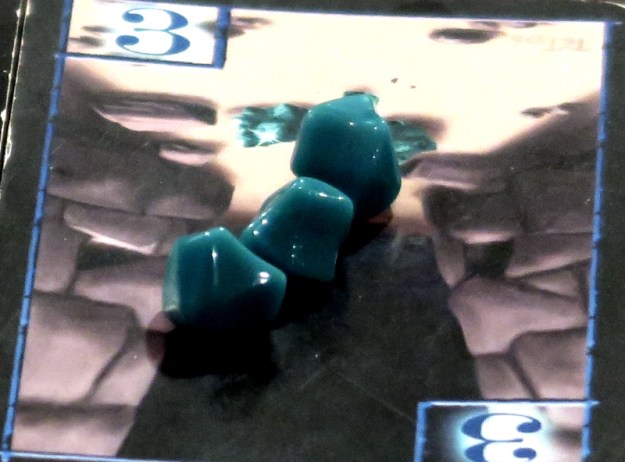
The contents of the Treasure cards are simply divided equally between players when they leave the mine, or as equally as possible leaving behind any left-overs.  Artifacts can only be taken if there is only one player leaving the mine, all alone.  Disaster cards are the problem—Spiders, Snakes, Zombies, Lava and Rock Falls.  Each one is present in the deck three times, and when the third is drawn, the mine collapses leaving everyone in it without any treasure.  This time, though, the group didn’t get off to a very auspicious start.  The first card out was a Rock Fall, the second was Fire and the third was another Fire!
Incan Gold
– Image by boardGOATS

So the group decided it was such a bad start that they would shuffle and try again.  On the second attempt, the first two cards out were again Disasters, but the third delivered some Treasure. It wasn’t very much and nobody felt it was worth leaving for. That was a good choice as there was a little more treasure to come.  Still not very much, but more littered the floor of the tunnel, and it eventually proved too enticing for Emerald and Violet who managed to net about five gems each for their tents.  For the rest of the group, they pushed it a little too far and promptly lost everything as they got caught in a devastating fire.

Incan Gold
– Image by boardGOATS

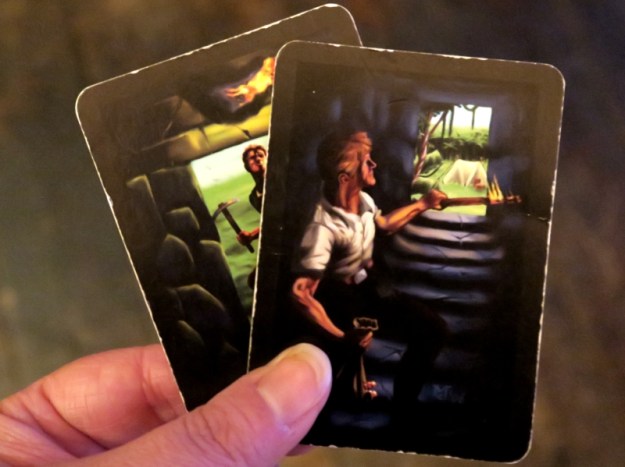
The second tunnel explored also lured in too many explorers before collapsing the ceiling on everyone.  The third tunnel brought the first glint of Gold—an Artifact.  Eying each other up everyone elected to stay, which was fine, but on the next turn, Lilac decided she would chance it and run. Luckily for her she was the only one and managed to net the Golden treasure on her way out, and left everyone else to die at the hands of a rather midget-like Zombie.  Lilac managed to repeat the feat on the fourth tunnel, collecting the Gold treasure as she made a run for it, although everyone else managed to collect more treasure and eventually decided to save what they had found instead of dying a horrible death.
Incan Gold
– Image by boardGOATS

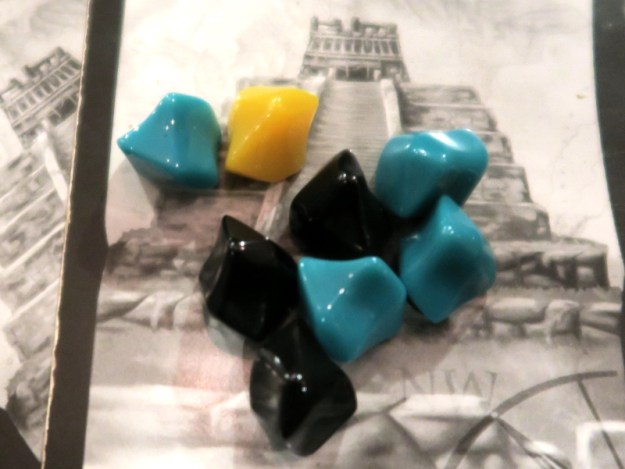
The final tunnel brought some nice treasure, and another Artifact, but with too many people leaving, they had to leave it where it lay.  Pine was the one who held his nerve and safely collected the Golden treasure this time, before a Disaster as those remaining were overrun by Spiders.  In the final reckoning it was neck & neck between Pine and Lilac on thirty-six points, but Lilac just edged it by dint of having two gold artifacts to Pine’s one.  It was close for third, though Lime was the best of the rest with twenty-four, just ahead of Emerald and Violet.  The least effective was Greedy Green, who’d stayed just too long just too often, eager for more treasure only to be bashed and burned and brutally murdered time after time.
Incan Gold
– Image by boardGOATS

Meanwhile, everyone else played the “Feature Game“, the filler Om Nom Nom.  This is a fun and light little game of think and double-think where players are trying to eat without getting eaten.  The game is set up by seeding the board with cute dice, rolled to give cheese, carrots and flies for the bottom of the food chain, and mice, rabbits and frogs for the middle of the food chain.  Players then receive a deck of six cards representing the animals for the middle of the food chain and the top of the food chain, cats, wolves and hedgehogs.  With game play reminiscent of 6 Nimmt!, players simultaneously choose a card to play which are then evaluated.
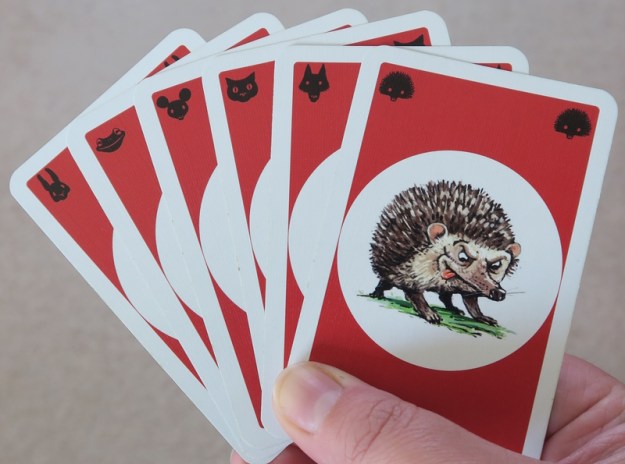
Om Nom Nom
– Image by boardGOATS

Players who played cards at the top of the food chain eat anything below, so long as there is enough for everyone who played the same card.  Thus, if there are four mice (including any cards played) and two cats, the owner of the cats take two cards each and get to keep their cat cards too with them all going on their scoring pile.  If however, there was only one mouse, both cats go hungry and neither player scores anything.  Cards played for the middle of the food chain eat the dice at the bottom of the food chain as long as there are enough dice for everyone who played the same card, but also as long as they don’t get eaten by anyone playing a card at the top of the food chain.

Om Nom Nom
– Image by boardGOATS

Thus, playing a card in the middle of a food chain is all about timing:  there is a higher risk, but also a higher reward as the dice showing red faces are worth two points instead of the usual one for a card or a die showing a black middle of the food chain critter.  Although we’ve played Om Nom Nom several times before, it was new to both Teal and Lime.  Teal started off well though taking a massive fifteen points in his first round.  Unfortunately for him, that turned out to be beginner’s luck and he didn’t do so well in the next round.  Purple’s game, on the other hand, went the other way, starting with nothing in the first round and taking sixteen points in the second.

Om Nom Nom
– Image by boardGOATS

With others being more consistent, in particular Blue who scored a seven and an eight in each of her first two rounds, it was all down performances in the final round.  In the event, Black and Pink both did well in the final round, and Teal improved on his score in the second round too.  It was Purple that won the final, albeit low-scoring round, taking ten points, giving her a winning total of twenty-six, three more than Teal in second with Black and Blue tying for third place some six points behind him.  It had been a quick fun game, one that is always good value and definitely deserves another outing soon.
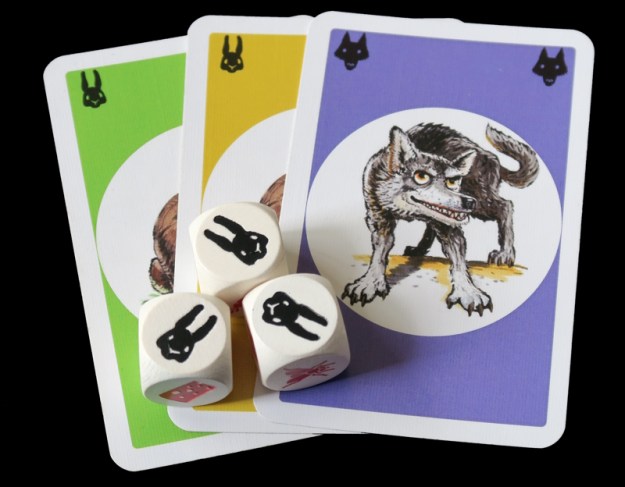
Om Nom Nom
– Image by boardGOATS

Both games, Incan Gold and Om Nom Nom, finished at much the same time, so everyone decided what to play next.  Teal had brought Nidvelilir at Green’s request, but this wasn’t the night for that.  Eventually, Purple traded places with Pine and Lime leaving five players, in one group which picked out a lot of possible five-player games.  Since Violet was here only for the a brief visit they let her choose.  Her selection was Zooloretto or King of Tokyo, however Purple made a face at both choices and suggested Carcassonne instead. Violet was less keen as she felt she had played that a lot recently, so Green made an executive decision to play Boomtown—a fun little bidding game that hasn’t had an outing for a long time and doesn’t take too long.
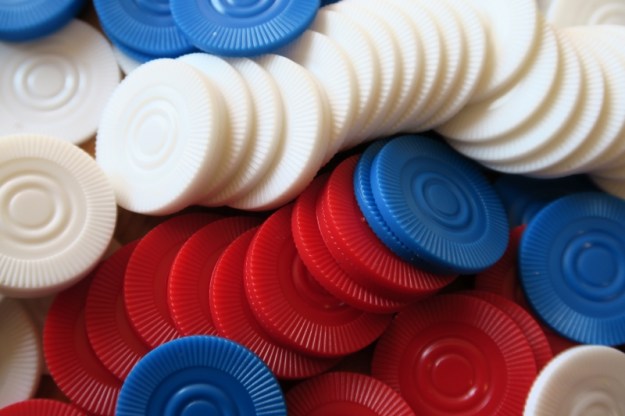
Boomtown
– Image by boardGOATS

Unfortunately, at this point Emerald was really beginning to feel the heat of the pub and felt he couldn’t participate.  He went off for a wander to get some fresh air, ironically just before the back door was opened to cool everyone down a little.  As he had decided to sit this one out, the rest of the group revised the rules which were simple enough on the face of things.  A deck of sixty cards is shuffled and placed face-down in the middle of the table, along with two dice, a pile of Mayor pawns (one in each of five different colors) and Town tokens (two each of the same colours).  One card per person is turned face up and each player begins the game with $10 starting funds to bid for the card they want.
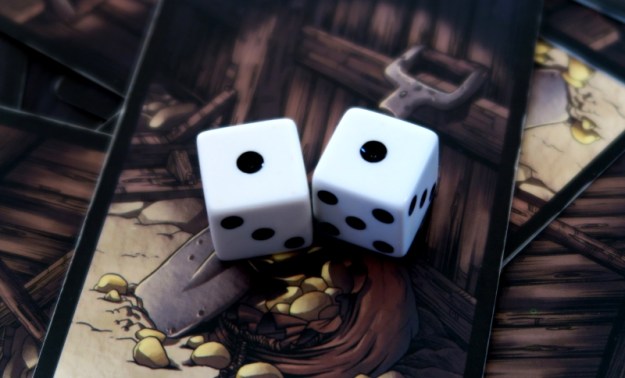
Boomtown
– Image by boardGOATS

Each player has to increase the bid or pass, until there is one winner.  And this is the clever bit of the game—the winner, pays the player to their right, who passes on half of the money to the player on their right and so on until either there is nothing left to give or the winner is reached (they don’t get any of their own money back).  Everyone then gets a card in clockwise order.  There are Mine, Dynamite, Saloon, Hold-up, Governor and Special cards, each of which has an effect.  Mines and Saloons give players gold and the player with the most Mines in any Town/colour takes the matching Mayor token which forces others to give them money.

Boomtown
– Image by boardGOATS

Dynamite cards allow players to destroy other players’ mines, while Hold-up cards allow players to steal from other and the Governor allows players to upgrade a Mayor so their mines are worth double. Once the cards have been allocated, the dice are rolled and players receive income for their mines.  The game ends when the deck is depleted and all the cards have been sold.  The player with the largest total from their their points, money, the production value of all the mines they control, and five bonus points for each Mayor, is the winner.
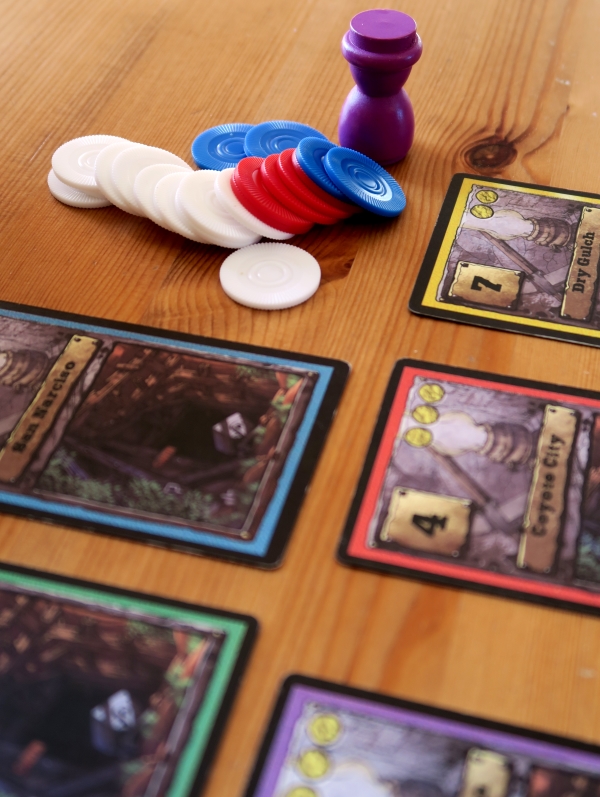
Boomtown
– Image by boardGOATS

Maybe it was the heat, but aside from Green, no-one was quite sure how Boomtown would play out, and it took a few rounds for everyone to get the hang of things.  The group didn’t get off to a great start, even when they adjusted the draw deck to make sure there was enough mines for everyone by replacing the action cards that came out.  The second round brought out two sets of Dynamite though, and both Green and Purple ended up destroying each others mine.  The bidding never got very high in the first half of the game, mostly because nobody knew what they were doing, and did not necessarily want to choose first.
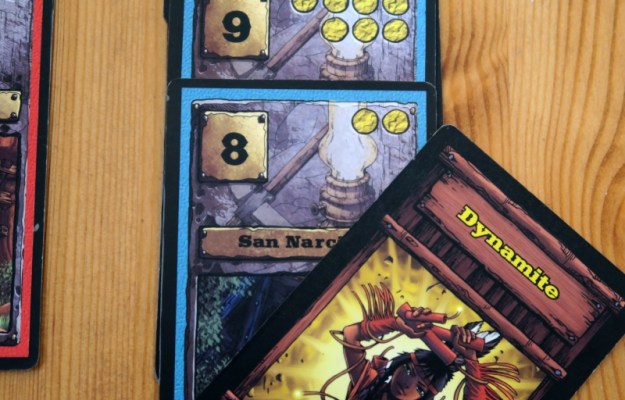
Boomtown
– Image by boardGOATS

However, by about half way and when the Mayor pieces had all been claimed and the Saloons were built everything started to hot up.  Although Lilac had a lot of red Mines, which netted her a little money from players forced to take the last few remaining, every time they found gold, she had to pass most of her claim to Purple who had a red saloon along with Saloon girls!  Violet managed to claim a couple of Mayors along the way, and although she lost one of them, she managed to avoid the attraction of the Saloon, so kept everything she collected. With some judicial rolling on the Card Shark Dice, she managed to rob some of the others blind.

Boomtown
– Image by boardGOATS

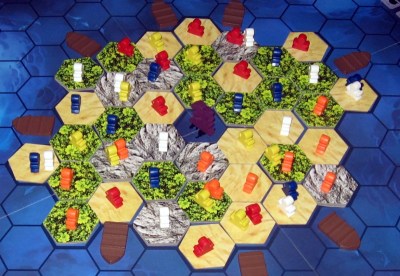
By the time the last cards had been claimed and the final Mines had given up their gold, it was Purple who had become the master Miner, by something of a landslide.  Violet was a respectable second with Lilac, having passed on so much of her wealth to Purple, just managing to stay whisker ahead of Green for third.  Meanwhile, on the next table, with so many players Survive: Escape from Atlantis had seemed a good choice as it plays six with the expansion.  This was released to mark the thirtieth anniversary of two very similar, much older games, Survive! and Escape from Atlantis, and is an agglomeration of them both.
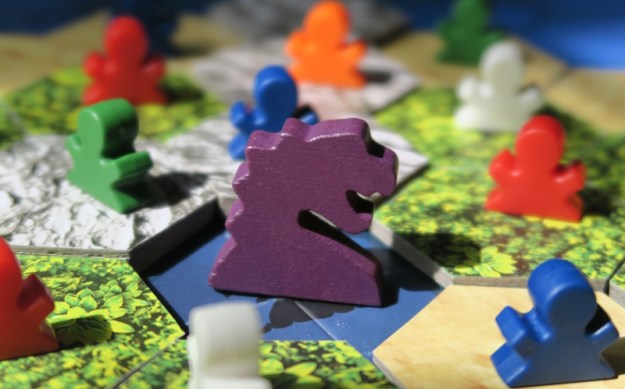
Survive: Escape from Atlantis!
– Image by boardGOATS

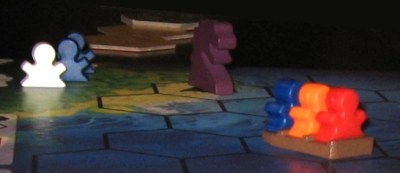
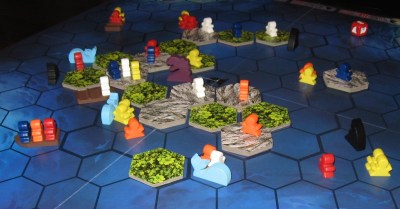
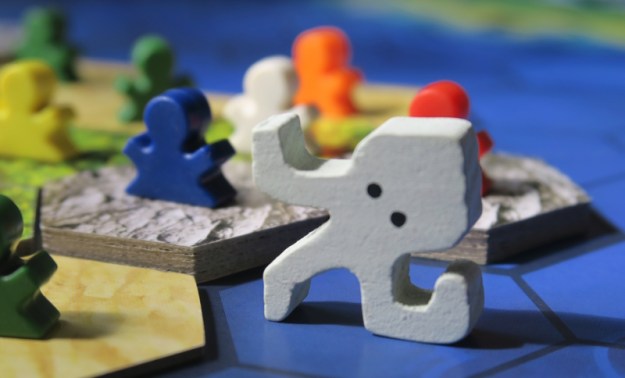
The idea is that players rescue their meeples from the central Island of Atlantis before it sinks beneath the waves.  The original Escape from Atlantis had a fabulous sculpted plastic central Island, with lots of Sea Monster miniatures, however, although the thirtieth anniversary edition is arguably a nicer production, the Island is made up of thick card hex-tiles, and the Sea Monsters are made of wood.  This version has safe land shown on the corners of the board each initially guarded by a Sea Monster, with randomly placed hexes forming the Island and a fifth Sea Monster in a central lagoon.
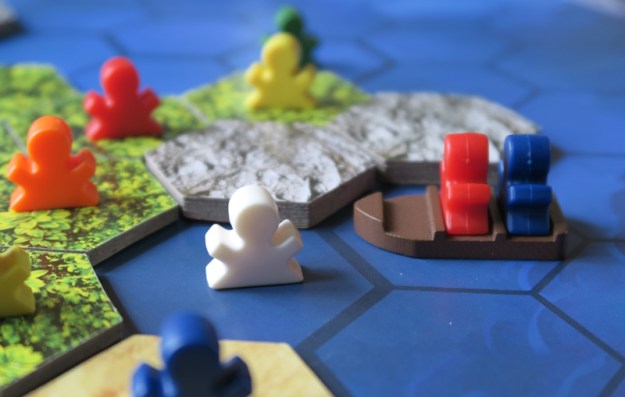
Survive: Escape from Atlantis!
– Image by boardGOATS

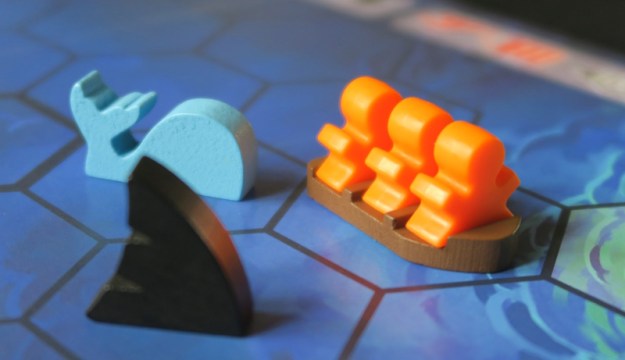
The new edition varies from its predecessors only a very little in game play.  On their turn, the active player has three movement points, and then they remove one tile from the Island of Atlantis before rolling the Attack Die which dictates which of the Sharks, Whales or Sea Monsters the player moves.  Sharks and Whales are introduced as the Island sinks: when players remove a hex from the Island, the underside has either an immediate effect (bordered with green) or a delayed effect with the tile stored, usually to be played before a later turn, though a small number can be used reactively.
Survive: Escape from Atlantis!
– Image by boardGOATS

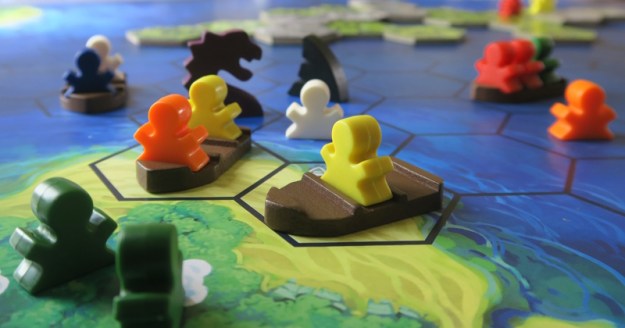
There was a lot of discussion about whether to include the Giant Squid and Dolphin mini expansions and what they did, but in the end, the group decided against it this time.  In addition to placing their meeples on Atlantis, during the set up, players also place boats.  These can hold a maximum of three meeples and are moved by whoever has the majority in the boat.  It costs one movement point to climb into or out of a boat, either to or from a neighbouring land space or the water next to the boat.  Meeples in the water can only swim one space per turn because it is tiring.  Once in a boat, however, movement is easier and they can move as far as they want and are able.

Survive: Escape from Atlantis!
– Image by boardGOATS

Thus, the priority is to get meeples into boats, but the decision players have is whether to try to put all their meeples in one boat or whether to hedge their bets.  Pine and Pink tried the former.  Pine managed to get two of his meeples in one boat and then, before he could get any passengers, set sail.  Being early in the game there weren’t many Whales or Sharks about, and with only a short distance to safety, Pine’s pair made it there safely.  From there, the game got quite savage with players preferentially taking land tiles with meeples on them, turning them into Swimmers with a long way to safety—one was unlucky enough to end up in the drink when a Shark dropped into the space next to him and swallowed him whole.

Survive: Escape from Atlantis!
– Image by boardGOATS

Pink tried to emulate Pine’s success, but was a mite more greedy putting three of his meeples with a total value of eight in one boat.  Although he had a plan to get the boat to shore, he reckoned without the appearance of a Whale which was promptly moved to the same space and proceeded to turn his boat into matchwood and transform his sailors into Swimmers.  Whales aren’t interested in Swimmers though, so once his meeples were in the water, it left them alone.  Pink then had ample opportunity to separate them out a little, and indeed was advised to by everyone else, but he choose not to.  So, although everyone felt slightly sorry for him, it wasn’t long before the little clutch of Swimmers proved far too tempting a target and a Shark rocked up and ate them all.
Survive: Escape from Atlantis!
– Image by boardGOATS

From there, there was a steady trickle of boats making landfall, with players trying to work together without doing the lion’s share of the work themselves.  For every boat that made it to safety, however, there was at least one Swimmer that was eaten by a Shark or boat that was attacked by a Whale or a Sea Monster making it a bit of a war of attrition.  But with six players, the game moves quite quickly and players don’t get many turns so collaboration is essential if players are to get anyone to dry land.  Blue and Black cooperated effectively to get a couple of Sailors each home, as did Teal and Pine.  Although for a long time, Lime was the only one not to have any of his meeples eaten, he was also the last to get one safe.

Survive: Escape from Atlantis!
– Image by boardGOATS

With six players, the end of the game came round quite quickly.  The game ends immediately when the Volcano is revealed under one of the last eight Mountain tiles and with so many players once the Woodland tiles have been exhausted the game can end any time, so one extra turn can make all the difference.  And so it proved for many.  It was Lime who turned over the Volcano tile, much to his disgust as he had a boat with two meeples ready to disembark on his next turn.  Pink also had two in a boat near shore (total value nine) and Blue was equally unimpressed as it was her turn next and she needed just one move for her most valuable meeple to crawl up the beach.

Survive: Escape from Atlantis!
– Image by boardGOATS

With Atlantis gone beneath a combination of waves and lava and every meeple that had not made dry land perished in the boiling sea, it was time to score.  Each meeple has a value printed on the bottom, and although players knew what these were when they were placed, they were not allowed to look at them again.  Teal had attempted to codify which meeple was which in their location on the spaces they were placed on, however, Blue quickly called him on this and like everyone else, over the course of the game he had mostly lost track of which was where. Pink and Lime had only got one meeple ashore a piece, but although they were relatively high scoring ones, everyone else had a similar value one home and at least one additional one too.

Survive: Escape from Atlantis!
– Image by boardGOATS

Blue, Black and Teal managed to get three meeples ashore each, with Black totalling six points and Blue totalling seven.  The winner was Teal, however, with a total of eight, though even one more turn or a slightly different turn of events earlier in the game would have made a huge difference to the final placings.  It had been a lot of chaotic fun, but unquestionably, with so many players, there wasn’t much chance to plan and the game  changed hugely between a player’s turns.  With fewer players it is definitely a more strategic game, but with more, the onus is on players to work together more—indeed the players that did this this time, were the most successful.
Survive: Escape from Atlantis!
– Image by boardGOATS

Learning outcome:  Just when you thought it was safe to fall into the water…

5th September 2017

As people arrived slowly, the evening started out with a few rounds of Love Letter.  The archetypal “micro game”, Love Letter is a simple filler game that we’ve played a lot in the past, but less so recently.  The idea is that players have a single card in hand and, on their turn, draw a second and choose which one to play.  There are only sixteen cards in the deck and each has a value and an action.  The action is carried out when the card is played and the player with the highest value card at the end of the game is the winner.  The game is not high on strategy, but is ideally suited to playing while doing other things (like eating pizza), so it is very light hearted and can often generate lots of silly moments with this time being no exception.  When Blue drew the second highest card, the Countess, she got carried away and chose to play the Prince she already held.

Love Letter
– Image by boardGOATS

Unfortunately, the special action for the Countess is that if a player has a Prince or the King as well as the Countess she must discard the Countess (thus revealing information).  Without thinking properly, she played used Prince’s action on Green who was forced to discard the Princess, putting him out of the game.  Too late Blue realised her error and she apologised profusely as Green grabbed his card back and she played her Countess instead.  When the next player, Burgundy, then draw a Guard card giving him the chance to assassinate any card he could name, everyone knew that Green’s days were numbered, though they were reckoning without Burgundy’s bad memory!  Completely unable unable to recall the card Green had been forced in error to reveal, he incorrectly named the King and Green lived on.  In the long run, nobody really benefited from the confusion though, with almost everyone taking one round, we played sudden death and it was Pine who ultimately emerged victorious.

Love Letter
– Image used with permission of BGG contributor thatmadgirl

With everyone present it was time for the “Feature Game”, Chariot Race, which is a fairly quick-playing Yahtzee style dice game with a horse racing theme, but actually has more of a feel of King of Tokyo (that we played last time) than anything else.  Players take on the role of charioteers participating in a great race in ancient Rome with the aim being to use dice to complete two laps of the dusty arena and be the first to steer their chariot over the finish line.  On their turn, the active player rolls a number of dice dependent on their speed on the previous turn, with faster chariots rolling fewer dice.  Each face of the six-sided dice allows a different action: Gain new Favors; increase or decrease speed; change lanes, or attack opponents (either directly by hurling javelins or indirectly by dropping caltrops in their path).  If the first roll is not satisfactory, the player can re-roll any or all of the dice.  They can re-roll a second time or turn one die to their chosen face, but to do that they must cash in some of the favour of the goddess Fortuna.  Favours of Fortuna are useful for repairing chariots too, and as there is a large kamikaze element to the game, Favours prove very useful indeed.  Once the dice roll is set, the active player moves their chariot forward according to the final speed they achieved, swerving to avoid rivals, caltrops and potentially devastating piles of rocks and the first player to drag their wreck of a chariot across the line for the second time is the winner.

Chariot Race
– Image modified from original by BGG contributor JackyTheRipper

The game is supposed to be a quick little fun racing game, but it turned out to be everything but quick. This was probably the fault of the players as much as anything else as everyone seemed to get bogged down in analysing all the options.  With seven people present and Chariot Race, playing a maximum of six, Ivory kindly offered to team up with Green who was feeling a little out of sorts, but they were in complete agreement that they should start at the front of the grid.  In contrast, Black decided to start at the back, hoping that others would see him as less of a threat and maybe take each other out leaving him an easy run in.  In practice, it turned out that the back was a particularly bad place to be as Black struggled to avoid everyone in front of him and consequently picked up a lot of damage, soon wrecking his chariot and joining the rows of spectators cheering on their heroes.  Burgundy was quick to follow when the wonky donkey pulling his chariot sped up suddenly and accidentally invented a new Roman form of skittles when he crashed into everyone else in turn.  The problem with that was that although everyone took damage, each collision caused damage to Burgundy’s chariot eventually turning it in to match-wood.

Chariot Race
– Image modified from original by BGG
contributor JackyTheRipper

Starting at the front, the Green/Ivory chariot made a very quick start and took an early lead.  Blue gave chase starting with a recklessly high speed and a “go down in a blaze of glory” attitude.  Pine was a little more circumspect, but made good ground early on.  Purple on the other hand, started towards the back of the grid, made a slow start and was obstructed by the wreckage of Black’s and Burgundy’s chariots at the start of her second lap.  Blue and Green/Ivory tried to impede each other with Blue chucking spears and Green/Ivory dropping caltrops.  As Green/Ivory approached the end of their second lap, Blue was just behind.  So as Green/Ivory crossed the line running on empty they were speared by Blue on the next turn and their wheels fell off their chariot.  Blue crossed the line with a bit to spare and was quickly followed by Pine who couldn’t quite pass Blue so chucked a spear at her to make up for it.

Chariot Race
– Image by boardGOATS

That just left Purple.  With a lot of ground to make up, the odds were always against her and everyone joined helping her to try to cross the line or take out Pine or Blue.  Sadly it was not to be and she decided that if she couldn’t influence the race, she would go out with a bang and smashed her chariot to smithereens on a rock.  So, a game that was listed as taking less than an hour had taken over two and only a third of the chariots playing had made it to the finish line.  It didn’t matter who won though, it had been a lot of fun.

Chariot Race
– Image modified from original by BGG contributor JackyTheRipper

With Chariot Race taking so much time though, we were limited by what else we could play.  Before long there was a debate about the options, including all out old favourites like Saboteur and 6 Nimmt!.  In the end Bohnanza won as a game we could all play without thinking, and Burgundy was reaching for the familiar yellow box from his bag.  The game is one of our old staples, is quick to learn and keeps everyone involved throughout.  Often the simplest of mechanisms are the most effective an that is the case of Bohnanza:  players cannot rearrange the cards in their hand and must play them in the order they arrive.  Thus, on their turn, the active player first plays the first card in their hand with the option of playing the second if they desire.  Once they’ve been planted, two cards are drawn which can be traded, but must be planted by someone.  This can lead to free gifts, but also players being nasty and refusing to take even the apparently most lucrative trades

Bohnanza
– Image used with permission of BGG contributor spearjr

This time, Burgundy started strongly, as did Pine and Ivory.  Black struggled consistently to get the cards he wanted, and with so many people playing, everyone had to be quick or they would miss out.  It was a very tight game with players mostly being nice to each other though everyone was typically reluctant to give Burgundy any easy trades, he got plenty anyhow.  As everyone totaled up the scores, it was clear there wasn’t much in it.  Five of the seven players ended the game with either nine or ten coins, but it was Purple who just sneaked in front finishing with eleven to win by a nose.  And with that, it was time to go home.

– Image by boardGOATS

Learning Outcome: Games sometimes take a lot longer than it says on the box.

22nd August 2017

It was a quiet night thanks to work and holidays, and for a long time looked like it might just be a clash of colours between just Magenta and Pink, but gradually others rolled in, just in time for the “Feature Game”, Survive: Escape from Atlantis!.  This is a fairly light game, with a vicious edge that only really works if players engage fully in the “take that” elements.  Basically, each player has set of meeples, each with a number on the base which equates to their value.  With Blue away for work, everyone was keen to take the opportunity to play blue for a change, but Burgundy got in first.  The aim of the game is for players to get their meeples safely to the mainland on the four corners of the board before the volcano erupts and kills them.  To this end, the game begins with players taking it in turns to place their meeples on the hexagonal tiles that make up the central island.   There are actually quite a few things to consider here.  Firstly, the tiles flood in order with the coastal low-lying beach tiles sinking beneath the waves first, then the forest tiles, and finally the grey mountainous tiles.  So, starting on a mountain means there is more time to make arrangements before a vindictive player can sink that hex dumping the unfortunate meeple into the drink.  However, the meeple in question may have to travel some distance across the island to get to the coast, which will take time and actions, both of which are limited.

Survive: Escape from Atlantis!
– Image by boardGOATS

The other major consideration when placing meeples are their value – each player has ten meeples and their values range from one to six.  The winner is the player who gets the highest total value home, so getting a six home is far more important than getting a one to safety.  For this reason, positioning the high value meeples well is critical, on the other hand, placing them first might telegraph that they are the most important meeples, putting them at risk later.  Critically, once they have been placed nobody, not even their owner, can look at the number on the bottom.  So remembering where the high value meeples are also vital to success, as is deciding whether to put the high value meeples together and potentially in the same boat, risking other players attacking it, but ensuring that all efforts can be focussed in one direction.  In general, each hexagon can only hold one meeple, so the available choice steadily decreases during set up.  The base game only plays four, but more can be accommodated with a mini expansion that adds extra pieces in two new colours.  The rules state that everyone should place only eight meeples (returning a one and a three to the box), but we didn’t realise this until people had begun placing so we used the “overpopulated” variant where players place their extra pieces on hexes that are already occupied once the island is at capacity.

Survive: Escape from Atlantis!
– Image by boardGOATS

Once all the meeples had been placed and were jostling for position, the game began in earnest.  On their turn, each player does four things:  play a tile from their hand; move their meeples; remove a tile (carrying out the action if appropriate or adding it face down to their hand), and finally roll the red Creature Die.  Players have three movement points and can use them to move any combination of their meeples and/or boats up to a total of three land or sea spaces.  There are a few rules associated with these, for example,”swimmers” can only move one space per turn because they tire easily, and once they have left the island, they cannot return.  Similarly, it only costs one point to move a “dry meeple” from land to a boat in a neighbouring space, whereas a swimmer must be in the same space as the boat and then it takes a movement point for them to climb over the side.  While anyone can move empty boats, only the player with the largest number of meeples can move an occupied boat.

Survive: Escape from Atlantis!
– Image by boardGOATS

Once the active player has moved his meeples, he then removes one tile from the island, tipping any residents into the sea and then secretly looks at the underside of the tile.  Each tile has different effect with some spontaneously creating whales, sharks or boats out of thin air, while others allow players to hitch a ride on a passing dolphin or cause sharks to magically vanish into the ether.  There are three different types of tile, green bordered to be played immediately; red bordered to be kept for later and played at the start of a later turn; and tiles with a red cross which are also kept but are played on another player’s turn (typically in response to them moving a shark into an attacking position or similar).  Finally, after the tiles have been dealt with, the active player rolls the Creature Die, and then move the creature of that type of their choice.  There are three types of creature.  Whales move fast (up to three spaces) and attack occupied boats, turning them into matchwood, but they leave swimmers alone.  Sharks, on the other hand, move a maximum of two spaces and will happily scoff any swimmers they come across, but can only circle boats looking longingly at their occupants.  Sea monsters are the slowest movers travelling only one hex at a time, but are also the most hazardous, smashing boats and then eating the contents.

Survive: Escape from Atlantis!
– Image used with permission of BGG contributor jsper

For the most part, everyone had distributed their meeples evenly over the island, but Green went for the mountain spaces first so his were a little land-locked in the early part of the game.  Perhaps it was just as well for him though, as everyone started out aggressively and got more so.  There were a lot of whale tiles early on, so boats didn’t last long and no mercy was shown to swimmers at all. Even being nice and trying to make allies didn’t work, so when Pink tried to be nice by moving his boat towards one of Magenta’s swimmers she didn’t repay him in kind.  It’s true that Pink might have had an ulterior motive thinking it was less likely she would attack his boat it if it had one of her own meeples in it, but setting a shark on two of his swimmers was arguably uncalled for.  He got his revenge though when he used a whale to sink one of her boats and parked a shark in the neighbouring hex.  Meanwhile, there was a brief uneasy truce between Green, Burgundy and Ivory as they shared a boat and, with so many people with a vested interest and Pink and Magenta still at war, all three made a rapid crossing.

Survive: Escape from Atlantis!
– Image by boardGOATS

It wasn’t long before all the beach tiles had gone and then all the forest tiles too.  Then everyone was on tenter-hooks waiting for someone to turn over the volcano tile triggering the immediate end of the game.  There are eight mountain hexes, so the probability started out as one in eight, then one in seven, then one in six…  And then Green turned over the fourth mountain tile signalling the end for Pink’s swimmer who had nearly made it to land and Ivory’s boat which disappeared beneath the waves as it filled up with lava.  That just left the scoring.  Burgundy had got three of his meeples home closely followed by Ivory and Magenta who had saved two each.  The number of meeples is largely irrelevant however, as it is the sum of the value of the meeples that is key, and although it looked like a close game, in the end it was much less close than everyone thought.  Almost all of the high value meeples had been eaten or drowned and only Ivory had managed to save any, rescuing both his five and his six point meeples.  That left him with eleven, a clear margin of victory over Burgundy who finished with a creditable seven, taking second place.  It had been fun though, and Pink, who had played it most recently concluded that it was very different with lots of players as it’s a lot easier to end up getting eaten or sunk since it’s a long time between turns delaying the chance to deal with “the impending sea serpent of doom…”.

Survive: Escape from Atlantis!
– Image by boardGOATS

Everyone hadn’t got the aggression out of their systems, so it was out with King of Tokyo for a bit more “take that” style gaming.  This is another “light, but vicious” game where players are mutant monsters, gigantic robots, and strange aliens—all of whom are destroying Tokyo and whacking each other in order to become the one and only, undisputed master of the city.  At the start their turn, the active player rolls six dice, each of which show six symbols each of which has a different effect.  The active player gets three successive throws over which they can choose whether to keep or discard each die.  The dice are used to get points, restore lives, acquire energy and attack other monsters.  Lives and points are tracked using a dial and the aim of the game is to be the first to reach twenty points.

King of Tokyo
– Image used with permission of BGG contributor mikehulsebus

At its core the game uses a three roll, keep or re-roll system similar to that used in Yahtzee, but there is a little more going than that.  In addition to cute standee-monsters and the scoring dials, there is also a small board representing Tokyo.  At the start of the game, Tokyo is empty, but the first player to roll at least one paw (attack) on the dice and choose to use it can move into Tokyo.  Once Tokyo is occupied, it will not be empty again during the game.  Monsters in Tokyo can only damage monsters outside the city and monsters outside Tokyo can only attach monsters inside the city.  This means that a player in Tokyo is a target for all the other monsters.  On the other hand, rolling an attack die while in Tokyo deals damage to everyone else increasing its value.

King of Tokyo
– Image used with permission of BGG contributor msaari

Tokyo is also important because when a Monster enters Tokyo the player earns a point for doing so, furthermore, if a Monster is still in Tokyo at the start of their next turn then the player earns another two points, and will continue to earn points for every round they stay there.  This is perilous, however, as they will be the subject of every attack someone makes from outside Tokyo and monsters in the city are not able to heal themselves.  With five players, there is room for two monsters in Tokyo, which means there is one less outside, but that is only the case until a monster inevitably succumbs to their injuries.  Once a player is in Tokyo, the only way to get them out again is to keep attacking them, until their nerve fails and they decide to leave making way for the attacking monster.  By this time, of course, it may be too late and too much damage has been done for them to be able to heal sufficiently.

King of Tokyo
– Image used with permission of BGG contributor Toynan

In addition to attacking and healing, the dice can also yield energy.  For each lightening bolt rolled and kept, the active player gets a green energy cube, which can be used to buy power cards.  These come in two main types,  “Keepers”, that can be used repeatedly, or “one off” cards that are discarded when used for their benefit.  They are potentially very valuable, especially if bought early in the game and can be used repeatedly.  Finally, it is also possible to score points from the dice by rolling three of the same numbers.  For example, rolling three “twos” will give two points, however, rolling two will score nothing which makes going for these quite a gamble.  The game ends when either one player gets two twenty points or there is only one monster left standing.

King of Tokyo
– Image used with permission of BGG contributor msaari

The game continued the aggressive theme of the evening.  Magenta and Burgundy were first in Tokyo and survived the whole round picking up the bonus points.  Pink then attacked and both Magenta and Burgundy fled with their tails firmly between their monstrous legs.  On his next turn, Burgundy was able to hide and heal, but Magenta was not so lucky being forced to attack and go back into Tokyo.  Sadly, this proved fatal and she was quickly out after accruing just seven points.  At this point Green was looking very strong with a powerful hand, in particular the “Evacuation Orders” which caused everyone else to lose five points.  This meant that when Pink quickly followed Magenta out of the game (finished off by Ivory) he went with no points at all.  Meanwhile, Burgundy was slowly rebuilding his health and was able to keep the other remaining players at a minimum.  Ivory was next, making it a battle to the death between Burgundy and Green, a battle that Burgundy eventually won after much blood was spilt.  Although it was still early, all the savagery had been tiring and everyone opted for an early night.

King of Tokyo
– Image by BGG contributor Schaulustiger

Learning outcome:  Being nasty can be very hard work.

13th January 2015

With several new people, we started with two sets of parallel games.  The first group began with Zombie Dice, a very quick dice game where players are zombies and the dice are their victims.  On each turn, players first roll three dice:  a brain symbol is worth one point at the end of the round, while footsteps allow that die to be re-rolled.  On the other hand, shotgun blasts are bad, and collecting three ends the players turn and they forfeit any points they’ve collected. After rolling their first three dice, players can then decide if they want to score their current set of brains or whether they fancy pushing their luck by grabbing a new set of three dice and rolling again.

Zombie Dice
– Image used with permission of BGG contributor zombiegod

With Grey taking his first win, Red convinced the group to play one of her favourite games, Walk the Plank!.  This is a very silly game that we’ve played a lot over the last year and everyone seems to enjoy.  There were the usual hoots of delight as kamikaze pirates committed mass suicide and everyone enjoyed it so much, that after Grey had taken his second win, they played it again.

Walk the Plank!
– Image by boardGOATS

While Cerise was chalking up her first victory, the second group were finishing their game of King of Tokyo, the “Feature Game”.  This was a “Black Friday Special” and is another fun dice rolling game.  The idea is that players are mutant monsters, gigantic robots, and strange aliens – all of whom are destroying Tokyo and attacking each other in order to become the one and only King of Tokyo.  Each player has a stand-up monster, a counter and everyone sits round a board depicting Tokyo.  On their turn, players roll the six oversized dice with four possible outcomes: numbers (potentially leading to points), attack (a paw print), healing (a heart) and energy (lightening bolts).  In order to score victory points, the active player must roll at least three of the same number.  Thus, three “twos” will score two points, but each additional “two” will deliver an extra point (so four “twos” would score three points etc.).

King of Tokyo
– Image used with permission of BGG contributor henk.rolleman

Any attacks rolled are delivered to the monster who is currently in Tokyo unless that is the active player, in which case, everyone else receives the damage.  Each player starts with ten lives and each attack die costs one.  Whenever the player in the middle is attacked, they have to take the damage, but can then chose to leave the middle, to be replaced by the player who attacked them.  Moving into Tokyo has its advantages and disadvantages:  players score a point on going in (with two more if they are still there at the start of their next turn) and they can cause everyone else a lot of damage, however, they cannot using healing dice while in Tokyo which makes it risky to stay.

King of Tokyo
– Image by BGG contributor rothkorperation

Finally players can also collect energy tokens which are a sort of currency and allow players to buy cards which give their monster special powers.  The winner must either destroy Tokyo (by collecting twenty victory points), or be the only surviving monster once all the fighting has ended and all the others have died.  Green started off well, with Burgundy and Indigo in hot pursuit.  Blue seemed unable to get anything she wanted, so took great delight in seeing everyone else reduced to a very small number of lives.  Burgundy was two points ahead of Green, but it was Green’s turn and he ended the game with a gambol rolling five “threes” and finish as the King of Tokyo.

King of Tokyo
– Image used with permission of BGG contributor dekedagger

With the end of both games and the arrival of Purple and Black, we had a quick shuffle of seats and Cerise replaced Green to play another game that has been popular recently, Splendor.  This is a simple set collecting game where players collect gems that they can then use to buy cards which in turn allow them to buy more cards which are worth points and help them to collect “nobles” which give even more points.  The game started slowly with all the basic cards gone and nobody looked close to winning.  However, Blue knew she’d done something right when there was a chorus of disappointment from Cerise and Burgundy when she reserved a high scoring opal card, a trick she repeated the following round.  Buying one of the opal cards enabled her to win two nobles giving her nine points in one turn and putting her over the finishing line, with Indigo finishing just one point behind after a last minute surge.

Splendor
– Image used with permission of BGG contributor henk.rolleman

Meanwhile, the other group were playing Stimmt So!.  Although we’ve not played this for a while, we have played the closely related game, Alhambra which uses the same mechanic.  The idea is that players have a choice of actions:  they can buy commodities, or they can go to the bank for money.  There are four different legal tenders and the cost of each commodity must be paid in the specified currency.  When making purchases (of shares in Stimmt So! or of buildings in Alhambra), players can always over-spend, but if they pay the exact amount they can have an extra turn.  Thie extra turn can be used to either buy another item or to take money from the bank.  If they chose to make a second purchase, they can again pay the exact amount and get another turn.  Play continues in this way until the player no-longer qualifies for another turn or all the available stock has been purchased after which, the stock is refilled for the next player.  Thus, the game is a balance between collecting small denominations of the different currencies (which are more versatile) and collecting larger denominations (that are worth more).  The points are awarded at stages during the game to players with the most of each commodity.

Stimmt So!
– Image by boardGOATS

It was a slow start as people built a stock and cash and very few shares were bought. Then, as each person built up a usable amount of money the game took off.  Black quickly took control of the Petrol market with three shares and everyone else built a small portfolio. Grey followed Black’s lead and went for an early lead in Banking.  The first scoring round came along quite quickly and with almost nothing in it and then the game was really afoot.  Purple decided to challenge Black’s dominance in Petrol and Grey added to his Banking stocks.  Airlines, Computing and Entertainment were all hotly contested, but Automobiles remained obstinately absent despite an interim shuffle!  The second scoring came with a range of winners and losers and Black, Grey and Red stretched a small, but significant lead over Yellow and Purple with Green at the back who had been refusing to overpay for anything, plenty of cash, but few shares!  Going into the last round, there were several cards that nobody wanted as they could no longer even share the lead, but eventually people started buying and Automobiles finally made an appearance.  This got the game moving and the final shares came and went in short order.  Black managed to shrug off falling oil prices and finish just ahead of Red, a canny second, demonstrating that not putting all your eggs in one basket can be a good idea.  Grey was not far behind demonstrating that putting all your eggs in one basket is still a not a bad strategy though!

Stimmt So!
– Image by boardGOATS

Splendor finished first, and Indigo was persuaded to play one more game before she had to leave.  As we wanted something fairly quick, we opted for a card game and chose Coloretto.  This is a cute little set-collecting game that inspired, the perhaps better known, Zooloretto.  The aim of the game is to collect sets of cards with the largest three sets scoring positively, and the reset all giving negative scores.  Thus, on their turn, the active player can either draw a coloured chameleon card, or take a “truck” and all the chameleons on it.  If they draw a card, they have to choose which truck to put the chameleon on, trying to make the trucks contain a combination of colours that suit them, but not everyone else.  Alternatively, they can choose take a truck, trying to match the colours on the truck with the sets they already have and  minimise their losses.  This was quite a close game until suddenly, in the final round Indigo drew an orange chameleon which we hadn’t realised had been hitherto missing from the game.  We inevitably blamed the shuffler as all the orange cards turned up together.  Blue managed to avoid picking any up however, and finished just two points ahead of Burgundy.

Coloretto
– Image by BGG contributor SergioMR

In the meantime, Green, Grey, Black and Purple started a game of Click & Crack.  This is one of last year’s “Essen Specials” and has proven to be a fantastic little filler game.  Each player has two penguin counters.  They take in turns to place them on an ice floe made from twenty-five tiles arranged to form a five by five array.  Each player also has two tiles depicting an arrow.  Once the penguins have been placed, players choose a direction for their arrow tiles and reveal them simultaneously. Then, starting with the first player, each player picks a penguin and applies one of their direction tiles.  They can either move the chosen penguin in the specified direction, or the penguin stamps on the ice and causes the floe to crack in the specified direction.  When a crack has been completed so that it divides the floe into two, the player who played the final crack wins the smaller piece of ice and takes the tiles and any penguins caught on it.  Each floe tile is worth one point at the end of the game and each trapped penguin is worth minus one point.

Click & Crack
– Image by BGG contributor thir_teen_

The game ends when one player has at least seven points, or when the main floe is less than seven tiles in size or if there are three penguins left on the floe.  The game went all Purple’s way.  First she broke off a massive piece of ice and trapped a few penguins in the process.  Then before anyone else could do very much, she broke off another large piece capturing a few more penguins and finished the game with eight points and only Black scoring: a paltry two.

Click & Crack
– Image by BGG contributor smn1337

While the penguins were busy finishing up, Cerise (aided by Burgundy), gave Blue a sound thrashing at Dobble (an old favourite that we’ve not played for ages) before the late night brigade started the last game of the evening, Lancaster.  As it was his new game, Green had been absolutely desperate to play it, so despite the lateness of the hour, we gave it a go.  The game is a worker placement game themed around the House of Lancaster, played over five rounds, each consisting of several phases.  First, players take it in turns to place their knights.  Knights can be placed in the counties, or in the a player’s private castle or they can be sent off to fight against the French.  Knights have a rank (one to four).

Lancaster
– Image used with permission of BGG contributor henk.rolleman

When knights are placed in the counties, this rank can be augmented by the addition of squires, but once a knight has been placed, it can be usurped by a higher ranking knights (or a knight with sufficient squires to give it a higher rank).  In this case, the knight is returned to the player, but any squires are returned to the supply.  This means that players might be quite cavalier about knights, but tend to be much more parsimonious when assigning squires.  Winning a county enables players to choose either to recruit a noble, or to perform a one off action associated the county, or, alternatively, on payment of three coins, they can do both.

Lancaster
– Image used with permission of BGG contributor Toynan

If they win a war, the knights sent off to fight the French win points, with the largest contributors (highest combined rank) scoring most heavily.  However, they also receive an immediate benefit which can be monetary or in the form squires or nobles etc..  Knights placed within the castle also give a one off benefit, although it is received later.  The knight’s rank is immaterial for castle placements (as they cannot be usurped) and there is no possibility of victory points.

Lancaster
– Image used with permission of
BGG contributor kopernikus

Once all the knights have been placed, it is time for Parliament to vote on changes to the laws.  The laws basically provide scoring bonuses and other benefits.  At the start of the game there are three laws in place and three new laws that players will vote on.  These three new laws are considered one at a time and the group votes on whether they should be kept (pushing out one of the old ones) or rejected.  Players get one vote each for each law, but can reinforce their vote with votes provided by nobles (and via other means).  After the voting, the other rewards are handed out:  for occupying the counties, for knights placed in castles and for winning wars.

Lancaster
– Image used with permission of BGG contributor punkin312

Although everyone broadly understood what they could do, nobody really fathomed how everything fitted together.  So, different players tried different strategies.  Blue decided that the she couldn’t turn down the thirty-six points awarded at the end of the game for a complete set of nobles, so went for that.  Burgundy was more canny, however, he also went for the nobles, but picked up a lot of them through the one off reward provided by going to war with the French.  This way he also got victory points as he went along.  Green also tried to pick up points in the battles, but focused on trying to build up the strength of his knights and manipulate parliament. Black tried to reinforce his castle to deliver regular rewards with little input, while Purple tried a little bit of everything, just doing as much as she could on each turn.

Lancaster
– Image used with permission of BGG contributor kilroy_locke

Burgundy led the charge with Green, Black and Purple close behind.  Since Blue was focusing on collecting her set of nobles, she hardly shifted from zero for the first four rounds.  Going into the final round however, it was suddenly everything to play for.  Everyone had got the hang of how to use their knights and how the laws worked and knew what they wanted in the final round, but that did not mean they were going to get it!  Knights were placed and then unceremoniously stomped on by more powerful knights with several high ranking knights being placed with four or five squires in reinforcement. Blue and Burgundy both picked up their full compliment of nobles (just) and Green was outvoted when he tried to get his preferred law through.  Black scored for his castle and Purple managed to change the law to convert her mass of coins into points so that she scored heavily.  With her full set of nobles, Blue surged forward into second place, just ahead of Purple, but it was all way too little too late; nothing could match Burgundy’s commanding lead and he finished nearly sixteen points clear of the field.  Although there were a number of rules that we played incorrectly and a number of points that need clarifying, it was Burgundy’s superior strategy, played out to perfection that won the game.

Lancaster
– Image used with permission of BGG contributor kilroy_locke

Learning Outcome:  We really need to learn how to shuffle.

Boardgames in the News: Are Games Getting Cheaper?

There have been a lot of good deals about recently.  First there was Black Friday.  This traditionally American festival of consumerism occurs on the Friday after Thanksgiving, and this year even affected some of the online Boardgame sellers in the UK – anyone for Grog Island at £15?  Then there were the Amazon “Lightening Deals”.  These are deals that are advertised in advance with a specific start time and a limited stock.  This year, we’ve had King of Tokyo and Dominion at £15 each.

The latest one beats all these though.  Thanks to a malfunction in the software used by third-party sellers to ensure their products are the cheapest on the market, prices were reduced to as little as 1p.  Reports suggest that one buyer bought ninety-five board games that should have cost £12.99 each for 99p each!  Ooops.

Amazon Glitch
– Image from theguardian.com

Games Sommeliers – in Oxford!

Boardgames have made it onto the radio again, this time with an eight-minute article on the BBC Radio 4 magazine programme, You & Yours.  The recording was done at Thirsty Meeples, the Boardgames Café in Oxford and broadcast on 4th July.  They interview a few customers as well as Simon one of the “Game Gurus”, or a “Games Sommelier” as they describe them, and John Morgan, the Manager.  Amongst other things, they play King of Tokyo, which is a dice rolling game that uses a Yahtzee mechanic and discuss what they do with lost pieces.

You & Yours