Tag Archives: Splendor

7th January 2025

Blue and Pink were early for a change and had mostly finished their supper when everyone else arrived.  The “Feature Game” was to be Concordia Venus which is a reimplementation of Concordia, but can also be played with an upgrade-expansion to the original game.  Concordia is a strategy game of economic development in Roman times and although the rules are relatively simple, the game has a lot of depth.  Plum had been super-keen to play this, and, as it turned out, there were several others who were also very keen to give it a go, so as a result, there were soon two games underway.
Concordia: Venus
– Image by boardGOATS

The first of these involved Plum, Sapphire and Teal, playing with Burgundy‘s copy of the original Concordia with the Venus expansion.  This was one of Burgundy‘s favourite games and many people in the group fondly remember being taught it by him.  Game play is super-simple:  each player has a hand of cards, so on their turn, they play one and do what it says.  And that is all there is to it.  Players start with a hand of seven Personality Cards which provide a simple array of actions:  move Colonists and build, produce Resources, trade Resources, use another player’s most recently played Card, buy more Cards, recycle their Card deck.
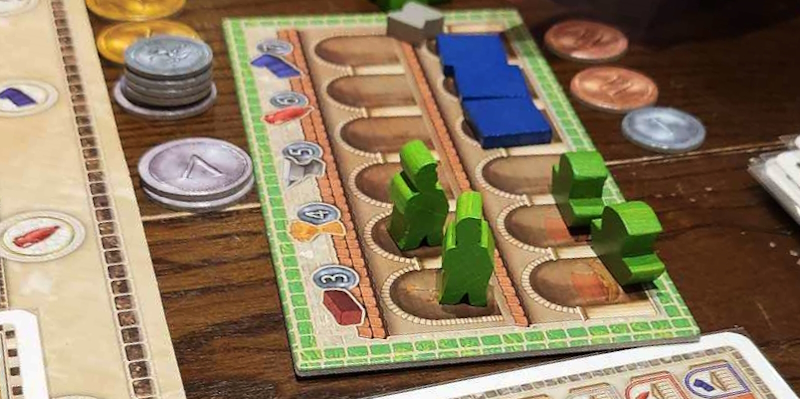
Concordia: Venus
– Image by boardGOATS

Players use their Consul card to buy more Personality Cards during the game.  As well as providing more and increasingly powerful options, they are also key to scoring.  Each card is related to an ancient god who rewards its owner with victory points according to different scoring criteria.  This reward is then multiplied by the number of Cards the player has that are dedicated to that god.  For example, Saturnus rewards players for having buildings in different provinces.  If a player has built in seven different provinces and has four cards dedicated to Saturnus, they receive twenty-eight points.
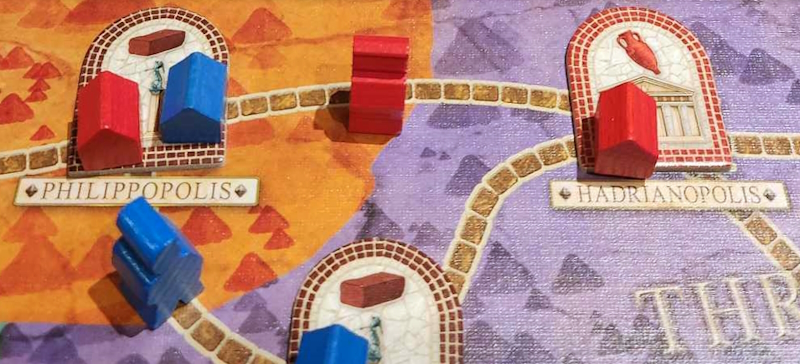
Concordia: Venus
– Image by boardGOATS

The game ends either after a player purchases the last card from the display, or after one player builds their fifteenth house after which everyone else completes their final turn before scoring.  One of the things that is very clever about the game is how much variety is achieved from very little variation.  Players all begin with the same starting cards and the same resources; the only change from game to game is the order the Cards appear in the market and the distribution of City Resource tiles at the start of the game which dictate which cities produce what.  With these small variations the game can change hugely as players fight to control the area that gives the most lucrative cities during the game and when combined with their Cards to give the most points.
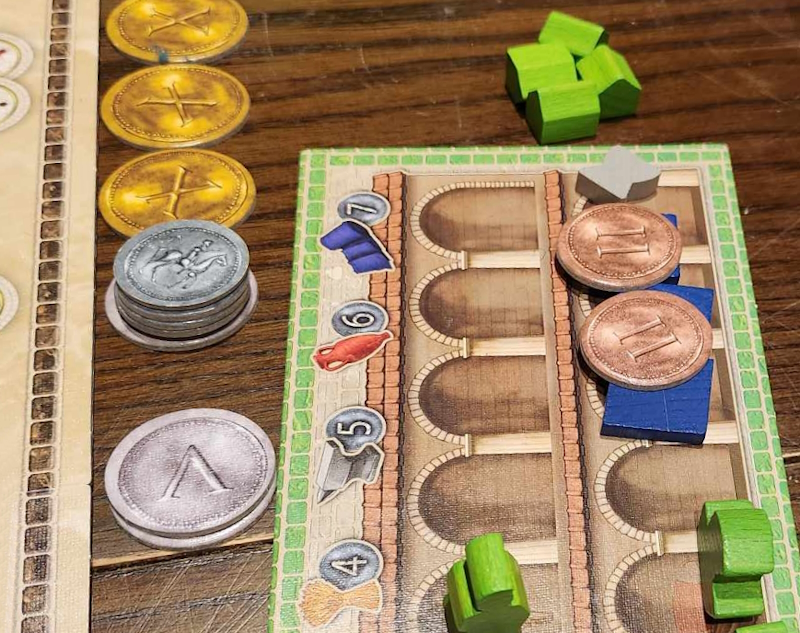
Concordia: Venus
– Image by boardGOATS

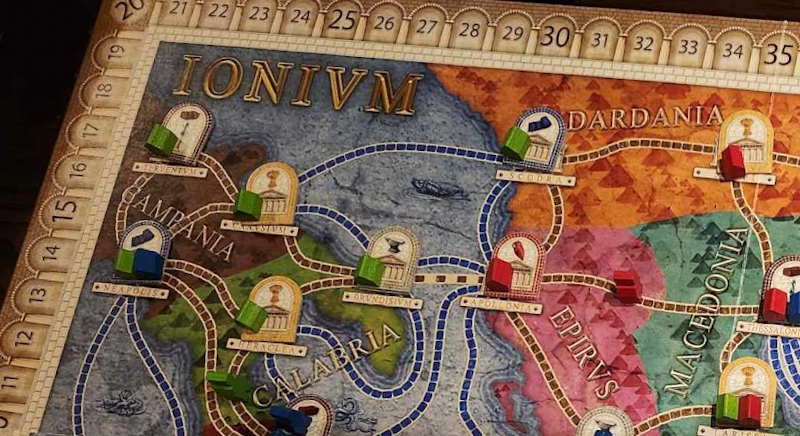
There is even more variation to be had with alternative maps, but the reimplementation of Concordia, Venus, introduces an eighth Card to the starting hand (the Magister, which allows a player to repeat their previous action), the addition of the Minerva scoring Cards (which give players extra points for each city of the type indicated by the specialist), as well as three new maps (Cyprus, Hellas and Ionium).  These can also be added to the base game using a combination of the Venus expansion and the Balearica / Cyprus expansion; this was was the version Plum, Sapphire and Teal played, which meant they started by sorting out what they needed to play the game.

Concordia: Venus
– Image by boardGOATS

The group chose to use the Ionium map from the Venus expansion as it plays well with three.  Sapphire had a positively storming game—he was perhaps helped by the fact that Teal and Plum started the game by heading east leaving Sapphire to explore the west unopposed, but he still had to make it work for him.  And make it work he did, with two turns in which he claimed four cities.  Later in the game, he made good use of his Diplomat Card to copy the Consul Plum had used.  Sapphire had a couple of Provinces to himself so Prefecting in those areas helped only him. Teal and Plum had both built in a couple of Cloth-rich areas, but Plum wasn’t always able to make the best of hers and on two occasions her storage are was full when she could have received goods.
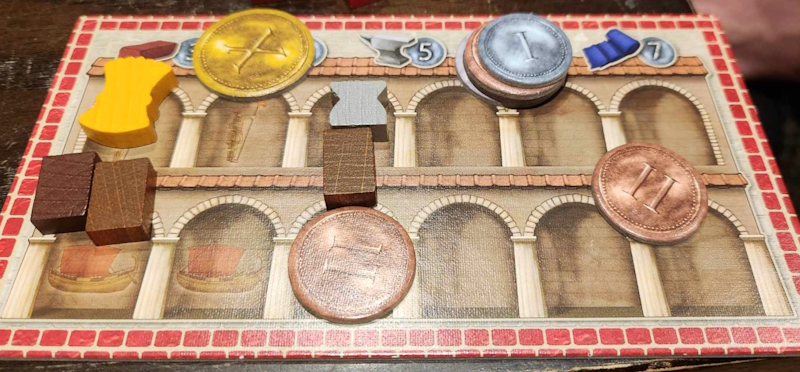
Concordia: Venus
– Image by boardGOATS

In the end game scoring, Sapphire led in the Jupiter, Saturn and Venus scoring and jointly in the Mars scoring.  To top that, he also triggered the end of the game giving him the Concordia Card (and seven points) as well as getting fifteen points for the Minerva scoring with his Smith card.  As a result, he finished with a hundred and twenty-nine points, sixteen more than Teal who finished a very creditable third in a game where it is notoriously hard to to well in the first game.  Meanwhile, Black and Byzantium were leading another game of Concordia, with Purple and Cobalt.
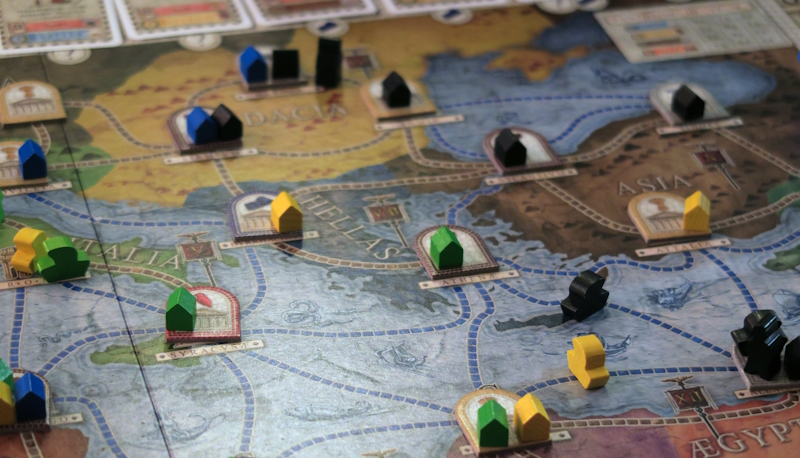
Concordia
– Image by boardGOATS

As Cobalt was new to the game, this group played with the classic Imperium map and included the intermediate individual scoring for each player when they played their Tribune card for the first time.  Black spread out over the board while Purple and Byzantium were more restrained, with Byzantium only spreading his tentacles at the end of the game  Cobalt collected a lot of Cards, although Byzantium had most of the Colonist Cards.  Despite the differences in approach, this game was really tight, so much so that Black and Byzantium tied for victory on one hundred and forty-nine points with Cobalt some fifteen points behind.

Concordia
– Image by boardGOATS

As is always the case when there is a tie, there was a rummage in the rule book for a tie-break.  In this case, the tie is won by the player owning the Præfectus Magnus Card, or by the tied player who would receive him next in the course of the game.  This nominally went to Black, but it was agreed this was a rubbish tie-break rule as players can’t plan for this and just get given it when someone else plays their Prefect Card.  While all this harmony was on-going, Jade was introducing Ivory to Fromage, with the help of Blue and Pink who had both played it once before elsewhere. This is a really cool worker placement game where the actions have a time component to them.

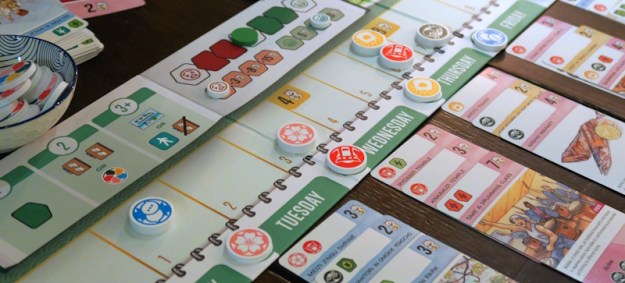
Fromage
– Image by boardGOATS

This sort of thing is not new—Tzolk’in does something similar where players place workers on wheels which are turned at the end of each round and, the longer the workers stay, the more powerful the action they can do.  In the case of Fromage, this is sort of reversed in that players do the action and, if they do a more powerful action, then their workers stay on the board for longer.  The peril here is that, whereas in Tzolk’in players can always do a less powerful action and take workers off early if they have to, in Fromage players only have four workers and it is very easy to end up with all of them sat on the board leaving people unable to do anything at all.  Fromage has proved popular since its release just before Christmas, and as a result, it is on its second Tuesday outing already.

Fromage
– Image by boardGOATS

The actions are tied up in four “mini-games” which players take it in turns to participate in.  It has proven quite a popular little game because once everyone knows how to play, there is relatively little down time and despite playing different areas at different times, quite a lot of interaction.  Players simultaneously choose where to place their workers, in their quadrant of the board, and once everyone is done, the board is turned and then players retrieve any workers they can and then place workers on their next quadrant.  Players score points for occupying tables in the Bistro quadrant, holding the majority in regions in the Villes quadrant, filling different tables in the Fromagerie quadrant, occupying contiguous areas in the Festival quadrant, and for fulfilling Orders.

Fromage
– Image by boardGOATS

This time, the game was very close, especially between Ivory and Pink, despite there being a lot of different strategies at play.  Pink, for example, scored very heavily for the Bistro getting forty-five points (more than half his total) from the one location.  In contrast, Blue scored thirty points for her contracts and nineteen from the Fromagerie, but very little anywhere else, while Ivory and Jade scored much more evenly in the different categories.  There was only one point between Pink and Ivory in the final reckoning, however, with Pink’s eighty-one just giving him victory.  With the rest of the group remembering Burgundy while playing Concordia, it seemed only fitting that this group should move on to another of Burgundy’s favourites: Splendor.
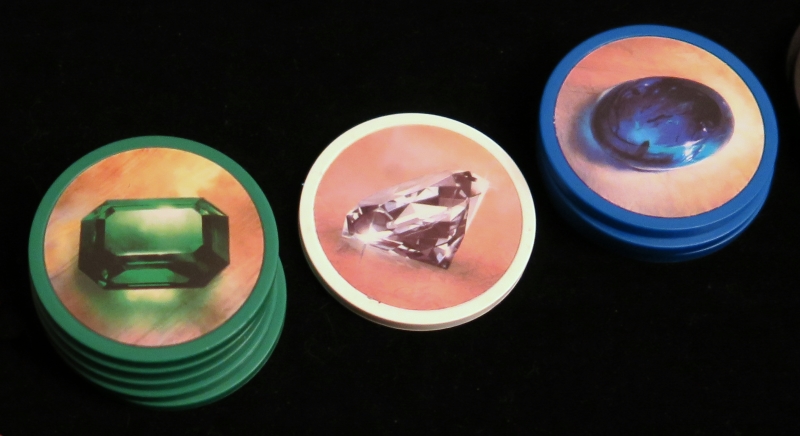
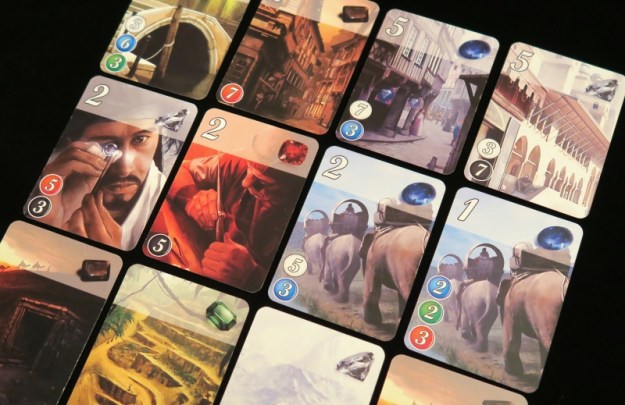
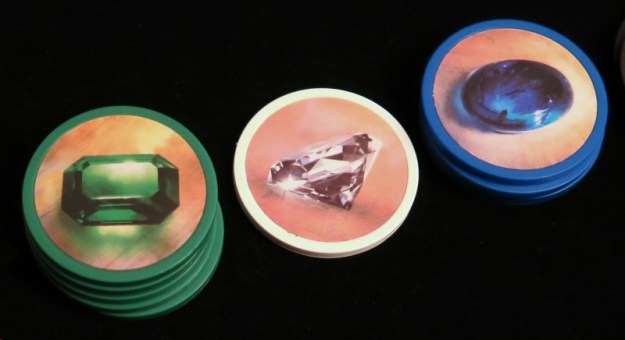
Splendor
– Image by boardGOATS

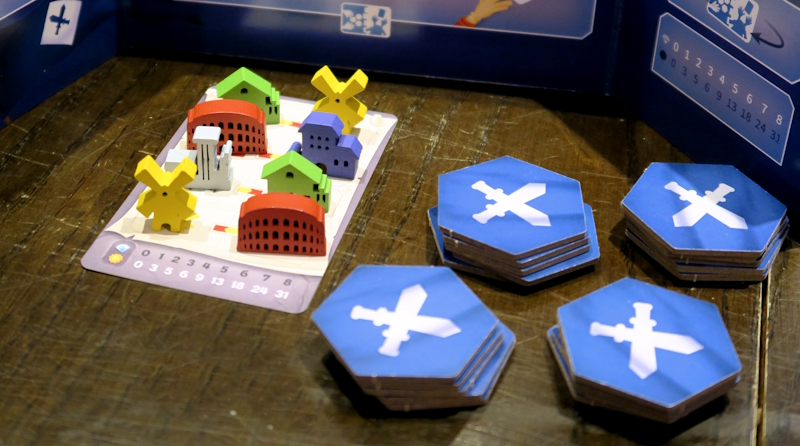
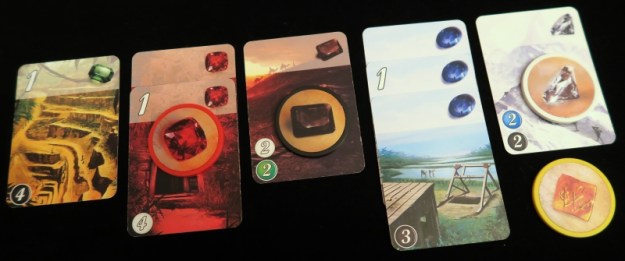
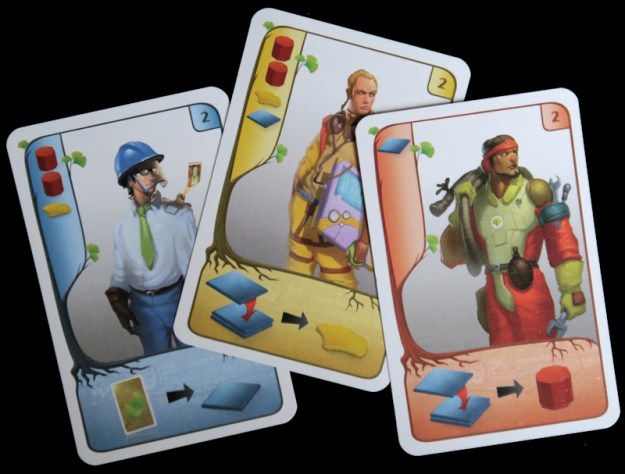
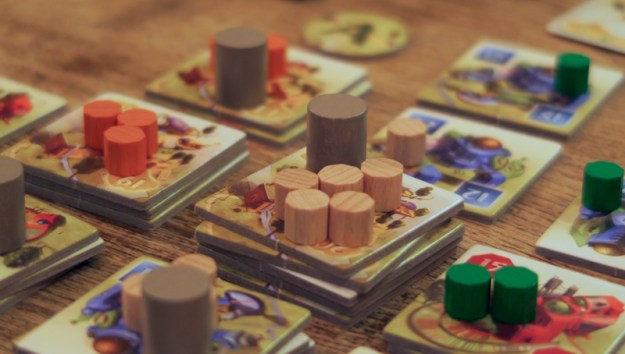
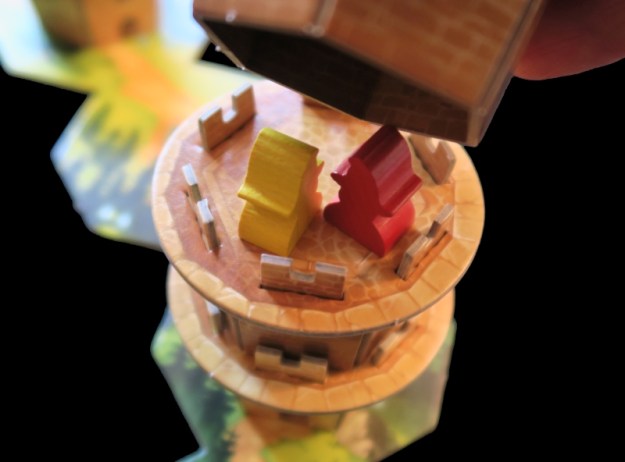
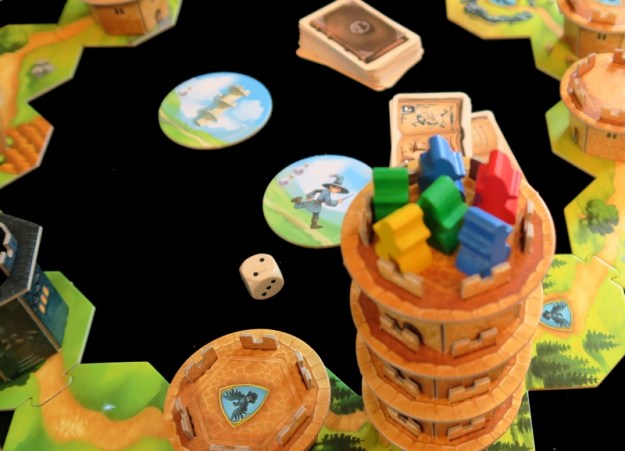
Burgundy was almost unbeatable at Splendor and at one point had a two-year unbeaten run on Tuesdays—so much so that others in the group would choose to play Splendor when he was occupied elsewhere, just to break the monotony!  The game is quite simple:  on their turn, players either take Gem-stone chips, or use them to buy Cards.  The Cards act as a perpetual source of Gems.  Thus, the aim of the game is to build a robust engine to enable players to buy the more expensive Cards that also give points, or allow players to collect Noble tiles for having sets of Cards associated with particular combinations of Gems.  This was another close game with Jade looking like he was going to end the game for a couple of rounds and Blue and Ivory looking for a couple of large turns.

Splendor
– Image by boardGOATS

That was until Pink did it for him by ending his turn with sixteen points and as he was last in the round, that meant nobody else got another turn.  So Jade finished second with fourteen with Blue in third.  Ivory decided to call it a night there, leaving Blue, Pink and Jade to play one last game, which ended up being Hiroba.  This is a sort of area-control filler game, where players take it in turns to place one of their nine Stones in the nine-by-nine grid following some simple, Sudoku-like rules.  Each Stone is numbered one to nine, but they are numbered on both sides such that the total adds up to ten.

Hiroba
– Image by boardGOATS

After players have placed their first Stone, others must be placed in the same row or column as one they have already placed, while ensuring that none of the Stones in any row, column or Garden has the same number.  There are typically two Gardens on each of the nine, three-by-three tiles that make up the board and players are trying to win control of them.  At the end of the game, the player with the highest total face value in each Garden will score points equal to the total size of that Garden.  However, for each Koi Pond on the board, a “times two” token is awarded to the player with the lowest value orthogonally adjacent pebble.
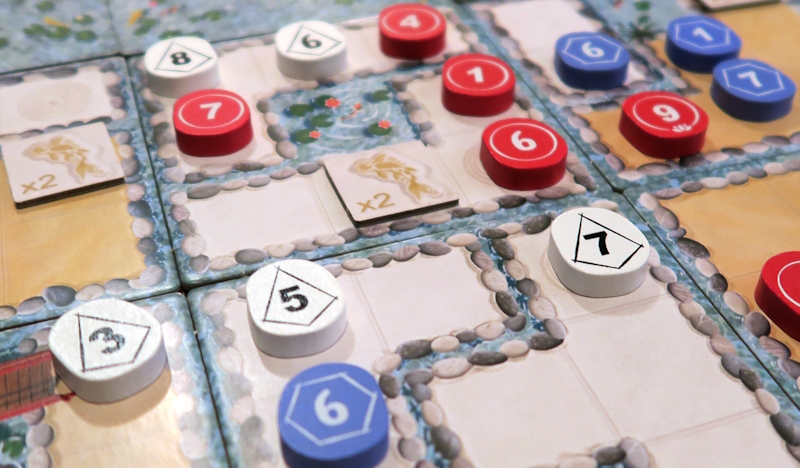
Hiroba
– Image by boardGOATS

Players who are awarded one of these place them in any empty square in any garden on the board, where it will double the points scored for that garden.  Thus, while players want to place the highest value stones to win control of Gardens this is tensioned by the desire to place low value Stones near Ponds in order to gain the multipliers and get a good score.  This game was less close than the previous ones, well—it was close for second place, but Blue who had finally woken up manged to take a couple of large areas and winning a lot of “times two” multipliers, she finished with an unassailable total of thirty-seven points.  This was some twelve more than Pink who won the battle for second.

Hiroba
– Image by boardGOATS

Learning Outcome:  Burgundy had great taste in games.

9th July 2024

When Blue and Pink arrived, Crimson and Cyan were already there on their first visit, finishing their supper and playing a game of Molehill Meadows.  This is a new game by the designer of Zuuli, that they had picked up at the UK Games Expo (meeting the designer Chris Priscott and his delightful family in the process).  In Molehill Meadows, players take on the personality of Mika the Mole, who has an affinity for shiny things, a hunger for juicy worms and an innate desire to dig  A flip-and-write game, players dig tunnels using polyomino shapes to carefully expand their molehill home.

Molehill Meadow
– Image by boardGOATS

Their game was somewhat interrupted as people arrived and were introduced and they were surrounded by the general chatter of arrival and Blue and Pink munching their pizzas.  Crimson and Cyan carried on playing, flipping polyomino cards and then drawing the shapes on their map.  Extending their tunnel to find Worms gave both players four “Worm Powers”, and fining treasure gave them points.  Cyan collected twice as much treasure and picked up more than twice the number of bonus points than Crimson (for collecting all of the two sets of flowers on the Objective Cards) and thus was the eventual victor by something of a landslide (or should it have been a tunnel collapse?).

Molehill Meadow
– Image by boardGOATS

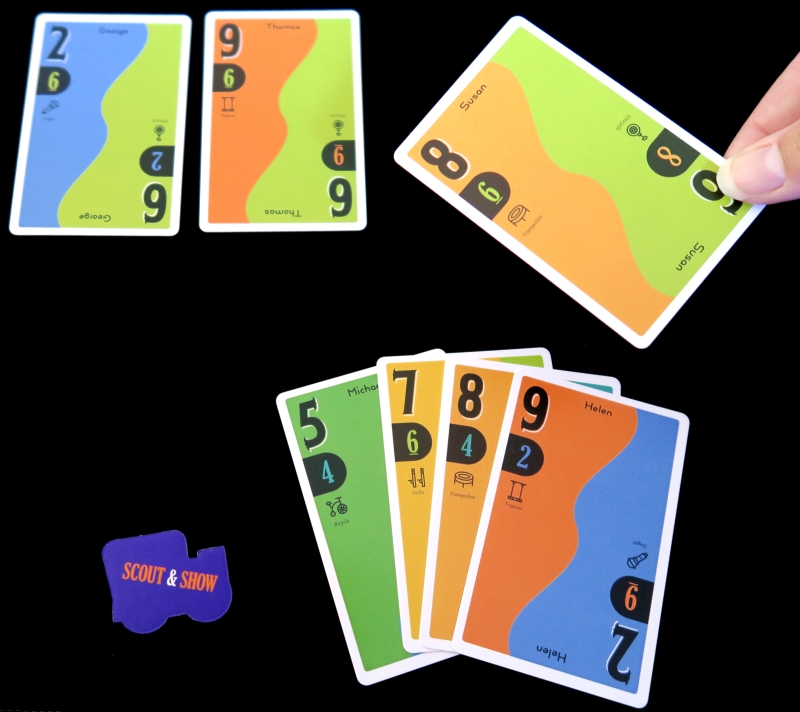
Then, while everyone else generally gossiped and caught up with the events of the last week or so, Jade and Sapphire joined Crimson and Cyan for a quick couple of rounds of the trick-taking, climbing game, SCOUT.  We’ve played this a few times on a Tuesday and everyone has always enjoyed it.  The game is simple in that on their turn, the active player either plays a set of cards to beat and replace the set on the table (a run or a meld), or take one card from either end of the set on the table and add it to their hand.  The round ends if a player plays the last card in their hand, or if it is a player’s turn and they played the current active set of cards on the table.

SCOUT
– Image by boardGOATS

At this point, player score for cards in their scoring pile (cards they have beaten during the round), for “chocolate bars” (rewards given when another player takes a card from their active set), and deducts a point for every card left in hand.  The clever part of the game is that, like Bohnanza, cards cannot be rearranged in hand, this with the fact that cards have different values depending which way up they are make this little card game really clever.  In the interests of time, the group only played two rounds, and although the scores can be very disparate, this time it was really tight with only five points between first and last and Sapphire taking the honours one point ahead of Crimson.

SCOUT
– Image by boardGOATS

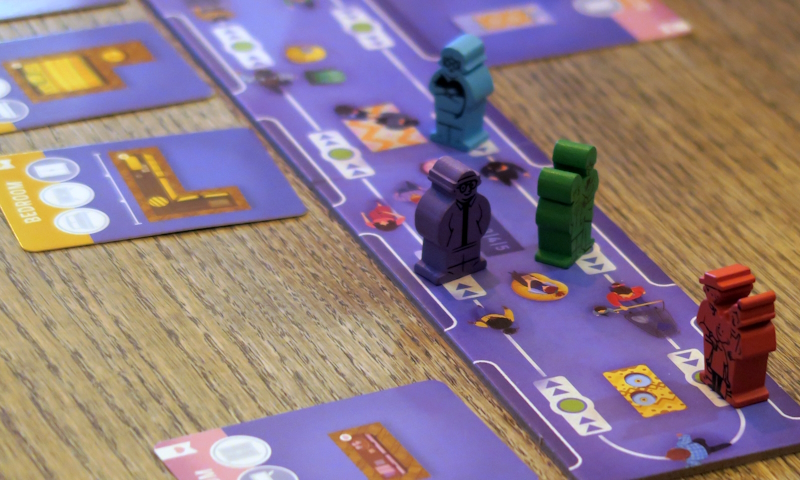
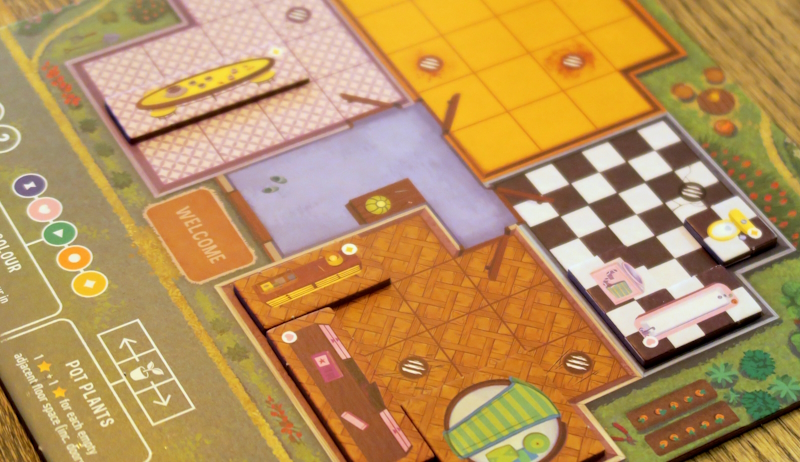
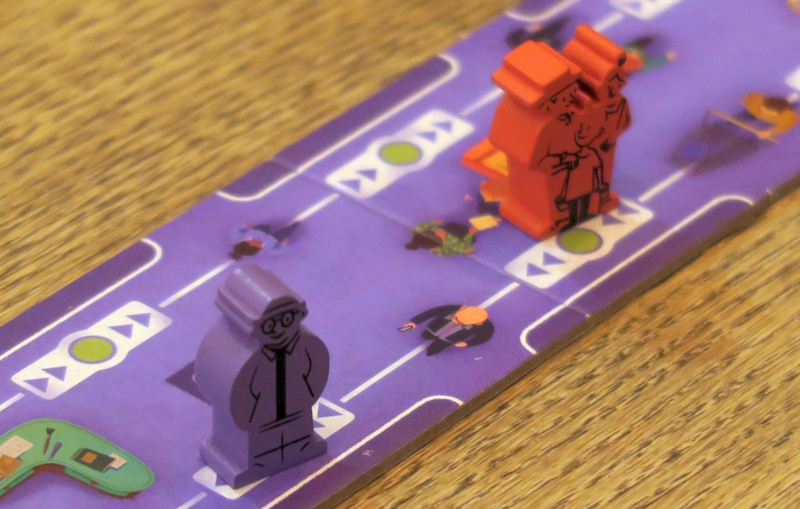
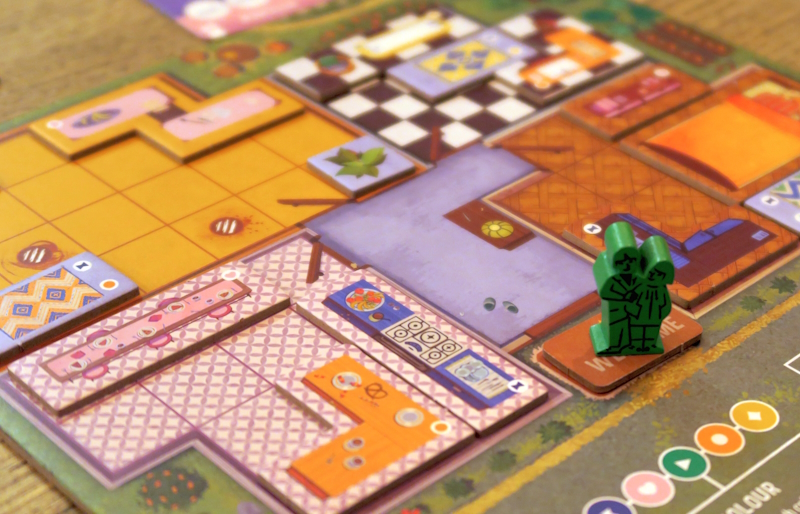
By this time, Blue and Pink had just about finished eating and everyone else had mostly finished chatting, so with twelve, the group split into three groups of four, starting with Pine, Sapphire and Cyan who joined Jade in the “Feature Game“, Happy Home.  This is another polyomino game, with similarities to games like New York Zoo and Bärenpark, but with a theme of home decorating rather than building an animal park.  Like New York Zoo (or indeed Jokkmokk), the game has a central market, in this case representing a Store, which players move their Meeple round.

Happy Home
– Image by boardGOATS

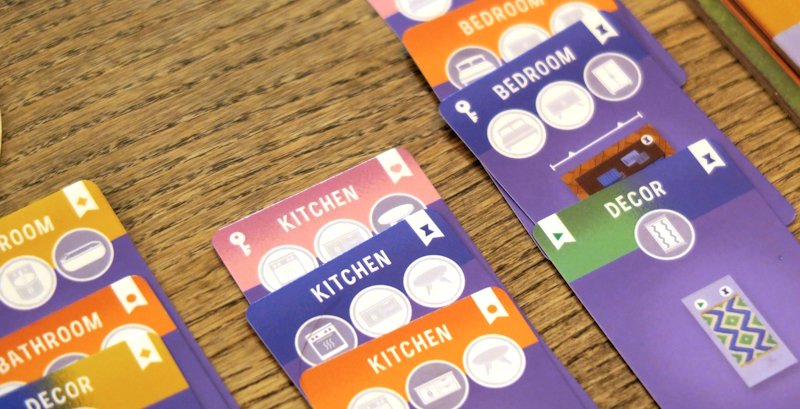
On their turn, the active player moves their Meeple (or should that be Muman?) to an available space, takes the card and matching tile and then adds it to their home.  When all the cards are used up, players instead place a “Welcome Mat” on their doorstep to show they are ready to welcome visitors.  When everyone has finished , the game is over and players score their Home for Furniture, Colours, Pot Plants, their Welcome Mat and Design Objectives, losing points for any scratches still visible and not covered up by Furniture.

Happy Home
– Image by boardGOATS

There was a wee bit of misunderstanding on how the scoring worked even though Jade had done his best to explain it at the beginning.   Each Room scores one, three or six points if it has one, two or all three different core pieces of Furniture in it, and each Pot Plant is worth a point plus a bonus point for each empty space orthogonal to it.  That wasn’t where the problem was however, that was with the Colour scoring. Essentially players need to have the same Colour across at three different rooms to get two points and across four rooms to get five points, but somehow, this caused more confusion than it should have done.

Happy Home
– Image by boardGOATS

The group also made life more difficult for themselves by shuffling the cards and removing twenty-four cards as per the rules for the four-player game, but somehow the bulk of those removed seemed to be Furniture for just one of the rooms, the Bathroom.  It was a good learning game as the value of Rugs, for example, became evident later on—players were a bit confused as they don’t score in their own right, but they add Colour to a Room and thus can score at the end of the game.

Happy Home
– Image by boardGOATS

This time the Design Objective was “Bigger is Better”, so players lost a point for each empty floor space in their Room with the most empty spaces.  The lack of Bathroom fittings, meant Pine didn’t have a loo in his house and had to resort to “wafflestomping“, but he did have what looked like two pink ironing boards furnishing his Lounge.  Next door, Sapphire filled his Living Room with a pink sofa and an enormous matching pink widescreen TV (that was the same size as the sofa!).  In the end, the victor was a bit of a runaway winner.

Happy Home
– Image by boardGOATS

In spite of his lack of toilet facilities, Pine finished with twenty-four points, some seven ahead of Sapphire in second, with Jade taking the last place on the podium.  Before the game, Pine had said he wasn’t sure about it from the description, but in the event he really enjoyed it, as indeed did everyone else.  Meanwhile, there were two other games underway.  The first of these was Keyflower—a very popular game with certain members of the group, but one that hasn’t had an outing for a long time, in fact the last time the group played it was online in 2020, and the much-missed Burgundy was involved.

Keyflower on boardgamearena.com
– Image by boardGOATS from boardgamearena.com

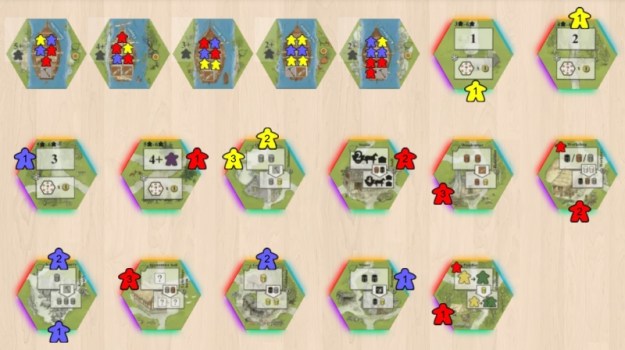
This time, the four players were Blue, Pink, Black and Ivory, all of whom had played Keyflower before (albeit a while ago).  The game is fairly simple in terms of concepts, but like many good games, challenging to play well.  Each round, players take it in turns to bid on a tile, or activate a tile.  The clever part of the game is that both bidding and activating is done with red, blue, yellow or occasionally green Keyples (Meeple-shaped workers).  In each of the four rounds (or Seasons), a set number of tiles are put out for players to bid on.  Players take it in turns to bid or activate and when everyone passes in succession, any tiles won are added to the winner’s village, any losing bids and any Keyples used for activating return to their owner.

Keyflower: The Farmers
– Image by boardGOATS

At the end of each round, a boatload of new Keyples arrive in each village (players can bid to get the one of their choice), before the tiles for the next Season are set out.  In general, tiles are drawn at random, and in the first season, Spring, mostly provide Resources with Summer and Autumn tiles providing special powers and Autumn and Winter tiles providing scoring opportunities.  The Winter tiles are different to those for the other Seasons in that instead of being drawn at random at the start of the Season, they are dealt our to each player at the start of the game.  Then, at the start of Winter, players choose from their pile which ones they want to make available—in this way, the Winter tiles act as sort of objective tiles.

Keyflower
– Image by boardGOATS

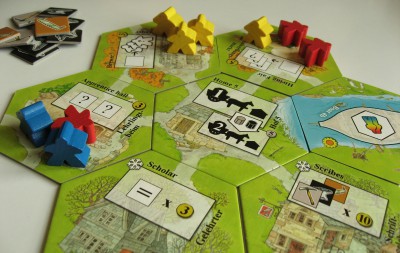
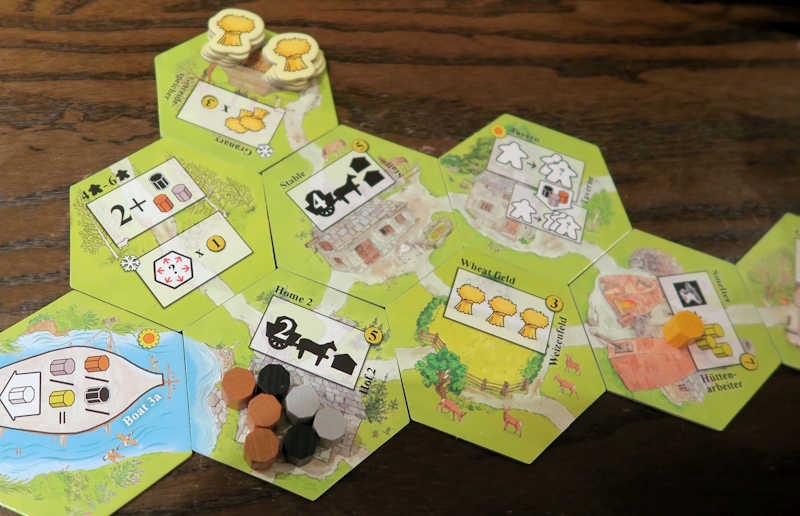
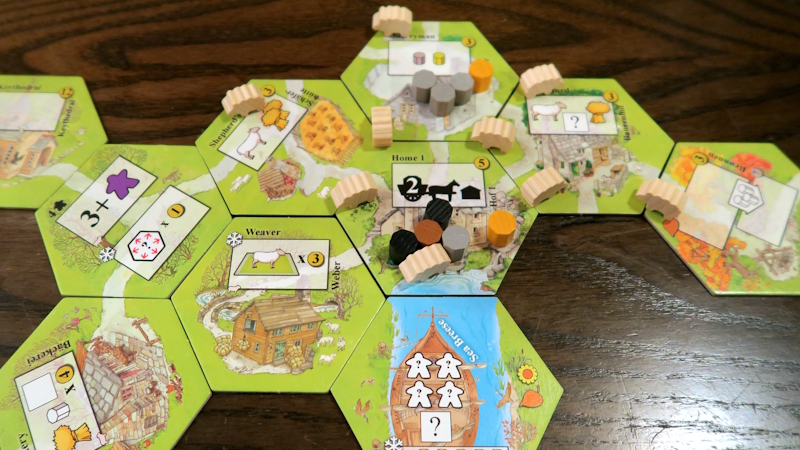
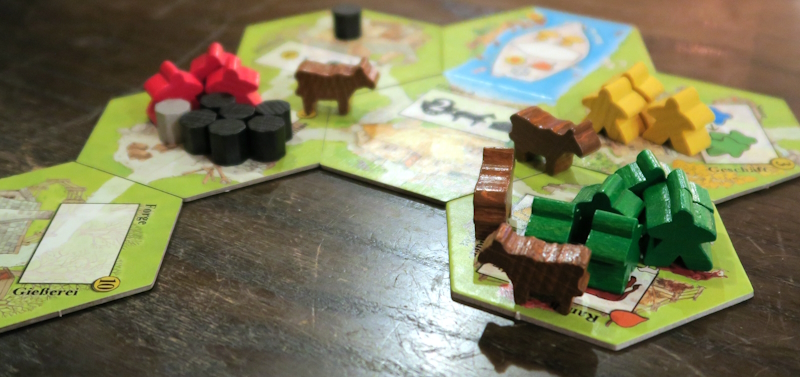
The Keyflower box also contained The Farmers expansion and the question arose whether to include it or not.  Blue, Pink and Ivory were on the fence until Black said he’d never played with the Farmers, so of course that was a problem they had to urgently fix.  In the base game, the different tiles are connected by roads which are used for transporting goods to places where they can be used to upgrade tiles or score points.  In The Farmers expansion, these roads now define fields where animals can be left to graze and with each occupied field scoring points at the end of the game.

Keyflower: The Farmers
– Image by boardGOATS

Additionally, The Farmers expansion introduces wheat as a new resource, which can be used to add distance/quantity to the movement action, enabling players to move more animals and resources further.  There are several ways to set up the game with The Farmers expansion, but this time the group used The Farmers Variant, where all the tiles from the expansion are used and the number made up with tiles from the base game.  After setting up and explaining the additional rules to Black, Ivory went first, taking the waving purple start-player Keyple, and began the bidding.

Keyflower: The Farmers
– Image by boardGOATS

In Spring, Blue failed to get anything useful at the start of the game (or so she thought) taking just the Key Mine tile which gives Coal and didn’t match any of her Winter tiles.  Pink started off taking the Sheep Fold which gave him a source of sheep and the Paddock which gave him more Movement and upgrade ability together with some Wheat.  Then, he took the Workshop which gave him one resource of his choice from Wood, Coal or Stone, upgradeable to three resources, one of each, which matched his Winter tile, the Mercer’s Guild.  Ivory won the Quarryman, which gave him some very useful gold, and in Summer took the Shepherd’s Hut which gave him Wheat and Sheep and then embarked on a concerted breeding and movement programme.

Keyflower
– Image by boardGOATS

Black picked up a few tiles early in the game, which ultimately led to a lightly sprawling Village by the end of the game.  These included the Wheatfield in Spring and the Tavern, the Smelter and Boat 3a in the Summer.  By this time, Pink had decided that the sheep weren’t doing it for him so moved on to pigs, with the Pigsty.  Blue, having missed out on the Tavern which converts one Keyple into two, instead took the only tile that generated green Keyples, the Store which went well with one of her Winter tiles, the Key Market, but gave the added power of preventing other players from following if she was the first to Bid with Green, as they were highly unlikely to have any.

Keyflower: The Farmers
– Image by boardGOATS

In Autumn, Blue discovered the value of the Key Mine tile she had picked up in the first round, when the Blacksmith tile appeared which gave points for each Coal on the tile at the end of the game.  She added the Ranch to this which gave Cows and Wheat, and then began mining Coal in earnest and hoarding large numbers of sheaves for a super-movement move later in the game to get everything where it was needed as efficiently as possible.  Black got the Goldsmith which went well with his Smelter which gave him the Gold he needed to upgrade it and get ten points, while Ivory and Pink continued their procreation programmes.

Keyflower: The Farmers
– Image by boardGOATS

As the game progressed there were several visits from the other gamers in the room, many of whom, much to the people who were playing it’s surprise, had not played Keyflower. It is, of course, Blue’s favourite game and was a favourite of Burgundy’s, as well as being generally very popular with almost all of the regulars pre-2020.  So as the game continued into Winter, it was clear it would have to get another outing or two reasonably soon to rectify the situation. There is also The Merchants expansion which has not been played with the group, so that might be the “Feature Game” in the coming months.

Keyflower: The Farmers
– Image by boardGOATS

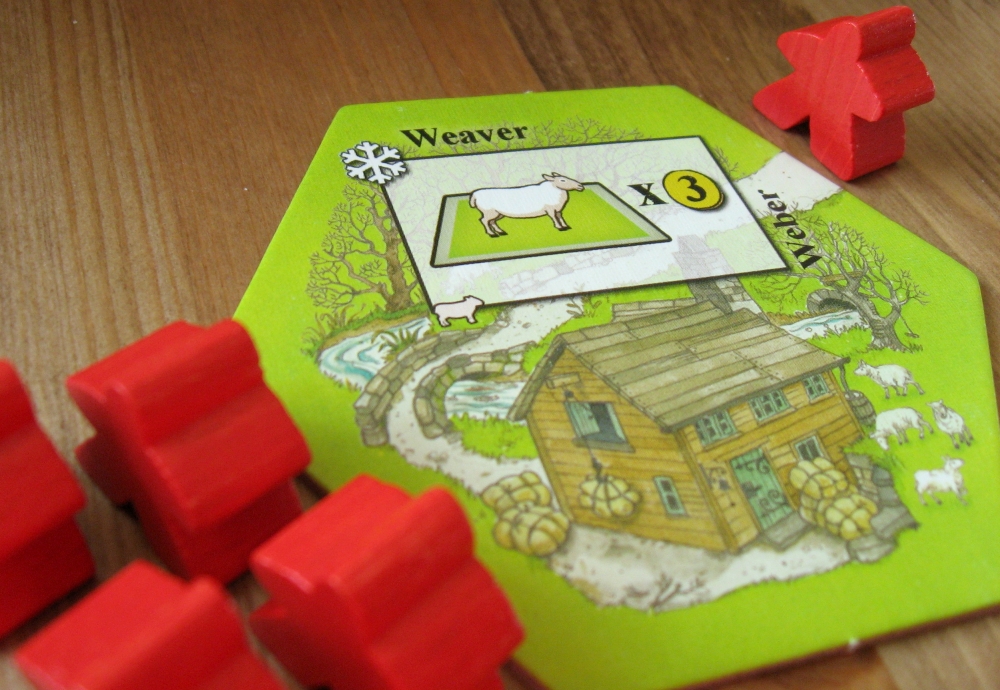
Only eight out of a possible sixteen Winter tiles were introduced by the players and the Scribes, which Ivory commented usually ensured victory was not there (it turned out nobody had started with it).  Black took the Granary which gave him points for his Wheat and Pink got his Mercer’s Guild that he’d been working towards.  Ivory won the Cathedral giving him a straight twelve points; the Weaver giving two extra points per sheep field, and the Bakery giving four points for each set of a Resource, a Skills tile and a Wheat Sheaf.  Blue had lots of options, so concentrated on building her piles of resources before bidding for her end of game scoring.

Keyflower: The Farmers
– Image by boardGOATS

This required a lot of nerve as Ivory had there wherewithal to take some of the tiles she obviously wanted.  Ivory hummed and hawed over it and as Black and Pink passed, twice he had the chance to begin a war, but decided not to as “that’s not very nice” and it can also backfire spectacularly.  Instead he generated the odd Gold for a point (“in case it was close”) and waited and watched.  In the end he passed and then Blue passed and that was that bar the counting.  And as it turned out, it was close, very close, but Blue just took victory, by a mere three points, with a total of ninety-five.

Keyflower: The Farmers
– Image by boardGOATS

The jury is out as to whether it was Ivory’s kindness that cost him the game because Blue did, of course, have contingency plans if someone had tried to take some of the tiles she wanted, and she could have cost him a lot of points.  However, by the end, Blue had no Keyples left and Ivory had a couple that he could have used, so depending on how things had panned out, he might have just nicked it or still lost.  Instead, his kindness and generous good nature won him a lot more respect from his fellow gamers, especially given that everyone knew how fond Blue is of Keyflower successfully destroying her plans might have made her just a little bit sad.

Keyflower: The Farmers
– Image by boardGOATS

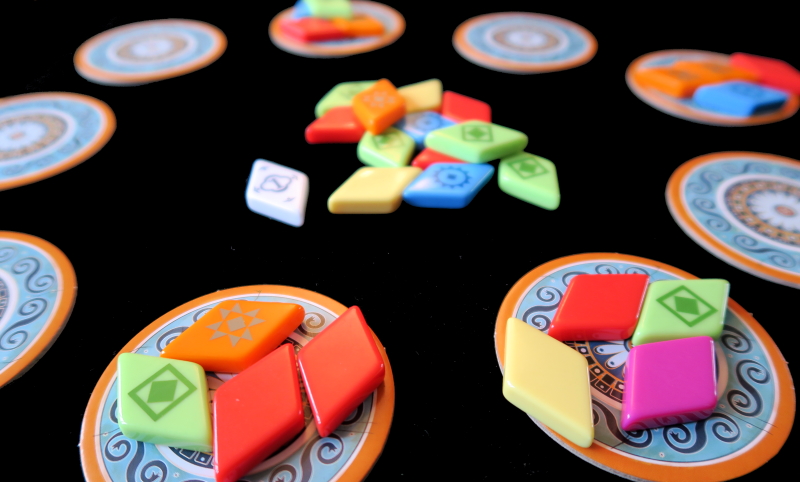
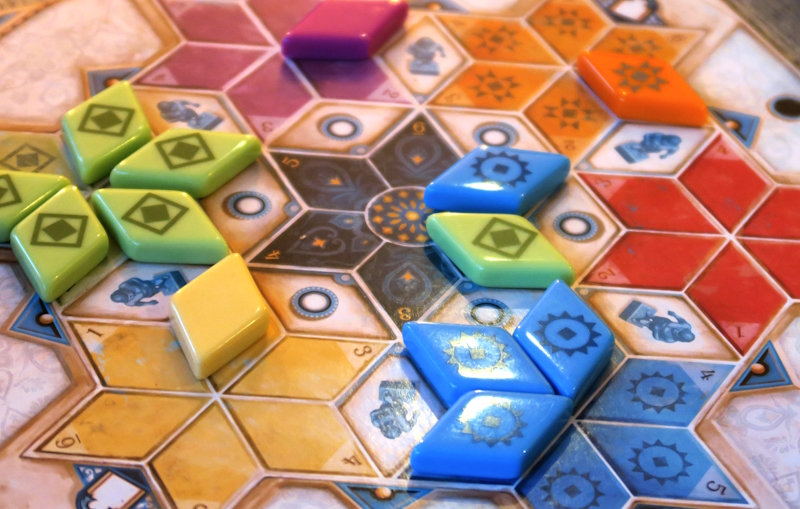
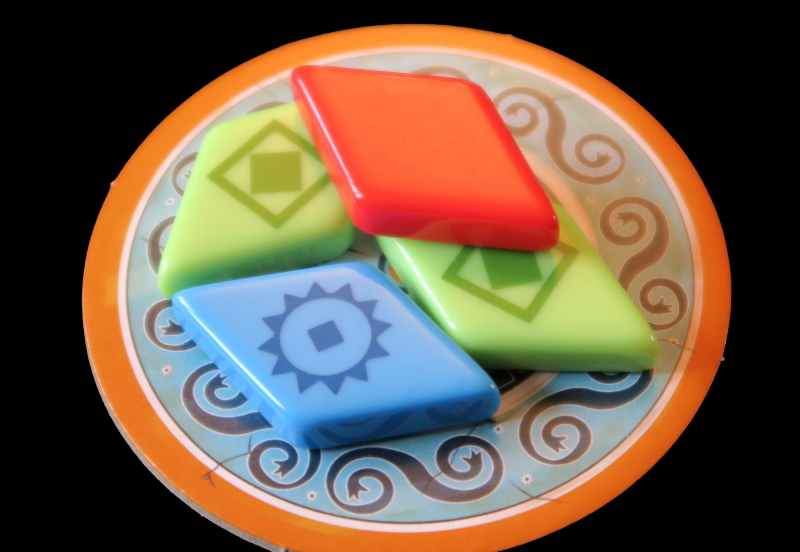
Finally, the third table began their evening with Azul: Summer Pavillion, the third in the series based on the essentially abstract game of tile collecting, Azul.  Crimson kindly obliged in offering to lead the game with Lime, Teal and Purple, none of whom had played this variant before.  This is more similar to the original than the second in the series (Stained Glass of Sintra), but is built on lozenge-shaped pieces that make up hexagons.  Like the original, players take tiles from a central market and add them to their player-boards claiming points as they do so.  In contrast to the original, players store the tiles and add them all to their board at the end of the round (taking it in turns to do so).

Azul: Summer Pavilion
– Image by boardGOATS

After some initial confusion caused by the additional bag and player boards from the Objective Tiles and Glazed Pavillion expansions, the game got underway.  Unfortunately, there was a bit of a rules malfunction:  initially it was thought that every time a tile was placed it scored one point for itself, two for one next to it and three for a third one in sequence (totalling six).  The group soon realised this wasn’t right though.  So they then thought you scored at the end of the round after playing all the tokens, however, they soon realised there was no way anyone could remember when a new tile that round had been placed.

Azul: Summer Pavilion
– Image by boardGOATS

At this point, they then read the rules and from that decided players score one point for the tile and one for each tile it was adjacent to, thus scoring from one to three points per tile as they were placed and this is how they continued to play.  Cyan immediately identified they had come a cropper when he looked at the low end-game scores. He explained that they should have scored one point for the tile placed and one point for each tile connected to that group, so potentially up to six points could be scored for some tiles!

Azul: Summer Pavilion
– Image by boardGOATS

Although it wasn’t played by “the rules as written”, everyone had the same disadvantage, and the group resolved to give it another go again soon, but with the right rules next time.  As it was, it was a very close game with Crimson, beating Lime by a single point and Teal finishing some half a dozen points behind.  It is a very pretty game, and despite the issues, players had enjoyed making patterns and pushing the tactile bright tiles around, which was very therapeutic after a hard day at work.

Azul: Summer Pavilion
– Image by boardGOATS

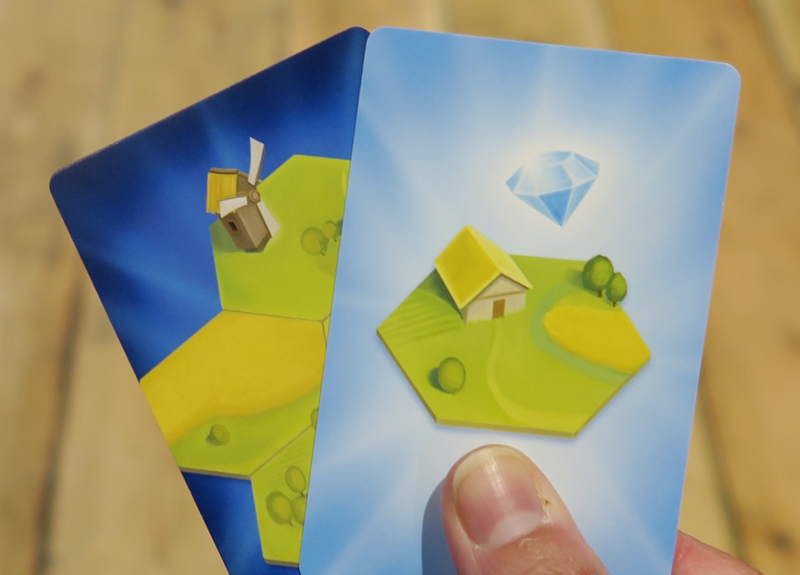
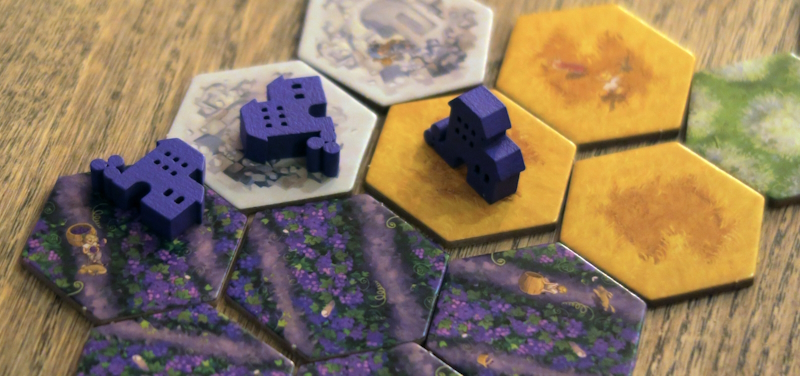
Keyflower was ongoing (and would be for the rest of the evening), but Happy Home had finished so there was a quick game of musical chairs and Purple began by leading Lime, Cyan and Pine in a game of the group’s currently popular filler, Rome in a Day.  This is a little tile laying game built round the “I divide, you choose” mechanism.  The idea is that players draw five land tiles at random and place two buildings on tiles one and two. They then divide the five tiles into two groups—a bigger and a smaller one (in any ratio), and add a Crystal Gem to the smaller land set before offering the choice to their neighbour.

Rome in a Day
– Image by boardGOATS

During the four rounds that the game is played over this neighbour alternates, right, left, right, left. So, each round, players choose a set from their neighbour and these and the tiles they were left with are added to their domain.  At the end of the game, any building that stands on or adjacent to land of its own colour will score for each tile in the group and then players score for the diamonds they have collected—the player with the most points is the winner.  The game has had a couple of outings recently after Black and Purple picked it up at UK Games Expo a few weeks back.  Pine, Lime and Cyan had not been part of those games, so Purple explained the rules.

Rome in a Day
– Image by boardGOATS

The game was a bit of a struggle, probably not helped by the fact that on both the previous occasions the rules have not been strictly adhered to.  This is partly because the rules are not the best written and partly because when the game was explained to Black and Purple at UK Games Expo they were different to those published online.  Although it wasn’t entirely clear to everyone during the game, it was actually very close.  In fact, Lime and Cyan finished tied for first place with forty-four points each despite quite different tactics with Cyan prioritising collecting Gems and Lime making hay in his Wheat fields and wine in his Vineyards.

Rome in a Day
– Image by boardGOATS

While the group were fighting their way through Rome in a Day and Keyflower was coming to an end, Jade led Sapphire and Crimson in the 2024 Spiel des Jahres recommended game, Harmonies.  This was described by Jade as a sort of cross between Splendor and Cascadia, with an Azul-type market.  On their turn, the active player takes three wooden Tokens from one of the spaces on the central player board and places them on their player board. These Tokens represent Mountains, Trees, Buildings, Water and Fields.  Some tokens can stack, others cannot: the reasons why are thematic (e.g. tall Mountains and Forests, no tall Rivers etc.), but otherwise Tokens can be placed on any empty space.

Harmonies
– Image by boardGOATS

Players may then take an Animal card from the central display—they can have a maximum of four at any one time and each has a number of Animal cubes on them.  Each time the pattern on an Animal card is fulfilled, one of these Animal cubes is removed and placed on the token indicated on the card.  At the end of the game, players score for the highest achieved Animal on each card and for each Mountain, Tree, Building, Field and River (or Island, depending on  which side of the board players are using).  Mountains are made of stacks of up to three Rock Tokens, while Trees are a green Leaf Token on zero, one or two Wood Tokens.

Harmonies
– Image by boardGOATS

Taller Mountains and Trees give more points (one, three or seven points), while Buildings (made of two Tokens, at least one Brick and a Wood, Rock or another Brick), and Fields (two adjacent Wheat Tokens) score five points each.  Finally, depending which side of the board is used, players score points for the length of their River, or five points for each Island they make.  This time, the group played with “Side A” which scores for Rivers.  It was a learning game for Crimson, but was quite close quite between Jade and Sapphire, but Sapphire’s one hundred and eight gave him victory in what is an interesting point-salad tile-placement game that deserves another outing soon.

Harmonies
– Image by boardGOATS

Learning Outcome:  You don’t need a toilet to have a Happy Home.

16th April 2024

Everyone seemed more keen on standing around and chatting that playing, but eventually, once everyone had arrived, people started dividing up into groups.  Ivory began by leading Jade, Sapphire and Cobalt to the other side of the room to play the “Feature Game“, which was the new “hotness” Let’s Go! To Japan.  In this game, players are travelers planning, then experiencing their own dream holiday in Japan.  Played over thirteen rounds, players draw activity cards place them in different days in their week-long itinerary. These can’t-miss tourist attractions have players traveling between Tokyo and Kyoto as they try to maximize their experience by optimising their activities while balancing resources.

Let's Go! To Japan
– Image by boardGOATS

In each of the thirteen rounds, players draw cards according to the pre-organised sequence.  For example, there are two decks of cards (Tokyo and Kyoto), and for the first four rounds, players take one card from each deck, keep one and add it to their tableau assigning it to one of the days of their dream, then pass the second card to their neighbour.  In the fifth round, players take the four cards they’ve been given and then they place two in their tableau and pass two on, and so on.  Once eighteen cards have been played (three on each of the six days), the game is over and players take their planned trip, activating each of their cards in order, starting on Monday and work their way through to Saturday.

Let's Go! To Japan
– Image by boardGOATS

There is a catch:  where there is a swap between the two decks, players have to move between the cities of Tokyo and Kyoto by playing a Luxury Train Ticket which they can acquire during the game.  Each of these is worth two points.  If players do not have enough tokens to cover each change, they play a Regular Train Ticket from the supply which costs them two points.  Activating cards involves moving the players’ five Experience tokens along a track, increasing or decreasing their Mood, Stress and Happiness, gaining points and then evaluating the requirements for the Highlight of the Day depicted on the final card of the day.  If these requirements have been fulfilled, the player gets bonus points and the player with the most points at the end of the game is the winner.

Let's Go! To Japan
– Image by boardGOATS

The game rattled along very quickly with swift turns and the added bonus that setup was quite rapid too.  As a result, it was easily under forty-five minutes before everyone was explaining their plan and scoring it.  That said it was hard to keep track of what everyone was doing.  Ivory was the first to fill a day and managed to get everything aligned to get the top bonus of a Luxury Train ticket. Although this was very nice, it in no way indicated Ivory was going to get a big score.  Jade and Cobalt quickly followed suit, Cobalt also gaining Luxury Train Tickets (which he got quite a few of throughout the game), and Jade got quite a lot of the second best reward, choosing Wild Tokens that would be really useful at the end of game to ensure meeting Highlight of the Day/End of Game objectives.

Let's Go! To Japan
– Image by boardGOATS

Sapphire was spreading his activities out a little bit more, but as the game went on he also managed to build a large store of wild tokens.  At the start of the game, Jade and Sapphire (who were not sitting next to each other) focused more on Kyoto, whereas Ivory and Cobalt were playing a lot more Tokyo cards.  Inevitably, however,  everyone ended up going to both cities and need Train Tickets as a result. Cobalt and Jade were the only people who choose to grab research tokens; Cobalt used one of these mid-game and managed to manipulate his hand so he ensured he passed nothing of use to Jade, much to his annoyance.  Otherwise, everyone worked on their mental health and managed to keep their stress down scoring positive points for the trip.

Let's Go! To Japan
– Image by boardGOATS

At the end of the game, Sapphire, Jade and Ivory had minimized their travel between the two cities though, whereas Cobalt required a lot of trains:  as he had lots of Luxury Train Tickets he actually increased his score significantly with these.  Jade had not picked up enough Luxury Train Tickets, so was stuck on commuter trains causing him to lose a lot of points. Sapphire ended up with a quick return trip between Kyoto and Tokyo on his last day, but that was acceptable because you should always go out your way for Sake!

Let's Go! To Japan
– Image by boardGOATS

Scoring took longer than usual as everyone gave a detailed description of their trip. Both Cobalt and Sapphire scored well on every day of their trip, with Cobalt slightly ahead thanks to his Luxury Train Tickets.  Sapphire managed to complete all his Highlight of the Day objectives though without using his wild tokens, so he cashed these in at the end of the game to push all his tokens into the next scoring zone and subsequently won the game by two points from Cobalt.  It had been a highly enjoyable experience though, enhanced by the beautiful components, especially the extremely pretty, but totally over the top ceramic component bowls!

Let's Go! To Japan
– Image by boardGOATS

From there, the group then played a game of Faraway, a light game set on the mysterious continent of Alula with its ever-changing geography, shaped after the rhythm of the seasons.  On each turn, players play a card from a hand of three.  As play is simultaneous, players must take into account the priority system in all their choices—being last to pick a card leaves fewer options and often less profitable choices for later turns.  During the game, players will play a row of eight cards in front of them, from left to right. These cards represent the regions they will come across while exploring the lands. Characters on these cards will give victory points if the player later fulfills the conditions they demand.  At the end of the game, players walk back along the same route, scoring cards in the opposite order to that they were played in—and therein lies the heart of the game-play.

Faraway
– Image by boardGOATS

Throughout the game, the cards played serve both to set new objectives, and to meet ones played previously.  This time, Ivory started quickly out of the traps playing the highest card and subsequently getting the last pick in the following round, which was a minor hindrance. As the game went on, the order of picking the cards changed each time and everyone managed to pick first at some point, although it did seem like Sapphire and Ivory had the greatest varieties, mostly either being first or last!  Jade was very quick off the mark getting lots of maps which gave him a significant card advantage throughout the game as he could look at four or five cards and pick the best one. Ivory also didn’t do too badly with maps.

Faraway
– Image by boardGOATS

It eventually became clear that Jade had managed to play his cards in such a way he was always playing a higher card than his last card giving him an additional secondary card, but he was also able to fulfill the requirements to score the objective on that card even though it would need fulfilling earlier in the journey.  Come the end of game scoring and going on their journey, both Cobalt and Ivory had slightly take their eye of the ball and missed fulfilling the requirements of some of their cards and thus missed out on points they though we were going to get. In the end, it was very close for second place Sapphire just taking it, while everyone was thrashed by Jade.

Faraway
– Image by boardGOATS

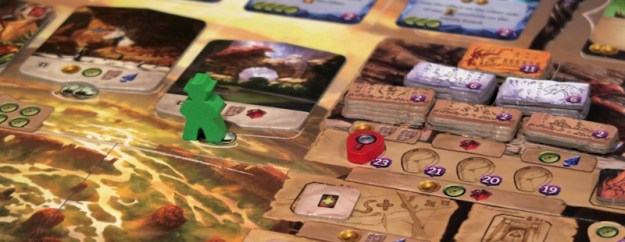
On the next table, Green was keen to play Lost Ruins of Arnak, and was eventually joined by Black and Plum.  This game combines deck-building and worker placement with resource management.  Players start with six cards in their deck, two Money, two Compasses and two Fear cards, and draw five of these to play.  As in the original deck-builder, Dominion, or in the racing games, Flamme Rouge and Snow Tails, Fear cards clog up players’ decks and more are acquired as the game progresses.  But also as in Dominion, there are ways to “exile” cards during the game.  So, players can try to keep a tight deck with minimal cards, or try to buy lots of cards that work well together.

Lost Ruins of Arnak
– Image by boardGOATS

Players then have two meeples each that can be sent to locations on the map, to either discover or use an action Location.  These generally give Resources plus some additions like draw a card, or gain a Fear card etc.. Each new site also has a Creature guarding it, which, if beaten, will give points and a small one-time bonus.  The Research Track is where players spend three of the resources, Tablets, Arrows and Jewels. Each player has two tokens which move up the same track giving different rewards as it ascends. Thematically, you can’t write stuff in the notebook until you find it with your magnifying glass, so the former can never overtake the latter on the track. And of course, the notebook gives cooler rewards.

Lost Ruins of Arnak
– Image by boardGOATS

Players get one action each per turn, until everyone has passed signalling the end of the round, and the game finishes after five rounds.  At the end of the game, Points are awarded for Cards, for progress on the Research Track, for discovering Locations and for beating Creatures; the player with the most points at the end is the winner.  This time, early in the game, Green pointed out to Plum that she could use an Idol gained by defeating a Guardian to give her the resources she needed to go up the Research Track.  That gave Plum an Assistant and she picked one that turned a Boot into an Arrowhead.

Lost Ruins of Arnak
– Image by boardGOATS

Green bought the card Plum had been eying up, which let players rid themselves of Fear cards (worth minus one point), and therefore seemed like a good use for a Boot/Fear.  It was pointed out later, however, that any card could be used in place of the Boot as all other transport types work for Boot icons.  Plum then got an Assistant that could upgrade a resource, which in practice she used turn Arrowheads into a Rubies as that was all she had by the end of the rounds.  She also managed to get ahead with her Explore magnifying glass token and was the first to a new level on a couple of occasions, which gave her valuable bonuses.

Lost Ruins of Arnak
– Image by boardGOATS

Green picked up a couple of Fear cards from leaving Guardians undefeated; Black got at least one as well, but Plum managed to dodge them.  Both Black and Green got useful Artifact Cards where they could get lots of resources.  It was a little way in that the group noticed the slight Rules Malfunction:  although players were putting their new cards at the bottom of their Draw pile, players were then shuffling the Draw and Discard piles together before drawing new cards.  This gave an extra bit of randomness that this time, worked in Plum’s favour.  For example, she had an item card that gave a Compass per worker when it was played, and it seemed to put in a lot of appearances.  In contrast, all the cards Green had bought didn’t come out until the final round—he got the balance of the bad luck.

Lost Ruins of Arnak
– Image by boardGOATS

Black picked up an Assistant which helped him cycle through his cards which helped mitigate the randomness a little, though there were a couple of occasions when someone took the location he had been working towards. Right at the end of the game, when Plum had managed to reach the top of the Explore/Research Track with her magnifying glass, she was able to use the Icons on her board to get the resources needed to pick up one of the most valuable Temple Tiles—worth eleven points. Green, however, scored almost twice that of the others for his Idols and Black top-scored for his item and artifact cards.

Lost Ruins of Arnak
– Image by boardGOATS

It was the Temple points, together with the extra points Plum got for getting to the top of the Explore/Research Track that ultimately made the difference, giving her a total of sixty-nine points, thirteen more than Green who took second place.  Both Plum and Green had played before, though most of their previous games had been online where the administration of the card shuffling was done for them, hence the Rules Malfunction.  It was Black’s first game, and despite the rules issue and not scoring as well as the other two, he still really enjoyed the game, so there is a good chance it will get another outing in the not too distant future.

Lost Ruins of Arnak
– Image by boardGOATS

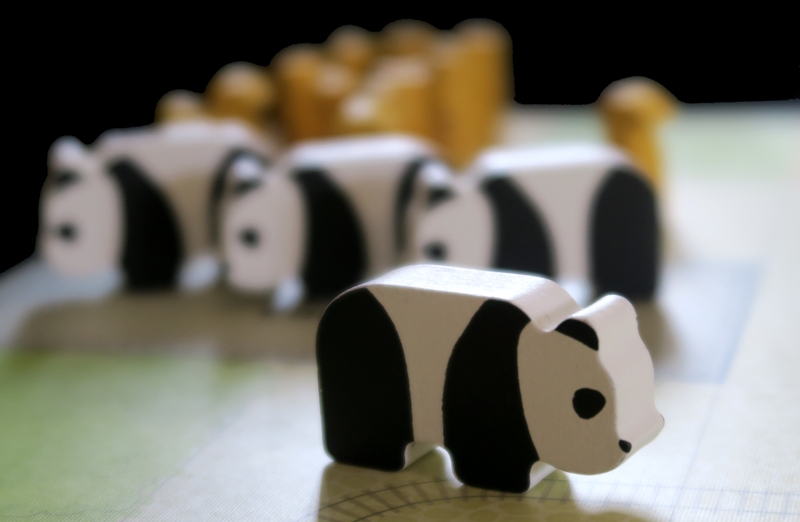
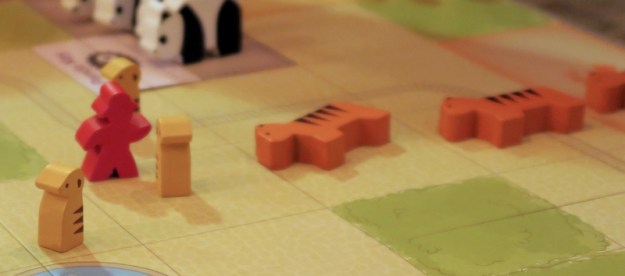
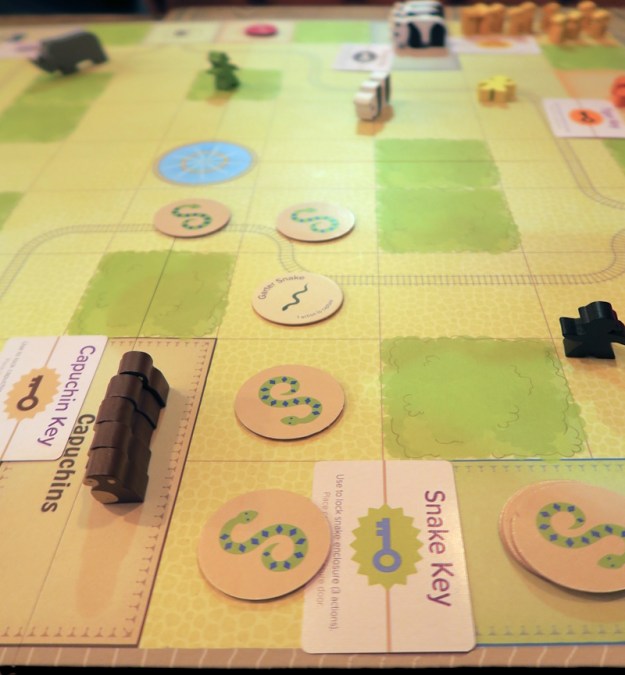
Meanwhile, that left six players; Pink was keen to give his favourite panda game another outing, so Pine and Lime joined him in a game of Zoo Break.  This is a cooperative game, where players work together to try to prevent animals escaping from Bedlam Zoo.  On their turn, players roll the die to decide how many Action Points they get, then, after carrying out their turn, flip a Escape Card and a then a Move Card to determine what gets out of its cage and what moves.  Players have to avoid getting trampled on or bitten by the animals, while catching them and then locking them in their cages.

Zoo Break
– Image by boardGOATS

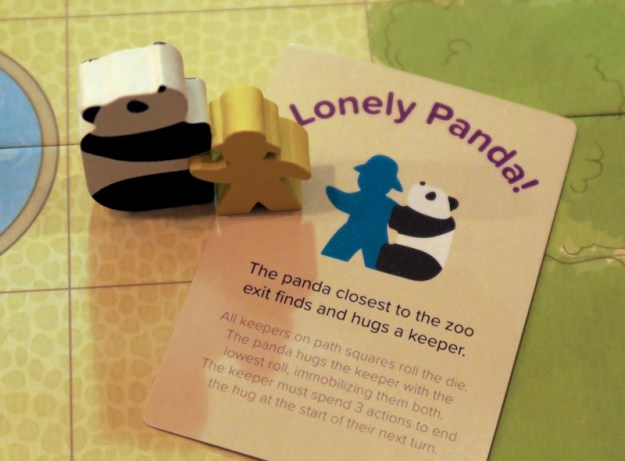
The group started well, or at least it started well from Pink’s perspective when he was cuddled by a Panda (one of his real-life wishes).  However, the game did not go so well.  There are a number of optional variants, and the group had chosen to use the “Faulty Lock” Variant which means that if an escape card is drawn for animals who have already been locked up, the die is rolled to determine whether there are escapees.  This turned out to make things just a bit too difficult and a Coral snake quickly made a bid for freedom, and as it’s a dangerous animal, that was that.  One snake might not seem like much, but there were another five lining up in front of the gate and three tigers too, so it really did not go well.

Zoo Break
– Image by boardGOATS

Reluctant to leave it like that, the trio decided to give it another try, this time without the “Faulty Lock” Variant.  This second try went better, though at one point two elephants got very close to the exit.  The situation was rescued by peanuts which enticed them to the Snack Stall where they were eventually captured.  There was some extensive rules reading to decide whether Pandas were considered “Dangerous” so only one escaping would trigger failure.  The group concluded that Pandas were not Dangerous animals after all though, and four Pandas roaming the streets would not lead to closure of the Zoo (though perhaps the Chinese government would not be appreciative).

Zoo Break
– Image by boardGOATS

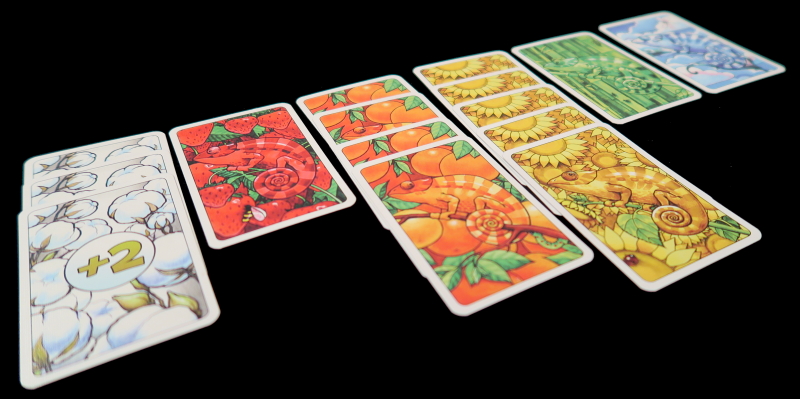
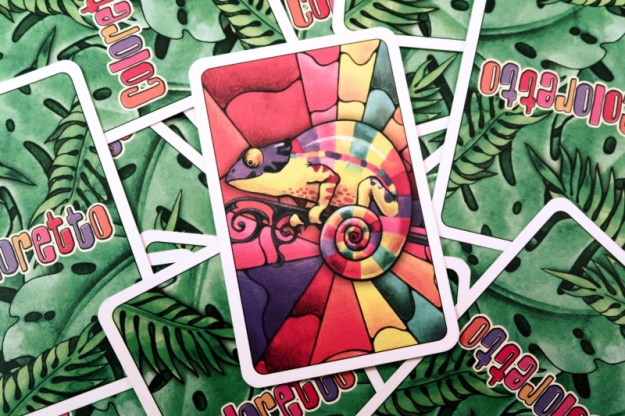
In the end, the distinction wasn’t necessary, none of the Pandas got out, though one Capuchin did manage to escape.  That was all, however, and once the group finally rounded up the last of the mad Meercat escapees, the writing was on the wall and the Zoo was saved.  The other games were still underway, so once the charming wooden animals had been tucked away, the trio opted for a couple of rounds of Coloretto.  This is a charming little card game which is the core of the, arguably better known board game, Zooloretto.

Coloretto
– Image by boardGOATS

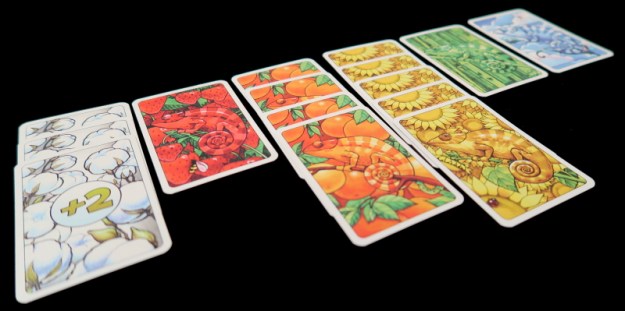
The game is very simple:  Players either draw a Chameleon card from the deck and add it to one of the Carts, or take the cards on one of the Carts and add them to their tableau, stepping out until everyone else has taken a Cart.  Each Cart has three spaces and players core points for their three largest sets of cards and negative points for any others.  The player with the most points at the end of the round after the trigger card is revealed is the winner.  The clever part is the scoring for sets, which uses the Triangular Number sequence and means that later cards are worth a lot more than the early ones.

Coloretto
– Image by boardGOATS

When the Golden Chameleon card came out, there was some discussion about the difference between it and the multi-coloured Chameleon.  Blue, on the next table was consulted, and explained that it meant the person who takes it gets an extra card drawn from the top of the deck.  With that sorted, the game continued.  The group played two games and both were close, especially between Pine and Pink with Pink just edging it for the first game by two points and Pine just beating Pink by a single point in the second.  Both games were won by Lime, however, and by a larger margin, taking the first by four points and the second by six.

Coloretto
– Image by boardGOATS

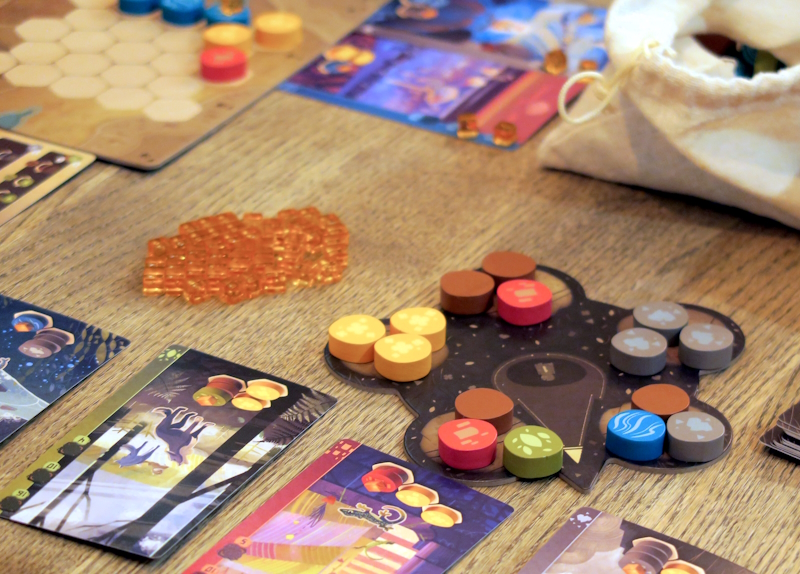
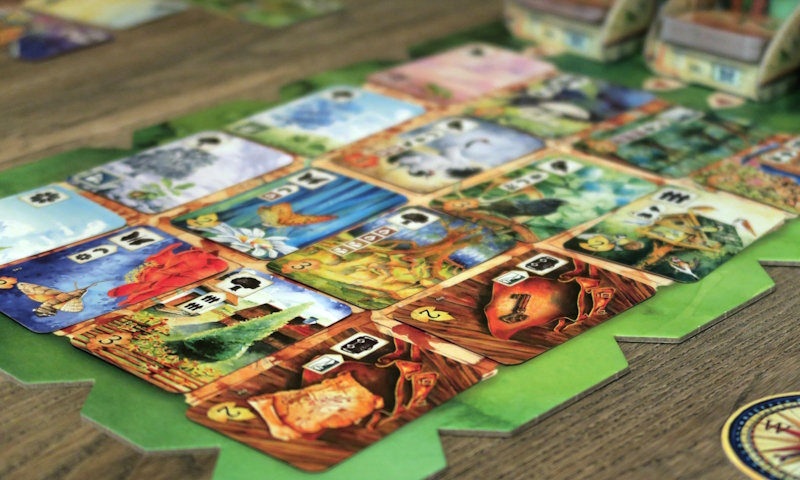
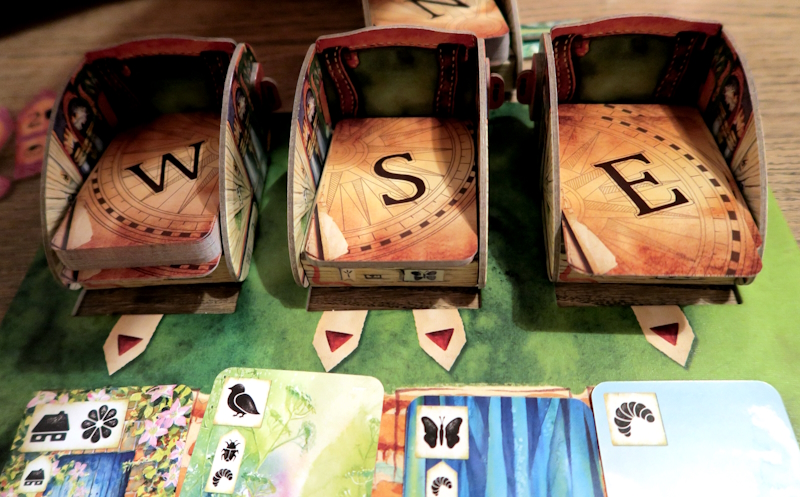
The last table included three players, Blue, Purple and Byzantium.  They were the last to start, and were somewhat torn between two of the current hot games in the group, Wyrmspan and Meadow.  After some discussion, the group went for what was probably the easier of the two, and gave Meadow its their outing in three consecutive meetings.  A light to medium card collection game, it was new to both Purple and Byzantium, so Blue explained the rules.  Most of the game is built round a Card Market with players placing an Action Token and taking a card into their hand, before playing a card from their hand.

Meadow
– Image by boardGOATS

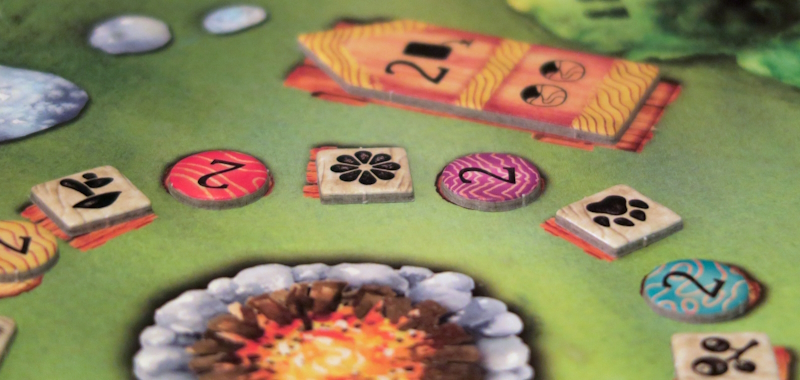
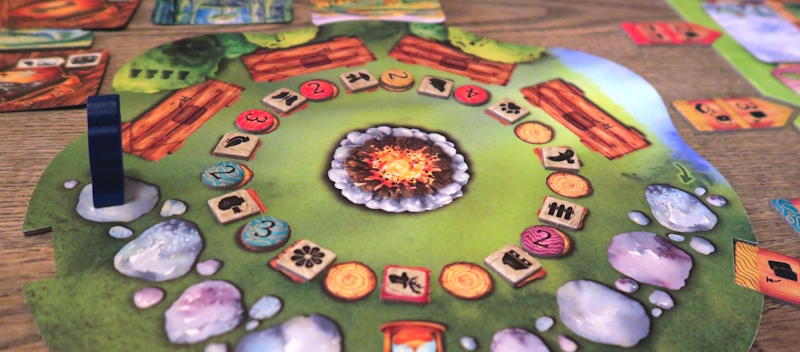
This aspect of the game has led to some reviewers comparing the game to Splendor, though there is a lot more to the game than that.  In addition to the Market, there is a second Campfire board, which allows players to carry out special actions, and also claim Bonus points. for cards in their tableau.  The first time the game was played, there was a token included erroneously from the Envelope U mini-expansion, and last time the game got an outing, there was a minor rules malfunction where the four players ended up playing on the three-player board.  So although the game has been played three times in fairly quick succession, this time was the first time the game was played by the rules as written, probably.

Meadow
– Image by boardGOATS

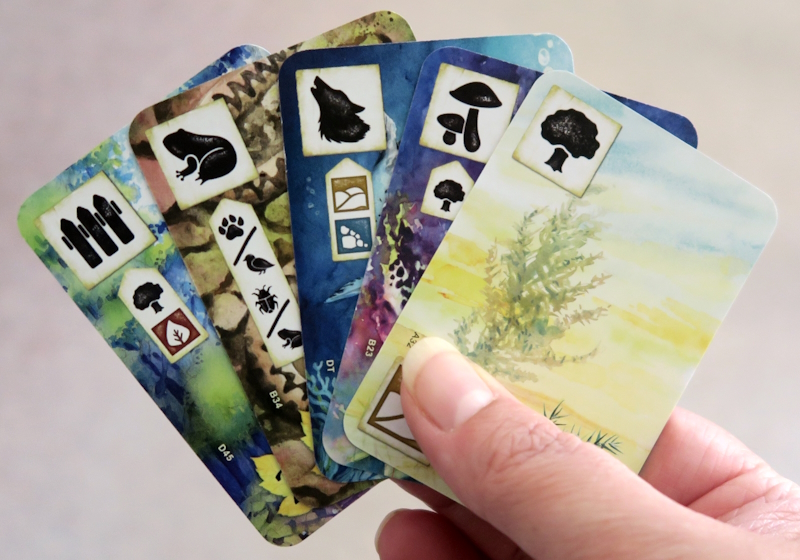
Players start with a hand of cards, including one from the North deck (which is only introduced halfway through the game)—this last card is typically more worth more but is difficult to play, so is a good way to get a steer in the early stages of the game.  As well as the other cards in their starting hand, another key strategy lead is the Bonus points obtained from the Campfire board.  These are obtained by placing a Bonus point token between two Icons, but in order to do so, the player must have those icons in their tableau.  Since each bonus place can only be claimed once, this element of the game is something of a race between those who want to compete for these points.

Meadow
– Image by boardGOATS

This time, the Icons drawn at random and placed round the Campfire included the relatively scarce Cottage, Fence and Garden Bird as well as the Wolf and Hawk which only come out in the second half of the game, when the North deck is introduced.  This made the Bonus points hard to claim. Although neither Blue nor Byzantium appreciated it at the time, although most Wolf cards are in the North deck, this copy of the game included the Seal promo card, which is a Wolf card that hides in the South Deck.  As it was key to getting bonus points, when it came out, both Blue and Byzantium spotted it, but Blue got to it first, and that turned out to be critical to her Bonus point objectives as Byzantium pinched the other spots early.

Meadow
– Image by boardGOATS

Meanwhile, Purple was busy collecting frogs and very effectively daisy-chaining cards to give her points.  As the game moved into its final rounds, Byzantium struggled to get a Landscape card that he could play without needing too many difficult prerequisites.  In spite of the frustrations when players can’t get cards, the game has a nice gentle roll to it and with three players doesn’t outstay its welcome in the way it does with four (when there are two extra rounds).  It was quite a tight game—Purple and Byzanium finished with thirty-seven and thirty-six points respectively from their observations, but Byzantium had more points from his Landscape cards.

Meadow
– Image by boardGOATS

Blue didn’t do as well as them with her observations, but had the most points from her Landscape cards.  Although Purple hadn’t managed to get any Bonus points, both Blue and Byzantium had picked up the full nine giving them a bit of a lead.  In the end, it was the Observations that were key, and they gave Byzantium victory by four points with a total of sixty.  As the Meadows were tidied up, the last of the other games came to a close too and everyone chatted until it was time to go home.

Meadow
– Image by boardGOATS

Learning Outcome:  Every game should come with ceramic component bowls.

19th March 2024

There were a few absentees again, but the group still made it into double-figures.  So, after the usual chit-chat, the group split into two—the first group playing the “Feature Game“, Meadow, while the other, larger group, played a couple of lighter games.  Meadow is a very smooth, engine building, set-collection card game with charming artwork.  Players take on the roles of explorers competing for the title of the most skilled nature observer.  Reviews refer to it as a “Splendor Killer”, that is to say, these people feel it has a similar feel to Splendor, but is a better game.  It is also considerably more complex, though not especially difficult in its own right.

Meadow
– Image by boardGOATS

Players start with four or five Action tokens (depending on player count), a Road token and a double-sided Ground card.  There are four decks of cards, North, South, East and West, and players also begin with a card from each of the North, East and West decks and two from the South deck.  Players then take it in turns to play one of their Action tokens either in the Market or round the Campfire, and complete the associated Actions.  The Market is the simplest: this consists of a four by four grid of face up cards.  Players choose a notch along the edge of the board to play their token in and this defines a row or column and the number on the token dictates which card they will take from that row.

Meadow
– Image by boardGOATS

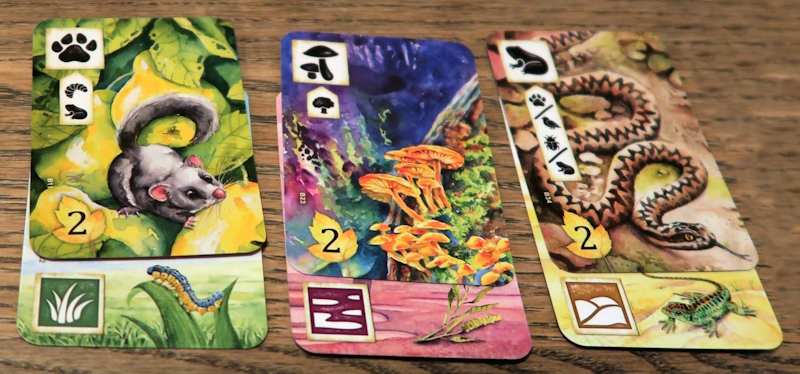
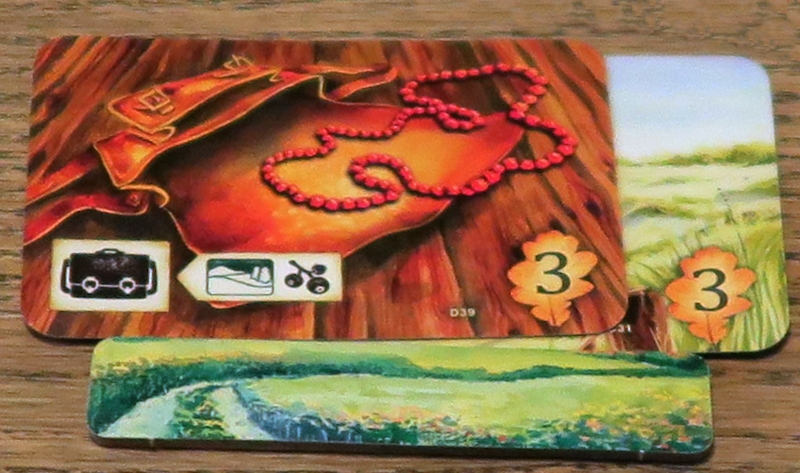
There are four types of cards: Ground, Observations, Landscapes and Discoveries.  After taking a card from the Market, the active player then plays a card from their hand or the card drawn into the play area in front of them.  In general, each card has a large symbol in the top left corner usually with smaller symbols below—these smaller symbols are prerequisites for playing a card and the player must already have them in their area before they can play the new card. Ground cards are just played in the players’ Meadows and are the lowest cards in the Meadow stacks.

Meadow
– Image by boardGOATS

Landscape cards are similar, but require a Road tile, and are played in the Surroundings area, above the player’s Meadow.  Observation and Discovery cards are played on top of existing cards (in the Meadow and Surroundings respectively), such that the new symbol replaces one of the old ones.  Instead of collecting a card from the Market and playing a card, players can play their Action token in one of the notches around the Campfire.  This activates the special Action shown on the token (take one card from the Market; take two Road tokens; take three cards blind from any deck and keep one; play two cards).

Meadow
– Image by boardGOATS

Players taking the Campfire option can additionally place a bonus point token on a tree-stump between any pair of symbols as long as they are displayed in their play area.  Players have three tokens (valued two, three and four points) giving a total of nine extra points at the end of the game if they manage to place them all.  Finally, in the absence of anything else they can do, players can place their Action token on a bench on the Campfire board and play one card.  This is really very much a last resort as this is a much weaker action, giving half or less than the other options give.

Meadow
– Image by boardGOATS

Pink led explaining the rules to Plum, Lime and Teal, and was roundly chastised by Pine from the next table for not knowing what a Meadow was, and confusing it with “normal grassland”.  The first round was a little slow as the group found their feet, but then it was all go.  Plum started with a Badger card which is quite high value and features a Wolf icon, so she planned her strategy round that.  As the game progressed, everyone was collecting Satchel icons and expected  them to be needed for something in the second half of the game.  However, after the South cards were swapped for the North deck at the half-way stage, there was a slow realisation that they were just the final step on the path (though that could change with the inclusion of expansions of course).

Meadow
– Image by boardGOATS

Plum’s Badger card turned out to be quite difficult to place, so as players can have a hand of ten cards, she filled her hand to give her the most options.  Someone else took the space around the campfire on one side of the wolf before she got to it, but as the the icons on either side weren’t as rare she was able to take the other easily enough and followed it with two more to get the full nine Bonus points, the only one to do so.  There was a problem with an odd token around the fireplace that featured a Stag with a red border, that turned out to be from Envelop U: Big Encounters.  This is a mini-expansion that comes with the base game, and had been confused with the core game as one token had been accidentally left at home.

Meadow
– Image by boardGOATS

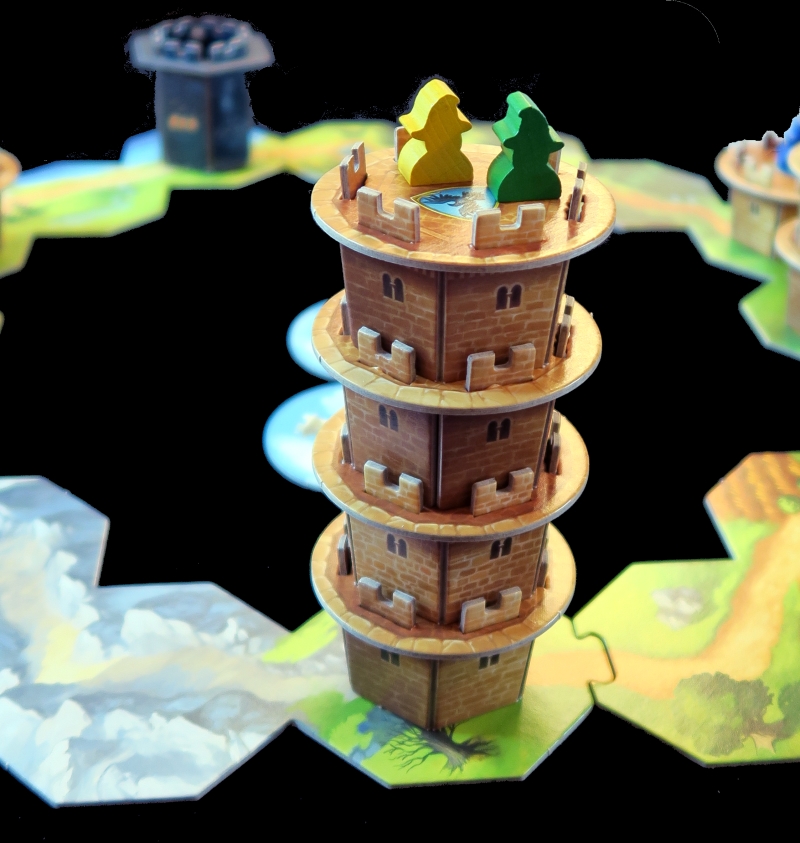
The game was enjoyed by all, though with four it perhaps slightly over-stayed its welcome a little.  The eventual winner was Plum with sixty-one points nearly ten points ahead of Pink in second.  Meanwhile, on the next table, the rest of the group were having a light evening, playing as a group of six.  First up was Die Wandelnden Türme (aka Wandering Towers)—a game that has been very popular in the group since it first came out a eighteen months ago.  The idea behind this game is that on their turn, players play two cards from their hand of three cards, one after another, performing all the moves if at all possible.  There are three types of cards, those that move a Wizard, those that move a Tower and those that move either a Wizard or a Tower; in each case, the number of movement spaces is given.

Die Wandelnden Türme
– Image by boardGOATS

Players can only move their own Wizard and each Tower and empty space can hold up to
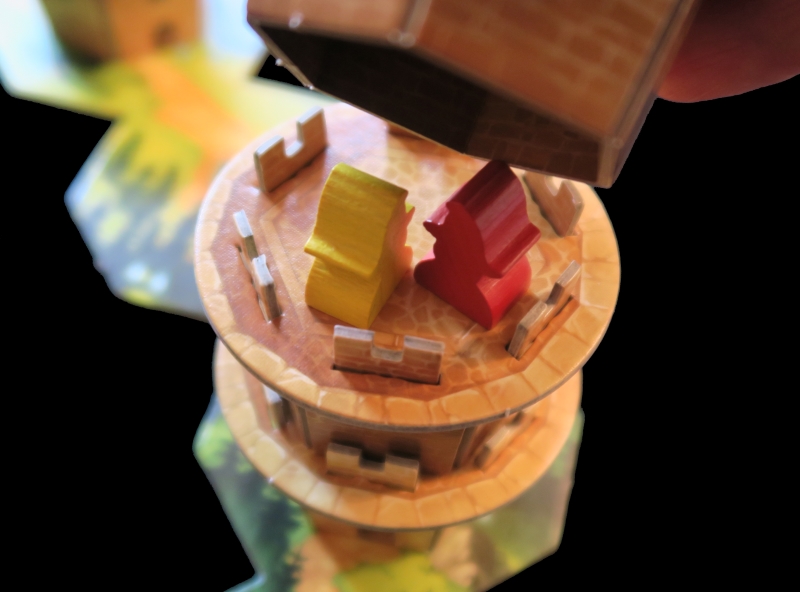
six wizards (if a move would exceed that limit, it cannot be made).  Whenever a Wizard’s move ends in the space with the Ravenskeep, the player drops the Wizard into the keep—this is one of the key targets during the game as the winner must have all their Wizards trapped in the Ravenskeep.  In contrast to Wizards, players can move any Tower segment along with everything on top of it (Tower segments and Wizards).  Whenever a Tower’s move ends in a space with Tower segments already in it, the new Tower goes on top, imprisoning all the Wizards it covers—all nine towers and the Ravenskeep could end up in the same space!

Die Wandelnden Türme
– Image by boardGOATS

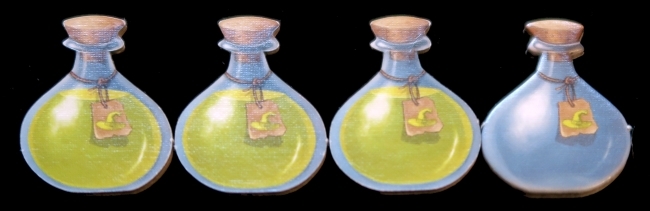
Whenever a Tower covers Wizards, imprisoning them players get to fill one of their Potion Vials, turning it over—this is the other key target during the game as the winner must have all filled all their Potion Vials.  The player with both, all their Wizards in the Ravenskeep and all their Vials full of Potion, triggers the end of the game, with play continuing until everyone has had the same number of turns and all players that fulfill the criteria share victory.  Jade led the group, reminding everyone of the rules and explaining them to those who had not played before.

Die Wandelnden Türme
– Image by boardGOATS

Cobalt managed to tease a few extra rules out of the rule book , in particular that no more than six Wizards can sit on any one Tower segment, and a player’s turn finishes immediately if they place a Wizard in the Ravenskeep.  Aside from this, much amusement was had, especially as the stacks of Towers got really tall, they didn’t quite make it to the maximum of nine plus the Ravenskeep, but they did reach a good six or seven segments in one stack.  Black was the first to fulfill both the end-game criteria and Cobalt trapped dropped the last of his Wizards into the keep before the round finished.

Die Wandelnden Türme
– Image by boardGOATS

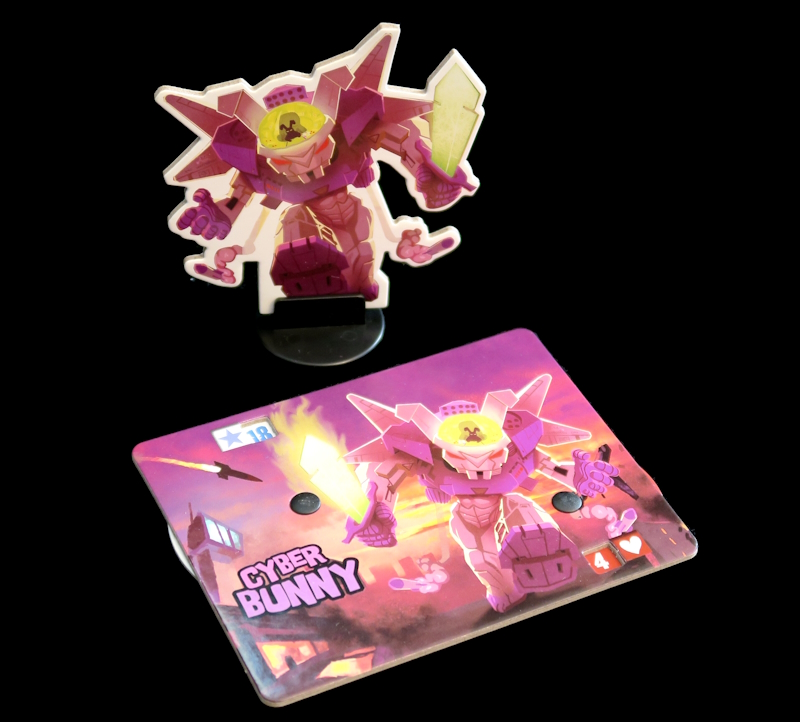
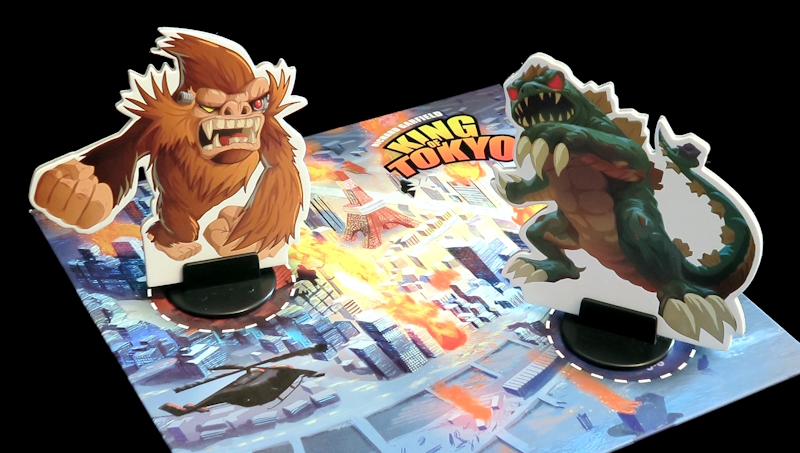
As Cobalt still had two empty Vials, he took second place with Sapphire and Jade taking joint third.  Staying together as a group of six, they then went on to play King of Tokyo, a fast dice roller along the lines of Yahtzee where players control a monster try to destroy more of the city than their opponents while also attacking the other monsters to either take them out or keep them down long enough to enable the attacker to take victory.  Players each have a Monster and two dials which are used to track their Monster’s health (starting at ten) and the number of Victory Points they have gained.  The winner is either the first player to earn twenty Victory Points or by being the last Monster standing.

King of Tokyo
– Image by boardGOATS

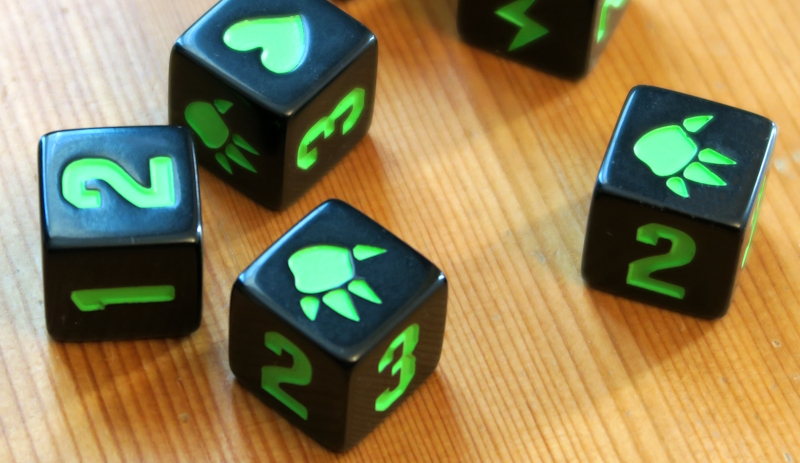
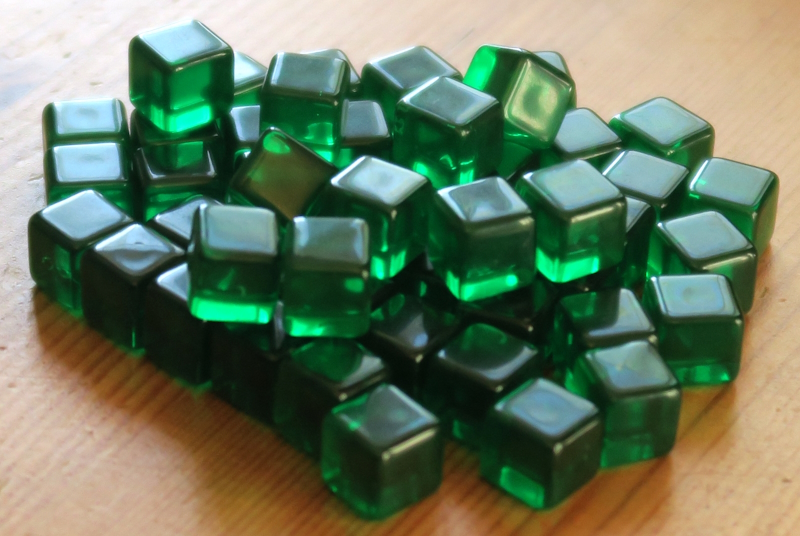
Players take turns before passing the Dice on, clockwise.  They get a maximum of three rolls, but can stop early and any number of Dice can be put aside after each roll.  The Dice are not locked, so Dice set aside after the first round can be rolled in the third if desired.  The dice feature numbers one, two and three, a Claw, a Lightening Bolt, and a Heart.  The numbers give the player Victory Points and the Claw indicates damage inflicted on a chosen opponent.  The Lightening Bolt gives the player an energy cube which can be spent on Power Cards, and the Heart increases the Monster’s Health (though the Monster must be outside the City to be able to take advantage of this).

King of Tokyo
– Image by boardGOATS

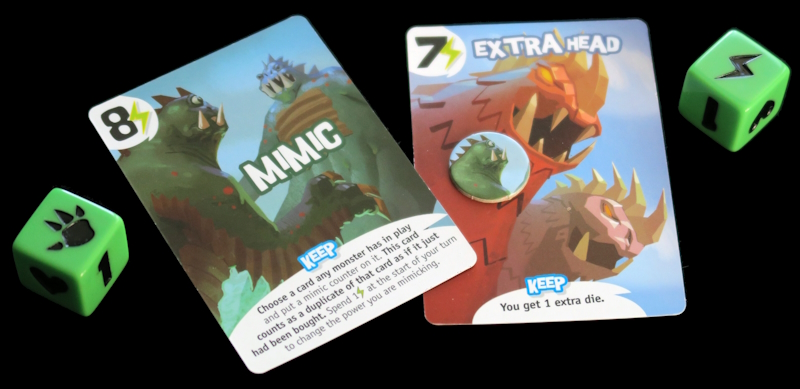
Once the dice have been rolled and resolved, players can buy Power Cards from the face-up display—these typically cost between two and eight Energy, and can be very useful at helping to control the game.  The other key part of the game is the Monsters’ locations: they can be “In Tokyo” or “Outside Tokyo”.  To enter Tokyo a player must roll one or more Claws; when a monster in Tokyo is attacked they will take damage and the player has to decide whether to stay in Tokyo or not.  If they Yield Tokyo, they allow/force the attacking monster to enter Tokyo in their place.  This is critical because Monsters deal damage based on their location and any Monsters in Tokyo deal damage to all monsters outside Tokyo and vice versa.

King of Tokyo
– Image by boardGOATS

One of the handicaps of being in Tokyo is the fact that a player cannot heal whilst in Tokyo.  However, when a Monster enters Tokyo it earns a Victory Point for doing so and if it starts its turn in Tokyo, then it earns two Victory Points.  These points help a player inch towards that winning total of twenty.  With six players the Tokyo Bay location on the game board is also used, effectively meaning that two Monsters can be in Tokyo at the same time, improving the balance and preventing five monsters ganging up on one, while also discouraging everyone outside Tokyo to try and displace them rather than just focus on collecting Energy, Healing or Victory Points.

King of Tokyo
– Image by boardGOATS

Unusually for the games the group plays, King of Tokyo has player elimination—when a player’s health falls to zero, they are out, a fate suffered by half the players in the game this time.  Jade was first to be knocked out, but Sapphire and Cobalt weren’t far behind.  With six players, Black’s stay in Tokyo which lasted three full rounds was quite remarkable.  It was perhaps no surprise therefore that he was the eventual victor, collecting the full twenty Victory Points, some way ahead of Pine in second with eight and Purple just behind him in third.

King of Tokyo
– Image by boardGOATS

Learning Outcome:  A meadow is grassland which is not regularly grazed instead being left to grow to produce hay.

22nd August 2023

It was an unusually quiet night—indeed we haven’t been this low on numbers since the dark days of 2020.  On a bleak night in mid March of that year, there were also just four, and that presaged eighteen months of playing games online.  On that occasion, everyone knew something bad was coming and it was a very sombre evening as a result.  This time was much more positive though, as almost all the absentees were away because they were having a good time.  That left just Black, Purple and Plum to meet Cobalt on his first meeting.

Ticket to Ride: Northern Lights
– Image by boardGOATS

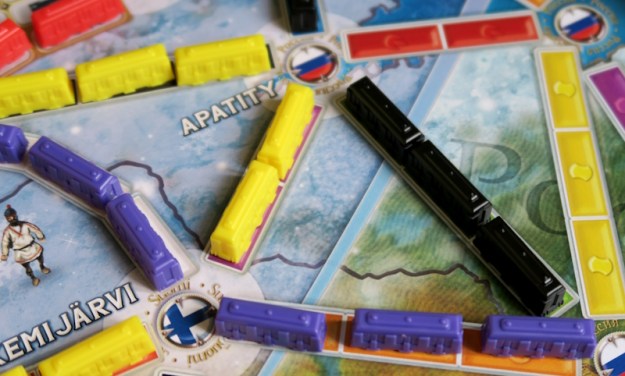
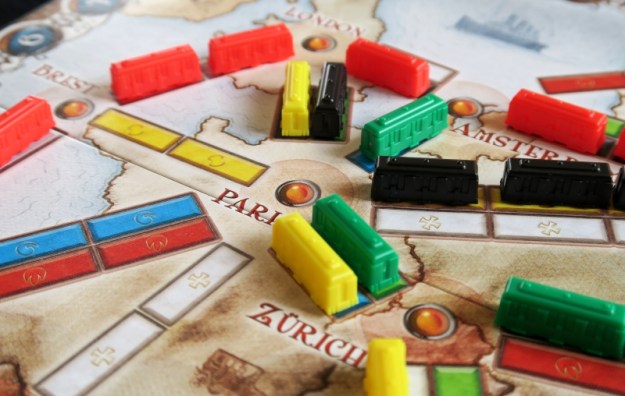
The group started with the “Feature Game” which was Ticket to Ride: Northern Lights.  This is the latest version of one of the group’s most popular games, Ticket to Ride, and one that is currently only available in Scandinavia.  Like all the other versions, the rules are quite simple:  on their turn, players either take train cards from the face-up market (or the blind draw deck), or spend cards to place trains on the map for points.  Once or twice during the game, players may instead choose to draw Tickets, which give players points at the end of the game if they are completed, that is to say, the owner has connected the two locations with their trains.  Woe betide any player with incomplete tickets however, as they score negatively.

Ticket to Ride: Northern Lights
– Image by boardGOATS

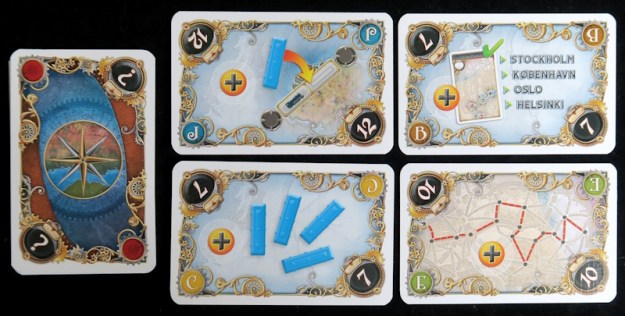
Northern Lights is similar to the Nordic Countries stand-alone game that we often play at Christmas, except that more people can play and the artwork is a little less festive (though still very, very beautiful).  There are the usual “rule tweaks” that come with a new version of the game and which are in Finish, Danish, Swedish and Norwegian only.  In this case, a translation says that the biggest differences are the addition of bonus cards, four of which are drawn at random at the start of the game and give extra points at the end, (for example to the person with the most left over trains, longest continuous route, most completed ferries etc.).  Additionally, there are some triple routes (which only take effect with five players) and some routes have a “+X” next to them and when trains are laid on these the player takes X train cards from the face down pile.

Ticket to Ride: Northern Lights
– Image by boardGOATS

The rules surrounding Locomotive (wild) cards are slightly different too:  for all routes they can replace any other card and for ferry routes Locomotive cards can be replaced with a pair of the same colour (that doesn’t have to be the same as the rest of the cards used).  As a result, unlike most of the other versions, if there are three or more face-up Locomotive cards in the market, the market is not refreshed (a point of discussion some weeks back).  With just four players, the triple routes were not used and the bonus cards drawn were the Small Step Strategist (D), the Nordic Express (E), the International Tycoon (G) and the Snowplough Reward (I).

Ticket to Ride: Northern Lights
– Image by boardGOATS

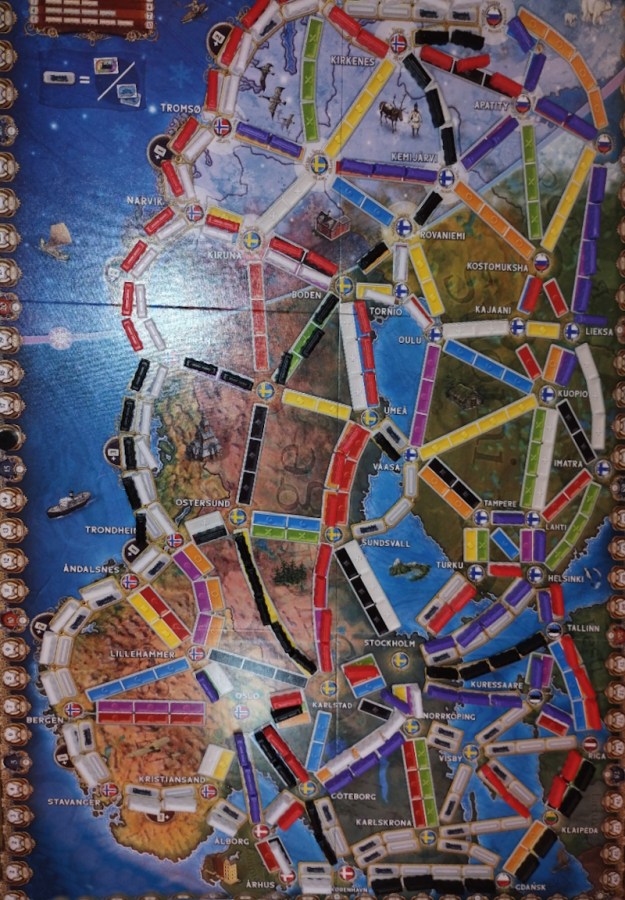
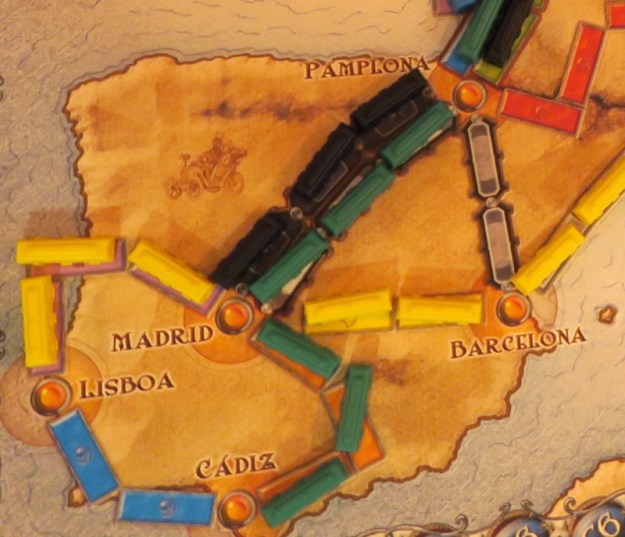
These rewarded players for the most single space tracks claimed, the longest continuous route, connecting the most countries and the most routes connecting pairs of cities in the arctic.  The group also forgot to remove the spare trains, making the game slightly longer than it would have been with the rules as written.  Black built a long route all the way down the west coast of Norway, which he shared with Plum in the north and Cobalt further south.  Purple kept to the East side of the map, with a significant amount of her tracks above the arctic circle.

Ticket to Ride: Northern Lights
– Image by Black

When it came to the bonuses, Plum took the Snowplough award and Black was the International Tycoon.  Plum and Black tied for the Longest Route (Nordic express) and Cobalt missed out on joining them by just two two trains.  Instead, he just pipped Purple to the reward for having the most single track sections.  Aside from this, it was a hard-fought game as usual.  Black and Cobalt both completed three Tickets, while Plum finished four and Purple managed a massive seven.  Size matters though, and Purple’s Tickets were all short routes, so didn’t score as highly as the others’.  The bonuses were critical though in such a close fought game, and there were just three points in it, with Black just taking victory ahead of Plum with Cobalt in third.

– Image by Black

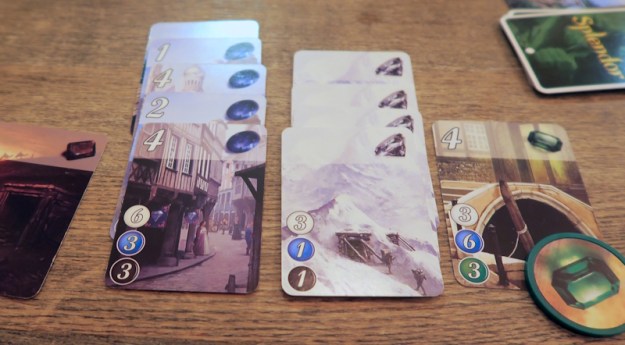
It had been quite a long game and time was marching on, so the group opted for another old favourite, Splendor.  This had been a favourite game of Burgundy‘s who’s birthday it would have been at the end of the month.  This year it has not been possible to plan something to mark the occasion (as we did last year), but we will try to do something in September.  In the meantime, as always, everyone will continue to remember him in the games we play.  And Splendor was definitely one of those games—at one point Burgundy had a fourteen game winning streak.  Although Burgundy liked complex games, he also really appreciated simple elegance, and this is definitely one of those games.
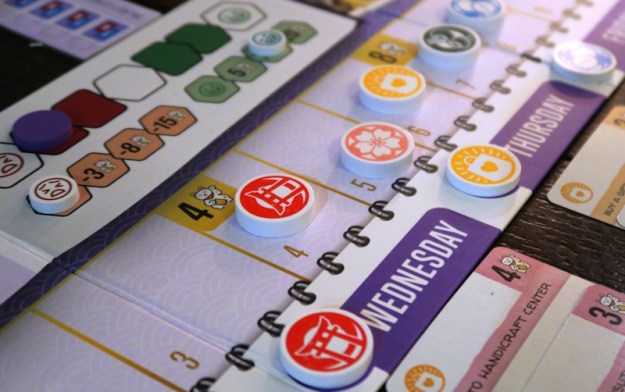
Splendor
– Image by boardGOATS

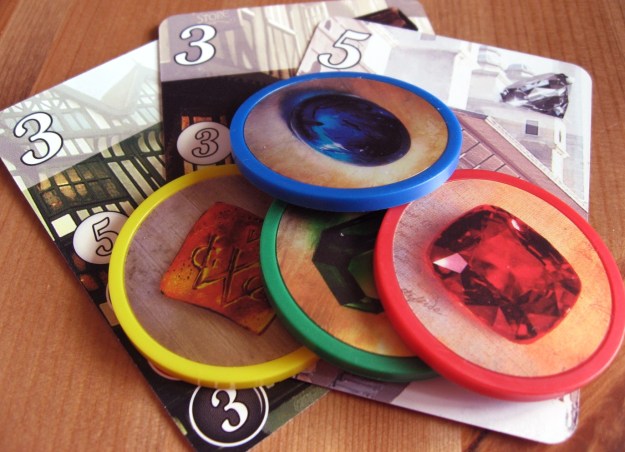
The game is a simple engine builder:  players take chips from the market (three different ones or two the same if there are four or more available), or spend chips to buy cards.  The cards are permanent gems and those that cost more additionally give points.  At the end of the game, the player with the most points is the winner.  Cards aren’t the only way of scoring points though, players can also get points for enticing a Noble to support their cause by collecting the correct gems.  The rules say the game end is triggered when one player reaches fifteen points, however, this time, due the group played to just ten.

Splendor
– Image by boardGOATS

There are several consequences of playing a shorter version of the game, including changing the effect of the more expensive cards, but it also changes the importance of the Nobles.  It also makes reserved cards more difficult to fulfill.  This time, Cobalt had one card that he reserved, but failed to complete.  Everyone had lots of cards and the game was just getting going when Black swooped to secure the support of Elisabeth of Austria with his three Onyx, Sapphires and Diamonds and triggered the end of the game.  Plum had looked like she might just take her revenge for Black pipping her in Ticket to Ride, but it was to be a second runner up place for her behind Black’s unsurpassed twelve points.

Splendor
– Image by Black

Learning Outcome: Board games are in my mind, they guide me back to you…

8th August 2023

Blue and Pink were first to arrive, and, as they finished their pizza, others began to turn up too.  It was a slow start on a relatively quiet night, but eventually Blue Ivory, Black and Jade were settling down to play the “Feature Game“, Ginkopolis.  This is a medium weight tile-laying game with an area control element.  Blue explained that it was one of those games that had been through a phase of being very out of print and therefore inevitably in high demand, though now was much more available.  The game is set in 2212 where players are urban planners trying to building the eco-city, Ginkgopolis, though the theme is quite loose and in reality, it is much more more abstract that that.

Ginkgopolis
– Image by boardGOATS

The game is card-driven, with players simultaneously choosing a card and any tiles they are going to play with it, and then, starting with the first player, taking it in turns to carry out one of three possible actions: Urbanise, Construct or Exploit.  There are two different sorts of cards in the game, Urbanisation cards which feature a letter, and Construction cards which come in three different colour suits, red, blue and orange, and are numbered one to twenty. When choosing either an Urbanise action or a Construct action, players additionally choose a Tile to play from their personal stash.  Urbanising involves placing a tile in the space matching the letter on their Urbanise card, adding a wooden Resource block in their colour to claim it.

Ginkgopolis
– Image by boardGOATS

There is a little upkeep, in that they move the Urbanisation letter marker to a space orthogonally adjacent to the Tile they placed and mark it with a grey cylinder.  As a reward for urbanising, players get to Activate all orthogonally adjacent buildings.  This is claiming a number of  Tiles, Resources or Ginkgo Points (a sort of currency used in the game), with the item dependent on the colour and the number received equal to the height of the Building activated.  Constructing is similar, except the Tile chosen is placed on top of another Tile, returning any Resources on the tile to their owner and claiming Ginkgo Points from the bank for each one.

Ginkgopolis
– Image by boardGOATS

In addition to this immediate reward, there are also costs:  if the Constructed Tile has a lower number than the tile it is built on, they must pay the difference in Ginkgo Points and if the colour is different, they must also pay one Resource to the general supply.  In addition to these potential costs, the active player must also place Resources from their stash on top of the newly expanded building to claim it (with the number equal to the height).  This can make Constructing expensive, though as the game progresses, they get Resources back as other players build on buildings they have Urbanised or Constructed.  Still, particularly early in the game, players can find themselves running out of supplies, in which case, they can Exploit.

Ginkgopolis
– Image by boardGOATS

Exploiting involves playing cards (without a tile) to gain Tiles, Resources, or Ginkgo Points.  How they Exploit depends on whether the card they are Exploiting is an Urbanisation card or a Construction card.  For Urbanisation cards, players just take either a Resource or a Tile from the supply, whereas for Construction cards, players Activate the building on the card to receive Tiles, Resources or Ginkgo Points equal to the height of the building. This is not the only way to get resources, however.  Once a player has carried out their chosen action, they either recycle the card (if they Urbanised or Exploited) or, if they Constructed, they keep it in front of them.  Each Construction card has an action as well as a number and a colour, and these are activated during the game, most after carrying out actions, with some providing end-game Points.

Ginkgopolis
– Image by boardGOATS

And scoring is where the game gets tricky.  The winner is the player with the most Ginkgo Points at the end of the game, but in addition to chips acquired during the game and end-game points from Construction cards, the majority of the points come from the area control element of the game.  The city is divided into districts with districts defined as areas containing at least two buildings of the same colour.  The player with the most Resources in the district wins control and takes Ginkgo Points equal to the total number of Resources in the district.  The player to take second gets Ginkgo Points equal to the number of their Resources in the district.  Ties are broken in favour of the player with the highest building.

Ginkgopolis
– Image by boardGOATS

There is quite a lot of critical upkeep in the game, but the most important it to remember to put a grey construction cylinder on buildings during Urbanisation and Construction.  This is because at the end of each turn, players top their hand back up to four cards drawn at random—when the draw deck is empty, however, the discard deck is recycled and topped up with cards that correspond to the newly constructed buildings.  Since cards that correspond to buildings are kept when the building is over-built, and everything else is recycled, the draw deck (and the cards in hand) comprise all the buildings currently visible, together with all the Urbanisation cards, and nothing else.

Ginkgopolis
– Image by boardGOATS

Getting this wrong, breaks the game spectacularly, as Blue and Ivory had found out on the one other occasion they played it (with Pink, during one of the sporadic meetings in the pub late in the Summer of 2020).  This time, they were aware of the importance of placing the grey markers and mostly managed to stay on top of that so everything went a bit smoother, allowing players to concentrate on the nuances of the game.  And there are lots of nuances.  For example, over-building can help a player to take control of a district, or, if they change its colour, break one up, but it also gives Resources to the previous owner.  Similarly, Urbanising expands the city, but provides a cheap way for other players to expand districts and perhaps muscle in.

Ginkgopolis
– Image by boardGOATS

The game started with everyone feeling their way, trying to make the most of the Character cards they were dealt at the start of the game.  These give bonuses to players to get them going in the early stages of the game.  It is possible to draft these character cards, but the group began with the preconstructed sets:  Ivory got set one, Black got set six, Jade got set two and Blue got set five.  These give players a strategy steer in the early part of the game, for example, Blue and Black’s cards gave them two bonuses for Exploiting while Jade and Ivory both benefited twice for Constructing.  Quite early in the game, it became clear that there was one building towards the middle that was going to be quite critical in the area control battle and Blue, Black and then Ivory all over-built and tried to claim it for their own.

Ginkgopolis
– Image by boardGOATS

The game has the ability to feel very swingy, and lacking in control, and yet it is actually an extremely smart, tactical game—one clever tile placement can completely change the game by breaking up a district or joining two districts together and totally change the balance of power.  This game was no different in that regard, though it took a little time for everyone to really start to see its potential.  There were other elements of the game that players gradually came to appreciate.  For example, Black ran into the unexpected difficulty of running out of Resource markers, because he had a lot in the city.  This gave the others a problem—building over his buildings relieved that pressure, but because he had so many on the board, it was hard to avoid doing it.

Ginkgopolis
– Image by boardGOATS

Jade also had difficulties getting the tiles he wanted to match his cards, while Ivory had difficulties getting the cards he wanted (and was the only one to spend one of his refresh hand tokens, which cost him two points in the end-game scoring).  The game ebbed and flowed, and although it vastly exceeded its advertised forty-five minutes, it wasn’t long before the stack of tiles dwindled and triggered the end of the game.  At this point, players could choose whether to add tiles from their hand back into the game.  Jade was aghast at the idea having struggled to get tiles throughout, but Ivory had an enormous stack and put a few back into the supply to keep things going for another couple of rounds.

Ginkgopolis
– Image by boardGOATS

As the game drew to a close, the question was whether anyone would be able to make a move on the largest districts.  The highest building that had been long fought over now belonged to Ivory, but had been cut off, leaving it pointless, which left two large red and one large blue district as well as some smaller efforts.  Key was the number of Ginkgo points picked up during the game—everyone thought Ivory had a lot, but it turned out Black was the king of the Ginkgo tokens with a massive thirty-six. Blue was a little way behind him, but made up for this with her city scoring, which ultimately gave her victory with sixty-six points, nine more than Black in second who was well clear of Jade and Ivory who tied for third.

Ginkgopolis
– Image by boardGOATS

Meanwhile, on the next table, Purple, Green and Pink were deciding what to play while they waited for Pine who was running late.  Green commented that he didn’t want to play something new, so in the end the group settled on Splendor.  This is an old favourite, though one with poignant memories for most in the group as it was a favourite of Burgundy who sadly passed away eighteen months ago—it would have been his sixty-fifth birthday at the end of the month.  As always, with Burgundy in mind, the trio set the game up.  It is a very simple, tactical engine builder, where players take it in turns to either take chips from the supply, use chips to buy a face up card from the market or, occasionally, reserve a card.

Splendor
– Image by boardGOATS

Players win points for the higher value cards, or for collecting enough cards of specified colours to claim a Noble.  This time, Pink tried a strategy that concentrated on going for cheap cards with the primary aim of scoring for Nobles.  This had the benefit of giving him lots of cards which builds the engine quickly making other cards cheaper.  The strategy worked well, but not as well as Pink needed it to for him to beat Green who ended the game, with a lead of three points.  As Splendor came to a close, Pine rocked up, so the newly expanded, now quartet looked for something fairly light to play, and Pink suggested one of his favourites, For Sale.

For Sale
– Image by boardGOATS

As Pink described it, like football, For Sale is a game of two halves.  In the first half, players bid for properties which they then sell in the second half of the game.  This time, Purple became a bit of a tent specialist (with tents of various quality), which turned out not to work so well for her.  Pine ended up with the outside netty (one of the lowest value cards), but one that you are almost guaranteed not to loose money on.  Once again, however, the winner was Green with Pink taking his second second place.  So the question was, could anything upset that pattern?

For Sale
– Image by boardGOATS

The group moved on to Botswana, a sort of set collection stock-holding card game that it is really hard to get your head round despite actually being very simple.  The five animal suites each have six cards, which are shuffled together and dealt out.  Players then play a card from their hand, and take any one of the animals on the table.  The round is over when any one of the five animals has the sixth card played, at which point players score points for each animal they have, equal to the final card played.  After three rounds, the player with the most points is the winner.

Botswana
– Image by boardGOATS

This time, all three rounds were remarkably even.  Purple was just one point behind green going into the final round, though Pink had some ground to make up if he was going to continue his run of second places.  In the end, Green made it three from three, and relatively poor final rounds from both Pink and Purple left Pine to take second with Purple just behind.  Green decided three was enough, and didn’t fancy tarnishing his winning streak, so headed off while Purple and Pink waited for their other halves to finish Ginkopolis, and looked round for a suitable filler.

Coloretto
– Image by boardGOATS

Coloretto is another old favourite, and one that plays really well with three.  A really simple set collecting game, on their turn, players either turn over a coloured chameleon card and place it on a truck, or take a truck.  At the end of the game (when the draw deck has been mostly depleted), players score points for each coloured set of cards.  In general, the larger sets score more, but only the largest three score positively, everything else gives negative scores.  For a bit of variety, the group used the scoring card from the Limit Cards/Extra Cards mini expansion (but without any of the other rules and cards).  This gives low scores for the small groups, but very high scores for the large sets.

Coloretto: The Extra Cards
– Image by
boardGOATS

Aside from a query about the Golden Joker (which like the normal multi-coloured Joker can be added to any set at the end of the game, but additionally gives an extra card drawn at random from the deck), there was no real need to revise the rules.  It was a good game, though Pink blotted his copy book with quite a lot of negative points and wasn’t able to improve on his two second places as a result.  The run-away winner was Purple though, who finished with forty-eight points, eight more than Pine in second place.  And with Ginkopolis coming to an end too, that was it for another week.

Coloretto
– Image by boardGOATS

Learning Outcome:  In some games, you have to start building right from the gink-go…

16th May 2023

Unusually, Blue and Pink were joined early by Lime for pizza, and Pine who wasn’t eating.  So, while they were waiting for food to arrive the group squeezed in a very quick game of Coloretto. This is a popular game within the group, but somehow Lime had missed out on it.  It is quite simple to play, but one of those games that takes a couple of tries to get the hang of playing well, or as in Blue’s case, lots of tries and still not play it well.  The idea is simple enough though:  players take it in turns to either take a coloured chameleon card from the deck and add it to one of the “trucks”, or take one of the trucks and add the cards on it to their display.

Coloretto
– Image by boardGOATS

Players score points according to the triangular number series where every additional card is worth one more additional point than the previous card.  Thus, the fourth card someone gets is worth ten points, four more points than the third card (which itself is worth three more than the second and so on).  Collecting chameleons was briefly interrupted by the arrival of Hoi-sin duck pizzas, but that didn’t stop Pink winning with a total of thirty-seven points,  well ahead of a tie for second place between Blue and Pine.  By this time, Purple, Black and Teal had arrived and it was time to decide who was going to play what.

Coloretto
– Image by boardGOATS

Pink and Lime were very keen to give Zoo Break another go, having left the town of Bedlam over-run with escaped animals last time the group played.  With it being such a quiet night, there was some debate as to what the other group were going to play, but in the end they opted for the “Feature Game“, the Marina expansion to one of our most popular little games, Draftosaurus.  Pine was keen to play with the cute wooden zoo meeples and after the mayhem last time, Blue was also keen not to miss out, which left Purple, Black and Teal to play with dinosaurs.  The only problem was, none of them knew how to play it, so while Lime, Pink and Pine set up Bedlam Zoo, Blue quickly explained the rules to Draftosaurus.

Draftosaurus
– Image by boardGOATS

Draftosaurus is a very simple drafting game in the vein of Sushi Go! or 7 Wonders, but instead of drafting cards, players are drafting wooden dino-meeples.  The idea is that players start with a handful of dino-meeples and choose one to keep and pass the rest on to the next player.  The active player rolls a location die which adds restrictions on which pens players can place their chosen dinosaur in in their dino-park.  When everyone has placed their first dino, the die is passed to the next player and everyone chooses their next meeple from the pile passed to them by their neighbour.  The round is complete when each player has placed six meeples, and the game is played over two rounds (passing dino-meeples in opposite directions in each round).

Draftosaurus
– Image by boardGOATS

The Marina expansion adds brown Plesiosaurs to the yellow Triceratops, blue Stegosaurus, pink Brachiosaurus, orange Spinosaurus, green Parasaurolophus, and red Tyrannosaurus rex from the base game.  Where dinosaurs from the base game can always be placed in the river that runs through the middle of each player’s park (where they only earn a single point), Plesiosaurs all go into the river, which they travel along into an expansion board.  Each expansion board is slightly different, but when a player places the non-Plesiosaur dinosaur shown on the bridge, if they have a dinosaur immediately up-stream of the bridge, it can pass under it into the next section of the river where it will score more points.

Draftosaurus
– Image by boardGOATS

It was a close game with everyone following different tactics.  Teal concentrated on trying to fill his Meadow of Differences while Black focused on collecting pink Brachiosaurs and Purple stuffed her Forest of Sameness with blue Stegosaurs.  Black took one Plesiosaur, Purple collected two and Teal three, though only one of his made it under the first bridge and out of the main river.  Purple managed to minimise the number of non-scoring dino-meeples in her park, and that just gave her the edge, and she finished a couple of points ahead of Teal who took second place.

Draftosaurus: Marina
– Image by boardGOATS

Although Teal, Purple and Black tried to persuade her to stay (and there was even some suggestion of her playing both games simultaneously), once she had explained the rules, Blue joined the madness in Bedlam, playing Zoo Break.  In this game, players are keepers trying to prevent their charges escaping from the zoo, and to win the game, they have to return all escaped critters to their enclosures and lock the doors.  Losing is much easier—if five cuddly creatures or one dangerous one escape from the zoo, then it is all over.  Last time, only one animal escaped, but it was a cobra, so that was that.

Zoo Break
– Image by boardGOATS

On their turn, players first roll the action die to find out how many Action Points the player has to work with for that round.  Then, after they have carried out their actions, one card from the Escape deck and then one card from the Move deck are revealed.  The Escape card liberates one or more animals, while the Move card often moves animals towards the exit, but occasionally causes other things to happen, like waking up sleeping tigers, breaking barricades and generally cause more chaos.  After last time, the group decided to start by digging through the Supply deck and make sure everyone went really well equipped, then, prioritise capturing (or at least controlling) the Meerkats, as they had been so problematic last time.

Zoo Break
– Image by boardGOATS

On that occasion, the group had played with two “Phew” Cards in the Escape deck, and (following a rules malfunction) all the blank cards in in the Move deck.  In spite of all the blank cards, they still lost spectacularly.  So, this time, the group stuck with the two “Phew” Cards, but removed the blanks from the Move deck and did not add any other rules variants as they really wanted to win, though they stuck with the thematically logical variant where tigers remain tranquilised when returned to their pen. Lime had the Black Belt special power which meant he couldn’t be hurt by animals, so he got the job of dealing with snakes which hide so players have to reveal them, with the risk of being attacked if they are dangerous.

Zoo Break
– Image by boardGOATS

Pink, as usual wanted to work with the pandas, but the Capuchin monkeys were a more immediate threat, and the group made a point of dealing with the troublesome meerkats early this time, so then he went on to deal with them once the monkeys were locked up.  Blue, who had the panda enclosure key, took over trying to control them, but they kept escaping just as Blue was about to lock their cage. Blue was encouraged to capture one panda who was in the rhino’s path, but that meant she was left standing there—”You’ll be fine”, said Pink.  And Blue was immediately flattened by a charging rhino and had to spend a turn with the medic removing the hoof-prints from her forehead.  One meerkat escaped from the zoo, but was left to run free so Keepers could focus elsewhere and then lock their enclosure.

Zoo Break
– Image by boardGOATS

With two enclosures locked early, things became slightly more manageable.  The group wimped out of using the faulty lock variant however, because nobody wanted to risk failing a second time, and certainly, including it would have made things much more difficult.  As it was, one tiger got within sniffing distance of freedom, but was tranked before he could take that one final bound.  Pine made excellent use of his running skills (as Track Star he could move twice as fast as anyone else) and bravely helped Lime with snakes and wielded his dart gun—before long, the zoo was littered with big sleeping cats.  That was all very well, until they woke up at which point Pine had to do the job all over again.

Zoo Break
– Image by boardGOATS

After her run-in with the rhino, Blue tried to end her turn on hedge spaces, but that meant she was unable to swap supplies with other players as she couldn’t share her space.  Once the Pandas were vaguely under control, Blue was able to get a stretcher and another dart gun and help Pine with the tigers, making use of her Gardener ability, hiding in bushes and taking a pop at the big kitties from a place of safety.  While Pine and Blue were working on the tigers, the elephants started rampaging.  As the nearest and armed with a leash, Lime took a break from snakes and tried prevent them from causing too much damage.  This was all very well until (much to Pink’s disgust as he would have loved a black and white cuddle), Lime rolled the lowest number and got hugged by a panda leaving him unable to do anything until it was prised off him.

Zoo Break
– Image by boardGOATS

In the dying rounds, Pink’s, and indeed everyone else’s delight was evident, when another panda popped up for a cuddle and everyone cheered when Pink was the one to roll the lowest number and get a hug.  As the Lucky Duck, on his turn he was able to roll the Action Die multiple times to get more points, but he checked the rules to see if he was obliged to spend his first three points to escape from the furry cuddle or whether he could just stay there for the rest of the game.  In the end, he sent it back to its enclosure, but it probably wouldn’t have mattered.  With one last push, Pine and Lime rounded up the last of the snakes, then the group finally sorted out the charging elephants and mischievous pandas, and finally locked up the rhino, giving the group a much deserved victory.

Zoo Break
– Image by boardGOATS

Draftosaurus is a much quicker game than Zoo Break, so while they Keepers were dealing with the tigers, elephants and disobedient pandas, Teal, Black and Purple moved onto play Splendor.  This was one of Burgundy’s favourite games and he was almost unbeatable at it, so we never play it without thinking of him.  It is a very simple engine builder card game, but takes great skill to repeatedly win in the way Burgundy did.  The idea is that on their turn, players either collect gem tokens (three different colours, or two the same as long as there are at least four left), or spend tokens to buy cards from the market.  Cards act as permanent gem tokens (effectively reducing the cost of cards later in the game), but also provide Victory Points—when a player passes fifteen points, that triggers the end of the game.

Splendor
– Image by boardGOATS

In addition to the two basic actions, there is also the relatively rarely used action of reserving cards, where a player gets a wild, gold token and can reserve one card which they can pay for later.  This time, both Teal and Purple reserved cards, while Black prioritised taking high value cards.  Reserving cards can be a very effective tactic, but the game is all about the cards available in the market and surfing through them as quickly and efficiently as possible and amassing points.  As it was, Black romped away with victory, his fifteen points three times that of anyone else.  And with that, both Splendor and Zoo Break finished, leaving the group with a little time to play something else.  Teal and Lime headed off, so after some discussion, Pine, Black, Purple, Pink and Blue decided to give Draftosaurus with the Marina expansion another go as it was the “Feature Game“.

Draftosaurus
– Image by boardGOATS

It was then that the group realised the errors in the original explanation, in particular how the Solitary Isle enclosure worked.  Pine corrected Blue’s errors and the second game began.  Pine and Blue both tried to exploit the Plesiosaurs at every opportunity, and Pink tried to claim extra points for reverse parking his solitary Plesiosaur into the dock.  It turned out he didn’t need them though, as with forty-seven points he took his third win of the night.  Blue and Black tied for second place, while Purple unfortunately had to recount when she realised she had a pink Brachiosaur elsewhere in her park so couldn’t score seven points for her solitary Isle.  That left a bit of time for a chat, but everyone was tired and it wasn’t long before the last of the group headed home.

Draftosaurus: Marina
– Image by boardGOATS

Learning Outcome:  Who needs TV when you’ve got T.Rex?

Golden GOAT Award Winners – 2022

As usual, the boardGOATS met just before Christmas for a party and to decide the winners of the GOAT Awards.  After pizza and crackers and the usual mayhem, the group voted for two awards:  the Golden GOAT for our favourite game and the “GOAT Poo” award for our least favourite.  Everyone had the usual three points to hand out for the Golden GOAT Award (plus a bonus if wearing Festive Attire), though a maximum of two points could be given to any individual game.  Everyone could also nominate up to two individual games for the GOAT Poo Prize.

Dice Hospital
– Image by boardGOATS

This year, there were a few games that received the unofficial “Marmite Award”, that is to say they received nominations for both the Golden GOAT and the GOAT Poo prizes.  These included Dice Hospital, Azul, Modern Art and Viticulture.  For the GOAT Poo Prize itself, there were several games that received two or three nominations, but the clear winner was Villainous – The Worst takes it All which received six nominations—quite an achievement since only five people played it and one of those wasn’t present for the vote!  Villainous is a beautiful, asymmetric card game, but one that we struggled with for several reasons, not least the fact that players had to work out how to play their own character, and we were playing it with five people which is two or three more than it needs.

Disney Villainous: The Worst Takes it All
– Image by boardGOATS

Nominations for Moment of the Year included two epic games, one of Viticulture and the other of Tapestry.  The latter nomination included the citation:  “I thought I was doing well until Ivory lapped me… twice!”  Pine also recalled Lilac nobbling him in Turf Horse RacingThe most poignant moment however, with hindsight, was last year’s UnChristmas Dinner, which was the last meeting attended by Burgundy, who very sadly, suddenly passed away just a few days later.  We all still miss him, but the fact we were joined by Jade and Plum and their partners this year is his legacy, and one we think he would have been proud of.

Mike Parker
– Image by
Pushpendra Rishi

And that just left the Golden GOAT Award for the best game of the year.  Previous winners including Wingspan, Altiplano and 6 Nimmt! were ruled out, but there were plenty of options remaining.  Lots of games received three nominations including Endeavor, Cascadia, Old London Bridge, Splendor, Tapestry and Die Wandelnden Türme  But this year, the clear winner was Everdell. This card-driven game was only played for the first time a few weeks ago, but it is planned to play it again soon with one of the expansions being the “Feature Game” early in the new year.

Golden GOAT - 2022
– Image by boardGOATS

31st May 2022

While they were waiting for their dinner to arrive, Blue and Pink squeezed in yet another in their on-going head-to-head series of Abandon All Artichokes matches.  The idea of the game is that players start with a deck of ten artichoke cards from which they draw a hand of five cards.  Then, on their turn, they take one card from the face up market, play as many cards as they can, before discarding their hand to their personal discard pile. When, on drawing their new hand of five cards a player has no artichokes, the game ends and that player wins. Pink and Blue have played this cute little “deck shredding” filler game a few times recently and, after an initial flurry of Blue winning, Pink got the hang of it and won a couple of games.

Abandon All Artichokes
– Image by boardGOATS

Last time, Blue got her revenge and Pink said that now Blue had won again, that would probably be that.  This game showed that was not so, and while this had all the potential for being a tight game, Blue claimed victory by carefully stacking the top of her deck ensuring an artichoke-free draw despite having three left.  With food over and everyone else rocking up, it was time to decide who was going to play what.  There was a lot of enthusiasm for Die Wandelnden Türme, which was the “Feature Game“, after people had seen it from a distance last time.

Die Wandelnden Türme
– Image by boardGOATS

As it plays better with more people and there were only eight people in total, the group split into a five and a three, with Pine, Green, Black, and Lime joined by our special guest from Nottingham, Magnolia.  The game is a fun little family game where players start with a handful of Wizards placed on top of the little Towers arranged round the board, and a hand of three cards.  On their turn, the active player gets two actions: play a card or cast a spell. Playing a card which allows them to move one of their Wizards a set number of spaces forward, or move a tower a set number of spaces.  When Towers move, they take any resident Wizards with them but can also land on top of another Tower and trap any pieces that were on the roof.

Die Wandelnden Türme
– Image by boardGOATS

A player that catches other pieces in this way gets to fill a Potion Flask.  They can then spend the Potions to cast spells.  In the base game the spells available are “move a Wizard one space forward” or “move a Tower two spaces forward”, but others are available and change the feel of the game a little.  Players are trying to land all their Wizards in the black, Raven Castle and fill all their Potion Flasks—when someone succeeds, that triggers the end of the game.  It is a fun and entertaining game where players Wizards get variously trapped and if they have a bad memory, can find they lose them in the circus of dancing towers.

Die Wandelnden Türme
– Image by boardGOATS

Although Pine kept losing his wizards last time (captured under the towers), this week everyone managed to keep track of them most of the time.  Only Lime got muddled at one point when a tower was moved and he expected one of his wizards to be underneath, confusion only reigned until his next turn though, when he found it again. Lime was first to get a wizard into the Ravens’ Castle, quickly followed by Pine.  A little while later Pine and then Magnolia got their second wizards in the castle, by using two of their potions for an extra move, then Green got his first wizard “home”.  Black’s wizards still hadn’t caught up with the tower, and he wasn’t managing to fill any of his Potion vials either.

Die Wandelnden Türme
– Image by boardGOATS

With everyone too busy keeping track of their own game, Pine made up for last time’s confusions by filling his final potion vial and dropping his last wizard into the Ravens’ Castle to end the game.  Although there is no second place in this game unless you can get all your wizards into the Ravens’ Castle filled all their Potion vials, Green was closest with all four potions and none used. Magnolia took the last place on the podium, also finishing with four potions, but he had used two of them.  Aside from Pine, no-one had more than one wizard in the tower, in fact, everyone had exactly one.

Die Wandelnden Türme
– Image by boardGOATS

Black’s game was somewhat stymied by the fact all his wizards were trapped under towers so he couldn’t move them, and his cards didn’t allow him to move towers.  This is the downside of Die Wandelnden Türme:  there is some luck of the card draw and when that goes awry players can find themselves stuck, but as it is a short game it’s not too much of an issue and it is a fun little game.  Green remarked how Terry Pratchett-esq it felt with wizards chasing towers and towers chasing wizards.

Die Wandelnden Türme
– Image by boardGOATS

Die Wandelnden Türme is such a quick game that the others were still busy and the group of five looked round for something else to play.  At Pine’s suggestion, they decided to go for a popular classic:  Ticket to Ride: Europe.  This is a well known family of games that everyone was familiar with so there was no need to go through the rules at any length:  on their turn, players take two cards from the market, or spend cards to place trains on the central map.  Players score points for placing trains, but also completing route tickets.  Players receive these at the start of the game but can also draw more in lieu of a turn.  They must be careful though as any incomplete at the end of the game score negatively.

Ticket to Ride Demo
– Image by boardGOATS

There were some extra pieces and some unexpected cards in the box so Black perused the rules in the box trying to work out how they worked.  Blue piped up from the other table that they were for the Dice and Europa 1912 Expansions, but the group decided to leave them out and just stick with the base game.  A little kerfuffle broke out when Pine chose to play as Green for the second game in a row, which caused Green to be sad puppy dog.  Green decided that maybe he would use Pink’s special Pink set instead, only for Pine to relent and choose black, leaving green available for Green after all.  With Pine being black, Black chose Yellow, so Lime was blue and Magnolia was red…

Ticket to Ride Demo
– Image by boardGOATS

Green popped away for a couple of minutes and in his absence, Pine laid his first, two train route, to kick off the scoring.  Half way through the round Green noticed that Pine had laid his trains on a tunnel.  Although Stations had been clarified at the start of the game (they can be used to connect cities to avoid negative points from tickets), Tunnels hadn’t been mentioned.  So, Green brought the subject up and everyone realised they hadn’t noticed it was a Tunnel.  When a player chooses to “build” one of these, they turn over the top three cards of the draw deck and if any match the colour the player used to build it, they have to pay extras (the idea being that building tunnels is expensive and unpredictable).

Ticket to Ride: Europe
– Image by boardGOATS

It was felt that it wouldn’t be fair to force the tunnel check on Pine retrospectively as he may not have chosen to lay the train in the first place if he’d realised he might need more.  However, Lime was uncertain how Tunnels worked and the explanation didn’t seem to clear it up.  So, in the end, Pine drew the three train cards to demonstrate how this worked and on the last card found he needed an extra card. He had a Locomotive card (wild) so used that and thus, the turn was corrected and all was now clear. However, having seen the consequences, both Pine and Lime said they might have chosen different tickets had they realised how Tunnels work.

Ticket to Ride: Europe
– Image by boardGOATS

The next trains to go down were all around Germany—because one was placed it drew out the rest in order to secure routes that were rapidly filling up.  Pine was the first to lose out on this and used his first station to piggy back a route.  After this initial flurry, trains were placed at a more relaxed pace, but all around Western Europe. Eventually Magnolia broke out eastwards to Kyiv, quickly followed by Lime.  Lime didn’t stop there, however, he carried on to Kharkiv and thence to Rostov.  Magnolia and Lime had this area to themselves for much the rest of the game.

Ticket to Ride Demo
– Image by boardGOATS

Green was the first player to complete his routes and draw new tickets, but groaned as he looked at them commenting that they were awful and difficult to complete.  There was little sympathy for him round the table, however, he chose one card and pushed on.  Quietly he started collecting green cards and Locomotives.  After collecting his third Loco, Lime became suspicious of Green’s plans.  After yet another Loco Lime mentioned that it must have been his fifth one (he was in fact correct on that) and wondered out loud why he needed so many and whether he could be stopped.

Ticket to Ride: Europe
– Image by boardGOATS

By then everyone had twigged that Green (who’s route had taken him from Cadiz to Stockholm) was aiming for the big eight train Tunnel along the top from Stockholm to Petrograd.  When he went for it, no green cards or Loco’s turned up—most of them were in his hand so it was unlikely—and the twenty-one points he received took him from the back of the field to the front.  Soon after this Green and Black placed their first stations, which meant everyone had placed exactly one, and everyone all piggy-backed on each other in a daisy chain. The station usage didn’t stop there as Magnolia and Black would both use one more before the end.

Ticket to Ride: Europe
– Image by boardGOATS

As the game drew to a close it seemed to slow down as no one could get the colour cards they needed, until eventually Lime and Green gave up and just started placing random tracks just for points. These two were leading the points race as well, even though Lime had been complaining all the way through that things just weren’t going right for him and he didn’t know what he was doing really.  Despite all this, it was Lime who ended the game by placing four of his last five trains. Everyone then had their last chance shot and it was time for the final scoring.

Ticket to Ride: Europe
– Image by boardGOATS

A quick run through the route scores again to double check showed that the group had been pretty good at keeping them right.  It looked like Green had the longest set of connected trains and was ahead on points as well.  Working from the back of the pack to score the Tickets, Pine had several but he had discarded his long route and moved temporarily into second place having suffered from missing out on the Tunnels rule at the start.  Then Black and Magnolia both surpassed a hundred and then Lime leap-frogged to the front.  Lastly Green’s tickets looked to have sealed him victory only to realise that he had forgotten to connect to Berlin.

Ticket to Ride: Europe
– Image by boardGOATS

Green took the longest train, by a wide margin, which took him into third place, ruing his silly mistake without which he would have taken a narrow victory.  In the end, victory went to Lime, even though he claimed all the way through he did not know what he was doing and it was all going wrong—definitely shades of Burgundy!  Magnolia was second, but first to fourth were all withing about ten points of each other in what had been a close and quite epic game.  With that, Magnolia, Green and Lime took an early night while Black wondered over to see what Pink, Purple and Blue had been up to.

Ticket to Ride: Europe
– Image by boardGOATS

They had started out with Ivor the Engine, a charming little game that we used to play quite  a bit but hasn’t had an outing since before the global pandemic hit.  The idea is that the players are helping Ivor to collect lost sheep and complete tasks for his friends.  On their turn, the active player takes a sheep from their current location (if there is one) and then can move their wagon to an adjacent location and play Job cards.  The Job cards are the meat of the game: they can either provide a special action, such as extra moves and adding sheep to the board, or allow you to complete a Job if you are at a location where there are no sheep.

Ivor the Engine
– Image by boardGOATS

Once the active player has completed their movement and any card play, they take a Job card from the market. The catch is that jobs can only be carried out at the correct location and there is a hand limit of four cards, and taking a card is mandatory.  This makes the game very tight and some of the actions available on the cards have the potential to make the game quite vicious. The game ends when one player reaches a set number of sheep and then players count up their sheep, add any gold and any end-game bonuses they might have picked up, with the player with the most sheep-points named Ivor’s Best Friend Forever.

Ivor the Engine
– Image by boardGOATS

This time, Pink and Purple got in each other’s way in the west leaving Blue to collect sheep alone in the east.  The disadvantage of this is that it took a lot of turns to clear the locations of sheep so that she could play the nice set of Job cards she started with.  On the other hand, Pink was causing Purple all sorts of problems very effectively trapping her in Grumbly Town.  Purple tried to get her revenge at the end by dumping a load of sheep into the location he was at and thus stopping him from playing a Job card there.  However, he just played a different card to claim the sheep and ended the game anyhow, taking victory by seven points from Blue in second.

Ivor the Engine
– Image by boardGOATS

Once Ivor was over, the trio moved on to Kingdomino—another game we used to play quite a bit, but hasn’t had an outing since we returned to face-to-face games.  This is a very clever little game that won the Spiel des Jahres award five years ago.  The idea is that players take a numbered, double-ended tile and add it to their kingdom.  At least one end of each tile must extend an area of terrain or be placed adjacent to their central castle.  Additionally players’ kingdoms must fall within a five-by-five grid.  At the end of the game, each terrain scores for the number of spaces it occupies multiplied by the number of crowns depicted in it.

Kingdomino
– Image by boardGOATS

There are additional points available for objectives, but although there are some interesting objectives available in the Age of Giants expansion, the trio decided to stick with the originals:  ten extra points if their castle is in the centre of their kingdom and five if they manage to play all their tiles.  So far, so simple.  The clever part of the game is that the tiles are numbered according to value and chosen according to an ordered market.  In this way, players who choose the least exciting tiles get to choose first in the next round, while players who get the best tile will end up with no choice.

Kingdomino
– Image by boardGOATS

Unfortunately, playing with only three means that some tiles do not come out and a player can find they do very badly through no fault of their own if Lady Luck deserts them.  This time Blue was the unlucky one, though it wasn’t helped by some poor play (perhaps associated with the arrival of a certain puppy who delighted in chewing her ear).  Purple was did better, but the runaway winner with seventy-three points (more than twice as many as Blue), was Pink.  This was thanks to a large cornfield, which by itself scored almost as many points as Blue’s whole kingdom.

Kingdomino
– Image by boardGOATS

As the epic game of Ticket to Ride was still on-going on the neighbouring table, Blue, Purple and Pink felt there was time for one more game and, after a little discussion, they settled on Splendor.  This was the game Burgundy played extremely well and was almost unbeatable at, so we always remember him when we play it.  It is very simple:  on their turn, the active player takes gem chips, or uses chips to buy gem cards.  The cards act as permanent gem chips, allowing players to buy more expensive cards.  Some cards also give points with the most expensive cards giving the most points.
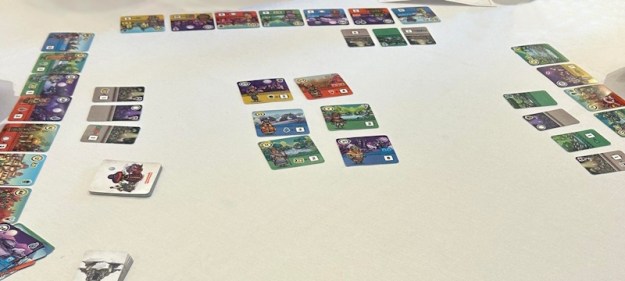
Splendor
– Image by boardGOATS

Players can also get bonus points for claiming “noble” tiles—these go to the first player who collects a certain combination of gem cards.  This time, Blue went first.  As always, some players struggled to get the cards they wanted, and while Pink had an awful lot of cards, somehow he wasn’t able to make anything of them.  The game ends when one player gets fifteen points and Blue, who had got a bit of a head start, could see that the other two were struggling.  So, when Black joined them, he was just in time to see her end the game, taking the only noble and a high value points card in the last couple of turns.

Splendor
– Image by boardGOATS

Learning Outcome:  Do not meddle in the affairs of Wizards, for they are subtle and quick to wander.

27th January 2022 – In Memory of Burgundy

Following the very sad passing of Mike Parker (known on this site as Burgundy), we decided to dedicate this meeting to his memory.  We decided to forgo the usual “Feature Game” and replace it with “Burgundy’s Favourites”, including games as diverse as Concordia, Orléans, Wingspan, Killer Bunnies and the Quest for the Magic Carrot and Dominion. Burgundy had supper at the pub before every games night. Because he always had the same thing, he was known as “Ham, Egg & Chips Man” by the staff at The Jockey.  So we decided to gathering early to reminisce and celebrate his gaming life, and share his favourite supper.

Ham, Egg & Chips
– Image by boardGOATS

Burgundy’s cousins joined us for dinner and we took it in turns to chat and learn things we didn’t know about him. We also had a couple of special guests from elsewhere in the county who fancied joining us to do a bit of gaming in Burgundy’s memory. Chatting to people who knew him in slightly different spheres, one of the first things we found out was that, a creature of habit, Burgundy was known known for having Lasagne when he went to Gweeples, setting up his game while he waited for his molten supper to cool to a point where he could eat it.  There was lots of chatter over dinner and Lime joined us online, but technology difficulties meant he hopped in and out and then, after several rounds of the Hokey-Cokey, eventually gave up.

Mike Parker
– Image by Daniel Monticelli

Black also briefly joined us from Malta—he’d been to a Greek restaurant for dinner, but we all agreed our Ham, Egg & Chips was better.  After a toast to Burgundy, who will never be forgotten, people eventually settled down to play games.  First up was Ivory, Pink, Lilac and Teal who chose Ticket to Ride with the UK map.  Ticket to Ride was one of Burgundy’s favourite games and is popular with the whole group so everyone knows the basics of how to play:  on their turn, the active player can choose two coloured cards from the market to add to their hand, place trains paying with cards, or draw tickets which give extra points at the end of the game if completed.
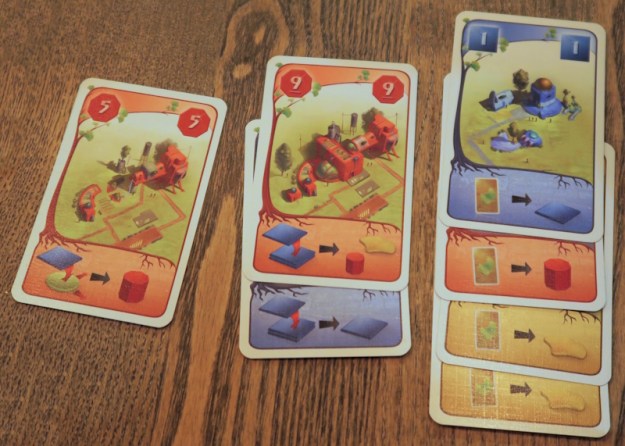
Ticket to Ride Demo
– Image by boardGOATS

Every expansion set comes with a slight rules twist.  In the case of the UK map, this is the addition of technologies and concessions.  At the start of the game, players can build only one and two train routes and only in England.  By spending wild cards, players can buy technologies which enable them to build routes consisting of three trains or more, build ferries, and build train routes in Scotland, Wales and Ireland. Players can also buy bonus cards that allow them to score extra points for taking certain actions during play.  As usual, the game ends when one player only has two of their plastic trains left and the winner is the player with the most points.

Ticket to Ride Map Collection: Volume 5 – United Kingdom & Pennsylvania
– Image by boardGOATS

Pink (playing with his special pink trains for the first time) started off with a “Home Nations” strategy, eschewing the chance to visit France.  Lilac, on the other hand, explored the Dawlish coast and the area around Dundalk.  Teal took the East Coast Mainline north, and explored Scotland as far north as Wick and Ivory took the West Coast  Mainline and continued up to Stornaway.  The game was really tight, with Lilac, Pink and Ivory all completing nine tickets, and that seemed to be the strategy with Pink the eventual winner thanks to being slightly luckier than the others, finishing just three points ahead of Lilac.

Ticket to Ride Map Collection: Volume 5 – United Kingdom & Pennsylvania
– Image by boardGOATS

Meanwhile, on the next table, Green, and Magenta were joined by visitors from Oxford and Gweeples, Sage and Jade in a game of Splendor.  Splendor is a simple game, but one at which  Burgundy was a true expert, and at one point went unbeaten for two years.  The idea is that players use poker chips to buy cards which can, in turn be used to buy more cards of a higher value which eventually give points.  When a player reaches fifteen points, that triggers the end of the game and the player with the most points wins.  Game-play is very simple: on their turn players can take three different coloured chips, take two chips of the same colour, buy a card from the display, or reserve a card taking a gold token (which is wild) at the same time.

Splendor
– Image by boardGOATS

As is usual, the game started slowly with Magenta eventually opening the scoring. The others followed with low scoring cards, but Magenta remained one step ahead until everyone else started claiming the higher scoring cards and eventually Nobles.  Green pulled ahead and looked like he might pull off a true Burgundy style victory, but Sage was closing in.  Sage obstructed Green with a tactical reservation, but that just put off the inevitable for another turn. When Green reached fifteen points, the game ended immediately as he was the last player in the round.

Splendor
– Image by boardGOATS

Sage was a close second with the early leader, Magenta, in third. There wasn’t a high score, a resounding win, as there no doubt would have been had Burgundy had been playing, so victory did not feel fully deserved in his absence.  Blue and Purple had been chatting to the family, who were enjoying talking and, after a long day, were reluctant to play anything.  So, when they left to get an early night, Blue and Purple played a quick filler game of NMBR 9 while they waited for something else to finish.  Burgundy played NMBR 9 a lot over the years and, like everything else he was always very good competition, winning more than he lost.

NMBR 9
– Image by boardGOATS

The game has almost zero set up time, and doesn’t take long to play or put away either.  There are twenty cards (zero to nine), which have matching tokens.  Each round, one card is revealed and players take a matching tile and add it to their tableau.  A player’s tableau consists of layers of tiles.  When placing tiles, they must be placed alongside other tiles, or on top.  If placing on top of other tiles, they must overlap more than one, be placed adjacent to others, and next to at least one other on the same layer.  Neither Blue or Purple were focused entirely on the game which Blue edged, as they were too busy gossiping and watching what was happening on the next table.

NMBR 9
– Image by boardGOATS

The game of Splendor and NMBR 9 finished pretty much at the same time, and the group joined up for a game of 6 Nimmt!.  6 Nimmt! is another game that Burgundy really enjoyed playing with the group and indeed, played a lot.  This was especially true online over the last couple of years, where he played forty-three times with us, winning over one in four of the games.  Jade had only played online, so the group introduced him, and indeed Sage as well, to the variant we usually play.  We play the game in two halves, dealing half the deck out for the first round and then the other half for the second round.

6 Nimmt!
– Image by boardGOATS

Everyone was familiar with the basic game play:  simultaneously choose a card which is added in turn, starting with the lowest, to one of the four rows in the play area.  Each card is added to the row that ends with the highest card that is lower than the card played.  If it is the sixth card, the player “wins” all five cards in the row, and their card becomes the new first card.  In contrast to the online version on Board Game Arena, where players start with sixty-six points and count-down to zero, players start at zero and the player who “wins” the most points is the loser.

6 Nimmt!
– Image by boardGOATS

This time, Green “won” the first round, top-scoring with twenty, while Sage managed to keep a clean sheet.  As Burgundy was always the exemplar though, performance in the first round is often no indication of how the second round will go, which is one of the reasons why we love this variant.  So it was all to play for, especially for everyone who’s first score was in single figures.  This time it was not to be, however, and although Sage picked up thirteen “nimmts” in the second round, everyone else’s total was more.  It was close at the other end and with lots of pretty coloured cards, Purple and Jade high-scored with twenty-nine.

6 Nimmt!
– Image by boardGOATS

Ticket to Ride was still going and with six players, and time marching on, there was only really one option, the option Burgundy would have chosen: Bohnanza.  Jade had never played it before, so, after a quick rules summary, as is often customary in this group, he went last so he could see how things work and get a feel for the game.  In this game, although we generally play “friendly”, it is particularly important as it is a trading game and it is important to be able to get a feel for the value of any advice offered.

Bohnanza
– Image by boardGOATS

As Purple pointed out, the most important thing about Bohnanza is not to sort your cards because players play cards from the front of their hand and add cards to the back forming a sort of conveyor-belt.  On their turn, the active player plants the first bean card in their hand into one of their two bean fields, and may plant the second if they choose.  Two cards are then revealed and these can be planted by the active player or traded.  This leads to another key rule: what is on the table must stay on the table so anything traded must be planted.

Bohnanza
– Image by boardGOATS

Fields can be harvested at any point, with some of the cards being turned over and stored as coins.  However, beans can only go in empty fields or share fields with beans of the same type.  Players only have two fields (or three if they buy a third), so if players are unable to trade a card away, they may have to harvest fields before they are ready.  In this sense, we generally play “friendly” and rather than forcing players to plant something they don’t want, we have a culture of giving cards away.  This extends to players taking cards in free trades from someone’s hand to further their game too.  As a result, the game sometimes the player who is best able to make the most of these freebies is the winner.

Bohnanza
– Image by boardGOATS

Unusually, and to the accompaniment of a lot of sucking of teeth from everyone else round the table, Sage ponied up his two coins for a third bean field—the only one to do so, and especially risky in the second round.  He wanted to plant a couple of Red Beans though, so at worst it was probably revenue neutral and certainly worth the risk.  Blue benefited from a lot of Coffee bean donations while Purple, Green, Jade and Magenta all planted the highly lucrative, but quite scarce, Black-eyed Beans.  The first round took an age, but in contrast, the last was really short, so short, Sage sadly commented that although he had the perfect hand, he wasn’t going to be able to play it. 

Bohnanza
– Image by boardGOATS

It was a close game though, and an extra turn or two could have made all the difference.  As it was, Blue was the eventual victor with sixteen “Bohnentaler”, three more than Jade.  Time was pressing and that was the last game for that group, but in the meantime, on the next table, Ticket to Ride had finished and the quartet had moved onto what was arguably the game of the night, Splendor.  This time, the game started with a shortage of blue, sapphires, then green emeralds became hard to get.  It was nice to note that everyone played according to Burgundy’s maxim, “Always take a free one.”

Splendor
– Image by boardGOATS

In the end, Pink ended the game, and although Ivory managed to score in his final turn, he wasn’t able to catch up.  As the games came to an end and everyone chatted, the mood was sombre, perhaps with half a mind to the following day.  In spite of that, it has been a good evening making new friends, and playing games.  All evening Burgundy was never far from our thoughts, but that was particularly true during the two games of Splendor.  And he always will be whenever we play Splendor from now on.
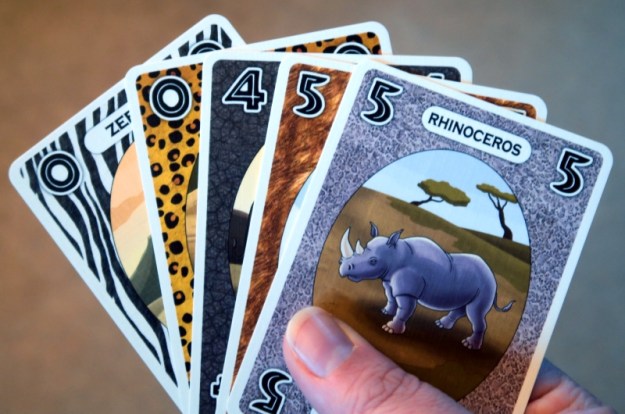
Mike Parker
– Image by Pushpendra Rishi

Learning outcome:  Mike, Burgundy, was THE GOAT, and we all miss him.