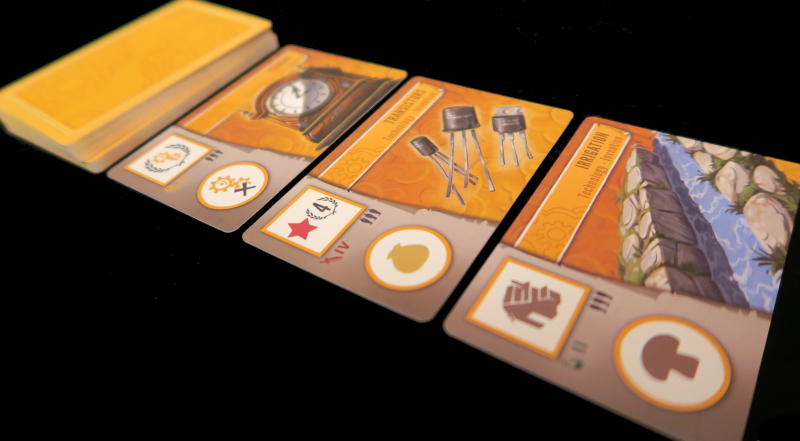
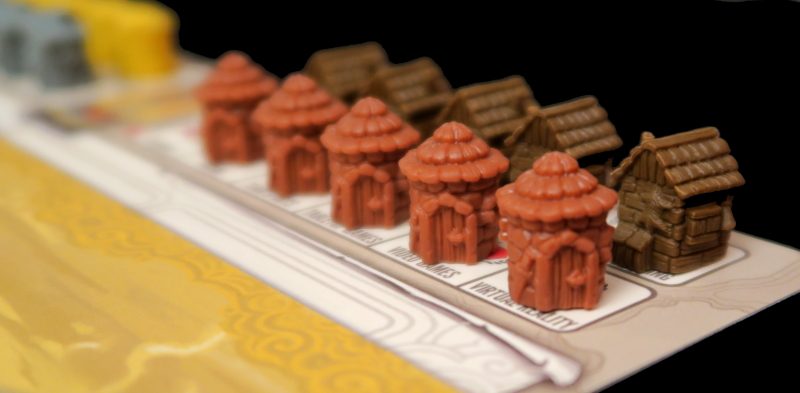
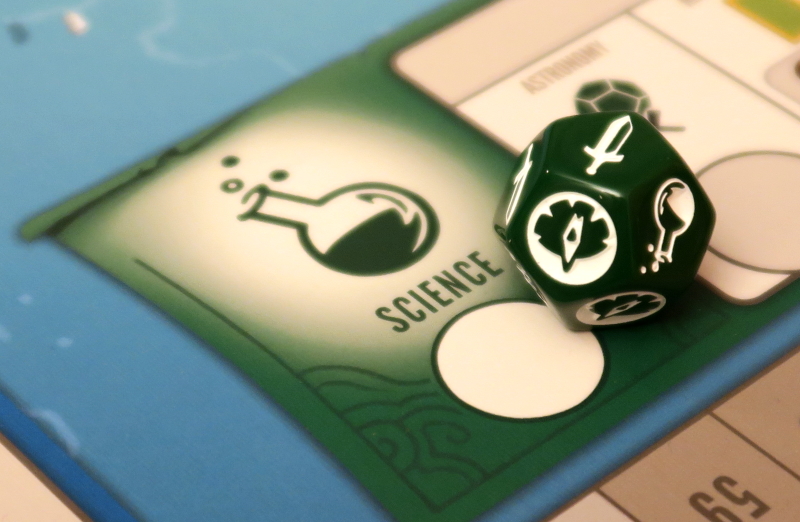
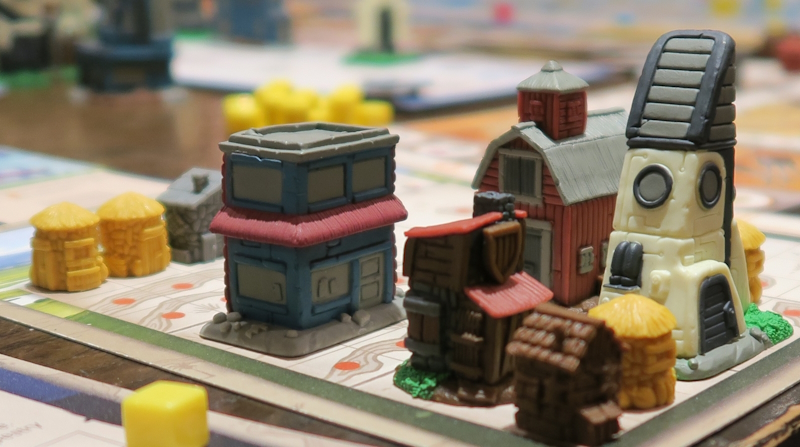
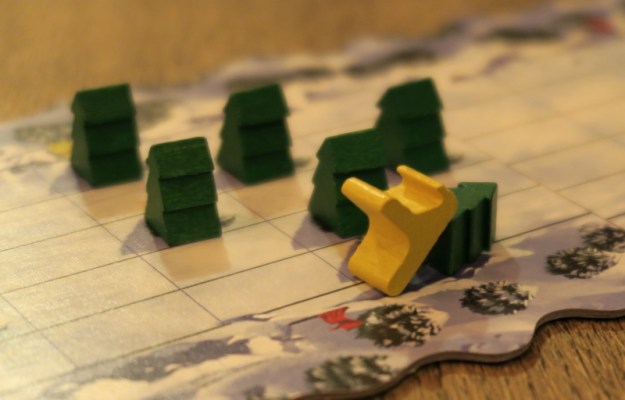
Tag Archives: Tapestry

Next Meeting, 11th Movember 2025

Our next meeting will be on Tuesday 11th Movember 2025.  As usual, we will start playing shorter games from 7.30pm as people arrive, until 8pm when we will start something a little longer.  The pub is now doing food again, so those that will be eating will be arriving from around 6.30pm.

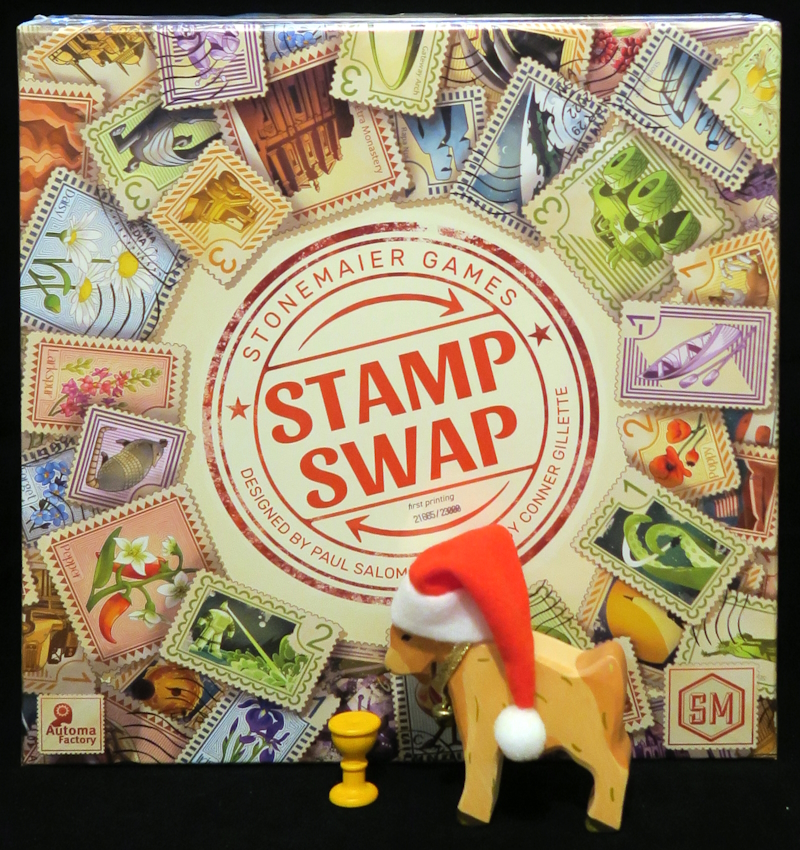
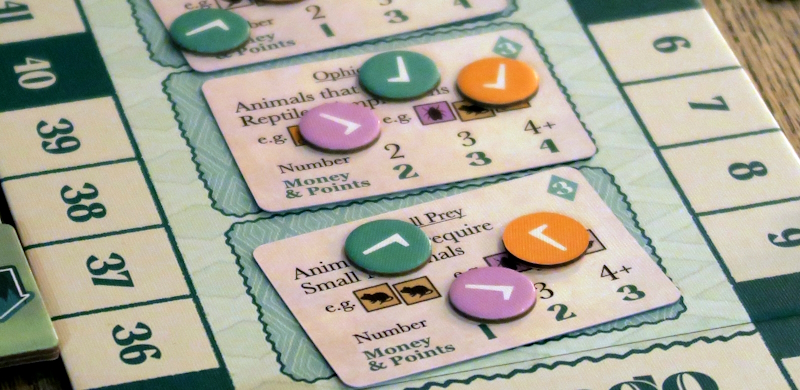
This week, the “Feature Game” will be Origin Story which is a recent release from Stonemaier whose games are very popular within the group and have won an unprecedented three GoldenGOAT Awards for Wingspan, Tapestry and Stamp Swap (in 2019, 2023 & 2024 respectively).  Their latest game, Origin Story (rules, review and video tutorial) is a trick-taking and tableau-building game where players play tricks to develop their inner superhero.

Origin Story
– Image from stonemaiergames.com

And speaking of superheroes…

Jeff and Joe were at the Jockey talking about films they’d like to see.

“I really want to watch the new Iron Man film,” said Jeff, “It’s got the Silver Surfer in it.”

“Are they working together?” asked Joe.

“Well,” replied Jeff, “They sort of start on opposite sides, but by the end of the film they become alloys…”

8th July 2025 (Report)

Things were late starting, largely due to the delayed arrival of Blue and Pink with their copy of the “Feature Game“, the the shiny new Emberleaf.  It was Plum’s Special Birthday—there have already been two in the last few weeks (Jade and Pine, with Black a few months ago) and more to come in the not too distant future—so there was a bit of chat, card signing and some amazing chocolate cakes provided by Sapphire.  Eventually, as time was marching on, games were assigned and Blue and Jade started to explain the rules of Emberleaf to Ivory.  This is a “card dancing” and tile placement game from the same stable as The Isle of Cats, where players are trying to re-home their kin in clearings on the central Forest board.

Emberleaf
– Image by boardGOATS

The core mechanic of the game is card placement and movement on the players’ individual Fellowship player boards.  The idea is that on their turn, players carry out one of two possible mandatory actions and as many optional actions as they like.  The two possible mandatory actions are Card Placement and Card Movement (or “Dancing”).  There are five different types of power on the Cards and one of these is the “On Play” action.  This takes effect when they are placed—players start with a two by six space to place cards and can place each card in any empty space.  The other possible mandatory, Card Movement involves starting with the card in the top left corner and progressing down each column, each card is moved left one space and any “Slide” actions are carried out.

Emberleaf
– Image by boardGOATS

When cards reach the left-most column, Sliding moves them off the player’s board (activating any “Drop Off” actions) and back into their hand (not via a discard pile like deck-building games, so there is no probability element; Cards as always available in hand or on the player’s Fellowship board).  The remaining two powers include “Ongoing” and “Charge”.  Ongoing powers are always active as long as the card is on the board, while Charge powers are optional actions that can only be taken a set number of times before they must be refreshed by the Card Sliding off the board.  All these actions broadly come under the categories of Gathering Resources (Wood, Stone, Turnips or Honey), Walking between clearings, Attacking monsters to make dangerous areas in the forest safe, and Building in clearings.
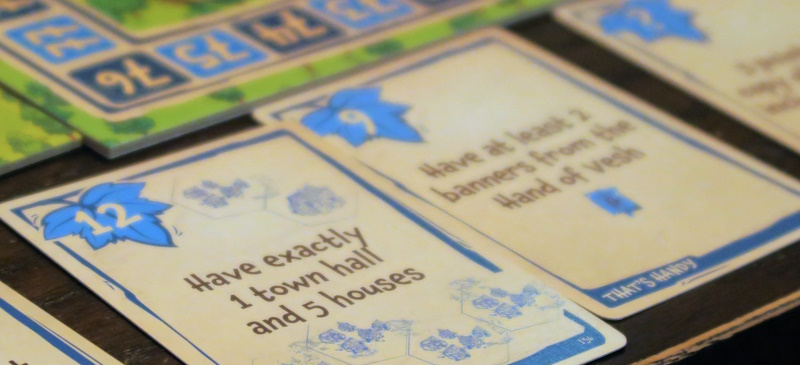
Emberleaf
– Image by boardGOATS

Each player has a space on their Fellowship board to place Resources, which means players have a limited number they can store.  So, for example, Building requires a card to give the action (either placed or moved) and the necessary Resources to be spent, as well their Hero figure at the clearing they are building in.  Each player starts with a super-cute Hero Figure representing their clan chief, located in Hawker’s Crossing—the most westerly clearing, on the edge of the Forest.  From there, players can move their Hero around the board by Walking along paths which go through dangerous areas.  If a player wants to travel through a dangerous area, they need to walk further or, alternatively, they can spend a turn Attacking the monsters in the Dangerous area and make it Safe (which also requires an action either by placing a Card or as part of a Card Movement).
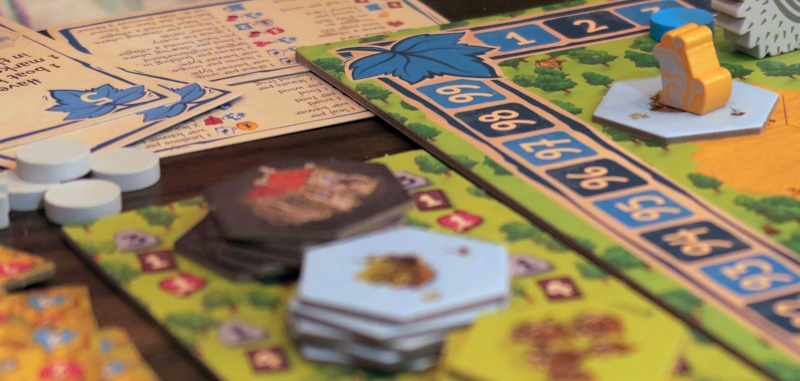
Emberleaf
– Image by boardGOATS

As always, Ivory was on the case, and asked the key question:  Where do the points come from?  In truth, Emberleaf is a bit of a “point salad” with points coming from all sorts of places.  For example, players get points for Building with the number of points equal to the number of different types of building in a neighbourhood.  Players also get points for making Dangerous areas Safe, as well as for collecting Trophies.  There are six Trophies available during the game, and getting these is all about timing with the player who reaches the bottom of the cooperative War Banner Track taking one.  Everyone gets some benefit from this, but the player who takes the Trophy gets an extra bonus.  The game ends at the end of the round when the sixth is taken.

Emberleaf
– Image by boardGOATS

Additionally, in a similar way to the tiny buildings in Tapestry, when players take one of their twenty Emberlings from their Fellowship board and re-home them, they reveal a little bonus and some of these are points (others include Resources etc.).  There is another, more significant way of gaining points, however, and that is through Favour Cards.  These are personal objective cards which can be very lucrative and are scored at the end of the game.  Favour Cards can be acquired as part of rehoming Emberlings, but also by Promising a Favour, one of the optional actions that can be carried out as part of a player’s turn.  Each clearing starts with a Favour token in each player’s colour and if their Hero is currently located in a clearing containing one the player may spend it to take a Favour card.

Emberleaf
– Image by boardGOATS

On the surface, the game is not that complex, though building an engine requires an understanding of what the cards do and how to get the best of them.  Additional Hero cards can be taken from a Card market when a Campfire icon is revealed (likely on re-homing an Emberling).  There are a few little rules niggles as well.  For example, the Card markets (there are two:  Favour and Heros) are refreshed at the end of a player’s turn, but as well as replacing the used cards, the oldest card is also discarded meaning the order cards are drawn in has to be observed.  Similarly, whenever a the bottom of the War Banner Track is reached, the Dangerous Area tiles are refreshed.
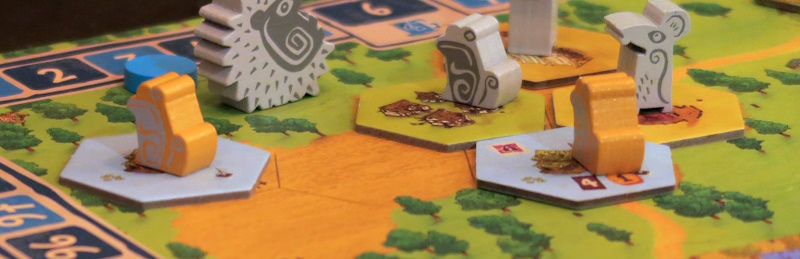
Emberleaf
– Image by boardGOATS

Ivory, got a handle on the rules really quickly and was out of the blocks on the “B” of bang.  Jade wasn’t far behind, while Blue was much, much slower as she spent much of her time with her nose in the rules checking queries rather than focusing on her game.  When she finally got round to looking up, the others were distant figures on the horizon and she had a lot of catching up to do.  Ivory had moved quicklywith an initial strategy of building buildings on the areas that gave honey (particularly markets occupied by a mouse for his end game scoring).  This gave him additional spaces on his board and he then picked up a couple of additional Hero Cards and several Favour Cards to further drive his strategy.
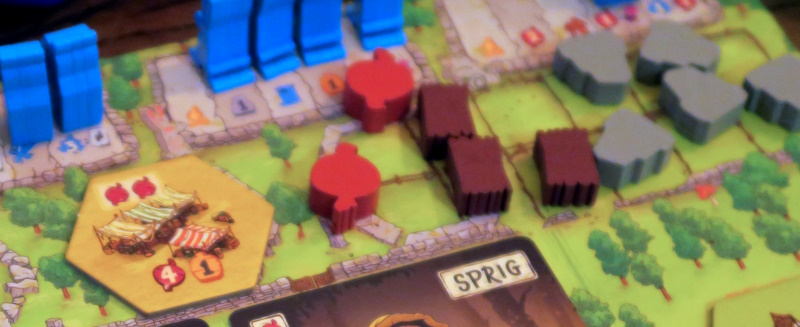
Emberleaf
– Image by boardGOATS

The Koala allowed Ivory to battle anywhere whenever he “Danced”, and that gave him a steady stream of points and resources.  Jade and Blue were slow to clear the additional board actions, but Ivory found that opening up the Build Action meant he always had that available and could place a card with only “Dance Actions” at the end, giving me max benefit for that card.  Everyone tried to get end game objective cards early as they give something to aim for.  Ivory was by far the most effective at this however getting cards that gave points for having his mice on markets, mice in at least three different areas and building in exactly four areas, whereas Blue who was slower, found she was trying to take objectives that matched her achievements.
Emberleaf
– Image by boardGOATS

Inevitably, Ivory was the victory by a veritable country mile finshing with one-hundred and thirty-eight, though Blue who had been practically stationary for most of the game, came through strongly in the late stages to take second.  It had been a tough learning game, but everyone had liked it and it definitely deserves anothe outing.  Meanwhile, Plum, the Birthday Girl, was playing one of her favourite games, Viticulture.  This is also one of Pink’s favourites and is also very popular with both Byzantium and Mint who completed the foursome.  There is nothing really innovative about the game—it is “just a standard worker placement game”, but it does the job really, really well, which elvates it above so many other worker placement games, and as a result, it rates highly on ranks very highly on so many lists.

Viticulture
– Image by boardGOATS

The game played over several rounds, which are split into seasons—Players take it in turns to place workers on the Summer part of the board in the first half allowing them to plant grapes and prepare for Winter when players can harvest their grapes, make wine and fulfill contracts for points.  In general, each action has a small number of active spaces, but players also have a Grande worker who can always be used to carry out an action, even when all the usual spaces have been filled.  Winter and Summer are setup phases when turn-order is addressed and Visitors arrive.  Visitors are cards which allow players to bend the rules slightly and/or gain points.
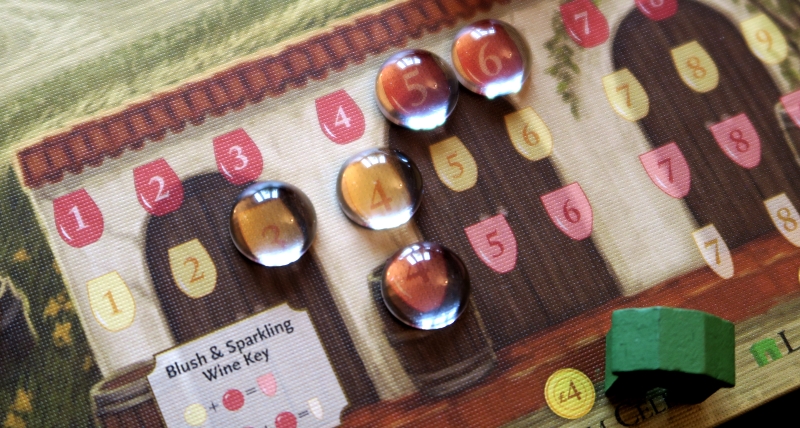
Viticulture
– Image by boardGOATS

This time, however, the group decided play with the Tuscany expansion and the Moor Visitors card deck.  Tuscany replaces the main board with a larger board, but also re-structures the phases so that there are now four seasons to place workers.  It additionally adds a small map where players can place star-eeples to gain a bonus and points at the end of the game for the player with the most influence in this area.  Tuscany also brings in structures, which players can build to enhance their vinyard and use to gain more points.  It also lenghtens the game slightly, ending when a player passes twenty-five points rather than twenty in the base-game.

Tuscany
– Image by boardGOATS

Everyone knew the game well, so after just a few rules clarifications the game was underway with everyone opting for the the now standard trategy of selling a field for an early influx of cash.  Mint started with some really nice building cards including one which enabled her to harvest multiple fields at the same time.  Plum was less enthused by hers and recycled them—as she had begun the game with the Cottage she was picking up extra Visitor cards every Autumn.  She made a concious decision not to choose to “wake up” first, which meant she never went first or last in the turn order and when she chose the start bonus of “age grapes” she forgot to take advantage of it.  This was clearly catching as Byzantium did something similar when he chose the same starting position.
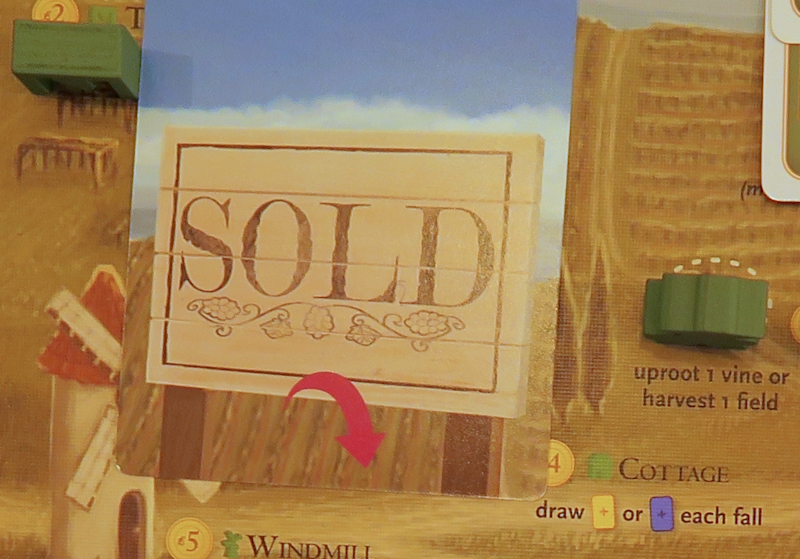
Viticulture
– Image by boardGOATS

The Tuscany expansion also adds Special Workers which have their own special abilities and players can train one of their workers to have each of these.  This time they were the Farmer and the Builder, with the latter from the Special Workers promo.  Respecively, workers with these powers, allow the player to choose a bonus (even if they are not on a bonus space) and save two lira when building.  A priority is always to get more workers early in the game, but whether to upgrade them is a difficult decision as it costs an extra lira and cash is always so tight in this game.  These proved quite popular though as going second in a location with a Farmer still gave a bonus.
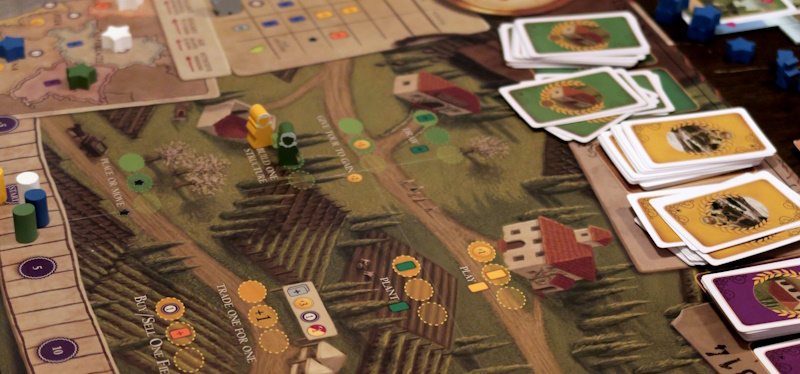
Tuscany
– Image by boardGOATS

Pink got his head down making wine early as he picked up two really nice, achievable and valuable contracts early in the game, which gave him a solid start.  However, it was a very long time before anyone actually really started scoring points as everyone concentrated on building their vinyards before putting them into action.  For example, Plum, needed a Trellis for her first grapes, although having a Builder reduced its cost.  Eventually she also built a Penthouse which gave an extra point when making high quality wine over a value of seven and with those in place was in a position to start growing, harvesting and turning grapes into wine.
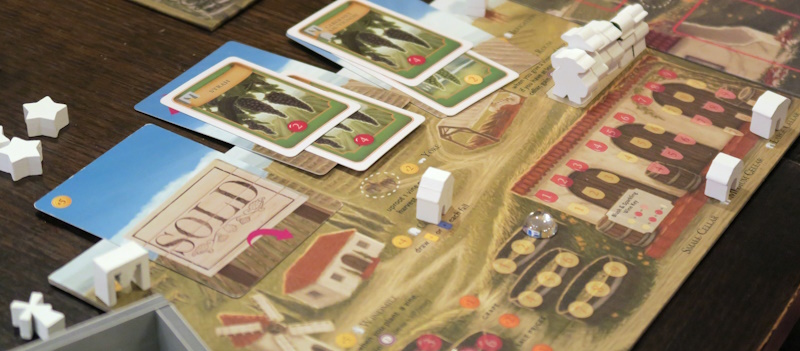
Tuscany
– Image by boardGOATS

At one point, Plum played a two Visitor card combo that gaver her a grape which she was immediately able to sell at tripple the normal price.  Otherwise, everyone mostly focussed on turning grapes into wine and completing contracts for points, although Pink did turn cash into points as well.  As is always the way with Viticulture, there was a sudden cascade of points, and with four experienced players it was a tight game with all four finishing over the twenty-five point finishing line.  The winner was Pink, however, who finished with thirty one points, three more than Plum who took second (no, Pink wasn’t going to let her win, even on her birthday!), and Byzantium and Mint tied and shared the last spot on the podium.
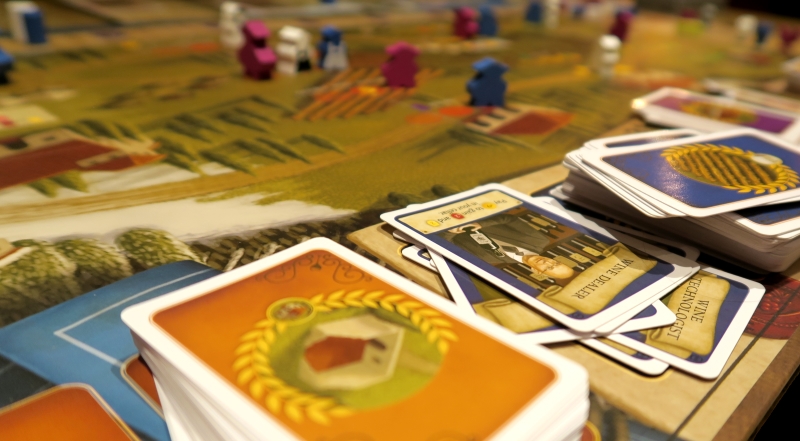
Tuscany
– Image by boardGOATS

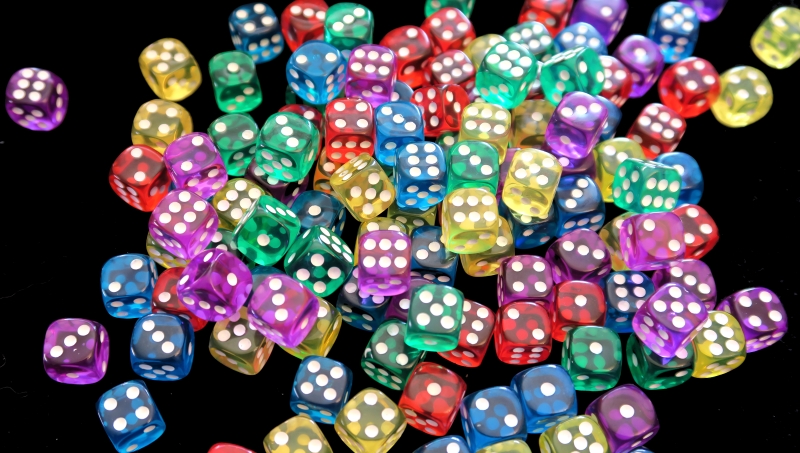
The third table, comprising Black, Purple, Pine, Sapphire and Lime, started with a game of Sagrada (with the 5-6 player expansion).  This is a fairly simple game of dice-drafting, where players are placing dice to create stained glass windows.  Dealt at random, each player begins with a private objective card and two double-sided Window pattern cards, choosing one side to play with and taking the number of Favor tokens marked on the chosen pattern.  Three Tool cards and three public objective cards are placed in the communal central area and the first player rolls all the dice.

Sagrada
– Image by boardGOATS

In “serpentine order” (i.e everyone taking a turn in order then taking a turn in reverse player order), players can use any Tool card (paying one Favour token for the first use, two thereafter) and then choose one die from the pool and place it on an open space in their Window.  The first die must be placed on an edge or corner space and every other must touch another die diagonally or orthogonally.  Dies must match the colour or value depicted on the space if there is one and may never be orthogonally adjacent to a die of same color or value.  Players may choose not to take a die on their turn, but that will leave an empty space and each one costs a point at the end of the game.
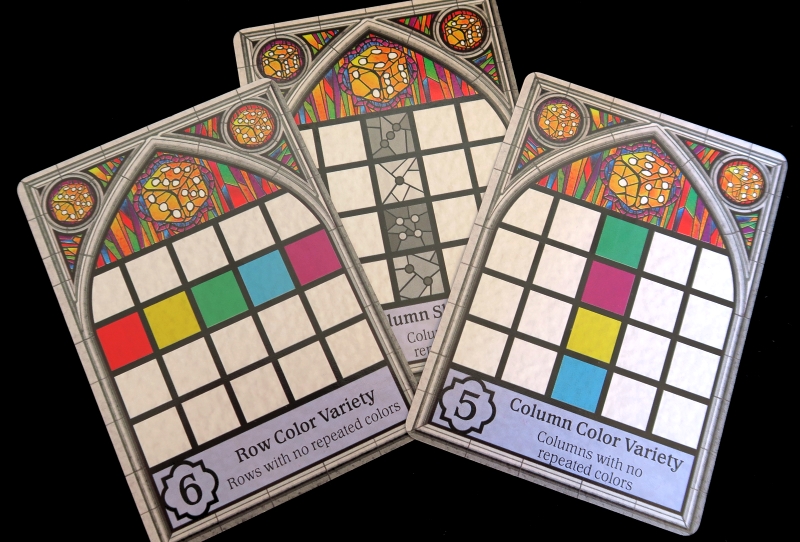
Sagrada
– Image by boardGOATS

The game ends after each player has had twenty turns after which players score points for each public and private objective achieved adding one point for each remaining Favour token and and deducting a penalty point for each empty space.  Even though there were five, the group played by these standard rules rather than adding the optional private dice pools from the expansion.  The communal goal cards gave points for placing pairs of dice with a value of three and four; sets of dice with a value of one to six and rows with no repeated numbers.  As is always the case with dice games, this game is all about riding the luck of the roll, but it can play havoc with people’s plans.

Sagrada
– Image by boardGOATS

For example, on Pine’s first turn a roller six of the dice had a value of two, but nobody wanted them.  Later in the game he rolled again, this time rolling no twos when at least two people desperately wanted them!  When the game came to an end, there was just the scoring.  Honours were pretty much even for the first two communal objectives.  Purple managed to score once for the lucrative, one row without repeated numbers objective, while Sapphire and Black scored it twice and Pine three times.  Scores for the private objectives were almost identical for Sapphire, Lime and Pine.  In total that gave Pine victory, nine points ahead of Sapphire in second and sixteen ahead of Black in third.
Sagrada
– Image by boardGOATS

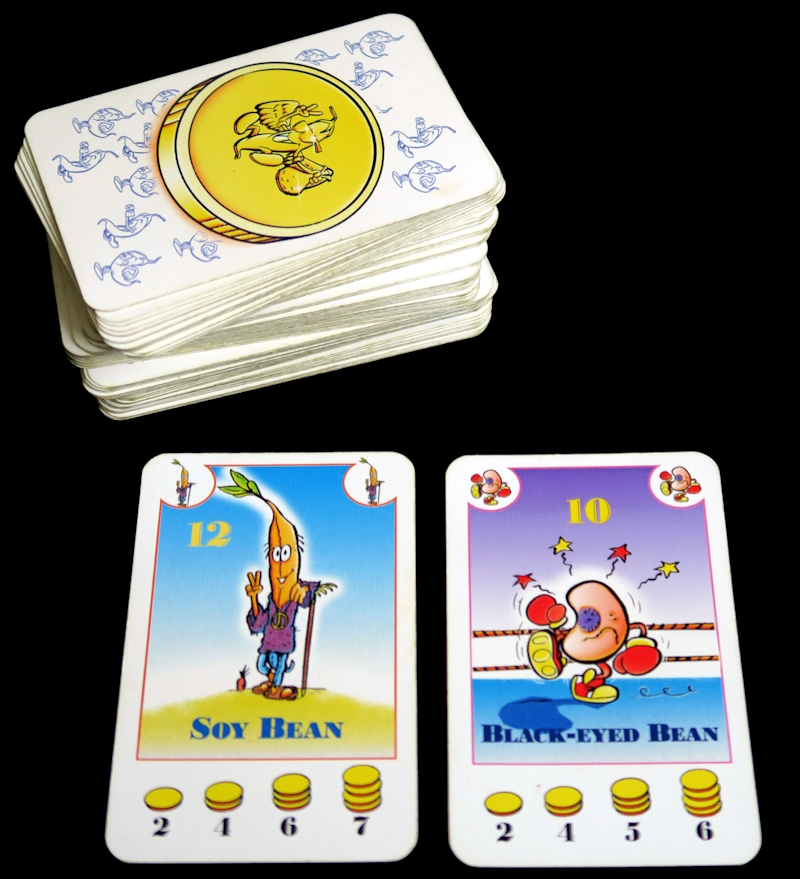
The other games were still going and looking like they were giong to take the rest of the evening, so the group looked around for another game that played five.  From the other side of the room Blue suggested Bohnanza, and as Sapphire thought he’d never played it, the group decided that wasn’t a state of affairs that could continue.  This is a popular game within the group as it is a lot of fun, even though a game about bean farming and trading sounds very unpromising.  Played with cards, the key mechanism is that the order of players’ hands cannot be changed—they can only be manipulated by in-game play.  So, on their turn, players must play the first card in their hand into one of their two “Bean Fields”, and may play a second if they can.

Bohnanza
– Image by boardGOATS

Beans can only be added to empty fields or to fields of the same type.  A field can be harvested at any point, but the aim it to maximise the yield.  Once the active player has played from their hand, there is the flop: two cards are played from the deck onto the table.  These must be planted before the next phase, but can be planted in the active player or by any player with their agreement.  Sometimes these are gifted, sometimes they are traded, and this is how players can manipulate the cards in their hand, by trading away undesirable cards.  Once the cards on the table have been disposed of, then the active player can trade any card in hand before replenishing from the deck to end their turn.
Bohnanza
– Image by boardGOATS

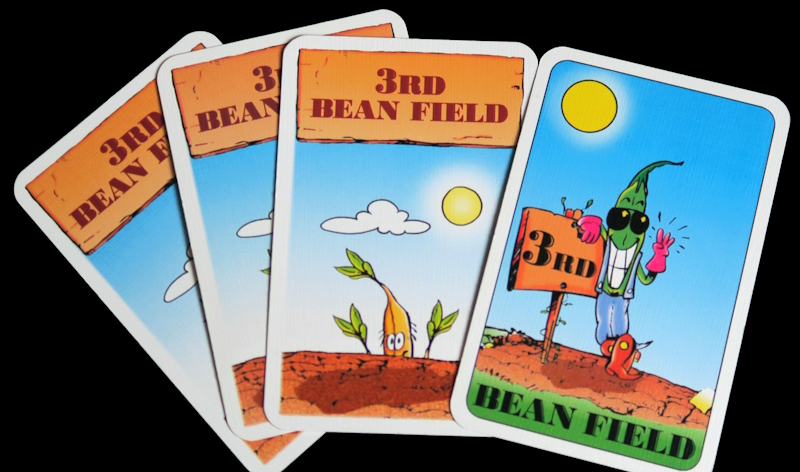
The game ends after three passes threough the deck, but while the first pass seems to take forever, the last always goes like lightening because many of the cards are now in players’ score piles.  Further the balance of the cards changes as the game progresses, with rare cards disappearing as they are turned into “Thaler” and get stuck in players’ stash.  Players can spend some of their riches on a Third Bean Field, but this is only really productive if carried out early in the game.  This was a strategy adopted by Pine this time—unusually for him.
Bohnanza
– Image by boardGOATS

It paid off almost imediately as Pine collected two of the super-rare cocoa beans, and soon added a third.  Black commented that he’d get the fourth, and Pine couldn’t hide his delighted laugh when he immediatly picked it up!  The winner was Lime though who finished three points clear with twenty, leaving Pine to take second and Black to make up the podium.  The question was, however, had Sapphire enjoyed it?  Sadly, the answer was a resounding “no”.  Worse, it turned out that he had played it before, and had disliked it so much that he’d blocked out the experience.  Such a shame, but some games are not for everyone…

Bohnanza
– Image by boardGOATS

Learning outcome:  You don’t have to know how you win, you just have to score more points.
10th December 2024

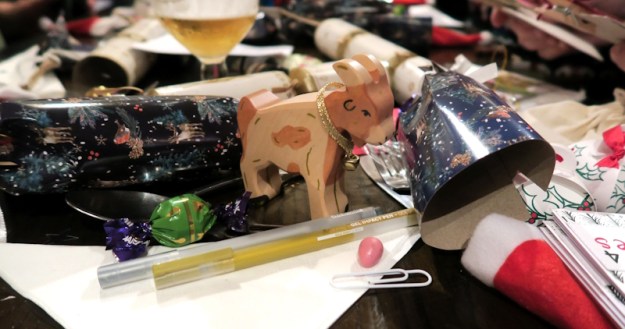
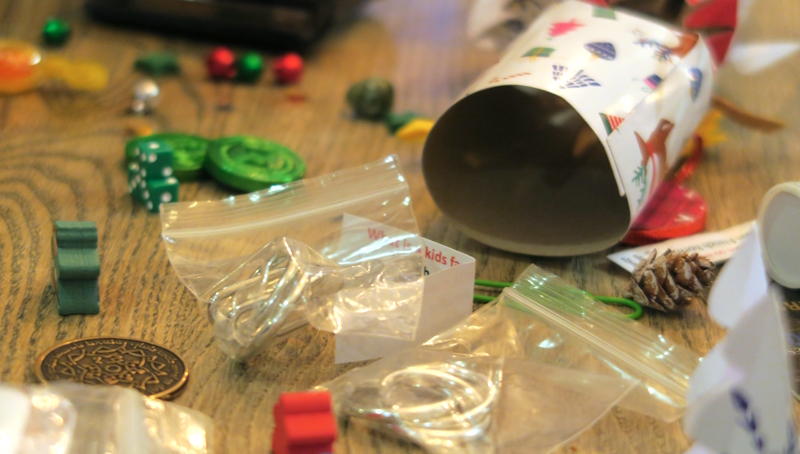
Everyone had already arrived and was waiting in anticipation when Blue and Pink arrived with piles of gamers crackers, Christmas tree decorations, party poppers, paper parcels, mince pies, festive cakes (with carrot meeples on top) and GOAT Award voting forms.  Food quickly followed along with a volley of noise as people tried to pull their crackers and party poppers first so the contents didn’t land in their supper.  As people munched, there was some discussion about the games played and voting forms were filled in.  In the absence of Green, Pine kindly offered to act as returning officer and collate the statistics.

"Un-Christmas Party" 2024
– Image by boardGOATS

While cake and mince meat parcels were shared round, toasts were offered by Lime to the organisers, and in the memory of Burgundy.  He is much missed and will never be forgotten, but we always make a special point of remembering at this time of year, especially as the Un-Christmas Dinner was his last games night with us.  The GOAT Awards were then announced.  Moment of the Year was when Pine got the end game rule wrong for Tonga Bonga, so that Pink thought he’d won, but then didn’t.  The GOAT Poo Prize for the least popular game of the year went to Ca$h ‘n Guns—not a game the group plays often and its only outing over the last year was at the New Year Party.

"Un-Christmas Party" 2024
– Image by boardGOATS

Then it was time for the Golden GOAT.  Previous winners were ruled out, but other contenders included Akropolis, Kavango, Flamme Rouge and Ticket to Ride: Rails & Sails.  The clear winner of the 2024 Golden GOAT Award, however, was Stamp Swap.  There was much discussion about how this was the third winner from Stonemaier Games (after Tapestry last year and Wingspan in 2019) and how we should invite Jamey Stegmaier, to collect the award in person.  Email correspondence over the following few days suggested that while it was unlikely he would be able to come to GOATS, he will be in the UK next year and just might make it as far as Oxford.  In the meantime, he has highlighted the award on his website.

Golden GOAT - 2024
– Image by boardGOATS

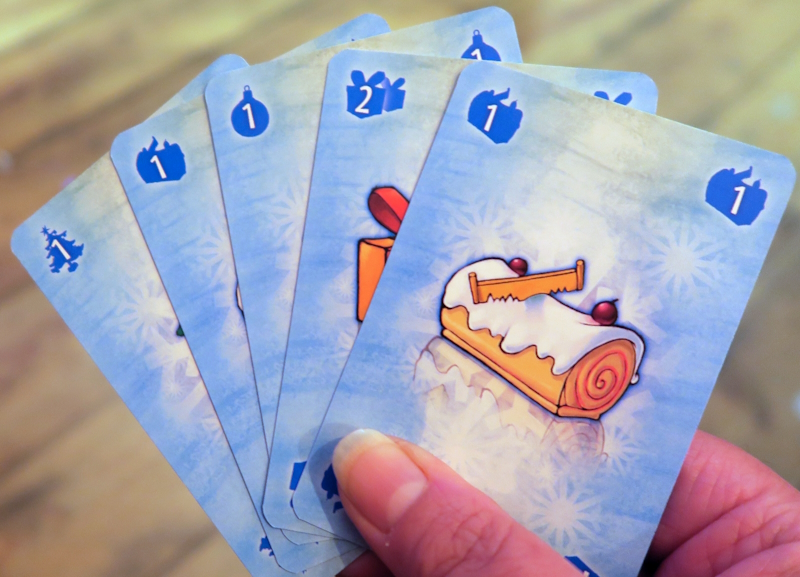
With the festive business over, the group broke into three to play some games.  Pink, Blue, Black and Jade began with the “Feature Game“, Courses De Rennes (aka Reindeer Races), a fun little game where players control a team of four reindeer, racing along four different tracks to try to get the highest-scoring tiles.  On their turn, each player can either draw two cards (with a hand limit of seven) or play as many cards of the same type as they can to move one reindeer along one of the tracks.  The cards are numbered and have suit that corresponds to one of the tracks (or are Elfy, and “wild”).  If two and a three of Gifts is played, the player may move one of its reindeer along the Gift track.

Course des Rennes
– Image by boardGOATS

If a reindeer lands on the same space as another reindeer, it slides forward a space.  If that is occupied too, it continues to slide.  If, however, the owner cries “Thump!” as it lands, the reindeer slithers an extra space forward.  The first reindeer to arrive at the end of a track claims the highest value token.  The game ends when two of the tracks have run out of tokens.  Pink too the first points, and with it a strong early lead.  A few rounds later, Jade took the last token from one of the tracks and with it ended the game.  He got very unimpressed looks from Black and Blue as he gifted victory to Pink, so once this was pointed out, Jade revised his move and play carried on.

Course des Rennes
– Image by boardGOATS

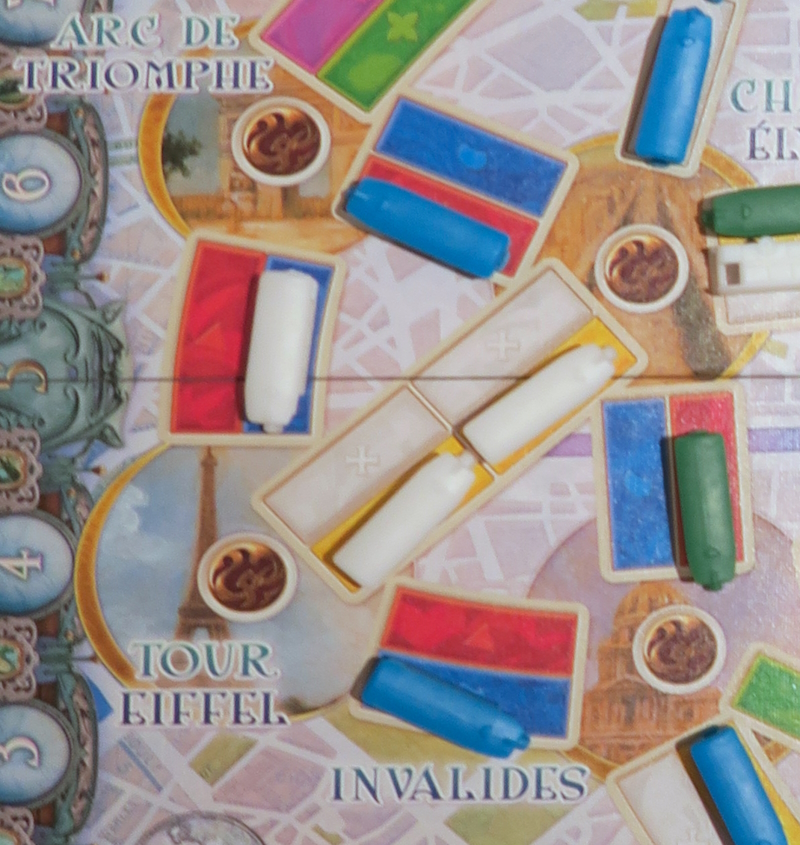
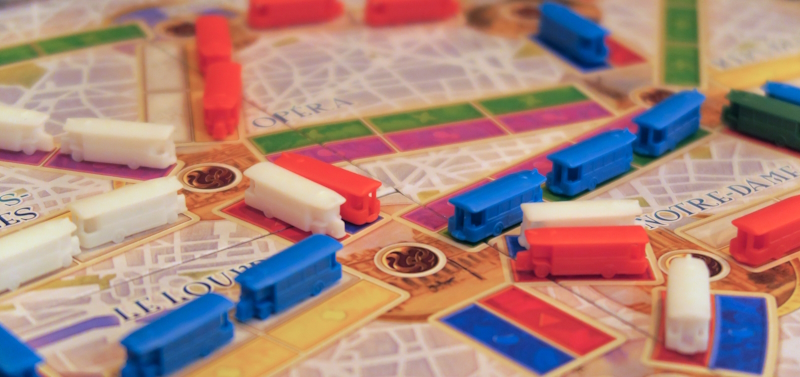
Ultimately, however, it didn’t really change things as Pink still took victory with twenty-two points.  He was long way clear of Jade who won the tight fight for second with fifteen just one point ahead of Black who, in turn, took third by a single point.  Everyone else was still playing, so the group looked for something else to play.  Black had won a copy of Ticket to Ride: Paris in the raffle and, although it wasn’t very festive, it seemed appropriate to give it an outing.  Some of the GOATS had played this mini-city variant of the popular train game earlier in the year when we marked the Olympics with sport and France themed games.  However, none of the current quartet had been part of that group.

Ticket To Ride: Paris
– Image by boardGOATS

The rules are much the same as all the others (take two cards from the market; play cards to place pieces on the map; collect Ticket cards to score points at the end), but like all the variants, Paris has a special rule.  When players claim a red, white, or blue track, they get a card, when they get all three colours they get four “Tricolore” bonus points.  When the game first came out, there had been comments about how this felt very bolted on, but in practice, it was much more interesting than it sounded.  This time, the in game scoring was quite tight, though Blue, with her trains across the city centre got her nose in front and led by six points.  Tickets can make a huge difference to scores though, as they can give a lot of points, both positive and negative.

Ticket To Ride: Paris
– Image by boardGOATS

Black, Pink and Jade all picked up similar points for their completed Tickets (ten, eleven and eight respectively), though Jade was unlucky and unable to complete his last one.  Blue, however, made good use of concurrent routes and scored a massive twenty-four points for hers giving her something of a landslide victory with a total of forty-six.  It was much closer for second which went to Pink who finished with twenty-nine, two points ahead of Black.  Meanwhile, on the other side of the room, Purple was leading Ivory, Plum and Byzantium in one of her favourite Christmas themed games, Christmas Tree.

Christmas Tree
– Image by boardGOATS

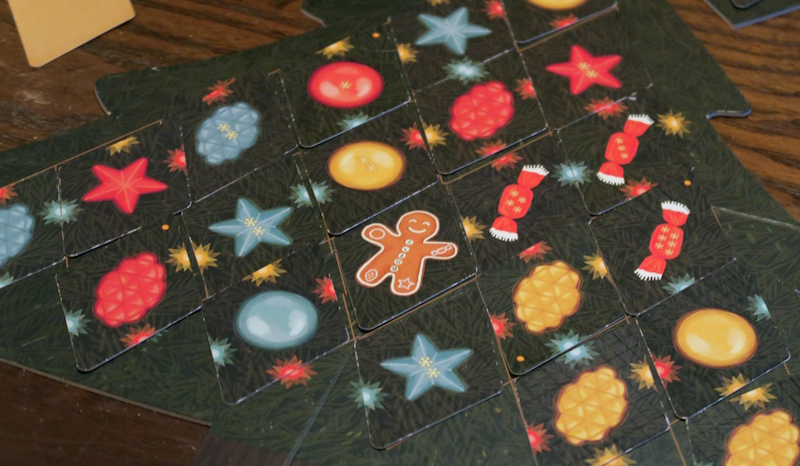
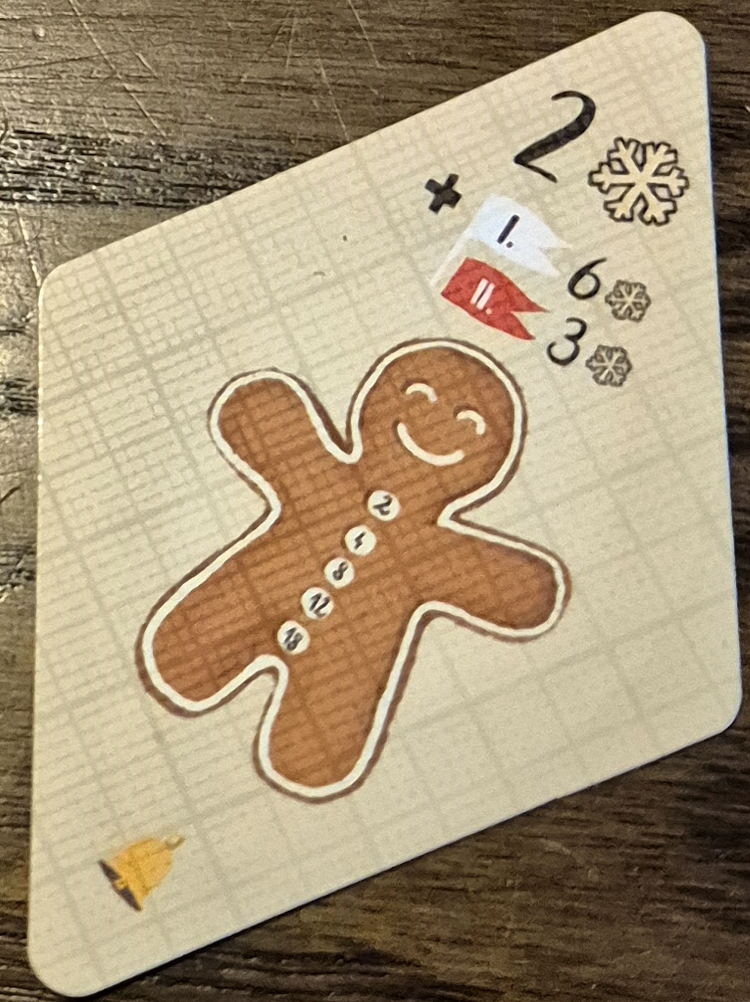
This is a fairly simple little card-drafting game played over thee rounds, where players are “decorating their Christmas Tree” with diamond-shaped cards, where players score points for the Objective cards everyone contributed to a central pool at the start of the round.  This time, the group played from the advanced set of Objective cards (including all three levels) although the first round, the cards were all levels one and two.  These gave one point for each blue or “nobbly” ornament, four points for each pair of ornaments of the same colour and shape arranged in a vertical pair and six points for three specific shapes in a given arrangement.

Christmas Tree
– Image by boardGOATS

The first round started off slowly with everyone looking to fulfill some of the Objectives—everyone was successful, but Plum and Byzantium got off to a better start.  Plum placed her first Gingerbread man and then concentrated on placing vertical pairs although she only managed that once.  In the second round the Objectives were from the more complicated sets, including six points for three specific colours in a given arrangement, six points for the same three shapes or colours in a set pattern, or eight points for four ornaments with the same point value arranged in two set formations.  This time, Byzantium significantly out scored everyone with multiple objectives scored multiple times and, as a result, built a big lead.

Christmas Tree
– Image by boardGOATS

Plum used one of her Biscuits to move baubles around to make a row of four contain the three colours of glass bauble.and thus scored well, whereas Ivory was focusing on picking up high value Sweets and surrounding his Gingerbread men.  The final set of Objectives included six points for a set arrangement of certain point values, eight points for four ornaments with the same point value arranged in a particular arrangement and five points for each row in which the total points of the glass were above the given amount. Finally, there were two points for each Gingerbread man, with bonuses of six and three points for the player with the most/second most Gingerbread men.

Christmas Tree
– Image by boardGOATS

In the third and final round, Byzantium again out scored everyone, scoring multiple times for the set arrangement of certain point values.  At this point, Ivory was full committed to Sweets and Gingerbread men, especially knowing he was putting in the Gingerbread man Objective, which he scored well for.  Plum and Purple also scored well in the final round, with Plum following a strategy similar to Byzantium, whereas was Purple was collecting sweets like Ivory.  It looked like Byzantium was going to win by a large amount, as he was fifty points ahead of everyone else and was scoring more than anyone else for Lights and Baubles too.

Christmas Tree
– Image by boardGOATS

Ivory’s focus on surrounding his Gingerbread men gave him over fifty points and with more than thirty for his sweets he finished with one hundred and seventy one points, pipping Byzantium to victory by just two, with Plume in third some twenty points adrift.  The puzzly nature of the the game had gone down well and with the Christmas theme everyone had enjoyed playing Christmas Tree.  On the next table, the festive link was much more tenuous, however.  Teal, Pine, Sapphire and Indigo had chosen 6 Nimmt!, because there was a twelve in it, representing the Twelve Days of Christmas (or perhaps they had just wanted to play the game and if you can’t play a daft party game at Christmas, when can you?).

6 Nimmt!
– Image by boardGOATS

6 Nimmt! is a popular game with the group at any time of year, though it is usually played with more than four people.  Either way, the game is very simple to play, though tough to play well.  Some say this is because there is a lot of chance in the game, but they are usually the people who do badly…  The idea is that players simultaneously choose a card to play and these are then added, in order, to the rows of cards on the table.  The player adding the sixth card, instead, takes the first five cards into their scoring pile.  Usually, we deal out half the cards for the first round and the rest for the second and the winner is the player with the fewest “nimmts” (or points), at the end of the two rounds.

6 Nimmt!
– Image by boardGOATS

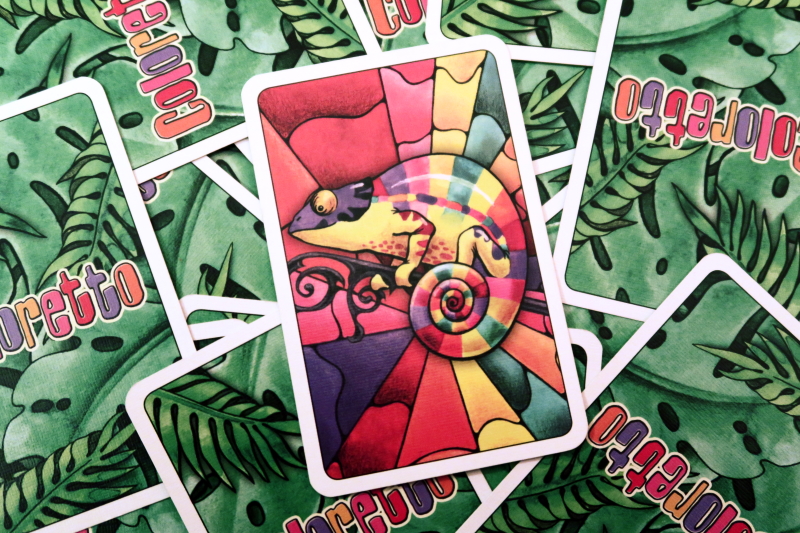
This time, however, the group decided to play the multiple-hand variant where each hand has ten cards, and the game ends when someone’s score passes sixty-six.  And that was Sapphire, who finished with an exceptional total of ninety-five.  The winner was Teal with forty-four, however, who was just two points better off than Pine.  The other games were still ongoing, but there was still time for one last game for this group (who were joined by Navy) before everyone went home warmed by the Christmas Gaming Spirit—and their choice of game was Coloretto (apparently this is a  festive game because it includes red, green and gold Chameleons).

Coloretto
– Image by boardGOATS

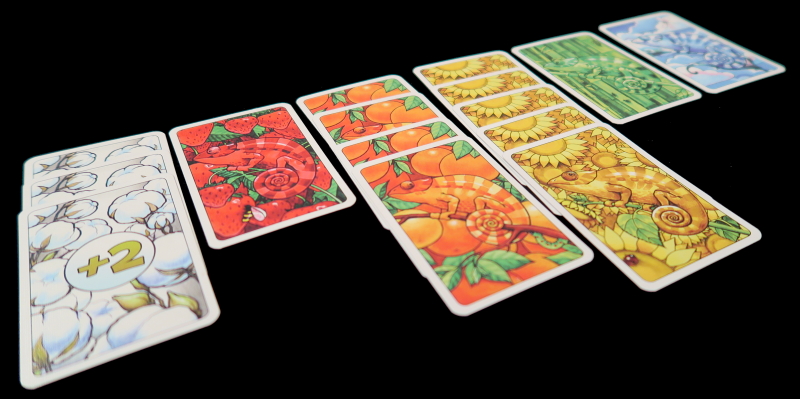
This is another simple filler game, where players either take a card and add it to a truck, or take a truck.  Each truck can take a maximum of three Chameleons, with players collecting coloured sets.  The largest three sets score positive points (according to the Triangular Number Series), while all the others score negative points.  In this way, the bigger the series the more additional cards will score, so the aim is to collect three large sets and ensure the others are as small as possible.  This game was really tight, with Sapphire claiming victory with twenty-seven and Teal and Indigo tying for second on twenty-four.  And with that, people began to drift off, many not to be seen until 2025.
Coloretto
– Image by boardGOATS

Learning outcome:  GOATS love a Cracker!

Golden GOAT Award Winners – 2024

This week was the annual boardGOATS Un-Christmas Dinner including the voting to decide the winners of the GOAT Awards.  There are two main awards:  the Golden GOAT for our favourite game played during the year and the GOAT Poo Prize for our least favourite.  Everyone had the usual three points to hand out for the Golden GOAT Award (plus a bonus if wearing Festive Attire), though a maximum of two points could be given to any individual game.  Everyone could also nominate up to two individual games for the GOAT Poo Prize.

Tonga Bonga
– Image by boardGOATS

This year, the unofficial “Marmite Award” went to Viticulture—something many people seemed to find quite a surprise as it is generally not a divisive game and one that few would usually take offense at.  There had been a lot of fun throughout the year, but one of the more memorable moments was Pine getting the end game rule wrong for Tonga Bonga, so that Pink thought he’d won, but then didn’t.  There were several nominations for the GOAT Poo Prize, including King of Tokyo, Rolling Realms and Ark Nova, but the winner was another surprise: Ca$h ‘n Guns—not a game the group plays often, indeed it doesn’t get played at all at the pub (for obvious reasons), so its only outing over the last year was at the New Year Party.  It can be a lot of fun, but it is also easy to see how some might not like the game.

Ca$h 'n Guns
– Image by boardGOATS

Then finally, there was the Golden GOAT Award for the best game played in the year.  Previous winners were ruled out, but there were plenty of other great games to choose from.  The most popular of these were Akropolis, Kavango, Flamme Rouge and Ticket to Ride: Rails & Sails.  However, the clear winner was Stamp Swap.  This is a new game, only released in September, but was an immediate hit, largely thanks to its silky-smooth game play.  As one person commented, “I wouldn’t have thought a game about stamp collecting would be up my street, and yet…”

Stamp Swap
– Image by boardGOATS

Perhaps more remarkably, this is the third winner from Stonemaier Games after Tapestry last year and Wingspan in 2019—three very different games.  This led to the perhaps slightly tongue-in-cheek suggestion that the group should invite Jamey Stegmaier to visit so we could present him with the actual Golden GOAT in the manner of the Jules Rimet Trophy

Golden GOAT - 2024
– Image by boardGOATS

26th Movember 2024

Plum, Jade, Sapphire and Mint were first arrive, and while they were waiting for food, settled down to a game of Hiroba, a sort of board game “Sudoku” where players place their numbered pebbles to take control of the most gardens.  As in Sudoku, players must never have two pebbles of identical value in the same garden, row or column.  After a couple of false starts the group eventually figured out the rules.  This time, Sapphire got in early with the lowest stone number between two Koi carp ponds, ensuring he got both. Plum only got two ponds, so although she got a reasonable number of areas, others overtook her by using the Koi pond multipliers.

Hiroba
– Image by boardGOATS

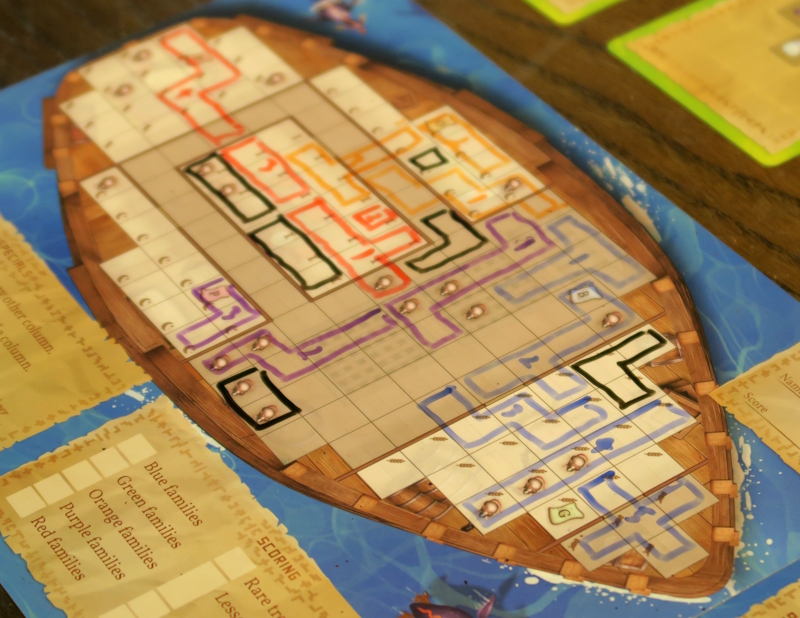
Food arrived during the game, and some were still eating when the final count (and recounts) took place.  Despite Sapphire’s great start, Mint’s total of thirty-five gave her victory by a single point pushing Sapphire into second and leaving Plum in third.  Meanwhile, since Hiroba was underway when Cobalt arrived, he settled down to a solo game of Explore & Draw, the Roll & Write version of Isle of Cats.  The game play is similar with players now drawing polyomino shapes on their ship board, but choosing a set of cards each round instead of drafting them.  In the solo game, the player is competing against his “sister” and this time won by forty points to her thirty-six.

Isle of Cats: Explore & Draw
– Image by boardGOATS

Once everyone had arrived (except Teal who had given up battling the crazy flood-water and gone home) and had finished eating, it was time for the “Feature Game” which was to be Rolling Realms/Rolling Realms Redux. This was advertised as a light roll and write game, but turned out to be rather more involved than everyone expected.  It was developed during the global pandemic as a print-and-play game, but has since been released as two professionally produced games.  Each game consisting of a number of small games based loosely on other games, with more are available to be purchased separately.

Rolling Realms
– Image by boardGOATS

The idea is that players choose three “mini-games”, or “Realms” for each of three rounds.  Then, two dice are rolled and allocated separately to two of the three games.  After nine rolls, players add up the number of starts they’ve achieved in the round.  The winner is the player with the most points after three rounds.  With three copies of the game and several people familiar with it, it should have been a relatively straight-forward game, but with so many different mini-games, players effectively had to learn the rules each round.  As the games play six and there were three copies, the group decided to play one large game. and started with the same three mini-games, based on three of our favourite games, Tapestry, Meadow and Flamecraft.

Rolling Realms
– Image by boardGOATS

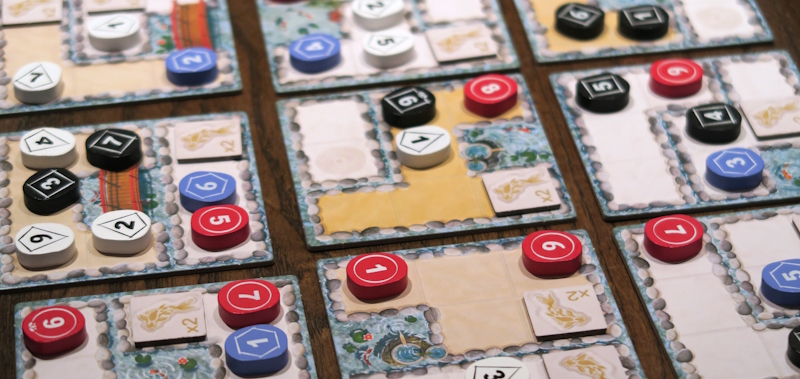
And this was where the first problem arose.  The Tapestry mini-game was quite straight-forward, with players trying to fill their grid using polyomino shapes.  However, Meadow and especially Flamecraft, both from the Redux version of the game were more difficult to understand.  The Meadow mini-game was based on the card market with players choosing “cards” and using them to score points and collect resources.  The Flamecraft mini-game caused a lot of confusion with different “Enchant” and “Gather” actions, which are loosely based on the actual game, but it took a while to work out what they did and how to use them.

Rolling Realms
– Image by boardGOATS

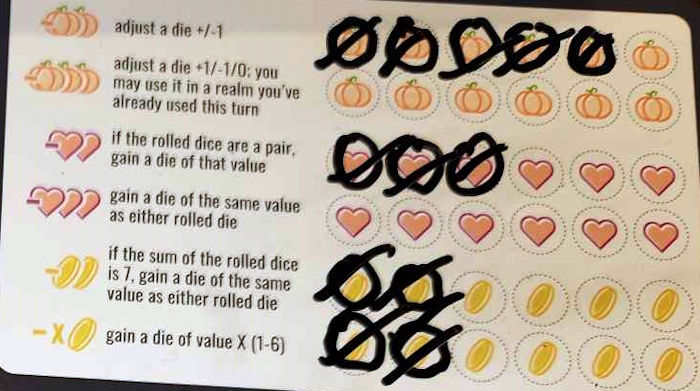
All three games involved players doing things to collect Stars, but the real aim of the game is to collect resources (Pumpkins, Hearts and Coins).  These allow players to modify dice, use them both on the same Realm, and most importantly, gain extra dice to give extra actions—these are essential as without them, players don’t get enough turns to get the more challenging Stars.  With so many people playing and the difficulties in getting heads round rules, the group ended up splitting into three tables.  Plum, Jade, Sapphire and Mint were first to get going and were first to finish the first round.  Plum was the victor, and the group went on to play Dinosaur Island, Stamp Swap and Ark Nova for their second round.

Rolling Realms
– Image by boardGOATS

The second group consisting of Blue, Pink, Ivory, Lime and Pine, were a bit slower as they struggled a bit more with the rules, particularly Pine.  As a result, they were a bit slower to get to the end of the first round, with Blue and Ivory leading the way.  This group decided to reduce the rules overhead by keeping one of the Realms from the first round, the easiest to understand, Tapestry.  To this, they added Between Two Castles and My Little Scythe, both from the original Rolling Realms game, as they thought these might be easier to grok, which they generally were.  In their second round, Ivory and Blue were still fighting it out, but this time they were joined by Pink, with Pine not far behind.

Rolling Realms
– Image by boardGOATS

The comparative success of the second round and keeping one Realm and choosing two from the original game, meant they repeated the strategy for the last round.  This time they kept the Between Two Castles Realm and added Between Two Cities and Scythe.  By the final round, everyone seemed to have got the hang of things as the scores were much closer.  In terms of totals though, Blue just had the edge over Ivory, with Pink in third.  The other table had finished first though, with Tidal Blades, Between Two Cities and Euphoria as the Realms in their final round.  Plum had continued her success in the first round winning both the second and third rounds and therefore, taking overall victory.

Rolling Realms
– Image by boardGOATS

Second place was less clear, however, with Sapphire just beating Mint for second place.  The third table consisted of Cobalt, Black and Purple.  Cobalt had played before, but online while Purple and Black were new to it.  They also struggled a bit and took a more leisurely approach to the game, playing just two rounds.  Their second round Realms consisted of Scythe, Potion Explosion and A Feast for Odin, the last two both add-on packs, and therefore possibly more challenging than those from the base game.  Cobalt won the first round by a bit of a land-slide, but the second round was very close between all three players, with Purple just beating Cobalt (who took overall victory).

Rolling Realms
– Image by boardGOATS

Learning Outcome:  Sometimes, one person’s simple game can be another’s nemesis.

8th October 2024

As it was our twelfth birthday party, lots of people arrived early for pizza (or an amazing Mixed Grill in the case of Lime and some lovely veggie curry and fiery chilli for Pine), followed by GOAT cupcakes.  While everyone waited for food, arrivals from Essen were handed out, including Nucleum, Faraway and Flamme Rouge expansions; Let’s Go! To Japan and Cascadia mini expansions, and Die Wandelnden Türme (aka Wandering Towers), Keyflower and Dixit promotional items.   There was a lot of chatter too, about flooding, pot holes, the 34 road closure, full car parks and water leaks, as well as Essen.  Indigo and Navy weren’t eating, so had a play with Villagers while the others entertained themselves.  This is a card game where players “Draft” Villager cards from a market (called the Road) and then add them to their Village.

Villagers
– Image by boardGOATS

Some Villagers have prerequisites before they can be “Built”.  These are cards that must exist in the player’s Village before the Villager can be added on top to make a chain, cards that must be unlocked by paying money to other Villagers in their own Village, someone else’s Village or the Bank.  Some cards allow players to draft extra cards, while others enable players to Build extra Villagers and Special Villagers give powerful special actions.  Twice during the game there “Market” Phases when players get income from their cards, and the player with the most money at the end of the game is the winner. Somewhere along the lines, Indigo and Navy had a bit of a rules malfunction, and as everyone else had already started the now traditional birthday “Feature Game“, Crappy Birthday, they abandoned Villagers.

Crappy Birthday
– Image by boardGOATS

Crappy Birthday is a party game where players give each other comedy birthday presents and the recipient has to decide who gave the best and worst gifts.  We play a slight variant of rules as written, where we play a single year of birthdays with each gamer getting one turn to receive gift cards from everyone else from their hand of five cards.  With lots of players the pile of gifts can get quite substantial and this time everyone was getting thirteen gifts to decide which was the best and which was the worst.  The players who gave these then received a point for knowing the recipient so well and the player with the most points at the end of the year is the winner.

Crappy Birthday
– Image by boardGOATS

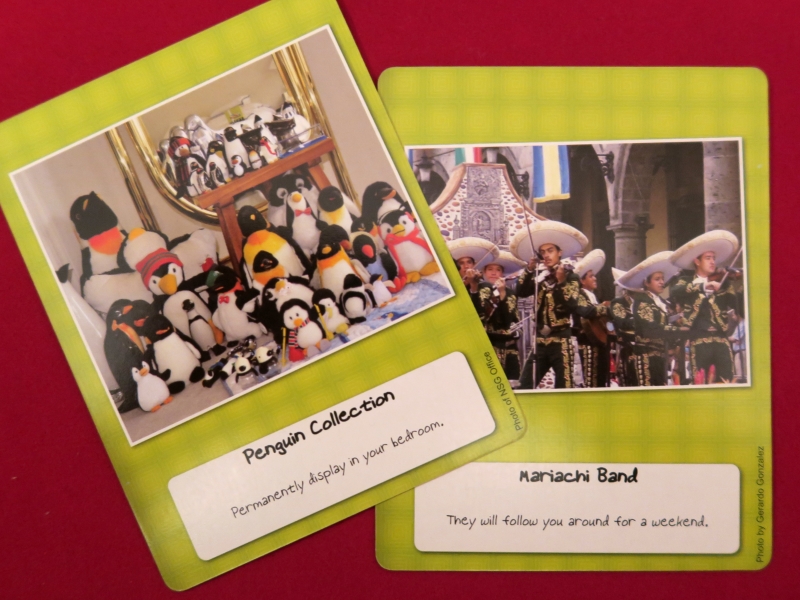
One of the reasons this game is so fun is that we learn a bit about each other.  Pink went first as his real birthday was next.  He liked the idea of an Easter Island Mo’ai for the garden (not that Blue was so impressed with the idea), but disliked the idea of cave scuba diving.  Plum chose a haunted castle as her favourite (because she loves castles), but pulled a face at the idea of earlobe stretching rings.  Purple had the matching neck rings, but these weren’t her least favourite gift, that was a giant swing ride, while she loved the idea of a penguin collection.  Byzantium showed his environmental credentials by picking a Global Warming Study as his favourite, while eschewing Jade’s wing suit dive gift.

Crappy Birthday
– Image by boardGOATS

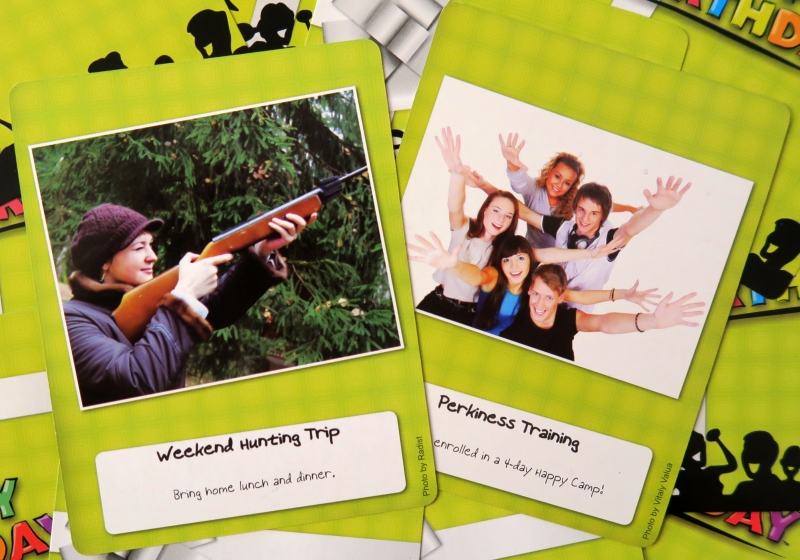
Teal felt that trees were quite beautiful enough without being carved, but really liked the idea of a ride-on bike mower.  Jade wasn’t a fan of Cobalt’s offering of Polka lessons, but loved the idea of trip to Mars from Sapphire, while Sapphire felt “perkiness training” wasn’t something he really needed, but the thrill-seeker loved the reciprocal gift from Jade, a roller-coaster ride.  Lime fancied a three day festival trip, but wasn’t keen on a week eating nothing but Spam.  Blue didn’t fancy the creepy baby sculpture to go with the Mo’ai, but fancied Pink’s gift of a Safari (provided she had time to train for the walking element).  Ivory didn’t feel his life would be improved by a free satellite TV dish, but always one to send his meeples into space in Tapestry, grasped the opportunity to join them with a space walk.

Crappy Birthday
– Image by boardGOATS

It turned out that Navy has a problem with bees, so Teal’s gift of a bee keeping which he personally would have loved, didn’t go down well, but much to Pink’s surprise, his gymnastics camp was received really well.  Indigo was quite abrupt in her negative response to the idea of paparazzi following her about, but liked the idea of exploring a volcano while Cobalt didn’t feel he needed his soul to be searched, but fancied flying lessons.  The final birthday of the year was Pine, who didn’t get his usual pile of horses and meat, instead getting the opportunity to run with the bulls, which having known someone who had done it and been gored, wasn’t something he fancied.  Pine’s favourite was Larry the Lobster (not that he has space in his garden for him), one of the Big Things of Australia, that Pink and Blue happened to see on their visit there last year.

Crappy Birthday
– Image by boardGOATS

Lime was the last to break his duck and was very pleased not to end the game without scoring any points, indeed, nobody finished with the dreaded bagel, which was nice.  The runniest of run-away winners was Teal though, with five successful (or unsuccessful) gifts, with Pink and Cobalt joint runners up with three.  It was interesting though, this time there were quite a lot of gifts that people gave “in error” where as Teal commented, he “Gave pressies he thought people would like, but they all hated them!”  With the birthday formalities dealt with, there was time for something relatively short.  First up was Jade who was very keen to give his new Faraway expansion, Le Peuple du Dessous (aka The People Below).

Faraway
– Image by boardGOATS

Faraway is a fairly simple little game, but one that really messes with your head:  players play cards from their hand of three, adding them to a row of cards, left to right, but at the end of they score the eight cards from right to left.  The Peuple du Dessous expansion adds just seventeen cards, but these include the Guides and the Three-Eyed Ones, two new Peoples with more opportunities to score, as well as giving enough cards to play with seven people.  This time there were only five though, with Sapphire, Byzantium, Indigo and Navy joining Jade.  Navy and Indigo were new to the game and, as usual, it took a little bit of getting used to.  That said, the both did really well with Indigo ending up with seventy-seven points, four more than Sapphire in second with Navy taking third, just one point behind.

Faraway
– Image by boardGOATS

Navy and Indigo headed off and took an early night, but the other three had to wait for Plum who’s game on the other side of the room was ongoing.  Faraway is a fun little game though and the expansion adds a little more, so the trio decided to give it another go.  This time, Byzantium was the victor with seventy-three with Sapphire the runner up again.  Meanwhile, Blue, Pink, Pine and Teal, got out Bohnanza.  This is a game that is generally popular with the group, though Teal had somehow only managed to play it the once almost six months ago.  This is a very simple card game, albeit slightly convoluted and very unpromising when explained, but the key is that players must not rearrange the cards in their hand.

Bohnanza
– Image by boardGOATS

On their turn, players must plant the first card in their hand in one of their two been fields and may plant the second if they choose.  They then turn over two cards from the deck, which must be planted before the player can move on.  Fields can only contain one bean type, but beans can be traded, or even gifted, and it is the trading and negotiation that makes the game such fun.  Once the two cards on the table have been planted, players can trade from their hand, but again all traded cards must be planted.  Players can harvest Fields at any time with some of the bean cards dug up becoming money and larger Fields giving more money and at a better rate.

Bohnanza
– Image by boardGOATS

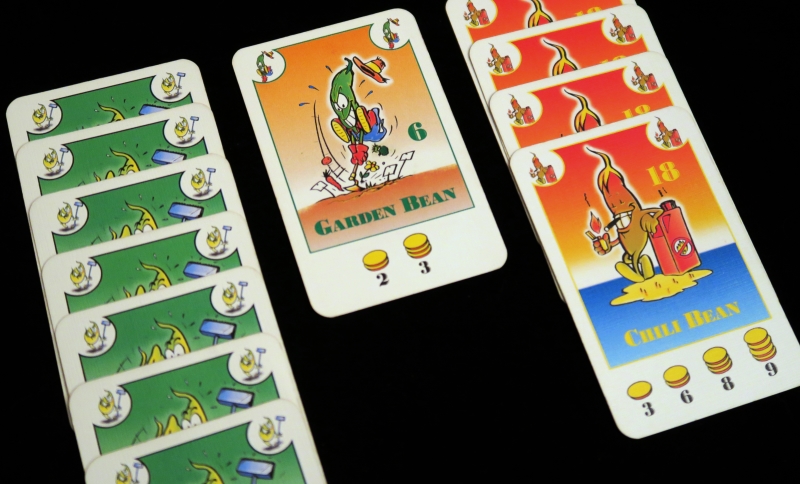
Blue took some high valued Garden Beans and then sold them off to buy a third Bean Field, causing a lot of confusion for Pink who couldn’t believe it when they kept appearing even though there were only six in the deck.  Teal scored well from his Chilli and Wax and Soy beans, while Pine and Blue ended up in competition for Green Beans.  This time with just four, the scores were a little more varied, but Blue was the clear victor with twenty-five Bohn Thaler, five more than Pine who came second.  The final game of the evening was Villagers, which was getting another outing on the other side of the room with Cobalt leading Ivory, Purple and Plum.

Villagers
– Image by boardGOATS

After a reminder of the rules, Purple started and grabbed the Carpenter then Cobalt went next taking the Blacksmith.  Both of these guaranteed their owners an income of coins (and hence points) at the expense of other players paying to use them. However, this did mean that they fell behind on building an engine to Draft and Build more cards (which Plum and Ivory focused on).  From there, the first half of the game went quite quickly with everyone focusing on building their engine. Ivory managed to get a Wine Trader using a Monk as a Graper, as well as playing a Scavenger, enabling him to take slender lead after the first scoring, although the scores were all very close.

Villagers
– Image by boardGOATS

In the second half of the game, Purple and Cobalt were beginning to have to make tough choices, being unable to play as many cards as they would like and not having the building cards they needed, which were also hard to come by. However, they continue gaining coins from all players. Purple had to discard quite a few cards to get starter cards which slowed her down a little, though Plum and Ivory were able to quickly get to the position to Draft and Build the max number of cards allowed; Plum in particular seemed to always have a fist full of cards.  As the game progressed, more people began taking cards that others might want, with Cobalt taking Wool cards that might have been of use to Purple or Ivory.  Ivory, however, was actually more focused on getting a second Vintner, already having a second Wine Trader in hand.

Villagers
– Image by boardGOATS

Towards the end of the game, there was face down Grape card which Ivory debated taking a gamble with, but decided not to take the risk.  Inevitably, when it was flipped over it turned out to be Vintner and Plum grabbed it. Ivory got very lucky during his next draft though, taking a face down Special card that was Monk, which he could then play as Vintner. Elsewhere, Purple played some Wool cards, getting two Weavers, Plum picked up some good end-game scoring cards in the Locksmith and Freemason. Cobalt focused on Solitary cards and Silver end game scoring, doing well from his Priests, Agent and Blacksmith combo. Ivory ended up focusing on the Hay cards, which scored well and that plus the two Wine Traders (and a second Scavenger), gave him a hundred and twenty-six and a two point victory over Cobalt.

2024 Birthday Cupcakes
– Image by boardGOATS

Learning Outcome:  Getting old is not necessarily a bad thing.

3rd September 2024

By the time Blue, Purple and Pine arrived, Cobalt was already half-way through a solo game of Isle of Cats: Explore & Draw, a “roll and write” version of the card-drafting, polyomino cat-tile-placing game, Isle of Cats.  In Explore & Draw, instead of drafting cards before choosing tiles, players choose a set of cards each turn and then draw their “discoveries” on their boats.  In this version of the game, players simultaneously choose a column from the Island (the central market) and action all three cards in it in order.  These could be three cards from the Cat deck, two Cat cards and one Lesson card, or two Lesson cards and card from the Cat deck.

Isle of Cats: Explore & Draw
– Image by boardGOATS

Cat cards are polyomino cards, Lesson cards are scoring cards and special Oshax and Treasure cards can be found in both decks.  Cats, Oshax and Treasures are all drawn directly on the boat on the worksheet, while lessons are ticked off and scored at the end of the game.  In the solo game, Cobalt was playing against his “Sister” who reveals a Cat Colour and a Lesson, every round and at the end of the game scores for the different Colours in that order and then the Lessons in turn.  This time cobalt made mincemeat of the Automa beating it by seventy-one points to forty-three.

Isle of Cats: Explore & Draw
– Image by boardGOATS

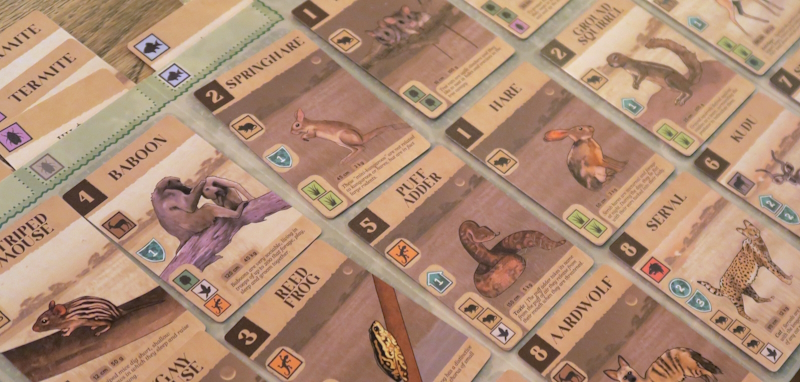
With everyone arrived by this time, it was just the “simple” matter of deciding who was going to play what.  Blue started off leading the “Feature Game“, which was Kavango.  This is a card drafting game where players are building an animal reserve by collecting tags and adding animals to their tableau.  As such, it takes familiar elements from games like Sushi Go!, 7 Wonders, Wingspan, Meadow, Ark Nova and Terraforming Mars, but has a different feel to all of them.  In each round players draft and play ten cards (from an initial hand of twelve), that is to say they choose a card and pass the rest of the cards on to the next player.

Kavango
– Image by boardGOATS

After each card has been chosen, it is added to the player’s tableau.  Then players have the option of claiming money for achieving Research Goals and/or spending money on Poaching, Habitat and Climate protections.  These are required for some of the animals especially the more interesting and lucrative ones.  The clever part about the game is the way the decks progress.  In the first round, the deck is mostly made up of Producers (Grassland, Trees, Invertebrates and Fish) and small animals while the second has mostly medium, but some small and some larger sized animals.  The third and final deck contains almost exclusively larger animals like Zebras, Lions, and Elephants.

Kavango
– Image by boardGOATS

This makes it harder to get Producers in the final round (though it is still possible by paying for Rewilding), but players can often just play cards directly as they already have prerequisites that they acquired earlier in the game.  Throughout, the rules and mechanisms are rooted in reality.  For example, players are responsible for their own Poaching and Habitat protections, but Climate protection is everyone’s concern and players have to work on that together.  Similarly, before a player can have a Puff Adder, for example, they have to have enough small mammals and birds to feed it.  Likewise, if a player wants a White Rhino or an Elephant, they need sufficient Grassland and/or Trees to support them.

Kavango
– Image by boardGOATS

Each round, there are four Research Goals, each with several levels.  The Goals can each only be claimed once, so players generally have the choice of claiming Goals early to get money they can spend straight away, or waiting and getting more money, which may delay progress.  These Research Goals also progress during the game, so early on, they tend to reward players with lots of Producers and Small Mammals etc., while later in the game they reward players with lots of Protections and bigger animals.  At the end of the game, players add bonus points for Biodiversity, Climate Protection and Habitat and Poaching Protection, to the points they got for each animal in their Reserve and the points they acquired during the game for achieving their Research Goals; the player with the most points is the winner.

Kavango
– Image by boardGOATS

Nobody had played the game before, but Indigo had done her homework and had watched the “how-to-play” video, and Blue had done a decent job of reading the rules for a change.  The fact that the rules all made sense helped too, and for the most part everyone had a reasonable handle on what they were trying to do. The first challenge was to try to get all four of the player boards on the table with the score-track/Research board and Climate in the middle.  The boards were so huge that it wasn’t actually possible, so the side of Indigo’s and Navy’s boards were hanging off the edge of the table, and Pines and Blue’s corners were all overlapping or had a flying free-hold.  Still, everyone could just about see what they needed to and could place the cards they had to, and it was all stable so long as nobody moved…

Kavango
– Image by boardGOATS

Pine (the Ecologist), started off really well adding a lot of Small Mammals to his Reserve and achieved early Research Goals as a result.  Early in the game, Indigo (the Investor) started contributing to Climate protection.  Navy (the Botanist) and then Blue (the Researcher) helped her out later in the game, though Pine never had enough money to contribute enough to gain the Climate Protection bonus.  Blue took an early lead in Research Goal points, but Navy soon caught up and by the end of the third round, he had an eight point lead with Indigo holding a three point lead from Pine.  That is only a very small proportion of the points available in the game.

Kavango
– Image by boardGOATS

The Lion’s share of the points come from the animals, including Lions, of course (which Navy had one of).  Pine really struggled in the latter part of the game since he had loads of Small Mammals, but not a lot else. His problems had begun in the second round when he struggled to generate any money as none of the Research Goals fitted after his highly effective first round.  Even so, he still got a over a hundred points for his menagerie and was one measly bird of prey short of getting the Biodiversity Award.  Indigo had a slightly more valuable Reserve, while Blue and Navy tied for the most animal points.
Kavango
– Image by boardGOATS

Indigo, Blue and Navy all picked up the bonus points for Climate Protection, Poacher/Habitat Protection and Biodiversity, which meant that Navy took victory by virtue of his eight point lead from the Research Goal points.  It had been a very enjoyable game though and there was much discussion as the group carefully dismantled the precariously balanced player boards.  Pine took an interest in the other animals in the deck, and there was much hilarity when he found the Sausage Tree—Google convinced him that it was not related to the infamous Spaghetti Tree, and was in fact real.  Nobody could convince him that the fruit wasn’t ideally suited to coaxing Trouser Snakes out of their lair’s though.

Kavango
– Image by boardGOATS

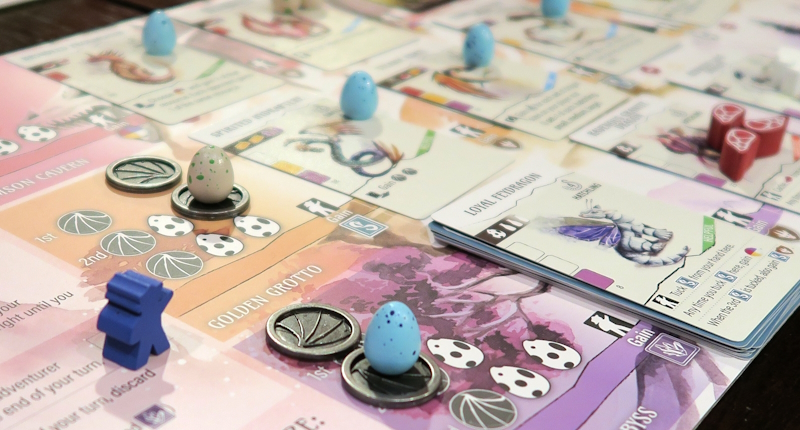
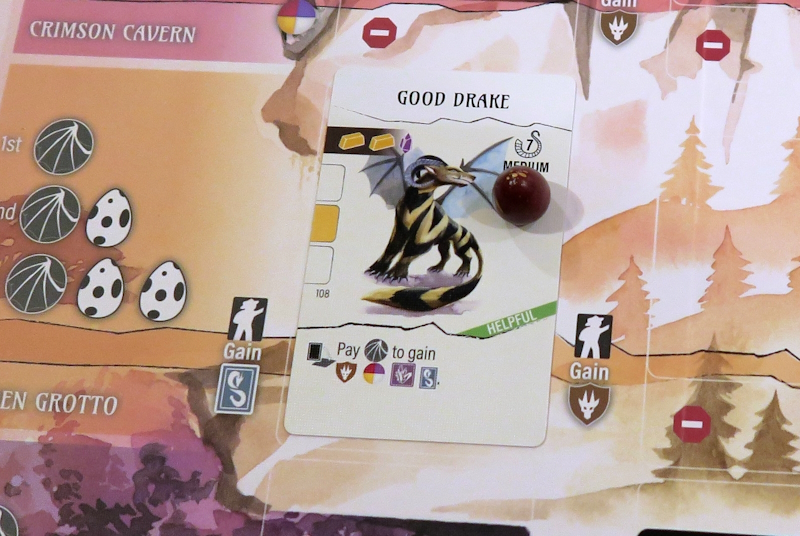
On the next table, Black and Pink were leading a rather ill-fated game of Wyrmspan.  This is a variant of Wingspan with Dragons instead of Birds.  So, like the original, players are playing cards from their hand onto a player board, and activating the habitats in turn. The differences are more than simply cosmetic, however. Firstly, before a Dragon card can be played, it is necessary to explore the cave it will be played in, which involves playing a card (and claiming a Bonus).  In Wingspan, if a player needs a resource, they activate their Woodland habitat and visit the Birdfeeder, claiming the resource they want and a couple of extras, whereas in Wyrmspan, players only get resources one at a time so they don’t have any extras.

Wyrmspan
– Image by boardGOATS

This is critical as “Planting Dragons” requires a lot of Resources and can be difficult to do, so it is important that the Dragon planted is then exploited as much as possible.  Players also need to make the most of the new Dragon Guild.  A step around this Rondel typically gives a Resource as a reward, with a more valuable bonus half-way round and after a full circle.  The distribution of cards is different too:  in Wingspan, the majority of the cards have an effect when the terrain is activate, but in Wyrmspan, these are in the minority with most card effects happening when played or at the end of the round/game.  In Wyrmspan, the rounds are also different.

Wyrmspan
– Image by boardGOATS

Players get a set number of coins at the start of each and an action typically costs one coin.  Some cost more however, and occasionally players can pickup extra coins, which can lead to variable length rounds.  Thus, although Wyrmspan is very definitely Wingspan at its core there are lots of differences.  Blue suggested the group played it, as she had played it with Black and Pink a few months back and they had found it played easily given that they all knew how to play Wingspan.  Thinking Purple, Teal and Lime were also very familiar with Wingspan, Blue rashly assumed it would work, but she underestimated how different it was, how long it was since that last game, and how much longer the game would take with five.

Wyrmspan
– Image by boardGOATS

So, Black patiently explained the rules, while Pink tried to help others muddle through.  Teal focused on simply achieving the end of round goals and “planted” his Dragons accordingly while working on the top row of caves to generate resources—the equivalent of the “woodland”, which works for both Wingspan and for Wyrmspan.  After fighting through one round though, the group agreed to curtail the game after the second round.  In such a short game, the scoring was always going to be skewed, but ultimately the player with the most valuable Dragons, Pink, was the victor, with Teal taking second thanks to him taking the points for winning both the end of round goals.

Wyrmspan
– Image by boardGOATS

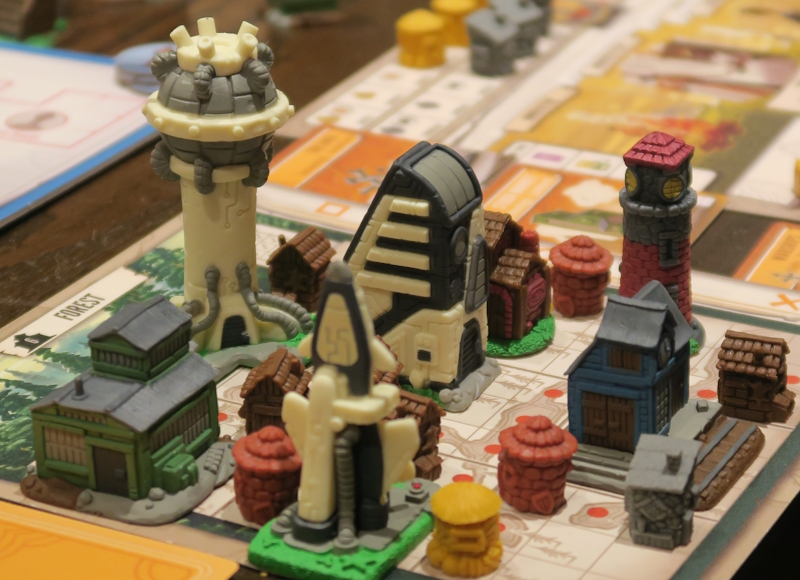
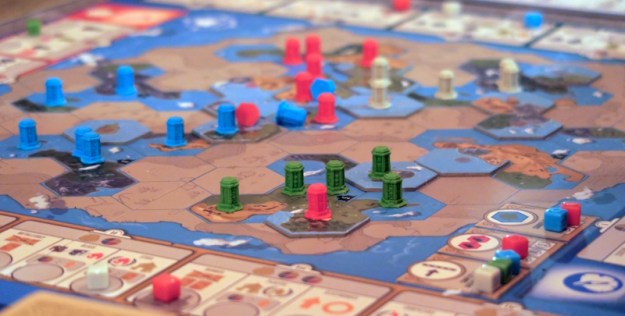
Across the other side of the room, the final game was Tapestry, with the Plans and Ploys expansion.  On the surface, Tapestry has simple mechanisms, but they combine to make a complex game.  On their turn, players move one step along one of the four Civilisation tracks around the board: Science, Exploration, Military, Technology and carry out the action (or actions) associated with it.  Each space requires payment of resources, and the further along the track, the more expensive the spaces become.  If a player cannot afford to pay (or chooses not to), then they instead take income, which gives them more resources.  They also gain points and play a tapestry card, which usually provides a power for the next round.

Tapestry
– Image by boardGOATS

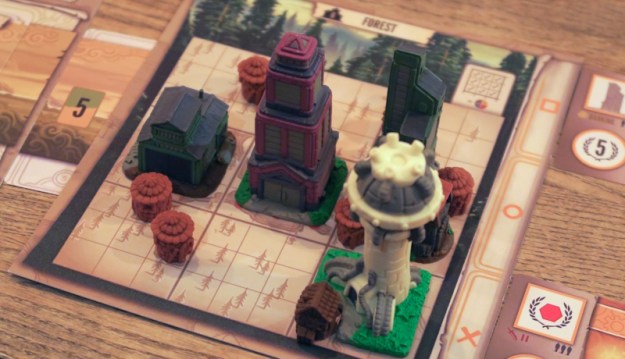
So, at its heart, Tapestry is an engine building and resource management game:  players carry out actions and get resources so they can get more resources and ultimately, points.  The Plans and Ploys expansion mostly just adds more of the same with new Civilisations, Tapestry Cards and space tiles.  The biggest difference is the addition of Landmark Cards which are designed to give each player a personal short-term goal in the first part of the game, in the form of buildings that only they can claim. Everyone was familiar with the game, so the rules explanation was minimal.  Byzantium started (Spies/Grassland) and there was an initial general rush towards the Technology track,

Tapestry
– Image by boardGOATS

Ivory (Islanders/Forest), always one for doing something different, instead went in for Exploration as this linked in with his Civilization.  As the first round went on, Byzantium and Cobalt (Aliens/Tropical) stuck to Technology, whereas Plum (Riverfolk/Wetland) diversified slightly into Science and Exploration. Her primary plan was to exploit her Civilisation and then try to get to six island hexes to trigger her personal bonus Landmark.  Byzantium was first to move to the Income phase, closely followed by Plum and then Cobalt. Ominously, Ivory did what he usually did and managed to stretch my first era out, putting himself in a good position to grab the first Exploration Landmark and also making progress on Military.

Tapestry
– Image by boardGOATS

Byzantium went for Technocracy as his first Tapestry card, sticking with his technology theme. He also managed to grab the first Technology Landmark and completed his Architecture card (appropriately the Game Shop). Plum also went for a Tapestry card, Terraforming, that linked her with her strategy, giving her five points for building on impassable plots, something her Riverfolk Civilization wanted her to do and gave her additional resources of.  Although her alternative Civilisation had looked more interesting, it involved knowing what other people’s options were so she had chosen the simpler Riverfolk and made good use of it.  She was also still fairly diverse in her track focus. Cobalt went for Socialism, to keep pace with Byzantium on the Technology track.

Tapestry: Plans and Ploys
– Image by boardGOATS

Cobalt also gained Landmarks from his Technology cards, helping him build his Skyscraper Architecture card. Having only taken his Income whilst everyone else was half way through their second Era, Ivory could see Cobalt was focusing on Technology, so he used the State Marriage Tapestry card to gain befits on this track whenever Cobalt did.  Having the Military track to himself and a good head start on Exploration, Ivory managed to grab a couple of Landmarks quite quickly. Everyone was also getting Income from buildings on their mats too.  Again, Byzantium Plum and Cobalt all moved into their third Era in quick succession, leaving Ivory half way through his second Era.

Tapestry
– Image by boardGOATS

Cobalt managed to grab the third Era Technology Landmark, but he struggled to fit it on his Capital board and it had to overhang.  At this point, Plum used the Dictator Tapestry Card (with associated comments from Byzantium) to move up the Technology track while restricting everyone else’s progress on the same track for one turn.  Byzantium had been  plotting a move as he was next in line for a Landmark, but Plum’s Dictatorial behaviour only slightly delayed him getting it. This, plus the State Marriage benefited Ivory and competition with Byzantium meant Cobalt used the Militarism Tapestry card to switch his focus to Exploration and Military.

Tapestry: Plans and Ploys
– Image by boardGOATS

Although Cobalt had changed tack to avoid competition with Byzantium, Ivory had a health head-start on both of these tracks, grabbing the Landmarks as he went and also conquering the centre island just before Cobalt could.  To add insult to injury, when Cobalt tried to conquer the island and topple Ivory, he was ready with a Trap card, foiling his plan. Cobalt quickly got revenge paying Ivory back in kind when he tried to do the same thing to one of his territories. However, that wasn’t going to discourage Ivory, and with the Military track encouraging him to conquer, he got the final word in, conquering one of Cobalt’s territories and gaining a double topple bonus.

Tapestry: Plans and Ploys
– Image by boardGOATS

Moving into the final era, again, Ivory was characteristically some way behind everyone else. Byzantium picked up extra resources from the “Age of Wonder” and used these to good effect being the first to reach the end of a track.  Plum, hosted the Olympic Games with her final Tapestry card (and presumably moved to Paris to do so).  This gave her ten points in exchange for a Worker Resource, and additionally a bonus building if any other player took up the offer of doing the same.  Byzantium was the only one who did, as Cobalt wasn’t able to and Ivory had other plans.

Tapestry: Plans and Ploys
– Image by boardGOATS

Cobalt and Plum were both still fairly diverse in their track focus, although Plum had made good progress on the Science track, which was mostly ignored by everyone else.  Byzantium also switched focus to some of the other tracks now he had completed the Technology track. Ivory stuck to Military and Exploration, completing the former (although there was not enough time to gain the second Civilization).  He was sorely tempted by one of his favourite strategies, sending his Meeples into Space by completing the Exploration track, but instead, Ivory switched focus to the other tracks to get as many income buildings in his Capital as possible to maximize the final scoring.

Tapestry: Plans and Ploys
– Image by boardGOATS

Again, everyone finished in quick succession except Ivory, who, as usual, had about five or six turns to go after everyone else had finished.  Plum started with an additional thirty-five points at the beginning of the game thanks to her Riverfolk which gave her points for each territory in her City that had at least two unpassable spaces, but everyone caught up throughout the game. In the end, in Ivory’s final Income round scored him well over fifty points, overtaking everyone and winning and giving him victory.  It had been a good game, enjoyed by all, and although he’d won Ivory hadn’t given everyone as much of a trouncing as he had in the past.  Cobalt felt that the advantages of going first were not mitigated for those going last, so maybe next time that could be used as a slight handicap for Ivory.

Tapestry
– Image by boardGOATS

Learning Outcome:  Animal games are a lot of fun—And that’s not Lion!

Golden GOAT Award Winners – 2023

The boardGOATS love a good party, so once again, they met just before Christmas for their annual Un-Christmas Dinner and to decide the winners of the GOAT Awards.  After food, crackers and writing GOAT Christmas Cards, the group voted for two awards:  the Golden GOAT for our favourite game played during the year and the “GOAT Poo” award for our least favourite.  Everyone had the usual three points to hand out for the Golden GOAT Award (plus a bonus if wearing Festive Attire), though a maximum of two points could be given to any individual game.  Everyone could also nominate up to two individual games for the GOAT Poo Prize.

7 Wonders
– Image by boardGOATS

This year, there were a handful of games that received the unofficial “Marmite Award”, that is to say they received nominations for both the Golden GOAT and the GOAT Poo prizes.  These included Challengers!, Kites and SCOUT.  For the GOAT Poo Prize itself, this year there were no outstanding candidates, with a tie between 2019 winner 7 Wonders and Dice Hospital, with two votes each.  Nominations for “Moment of the Year included the game of Challengers!, which was likened to “Speed Dating”, and the massacre in Survive: Escape from Atlantis!, but the winner was the three way tie in the epic game of Tapestry with the Fantasies & Futures expansion.

Survive: Escape from Atlantis!
– Image by boardGOATS

And finally, there was the Golden GOAT Award for the best game played in the year.  Previous winners including Wingspan and 6 Nimmt! were ruled out, but there were plenty of options remaining. Earth, Fantastic Factories, SCOUT and Zoo Break all received three votes, but the clear winner was Tapestry.  Over the years, we’ve played this quite a bit, but it is a game that doesn’t suit a significant number of the group.  This year, however, with a slight shift in those eligible to vote, heavier games were in with a better chance and Tapestry was the beneficiary.  We will have to make sure it gets another outing in the new year.

Golden GOAT - 2023
– Image by boardGOATS

19th December 2023

It was party time so everyone was arrived early for the Un-Christmas Dinner—everyone that is, but Blue and Pink who eventually arrived armed with piles of Christmas crackers, party poppers, tree decorations, Christmas cards, raffle prizes, GOAT Award ballot papers, mince pies and festive cake.  Opening the crackers was a necessity before food arrived to avoid the bits landing in people’s supper, so when food arrived, it nestled amongst all sorts of gaming detritus.  As the staff at The Jockey served pizzas, pies, baguettes, cheese with crudités, burgers and chips, gamers called out the awful GOATy jokes from the crackers.

"Un-Christmas Party" 2023
– Image by boardGOATS

During the interval between main courses and dessert, GOAT Award voting forms and Christmas cards were handed out and people began thinking about the games we’ve played over the year.  Ivory collected Christmas Cards and Green collated the ballots before he announced the winners.  The GOAT Poo prize, for the worst game of the year went Dice Hospital when 7 Wonders was relegated as a previous winner.  The Golden GOAT went to Tapestry, while the epic three-way tie in Tapestry won “Moment of the Year”.  With the formalities and food finally complete, there was just the raffle, a copy of Carcassonne: Winter Edition and the Ukraine Map, which were won by Sapphire, then everyone abandoned the carnage (and Purple who helped clean up), to play something festive.

"Un-Christmas Party" 2023
– Image by boardGOATS

There was a bit of the usual indecisiveness, but eventually Blue, Ivory, Pink, Green and Pine settled down to play the “Feature Game” which was Jokkmokk: The Winter Market while Black, Cobalt, Jade, Sapphire and Lime set up Snow Tails.  Jokkmokk is a very simple game that makes use of the time-track mechanism seen in Tokaido and Namiji (played last time)—that is to say, it is an extended game of leap-frog where the player at the back jumps into an empty space of their choice and then carries out the action associated with it.  Like those games, the compromise is between moving to a preferred space which may be further forward and will ultimately will give fewer turns.  It is much simpler than both Tokaido and Namiji, however.

Jokkmokk: The Winter Market
– Image by boardGOATS

Jokkmokk is a card-driven set collecting game and is made more interesting by a large number of mini-decks, five or six of which are combined for each game.  For the first game, the group chose to use the “First Game” selection of decks (Dalecarlian Horse, Antique, Hot Dog, Patchwork, Present).  Blue went for the Patchwork cards while everyone else fought over kettles (Antiques) and Hot Dogs).  Blue’s strategy nearly paid off giving her ninety-nine points and second place, but Ivory was more efficient than everyone else with his mixture of Horses, Hot Dogs and Kettles, which gave him a hundred and one points and victory.  The game was bright and breezy and, although simple, really didn’t outstay its welcome, so the group decided to “do a Lime” and play it again.

Jokkmokk: The Winter Market
– Image by boardGOATS

This time, this time the group played with the “Gift of Giving” selection of decks (Donation, Bell, Sparkler, Snowflake, Mystery Box, Presents).  Pink went for Sparklers, knowing he would lose half his points if he had the most, but hoping to have so many that it wouldn’t matter.  Green started collecting Bells, as did Blue and Ivory, going for different colours.  Lots of Gifts were given and a good time was had visiting the fair.  Pink’s ninety points were just three more than Ivory’s total, but Blue’s hundred and seven points gave her victory at the second attempt.  Meanwhile, on the next table, the others had finally started playing Snow Tails, spectated by Purple, who had finished helping clear the table after dinner.

Snow Tails
– Image by boardGOATS

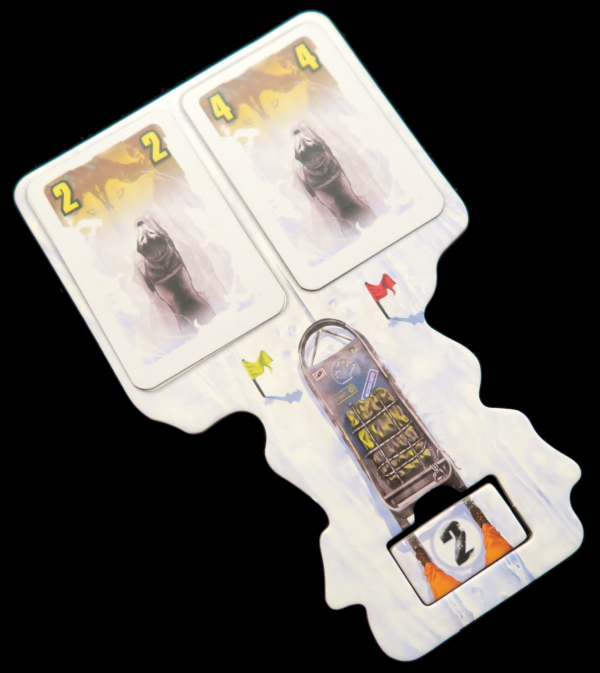
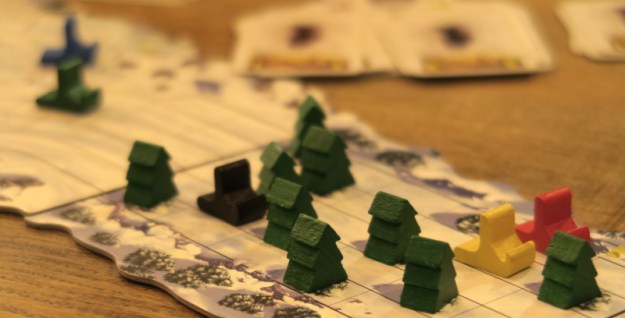
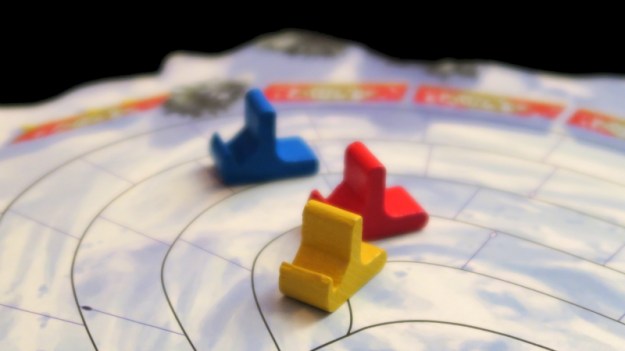
Snow Tails is a very popular game in the group, but somehow, one that is a little tricky to get to grips with.  The games is a card-driven sled-race with the winner the first to navigate the course.  Unfortunately, the course they chose was the one depicted in the main rules, which isn’t really intended to be a course design as it is quite long and features a Chasm right at the start, a couple of hairpins and some Saplings as well.  Each player starts with their own personal deck of cards, with five in hand.  On their turn, players can play up to three cards as they can so long as they are all the same value:  one for each sled dog, and one on the break.

Snow Tails
– Image by boardGOATS

The speed, the number of spaces the sled moves forward, is the total for the dogs minus the value for the Break.  Sleds will additionally drift sideways the difference between the dog speeds, and if the sled is balanced (i.e. the dogs are pulling equally), the player gets a bonus speed equal to the players position in the race.  Each time a sled exceeds the Speed Limit on a corner, hits the side of the track or a Sapling, the player takes a Dent card—a useless card that just blocks the player’s hand making things difficult.  The more Dent cards a player has, the more difficult the game gets, as Black soon demonstrated.  The first game of Jokkmokk had already finished and the sleds were only just off the Start line and through the first Chasm.

Snow Tails
– Image by boardGOATS

Lime claimed the “Big Paws” token for the player with the most “Analysis Paralysis”, though to be fair, everyone suffered a bit.  Jade commented that he’d been planning to play it with his nieces, but was now rethinking the idea.  As a result, the group shortened the track (to give them a chance to finish before midnight), and from there, the game went a bit more smoothly.  Jade was first to cross the Finish line, chased by Cobalt and then Sapphire in what had been a quite epic game.  And with that, the party was over for another year, though people lingered and chatted for quite a while before everyone left the pub staff to lock up.

"Un-Christmas Party" 2023
– Image by boardGOATS

Learning Outcome:  Always plan your Christmas shopping early.

11th July 2023

Blue and Pink were really late arriving, and were much amused by the cheers and applause when they came through the door.  Slightly embarrassed, and after a quick explanation, everyone started splitting into groups.  First was the “Feature Game“, the Fantasies & Futures expansion for one of our more popular, heavier games, Tapestry. On the surface, Tapestry has simple mechanisms, but they combine to make a complex game.  Basically, on their turn, players move one step along one of the four Civilisation tracks around the board: Science, Exploration, Military, Technology and carry out the action (or actions associated with it).  Each space requires payment of resources, and the further along the track, the more expensive the spaces become.

Tapestry: Fantasies & Futures
– Image by boardGOATS

If a player cannot afford to pay (or chooses not to), then they instead take income, which gives them more resources.  They also gain points and play a tapestry card, which usually provides a power for the next round.  So, at its heart, Tapestry is an engine building and resource management game:  players carry out actions and get resources so they can get more resources and ultimately, points.  We have played the first two expansions, Plans and Ploys and Arts & Architecture, but this time the “Feature Game” was the Fantasies & Futures expansion, which is the smallest, adding new Fantasy Civilizations, advanced Capital City mats, new Tapestry and Tech cards.
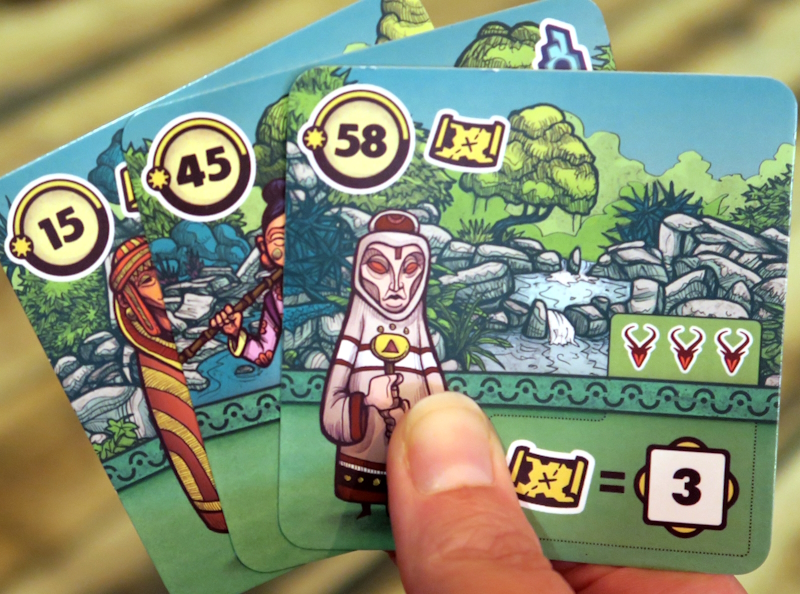
Tapestry: Fantasies & Futures
– Image by boardGOATS

Ivory was joined by Green, Plum and Byzantium.  Along with the Fantasies & Futures expansion, the group decided to add the “Plans” from the Plans and Ploys expansion as a sort of mini expansion, a private goal, where players get their own, special building they can build.  They also left the Tapestry cards and Civilisations in the mix from the first two expansions and really only left out Arts Advancement track from the Arts & Architecture expansion as they thought it would add too much complexity to the game overall.

Tapestry: Plans and Ploys
– Image by boardGOATS

Tapestry is one of those games that sometimes comes in for criticism for being multiplayer solitaire.  Although that’s not true, there is a strong element of players “getting on with their own thing”.  Although they were each very much playing their own game, there was still quite a bit of interaction which definitely gave the game teeth.  Green’s Civilisation (“Spies”), had him perusing over his neighbours positions and cards each income turn.  Luckily for him Ivory’s Civilisation (“Aliens”) gave him four starting space tiles, and one bonus he could choose was the benefit on an unused tile in a neighbours supply which gave a nice healthy early bonus.

Tapestry: Plans and Ploys
– Image by boardGOATS

Plum’s “Islanders” Civilisation was focused on collecting area tiles and placing them on her Civilisation mat.  So she started out prioritising collecting landscape tiles, looking for ones with water on more edges as these would give her more points in the final income phase.  She got a bit lucky right from the start getting two out of three.  From there she went for an expansionists strategy as did Byzantium (with his “Riverfolk” Civilisation), and from there, throughout the game they found themselves trying to conquer each others territories on the central island.

Tapestry
– Image by boardGOATS

Plum started the game with two Tapestry cards, so chose to use the standard one for her first era.  The second was from one of the expansions and “charmed”, so much to Byzantium’s annoyance when he tried to topple Plum’s Tower in the middle of the map, his attempt was thwarted by Plum’s Trap card which also gave her an extra benefit.  When Plum later attempted to Conquer Byzantium’s tile, he was delighted to be able to repay the earlier battle with his own Trap card. That satisfaction didn’t last, however, as Plum proceeded to play her charmed Anti-trap card which not only stopped the trap dead, but also gave her yet another bonus.

Tapestry
– Image by boardGOATS

That bonus was a random Tapestry card from Byzantium’s hand—he had two, and the one she picked just happened to be the one he had been working towards maximising the effect of (moving up each track once and getting the bonus action for free).  Plum felt pretty bad about picking it, but it was too late by then.   So, all round, it was quite a frustrating game for Byzantium, who started the game with a large forty-eight point bonus from his landscape board (“Forest”), and his first conquering dice rolls, time after time, gave him the choice between a resource or seven points—quite a dilemma in the early part of the game.  Initially he took the seven points (the highest that dice could give him), but found he wasn’t getting as many turns as the others, so later switched to taking the resource.

Tapestry: Fantasies & Futures
– Image by boardGOATS

Ivory, meanwhile, managed to make good use of the charmed Tapestry cards, keeping himself well stocked with resources throughout the game.  The rest of the group barely saw any charmed Tapestry cards (aside from Plum’s Trap and Anti-trap cards), but did find the new Civilisations and Landscape boards quite an interesting addition.  As the endgame approached, Green was last man standing, and for his last few turns he was able to grab an extra Civilisation (“Urban Planner”) which was to reward him handsomely.

Tapestry: Arts & Architecture
– Image by boardGOATS

The game which had been a quite sedate affair, started speeding up a little towards the end.  Pretty much everyone did something that if they had thought just a little a bit more would have gained them another point or so—Green put a cube on another player’s map, Plum put a building somewhere where it could have completed a row if she’d considered a little longer.  As the game came to a close, Ivory and Plum counted their remaining income scores to amazingly find themselves both on two-hundred and thirty-five points.

Tapestry: Fantasies & Futures
– Image by boardGOATS

Then Green counted his final points, giving him the lead by a solitary point. That was until he realised that he’d added thirty-six to one hundred and ninety-nine and discovered he was part of a three-way tie with Ivory and Plum!  Nobody was quite sure how they all managed to have an identical score in such a high scoring game.  If the tie-break had been resources remaining, then Green would have won and if it was Tapestry cards remaining, then Plum would have been the victor.  However, a quick check of the rules suggested the tie-break was in favour of the player with the tallest building (which everyone agreed that was a rubbish tie break), and although Ivory narrowly had a taller building that Green, he graciously agreed that everyone should just share victory.

Tapestry: Plans and Ploys
– Image by boardGOATS

While Tapestry was setting up, on the next table Jade was introducing Black, Purple and Pine (who chose to spectate) to Fantastic Factories.  This is a game where players compete against each other trying to build the most efficient set of factories as quickly as possible.  Players have to carefully manage their blueprints, train their workers, and manufacture as many goods as possible in order to achieve industrial dominance.  Each round consists of two phases:  the market phase and the work phase. In the market phase each player in turn order can either gain a blueprint card from the four available in the market or hire a contractor.

Fantastic Factories
– Image by boardGOATS

To hire a contractor players must pay one card (that matches the tool symbol associated with the contractor’s location on the board) and any additional costs listed.  Contractors have various benefits mostly related to gaining extra resources or extra dice workers for the work phase later in the round.  In the work phase, all players perform actions in their play area simultaneously starting by rolling their four coloured dice (and any additional ones gained from contractors).  Players can use their actions to build cards (which cost various resources matching the building type); while players can build as many cards as they wish in a turn, they may one of each type of building.

Fantastic Factories
– Image by boardGOATS

Dice can be used to take actions on a player’s main Headquarter board or on building cards you have constructed.  A player’s Headquarter board allows them to generate metal and energy.  Players can also activate their buildings once per round. If any player has built ten buildings or produced twelve goods that triggers the end of the game and one final round takes place before end game scoring. Players add up the prestige value of their buildings to their produced goods and the winner is the player with the highest total.  The game was a fairly typical learning game, but was quite close.  Both Purple and Black took thirteen points for their buildings, and while Purple was yet to get her engine going, Black took nine points for his goods.
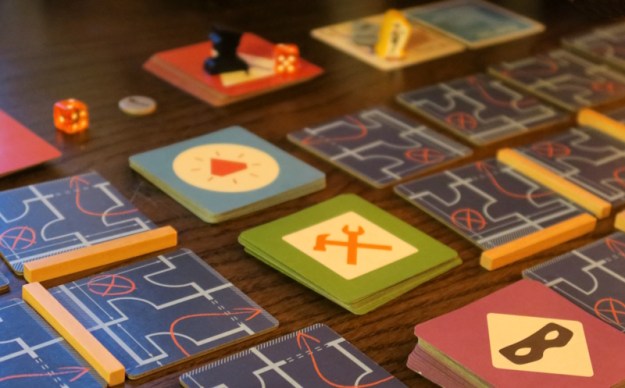
Fantastic Factories
– Image by boardGOATS

Jade, on the other hand, had fewer points for his buildings (nine), but they were functioning more efficiently.  His total of twenty-three was just one point more than Black who took second.  While they were packing up, the group chatted and Jade showed off Vaalbara, another of his acquisitions from UK Games Expo, which he described this as a nice little set collection, and semi-interactive card game.  Then they chatted while they waited for Tapestry to finish.  And waited some more as the clock ticked and it turned out that Tapestry was no-where as near to finishing as everyone had thought…
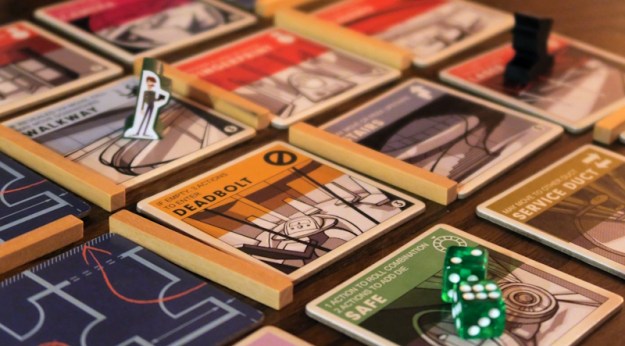
Tapestry: Arts & Architecture
– Image by boardGOATS

Meanwhile, Teal was introducing Blue, Pink and Lime to a much older game, Condottiere.  This is a sort of trick taking, battle game.  Set in 13th century Italy, where the wealthy city-states had weak armies.  The Condottiere were veteran English soldiers returned from the Crusades who were contracted to fight for individual city-states by an agreement known as a condotta, the most elite fighters were the mercenary leaders known as the Condottiere.  During each round, control of a State is put up for auction, and players bid the number of troops they are willing to lose in order to win the province.  Players bid with cards that represent Mercenaries, Seasons, Scarecrows, and Political Figures, in an effort to try to take control of four adjacent States.

Condottiere
– Image by boardGOATS

Each player starts with a hand of cards, and one player starts the bidding by choosing a State and a starting bid, playing the card or cards from their hand, face up on the table. Other players follow, playing cards each round.  When a player either cannot play another card (or chooses not to), they “stick”, but unlike many other auctions, in which only the highest bidder loses their bid, at the end, everyone loses all the cards they played, whether they finish with the highest value hand or not.  Mercenary cards have values one to six or ten, while the other cards have special powers that take effect when they are played, but it is how the cards work together that is key.

Condottiere
– Image by boardGOATS

For example, the Drums double’s the value of all that player’s Mercenary cards, but this effect can be offset by another player placing a Winter card reduce every Mercenary card played to a value of one, while a Scarecrow can be used to return a card to its owner’s hand, making it available to play later.  There is also the Heroine, which is untouched by either the Drums or Winter, but also cannot be returned by the Scarecrow.  Perhaps the cleverest cards, however, are the Surrender and Bishop cards;  the Surrender ends the battle immediately (with the current leader winning the battle), and the Bishop ends the battle in peace with no-one winning.

Condottiere
– Image by boardGOATS

While there are some clear uses for some cards (the Bishop is only likely to be played by someone who is losing badly, and the Surrender card is usually played when the active player holds the lead), the meta-game is also important.  Although winning is obviously the aim of the game, as battles become head-to-head, players sometimes end up playing with emotion rather than strategy.  Once a battle has been won, the winner chooses the next city-state to be auctioned and starts the bidding.  Unlike other games, however, play continues with the cards they have left until all players but one have run out of cards, and only then do players get more cards (before they start the next battle).

Condottiere
– Image by boardGOATS

Teal explained the game, and that, although he understood the rules, he had no idea how to win.  Indeed, despite having played Condottiere a lot in the weeks since he acquired it at UK Games Expo, he had never won, a situation that was destined not to change this time.  Teal and Lime won a couple of States, giving them extra cards in the refresh.  Blue and Pink realised they were at a disadvantage, so set out to rectify things.  They took a couple of States and redressed the balance.  Then Pink stole a march when he forced Lime to lead out in a battle he could not win.  With this giving him three adjacent states, the writing was on the wall.  Lime, Teal and Blue tried to work together to prevent Pink from taking the last one, but without success.

Condottiere
– Image by boardGOATS

It had been a very enjoyable game, and given its success, the group went on to play another of Teal’s UK Games Expo acquisitions—Burgle Bros..  This is a cooperative game, a style the group traditionally eschew, though recently have played more often (including Scotland Yard last year, The Lost Expedition about six months ago, Zoo Break twice in quick succession, and Forbidden Dessert a couple of weeks ago).  Burgle Bros. works in a similar way to the other games of this type.  Players are a team of robbers, attempting to enter a building from the ground floor, raiding the safes on each floor before escaping by helicopter from the roof.  In addition to finding and cracking the safes, players also have to avoid the Security Guards that patrol the building.

Burgle Bros.
– Image by boardGOATS

In the game, players each have three Stealth tokens. Whenever they are on the same tile with a Guard, they lose one and if any player is caught without a stealth token, the game is over.  On their turn, players have four actions (move, preparing a safe for cracking by putting some dice on its tile, rolling dice to attempt to crack the code etc.).  Once the player has taken their turn, the Guard takes their turn, moving towards their target room (assigned by the route deck and marked with an orange die).  So to win, players first have to find the safe and then crack the code and all without triggering the motion detectors, heat sensors, fingerprint scanners, laser fields, open walkways, deadbolt rooms, and of course avoiding the guards…

Burgle Bros.
– Image by boardGOATS

The group decided to play on the beginner’s level which meant they only had two floors to explore before they could escape the building.  They got lucky right at the start as they popped up from the ground floor right next to the safe. That meant they only had to reveal all the orthogonal tiles and then roll dice to match the code. They were luckier still as the security guard was on the other side of the building and there were very few walls obstructing their way.  As a general rule, cooperative games of this type give each player unique special powers and using these effectively is usually critical to success.

Burgle Bros.
– Image by boardGOATS

So, Pink (who was “The Hacker” and didn’t trigger alarms) was sent off to reveal tiles while Blue (“The Spotter”) started setting up the safe for Lime, who was “The Peterman” and got to roll an additional die when trying to crack the safe.  Before long, things on the first floor looked pretty much under control with just the last few numbers left to crack the safe, so Teal (“The Juicer”) took himself off to the second floor to start hunting for the safe there.  This was a risky strategy as it triggered the Guard moving on the second floor.  However, with fewer people on both floors, the Guards effectively moved slower and gave players more chance to avoid them.

Burgle Bros.
– Image by boardGOATS

Things were slightly more challenging on the second floor—the Security Guard was a little more proactive, stepping it out more and, of course, the group didn’t find the safe at the top of the stairs this time.  It didn’t take him long to find it though, and with nothing better to do, Pink joined Teal on the second floor, ducking under the risky laser trap at the top of the stairs.  Meanwhile, Lime had finally managed to crack the safe, so Blue headed up the stairs only to find the second floor security guard heading her way, so she escaped to the roof toting their loot (a very annoying large and heavy bust and a particularly yappy dog) .

Burgle Bros.
– Image by boardGOATS

There was a bit of shenanigans as Lime joined Teal and Pink and also dodged the Security Guard (and lost a couple of Stealth tokens), but although there were a couple of near misses, it wasn’t long before all four were on the roof awaiting their lift to safety.  It was another fun game, but with time marching, Lime and Teal headed for home, leaving Blue and Pink to join Jade, Purple and Black who were still waiting for Tapestry to finish.  It was nice to chat though, and eventually Tapestry did finish and everyone who needed one got their lift home (without having to climb on to the roof…).

Burgle Bros.
– Image by boardGOATS

Learning Outcome:  New games are fun, but there are lots of good, slightly older games to be had as well at places like Expo.