Tag Archives: The Settlers of Catan

Essen 2025

Today is the conclusion of the largest annual gathering of gamers in Europe.  The Internationale Spieltage is known to gamers worldwide simply as “SPIEL” or “Essen” and is a four day fair with lots of new releases scheduled to coincide with the event, just in time for Christmas sales.  This year, there have been lots of exciting new games available to be seen including Galactic Cruise, Brick Like This!, Forest Shuffle: Dartmoor, Waddle, Orloj: The Prague Astronomical Clock (which was sold out before the end of the first day) and Origin Story (which was sold out by Friday).

.Orloj: The Prague Astronomical Clock
– Image by boardGOATS

In addition to new games, the rise of crowd funding has had a large impact, and increasingly there are stands presenting current live projects in the hope of seccuring additional backers.  Examples of this included, Eldertide: A Thousand Lights, the Lodges expansion to Kavango, Cascadia: Alpine Lakes, AstroNavigators, and the re-release of Nippon to name just a few.  There have been a lot of really good deals to be had too, and there will be even more on the final day today.  It was with sadness though that the Snowdonia spin-off, Alubari was found at a discounter for €15, as this was a great game released with much fanfare a few years ago.

Cascadia: Alpine Lakes
– Image by boardGOATS

Old favourites typically often get a new lease of life with the release of expansions.  This year, relatively recent releases like SETI (which was confirmed as the winner of the Deutscher Spiele Preis), Faraway, Castle Combo and Windmill Valley recieved new additions, but older games like Underwater Cities and Wingspan also got some love (with the new Data Era expansion and the fan-designed promo packs).  As well as new games and expansions, there were also a number of re-releases of old favourites including Ra, Bohnanza (with Dahlia artwork) and Botswana, and even Ticket to Ride which has had a bit of a face-lift with new artwork.
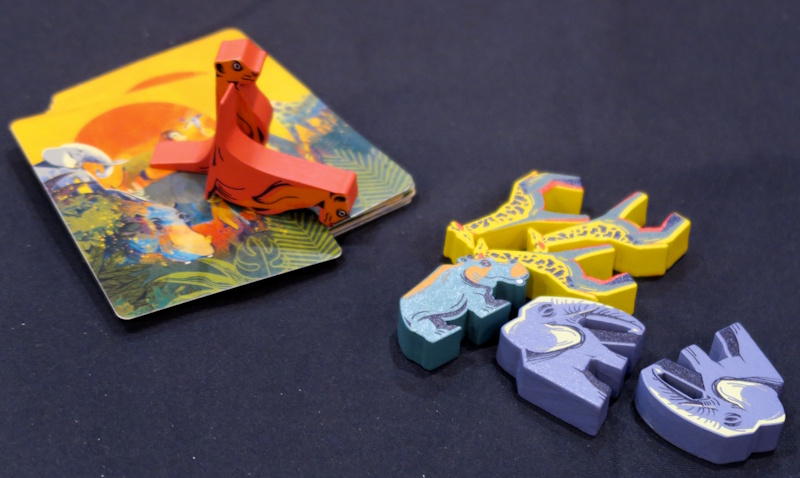
Botswana
– Image by boardGOATS

For those that were prepared to stay late on Friday, there was a world record attempt for the most people playing The Settlers of Catan together.  This was achieved with CATAN-Connect, which is a new version of the game designed for large parties that has large groups playing around single islands with elements of simultaneous play and everyone working to one electronic dice roll and a timer.  The record had been set at Essen in 2015 with one thousand and forty, only for Rotterdam to set a new record two years later with one thousand and ninety-six.  At SPIEL, one thousand, one hundred and seventy players joined in the game (watched by a few more who were just curous), successfully bringing the world record back to Germany where it arguably belongs.
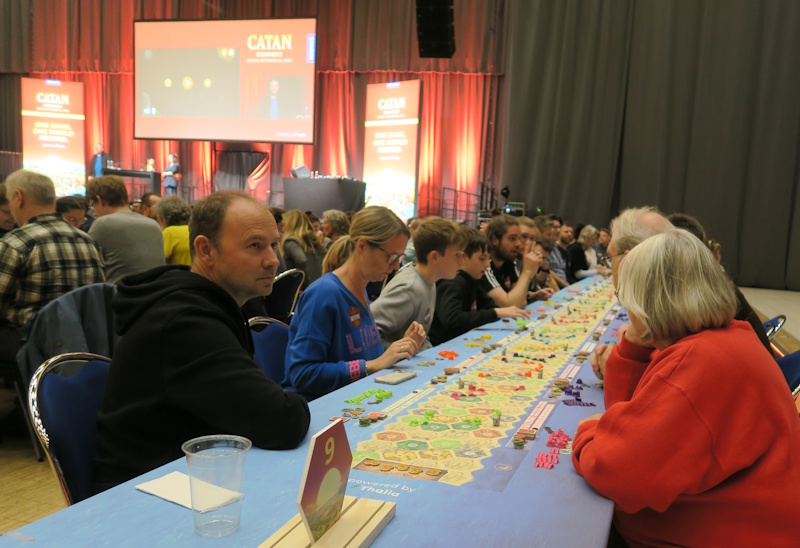
CATAN-Connect
– Image by boardGOATS

UK Games Expo 2025

Friday was the first day of the eighteenth UK Games Expo at the NEC in Birmingham.  It is bigger than ever, and it is rumoured that it is fifty percent bigger than last year.  In truth, though it is difficult to tell, as the organisers had to move out of Hall 1 (apparently to accommodate Tesla who then cancelled), putting all the stands on a single level spread over a large, more or less continuous space.  So this year, it just feels, very… large.  Additionally, There are the now regular attendance of the Vikings and Romans camping by the lake, but fewer cosplayers, or maybe they are just more spread out…

UKGE 2025
– Image by boardGOATS

Although there are some new releases, the focus of UK Games Expo this year, as always, is the current games and open gaming (both in the halls and at the nearby Hilton).  There are also organised play-testing and tournaments, with plenty of game-related geek-fare, like puzzles, furniture, clothing, jewelry, nick-nacks and other sundries.  Indeed, there are more cool dice available to see and buy than most “normal” people would ever believe!

UKGE 2025
– Image by boardGOATS

Most games companies have a stand at UKGE, some with sales, some just demoing and many with both.  A new innovation this year is the collectable pin badges. A variant of these is the live-action Catan game, where attendees can acquire a starter set of resource button badges to trade.  Collecting a full set of five, enables the owners to claim a sixth from the stand.  This game was remarkably evocative of a real game of Settlers, with players desperate to find wood for their large pile of sheep!

UKGE 2025
– Image by boardGOATS

There are lots of opportunities to play demo games, both old and new.  New games include The Hanging Gardens and Critter Kitchen while slightly older games on display include Panda Panda, River Valley Glassworks and Harmonies.  There are also expansions and variants of old favourites, including the Grand Tour expansion for Snowdonia, the upcoming expansion for Shackleton Base, the award winning Heavy Rain expansion for Heat, the Athena expansion to Akroplolis, the new Lodges expansion for Kavango, and the Correspondence expansion for In the Footsteps of Darwin.

Harmonies
Panda Panda
Snowdonia: Grand Tour
– Images by boardGOATS

This year, about half of the boardGOATS are making the trip to the NEC in Birmingham, some for one day some for more, with others working on stands or at the Play Testing.  The event is so vast now though that you can no-longer guarantee accidentally bumping into people you know, but SMS is a great way to communicate onsite.  The event is great fun and well worth a visit.  UK Games Expo continues at the NEC in Birmingham until 4pm Sunday 1st June.

UKGE 2025
– Image by boardGOATS

Spiel des Jahres Nominations 2025

The nominations for the 2025 Spiel des Jahres Awards have just been announced.  Although there are now other lots of other awards (including the recently announced Golden Geek Awards), this is still the most prestigious award in board gaming and certainly the one that carries the most weight when it comes to casual gamers.  There are three categories, the Kinderspiel (children’s game) , the Kennerspiel (“expert’s” game) and the most desirable of all, the family award, the Spiel des Jahres or “Red Poppel”.  The nominees for this year’s awards have been announced as:

  • Kennerspiel des Jahres
    Kennerspiel des Jahres 2025 - Nominees
    Endeavor: Die Tiefsee (aka Endeavor: Deep Sea) by Carl de Vissser
    & Laurent Escoffier
    Faraway by Johannes Goupy & Corentin Lebrat
    Neuland (aka Looot) by Charles Chevalier & Laurent Escoffier


In recent years, there has been a shift in both the family and expert awards, away from traditional Euro-style board to lighter, more innovative games.  Gone are the days of El Grande, Tikal and The Settlers of Catan (all winners from the 1990s) with recent winners including MicroMacro: Crime City (from 2021) Pictures (from 2020), Challengers! (from 2023).  It may be that there has been a concerted effort to “freshen” the brand and subvert the conventional idea of what a board game is.  Last year’s winners, were Sky Team and Daybreak which were unusual in that both are cooperative games with Sky Team also being a two-player game (unusual for a “family game”).

– Image by BGG Contributor JuiceNeutron

In addition to the nominees, there are always a number of recommendations, which in this year include Castle Combo and Cities.  The Spiel des Jahres Awards are still the industry’s headline award and therefore are of great significance; it will be interesting to see which direction the awards go in this year when they are announced on Sunday 13th July in Berlin.

The Spiel des Jahres Awards
– Image from spiel-des-jahres.de

Boardgames in the News: Games on Radio 4

BBC Radio 4 often has short articles on games and from occasionally has longer programs that are dedicated to games or playing.  Recent examples include the “Why we Play” series and an episode of “Start the Week” discussing Videogames.  There has also been an episode of the magazine program “All Consuming“, dedicated to board games.  This is presented by Charlotte Stavrou and Amit Katwala and discusses everything from the Ancient Egyptian game of Senet to more recent classics like Azul, Monopoly and The Settlers of Catan.

Azul
– Image by boardGOATS

During the program, there are interviews with Dan Jolin, co-founder of the magazine, Senet and the World Monopoly Champion, Nicolo Falcone; there is also a visit to the Orc’s Nest in Covent Garden.  Traditional and historical games like Mancala, Chess, The Game of the Goose, Snakes and Ladders and Backgammon are discussed at length together with their history.  Moving on to more modern games, Articulate!, Splendor, Ticket to Ride, and Pandemic all get a mention.  The presenter, Amit Katwala also visits the hugely prolific designer Reiner Knizia in his office in Munich where he keeps a library of all his games including The Quest for El Dorado, Samurai, Lost Cities, Gold Rush, and Lord of the Rings.  There, they discuss how “critical mass” is important for success—reaching enough people is the key Dr. Knizia explains, and is why games like Go and Chess are so popular.

All Consuming
– Image from bbc.co.uk

Last week there was also an episode of the comedic science program, “The Infinite Monkey Cage” with presenters Brian Cox and Robin Ince featuring Marcus de Sautoy from the Maths Department in Oxford, games designer Dave Neale and comedienne Jessica Fostekew. This begins with an introduction about playing Cluedo, moving on to a discussion about the definition of a game—something the philosopher Ludwig Wittgenstein apparently struggled with.  One possible definition discussed is that playing a game is a voluntary attempt to overcome unnecessary obstacles.  From there, conversation progresses to how people often refuse to play with those who are perceived as being good at playing games; Marcus de Sautoy explaining the maths behind his strategy for winning at Monopoly, and why Snakes and Ladders is so popular.

Senet
– Image by boardGOATS

There is also a game of Rock-Paper-Scissors (which makes interesting radio) with discussion about the World Championships, how to win and the fact that it isn’t as random as one might think.  There is a lot of discussion about modern Euro games as well as more traditional games and historical games, with Senet, The Mind, Cheat, Escape from Colditz, Rummikub, Royal Game of Ur, Scrabble and some of those mentioned above amongst those featuring.  The discussion touches on John Nash and Game Theory, the Prisoner’s Dilemma, The Ultimatum Game and the Golden Ratio.  For those who are interested in board games and gaming, this episode of The Infinite Monkey Cage is well worth a listen and both it and the episode of All Consuming are currently available on BBC Sounds.

The Infinite Monkey Cage
– Image from bbc.co.uk

Spiel des Jahres Nominations 2024

The 2024 nominations for the three Spiel des Jahres categories have just been announced.  Although there are now other awards, this is arguably still the most prestigious award in board gaming and, certainly the one that carries the most weight when it comes to casual gamers.  There are three categories, the Kinderspiel (children’s game) , the Kennerspiel (“expert’s” game) and the most desirable of all, the family award, the Spiel des Jahres.  The nominees for this year’s awards have been announced as:

In recent years, there has been a shift to light or innovative games.  Although the complexity of this year’s offering is not in the same league as some of the 1990s winners (e.g. El Grande, Tikal and The Settlers of Catan, all of which won the “Red Pöppel” as they preceded the inception of the Kennerspiel award), there is a marked shift away from the novel, internet or app based games of MicroMacro: Crime City (from 2021) and Detective: A Modern Crime Board Game (from 2019) and the party games like Just One (from 2019), Pictures (from 2020), Top Ten (from 2022) and Challengers! and Fun Facts (both from 2023).

Forest Shuffle
– Image by boardGOATS

In addition to the nominees, there are a number of recommended, including Harmonies and Forest Shuffle (aka Mischwald) both of which have peaked interest in the group, with the latter having been enjoyed on a Tuesday evening shortly after its release at Essen.  As always, the Deutscher Spielepreis is likely to be a better fit for more dedicated gamers, but we will no-doubt play many more of the nominations and recommendations over the coming weeks.  The Spiel des Jahres Awards are still the industry’s headline award and therefore are of great significance; it will be interesting to see what the winners are when they are announced on Sunday 21st July in Berlin.

The Spiel des Jahres Awards
– Image from spiel-des-jahres.de

Spiel des Jahres Winners – 2023

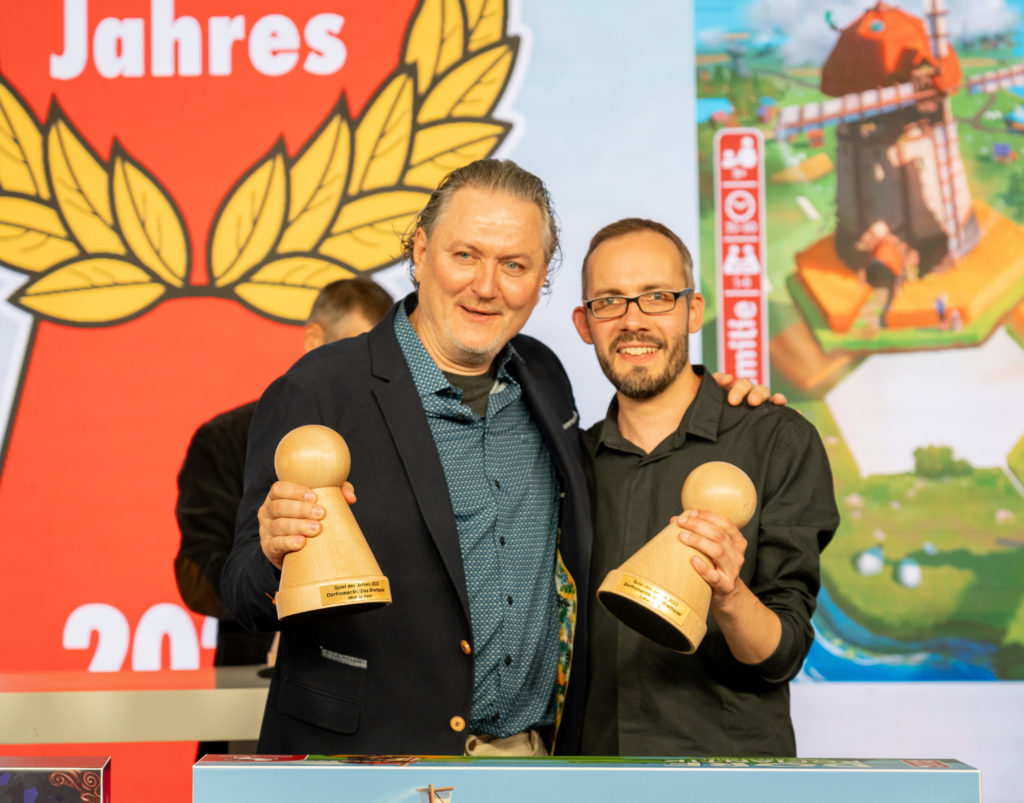
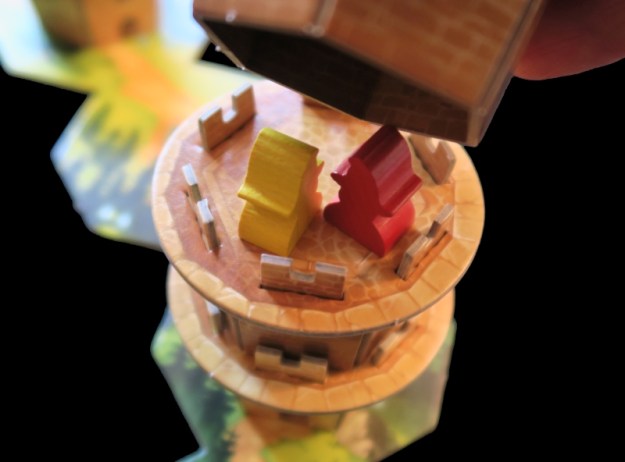
The 2023 Spiel des Jahres (German Game of the Year) winner has been been announced as the cooperative campaign game, Dorfromantik: The Board Game which is based on the video game of the same name.  Players work together to together to lay hexagonal tiles to create a beautiful landscape trying to make the train track and river as long as possible while also fulfilling the orders of the population.  There is a legacy element where points earned can be used to access new tiles that are hidden in locked boxes, which give new, additional tasks and make higher and higher scores possible.  The game is very simple (as draw a tile, place a tile, fulfill tasks), but the hook is the changing strategy that comes with the expanding pool of tiles.

Dorfromantik: The Board Game
– Adapted by boardGOATS from image
by BGG contributor Rugerfred

The winner of the Kennerspiel des Jahres, the “Expert” or “Connoisseur’s” game was announced at the same time and was Challengers!.  This is a sort of “capture the flag” tournament game where players first draw cards and build a deck, then shuffle and duel against another player.  The winner of the match takes the trophy and points, and at the end, the players with the most points duel in the final to decide the overall winner.  Although this is supposed to be a more advanced, it is not in the same league as previous winners of the Kennerspiel award like Village or Wingspan, or even previous Spiel des Jahres winners like El Grande and Settlers of Catan.

Challengers!
– Image by boardGOATS

The thing to remember though is that these games are intended to be family games and the awards are intended to cater for three different ages of families, those with very small children (Kinderspiel—this year won by Mysterium Kids); those with young children (Spiel des Jahres, or “Red Pöppel”), and those with slightly older children (Kennerspiel des Jahres, sometimes known as the “Grey Pöppel”).  This doesn’t mean these games are not suitable for more dedicated gamers, just that they not the target audience, so they should not be surprised if they are not a great fit.  This situation is not going to change in the near future, as the ultimate purpose of these awards is to sell games and advertise them to the general (German) public.

Dorfromantik: The Board Game
– Image from spiel-des-jahres.de

That said, with the right mindset, anyone can enjoy all these games, and they are some of the best of their type available.  So, as usual, congratulations to all the winners and nominees.

Spiel des Jahres Nominations 2023

This year’s nominations for the three Spiel des Jahres categories were announced last Monday.  This is arguably the most prestigious award in board gaming and, as such, is the one everyone wants to win.  There are three categories, the Kinderspiel (children’s game) , the Kennerspiel (“expert’s” game) and the most desirable of all, the family award, the Spiel des Jahres.  The nominees for this year’s awards have been announced as:

  • Kennerspiel des Jahres
    Kennerspiel des Jahres 2023 - nomineesChallengers! by Johannes Krenner and Markus Slawitscheck
    Iki by Koota Yamada
    Planet Unknown by Ryan Lambert and Adam Rehberg

In recent years, there has been a marked change the complexity of the games—compared with previous winners like El Grande, Tikal and The Settlers of Catan (all of which won the “Red Pöppel” as they preceded the inception of the Kennerspiel award), for example, even this year’s nominations for Kennerspiel are extremely light games that have been called party games by some.  This is at least partly because the criteria or rules for the Spiel des Jahres Awards are very clearly and strictly laid out.

Heat: Pedal to the Metal
– Image used with permission of Henk Rolleman
(@namellor on Instagram)

For example, one of the most popular games of the year, Heat: Pedal to the Metal, was not eligible, allegedly due to lack of ready availability in the German market.  Similarly, the German release for another popular game, Earth, marginally failed to make the entry date, but may therefore be eligible for next year.  Another favourite amongst the GOATS is Die Wandelnden Türme (Wandering Towers), which also failed to get a mention either this year or last, presumably because it too fell foul of one of the rules. Iki, on the other hand was first released in 2015, but did not get a “full German release” at the time and therefore the recent re-release with new artwork is eligible, so there is still hope for all those that have missed the boat.

Die Wandelnden Türme
– Image by boardGOATS

It is also worth remembering that the “Red Pöppel” Spiel des Jahres Award is specifically aimed at German families, not necessarily families that play lots of games.  Even the “expert” Kennerspiel des Jahres Award, is aimed at families that are “just ready to move on to the next step”—neither award are aimed at people who regularly play games.  For this, the Deutscher Spielepreis is a much better fit, but the Spiel des Jahres Awards are still the industry’s headline award, and therefore are of great significance.

The Spiel des Jahres Awards
– Image from spiel-des-jahres.de

The winners will be announced on Sunday 16th July in Berlin.

Boardgames in the News: The Passing of the King of Catan

It is arguable that in the last forty years, the game designer, Klaus Teuber had the single biggest influence on the world of modern board games.  Certainly, he was among a small number of designers and industry professionals in the eighties and nineties that brought modern, Euro-style, designer games to a wider audience, ultimately making the hobby as popular as it is today.

Barbarossa
– Image by BGG contributor binraix

The first game he published was Barbarossa, in 1988.  According to the designer, it was inspired by Patricia McKillip‘s Celtic mythology themed Riddle-Master trilogy, in which wizards are devoted to the creation of riddles and riddle solving tournaments.  Players begin the game by making objects out of modelling clay.  They then take turns to move around the board with the spaces landed on determining actions:  players can gain points or clues, or take a guess as to what an object is to win more points.  Barbarossa was innovative and won the Spiel des Jahres Award that year, but although it was a critical success and has had several reimplementations since, it was not as popular nor as long-lived on the public’s gaming tables as some of Klaus Teuber’s later games.

The Settlers of Catan
– Image by boardGOATS

Barbarossa was quickly followed by Adel Verpflichtet (aka Hoity Toity) and Drunter und Drüber (aka Wacky Wacky West), both of which also won the “Red Poppel” Award, and Der Fliegende Holländer and Löwenherz which both won the Deutscher Spiele Preis.  The success of these winners paled into insignificance compared with 1995 Spiel des Jahres and Deutscher Spiele Preis winner, The Settlers of Catan (now simply known as CATAN) which has sold over forty million copies world wide.  The success of this fourth and final Spiel des Jahres winner meant Klaus Teuber could give up his career working for his company Teuber Dental-Labor and in 1998 he took up game design full time.  Although Klaus Teuber released over two hundred games and expansions in his lifetime, “Settlers” was effectively his final game as almost all his more recent releases were variants or expansions set in the world of Catan.

Klaus Teuber in 2017
– Image by Rogi Lensing

This week, it was sadly announced that Klaus Teuber, had passed away on 1st April aged seventy, after a brief, but severe illness.  He will be greatly missed by his friends and family, but has left a very positive mark on the world for the rest of us to appreciate for many years to come.

Spiel des Jahres Winners – 2022

The 2022 Spiel des Jahres (German Game of the Year) winner has just been been announced as Cascadia.   Cascadia is a token-drafting and tile laying game featuring the habitats and wildlife of the Pacific Northwest.  Players take turns expanding their terrain area and populating it with wildlife by taking a terrain and wildlife pair of tiles and adding them to their territory.  Players are trying to create large areas of matching terrain to create wildlife corridors, while also placing wildlife tokens to achieve the goal associated with that animal type (e.g. separating hawks from other hawks, surrounding foxes with different animals and keeping bears in pairs).

– Image by BGG contributor singlemeeple

In recent years, there has been a marked change in the sort of games winning the award with a noticeable shift to lighter games with a general drift away from “traditional board games” like past winners, El Grande, Tikal, The Settlers of Catan, Carcassonne, Ticket to Ride: Europe.  This was epitomised by last year’s winner MicroMacro: Crime City, which is arguably more of an activity than a game.  Although this may make games more relevant to a wider cross-section of the public, it also means the Spiel des Jahres awards are increasingly less applicable to more traditional gamers.  This year’s winner, Cascadia is something of a throwback in this regard, being a more conventional modern board game and not as light as some of the recent winners.

– Image by Ludonaute

That said, the introduction of the Kennerspiel des Jahres or “connoisseur” award eleven years ago, was aimed at filling the gap left by the drift of the Spiel des Jahres Award, with a move towards lighter games.  As such, it is usually a better fit for the experienced gamer, though not necessarily those who enjoy classic Euro board games.  This year, all three nominees were more traditional Euro-type games, guaranteeing that the winner would be too.  The Kennerspiel des Jahres winner is announced at the same time as the winner of the “Red Poppel”, and this year it was another nature game, Living Forest, a game where players are a nature spirit trying to save the forest and its sacred tree from the flames of Onibi.

Cascadia
– Image adapted by boardGOATS from the
live stream video on spiel-des-jahres.de

The Kinderspiel des Jahres award winner was announced last month and went to Zauberberg (aka Magic Mountain), a game where players move sorcerers’ apprentices down a mountain, and ride the influence of the will-o’-the-wisp.  As usual, congratulations to all the winners and nominees.