Author Archives: nannyGOAT

Next Meeting, 25th May 2021 – Online!

Spring is here, the evenings are getting brighter and it feels like the end is in sight.  People still need what social contact they can get though, and board games are a great medium for that.  Despite the limitations of “remote gaming“, everyone feels it is important to stay in touch, so we are persisting with online meetings.  Therefore, our next meeting will be on Tuesday 25th May 2021; we will gather from around 7.30pm, and start playing at 8pm.

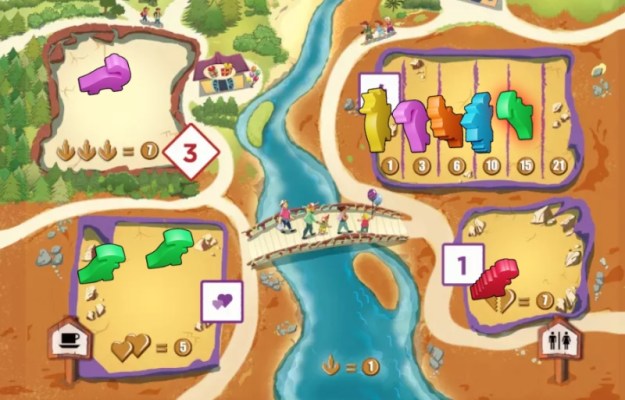
This week, the “Feature Game” will be  the “Roar and Write” type game, Welcome to Dino World.  This is unrelated to the Welcome to… games we have played previously, except for the similarity in the names of course.  There are two levels, but as this will be the first time we have played it, we will save “Danger Mode” for another day, reducing the risk of there being an Isla Nublar type incident…

Welcome to Dino World
– Image by boardGOATS

And talking of dinosaurs…

Three dinosaurs stumbled across a magic lamp. They rubbed it, and a genie appeared.

“I have three wishes, so I’ll give one to each of you,” the genie announced.

The first dinosaur thought hard. “Alright,” he said, “I’ll have a big, juicy, piece of meat please.” Instantly, the biggest, juiciest piece of meat he’d ever seen appeared in front of him.

Not to be outdone, the second dinosaur thought even harder.  “I know!  I’ll have a shower of meat!”  Immediately, huge pieces of meat rained down around him.

The third dinosaur, certainly not to be outdone, thought even harder than the other two dinosaurs.  “I’ve got it!” he cried, “I want a MEATIER shower!”

11th May 2021 (Online)

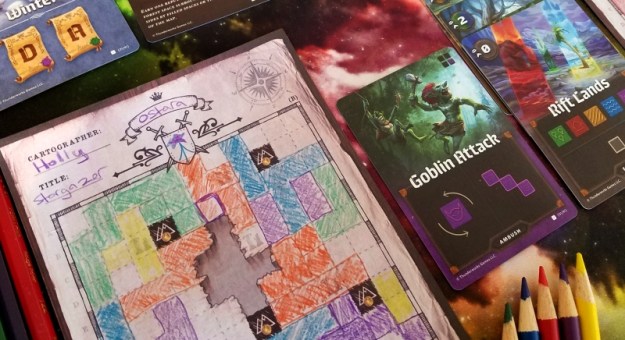
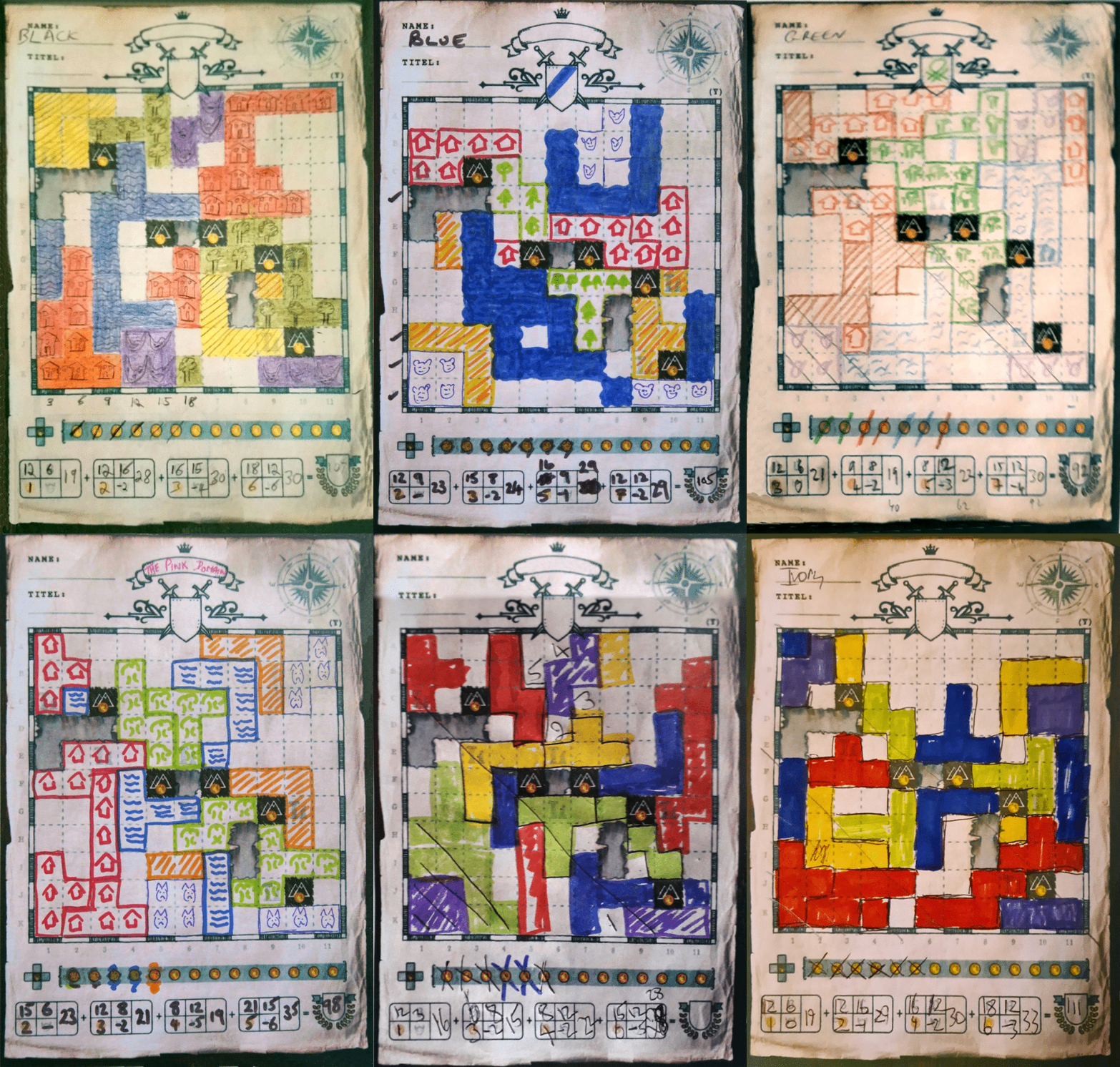
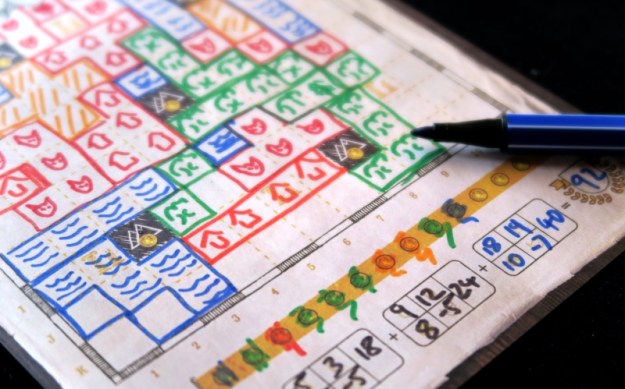
There was the usual chit-chat and community update, but eventually everyone was ready to start playing the “Feature Game” which was the Neue Entdeckungen (New Discoveries) expansion to Cartographers.  Cartographers is a “Roll and Write” game we’ve played and enjoyed quite a bit over the last year. The base game is simple enough, but unlike a lot of the games we’ve played, has more of a “gamery” feel to it than some of the simpler Tetrissy games it is related to like Second Chance or Patchwork Doodle.  The thing these games all have in common is that players are given shapes to draw on a personal player grid.  What makes Cartographers different is the addition of goal cards which give points at the end of each round, in a similar style to another game we have enjoyed playing, Isle of Skye.

Cartographers: A Roll Player Tale
– Adapted from image by BGG contributor
Johnny Dangerously

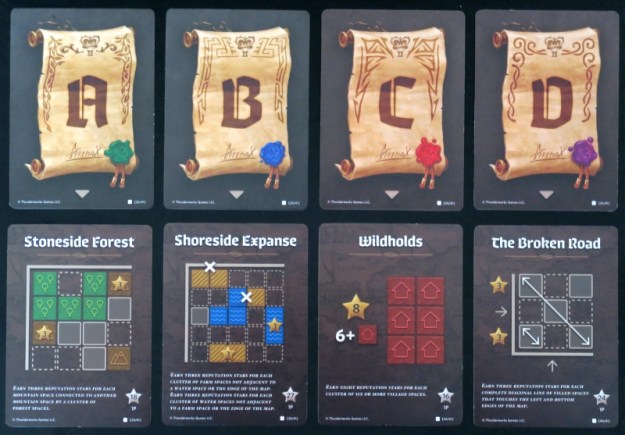
Each cards depicts a shape and terrain, giving some element of choice in either terrain type or shape.  The game is played over four rounds, each consisting of several cards.  At the end of each round two of the four goal cards are scored, such that each is scored twice during the game.  This time, the four goal cards were Stoneside Forest (A), Shoreside Expanse (B), Wildholds (C), and The Broken Road (D).  At the end of the first round the first two of these, Stoneside Forest and Shoreside Expanse were scored.  Stoneside Forest gives points for connecting the mountain spaces that are preprinted on the map.  Shoreside Expanse on the other hand rewards players for each area of lake or arable not adjacent to arable or lake (respectively) or the edge of the map.

Der Kartograph: Neue Entdeckungen
– Image by boardGOATS

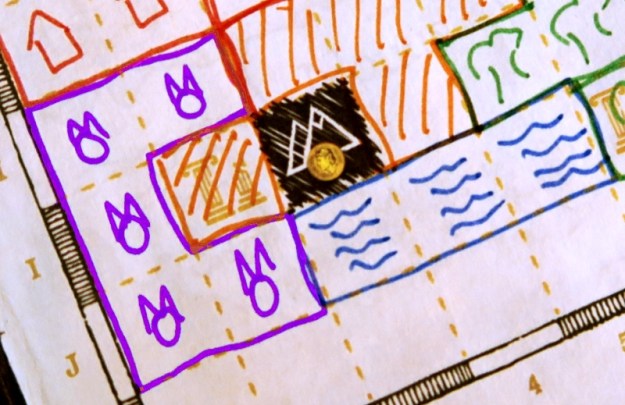
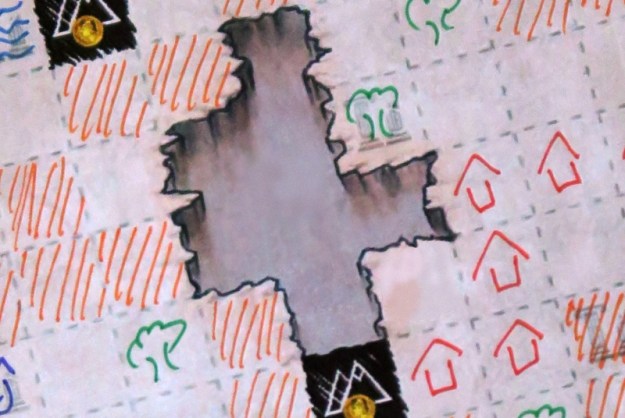
Stoneside Forest was made more challenging by the fact we were playing with the Neue Entdeckungen (New Discoveries) expansion which adds new ambush cards (from the Ambush Mini Expansion) and a new map with wastelands.  Wastelands are areas that are preprinted on the maps that players are unable to use, but are considered already filled.  There is an alternate map in the base game with a large area of wasteland which we played with last time, but the Neue Entdeckungen expansion map has several smaller areas of wasteland adding a different set of challenges.  we’ve played with both Shoreside Expanse and Stoneside Forest before, so for the first round, we all knew what we were trying to do.

Cartographers: A Roll Player Tale
– Image by boardGOATS

Wildholds and The Broken Road were new to us though.  The Wildholds gives eight points for for each village area occupying six or more spaces.  Eight points is a lot, and if an area is complete in time for the first scoring phase, it will also score the second time making it very lucrative.  With this in mind, Ivory started planning for Wildholds early in the first round, while others concentrated on first round goals first. The final goal, The Broken Road, rewards players with three points for every complete diagonal that connects the left hand edge of their map with the bottom edge.  With eleven possible diagonals, everyone was of the impression that The Broken Road would be easy to score a lot of points with, but it turned out to be more difficult than most people expected.

Cartographers: A Roll Player Tale
– Image by boardGOATS

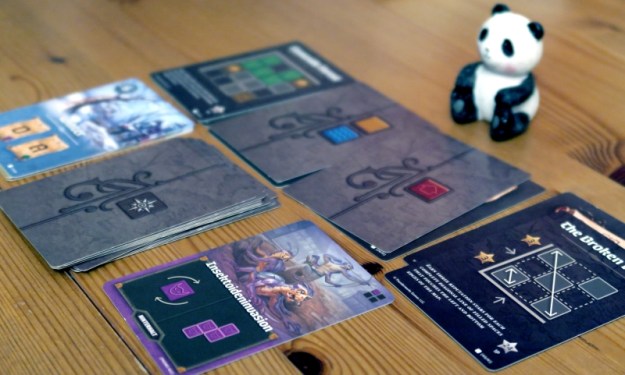
In fact, most people left it to the end assuming it would take care of itself, only to discover that it didn’t really.  That said, unusually, the arrival of the Ogeroffensive Ambush card actually did most people a favour.  This is unusual, as Ambush cards give players negative points for any unfilled spaces adjacent to their goblin spaces at the end of the round.  We play the cards using the solo rules where players place them in a given corner and, if that is already filled, slide it one space in a given direction following the edge of the map.  They continue spiralling in to the centre until they find an empty space.

Der Kartograph: Neue Entdeckungen
– Image by boardGOATS

Because the Ogeroffensive arrived as the first card in the round and starts in the bottom left corner, for many people it actually gave them twelve points (filling two diagonals and scoring for two rounds).  Arriving so early in the round, most of those who were able to benefit from it, didn’t even score many negative points as there was plenty of time to fill any empty spaces.  All three of the ambush cards we introduced came out early in the rounds which meant they added a more strategic obstacle rather than throwing an unexpected spanner in the works as they do when they come out at the end of the round.

Der Kartograph: Neue Entdeckungen
– Image by boardGOATS

The rounds get shorter as the game progresses and it wasn’t long before it was the final round and everyone was looking to maximise their final scores.  From the in-game table chatter, it was clear that Ivory and Burgundy were going to be difficult to beat and, as is so often the case, so it proved.  This time, Burgundy had the edge over Ivory and took victory by four points.  The battle for the final place on the podium was fierce too, but Black ultimately took that from Blue by just two points.  Regardless of where they ended up though, everyone had enjoyed it.  From there, we moved on to another “Roll and Write” game that we’ve played quite a bit over the last year, Railroad Ink.

Railroad Ink: Deep Blue Edition
– Image by boardGOATS

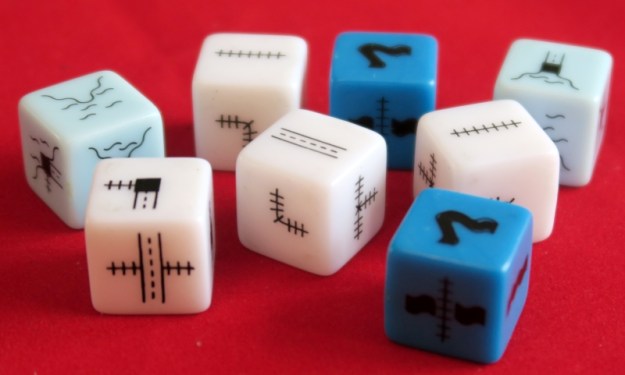
This is a fairly straight-forward game where dice are rolled and players have to write the road and rail segments on their maps.  The base game is played over seven rounds with four white dice rolled in each round.  In this game, all the dice have to be used, but players also get three chances to play special “cross-roads dice” during the game.  At the end of the game, players score for their longest rail segment, their longest road section, the spaces they have succeeded in filling in the centre of the board and the number of entrances they have managed to connect together.

Railroad Ink on Board Game Arena
– Image by boardGOATS

This time, however, we decided to play it online through Board Game Arena rather than engaging our inner artist and playing on paper.  There were advantages and disadvantages to playing the game online and people had mixed feelings about it.  It was certainly easier to correct errors, but somehow it lost… something…  It was another highly enjoyable game though and the results were also close at the top.  With Ivory taking an early night, the challengers to Burgundy’s crown were Green and Blue.  Despite their best efforts, Burgundy’s crown was too firmly wedged, and he finished four points ahead of Blue and five ahead of Green.  Although Cartographers had taken longer than many of the games we play, and time was marching on, there was still enough for one last game.  And this time, with just six, we relatively quickly (for us) settled on For Sale after a quick Vevox vote.

For Sale
– Image by boardGOATS

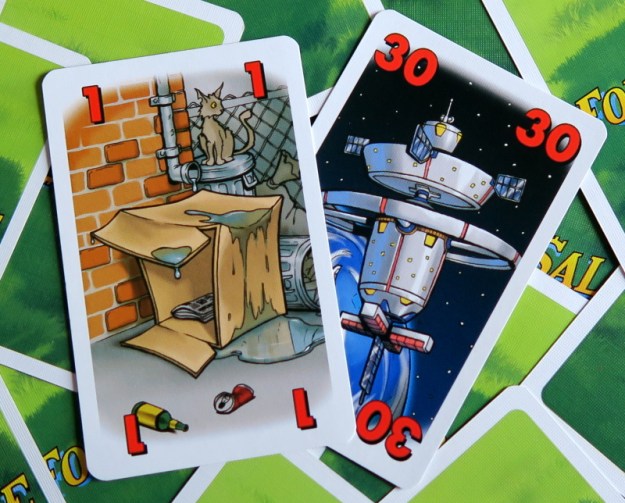
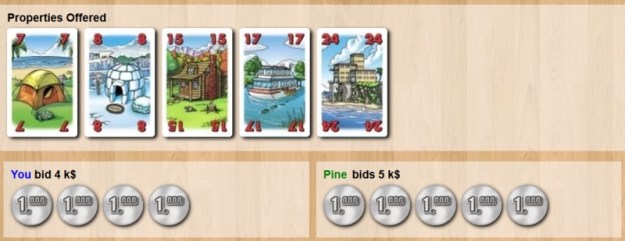
For Sale is an older game that has had a bit of a resurgence recently for us.  The idea is that the game comes in two phases:  firstly, players use their starting $14,000 to buy properties at auction, then they use these properties to “bid” for cheques in the second phase.  The winner is the player with the highest total in cheques and left over starting currency.  It is such a quick game to play that this time we played it twice.   The first time through, Pink paid $8,000 for the space station while Purple picked up the cardboard box for free.  But then, Pink sold his space station for $15,000 and Purple ended up parting with her box without return.

For Sale on Board Game Arena
– Image by boardGOATS from boardgamearena.com

That is only part of the story of course, but important to most people was that Burgundy didn’t take his third win in succession.  In the end, everyone (except Burgundy) was content as they got that part of their wish as Black topped the podium edging in front of Blue, though Burgundy was just a couple of thousand behind.  You can’t keep a good gamer down for long though and Burgundy saw the second game as his chance for revenge.  In the event, the same three were on the podium, but with Black and Burgundy swapping places.  This time it wasn’t close at all either, with Burgundy finishing $9,000 ahead of his nearest challenger.  And that was that for another week.

For Sale
– Image by boardGOATS

Learning Outcome:  Sites of Insectoid Invasions should be shown on every map.

Spiel des Jahres Nominations 2021

The nominations for the Spiel des Jahres have been announced.  There are three categories, the Kinderspiel (children’s game) , the Kennerspiel (“expert’s” game) and the most desirable of all, the family award, the Spiel des Jahres.  The nominees for this year’s awards have been announced as:

  • Kinderspiel des Jahres
    Kinderspiel des Jahres 2019Dragomino by Bruno Cathala, Marie Fort and Wilfried Fort
    Fabelwelten (aka Storytailors) by Wilfried Fort and Marie Fort
    Mia London by Antoine Bauza and Corentin Lebrat

Last year, the winner of the Spiel des Jahres was Pictures, a game where players model the picture on their card using the available components, e.g. shoelaces, coloured cubes, etc.; players get points for correctly guessing other players images and for other players guessing their image.  This is considerably lighter than some of the earlier winners, notably, Tikal and El Grande, or even some of the best known winners like The Settlers of Catan, Carcassonne or Ticket to Ride.  As the main award winners have become lighter over the years, we have found the Kennerpiel des Jahres better fits to our tastes.  The Kennerspiel nominees are not especially complex games, but are typically a step up from the light, family-friendly games of the main prize, the Spiel des Jahres.

– Image by from spiel-des-jahres.de

Last year the Kennerspiel award went to The Crew: The Quest for Planet Nine a game we have still been unable to play thanks to the global pandemic.  The Crew beat our preferred choice, Cartographers.  In contrast to The Crew, as a “Roll and Write” game, we have played Cartographers a lot.  So far, we are unfamiliar with the nominees this year and likely won’t get the chance to play any of them until some time after the winners have been announced (19th July in Berlin for the Kennerpiel and Spiel des Jahres Awards; 14th June for the Kinderspiel des Jahres).

Cartographers: A Roll Player Tale
– Image by boardGOATS


Next Meeting, 11th May 2021 – Online!

Spring is here, the evenings are getting brighter and it feels like the end is in sight, maybe.  People still need what social contact they can get though, and board games are a great medium for that.  Despite the limitations of “remote gaming“, everyone feels it is important to stay in touch, so we are persisting with online meetings.  Therefore, our next meeting will be on Tuesday 11th May 2021; we will gather from around 7.30pm, and start playing at 8pm.

This week, the “Feature Game” will be the Neue Entdeckungen (New Discoveries) expansion to Cartographers.  This is a “Roll and Write” game we’ve played and enjoyed quite a bit, but this expansion adds a new map with more wastelands to try to work with.

Cartographers: A Roll Player Tale
– Image by boardGOATS

And talking of cartographers…

Jeff’s cartographer wife, Jill, was worried she’d lost some very important topographical maps.  They spent all morning trying to find them, looking high and low. Eventually, when all hope was lost and Jill thought she was going to have to start again from scratch, Jeff opened a desk draw they had already searched twice, and there they were.

When Jeff showed his wife what he’d found, she said, “Oh, that’s a relief…!”

27th April 2021 (Online)

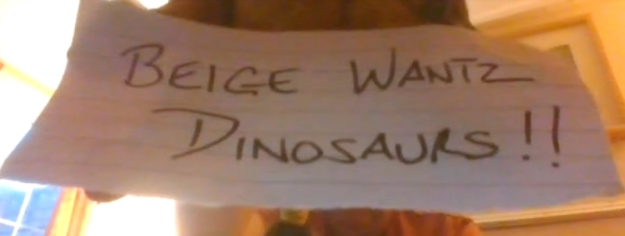
The evening started with Beige protesting about the lack of Dinosaurs.  This had to be explained to everyone else:  Pink had dropped round paperwork for Welcome to Dino World on Monday, only for Blue to realise that she’d got confused.  This meant that everyone now wanted Dinosaurs and felt they’d missed out on something they hadn’t known wasn’t going to happen…
Welcome to Dino World
– Image by boardGOATS

In order to mark the start of “Golden Week” on Thursday, the “Feature Game” was the MetroX expansion, Sendai & Hakata & Nagoya.  “Golden Week” encompasses four of Japan’s national holidays, celebrating the Japanese Constitution (May 3rd), Children’s day (May 5th), Emperor Hirohito’s birthday (April 29th) and his love of plants (May 4th, also known as Star Wars Day).  Blue’s confusion with dates meant she had thought it was the end of May, not the start.  Still, it meant people have something “up-roar-us” to look forward to in a month or so, and in the meantime, they had trains to play with.

MetroX
– Image by boardGOATS

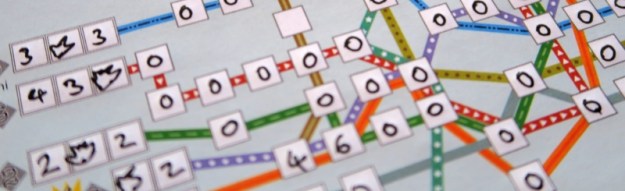
MetroX is a game we played a few months ago and was provided by Blue’s very lovely BGG Secret Santa.  Somehow, although it is not complicated, it is a rather difficult game to get your head round.  In summary, the game is a variant on the “Roll and Write” games where a card is turned over and players write on their train map.  They assign the number on the card to a line and “build” that number of stations along the line (marking them with an open circle).  When a player completes a line, they score points with the first player (or players) scoring more points than those to finish the line in later rounds (similar to the scoring for columns in Noch Mal! and Noch Mal So Gut!).
MetroX
– Image by boardGOATS

There are four different types of card, but the most common are plain numbers which allow players to just build stations and these are numbered two to six, with fewer of the high numbers.  Each line must be extended from the start end (the end with the “Indicator Boxes”, marked in red on our paperwork).  This means that although stations can be built in the middle of the line because they are part of another line, stations cannot be added beyond this point (where the lines diverge) unless all the earlier stations have been completed.
MetroX
– Image by boardGOATS

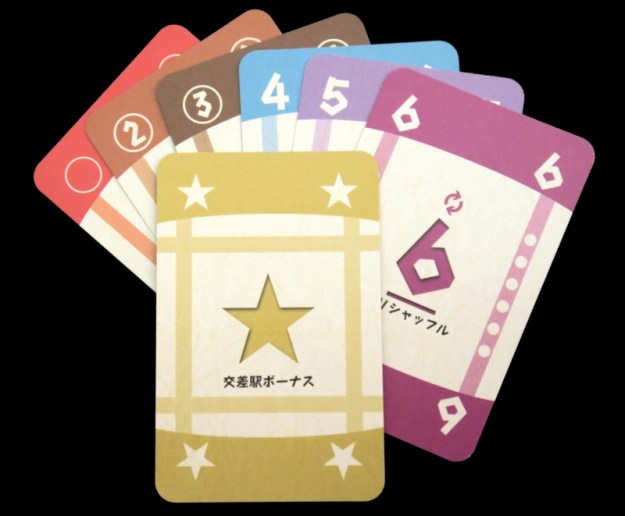
Normal number cards cannot “skip” completed stations.  In other words, in a line where the first two stations have not been completed, but the third has, if a “Six” is used to build the first two, the third cannot be jumped, and the remaining four are wasted.  So efficiency is the name of the game.  There are a small number of special cards with a circle round the number that allow players to skip completed stations, but these are few and far between and are only low numbers.  There is also a wild that allows players to fill in one station anywhere on the board without filling in an indicator box.
MetroX
– Image by boardGOATS

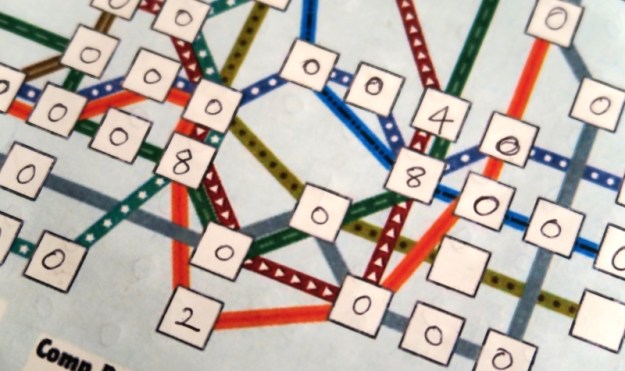
In addition to scoring points for completed lines, players can also score a lot of points for intersections.  In the deck of just twenty cards, there are three “Star Cards”.  These allow players to build just one station at the cost of one Indicator Box, but instead of writing a zero in the box, they write a number that corresponds to twice the number of lines that go through the station—this is the number of points they score at the end of the game.  With some stations forming the intersection of four or five lines, these can be very lucrative, but the timing of these cards is really critical.

MetroX
– Image by boardGOATS

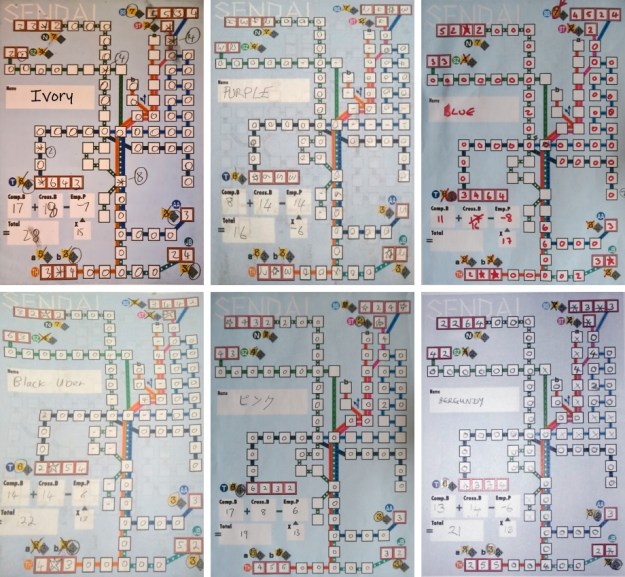
This time the early cards were not helpful with a circle card coming out first, when there was no opportunity to take advantage of their special ability.  The second card produced even more moans and groans as it was a “Star”, when there was only one place that would give more than two points and some people had already used that with the first card.  There was a bit of confusion as well with some of the colours looking a bit similar as a result, Purple was quick off the mark and was the first to claim a line, but others thought it wasn’t possible given the number of cards we’d had; it turned out the line was longer than she thought.
MetroX: Sendai & Hakata & Nagoya
– Image by boardGOATS

Several people got in a bit of a mess, but Pine got into such a tangle that he retired early as fixing his problems was too difficult.  We got all the way through the deck on the first pass, as the “six” (and shuffle the deck) card was the very last in the deck.  Which meant we had the full quota of low numbers (and high numbers too), and as we’d had some useful cards at the start everyone struggled at times.  Despite the issues, it didn’t really take long to play.  So, while everyone else was still counting up Ivory was the first to post with a massive, and what proved unbeatable score of twenty-eight, helped by being able to put one of his “stars” on the one highest scoring space, giving him a eight points.

MetroX: Sendai & Hakata & Nagoya
– Image by boardGOATS

Burgundy claimed a “moral score” of twenty-six, which would have given him second place, though in reality he was just off the podium behind Green with twenty-three and Black with twenty-two.  With that, Lime took an early night and Pine joined the group again for the lighter, travelling band, route planning game, On Tour.  We first played this back in January, but a few people missed out.  Those that had been there had really enjoyed it though, and we were keen to give it another go.
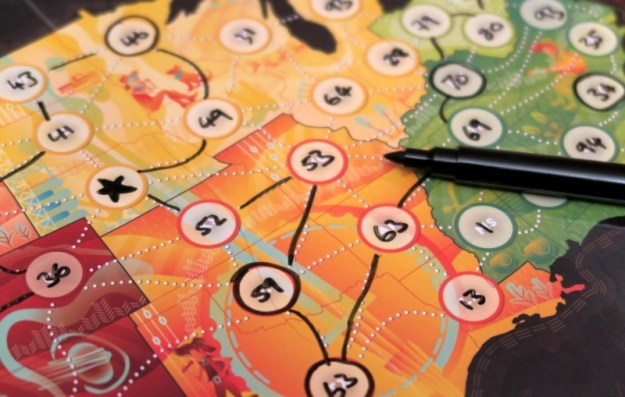
On Tour
– Image by boardGOATS

The game is really, really simple:  two d10 dice are rolled to give two numbers.  These are combined to give two, two-digit numbers.  Players have a map with a network of circles, and write these two numbers in two of the circles somewhere on their map.  At the end of the game, they have to plot a route through the numbers along the provided connections such that the route connects adjacent points starting with a low number and never decreasing.  Players get one point for each circle they manage to visit.
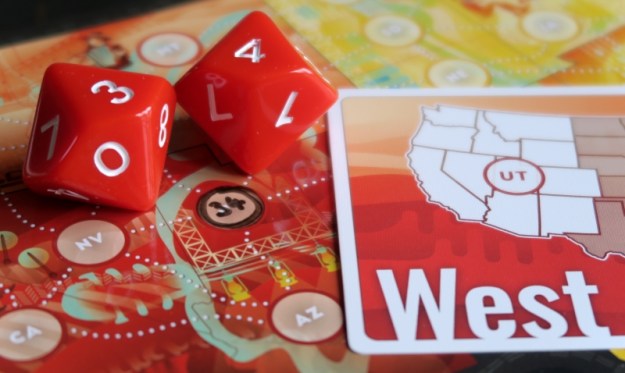
On Tour
– Image by boardGOATS

There is a restriction provided by cards which indicate the area of the map numbers can be placed in on each turn.  These also provide a specific location, such that players who place a number in that circle score a bonus if their route goes through it.  There are two maps available:  USA and Europe, so being a group full of Europhiles, this time, we chose Europe.

On Tour
– Image by boardGOATS

The dice were particularly challenging this time though and despite both Blue and Pink trying, neither managed to roll a five, or a two, and there were an awful lot of nines.  There were the inevitable complaints when people didn’t get what they wanted, and these increased in number as things became increasingly critical as the end approached.  Pink possibly came off the worst claiming a “moral score” of thirty-seven, though his actual score was only twenty-five.
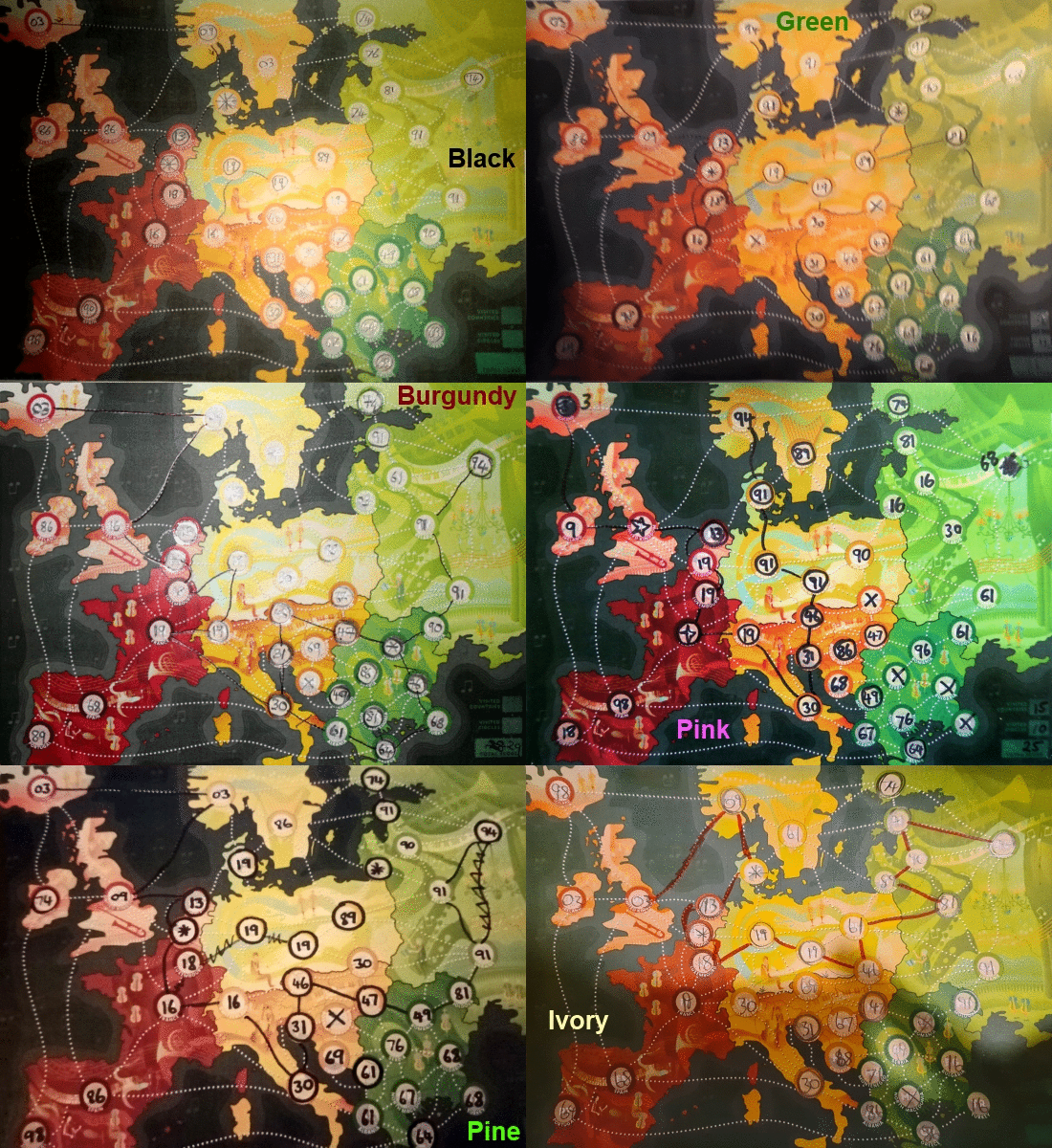
On Tour
– Image by boardGOATS

Green managed the highest score, with thirty-eight with a route going from Ireland to Norway via Italy and Bulgaria.  Blue and Black made up the podium four and eight points behind respectively.  Time was marching on, but there was still time for our now traditional end-of-evening trip to Board Game Arena and after everyone had enthusiastically eschewed Dingo’s Dreams, we went for our old favourite, 6 Nimmt! (with the Professional Variant).

6 Nimmt!
– Image by boardGOATS

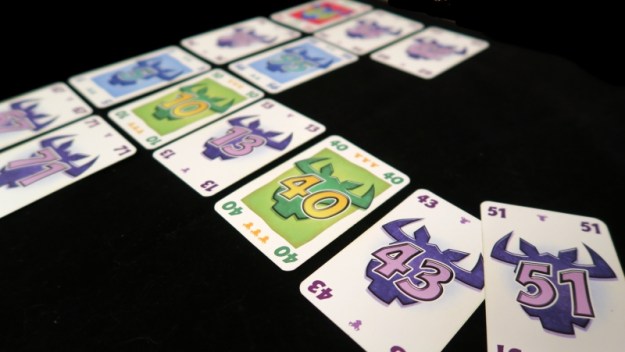
6 Nimmt! is so simple and so much fun, and we’ve played a lot of it online in the last year.  The simultaneous card selection means the downtime is minimal, and the balance between strategy and luck means it is the perfect game for our large group at the end of the evening.  Starting with the card with the lowest face value, they are added to the end of row that ends with the highest number that is lower than the card in question.

6 Nimmt!
– Image by boardGOATS

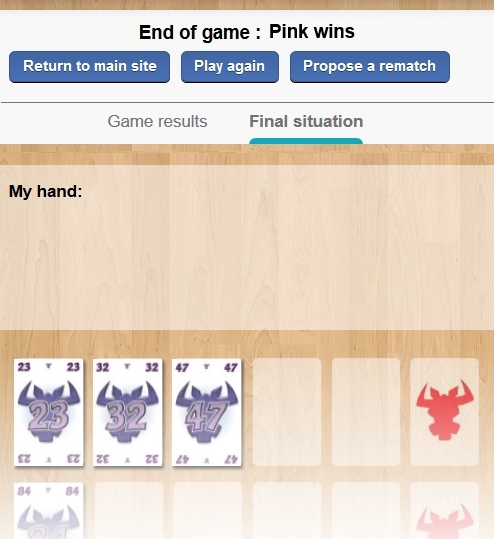
If the card is the sixth card, the player picks up all the other cards, and that is exactly what happened to Blue on just the second turn.  This game is one of those where once it goes wrong it goes very wrong, and from there, things just went from bad to worse for her as she picked up again on the third turn too.  She wasn’t the only one to get unlucky of course.  For example, Pink managed to pick up on the first turn of one round when four of the other six other players played cards between ninety-one and a hundred, leaving him to place the next card and pick up a pile of cards.

6 Nimmt! on Board Game Arena
– Image by boardGOATS
from boardgamearena.com

Fairly inevitably, Blue ended the game, though it was closer than it might have been with Burgundy finishing with just one point left from his starting sixty-six.  At the other end, Pine (who always does well in this game), lost just ten points giving him a massive win, with twenty-five points more than anyone else.  After a vote on Vevox to decide what to play, we went for the easy option and decided to play 6 Nimmt! again.
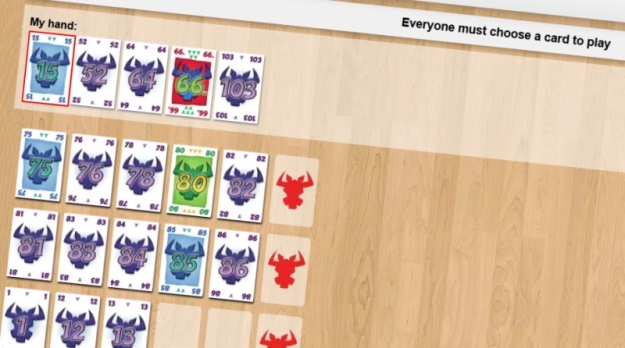
6 Nimmt! on Board Game Arena
– Image by boardGOATS
from boardgamearena.com

This time, Pine did not do quite so well and Pink was the one who managed finish with the most points, fifteen points clear of second place, which this time went to Blue.  Remarkably, Burgundy managed the whole of the final round with just one point and on the last card, Purple pipped him to the post and ended the game.  Green had spent a large portion of the second game talking to himself when his sound went down, so decided that was his queue to finish.  Another online vote confirmed things and everyone went to bed.
6 Nimmt! on Board Game Arena
– Image by boardGOATS
from boardgamearena.com

Learning Outcome:  Every country should have a “Golden Week”.

Next Meeting, 27th April 2021 – Online!

Spring is here, the evenings are getting brighter and it feels like the end is in sight, maybe.  People still need what social contact they can get though, and board games are a great medium for that.  Despite the limitations of “remote gaming“, everyone feels it is important to stay in touch, so we are persisting with online meetings.  Therefore, our next meeting will be on Tuesday 27th April 2021; we will gather from around 7.30pm, and start playing at 8pm.

This week, to celebrate the start of “Golden Week” on Thursday, the “Feature Game” will be the MetroX expansion, Sendai & Hakata & Nagoya.  “Golden Week” encompasses four of Japan’s national holidays, celebrating the Japanese Constitution (May 3rd), Children’s day (May 5th), Emperor Hirohito’s birthday (April 29th) and his love of plants (May 4th, also known as Star Wars Day).

MetroX: Sendai & Hakata & Nagoya
– Image by boardGOATS

And talking of holidays…

Jeff was working in a department store in Japan when a small boy went up to him and said he would like an electric train set to play with during “Golden Week”.
Jeff thought for a moment, and then said, “If you get a train, your dad is going to want to play with it too. Is that all OK?”

The boy went very quiet.  So, moving the conversation along, Jeff asked, “What else would you like for “Golden Week”?”

The little boy promptly replied, “Another train.”

13th April 2021 (Online)

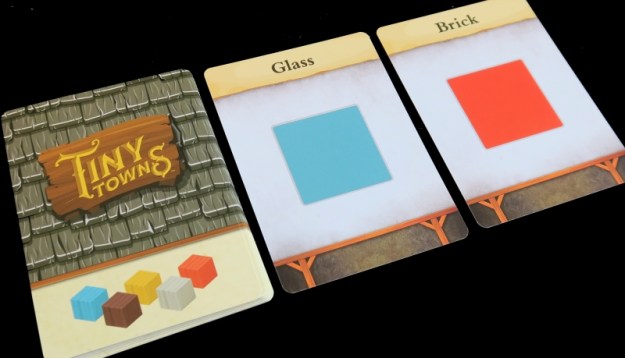
During the usual chit-chat it became apparent that Pine didn’t have the paperwork for the “Feature Game“, Tiny Towns, or if he did, he couldn’t find it.  So after everyone had listened to him rifling through his front room for a bit, Pink popped round with replacements and everyone had everything they needed to start.  Tiny Towns is an area and resource management game where players are planning and building a town.  Although it has some similar elements, it makes a bit of a change from the many “Roll and Write” games of which we’ve played so many.

Tiny Towns
– Image by boardGOATS

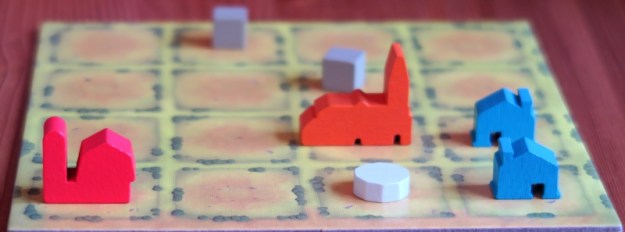
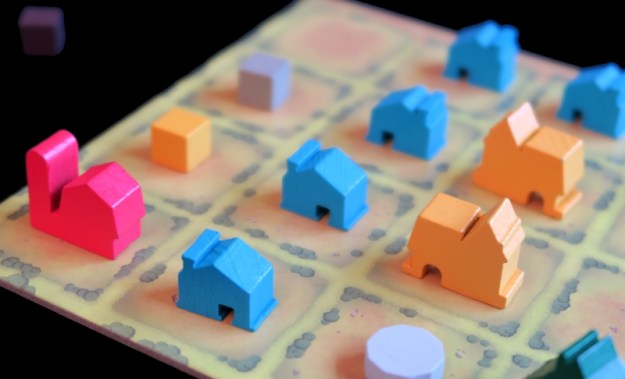
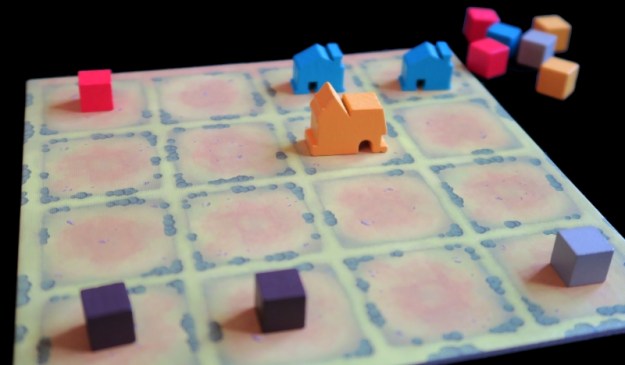
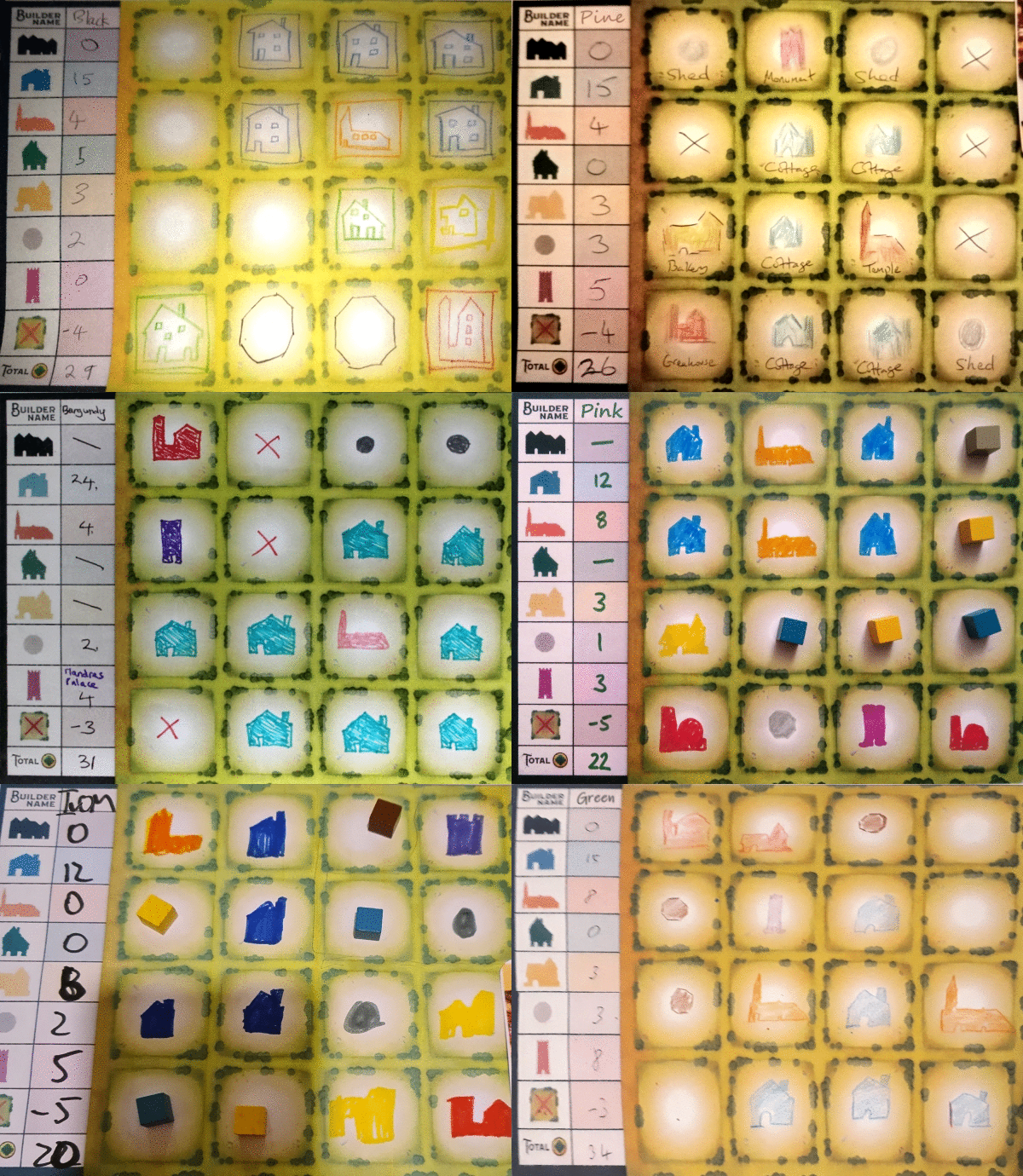
The idea is very simple:  in each round, everyone places a resource cube on one of the sixteen plots on their player board.  After placing cubes, players may, if they wish, remove cubes corresponding to a building and place a corresponding building on one of the newly vacated spaces.  Functionally, that is all there is to it, but the clever part is the interplay between the different buildings and how players score points. The different buildings all require different resources in different arrangements, and although they give different amounts of points and different conditions, the relationship between the building types is always the same.

Tiny Towns
– Image by boardGOATS

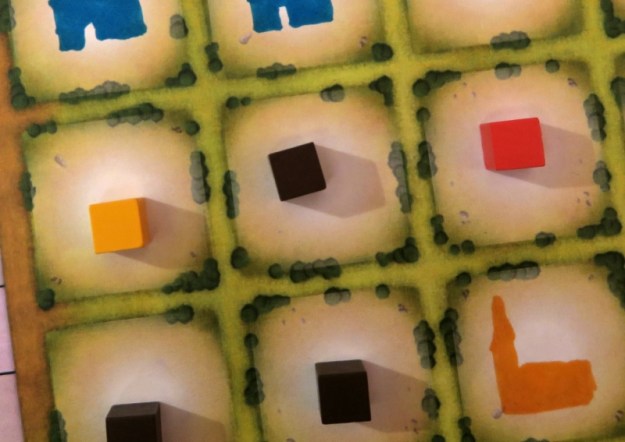
For example, the Cottage is always included in the mix of buildings, but to score points, a Cottage needs to be “fed” by a red building.  In the introductory buildings, this is the Farm, but drawing at random, we ended up with the Greenhouse which feeds all the cottages in a contiguous block.  We also had the Shed (which could be built anywhere), the Temple (scored points if adjacent to fed Cottages), the Almshouse (scores increase the more you have, so long as you don’t have an odd number!), the Bakery (scores if adjacent to red or black buildings) and the Trading Post (can be used as any resource for subsequent buildings).

Tiny Towns
– Image by boardGOATS

As when we played Tiny Towns on previous occasions, we played with the Town Hall variant which works better with more players.  With this, instead of players taking it in turns to choose the resources everyone places, cards are revealed for two rounds and players have a free choice for the third round.  Part of the reason for playing it again was in preparation for the Fortune expansion in a few weeks.  This time though, we added the Monument variant to increase the challenge slightly.  In this, players are dealt two special building cards each at the start of the game and choose one to act as a personal, and initially private, goal.  Each house-hold had a pack of Monument cards so everyone could deal cards and they could remain secret.

Tiny Towns
– Image by boardGOATS

With the Greenhouse in play, almost everyone tried to group all their cottages together, but everyone had a slightly different way of doing this and a different approach to using the other buildings.  Pink in particular focused on Cottages, but later regretted it, while Black tried to score points for Temples, but found it hard to do this and keep his Cottages in a single group as well.  Blue tried to build her monument, the Architects Guild, early, and then use it to create two Trading Posts then use these to build lots of Cottages all snuggled up together.  That didn’t work so well.

Tiny Towns
– Image by boardGOATS

Ivory and Pine on the other hand, built the Archive of the Second Age which gave them one point for each different building type in their town, and both managed five.  Burgundy built the Mandras Palace which gave him points for each different building orthogonally adjacent to it, but only managed two, giving him four points.  Green went for the same Monument and made better use of it taking the maximum, eight points.  Perhaps having a palace in your town makes it a better place, but either way, Green and Burgundy took first and second respectively, with Black completing the podium.

Tiny Towns
– Image by boardGOATS

Tiny Towns had taken a little while to play and it was getting late, so we moved to Board Game Arena to finish off the night.  For a few weeks, we have been saying we should try the some of the new games, so Green had tried a few and suggested we tried Dingo’s Dreams.  This is a strange little game where players compete to be the first to successfully guide their animal through the dream world.

Dingo's Dreams
– Image from kickstarter.com

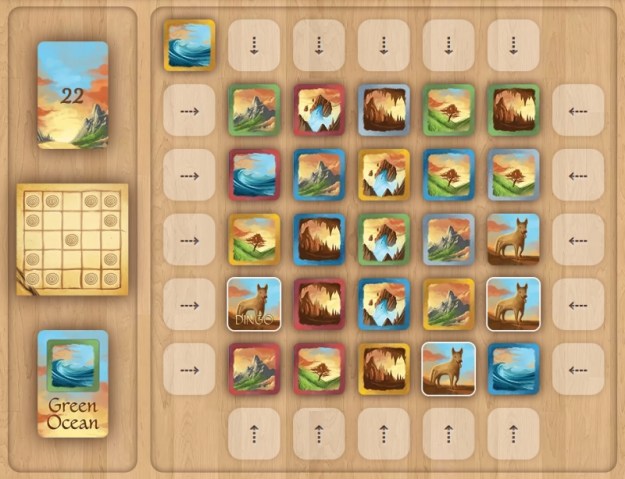
Players start with a grid of twenty-five tiles set up at random in a five by five array representing their dreamscape, and one extra tile with their animal depicted on it.  Each turn, a card is revealed and players find the tile that matches it and turn it over.  They then take their animal tile and slide it in from one edge; the tile that emerges is the tile added the next time round.  Players continue until one player succeeds in matching the pattern in their dreamscape to the goal tile.

Dingo's Dreams
– Image by boardGOATS from
boardgamearena.com

Unsurprisingly as he was the only one to have played it before, Green won.  Unfortunately, nobody else understood how the game worked as the explanation wasn’t as clear as it could have been.  That meant nobody really had a clue what was going on and the whole thing felt very random.  As a result, everyone was very glad when it was over and keen to move on to one of our favourite games, No Thanks!, which has become an alternative to 6 Nimmt! as our go to game for relaxing fun.

No Thanks!
– Image by boardGOATS

No Thanks! is very simple:  on their turn, players take the card or pay a chip to pass the problem on to the next player.  At the end of the game, the face value of the cards score negatively, offset by any remaining chips.  The clever part is that if a player has two or more consecutive cards, only the lowest one is counted, but there are some cards missing from the deck, so there is a strong element of chance.  This time, it was a bit of a car crash, with almost everyone ending up with runs with gaps in them.  The exception was Green, who managed a six card run from thirty to thirty-five, and offset twenty-one of those negative points with chips giving him a winning score of minus nine.

No Thanks! on Board Game Arena
– Image by boardGOATS from boardgamearena.com

With Green having won three out of three games, everyone felt the need for revenge, so we gave it a second go.  Green tried the same trick again collecting high value cards, but wasn’t so lucky this time.  Purple, however, with the last few cards managed to complete a seven card run, and with the lowest card a twelve, she managed that rarest of things—a positive score and everyone was delighted for her.

No Thanks!
– Image by boardGOATS

It was getting quite late, but there was just time for a game of one of our recent discoveries, Draftosaurus.  As Pine described it the first time we played, this is basically Sushi Go!, but with dinosaurs.  Players start with a handful of dinosaurs, place one in their park and pass the rest on.  Dinosaur placement is according to a dice roll which restricts where on their board players can place their dinosaurs on each turn.  Otherwise, players score according to how well they have fulfilled the different requirements for the pens.

Draftosaurus on Board Game Arena
– Image by boardGOATS from boardgamearena.com

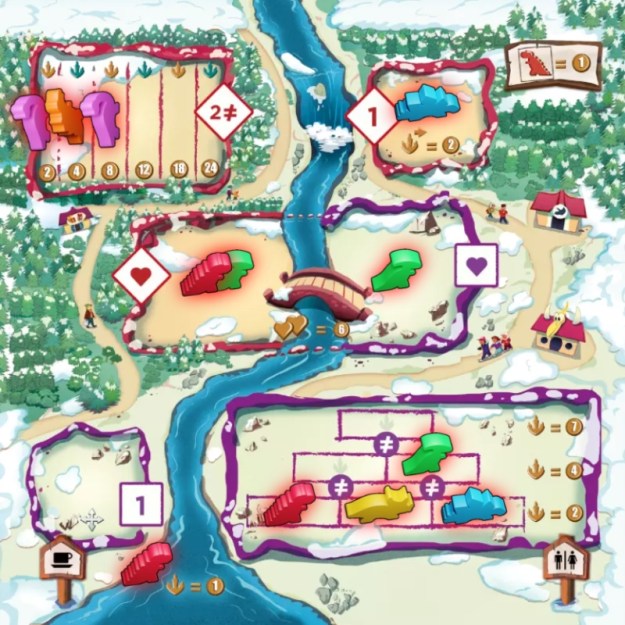
This time we played two rounds, first with the Summer board, and then with the Winter board.  In the first round, Pine top-scored with a massive forty points, nine points more than anyone else.  The Winter board was new to everyone except Pine, but despite that, the scores were very close.  Pine still top-scored, but only by a point or so, however, the damage had already been done, and Pine closed the night with the final victory of the evening.

Draftosaurus on Board Game Arena
– Image by boardGOATS from boardgamearena.com

Learning Outcome:  Make sure your Greenhouse is big enough to feed all your Cottages.

Next Meeting, 13th April 2021 – Online!

Although the spring is definitely on its way despite the snow, with the current stresses, people still need what social contact they can get, and board games are a great medium for that.  Despite the limitations of “remote gaming“, everyone feels it is important to stay in touch, so we are persisting with online meetings.  Therefore, our next meeting will be on Tuesday 13th April 2021; we will gather from around 7.30pm, and start playing at 8pm.

This week, the “Feature Game” will be Tiny Towns, this time with the Monuments module.  Unusually, this is not a “Roll and Write” game, though it has some similar elements.  It is an area and resource management game where players are planning and building a town.

Tiny Towns
– Image by boardGOATS

And talking of planners…

Jeff went to see a planning consultant to ask for help building his new house.  As he arrived and was being introduced to the consultant, he asked, “What’s your least expensive fee?”

The consultant answered, “£150 for three questions.”

Jeff looked quite shocked and exclaimed, “That’s very expensive, isn’t it?

“Yes, it is,” replied the consultant. “So what’s your third question?”

30th March 2021 (Online)

The pandemic is hardly something to celebrate, but it has had such a huge impact on the group and life in general over the last year, that we couldn’t let the first anniversary of moving games night online pass without marking the occasion.  That and the close proximity of Easter meant the Easter Bunny had made some early deliveries.  Before we were able to open them though, there was another attack of The Gremlins…

Easter 2021 Biscuits
– Image by boardGOATS

This time, the unfortunate victims were Lime and Little Lime.  When they first arrived things seemed to be working, but then there were briefly two Limes and although we got rid of one, it seemed to take their sound with it.  There was much hilarity when Lime asked questions and obviously got no answer despite lots of us shouting at him…  In the end, we resorted to communicating with scribbled notes, but even turning it off and on again failed to work and he ended up joining us using his work computer.  Then the boxes of eggs, cake, and festive iced meeple biscuits were opened and we started the “Feature Game“, Las Vegas.

IT Gremlins
– Image by boardGOATS

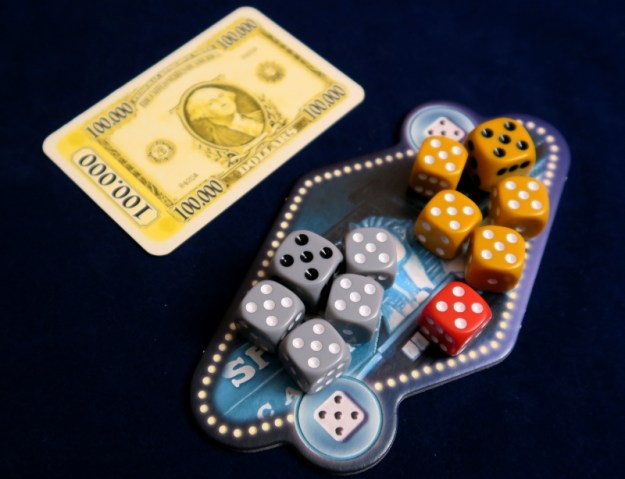
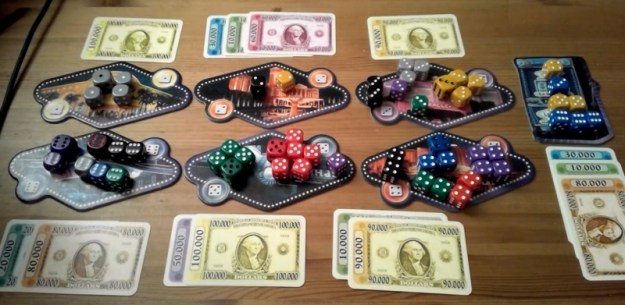
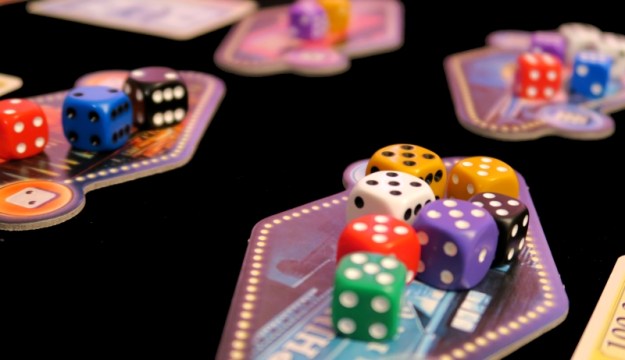
Las Vegas is a dice chucking, betting, and push your luck game that we love and used to play a lot before we were forced to move game nights online.  It was the first game we played online a year ago and although other games work better with the current restrictions, we thought it was appropriate to play it again to mark a year of remote gaming.  Like a lot of the best games, the game itself is very simple: players start with a handful of dice and take it in turns to roll them and place some of them on one of the six casinos.  The player with the most dice in a casino wins the money at the end of the round.  The player with the most money after three rounds (“House Ruled” from four) is the winner.

Las Vegas
– Image by boardGOATS

So, each casino has a number, one to six, and on their turn, players can only place dice with that number on the corresponding casino.  They must place all the dice they have of that number and can only place dice in one casino on each turn.  Players thus take it in turns to roll their ever diminishing number of dice and place them on the casinos until they have nothing left to roll.  As usual, we played with the Big Dice from the Boulevard Expansion—these have double weight and count the same as two smaller dice giving people an additional decision to make.

Las Vegas: The Slot Machine
– Image by boardGOATS

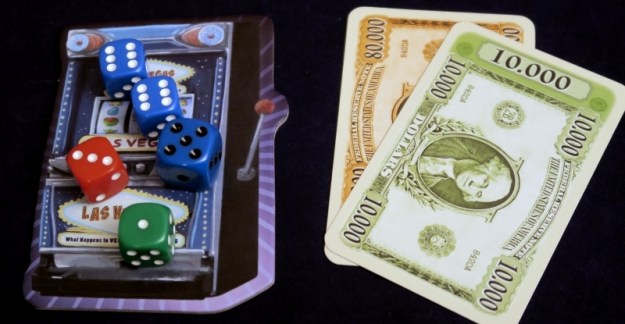
We also used the Slot Machine, which is like a seventh casino, but works a little differently.  Instead of having a number, each die number can be placed just once in the round (though with more than one dice if appropriate).  The winner of the pot is the one with the most dice, with the total number of pips and then the highest numbered dice as tie-breakers.  Like the casinos, the pot is dealt out from a pile of money cards until it holds more than the minimum threshold—the winner then takes the highest value card, the runner up taking the second and so on.

Las Vegas
– Image by boardGOATS

The clever part of the game, the really, really clever part, the bit that makes it fun, is that  at the end of the round, all ties are removed (except for those on the Slots of course).  This gives players a reason to stay involved, even after they have run out of their own dice.  It leads to players egging each-other on and trying to persuade other players what to do with their dice, even when the most sensible move is obvious to everyone.

Las Vegas
– Image by boardGOATS

In order to reduce down-time between turns, the couples played in Teams, this led to inevitable debates and more barracking.  Blue and Pink ended up in conflict over Blue’s tendency to put her money on the Slots and while there was some debate between Green and Lilac, while Black also disagreed with Purple occasionally from his position under the patio.  It was good fun though, slower and more difficult to play than some of the “Roll and Write” games we’ve played more of recently, but it made a nice change.

Las Vegas
– Image by boardGOATS

There was lots of chatter and lots of hilarity, especially when Team Pinky-Blue rolled four fours and used them to take out Team Greeny-Lilac.  Then, with Ivory threatening to get involved in the same casino, instead he rolled three threes with his last dice and could do nothing useful with them.  It was a game for mulitples—in the next round Pine rolled five fives and Team Greeny-Lilac rolled six twos.

Las Vegas
– Image by boardGOATS

There was lots of smutty responses to Green’s comment, “I have a big one…” along the lines of, “So you keep saying…”.  And from there, every time someone rolled a one with their large dice, the comment got another airing, though fortunately it didn’t happen too often.  It almost didn’t matter who won; Team Greeny-Lilac made a march in the final round picking up $160,000, but it was only enough to push Team Purpley-Black into fourth place, just $10,000 ahead of Ivory.


Las Vegas
– Image by boardGOATS

Burgundy took second place with $340,000, but it was Team Pinky-Blue who, despite their bickering managed to steal first place with $370,000.  It had been fun, but everyone was in agreement in the hope that next time we play Las Vegas, it will be face to face.  With that, Ivory and Lime took their leave and everyone else moved onto Board Game Arena for a game of another old favourite, No Thanks!.

No Thanks!
– Image by boardGOATS

No Thanks! is a really simple game too and one we played quite a lot prior to last year, and has recently had a bit of a resurgence thanks to the new implementation on Board Game Arena.  This is the new version which plays seven (rather than the original five), but works in exactly the same way:  the active player has a simple choice, they can take the revealed card or pay a chip to pass the problem on to the next person who then has to make the same decision.

No Thanks!
– Image by boardGOATS

Taking the card doesn’t solve the problem though as the next card is revealed and the active player has to make the decision all over again.  At the end of the game, the player with the lowest total wins, however, there are two catches.  Firstly, if a player has consecutive cards, they only count the lowest number, and secondly, some of the cards are removed from the deck before the start of the game.  And it is the interplay of these two rules that make the game work as they change the dynamic, so that some players want high value cards that everyone else rejects.

No Thanks! on Board Game Arena
– Image by boardGOATS from boardgamearena.com

This time Black, Blue and Green all managed to pick up over forty points thanks to all of them taking cards each other wanted.  Purple came off worse though, getting landed with all the cards between thirty-one and thirty-five, except thirty-three…  Pine and Burgundy both finished with five chips and two scoring cards, but Burgundy just edged it, finishing with seventeen points to Pine’s twenty-one.

No Thanks!
– Image by boardGOATS

There really was only one way to finish the evening, and that was with the 2020 winner of the Golden Goat Award, 6 Nimmt!.  This is so simple and we have played the spots off it this year.  The idea is that everyone simultaneously chooses a card from their hand and these are added in turn to the four rows.  Adding the sixth card to a row causes the owner to pick up the other five, giving them points or “nimmts”.  In the Board Game Arena implementation, everyone starts with sixty-six points and the game ends when one player reaches zero and the winner is the player with the most points remaining.

6 Nimmt! on Board Game Arena
– Image by boardGOATS from boardgamearena.com

This time the game was unusually close amongst almost everyone except Black who brought the game to a sudden and slightly unexpected end when he reached exactly zero.  More than half of the group were still battling away in the forties when the game came to an end, with Green at the top of the tree with forty-nine.  Much to his chagrin, however, Blue was some way ahead of him and finished with fifty-eight.  And with that, we decided we’d had enough of the first anniversary of playing games online, and it was time for bed.

6 Nimmt!
– Image by boardGOATS

Learning Outcome:  A year is a long time when you can only play games online.

Next Meeting, 30th March 2021 – Online!

Although the spring is definitely on its way, with the current stresses, people still need what social contact they can get, and board games are a great medium for that.  Despite the limitations of “remote gaming“, everyone feels it is important to stay in touch, so we are persisting with online meetings.  Therefore, our next meeting will be on Tuesday 30th March 2021; we will gather from around 7.30pm, and start playing at 8pm.

This week, the “Feature Game” will be Las Vegas, a dice chucking, betting and push your luck game that we love and played a lot before we were forced to move game nights online.  It was the first game we played online a year ago and we thought we’d play it again to mark a year of remote gaming.

Las Vegas
– Image by boardGOATS

And talking betting…

Every year, Jeff made a bet with a local farmer, as to which lamb will jump highest—He likes a gambol…