18th April 2023

Blue and Pink were joined for food by Jade, Plum, Byzantium and Sapphire.  As they finished, Pine, Green and Purple showed up (leaving Black under the patio, again), followed by Ivory and a team of Sherpas toting his massive Complete Collection of Everdell.  There were quite a few possible takers for the Pearlbrook expansion, the night’s “Feature Game“, but eventually, after a lot of discussion, Ivory was joined by Plum and Jade and they took themselves over to the other side of the pub and started setting up, which was no small task, though Everdell is functionally a fairly simple game.

Everdell: Pearlbrook
– Image by boardGOATS

Everdell is a dynamic tableau building and worker placement.  On their turn players can do one of three things: place a Worker and carry out any associated actions; pay any associated cost to play a card from their hand, or prepare for the next Season.  The game is played from Winter through to the onset of the following Winter, so each player has four Seasons, though because players can prepare for the next Season whenever they want to, players’ Seasons have different lengths and start their Seasons at different times.  This means one player who takes fewer turns could finish their game much sooner than another player.  At the end of the game, when everyone has finished, the player with the most points is the winner.

Everdell: Pearlbrook
– Image by boardGOATS

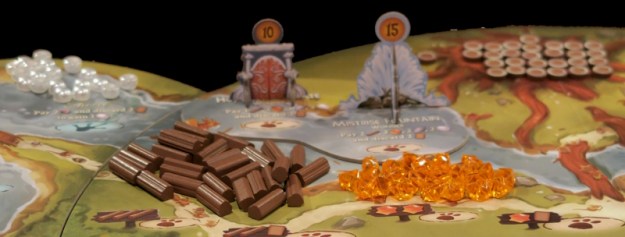
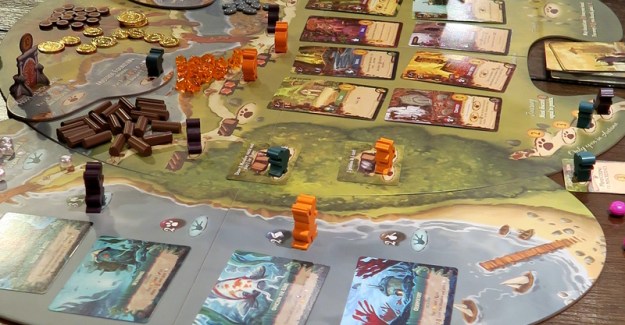
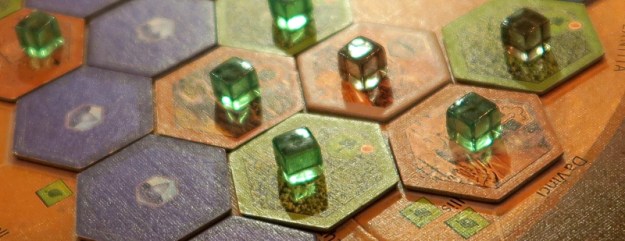
The Pearlbrook expansion adds an extension to the board, which displays River Destination cards and the new Pearl resource that give the brook (and thus the expansion) its name.  The basic event spaces are covered up as these are not used and are replaced by two new Wonder spaces.  Everyone also gets a couple of adornment cards at the start of the game and on their turn can pay a Pearl to play one of these as an action.  The don’t take up any space in the player’s city, but give an instant bonus action and points at the end of the game.  Players also start with a Frog Ambassador which they use to visit the Pearlbrook either to get Pearls or to activate the River Destinations.
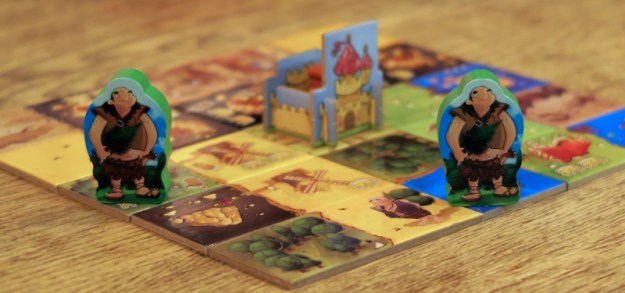
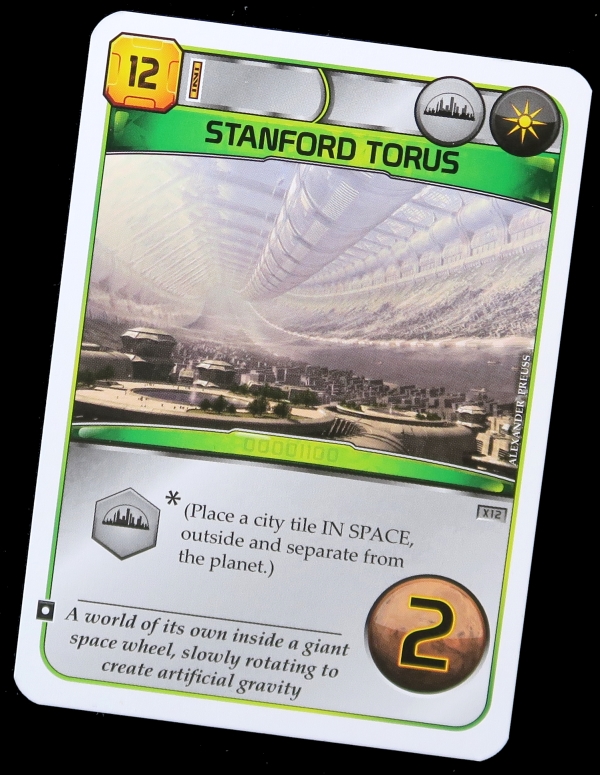
Everdell: Pearlbrook
– Image by boardGOATS

The River Destination spaces have a requirement printed on the board (e.g. three production cards in the City) and a player’s Frog Ambassador can only visit, if the player has achieved it and it is unoccupied.  The River Destination cards start the game face down with a Pearl on top and the first player to visit each one takes the Pearl and turns over the card.  Another player can’t visit the Destination until it has been vacated which typically happens at the end of the occupying player’s Season.  The Shoal space allows players to exchange two resources and two cards for a Pearl, but this space is unlimited.
Everdell: Pearlbrook
– Image by boardGOATS

Ivory charged out of the starting blocks, leaving Plum and Jade for dust.  Jade struggled to get his engine going because his starting hand needed three different types of resources.  Plum and Jade commented that it was nearly impossible to get a Pearl in the first Season, Winter, so Ivory made it his business to prove them wrong.  Once he’d got his Pearl, he used it to play his first adornment card giving him more resources and, as a result he was still in winter when Plum and Jade had moved on and were well into Spring.  That meant Ivory didn’t take his Platypus workers back leaving them blocking spaces the others would have liked to use.

Everdell: Pearlbrook
– Image by boardGOATS

As a result Plum and Jade had progressed their Spring before Ivory played his Frog Ambassador, which they hadn’t been able to use at all during Winter.  It was a long time since Jade had played and he was out of practice optimising his seasons, consequently his Spring achieved less than he would have liked.  As the game progressed, the River Destinations were opened up and everyone started to use them, giving everyone more Pearls.  Plum (obviously playing with Kitty workers) had built up quite a pile, so both Ivory and Jade raided her stash by playing Pirate Ship cards which take up space and don’t score points.  That meant she could use one herself in an attempt to wreak her horrific revenge later, though it wasn’t as fruitful.

Everdell: Pearlbrook
– Image by boardGOATS

Both Jade and Plum then played Pirate cards, gambling with discarding cards and hoping to draw cards with a sum of value of seven cards to get another Pearl, but both failed.  Although Plum and Jade had built up a large pile of Pearls, Ivory took the first, and largest monument, the “Light House”, due to his huge pile of resources.  The others weren’t far behind though, taking the “Sunblaze Bridge” and the “Mistrise Fountain” respectively.  Ivory also put his enormous wood pile to good use claiming the first event (“An Evening of Fireworks”).  That triggered Plum to spot that she had already completed “X Marks the Spot”, so she grabbed that quickly followed by Jade who took “Ministering to Miscreants” shortly after.
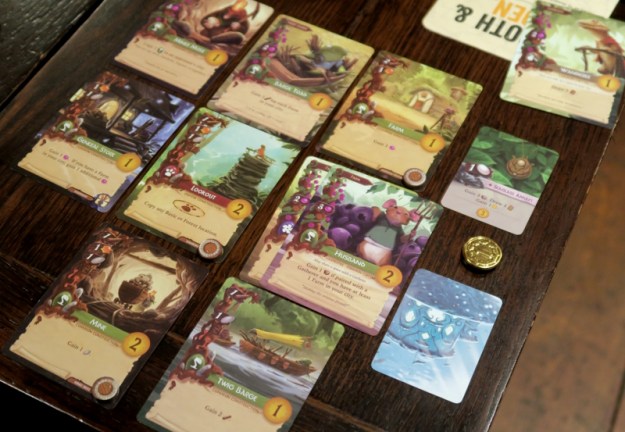
Everdell: Pearlbrook
– Image by boardGOATS

There was quite a bit of congestion and Jade in particular found Plum and Ivory grabbed spaces just before he could get there.  Throughout the game, Ivory managed to eek every last ounce out of each Season, but in the end, although Ivory dragged out Winter and Spring, after he’d achieved the event and got his Monument, he ran out of things to do.  As a result, everyone finished very close in both time and scores and it was far from the landslide that might have been predicted earlier in the game.  Plum’s prosperity gave her an edge, but that was offset by Jade’s left over Pearls and higher scoring event.  It was Ivory who was the victor, however, with eighty-two points just six ahead of Plum in second.

Everdell: Pearlbrook
– Image by boardGOATS

With Ivory, Plum and Jade playing Everdell, that left seven people to decide what they were going to play and how they were going to split the group or even if they were going to divide into two.  And then Lime arrived, but while that made splitting into two group more sensible, there still wasn’t any consensus about what to play and nobody seemed to want to commit to a group until they knew what was going to be played.  So, in the end Blue made an executive decision and, much to Green’s delight, decreed that one of the games would be Dice Hospital.  Purple, Byzantium and Pine joined him and they started setting up.
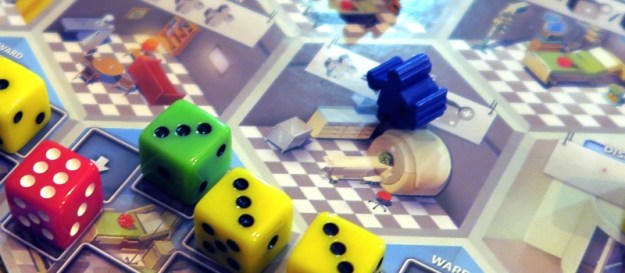
Dice Hospital
– Image by boardGOATS

Byzantium and Green had both played this before, so together, they explained the rules to Pine and Purple.  The idea is that each player is the owner of a hospital and starts with an administrator which gives them a special power, three nurses, and three patients—dice drawn at random from a bag.  The colour of the dice represents their illness and the number,  its severity:  six indicates the patient is healthy, but if the number falls below one, the patient dies.  At the start of each round, players take an ambulance with new patients—if there aren’t enough beds available, another patient must make space by moving to the morgue (where each body-bag is a negative point at the end of the game).
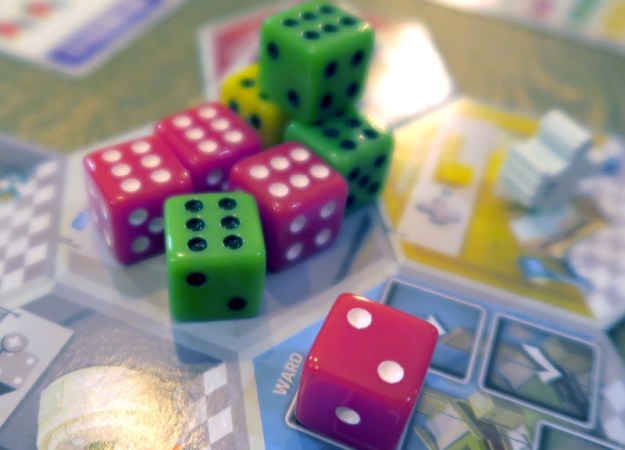
Dice Hospital
– Image by boardGOATS

Players can then improve their hospital by adding specialist medics and wards and finally, their medics can visit each patient and improve their health.  Different specialisms can only “heal” certain colours or numbers.  Any patients not treated are “neglected” and their health deteriorates with any that fall below one moving to the morgue while anyone who exceeded six is discharged.  The more that are discharged at the same time, the more points the player scores.  The game ends after eight rounds and the player with the most points is the winner.   The key to the game is knowing which specialists to get and which ambulance of patients to take.

Dice Hospital
– Image by boardGOATS

There was some confusion about what the symbols on the Specialists and Wards meant. The little help cards seemed to cause more confusion as they did not list all the symbols, so in the end, the rule-book was handed out which fixed the problem.  Green had played the game a few times on line, but less often in real life, so needed to keep checking the rules for the set-up and the order of who chose when and did what, but eventually the game got started.  The first round was a little slow with a few restarts as people took a little time while to work out how the game worked and what they could actually achieve.

Dice Hospital
– Image by boardGOATS

During the second round after everyone had finished their “Healings”, Pine was still working his out, but had ended up with one less discharged patient than he expected.  Unfortunately real life doesn’t have a “reset” button like the game on line and you can’t always remember what the hospital looked like before starting healing people.  So in the third round, everyone else kept an eye out for Pine to help him, before sorting out their own hospitals.  Unfortunately, the suggestions, though intended to be helpful were distracting, and as a result, Pine struggled to work out what he was trying to do. By this time everyone was really finding it difficult to discharge patients.

Dice Hospital
– Image by boardGOATS

Byzantium was struggling because he had gone heavy on green Doctors and Wards while Green had lots of red Dice and Doctors, but had ended up with Patients which didn’t quite match what they needed.  And so, there were the first fatalities—the Hospitals were in crises! Nothing new there, then…  By the end of the game, Pine and Purple were getting the hang of things. Despite his struggles, Pine did well and came second with thirty-eight points, only beaten by Byzantium who score forty-three.  Even though he did quite well for a first game, Pine did not warm to Dice Hospital and the overall conclusion was that it is a game that plays better on-line as it deals with all those complicated set-up and order issues, as well as having that extremely useful “turn reset” function.
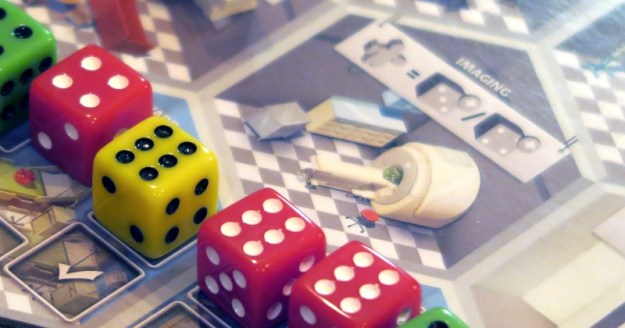
Dice Hospital
– Image by boardGOATS

With everyone else finally sorted out, that just left Blue, Pink, Lime and Sapphire to decide what to play.  Pink suggested Azul: Queen’s Garden, but the only problem was that he’d never played it.  Sapphire had though, so the group nominated him to teach them because, how hard could it be since everyone was very familiar with the original Azul?  Well, as it turned out, quite hard, since in terms of difficulty Queen’s Garden is more on a par with the second and third editions (Stained Glass of Sintra and Summer Pavilion), which are both a very marked step up from the original.
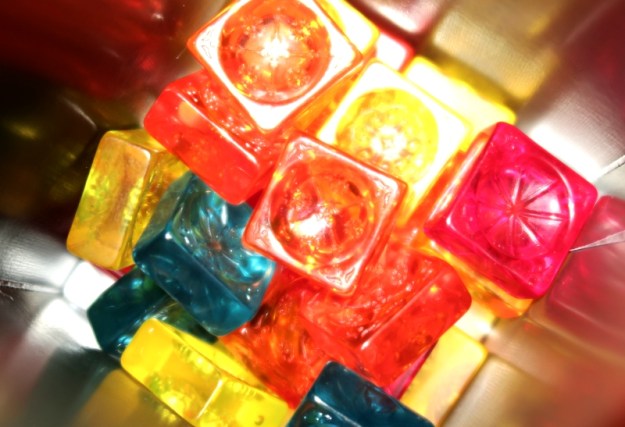
Azul: Stained Glass of Sintra
– Image by boardGOATS

In the original Azul, take all the pieces of one colour from a market and add the rest to the central pool or take all the pieces of one colour from the central pool.  In Queen’s Garden, the Tiles come with different colours and different patterns and the Markets come out gradually through each of the four rounds.  So, instead of taking pieces of the same colour from one market, players can take as many different the pieces of the same colour or with the same pattern from anywhere as long as they are are all different (maximum of six).  Additionally, when a Market is empty, it is turned over and becomes a Garden Extension which players can also take on their turn.

Azul: Queen's Garden
– Image by boardGOATS

Garden Extensions are hold seven tiles—the player mat has space for six Tiles printed on it, but once that is full, players need Extensions to place more.  Each Extension has a single tile printed on it, so once a Market has been emptied and turned over, it can be taken by the active player along with any Tiles matching the colour or pattern.  Like Summer Pavilion, the Tiles and Extensions are then stored before they are added to their Garden display.  Unlike Summer Pavilion however, the amount of storage space is limited, so instead of taking Tiles/Extensions from the market, players can place a Tile or Extension in their player area, or Garden.

Azul: Queen's Garden
– Image by boardGOATS

When placing a Tile in their Garden players must pay.  The price is dictated by the pattern:  trees cost one, eagles cost two, butterflies three and so on.  Like Summer Pavilion, the cost is made up of the Tile placed and Tiles that match the colour or the pattern of the Tile placed, which are dropped into a Tower for recycling later in the game.  Also like in in Summer Pavilion, when a player surrounds marked spaces they get a bonus, in this case, “Wild Tiles” which can be used to match any colour or pattern when paying to place other tiles.  These are essential for some of the higher value patterns, which are very expensive to place and it can be hard to get enough tiles that match, however, Wild Tiles also take up space in storage.
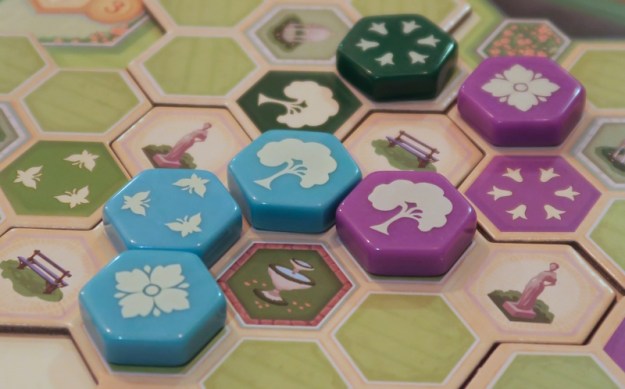
Azul: Queen's Garden
– Image by boardGOATS

When tiles are placed, if they are adjacent to a tile, either the colour or the pattern must match.  Alternatively, Tiles can be placed so they aren’t next to another tile.  At the end of each round, players score all the pieces currently in their Garden, with different colours and patterns scoring points at the end of each round as per the rondel (trees, green and blue tiles scoring at the end of the first round for example).  At the end of the game, players score for each Group of three or more tiles where the colour or the pattern match.  Colour Groups score for each pattern present in it (trees score one point, eagles two and so on), but each pattern can only be included in each Group once giving a maximum Group size of six.

Azul: Queen's Garden
– Image by boardGOATS

Pattern Groups also score for the pattern (so a Group of trees will score one point per tiles), but in these groups each colour can only feature once, so again there is a maximum size of six.  If any Group has reached its maximum size of six, the player also gets an extra six bonus points.  However, any left-over tiles that have not been placed give negative scores which can be very, very costly indeed.  The group were just getting underway when Jade came round with some birthday cake—pieces cut from an absolutely amazing “Lego Cake” made by the amazingly talented Jason Smith.  Everyone, on all three tables, was very much distracted by the remarkable, solid chocolate Lego bricks and very fine chocolate cake, but eventually attention returned to the games.
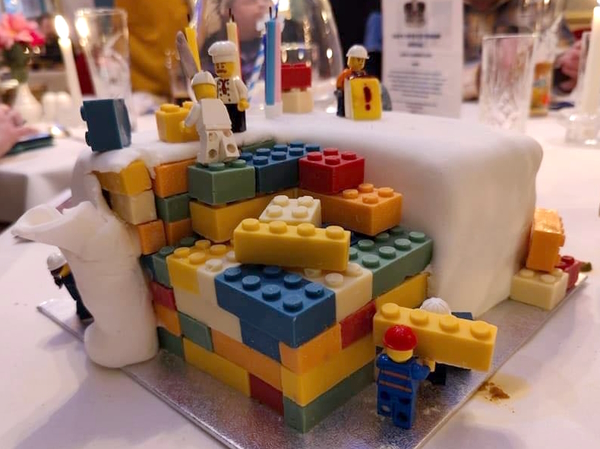
Jade's 2023 Birthday Cake
– Image by Jade

With the group feeling their way somewhat, people started without long term plans.  A few rules got missed, the group forgot to score a point for each Pavilion and nobody paid much attention to the option of drawing face-down Garden Extensions because of the six point penalty.  The biggest rules malfunction, however, was that nobody realised that Lime had a duplicate tile in his large dark purple group of tiles in the centre of his garden, giving him a slightly illegal set of seven.  The group let that slide and everyone concentrated trying to find a way of getting points from their gardens.
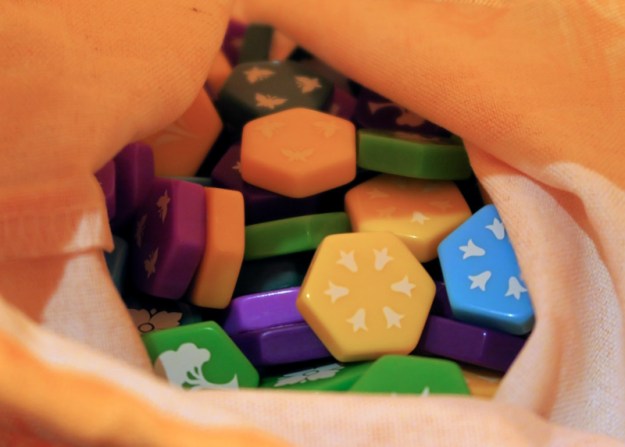
Azul: Queen's Garden
– Image by boardGOATS

Everyone seemed to have slightly different strategies, collecting different colours or different patterns and covering different areas of their gardens.  While nobody had thought anyone was going to need their “I’ve been round the track already” token, and obviously, nobody was going to have to touch their two-hundred and forty point token, everyone did make it round once and claimed their sixty point tokens.  It was all very, very tight and there were even slight recounts, but in the end, it Blue claimed victory, by just two points (or maybe even one) from Lime who was just two (or maybe three) points ahead of Pink.

Azul: Queen's Garden
– Image by boardGOATS

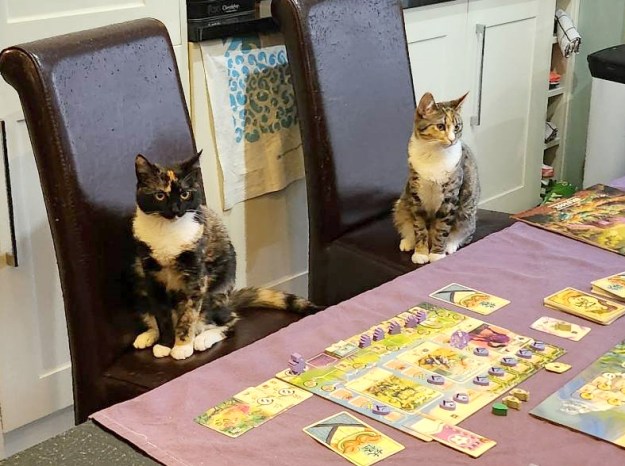
There was a lot of chatter as everyone packed away.  Pink commented that he liked Queen’s Garden—not as much as the original Azul, but at least as much as Summer Pavilion (nobody talks about Stained Glass of Sintra, which Sapphire politely described as a bit of a “mis-step”).  And then everyone wandered over to spectate the great count up and pack-away of Everdell.  It was all a bit rushed and Ivory was definitely going to have some homework to do in terms of sorting it all out, but there was still just enough time to share a few pictures of cake, parties and kitties—it seems they are quite fond of Bitoku

Bitoku
– Image by Plum

Learning outcome:  Goats, like cats, love to play games, and eat cake.

Boardgames in the News: Boardgames in Magazines

The “Hobby Magazine” has a long history, so perhaps it is no surprise that, over the years, there have been quite a few gaming magazines.  War-gaming magazines perhaps go back further, but one of the first general gaming magazines was the monthly Games & Puzzles, which started a little over fifty years ago, in May 1972.  Games & Puzzles was initially published by Edu-Games Ltd. before Willow House Press took over in 1978 moving to a quarterly distribution model.  Four years later AHC Publications took over moving to a bimonthly model and rebranding as The Gamer.

Games & Puzzles Magazine
– Image of unknown origin

This wasn’t the last of Games & Puzzles however, as it came back in 1994 for a brief last hurrah lasting sixteen issues before it was finally shelved completely in 1996.  By the time Games & Puzzles was no more, several other gaming magazines had been and gone in the UK.  These include Games Review which lasted about ten years and Games International which ultimately morphed into a computer games magazine called Strategy Plus. There were also a number less fancy, “fanzines”, mostly produced using a photocopier.  SUMO was one of the best of these and ran for almost ten years, from the pilot in October 1989 to the final one in February 1998.

SUMO Magazine
– Image by boardGOATS

SUMO was a subscription pamphlet including adverts, postal games, and reviews, produced by Mike Siggins.  As a mark of the times it served, it also included a rules translation request list for German import games, something which is no longer necessary as most manufacturers now release their own translations online.  The name and subscription list for Sumo was bought by the now defunct commercial Games, Games, Games! magazine, but its spiritual successor was the quarterly Counter which lasted nearly twenty years and seventy-eight issues—the final issue was released in January 2018.

Counter Magazine
– Image by boardGOATS

Although Counter was started by people in the UK, it included contributions from gaming enthusiasts from all over the world.  Counter was succeeded by The Spirit of Games and Gamers magazine, which was started in 2018 and released with the specific mission to “continue the tradition of Sumo and Counter magazines … writing about and reviewing boardgames”.  Now known as Tabletop SPIRIT, this is an online only magazine, which highlights the reason so many of the physical magazines have been and gone.  With the ready availability of blogging and vlogging, pretty much anyone can publish their own online magazine now.

Tabletop SPIRIT Magazine
– Image by boardGOATS

Mobile electronic devices also mean these can be read anywhere and are easily transportable as well as being relatively cheap to produce and therefore cheap (often free) to the subscriber.  Although most of these are amateur, many are very professionally produced.  One such recent online production, designed to raise the profile of older games and counter the so-called “Cult of the New”, is called The Cult of the Old.  The first edition of this e-magazine was published in February 2023 and included articles on Princes of Florence, Medici, Puerto Rico, Scotland Yard and Modern Art.
Modern Art
– Image by boardGOATS

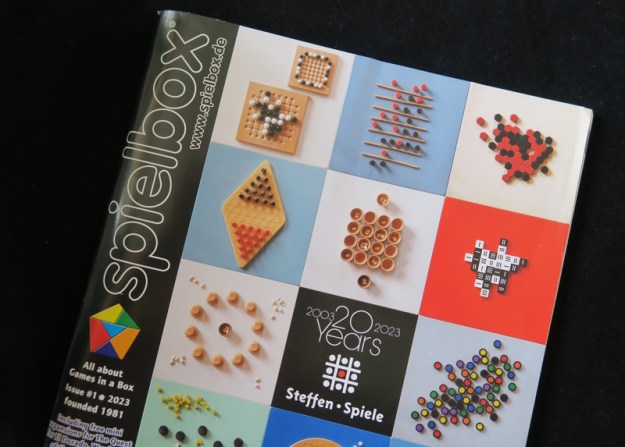
And yet, despite the advantages of the internet, there are still gaming magazines that publish physical copies and there are even new physical magazines coming out.  One of the longest running games magazine is Spielbox—although German in origin, since 2010 it has also had an English release.   Spielbox’s origins were in the earlier 1980s in Die Pöppel-Revue and its success (and also that of Spielerei) probably reflects the origin, history and cultural popularity of “Euro-style” games in Germany.  More remarkable than the success of Spielbox then, is that of the UK’s two commercially produced publications, Tabletop Gaming and the more recent release, Senet, the first edition of which came out in the troublesome spring of 2020.

SpielBox Magazine
– Image by boardGOATS

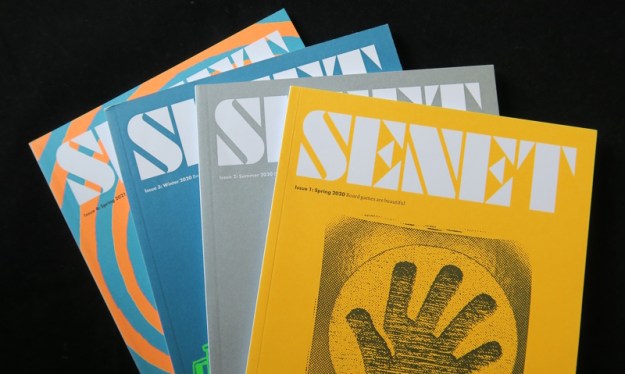
The pilot release for Tabletop Gaming came out in summer 2015 with, regular, quarterly releases starting a year later.  Its remit is, “every type of analogue gaming, from board games and RPGs to miniatures and wargames, with everything in-between.”  This makes it quite different in flavour from Spielbox and Senet, which focus almost exclusively on modern “Euro-style” games.  What makes Senet a little different to the likes of Tabletop Gaming and Spielbox is its focus on the craft, creativity and artistry of board games as well as on the games and gaming themselves.  While Spielbox and Tabletop Gaming are fairly typical, A4-sized, hobby-magazines, Senet is something of a throwback being A5-sized, with a matt finish and a quality, almost book-like feel; as such, it seems to have carved a bit of a niche for itself.

Senet Magazine
– Image by boardGOATS

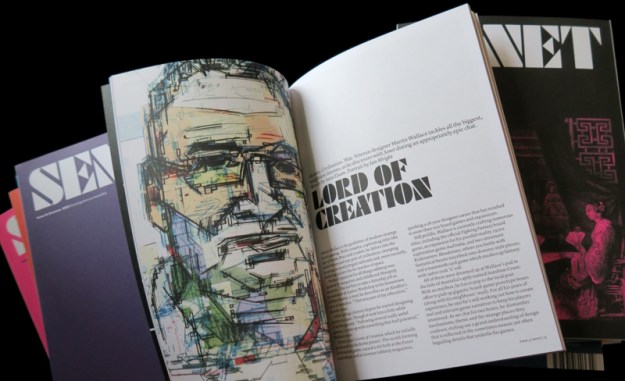
While publishing a professional games magazine in the UK has been historically difficult due to the size of the market, it seems times may be changing.  Through crowdfunding, small enterprises now have an efficient way of both advancing funds and gauging interest levels prior to production.  During the relatively uncertain times of the last few years, Spielbox have used Kickstarter to finance their English Edition and in the coming months, there are plans to produce physical editions of Tabletop SPIRIT using the same means.  Together with the success of Senet and Tabletop Gaming, this suggests that our enjoyment of board games as a physical experience is mirrored in reading physical magazines about analogue games and gaming.  Whether there is enough ongoing demand to sustain all these publications remains to be seen.

Senet Magazine
– Image by boardGOATS

Next Meeting, 18th April 2023

Our next meeting will be Tuesday 18th April 2023.  As usual, we will start playing shorter games from 7.30pm as people arrive, until 8pm when we will start something a little longer.  For those who want to eat, the table is booked from 6.45pm.

This week, the “Feature Game” will be the Pearlbrook expansion for the Golden GOAT winner, Everdell (base game rules, tutorial video, review; Pearlbrook rules, tutorial video, review).  Pearlbrook is the river where players send their frog ambassador to gather pearls which can be used to build new wonders and adornments for the cities of Everdell.

Everdell: Pearlbrook
– Image used with permission of BGG contributor bkunes

Speaking of pearls…

Jeff was touring the Rhine Valley and had booked himself into a lovely old castle that had been converted into a hotel.  When he arrived, he entered the foyer and suddenly had the creepiest feeling come over him, like there was a presence that made a shiver run down his spine.

Feeling more than a little uncomfortable, he approached the lady at the reception desk and said, “Excuse me, do you know if this hotel is haunted?”

The lady laughed and replied, “Well, I have been here for three hundred years and I’ve never seen a ghost!”

4th April 2023

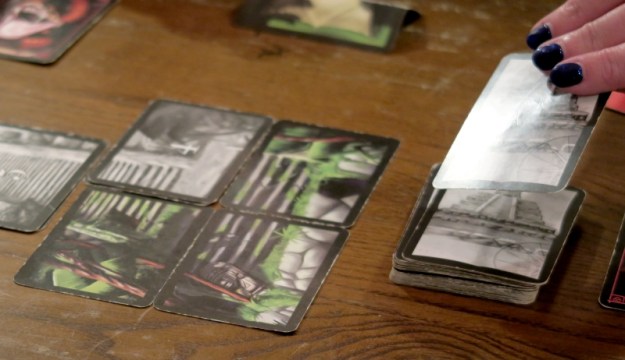
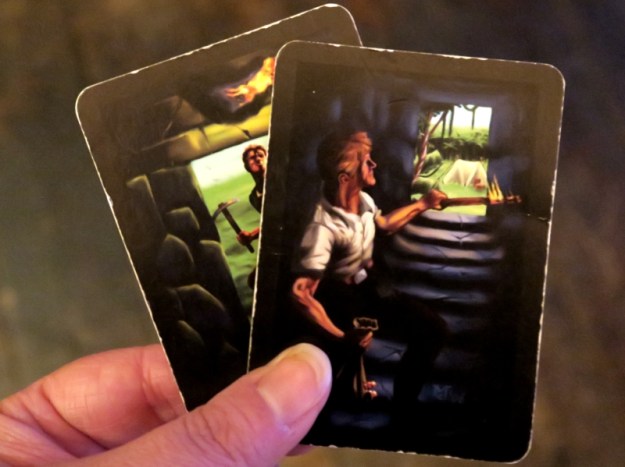
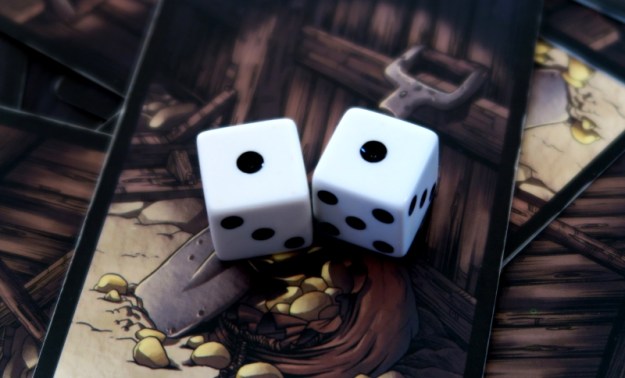
While Blue was off getting fish and chips for people, Pink chatted with Pine and Green and his family as they arrived.  Green had just got out Incan Gold and was explaining the rules, when food arrived, so it was hastily put away while food was consumed, only to be got out again as soon as the chips had disapparated.  Incan Gold is a very simple “push your luck” type game where players are exploring a mine and trying to get out with treasure before disaster strikes.  Each round a card is revealed and players simultaneously choose whether to stay or leave and share what spoils they already have.  There are three types of card:  Treasure, Artifact, and Disaster.

Incan Gold
– Image by boardGOATS

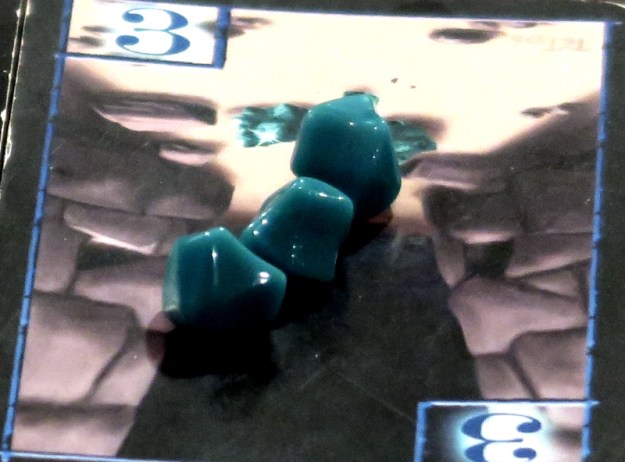
The contents of the Treasure cards are simply divided equally between players when they leave the mine, or as equally as possible leaving behind any left-overs.  Artifacts can only be taken if there is only one player leaving the mine, all alone.  Disaster cards are the problem—Spiders, Snakes, Zombies, Lava and Rock Falls.  Each one is present in the deck three times, and when the third is drawn, the mine collapses leaving everyone in it without any treasure.  This time, though, the group didn’t get off to a very auspicious start.  The first card out was a Rock Fall, the second was Fire and the third was another Fire!

Incan Gold
– Image by boardGOATS

So the group decided it was such a bad start that they would shuffle and try again.  On the second attempt, the first two cards out were again Disasters, but the third delivered some Treasure. It wasn’t very much and nobody felt it was worth leaving for. That was a good choice as there was a little more treasure to come.  Still not very much, but more littered the floor of the tunnel, and it eventually proved too enticing for Emerald and Violet who managed to net about five gems each for their tents.  For the rest of the group, they pushed it a little too far and promptly lost everything as they got caught in a devastating fire.

Incan Gold
– Image by boardGOATS

The second tunnel explored also lured in too many explorers before collapsing the ceiling on everyone.  The third tunnel brought the first glint of Gold—an Artifact.  Eying each other up everyone elected to stay, which was fine, but on the next turn, Lilac decided she would chance it and run. Luckily for her she was the only one and managed to net the Golden treasure on her way out, and left everyone else to die at the hands of a rather midget-like Zombie.  Lilac managed to repeat the feat on the fourth tunnel, collecting the Gold treasure as she made a run for it, although everyone else managed to collect more treasure and eventually decided to save what they had found instead of dying a horrible death.

Incan Gold
– Image by boardGOATS

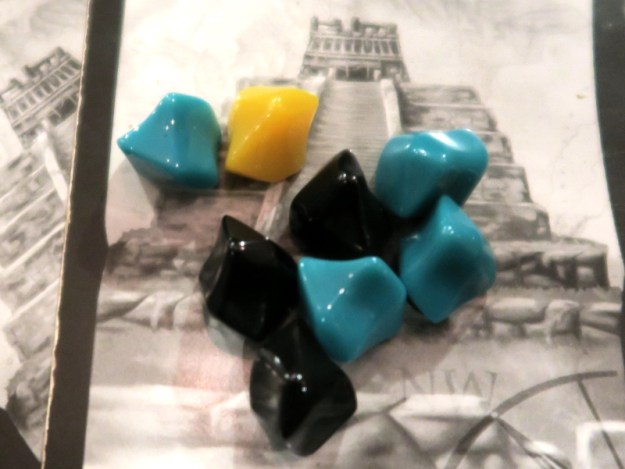
The final tunnel brought some nice treasure, and another Artifact, but with too many people leaving, they had to leave it where it lay.  Pine was the one who held his nerve and safely collected the Golden treasure this time, before a Disaster as those remaining were overrun by Spiders.  In the final reckoning it was neck & neck between Pine and Lilac on thirty-six points, but Lilac just edged it by dint of having two gold artifacts to Pine’s one.  It was close for third, though Lime was the best of the rest with twenty-four, just ahead of Emerald and Violet.  The least effective was Greedy Green, who’d stayed just too long just too often, eager for more treasure only to be bashed and burned and brutally murdered time after time.

Incan Gold
– Image by boardGOATS

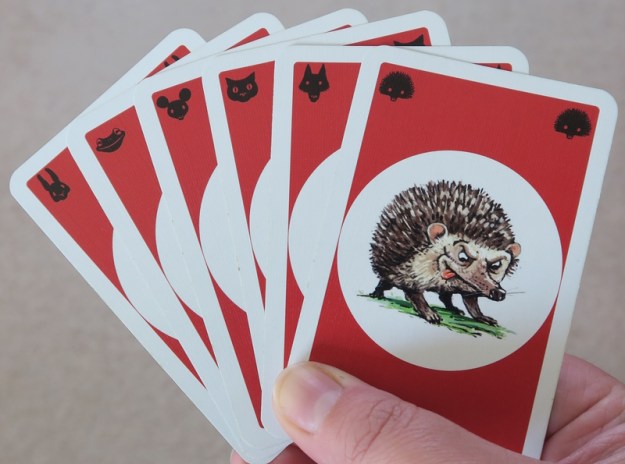
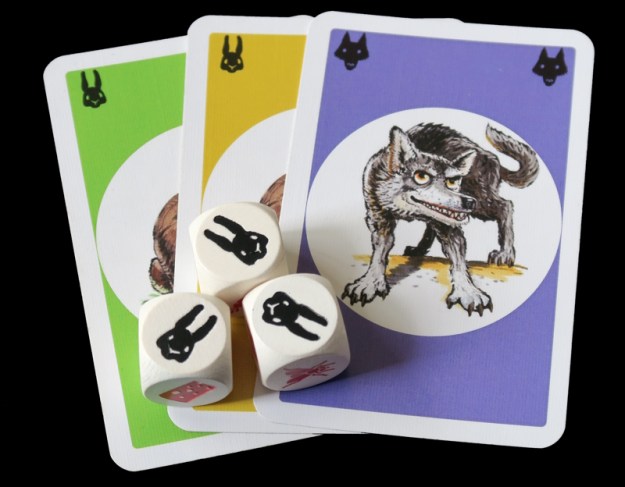
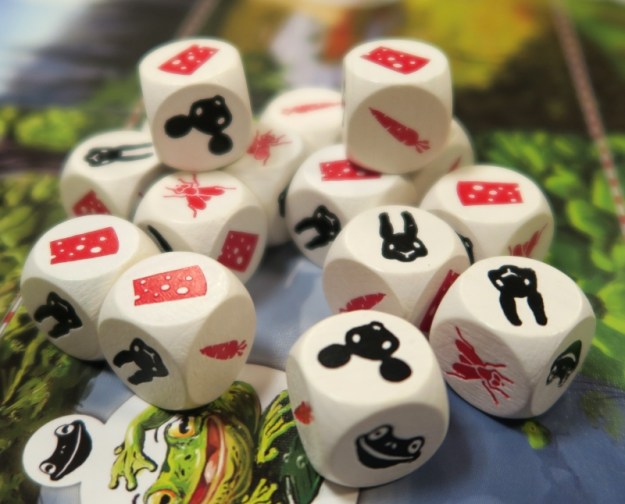
Meanwhile, everyone else played the “Feature Game“, the filler Om Nom Nom.  This is a fun and light little game of think and double-think where players are trying to eat without getting eaten.  The game is set up by seeding the board with cute dice, rolled to give cheese, carrots and flies for the bottom of the food chain, and mice, rabbits and frogs for the middle of the food chain.  Players then receive a deck of six cards representing the animals for the middle of the food chain and the top of the food chain, cats, wolves and hedgehogs.  With game play reminiscent of 6 Nimmt!, players simultaneously choose a card to play which are then evaluated.

Om Nom Nom
– Image by boardGOATS

Players who played cards at the top of the food chain eat anything below, so long as there is enough for everyone who played the same card.  Thus, if there are four mice (including any cards played) and two cats, the owner of the cats take two cards each and get to keep their cat cards too with them all going on their scoring pile.  If however, there was only one mouse, both cats go hungry and neither player scores anything.  Cards played for the middle of the food chain eat the dice at the bottom of the food chain as long as there are enough dice for everyone who played the same card, but also as long as they don’t get eaten by anyone playing a card at the top of the food chain.

Om Nom Nom
– Image by boardGOATS

Thus, playing a card in the middle of a food chain is all about timing:  there is a higher risk, but also a higher reward as the dice showing red faces are worth two points instead of the usual one for a card or a die showing a black middle of the food chain critter.  Although we’ve played Om Nom Nom several times before, it was new to both Teal and Lime.  Teal started off well though taking a massive fifteen points in his first round.  Unfortunately for him, that turned out to be beginner’s luck and he didn’t do so well in the next round.  Purple’s game, on the other hand, went the other way, starting with nothing in the first round and taking sixteen points in the second.

Om Nom Nom
– Image by boardGOATS

With others being more consistent, in particular Blue who scored a seven and an eight in each of her first two rounds, it was all down performances in the final round.  In the event, Black and Pink both did well in the final round, and Teal improved on his score in the second round too.  It was Purple that won the final, albeit low-scoring round, taking ten points, giving her a winning total of twenty-six, three more than Teal in second with Black and Blue tying for third place some six points behind him.  It had been a quick fun game, one that is always good value and definitely deserves another outing soon.

Om Nom Nom
– Image by boardGOATS

Both games, Incan Gold and Om Nom Nom, finished at much the same time, so everyone decided what to play next.  Teal had brought Nidvelilir at Green’s request, but this wasn’t the night for that.  Eventually, Purple traded places with Pine and Lime leaving five players, in one group which picked out a lot of possible five-player games.  Since Violet was here only for the a brief visit they let her choose.  Her selection was Zooloretto or King of Tokyo, however Purple made a face at both choices and suggested Carcassonne instead. Violet was less keen as she felt she had played that a lot recently, so Green made an executive decision to play Boomtown—a fun little bidding game that hasn’t had an outing for a long time and doesn’t take too long.

Boomtown
– Image by boardGOATS

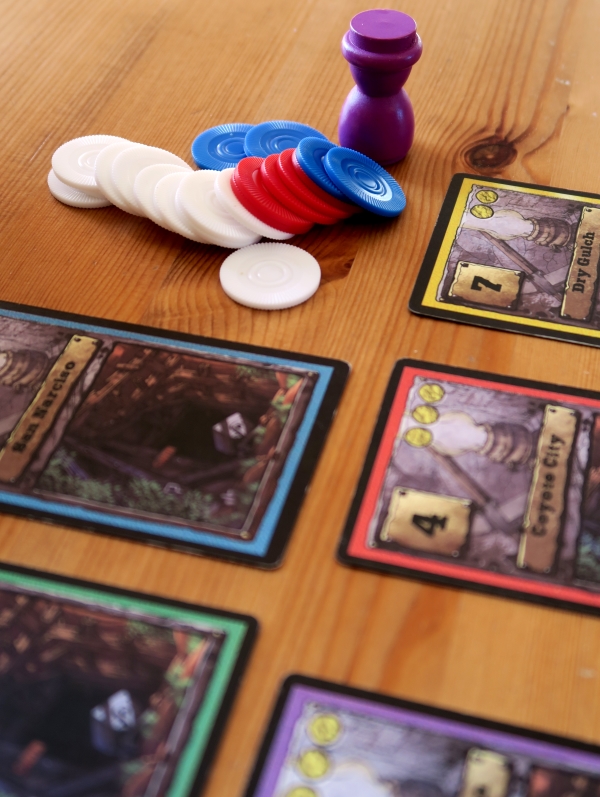
Unfortunately, at this point Emerald was really beginning to feel the heat of the pub and felt he couldn’t participate.  He went off for a wander to get some fresh air, ironically just before the back door was opened to cool everyone down a little.  As he had decided to sit this one out, the rest of the group revised the rules which were simple enough on the face of things.  A deck of sixty cards is shuffled and placed face-down in the middle of the table, along with two dice, a pile of Mayor pawns (one in each of five different colors) and Town tokens (two each of the same colours).  One card per person is turned face up and each player begins the game with $10 starting funds to bid for the card they want.

Boomtown
– Image by boardGOATS

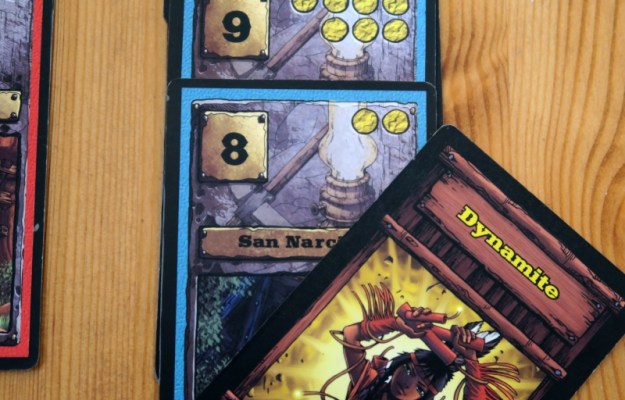
Each player has to increase the bid or pass, until there is one winner.  And this is the clever bit of the game—the winner, pays the player to their right, who passes on half of the money to the player on their right and so on until either there is nothing left to give or the winner is reached (they don’t get any of their own money back).  Everyone then gets a card in clockwise order.  There are Mine, Dynamite, Saloon, Hold-up, Governor and Special cards, each of which has an effect.  Mines and Saloons give players gold and the player with the most Mines in any Town/colour takes the matching Mayor token which forces others to give them money.

Boomtown
– Image by boardGOATS

Dynamite cards allow players to destroy other players’ mines, while Hold-up cards allow players to steal from other and the Governor allows players to upgrade a Mayor so their mines are worth double. Once the cards have been allocated, the dice are rolled and players receive income for their mines.  The game ends when the deck is depleted and all the cards have been sold.  The player with the largest total from their their points, money, the production value of all the mines they control, and five bonus points for each Mayor, is the winner.

Boomtown
– Image by boardGOATS

Maybe it was the heat, but aside from Green, no-one was quite sure how Boomtown would play out, and it took a few rounds for everyone to get the hang of things.  The group didn’t get off to a great start, even when they adjusted the draw deck to make sure there was enough mines for everyone by replacing the action cards that came out.  The second round brought out two sets of Dynamite though, and both Green and Purple ended up destroying each others mine.  The bidding never got very high in the first half of the game, mostly because nobody knew what they were doing, and did not necessarily want to choose first.

Boomtown
– Image by boardGOATS

However, by about half way and when the Mayor pieces had all been claimed and the Saloons were built everything started to hot up.  Although Lilac had a lot of red Mines, which netted her a little money from players forced to take the last few remaining, every time they found gold, she had to pass most of her claim to Purple who had a red saloon along with Saloon girls!  Violet managed to claim a couple of Mayors along the way, and although she lost one of them, she managed to avoid the attraction of the Saloon, so kept everything she collected. With some judicial rolling on the Card Shark Dice, she managed to rob some of the others blind.

Boomtown
– Image by boardGOATS

By the time the last cards had been claimed and the final Mines had given up their gold, it was Purple who had become the master Miner, by something of a landslide.  Violet was a respectable second with Lilac, having passed on so much of her wealth to Purple, just managing to stay whisker ahead of Green for third.  Meanwhile, on the next table, with so many players Survive: Escape from Atlantis had seemed a good choice as it plays six with the expansion.  This was released to mark the thirtieth anniversary of two very similar, much older games, Survive! and Escape from Atlantis, and is an agglomeration of them both.

Survive: Escape from Atlantis!
– Image by boardGOATS

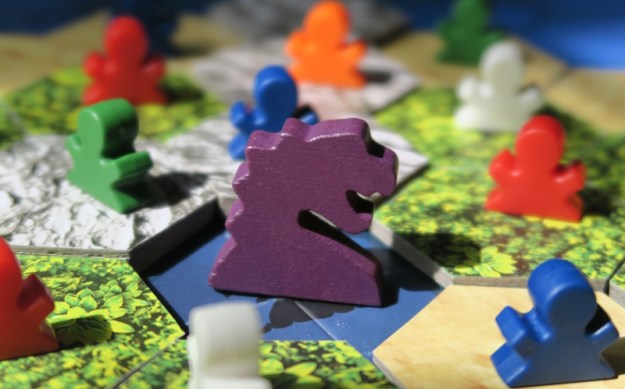
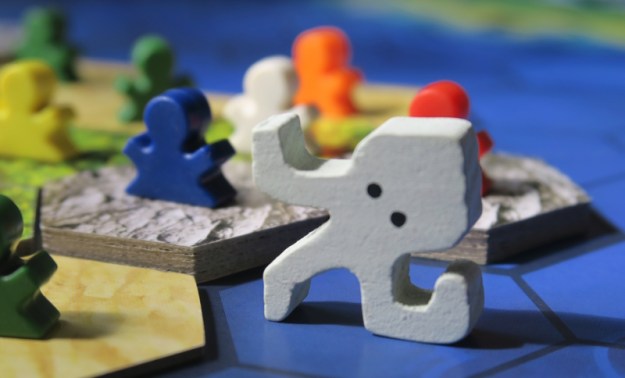
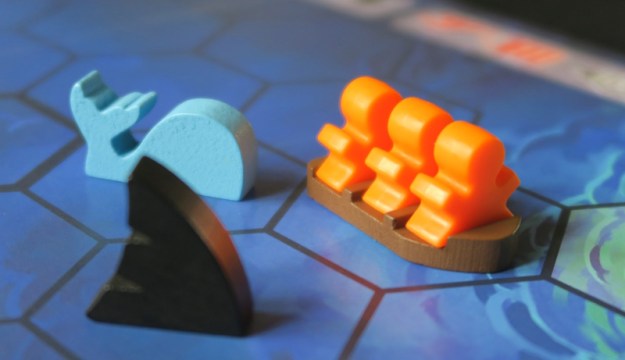
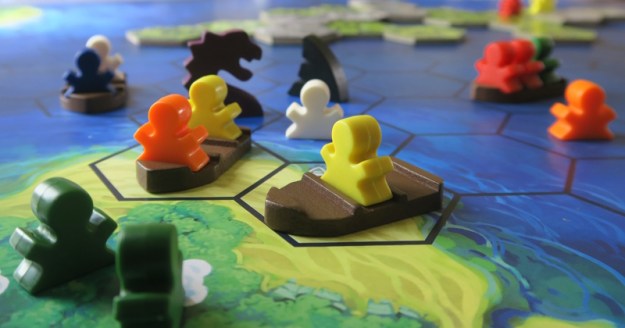
The idea is that players rescue their meeples from the central Island of Atlantis before it sinks beneath the waves.  The original Escape from Atlantis had a fabulous sculpted plastic central Island, with lots of Sea Monster miniatures, however, although the thirtieth anniversary edition is arguably a nicer production, the Island is made up of thick card hex-tiles, and the Sea Monsters are made of wood.  This version has safe land shown on the corners of the board each initially guarded by a Sea Monster, with randomly placed hexes forming the Island and a fifth Sea Monster in a central lagoon.

Survive: Escape from Atlantis!
– Image by boardGOATS

The new edition varies from its predecessors only a very little in game play.  On their turn, the active player has three movement points, and then they remove one tile from the Island of Atlantis before rolling the Attack Die which dictates which of the Sharks, Whales or Sea Monsters the player moves.  Sharks and Whales are introduced as the Island sinks: when players remove a hex from the Island, the underside has either an immediate effect (bordered with green) or a delayed effect with the tile stored, usually to be played before a later turn, though a small number can be used reactively.

Survive: Escape from Atlantis!
– Image by boardGOATS

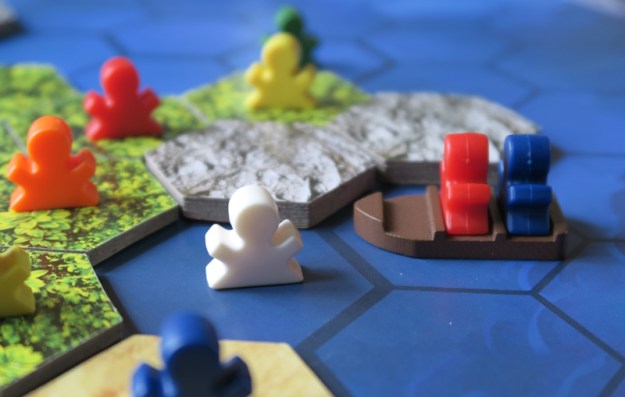
There was a lot of discussion about whether to include the Giant Squid and Dolphin mini expansions and what they did, but in the end, the group decided against it this time.  In addition to placing their meeples on Atlantis, during the set up, players also place boats.  These can hold a maximum of three meeples and are moved by whoever has the majority in the boat.  It costs one movement point to climb into or out of a boat, either to or from a neighbouring land space or the water next to the boat.  Meeples in the water can only swim one space per turn because it is tiring.  Once in a boat, however, movement is easier and they can move as far as they want and are able.

Survive: Escape from Atlantis!
– Image by boardGOATS

Thus, the priority is to get meeples into boats, but the decision players have is whether to try to put all their meeples in one boat or whether to hedge their bets.  Pine and Pink tried the former.  Pine managed to get two of his meeples in one boat and then, before he could get any passengers, set sail.  Being early in the game there weren’t many Whales or Sharks about, and with only a short distance to safety, Pine’s pair made it there safely.  From there, the game got quite savage with players preferentially taking land tiles with meeples on them, turning them into Swimmers with a long way to safety—one was unlucky enough to end up in the drink when a Shark dropped into the space next to him and swallowed him whole.

Survive: Escape from Atlantis!
– Image by boardGOATS

Pink tried to emulate Pine’s success, but was a mite more greedy putting three of his meeples with a total value of eight in one boat.  Although he had a plan to get the boat to shore, he reckoned without the appearance of a Whale which was promptly moved to the same space and proceeded to turn his boat into matchwood and transform his sailors into Swimmers.  Whales aren’t interested in Swimmers though, so once his meeples were in the water, it left them alone.  Pink then had ample opportunity to separate them out a little, and indeed was advised to by everyone else, but he choose not to.  So, although everyone felt slightly sorry for him, it wasn’t long before the little clutch of Swimmers proved far too tempting a target and a Shark rocked up and ate them all.

Survive: Escape from Atlantis!
– Image by boardGOATS

From there, there was a steady trickle of boats making landfall, with players trying to work together without doing the lion’s share of the work themselves.  For every boat that made it to safety, however, there was at least one Swimmer that was eaten by a Shark or boat that was attacked by a Whale or a Sea Monster making it a bit of a war of attrition.  But with six players, the game moves quite quickly and players don’t get many turns so collaboration is essential if players are to get anyone to dry land.  Blue and Black cooperated effectively to get a couple of Sailors each home, as did Teal and Pine.  Although for a long time, Lime was the only one not to have any of his meeples eaten, he was also the last to get one safe.

Survive: Escape from Atlantis!
– Image by boardGOATS

With six players, the end of the game came round quite quickly.  The game ends immediately when the Volcano is revealed under one of the last eight Mountain tiles and with so many players once the Woodland tiles have been exhausted the game can end any time, so one extra turn can make all the difference.  And so it proved for many.  It was Lime who turned over the Volcano tile, much to his disgust as he had a boat with two meeples ready to disembark on his next turn.  Pink also had two in a boat near shore (total value nine) and Blue was equally unimpressed as it was her turn next and she needed just one move for her most valuable meeple to crawl up the beach.

Survive: Escape from Atlantis!
– Image by boardGOATS

With Atlantis gone beneath a combination of waves and lava and every meeple that had not made dry land perished in the boiling sea, it was time to score.  Each meeple has a value printed on the bottom, and although players knew what these were when they were placed, they were not allowed to look at them again.  Teal had attempted to codify which meeple was which in their location on the spaces they were placed on, however, Blue quickly called him on this and like everyone else, over the course of the game he had mostly lost track of which was where. Pink and Lime had only got one meeple ashore a piece, but although they were relatively high scoring ones, everyone else had a similar value one home and at least one additional one too.

Survive: Escape from Atlantis!
– Image by boardGOATS

Blue, Black and Teal managed to get three meeples ashore each, with Black totalling six points and Blue totalling seven.  The winner was Teal, however, with a total of eight, though even one more turn or a slightly different turn of events earlier in the game would have made a huge difference to the final placings.  It had been a lot of chaotic fun, but unquestionably, with so many players, there wasn’t much chance to plan and the game  changed hugely between a player’s turns.  With fewer players it is definitely a more strategic game, but with more, the onus is on players to work together more—indeed the players that did this this time, were the most successful.

Survive: Escape from Atlantis!
– Image by boardGOATS

Learning outcome:  Just when you thought it was safe to fall into the water…

Boardgames in the News: The Passing of the King of Catan

It is arguable that in the last forty years, the game designer, Klaus Teuber had the single biggest influence on the world of modern board games.  Certainly, he was among a small number of designers and industry professionals in the eighties and nineties that brought modern, Euro-style, designer games to a wider audience, ultimately making the hobby as popular as it is today.

Barbarossa
– Image by BGG contributor binraix

The first game he published was Barbarossa, in 1988.  According to the designer, it was inspired by Patricia McKillip‘s Celtic mythology themed Riddle-Master trilogy, in which wizards are devoted to the creation of riddles and riddle solving tournaments.  Players begin the game by making objects out of modelling clay.  They then take turns to move around the board with the spaces landed on determining actions:  players can gain points or clues, or take a guess as to what an object is to win more points.  Barbarossa was innovative and won the Spiel des Jahres Award that year, but although it was a critical success and has had several reimplementations since, it was not as popular nor as long-lived on the public’s gaming tables as some of Klaus Teuber’s later games.

The Settlers of Catan
– Image by boardGOATS

Barbarossa was quickly followed by Adel Verpflichtet (aka Hoity Toity) and Drunter und Drüber (aka Wacky Wacky West), both of which also won the “Red Poppel” Award, and Der Fliegende Holländer and Löwenherz which both won the Deutscher Spiele Preis.  The success of these winners paled into insignificance compared with 1995 Spiel des Jahres and Deutscher Spiele Preis winner, The Settlers of Catan (now simply known as CATAN) which has sold over forty million copies world wide.  The success of this fourth and final Spiel des Jahres winner meant Klaus Teuber could give up his career working for his company Teuber Dental-Labor and in 1998 he took up game design full time.  Although Klaus Teuber released over two hundred games and expansions in his lifetime, “Settlers” was effectively his final game as almost all his more recent releases were variants or expansions set in the world of Catan.

Klaus Teuber in 2017
– Image by Rogi Lensing

This week, it was sadly announced that Klaus Teuber, had passed away on 1st April aged seventy, after a brief, but severe illness.  He will be greatly missed by his friends and family, but has left a very positive mark on the world for the rest of us to appreciate for many years to come.

Next Meeting, 4th April 2023

Our next meeting will be Tuesday 4th April 2023.  As usual, we will start playing shorter games from 7.30pm as people arrive, until 8pm when we will start something a little longer.  For those who want to eat, the table is booked from 6.45pm.

This week, the “Feature Game” will be the filler game, Om Nom Nom.  This is a fun and light little game of think and double-think where players are trying to eat without getting eaten.  As a short game, it should leave plenty of time to play a wide range of other things.

Om Nom Nom
– Image by boardGOATS

Speaking of eating…

Starving after hours of driving nonstop, Jeff and his wife pulled over at a motorway service station.  While she filled up the car with petrol, Jeff went into the restaurant and placed their substantial order to take away.

After writing it all down, the girl behind the desk asked, “Will that be all for you?”

“No,” replied Jeff a bit defensively. “Some of it is for my wife…”

21st March 2023

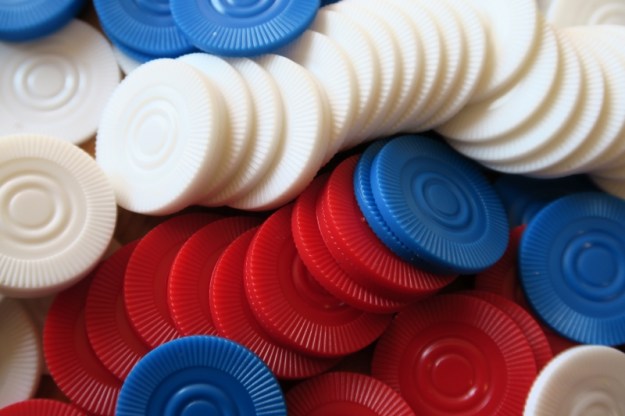
Blue and Pink were just setting up Circle the Wagons when Lemon walked in.  As Circle the Wagons is a two player filler game, they quickly packed it away and got out No Thanks! instead.  Lemon hadn’t played it before (or perhaps had forgotten), so Blue gave her a quick rules explanation.  It is a very simple (if clever) game, so it didn’t take long:  the first player reveals the top card of the deck, then makes the choice, either to take it or pay a chip to pass the problem on to the next player.  At the end of the game, the player adds up the face value of all their cards and the player with the lowest total is the winner.

No Thanks!
– Image by boardGOATS

There are two catches, however.  Firstly, if a player has a run of consecutive cards, only the lowest counts to a player’s final score, which encourages players to gamble a little.  However, the second catch is that nine cards are removed from the deck at random before each game, which means the card a player is gambling on getting may not even be present in the deck.  Blue and Pink were half way through their burgers and the trio were halfway through the game when Indigo and then Pine arrived.  Indigo was also new to the game so as they finished the first game Blue explained the rules to her too.

No Thanks!
– Image by boardGOATS

The first game was really close, but Lemon, got lucky and, although everyone scored relatively highly, she had three less than Pink to take victory.  The game plays five well though, so Pine and Indigo joined the other three for a second round.  This time, the top scorer was Indigo who finished just shy of fifty points.  Everyone else was closer, but this time Blue was the winner with seventeen points, some five less then Pine.  By this time, almost everyone else had arrived and the burgers had been dispatched, so it was time to decide who was going to play what.  The “Feature Game” was to be the Visit from the Rhine Valley expansion for one of the group’s most popular games, Viticulture, and the questions were, who wanted to play that, and what would the rest play?

Viticulture
– Image by boardGOATS

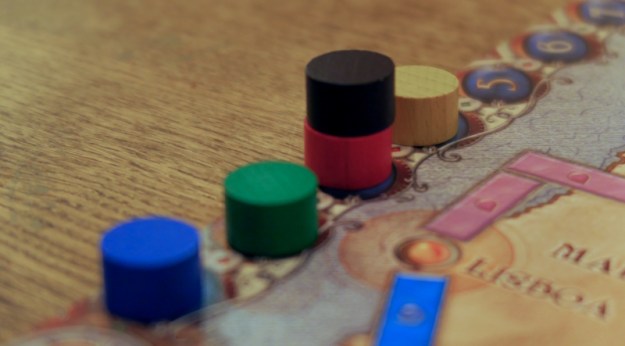
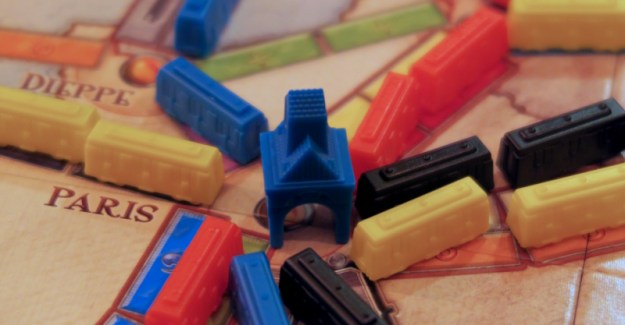
Viticulture is one of Pink’s favourite games and Teal was very keen to play it too.  Somewhat surprisingly, Ivory was open to other options, so eventually Indigo and and Green joined them to set that up.  With five people left, Lemon loving Ticket to Ride, and Pine having just acquired Burgundy‘s copy of the Europe edition, it wasn’t really a great surprise when the group decided to give that an outing in his memory.  The game is a very straight forward game of set collecting and network building with players either taking two cards on their turn, or paying sets of cards to place trains on the central map.  Players score points for placing trains on the map (with longer routes giving more points).

Ticket to Ride: Europe
– Image by boardGOATS

At the end of the game, players score extra points for any “completed tickets”, i.e. successfully connected the destinations on ticket cards dealt at the start of the game and perhaps collected during the game.  There is a risk associated with tickets, however, as any that are incomplete, score negatively.  Each version of Ticket to Ride has slightly different rules, so while everyone was very familiar with the basic game, the group had to remind themselves of the specifics of the Europe edition.  The main difference between this version and others is the inclusion of Stations—players can add one of these to a city to enable them to use one line connected to it that someone else has built to help them to complete tickets.

Ticket to Ride: Europe
– Image by boardGOATS

Ivory started and began the game and started on his first move by placing a single train from Bruxelles to Amsterdam.  That caused panic amongst everyone else, and turned out to be completely justified as everyone except Pine got involved in a scrap for the space in central Europe.  Largely as a result of that congestion Purple ended up forced to take tunnel routes.  These are routes where players don’t know the actual cost before they build them, since three cards are turned over from the draw deck and if any match the colour of the track being constructed, these must be matched by the player building the track (or they fail to build it).

Ticket to Ride: Europe
– Image by boardGOATS

This turned out to be costly for Purple who had a couple of attempts knocked back and some that costed considerably more than expected.  Lemon did what she often does and seemly prioritised building tracks she liked the look of, connecting them together later if possible.  Everyone else crossed their fingers and fought for the routes they wanted with most people interfering with somebody else’s plans somewhere along the way.  Ivory claimed the long tunnel route from Stockholm to Petrograd, and much to Purple’s disgust, managed it first time.  Lemon, who was after Pine in turn order kept trying to jump in front of him leading him to wonder whether he was invisible.

Ticket to Ride: Europe
– Image by boardGOATS

Blue seemed to have lots of tickets that didn’t go where her trains were and life got worse and worse as the space became increasingly crowded.  As the number of trains everyone had dwindled, everyone panicked about whether they were going to complete all their tickets.  Then, as everyone else was struggling to complete their tickets, Purple surprised everyone by taking more, and got lucky and finished it the very next turn—just as well, because Ivory had ended the game.  After the obligatory points recount (and a couple of very minor adjustments) the group started evaluating tickets.

Ticket to Ride: Europe
– Image by boardGOATS

Ivory, Pine and Blue had a lot, but Ivory had got lucky with his ticket draws which all fitted together quite nicely.  Blue had been less fortunate and only discovered that she was missing a connection for one of hers when it came to the final count.  Pine and Blue both succeeded in completing eight tickets, but Ivory had the longest continuous connected line, with all but two of his trains conga-ing neatly across the map.  Ivory, who had just been ahead throughout was the victor with a hundred and forty-seven points, twenty ahead of Blue in second and forty ahead of Pine in third.  It had been a good game though, with lots of cut and thrust and everyone (especially Blue) had engaged their inner Burgundy at some point.

Ticket to Ride: Europe
– Image by boardGOATS

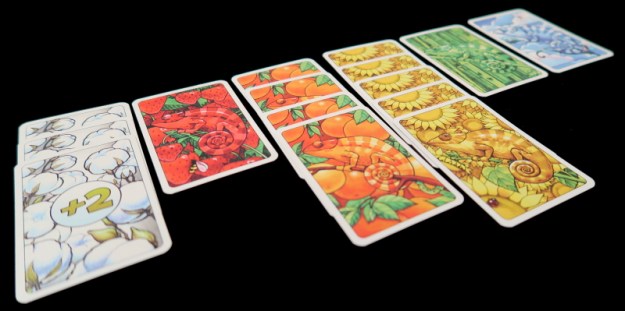
Both Ivory and Pine wanted an early night, but there was still time for something else, so long as it wasn’t too long.  Pine rejected Blue’s optimistic suggestion of Bohnanza as always taking too long, so in the end, the group settled on Coloretto.  Lemon was new to this, but it’s a quick game to teach and an easy game to learn as you play too.  Another set collection game, the idea is that players score points for collecting large sets of coloured chameleons.  So, on their turn, players either turn over the top card of the deck and place the card in one of the trucks (each of which can contain a maximum of three cards), or take a truck.

Coloretto
– Image by boardGOATS

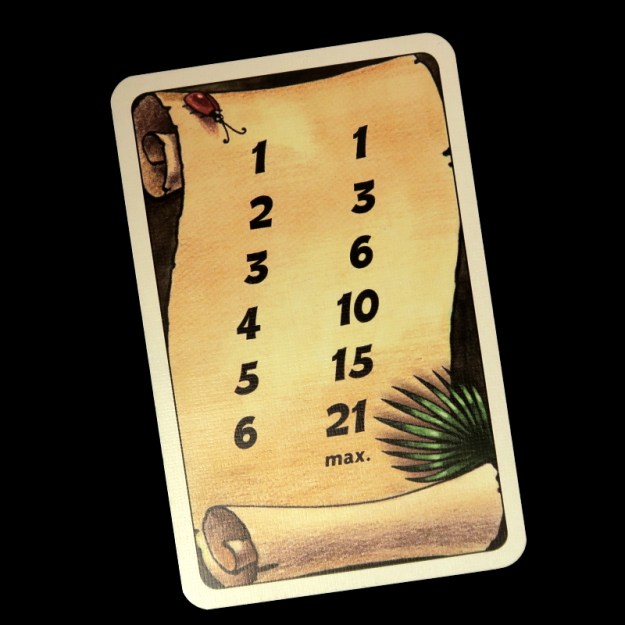
The reason this is clever is because while players score positively for the largest three colour groups, the others all give negative points.  The triangular series gives many more points for the later cards, thus, the trick is to have one large set of cards rather than two or three smaller ones.  The game plays well with five and there were lots of difficult tactical decisions with players trying to work out what everyone else would do and then force them to take cards they really didn’t want.  In the end, it was an easy victory for Ivory though, with thirty-four, four points ahead of Blue in second.  It was much tighter with a three way fight for bronze, that Purple just won.

Coloretto
– Image by boardGOATS

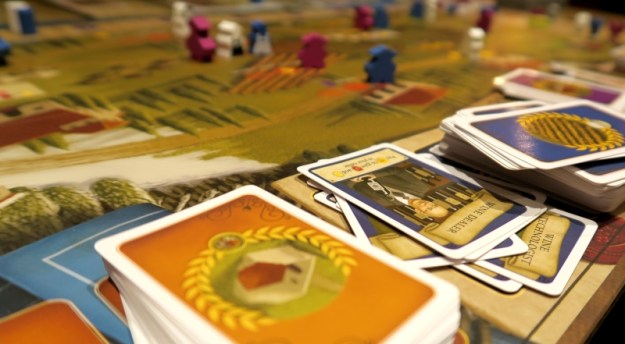
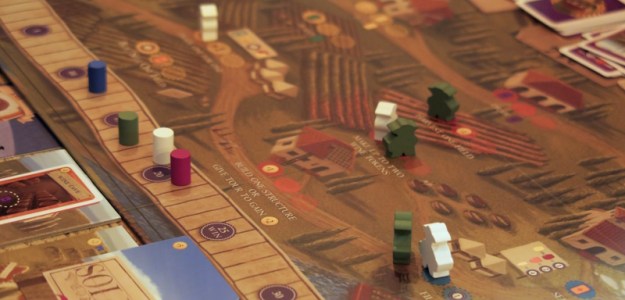
Meanwhile, on the next table, Teal, Pink, Ivory and Green were playing the “Feature Game“, the Visit from the Rhine Valley expansion for Viticulture.  Although Viticulture is much more complex than the other games being played in the room, it is a relatively straight forward worker placement game where players are developing their vineyards by building buildings, planting vines, harvesting grapes, making wine and getting help from visitors.  The game is typically a race with the winner being the player with the most points at the end of the round where a player exceeds a set number of points.  The Rhine Valley expansion is very small, just a replacement deck of Visitor cards, but it has a reputation for changing the game quite significantly, making it more about wine making than just getting points.

Viticulture
– Image by boardGOATS

Viticulture is one of Pink’s favourite games and was quite well known to Green and Teal too thanks to them playing regularly on Board Game Arena.  The Tuscany expansion was a new new variation to Green and Teal though and nobody had played with the new Rhine Valley Visitor cards.  Indigo had never Viticulture at all, but Pink and Teal explained the rules, during which Indigo received some well meant general advice on best plays from the others. When Green suggested that five workers was probably optimum, both Teal and Pink were quick to disagree suggesting that more (maximum of six) was always better.  Viticulture is always a slow burner for the first part of the game, and Pine kept looking across from the other table and remarking how the game had been going for ages, but there had only been a single point scored.

Tuscany
– Image by boardGOATS

As Pink, Teal and Indigo inched forward by a point or three, Green remained resolutely on zero for a long time, and then he sacrificed a point to go negative!  As the game progressed the points started to come eventually.  After drawing fulfillment card after fulfillment card, Pink realised he should have planted some higher value grapes rather than just the first ones that came along, which meant it took lots of turns to make them “ready for sale”.  He was the first to complete a wine order though, with Teal just behind.  Green eventually started to move forward and caught Indigo who was struggling a little to get her head around the game a little and with only three workers was really finding it difficult to get much done.

Viticulture: Visit from the Rhine Valley
– Image by boardGOATS

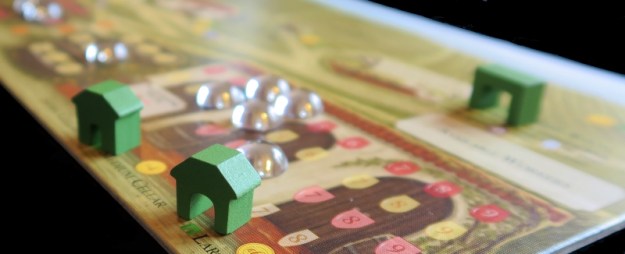
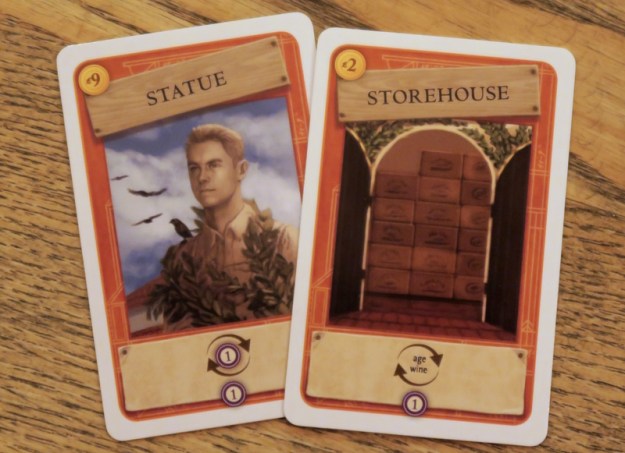
One of the interesting features of Tuscany is the additional buildings that can be constructed.  Green found a Statue which was very expensive, but not only gave him an immediate point, but also an extra point each round.  This, together with his other building, a Storehouse, he had an extra ageing step each round as well—his engine was beginning to build after a slow start.  Green then played a winter Visitor combo, which allowed him to make some wines and fulfill a big six point order with an additional two points.  With the end-game trigger at twenty-five, that was quite a haul in one go, indeed, Green, Teal and Pink were all quite close now.

Viticulture
– Image by boardGOATS

In spite of the sudden flood of points, with time running out, the group soon realised they would not be able to finish in time.  Pink’s more traditional approach of planting, harvesting, making wine and fulfilling orders had kept him at the front of the points track, and would likely have got him over the twenty-five point line in the next round.  However, the group decided that they really needed to finish, just when everyone’s engine was getting into their stride. Nobody will ever know whose would have been be the most successful and by the end of that round it was all very close on the score track.  Pink had his nose in front though, followed by Green and then Teal, but there were still the “Stars” regions to score.

Tuscany
– Image by boardGOATS

This was an area which Teal had really gone for early on in the game. Green had placed a few few early on and then mostly ignored it.  Pink came to the stars late in the game, but as was his usual strategy, made big plays when he did.  In the end Teal narrowly scored most just edging Pink although he still had enough to retain his lead with twenty-one, two ahead of Teal and four ahead of Green.  None of the group quite knew how the end of the evening had snuck up on them so suddenly, they had been so engrossed and it had seemed hardly any time at all—quite a recommendation for a game!

Tuscany
– Image by boardGOATS

Learning Outcome:  If you go into the Wine Business, make sure you know what people want to buy before planting any grapes.

Next Meeting, 21st March 2023

Our next meeting will be Tuesday 21st March 2023.  As usual, we will start playing shorter games from 7.30pm as people arrive, until 8pm when we will start something a little longer.  For those who want to eat, the table is booked from 6.45pm.

This week, the “Feature Game” will be the Visit from the Rhine Valley expansion for one of the group’s most popular games, Viticulture (review; tutorial video; rules).  This is a very small expansion, just a replacement deck of visitor cards, but it has a reputation for changing the game quite significantly.

Viticulture: Visit from the Rhine Valley
– Image by boardGOATS

Speaking of the Rhine Valley…

Jeff was touring the Rhine Valley and had booked himself into a lovely old castle that had been converted into a hotel.  When he arrived, he entered the foyer and suddenly had the creepiest feeling come over him, like there was a presence that made a shiver run down his spine.

Feeling more than a little uncomfortable, he approached the lady at the reception desk and said, “Excuse me, do you know if this hotel is haunted?”

The lady laughed and replied, “Well, I have been here for three hundred years and I’ve never seen a ghost!”

7th March 2023

Plum and Blue were first to arrive and, by the time they had finished their enormous rack of ribs (or given up and had a doggy bag made up), almost everyone else had arrived.  There were a few people missing, but still enough for two games of four.  The first was the “Feature Game“, but nobody really wanted to commit to that until they knew what the other game was going to be.  As he had done the last couple of times, Green suggested Terraforming Mars.  Unlike previously, this time Ivory, Plum and Teal felt up to it, leaving Blue, Black, Purple and Lime to play their preferred choice of New York Zoo.

New York Zoo
– Image by boardGOATS

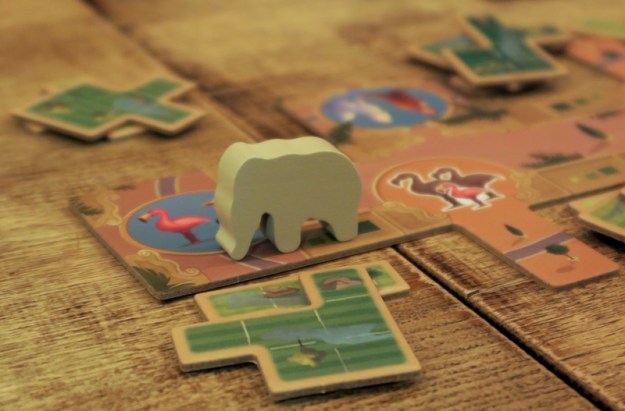
New York Zoo is a tile laying game by Uwe Rosenberg, designer of Agricola, Bohnanza, Patchwork and many other well-known games.  The idea is that players are building pens in their zoo, populating them with animals, and building attractions.  This is one of several polyomino, Tetris-like, tile-laying type games (including Cottage Garden, Spring Meadow, Indian Summer and Patchwork), but what makes this one unique and interesting is the Market.  Players move the Marker Elephant one to four spaces round the Market, landing either on an Enclosure tile space (taking the top one and adding it to their zoo) or on an animal space (taking one or both of the animals depicted).  Enclosure tiles can be placed anywhere in the player’s Zoo, then one or two identical Animals from elsewhere in their Zoo must be moved to occupy the Enclosure.

New York Zoo
– Image by boardGOATS

Each Enclosure can only hold one type of Animal, meercats, snow-foxes, kangaroos, penguins or flamingos, but when moving Animals, no pen can be left empty.  There is an advantage to pens having two or more Animals in them too—the Market also features breeding spaces, and when the Marker Elephant passes these, up to two pens containing two or more matching Animals get an extra one.  When a player moves the Elephant onto an Animal space, they take one of either or both the Animals depicted into Enclosures containing matching Animals (moving another from Storage if they can), or into the Storage space.  Moving animals is important, because when an Enclosure is completed the player removes all the animals putting one into Storage if they have space, and then takes an Attraction tile of their choice and adds it to their Zoo.

New York Zoo
– Image by boardGOATS

Attraction tiles are useful because they fill additional spaces, and at its heart, New York Zoo is a race game—the winner is the first to fill all the spaces in their Zoo.  Black and Purple had played this a few times, and once Black had explained the rules to Lime and Blue, Purple started.  Black and Purple prioritised completing Enclosures to get Attractions.  The Market is stacked so there are large tiles, heptominoes, on the top of each tile space, with hexominoes, then pentominoes and finally tetrominoes at the bottom of each pile.  Black and Purple prioritised getting breeding pairs of animals and as the Market dwindled, getting smaller enclosures because small Enclosures are easier to complete than large ones.

New York Zoo
– Image by boardGOATS

Blue, who had not played the game before, started off getting large Enclosures and fitting them tightly together.  As the game progressed, however, she realised her mistake as everyone else’s Animals were breeding and she didn’t have pairs because she was taking one out every time she added another Enclosure.  This had the additional consequence that she was starting to run out of Animals too, so she prioritised getting breeding pairs for a couple of rounds before continuing to take the biggest Enclosures she could get away with.  It was a tight game—Purple seemed to take an early lead, but it looked like Black and Lime over-took her towards the end and were in a tussle to finish the game first.

New York Zoo
– Image by boardGOATS

With everyone else concentrating on filling pens and taking Attractions, nobody was watching Blue.  So they were taken by surprise when her kangaroos bred filling their pen and she took her first Attraction.  That left one space which she promptly filled taking the only Enclosure that fitted, perfectly, and ended the game.  With everyone else so close to finishing, however, the rest of the group played on to see who would place where.  In the event, Black finished just ahead of Lime.  The group were just dissecting the different strategies when Pine arrived, fresh from his meeting teaching “cubbish-sized scouts” about waste.  Terraforming Mars was still going on, so the hunt was on for a five-player game, and the group settled on Kingdomino.

Kingdomino
– Image by boardGOATS

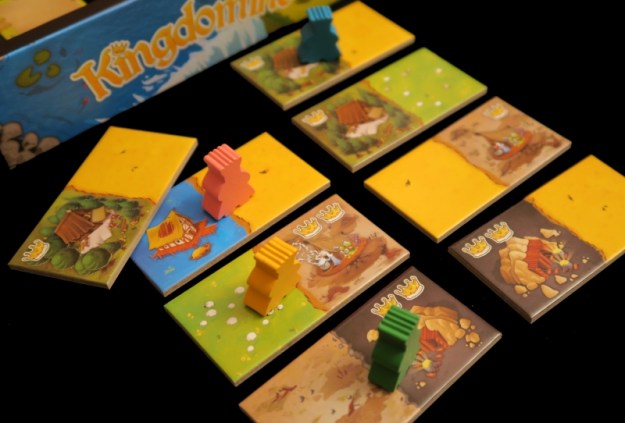
Native, Kingdomino is a four player game, however, with the Age of Giants expansion, it plays five.  The base game is simple enough, but it had been a while since most people last played it, so there was a quick run through of the rules.  On their turn, players add a terrain domino to their Kingdom; each domino comprises two squares of terrain and when placed at least one end must be adjacent to the same terrain type.  Like New York Zoo, the interesting and clever part of the game is the Market.  In Kingdomino, there are two parts, current and future—when a player takes their domino from the current market, they choose their next domino by placing their marker on it.

Kingdomino
– Image by boardGOATS

At the end of the game, players score each terrain region with points equal to the area of each region multiplied by the number of crowns on it.  The clever part is the timing of the Market.  The tiles are drawn at random from a set numbered from one to forty-eight.  The low numbers generally being the less desirable ones, those without crowns or those for terrain types where crowns are more scarce.  Since players take the tiles in numerical order (low to high), taking a low value tile in one round gives a better choice in the next.  Similarly, taking a high value tile means there will be less (or maybe no) choice in the following round.

Kingdomino: Age of Giants
– Image by boardGOATS

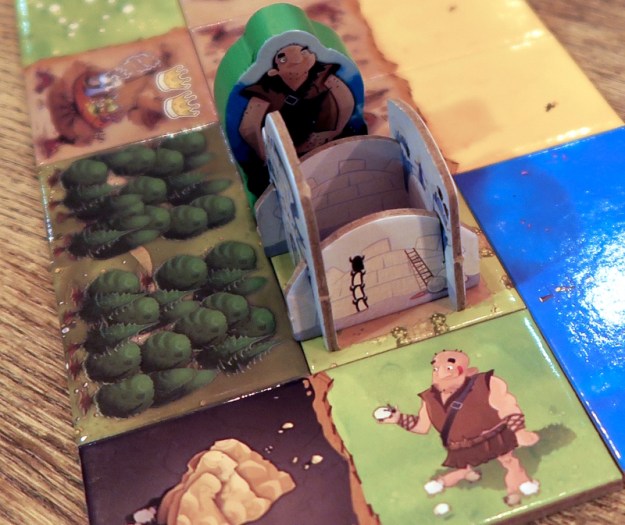
The Age of Giants expansion firstly adds twelve extra tiles (enough for a fifth player), six labeled with letters A to F and six numbered forty-nine to fifty-four.  These are ranked below one for the letters and after forty-eight for the high numbers, with the low ranking tiles featuring a Giant, and the high ranking ones featuring Footprints.  Players taking dominoes with a Giant on them, also take a Giant-eeple and place it over a crown in their Kingdom so that it doesn’t score.  Taking a Footprint domino allows the player to move a Giant from their Kingdom to a crown in someone else’s and this increase their score, making these tiles potentially very valuable.

Kingdomino: Age of Giants
– Image by boardGOATS

Unfortunately (especially for Lime and Blue who ended up with all the Giants), the Footprints seemed hard to come by in this game.  The other part of the Age of Giants expansion are the Quests.  The base game comes with two Quests, arrangement targets that give points.  These are “Middle Kingdom” and “Harmony” which respectively give ten points for a castle in the centre of a player’s Kingdom and five points for a complete five-by-five territory with no discarded tiles.  This time, the Quests drawn essentially at random were “Bleak King” and “Four Corners of the Kingdom”.  The first of these gave five points for each five square of terrain with no crowns while the second gave players five points for placing cornfields on all four corners of the five-by-five grid that defines their Kingdom.

Kingdomino: Age of Giants
– Image by boardGOATS

Although the Quests had been included in game play several times before, the Giants have only had an outing once and didn’t go down all that well.  Still, with five players all the extra tiles were needed and their values would have been unbalanced without including Giants, so the group thought they’d give it another try.  This time Blue and Purple had a really hard time getting crowns and things were so bad for Blue that she resorted to picking up twenty points, more than half her total, from the “Bleak King” Quest.  Black built a lot of sea and pasture, while Lime scored heavily for his mountains and Pine picked up lots of points for his large woodland.

Kingdomino: Age of Giants
– Image by boardGOATS

It was very close between the top three and both Lime and Pine scored forty-five points for their highest scoring terrain—Lime for nine crowns spread over five spaces, Pine for five crowns spread over nine spaces.  There were just two points between Lime and Pine in the end, but Pine’s sixty-eight points just edged Lime into second with Black four points behind that.  It had been a good game.  However, the group felt that the Giants took a positive constructive game and added a negative aspect.  Those that had been stuck with them hadn’t found that aspect particularly enjoyable, especially as it was easy to get lumbered largely through no fault of their own, so it is unlikely they’ll get another outing very soon.

Kingdomino: Age of Giants
– Image by boardGOATS

Meanwhile, on the next table, Green, Ivory, Plum and Teal were still playing Terraforming Mars.  To speed up the game they played with the Prelude start cards and also removed the Corporation cards—that turned out to be a good choice as the game only just finished before the pub closed.  In this game, players play corporations sponsored by the World Government working together in the terraforming process, but competing for victory points.  These are awarded not only for their contribution to the terraforming, but also for advancing human infrastructure throughout the solar system, and doing other generally commendable things.

Terraforming Mars
– Image by boardGOATS

The players acquire unique Project cards by buying them into their hand; these can represent anything from introducing plant life or animals, hurling asteroids at the surface, building cities, to mining the moons of Jupiter and establishing greenhouse gas industries to heat up the atmosphere. The Projects can give immediate bonuses, as well as increase production of different resources. Many cards also have requirements and become playable when the temperature, oxygen, or ocean coverage increases enough. Buying cards is costly, so there is a balance between buying cards (three MegaCredits per card) and actually playing them.

Terraforming Mars
– Image by boardGOATS

The game ends after the terraforming is complete when the three global parameters, temperature, oxygen, ocean have all reached their goal.  Players then score for their Terraform Rating with any other points they might have accrued.  This time, Green made his presence felt on the surface of Mars in the early stages with his initial starting forest, which grew a little, and seeded the oceans. He was the only one for a while.  Plum played a blue card which gave her a couple of extra Credits every time someone built a city.  This one really paid for itself in the four-player game as everyone wanted to build more than one city.  Green was first, but had mis-read the card and found himself colonizing Phobos instead.

Terraforming Mars: Prelude
– Image by boardGOATS

So, Teal was the first to actually build a city on the surface of Mars. He opted for the equator but on the other side from Green’s forests.  Later he played a blue city bonus card that gave him a Credit production bonus for each one. Although several cities had already been built by then, several more followed and he was able to enjoy the benefit of extra cash in later rounds.  Ivory meanwhile had made a different start to the game than his normal opening gambit (building a city), and completed the first Milestone: the Ecologist. However his cities did follow later as he extended down towards the south pole. Teal claimed the second milestone: the Specialist, helped on by his city Credit production bonus.

Terraforming Mars
– Image by boardGOATS

Plum was the last to claim a Milestone: the Generalist, as she was able to pay to increase her production one step each round.  She did not claim it straight away, but noticed it after Teal had claimed his, and thought she had better get in there quick.  Green was not able to claim any milestones, but instead was the first to fund an Award. A quick check around the player boards suggested he should fund Celebrity as he had three high value cards to Teal’s two, but neither Plum or Ivory had any cards over the value of twenty Credits. Later on Teal funded the second award and went for Estate Dealer as he clearly had more tiles next to oceans at this point (having planted his forests northwards around the oceans.

Terraforming Mars
– Image by boardGOATS

At the end of the game Green pulled out his wallet once more and funded Benefactor since he was ahead on the Terraform Rating track. Ivory was only one behind, but Green had a couple of options he could play on his last turn for a couple of extra Terraform Rating points. This prevented Ivory from funding the Dessert Settler award for which he had been building.  Green decided to go for outworld domination and also built Deimos city.  During the second half of the game Green realised he had forgotten his company bonus of a two MegaCredits reduction for each brown, Industrial tagged card.  He had built three, so put six Credits aside to be used in the event of a tie, (although had he remembered to claim them at the time, he may have been able to play more and better cards).

Terraforming Mars: Prelude
– Image by boardGOATS

In the final scoring it was very close indeed, although during the game Mars was regularly bombarded with meteors and nuclear bombs, so it was a wonder any one survived at all!  Ivory and Green tied for second with fifty-nine points. Even with his extra six Credits, Green still lost the tie to Ivory, who had more Credits left over from the final production.  At this point, Green realised he again had misread a card thinking he would get one point per ocean tile in the game for his capital city, but that would have given him a guaranteed nine points and would have been way too powerful. In the end, it was Teal who triumphed, but only just, with sixty-one points, in well deserved victory.

Terraforming Mars
– Image by boardGOATS

Learning Outcome:  Mama’s taking us to the zoo tomorrow, zoo tomorrow, zoo tomorrow… We can stay all day!

Next Meeting, 7th March 2023

Our next meeting will be Tuesday 7th March 2023.  As usual, we will start playing shorter games from 7.30pm as people arrive, until 8pm when we will start something a little longer.  For those who want to eat, the table is booked from 6.45pm.

This week, the “Feature Game” will be New York Zoo (review; tutorial video; rules), a tile laying game by Uwe Rosenberg (designer of Agricola, Bohnanza and Patchwork and many other games).  The idea is that players are building pens in their zoo, populating them with animals, and building attractions.

New York Zoo
– Adapted from image by BGG contributor aldoojeda

Speaking of zoos…

The kangaroo kept escaping from his enclosure at a zoo. The zookeeper, Jeff, decided the way to fix it was to make the wall higher, so increased its height by a meter.

Unfortunately, that didn’t work, and the next day, the kangaroo escaped again.  So Jeff added another two meters to the wall.  That didn’t work either though, and the following morning the kangaroo had got out again.  It was clear to Jeff that the wall just wasn’t high enough so this time he added another three meters to its height.

But the kangaroo escaped again and again.  When the kangaroo had been brought back for the tenth time, his friend, the elephant asked, “When are you going to stop?”

The kangaroo replied, “When Jeff closes the door of my enclosure, I guess.”