Tag Archives: Carcassonne

boardGOATS – 1000 Posts

The idea of our little website, boardGOATS.org, was to create a medium to advertise up-coming games nights as well as log the games played. It has been around as long as the group, over twelve years now, and has just passed one thousand posts. Most of these posts are games-night related, but our series of news articles about games has also proved very popular further afield.

Some statistics…

  • The site has 1,002 posts (this will be 1,003).
  • It is not a high traffic site, but we have had 39,101 visitors with 58,054 views with 83 email subscribers.
  • The most popular links on our site are those to the Board Game Geek website (boardgamegeek.com) with 3,698 clicks.  Internal links come next with 1,174 clicks.
  • 16% of page views happen on a Monday and the most popular time of day to visit the site is around 7-8pm.
  • The most popular day was May 10th 2016 thanks largely to a post about a record breaking Carcassonne game a few days earlier.
  • The most popular post was published in March 2019 and discussed counterfeiting of board games, and has nearly 6,000 views. Some eighteen months later, this was followed by a case study and another article covering a specific retailer.
  • Visits peaked between November 2020 and January 2021, probably due to increased interest in board games as a result of the global pandemic and people looking for ideas for Christmas games.  In those three months the site was viewed nearly four thousand times.
  • The most popular category of post is “News” and the most popular tags are Terraforming Mars, Carcassonne and Wingspan, but the majority of our local gamers get the information by email through subscription—if you would like to receive emails through this channel and would prefer not to create a WordPress account, let us know through the contact form/email and we can add you manually.

We would like to thank everyone who has enjoyed reading.

The boardGOAT

Boardgames in the News: When is a Meeple not a Meeple?

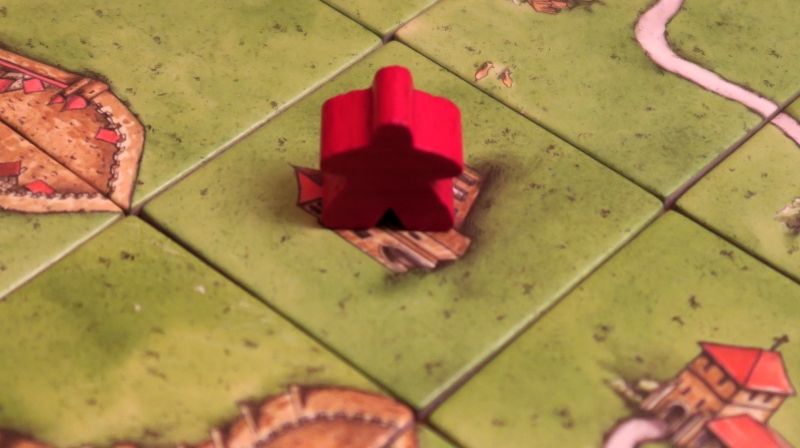
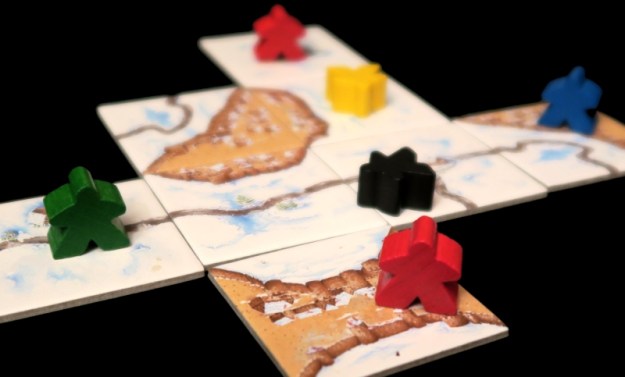
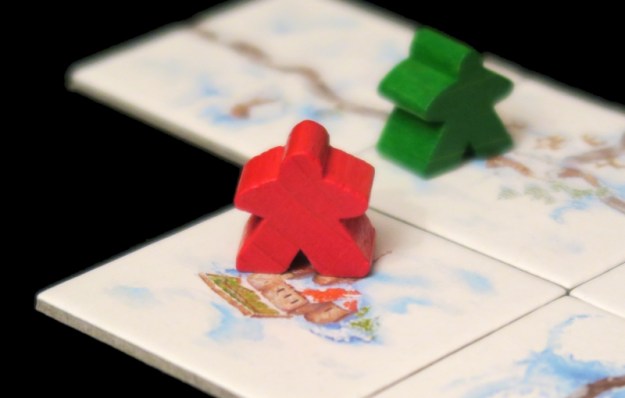
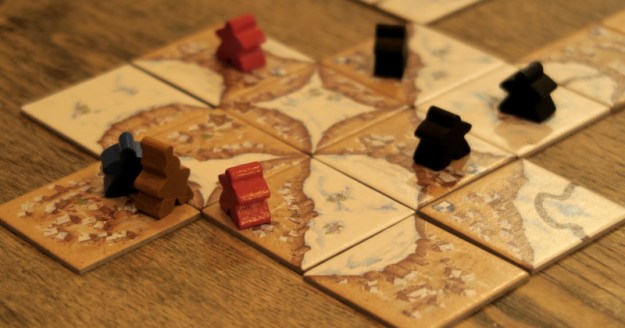
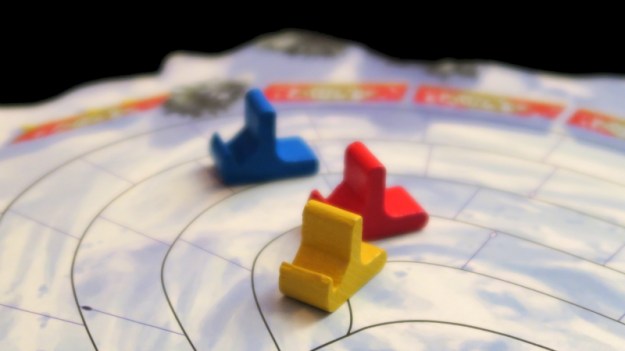
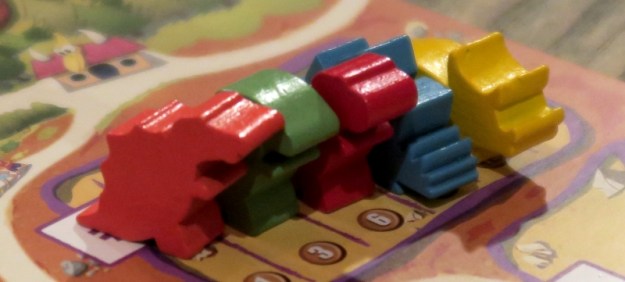
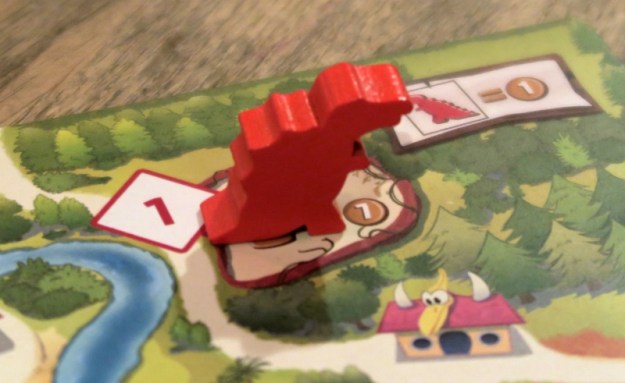
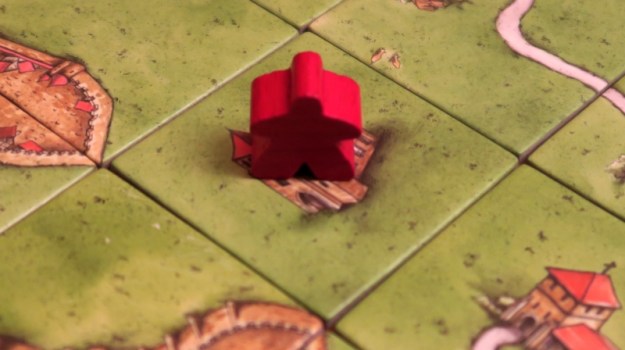
Answer:  When it’s not a Hans im Glück Meeple, apparently.  The term Meeple was allegedly coined nearly quarter of a century ago by Alison Hansel while paying the tile laying game, Carcassonne.  It was a conjunction of “my” and “people” and was used to refer to the characteristic wooden people-shaped pieces.  Since then it has been modified and the suffix “-eeple” has now come to mean game token (usually one that is wooden and shaped).

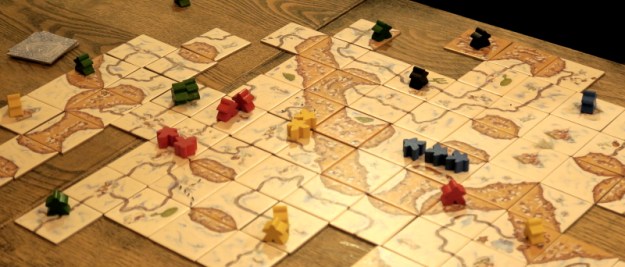
Carcassonne
– Image by boardGOATS

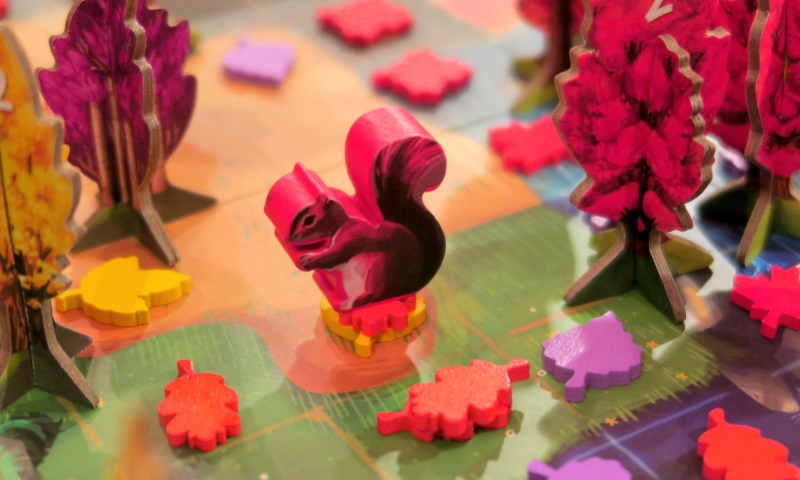
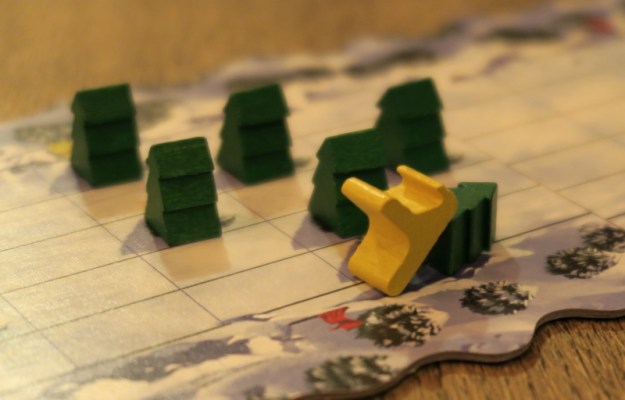
In this way, The term “Meeple” is now used to refer to all sorts of other wooden game pieces.  This includes the sheep, pigs and cows in Agricola or Keyper, which are often collectively referred to as “animeeples”; wheat and vegetable resource tokens which are commonly called “vegimeeples” (or even “vegeeples”), and players of Ice Flow or Salmon Run might talk about “fish-eeples” while those with Bosk might move their “squirreeple”.  As such, one might well be forgiven for thinking that the term Meeple is open source and can be used freely.

Bosk
– Image by boardGOATS

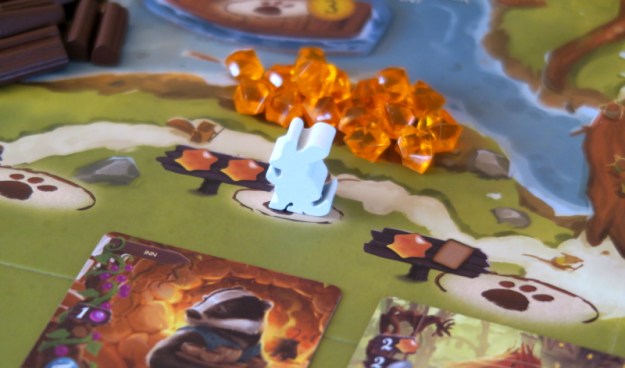
So Cotswold Games (formerly Cogito Ergo Meeple) might be forgiven for thinking the same when they crowdfunded their game, Meeple Inc..  That was until they received a “cease and desist” request from “a company” asking them “to remove all references to ‘meeples’ from the game as they have registered the word (and the shape) as an intellectual property in the EU.”  As a result, the a worker placement game where players compete to build the greatest board games in the world has been renamed Tabletop Inc. and now features “Mumans”.

– Image by boardGOATS

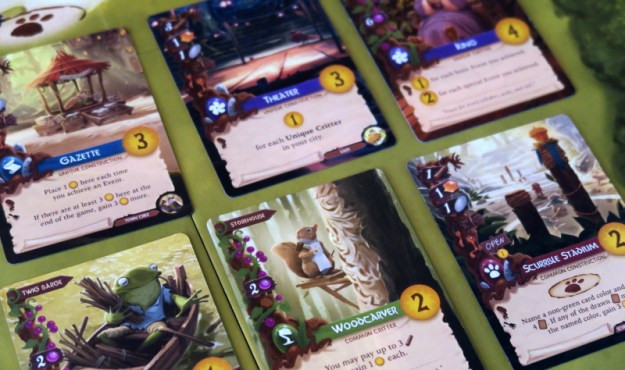
Whether this was necessary and whether Hans im Glück actually have the right to do this would need to be tested in court, but given the nature of the creation ans widespread use of the word “Meeple”, it is questionable.  Further, they only claim it as Intellectual Property in the EU—what about the rest of the world?  This point has exercised Corey Thompson (co-owner of YouTube channel Above Board TV and co-host of the industry-focused Board Games Insider podcast) and Marian McBrine (Gen Con Event Manager), who have responded by applying for the trademark in the US.

– Image by boardGOATS

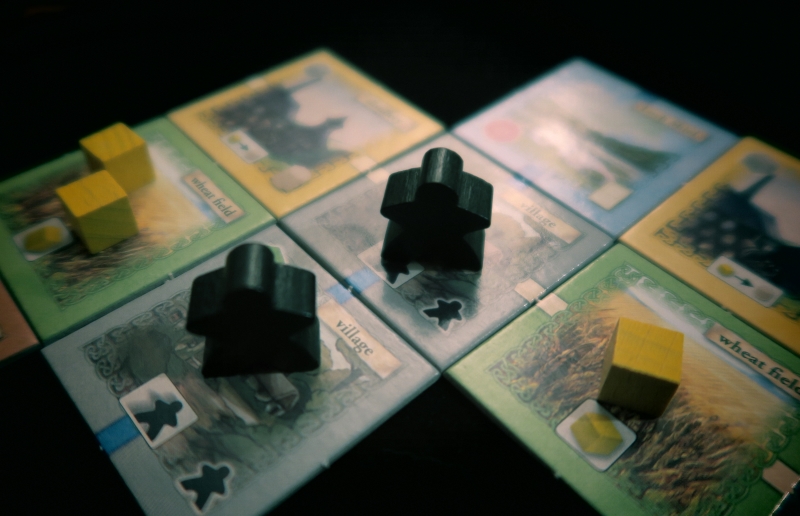
Although they intend to protect the US trademark from predatory action (should they be successful in their application), Corey Thompson and Marian McBrine also plan to make it available to anyone who wishes to use it.  In the long term, this may prove unnecessary.  The trademark eventually issued in the EU in 2019 was for a range of of products (including software, jewellery, books, tableware and sporting goods), but not for toys and games.  This was limit followed an objection from board game publisher CMON, who argued (with considerable evidence) that the word was already in widespread use for general board game playing pieces.

Glen More
– Image by boardGOATS

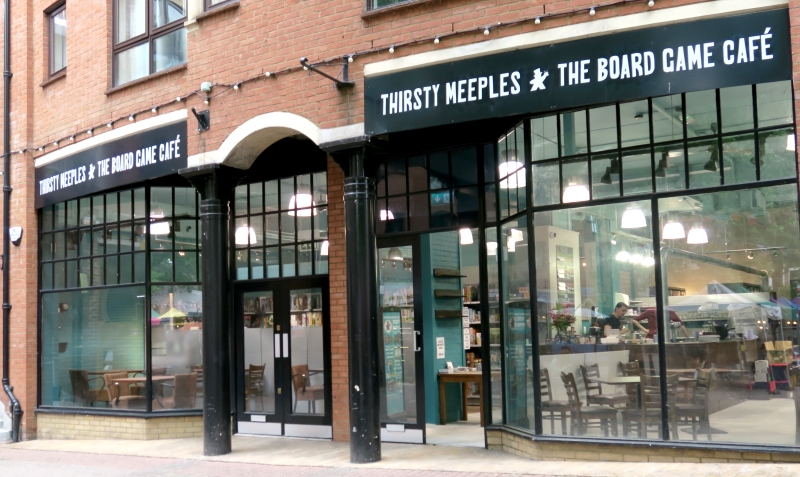
This objection was partially accepted by the EU Intellectual Property Office, but Hans im Glück has since registered “Meeple” as a trademark in Germany covering toys and games.  It was under this and the EU trademark covering the shape of the “original” Meeple figure that they issued the “Cease and Desist” to the folks at Cotswold Games/Cogito Ergo Meeple.  Although they are the first to publicly declare that they have received notification from lawyers, there are a huge number of well known games that could be affected (including Meeple Circus, A Fistful of Meeples, Meeple War, Meeple Quest and Rampage (aka Terror in Meeple City)), but also Oxford’s own board game café, Thirsty Meeples.

Thirsty Meeples
– Image by boardGOATS

There has been considerable community backlash though, so maybe Hans im Glück will adopt a gentler approach going forward.  At some point, however, it is likely that someone will test this in court and, in the meantime, there is a lot of ill-feeling which may lead to a loss of custom.

4th April 2023

While Blue was off getting fish and chips for people, Pink chatted with Pine and Green and his family as they arrived.  Green had just got out Incan Gold and was explaining the rules, when food arrived, so it was hastily put away while food was consumed, only to be got out again as soon as the chips had disapparated.  Incan Gold is a very simple “push your luck” type game where players are exploring a mine and trying to get out with treasure before disaster strikes.  Each round a card is revealed and players simultaneously choose whether to stay or leave and share what spoils they already have.  There are three types of card:  Treasure, Artifact, and Disaster.
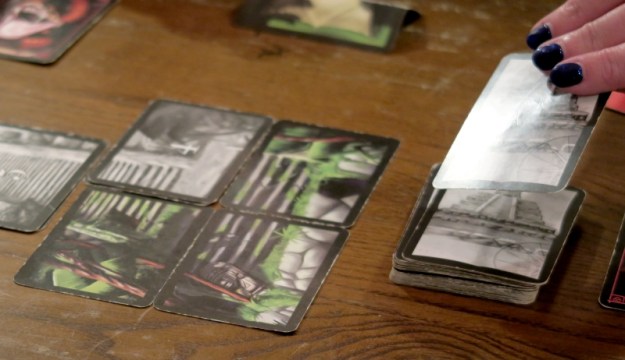
Incan Gold
– Image by boardGOATS

The contents of the Treasure cards are simply divided equally between players when they leave the mine, or as equally as possible leaving behind any left-overs.  Artifacts can only be taken if there is only one player leaving the mine, all alone.  Disaster cards are the problem—Spiders, Snakes, Zombies, Lava and Rock Falls.  Each one is present in the deck three times, and when the third is drawn, the mine collapses leaving everyone in it without any treasure.  This time, though, the group didn’t get off to a very auspicious start.  The first card out was a Rock Fall, the second was Fire and the third was another Fire!
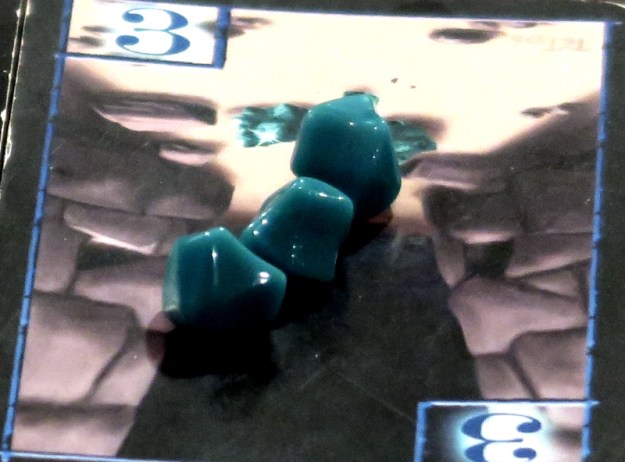
Incan Gold
– Image by boardGOATS

So the group decided it was such a bad start that they would shuffle and try again.  On the second attempt, the first two cards out were again Disasters, but the third delivered some Treasure. It wasn’t very much and nobody felt it was worth leaving for. That was a good choice as there was a little more treasure to come.  Still not very much, but more littered the floor of the tunnel, and it eventually proved too enticing for Emerald and Violet who managed to net about five gems each for their tents.  For the rest of the group, they pushed it a little too far and promptly lost everything as they got caught in a devastating fire.

Incan Gold
– Image by boardGOATS

The second tunnel explored also lured in too many explorers before collapsing the ceiling on everyone.  The third tunnel brought the first glint of Gold—an Artifact.  Eying each other up everyone elected to stay, which was fine, but on the next turn, Lilac decided she would chance it and run. Luckily for her she was the only one and managed to net the Golden treasure on her way out, and left everyone else to die at the hands of a rather midget-like Zombie.  Lilac managed to repeat the feat on the fourth tunnel, collecting the Gold treasure as she made a run for it, although everyone else managed to collect more treasure and eventually decided to save what they had found instead of dying a horrible death.
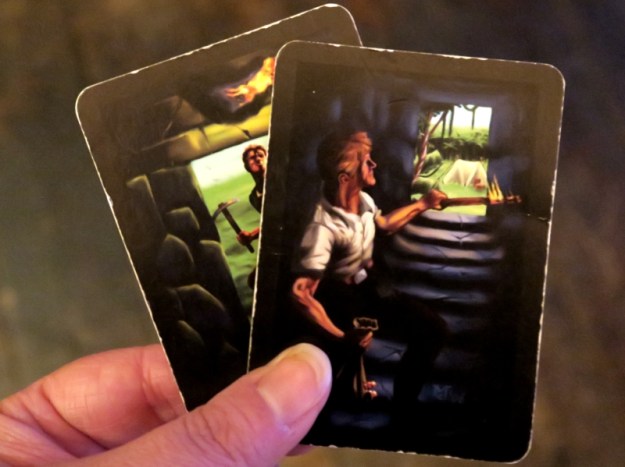
Incan Gold
– Image by boardGOATS

The final tunnel brought some nice treasure, and another Artifact, but with too many people leaving, they had to leave it where it lay.  Pine was the one who held his nerve and safely collected the Golden treasure this time, before a Disaster as those remaining were overrun by Spiders.  In the final reckoning it was neck & neck between Pine and Lilac on thirty-six points, but Lilac just edged it by dint of having two gold artifacts to Pine’s one.  It was close for third, though Lime was the best of the rest with twenty-four, just ahead of Emerald and Violet.  The least effective was Greedy Green, who’d stayed just too long just too often, eager for more treasure only to be bashed and burned and brutally murdered time after time.
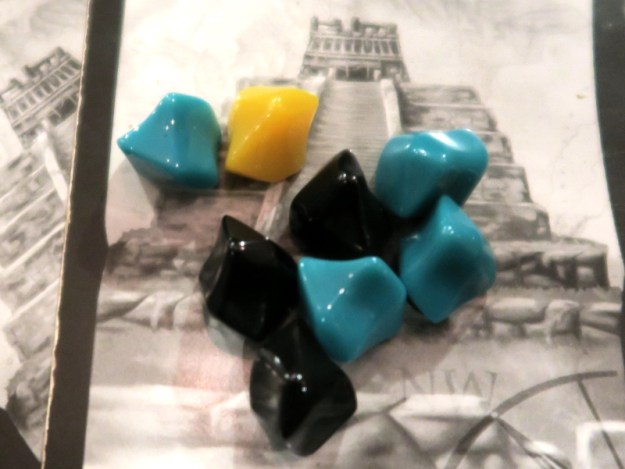
Incan Gold
– Image by boardGOATS

Meanwhile, everyone else played the “Feature Game“, the filler Om Nom Nom.  This is a fun and light little game of think and double-think where players are trying to eat without getting eaten.  The game is set up by seeding the board with cute dice, rolled to give cheese, carrots and flies for the bottom of the food chain, and mice, rabbits and frogs for the middle of the food chain.  Players then receive a deck of six cards representing the animals for the middle of the food chain and the top of the food chain, cats, wolves and hedgehogs.  With game play reminiscent of 6 Nimmt!, players simultaneously choose a card to play which are then evaluated.
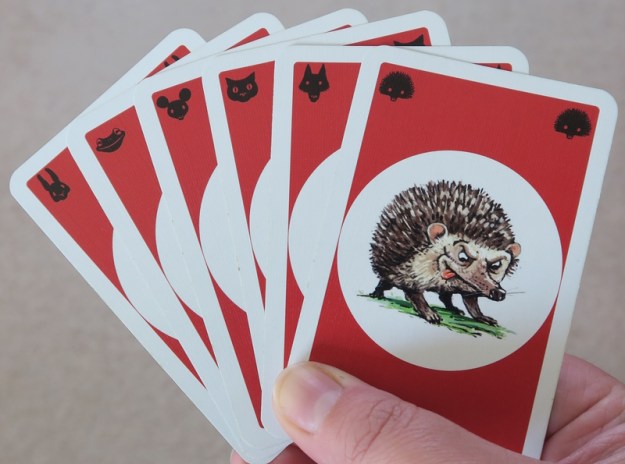
Om Nom Nom
– Image by boardGOATS

Players who played cards at the top of the food chain eat anything below, so long as there is enough for everyone who played the same card.  Thus, if there are four mice (including any cards played) and two cats, the owner of the cats take two cards each and get to keep their cat cards too with them all going on their scoring pile.  If however, there was only one mouse, both cats go hungry and neither player scores anything.  Cards played for the middle of the food chain eat the dice at the bottom of the food chain as long as there are enough dice for everyone who played the same card, but also as long as they don’t get eaten by anyone playing a card at the top of the food chain.

Om Nom Nom
– Image by boardGOATS

Thus, playing a card in the middle of a food chain is all about timing:  there is a higher risk, but also a higher reward as the dice showing red faces are worth two points instead of the usual one for a card or a die showing a black middle of the food chain critter.  Although we’ve played Om Nom Nom several times before, it was new to both Teal and Lime.  Teal started off well though taking a massive fifteen points in his first round.  Unfortunately for him, that turned out to be beginner’s luck and he didn’t do so well in the next round.  Purple’s game, on the other hand, went the other way, starting with nothing in the first round and taking sixteen points in the second.

Om Nom Nom
– Image by boardGOATS

With others being more consistent, in particular Blue who scored a seven and an eight in each of her first two rounds, it was all down performances in the final round.  In the event, Black and Pink both did well in the final round, and Teal improved on his score in the second round too.  It was Purple that won the final, albeit low-scoring round, taking ten points, giving her a winning total of twenty-six, three more than Teal in second with Black and Blue tying for third place some six points behind him.  It had been a quick fun game, one that is always good value and definitely deserves another outing soon.
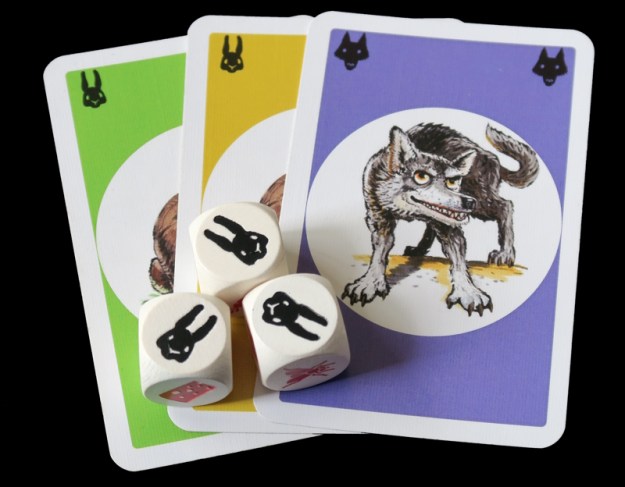
Om Nom Nom
– Image by boardGOATS

Both games, Incan Gold and Om Nom Nom, finished at much the same time, so everyone decided what to play next.  Teal had brought Nidvelilir at Green’s request, but this wasn’t the night for that.  Eventually, Purple traded places with Pine and Lime leaving five players, in one group which picked out a lot of possible five-player games.  Since Violet was here only for the a brief visit they let her choose.  Her selection was Zooloretto or King of Tokyo, however Purple made a face at both choices and suggested Carcassonne instead. Violet was less keen as she felt she had played that a lot recently, so Green made an executive decision to play Boomtown—a fun little bidding game that hasn’t had an outing for a long time and doesn’t take too long.
Boomtown
– Image by boardGOATS

Unfortunately, at this point Emerald was really beginning to feel the heat of the pub and felt he couldn’t participate.  He went off for a wander to get some fresh air, ironically just before the back door was opened to cool everyone down a little.  As he had decided to sit this one out, the rest of the group revised the rules which were simple enough on the face of things.  A deck of sixty cards is shuffled and placed face-down in the middle of the table, along with two dice, a pile of Mayor pawns (one in each of five different colors) and Town tokens (two each of the same colours).  One card per person is turned face up and each player begins the game with $10 starting funds to bid for the card they want.
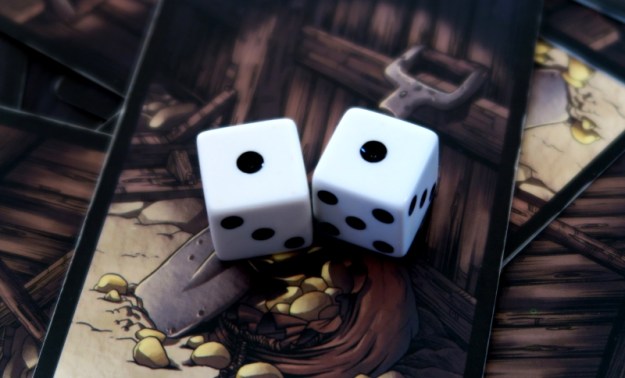
Boomtown
– Image by boardGOATS

Each player has to increase the bid or pass, until there is one winner.  And this is the clever bit of the game—the winner, pays the player to their right, who passes on half of the money to the player on their right and so on until either there is nothing left to give or the winner is reached (they don’t get any of their own money back).  Everyone then gets a card in clockwise order.  There are Mine, Dynamite, Saloon, Hold-up, Governor and Special cards, each of which has an effect.  Mines and Saloons give players gold and the player with the most Mines in any Town/colour takes the matching Mayor token which forces others to give them money.

Boomtown
– Image by boardGOATS

Dynamite cards allow players to destroy other players’ mines, while Hold-up cards allow players to steal from other and the Governor allows players to upgrade a Mayor so their mines are worth double. Once the cards have been allocated, the dice are rolled and players receive income for their mines.  The game ends when the deck is depleted and all the cards have been sold.  The player with the largest total from their their points, money, the production value of all the mines they control, and five bonus points for each Mayor, is the winner.
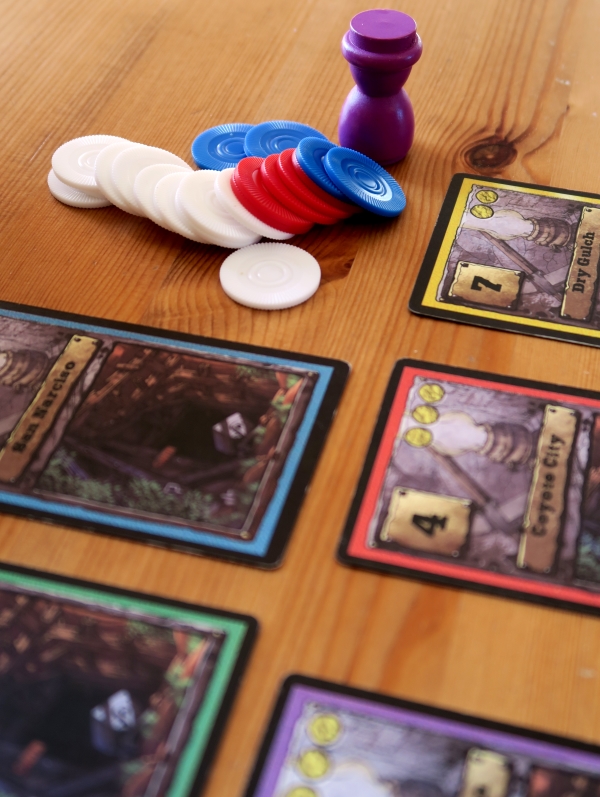
Boomtown
– Image by boardGOATS

Maybe it was the heat, but aside from Green, no-one was quite sure how Boomtown would play out, and it took a few rounds for everyone to get the hang of things.  The group didn’t get off to a great start, even when they adjusted the draw deck to make sure there was enough mines for everyone by replacing the action cards that came out.  The second round brought out two sets of Dynamite though, and both Green and Purple ended up destroying each others mine.  The bidding never got very high in the first half of the game, mostly because nobody knew what they were doing, and did not necessarily want to choose first.
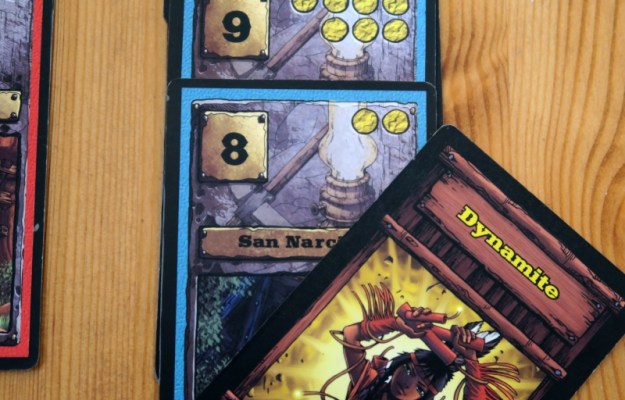
Boomtown
– Image by boardGOATS

However, by about half way and when the Mayor pieces had all been claimed and the Saloons were built everything started to hot up.  Although Lilac had a lot of red Mines, which netted her a little money from players forced to take the last few remaining, every time they found gold, she had to pass most of her claim to Purple who had a red saloon along with Saloon girls!  Violet managed to claim a couple of Mayors along the way, and although she lost one of them, she managed to avoid the attraction of the Saloon, so kept everything she collected. With some judicial rolling on the Card Shark Dice, she managed to rob some of the others blind.

Boomtown
– Image by boardGOATS

By the time the last cards had been claimed and the final Mines had given up their gold, it was Purple who had become the master Miner, by something of a landslide.  Violet was a respectable second with Lilac, having passed on so much of her wealth to Purple, just managing to stay whisker ahead of Green for third.  Meanwhile, on the next table, with so many players Survive: Escape from Atlantis had seemed a good choice as it plays six with the expansion.  This was released to mark the thirtieth anniversary of two very similar, much older games, Survive! and Escape from Atlantis, and is an agglomeration of them both.
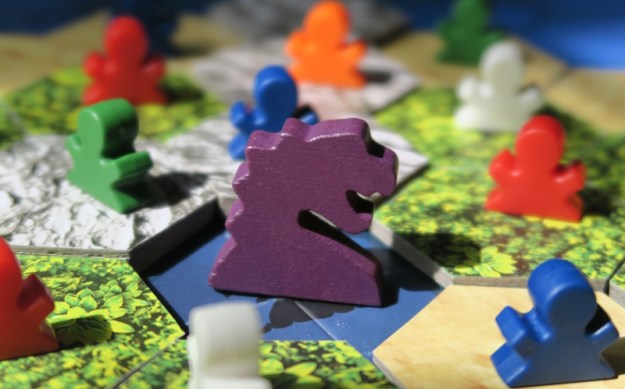
Survive: Escape from Atlantis!
– Image by boardGOATS

The idea is that players rescue their meeples from the central Island of Atlantis before it sinks beneath the waves.  The original Escape from Atlantis had a fabulous sculpted plastic central Island, with lots of Sea Monster miniatures, however, although the thirtieth anniversary edition is arguably a nicer production, the Island is made up of thick card hex-tiles, and the Sea Monsters are made of wood.  This version has safe land shown on the corners of the board each initially guarded by a Sea Monster, with randomly placed hexes forming the Island and a fifth Sea Monster in a central lagoon.
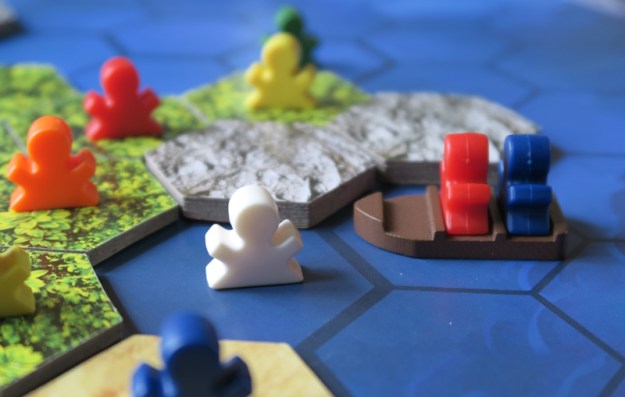
Survive: Escape from Atlantis!
– Image by boardGOATS

The new edition varies from its predecessors only a very little in game play.  On their turn, the active player has three movement points, and then they remove one tile from the Island of Atlantis before rolling the Attack Die which dictates which of the Sharks, Whales or Sea Monsters the player moves.  Sharks and Whales are introduced as the Island sinks: when players remove a hex from the Island, the underside has either an immediate effect (bordered with green) or a delayed effect with the tile stored, usually to be played before a later turn, though a small number can be used reactively.
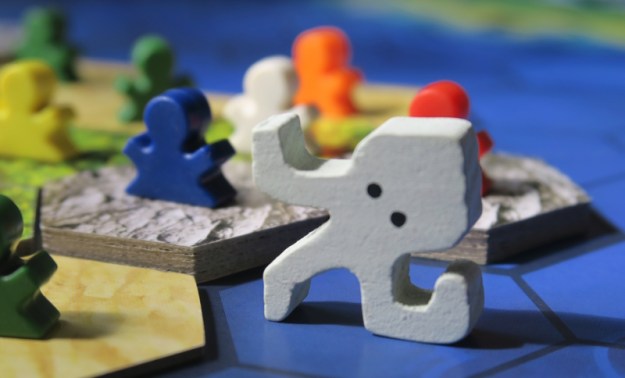
Survive: Escape from Atlantis!
– Image by boardGOATS

There was a lot of discussion about whether to include the Giant Squid and Dolphin mini expansions and what they did, but in the end, the group decided against it this time.  In addition to placing their meeples on Atlantis, during the set up, players also place boats.  These can hold a maximum of three meeples and are moved by whoever has the majority in the boat.  It costs one movement point to climb into or out of a boat, either to or from a neighbouring land space or the water next to the boat.  Meeples in the water can only swim one space per turn because it is tiring.  Once in a boat, however, movement is easier and they can move as far as they want and are able.

Survive: Escape from Atlantis!
– Image by boardGOATS

Thus, the priority is to get meeples into boats, but the decision players have is whether to try to put all their meeples in one boat or whether to hedge their bets.  Pine and Pink tried the former.  Pine managed to get two of his meeples in one boat and then, before he could get any passengers, set sail.  Being early in the game there weren’t many Whales or Sharks about, and with only a short distance to safety, Pine’s pair made it there safely.  From there, the game got quite savage with players preferentially taking land tiles with meeples on them, turning them into Swimmers with a long way to safety—one was unlucky enough to end up in the drink when a Shark dropped into the space next to him and swallowed him whole.

Survive: Escape from Atlantis!
– Image by boardGOATS

Pink tried to emulate Pine’s success, but was a mite more greedy putting three of his meeples with a total value of eight in one boat.  Although he had a plan to get the boat to shore, he reckoned without the appearance of a Whale which was promptly moved to the same space and proceeded to turn his boat into matchwood and transform his sailors into Swimmers.  Whales aren’t interested in Swimmers though, so once his meeples were in the water, it left them alone.  Pink then had ample opportunity to separate them out a little, and indeed was advised to by everyone else, but he choose not to.  So, although everyone felt slightly sorry for him, it wasn’t long before the little clutch of Swimmers proved far too tempting a target and a Shark rocked up and ate them all.
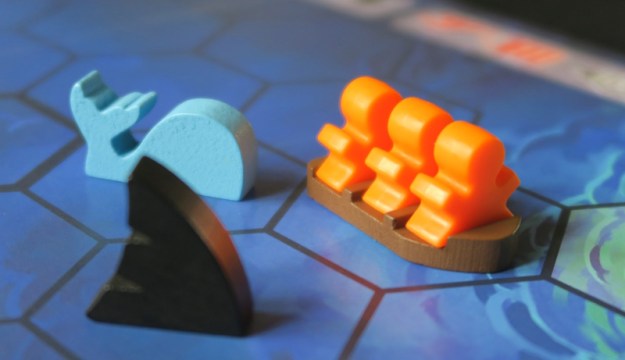
Survive: Escape from Atlantis!
– Image by boardGOATS

From there, there was a steady trickle of boats making landfall, with players trying to work together without doing the lion’s share of the work themselves.  For every boat that made it to safety, however, there was at least one Swimmer that was eaten by a Shark or boat that was attacked by a Whale or a Sea Monster making it a bit of a war of attrition.  But with six players, the game moves quite quickly and players don’t get many turns so collaboration is essential if players are to get anyone to dry land.  Blue and Black cooperated effectively to get a couple of Sailors each home, as did Teal and Pine.  Although for a long time, Lime was the only one not to have any of his meeples eaten, he was also the last to get one safe.

Survive: Escape from Atlantis!
– Image by boardGOATS

With six players, the end of the game came round quite quickly.  The game ends immediately when the Volcano is revealed under one of the last eight Mountain tiles and with so many players once the Woodland tiles have been exhausted the game can end any time, so one extra turn can make all the difference.  And so it proved for many.  It was Lime who turned over the Volcano tile, much to his disgust as he had a boat with two meeples ready to disembark on his next turn.  Pink also had two in a boat near shore (total value nine) and Blue was equally unimpressed as it was her turn next and she needed just one move for her most valuable meeple to crawl up the beach.

Survive: Escape from Atlantis!
– Image by boardGOATS

With Atlantis gone beneath a combination of waves and lava and every meeple that had not made dry land perished in the boiling sea, it was time to score.  Each meeple has a value printed on the bottom, and although players knew what these were when they were placed, they were not allowed to look at them again.  Teal had attempted to codify which meeple was which in their location on the spaces they were placed on, however, Blue quickly called him on this and like everyone else, over the course of the game he had mostly lost track of which was where. Pink and Lime had only got one meeple ashore a piece, but although they were relatively high scoring ones, everyone else had a similar value one home and at least one additional one too.

Survive: Escape from Atlantis!
– Image by boardGOATS

Blue, Black and Teal managed to get three meeples ashore each, with Black totalling six points and Blue totalling seven.  The winner was Teal, however, with a total of eight, though even one more turn or a slightly different turn of events earlier in the game would have made a huge difference to the final placings.  It had been a lot of chaotic fun, but unquestionably, with so many players, there wasn’t much chance to plan and the game  changed hugely between a player’s turns.  With fewer players it is definitely a more strategic game, but with more, the onus is on players to work together more—indeed the players that did this this time, were the most successful.
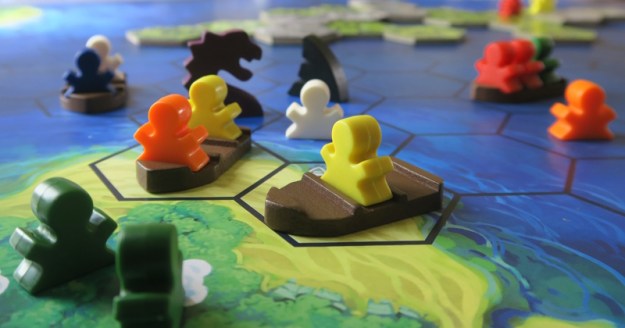
Survive: Escape from Atlantis!
– Image by boardGOATS

Learning outcome:  Just when you thought it was safe to fall into the water…

13th December 2022

With this being the annual GOATS UnChristmas Dinner, almost everyone was present for a festival of food and fun, when Blue and Pink arrived with a small car full of party.  There were lots of volunteers to help bring everything in and before long, pizza boxes were being handed round along with crackers stuffed full of bling and GOAT Award voting forms.  The glittery Wingspan eggs from the crackers were especially popular, partly because so many people have a copy, everyone liked the idea of adding them to their game.  As the last of the pizza boxes were being passed around, people started to think about this year’s GOAT awards.

Wingspan
– Image boardGOATS

There was lots of umming and ahhhing as people tried to remember which game was which, but eventually the votes were in and people chatted while the returning officers (Pink and Green) did their counting thing.  Then Green announced the winners.  The GOAT Poo prize for the worst game of the year went to Villainous – The Worst takes it All and the Golden GOAT went to Everdell.  Three epic games, one of Viticulture, one of Tapestry and one of Turf Horse Racing were nominated for “Moment of the Year”, but that somewhat poignantly went to the 2021 UnChristmas Dinner which was the last meeting attended by Burgundy, and the last game he played with us, Santa’s Workshop.

Golden GOAT - 2022
– Image boardGOATS

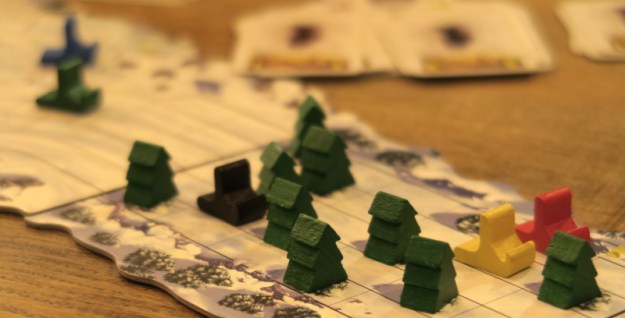
Eventually, we all started thinking about playing games.  Ivory and Indigo were keen to play the “Feature Game“, Merry Madness: The Nightmare Before Christmas, while Jade had specially requested a game of Gingerbread House.  Eventually, largely due to logistics and lethargy (perhaps caused by too much pizza), everyone stayed pretty much where they were and played something with the people they were sat next to.  First underway was Green, Lilac, Pine, Teal and Lime, largely because they were playing a game they were all familiar with, Carcassonne, albeit the Winter Edition.

Carcassonne: Winter Edition
– Image boardGOATS

The Winter Edition is essentially the same game as the original “Blue-box” Carcassonne, but with snowy art work.  Thus, players take it in turns to draw and place a tile, add a meeple if desired/possible and then remove any meeples that are ready to score.  As in the original, the features on the tiles include city segments, roads and cloisters. Players score two points for each tile in a city or road they own if it is completed during the game, or one point at the end if incomplete. Similarly, Cloisters score nine points when completely surrounded or one point for the central tile and each surrounding it at the end of the game.

Carcassonne: Winter Edition
– Image boardGOATS

The clever part of the game is that while players cannot add a meeple to a feature that is already owned by another player, features can be joined together and then shared so that both players score.  Green and Lilac had played the same game last year at Christmas, with Der Lebkuchenman (aka Gingerbread Man) mini expansion which consists of additional Gingerbread Man tiles mixed in with the base game; when drawn, the player moves the brown Gingerbread Meeple to an unfinished city of their choice.  Before he is moved, however, the current city containing the Gingerbread Man is scored with each player receiving points for the number of meeples they have in the city multiplied by the number of tiles in the city.

Carcassonne: Winter Edition
– Image boardGOATS

Thus, even players that have only one meeple in the city when their opponents have more score a few points.  This year, in addition to Der Lebkuchenman, the group also added Die Kornkreise (aka Crop Circles) mini expansion. Although they were happy with the Gingerbread Meeple, they were less sure about the crop circles—they looked more like funny shaped snow “angels”.  The expansion consists of six extra tiles which allow each player to place a second follower on a feature that they have already-claimed or return an already-placed follower back to their supply.  Of course, the group did not play the rules quite right, however, initially thinking that each person had a free choice of which action to take and whether to take it or not.

Carcassonne: Winter Edition
– Image boardGOATS

It was only just after the second tile was placed that they realised it was the active player that chose the action (add an extra Meeple to the specific terrain type or pick up a Meeple) and everyone else had to do the same (they decided that if the player had no Meeple in an appropriate area then they just skipped the action).  As a result of the Kornkreise, Lime  ended up with three Farmers on the same tile, which at least it guaranteed him that particular field!  The Crop Circle expansion also led to the biggest coup of the game.  Lilac had started a city with her first tile and Pine positioned himself to muscle in on it a couple of turns later.

Carcassonne: Winter Edition
– Image boardGOATS

Their cities were joined, but they just could not get the city closed before Teal then joined the fray.  This became a very long city and then in the last quarter of the game, Lime also managed to add himself into the action on this game winning city.  Then the final Crop Circle tile came out for Teal. He decided he wanted everyone to add a Meeple to a city, which he, Pine and Lime were able to do. Unfortunately Lilac (who had started the city right at the beginning of the game) had no Meeples left, so couldn’t and found herself locked out of the scoring  at the end of the game as it was never completed.

Carcassonne: Winter Edition
– Image boardGOATS

It was a game where no-one seemed to be able to get the tiles they wanted. Green regularly selected from the pile nearest to him, but only ever got roads. When he tried from different piles, he still got roads and when others selected from the “Green” pile, they got cities!  Pine started to choose tiles from within the middle of the stack, raising cries of “cheat” from Green and Lilac. Pine’s argument was that the tile was still random, which was hard to disagree with and Lime started doing the same later on as well.  In the final scoring, Lime surprisingly edged everyone out for the win, with Teal and Pine not too far behind.

Carcassonne: Winter Edition
– Image boardGOATS

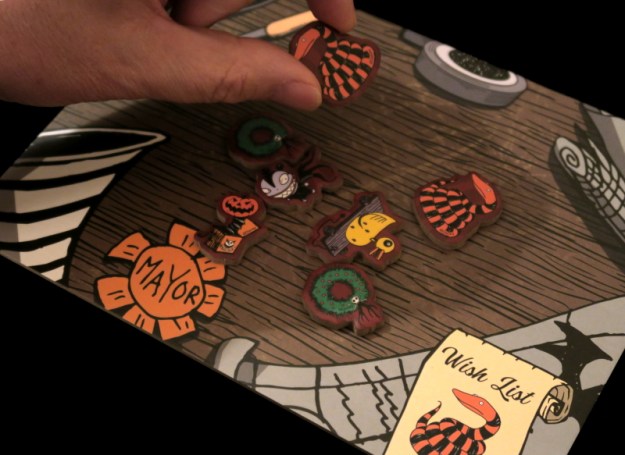
It had been fun though and the Winter edition is certainly the prettiest version of Carcassonne, so Green and Lilac are already looking forward playing it again next Christmas.  Meanwhile, on the next table, Blue, Pink, Ivory and Indigo were playing the “Feature Game“, Merry Madness: The Nightmare Before Christmas, a very quick and light dice chucking game where players are trying to gather together all the spooky-themed gifts in Sandy Claws’ Christmas Bag.  It really is very, very light and quick:  simultaneously players roll their three dice and do what they say (in a similar style to Escape: The Curse of the Temple).  The three dice are different: one shows which of the six gift types is moved, another shows how many, one, two or three, and the final die indicates where: to the player on their left, right or of their choice.

Merry Madness: The Nightmare before Christmas
– Image boardGOATS

The group played with the “Making Christmas Toys” variant.  Players started with the same number of each of the different toys.  The idea is to get rid of all the toys that don’t match the one depicted on their “Wish List” (shown on their player mat).  If they roll the toy on their Wish List, they take that toy from the player indicated, whereas for every other type they roll, they gift one of that type to the recipient indicated.  There really wasn’t a lot to it, and basically the game was all about who was most awake (possibly correlated to the person who had eaten the least pizza).  Blue won the first round, and Pink took the second.  Blue finished the game when she took another two rounds and, although it had been silly fun, it was time for something else and Purple joined the foursome from the next table.

Merry Madness: The Nightmare before Christmas
– Image boardGOATS

Meanwhile, Purple had been explaining Gingerbread House to Plum and Jade and their partners Byzantium and Sapphire, respectively.  In this game players are witches in the Enchanted Forest, building their gingerbread house and attracting hungry fairy tale characters with colorful gingerbread.  Each player has a board with a three-by-three grid of building spaces.  There is a face down stack of rectangular tiles with the top three turned face up (a little like the train cards in Ticket to Ride).  These tiles each feature two squares, similar to Kingdomino tiles.  On their turn, players draw one of the face up tiles and place it on their player board, then carry-out the effect of the symbols they covered up.  The most likely symbol is one of the four different types of gingerbread, which means they collect a token of that type.

Gingerbread House
– Image boardGOATS

Careful placement of pieces is important because if a player is able to cover the same two symbols in one one turn, the player gets the effect three times instead of twice.  Once a tile has been placed, the active player can use some of their gingerbread tokens to capture fairy-tale characters.  If placing tiles completes a level, the active player may also take a bonus card.  The group found the game simple enough once they got going, but it took a while to get there.  The “wilds” caused problems from the first and the group weren’t sure whether covering two at once meant doing three of the same thing.  After re-reading that bit of the rules, it was decided the extra actions didn’t have to be the same, and as a result, Plum was able to make more of her final turn. 

Gingerbread House
– Image boardGOATS

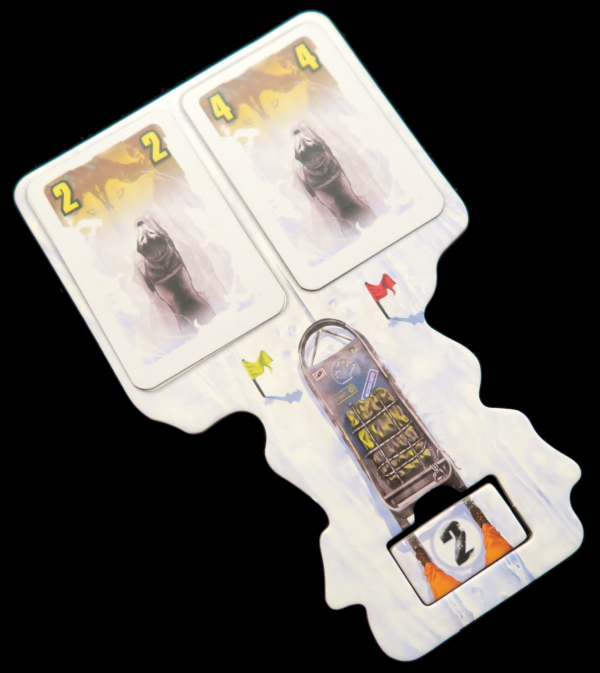
It was close, but despite his super-charged final turn, Byzantium finished two points clear of Plum with Jade coming in third.  Everyone had really enjoyed the game, though, so much so that Jade and Sapphire are now on the lookout for a reasonably priced copy!   Although it took a little while to get going, once Plum, Jade, Byzantium and Sapphire were playing, Purple was at a bit of a lose end.  Nightmare Before Christmas didn’t take long though, so when it was over, Purple joined Blue, Pink, Ivory and Indigo for a game of the husky sled-racing game, Snow Tails.

Snow Tails
– Image boardGOATS

The idea is that each player has a sled led by two dogs.  They start with a hand of five cards drawn from their personal deck.  On their turn, they can play up to three cards as long as they all have the same number.  There are three places a card can be played, two drive the dogs, and one activates the brake.  The idea is that a sled’s speed is the sum of the dogs’ speed minus the current value for the brake.  in addition, the difference between the dog values is the sled’s drift, which causes the sled to move left or right. At the end of their turn, players draw back up to five cards.

Snow Tails
– Image boardGOATS

In general, if players hit something, they pick up a dent card which goes into their hand, blocking space and limiting their options.  The game is quite simple, but as always, how and when to apply the “drift” caused some confusion; Pink certainly benefited from the rules malfunction, but others probably did as well.  The group started out with the “Treemendous” track, but it seemed to take an age to get the game going and everyone was concerned that they might not finish before midnight.  So, about half-way through the game, the track was truncated removing the the final bend and finishing with a straight section just before the finish line.

Snow Tails
– Image boardGOATS

Ivory stole a march in the first couple of turns and looked like he was going to leave everyone miles behind, but when he rammed the first corner it let everyone else catch up.  Ivory was still the first out, but Pink was now not far behind going into the first stand of pines and was taking a different line.  By this time, the damage to Ivory’s sled was starting to take its toll, and Pink was able to take advantage of his balanced sled (his dogs pulling evenly giving him a bonus equivalent to his position in the field) and moved into the lead.

Snow Tails
– Image boardGOATS

It was then that the act of shortening the track played into Pink’s dogs’ paws.  With just the finish line in front, his dogs stretched their legs, he released the brake and shot through the second stand of pines taking out a couple of saplings on his way through.  Everyone could see what was going to happen, but nobody could do anything about it, and Pink crossed the line miles ahead of Ivory who would, no doubt, have taken second had the group played on.  Everyone else was far behind, still working their way through the first plantation.  It had been fun, but it was time for home, so with many “Happy Christmases”, everyone headed off into the cold dark night.

Snow Tails
– Image boardGOATS

Learning Outcome:  Turkey, bacon, sausage, cranberry sauce and stuffing really do make a Pizza taste like Christmas Dinner!

15th November 2022

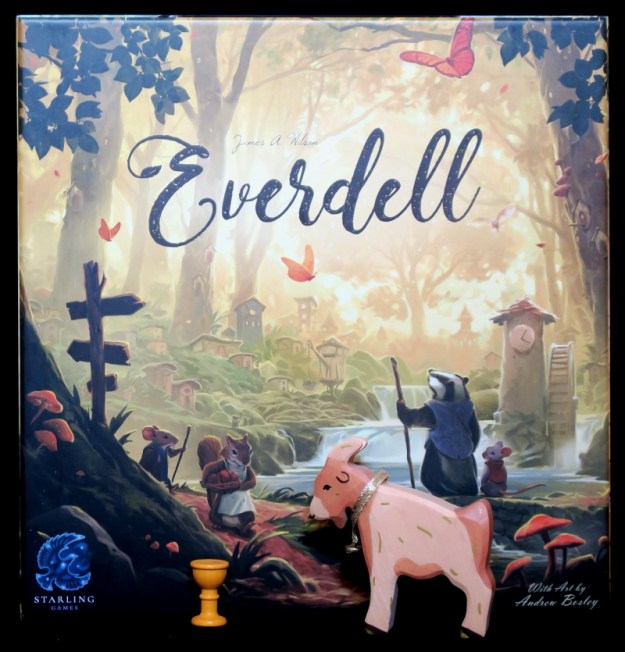
With lots of absentees including Pink, Lemon, Orange and Plum, it was a relatively quiet night, but there were still nine and that left a difficult decision as to how to split up the group.  The “Feature Game” was Everdell, and although it only really plays four, Ivory had the new, Complete Collection which includes the Bellfaire expansion which adds two more players.  Three players seemed a little on the small side, so a four and a five it was, and the five were keen to give Everdell a go.

Everdell
– Image by boardGOATS

Although Ivory had played Everdell with Pink and Blue in the summer of 2020, nobody had seen the new, Complete Collection which was a recent acquisition for Ivory, and what a box it was—It was humongous!   Everyone wondered how Ivory stored it.  That developed into a conversation about where people store their games, and it seems pretty much everyone uses a “Kallax” (though some people didn’t know that’s what they are called). However, it turned out the Everdell box is so big, it doesn’t fit onto a Kallax and Ivory stored it under his bed!

Everdell
– Image by boardGOATS

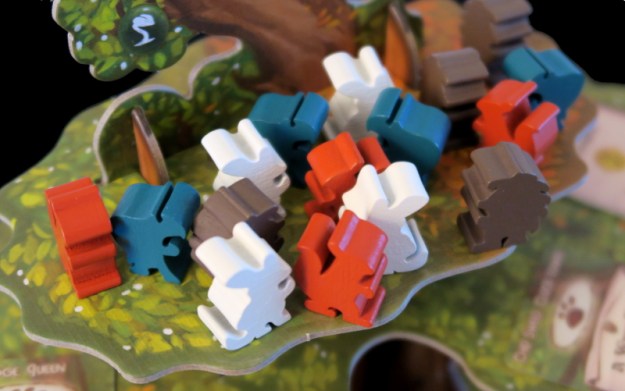
Everdell is a very good looking game, a card-driven, tableau building and worker placement game set in a woodland glade.  Players take the role of leader of a group of critters constructing buildings, meeting characters and hosting events by placing workers to get resources and spending them to play cards.  Everyone enjoyed the opportunity to choose their own wooden meeple animals out of a selection of over twenty different types.  Ivory went for the purple Platypuss, Purple went for a light purple Owl, Lilac went for orange Foxes, Teal chose the grey Hedgehogs , and Green wanted the Brown Bats.  By random selection using a mobile app, Teal was to go first.

Everdell
– Image by boardGOATS

It took a few turns to get the hang of the game, although it is not overly complex on the face of things.  It is one of those games where there are apparently lots of choices, but in practice they are clear and relatively simple:  players either place a meeple to get a selection of resources, or play a card into their tableau.  And then, when all possible choices have been exhausted, players move onto the next “season”.  The trick is working out how to extend the possible number of turns taken each season. Ivory was the only one of the group who had played it before, so had got it worked out.  Everyone else had moved into spring while he merrily carried on taking his turns in his winter!

Everdell
– Image by boardGOATS

Teal was the first to move onto spring, and this order continued through the rest of the game. At one point it looked as though everyone else would have finished completely, while Ivory was still in summer!  It didn’t quite work out like that, but Ivory did have several more turns after everyone else had finished.  The other trick to Everdell is to pair up the Critters cards with the Construction cards. By building a Construction, a player could then build the corresponding critter for free afterwards, thus giving them extra turns and extra bonuses.  Ivory did well in this, and his starting and early meadow cards fell his way.

Everdell
– Image by boardGOATS

Green and Purple also did well getting pairs of cards and playing them during the game. Unfortunately Lilac and Teal just couldn’t seem to get the pairings they needed. So it seems there is still a certain amount of luck in this game.  The other thing which surprised everyone was how quickly the group got through a very big stack of cards from the meadow draw pile.  After last time where we nearly failed finish Endeavor before the pub closed, the group set an alarm to give them a thirty minute warning before closing time as we were worried we may have the same problem this time.

Everdell
– Image by boardGOATS

By the time the alarm went off nearly two hours later, the game was all but finished—not bad for a new five player game.  Playing it again, the same group could probably do it in ninety minutes or less.  Would it get another outing though?  It certainly has cuteness factor in spades; it is interesting, and the game-play is not overly complicated; it has challenge in random variations, and many good looking expansions to enhance and change the experience. So, it will almost certainly get another outing and Ivory had better not put the box too far under the bed, as we’ll be wanting him to bring it along again in the new year.

Everdell
– Image by boardGOATS

After too much “cards with text” with Villainous last month, it was clear that Everdell was not a game ideally suited to Lime and Pine.  Instead, Blue said she had just the game for them: Cascadia.  Cascadia won this year’s Spiel des Jahres award, and had not yet had an outing within the group.  The game is very simple though:  players have a starting three hex terrain tile, and on their turn, they take a terrain hex and a wooden wildlife token and add these to their tableau.  Each terrain tile has one, two or three types of wildlife depicted on it, and the wooden tokens have to be placed on a terrain tile with matching wildlife symbol and that is more or less all there is to it.

Cascadia
– Image by boardGOATS

The interesting part is the scoring.  Players score points for the largest area they have of each of the five different types of terrain with bonus points for the player with the largest area of each.  That is simple enough, but they also score points for each of the different types of wildlife, and their scoring is different for each game.  The scoring depends on the location of each type of wildlife, for example, this time players scored for each set of three (and only three) adjacent bears.  They also scored points for each different type of wildlife between pairs of hawks.  Ribbons of salmon and groups of elk also scored as did foxes for each different type of wildlife surrounding them.

Cascadia
– Image by boardGOATS

The game play behind Cascadia isn’t very new or terribly original, with the tile laying elements giving a feel similar to games like Kingdomino, or even Carcassonne.  The variation in the wildlife scoring (with more wildlife cards available to add more variety), however, and the fact that the wildlife tokens are finite in number and are drawn from a bag, adds just a hint of something reminiscent of bag-builder games like Orléans or Altiplano.  As the group played and Lime and Pine got into it, Blue and Black started to appreciate the subtlety a little more.  The addition of special Keystone tiles that give players nature tokens when wildlife tokens are placed on them, also help players to mitigate the luck elements.

Cascadia
– Image by boardGOATS

This time, foxes seemed to hide in the corner of the bag when players wanted them, then when they didn’t, they all came out of hiding.  Pine, inevitably put in a good showing and, despite everyone trying to persuade him, Lime succeeded in ignoring the advice to join his two groups of bears together (which would render them pointless).  The scores for the terrain were quite close with a spread of just a handful of points.  However, while Lime, Blue and Black had similar scores for their wildlife as well, Pine was eight points clear of his nearest rival giving him a final score of ninety-eight, ten points clear of Blue who was the best of the rest.  Pine and Lime had clearly enjoyed the game though and it will almost certainly get another outing soon.

Cascadia
– Image by boardGOATS

Lime excused himself, leaving Blue, Black and Pine to play something quick, taking less than an hour.  Although every time we play it, Pine points out that Bohnanza is not quick, this time he was persuaded because there were only three players and he wasn’t given time to think about it too carefully.  Bohnanza is one of the group’s most popular games, yet it hasn’t had an outing for ages.  The game play is very simple, but very interactive with a strong trading element. The active player first plays one or two bean cards from their hand into their fields taking care to keep them in the same order and only play the cards at the front.  They then turn over the top two cards from the deck and plant or trade them.  Finally when everything else has been dealt with, they can trade any cards in their hand with anybody else.

Bohnanza
– Image by boardGOATS

Cards are played into fields—with more players, each person has two fields in front of them and may buy a third, but with three, everyone starts with three fields.  This is important as each bean field can only hold one type of bean at any given time.  Beans can be harvested at any time to give coins and the game ends after three turns through the deck.  There are a few clever things about the game.  Firstly, players cannot harvest a field with a single bean in it unless all their fields have a single bean in them—this prevents players just cycling through beans they don’t want.  The really clever part of the game is that the fact that bean cards turn into coins when fields are harvested.  As the rarer beans are more valuable, this means they get increasingly rare as the game progresses.

Bohnanza
– Image by boardGOATS

This time, Blue planted two lots of Garden Beans early in the game which meant there were none available later.  Pine and Black shared the Black-eyed Beans, Stink Beans and Red Beans between them.  Blue planted lots of Green Beans and took it in turns with Pine to experiment with Soy Beans.  By the end, there were really only Wax Beans, Blue Beans, Coffee Beans and the occasional Green, Soy and Stink Beans.  With three experienced people playing, it was always going to be a tight game.  Pine finished with thirty “Bohnentaler”, a couple of more than Black, and was quite disgusted to find he was pipped by Blue by a single point.

Bohnanza
– Image by boardGOATS

Learning outcome:  Ikea need to sell a bigger Kallax.

4th October 2022

To mark the tenth anniversary of our first meeting, this week was a bit of a party. We started with a fish and chip supper (courtesy of Darren at The Happy Plaice) and followed it with cake, complete with “marzimeeples”. There was also a special “solo game” of Carcassone, where everyone chose a tile, wrote their name on it and stuck it on a board to be framed as a keepsake to mark the occasion. Unfortunately, Lilac was unwell and not able to come, and the chaos on the A34 (due to a burst water main on the Oxford ring road and an accident) conspired to delay Black, Purple, Orange and Lemon. Everyone else made it though, and after a quick round of Happy Birthday and some cake, the group moved on to play the now traditional “Feature Game“, Crappy Birthday.

2022 Birthday Cupcakes
– Image by boardGOATS

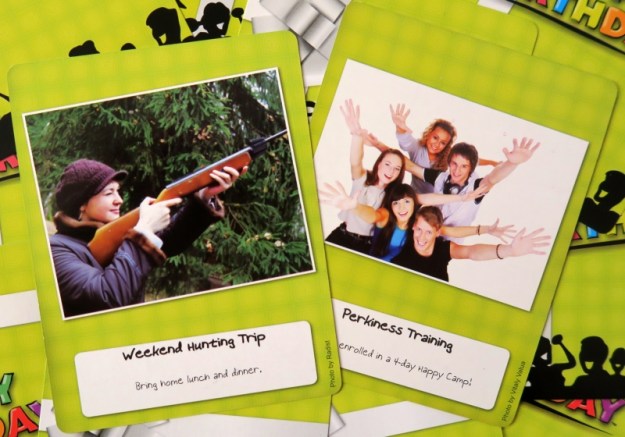
Crappy Birthday is a party game where players give each other comedy birthday presents and the recipient has to decide who gave the best and worst gifts. We house-rule the game to play a year so that everyone has one birthday, so on their turn, they receive a gift from everyone else. They then look through the gifts and choose the best and worst, and the givers of those gifts get a point each. The winner is the player with the most points at the end of the year. Written like this, the game sounds very dry, but there are three things that make the game a lot of fun.

Crappy Birthday
– Image by boardGOATS

Firstly, the gift cards are fantastic; the pictures are great and the texts that accompany them are just enough to give a flavour while also allowing interpretation. Secondly, the way we play, the Birthday Boy or Girl goes through the gifts reading them out. It is not so much this, as the disgust, excitement or other response as people “open their gifts” that makes everyone smile. Playing board games can be very impersonal—for many people this is a good thing as it allows people who are shy or private to control what they reveal about themselves because everyone focuses on the game. As a result, gamers often don’t really know an awful lot about each other. In playing Crappy Birthday, however, players reveal just a little bit more of their likes and dislikes, helping everyone to get to know each other that little bit better.

Crappy Birthday
– Image by boardGOATS

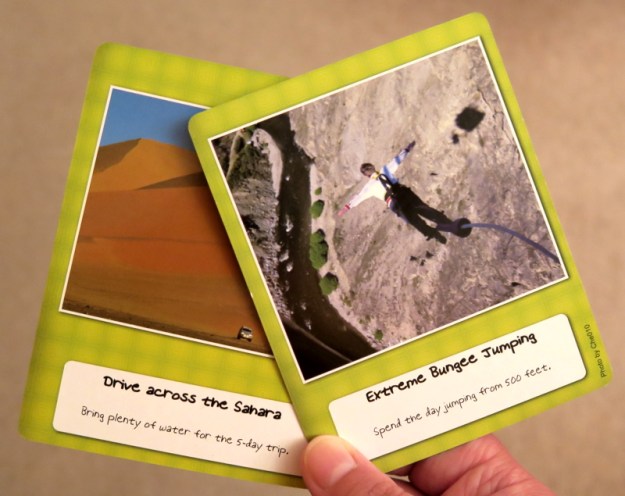
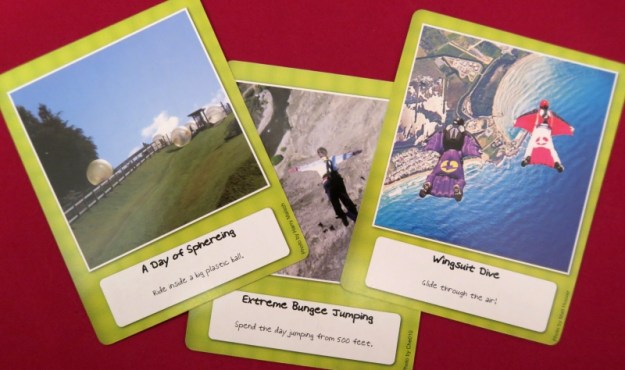
Finally, we only play Crappy Birthday once a year. This is really key, as without this constraint, the cards would get repetitive and the element of surprise would be lost. In terms of game play, it isn’t a very strategic or challenging game, so playing more frequently would likely mean it would quickly outstay its welcome. As it was, Pink started (his birthday was soonest), and he set the tone for the year. As usual, we discovered lots of interesting things about people in the group. Pink surprised everyone with his delight at receiving some Monopoly money toilet paper, though it was a close-run thing between that and a road trip across the Sahara as he’d always fancied participating in the Paris-Dakar Rally. He was much less impressed with the bungee-jump however.

Crappy Birthday
– Image by boardGOATS

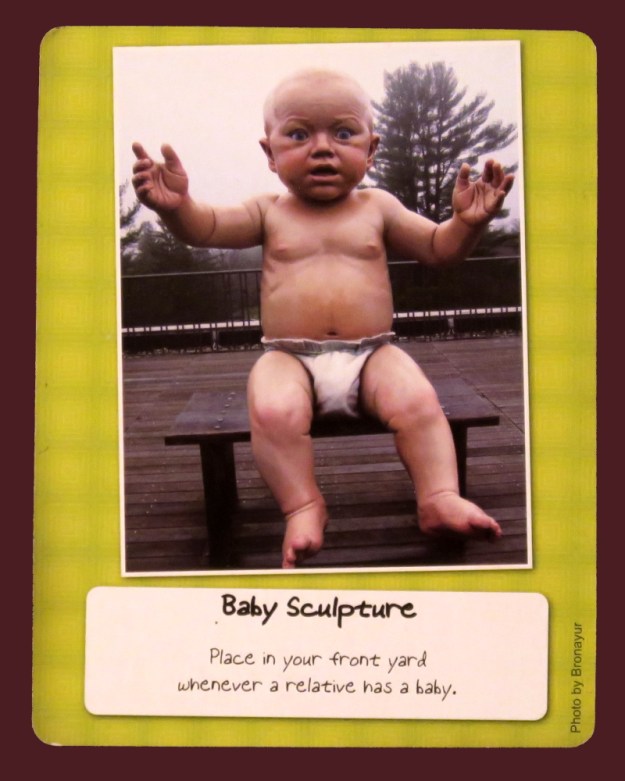
Pine was next and this time didn’t get his usual pile of equine and meat flavoured gifts. His choice of a giant lobster sculpture for his front yard was also unexpected, and he explained that it would be interesting to see where it ended up when the kids and drunks in the village decided to move it. On Plum’s turn we discovered that she liked the idea of a one-armed bandit and Chess lessons (no cheating, obviously), but preferred Flying lessons. Pink proved he knew Blue best when she picked a non-electric iron as her favourite gift, while Ivory was disappointed that when Teal eschewed his generous gift of a trip on the first trip to Mars. We discovered that Teal used to play the bagpipes, and that Lime was quite disgusted by the thought of a giant baby sculpture for the front of his house (to be fair, it looked quite hideous and not a little creepy).

Crappy Birthday
– Image by boardGOATS

Leaping off or out of things seemed to be generally quite unpopular, with a parachute jump being Black’s least favourite gift, though he was delighted by tickets to a live metal music gig. Ivory complained that he kept drawing perfect gifts for people just after their birthday. On his birthday, Pink thought he had a winner when he gave Ivory a snow machine, and everyone else felt the same knowing how much he loves Christmas, but surprised everyone by choosing a space walk as his best gift and a permanent barbed wire fence as his worst. Pine showed his approval when Lemon picked bird watching as her choice gift, and most people could see her point when she ranked her deer-foot lamp as her least favourite.

Crappy Birthday
– Image by boardGOATS

There was more surprise on Purple’s turn when she chose a custom chopper as her best gift, but her dislike of a trip on a submarine was less of a shock. The final birthday of the year was Orange who picked throat rings as his best gift. There was a lot of taxidermy-based gifts so it was perhaps fitting that his less surprising choice of worst gift was a good luck bat (not particularly good luck for the bat if the picture is anything to go by). Not that it really mattered, but everyone knew who the winner was long before the end of the year, as Lemon had managed to get a point in half of the rounds and finished with five points. The race for second place was much closer though with three people taking two and Black and Purple tying with three points apiece.

Crappy Birthday
– Image by boardGOATS

There was a lot of chatter, some tidying up and more chatter, before Lime and Teal wished everyone else a good night and enjoyable rest of the party, and those remaining tried to decide what to play. Everyone was very indecisive, so eventually Blue made the executive decision that one group would play New York Slice while the others played Ticket to Ride, and Pink went out to the car to collect the rest of the games that had been left in the car when everything else was brought in.  After some four-player, five-player, no definitely four-player shenanigans as Lemon shuffled from one game to the other, Ivory, Orange, Plum and Pink eventually got going with New York Slice.

New York Slice
– Image by boardGOATS

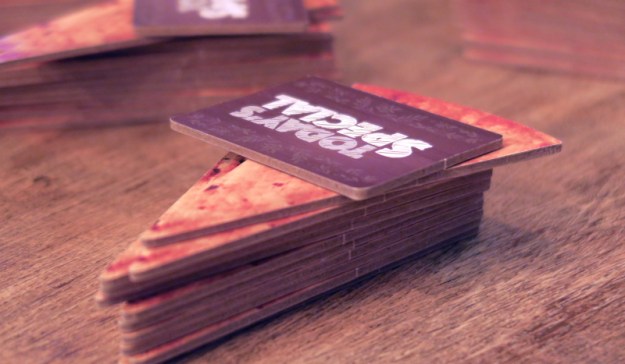
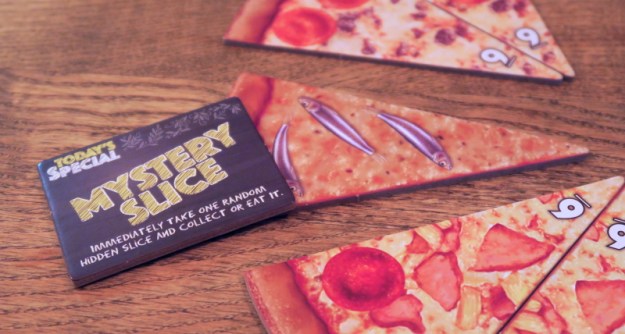
New York Slice is a re-implementation of …aber bitte mit Sahne, a game we’ve played a couple of times over the summer.  Having enjoyed the pizza version last month, it definitely deserved another outing.  The idea is that one player makes the pizza and cuts it into segments equal to the number of players, then players take it in turns to choose one of the segments.  When a player takes a segment, they can either eat the individual slices or store them for later. Those they will eat are worth points at the end of the game with the score dependent on the number of pepperoni slices on top. The pieces players keep are scored depending on who has the most of each type at the end of the game.

New York Slice
– Image by boardGOATS

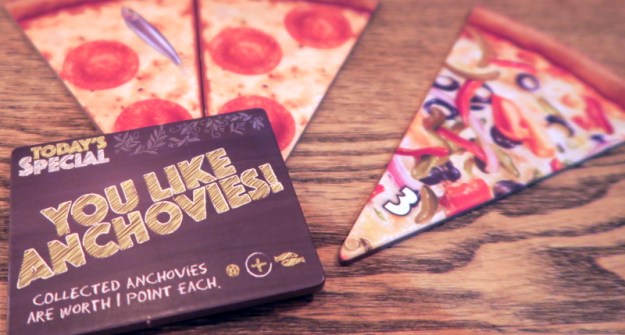
Each piece of pizza has a number on it which tells players the number of that type in the game and also what the player with the most will score at the end of the game.  Some of the pizza slices have anchovies on them and any that are visible at the end of the game are worth minus one.  Each pizza is also served with a Special—a side order bonus tile with rule-breaking powers which accompanies one of the portions.  These can be good or bad, and add something to the decision making all round.  This time, the game was very close with just four points between first and last.

New York Slice
– Image by boardGOATS

As often happens, most people didn’t compete for the majority in the lucrative Meat Feast pizza, instead gobbling up the pepperoni straight away giving Orange the eleven points relatively cheaply.  The most valuable pizzas were collected by Orange and Ivory, whereas Plum made most of her points from her Specials:  “The Everyone-Else Diet” and “Seconds”.  The Everyone-Else Diet” was handy because it gave negative points to everyone else for every two slices eaten.  It was perhaps “Seconds” that just gave her the edge though, as it allowed her to eat one set of slices just before scoring, enabling her to see what she wasn’t winning and eat that.  As a result, she finished a single point ahead of Ivory with Orange taking third.

New York Slice
– Image by boardGOATS

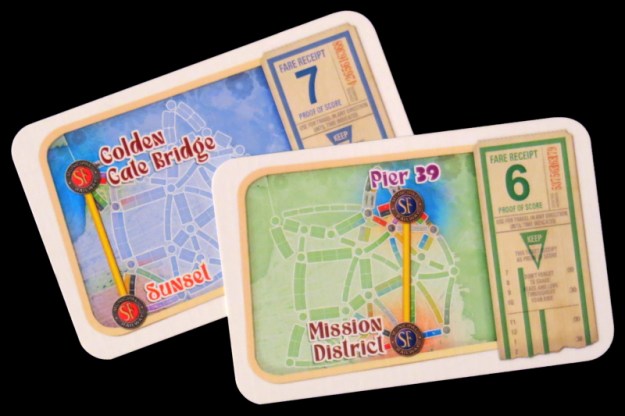
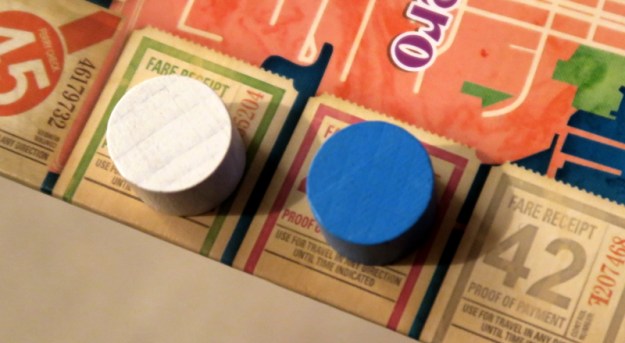
Meanwhile, on the next table, Blue, Black, Purple and Lemon settled down to a game of the new Ticket to Ride: San Francisco.  This is the latest in the Ticket to Ride series and is making its debut at Essen this year.  The games all follow the same basic pattern:  on their turn players draw coloured cards, or spend them to place trains on the central map.  They score points for trains placed, but also for completing any tickets they kept at the start of the game or picked up and kept during it.  One of the smaller games, Ticket to Ride: San Francisco only plays four and has fewer pieces so games are shorter.

Ticket to Ride: San Francisco
– Image by boardGOATS

Like all the other versions of the game, however, San Francisco also has a small rules tweak:  when players make a connection to a tourist destination, they can collect a token.  They can only collect one per turn and one from each location.  Each tourist destination has different tokens, and players score bonus points at the end of the game for each different token they have collected.  These points are significant, varying from nothing to twelve, with the number of points increasing exponentially as players add more to their collection.  Otherwise, the map is different and instead of trains, players have cable tram-cars to place, but otherwise it is similar to the other versions of Ticket to Ride.

Ticket to Ride: San Francisco
– Image by boardGOATS

Black’s starting tickets both went north-south, but one was on the east side and the other the west side.  So he picked one and immediately went fishing for a more.  Everyone else was slightly better off, and although Blue’s were better aligned they were fairly low scoring so once she had made a little progress she also took more tickets.  Black and Purple went for the potentially lucrative Tourist tokens, while Lemon kept forgetting to pick them up and ended up collecting a handful at the end.  Although the more a player has, the more they are worth, it turns out that getting the last couple is really difficult, and they are the ones that are worth the most points.

Ticket to Ride: San Francisco
– Image by boardGOATS

Blue tried to claim the long route from Fort Mason to the Golden Gate Bridge, but couldn’t get the multi-coloured-wild or the last yellow card she needed despite the draw deck apparently being stuffed with them.  In the end, she ran out of time as Black brought the game to a swift end.  In the end, it was a really close.  Black had the most points from placing trains on the board, closely followed by Purple, who was also very close to running out.  Blue had the most completed tickets though so it all came down to the Tourist tokens which meant Black edged it by a single point from Blue with Purple just a couple of points behind that.

Ticket to Ride: San Francisco
– Image by boardGOATS

Ticket to Ride was still going on when people had finished their pizzas, so although Ivory headed home, Plum was tempted to stay for one last game of Draftosaurus.  This was new to Orange, so while Pink set up, Plum explained the rules.  Draftosaurus is similar to games like Sushi Go! or Go Nuts for Donuts except that instead of drafting cards, players draft wooden dino-meeples, which players then place in their Dino Park.  Unfortunately, Orange wasn’t familiar with either of those games, so Plum explained that drafting is where players start with a handful of dino-meeples, take one and pass the rest on.

Draftosaurus
– Image by boardGOATS

So, in Draftosaurus, each player begins the round with a handful of wooden dino-meeples and a player board for their dinosaur amusement park.  Everyone chooses one meeple from their handful to place in their park and passes the rest to the next player.  Each turn, one of the players roll a die which adds a constraint on which pens players can place their dinosaur in.  The different pens have different scoring criteria and some also have restrictions.  The game is played over two rounds, with players passing meeples clockwise in the first round and anti-clockwise in the second, ending with twelve meeples in their park.

Draftosaurus
– Image by boardGOATS

The parks boards are double-sided, but this time the group played just one round on the summer side.  The game rocked along quite nicely, though Plum struggled to find mates for the dinosaurs in her Prairie of Love, while Pink and Orange had fun with the Forest of Sameness and Meadow of Differences (which have to have either all the same or all the different dinosaurs in them).  A few scaly beasties ended up being thrown into the river because of the dice restrictions, but everyone did a good job of picking the right King for their Dino Park.  Orange was king of the King of the Dinosaurs with the most Tyranosaurus rex, but he wasn’t the king of Draftosaurus—that was Pink who finished with thirty-nine points and a lot of Hadrosaurs.

2022 Birthday Cupcakes
– Image by boardGOATS

Learning outcome: It’s great to be ten, but bring on eleven!

Spiel des Jahres Winners – 2022

The 2022 Spiel des Jahres (German Game of the Year) winner has just been been announced as Cascadia.   Cascadia is a token-drafting and tile laying game featuring the habitats and wildlife of the Pacific Northwest.  Players take turns expanding their terrain area and populating it with wildlife by taking a terrain and wildlife pair of tiles and adding them to their territory.  Players are trying to create large areas of matching terrain to create wildlife corridors, while also placing wildlife tokens to achieve the goal associated with that animal type (e.g. separating hawks from other hawks, surrounding foxes with different animals and keeping bears in pairs).

– Image by BGG contributor singlemeeple

In recent years, there has been a marked change in the sort of games winning the award with a noticeable shift to lighter games with a general drift away from “traditional board games” like past winners, El Grande, Tikal, The Settlers of Catan, Carcassonne, Ticket to Ride: Europe.  This was epitomised by last year’s winner MicroMacro: Crime City, which is arguably more of an activity than a game.  Although this may make games more relevant to a wider cross-section of the public, it also means the Spiel des Jahres awards are increasingly less applicable to more traditional gamers.  This year’s winner, Cascadia is something of a throwback in this regard, being a more conventional modern board game and not as light as some of the recent winners.

– Image by Ludonaute

That said, the introduction of the Kennerspiel des Jahres or “connoisseur” award eleven years ago, was aimed at filling the gap left by the drift of the Spiel des Jahres Award, with a move towards lighter games.  As such, it is usually a better fit for the experienced gamer, though not necessarily those who enjoy classic Euro board games.  This year, all three nominees were more traditional Euro-type games, guaranteeing that the winner would be too.  The Kennerspiel des Jahres winner is announced at the same time as the winner of the “Red Poppel”, and this year it was another nature game, Living Forest, a game where players are a nature spirit trying to save the forest and its sacred tree from the flames of Onibi.

Cascadia
– Image adapted by boardGOATS from the
live stream video on spiel-des-jahres.de

The Kinderspiel des Jahres award winner was announced last month and went to Zauberberg (aka Magic Mountain), a game where players move sorcerers’ apprentices down a mountain, and ride the influence of the will-o’-the-wisp.  As usual, congratulations to all the winners and nominees.

24th March 2022

The evening began with Pine arriving first and wondering if he’d got the wrong night as it was gone 7pm before anyone else arrived.  While Blue ate her supper, Pine shared some “worm porn” (a video of a penis fencing flatworm) and Green shared his exploits on Board Game Arena.  Apparently he’d been playing Imhotep and had been doing rather well, rising to thirty-fifth.  After a lot of discussion about which game he was talking about, it turned out that by pure chance, a copy of Imhotep had made it to The Jockey.  In spite of Green’s enthusiastic request for someone to beat him, nobody looked keen to take him up on the offer.

Imhotep
– Image by boardGOATS

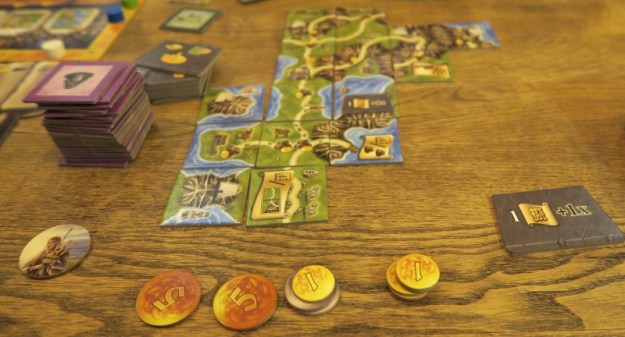
While the others discussed the options, Purple and Black joined Blue and Pine setting up the “Feature Game“.  This was the Druids expansion for an old favourite, the 2016 Kennerspiel des Jahres winner, Isle of Skye.  The base game is a tile laying game similar in nature to the popular gateway game, Carcassonne, but with an auction of tiles and objectives that give points. The auctions are extremely clever:  each player draws three tiles from a bag and privately decide how much two are worth, selecting one to be discarded.  Players use their own money to indicate the value and therefore the cost of the tiles.

Isle of Skye: From Chieftain to King
– Image by boardGOATS

After the values are revealed, each player then takes it in turns to buy one tile.  The clever part is that the money used to indicate the cost of each tile is reserved to pay for it until someone else buys it.  Any tiles that have not been bought after everyone has chosen and paid for one, must be paid for by their owner.  The reason this is clever is because of the effect it has on the amount of money that players have to spend.  For example, the first player in the round must make sure they have sufficient uncommitted funds if they want to be able to buy a tile.

Isle of Skye: From Chieftain to King
– Image by boardGOATS

On the other hand, the player at the end of the round has a different calculation to make:  if their tiles are priced to give good value they should sell at least one which will provide them with liquidity to buy other tiles.  However, being last in the round, their choice will be reduced, and if their tiles don’t sell, the fact the other tiles might be on the expensive side, could leave them unable to make a purchase.  It is not compulsory to buy a tile, but players that don’t have enough tiles are unlikely to score as well.  Thus valuing tiles is key—overvaluing their tiles is costly as nobody will buy them leaving their owner with a big bill and less money in the next round, while undervaluing them gives good tiles to an opponent and will leave their owner with less money and fewer tiles.

Isle of Skye: From Chieftain to King
– Image by boardGOATS

Once the tile auction is complete, players add the tiles to their own personal fiefdom.  At the end of the round, one or more of the objectives are scored.  Similar to Cartographers, there are four scoring objectives.  In the early rounds only one scores, with three scored in later rounds, but each one is scored the same number of times during the game.  Although this is an important source of points, it is not the only one as some tiles feature scrolls that score at the end of the game.  Players receive income at the start of each round, with players getting additional funds for each player that is in front of them, with the amount increasing as the game progresses.  As well as being a catch-up mechanism, this also importantly provides an additional channel for money to enter the game.

Isle of Skye: From Chieftain to King
– Image by boardGOATS

In addition to the auctions and the objectives, there are other ways Isle of Skye differs from Carcassonne.  There are no meeples, and players have their own maps instead of sharing one central one.  Even the tile placement rules are slightly different as terrain must match, but not roads (though it is generally useful if they do as it can increase players’ income).  Thus, although there is a superficial similarity with Carcassonne, Isle of Skye is distinctly more complex.  Unlike the first, Journeyman expansion (which we have not yet played), the second, Druids expansion doesn’t really increase the complexity.  It adds more strategy options though, with more scoring opportunities and additional ways to spend money (should you have any spare).

Isle of Skye: Druids
– Image by boardGOATS

The Druids expansion adds a second part to the auction phase where players can choose to buy one from the five displayed on the dolmen board.  These are more powerful as they generally include scoring opportunities or special powers, but are correspondingly more expensive.  The end of round scoring tiles gave A) two points for each tile in players’ largest completed lake; B) a point for each cow or sheep on on or adjacent to a tile with a farm; C) two points for each set of four tiles arranged in a square, and D) one point for each row and column containing a Broch.

Isle of Skye: From Chieftain to King
– Image by boardGOATS

Pine took the first player token and Purple’s first draw gave her one of the promo tiles from the Themenplättchen mini expansion which was immediately thrown back for causing too much brain pain to work out what it did.  Pine and Blue took an early lead at the end of the first round scoring for their lakes, but it was only a handful of points and there was a long way to go.  Purple started building her long thin, rectangular kingdom prioritising income.  It wasn’t until the third round that the importance of this shape became apparent to everyone else however:  since tiles could be used to score multiple times for (C), this meant Purple picked up lots of points.

Isle of Skye: From Chieftain to King – Tunnelplättchen
– Image by boardGOATS

There was a bit of a debate about the Tunnelplättchen tiles from the two mini expansions.  Black checked on Board Game Geek and confirmed that tunnels going into the same mountain range connected together.  This helped Pine considerably, as otherwise he was in a bit of a mess.  Blue bought an exciting looking scroll tile that gave lots of points for enclosed pasture, but when Blue noticed that Black had it too, he commented that it was actually really difficult to enclose pasture, Blue took it as a challenge. It was shortly after this, about half way through the game that the group realised that they’d forgotten about the catch-up mechanism.

Isle of Skye: Druids
– Image by boardGOATS

From the third round, during the income phase at the start of the round, players get gold for every player that is ahead of them on the score track.  The amount of gold they get increases as the game progresses, so in the final round players get four gold for every player ahead of them—for the player at the back in the four player game, this comes to twelve gold, and for a player at the back until the start of the last round this comes to a total of thirty gold more than a player at the front.  Unfortunately, the group remembered this a couple of rounds too late, so everyone who wasn’t in the lead (i.e. everyone but Blue) received a nice little windfall that they could use to increase the price of their tiles or spend on the Dolman.

Isle of Skye: From Chieftain to King
– Image by boardGOATS

Black was making good use of the Dolman board and had some really juicy scoring scrolls in his tidy little kingdom and looked the one to beat, especially as he had plenty of cash too (helped by his windfall).  Pine, on the other hand was struggling to find anything useful and was resorting to using the alternative Dolman option: draw two tiles from the bag and keep one.  Unfortunately despite trying attempts, he wasn’t getting anything he wanted.  It was at the end of round five that things suddenly changed and Purple, hitherto drifting about in third and and fourth leapt forward, landing just one point behind Blue.

Isle of Skye: Druids
– Image by boardGOATS

Blue, having led throughout, knew she didn’t really have enough end-game points to challenge and was expecting Black to catch and overtake.  In the event, it was extremely tight at the front with Purple finishing with one hundred and two points, six more than Blue who just managed to hold on to second, two points ahead of Black.  All in all though, everyone liked what the Dolman board added to the game, as it gave people larger, more exciting kingdoms with something to spend money on (when they had it).

Isle of Skye: From Chieftain to King
– Image by boardGOATS

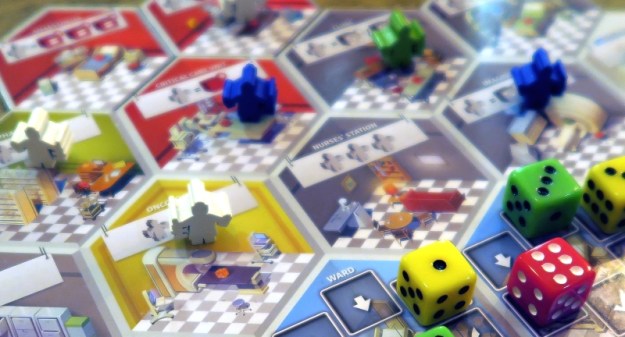
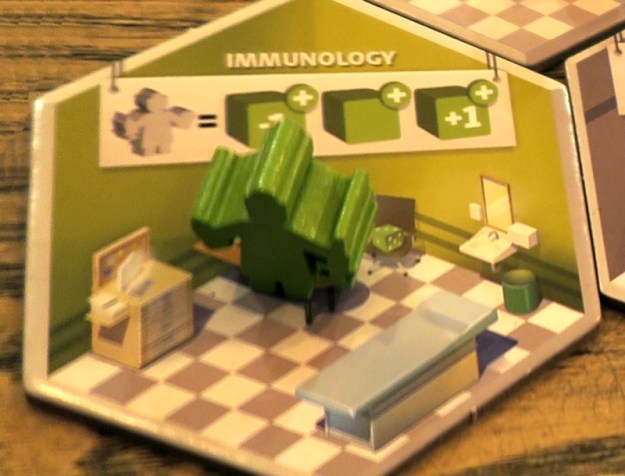
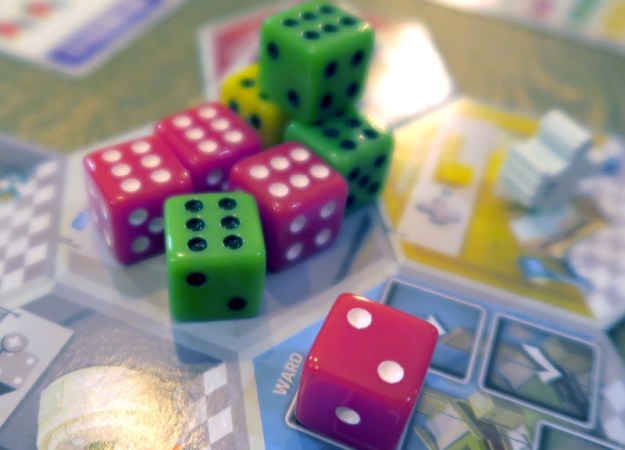
Meanwhile, the other group started by discussing what to play.  Imhotep was on the table, but Ivory spotted Dice Hospital in a bag and Green was happy to play that instead; as Lilac was familiar with it too she was happy with the switch, as was Teal, though he had not played it.   The explanation of the rules and game play took a little longer than the game itself would indicate.  The idea is that each play is the owner of a hospital and starts with an administrator which gives them a special power, three nurses, and three patients—dice drawn at random from a bag.  The colour of the dice represents their illness and the number on the face shown its severity:  six indicates they are healthy but if the number falls below one, the patient dies.

Dice Hospital
– Image by boardGOATS

At the start of each round, players take an ambulance with new patients – if there aren’t enough beds available, another patient must make space by moving to the morgue (where each body-bag is a negative point at the end of the game).  Players can then augment their own hospital by adding specialist medics and wards and finally, their medics can visit each patient and improve their health.  Different specialisms can only “heal” certain colours or numbers. Any patients not treated are “neglected” and their health deteriorates with any that fall below one moving to the morgue. In contrast, anyone who exceeded six is discharged at the end of the round, but the more that are discharged at the same time, the more points the player scores.

Dice Hospital
– Image by boardGOATS

As the game progresses, players continue to improve their hospital getting more specialists and acquiring blood bags to help treat their patients.  The game ends after eight rounds and the player with the most points is the winner.  When the group finally got underway it became clearer how to play and what actions were available.  The key to the game is knowing which specialists to get and which ambulance of patients to take – admitting healthier patients gives less choice of ward/doctor (and potentially get something which is of little use) , while curing the sickest patients is more difficult, but gives first dibs specialisms.

Dice Hospital
– Image by boardGOATS

The administrators dealt out at the start of the game can provide players with a direction for their strategy.  Teal and Green had ones that meant that they could leave one patient of a specific colour untreated per round without them declining. Teal was able to use his a few times, but Green found that he just could never seem to get enough red dice to make use of it.  Lilac was trying to get at least two red patients healed each turn as her administrator privilege gave her an extra point if she did; she managed it a few times (which was where the red dice kept going).  Ivory’s administrator would give him an extra point if he healed at least one patient of each colour which he managed to good effect several times.

Dice Hospital
– Image by boardGOATS

After a couple of rounds Green commented that he had found it was best to keep a balance of Ward’s and medics otherwise there either wasn’t enough staff to treat the number of patients, or there weren’t enough usable wards to send the your doctors to. Teal and Lilac were quite good at regularly healing patients, but at one at a time they were scoring only one point per round.  Each subsequent patient healed in a round scored an extra two points each With more than six worth three points extra.  Thus holding on to heal more per round, meant more points.  There was also a five point bonus for completely clearing the hospital, but nobody got close to that, except Ivory in the final round.

Dice Hospital
– Image by boardGOATS

Throughout the game, Teal and Lilac kept healing a steady trickle of patients. Green however was having all sorts of trouble:  he found himself with ward’s he couldn’t use, his hospital filing up rapidly, and started losing patients (minus two points)—his was definitely a Failing Trust!  Ivory, however, was romping away, keeping his hospital from getting over crowded and kept amassing points.  Although his start had been slow start and he didn’t score anything until the third round, he made up for it after that.  In the end Ivory proved to have run the best hospital trust, while Teal’s slow steady trickle worked out quite well as his hospital was the second best with Lilac was a close third.

Dice Hospital
– Image by boardGOATS

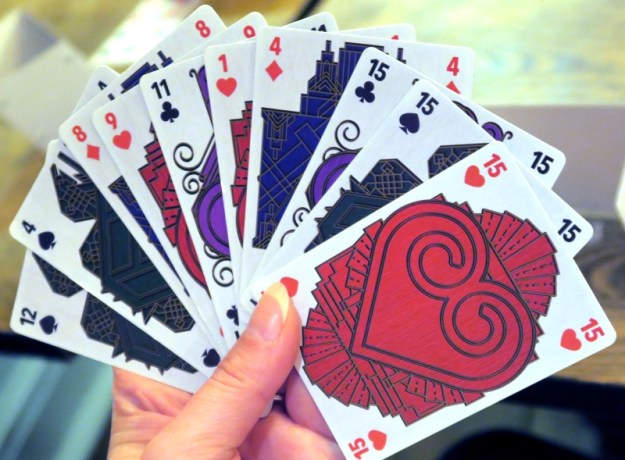
Ivory left for home, but Isle of Skye had not yet finished and, although there wasn’t time for Imhotep, there was still time for something quick.  So Teal introduced Green and Lilac to a game they’d not played before, called Diamonds.  This is a trick-taking game played with normal suited cards from one to fifteen where players are trying to win diamonds—not the suit, but the gemstones.  When players cannot follow suit they get to do a “Suit Action” based on what suit they actually play.  For example, playing a Diamond card gives one diamond gem from the supply placed into the player’s safe while playing a Heart gives one diamond from the supply to the pile in front of their safe.

Diamonds
– Image by boardGOATS

Similarly, playing a Spade allows the player to move one diamond from outside their safe into it, and on playing a Club the player steals one diamond from outside someone else’s safe and places it in front of their own. Additionally, at the end of the round of ten tricks, the player that won the most tricks in each suit gets to do that Suit Action one more time (in the case of a tie no-one does it).  With the game taking six rounds there is plenty of chances to gain diamonds.  It did not take long for the group to understand the game, although the for first few tricks the group were a little uncertain.

Diamonds
– Image by boardGOATS

Several times players found that although they had won, they couldn’t do anything as either the person they were supposed to steal from did not have any diamonds or, when they could move one diamond into their safe (from in front of it), they didn’t have any.  Plus, several times they found they had to steal from themselves so nothing happened.  The group also found that when they started to win tricks, they got control and were able to lead in suits the others didn’t have and so kept winning.  It proved to be a clever little game, but the group felt it probably plays much better with more people, so we might try it with a larger part of the group in future.  At the end of the game, however, Teal was the master diamond merchant with Green the apprentice.

Diamonds
– Image by boardGOATS

Learning Outcome:  A career in diamond trading is not for everyone.

Boardgames in the News: Asmodee Changes Hands Again and Lots of Money is Made

Asmodee started life as a small French company best known for clever little Snap-variant card game, Dobble.  However, a series of mergers, buyouts and distribution agreements has left the company with a stake in some of the best known modern games including Ticket to Ride, Settlers of Catan, Pandemic and Carcassone.  As a result, the company is arguably the most dominant force in the world of modern board games.

Dobble
– Image adapted by boardGOATS

Paris-based private equity house Eurazeo had owned Asmodee for four years, when three and a half years ago, they sold it to another private equity firm, PAI Partners.  At the time, Asmodee, had an enterprise value of €1.2 billion, making €565 million for Eurazeo and its investors and giving a return of about 35%.  Over the last year, Asmodee acquired Plan B Games, the US retailer Minature Market and, following its success during the global pandemic, the games online platform Board Game Arena.  This activity was building towards another potential sale and last autumn, with PAI Partners making preparations to sell Asmodee for a reported €2 billion.

PAI Partners
– Image from paipartners.com

Then, just before Christmas a deal was announced with Sweden’s Embracer Group AB for €2.75 billion.  Embracer Group AB were formerly Nordic Games Licensing AB and THQ Nordic AB and are a Swedish video game company based in Karlstad.  Under this deal, Asmodee would continue to operate much as before, as an operating group within the Embracer Group.  No reorganization is expected and Asmodee’s CEO Stéphane Carville together with his management team would continue in their current roles.

Embracer Group AB
– Image from embracer.com

Boardgames in the News: Why Play is Important

The importance of “play” is well known to boardgamers, but it has now become the subject of a recent report from the BBC.  The article discusses how play is usually associated with children and is important in their development.  Prof. Sam Wass, a child psychologist and neuroscientist at the University of East London, explains that there are more links between different neurons in a young child’s brain than there are in an adult one, and as a result their brains are “messier”.

Tier auf Tier
– Image from reviewgeek.com

Prof. Wass explains that play helps tidy children tidy up their brains by making connections between which haven’t necessarily been made before.  Through the process of repetition, this helps to strengthen the connections between these different brain areas.  Further, he argues that as well as the neurological benefits of play, it helps young children to learn about the world around them by experimenting. While the importance of play is understood for children, the article asks whether there is a specific age at which we feel it is odd for people to spend their free time playing a game.

Backgammon
– Image from BGG contributor unicoherent

Play is known to help teenagers define themselves as people and to discover a sense of identity, but also has benefits for older people.  The report gives the example of people from different religious and political backgrounds playing Backgammon together in Jerusalem and suggests that a more playful workplace can lead to “reduced absenteeism, greater commitment, more creativity, better team building and general happiness.”

Bingo
– Image by BGG contributor RobertaTaylor

Further, Dr. Drew Altschul, a psychologist (University of Edinburgh), suggests playing games can help preserve brain function with people who play games later in life showing a less steep decline overall in their thinking skills, and effect not seen for those who spend their spare time reading and writing or playing music.  Dr. Carrie Ryan (UCL), suggests it’s not only intellectual play that is of benefit to older people, even playing simple games like Bingo can help those with severe physical and cognitive deterioration like dementia who are enlivened by the experience.

Carcassonne
– Image by boardGOATS

In conclusion, the article confirms what most board gamers already know—games really are good for you, and we should all spend more time playing them.