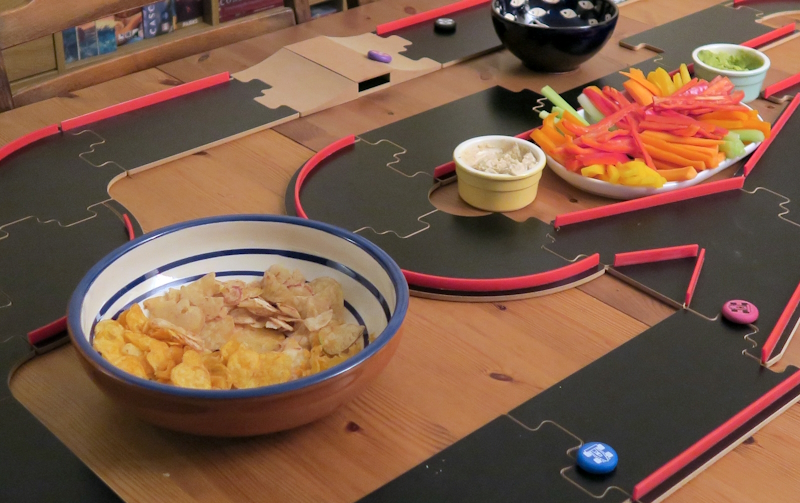
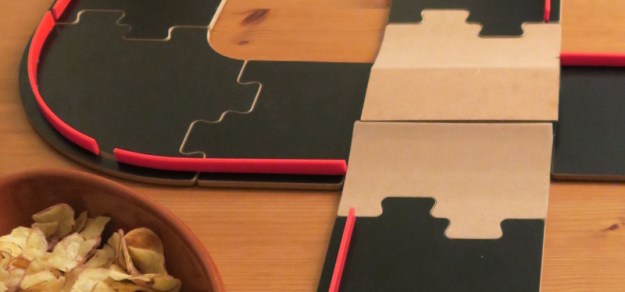
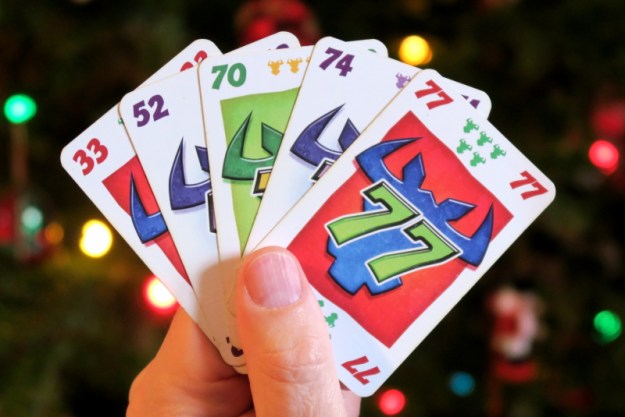
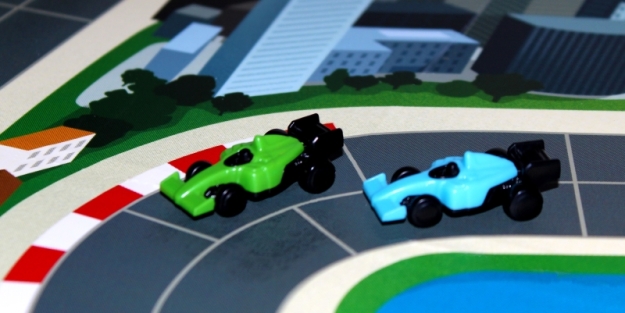
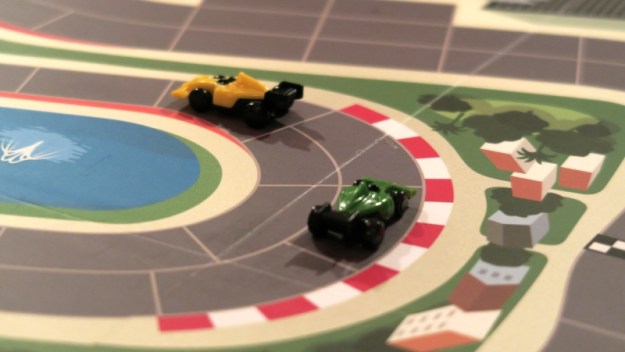
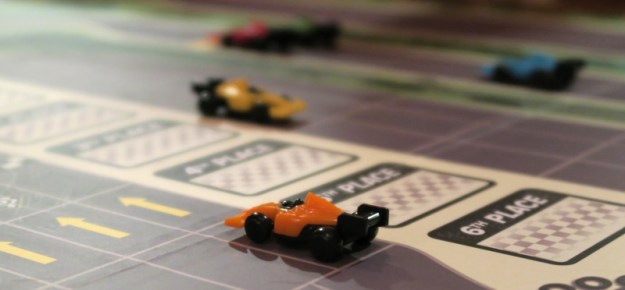
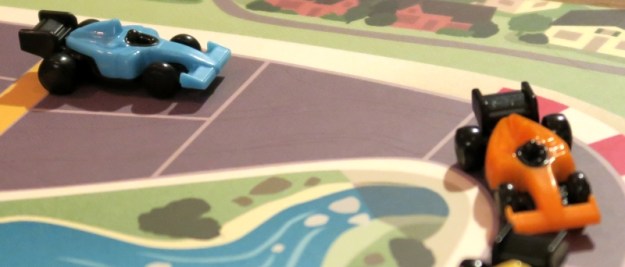
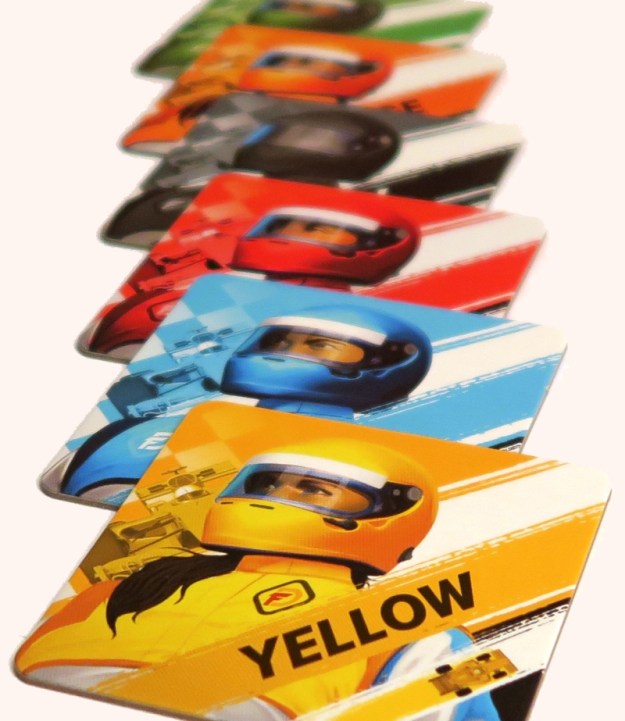
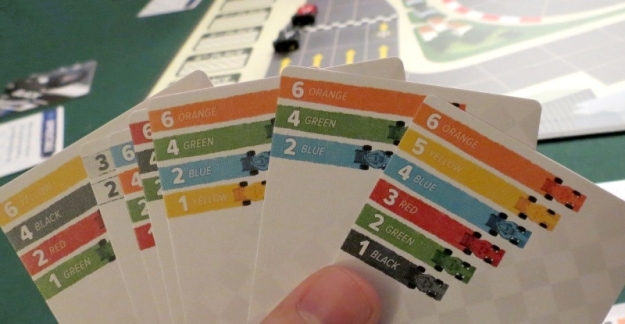
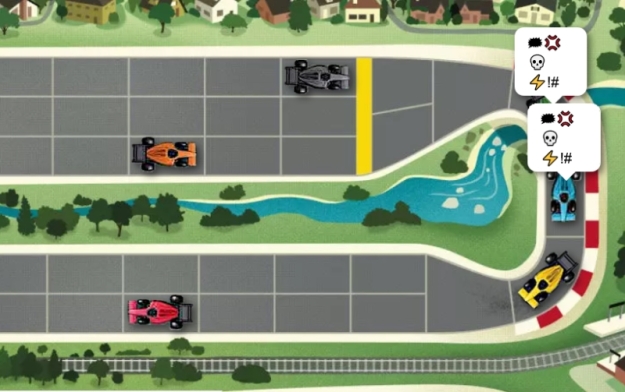
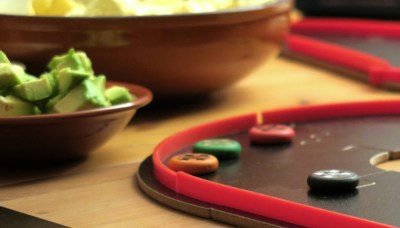
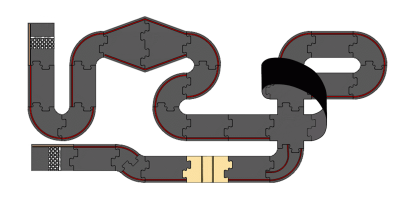
Blue and Pink were still eating as everyone else rolled up. But as they did, like last time, there was an unusual amount of interest in the “Feature Game“, which, in a change to previous plans, was to be Heat: Pedal to the Metal. This is a car racing game, in a similar vein to other games popular within the group like Flamme Rouge, Snow Tails, and Downforce. Like Flamme Rouge and Snow Tails, as well as a racing game, Heat is also a hand management game. The idea is that players simultaneously choose cards to play and then these are activated from the front of the pack (much like PitchCar).
 |
| – Image by boardGOATS |
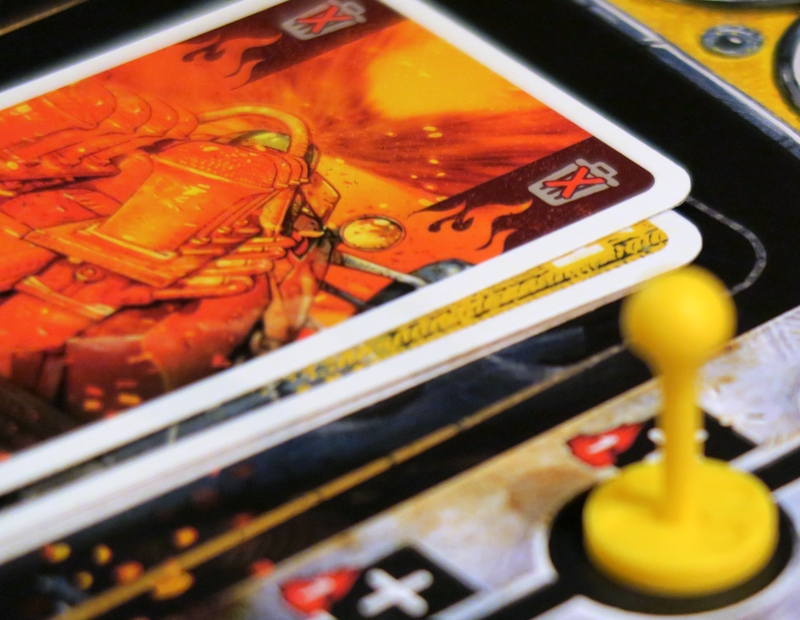
Players have a hand of seven cards drawn from their personal deck. During the game, certain actions that are bad for their engine cause it to heat up meaning they pick up cards that block their hand. Initially, Heat cards go into players discard pile, simulating the delayed effect engine damage can have, blocking their hand later in the game as the deck is recycled. There are ways to cool the engine down, but these Heat cards cannot be discarded or played in the normal way. What makes Heat slightly different to some of the other hand-management-racing games is that there is formally simultaneous play to choose cards and then players take it in turns to activate their cards and take a series of optional mini-actions.
 |
| – Image by boardGOATS |
Players start by simultaneously adjusting their gear, staying put or shifting up or down one without penalty, or shifting two and picking up a Heat card. The gear dictates how many cards a player must play – second gear means they have to play two cards for example. Players then take it in turns to reveal their cards and move their car. There are then five “situational” options: Adrenaline, React, Slipstream, Corner Check, and Discard, before the player replenishes their hand back to seven cards. Adrenaline is a catch-up mechanism, where the player at the back can move one extra Space while adding one to their Speed value and/or gain one extra “Cool down”.
 |
| – Image by boardGOATS |
“Cool down” is an important aspect of the game because it allows players to remove a Heat card from their hand and return it to their engine deck. In React, players activate any additional symbols on the cards they have played or from the gear they are currently in or from the Adrenaline. These include picking up cards because of Stress—players start the game with three Stress cards in the deck which represent lapses of concentration. When a player plays these, they then have to draw cards from their deck to add an essentially random amount to their speed. Of course it is not random, and a player who has an idea of what cards are still in their deck will be able to mitigate this.
 |
| – Image by boardGOATS |
Further, Stress cards can also be used to postpone the effects of Heat, as any non-movement cards go straight into the discard pile. Players can also control their engine heat by spending a period of time in a low gear by “Cooling down” their and removing Heat cards from their hand (three for first gear, two for second). In contrast, players that have Heat cards available, may add an extra one to their discard pile to boost their speed by drawing an extra card as for Stress cards. Once all these have been activated, players who end their movement along-side or immediately behind another car can Slipstream, that is move two spaces forward (this does not add to speed, it simply means the car moves further because it is moving more efficiently).
 |
| – Image by boardGOATS |
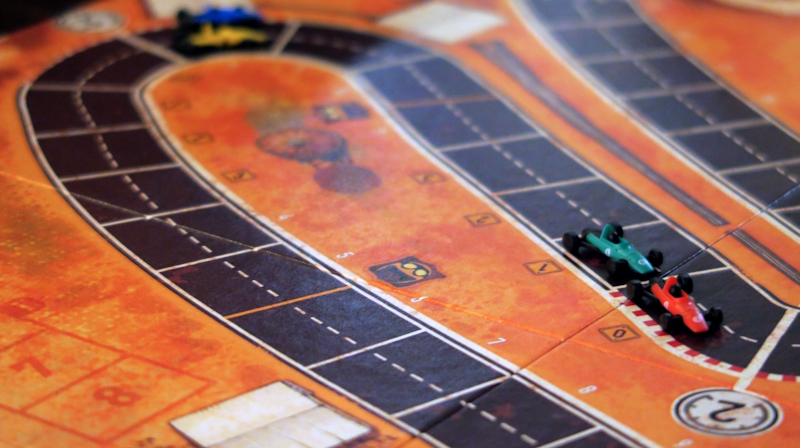
If the player has crossed a Speed restriction line typically at a corner, they have to evaluate their Speed by summing the value of their cards and adding one for any Adrenaline bonus if they used it. If this is more than the limit, players add the difference to their discard pile in Heat Cards. Players that do not have enough Heat to pay for their excess Speed, pay all the Heat they have and then immediately spin out—move their car back to the last available space before the Speed limit line, take one or two extra Stress cards and change down to first gear. Once all this is done, players can discard any cards they want that are not Stress or Heat cards before replenishing their hand, shuffling their discard pile if necessary. The first player to cross the finish line triggers the end of the game and the player that travels the furthest is the winner.
 |
| – Image by boardGOATS |
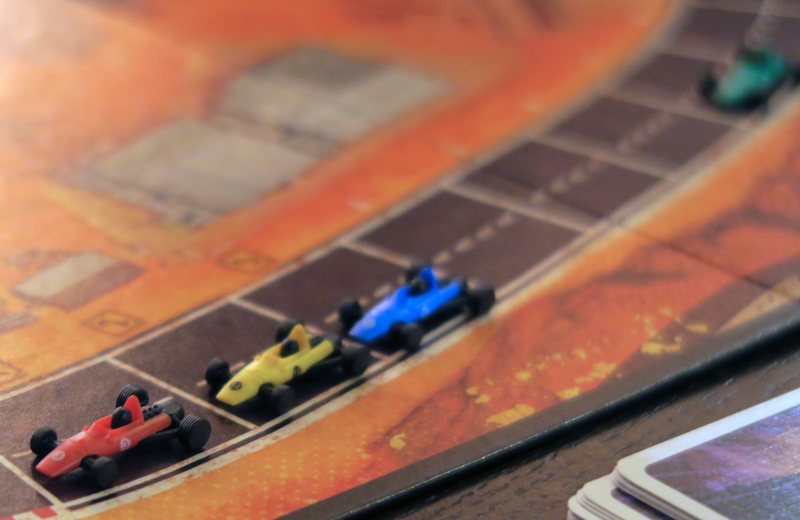
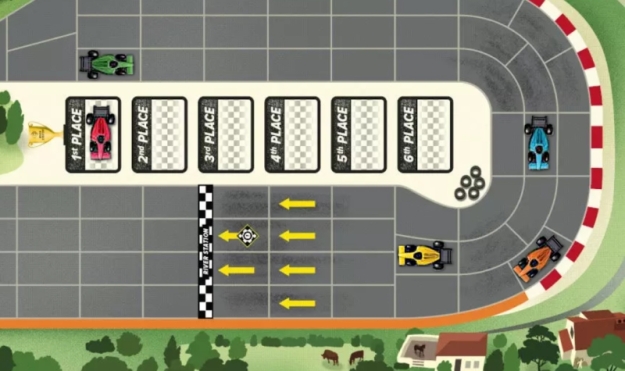
Although Blue and Ivory were keen to play, numbers meant they missed out and instead, Jade, led Teal, Pink and Lime. A slight rules malfunction where the group were trying to play all the steps simultaneously meant the safety car did a lap before a restart, then they were off in earnest. The group were playing on the USA track, which is generally recommended for a first play and is raced over two laps. One thing that seems to be true for all race games is that once someone has got in front, it is very hard to haul them back, making it critical to get a good fast start. This time, the good fast start was had by Jade and before long he had built that up and had gone one corner ahead, everyone else felt they were playing for placings and trying to work out how best to approach the corners.
 |
| – Image by boardGOATS |
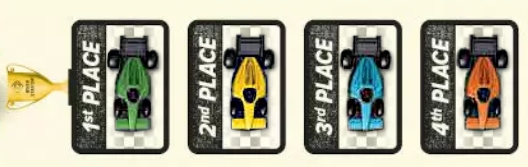
Instead of playing the end-game as written, the group decided to play it until everyone had crossed the line, so the game continued for some time after Jade had claimed victory. Lime crossed the line second with Pink in hot pursuit, so much so that although Pink crossed the line in third, he finished his turn ahead of Lime and therefore was awarded runner-up (or first loser) status. Teal just crossed the line, claiming a sympathy vote ensuring that everyone finished the race. It had been a bit of a trial and Blue was still keen to give it a go, so Jade, who had been looking to pass it on, sold it to Blue on the spot, which means it will likely get a few more tries over the coming year.
 |
| – Image by boardGOATS |
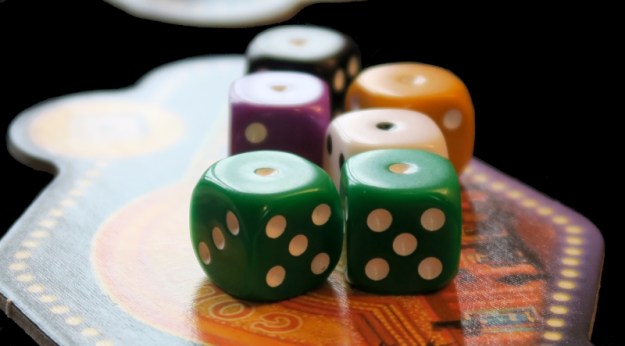
Blue and Ivory meanwhile, although keen to play Heat, had also been tempted by Roll for the Galaxy. So, when Byzantium had commented that he hadn’t understood his first and only play, but had enjoyed it, the decision was made. Roll for the galaxy is a dice game based on the card game Race for the Galaxy, which is itself a sort of space themed, card game version of Puerto Rico. The thing all these games have in common is “Role (or Action) Selection”—the games have five or six phases or Roles and each player chooses one which will happen in the round. Thus some things happen, and others do not. A large part of these games is correctly gambling on others picking certain Roles or Actions and making them happen, so they can be piggy-backed.
 |
| – Image by boardGOATS |
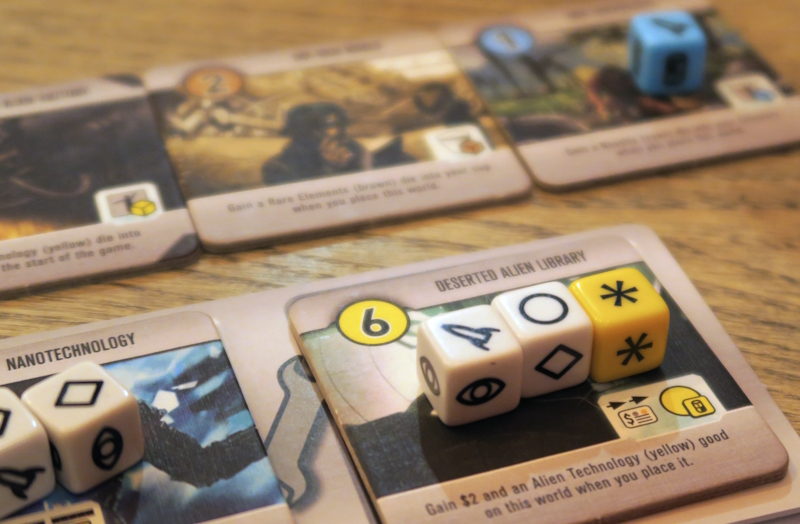
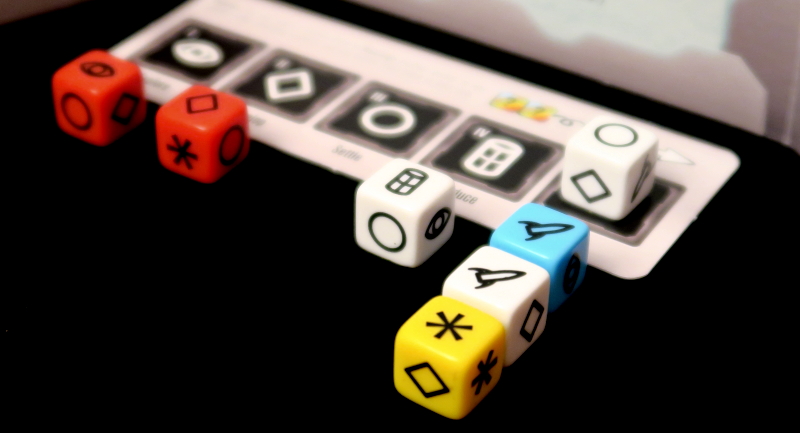
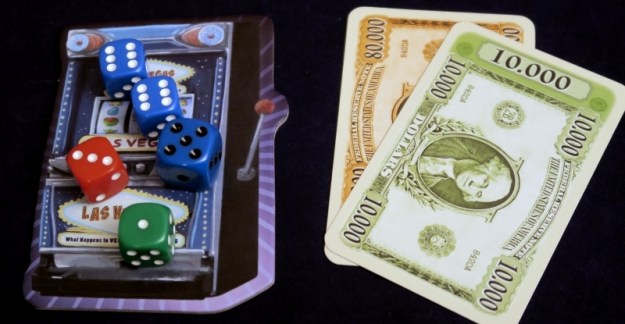
The smaller the number of players, the more critical this can be. So with just three players in Roll for the Galaxy, at least two will not be happening, possibly more. The Actions are Explore (acquire world tiles); Develop (progress on building Development worlds); Settle (progress on building Production worlds); Produce (use Production Worlds to produce Goods), and Ship (sell Goods for money, or consume them for victory points). In this game, the actions are all carried out using dice which are rolled in secret and placed behind the players screen to choose where those dice will get used. This placement depends on the face shown, though any one die can be used to choose which Action will happen.
 |
| – Image by boardGOATS |
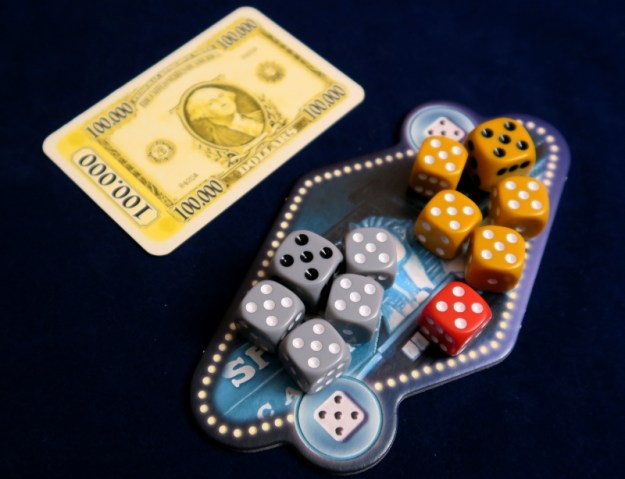
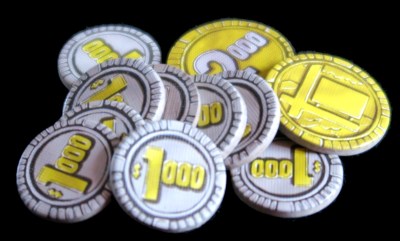
The dice are then moved to the Development or Settlement piles of tiles in their respective phases to progress building those worlds, or placed on Production worlds as goods. Alternatively, they can be spent to pay for Exploring or Shipping in which case, they (along with any dice from any completed building projects or shipped goods) are placed back in their Citizenry. Dice can be purchased into the player’s cup at a rate of one dollar each, so it is important for players to ensure their finances are healthy or their game will rapidly stagnate. The game ends when, either someone has built their twelfth World, or the the pool of victory point chips has been exhausted.
 |
| – Image by boardGOATS |
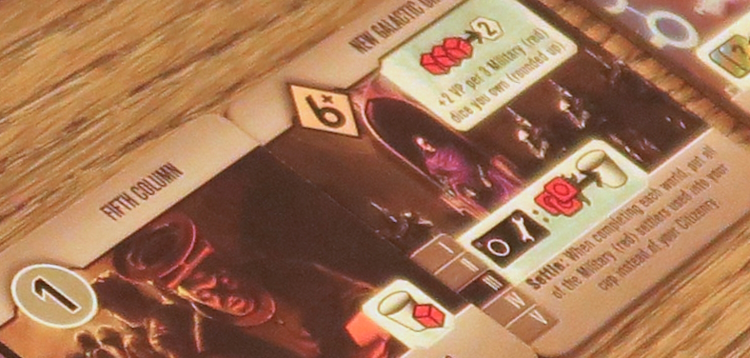
The game was slow to get going at the start, but then Ivory raced to an early lead getting a nice array of Worlds in his tableau leaving Blue and Byzantium trailing in his wake. But then, instead of finishing the game by building his final World, he appeared to pull up. This gave Blue and Byzantium the illusion of a chance, but was of course because he had a plan. Ivory had the Galactic Reserves Development World which gave an extra victory point for every Goods item on a World at the end of the game while also allowing each Production World to hold an extra Goods item.
 |
| – Image by boardGOATS |
So, the couple of extra rounds was to enable him to fill his Production Worlds and in the end, the game was brought to a close by Byzantium building his twelfth planet, although the victory point chips were also depleted by the end of that round. Blue had taken a sizeable twenty-four of those victory points through trading goods, but hadn’t been able to build enough. As a result, her planets were worth only eighteen points, barely twice those of Ivory’s and Byzantium’s thirty. Byzantium had five victory point chips and a couple of points from his New Galactic Order, but Ivory was some distance in front, thanks to his thirteen points for his Galactic Reserves and Galactic Bankers Developments together with his eight victory point chips.
 |
| – Image by boardGOATS |
There was time to play something else, but rather than go through rules, as Roll for the Galaxy was already out, the trio decided to give it another go. This time, with an element of time pressure, it was arguable that some of the decisions made weren’t as sharp and the scores were all lower the second time, though that might have been partly because there were notably fewer rounds. Blue kept dipping into the bag to try to get Rare Element (brown) Worlds to go with her Mining League, but failed repeatedly and eventually gave up. Ivory triggered the end game with his twelfth World and this time it was Byzantium who struggled to build enough.
 |
| – Image by boardGOATS |
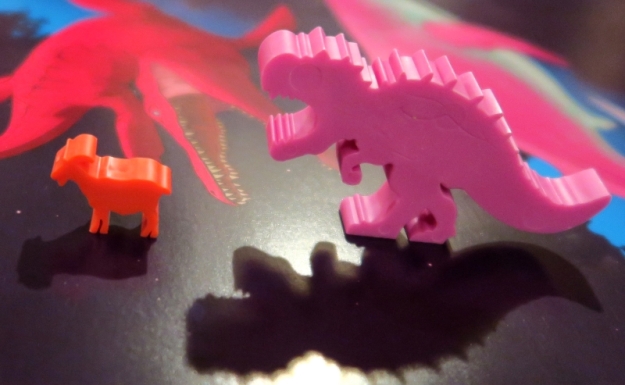
The scores were a bit closer on the second attempt, though the end result was still much the same, with Ivory again taking victory, though with half the winning margin. By this time, the other games had also finished. The first of these was Forests of Pangaia, in which Mint was joined by Pine and Plum. This is a truly beautiful, tactile game, where players are trying to meet objectives to score Life Points; the player with the most Life Points at the end of the game is the winner. The game has elements of set collection and area control and is played on a central map made of terrain hexagons. Players take turns to perform three phases: Grow Seeds, take a Spirit Action, and finally add Treetops. Once Seeds have grown and been turned into Trees, players carry out one of three possible Spirit actions.
 |
| – Image by boardGOATS |
These are: Plant (moving their Spirit Pawn to a Lake space and planting seeds in adjacent spaces); Gather (moving their Spirit Pawn back to their player board and receiving a resource), and Prey (moving their Spirit Pawn back to their player board and playing their Ritual Card). There are fourteen Rituals the Spirits can perform to collect Gaia’s Life Energy. Once the Ritual card has been scored all the player’s Trees that were involved in the Ritual then partially or fully Decay (depending on the Ritual), either losing a level or rotting back to nothing and leaving a Seed. The player then discards their Ritual card and draws a new one. The game ends when the last Ritual card is taken by any player.
 |
| – Image by boardGOATS |
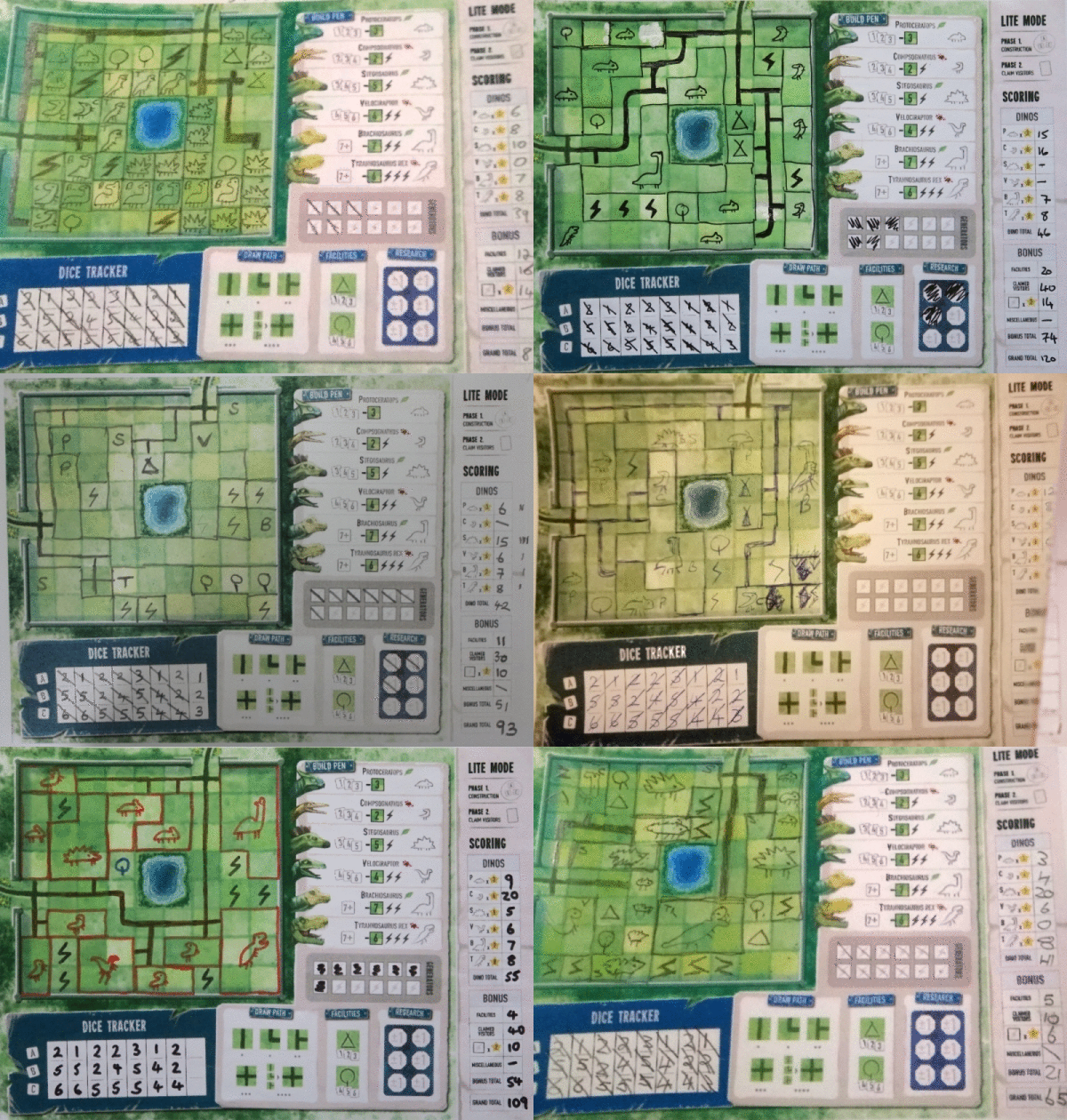
Plum went first and spent most of the game collecting Sun tokens. In contrast, Pine collected lots of Wind tokens inspiring lots of jokes about using wind to spread his seed. The winner, however, was Mint with a nine point Trail Ritual due to excessive seed spreading giving her a total of twenty-eight points. Pine just pipped Plum for second place by a single point. It had been a really enjoyable game, however, made all the better by the gorgeous pieces. Meanwhile, on the other end of the same, albeit long table, Black, Purple and Sapphire played a game of last year’s winner of the Golden GOAT Award, Stamp Swap.
 |
| – Image by boardGOATS |
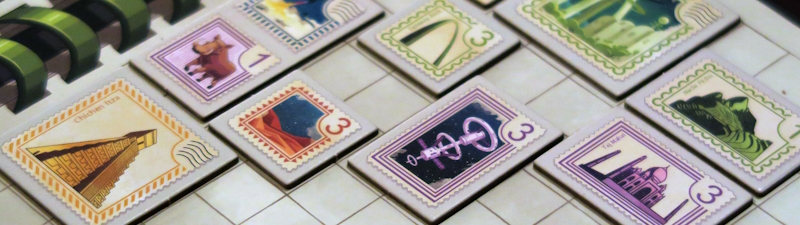
This is a really smooth tile placement centred around stamp collecting. There is a lot of simultaneous play, which is nice because it minimises down time. First, players take it in turns to choose items from the central Pool, then simultaneously divide them into two piles of offerings. The player with the first player token, chooses and takes one of the piles offered by their opponents. The opponent keeps their other pile and then chooses a pile from one of their opponents and so on. Once everyone has two piles, players arrange the Stamps in their Album and then choose which of the four available end of round cards to score this time.
 |
| – Image by boardGOATS |
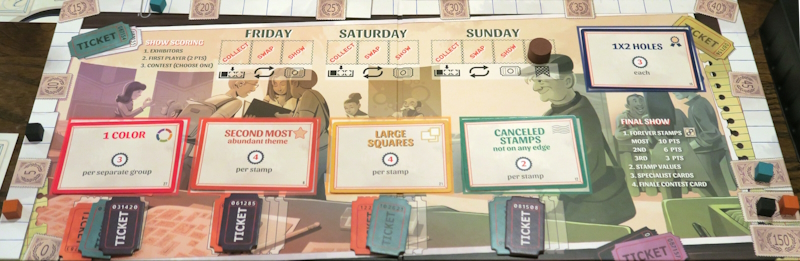
After three rounds, players score the end of game objective card and the player with the most points is the winner. One of the clever parts about this game is how much difference the objective cards make to the way players arrange their Stamps. The end-game scoring gave three points for each enclosed gap two spaces in size (i.e. a one-by-two hole). More points were available during the game for cancelled stamps not on the edge of the page; for large square stamps; for each stamp in a player’s second most abundant theme, and for groups of a chosen colour.
 |
| – Image by boardGOATS |
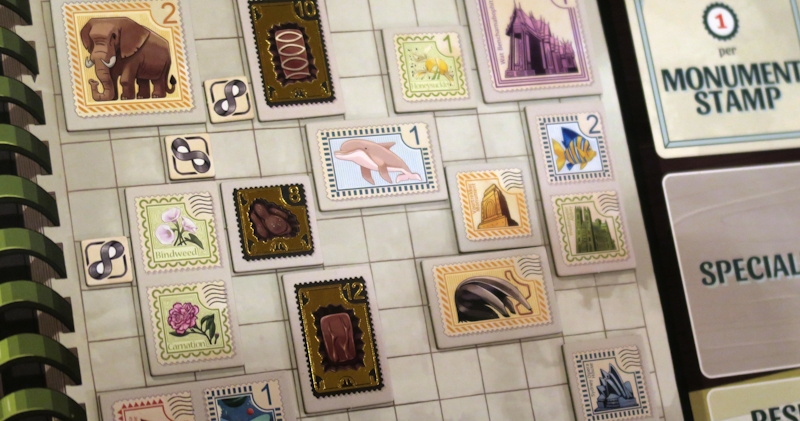
This time the game was very close. Purple (specialising in Flowers) struggled to get the stamps she needed and Sapphire (specialising Space stamps) kept getting confused which way the turn went. It didn’t seem to inconvenience him too much however as he and Black (Monuments) fought it out for first and second place. Black picked up a lot of his points for Special Stamps—just three accounted for a quarter of his points, which contributed to his total of one hundred and seven points, just four more than Sapphire.
 |
| – Image by boardGOATS |
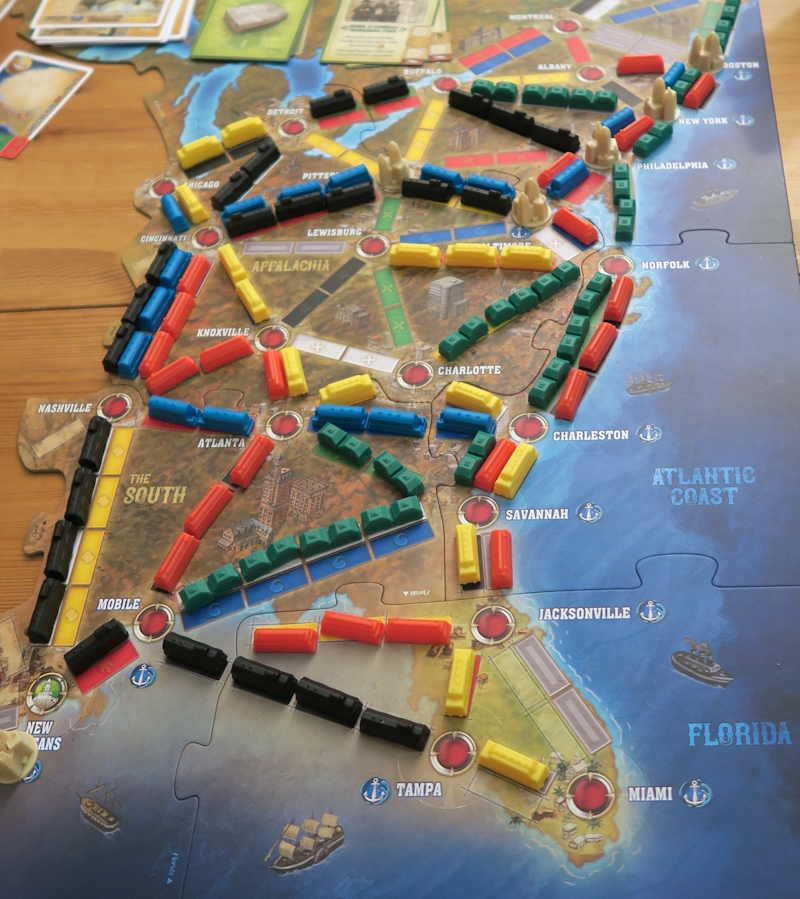
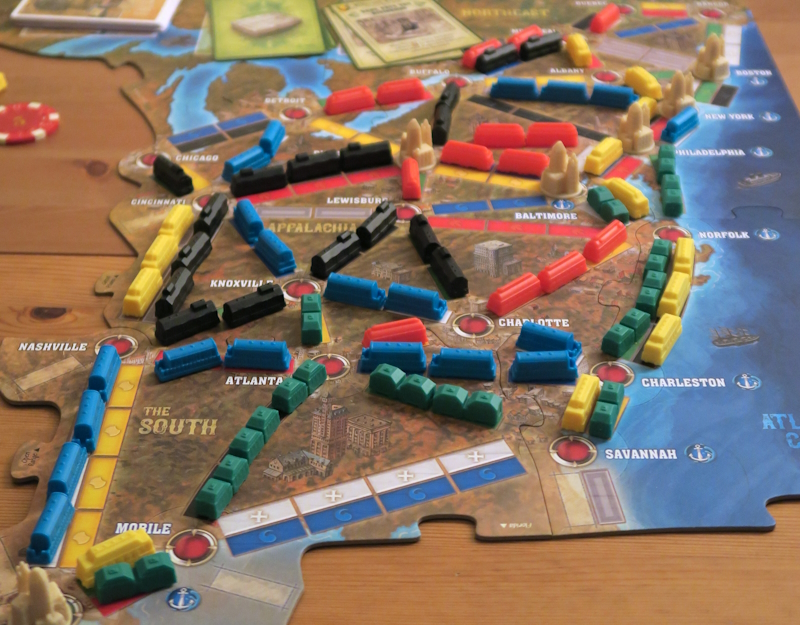
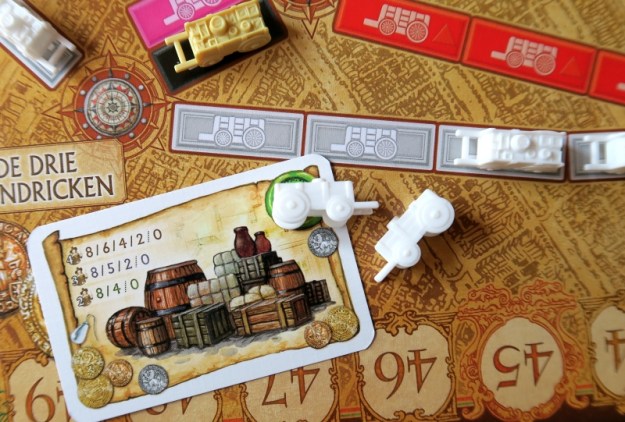
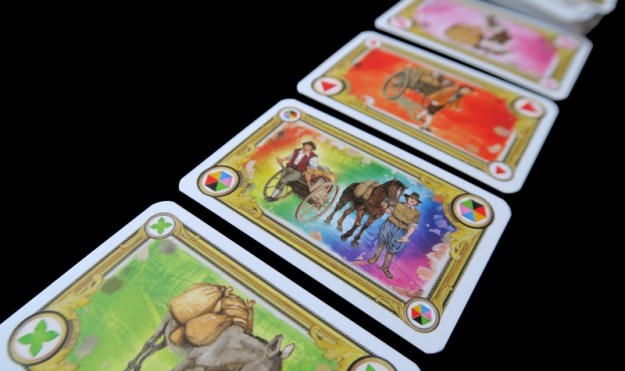
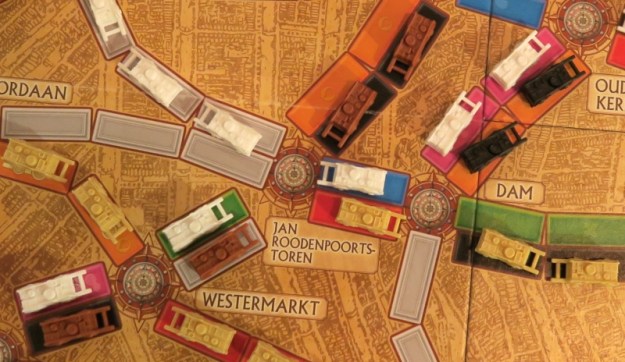
While everyone else was finishing up, there was some discussion about the continuation of the Ticket to Ride Legacy campaign that Blue, Pink, Black, Purple and Pine embarked on at New Year. The campaign is played over twelve rounds and the group had managed the first two games on the first outing with the next two more recently on Saturday evening. Spoiler alert—hover HERE to see details. The winner of the third round was Black, very closely chased by Pink with Blue taking third. After a break for tea (lamb and vegetable tagines with millet), the group began their fourth game. Spoiler alert—hover HERE to see details.
 |
| – Image by boardGOATS |
This was much less close than the third game. The winner was Pine, with Black six dollars behind and Pink a further fourteen points behind him, in third. Spoiler alert—hover HERE to see details. While chatting with the others, out of curiosity, Pine went through The Book and totaled up the scores for the first four rounds, which gave Black a lead of some twenty dollars. Something the rest of the group need to give some thought to next time, before he gets an unassailable advantage although there is a suspicion that as the campaign progresses, the games get longer and more points will be available in each round giving players a chance to catch up. We shall see.
 |
| – Image by boardGOATS |
Learning Outcome: However you roll, when you race you need a fast start.































 boardGOATS