Author Archives: nannyGOAT

21st January 2020

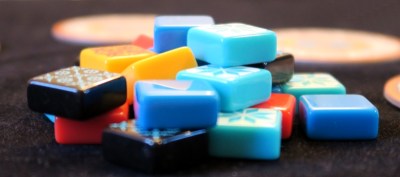
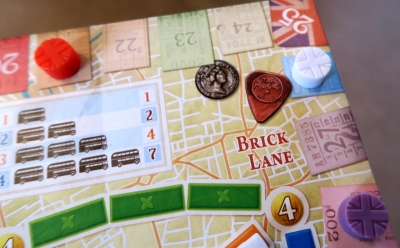
Over the last three years we’ve spent a lot of Tuesday evenings discussing Brexit and following events in the House of Commons as they occured.  Since this was going to be the last games night with the UK in the EU, and as a predominantly pro-EU group, we wanted to mark the occasion and show our support for our European friends and all those who have campaigned against Brexit so valiantly.  For this reason, we decided to make the “Feature Game” “European Ticket to Ride“, in other words, European editions of one of our favourite games, i.e. the Italy, France, Germany, Poland, Netherlands and of course, Europe games/expansions.  Unfortunately, Blue (and therefore most of the maps) was late arriving, and then, nobody could decide what they wanted to play; the only one who expressed any strong opinion was Lime who wanted to play the France map.
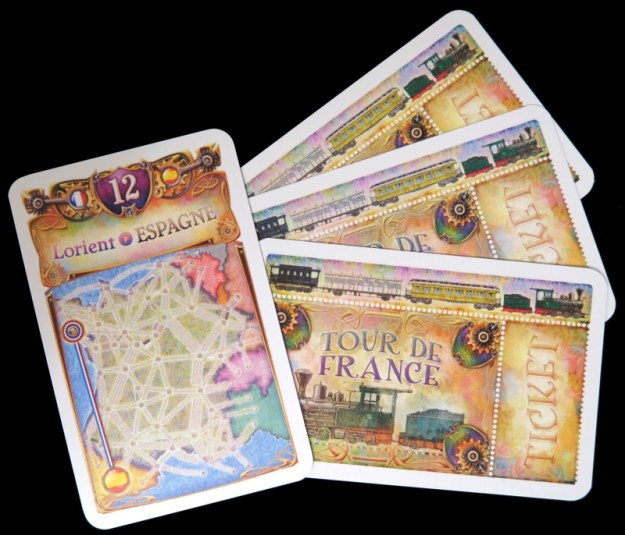
Ticket to Ride Map Collection: Volume 6 – France & Old West
– Image by boardGOATS

With nine players, three groups of three looked good, but the debate as to who would play what rivaled the Brexit negotiations, not helped by the number of people who were enticed by the Japan map on the reverse of the Italy map.  In the end, Ivory and Green took themselves off to play the new Poland map, and, after a lot of discussion, Lime, the only one who had a strong opinion ended up forgoing his choice of France and joined the Poles to even up the numbers.  With Black, Purple and Pine starting on France, that just left Blue, Burgundy and Mulberry to decide, and eventually they decided to play the Italy map using the Germany base game components.

Ticket to Ride: Germany
– Image by boardGOATS

Ticket to Ride is a very well-known, well-loved game that has now become something of a “gateway game”, that is, a game that starts people unfamiliar with modern boardgames along the slippery slope.  The game is popular with casual gamers because it is simple to play, with few options and a little bit of luck, but not too much.  The game is played on a map with cities connected by train routes each made up of anything from one to nine spaces (depending on the map).  On their turn, the active player can do one of a small handful of things:  firstly, they can take train cards from the market or use the train cards to place plastic trains on the map and score points.  To place trains on the map, players spend coloured cards to match the route they are claiming.  As well as coloured train cards, there are also multi-coloured locomotive cards which are wild; a face up Locomotive can only be drawn as the first card and ends the turn, making them more expensive as well as useful.
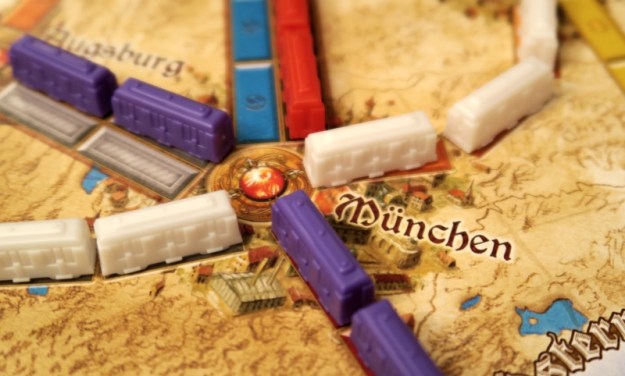
Ticket to Ride: Germany
– Image by boardGOATS

Most cities have only a single route between them, but some are double or even triple, though these can only be used with higher player counts.  Instead of taking train cards or placing trains on the map, players can also draw tickets.  These are a sort of personal objective that give players points for connecting two cities—the further apart, the more points the ticket is worth, but the larger the risk, as failure gives negative points.  Players start the game with a handful of these and can choose which ones to keep.  They can also draw more during the game, keeping some and discarding others, but the specific conditions depend on the map used.
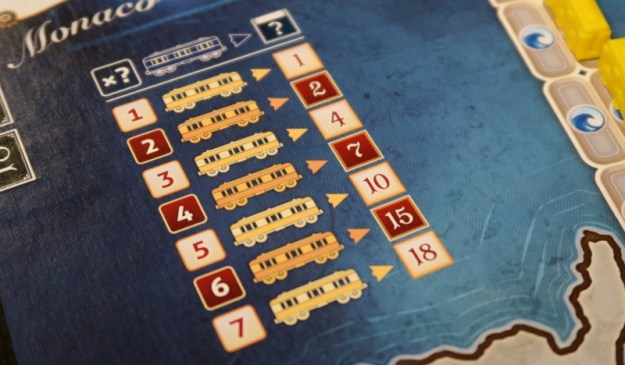
Ticket to Ride Map Collection: Volume 7 – Japan & Italy
– Image by boardGOATS

This is the basics of the original 2004, Spiel des Jahres winning game, with a USA map, Ticket to Ride, but each variant provides a different map and some slight modifications to the rules.  For example, Ticket to Ride: Europe adds Ferry routes which require a certain number of locomotive cards to be played in addition to the coloured train cards. It also adds Stations, which can used to help players complete tickets where a route has been blocked.  For some different maps players get different numbers of trains, Poland is one of the smaller maps, with only thirty-five trains, compared with the forty-five in the Europe and US versions or the three German editions (Germany, Deutschland and Märklin).

Wsiąść do Pociągu: Polska
– Image by boardGOATS

The other thing that makes the Poland expansion map stand out (aside from the fact that it is Map Collection Volume “6½” and goes by the name of “Wsiąść do Pociągu: Polska”) is that routes that connect to the countries bordering Poland give points directly.  Unusually, the routes that cross the border include some triple routes and even a quadruple route, all of which can be used regardless of the number of players.  Each country then also has a small deck of three or four cards, each card giving a different number of points.  The first player to connect to two countries through Poland takes the cards with the highest value, the next takes the next most lucrative and so on.  Adding more countries to a player’s network adds more cards and more points for that player.

Wsiąść do Pociągu: Polska
– Image by boardGOATS

Green was particularly keen to play the Polish expansion because of the “Czech connection”, and Ivory also wanted to try it as it was a new map for him; Lime went along to make up the numbers.  They were quick to get going and started off laying out routes without interfering with each other very much at all.  Ivory was first to link two countries (Czechia and Slovakia), which was annoying to Green as he joined the the same countries on the very next turn.  However, Green got his own back by getting in Ivory’s way and linking Germany into his network first.  Lime was late to join the country network party, but concentrated on the Poland’s eastern borders. Ivory and Lime started taking new tickets about midway through the game, but Green instead continued to concentrate on linking more countries into his network.

Wsiąść do Pociągu: Polska
– Image by boardGOATS

It was only in the last couple of turns that Green finally turned to tickets when it looked difficult to add any more countries to his already substantial, four country network.  While Ivory and Green had been fighting over routes, Lime had quietly travelled the entire width of Poland and also linked several countries into his network, rivalling Green.  In the final scoring it was Lime who had charged ahead, scoring well with tickets and country cards, finishing with ninety-six points—deserved since he gave up his preferred choice of the France map.  It was very close for second though, with Green just three points ahead of Ivory with seventy-nine.  Meanwhile, on the next table, Black, Purple and Pine were setting up the game Lime had missed; a much longer game, that had barely started as the Poles were finishing.
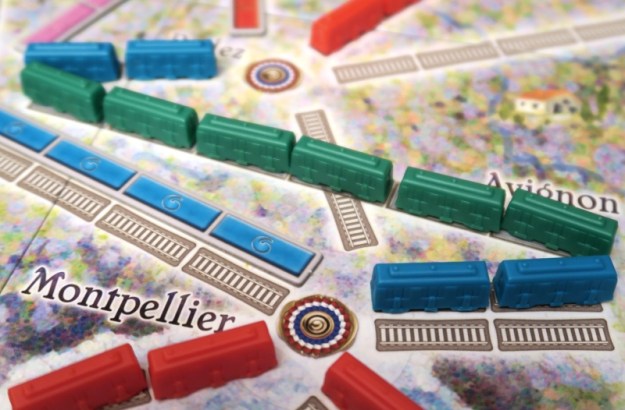
Ticket to Ride Map Collection: Volume 6 – France & Old West
– Image by boardGOATS

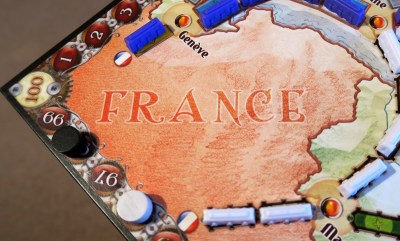
France is one of the more complex expansions as the map mostly only depicts the track-bed, and players choose what colour a line will be.  So, every time a player takes carriage cards, they also take a coloured tile of their choice and place it somewhere on the board.  Thereafter, any player can claim that route by spending the appropriately coloured cards and placing the correct number of train pieces.  Some of these track-beds overlap, but once a tile has placed any track-beds under it are no-longer available.

Ticket to Ride Map Collection: Volume 6 – France & Old West
– Image by boardGOATS

At the start, nobody really knew how to play with the track-bed tiles: placing them somewhere near one’s own route telegraphed probable plans, potentially giving others an opportunity to obstruct.  On the other hand, progress could not be made at all until tiles had been placed.  The map is very, very large so to begin with everyone could get on with their own thing.  Purple monopolised the Loire, Auvergne and Burgundy regions while Pine occupied the north coast and eastern borders.  Pine had competition from Black in the Normandy, Picardy and Champagne regions, but other than that, Black took himself off to the west and south and everyone got on with their own thing.

Ticket to Ride Map Collection: Volume 6 – France & Old West
– Image by boardGOATS

Ultimately, the game was very lopsided.  Pine kept drawing tickets and kept getting lucky; he repeatedly got tickets along similar routes so needed minimal addition to his already substantial network.  As a result, he not only took the longest route bonus, but also the Globetrotter points for the player with the most successful tickets, with eight.  Had Black been successful with all his, things would have been closer, but failing two meant it was a tie for second place with both Black and Purple finishing with eighty, exactly half Pine’s massive victory.
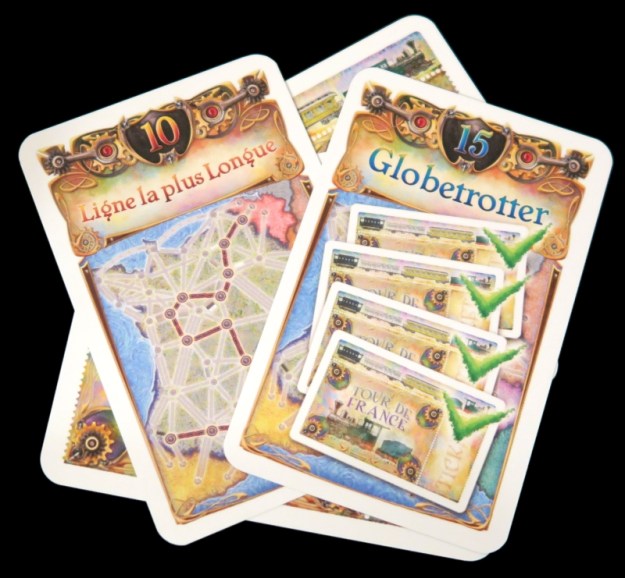
Ticket to Ride Map Collection: Volume 6 – France & Old West
– Image by boardGOATS

Meanwhile, further down the table Burgundy eschewed Netherlands, so the group went instead for Italy, played with the Germany base game, in which the pieces have an unusual colour set.  This gave Blue a slight quandary as to which she should play with, as blue wasn’t available.  Instead Blue opted for purple, only for Purple on the next table to offer to swap pieces as she had chosen blue because purple wasn’t available.  Sadly there was already enough confusion of pieces with Pine, Black and Purple playing with Burgundy’s base game and Blue’s France expansion so swapping pieces just seemed likely to make the chances of all the bits going back into the right boxes that bit smaller.  So in the end, both suffered with the “wrong colour”.
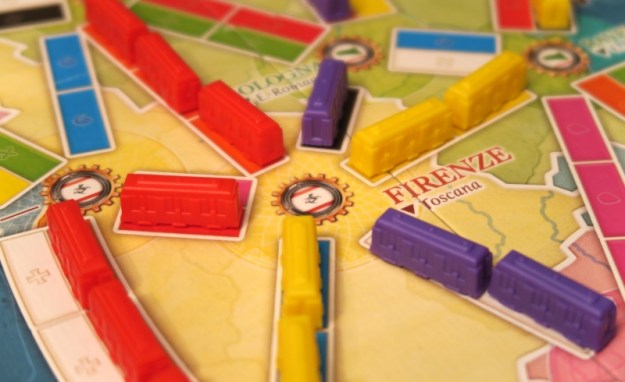
Ticket to Ride Map Collection: Volume 7 – Japan & Italy
– Image by boardGOATS

The Italy map is a more conventional expansion than France, with the only significant differences being a tweak to the Ferry rules and a new bonus scoring opportunity.  Instead of needing Locomotive cards, these Ferry routes include some carriages with a round wave-icon on them.  These can be satisfied either using special Ferry cards, or Locomotive cards.  The special Ferry cards are in a separate deck and one of these can be taken instead of drawing train cards, up to a limit of two at any one time.  Each of these special Ferry cards then count as two “wave” cards.  This makes them better value than Locomotive cards drawn face up from the market, but less versatile.

Ticket to Ride Map Collection: Volume 7 – Japan & Italy
– Image by boardGOATS

The bonus is potentially extremely lucrative, giving points for having a network that connects different regions of Italy.  This starts with one point for five connected regions and increments according to the “Lazy Caterer’s Sequence” to give a massive fifty-six points for a network connecting fifteen or more regions.  The layout of the map itself has a lot in common with the Nordic map in that it is quite long and thin with what feel like a lot of north/south routes running the length of the country, in the middle of the board and a lot of short, east/west routes available in the north and the south.
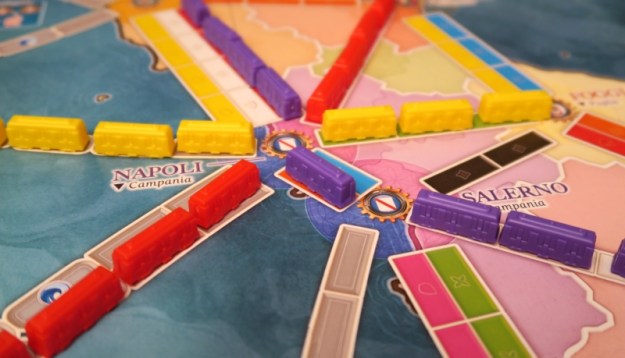
Ticket to Ride Map Collection: Volume 7 – Japan & Italy
– Image by boardGOATS

Blue kept all her starting tickets and Burgundy jettisoned just the one, but in contrast, Mulberry kept the minimum she could.  As a result, it wasn’t long before Mulberry was picking up more tickets, and then more and then even more, much to Burgundy’s and Blue’s horror.  When questioned, Mulberry said, “Just Nickels and Dimes, Nickels and Dimes…”  This didn’t calm Burgundy and Blue in the slightest, as they were still struggling to complete their starting tickets.  Eventually though, they also took more tickets, with Burgundy keeping a lot of his, while Blue was less fortunate.  Burgundy supplemented his tickets with a couple of very long Ferry routes netting him eighteen points each.
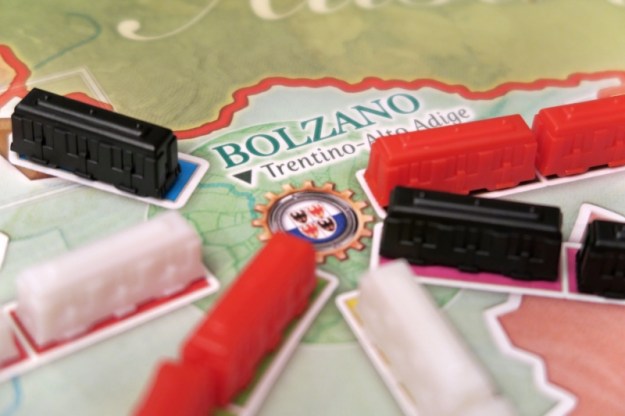
Ticket to Ride Map Collection: Volume 7 – Japan & Italy
– Image by boardGOATS

As the game came to an end, Blue was still struggling to get the yellow carriage cards she needed to complete her final ticket.  So when Burgundy brutally ended the game it cost Blue some forty points, though in truth she was a couple of turns away from getting them even if she had somehow managed to get that one final yellow card.  It was clear that unless Burgundy had a lot of incomplete tickets, he would probably be able to defend his already substantial lead.  Mulberry’s tickets may have been “Nickels and Dimes”, but she had an awful lot of them; as the phrase goes, “Take care of the pennies and the pounds take care of themselves.”  With just regional bonus to add, Burgundy was out of sight and although Blue and Mulberry made a dent in the gap it wasn’t enough.  It was close for second place though, but in the end a couple of extra regions gave it to Blue.

Ticket to Ride Map Collection: Volume 7 – Japan & Italy
– Image by boardGOATS

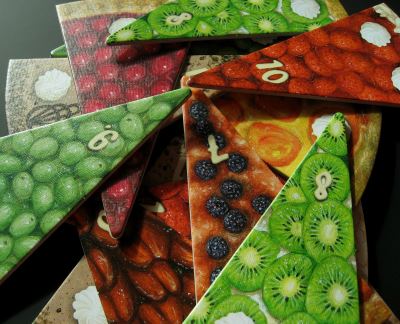
The Poland game was finished first and with France only just started and Italy only halfway through the Poles toyed with the idea of trying another European Ticket to Ride Map, but instead opted for a quick game of the 2017 Spiel des Jares Winner Kingdomino.  This is a light little game with a very clever market mechanic.  The idea is that players take it in turns to take a tile from the market and add it to their kingdom.  Each tile comprises two “squares” (like a domino), each showing a terrain.  At the end of the game, players score points for each area of terrain in their kingdom gaining points equal to the number of “squares” multiplied by the number of crowns in that region.

Kingdomino
– Image by boardGOATS

The clever part of the game is the market which consists of two columns of tiles, each tile having a rank reflecting their value based on scarcity of the terrain(s) it depicts and the number of crowns.  The tiles in each row are placed, and taken, in descending order.  When a player takes their tile from the current column, they choose which tile they want from the next column, thus a player taking a less valuable tile gets a wider choice on the next round.  Unfortunately, as each column has to have the same number of tiles as players, the game can be a bit unbalanced with three, because some of the tiles are removed at random.

Kingdomino
– Image by boardGOATS

As well as scoring for terrain, players also score bonus points for placing all their tiles in a five-by-five array with their castle in the centre.  This time, Ivory managed a full kingdom with his castle in the centre, and a large wheat field with a healthy number of crowns. His score was also assisted by a not inconsiderable lake (although with only a couple of crowns) and a small but valuable mountain.  Lime, fresh from his stunning Polska victory, realised too late that his castle was not central in his kingdom and his last couple of tiles were unplaceable.  Green managed a complete kingdom with his castle in the middle, though his was made up largely of forest.  Pasture, wheat and sand also featured and gave what was a winning score of sixty-three, some ten points ahead of Ivory in second.
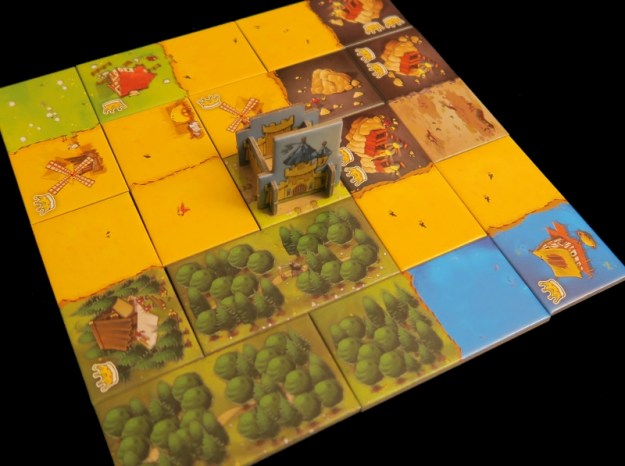
Kingdomino
– Image by boardGOATS

With the Italian map players just finishing, the group decided to join them and see what else was on offer. There were three options: For Sale (best with it’s a maximum of six), Century: Spice Road (plays a maximum of five) and World’s Fair 1893 (maximum of four).  Mulberry decided to get an early night, leaving five players and Century: Spice Road.  This is a resource management game with deck building at it’s core.  Neither Lime nor Green had played it before so there was a quick run down of the rules first.  These are simple enough though.  The central area consists of two markets: one for action cards and one for contracts.
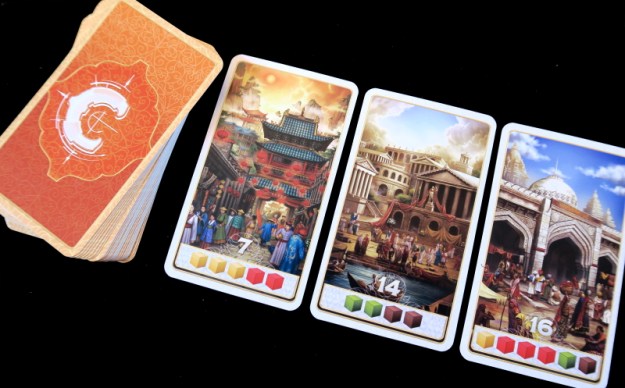
Century: Spice Road
– Image by boardGOATS

On their turn, the active player can take an action card from the market, if they take the card at the end of the row (the one that has been there longest), it is free, otherwise they have to pay resources dependent on the card’s position.  This card goes into the player’s hand where, on a later turn, they can use it to get spices, upgrade spices or convert spices into other spices.  When used, a card is placed on the player’s personal discard pile, and they can also spend a turn picking up all their discarded cards.  The spices, turmeric, saffron, cardamom and cinnamon are then used to fulfill contracts, giving points.

Century: Spice Road
– Image by boardGOATS

The contract cards that have been around for longest get a bonus, in this case a coin is worth one or three points at the end of the game.  The challenge, or at least part of the challenge is storing the spices: each player has a caravan card which will hold a maximum of ten spice cubes, so converting cubes into other cubes and buying contracts has to be done efficiently otherwise spices are wasted.  The game end is triggered when one player has five contract cards.  There are a couple of minor details, like the number of cards in the markets and the values of the coins, but Burgundy clearly knew these without needing to check the rules.

Century: Spice Road
– Image by boardGOATS

The engine-building nature of this game has a lot in common with Splendor and as Burgundy is invincible at that the writing was on the wall before the group even started.  It was no surprise therefore that when Ivory picked up the first contract, Burgundy was immediately behind him.  Green, new to the game, wasn’t far behind either.  Blue had a complete nightmare, but Lime, after a slow start suddenly seemed to get the hang of it and then made rapid progress.  It wasn’t long before Ivory took his final card though.  Taking the maximum number of cards is always key, and when he said he had sixty-seven points it looked like he might have been successful, however, Burgundy, managed to take one last card in that final round as he was the last to play, and ultimately, he managed to take first place by just three points.

Century: Spice Road
– Image by boardGOATS

Learning Outcome:  Europe has a very extensive (and exciting) rail network.

Boardgames in the News: 20 Years of BoardGameGeek

On 22nd January 2000, largely unnoticed, a little website called boardgamegeek.com went live for the first time.  Created by Scott Alden and Derk Solko around the time when everyone else was worrying about The Millennium Bug, boardgamegeek.com has now become the largest “one-stop-shop” for board gamers.

Original BGG Logo
– Image from
boardgamegeek.com

Among other things, it comprises a database with over 100,000 entries; a forum (essential for checking rules etc.), and vast amounts of User-created content, including photos, player aids and rules translations—there is even a marketplace where gamers can buy and sell games.  In 2006, after just six years, the site was generating sufficient funds for Scott Alden to give up the day-job and work on BoardGameGeek full time.  Since then, the site has grown further:  it now includes role-play and video game strands, and they hold their own biannual conventions (BGG.CON and BGG.Spring) with some three thousand attendees.

BGG Ernie
– Image from
boardgamegeek.com

The growth of BoardGameGeek has been commensurate with increasing recognition and participation in board gaming as a whole.  Although there have been many factors that have led to this, it is clear that the provision of extensive information about games and where to get them provided by other gamers, has been massive.  Thus, the creation of BoardGameGeek was undoubtedly timely, but without it, it is arguable that the BoardGameGeek has been essential to the development of the wider board gaming community. So here’s to the next twenty years!

BGG Corner Logo 2019
– Image from
boardgamegeek.com

Next Meeting – 21st January 2020

Our next meeting will be on Tuesday 21st January, at the Horse and Jockey pub in Stanford-in-the-Vale.  As usual, we will be playing shorter games from 7.30pm as people arrive, until 8pm when we will start something a little longer.

This week, the “Feature Game” will be Ticket to Ride, specifically, the European editions.  Over the last year, on games night we’ve spent a lot of time discussing Brexit and following the seemingly endless series of votes in the House of Commons.  As a strongly pro-Europe group, we felt we had to mark the last meeting while we were still part of the EU, and we’ll do it in the only way we know: by playing some of the European versions of Ticket to Ride:  Italy, France, Germany, Poland, Netherlands and of course, Europe.

Ticket to Ride: Switzerland
– Image by boardGOATS

And speaking of Brexit…

Jeff was working in his local pub, when Nigel Farage walked in and asked for a pint.  Jeff went to the pump and drew a pint of Jockey and then threw it into Nigel’s face.

“Why on earth  did you do that?” asked Nigel, wiping beer out of his eyes.

“You asked for a pint, but you didn’t say how you wanted it delivered,” replied Jeff.

Nigel was in a good mood as Brexit day was approaching fast, so he put his large spotted hanky back into his pocket saying, “OK, I get, you’re a Remoaner, I won’t make a fuss, I’ll just have a pint in a pint glass.”

Jeff gave him a firm stare. “No, you can’t ask again,” he said.

“Why not?” Nigel asked.

“Democracy,” Jeff replied.

7th January 2020

Almost everyone was late arriving and many wanted to eat, so we decided to play something quick to get people going while we waited for food to come.  In the top of the bag was …Aber Bitte mit Sahne (a.k.a Piece o’ Cake), and as there were a lot of hungry people, it seemed appropriate somehow.  “Sahne” is a very simple little “I divide, you choose” game where players are collecting pieces of cake.  On their turn, the active player, or Baker, begins by turning over one of the five piles of cake slices in the order they appear in.  They then divide the cake into segments, each containing one or more slices. The player to their left then chooses one of the segments, either “eating”, or “saving” each of the slices they take.

…Aber Bitte Mit Sahne
– Image by boardGOATS

At the end of the game, if a player has saved the most of a given type of cake, they score the number of points shown on the slices of that type; they also score one point for each blob of cream they have eaten.  The clever part is balancing the possibility of scoring a lots of points later with banking the blobs of cream now.  The cake types that score the most highly are those that have the most slices available, but they also have the most cream.  The player with the most points after the five rounds wins.  Burgundy started the first round, and, as there were four players, he also started the last round, arguably giving Blue a slight advantage since it meant that she was able to choose first twice. Blue began by collecting chocolate cake, because, well, it’s chocolate cake, (obviously), while Green and Pine began a bit of a tussle for “pea pie” (probably gooseberry tart really).

…Aber Bitte Mit Sahne
– Image by boardGOATS

One of the key parts of this game is that ties are friendly, in other words, if there is a tie, everyone gets the points.  This generally has the effect of making players work to get just enough pieces of cake to join the group of players that will score points rather working that bit harder to than get more pieces than everyone else and be the only one to score.  Thus, many people often score points for the same type of cake.  This was instrumental in making it a tight game this time, as there were several ties. In the end, the fact Green wasted none of his slices, winning points for everything he kept and eating the rest, meant he beat Blue by just one point with Pine not far behind in third place.  Towards the end of “Sahne” Ivory arrived and commented on the differences between it and it’s reimplementation, New York Slice, where cream is replaced with pepperoni and anchovies are added to give negative points – one to play another time perhaps.

…Aber Bitte Mit Sahne
– Image by boardGOATS

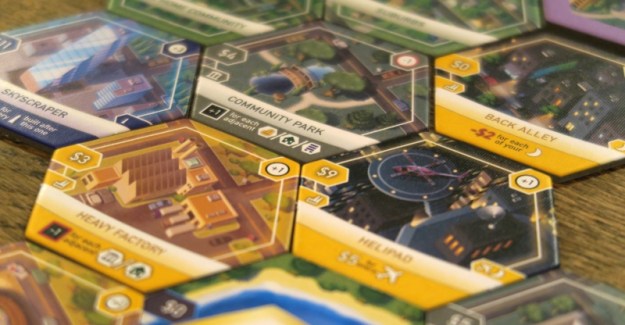
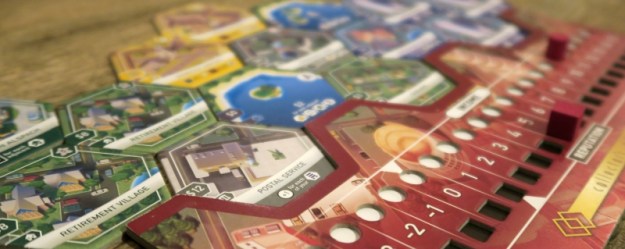
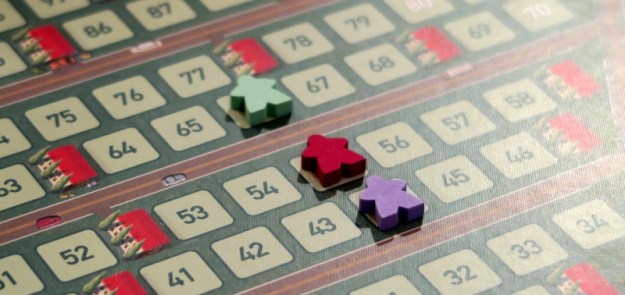
Once everyone had finished feasting (both in the game and in real life), we started looking at what people might play.  First up was the “Feature Game”, Suburbia in it’s rather epically large, and very fancy new “Collector’s Edition”. This is a tile-laying game, where each player tries to build their own town providing an economic engine and infrastructure that starts off as self-sufficient and hopefully becomes profitable and encourages growth.  Each player has two tracks:  Income and Reputation, the facilities that a player builds affect these, so as the income of their town increases there is more money to spend on purchasing better and more valuable buildings.  These, in turn, can increase the reputation of the town which will increase the population.  The winner is the town with the largest population.  While one might think this means going for the highest possible reputation would be the way to victory, the scoring track contains several expansion checks that immediately reduce a player’s income and reputation.

Suburbia
– Image by boardGOATS

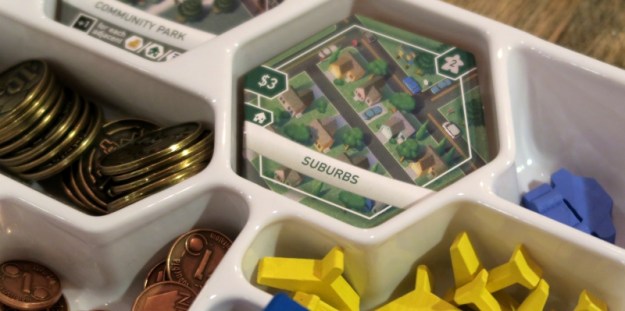
The frequency of these scoring checks increases as scores increase, which could be disastrous for a player who allows rampant population growth to get out of control.  Although only Ivory had played the game before, the group decided to include one of the expansion sets, Nightlife.  Setup did not take as long as it looked, with the box inserts from the new edition making the job much quicker and easier.  The three communal objectives were: Most houses, Highest Income, and Most Municipal Buildings.  Each player also had their own private objectives with Green going for Nightlife, Ivory for Factories and Burgundy for Offices.  In the first round, even though the developments were as yet tiny villages, both Green and Ivory built Helipads.  With the owners of each helipad receiving $5 for every Helipad currently in the game (including the ones just taken), the power of the game became immediately obvious.

Suburbia
– Image by boardGOATS

In most games, players receives bonuses based on the situation when a card or token is taken.  In Suburbia, any benefits act through past, present and future, so tiles can keep on giving throughout the game.  Burgundy used this effect to gain $1 every time anyone built an Office. Green managed to build up a bonus of $3 for every House built in the game. This type of Income really helped, as Green didn’t need to worry too much about his base Income level and could concentrate on building up the Night tiles and Houses that he needed to fulfill his personal goals.  Ivory and Burgundy both decided to chase the Income bonus and ended up fighting for the Income producing tiles pushing each other up to ever higher values.  Obviously that Income helped them buy tiles, but they were largely in competition with each other and thus allowed Green to build a commanding lead in Accommodation and Nightlife.

Suburbia
– Image by boardGOATS

Another unique aspect of Suburbia, are the expansion checks that prevent a run-away winner. For every few population points gained, the player’s Income and Reputation markers are pushed back by one point each.  Since Burgundy and Ivory were competing for the income bonuses, there was the highly unusual (and amusing for anyone who was not Burgundy or Ivory) situation in the final couple of rounds where they were trying to avoid scoring too many “points” resulting in reducing their income and potentially losing the fifteen points the end-game objective would.  Ivory in particular was racking his brains over the best way to do this and spent so much thought on it that he failed to spot that he was only one Municipal building ahead of Green who’s turn was next (and had a pile of cash even though his Income was minus three!).

Suburbia
– Image by boardGOATS

Thus, for his final turn Green (knowing he had already won the Houses and Nightlife bonuses) bought the one remaining Municipal building on the track, robbing Ivory (no friendly ties in this game, to get a bonus you have to have most).  In the final scoring, Green’s green and pleasant city, with only Houses, Schools, Nightlife and a large Park (aside from his one starting Factory) was much more popular with the residents than Ivory’s Factory filled city or Burgundy’s green Office city.  Overall the group had enjoyed the game, which had perhaps more than the usual amount of interaction for a personal area building game.  Although there weren’t really any new mechanics, it was well implemented and everyone would be very happy to play it again.

Suburbia
– Image by boardGOATS

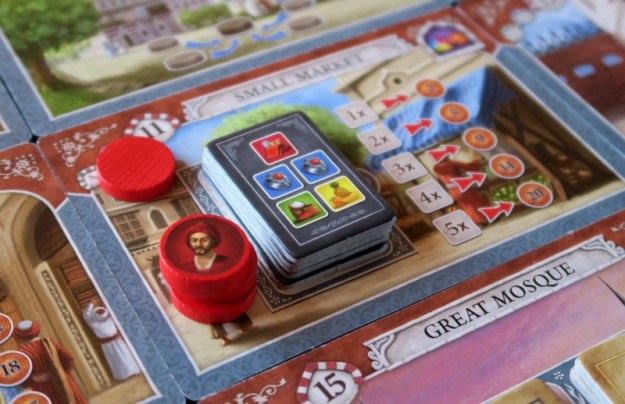
Meanwhile, Pine, Lime and Blue opted for the slightly lighter game, Istanbul. This is an old favourite that won the Kennerspiel des Jahres in 2014, but thanks to the new fare hasn’t been played in the group for some time. The game is played on a modular board with players making paths between different locations. The aim of the game is to be the first player to get five red Rubies, but there are a number of ways to get these.  For example, they can be bought from the Gemstone Dealer, but this costs money (and every time someone buys a Ruby, the cost increases too).  Money can be obtained by trading goods obtained from the three warehouses at one of the two markets.

Istanbul
– Image by boardGOATS

Each player starts with a small barrow, with space for four different goods and the Rubies. Three of the goods (Spices, Cloth and Fruit) can be gained from the associated warehouse, with a visit allowing players to fill their barrow to its maximum. A small barrow will only hold a maximum of two of each though, so visiting the wheelwright to buy an extension or two makes these visits more efficient, but barrow extensions also cost money… So planning the order of visits to these different places, and this is the clever part of the game.

Istanbul
– Image by boardGOATS

Each player is in charge of a stack of wooden disks representing a Merchant and his Assistants. The idea is that on their turn, the Merchant visits one of the different locations by travelling orthogonal a maximum of two spaces. At each location, he can negotiate a deal and leaves one of his Assistants to complete it. After several turns, the player runs out of Assistants so they can continue to move their Merchant without making deals returning to the Fountain to call their Assistants so they can start again, possibly using a couple of turns to do so.  Alternatively, the Merchant can move up to two spaces and return to one of the locations where they left an Assistant and carry out another deal at that location, taking the Assistant with them.

Istanbul
– Image by boardGOATS

Thus, the game is similar to Yokohama in that it is all about planning an efficient route, in this case, dropping off Assistants at useful locations and then, ideally, travelling the route again reusing them and picking them up.  There are other factors to consider too however. Encountering another Merchant will cost money, for example.  On the other hand, meeting the Smuggler or the Governor provide opportunities to get resources, including the rare Jewels (valuable, but distinct from Rubies), or bonus cards that can be kept and played to give an advantage later in the game.

Istanbul
– Image by boardGOATS

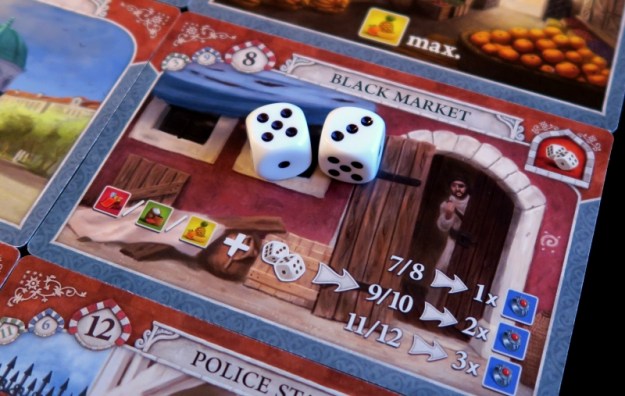
This time, the group used the big numbers on the location tiles to dictate their layout. Then, after a rules run-down, Blue started, moving her Merchant from the Fountain to the Post Office.  Visits here provide a couple resources and some cash, which she planned to sell, using the profits to extend her barrow.  Lime started out visiting the Tea House (via the Caravansary) to get cash, while Pine went to the Black Market to get money and Jewellery.  Blue was first to get a Ruby, but Pine and Lime weren’t far behind, and it was even closer by the time they were claiming their second Rubies. Lime, every inch the accountant was accruing vast amounts of cash, and somehow seemed to be collecting gems too, without the pile seeming to diminish significantly.

Istanbul
– Image by boardGOATS

As the game approached the end, Lime went on a spending spree, at the end of which Pine scuppered Lime’s plans. He took a Ruby from the Gemstone Dealer, increasing the price for Lime in the process, making things worse by the fact that he was squatting putting the cost just out of Lime’s reach. In the end though, Blue made a mistake leaving the door open for Pine to have another visit, and claim his final Ruby, with it the game.  With that, Pine left for an early night, convinced that Suburbia which was “just finishing” would be at least another half an hour. Blue and Lime, waited and set up For Sale, but it turned out Pine was right, and by the time the other group finished there wasn’t time to play.  So, after a bit of chit-chat, everyone went home.

For Sale
– Image by boardGOATS

Learning Outcome: Green and pleasant towns are nicer places to live.

Boardgames in the News: Asmodee Acquiring Again

The development of Asmodee from a small French games company primarily known for clever little kids game like Dobble and Jungle Speed, into an industrial conglomerate has been covered extensively here.  Over the last decade or so, they have acquired Days of Wonder, Fantasy Flight Games, Z-man Games, Mayfair and Lookout Spiele amongst others.  They have also leveraged control of the distribution network through the purchase of Esdevium (UK), Heidelberger Spieleverlag (Germany), Hodin (Belgium), Asterion Press (Italy), Millennium (Spain), FRED Distribution (USA) and agreements with Rebel (Poland), and Alliance Game Distributors (USA).  These acquisitions tend to come in flurries presumably as funds are made available and it seems they are in the middle of another one now.

Asmodee Logo
– Image from
escapistmagazine.com

In March last year, Asmodee signed a deal with CMON Ltd., to exclusively distribute the publisher’s board and tabletop games in North America.  Distribution agreements happen all the time because they help distribute costs between companies as well as distribute games to gamers all over the world.  What makes this agreement slightly more unusual is that CMON are a US company that have been successfully distributing their product across the USA.  Where Asmodee are concerned, a distribution agreement announcement is usually followed by more announcements, and this was no exception.  Over the Summer, Asmodee announced a similar distribution agreement with the Swiss publishing house, Helvetiq, and acquired the French-language boardgame site, Tric Trac.

CMON Logo
– Image from cmon.com

For eighteen years from 2000, Tric Trac was an independent enterprise with some 40,000 members directed by Monsieur Phal (aka Philippe Maurin).  In 2018, Flat Prod SARL (the parent company), sold Tric Trac to Plan B Games, a new company that grew out of the fallout of Asmodee’s acquisition of F2Z/Filosofia/Z-Man Games etc., in 2016, and won the Spiel de Jahres Award with Azul.  Tric Trac has been more commercial than the popular US-based, English-language website BoardGameGeek, which has been running for a similar length of time.  However, there have long been suspicions of that Asmodee have received special treatment from Tric Trac, suspicions fueled by the fact that the parent company Flat Prod SARL was formed by Philippe Maurin and the company Plume Finance, which is wholly owned by Marc Nunès, original CEO of Asmodee.  However, with Asmodee being such an important part of the French boardgame industry, it is perhaps unsurprising that their games take a lot of space on French website dedicated to boardgames. 

Tric Trac Logo
– Image from trictrac.net

With France’s foremost website in the hands of such a dominant force, there are concerns about a lack of critical objectivity and that Tric Trac could ultimately become a promotion channel for Asmodee.  It may be that with the retirement of it’s founder, Asmodee bought Tric Trac to ensure its survival and make sure the source of French-language boardgame media remains available and there is no sinister motive.  They have promised the team editorial freedom, but it is highly likely that Asmodee are the ones benefiting the most from the site anyhow, simply because they’re the biggest player in the market, especially given their history as a French company.  Since then, however, Asmodee have signed another distribution agreement, this time with Funforge, to distribute the French publisher’s titles in the U.S., and today they announced the acquisition of the Belgian publisher, Repos Production.  Repos are best known for games like 7 Wonders, Ghost Stories, Concept, Ca$h ‘n Guns and this year’s Spiel des Jahres winner, Just One.  Sometimes it seems like every successful company is a target and soon Asmodee will have a strangle-hold on the modern boardgame market.  Some people say they already have.

Repos Production
– Image from google.com

Next Meeting – 7th January 2020

Our next meeting will be on Tuesday 7th January, at the Horse and Jockey pub in Stanford-in-the-Vale.  As usual, we will be playing shorter games from 7.30pm as people arrive, until 8pm when we will start something a little longer.

This week, the “Feature Game” will be Suburbia which is a slightly older game that has recently been re-released in a fancy new “Collector’s Edition”.  In this game, players are developing their own cities trying to make them as prosperous as they can.

Suburbia: Collector's Edition
– Image used with permission of BGG contributor rmarkworth

And speaking of developing cities…

Jeff and Joe were working for the city council in the park.  Joe was furiously digging holes, while  Jeff was quickly filling them in.

A confused dog-walker asked, “Why do you keep digging holes and then filling them in again?”

Jeff, lent on his shovel and replied, “The lazy sod who plants the trees is off sick again today.”

31st December 2019

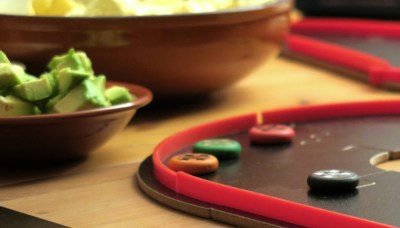
Burgundy was the first to arrive and he was quickly joined by Purple, Black and Lime.  As the first to arrive, together, they began to set up the “Feature Game“, the now traditional, car-racing game, PitchCar.  When Pine joined the party, discussion turned to the “Monster Games” session which featured Bus, Ecos: First Continent and the very silly Happy Salmon, all of which had been very enjoyable in their own way and most of which will come out again soon.  Before long, an exciting-looking racing track was set up around an obstacle course of snacks and drinks.

PitchCar
– Image by boardGOATS

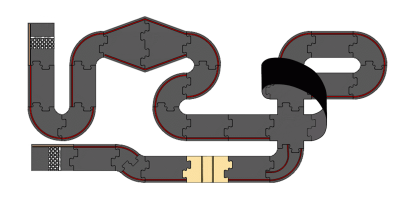
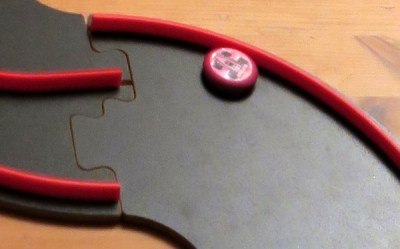
As we’ve done a few times recently, instead of a circuit, we set up a single section track with separate start and finish lines.  This year we included the new Loop (which got it’s first outing at Pink’s sPecial Party in October) and Upsilon expansions as well as the bridge from the first expansion.  As usual, much fun was had by all concerned, especially with the new challenge that the Loop added.  There is clearly a knack with this: it is essential to hit the puck hard and in the middle, but some have the skill naturally, while others apparently just don’t.  Lime is one who clearly does, and as a result, his car traveled the furthest in the “flick-off”, so started at the front of the grid and finished way out in front too.

PitchCar Track 31/12/19
– Image by boardGOATS

Pine, Pink and Purple, clearly don’t have the knack, and we never really found out about Burgundy either, as someone helped him largely avoid it, resulting in him to taking second place.  Elsewhere, having successfully escaped from the Loop, Black shot round the chicane and made the bridge look easy, inspiring Pink to comment that we always used to get stuck at the bridge, but now we have the Loop, the bridge is easy!  That said, stopping over the line without falling off the end of the track proved to be quite challenging.  So much so, that after half a dozen mini-flicks, Black was in danger of getting caught by Pine, who eventually made it round in fourth place.

PitchCar
– Image by boardGOATS

That just left Pink and Purple, taking it in turns to try to get round the Loop.  Eventually, Purple hit the sweet spot and started off towards the finish.  Unfortunately, after a superb single shot that took her round the ring, she ended up pointing in the wrong direction and tried to go  round the Loop backwards.  Pink meanwhile was still stuck and thanks to the way the track looped back on itself creating an intersection, managed to very effectively obstruct Purple in her quest to get to the end.

PitchCar
– Image by boardGOATS

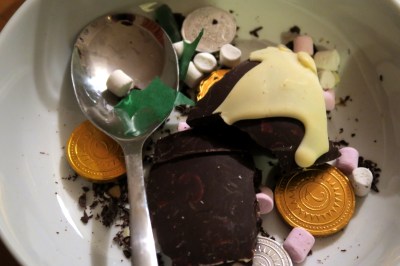
As Purple’s and Pine’s antics entertained, everyone else consumed crudites, Devils on horsebacks, stuffed mini peppers, and large quantities of pigs in blankets (Lime commented that he now knew why JD Wetherspoon had a shortage).  When Purple and Pink finally crossed the line, it was time for supper – spicy vegetable chili, beef chili, rice and corn on the cob.  As people finished dinner we realised we’d forgotten the crackers and Christmas pressies. Unusually, this year there was desert too, so Black was given a special rolling-pin shaped knife to “cut” it, leaving everyone to wonder, before Pink delivered a Christmas pudding-shaped chocolate piñata.

New Year 2019
– Image by boardGOATS

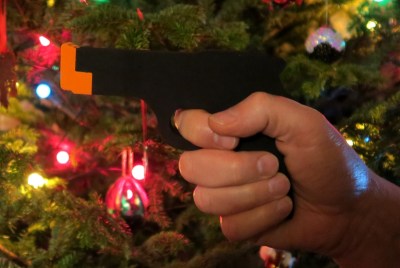
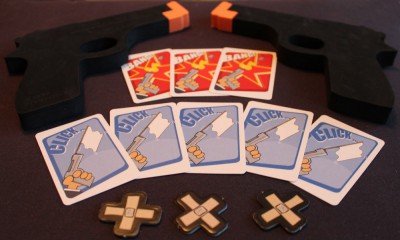
The “Pud” resisted all Black’s initial blows, until he decided a side-swipe might have more effect.  Eventually a dent became a crack and the crack became a hole revealing the sweets inside.  As everyone picked at the chocolate, we decided to start another game, Ca$h ‘n Guns, because there’s nothing better at Christmas than pointing foam guns at each other.  This is a very simple, but very fun party game where players are gangsters dividing up their loot by a sort of controlled Russian Roulette.

Ca$h 'n Guns
– Image by boardGOATS

Each player starts the round by loading their gun with one bullet from their deck of eight bullet cards, or “clip”.  Each bullet can be used only once during the game, and three are live, while the other five are blanks.  Once everyone has chosen their bullet card, the Godfather counts to three and everyone points their weapon at someone.  The Godfather can then use his privilege to ask one player to point their gun away from him (there was some discussion as to whether a real gangster would use “please”), then there is a second count of three.  This time, players can back out, which means they won’t get shot, but they also won’t get any loot.

Ca$h 'n Guns
– Image by boardGOATS

All the remaining players then reveal their bullet cards and anyone who is shot picks up a plaster and also won’t get any loot at the end of the round.  This leaves a hard-core of gangsters to take it in turns to collect cards from the loot pool that was revealed at the start of the round.  In each round, all the loot cards are taken, so when it is a particularly brutal round, players can take several cards.  The loot includes diamonds, artworks and cash, as well as the occasional medipack or additional bullet and the opportunity to become the Godfather.  Unusually, this final option was taken several times so the Godfather changed hands quite frequently, with Burgundy, Pink, Lime, Blue, and Pine all taking the role at some point.

Ca$h 'n Guns
– Image by boardGOATS

Blue was Boris, so Pink suggested that she should be the target.  This is fairly usual in this game, so Blue rarely wins.  However, it seems people didn’t like being told what to do by Pink, even if he was the Godfather, so remarkably, she survived the first round.  After a couple more rounds she’d still only picked up one plaster, while Pine, had acquired two so a third would put him out of the game.  As he had pointed out at the start, an injury tends to make you a target, but somehow, Pine managed to get himself a medipack.  Burgundy and Purple, however, were not so lucky and bought it in round six.

Ca$h 'n Guns
– Image by boardGOATS

Going into the final round, Black commented on how many painting cards Blue had picked up—the first is worth $4,000, but these score an ever increasing amount so a player with ten scores $500,000.  At that point, Blue didn’t feel she had enough, but as Pine’s final bullet proved to be a blank, she was able to stay in for the final round and pick up a couple more.  It surprised even her when she counted up and found she had seven paintings giving a total of $250,000 when her cash was added in.  Black took the $60,000 bonus for the most diamonds and with it, second place with $133,000, and not a scratch, just ahead of Pink ($110,000) who was also unharmed.

Ca$h 'n Guns
– Image by boardGOATS

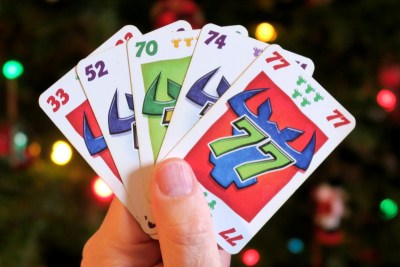
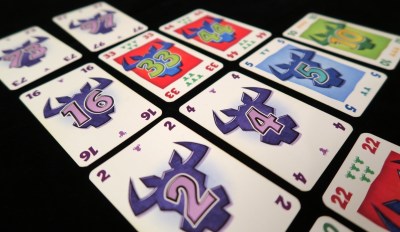
With midnight fast approaching, we replaced the guns with glasses to toast the New Year and watch the fireworks (in both London and the village).  And then we had the very important decision to make: what to play for the first game of 2020.  In the end,  we decided to go for our old favourite, 6 Nimmt!.  Everyone knows how to play this by now:  players simultaneously choose a card from their hand and then, starting with the player that revealed the lowest value card, players add their cards to one of the four rows.  The player who adds the sixth card to a row, instead takes the first five into his scoring pile, where the number of bulls’ heads indicates the score.  The winner is the player with the fewest “nimmts”.

6 Nimmt!
– Image by boardGOATS

We played with our usual variant where a game takes two rounds, each played with one half of the deck.  In the first round, Pine top-scored with twenty-two closely followed by Lime with eighteen, while Pink kept a clean sheet and Purple remarkably (especially for her), had only the one card with just a single “nimmt”.  So, going into the second half, it was all to play for.  As is usually the case, those that do well in the first round typically do badly in the second.  That was exactly the way it panned out for Pink who picked up the most “nimmts” in the second round with twenty-five, almost catching up with Pine and Lime.  Purple, however, managed to buck the trend, and pulled out a clear round giving her a final total of just one and with it, clear victory—the first of the new year.

6 Nimmt!
– Image by boardGOATS

Lime suggested a second game, and as the only other game being suggested was Bohnanza, apathy from everyone else meant we played 6 Nimmt! again.  Again, Pink ended the first round with “zip”, followed by Black and Burgundy with five; again Pine had the highest score of twenty-four.  Also again, Pink failed in the second round, taking more than anyone else and finishing with a total of twenty.  Blue managed a zero in the second round, but had picked up too many points in the first to do better than second place.  It was consistency that won the game though, and Burgundy, the only one to say in single figures for both rounds, finished with thirteen and took first place.

6 Nimmt!
– Image by boardGOATS

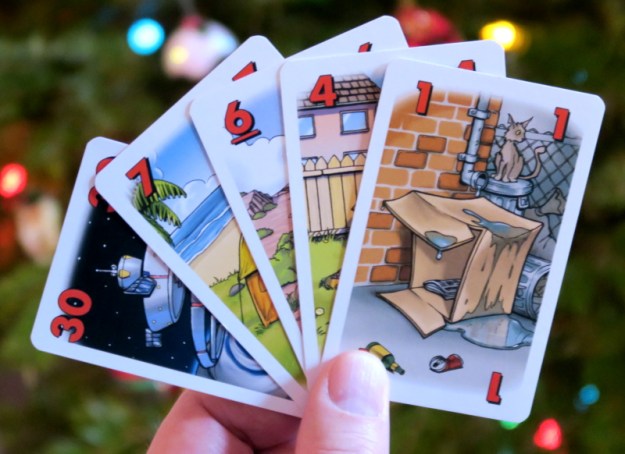
By this time was well gone 1am, and there was some chatter before Lime decided that it was past his bedtime and left everyone else to it.  With six, there were slightly more options, and when Pink appeared with For Sale, nobody objected.  This is an older game, that we haven’t played in the group since it was the “Feature Gamenearly seven years ago, but it is a bit of an “ever-green” game that still pops up on recommendation lists from time to time.

For Sale
– Image by boardGOATS

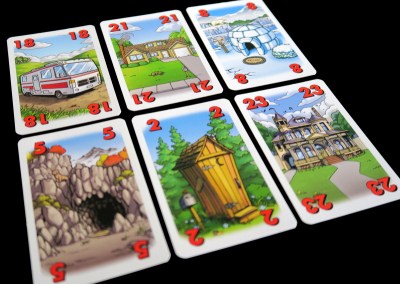
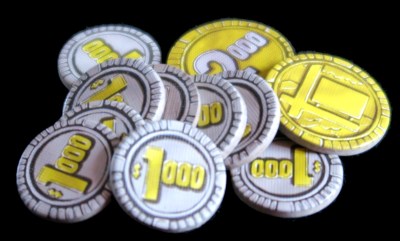
The game is very simple: players buy properties in the first part of the game and then sell them in the second half, and the player who has the most money at the end wins.  Buying properties is through auction.  Players start with $14,000 to last the whole game and take it in turns to bid for one of the property cards available on the table.  These have a nominal rating of one to thirty with fantastic pictures that reflect their value.  In each round, the bidding is continuous with players either increasing the bid by at least $1,000 or passing.  When a player passes, they take the lowest value property card and pay half their bid.  Thus, the winning player gets the highest value card, but has to pay the full amount bid.

For Sale
– Image by boardGOATS

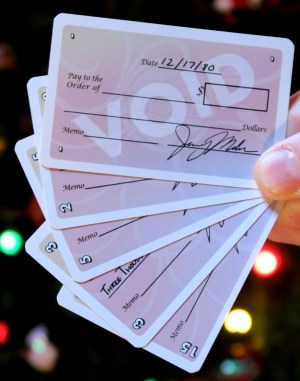
In the second part of the game, cheque cards with a value of $2,000 to $15,000 (or void) are revealed and players simultaneously select a card to play and then reveal.  The property card with the lowest numerical value takes the cheque with the smallest value.  This time, the property cards came out in bunches so it was mostly a case of players trying to avoid getting the real rubbish, and some inevitably failing.  It was such a long time since we had played the game, that it took a couple of rounds for players to really get the feel of valuing the properties and the best way to bid, by which time, in some cases, the damage had already been done.

For Sale
– Image by boardGOATS

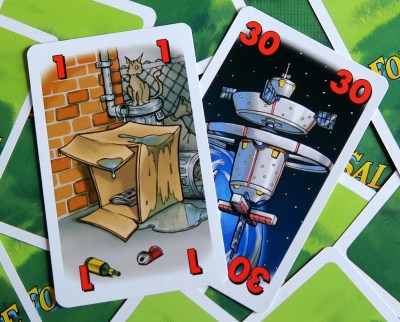
It also took a round or two to get the hang of selling properties as we weren’t sure exactly how the money on the cheques was distributed.  In addition, the cheques came out with low values first, then high values and finally, both voids in the last round.  This meant that although Blue took the maximum return for her Space Station, she didn’t take out any of the other high value buildings.  It also meant that Burgundy and Pink got saddled with the voids in the final round.

For Sale
– Image by boardGOATS

Despite this, it was a very close game.  In the final accounting, Black won with a total of $50,000, just ahead of Burgundy in second with $47,000, the void possibly making all the difference.  By this time, it was gone 2am and although nobody was keen to leave, it was definitely pumpkin-o’clock.  So everyone headed home to bed for the first time in 2020.

New Year 2019
– Image by boardGOATS

Learning Outcome:  Thick chocolate is surprisingly hard to break.

Next Meeting – 31st December 2019

Following the success of all the previous New Year parties, we are having another one this year on Tuesday 31st December.  As it is New Year’s Eve we will be meeting at a private house in Stanford and starting at 7pm with food later.

The plan is to start off early with the “Feature Game”, which, as has become traditional, will be the gorgeous, dexterity car-racing game, PitchCar.  After that, we will be eating, playing more games and watching the village fireworks at midnight as we can’t be bothered to set off our own!

PitchCar
– Image by boardGOATS

And talking of cars…

It was a Sunday afternoon, and like many fathers before him, Jeff was washing the car with his son.  After a moment, his son asked, “Do you think we could use a sponge instead?”

24th December 2019 – “Unofficial boardGOATS” on Christmas Eve

It being Christmas Eve, with many people away or having other plans and already having held our Christmas Party, we decided to have a quiet, “unofficial” meeting for those who fancied it.  As a result, there was no “Feature Game“, and just four to respond positively to a Doodle Poll. So, Pine and Lime joined Blue and Pink (newly arrived from Radio Oxford) for food and a chat before settling down to play some light games.  The first of these was Azul, winner of the Spiel des Jahres  and Deutscher Spiele Preis in 2018, a game we played a lot when it first came out at Essen in 2017, but has more recently been largely superseded by the newer versions (Stained Glass of Sintra and Summer Pavilion).

Azul
– Image by boardGOATS

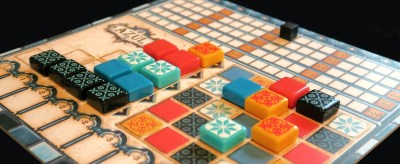
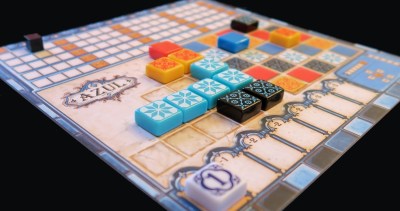
Azul is very light and simple to play, but with surprising staying power.  Despite Azul being so popular with the group, Lime had somehow missed out so we had a run-down of the rules first.Players take coloured tiles from a central market and add them to rows on their player board next to their mosaic.  The rows are different lengths and can only hold one colour at a time.  For any rows that are complete at the end of a round, one of the tiles is moved into that players mosaic and the row is emptied for the next round.

Azul
– Image by boardGOATS

The clever part of the game is the tile market.  There are a number of “stalls” in the market, each holding four coloured tiles.  On their turn, the active payer can take all of one colour from one of the stalls moving the rest to the central pool, or alternatively, they can take all the tiles of one colour from the central pool.  Once all the tiles are gone, the round ends and tiles in the rows are moved across to the mosaic then the market is restocked from the draw bag.  Scoring occurs during the game when tiles are added to the mosaic, and bonus points are awarded at the end of the game for completed rows, columns and any colours which appear in each row/column.

Azul
– Image by boardGOATS

Pink put all his efforts into trying to get bonus points for placing a full set of red tiles monopolising them early on and making it really hard for everyone else to get any.  It was a really, really tight game, and Lime put in an excellent show to take second place against much more experienced opposition.  He was just pipped by three points by Blue, who finished strongly taking bonus points for two completed columns.  Lime had enjoyed his first play and likes playing games twice so suggested a replay. With the relaxed atmosphere, everyone else was happy to go along with it.

Azul
– Image by boardGOATS

The second game wasn’t as tight as the first.  Pink collected more red tiles, annoying everyone else, again, and Blue was forced to take an eight point penalty which she thought was going to put her out of the game.  She made up for it by picking up bonus points for one complete column and a set of blue tiles and once again sneaked ahead of Lime.  Everyone was trampled into the dirt by Pine, however, with an enormous score—his first ever over a hundred.  As we were packing away, we discussed how he did it, and concluded that it was all about the scores from tile placement, and the bonus points really were, just that: a nice bonus, but not really something to aim for.

Azul
– Image by boardGOATS

The night was still young and everyone fancied playing something else.  In keeping with the relaxed nature of the evening, a pair of comfy slippers seemed in order, in this case, Ticket to Ride: London. This is a trimmed down version of the popular modern classic, Ticket to Ride.  All the game play is much the same: on their turn the active player, takes coloured cards into their hand or plays coloured cards to place pieces on the map trying to complete route cards they received at the start of the game.  In the original game, the cards and pieces were carriages, in this cut down version the cards depict other forms of transport and the pieces are buses, and players have fewer of them.

Ticket to Ride: London
– Image by boardGOATS

Points are placing trains on the map with the longest sections scoring more heavily.  In this cut down version, there are also bonus points for connecting stops in certain regions.  The biggest factor is usually the tickets however, as completed tickets score points, while incomplete tickets give negative points.  The active player may forfeit their turn, instead taking additional tickets, which adds an element of jeopardy: taking more tickets can add to the score, but if they aren’t fulfilled by the end of the game, it can be costly.  Pine started the game with two tickets giving long, roughly parallel routes that he thought he would be able to make work.  However, as is often the case with the cut-down versions of Ticket to Ride, the game started fast and Pine quickly realised he would be lucky if he could finish one and end with a positive score, never mind complete both.

Ticket to Ride: London
– Image by boardGOATS

It was really tight around central London, and almost everyone struggled as others upset their plans.  This made for another tight game.  Blue finished the game by reducing her stock of buses to two first, and ended up with a winning score of forty largely thanks to a couple of fortunate tickets picked up late in the game.  Lime likes playing games more than once and suggested a rematch.  Pine, having had a really rough time the first time round was keen to improve on his first attempt and Pink and Blue were happy to go along with it.

Ticket to Ride: London
– Image by boardGOATS

Pine again picked up Regent’s Square to Elephant & Castle, but pairing this with a shorter route made  it much more achievable.  This time, Blue really struggled to place trains, and looked to be in a lot of trouble with only seventeen points when Pink brought the game to an early end.  Both Blue and Lime had nothing they could do on their final turn so were left with a decision: gamble on taking more tickets to try to get one that is already complete, or hope they had enough tickets already.  Both thought about it, but chose to forgo the gamble, which turned out to be the right choice.  In the final accounting, Blue picked up a massive twenty-three points from her tickets, to give her an unassailable total of forty (again—nothing if not consistent), dashing Pinks hopes, leaving him five points behind.  With that, everyone wished each other a Very Merry Christmas and headed home to put their stockings up.

Ticket to Ride: London
– Image by boardGOATS

Learning Outcome:  While GOATS love a good party, a quiet night can also be really enjoyable.

Boardgames in the News: GOATS on the Radio

Christmas is a very special time for families, and what could be better than spending time playing games together.  To discuss some of the options, on Christmas Eve, representatives of boardGOATS and Didcot Games Club were invited to chat to James Watt at Radio Oxford’s Summertown Studio.  The interview started shortly after 2pm and lasted around twenty minutes.

Radio Oxford 2019
– Image by boardGOATS

Time was very limited, but PitchCar, Dobble and Ticket to Ride (specifically the festive Nordic version) were all discussed, and a game of Boom Boom Balloon was played live on air.  These are all all great fun family-friendly games, but there are many more available:  we listed ten of our favourite games to play with family a few years ago, and recently added another five.

Radio Oxford 2019
– Image by boardGOATS

The interview can be found online for a few weeks, and starts at 2:10:50.