Category Archives: Games Night

2nd February 2021 (Online)

There was a bit of chit-chat as people turned up clutching their brown, manilla envelopes, delivered over the previous few days by Purple Packet-force or Pink Parcel Post.  At 8pm, everyone opened their envelope to find the bits and pieces for two games: the “Feature GameTake it Easy!, and Das Labyrinth des Pharao (with the Sphinx und Triamide expansion boards) which we will play in a month or so.  There was also a little chocolate, so as people munched, Blue explained the rules to Take it Easy!.
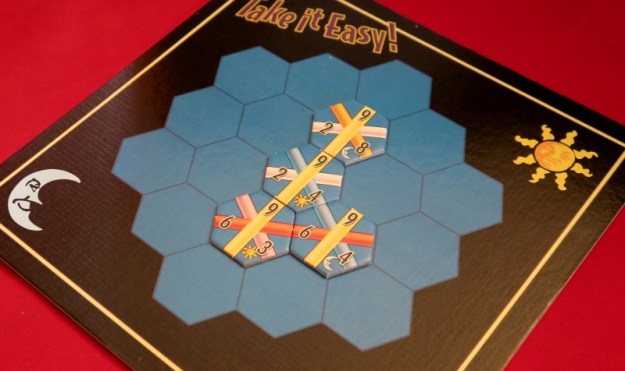
Take it Easy!
– Image by boardGOATS

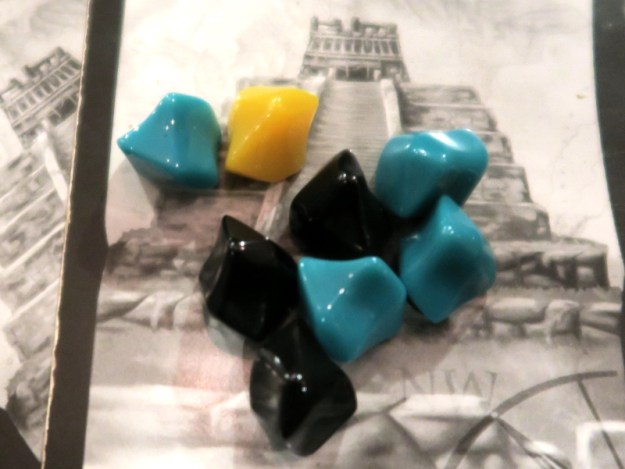
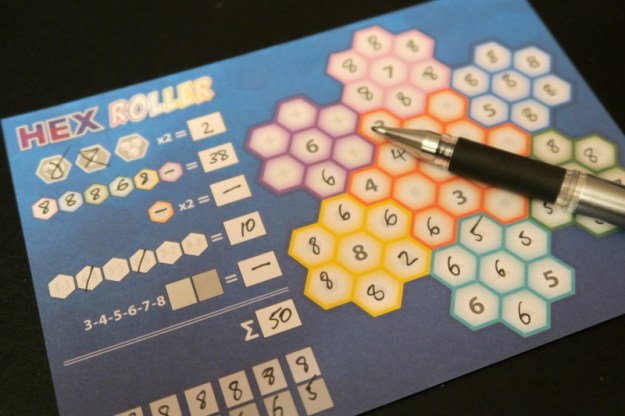
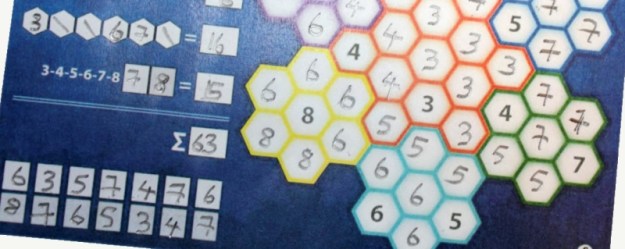
Take it Easy! is a tile laying game where players have a pile of hexagonal tiles which they place on their hexagon player board (because hexagons are simply the bestagons).  Each tile has three pipes crossing it, in three different colours.  There are a total of nine different coloured pipes, three in each different direction.  Tiles are drawn from a stack one at a time, and each player adds them to their personal player board.  The rules are simple:  the tiles can be placed anywhere on the board but must be placed so the numbers are the right way up so that the directions of the nine different coloured pipes are fixed.
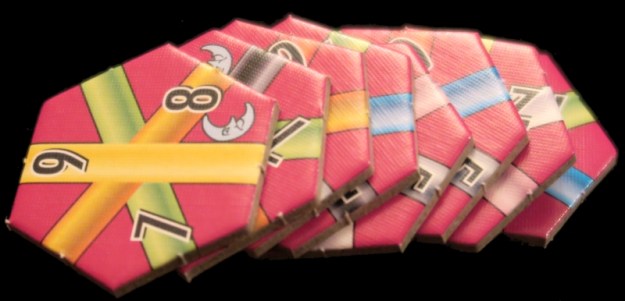
Take it Easy!
– Image by boardGOATS

Players score points for any pipes that contain only the one colour, and the number of points is dependent on the colour of the pipe (the number on the pipe) and the number of tiles in the pipe.  Thus, a yellow pipe, five tiles long going straight down the middle scores forty-five points, while a black pipe, along the edge, just three tiles long would only score three points.  There are a maximum of fifteen pipes, but it is almost impossible to complete all successfully, especially as there are some tiles that are not used, so there is an element of chance as well as hedging bets.  Blue and Pink drew tiles and displayed them for everyone to see.
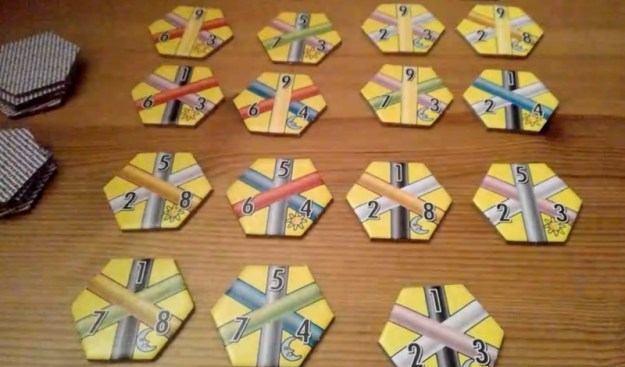
Take it Easy!
– Image by boardGOATS

The pieces the players used had been modified with the addition of letters to make it slightly easier for players to uniquely identify the individual tiles.  We were about three or four tiles in, when someone’s comment suddenly made Green realise that he’d started with the wrong tile.  Having form with this sort of thing, Green got a certain amount of stick for “cheating”, but having found it early, he corrected his mistake and we carried on.  As the game drew towards a conclusion, the number of spaces players had left progressively decreased, and increasingly, players needed specific colours and then specific tiles to complete their pipes.
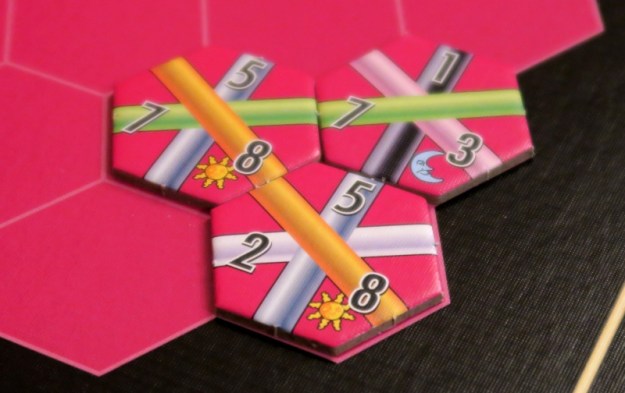
Take it Easy!
– Image by boardGOATS

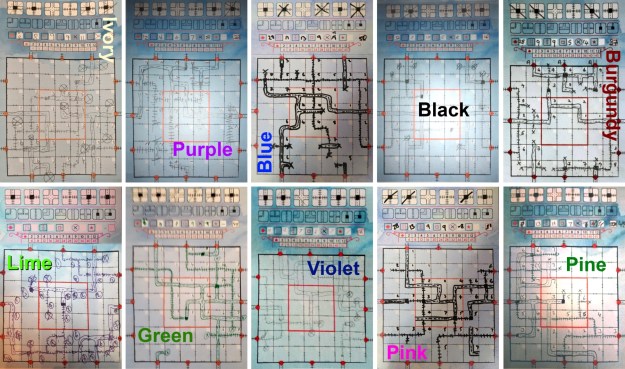
Pink was particularly desperate, but inevitably didn’t get the yellow pipe he so desperately wanted, which ultimately cost him thirty-six points.  As everyone else was still taking off their shoes and socks to add up their scores, Ivory gave his total as one hundred and ninety-four, to howls of distress from everyone else, who clearly felt they were nowhere close.  Indeed, the closest score was a hundred and eighty-two from Green in second with Blue four points behind him.  Although everyone believed Ivory’s score, they were keen to see how he’d done it so we looked at the photo he’d sent in and admired his layout and looked sadly at their own.
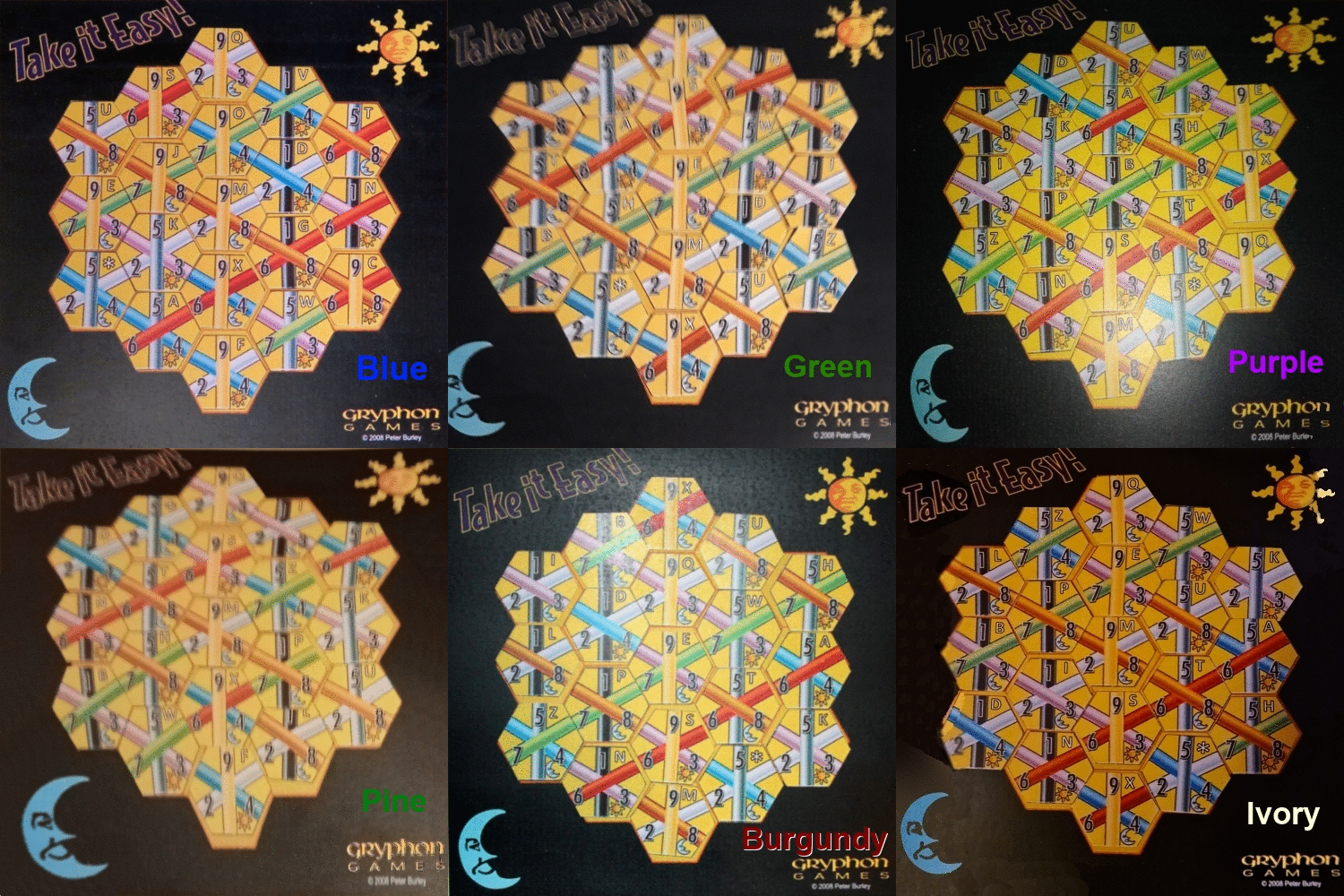
Take it Easy!
– Image by boardGOATS

Take it Easy! hadn’t taken very long to play, indeed it was only quarter to nine.  Everyone had really enjoyed it and now they felt they understood the game a little better, they all fancied another chance to see if they could catch Ivory on the second attempt.  So, this time everyone had their plan and they were keen to get going.  As the tiles were drawn there were variously coos of delight when a desired tile came out and teeth sucking when the tile was difficult to place.  Again, as the game progressed, the teeth sucking and pleas for particular tiles got more desperate.

Take it Easy!
– Image by boardGOATS

When the last tile was drawn the stress was released and everyone settled down to count.  Ivory was first to finish his arithmetic, and when he commented that he’d done better than last time, everyone else’s hearts sank.  Ivory set a new target of two hundred and two, but aside from him, almost everyone else failed to improve on their first score (Lime’s excuse was that he was missing the help of his assistant).  Lilac was the most improved though, increasing her score by sixty to take an excellent second place with one hundred and ninety-six, with nobody else coming close.
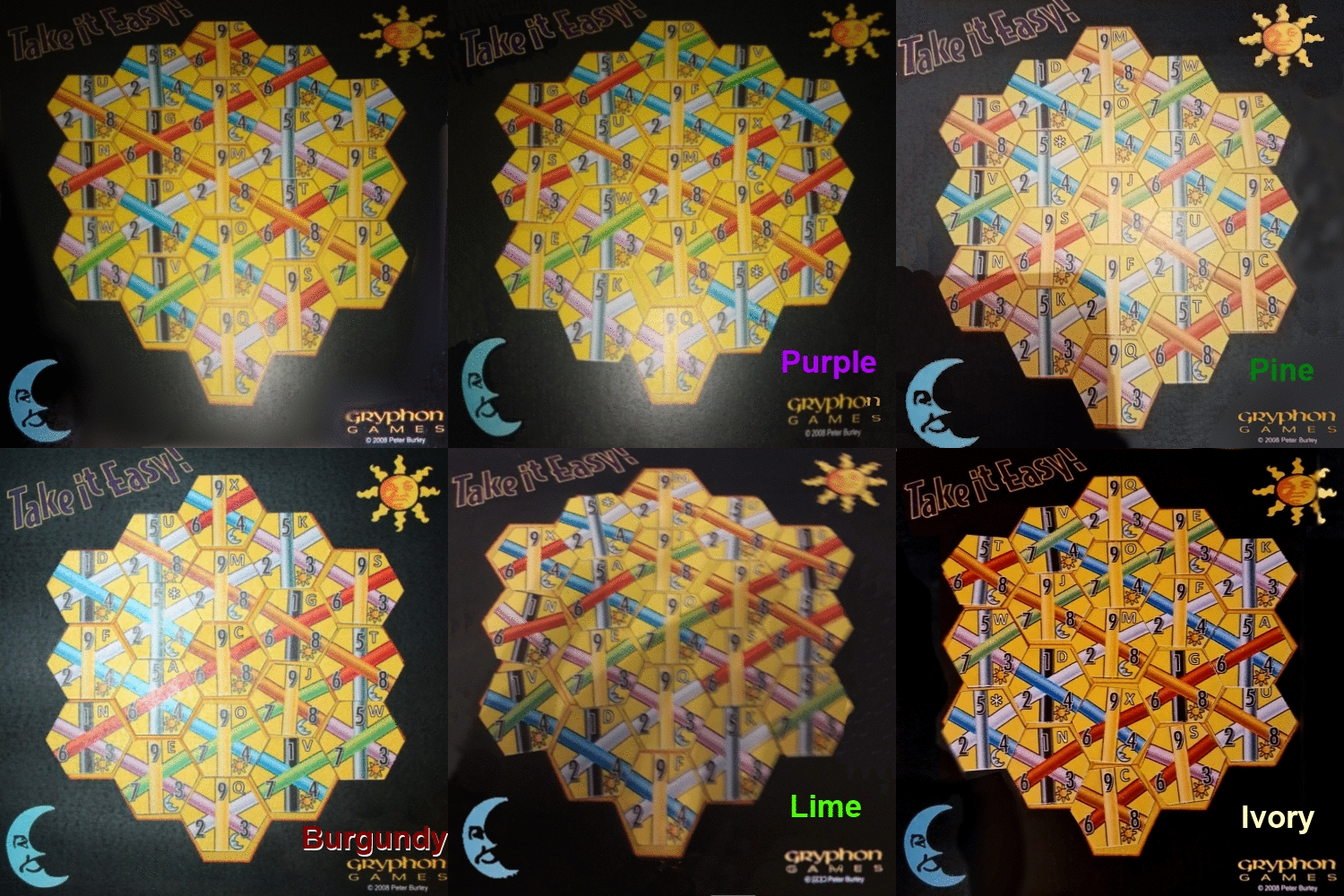
Take it Easy!
– Image by boardGOATS

We had all really enjoyed Take it Easy! and we’ll definitely give the game another outing, but in the meantime it was still quite early, so although Lime took an early night, everyone else was keen to play Cartographers.  This is a game we’ve been trying to get to the table since before Christmas, but have been unsuccessful thanks to the IT gremlins last time, and On Tour and electing the Golden GOAT taking longer than expected.  However, even two plays through of Take it Easy! had not taken over-long and with everyone familiar with the rules, we thought there was time to squeeze it in.
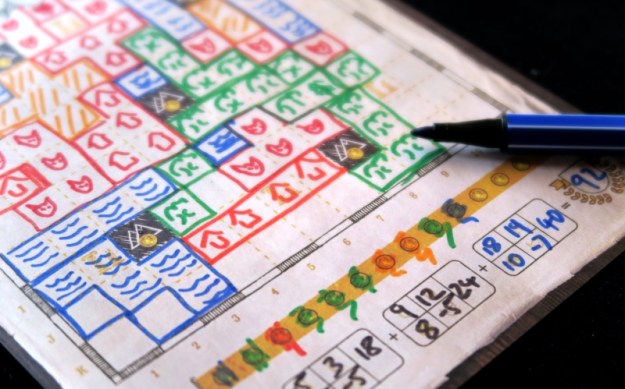
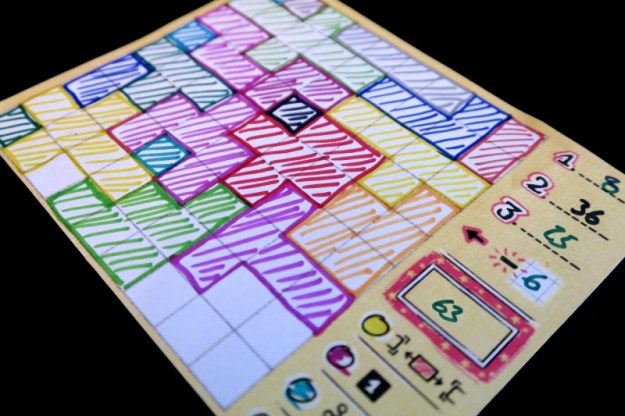
Cartographers: A Roll Player Tale
– Image by boardGOATS

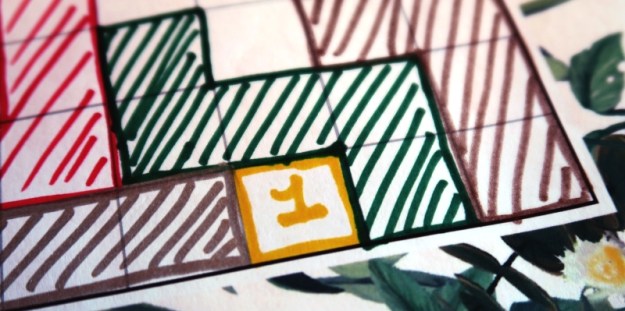
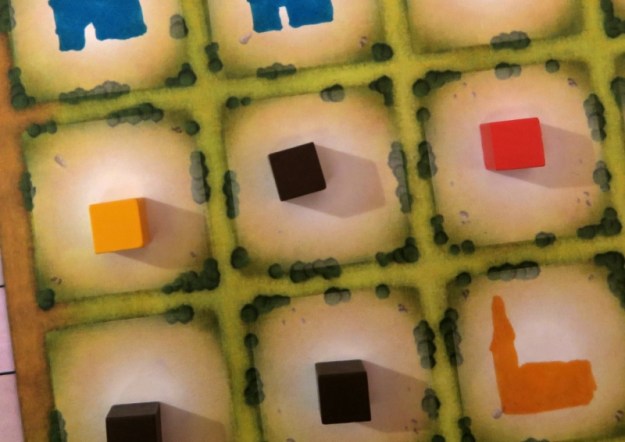
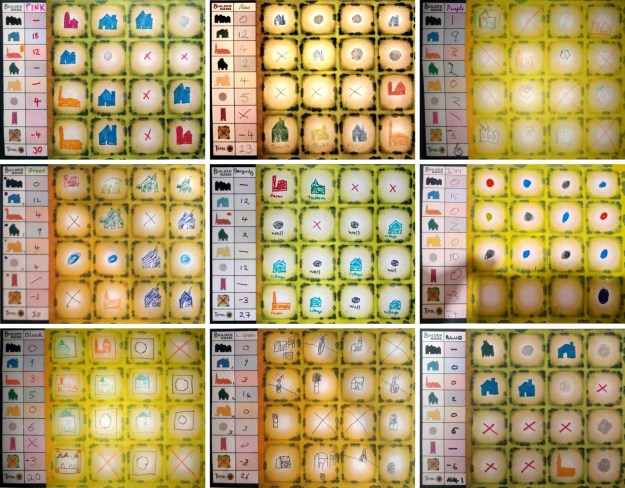
That was before the gremlins returned, this time to kybosh Ivory’s printer.  It looked like plans would have to be revised, but after a bit of poking he persuaded it to cooperate and everyone settled down to concentrate on their artwork. Cartographers is a “Roll and Write” type game or perhaps more accurately a “Flip and Colour”, as the game is driven by cards instead of dice and players are colouring terrain blocks, fitting shapes together in a Tetris-style.  This is similar to other games like Second Chance and Patchwork Doodle, but is definitely a step up thanks to goal cards revealed at the start of the game.  There are four goals two of which are scored at the end of each round in a way reminiscent of the scoring in another game that is popular with the group, the 2016 Kennerspiel des Jahres winner, Isle of Skye.
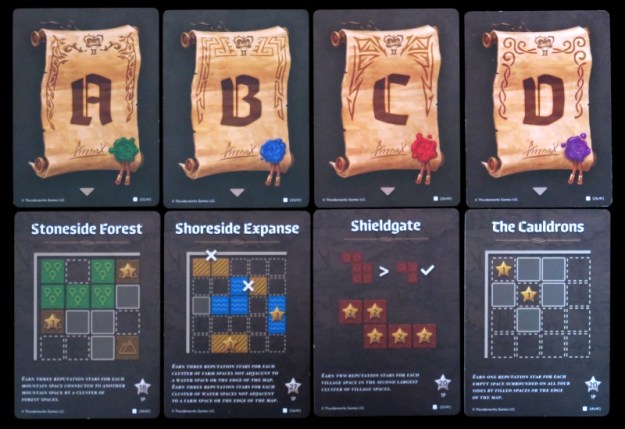
Cartographers: A Roll Player Tale
– Image by boardGOATS

This time the four goal cards were Stoneside Forest (three points for each mountain terrain connected to another with forest), Shoreside Expanse (three points for each lake or arable that is not adjacent to water, farmland or the edge of the map), Great City (one point for each space in a player’s second largest city) and The Cauldrons (one point for each single, empty space completely surrounded; the only goal card that was different to when we played the game back in September).  Goals A and B are scored at the end of the first round, Goals B and C at the end of the second and so on.  The game proceeds with players drawing their choice of shape and terrain from the card revealed, trying to score as effectively as possible for the current round, but also with an eye to scoring in later rounds.
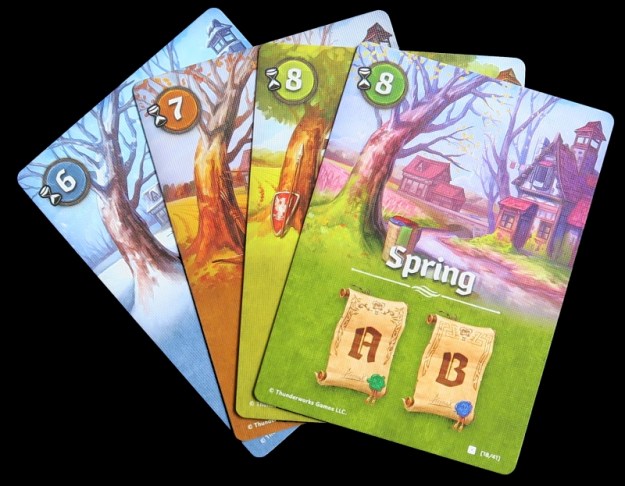
Cartographers: A Roll Player Tale
– Image by boardGOATS

The game is made more interesting in that cards give players a choice of terrain or shape and sometimes both, increasing the decision space over games like Second Chance and Patchwork Doodle.  Additionally there are Ruins cards which restrict where players can play for a turn, and Ambush cards which force players to put negatively scoring shapes on their board.  In the past, we have used the house-rule that instead of introducing one Ambush every round we only add them from the second round onwards to give people a chance to settle into the game.  Additionally, because we are playing remotely, we play the Ambush cards using the solo player rules.
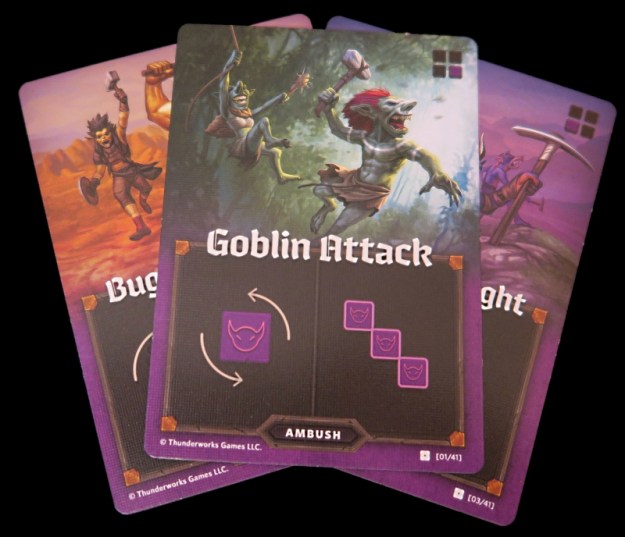
Cartographers: A Roll Player Tale
– Image by boardGOATS

Although we like the spice the Ambush cards add, they can swing the game quite a bit and add a bit of randomness.  Part of the driving-force to play Cartographers was the desire to try out the alternative, “Wastelands” map, so because of the additional challenge we thought this would add, we again used the house-rule, and only added three Ambush cards during the game.  The “Wastelands” are an area of the map that is inaccessible to the map-makers and as such is terrain already filled in, but is space that cannot be used.  It quickly became apparent that this meant players filled up their maps much more quickly so it became harder to place the bigger shapes from a much earlier point in the game.

Cartographers: A Roll Player Tale
– Image by boardGOATS

For some, this was an advantage when it came to the Ambush cards later in the game, as it meant there wasn’t sufficient space to add them to the player board.   The first round was full of Water and Farmland, which was useful for the Shoreside Expanse goal (at the end of the first and second rounds), but keeping them separate with the additional obstacle of the Wasteland was difficult.  Worse, this caused obstructions for players trying to score for connecting their Mountains using forest (Stoneside Forrest, scoring in the first and final rounds).
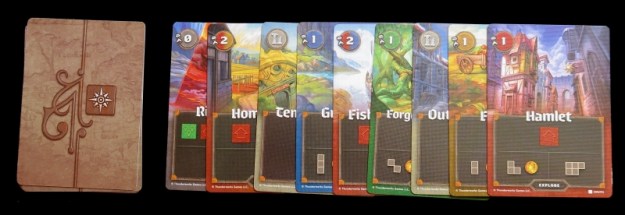
Cartographers: A Roll Player Tale
– Image by boardGOATS

There was also a lot of Settlement early on, with Woodland relatively scarce.  There weren’t any Ruins until later either and with the first Ambush card only appearing in the third round, players could mostly do what they wanted in the early part of the game.  When the Ruins came towards the end, some players had no choice where to place them while others benefited from being unable to place them at all.  The same was true for the Ambush cards with some players being unable to play them at all and therefore not picking up negative points at the end of the game.
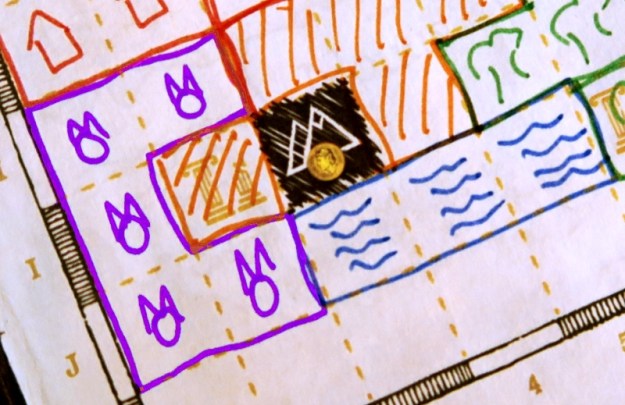
Cartographers: A Roll Player Tale
– Image by boardGOATS

When everyone was feeling the pinch the Marshlands card appeared, which is one of the biggest shapes.  Purple’s distressed cry of, “It won’t fit, I can’t get it in!”, was followed by Black’s dry response, “It’s too big…” which had everyone else in stitches.  From there it wasn’t long before the game came to an end.  Ivory was once again the first to report his score, posting a massive total of one hundred and eight, which most people felt would not be surpassed.  Indeed, that was the way it stayed with nobody else exceeding a hundred (after Black’s goblin-related recount), until Pink, giving his score last, sneaked into the lead with one hundred and twelve.
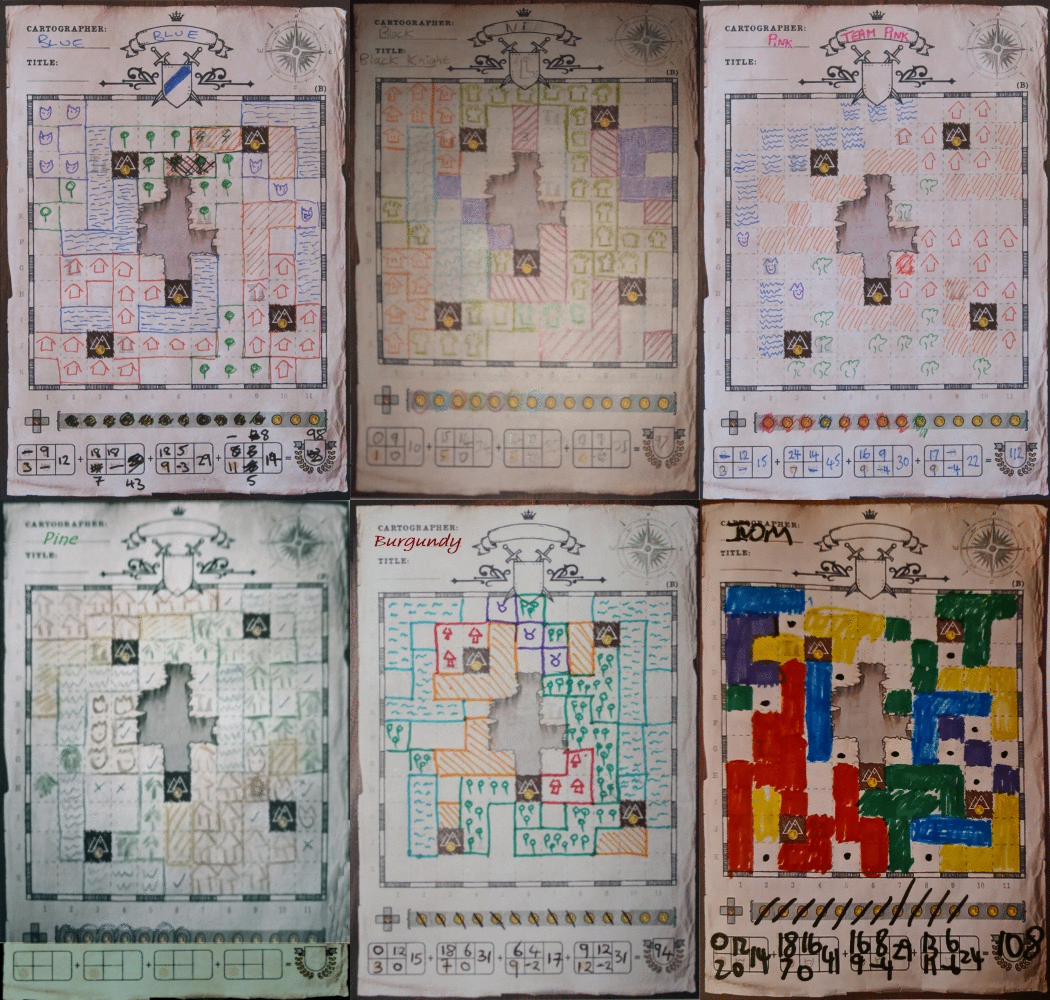
Cartographers: A Roll Player Tale
– Image by boardGOATS

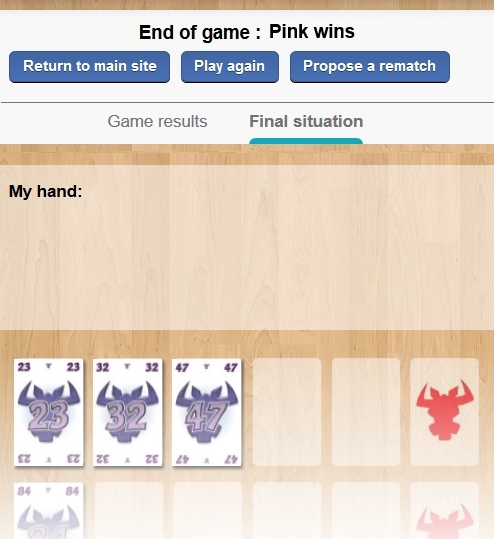
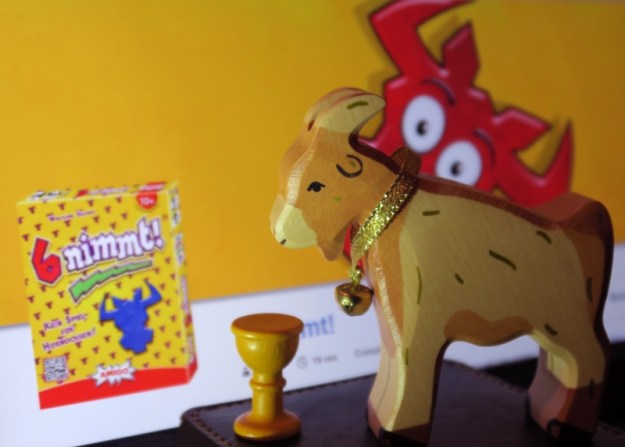
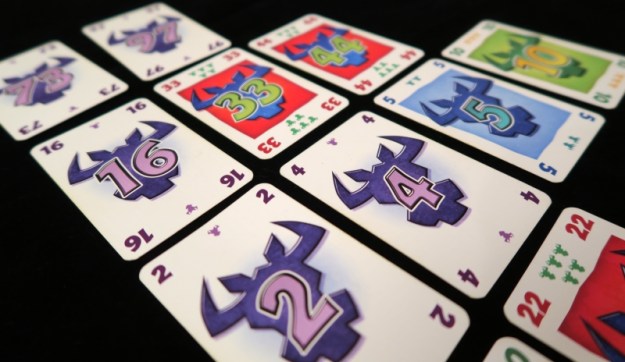
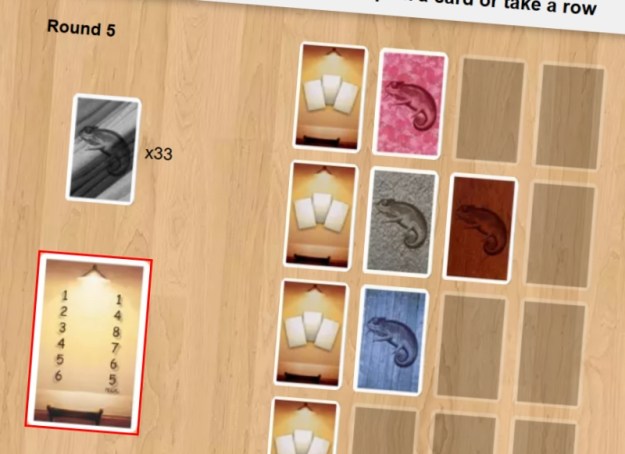
It was quite late, so Ivory headed off to bed as did Lilac, but there was still time for the rest to play a game of our current end of evening favourite, the Professional Variant of 6 Nimmt! on Board Game Arena.  This is so simple yet so much fun:  players simultaneously choose a card from their hand and then add them to one of the four rows in order.  The fast play, lack of down time, and the illusion of control together with the sudden disasters that befall people who are doing well, just hits the spot for the group.
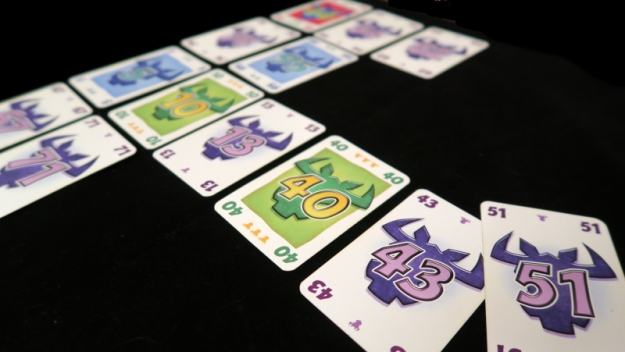
6 Nimmt!
– Image by boardGOATS

This time, Burgundy started the race to the bottom, but was quickly joined by Purple.  Her efforts were outstripped by Burgundy though who had high cards when he wanted low ones and low cards when he wanted high ones.  As a result, he finished with a very impressive minus twenty-seven.  At the other end, Green, Pink, Pine and Blue were neck-and-neck, until Green started collecting nimmts.  Pine, who always does well in 6 Nimmt! held the lead for most of the game, but with the end in sight, it all went wrong for him leaving Blue to take the glory just ahead of Pink.  Thanks to Burgundy’s prowess at collecting nimmts there was still time for one last game.
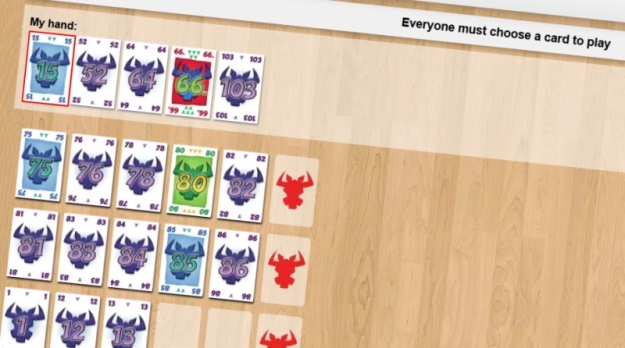
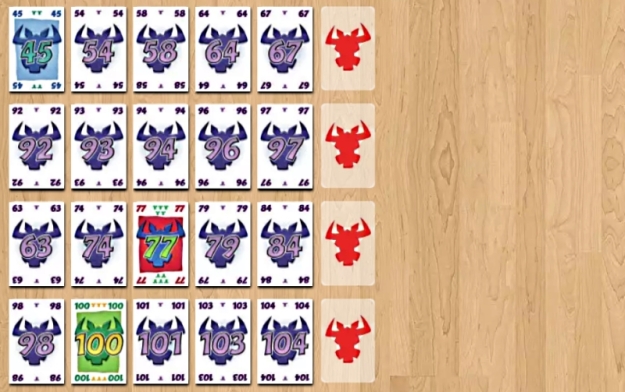
6 Nimmt! on Board Game Arena
– Image by boardGOATS from boardgamearena.com

There was a lot of discussion about options, but when someone pointed out that No Thanks! had had been added to the list of games (albeit in beta), everyone was keen to give it a go.  As Blue set up the game, Pine asked whether there was a “drop a token between the floorboards option” in reference to a memorable evening that had ended with a round of Hunt the Game Piece only to find that it had dropped seamlessly through the gap to nestle in the dust under the floor of The Jockey.  That sort of diversion aside, we all know the rules and the game is (usually) quick to play, so we thought we’d give it a go.

No Thanks!
– Image by boardGOATS

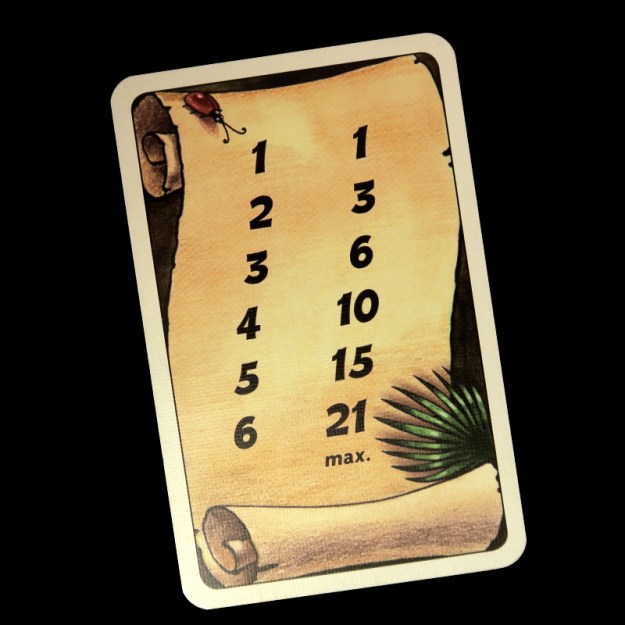
No Thanks! is an extremely simple game:  the top card from the deck is revealed and the first player has a simple choice, take the card or pay a chip to pass the decision on to the next player.  When a player takes a card, they also take any chips and then turn over the next card and start again.  The cards have a face value between three and thirty-five, but nine cards are removed at random.  When the deck is depleted, players sum the face value of their cards and subtract this total from the number of chips they have to give their final score—the player with the most positive score is the winner.

No Thanks!
– Image by boardGOATS

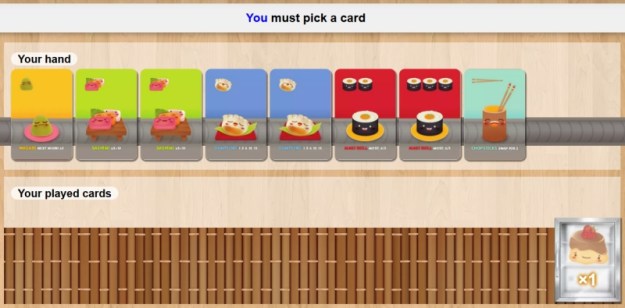
The really clever part of the game is that players who have a run, only count the lowest card.  This means cards have different values to different players and there-in lies the tension and the fun.  Further, since the number of chips players have is kept secret, players have to decide whether the card they want will still be available when their next turn comes.  The version of the game we usually play, nominally only plays a maximum of five people.  The more recent version plays up to seven, as does the Board Game Arena implementation.
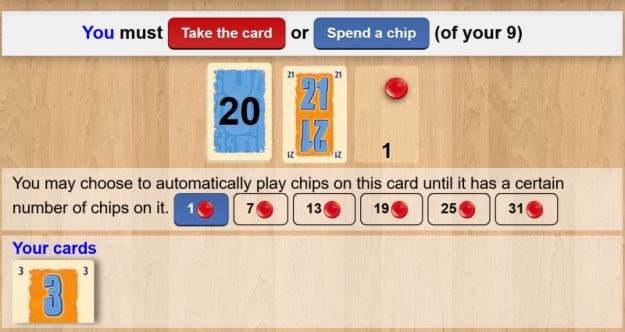
No Thanks! on Board Game Arena
– Image by boardGOATS from boardgamearena.com

The first thing we discovered was that the “Spend a Chip” button was perilously close to the top of the cards which meant it was very easy to “sausage-finger” and accidentally take a card without meaning to.  Black was the first to fall foul of this, but he was not the only one.  The second thing was that somehow, playing online somehow took away some of the tension, perhaps partly due to the automatic bidding, possibly contributed to by the fact we were playing with six, but probably mostly due to the fact that players cannot see the angst of their opponents as they try to make the simple decision.


No Thanks! on Board Game Arena
– Image by boardGOATS from boardgamearena.com

Success in this game is always achieving a rare positive score.  This time, Pink hogged all the chips finishing with nearly half the total in the game.  This put pressure on everyone else and even the winner finished in the red, albeit with a lot more than the minus sixty-four scored by the player at the bottom.  The winner was Pine, with minus six, some nine points ahead of Burgundy in second place.  Although we all enjoyed playing, somehow it didn’t have quite the same effect as 6 Nimmt!, so the search to find another game we can play at the end of the evening continues.

No Thanks!
– Image by boardGOATS

Learning Outcome:  Never assume the name of a game is a guide on how to play it.

19th January 2021 (Online)

Although they started the meeting early, Blue and Pink left Pine and Green to chat while they set things up.  Lime popped in and joined the chatter, with everyone else arriving in good time for 8pm.  Blue was just starting to explain the rules for the “Feature Game“, Noch Mal So Gut!, when the gremlins first put an appearance (and no, it wasn’t Beige, though he might have been responsible for summoning them).

Beige
– Image by Pine

For the most part, we’ve been quite lucky with the technology.  We’ve had a couple of issues, once when Lime and Ivory got alternately thrown out of Microsoft Teams and another when Tabletop Simulator died on us last April in the middle of a game of Finstere Flure (aka Fearsome Floors), but otherwise the issues have been very minor.  This time the Gremlin Attack was ultimately more spectacular, although it started slowly with Black and Purple having issues with the window-in-window Teams view that wouldn’t maximise.  Eventually the problem went away and Blue explained the rules.

Finstere Flure
– Image by boardGOATS

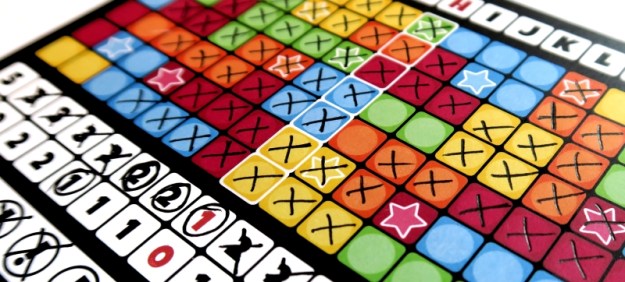
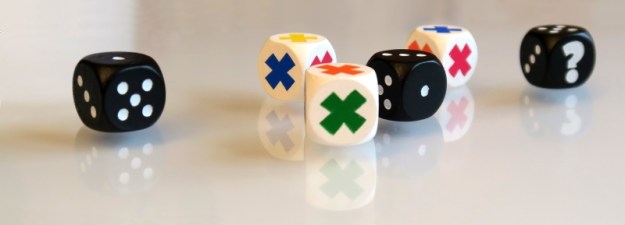
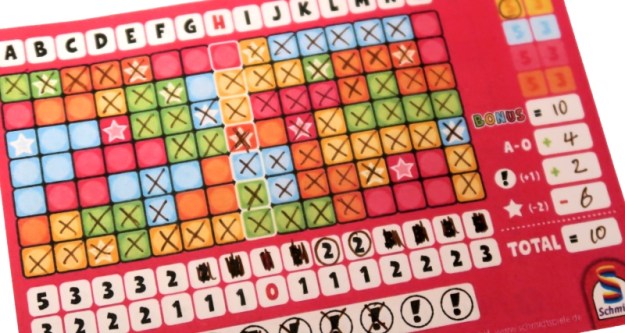
Noch Mal So Gut! is a slightly more complex, more strategic version of Noch Mal!, a game we have played a few times (including with the first Zusatzblock) and is known within the group as “Boardgame Bingo“.  The basic version of the game is quite simple:  the active player rolls three colour and three number dice and picks one of each, using them to cross off coloured blocks on their player board.  Everyone else then picks one colour and one number from the remaining dice and uses them in the same way.  The player board consists of coloured squares in groups making blocks.  Squares can only be crossed off when they are orthogonally adjacent, match the colour on the die chosen and either start in the middle row (Row H) or are next to another square that has already been crossed off.

Noch Mal!
– Image by boardGOATS

The dice are numbered one to five with a wild for the sixth face, and the number indicates exactly how many squares must be crossed off, it is not possible to “overpay”.  Similarly, there are five colours and one wild (black)—each play only gets eight chances to use number or colour wilds during the game, so they must be used sparingly.  Points are scored for completing columns or crossing off all the squares of a colour, with the player who manages this first scoring more points than those to achieve it later in the game.  Negative points are scored for any stars that are not crossed off.  The game ends when a player crosses off all the squares of two colours.

Noch Mal!
– Image by boardGOATS

The second implementation, Noch Mal So Gut!, adds a couple of new features which add a large slice of strategy.  Firstly, there is an extra die which players can choose to use instead of the colour/number dice pair.   This special die provides actions like bombs which blow up any four squares in a two-by-two group, or the ability to cross out two squares with stars on them.  The special actions can only be used if a player has a “special die” token to spend.  These can be collected during the game, primarily by crossing off squares featuring the special symbol.  In addition to the special die, players also score points for completing rows, with the first successful player or players additionally gaining a bonus, special dice tokens, bombs or hearts.  The hearts are one of the symbols on the special die, in fact it features on two faces so comes up quite often.

Noch Mal So Gut!
– Image by boardGOATS

Hearts give players the bonus points when they complete columns; the number of bonus points they get depends on the number of hearts they have when they complete the column.  So this adds a little bit of spice to the game:  should a player spend dice rolls in the early stages on hearts and hope to be able to cash in later?  Or should they concentrate on completing rows and columns and end the game before other players can capitalise on the hearts they have collected?  The good thing about Noch Mal! (and the reimplementation) is the interaction, through the dice selection and also the scoring.  This is something that is sorely missing in many of the “Roll and Write” style games we have been playing.

Noch Mal!
– Image by boardGOATS

That said, the dice selection element does slow the game down somewhat.  It’s not too bad though, as everyone is only waiting for one player before they can make their selection simultaneously.  It didn’t take too long to get started, though first Black and Purple had technical issues and then Green dropped out for a bit too, so they all had to be filled in on the bits they missed.  A couple of others had a moment and Microsoft Teams got the blame, but we soon started playing, and as always, Ivory was quick to start collecting columns making rapid progress to the right where he started to claim lots of points.  We were making good progress when Black and Purple vanished, so we waited to see if they would come back.

Dots
– Dots by Dribbble on
pinterest.com

After some waiting, and attempts to invite them back, it was starting to look like they had a more serious problem.  Green offered to contact them by SMS and everyone else took drink, snack and litter tray breaks while the opportunity was there.  Eventually, we heard back that Black’s computer had crashed and was now doing a disk-check.  We were reluctant to admit defeat, so although we carried on without them, we took screen-shots of the dice choices they had, just in case they were able to rejoin us.  This was working fine until it was Black’s turn and it was looking like the game might have to continue without Black and Purple, when miraculously, they suddenly rejoined the meeting.  A quick flash back through the previous three or four rolls and the game continued from there.

Noch Mal So Gut!
– Image by boardGOATS

Blue picked up the first row, Green took one, Burgundy got a couple and Blue took a couple more.  Pink meanwhile had collected a full set of hearts and was starting to make hay on the bonus points.  People seemed to enjoy this implementation more than the original Noch Mal!, because it offers more in the way of strategy.  It was pushing 10pm by the time Burgundy brought the game to an end, though to be fair we’d spent nearly half of the time dealing with the gremlins. And it took a while to work out the scores too.  Like the original, the first task is to finish with a positive score, which this time, everyone managed.  As the totals came in, Burgundy, Green, Pink and Pine had all done well, but Blue was well out in front finishing with sixty-four points, more than twenty ahead of Pink in second.

Noch Mal So Gut!
– Image by boardGOATS

The lateness of the hour ruled out the possibility of playing ClipCut Parks or Cartographers (again!), and given the IT issues, we decided it was time to move to Board Game Arena.  After a bit of chit-chat about leaving up Christmas lights, Ivory and Lime said good night.  There was some discussion about what to play:  Pine commented that despite nominating it for the GOAT Poo prize before Christmas, he actually really liked Welcome To… on Board Game Arena, and for some reason found it better than playing on paper.  Green took a quick look and vetoed it as “another Roll and Write game” saying he’d had enough of them.  So eventually, we decide to play Saboteur.

Saboteur
– Image by boardGOATS

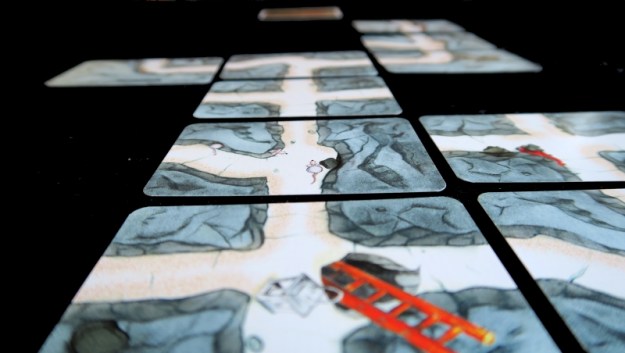
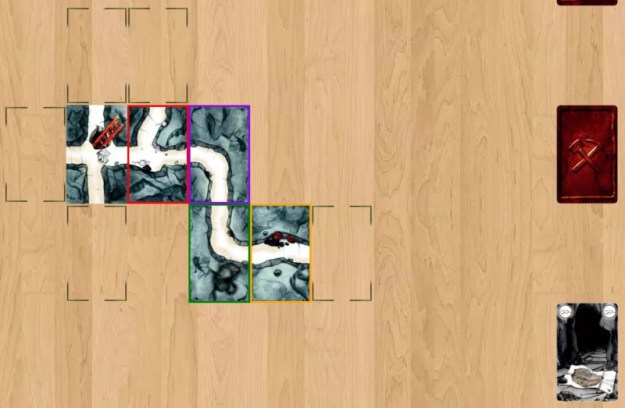
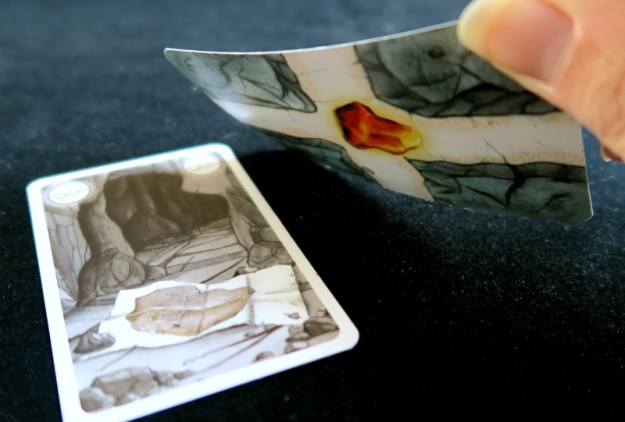
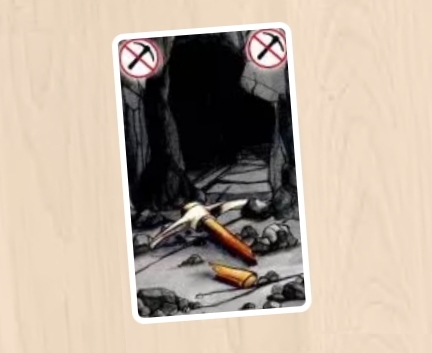
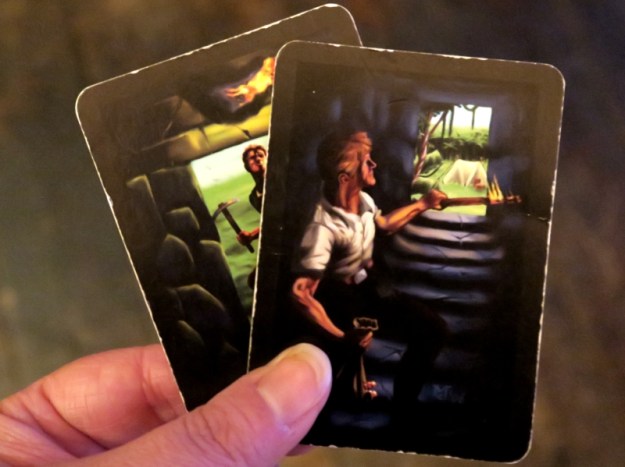
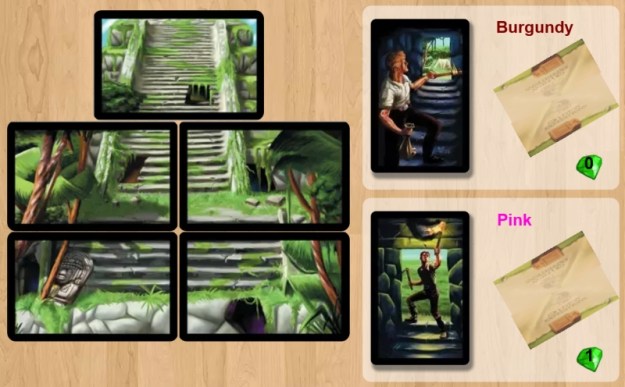
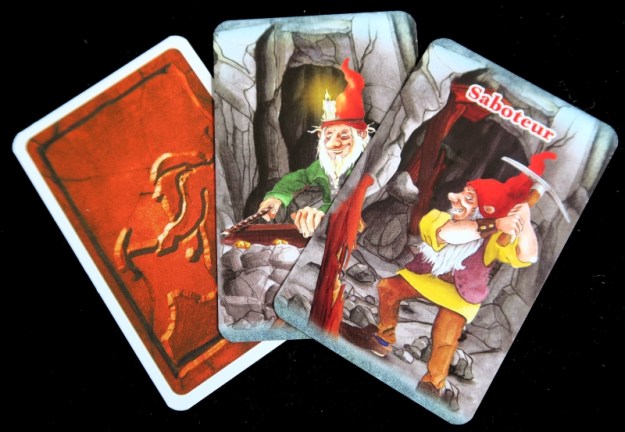
Saboteur is an old favourite which we’ve played a lot over the years, including just two weeks ago.  This is a hidden traitor type game where players are Dwarves tunnelling to find gold, or evil Saboteurs trying to prevent the Dwarves succeeding.  Players have a hand of cards which they can use to progress the tunnel or or action cards which they can use to do things like stop other players from digging, cause rock-falls or look at the target cards and help to identify where the gold is hidden.  Half the fun in this game is the banter and accusations that go along with it.
Saboteur
– Image by boardGOATS

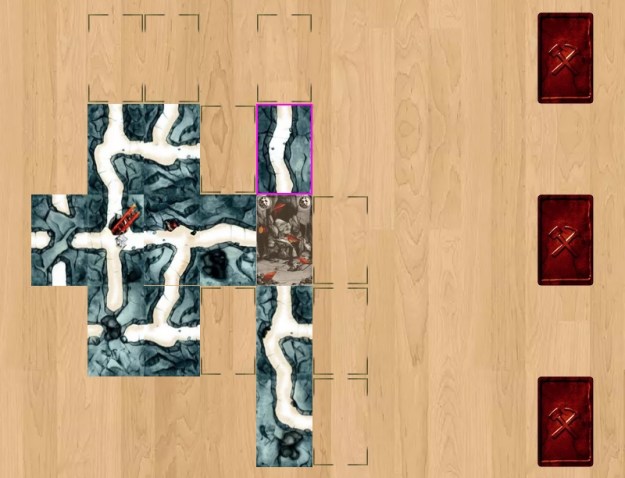
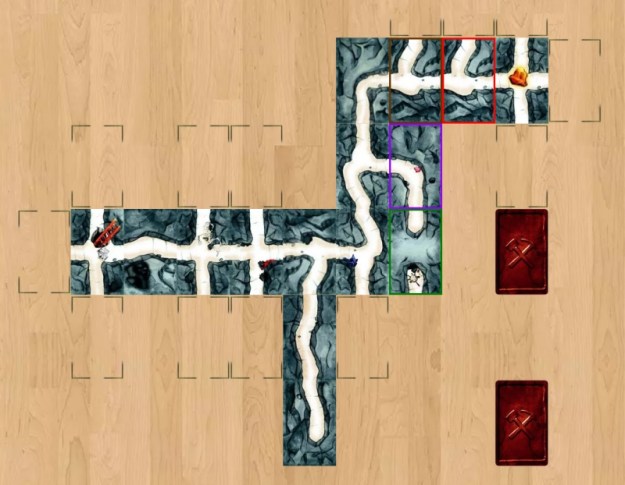
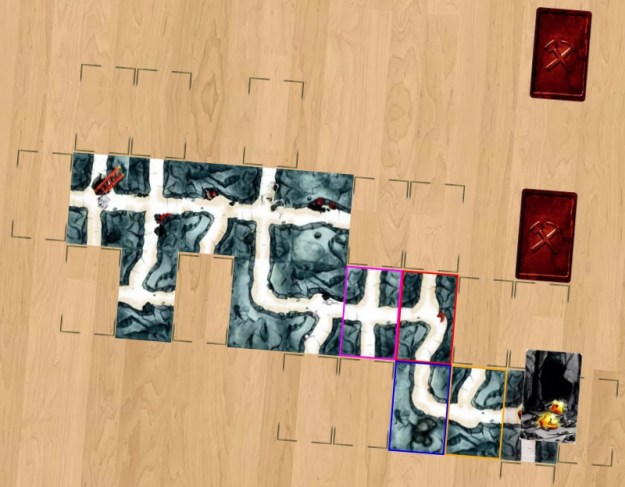
This time, the banter started with Green accusing Blue of being a Saboteur, mostly just because.  Blue retaliated and accused Green, but when Pink played a dead-end card on the main route to the gold, Black broke Pink’s pickaxe for him and Pine followed by breaking his lamp. Green triggered a rock-fall only for his suspicions about Blue to be confirmed when she blocked the tunnel.  With Purple aligning herself on the side of the Saboteurs, by breaking Green’s pick, the three Saboteurs knew each other.  The game is always really difficult for the Saboteurs, but with three against four Dwarves and the tunnel blocked, there was just a chance that they might manage it this time.

Saboteur on Board Game Arena
– Image by boardGOATS from boardgamearena.com

Pink broke Black’s trolley only for Burgundy to repair it immediately.  Pine removed the blockage and Blue blocked it again.  Eventually Pine cleared it again and with the deck exhausted, victory for the Saboteurs was tantalisingly close.  That triggered a tsunami of tool destruction.  The Dwarves were creeping ever closer to their target though, but there was just a chance.  If Purple could play a straight tunnel past the target it would mean the Dwarves would have to tunnel that bit further, and perhaps they wouldn’t have the cards.

Saboteur on Board Game Arena
– Image by boardGOATS from boardgamearena.com

Unfortunately, Purple misunderstood and, amid much hilarity, the Dwarves gleefully claimed their treasure.  They almost certainly would have won anyhow, but it still felt a bit like an opportunity missed.  There wasn’t time to dwell on it though as it was time for the second round.  Burgundy declared his position early by playing a dead end card forcing Pink to clear it, exonerating him.  Pine joined Burgundy’s side when he caused a tunnel collapse in the middle of Route One and Purple again showed her evil side by breaking tools.  The Dwarves quickly patched up the tunnel, but the Saboteurs again put up a fight.

Saboteur on Board Game Arena
– Image by boardGOATS from boardgamearena.com

Eventually, Blue claimed some coal and the gold with a single card, and it was time for the third round.  This time, the Dwarves hedged their bets and started with a three-pronged approach, but before long, the tunnel was marching forward towards the central card.  Green revealed his true nature as an Evil Saboteur by playing a dead-end card and was joined by Purple and Pink, (again). Pine cleared his blockage enabling Black to get to the treasure before the deck was exhausted.

Saboteur on Board Game Arena
– Image by boardGOATS from boardgamearena.com

The winner depends on the distribution of “gold cards” at the end of each round.  There are the same number of cards as players, and the number of gold on the cards varies at random between one and three.  The person who finds the gold will always get the highest value card and one other, as they are doled out to the winning team, highest first, in reverse player order.  The problem is, as the Dwarves have the advantage, the “winner” will almost always be a player who has not been a Saboteur.

Saboteur
– Image by boardGOATS

This time that was not the case, with Blue and Burgundy tying for first place, both having been Saboteurs, but also both having personally found gold and also been the penultimate player (thus getting four cards).  Black was the only player not to have been Evil at some point during the game and took the bronze medal, also having taken four cards, but with a lower total value.  Poor Purple though, who had been a Saboteur in all three rounds definitely drew the short straw.  In fact, we are starting to think her friendly exterior belies an Evil lurking beneath as she has been the Saboteur on no fewer than four occasions this year already!

Saboteur
– Image by boardGOATS

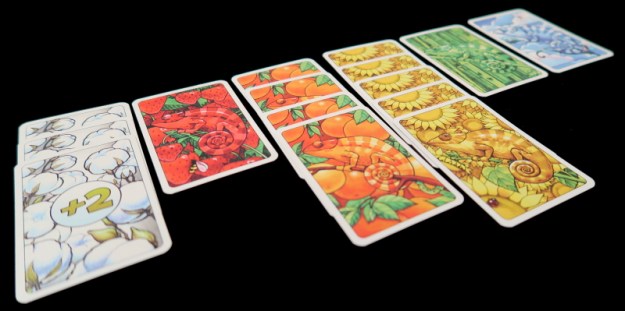
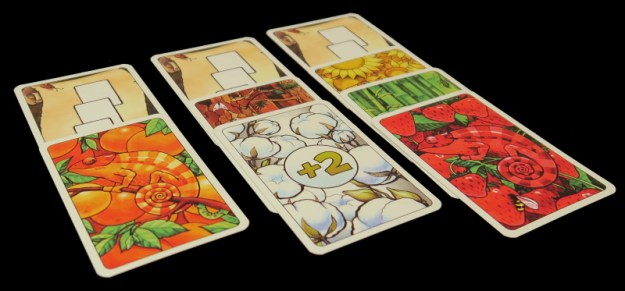
As Pink and Pine signed off, eschewing our usual finale of 6 Nimmt!, this time we enticed Green to stay for one last game of Coloretto.  This is a very simple card game that forms the underlying mechanism of the perhaps better known board game, Zooloretto.  On their turn, players have a very simple choice:  Draw a coloured chameleon card and add it to a truck, or take a truck.  The chameleons come in seven different colours and players are trying to build sets, but only the largest three sets will score positively, with the rest subtracted from that total.  With five players, the game is quite short.  This time, the game started with everyone pretty much level until Blue started to lag behind.

Coloretto
– Image by boardGOATS

Forced to gamble, when she found herself the only player left “in” with an almost empty truck, she chanced her arm and turned over cards.  When she got lucky the first time, she tried gambled the second time it happened and went from the back of the pack to taking a large lead.  Black tried the same trick and also got lucky then when Burgundy decided to “take one for the team” and played “King Maker”, Black took the lead as the game came to an end and held on for a fine victory.  With that, Green decided it was definitely time for bed and after a little bit of chit-chat, everyone else went too.

Coloretto on Board Game Arena
– Image by boardGOATS from boardgamearena.com

Learning Outcome:  Being evil is harder than you might think.

5th January 2021 (Online)

It was a very quiet night:  Pine was late arriving due to another meeting; Lime had gone to bed early; Green and Lilac eschewed games in favour of the telly.  So it was just six that settled down to the “Feature Game“.  This was On Tour, a “Roll & Write” game where players are managing a band going on tour.  The idea is that players have to plan the band’s route and schedule their stops visiting as many places as possible as shown on their map.  Blue was having one of her dopey nights and made a bit of a pig’s ear of explaining the rules, but fortunately, they weren’t overly complicated and Burgundy was on the ball and filled in the gaps where necessary.

On Tour
– Image by boardGOATS

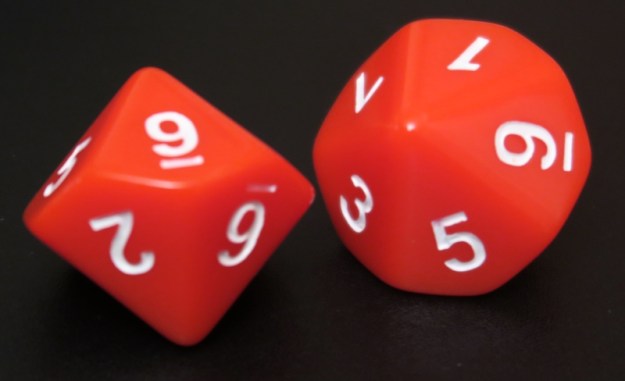
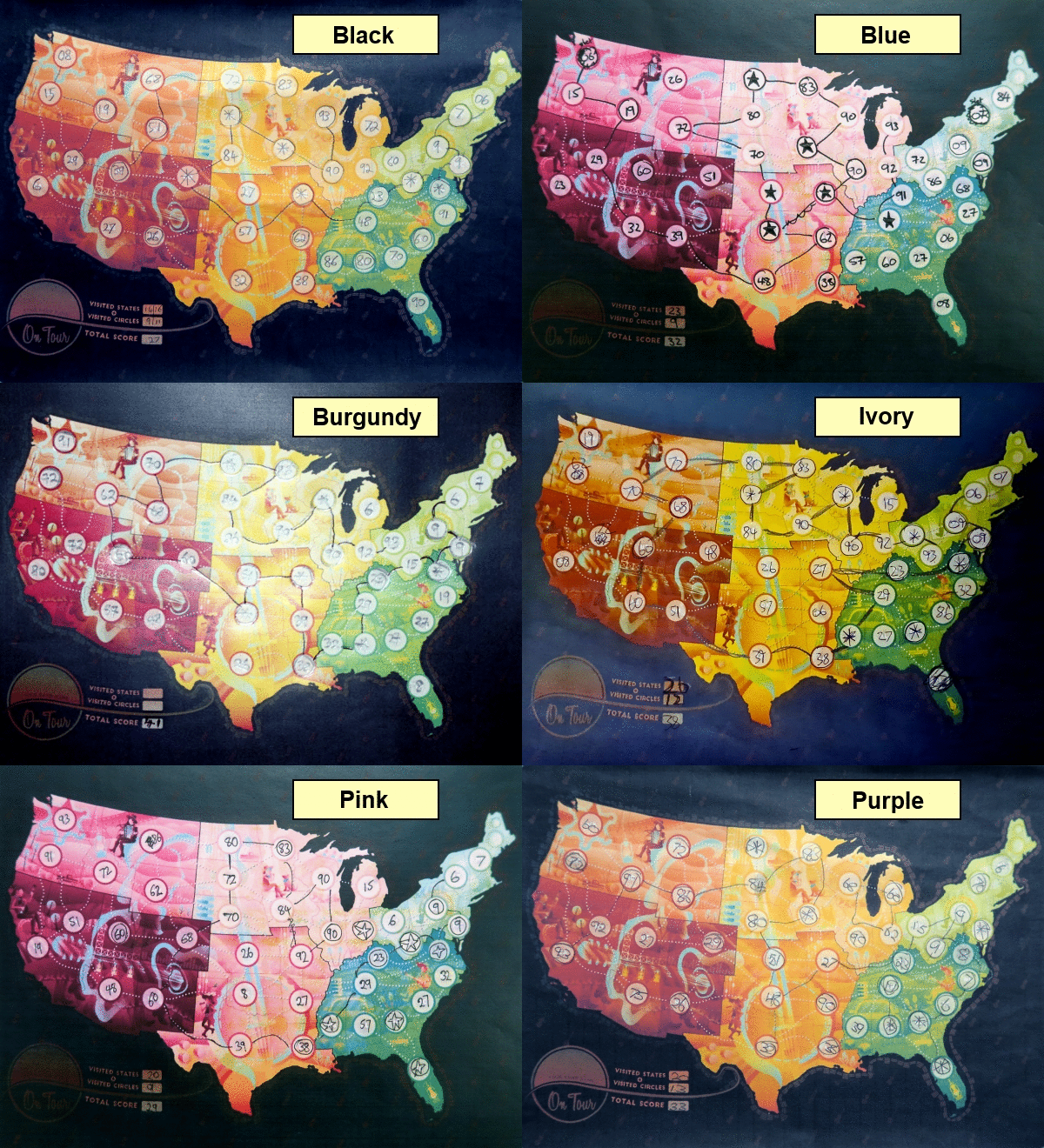
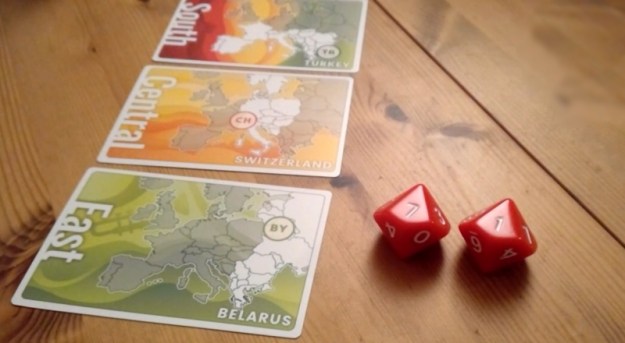
The map is divided into six sections: a horizontal border dividing the North and South and two vertical borders separating East, West and Central giving six areas.  At the start of each round, three cards are revealed from the deck.  Each card features one of the possible stops and a region: North, South, East, West or Central.  Two d10 dice, are also rolled, each individually giving a number between zero and nine, which when combined, give two two digit numbers, i.e. five and three give 35 and 53.  These two numbers must both be written on each player’s map in two of the three regions shown on the cards.  At the end of the game, players draw a route from location to location following the marked paths, with each location visited having the same number or higher than the previous one.

On Tour
– Image by boardGOATS

Although this is almost all there is to the game, there are a couple of little niggles.  Firstly, if a double is rolled, instead of two numbers, players draw one star in one of the regions shown on the cards.  Similarly, if all three cards reveal the same region, then players again draw one star in that region.  Finally, if a player can write a number (or star) in the state/country shown on the one of the cards, they draw a circle round it, signifying that it is worth double if it is included in the band’s tour.  Players thus score points for each location visited and an extra point for each location visited that has been circled.  The player with the most point is the winner.

On Tour
– Image by boardGOATS

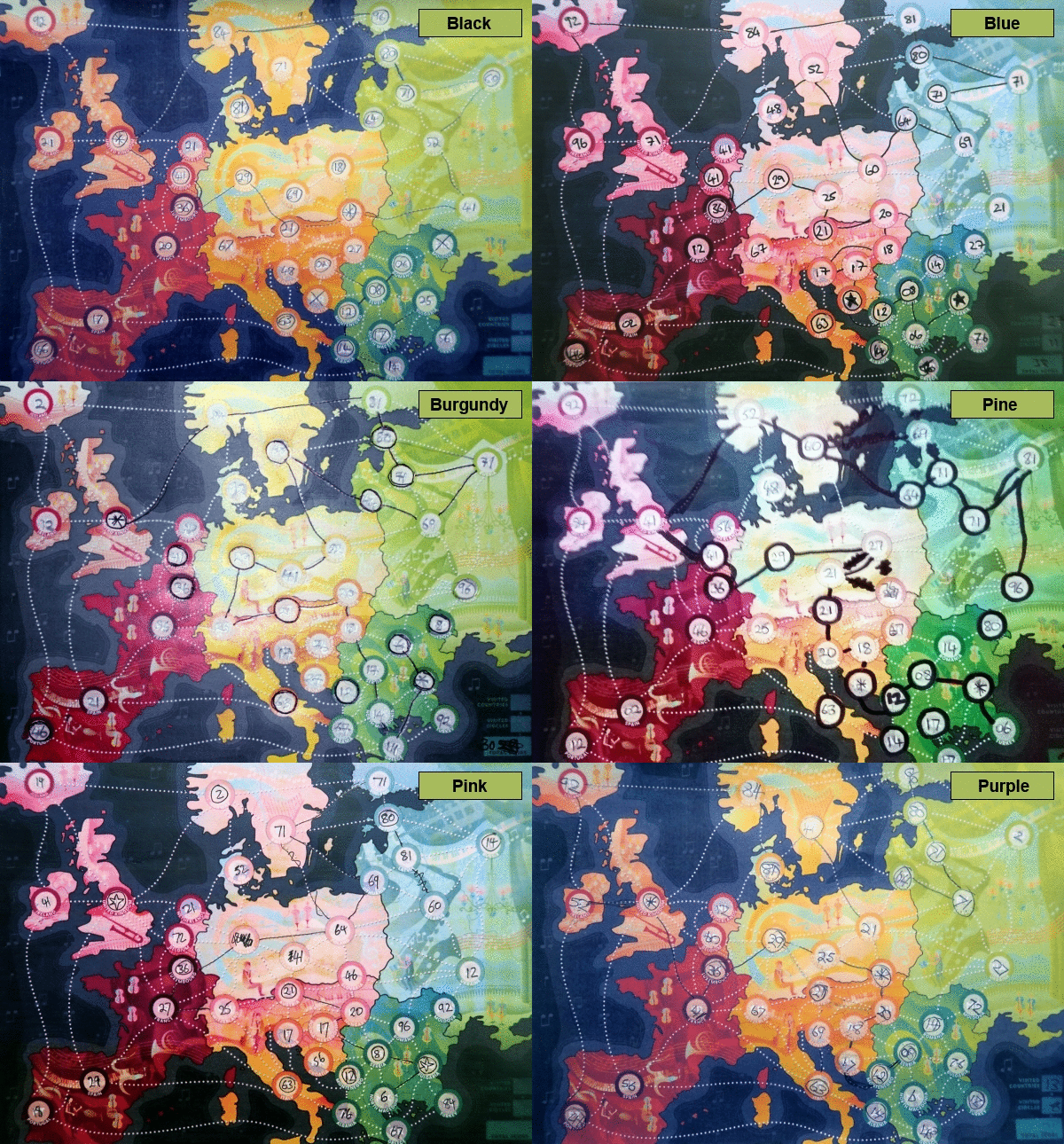
There is a little bit of setup, where the dice are rolled twice (to give four numbers) and four cards are revealed.  Everyone writes these numbers in in the same locations and circles them, which basically helps to stop everyone from placing on the low numbers on one side and all the high ones on the other.  The first rolls were 09, 90, 38 and 83, placed in Pennsylvania, Illinois, Louisiana and Minnesota respectively.  This put low and high numbers in the east, which was not a good start, but things got worse when the following dice rolls were repeatedly high/low numbers rather than mid range.

On Tour
– Image by boardGOATS

About half way through, Pine popped in having escaped from his meeting, to see how things were going.  As he hadn’t eaten yet, he popped out again and returned later with his grub, just in time to see the last couple of rounds.  The game was full of muttering and this just seemed to increase towards the end, as people had one or two critical numbers they needed to make their tour work.  There was a big cheer from both Burgundy and Ivory when the penultimate roll gave them a 60.  This made a huge difference to them almost doubling their scores, giving Burgundy the winning score of forty-one, three ahead of Ivory on thirty-eight.

On Tour
– Image by boardGOATS

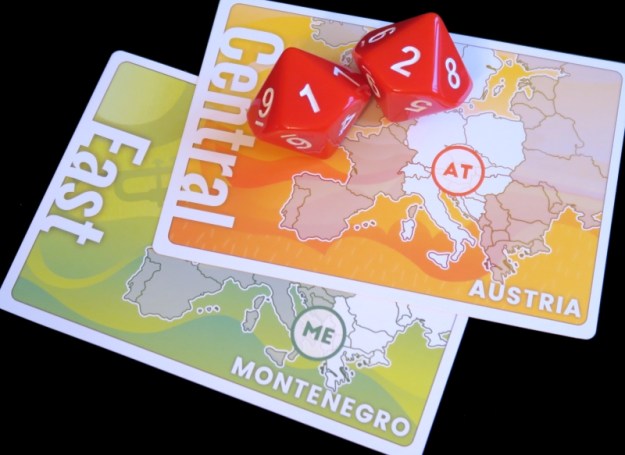
We’d really enjoyed the first try and everyone was keen to give the European map a go too, especially Pine, who liked the idea of planning a music tour.  The starting numbers of 12, 21, 08 and 80 weren’t too bad, even though they were mostly located in the south west of Europe (Montenegro, Austria, Serbia and Estonia respectively).  These were quickly followed by lots more low numbers causing Pine to comment that his Tour was in lockdown and going no-where.  Burgundy muttered about a blockage in central Europe and added that for him Turkey was out of the question, to which Blue queried whether he’d over-indulged at Christmas…

On Tour
– Image by boardGOATS

Eventually, Burgundy announced that he’d cleared his blockage, to which Pine answered that was possibly something that had to happen a lot on tour buses given the diet often enjoyed by  roadies.  Meanwhile, the muttering returned as people increasingly needed specific numbers to make things work and gambled on dice rolls making their tour segments connect.  Everyone seemed to get more or less what they needed and most people seemed to decide Ireland and Portugal weren’t worth visiting, dumping difficult numbers there.  Pine started in Turkey and almost ended up back there.

On Tour
– Image by boardGOATS

Blue who last time played safe and added almost nothing to her score in the second half of the game, learned from Ivory and Burgundy and managed to stitch three sections together in the last couple of rounds.  Somehow, players appeared to have more options this time and everyone seemed to spend a lot of time trying to optimise their final routes to get the best scores possible.  This time Burgundy and Ivory again did well, but Pine just beat them to second place, with Blue producing the highest scoring tour, going from Bulgaria to Ireland via a meander through central Europe and the Baltic states.

On Tour
– Image by boardGOATS

The game had been quite enjoyable, but had taken quite a lot longer than expected (although part of that was because we’d played it twice).  There was still time to move to Board Game Arena for a couple of games though.  Ivory took his leave, but after some discussion, everyone else settled down to a game of Saboteur, a game we are all very familiar with and have played quite a bit both in real life and, more recently, online with Board Game Arena.

Saboteur
– Image by boardGOATS

We all know the game well so it was quick to get started.  Each player has a hand of cards and takes it in turn to either play a tunnel card, or play an action card.  The aim of the game is to help the team build a tunnel to whichever of the three terminal cards holds the gold, unless you are a Saboteur of course, in which case, your aim is to hinder the efforts made by everyone else.  With just six players there are either one or two Evil Saboteurs, and the rest are Lovely Dwarves.

Saboteur
– Image by boardGOATS

This makes it hard for the Saboteur team and they have to get their act together quickly to make the most of what little time they have.  We usually play with the “House Rule” that we treat each round as an independent game, but on Board Game Arena, the game is played over three rounds (as per the rules as written).  Purple started the first round and by chance headed south where Blue soon alleged that gold was to be found.  Burgundy confirmed it, but Pink claimed Blue was fibbing and broke her trolley making life especially difficult for her as she only had tunnel cards to play.

Saboteur on Board Game Arena
– Image by boardGOATS from boardgamearena.com

When Black said the bottom card was not gold, that really put the cat amongst the pigeons.  Something about Burgundy’s behaviour clearly made Pine suspicious as he broke Burgundy’s pick for him and Pink then broke Black’s trolley too.  The tunnelling had somewhat stalled, but once Pine repaired Blue’s tools the digging resumed.  From there it wasn’t long before Pine reached the gold and Pink and Burgundy were revealed as treacherous Saboteurs, the first time ever for Pink.  It was at this point that everyone realised that Black had looked at the bottom card and claimed it wasn’t gold.  When questioned about it, he said it was just to add a bit of interest…

Saboteur
– Image by boardGOATS

Purple started the second round as well, and Blue again was quick to take a peek at the bottom target card—this time she claimed it was coal.  Pink said he didn’t believe her, but Blue pointed out how unreliable he was after last time.  For everyone else, the jury was still out.  Purple looked at the top card and said it was gold.  Pink confirmed that the bottom card was coal and then Pine’s repeated discarding of cards roused Purple’s suspicions and she smashed his lamp for him.  Black returned the favour, breaking Purple’s lamp.

Saboteur on Board Game Arena
– Image by boardGOATS from boardgamearena.com

Meanwhile, the tunnel continued progressing slowly.  Then Pine showed his true colours and triggered a rockfall in a critical location.  The gap was quickly plugged by Pink suggesting that perhaps he wasn’t evil this time.  Burgundy broke another of Pine’s tools, but he was quickly able to repair that.  Blue didn’t have any cards that would take her to the top card that Purple claimed was gold, but could make it to the middle card, so rather than discard, confirmed it was coal.  When Black discarded yet another card, it was too much for Burgundy who called him out for the traitor he was and smashed up his trolley.  Then it was only a couple of turns before Purple made it to the gold for the lovely Dwarves.

Saboteur on Board Game Arena
– Image by boardGOATS
from boardgamearena.com

Pink was first to play in the final round and the tunnel made rapid progress towards the middle target card.  The dwarves were nearly half way there when Purple checked the middle card and said it was coal.  Blue immediately checked the bottom card and said it was also coal and the tunnel swiftly turned north and Pine confirmed that was where the gold was.  Purple smashed Black’s lamp—a very suspicious move, and then Pink played a tunnel card pointing away from the agreed target—he pleaded stupidity, but everyone else thought that was also a suspicious move.

Saboteur on Board Game Arena
– Image by boardGOATS
from boardgamearena.com

Blue was able to fix the problem caused by Pink, but a couple of turns later he confirmed his treachery when he played a rockfall and regressed the tunnel.  Fortunately, he could have played it in a worse place and Burgundy was quickly able to repair the damage.  A couple of turns later, after a brief hailstorm of broken tools, Purple also confirmed her status as an evil saboteur.  Fortunately it was too little, too late and Burgundy and Pine were able to extend the tunnel to the gold.

Saboteur on Board Game Arena
– Image by boardGOATS from boardgamearena.com

It was the second time Pine had made it home, and unusually, despite the fact he had failed as as saboteur in the second round, he took overall victory.  Although time was marching on, there was still enough for a game of our favourite, the 2020 Golden GOAT, 6 Nimmt!.  The game is so simple, yet so much fun, it is the perfect end-of-the-evening game.  It sounds so unpromising:  players simultaneously choose a card, then starting with the lowest value card played they add them to one of the four rows.  If the card is the sixth card, instead they pick up the cards and add them to their scoring pile with the the card they played forming the start of a new row.

6 Nimmt!
– Image by boardGOATS

It is as simple as that.  On Board Game Arena, players start with sixty-six points (or “nimmts”) and the player with the most points when one player falls below zero is the winner.  We usually now play with the “Professional Variant”, so cards can be added to either end of the rows which adds to the madness.  This time, Pink was the first to pick up cards while Purple continued in what feels like her New Year’s resolution, not to be the first into the red.

6 Nimmt! on Board Game Arena
– Image by boardGOATS from boardgamearena.com

With Purple recusing herself from the race to the bottom, Pink, Blue and, unusually, Pine, took her place.  Eventually Blue got left behind and Pink and Pine duked it out.  Remarkably, it was Pine, who nearly always does well in 6 Nimmt!, reached the bottom first, suddenly picking up fourteen bulls’s heads, just before the end of the round bringing the game to an abrupt end.  There was some ribbing about how he was just doing to prove that he didn’t always do well—still, with a little practice before next time, he will no doubt return to his usual position.

6 Nimmt! on Board Game Arena
– Image by boardGOATS from boardgamearena.com

The winner in this game is always largely incidental, but this time Black was the one who finished with the most points, nine more than Burgundy in second.  There was a bit of chit-chat about school and Christmas before we left.  Pine explained how he was at primary school with Anthea Turner (or perhaps it was her sister Wendy).  Blue told how her mum and uncle were at school with Pam Ayres and her sister Jean, who still lives in Stanford.  When Purple explained about the time that her nephew had reached into Black’s stocking and pulled out his old nuts, we all knew it was time for bed.

6 Nimmt!
– Image by boardGOATS

Learning Outcome:   Ohhhhh, so THAT’S where South Dakota is!

31st December 2020

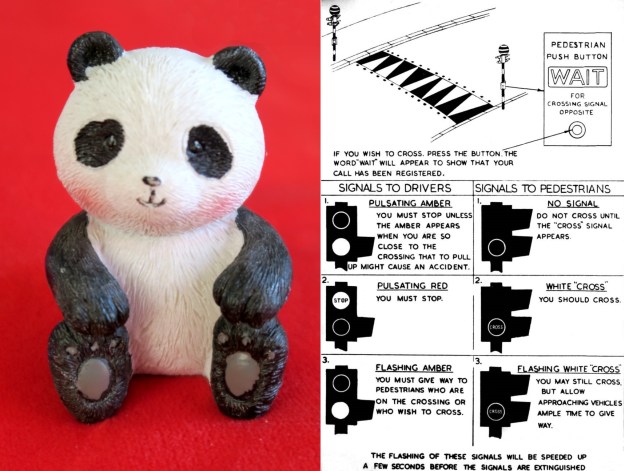
Following the success of all the previous New Year parties, everyone wanted to have one this year too especially given how difficult it has been.  So, the evening began with Pink showing off his new Christmas panda games which were admired as people arrived.  Much to Blue’s horror, Pine then showed off his lack of trousers which he was not wearing in Pink’s honour.  There was much messing about with the new version of Teams and the settings, because Green seemed to be muted in the chat and couldn’t work out how to fix it.
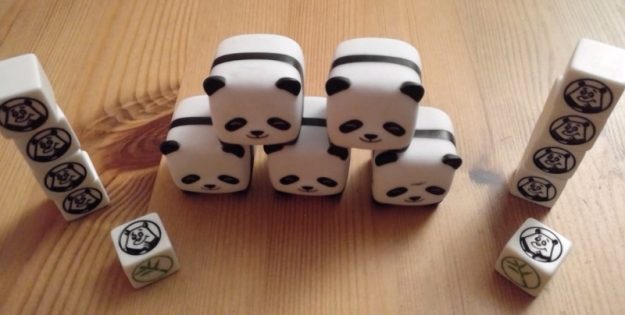
Pass the Pandas & Posing Pandas
– Image by boardGOATS

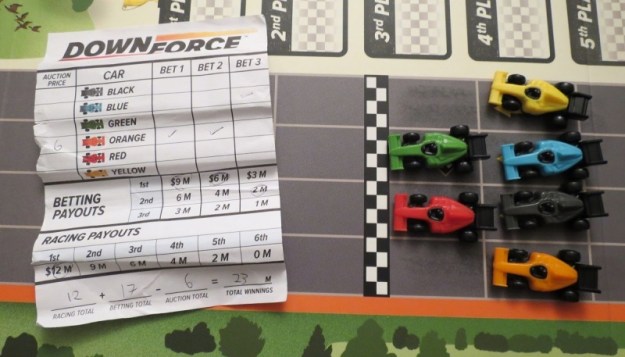
After a lot of messing about, eventually we settled down to the “Feature Game”.  In the absence of our usual New Year game of PitchCar, we opted for the nearest online alternative: Downforce played online using Board Game Arena.  Downforce is a card-driven, bidding, racing, and betting game, based on the older games, Top Race and Daytona 500.  There are lots of different options, but basically, the game comes in two parts.  Firstly there is an auction for the cars, then there is the race when players try to manipulate the race so their cars win, and bet on which car will triumph.

Downforce
– Image by BGG contributor The Innocent

The clever part of the game is the cards which are used for bidding in the first part of the game and then later to move the cars.  These are marked with one to six of the colours corresponding to the six cars in the race.  Each colour has a number which represents the car’s speed, i.e. how far it will travel in a forward direction.  These cards are activated from the top to the bottom, moving the fastest car first, then the next and so on.  The cards show different combinations of colours and numbers, but players know what they have at the start of the game.  This therefore gives the players much more control over what they are doing, compared to games like Formula D for example, where the movement is dependent on rolling dice.

Downforce on Board Game Arena
– Image by boardGOATS from boardgamearena.com

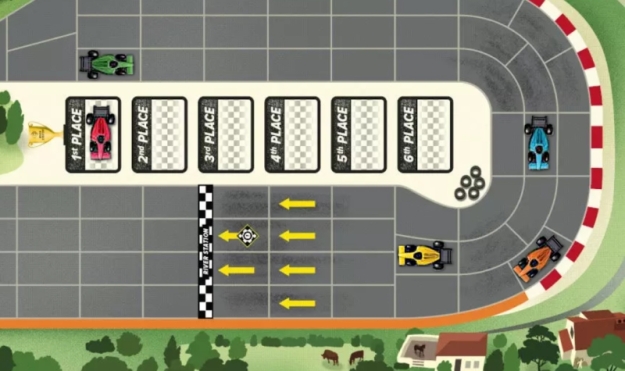
Three times during the game, players have to bet on a car to win or place—this doesn’t have to be a car they own, in fact, betting against a car they own is a good way to limit losses.  The cars are auctioned off at the start of the game and the amount players spend is off-set against their winnings (money for placing in the race, but also for any successful bets).  The winner is the player who finishes with the most money (net).  So the game started with an auction of cars, and as it was our first game, we decided not to include the special powers and chose the River Station track, as it was the simplest (though there are still a couple of pinch points).

Downforce on Board Game Arena
– Image by boardGOATS from boardgamearena.com

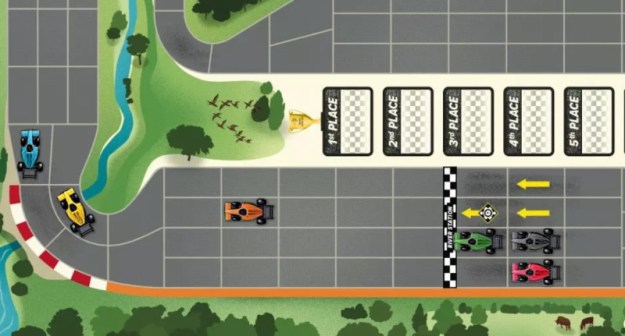
With six players, six cars and no special powers, the auction was really for pole position. That was taken by Team Greeny-Lilac, who played their “Superspeed Eight” card first and moved straight into the lead which they held, crossing the first betting line at the front of the pack.  With lots of players the hands are very small, so it is essential that players have at least some cards that match the colour of their car if they are to have any control at all.  That was not something that Pine succeeded in having at all.  Despite that, somehow Pine managed to cross the second betting line first and parked up in the narrow, single car section between the second and third betting lines, blocking it completely.

Downforce on Board Game Arena
– Image by boardGOATS from boardgamearena.com

By the time he left the narrow section, Burgundy and Team Greeny-Lilac had replaced him, effectively obstructing everyone else and amid much hilarity, producing a lot of expletives on screen.  Pine and Burgundy’s cars got in Team Greeny-Lilac’s way and Pine then put on a spurt to cross the third betting line in the lead.  That was a master-stroke, as it gave him space to accelerate round the final corner to the finish line, leaving Burgundy and Team Greeny-Lilac some way behind. Although he crossed the line first, Pine had started with such an appalling hand of cards that he didn’t back himself to win, even when he was ahead at the final betting line.

Downforce on Board Game Arena
– Image by boardGOATS from boardgamearena.com

Just like the one, true, car racing game PitchCar, everyone else stalled on the line in the race for second place.  Eventually, Team Kitty (piloted by Pink), crossed the line in second place while Pine was still struggling to come up with cat-car-racing puns (Niki Meowda was the best he could come up with).  The winner of the game was actually Purple, despite the fact that her car came in third.  This was thanks to her astute early betting and the fact she spent much less on her car than everyone else.  The first game had been a lot of fun, so we decided to give it another go with some of the other options.

Downforce on Board Game Arena
– Image by boardGOATS from boardgamearena.com

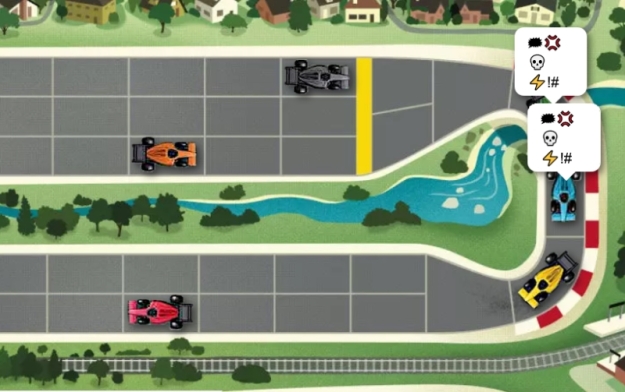
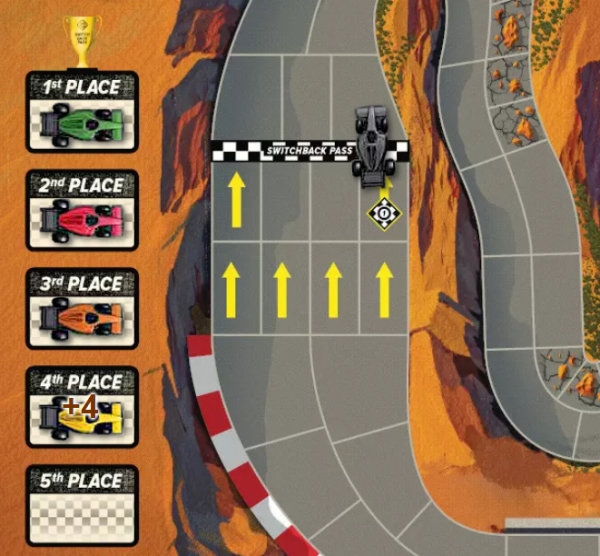
This time, we added the basic special powers to the auction phase and picked a track at random, which turned out to be Switchback Pass (from the Danger Circuit expansion).  This turned out to be an interesting track with no single track sections, but instead featured small, dangerous spaces, with cracked tarmac and rubble from frequent rockfalls.  Players cannot end their movement on these spaces as they are too dangerous; they can only be used for overtaking and players are forced to move back to a regular space as soon as one is available.

Downforce on Board Game Arena
– Image by boardGOATS from boardgamearena.com

This makes it harder for players to actually block others as they have options, though these are can be expensive since the dangerous spaces are smaller and it takes twice as much energy to use them.  Team Kitty bid high and won the first car as they only really had one colour on their cards—as a result, they had a power (Strategic) they could only use once.  The other powers were arguably better, though none really felt like a game changer or breaker.  This time it was Black (who was “Cunning”) who stormed to an early lead and crossed the first betting line way ahead of everyone else.  As a result, everyone except Black, bet on Black to win.  Aside from a brief spell when “Determined Pine” took the lead, “Cunning Black” stayed at the front until he was well past the third betting line.

Downforce on Board Game Arena
– Image by boardGOATS from boardgamearena.com

Then, largely without warning, Black found himself blocked in by the combination of some dangerous track and a load of other cars.  And suddenly, we were in “Echidna Shuffle” territory where everyone was trying to avoid giving victory to anyone else.  This was made worse by the fact that everyone had betted that Black would win, so wanted Black to come in first to maximise their takings.  However, everyone also knew that everyone else had bet on Black, so everyone knew that whether he won or lost it would probably make little difference to the scores.  As a result, it became every car for itself and “Cunning Black” was left to languish on the side of the track like an Alfa Romeo waiting for a recovery vehicle.

Downforce on Board Game Arena
– Image by boardGOATS
from boardgamearena.com

“Determined Pine” was the beneficiary Black’s misfortune and was first to cross the line, eventually followed by “Team Strategic Kitty” in second (by now Pine and Pink had come up with Purrrrling Moss and David Cat-ard…).  “Aggressive Burgundy” and “Team Tricky Greeny-Lilac” came in third and fourth, leaving Black to limp home fifth.  “Cunning Black” was the only one to take anything from the betting, having not learnt from Pine in the first game, and instead bet on Team Kitty at the first betting line.  It wasn’t enough this time though, and in a low scoring game, the winner was Pine, thanks to him winning the race and buying his car cheaply.  Burgundy was second with Team Puss in third.

Downforce
– Adapted by boardGOATS from image
by BGG contributor kalchio

Although we’d all enjoyed it, two games of Downforce were definitely enough for one evening.  So we decided to move on to something else.  For a bit of variety we had planned to play a round of Just One.  As a cooperative, social deduction, word game, Just One ticks all the unpopular boxes for our group, making it the sort of game we very rarely play.  With more than superficial similarities to Codenames (which went down like a lead balloon when we played it a few years ago), Just One is a game we would never have tried had it not been for the current situation.

Just One
– Adapted by boardGOATS from image
by BGG contributor kalchio

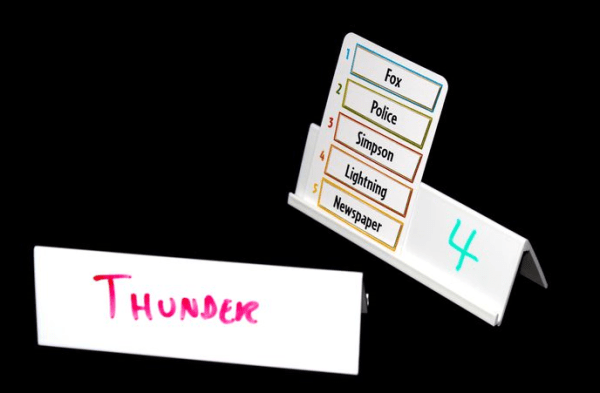
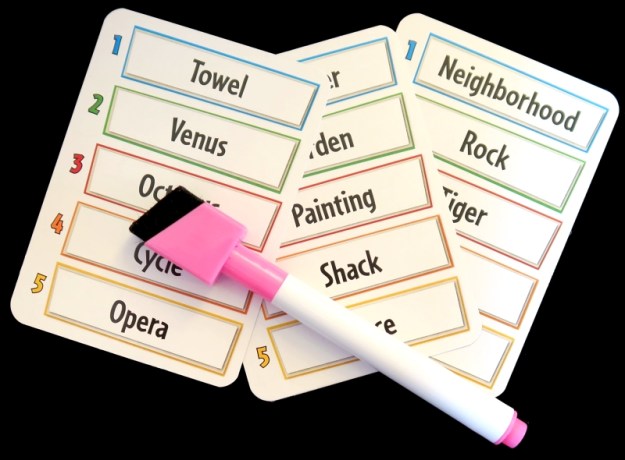
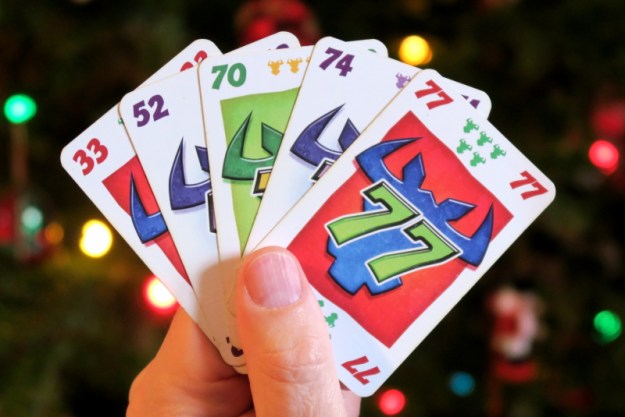
The idea is that one player from the group is nominated to be the Guesser and everyone else gives them clues.  The clues have to be words, or characters and must not be derivatives or homonyms of the target.  The clever part is that any words that are the same are removed before they are shown to the guesser.  So for example, if the target word is “Berry”, clues could include “Straw”, “Black” and “Nick”.  If two people suggest “Straw”, however, this clue is removed which makes the job significantly more difficult for the Guesser.
Just One
– Image by boardGOATS

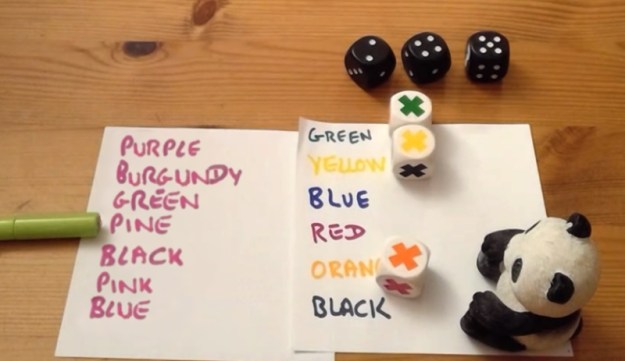
Thus, much like Dixit, in Just One, players are skating a thin line, trying to give an obvious clue, but one that is not so obvious that someone else will give it too and have it removed.  The game is a cooperative game usually played over thirteen rounds, but this time we decided to “house rule” it to play eight rounds, with everyone taking one turn as the Guesser.  Pink started, as he was already in the kitchen doing the washing up.  His word was “Venus”, and people scratched their heads as they tried to think of good clues.  These included “Milo”, “Woman”, “Tennis”, “Planet”, “Williams” and “Love”, but the one that clinched it for Pink was Pine’s clue of “Bananarama“.

Just One
– Image by boardGOATS

With the first one out of the way, everyone understood what they had to do, and Green took his turn to guess.  Even when the clue “Love” appeared twice and was therefore eliminated, “Caddy”, “Surf”, “Derelict”, “Shed” and “Outhouse” were enough for him to correctly guess, “Shack”.  So, it was all going swimmingly and people were just beginning to think it was easy, but then it was Black’s turn.  His clues included “Kylie”, “Area” and “Community”.  He correctly picked up on the “Australia” connection, but even with “Location” or “Locality” (which were ruled out as being too similar), the connection to “Neighbourhood” was just too tenuous.

Just One
– Image by boardGOATS

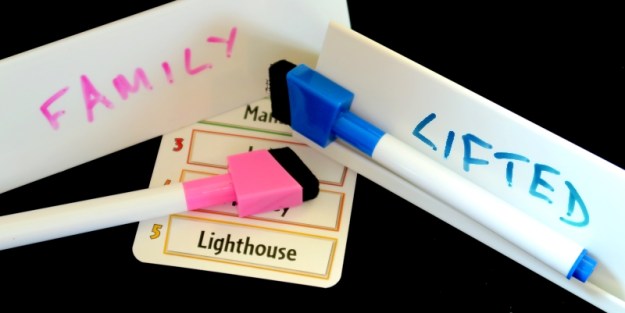
Next it was Pine’s turn and his clues included “Warning” and “Coast”.  Pine being Pine, the clues that most strongly suggested “Lighthouse” were “Family” and “Lifted”.  Although he was pleased to get it right, he is not a fan of the duo, and was very unimpressed when Pink found the track online and shared it with everyone.Burgundy was next and even when “Poll” was eliminated, “Vote” and “Boris” were enough to help him to correctly guess “Election”.

Just One
– Image by boardGOATS

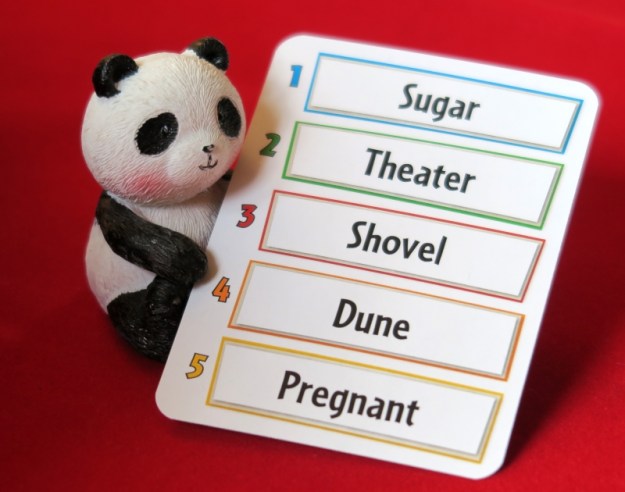
Then it was Blue’s turn, but with clues of “Sand”, “Desert”, “Movie”, “Film”, all she could think of was “Ice Cold in Alex“, which was clearly not right.  “Shoes” might not have been the most helpful clue for someone who hates shoe-shopping, but “Herbert” and “Spice” should really have led her to “Dune”.  As she had not read the book or seen the film, she passed instead.  That left just Purple and Lilac, as it was five to midnight though, we took a break to get drinks to toast the passing of 2020 and sadly bid farewell to the UK membership of the EU.

New Year 2020
– Image by boardGOATS

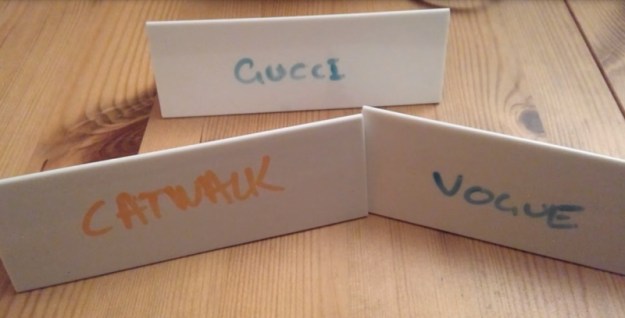
After admiring Squeeze‘s jazzy rendition of “Cool for Cats” on Jools Holland‘s “Hootenanny“, singing “Auld Lang Syne“, a couple of phone calls, and looking for fireworks, we started again.  Purple was given clues including “Gucci”, “Vogue”, “Catwalk”, “Bowie”, “Outfits” and “Clothes” which she quickly correctly guessed as “Fashion”.  Lilac was last up and got clues of “Green”, “Earth”, “Love” (again), “Armistice”, “Nobel”, “Quiet”.  Seeing “Earth” and “Green” together, she excitedly said, “Greenpeace“, but of course that could not be correct as clues could not be contained in the answer.

Just One
– Image by boardGOATS

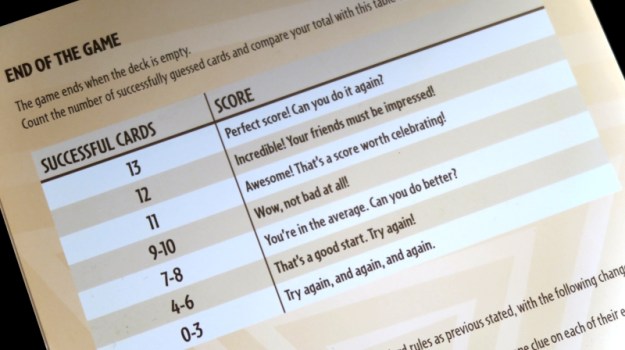
After what seemed like an age she guessed correctly giving us a team effort of six out of eight. Like Hanabi, the collective score at the end corresponds to a comment in a table, so scaling this to thirteen, it corresponded to “Wow, not bad at all!”.  One of the things we really hated about Codenames was the pressure it puts on the clue-giver; worse, if the clue-giver is not naturally good at making those sort of connections, they feel they are failing their team and the whole thing can tank spectacularly.  This is very different in Just One.

Just One
– Image by boardGOATS

In Just One, the stress is shared evenly amongst the clue-givers and although there is a little more pressure on the Guesser, as each person only guesses once or twice and the game is cooperative, no one person takes responsibility for failure and everyone shares in success.  That said, although it is much, much, better in that regard than Codenames, Just One still isn’t really a game for our group.  So there was only really one way to properly welcome in the New Year, and that was with a game of 2020’s Golden GOAT, our old favourite, 6 Nimmt!.

Golden GOAT - 2020
– Image by boardGOATS

In this game, players simultaneously choose cards to play and then add them, in order to the four rows.  When a player adds the sixth card to a row, they take the other five and their card becomes the new starting card.  The “nimmts” they pickup are subtracted from their starting total of sixty-six and the game ends when one player reaches zero.  We now play with the “Professional Variant” where cards can be added to both ends of the row adding a new level of madness, and fun.

6 Nimmt!
– Image by boardGOATS

This time, unusually, we were about a third of the way through the game when someone pointed out that Purple had not yet picked up a card.  This was particularly remarkable because more often than not she is the player to trigger the end of the game.  At the time we thought perhaps this signalled that 2021 was going to be better than, or at least different to, 2020.  On count-back however, it turned out that Purple won the first game of 2020 as well, so maybe that’s not such a good omen after all.  Meanwhile, everyone else was picking up the cards that Purple would normally take.  At one point everyone had around forty-five or forty-six, except Team Greeny-Lilac who had fifty-four, and Purple who had yet to pick up a card so still had sixty-six.

6 Nimmt! on Board Game Arena
– Image by boardGOATS

Purple lasted thirty-five minutes into 2021 before she picked up any nimmts.  It couldn’t continue forever though, and although everyone else continued the inexorable creep towards zero, Purple finally picked up enough cards to move her into second place, leaving Team Greeny-Lilac in the lead.  Inevitably, that made Team Greeny-Lilac a target although nobody has anywhere near enough control in 6 Nimmt! to effect any significant change.  Perhaps it was a matter of collective wishful thinking, but slowly, Team Greeny-Lilac started picking up cards, and at a slightly higher rate than everyone else.

6 Nimmt! on Board Game Arena
– Image by boardGOATS

With the rate everyone was going, we were in serious danger of ending the game with everyone on negative scores.  Black, correctly predicted that there wouldn’t be the extra necessary round to make that happen though, as he picked up once more and brought the game to an end.  Only Team Greeny-Lilac joined him in the red, after so long in the lead.  The winner was really just the player who had managed to hang on the longest, and with one of the lowest winning scores in recent games, it was Pink who won the first game of 2021 with twenty-one points and Purple was just behind with sixteen.  With that, and a little more chatter, it was time for bed.

6 Nimmt!
– Image by boardGOATS

Learning Outcome:  Online racing is much like the real thing:  lots of queuing.

22nd December 2020 (Online)

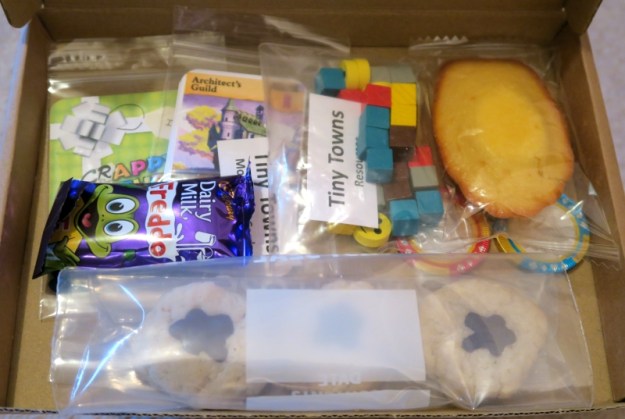
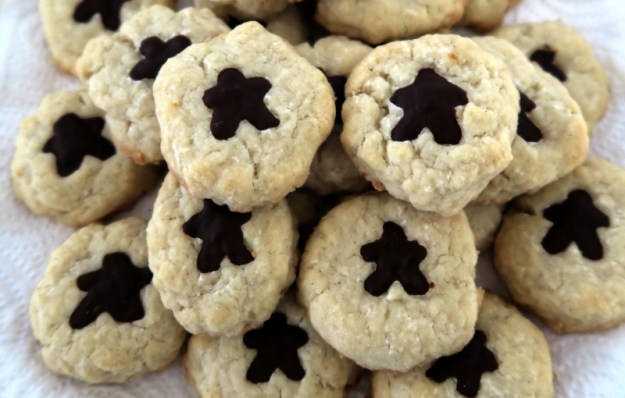
For our last meeting before Christmas, we usually meet for food and have special Christmas Crackers. This year, this wasn’t possible of course, so instead of crackers everyone had a Box of Delights to be opened simultaneously at 8pm (similar to the Birthday Boxes we’d had in October).  The boxes included a range of chocolates and sweets, home-made gingerbread meeples, a miniature cracker, a meeple magnet, and a selection of dice and other goodies.

2020 Christmas Gingerbread Meeples
– Image by boardGOATS

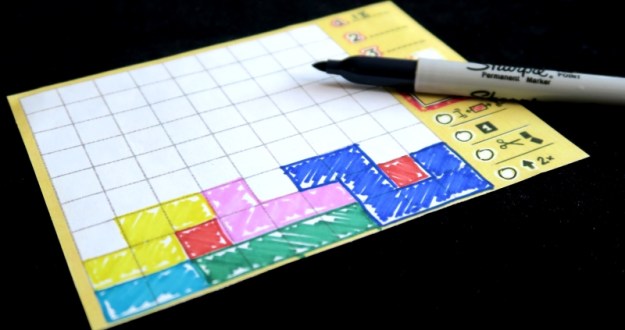
With several little people attending, we decided to play something straight-forward first, so we began the evening with Second Chance.  This is a very simple Tetris-style game game that we’ve played a few times this year.  Players choose one of two cards depicting shapes and draw them in their grid.  If a player cannot draw either shape, another card is revealed and if they are unable to draw that one as well, they are eliminated.

Second Chance
– Image by boardGOATS

Once the rules had been explained and everyone had been given their unique starting shape, the group settled down with their colouring pens and pencils and concentrated on trying to fill their grid.  Pink was the first one to take a second chance card, and when he couldn’t place that shape either he was the first to be eliminated and took his bonus space.  The winner is the player with the fewest empty spaces, so while being first out is not a guarantee of anything, obviously players who stay in the longest are likely to do better.  And it was a long time before anyone else was eliminated.

Second Chance
– Image by boardGOATS

As people gradually found their space was increasingly limited, there were the usual pleas for something nice, which became more desperate as people needed second chances.  Then there was jealousy as players like Pine were eliminated with outrageously large shapes while others, like Little Lime, stayed in when they got the much coveted small pieces.  Meanwhile, everyone else concentrated on beautifying their art with Christmas colours and embellishments.

Second Chance
– Image by boardGOATS

Eventually, Purple, Pine, Burgundy, Blue and lastly Green were also eliminated leaving just five when the game came to an end because the deck ran out.  Then it was just the scores.  Most people did really well, though some, not quite so much.  More than half finished with single digits though, including excellent performances from Little Lime and Little Green.  There was some beautiful artwork from Lilac (as usual), but festive offerings from Green, Purple and Black too.  There was a three-way tie for second place between Black, Blue and Green.  On his own with only one single empty space though, was Ivory.

Second Chance
– Image by boardGOATS

With the first game over, we moved on to discussing the important matter of the GOAT Awards.  Every year, we give the Golden GOAT to our favourite game played during the year and the GOAT Poo award to our least favourite game.  Last year, Wingspan won the Golden GOAT Award and 7 Wonders took the GOAT Poo Prize.  This year, the unanimous winner of the GOAT Poo was Covid and its effect on 2020—nobody could deny that Covid was definitely the worst thing to happen to games night this year.  As Covid wasn’t a game, Camel Up took the award on a tie break from Terraforming Mars and Welcome To….

Camel Up
– Image by boardGOATS

Terraforming Mars just missed out on the GOAT Poo prize, but in coming fourth in the Golden GOAT competition, won the unofficial “Marmite award”, for the most divisive game.  Kingdomino and and last year’s winner Wingspan both made the podium for the Golden GOAT, but controversially, the winner was 6 Nimmt!.  The controversy wasn’t caused by the worthiness of the game, just that Blue ensured it’s emphatic win by placing all four of her votes in its favour.

Golden GOAT - 2020
– Image by boardGOATS

Although 6 Nimmt! is an old game, we’ve played it at the end of almost every meeting on Board Game Arena since March.  In a year with little smile about, it has given us more fun and entertainment than almost all of the other games put together and was responsible for moment of the year.  That was back in May, when Lime joined a game of 6 Nimmt! with a bunch of Frenchmen by mistake.  That is just one of many memorable moments we’ve had with 6 Nimmt! this year though.  Furthermore, since we discovered the new professional variant the game has gained a new lease of life, so it seemed an entirely appropriate, if strange win for a strange gaming year.

6 Nimmt! on Board Game Arena
– Image by boardGOATS

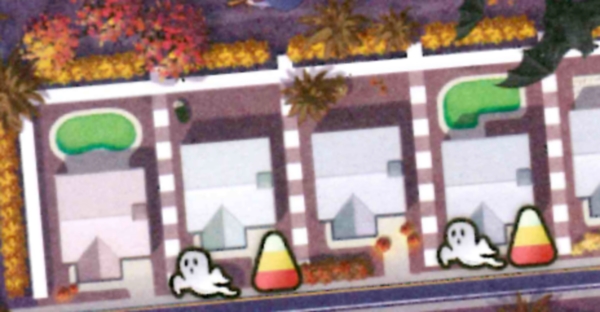
While Pink did the count for the GOAT Awards, Blue reminded everyone of the rules for the “Feature Game” which was to be the Winter Wonderland edition of Welcome To….  The fact that Welcome To… had nearly won the GOAT Poo award was an inauspicious start, especially since the main protagonist was Pine who had struggled last time.  A lot of the ill feeling was due to the dark colour of the board for the Halloween edition which we played last time it got an outing, so the pale blue colour of the Winter Wonderland version was always going to be an improvement.

Welcome To... Halloweeen
– Image by boardGOATS

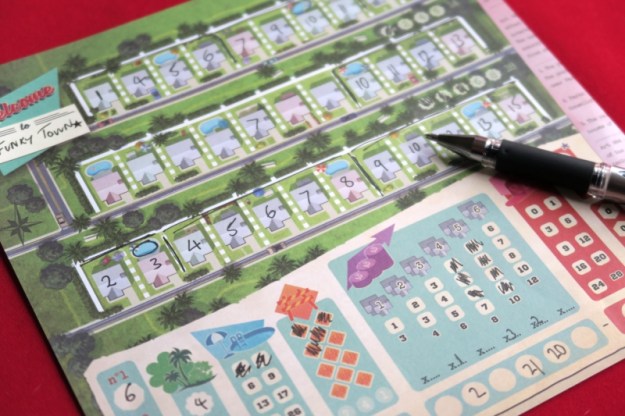
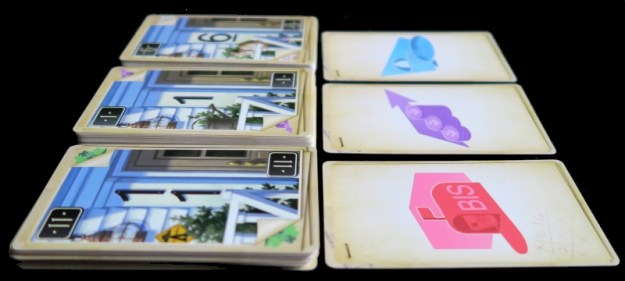
Welcome To… is one of the more complex games we’ve been playing online.  The idea is that players are developers building part of a town in 1950s USA.  Mechanistically, it is simple enough—the top card on each of three number decks is revealed and players choose one of the three numbers to play.  They mark this on one of the three streets on their player board.  The house numbers must increase from left to right and each number can only appear once in each street.

Welcome To...
– Image by boardGOATS

Each card is paired with the reverse of the previous card drawn from that deck, which gives a special power.  The special power can be rule breaking, enabling players to write a number a second time in a street, or give some flexibility in the number they must write.  Alternatively, the special power can directly provide players with extra points through the building of parks or swimming pools.  Finally, the special power can facilitate the achievement of extra points by enabling players to build fences separating their street into “Estates”, or increasing the number of points each “Estate” provides at the end of the game.

Welcome To... Winter Wonderland
– Image by boardGOATS

Aside from the colour scheme and artwork, the main difference between the base game and the Winter Wonderland Version was the addition of fairy lights as a means to get bonus points.  These are added to to a player’s board joining any houses where the numbers are consecutive.  At the end of the game, players get one point for each house in their longest string of lights.  Additionally, the third planning card selected gave a lot of points for anyone brave enough (or perhaps daft enough) to successfully connect an entire street with lights.

Welcome To... Winter Wonderland
– Image by boardGOATS

Little Lime and Lime took their leave, and Lilac and Little Green also decided to give it a miss, but that still left eight players, albeit one who was very sceptical.  Pine had nominated Welcome To… for the GOAT Poo Prize, and felt that didn’t bode well, but was prepared to give it a go.  The Plan Cards, give players points during the game as well as being a trigger for the end of the game.  As well as the street full of lights from the Winter edition, there was also one that gave points for a pair of estates (comprising three and six houses) and for players completing all six end houses.

Welcome To... Winter Wonderland
– Image by boardGOATS

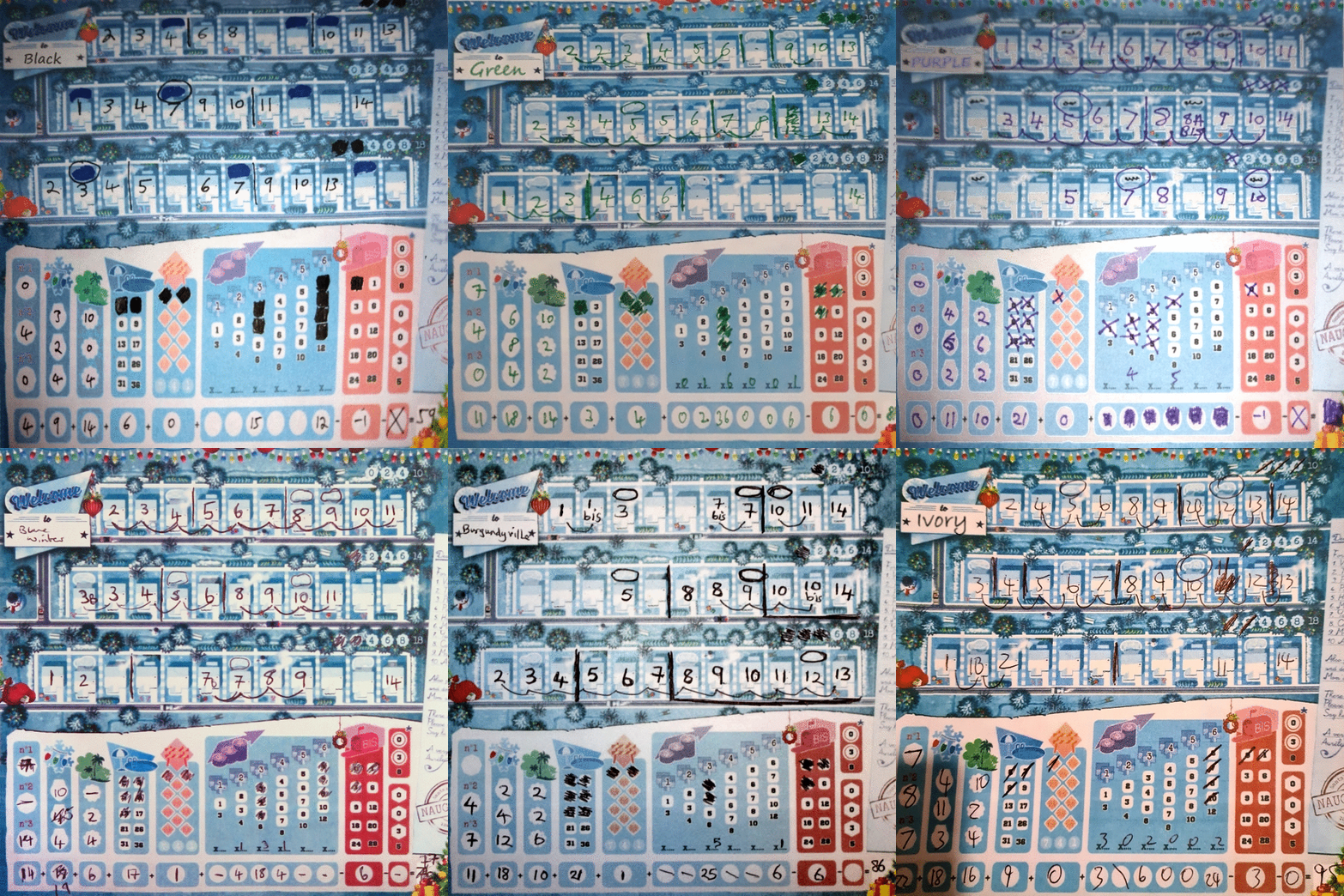
The game started with a lot of “Bis” cards and quite a few high and low numbers.  It wasn’t a huge surprise then, when several people completed the end of street plan.  Ivory was first to complete the estate plan and eventually, Blue who felt that the Christmas element should be accentuated, completed the fairy lights plan.  The question was, who would be first to finish all three and when, as that was the most-likely end-game trigger.

Welcome To... Winter Wonderland
– Image by boardGOATS

It was towards the end that Purple commented that Black had been eliminated.  It wasn’t immediately clear what she was on about, but eventually it was apparent that one of his furry friends had decided that they wanted to be the subject of his attention and had firmly sat on his player board, very effectively obstructing play.  That cat-astrophe put paid to any successful involvement in the game by both Purple and Black, but it wasn’t long before Green announced that he’d finished all three of the Plans and was ending the game.

Welcome To... Winter Wonderland
– Image by boardGOATS

With that, everyone totalled up their scores.  Pine said that despite his scepticism, he had actually really enjoyed the game and felt he had done reasonably well and indeed was a long way from coming last.  It was very close for second place with Green just beating Burgundy into third by two points.  The clear winner, for the second time of the night, was Ivory who finished with an exceptional ninety-five points. And with that, he decided to quit while he was ahead and everyone else decided it was only appropriate that they should play the newly-crowned Golden GOAT6 Nimmt!.

6 Nimmt!
– Image by boardGOATS

6 Nimmt! is so very simple, yet so much fun.  Players simultaneously choose a card from their hand and these are then revealed and, starting with the lowest card, added to one of the four rows.  Cards are added to the row with the highest number that is lower than the card played, i.e. the nearest lower number.  When a sixth card is added to a row, the owner takes the first five cards into their score pile, leaving the card they played as the new starting card.  The player with the fewest Bulls’ Heads at the end is the winner.

6 Nimmt!
– Image by boardGOATS

Board Game Arena implements the game with everyone starting with sixty-six points and the game ending when someone reaches zero.  It also adds a couple of other variants, the most exciting of which is the “Professional Variant”, where players can add cards to either end of the row.  Because Board Game Arena deals with all the up-keep, it makes this variant much easier to manage, and the results often come as a complete surprise.

6 Nimmt! on Board Game Arena
– Image by boardGOATS from boardgamearena.com

The reason 6 Nimmt! won the Golden GOAT, is that in a year where there has been so much to be miserable about, this game has provided more fun than anything else.  This time, poor Burgundy went from jointly holding the lead to sixth place in just a couple of turns and threatened to beat Purple to the bottom and trigger the end of the game.  As it was, he didn’t quite make it, and left Green who had only picked up seven “nimmts” in the whole game, to win.

6 Nimmt! on Board Game Arena
– Image by boardGOATS from boardgamearena.com

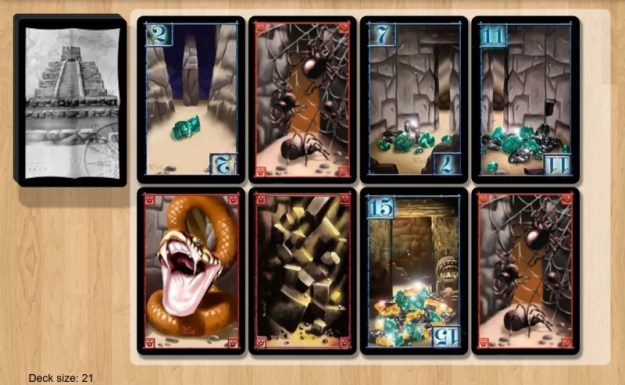
With seven players, the number of options were limited to more 6 Nimmt!, Saboteur, or something we hadn’t played before.  In the end, we went for a sort of compromise in Incan Gold which most of us knew, though we’d not played it on Board Game Arena.   This is a fairly simple “Push your Luck” game where players are exploring a temple.  Simultaneously, players decide whether they are going to stay or leave the temple.  Players who are in the temple will get shares in any treasure cards that are drawn that round.  These are divided evenly between the players and any remainders are left on the card.

Incan Gold
– Image by boardGOATS

As well as fifteen treasure cards, there are also Hazard cards in the deck:  three each of five different types.  When a second Hazard card of any given type is drawn, the temple collapses and buries everyone in it and they lose any treasure they have collected.  Additionally, there are five Artefact cards in the deck—these can only be claimed by players leaving the temple.  Any players that leave before it collapses, keep the treasure they have collected hitherto, and take a share in any remainders left on cards. If they leave alone, they also take any artefacts, but only if they leave alone.  Having left the temple, however, they will get no more treasure in that round.

Incan Gold
– Image by boardGOATS

The game is played over five rounds and the winner is the player with the most treasure at the end of the game.  The game is extremely random, but can be a lot of fun with the right people.  This time it was particularly random though.  The first two cards drawn were both Hazards and the first round ending after just five cards with only Green getting out in time.  The second round was even worse with three Hazards in a row terminating the round before it had begun.  On the plus-side, having had two rounds ended by Mummies, two of the three Mummy cards were removed from the deck, making it impossible for the mummies to end another round.  There were plenty of other Hazards though…

Incan Gold on Board Game Arena
– Image by boardGOATS from boardgamearena.com

The third round wasn’t much better, lasting only three cards with a second snake ending another round and only Pink taking any treasure.  The fourth round started with an Artefact, but when Burgundy, left, he was joined by Pink and Purple, so none of them were able to take it home.  Just three cards later, a second Giant Spider card brought down the temple and everyone finished with nothing (again).  The final round lasted a little longer, but two players still managed to finish the game without any treasure.

Incan Gold on Board Game Arena
– Image by boardGOATS from boardgamearena.com

Purple made an early escape and grabbed a couple of gems from the floor.  Burgundy and Pink escaped shortly after and Black managed to sneak out as the Giant Spiders closed the temple for good.  As a result of the unusually large number of Hazard cards, the game was especially low scoring.  It ended in a tie between Pink and Green on ten, with Black two points behind in third.

Incan Gold on Board Game Arena
– Image by boardGOATS from boardgamearena.com

With Incan Gold done, there was still time for one more game and it was only fitting to close with another game of 6 Nimmt!.  Having done so well in the last two games made Green the target this time, not that anyone really had enough control to manipulate their own position, much less target anybody else.  Pink, who had also done well in recent games, made a bit of a beeline for the bottom, and it was not much of a surprise when he triggered the end of the game.  This time, Green could only manage third, and it was a two-way tie for first place between Black and Pine (who always does well in 6 Nimmt!, and always denies it).  And with that, we brought our first online Christmas Party to a close and wished everyone a Very Merry Christmas.

6 Nimmt!
– Image by boardGOATS

Learning Outcome:  A box of sugar and exciting trinkets is ideal improving your concentration.

8th December 2020 (Online)

The evening started off with players discussing pirate copies of games, inspired by a copy of The Game of Life (slightly reluctantly provided by Little Lime).  From there, Green popped in just long enough for everyone to sing “Happy Birthday” to him, and for him to tell people about his new car before putting up with lots of comments about how nice his new Alfa Romeo would look on the side of the road while he was waiting for the AA to turn up…

The Game of Life
– Image by boardGOATS

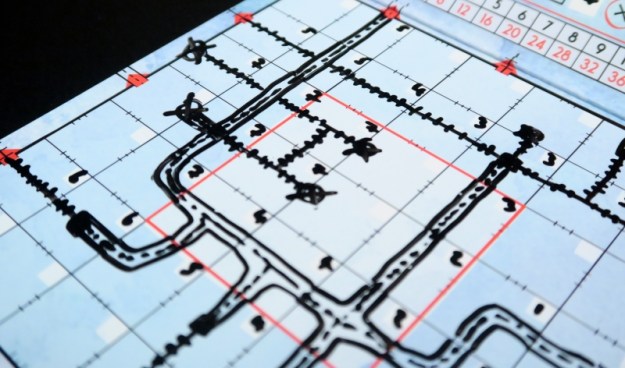
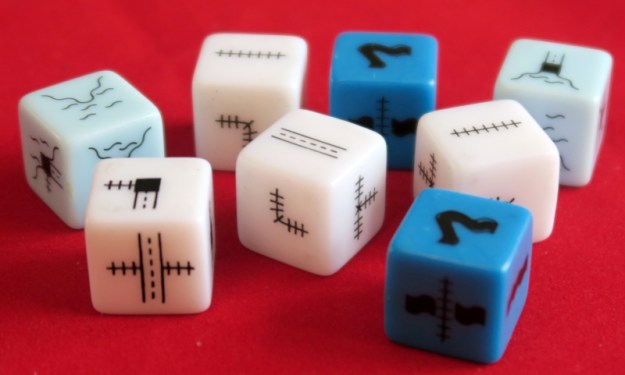
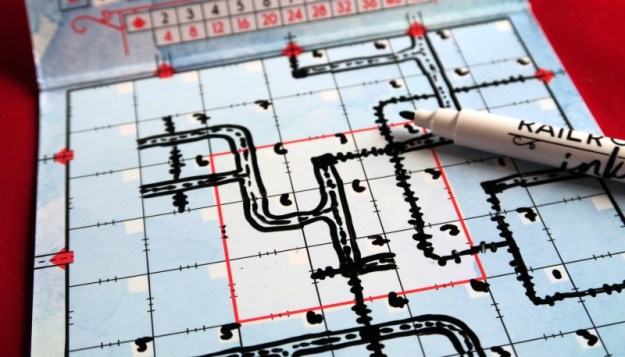
Once Green had left to open the last of his birthday pressies and eat his Birthday tea, everyone else settled down to start the “Feature Game“, the River Expansion for the “Roll and Write” game Railroad Ink.  This is a fairly simple game that we’ve played a couple of times and really enjoyed.  The idea is that four dice are rolled and players have to add all the features rolled to their map.  These features include straight and curved sections of rail and road as well as flyovers and road/rail interchanges.

Railroad Ink: Deep Blue Edition
– Image by boardGOATS

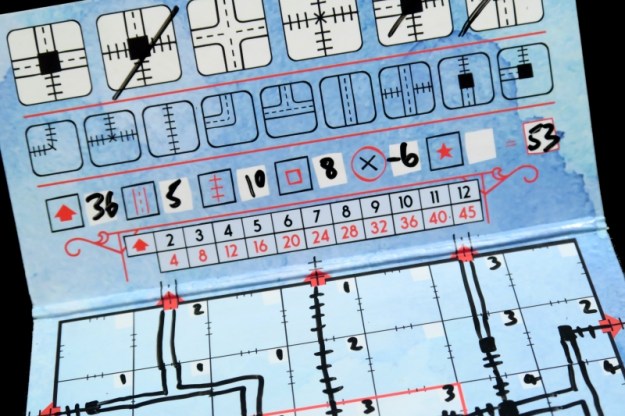
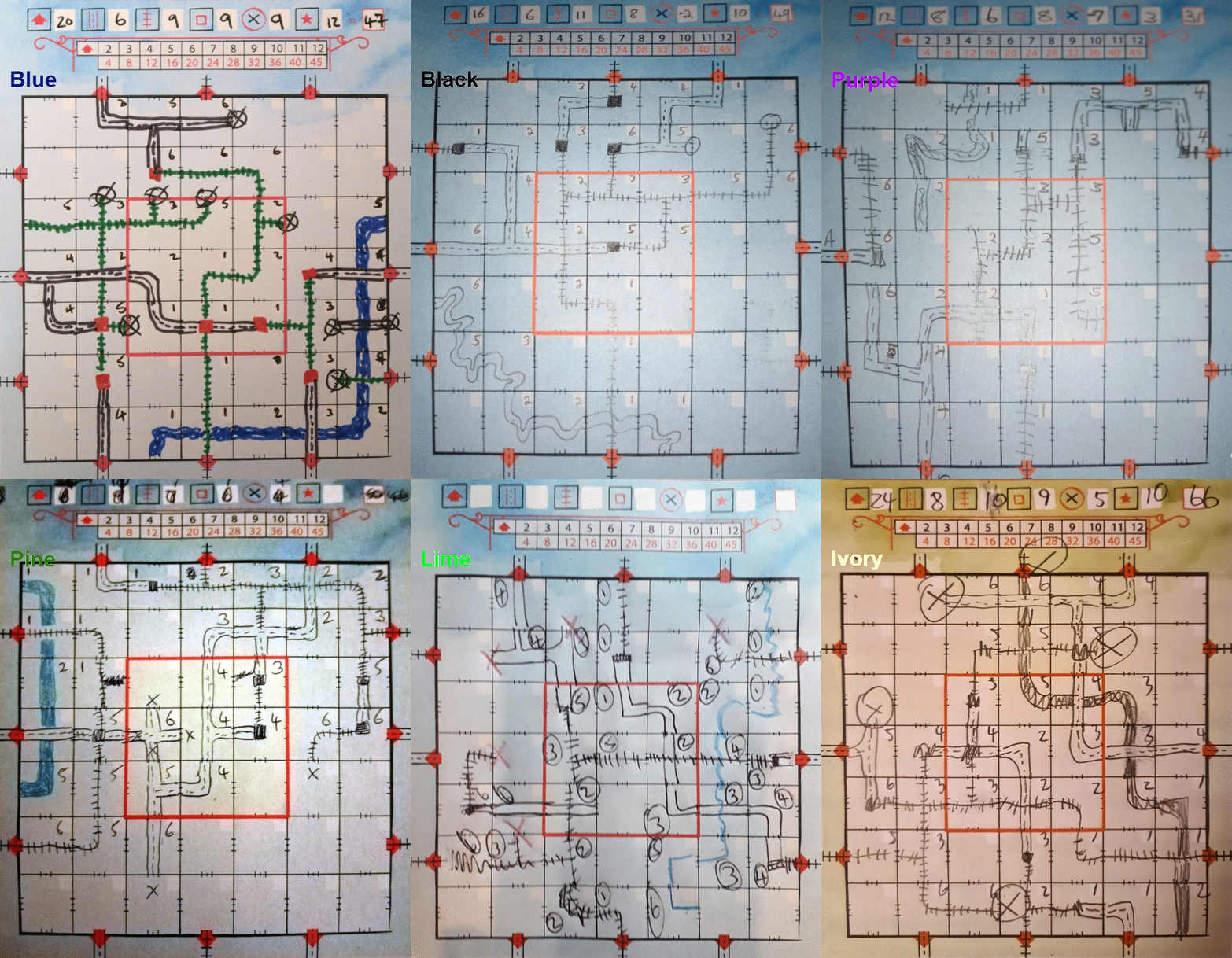
The game lasts seven rounds and players earn points for connecting together the entrances marked on the edge of the map, but also for their longest sections of road and rail, and for filling the nine spaces in the centre of the board.  The River is one of two expansions that come with the Deep Blue Edition of Railroad Ink, and adds rivers to the railway, road and intersection options.

Railroad Ink: Deep Blue Edition
– Image by boardGOATS

Unlike the white dice in the base game which have to be used, the two blue dice are optional.  They also do not have to be connected to the main network.  Pine asked why anyone would use the river because it just restricts what you can do with the rest of your network, but as Burgundy pointed out, it has the potential for giving extra points.  Most obviously this is because points are awarded for the longest section of river each player makes.

Railroad Ink: Deep Blue Edition
– Image by boardGOATS

Additionally though, some of the faces of the river dice include road and rail sections (crossing the river).  Using these can help the main network reach more of the entrances, something that is important because the game is one round shorter when played with the expansion.  However, any unconnected river sections, like any unconnected road or rail sections, i.e. any “hanging ends”, cost points, one per unconnected end.  So, players who decide to ignore rivers do so at a cost.

Railroad Ink
– Image by boardGOATS

The game hadn’t been going long before someone said, “I’ve just created a junction”.  This was almost inevitably followed by the reply, “You never thought that would happen…” and the response, “What, with you and the girl from Clapham…?”  After a couple of verses and the odd chorus of the Squeeze hit, the conversation segued smoothly on to the fact that “Those Were the Days” was actually originally a folk song.  The game only resumed after Pine had shared a version called Davni Chasy by The Wedding Present.

Railroad Ink
– Image by boardGOATS

With only six rounds with the expansion, the game did not really take very long, and everyone seemed to enjoy the added challenge of including the river.  It was a tight game with just three points covering the three podium positions, Ivory just sneaked victory, two points ahead of Pink and Pine in third.  Lime had been up since 4am and had another early start the following day, so went for a well earned early night, but everyone else carried on to give Patchwork Doodle another outing.

Patchwork Doodle
– Image by boardGOATS

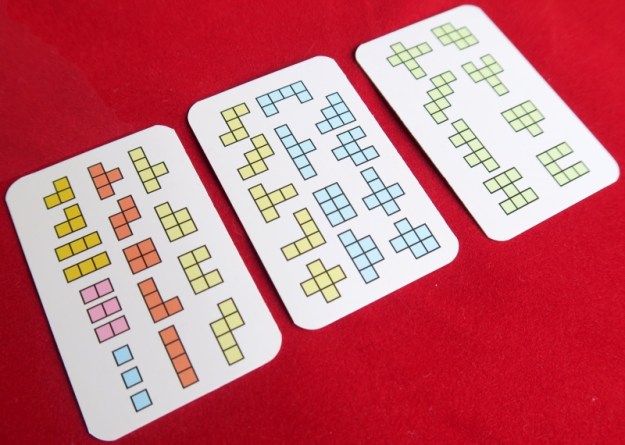
Patchwork Doodle is a fairly simple game Tetris-based game where players try to fill their player player-board with Tetris shapes shown on cards.  Although the game is similar to Second Chance, it is played over three rounds with eight cards displayed at the start of each round with six played according to a die roll.  This means that players know which cards are coming up, but not the order they will appear in.

Patchwork Doodle
– Image by boardGOATS

Each player begins with their own individual shape.  Black had the embarrassing one, which led to a discussion about how a photographer had taken revenge on Philip Green for his poor behaviour towards a journalist.  Everyone had a good laugh once someone had found the photo and shared it, then we began playing.  The end of round scoring also makes the game a little more challenging than Second Chance with players scoring most of their points for the largest contiguous square area at each point during the game.

Patchwork Doodle
– Image by boardGOATS

Pink and Ivory got off to a flying start with five-by-five squares, giving them twenty five points in the first round.  As the rounds progressed, other players started to catch up, but those early points were hard to off-set.  Blue, remarkably managed to fill every square of her grid giving her eighty-one points in the final round.  Unfortunately for her, it wasn’t quite enough to catch Pink who took victory with one hundred and thirty-seven.  That didn’t stop Blue claiming the “moral victory” for the perfect finish though, even if she was three points short.

Patchwork Doodle
– Image by boardGOATS

With that, Ivory took his leave, and everyone else moved to Board Game Arena.  As people logged on, they all received “Trophies” to mark six months active on the platform.  While this is clearly an achievement of sorts, it was bitter-sweet as it also highlighted just how long we’ve been playing online.  We decide not to stop and think about it though, and moved on to choosing a game.  With six players, there were several options.  Pine didn’t want to finish too late, while Blue was keen to play something a little different and with help from others, persuaded him to play Alhambra.

Alhambra
– Image by BGG contributor garyjames

Alhambra is a classic gateway, tile laying game, based on the slightly older title, Stimmt So!.  The idea is that on their turn, players can either buy buildings (or shares in the original), or take a money card.  The catch is that there are four currencies in the game.  Players pay with whatever cards they have, but if they don’t have the exact amount they must overpay.  Obviously, it is advantageous to pay with the exact amount, but not only because they save money.  Players doubly gain when they pay with the right amount, because they get an extra turn and can make another purchase (again getting yet another turn if they pay exactly) or take money.

Alhambra
– Image by BGG contributor garion

There are two scoring phases during the game, and one at the end.  In these, players with the most buildings of each of the different types score points, with the number of points depending on the type of building and the frequency of it in the game.  There is one significant difference between Alhambra and Stimmt So! that goes beyond the theme.  Some of the buildings have a wall along one, two or three sides.  Players score points for their longest external “wall” section within their complex, but the wall also has a big impact on how a player places their tiles.

Alhambra
– Adapted from Image by BGG contributor Zoroastro

Players must be able “walk” from their starting tile to all the other tiles in their complex, so walls are placed round the outside.  If a player is not careful, this can severely limit their ability to place other tiles and get them into a terrible mess.  The Board Game Arena implementation ensures that players can’t inadvertently make mistakes, but that makes the game quite unforgiving.  There is a get out clause—players can place tiles in their reserve or move tiles at a later date, but as the game is all about efficiency, this can be very costly.

Alhambra on Board Game Arena
– Image by boardGOATS from Board Game Arena

The game started very cautiously with people feeling their way.  Pink tried to build a long wall and got himself into a tangle with a very small complex surrounded by a tight wall; Blue just failed to score any points until the end of the game.  It was quite close in the fight for second place, but the runaway winner with eighty-one points was Purple.  She had the most Garden buildings and Palaces outright, shared the lead in Seraglios and Chambers and scored points in almost every other category too, positively storming to victory.

Alhambra on Board Game Arena
– Image by boardGOATS from Board Game Arena

Unfortunately, Alhambra is not at its best with six and, although the game can trot along at quite a pace with players that know what they are doing, it took quite a lot longer than it really should.  Although some had played the game before, others were new to it and even those familiar with the game were a little rusty.  The game would have been a lot quicker if people hadn’t insisted on thinking too, but as a result, it finished a lot later than planned and when it was over that was pretty much it for the evening.

Alhambra on Board Game Arena
– Image by boardGOATS
from Board Game Arena

Learning Outcome:  If you buy an Alfa Romeo you should expect jokes about it.

24th Movember 2020 (Online)

As people signed in, Blue, Pink and Burgundy shared some feelings about the “Feature Game” which was to be Troyes Dice.  This is back to the “Roll and Write” style games and is a very recent release, based on the well regarded game Troyes (a game about a medieval city, the name of which is pronounced a bit like “trois”, the French for the number “three”).  When Pine joined the group he made his feelings known about the awful joke at the bottom of the reminder page, and said it was old when he was at school back in the middle ages…

Rue Émile Zola in Troyes
– Adapted from image by Zairon on wikimedia.org

Troyes Dice is a planning and resource management game with an interesting rondel mechanism at its heart.  Although the fundamentals are not overly complex, the number of options players have make the game very challenging.  The game is played over eight days, each with a morning and afternoon phase.  At the start of each phase, four dice are rolled and placed on the four available coloured plazas.  The clear dice then adopt the colour of the plaza they are placed on, while the black die “destroys” its plaza making it unavailable.

Troyes Dice
– Image by boardGOATS

Players then choose one of the coloured dice to use, and pay the associated cost shown in the centre of the dial.  Dice bought in this way can be used to buy resources or to construct a building of the same colour and number.  Buildings come in two types: Worker buildings which ultimately give points and Prestige buildings which provide special effects.  There are three colours red, yellow and white representing the Noble, Civil and Religious districts respectively, and there are different resources and special effects associated with the different districts.

Troyes Dice
– Image by boardGOATS

Although this is fairly straight forward, the number of options players have and the interplay between them make the game one of the most complex that we have played since the group has been forced to play online.  All the Worker buildings get players workers which equate to points at the end of the game.  However, more points are available to players that build Cathedrals (Religious Prestige buildings) as Cathedrals give points to players for building other buildings.

Troyes Dice
– Image by boardGOATS

So, a player who has built the left-most Cathedral (i.e. number one) will get points for the number of Noble Prestige buildings they have built.  The amount of points each one of these is worth depends on when the player builds that particular building:  if it is the first or second, they will be worth just one point, but if it is built later in the game and is the fifth or sixth, each Noble Prestige building will be worth three points.  Thus a player who builds all six buildings of one type and then manages to build the associated Cathedral will score six, twelve, or eighteen points depending on when the Cathedral was built.  So timing is critical.

Troyes Dice
– Image by boardGOATS

The Civic Prestige buildings give players resources depending on the number of dice of the relevant colour currently available.  Resources are essential.  Money (the Civic Resource) is essential for buying dice and the higher value dice cost more.  The other two resources, red pennants and white bibles are useful because they allow players to alter the number of the die to be used, or its colour.  This is adds hugely to the number of possible options available.

Troyes Dice
– Image by boardGOATS

The third set of Prestige buildings in the red, Noble district, is the most difficult to understand.  Building one of these protects all the buildings of the same number from the black die.  From the third round, the black die not only makes its plaza unavailable, but also makes any buildings of that colour and number that have not yet been built, unbuildable for the rest of the game.  If a player builds, say, the sixth Noble (red) Prestige building, that means that any subsequent black sixes rolled will have no  effect on that player.

Troyes Dice
– Image by boardGOATS

There are a number of obvious strategies that arise.  For example, to get the maximum protection, Noble Prestige buildings should be built as early as possible.  In contrast, since the Religious Prestige buildings that are built later give more points, trying to build some other scoring buildings first is a good idea.  This is risky though, as failing to build the target building will score nothing.  Although the rules are quite complex, in practice they are not as bad as they may seem at first.  Simply put, players choose one of the three available dice and use it to collect resources or build a building in one of the three districts.

Troyes Dice
– Image by boardGOATS

It is dealing with the number of options available that is the real challenge though.  There are only three active dice, but using a combination of pennants and bibles, the numbers and colours of the dice can be changed to almost anything people want, which gives lots to think about.  That said, even this is not as difficult as it seems at first because resources are valuable so unless the action is mission critical, most options will rule themselves out as they are too expensive.

Troyes Dice
– Image by boardGOATS

First time through though, the number of options can seem bewildering and planning a strategy can seem daunting.  That said, for the first couple of rounds, Blue and Pink talked through the options people had available and almost everyone did the same thing, starting by building protective fortresses because these were good value and early in the game seemed to give the best chance to use them.

Troyes Dice
– Image by boardGOATS

Playing games remotely can be a bit of a solitaire experience and it is generally very hard to follow what others are doing.  As a result, players often take more information from throw-away comments than they would usually do.  From this, Green seemed to think that he and Burgundy were following very similar strategies.  The game is also a slow burner, and Ivory repeatedly commented that he couldn’t see where he was going to get any points from.  This unsettled Pine, because this sort of game is usually meat and drink to Ivory, so if he was struggling, that meant Pine felt doomed.

Troyes Dice
– Image by boardGOATS

About half-way through, Black and Purple went silent and didn’t respond when people asked if they were OK.  Someone pointed out to them that their microphone was on mute, but there was still no reply and even text messages didn’t get a response.  Eventually they rejoined the group and Purple got a bit of a telling off for muting the mike, though she was adamant it wasn’t her fault.

Troyes Dice
– Image by boardGOATS

There are only eight days, or sixteen rounds in the game, so it didn’t last over-long.  It wasn’t long before players were adding up their scores and Ivory was finding that he had more points than he’d thought.  It wasn’t surprising that Pink top-scored with Blue in second place, as they had both played it it before.  What was more surprising was how close together everyone else was.  Ivory was a very close third with forty-four and Green was just two points behind him, but everyone else was within ten points of Blue too.

Troyes Dice
– Image by boardGOATS

With that done, it was definitely time for something lighter. We haven’t played Noch Mal! (aka Encore!, or Boardgamers Bingo as some of the group call it) for a while and since we have some new player boards, we thought we’d give it another outing.  The idea of the game is that six dice are rolled, three showing numbers one to five and a question mark, and three showing five different colours and a cross.  The active player chooses one colour die and one number die to use and everyone else gets to pick one of each of those that remain.

Noch Mal!
– Image by boardGOATS

Players use their dice to cross of blocks on their player boards with players scoring points for completing columns and for crossing all of one colour off.  The question marks and crosses are wild, but players can only use total of eight during the whole game—any that remain unused by the end of the game score a point.  Players also score negative points for any stars that have not been crossed by the time one player has completed all of two colours and brings proceedings to a close.

Noch Mal!
– Image by boardGOATS

In this game, the first target is to end with a positive score.  The first time we played, everyone really struggled with that, but more recently people seem to have got the hang of things a little.  We decided to play Zusatzblock I, which is a pink colour.  This time, although it was not obvious why, playing with the new board seemed to really upset things.  For some, it was clear that the pink background messed up their ability to see the difference the colours (we dealt with people’s difficulty distinguishing colours on camera by placing the coloured dice on a home-made, quickly-cobbled-together play mat).

Noch Mal!
– Image by boardGOATS

Pine in particular really struggled with the colours and got his plans completely screwed up when he confused orange with red.  Others did not have that excuse though, and many still failed to get a positive result.  In a remarkably low scoring game thanks to the game “finishing early”, Green looked to have it with a score of just eight.  That was until Pink, who had triggered the end of the game as part of his plan, announced he’d managed a massive ten points and took his second victory of the night.

Noch Mal!
– Image by boardGOATS

Time was marching on, but HexRoller had gone down really well last time and was almost over before it had begun, so the group decided to give it another go.  This is a completely abstract game where players write numbers rolled to write on a grid.  There are eight dice rolled each round and players choose two of the numbers rolled and write them on their grid the number of times they appear.  Numbers must be written in spaces adjacent to numbers (of the same value) that already appear on the board.

HexRoller
– Image by boardGOATS

Points are scored for filling the coloured regions, connecting the two preprinted numbers, for not using the special actions etc..  Although it is not very easy to understand from the description, it is actually quite easy to play, so much so, that Pine, who had missed out last time picked it up really quickly.  Also, as the game is played over just seven or eight rounds (depending on the board used), so doesn’t really have time to outstay its welcome.

HexRoller
– Image by boardGOATS

Despite its simplicity, Black managed to make a meal of it and somehow missed out a number.  Although everyone else really enjoyed the game last time, it seems it is not his favourite.  Pink tried to claim a “moral score” of fifty-four because he only needed one more number to fill one of his coloured areas, but nobody else was buying into that.  It wouldn’t have been enough for him to win his third game of the night though, as victory went to Burgundy who finished with sixty-three points.

HexRoller
– Image by Burgundy

Everyone was feeling a little jaded so we decided to play just one more game, our old favourite, 6 Nimmt! (on Board Game Arena).  This pops up almost every games night, and after the new-lease of life given to it by the “Professional” variant, we thought we’d give the “Tactical” variant a go.  The idea of the game is that players start with a hand of ten cards and simultaneously choose one to play.  Starting with the lowest card played, these are then added to the end of one of the four rows of cards (in the case of the “Professional” variant, to either end).

6 Nimmt! on Board Game Arena
– Image by boardGOATS from boardgamearena.com

When a player’s card is the sixth card added to a row, the player takes the other five into their scoring pile.  Normally, the cards have a face value between one and a hundred and four, with typically around half in play in any given round.  This means that if a row has three cards in it and ends with a eighteen, playing the nineteen is guaranteed to be safe.  Playing higher numbers, say low to mid twenties, though is increasingly risky, but is often a good gamble.

6 Nimmt! on Board Game Arena
– Image by boardGOATS from boardgamearena.com

The “Tactical” variant changes the number of cards in the deck so that the highest card is ten times the number of players plus the four on the table.  In other words, every card is present in every round and now, there really is nowhere to hide.  This makes the game much more stressful, but as it progressed, we came to the slow realisation that it actually wasn’t as much “fun”.  We decided this was probably because there wasn’t as much chance in the game, which effectively reduced the excitement of finding out whether you were going to “get away” with a risky card.

6 Nimmt! on Board Game Arena
– Image by boardGOATS from boardgamearena.com

Furthermore, if the cards were not in your favour, it very much felt that it was game over—yes it might be possible to reduce the number of nimmts picked up, but in most cases, there wasn’t much you could do about it.  So in a way, reducing the chance almost made it feel like the game was more random, rather than less.  Some things don’t change though.  Purple was still the main instigator of the race to the bottom, although this time her main competitor was Black who actually got their first and triggered the end of the game.  As usual, Pine came in the top three, this time beaten only by Burgundy.  And with that, everyone signed off for an early night.

6 Nimmt!
– Image by Burgundy

Learning Outcome:  If at first you don’t succeed, Troyes, Troyes, et Troyes again!

10th Movember 2020 (Online)

With Blue and Pink otherwise engaged, the early arrivals were left to talk amongst themselves to begin with.  Eventually, everyone joined the table talk and admired the new, very yellow arrival that was the Oceana Expansion for Wingspan.  Sadly it will likely be a while before it gets an outing with the group, but it gives us something to look forward to.

Wingspan: Oceania Expansion
– Image by boardGOATS

Once the yellow eggs had been put away, it was time to start the “Feature Game” which was to be HexRoller.  This is another of the “Roll and Write” style games and is a relatively recent release.  The game is quite simple in concept, though the scoring is quite involved and it is quite different to anything else we have played in this vein.  The idea is that a handful of dice are rolled and “binned” into according to value.  Players then choose two numbers rolled and write those numbers on their player board as many times as that number was rolled.

HexRoller
– Image by boardGOATS

This means if three and five are chosen and they appear once and twice respectively, the player will write three down once and five twice.  The game is played on a pre-printed sheet with a play area made of hexagons (because they are the bestagons, obviously).  Some of these have numbers written on them.  Once a player has chosen a number, they start writing in a hexagon next to a number already on the board, with every subsequent number written next to the previous, making a chain.

HexRoller
– Image by boardGOATS

Once per turn, players can also use one of three special actions, each of which can only be used once per game.  These allow players to write one of their chosen numbers an extra time; write a two anywhere, and choose a third set of dice from the pool.  At the end of the game players score from a smorgasbord of opportunities.  There are points for filling all seven hexagons in one of the coloured groups; for filling all the orange hexes in the central area; for connecting pairs of pre-printed numbers, and any left over, unused special actions.

HexRoller
– Image by boardGOATS

Additionally, every round a player picks two numbers and one is written in a box in the top row in the bottom left corner with the other written in the bottom row.  At the end of the game, a “straight” starting from three, score points equating to the highest number in the straight.  In other words, a set of two threes, a five, a four, a six, and a couple of eights would score six points.

HexRoller
– Image by boardGOATS

Explained, the game sounds extremely complex, however the scoring is outlined on the sheet and in practice, it is actually quite easy to play, though challenging to play well.  That said, it is very different to any of the other games we’ve played and nobody really had much idea how it would pan out.  There are two different boards and with different layouts.  We started with the slightly more challenging, “seven dice” board, but only realised we were using eight dice after we’d already started, and that probably made it quite a bit easier.

HexRoller
– Image by boardGOATS

With only seven rounds, the game rocked along quite quickly and was over in about twenty-five minutes.  Some people did better than others, but it was tight at the top with Green and Ivory tied for first place with sixty-seven and Burgundy just two points behind.  Everyone had really enjoyed it though, and we were all very keen to play the second, “Eight Dice” layout.  This layout is nominally the easier of the two, though we didn’t realise that before we started otherwise we’d have played it first.

HexRoller
– Image by boardGOATS

It has a larger central area, though, and is played over one extra round.  Some of the scoring is also very slightly different, which some people didn’t notice until the end when they came to calculating their score which led to quite a lot of recalculations.  Burgundy was third again, and Blue took second with fifty-seven.  Although Pink was insistent that because he was unable use a single die in the final round, he had a “moral score” of seventy-three his total of fifty stands.  That left Ivory the winner for the second time with a score of sixty-one.

HexRoller
– Image by boardGOATS

HexRoller is a really quick little game, and even playing it twice, there was still time for something else.  As we had struggled a little with Tiny Towns last time, we had planned to give it another go, this time with a new set of buildings.  The idea of the game is clever but quite simple:  players place resources on the spaces on their four-by-four town grid, and then, when the have the right resources in the the correct arrangement, they can replace them with a building.

Tiny Towns
– Image by boardGOATS

Different buildings are built from different combinations of resources in different arrangements and, ultimately give different numbers of points.  We play using the Town Hall Variant where two resources are drawn at random, and then players choose their own for every third.  So, the key to the game is careful planning, but also  keeping options open in case the required resources don’t come up.  And luck also helps of course.

Tiny Towns
– Image by boardGOATS

This time we drew buildings from the alternative cards adding the Granary, Millstone, Bakery, Trading Post, Cloister and Almshouse to the Cottage.  These change the game considerably.  For example, the Granary feeds eight cottages (rather than the four of the Farm we used last time), but they must be in the eight surrounding spaces.  Similarly, the Millstone is worth two points if next to a red or yellow building (in this case a Granary and the Bakery), rather than a single point for each adjacent cottage.  The resources always take up more space than the buildings though and if players aren’t careful they can easily end up building on a space that makes it impossible to work with what’s left.

Tiny Towns
– Image by boardGOATS

Several players including Green, Blue and Pink picked up on the fact that the Cloister had the potential to be highly lucrative, scoring one point for each cloister in a corner.  Blue explained (several times) that this meant that two Cloisters both in corners would score two points each, whereas if one were in a corner and the other were not they would score one point each.  Pink decided that they were too difficult to build to get the most from them as they required four different resources, but Purple, Blue, Green and Lime were braver and decided to give it a go.

Tiny Towns
– Image by boardGOATS

Meanwhile, Pink and Burgundy went heavily for Almshouses.  The larger the number of these, the more points they score, but while an odd number of these scores positively, an even number scores negatively.  So this strategy was not without risk, although as players are not obliged to build buildings, they could always wait, and only build when they know they have a second ready to go.

Tiny Towns
– Image by boardGOATS

Lime was the first to be unable to do anything.  One of the down sides of playing games like this remotely is that players can’t watch what other players are doing, so as players dropped out, nobody else knew how they had done until the scores started to come in.  This time there was quite a spread with scores covering a range of nearly fifty points from minus fifteen upwards.  Burgundy had managed to avoid the pitfalls of the Almshouse and finished with twenty-eight points.

Tiny Towns
– Image by boardGOATS

Blue, however, had made the Cloister strategy work building a total of six, including one in each corner.  It was at this point that Green realised he could have built another two Cloisters, but had thought they wouldn’t score.  Worse, he hadn’t realised the empty spaces would score negatively, leaving him some eight points worse off.  He insisted that he wouldn’t concede, that there should be a recount as the rules hadn’t been clear, and that a lawsuit would clear it up…

Tiny Towns
– Image by boardGOATS

As in Pennsylvania, however, nobody listened to the litigant.  It was getting late though, so Lime, Lilac and Ivory left everyone else to play For Sale.  This is a great game for six players and the rendering of Board Game Arena is really good, making it really quick and fun to play.  The game itself comes in two parts:  buying properties and then selling them—the player who finishes with the most money wins.

For Sale
– Image by boardGOATS

Everyone starts with $14,000 dollars and the bid must increase by at least $1,000 each time with players who pass taking the lowest numbered property available and getting half their stake returned.  There are two ways to play this, with the money returned rounded up or down – this time we chose to give every player the maximum amount of money with their returns rounded up.

For Sale
– Image by boardGOATS

This time, all the high cards came out in the final round.  This meant Burgundy paid just $1,000 for his castle (number twenty-eight) and Purple paid just $2,000 for the sky-scraper (number twenty-nine), although Green still paid $7,000 for the most valuable property (the space station).  As a result, most people had acquired some nice properties for a very good price.

For Sale on Board Game Arena
– Image by boardGOATS from boardgamearena.com

It was a three-way tie between Black, Burgundy and Green for the player who managed to sell their properties for the most money, with all three taking $48,000.  However, it is the total, including any money left from the starting funds.  In this, Pink and Blue had only spent $3,000 so had $11,000 left.  This enabled Blue to just beat Burgundy into second place and take victory with $53,000.  At this point, Pine, who had been unable to join in earlier as he was staying with his poorly mother.  Inevitably, the game of choice with seven, was 6 Nimmt!

6 Nimmt!
– Image by boardGOATS

6 Nimmt! is one of the group’s favourite games, and we really enjoy the additional madness that the “Professional Variant” gives.  In the original game, players simultaneously choose a card from their hand and then, starting with the lowest value card, cards are added in order to one of the four rows of cards on the table.  Each card is added to the row that finishes with the highest number that is lower than the number on the card.  Placing the sixth card instead causes the player to take the five cards into their scoring pile.

6 Nimmt!
– Image by boardGOATS

The “Professional Variant” allows players to add cards to the other end of the rows, as long as the difference is smaller.  This has the effect of making otherwise be “safe” plays, decidedly “unsafe”, and makes low value cards much more interesting to play.  It can have far more catastrophic effects on the game though, and this time was one of those games.

6 Nimmt! on Board Game Arena
– Image by boardGOATS from boardgamearena.com

Purple was the first to pick up cards, immediately followed by Green.  It wasn’t long before others joined in the race to the bottom.  Purple was leading the pack, though when Burgundy picked up seventeen nimmts, shortly followed by another fifteen and several other smaller totals, he overtook her, finishing with a magnificent minus forty-two!  The winner was largely incidental, but was Blue, who had only picked up fifteen in the whole game some twenty less than Pine, who always does well in this game, in second place.

6 Nimmt! on Board Game Arena
– Image by boardGOATS from boardgamearena.com

With that over, Green and Pink signed off, leaving five to continue, and the game of choice was Coloretto.  This is a very simple set collecting game, that we played from time to time when we were at the Jockey, but has become one of our staples this year.  The game is so simple and plays very quickly: players take a card from the deck and add it to a truck, or they take a truck and sit out until the end of the round.

Coloretto
– Image by boardGOATS

Players score points for their sets, with the three most lucrative sets scoring positively and any others scoring negatively.  Last time we played, we used the “Difficult” scoring, but that hadn’t been as interesting as, say, the “Professional Variant” for 6 Nimmt!, so this time  we used the standard scoring, according to the Triangular Number Series.

Coloretto
– Image by boardGOATS

With everyone very familiar with the game, it is often quite close and this was one of those games.  Indeed Pine and Black tied for second place with twenty-five points, but were beaten by Burgundy who finished just two points clear.  There was just time for one more game, and Sushi Go! has become one of our recent favourites in such circumstances, as it plays very quickly and the rendering on Board Game Arena is really good, though it would be really nice if they could add some of the extra options available in Sushi Go Party!.

Sushi Go!
– Image by boardGOATS

As it is, we played with the Soy Sauce mini expansion.  The game is very simple and we find that a little bit of Soy does add a little extra flavour.  The game is one of card drafting and set collecting, with players choosing one card from their hand to keep, passing the rest on.  Some cards score for sets of two or three (Tempura and Sashimi), while the Nigiri score more if played after Wasabi for example.  Soy goes well with everything, so scores if the player also has the most variety on their plate at the end of the round.

Sushi Go! on Board Game Arena
– Image by boardGOATS from boardgamearena.com

The game changers Maki Rolls and the Puddings which give points for the player with the most at the end of the round and game respectively.  The Puddings can be the real game-changers though as the player with the most gets six points and the player with the fewest loses six points.  In a close game that can make all the difference.

Sushi Go! on Board Game Arena
– Image by boardGOATS from
boardgamearena.com

This time, Blue and Pine took an early lead at the end of the first round while the others built up their Pudding supply for the end of the game.  Black took the lead after the second round though.  Burgundy put in a storming final round taking the six points for the most desserts, but with a three-way tie for the fewest, the negative points were split between Blue, Pine and Black.  Burgundy didn’t quite catch the leaders though, and he finished two points behind Pine and Black, who tied for first place.  And, well fed, it was time for bed.

Sushi Go! on Board Game Arena
– Image by boardGOATS from
boardgamearena.com

Learning Outcome:  Listening to the rules explanation usually gets you more points.

27th October 2020 (Online)

Blue had been up really early so took a nap after supper.  Far from leaving her refreshed though, she woke cold and disorientated, and was a bit dopey for the rest of the evening as a result.  She wasn’t the only one it seemed, as others struggled too and some didn’t make it at all: Mulberry was double-booked thanks to the time difference; Violet forgot and had an essay to finish, and Lime was away on holiday with the family.  The absences weren’t obvious though, thanks to the noisy presence of Little Green, putting in a special appearance for half term.

Tiny Towns
– Image by boardGOATS

As the absentees were confirmed, everyone shared some Goaty Entertainment before starting the “Feature Game“.  This was Tiny Towns, played with some of the pieces from the birthday boxes everyone opened last time.  Unusually in the current climate, this is not a “Roll and Write” game, though it has some similar elements and was played more as a sort of “Roll and Write” variant on this occasion.  At its heart, Tiny Towns is an area control and resource management game where players are planning and building a town on a four-by-four player board.

Tiny Towns
– Image by boardGOATS

Game play is fairly straight forward:  Players receive a resource cube and place it on their board, then they if they wish they can swap resources for a building.  Beneath this very simple process is a lot of clever game play underpinned by a Tetris-like mechanic.  To build a building, players  require a particular combination of resources in a very specific arrangement.  The building is then placed on one of the spaces liberated by the removed resources, freeing up more spaces.

Tiny Towns
– Image by boardGOATS

The buildings are different shapes, but all give different scoring possibilities.  For example, each Cottage is worth three points, but only if players have built a Farm to feed them.  Chapels increase the score of each “fed” Cottage, while each Well scores points for each adjacent Cottage.  Theatres score for each different building in the same row or column.  Thus the combination of buildings is important, but so is their location.  Planning is therefore really, really critical.

Tiny Towns
– Image by boardGOATS

Putting a building or resource in slightly the wrong place can completely negate any other good planning by blocking off an area of the board potentially  making it totally unplayable.  Because the game can be so unforgiving in this respect, we played with the “Cavern Variant” where players can set aside one unwanted resource just twice during the game.  With so many players, this was coupled with the “Town Hall Variant” where resource cards are used to determine two of the resources and players choose their own for every third round.  Also, instead of placing wooden buildings, players were to draw their constructions on their printout.

Tiny Towns
– Image by boardGOATS

Pink was keen to get the game moving, but others struggled to get their heads round the planning element at the start.  Green started patiently re-explaining to Little Green, while some players were ready to move on, and others were trying to concentrate on working out what strategies might work best or were variously delayed by beautifying their artwork.  As a result, it took a while for everyone to get on the same page and feel the rhythm of the game.

Tiny Towns
– Image by boardGOATS

By this time it was too late for poor Lilac who had got herself in a mess and had taken an early shower as a result.  Green had also somehow got himself an extra resource, and once he noticed, didn’t take his next “free choice”. Things weren’t helped by Green’s internet that chose to throw a bit of a wobbly and just added to the frustration and confusion all round.  Meanwhile Blue, who wasn’t very with it and had focussed what little energy she had on keeping everyone else on track, realised she had forgotten to build herself a farm.

Tiny Towns
– Image by boardGOATS

Belatedly, Blue tried to rectify things without success and as a result was first to be eliminated with what she thought was a final score of minus four (although this was corrected to one on a recount).  By this time Green had sorted his internet issues and it wasn’t long before other players were putting resources in their Caverns or reporting that it there were only certain resources they could use.  Burgundy was next to be eliminated closely followed by Pine and then everyone else shortly after.

Tiny Towns
– Image by boardGOATS

Pink was the last GOAT standing, but longevity doesn’t necessarily mean a high score, though obviously it does help.  In the end, it was a tie between Green and Pink who both finished with thirty points, three points ahead of Burgundy in third.  A quick rules check suggested that Green should take victory on the tie-break, but there was also some discussion as to whether Green should forfeit his position because of his “cheating”, but in the end, Pine offered him a lifeline in a “Guess the colour of the cube” challenge.  When Green called it correctly though, it was clear from the response of the other players that it was best to call it a tie and leave it at that.

Tiny Towns
– Image by boardGOATS

From there the group moved on to the Halloween version of Welcome To…, which is a game we played for the first time a few weeks back.  Welcome To… is one of the most popular of the “Roll and Write” style games and is the highest ranked on the Board Game Geek website.  This Halloween themed version is a little step up in complexity with a couple of minor added features, but otherwise is very similar to the original.

Welcome To...
– Image by boardGOATS

Like Tiny Towns, Welcome To… is played with cards which give people actions.  Rather than building a town though, players are building a 1950s US housing estate.  The top card is turned on each of three decks of cards, and players chose one to use.  The cards are numbered one to fifteen which reflect the house numbers players write on one of three streets on their play-sheet. They must increase from left to right—if a player can’t write one of the three numbers available, they must take a “Building Permit Refusal”—when someone takes their third, that triggers the end of the game.

Welcome To...
– Image by boardGOATS

As well as the house number, players also get a special action, based on the colour of the reverse of the previous card.  These include rule-breaking actions, like allowing players to alter the number the write down by one or two, or allowing them to build a second house with the same number in a street.  They also enable players to build walls and parks, and increase the number of points they will get for different sized completed estates.  Last time we played we had found that swimming pools were particularly lucrative, but this time they just did not appear.  Everyone patiently waited, but they just didn’t arrive, so everyone had to make the best they could of all the parks they could build.

Welcome To...
– Image by boardGOATS

The Halloween version adds other features—every time players build a house with a ghost or a candy corn in the garden, they can choose one to circle.  Collecting a set of four, six or nine candy corn gives points, while similar sets of ghosts give special actions.  The catch is that each of these can only be claimed once during the game.  Given the difficulties we have seeing what everyone else is doing, we “house ruled” it that each per player could only claim these on the turn they achieved it giving them the option to stick or to gamble in the hope of getting enough for a more valuable.

Welcome To... Halloweeen
– Image by boardGOATS

As well as the ghosts and candy corn, there was also a special City Plan that players could target.  Since the one drawn at random gave points for circling all five ghosts in the bottom street, it was no surprise that several players went hard and fast for collecting ghosts. Blue and Green both got six ghosts and claimed two extra swimming pools, while Burgundy got the full set of nine, but got himself in an almighty mess trying to get the best from them.

Welcome To... Halloweeen
– Image by boardGOATS

People struggled with the change in rules and the darker colours in the printout as well as just generally struggling because it was one of those nights.  Although they didn’t know it at the time, Green and Blue followed almost identical strategies both going for the City Plans (the one with ghosts and the other two with a four and a five estate and two five estates respectively).  Somehow, Blue just edged Green into second, three points ahead of his score of seventy with Black in third just ahead of Pink.

Welcome To... Halloweeen
– Image by boardGOATS

With that, Ivory bade goodnight and left the rest of the group to play what turned out to be a rather savage game of Saboteur on Board Game Arena.  Saboteur is great fun with a lot of players, but although we only had seven this time, we decided we’d take a break from our usual game of choice at this point, 6 Nimmt!.  The game is really simple:  players take it in turns to play a card from their hand, either to extend the tunnel or a special action, breaking or repairing a player’s tools or causing a rockfall.

Saboteur
– Image by boardGOATS

What a player chooses to play depends on which team they are on, a Good Dwarf, trying to find the gold, or an Evil Saboteur who’s sole aim is to stop the dwarves.  The first thing the Dwarves have to do therefore is always establish who the Evil Dwarves are.  So, when Purple played a tunnel card in a sub-optimal place, that was immediately labelled as a “Saboteury move” and she immediately attracted a broken pick-axe and then a broken trolley.  Although she tried to retaliate, Purple and her silent partner Black, failed to prevent the Dwarves getting to the gold.

Saboteur
– Image by boardGOATS

The rules for Saboteur, as written (and as implemented on Board Game Arena) consist of three rounds with gold cards distributed at the end of each, so the group began another round.  Nobody believed that Purple could be an Evil Saboteur two rounds in a row, but when she started with another “Saboteury move”, everyone reappraised the situation and she quickly attracted another broken pick-axe.  The Dwarves struggled a bit more this time, largely due to the cards they’d been dealt.  The situation was summed up by Burgundy when he commented, “If anyone wants anything breaking or fixing, then I’m your Dwarf.”  But as the Dwarves desperately needed tunnels building, that wasn’t much help….

Saboteur on Board Game Arena
– Image by boardGOATS

Purple confirmed her allegiance by playing a rockfall card on a critical crossroads.  Fortunately, Black was able to repair albeit with an inconvenient T-junction that prevented the dwarves heading straight for the gold.  It wasn’t immediately obvious who Purple’s partner was and everyone was very surprised when it turned out to be Black and the Evil Saboteurs had been the same for two games on the bounce.  Surely that wouldn’t be the the same for the final round, would it?

Saboteur on Board Game Arena
– Image by boardGOATS

The final round was much longer and much closer.  Purple tried desperately to get everyone to believe that she was a Good Girl this time, but after the last two rounds everyone was cautious.  Black quickly revealed that he was an Evil Saboteur yet again, and it soon became apparent that Green, who is always a suspect, was his partner.  While Black messed about with the tunnel, Green damaged the Dwarves tools and generally made a nuisance of himself.  Eventually the Good Guys won though some excellent teamwork, resulting in Burgundy finding the gold.

Saboteur
– Image by boardGOATS

There is so much luck in the allocation of gold cards at the end of the rounds that we don’t really pay much attention to the result, but this time, it was a tie between Pine and Burgundy.   With that, Pine and Green left the others to play Sushi Go!, a card drafting game that we’ve recently discovered the implementation of on Board Game Arena.  The game is really simple and very quick, so was ideal given that everyone was quite tired.

Sushi Go!
– Image by boardGOATS

In this game, players start each round with a hand of sushi cards, then keep one and pass the rest on, with the aim of collecting sets to give points.  In the first round, Pink top-scored with Blue and Black not far behind, though that was probably because Purple and Burgundy prioritised starting their collection of puddings.

Sushi Go! on Board Game Arena
– Image by boardGOATS

In the second round, Burgundy managed a massive twenty points—not quite beating his record of twenty-five, but still more than anyone else.  Consistency is the key to this game though and Pink’s fifteen meant he still had the lead going into the final round.  And it was a tough round, that was ultimately all about the puddings.  Blue starved Pink of dessert, saving her from last place and leaving him with the minus six and almost nothing from the round.  Burgundy had the most puddings and with it took the bonus six points and, as a result finished six points clear of Black in second.  And with that, it was bedtime.

Sushi Go! on Board Game Arena
– Image by boardGOATS

Learning Outcome:  One should never ignore the offer of pudding.

13th October 2020 (Online)

The evening began slowly, with people signing in and confirming they had their parcels and had not yet opened them.  There was a bit of chatter about isolating, and about Green and Lilac’s new house (which had very similar decor to the previous one).  Pink had acquired yet another Panda and proudly had it on display.

A Panda not crossing, with details of a Panda Crossing
– Image by boardGOATS

From there the conversation took a bizarre turn on to the subject of Panda Crossings, which really did exist (along with the other “Animal Crossings”), in the 1960s.  It was no surprise they were phased out after just five years, though, given how complicated they were, and the fact that safe operation relied on the difference between a “Pulsating” Amber and a “Flashing” Amber…

Elizabeth
– Image from cronkshawfoldfarm.co.uk

At 8pm, the Special Guest arrived; Elizabeth and some of her buddies from Cronkshaw Fold Farm in Lancashire joined the meeting.  Elizabeth is very talented and has a particular penchant for yoga.  So much so, in fact that she and her friends have been the subject of a half hour documentary filmed last summer.  As Elizabeth and friends galloped about and showed us their delightful home, everyone sang “Happy Birthday” and then opened their boxes.

2020 Birthday Box
– Image by boardGOATS

The boxes were part of the celebration of our eighth birthday.  As is now traditional, the “Feature Game” was Crappy Birthday, a silly little filler/party game that is great fun when played very occasionally (and about once a year is perfect).  The idea is that each player takes it in turns to receive gifts from everyone else and then they choose the best and the worst; the players who gifted the selected presents get a point.  So in this game players are aiming for extremes making it almost the opposite of games like Dixit or Just One where players are aiming for the centre-ground.

Crappy Birthday
– Image by boardGOATS

With the current challenge of “remote gaming” we had to play Crappy Birthday a little differently this year.  So, everyone “wrapped their parcels” last time we met and this time everyone took it in turns to unwrap them.  While people ate their treats, names were drawn out of the Crappy Birthday box lid and everyone took it in turns to “open their gifts”, while everyone else ate their cake, biscuits and chocolate.

2020 Birthday Biscuits
– Image by boardGOATS

Blue went first to show those that hadn’t experienced a GOATS birthday party how to play.  As always, it was a learning experience all round.  This time, we learnt that Blue would quite like a trip to the middle east (complete with riding camels), but that Monopoly toilet paper might block her drain and everyone else was concerned about the possibility of paper cuts.  Green and Lilac both dislike smoking and have been to a Star Wars wedding and Lilac would like a ferret.  Black quite fancied unicycle lessons and Purple thought a giant fake bear rug would really add to the ambience in their living room.  Although Black likes fish, a hundred pounds is a lot especially when raw, but as he could put it in the freezer, he decided that the persistence of his own Mariachi band would be worse.

Crappy Birthday
– Image by boardGOATS

Ivory disliked the sound of “Organ Holiday by Ethel Smith”, and would not be swayed even by Pine’s hurt protest that it had pride of place in his collection.  Then he saw the hideous living room tapestry, and although he loves the game (and had really enjoyed playing it with the Plans and Ploys Expansion and Pink and Blue recently), he said it was also not for him.  Since the LP would be for just a year and the tapestry was permanent, the wall covering was therefore rejected as his least favourite.

Crappy Birthday
– Image by boardGOATS

A lot of people seemed to think that Burgundy would really appreciate physical extreme sports but the one he rejected was bungee jumping.  Unlike everyone else who seemed to reject any long term, life-changing experiences, his Burgundy’s preferred gift was a an eagle as a life-long companion, though Blue was concerned it might interfere with Games Night.

Crappy Birthday
– Image by boardGOATS

Mulberry calling in from California fancied a fighter jet ride and rejected a bus ride to Florida, and not only because it was such a long way away.  Meanwhile, animal gifts were quite popular and although Pine would have loved the opportunity to be licked by a giraffe or go on an African safari, those gifts were received by Violet, calling in from Aberystwyth.  She accepted the safari, but, not being a child of the 70s, was unimpressed by the fluffy dice.

Crappy Birthday
– Image by boardGOATS

Pine’s wildlife gifts were in the form of hairless cat, a weekend with some monkeys in a hot spring and the chance to hunt and and clean his own Thanksgiving turkey.  Having had a landlady with a cat with galloping alopecia, Pine spurned the unfortunate moggy.  Then, despite the fact the turkey was the vegetarian’s obvious least favourite, that was Pine’s preferred choice as there was nothing to say he couldn’t give it it’s freedom once it’d had a wash.

Crappy Birthday
– Image by boardGOATS

After some rude comments about his taste in clothing, Pink explained that being on the reality show “Can America Disco” was his idea of a nightmare and that he quite fancied an Easter Island moʻai statue for his front garden.  And then, the last player, Lime, also rejected publicity in the form of his own personal paparazzi posting hourly updates on his doings.  Like Pink, he also chose the garden ornament, as Lime wanted a new patio and thought a giant chess board would be just the job.

Crappy Birthday
– Image by boardGOATS

And with that, all that was left was the scores.  This time, we found that Team Greeny-Lilac and Pink were particularly good at this game, but it was Lime who seemed to take a point every time, taking seven out of a possible eleven points.  That said, it was remarkable how many people gave gifts they thought people would like that ended up winning a point for being the most disliked.  That’s half the fun though.  With the birthday celebration dealt with, we then moved on to playing other games.  We are getting better at this, though our repertoire is still quite limited.  There had been a few requests to play Railroad Ink again, however, so we started with that.

Railroad Ink: Deep Blue Edition
– Image by boardGOATS

Railroad Ink is a very simple “Roll and Write” route planning game.  The idea is that four dice are rolled and everybody adds all four to their map.  Three of the dice show straight and curved sections and T-junctions for road and rail.  The other, the fourth die shows stations connecting road to rail, and a fly-over (crossing, but not connecting).  The game is played over seven rounds, after which players score points for their longest road segments, their longest rail segments, the number of locations on the edge of the board have been connected, and the number of spaced in the central grid that have been filled.

Railroad Ink: Deep Blue Edition
– Image by boardGOATS

Having played it before, it didn’t take too long to get going and there was a sort of focussed silence as everyone concentrated, punctuated by occasional moans when the dice didn’t give people what they wanted.  Sadly, these games are very much “multiplayer solitaire”, and we really only found out how people did when adding up the scores.  This time, it was really close with just five points separating the top six players.  Initially it looked like it was a tie between Blue and Pink, but a recount pushed Blue into second just ahead of Green and then Pine.

Railroad Ink: Deep Blue Edition
– Image by boardGOATS

Ivory and Lime followed Mulberry taking their leave, and everyone else settled down to something quick and light in the form of Second Chance.  This is a very simple Tetris-style game where two cards are revealed and players chose one of the two shapes to add to their tableau.  Players can add shapes anywhere and in any orientation.  If they can’t use either of the shapes they get a second chance—another card is revealed, but if they can’t add that shape either, then they are eliminated.

Second Chance
– Image by boardGOATS

The winner is the player with the fewest unused spaces, so the winner is not necessarily the player that stays in the longest.  This and the fact that the game is not over-long means that player elimination is not a huge problem.  This time, all the large and awkward shapes came out first which meant there was sudden and catastrophic collapse as almost everyone crashed out together.  As a result, the scores were really close.  Lilac’s beautiful colouring earned her a worthy second place and she was unfortunate to be beaten by the very jammy Pink, who sailed through with several second chances and finished with just three unfilled spaces.

Second Chance
– Image by boardGOATS

By this time, it was starting to get late and people drifted off leaving just five for our, now regular, game of 6 Nimmt! on Board Game Arena.  It is very simple:  simultaneously, players choose a card, then starting with the lowest value, these are added to one of the four rows.  The player who adds the sixth card takes the other five and the player with the most “nimmts” at the end loses.  It is very random, but somehow gives the illusion of control, right until the wheels drop off…

6 Nimmt!
– Image by boardGOATS

We play this so much because it is light and great fun, with no downtime.  And with the “Professional Variant” that we now use where cards are added to both ends of the rows, the game has had a new lease of life for us.  It works really well with fewer players too.  This time, Black was first and second to pick up, and it didn’t get much better as the game wore on and it wasn’t a surprise when he triggered the end of the game leaving Burgundy to taste victory, just ahead of Green.

6 Nimmt! on Board Game Arena
– Image by boardGOATS from boardgamearena.com

Then, Green said good night leaving just four.  Having enjoyed several games of Sushi Go! last time, we decided to give it another try, this time with the Soy Sauce mini expansion.  This is one of the simplest of the card drafting games—players have hand of cards, keep one and pass the rest on.  With Sushi Go!, players are collecting sets with a sushi theme and trying to collect the most points over three rounds.

Sushi Go!
– Image by boardGOATS

This was another close game.  Burgundy and Blue tied the first round, one devoid of puddings, but Black and Purple weren’t far behind.  The second round was much less even though and was taken by Blue with a massive eighteen points.  She wasn’t able to keep it up for the final round which Black took with sixteen points.  It wasn’t quite enough, to overtake Blue though and she finished with a total of forty-three, just two ahead of Black, in a game where there just wasn’t enough dessert to go round.

Sushi Go! on Board Game Arena
– Image by boardGOATS from boardgamearena.com

There was just time for one more game, so after a brief discussion, the group opted for another set collecting game, Coloretto.  This is another very simple game where players have the simple choice:  Take a card and add it to a truck, or take a truck and add the cards to their collection.  Players score positive points for their three top scoring sets, and negative points for all the others.  Normally, the scoring is according to the Triangular Number Series, where more cards score increasingly more points (one, three, six, ten, fifteen and twenty-one).

Coloretto
– Image by boardGOATS

This time we decided to play with the alternative, “Difficult” scoring, where small sets score the most and their value peaks at eight points for three cards, falling gradually for larger sets.  This changes the game significantly, as taking a fourth or fifth card has the same impact on a player’s score as starting another set.  And everyone has fewer points to play with…  It took a couple of rounds for people to realise the implications of this change to scoring.  Then players started taking trucks when they were almost empty and when a “+2” card came up it was taken straight away.

Coloretto on Board Game Arena
– Image by boardGOATS from boardgamearena.com

As a result, there were more rounds and the game became one of avoiding things going wrong.  And for most people, once it started going wrong, things generally went from bad to worse.  First was Purple, then Black, then just before the end, Blue was landed with pile of cards she didn’t want.  So, it wasn’t a huge surprise that Burgundy, who had managed to avoid falling off the precipice, finished with the most points.  Purple was by far the best of the rest though having been most successful at stemming the flood of unwanted cards.  Then it was time for the last of the birthday boys and girls to go to bed.

Coloretto on Board Game Arena
– Image by boardGOATS from boardgamearena.com

Learning Outcome: A gift’s worth is in the eye of the recipient.