Boardgames in the News: The Game of Community Planning

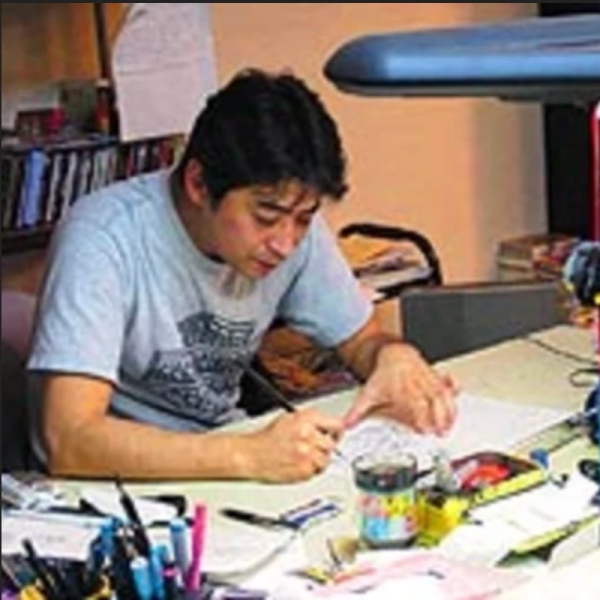
Games are very important in our social development have many uses in education and learning.  One of the more unlikely uses has recently been highlighted on the BBC radio program, Positive Thinking.  The episode broadcast last month, introduces Ekim Tan, an architect and game designer.  Ekim who is Turkish and living in Amsterdam, founded “Play the City“, a consultancy firm that uses playing board games to foster collaboration between those responsible for design, policy and budgets for development.

Play the City
– Image from resite.org

The episode of Positive Thinking presented by Sangita Myska is entitled “Making Planning Work for Everyone” and is currently available on iPlayer.

Next Meeting, 14th June 2022

Our next meeting will be Tuesday 14st June 2022.  As usual, we will start playing shorter games from 7.30pm as people arrive, until 8pm when we will start something a little longer (table is booked from 6.30pm for those who would like to eat first).

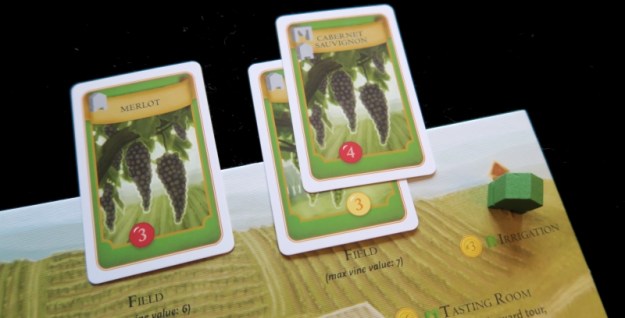
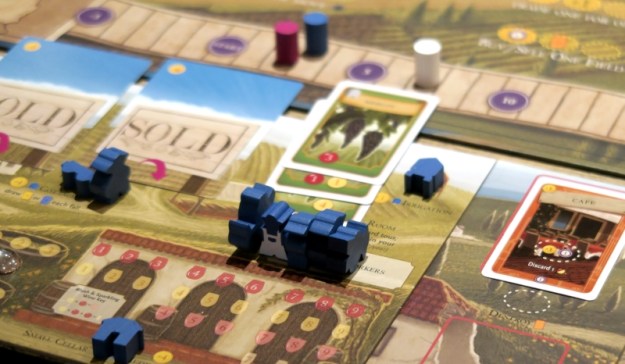
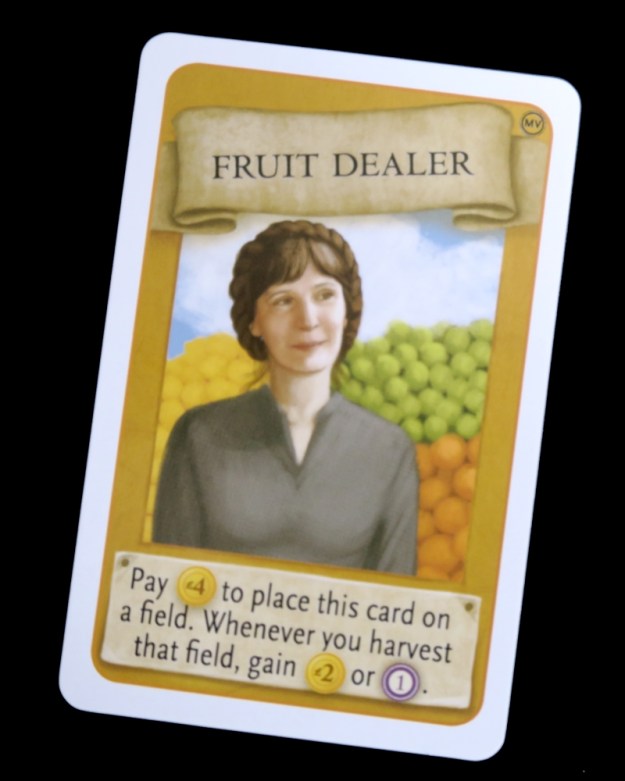
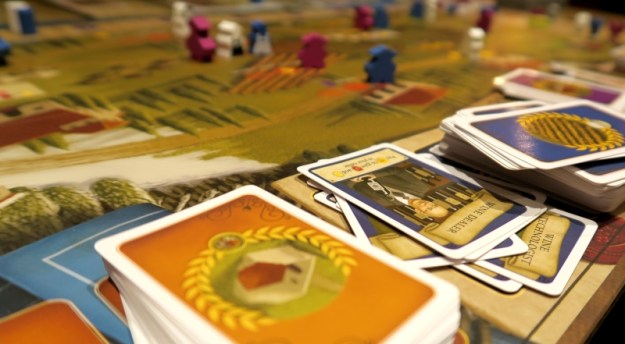
This week, the “Feature Game” will be the Moor Visitors expansion to Viticulture, which we will play together with the Tuscany board (rules etc.).  Viticulture is a worker placement game about planting vines, harvesting grapes and making wine.  The Moor Visitors expansion adds extra cards while the Tuscany expansion provides changes to the seasons the actions occur in and provides a couple of extra mechanisms for getting points.

Tuscany
– Image by boardGOATS

And speaking of wine…

Jeff was driving down a country lane when he met a car coming the other way. Unfortunately both drivers were going a bit quickly and as they came round a blind corner they collided. Both cars involved were completely wrecked, but amazingly neither Jeff nor the young lady driving the other vehicle were hurt.

After they climbed out of their cars, the young lady said, “Just look at our cars! There’s nothing left, but fortunately we are both unhurt. This must be a sign from God that we should meet and be friends and live together in peace for the rest of our days.”

The lady was very good looking and her car looked very valuable, so Jeff, thinking his luck was in, replied, “I agree with you completely.”

The woman continued, “And look at this, here’s another miracle. My car is completely demolished, but this bottle of wine didn’t break. Surely God wants us to drink this wine and celebrate our good fortune.”

She handed the bottle to Jeff, who, mentally checking whether it was his birthday, opened it, drank half and then handed it back. The woman took the bottle, screwed the cap back on and handed it back to Jeff.

Jeff looked a little confused and asked, “Aren’t you having any?”

The woman replied, “No. I think I’ll just sit here and wait for the police…”

31st May 2022

While they were waiting for their dinner to arrive, Blue and Pink squeezed in yet another in their on-going head-to-head series of Abandon All Artichokes matches.  The idea of the game is that players start with a deck of ten artichoke cards from which they draw a hand of five cards.  Then, on their turn, they take one card from the face up market, play as many cards as they can, before discarding their hand to their personal discard pile. When, on drawing their new hand of five cards a player has no artichokes, the game ends and that player wins. Pink and Blue have played this cute little “deck shredding” filler game a few times recently and, after an initial flurry of Blue winning, Pink got the hang of it and won a couple of games.

Abandon All Artichokes
– Image by boardGOATS

Last time, Blue got her revenge and Pink said that now Blue had won again, that would probably be that.  This game showed that was not so, and while this had all the potential for being a tight game, Blue claimed victory by carefully stacking the top of her deck ensuring an artichoke-free draw despite having three left.  With food over and everyone else rocking up, it was time to decide who was going to play what.  There was a lot of enthusiasm for Die Wandelnden Türme, which was the “Feature Game“, after people had seen it from a distance last time.

Die Wandelnden Türme
– Image by boardGOATS

As it plays better with more people and there were only eight people in total, the group split into a five and a three, with Pine, Green, Black, and Lime joined by our special guest from Nottingham, Magnolia.  The game is a fun little family game where players start with a handful of Wizards placed on top of the little Towers arranged round the board, and a hand of three cards.  On their turn, the active player gets two actions: play a card or cast a spell. Playing a card which allows them to move one of their Wizards a set number of spaces forward, or move a tower a set number of spaces.  When Towers move, they take any resident Wizards with them but can also land on top of another Tower and trap any pieces that were on the roof.

Die Wandelnden Türme
– Image by boardGOATS

A player that catches other pieces in this way gets to fill a Potion Flask.  They can then spend the Potions to cast spells.  In the base game the spells available are “move a Wizard one space forward” or “move a Tower two spaces forward”, but others are available and change the feel of the game a little.  Players are trying to land all their Wizards in the black, Raven Castle and fill all their Potion Flasks—when someone succeeds, that triggers the end of the game.  It is a fun and entertaining game where players Wizards get variously trapped and if they have a bad memory, can find they lose them in the circus of dancing towers.

Die Wandelnden Türme
– Image by boardGOATS

Although Pine kept losing his wizards last time (captured under the towers), this week everyone managed to keep track of them most of the time.  Only Lime got muddled at one point when a tower was moved and he expected one of his wizards to be underneath, confusion only reigned until his next turn though, when he found it again. Lime was first to get a wizard into the Ravens’ Castle, quickly followed by Pine.  A little while later Pine and then Magnolia got their second wizards in the castle, by using two of their potions for an extra move, then Green got his first wizard “home”.  Black’s wizards still hadn’t caught up with the tower, and he wasn’t managing to fill any of his Potion vials either.

Die Wandelnden Türme
– Image by boardGOATS

With everyone too busy keeping track of their own game, Pine made up for last time’s confusions by filling his final potion vial and dropping his last wizard into the Ravens’ Castle to end the game.  Although there is no second place in this game unless you can get all your wizards into the Ravens’ Castle filled all their Potion vials, Green was closest with all four potions and none used. Magnolia took the last place on the podium, also finishing with four potions, but he had used two of them.  Aside from Pine, no-one had more than one wizard in the tower, in fact, everyone had exactly one.

Die Wandelnden Türme
– Image by boardGOATS

Black’s game was somewhat stymied by the fact all his wizards were trapped under towers so he couldn’t move them, and his cards didn’t allow him to move towers.  This is the downside of Die Wandelnden Türme:  there is some luck of the card draw and when that goes awry players can find themselves stuck, but as it is a short game it’s not too much of an issue and it is a fun little game.  Green remarked how Terry Pratchett-esq it felt with wizards chasing towers and towers chasing wizards.

Die Wandelnden Türme
– Image by boardGOATS

Die Wandelnden Türme is such a quick game that the others were still busy and the group of five looked round for something else to play.  At Pine’s suggestion, they decided to go for a popular classic:  Ticket to Ride: Europe.  This is a well known family of games that everyone was familiar with so there was no need to go through the rules at any length:  on their turn, players take two cards from the market, or spend cards to place trains on the central map.  Players score points for placing trains, but also completing route tickets.  Players receive these at the start of the game but can also draw more in lieu of a turn.  They must be careful though as any incomplete at the end of the game score negatively.

Ticket to Ride Demo
– Image by boardGOATS

There were some extra pieces and some unexpected cards in the box so Black perused the rules in the box trying to work out how they worked.  Blue piped up from the other table that they were for the Dice and Europa 1912 Expansions, but the group decided to leave them out and just stick with the base game.  A little kerfuffle broke out when Pine chose to play as Green for the second game in a row, which caused Green to be sad puppy dog.  Green decided that maybe he would use Pink’s special Pink set instead, only for Pine to relent and choose black, leaving green available for Green after all.  With Pine being black, Black chose Yellow, so Lime was blue and Magnolia was red…

Ticket to Ride Demo
– Image by boardGOATS

Green popped away for a couple of minutes and in his absence, Pine laid his first, two train route, to kick off the scoring.  Half way through the round Green noticed that Pine had laid his trains on a tunnel.  Although Stations had been clarified at the start of the game (they can be used to connect cities to avoid negative points from tickets), Tunnels hadn’t been mentioned.  So, Green brought the subject up and everyone realised they hadn’t noticed it was a Tunnel.  When a player chooses to “build” one of these, they turn over the top three cards of the draw deck and if any match the colour the player used to build it, they have to pay extras (the idea being that building tunnels is expensive and unpredictable).

Ticket to Ride: Europe
– Image by boardGOATS

It was felt that it wouldn’t be fair to force the tunnel check on Pine retrospectively as he may not have chosen to lay the train in the first place if he’d realised he might need more.  However, Lime was uncertain how Tunnels worked and the explanation didn’t seem to clear it up.  So, in the end, Pine drew the three train cards to demonstrate how this worked and on the last card found he needed an extra card. He had a Locomotive card (wild) so used that and thus, the turn was corrected and all was now clear. However, having seen the consequences, both Pine and Lime said they might have chosen different tickets had they realised how Tunnels work.

Ticket to Ride: Europe
– Image by boardGOATS

The next trains to go down were all around Germany—because one was placed it drew out the rest in order to secure routes that were rapidly filling up.  Pine was the first to lose out on this and used his first station to piggy back a route.  After this initial flurry, trains were placed at a more relaxed pace, but all around Western Europe. Eventually Magnolia broke out eastwards to Kyiv, quickly followed by Lime.  Lime didn’t stop there, however, he carried on to Kharkiv and thence to Rostov.  Magnolia and Lime had this area to themselves for much the rest of the game.

Ticket to Ride Demo
– Image by boardGOATS

Green was the first player to complete his routes and draw new tickets, but groaned as he looked at them commenting that they were awful and difficult to complete.  There was little sympathy for him round the table, however, he chose one card and pushed on.  Quietly he started collecting green cards and Locomotives.  After collecting his third Loco, Lime became suspicious of Green’s plans.  After yet another Loco Lime mentioned that it must have been his fifth one (he was in fact correct on that) and wondered out loud why he needed so many and whether he could be stopped.

Ticket to Ride: Europe
– Image by boardGOATS

By then everyone had twigged that Green (who’s route had taken him from Cadiz to Stockholm) was aiming for the big eight train Tunnel along the top from Stockholm to Petrograd.  When he went for it, no green cards or Loco’s turned up—most of them were in his hand so it was unlikely—and the twenty-one points he received took him from the back of the field to the front.  Soon after this Green and Black placed their first stations, which meant everyone had placed exactly one, and everyone all piggy-backed on each other in a daisy chain. The station usage didn’t stop there as Magnolia and Black would both use one more before the end.

Ticket to Ride: Europe
– Image by boardGOATS

As the game drew to a close it seemed to slow down as no one could get the colour cards they needed, until eventually Lime and Green gave up and just started placing random tracks just for points. These two were leading the points race as well, even though Lime had been complaining all the way through that things just weren’t going right for him and he didn’t know what he was doing really.  Despite all this, it was Lime who ended the game by placing four of his last five trains. Everyone then had their last chance shot and it was time for the final scoring.

Ticket to Ride: Europe
– Image by boardGOATS

A quick run through the route scores again to double check showed that the group had been pretty good at keeping them right.  It looked like Green had the longest set of connected trains and was ahead on points as well.  Working from the back of the pack to score the Tickets, Pine had several but he had discarded his long route and moved temporarily into second place having suffered from missing out on the Tunnels rule at the start.  Then Black and Magnolia both surpassed a hundred and then Lime leap-frogged to the front.  Lastly Green’s tickets looked to have sealed him victory only to realise that he had forgotten to connect to Berlin.

Ticket to Ride: Europe
– Image by boardGOATS

Green took the longest train, by a wide margin, which took him into third place, ruing his silly mistake without which he would have taken a narrow victory.  In the end, victory went to Lime, even though he claimed all the way through he did not know what he was doing and it was all going wrong—definitely shades of Burgundy!  Magnolia was second, but first to fourth were all withing about ten points of each other in what had been a close and quite epic game.  With that, Magnolia, Green and Lime took an early night while Black wondered over to see what Pink, Purple and Blue had been up to.

Ticket to Ride: Europe
– Image by boardGOATS

They had started out with Ivor the Engine, a charming little game that we used to play quite  a bit but hasn’t had an outing since before the global pandemic hit.  The idea is that the players are helping Ivor to collect lost sheep and complete tasks for his friends.  On their turn, the active player takes a sheep from their current location (if there is one) and then can move their wagon to an adjacent location and play Job cards.  The Job cards are the meat of the game: they can either provide a special action, such as extra moves and adding sheep to the board, or allow you to complete a Job if you are at a location where there are no sheep.

Ivor the Engine
– Image by boardGOATS

Once the active player has completed their movement and any card play, they take a Job card from the market. The catch is that jobs can only be carried out at the correct location and there is a hand limit of four cards, and taking a card is mandatory.  This makes the game very tight and some of the actions available on the cards have the potential to make the game quite vicious. The game ends when one player reaches a set number of sheep and then players count up their sheep, add any gold and any end-game bonuses they might have picked up, with the player with the most sheep-points named Ivor’s Best Friend Forever.

Ivor the Engine
– Image by boardGOATS

This time, Pink and Purple got in each other’s way in the west leaving Blue to collect sheep alone in the east.  The disadvantage of this is that it took a lot of turns to clear the locations of sheep so that she could play the nice set of Job cards she started with.  On the other hand, Pink was causing Purple all sorts of problems very effectively trapping her in Grumbly Town.  Purple tried to get her revenge at the end by dumping a load of sheep into the location he was at and thus stopping him from playing a Job card there.  However, he just played a different card to claim the sheep and ended the game anyhow, taking victory by seven points from Blue in second.

Ivor the Engine
– Image by boardGOATS

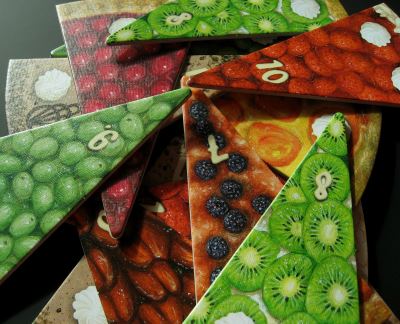
Once Ivor was over, the trio moved on to Kingdomino—another game we used to play quite a bit, but hasn’t had an outing since we returned to face-to-face games.  This is a very clever little game that won the Spiel des Jahres award five years ago.  The idea is that players take a numbered, double-ended tile and add it to their kingdom.  At least one end of each tile must extend an area of terrain or be placed adjacent to their central castle.  Additionally players’ kingdoms must fall within a five-by-five grid.  At the end of the game, each terrain scores for the number of spaces it occupies multiplied by the number of crowns depicted in it.

Kingdomino
– Image by boardGOATS

There are additional points available for objectives, but although there are some interesting objectives available in the Age of Giants expansion, the trio decided to stick with the originals:  ten extra points if their castle is in the centre of their kingdom and five if they manage to play all their tiles.  So far, so simple.  The clever part of the game is that the tiles are numbered according to value and chosen according to an ordered market.  In this way, players who choose the least exciting tiles get to choose first in the next round, while players who get the best tile will end up with no choice.

Kingdomino
– Image by boardGOATS

Unfortunately, playing with only three means that some tiles do not come out and a player can find they do very badly through no fault of their own if Lady Luck deserts them.  This time Blue was the unlucky one, though it wasn’t helped by some poor play (perhaps associated with the arrival of a certain puppy who delighted in chewing her ear).  Purple was did better, but the runaway winner with seventy-three points (more than twice as many as Blue), was Pink.  This was thanks to a large cornfield, which by itself scored almost as many points as Blue’s whole kingdom.

Kingdomino
– Image by boardGOATS

As the epic game of Ticket to Ride was still on-going on the neighbouring table, Blue, Purple and Pink felt there was time for one more game and, after a little discussion, they settled on Splendor.  This was the game Burgundy played extremely well and was almost unbeatable at, so we always remember him when we play it.  It is very simple:  on their turn, the active player takes gem chips, or uses chips to buy gem cards.  The cards act as permanent gem chips, allowing players to buy more expensive cards.  Some cards also give points with the most expensive cards giving the most points.

Splendor
– Image by boardGOATS

Players can also get bonus points for claiming “noble” tiles—these go to the first player who collects a certain combination of gem cards.  This time, Blue went first.  As always, some players struggled to get the cards they wanted, and while Pink had an awful lot of cards, somehow he wasn’t able to make anything of them.  The game ends when one player gets fifteen points and Blue, who had got a bit of a head start, could see that the other two were struggling.  So, when Black joined them, he was just in time to see her end the game, taking the only noble and a high value points card in the last couple of turns.

Splendor
– Image by boardGOATS

Learning Outcome:  Do not meddle in the affairs of Wizards, for they are subtle and quick to wander.

Boardgames in the News: International TableTop Day (or Days…)

International TableTop Day began in 2013 as a way for the world to celebrate tabletop gaming together. Sponsored and promoted by Wil Wheaton and his YouTube show, “TableTop”, International TableTop Day was the held in spring or early summer.  Sadly, TableTop was sold and, after an alleged spat, it quietly died.  As a result, International TableTop Day hasn’t been “officially” celebrated since 2019.  Online searches still give various dates for it however (as well as for other occasions), but while some say 1st June, some name the first Saturday in June, and others come up with their own date.  For example, this year, the games retailer, Zatu, marked Friday 3rd June with a special offer in its name.

International Tabletop Day at Zatu
– Image from zatu.co.uk

With UK Games Expo held on the first weekend in June, lots of people in this country will be “celebrating” by playing games, while this year, others will be marking the Queen’s 70th Jubilee by spending time with family, friends, and neighbours.

UK Games Expo 2022

Today was the first day of the fifteenth UK Games Expo.  After the cancellation two years ago and the subdued event last year, it was almost back to normal this year.  On arrival, outside the NEC, there were vikings in their camp, playing Hnefatafl with their visitors.

Hnefatafl
– Image by boardGOATS

It seems blinging games has been a thing for over a millennia, as the vikings were proudly showing off their pimped out copy.  Inside, the halls were busy, but not overcrowded, though of course this was Friday, traditionally the “quiet day”.

UKGE 2022
– Image by boardGOATS

Just inside the door was the Burley Games stand with a shelf of variants of Take it Easy!—an unwanted reminder of playing games remotely through Teams for eighteen months, albeit as one of the games that worked quite well in that format.

UKGE 2022
– Image by boardGOATS

Nearby was the Oink Games stand, showing off the newly Spiel des Jahres nominated, SCOUT and just round the corner, the staff from the Oxford-based Osprey Games were obviously delighted that their game Cryptid had received a Kennerspiel nomination and were keeping their fingers crossed that it would go one further.

SCOUT
– Image by boardGOATS

Hall One was also the home to Fire Tower, a clever puzzle game with the tag line, “fight fire with fire”.

Fire Tower
– Image by boardGOATS

As well as a very smiley sheep from Catan, there were also a lot of designers about, including Tony Boydell, Alan Paul, Andy Hopwood, Bez Shahriari, Rob Harper and Matt Dunstan, all sharing their games and chatting with gamers.

UKGE 2022
– Image by boardGOATS

There were a number of interesting little British games, including Daring Dustbunnies and Deckchairs On The Titanic, which were on neighbouring stands, while Surprised Stare were selling a special tribute to the festive weekend called Corgi Dash (based on the 1986 Spiel des Jahres winner, Heimlich & Co.).

UKGE 2022
– Image by boardGOATS

Universities of Warwick, Chester and Canterbury were all present, variously advertising their courses in game design and demonstrating how gaming can be used as a learning device.  One Warwick (IATL) computer science student showed a game he designed to demonstrate the Turing Test and how people are poor at understanding randomness.

UKGE 2022
– Image by boardGOATS

There were also previews of upcoming games.   These included Namiji, a game which has the same theme and uses the same basic mechanic as Tokaido, but increases the complexity with more challenging steps along the way.  Namiji was demonstrated at Essen in 2019, but like so many things, fell foul of the global pandemic in the interim.

Ticket to Ride: San Francisco
– Image by boardGOATS

The new Ticket to Ride game which will be released later this year was also available to see and play.  It is based round the city of San Francisco and features street cars and follows the successful format of a new map and a slight rules tweak.

UKGE 2022
– Image by boardGOATS

Aside from games, there were also a lot of stands selling books, costumes, props, and scenery—these days, the distinctive aroma of singed wood pervades the aisles of games conventions as an homage to the laser cutter, which is used to make everything from wooden boxes, to houses, coasters and puzzles.

UKGE 2022
– Image by boardGOATS

All in all, the return to face-to-face conventions was a date to remember.  UK Games Expo continues until 4pm Sunday 6th June.

Next Meeting, 31st May 2022

Our next meeting will be Tuesday 31st May 2022.  As usual, we will start playing shorter games from 7.30pm as people arrive, until 8pm when we will start something a little longer (table is booked from 6.30pm for those who would like to eat first).

This week, the “Feature Game” will be Die Wandelnden Türme, a clever little family game where players take it in turns to move Wizards or Towers (rules, review & how-to-play video).  We played this last time, and it went down so well, we thought we’d make it the “Feature” this time.

Die Wandelnden Türme
– Image by boardGOATS

And speaking of Wizards…

Jeff and his wizard mates were playing with spells, and conjured up a magic slide into a pool. They put a spell on it so that whatever anyone said as they slid down the slide would appear in the pool.

Jeff’s first friend shouted, “BEEEEEERRRR!” whilst on the slide and landed in a pool of the best beer ever to be tasted.

His second friend yelled, “WIIIINNNEEE!” whilst coming down the slide and he landed in a pool of the most expensive wine ever to be made.

Finally, it was Jeff’s turn. He excitedly climbed up to the top of the slide and then, completely forgetting forgetting the spell, as he launched himself down the chute, he screamed, “WWWHEEEEEEEEE!”

17th May 2022

Black and Purple were first to arrive this week, but Pink and Blue were not far behind, and once food had been ordered, there was just time for a quick game of Love Letter to commemorate its recent tenth anniversary.  We used to play this quick little filler game quite a bit, but that fell victim to the global pandemic and, as a result, it’d been a while since anyone round the table had played it.  Played with just sixteen cards, the game is really simple, but is a great way to kill a few minutes.  The idea is that each player starts with one card, and on their turn draw a second from the deck and play one of the two.

Love Letter
– Image by boardGOATS

Each card has a number and an action or effect.  The actions range from number one, the Guard, which allows the player to guess what character card a player is holding and “assassinate” them if correct, to number eight, the Princess, who will win the game for the player holding it at the end, but lose it for them if they are forced to discard it before then. There was just time for three rounds before food arrived.  Black took the first round and Pink the second.  Pink then recused himself as he went to chat to some of the locals about Jubilee plans leaving Black, Purple and Blue to fight it out with Blue taking the final point.

Love Letter
– Image by boardGOATS

With the arrival of Pine and Lime, the group went on to play Moneybags, which had been the “Feature Game” a couple of weeks ago.  The idea of this is that, on their turn, players have to decide whether to rob another player’s hessian sack of gold or not.  Critically, however, they must not be too greedy.  This is because the victim can challenge the thief, and if the thief is found to have more than the victim, the victim takes the lot, but that makes them more of a target as now everyone else knows how much they have…

Moneybags
– Image by boardGOATS

This time, the game did not go according to plan.  Black played the Godfather and divvied up the loot.  Purple robbed Pine, who promptly challenged and won a huge pile of gold.  As it was his turn next, after lots of advice from everyone else, he closed his bag and stepped out.  Then Blue challenged Black and won, knocking him out too.  Although it was close between Pine and Blue, much closer than most people thought it would be, Pine’s huge stash won out.  The moral of this story is to rob someone before you in the turn order otherwise, if they challenge and win, they can kill the game by closing their bag.

Moneybags
– Image by boardGOATS

This week, the “Feature Game” was the Arts and Architecture expansion to Tapestry, which is something that Ivory in particular, had been waiting ages to play.  We wanted to give others an opportunity to play the base game first and then the (slightly less complex) Plans and Ploys expansion, which got an outing a few weeks ago.  That was enjoyed by everyone involved, so it was now time to add the second expansion.  The base game is simple in terms of what you do, but playing well is much more difficult.  The idea is that there are four advancement tracks:  Science, Technology, Exploration and Military, and on their turn, the active player progresses along one of these taking the actions for the space they land on.

Tapestry
– Image by boardGOATS

In general, players must pay resources to carry out actions and, in some cases, may pay more to carry out a bonus action.  The first player to progress along each of the tracks receives a building as they pass landmark spaces, which those players then add to their city.  Filling rows and columns of their city gives additional resources and as these are scarce, the extras can be invaluable.  Players can focus on a specific track or take a more balanced approach, but this decision is often driven by starting Civilisations which give players a special and unique ability.  Coupling the Civilisation with the right strategy is often the difference between success and failure.

Tapestry
– Image by boardGOATS

When players run out of resources, they can instead take income which means players move on to the next round at different times.  The Arts and Architecture expansion provides more civilizations, tapestry cards, technology cards and capital city plans.  The biggest change, however, is the addition of a new advancement track featuring new Art or Masterpiece cards and tiles and, of course, associated Landmark miniatures.  Each Income phase, players can activate their masterpiece power and get the benefit shown, typically resources or points allowing players to prolong their turns further, but like the Technologies, they are really a long term investment.

Tapestry: Arts & Architecture
– Image by boardGOATS

Green and Teal joined Ivory in what was a Tapestry rematch of the last game and, in addition to the Arts and Architecture expansion also included the Plans & Ploys expansion. Each player received a standard capital city and an expansion capital city, but everyone decided to try the new ones to add variety to the game.  For the Civilisations, in an effort to ensure things were balanced, the up-to-date starting adjustments were used, and players chose:

  • Craftsmen (Ivory), which gave him a new board to place his income buildings on for extra bonuses;
  • Historians (Teal), which enabled him to choose a player each round, and when that player placed a special building, Teal would gain extra resources;
  • Architects (Green), which gave his income rows double points scoring under certain conditions.
Tapestry
– Image by boardGOATS

Green’s Civilisation did not last beyond his first income phase, however, as he played the Plague Tapestry card which allowed him to draw a new one. This new one, Entertainers, gave him an extra bonus track to follow each income phase.  Ivory made his intentions clear by moving up the new purple Arts track and gained a couple of special Arts cards.  Green followed him, but also spread a bit more onto the Technology track for a Technology card.   It was Ivory who was first to take an income phase, but as he had not explored the Technology track he did not have a Technology to upgrade on his first income.  Ivory did have a couple of Arts cards to provide him with a nice little bonus though.

Tapestry: Plans and Ploys
– Image by boardGOATS

Teal went a different route and travelled up the Explore track and expanded his island.  The resources he gained on the way enabled him to take his first income much later than the others.  This pattern of Teal taking income last remained in play to the end of the game. Green took the second income first, and Ivory switched back to first for the third income. It was Ivory who took his final income first, closely followed by Green leaving Teal to play on his own at the end.  By this time, Ivory had collected all the Arts buildings, completed both the Arts and Science tracks and expanded his empire by three more hexes.

Tapestry: Arts & Architecture
– Image by boardGOATS

Ivory had also collected three Arts cards and replaced two of his income scoring tracks. He had only placed two income buildings on his Civilisation card, but had mostly completed his capital city (including a massive seven special buildings), but had only one, solitary technology card.  Teal had completed the Explore track, although two of his space hexes were very poor scoring for him, and had not progressed at all on the Arts track. His empire was seven hexes in size, including the one in the centre of the territory. He had also collected six special buildings on his way, but no Technology at all.

Tapestry: Arts & Architecture
– Image by boardGOATS

Green managed to complete the Arts and Technology track, choosing to travel up the Arts again for his technology completion bonus. He did not expand his empire at all, although he had grown the islands a little. He finished with four Arts cards and three Technology cards, but only five special buildings.  In the final scoring  Green finished with a personal best of two hundred and ninety-three points, beating the hitherto invincible Ivory who “only” managed two hundred and fifty-one, some way ahead of Teal.  Part of the reason for this was that Teal did not place his last player cube choice from his civilisation on his penultimate income.

Tapestry: Arts & Architecture
– Image by boardGOATS

This was because the game ended in a bit of a rush because time was getting on and Teal unfortunately didn’t thought the others wouldn’t get any more buildings.  As a result he missed out on a few free resources in the final round and even a few resources can make a huge difference. As ever it is difficult to find the right balance in Tapestry as players need to both specialise and be a Jack of all trades, which is very hard to do.  Although the game took longer as a result of the expansions, all three liked the added enhancements and would be keen to play again with all the extras.

Tapestry: Arts & Architecture
– Image by boardGOATS

Meanwhile, on the the other side of the room, Lime was introducing Black, Lilac and Pine to Die Wandelnden Türme, a recently released, curious little family game.  The idea is that players start with a handful of Wizards placed on top of the little Towers around the board, and a hand of three cards.  On their turn, the active player plays a card which allows them to move one of their Wizards a set number of spaces forward, or move a tower a set number of spaces.  When Towers move, they take any resident Wizards with them but can also land on top of another Tower and trap any pieces that were on the roof.  A player that catches other pieces in this way gets to fill a Potion Flask.  They can then spend the Potions to cast spells.

Die Wandelnden Türme
– Image by boardGOATS

In the base game the spells available are “move a Wizard one space forward” or “move a Tower two spaces forward”, but others are available and change the feel of the game a little.  Players are trying to land all their Wizards in the black, Raven Castle and fill all their Potion Flasks—when someone succeeds, that triggers the end of the game.  It is a fun and entertaining game where players Wizards get variously trapped and if they have a bad memory, can find they lose them in the circus of dancing towers.  And that is exactly what happened to poor Pine.  His Wizards disappeared and every time he uncovered where he thought they were, he discovered they weren’t.

Die Wandelnden Türme
– Image by boardGOATS

In the end it was a tie between Lime and Black, but it had been a lot of fun, and Pink in particular was watching with envious eyes from the next table as he’d read about the game in the Spielbox magazine and fancied giving it a go.  While eying up the Wizards, Pink was playing Calico with Purple and Blue.  This is another game that is new to the group, although it was released a couple of years ago.  It has a similar feel to Patchwork, the popular two-player tile-laying game about designing quilts, though the games are by different designers.  The most obvious difference is that Patchwork is a Tetris-like game with polyomino tiles, where all the tiles in Calico are regular hexagons.

Calico
– Image by boardGOATS

On their turn, the active player chooses a patch tile from their hand of two, and sews it into their quilt, before replenishing their hand.  If they complete a colour group with that tile, they can add a button to their quilt; if they create a pattern group that is attractive to a cat, it will come over and sit on their quilt.  At the end of the game, when the quilt is finished, players score for buttons, cats, and their own personal target.  In reality, the theme is a bit “pasted on”, but the pieces are nice, and make what is otherwise a bit of a brain-burny abstract a little more accessible.  Purple and Pink struggled with the puzzly nature of the game at the beginning, where Blue got a better start.

Calico
– Image by boardGOATS

Achieving the personal targets is difficult—these specify the number of different tiles that should surround a particular tile.  For example, the goal tile AA-BB-CC scores when surrounded by three different colours, or three different patterns, with two matching tiles in each colour/pattern.  Successfully fulfilling a target with both the colour and the pattern scores more points, but is significantly more difficult.  Despite explaining this to Purple in her rules outline and saying she had decided to give up on the extras, Blue somehow got lucky and was able to fulfill two of private goals with both the colour and the pattern.  With lots of buttons and cats, it was a bit of a runaway victory for Blue, but it was very close for second, with Pink just edging it.

Calico
– Image by boardGOATS

Die Wandelnden Türme finished first, so the foursome scratched about for something else to play and settled on The Game.  This is a simple cooperative game that was one of Burgundy‘s favourites.  The team have a deck of cards numbered from two to ninety-nine (in our case, from a copy of The Game: Extreme, but ignoring the special symbols), and they must play each card on one of four piles.  For two piles where the card played must be higher than the top card, and for two it must be lower.  There are just three rules:  on their turn, the active player can play as many cards as they like (obeying the rules of the four piles), but must play at least two cards before replenishing their hand, and players can say anything they like but must not share “specific number information”.

The Game
– Image by boardGOATS

Finally, there is the so-called “Backwards Rule” where players can reverse a deck as long as the card they play is exactly ten above or below the previous card played on that pile.  The game ends when, either all the cards have been played onto the four piles, or a player cannot play a card.  This time, things went wrong from the start and unusually, kept going wrong, so much so that there were still two cards left in the deck when the group could no-longer play.  Lilac ducked out and Pine, Lime and Black gave it a second try, but the end result was not much better.  Clearly the group keenly felt the loss of Burgundy’s special skills.

– Image by boardGOATS

While they played their second game of The Game, Calico came to an end, and Lilac joined Purple, Pink and Blue for a game of Sushi Go!, the archetypal “card drafting” game.  Players start with a hand of seven cards, and choose one to keep, passing the rest on to the player on their left. Players repeat this with the aim of the game being to end up with the set of cards that score the most points. The game is played over three rounds with the player with the highest total winning.  This time, the game was interrupted by an arrival, one some people had been waiting all evening for.  The “special guest” was the new resident at the pub, a gorgeous black Labrador puppy by the name of Winston.

Sushi Go!
– Image by boardGOATS

The game decidedly played second fiddle when cuddles were on offer.  Despite the distraction of Winston, or perhaps because of his help, Blue, who is usually appalling at this game, somehow managed to make two solid rounds.  Pink did the same in the first and third rounds, while Purple and Lilac were more consistent over the three rounds.  Purple finished with the most puddings, and Pink and Lilac shared the penalty for having the least.  Those penalty points made all the difference as Blue pipped Pink to the post.  And as Tapestry had also finished and Pink had finished admiring Teal’s copy of Root, it was time for all little puppies to go to bed.

Winston
– Image by boardGOATS

Learning Outcome: It’s hard to specialise and be a “Jack of all trades” simultaneously.

Spiel des Jahres Nominations 2022

The nominations for the three categories of Spiel des Jahres have been announced.  This is arguably the main award in board gaming and is the one everyone wants to win.  There are three categories, the Kinderspiel (children’s game) , the Kennerspiel (“expert’s” game) and the most desirable of all, the family award, the Spiel des Jahres.  The nominees for this year’s awards have been announced as:

In recent years, there has been an increasing tendency by the committee to reward games that challenge the conventional idea of a game.  This was certainly true with Last year’s winner, MicroMacro: Crime City, which is very different to traditional games and arguably is more a cooperative crime-solving activity using the medium of “Where’s Wally?“.  The “game” is played on a large monochrome map, with a deck of cards. The cards ask questions with the answers to the questions on the map. In turn, these lead the players to the solution to each of the sixteen cases.

– Image by BGG contributor Hipopotam

The Kennerspiel des Jahres award which honours slightly more challenging games, went to Paleo and the Kinderspiel des Jahres award winner was Dragomino, a children’s version of Kingdomino (which won the main prize in 2017).  Paleo is a co-operative campaign game, where players try to keep the human beings in their care alive while completing challenges.  With the games honoured by the main award becoming lighter over the years, we have found the Kennerpiel des Jahres is generally a better fit to our tastes.  However, campaign and legacy games are not well suited to groups where the people playing games are different from week to week, and many people don’t like cooperative games too, so it will be interesting how this award changes in coming years.

– Image from spiel-des-jahres.de

The judges will be meeting 17-19th June in Hamburg, with the Kinderspiel award announced on 20th June.  The Spiel and Kennerspiel des Jahres announcements are a month later on 16th July in Berlin.

Next Meeting, 17th May 2022

Our next meeting will be Tuesday 17th May 2022.  As usual, we will start playing shorter games from 7.30pm as people arrive, until 8pm when we will start something a little longer (table is booked from 6.30pm for those who would like to eat first).

This week, the “Feature Game” will be the Arts and Architecture expansion (rules, review & how-to-play video) to Tapestry (rules, review & how-to-play video).  We played Tapestry with the Plans and Ploys expansion a few weeks ago and it was enjoyed by everyone involved.

Tapestry
– Image by boardGOATS

And speaking of architects…

Jeff was working in a pub, as a barman, serving pints.  One day, an architect who was drinking at the bar had an idea. He issued a challenge to anyone in the pub to see who could design the best building in five minutes.

A cowboy accepted the challenge, so Jeff found some paper and pencils and handed them out.

Then, Jeff counted them down, saying “Three… Two… One… DRAW!”

And the cowboy shot the architect.

3rd May 2022

Like the last few games nights, this one started with Pink and Blue playing the deck-shedding game, Abandon All Artichokes.  This is a very simple game where players start with a deck of ten artichoke cards from which they draw a hand of five, then, on their turn, they take one card from the face up market, play as many cards as they can, before discarding their hand to their personal discard pile.  If, on drawing their new hand of five cards they have no artichokes, the game ends and they win.  In the first couple of games a few weeks back, Pink struggled somehow, and Blue won.

Abandon All Artichokes
– Image by boardGOATS

Then Pink got the hang of it, and won several games on the trot, but this time it was Blue’s turn to finally get back on terms, just before supper arrived.  They were just finishing when Black and Purple, and then Teal arrived.  Although it was still very early, it was a perfect opportunity to play the “Feature Game” as it was Moneybags, a quick little social deduction, filler game. The premise is similar to that of Ca$h ‘n Guns, where players are thieves dividing up the spoils from a robbery, stealing from each other and generally trying to deceive everyone so that they come out on top.

Moneybags
– Image by boardGOATS

In Moneybags, one player takes the role of the Godfather, divides the loot “evenly” amongst the players’ small hessian sacks.  Holding only the top of their sack, each player takes it in turns to Pass, Stick, or Rob another player.  Pass and Stick are simple actions (pass and remain in the game, pass and stick with the total in their sack so they can neither Rob nor be Robbed), but Rob is the interesting one.  The active player can Rob any other player that is still “in”, taking some or none of the loot from their sack.  The thief mustn’t be too greedy, however, as the victim can challenge—the protagonists compare their loot and the one with the largest stack loses, the winner takes all the loot and the loser is eliminated.

Moneybags
– Image by boardGOATS

After two turns round the table, the game ends with the Godfather (or arguably Godmother), taking their second turn.  The winner is the player with the most loot.  Moneybags can be played over three rounds, though like Saboteur it is probably best when one round is considered “the game” rather than playing in campaign mode.  Pink started as the Godfather and divvied up the money.  In addition to coins, there is also a Diamond in the loot; this is worth roughly ten coins. When comparing spoils, the coins are stacked with the Diamond placed on top so that the tallest stack loses when Robbed or wins at the end of the game.  The Diamond is comparatively light, so it adds a little bit of additional ambiguity to the proceedings.

Moneybags
– Image by boardGOATS

Pink, made a point of taking note of where the Diamond went and then stole it back later in the game giving him the first round, slightly ahead of Teal in second.  Lime arrived during towards the end of the game, so the rules were explained to him.  Then Ivory joined the party so Blue swapped out and gave him a quick summary as well, while Purple, as Godmother, divided up the spoils.  With a slightly better idea of how the game played, the second round went even better with more players Robbing and challenging each other.  As a result, the Diamond went round the table several times.  There was much hilarity as players tried to guess how much cash people had, and Pink showed his age when he commented that someone’s stash “chinked like a bus conductor’s money bag”.

Moneybags
– Image by boardGOATS

Once again, the Godparent finished with the Diamond, but Purple had very little cash to go with it and therefore only made third place.  This time the winner was Ivory, in a very, very tight finish, just ahead of Black.  It had been a lot of fun and although we could easily have played another round or two, we also wanted to play some longer games.  Moneybags fills a similar role to 6 Nimmt! though, so it will get another outing soon.  In the meantime, Viticulture (Essential Edition), Roll for the Galaxy, and Brass: Birmingham were all suggested for the next game, but Pink always loves playing Viticulture and Teal has been keen for a while, so Ivory took them off to play that while the others decided what to play.

Viticulture
– Image by boardGOATS

Viticulture is a worker placement game where players plant and harvest grapes, make them into wine and fulfill contracts to get points.  The first player to reach twenty points triggers the end of the game, and at the winner is the player with the most points at the end of that round.  Although Viticulture is not particularly novel or innovative, it is widely respected as one of the best worker placement games around, succeeding in being both smooth to play and relatively easy to learn, though it takes real skill to be good at it.  This time, everyone sold land to fund worker training; although we haven’t done this when we played previously, it would seem to be an accepted tactic in most games now.

Viticulture
– Image by boardGOATS

At the start of the game, players get choice of a couple of “Mama” and “Papa” cards (taking one of each)—these give people starting resources, workers, money, Visitor cards or a starting building.  Pink took a Trellis from his Mama card which meant he could just plant grapes that needed a Trellis and not worry about building any cultivation infrastructure.  The others prioritised money. Playing two worker cards at the same time (using the on-board bonus) was a popular.  Though it required care not to overrate the feature and wind up playing some slightly naff workers, when perhaps it might have been better to wait until the next round.

Viticulture
– Image by boardGOATS

The grey, extra-worker meeple was also popular, with players seemingly happy to be last in the turn order if that meant they got an extra “turn”.  Although everyone had played the game before (though Teal only online), there were some rules that needed “ironing out” as years of playing with the Tuscany expansion meant that Pink had forgotten many of the differences between that and the base game (Tuscany will get an outing as the “Feature Game” in a few weeks). The game was brought to an unexpected (and obviously skillful) conclusion by Teal, who finished the game just before Ivory and Pink had the chance to deploy their big scores.

Viticulture
– Image by boardGOATS

On the next table, Libertalia: Winds of Galecrest got a second outing, largely as Black and Lime had missed out last time, but also as Purple and Blue had enjoyed it.  This is also a fairly simple game to play, with a lot of depth.  Players start with the same hand of Character cards chosen from a larger deck.  This provides a lot of variability, while also ensuring that nobody has an advantage caused by random card draw.  The cards are numbered from one to forty, each with different actions—some daytime, some dusk, and some nighttime.  The idea is that everyone simultaneously chooses a card to play, then the cards are activated in ascending order during the day, descending order at dusk and simultaneously at night.

Libertalia: Winds of Galecrest
– Image by boardGOATS

Some of the cards can have a huge impact on other players’ games.  For example, the Brute causes the highest value card in play to be discarded, which means the player that played that card doesn’t get actions on that round.  In addition to night time actions, any players whose characters survive the day, also get to take some loot, if there is enough available of course.  Some of the loot is extremely valuable, some of it can be used to assassinate other Characters and and some can be more of a curse than an advantage.  As a result, rounds can go well or badly.

Libertalia: Winds of Galecrest
– Image by boardGOATS

The game is played over three voyages, lasting four, five and six days respectively.  At the end of each voyage, players bank their takings and are paid a small amount based on their reputation at the start of the next round, which then acts as their kitty.  This time, Blue had an appalling first round.  This meant she was some twenty to thirty doubloons behind the others from the start, but also meant that when when others threatened, she was able to point to her lack of funds and how she was “not the threat”.  In contrast, Lime took an early lead and therefore attracted a lot of hostility, missing a lot of turns as a result.

Libertalia: Winds of Galecrest
– Image by boardGOATS

By the start of the final voyage, Blue was still some way behind, but hadn’t given up, Purple was fighting to get to the front, Lime was getting a bit fed up of being picked on and Black knew he was likely to be next in line.  It was all to play for, especially as the final voyage is the longest so players have time to plan and work card combinations.  Blue managed an amazing final round and nearly made it in what was a very tight finish—she ended just two doubloons behind Lime and Black who tied with eighty-six.  Lime could have won outright if he had played his Captain in the final round, but as it was, Black’s Aristocrat left him third on the Reputation track, one place ahead of Lime, giving him victory on the tie-breaker.

Libertalia: Winds of Galecrest
– Image by boardGOATS

Remarkably, Viticulture had finished first, so after discussing and admiring Roll for the Galaxy and comparing it with Race for the Galaxy (which Teal was more familiar with), the trio squeezed in a quick game of Love Letter.  This is a super-quick micro card game played with just sixteen cards that celebrates its tenth anniversary this year.  When it was first released it was very innovative, but since has inspired a lot of similar games, it is still great in its own right, as a simple, quick filler though.  The idea is players are trying to finish with the highest ranking card, so on their turn, they take a card from the deck adding it to their hand, then play one of their two cards.

Love Letter
– Image by boardGOATS

Each card has a rank, but also an action that takes effect when played.  For example, these allow players to look at others’ cards, force others to discard their card, or make them compare cards with the lowest being eliminated.  The last player standing wins the round, the first to three is the winner of the game.  This time, Pink and Ivory got their revenge on Teal for ending Viticulture too soon.  Between them, they shared the five rounds, with Pink just taking the balance and with it, victory as Libertalia and the evening as a whole, came to an end.

Love Letter
– Image by boardGOATS

Learning Outcome:  There’s no such thing as honour amongst thieving gamers.