Boardgames in the News: Ten Years of Love Letter

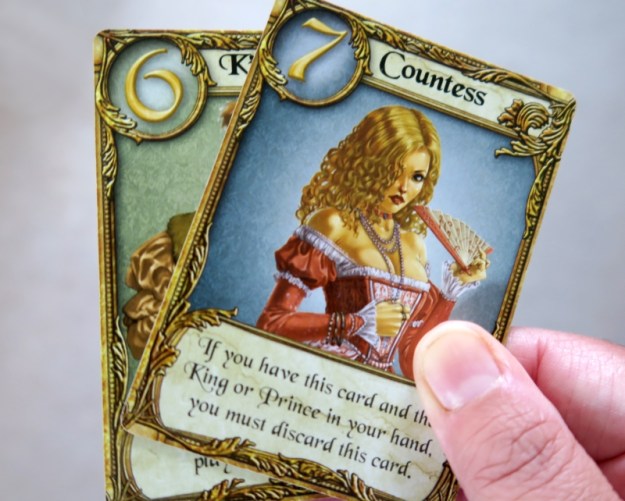
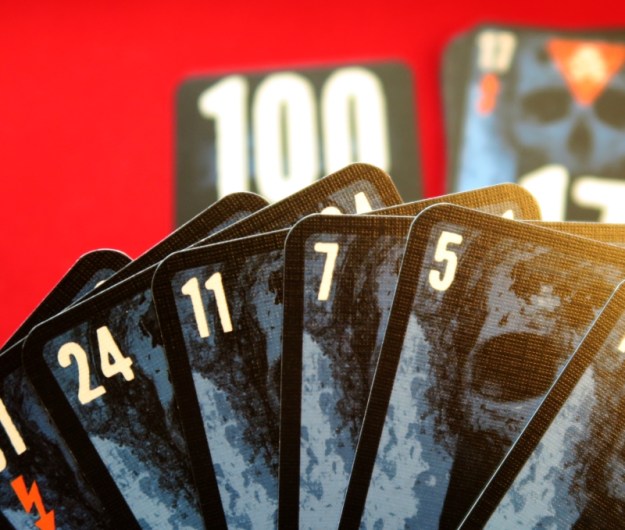
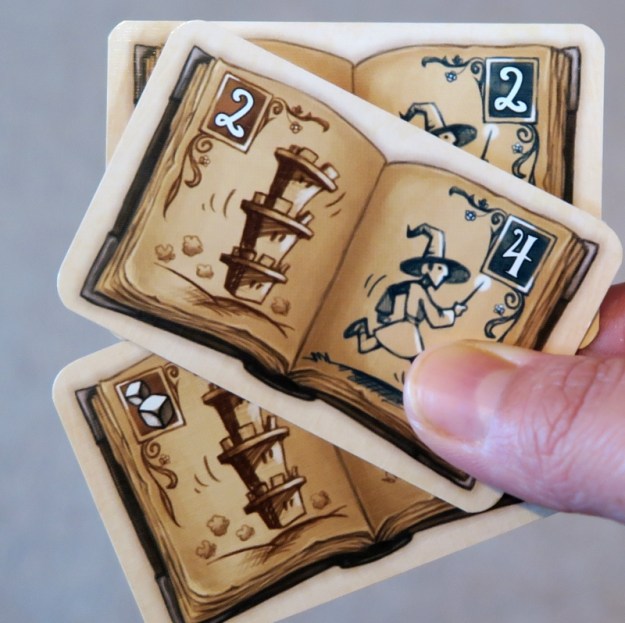
This week, Love Letter celebrated its tenth anniversary.   Originally self-published by Seniji Kenai (of the Kanai Factory) and released at the Tokyo Game Market in 2012, the sixteen card micro-game has been a roaring success from the very start.  The game reached a much wider audience, however, after the designer Seniji Kanai literally gave the AEG owner John Zinser an “elevator pitch” when he demonstrated Love Letter to him during a ride in a lift. As a result, the game received a US release in later the same year and has since sold an more than three million copies copies worldwide.

Love Letter
– Image by boardGOATS

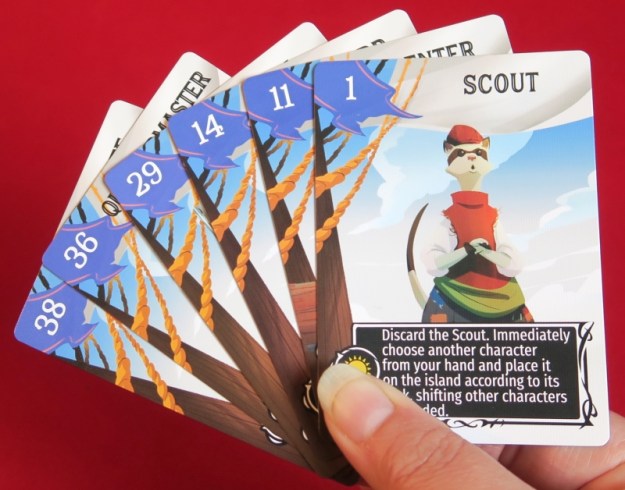
The secret of Love Letter is in its speed and simplicity:  on their turn, players draw a card and add it to their hand, then choose one of their two cards to play.  Each card is numbered, and the winner is the player left holding the highest value card at the end of the game, or the last person standing, if everyone has been eliminated.  The clever part are the actions, which work fit together well, creating a really tight game.  The actions are simple enough that they can be played as an introductory game with players just reading the cards and choosing one of the two options, but also works as a very quick filler for more experienced gamers.

Love Letter
– Image by boardGOATS

Since its release, Love Letter has been continuously in print with some thirty or more variants and special editions including Santa, Munchkin, Batman, Hobbit, Star Wars and Lovecraft themed versions.  Some of these have small rule changes, while others simply have alternative artwork.  There have also been games that develop the core mechanism like Infinity Gauntlet, Star Wars: Jabba’s Palace, Archer: Once You Go Blackmail… and the Lost Legacy series of games.

Love Letter
– Image by boardGOATS

To celebrate the tenth anniversary, Arclight, the Japanese publisher of Love Letter, is planning three new editions of the game:  a collection of all the variants; a version with alternate action cards that can be swapped in and out, and a campaign based story-driven edition of the game.

Next Meeting, 3rd May 2022

It’s back to Tuesday this week, so our next meeting will be TONIGHT, Tuesday 3rd May 2022.  As usual, we will start playing shorter games from 7.30pm as people arrive, until 8pm when we will start something a little longer (table is booked from 6.30pm for those who would like to eat first).

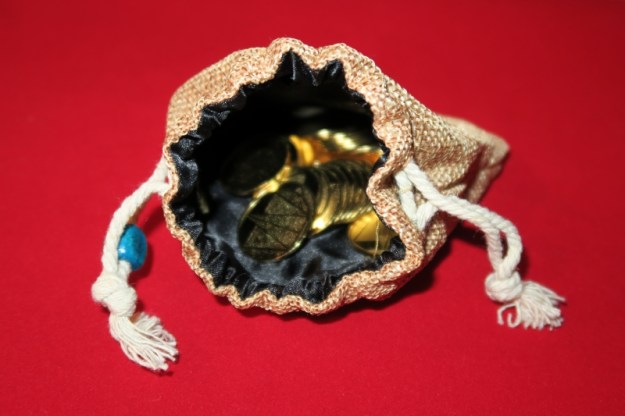
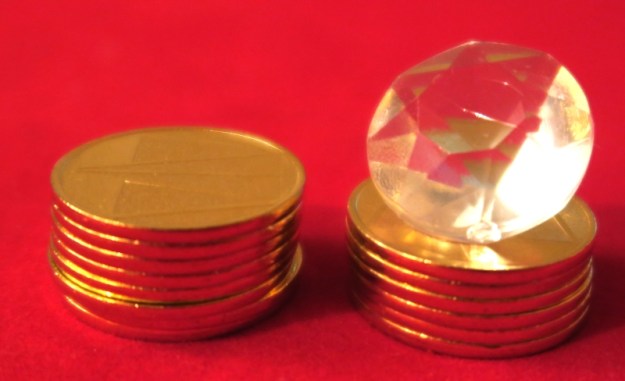
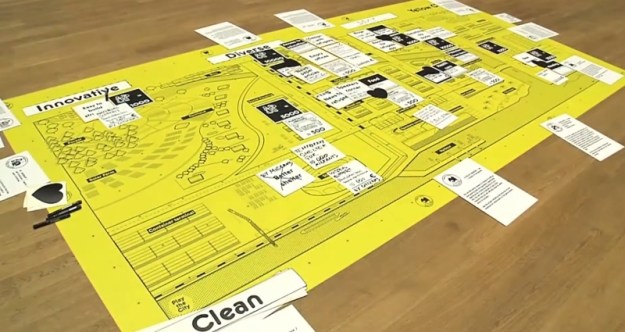
This week, the “Feature Game” will be the quick little social deduction game, Moneybags (rules overview, review & in play video).   We have chosen this as we don’t know who will be there, but since it is very short and plays lots of people it will give us lots of time to play something else (like Libertalia again, for example) .  In Moneybags (like in Ca$h ‘n Guns), players are thieves dividing up their spoils, robbing from each other and generally trying to deceive everyone so that they come out on top.

Moneybags
– Image by boardGOATS

And speaking of gangsters…

Jeff joined the mob and became the personal assistant to the Godfather. One day he received a text message from his boss. “I’ve been having problems with my wife. Please pull the plug and then call someone in to take care of the matter.”

Jeff was terrified, but knew better than to question the Godfather, so he dutifully carried out the command. He shot the boss’s wife, and then called in the clean up crew.

A short while later, Jeff received another message. “Stupid autocorrect.  I meant wifi.”

20th April 2022

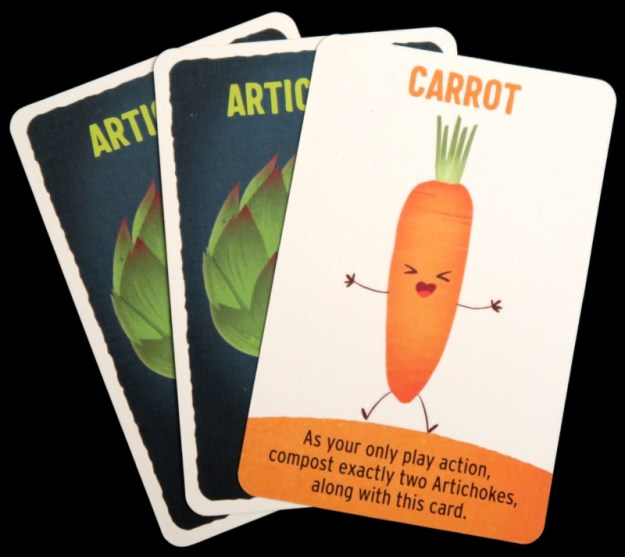
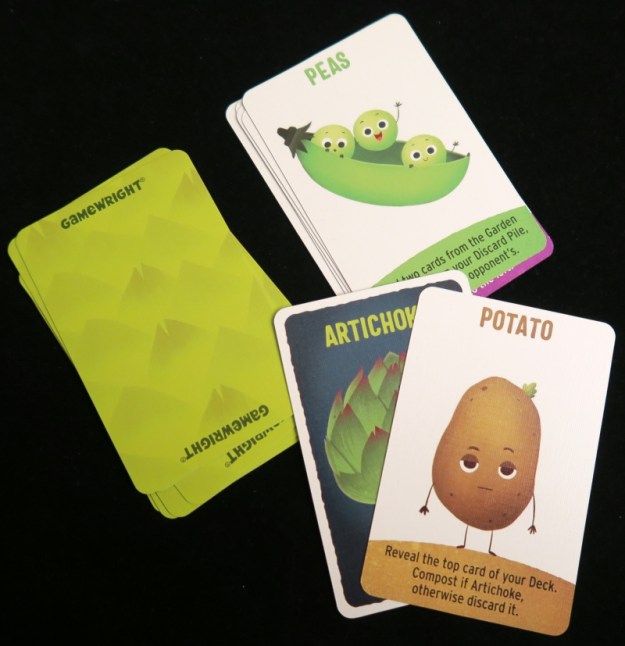
Meeting for the first time on a Wednesday, Pink and then Blue were the first to arrive, and like last time, played a game of Abandon all Artichokes (with the Rhubarb mini-expansion) while they waited for food to arrive. This is a very quick and simple “deck shredding” game: on their turn the active player takes a card from the face up market, adds it to their hand and then plays as many cards as they can before they discard the rest and draw five new cards. If this new hand contains no Artichoke cards, the player wins.  Although it is very simple, it seems the function sequence is somehow challenging.  Pink struggled last time, but seemed to have got the better of it as he won.

Abandon All Artichokes
– Image by boardGOATS

As they were finishing, Pine turned up and, while Pink went to the bar, Blue explained the rules to him and then they played again.  Pine also struggled a bit with which pile was the discard pile and which the draw pile, and where to take cards from and where they were going to.  There is hope though as, despite the arrival of food in the middle, Pink won the second game too.  Pink and Blue were just finishing their supper when Purple and Black arrived, soon followed by Green, Lime and Ivory.

Abandon All Artichokes
– Image by boardGOATS

This week, the “Feature Game” was the new edition of Libertalia, Libertalia: Winds of Galecrest, a card driven game where players are admirals commanding a crew of sky pirates in search of adventure, treasure, and glory.  Pine had watched the advertised play-through video and professed it “looked” fun, so was keen to give it a go.  Ivory and Pink joined the party, while Green shouted across from the other end of the table that he would be happy either way as he knew nothing about it.  In the end, after considerable debate, Ivory, Pink and Pine were joined by Blue and Purple, leaving Green, Black and Lime to find something else to play.

Libertalia: Winds of Galecrest
– Image by boardGOATS

Although Blue had read the rules, she had very deliberately not looked at the character cards, so Pine arguably knew most about Winds of Galecrest.  It is a rejuvenated version of the older game, Libertalia, but with new, lighter artwork, additional characters and streamlining of some of the mechanisms.  Very simply, each player starts with a deck of forty cards, of which six are drawn into their hand.  The idea is that players have the same character cards to play, but can play them in different orders.  Thus, one player (in our case Pink) shuffles their forty numbered cards and then draws six, which the the others find in their numbered and sorted decks.

Libertalia: Winds of Galecrest
– Image by boardGOATS

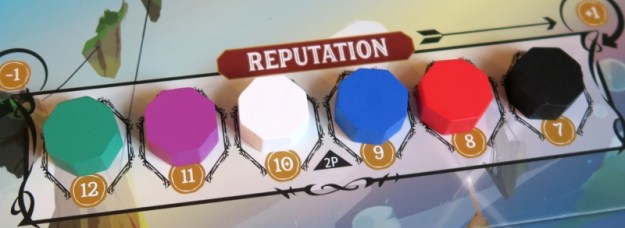
The game is played over three voyages, the first of which takes four days, the second, five days, and the final voyage takes six days.  Each day, players simultaneously choose a card to play, which when revealed are laid out in numerical order on the island.  The are then played three times: first in ascending order (daytime), next in descending order (dusk) and finally simultaneous (night).  Some cards only have actions that activate in one or two of the time-frames, but any characters still on the island, move back to that player’s ship and stay there till the end of the voyage.  At the end of the voyage, players activate any loot and characters they have with end of voyage actions.  Despite that being pretty much all there is to the game (and it being written clearly on the board), the group still managed to make a bit of a meal of it.

Libertalia: Winds of Galecrest
– Image by boardGOATS

The first hand consisted of six relatively uninteresting cards (or so it seemed at the time), which all had daytime actions.  The first voyage, and to some extent the second too, players were feeling their way.  Because the group failed to remove the Character cards from their ships at the end of the first voyage, that skewed things somewhat, especially as some players had the First Mate in their ship which in some cases scored twice giving points for the number of characters in their ship which was also artificially inflated.  Ivory knew which cards he’d played and when, but others were unsure and some had built a strategy that relied on having certain Characters in their boat at the end of the second voyage.  So rather than trying to back-track, ships were emptied for the first time at the end of the second round.

Libertalia: Winds of Galecrest
– Image by boardGOATS

It took the group a bit of time to understand when the actions for the loot happened—most occur at the end of the voyage, but some occur on the day they are collected, during the dusk phase.  As a result, several players missed some of those dusk actions, the additional reputation gained from picking up a Barrel in particular.  At the beginning of the second round, Blue, Pine, Ivory and Pink agreed they were all playing the “obvious card”.  On revealing their cards they discovered they had differing ideas of what the obvious play was, which gave the first inkling that there was much more to the actions than had first appeared, but the players really got to grips with the planning aspects of the game in the final round.

Libertalia: Winds of Galecrest
– Image by boardGOATS

Ivory played his Carpenter, which reduced his funds by half, and immediately followed it with the Officer which increased his kitty to twelve doubloons.  Then, because he is always a threat, he was targeted by Pine and then Blue, losing first his Carpenter and then his Gambler from his ship (both give money at the end of the round).  Blue then assassinated Pink’s Carpenter and he took out her Gambler in revenge.  Pink discovered that the Saber type loot was much more dangerous than he gave it credit for as yet another of his Characters on the island bit the dust.  Meanwhile, Purple was building the contents of her treasure chest largely unmolested, mostly only suffering as collateral damage.  Pine also made killing by playing his Bodyguard with perfect timing, simultaneously taking lots of gold for discarding all the Sabers and Hooks from the loot pile, and starving everyone else of treasure.

Libertalia: Winds of Galecrest
– Image by boardGOATS

In the final accounting Blue was the most successful pirate, though she was one of the beneficiaries of the “rules malfunction” at the end of the second voyage.  Purple made an excellent second place though, picking up loads of gold from her loot while largely managing to avoid being caught in the cross-fire as the others attacked each other.  Libertalia is a much more vicious game than those we usually play, even though it was a “Calm” game and supposedly “easy and friendly”—Heaven only knows what Stormy will be like!  It was a lot of fun though, especially when the group started to get to grips with it properly during the final round.  It’s clear the game could cause a lot of relationship trouble, but that won’t stop it getting another outing soon.

Libertalia: Winds of Galecrest
– Image by boardGOATS

Meanwhile, on the next table things were much more peaceful with Green, Black and Lime laying carpets.  No-one felt up to anything too taxing or long tonight, so after reviewing the selection of games available Black suggested they play Marrakech, which certainly fitted the bill. Marrakech, is an unusual little game, with fantastic little rugs made of fabric and coins made out of wood, where players take the role of a rug salesman who tries to outwit the competition.  Each player starts with ten Dirhams and an equal number of carpets.  On their turn, players may rotate Assam ninety degrees, then roll the die and move him forward as many spaces as shown (up to four).

Marrakech
– Image by boardGOATS

If Assam lands on another player’s carpet, the active player must pay one Dirham per contiguous carpet square of that colour.  Finally, the active player then places one of their carpets orthogonally adjacent to Assam.  The winner is the player with the most money after the last carpet has been laid.  After a quick explanation to Lime (who hadn’t played it before), the group had to decide the Role of the Merchant.  On Board Game Arena, there are two options:  one where the player turns him himself before rolling the dice, and another where the player who just played gets to turn him at the end of their turn and before the next player.

Marrakech
– Image by boardGOATS

After a brief check of the rules, the group discovered that the first option was the original rule (move the merchant before rolling the dice) and so they went with that.  As a result it took several turns before anyone landed on anyone else’s carpet, then Black landed on a single square of Lime’s.   A couple more turns and landing on carpet became a regular activity.  When Green landed on a five square of Black’s, it became apparent that Lime had been labouring under a false understanding about what counted as a paying patch of carpet. He had thought that players have to pay for all the carpet squares connected, by any means including other people’s carpets, but of course only the patch that the Merchant is stood on counts.

Marrakech
– Image by boardGOATS

At various points in the game everyone had a large patch of carpet posing a hazard to the other players: Green had a large area in one corner, Black a large squarish patch in the middle, and Lime managed to get a zig-zag line from one corner all the way to the opposite one.  Mostly everyone managed to avoid landing on these until they were broken up, but that duck was broken when Green landed on a large Black area, shifting the coin balance heavily in Black’s favour.  At the end of the game carpet value was added to coins, and although Green had the most carpet showing, Black had significantly more coins than the others and finished as the winner by five points.

Marrakech
– Image by boardGOATS

Libertalia was still ongoing, and Marrakech had served as an excellent aperitif, but it was now it was time to move on to something more substantial, and the game of choice was Niagara. This is fantastic family game, that won the Spiel des Jahres Award in 2005, but is still a lot of fun seventeen years later.  The idea is that players have two canoes that they are using to navigate up and down the river while trying to collect gems and land them safely on shore.  Players simultaneously choose a paddle card from their hand, which dictates the distance their canoes travel.  Once everyone’s boat has travelled, the river moves and any canoes that are too close to the falls take the long drop and are turned to matchwood.

Niagara
– Image by boardGOATS

Players are trying to land five gems of the same type (or seven different colours) and the first to do so is the winner.  We last played this about nine months ago, online, through the medium of Board Game Arena.  On that occasion, Pink had betrayed everyone’s trust and stole several people’s precious loot.  The victims (in particular Burgundy), were vociferous in their grievance, and as a result, despite Pink being enthusiastic about playing again, nobody was keen to join him.  With Pink tied up in a quite different loot battle, this was a good opportunity to play again as it was still quite early and it was also an opportunity to introduce Lime to an old classic.

Niagara
– Image by boardGOATS

The first round played relatively gently and much the way it normally does with everyone holding their cloud paddle tile (which allows them to change the speed of the river) back for the last round.  Going into the second round however, Black and Green conspired to shake things up a notch. After putting a canoe onto the river, Black then moved the cloud from the plus one space it had been left on at the end of first round, to the plus two space. However, Green had also thought this was a bold move and had planned to do the same, but unfortunately, he had to move the cloud and as plus two is the maximum, the only direction to go from plus two was back to plus one.  The result was that everyone spent the rest of that round moving five steps forward and four back.

Niagara
– Image by boardGOATS

The highest cards were not enough to get players’ boats off the river and each time they just got dragged back again, with the landing stage forever out of reach.  Green tried to “go against the flow” using some lower cards earlier in the round and holding a bigger card for later, but apart from moving around on different river discs, the end result was still the same.  Everyone ended up on the same disc a couple of times too, and Lime was unfortunate when he lost one of his boats over the rapids.  At the beginning of the third round players got their boats off the river.  By this point, Black had managed to collect four different coloured gems and only needed that elusive pink. Green also had four gems, but that included two purple ones.  Lime had just two gems as he decided to trade one to get his second canoe back.

Niagara
– Image by boardGOATS

Black tried to inch down the river, sometimes choosing not to move a canoe in order to arrive at that last spot to collect his game winning pink gem. However Lime slowed the river down to minus one, and this left Black’s canoes in the wrong place.  In the meantime, Lime also collected another couple of gems and Green managed to pick up another two as well, one purple and one blue.  This left Green needing just one gem to win with seven (the fact that a pink would give him one of each did not matter—there is no double win in this game).  As the new round began, Green got on the river, collected the final purple gem and there was nothing the others could do to stop him landing it on his next turn.  And with that, the paddling was over with Green the victor.

Niagara
– Image by boardGOATS

Although it was not that late, Lime and Green left for their respective homes, leaving Black to watch the final few turns of Libertalia.  When that wound up, Ivory headed home and there was still time left for something short. While everyone else discussed the options, Pink went to the bar for a “tot” of Dead Man’s Fingers Rum.  In his absence, Bohnanza was eschewed as “not short” and 6 Nimmt! and Coloretto had both been played recently.  Saboteur doesn’t play so well with smaller numbers so in the end, the game chosen was Sushi Go!.  The first thing to do was to remove the promotional expansions for its big brother Sushi Go Party! (Sukeroku, Inari, Sake and Pickled Ginger; these can be played with the original version but other cards need to be removed), however the Soy Sauce promo cards included as usual.
Dear Man's Finger Rum
– Image by Pine

The game is really simple:  from their hand of cards, players simultaneously choose one to keep and pass the rest on before repeating until everyone has no cards.  At the end of the round the different cards are scored according to their individual characteristics.  After three rounds, puddings are evaluated and the winner is the player with the largest total number of points.  This time there was a serious shortage of puddings in the first round and Blue seemed to have more than her fair share.  It wasn’t clear whether it was because she was overly focused on deserts or whether it was just because she’s rubbish at the game, but her score was lower than everyone else except Pine.

Sushi Go!
– Image by boardGOATS

Pine made up for it in the second and third rounds.  In general, consistency is usually the winning factor in Sushi Go!, so Pink should have been in a good position, but both Black and Purple had a couple of really strong rounds, as indeed did Pine.  As a result, it was a really close game.  Pine was undone by the combination of his poor first round and the fact he was the only one with no puddings and lost six points as a result.  In contrast, Blue’s score was boosted by six points as she had a clear majority.  It was Purple and Black who were the ones to beat though, as they tied for the lead on thirty points and tied on the pudding tie break as well, so shared victory.

Sushi Go!
– Image by boardGOATS

Learning Outcome:  If you are looking for job security, don’t become a pirate.

Boardgames in the News: The Museum of Board Games in Newent (Again)

As reported last year, the small Gloucestershire market town of Newent, houses The Museum of Board Games, owned and curated by Tony Boydell (designer of Snowdonia, Ivor the Engine, Guilds of London and Scandaroon amongst other games).  The other day, the  former BBC and ITV news reporter, Anna Brees, popped in to chat and do a little filming…

– Video by Anna Brees

Next Meeting, 20th April 2022

The pub is closed on Tuesday this week, so for one week only, we are meeting on a Wednesday, so our next meeting will be on WEDNESDAY 20th April 2022.  As usual, we will start playing shorter games from 7.30pm as people arrive, until 8pm when we will start something a little longer (table is booked from 6.30pm for those who would like to eat first).

This week, the “Feature Game” will be the new edition of Libertalia, Winds of Galecrest (rules, review & how to play video).  In the Winds of Galecrest, players are admirals commanding a vast and varied crew of sky pirates in search of adventure, treasure, and glory. Each day the fleet lands on a different island where players send a crew member to collect the loot.  The player with the most loot after three voyages is the most successful Pirate, Arrrrr!

 Libertalia: Winds of Galecrest
– Image from stonemaiergames.com

And talking of voyages…

Jeff, was captaining a cruise-ship when they passed a desert island.  As they sailed closer it became clear that there was an old man with a long beard and an eye-patch dressed in rags waving his arms at them and jumping up and down.

“Captain,” asked one of the passengers, “Who is that man?”

“I have no idea,” replied Jeff, “But he goes crazy every year when we pass him.”

5th April 2022

Blue and Pink arrived first and, while they were waiting for their dinner, squeezed in a quick game of Abandon all Artichokes (with the Rhubarb Promo).  This is a very quick “deck shredding” game, where players are trying to get to the point where they draw a hand that contains no Artichoke cards.  The game is really simple:  on their turn the active player takes a card from the face up market, adds it to their hand and then plays as many cards as they can before they discard the rest and draw five new cards.  If this new hand contains no Artichoke cards, the player wins.  Despite its simplicity, Pink kept saying he was confused, so given it was such a short game, it was no surprise that Blue won, and just in time too, as their pizzas turned up.

Abandon All Artichokes
– Image by boardGOATS

They were just finishing eating when Purple and Black arrived, then Pine popped in to personally deliver his apologies, before Green, Ivory and Teal joined the party.  The “Feature Game” was the Prelude expansion for Terraforming Mars, which was last played in the group a little over two years ago.  Ivory shared his memories of that game which he felt he had been doing very nicely in thank-you until Burgundy chucked a meteorite in his direction and left him scrabbling for points at end of the game.  That game had been played with the Hellas map from the Hellas & Elysium expansion, this time though, for the first try with the Prelude expansion, the group decided that maybe it would be quicker just to stick with the one new change.

Terraforming Mars: Hellas & Elysium
– Image by boardGOATS

In Terraforming Mars, each person takes the role of a giant corporation initiating projects to make Mars habitable by raising the temperature, increasing the oxygen level, and expanding the ocean coverage.  The game is card driven and at the start of each round, players draw four cards, keeping as many as they like, but paying 3M€ per card. Players then take it in turns to take one or two actions from seven available: play a card; use a Standard Project; use an Action Card; convert eight plants into a greenery tile and raise the Oxygen Level; use eight Heat to raise the Temperature; claim a Milestone, and fund an Award.

Terraforming Mars
– Image by boardGOATS

At the end of the round, players simultaneously produce, turning any energy into heat, taking finance according to the combined total of their Terraforming Rating and their M€ production level, and finally receiving all other resources according to their production levels.  The game ends once all three Global Parameters are met: all of the Ocean Tiles have been placed, the Temperature has reached 8°C, and the Oxygen Level is at 14%. Teal, Ivory and Green all knew the game reasonably well so really only needed to discuss the integration of the Prelude expansion.  This provides Prelude corporation cards that jump start the terraforming process or boost the players’ corporation engines.  During setup, as well as corporation cards and their starting hand, players are dealt four Prelude cards, of which they keep two.

Terraforming Mars
– Image by boardGOATS

The group decided to not use the advanced cards as they wanted to go home before midnight, so during set up players were dealt one base game corporation card and one corporation card from the new ones that come with the Prelude expansion.  Teal went with the Prelude Cheung Shing, which gave him 3M€ production extra and a 2M€ discount on all building tag cards.  Green wanted to use the Prelude Corporation Card no matter what it was and ended up with Vitor. This would give him 3M€ back for every card that he played with positive points. He also had to fund an award for free as his first turn.  Ivory had chosen Saturn Systems and all his other cards round that.  It was only as they were about to mark out their starting benefits that he realised it was from the Advanced deck.

Terraforming Mars
– Image by boardGOATS

Rather than force Ivory to take his other card, the group gave him another two cards to choose from and this time he selected The Miners Guild, which gave him an extra steel production and five steel at the start of the game. Every time he gained a steel or titanium through building on Mars, his steel production would increase by another one too.  Although it was a good project, it did not fully suit the other cards he had selected, so Ivory started with something of a handicap.  If anyone in the group can cope with a handicap, it is Ivory however, as he regularly wins these more complex games.

Terraforming Mars
– Image by boardGOATS

The trio then went round the table revealing their chosen Prelude Cards that give players that extra kickstart.  Ivory chose Aquifer Turbines (an Ocean tile, two Energy production and -3M€) and Mohole (three Heat resources and three Heat production). Teal went for Umni Contractor (three Terraforming Steps and extra project card) and the Allied Bank (3M€ and 4M€ production).  Green chose Dome Farming (2M€ production and one Plant production) and Society Support (-1M€ production, one Energy, one Greenery and one Heat production).  At the start Teal went straight for city building with a Standard Project, while Green and Ivory were a little more traditional with paying for project cards.

Terraforming Mars: Prelude
– Image by boardGOATS

Generation One was short and Generation Two was equally as short as Teal bought a second city, which prompted Ivory to also build a Standard Project city in Generation Three.  Teal had placed his cities in a convenient triangle to maximise points from greenery tiles when they got laid, but later in the game (before all those forests could be planted), Ivory played the Urbanisation project and built another city right in the middle of Teal’s carefully constructed plan!  Despite this, it was only towards the latter part of the game did it become clearer who’s strategy was working out and who’s wasn’t.

Terraforming Mars: Prelude
– Image by boardGOATS

Ivory had been embracing his “inner Burgundy” and grumbled that he wasn’t getting any Green tag cards, yet Teal seemed to be building nothing but Green tag projects. Green joined the grumble adding that although he’d had some good ones at the beginning with microbe actions, these just weren’t fulfilling their purpose due to the lack of Green tags in his hand.  Black commented from the next table that was why he felt that Terraforming Mars really needs to be played with the drafting variant, where hands are drafted at the start of each turn.

Terraforming Mars
– Image by boardGOATS

The group had chosen not to do this as it strongly favours more experienced players.  As Teal felt he was relatively new to the game having only played the electronic version against AI opponents on Board Game Arena, he did not want to add in extra complexity.  Black certainly had a point though and it is something to consider for next time.  With all the cards laid out, Teal commented how it was quite different from the electronic version. Seeing everyone’s cards grow gave an element of satisfaction and wonder that was missing from the computer version—even the wobbling and waving Mars on the computer didn’t make up for it.

Terraforming Mars: Prelude
– Image by boardGOATS

As for the terraforming of Mars itself, the group completed the Oceans fairly quickly and Oxygen levels also rose at a reasonable rate.  It was just so cold for most of the game though!  So, in the end, it was a race to see who could heat up the planet the most.  Throughout the game everyone all remained close on the Terraforming score track, which meant everyone had all equally contributed to the improvement of Mars and the game would be won or lost in the bonus points.

Terraforming Mars
– Image by boardGOATS

The award for most Award points went to Ivory, as he came top in two of them.  There was a debate regarding the Award Green had funded at the beginning (Scientist). Green had won clearly with four science tags, but both Teal and Ivory had none.  The question was whether they should they score nothing because they hadn’t achieved anything, or whether they should get a second place tie (and as ties are friendly in this game, both would get the points).  Ivory managed to find a thread on Board Game Geek which resolved the issue:  the designer himself stated that second place is second place, even if nothing was done to achieve it.  So Green scored five, while Teal and Ivory both got two, and the free Award from the Prelude Corporation card, Vitor, scored Green a grand total of three points!

Terraforming Mars: Hellas & Elysium
– Image by boardGOATS

Teal managed to get two of Achievements and Ivory got the third with just points for the map left (one point for each forest and for each forest tile adjacent to a players city).  Teal’s early planning came good here, as he scored eighteen points in total, while Green and Ivory took only twelve and ten respectively.  Green had been playing those bonus point projects to good effect, but although he got nine points from them, Ivory and Teal still managed five and four each.  Adding everything up, Teal was the master Terraformer with a massive seventy-four points, eight ahead of Ivory in second—who knows what his score might have been without that starting handicap.

Terraforming Mars: Prelude
– Image by boardGOATS

There are several members of the group who aren’t so keen on Terraforming Mars and others who felt it would be too taxing on a night when their brain felt a bit fried.  So those members of the group looked around for something more relaxing to play.  Lime had said he would be there, and although he was unusually late, Black, Purple, Pink and Blue decided to play a quick game of Coloretto in case he had been delayed by traffic or other unforeseen circumstances. Coloretto is a super-simple, but clever little game that we’ve played a lot, so needs little explanation: on their turn players either draw a card from the deck and add it to a truck, or take a truck and add the coloured cards to their collection. The largest three sets of chameleon cards score positively, while the other score negatively.

Coloretto
– Image by boardGOATS

Despite having played Coloretto lots of times, we still needed to check what the Golden Joker did and how it differed from the normal multicoloured Joker. This led to a brief hiatus while Pink tried to read the minuscule text in the English Rules and Blue tried to translate from the original German rules. The conclusion verified later was that it acted as a Joker, but the player who took it also got an extra card drawn from the top of the deck—this could be a good or a bad thing depending on how lucky they were. This time, Pink was ultimately the either the luckiest or perhaps the best player (the line is a fine one), with Blue the best of the rest—just.

Coloretto
– Image by boardGOATS

The foursome were just looking round for something else to play when Lime walked in wearing a suit having come straight from Reading.  His arrival altered the options as the foursome became five.  In the end, Pink persuaded everyone to play Modern Art as he was keen to play something that would make use of the recently rehoused coins he and Blue had brought back from Essen last time they went (now quite a while ago).  Modern Art is a much older game, dating from 1992, but it had been out of print for a while and we only played within the group for the first time a few months ago.  That had been a remarkably enjoyable experience though, and it definitely deserved a second outing.

Modern Art
– Image by boardGOATS

The game is simple enough to play, but difficult to play well.  The idea is that players take it in turns to auction off one of the Art cards from their hand:  if another player wins, the auctioneer gets the money, if the auctioneer wins, they pay the bank.  At the end of the round, the Art is evaluated according to the artist by determining who has the most artwork in players’ collections, with the most being the most sought-after and therefore the most valuable.  Players then sell these to the bank for the determined amount which gives them money to spend in the next round.

Modern Art
– Image by boardGOATS

The clever part (which is also the part that messes with people’s heads) is that in any given round, only Art by the three most popular artists is worth any money, however, the value depends on both the popularity in the current round and any previous rounds.  Thus, a painting might be worth £120,000 if it is by the most popular artist in all four rounds, but would be worthless if that artist was the fourth most popular in the final round.  As all the art is available for play, this is a potentially deterministic problem, however, players can try to control the game by avoiding playing some cards.

Modern Art
– Image by boardGOATS

After a strong first round, Blue began the second round well.  She took a couple of early, cheap Kaminskis followed by auctioning a couple of Kaminskis of her own.  This worked well, except that she didn’t have a fifth to trigger the end of the round and ensure they scored.  As Kaminski is the weakest artist in the tie-break and nobody else seemed keen to help her, she did not make the expected profit. Consequently, she went from having “cash to burn” to struggling, a problem exacerbated by a large winning bid on a Mondrian that didn’t come off.  Meanwhile, everyone else was making money from Blue’s mistakes.

Modern Art
– Image by boardGOATS

In addition to the unusual money allocation, different pieces of Art are auctioned in different ways:  some are sealed bids, while others are once round or highest bidder and others use a “double auction” where players sell two pieces at the same time.  The double auctions are curious affairs as, if the active player only has one artwork by the given artist (or chooses not to sell a second), they forfeit their turn as auctioneer and play skips on until another player takes up the mantle, selling one of their own together with the original piece.  This has several consequences: firstly, the new auctioneer takes all the profit, and secondly, any players between the first and second auctioneer miss a turn.

Modern Art
– Image by boardGOATS

This happened a couple of times as the group played out most rounds to the near maximum, especially as the game wore on—the final round had four Hicks, Ivorys and Okamotos before it came to an end meaning the tie breaker determined which would score.  It is an odd game and, not helped by a bit of “group think”, it was also quite a long game this time, though enjoyable, especially as it wasn’t obvious who was winning.  Black was obviously doing well, but then Lime also made a couple of good sales.  It was Pink, however who navigated the notoriously fickle art market most successfully though, finishing with £428,000, £26,000 more than Purple who took a strong second.

Modern Art
– Image by boardGOATS

Learning Outcome:  Mars has a Marmite Factor.

Boardgames in the News: National Board Game Day

Apparently, today, 11th April, is National Board Game Day.  National, in this context, means North American, but that hasn’t stopped people from the UK from celebrating it too—Zatu Games, for example, are offering freebies for orders placed today.  The fact that today is a work day, makes it less conducive to playing games than, say, International Tabletop Day, which is the first Saturday in JuneNational Card Playing Day is also celebrated in the US on 28th December, at a time of year when we in the UK often spend more time with the family.

Christmas Tree
– Image by boardGOATS

The winter weather during the holidays between Christmas and New Year means there is a focus on indoor activities, particularly board and card games (which are often festive gifts with this in mind), so we already share National Card Playing Day.  In addition to these, there is also International Games Day in November, an event originally designed to highlight the fact that modern libraries are about more than just books, and was started by the American Library Association (ALA) in collaboration with the Nordic Libraries “Nordic Game Day”.  Last year, this became International Games Week and this year is set to become International Games Month!

L.A.M.A.
– Image by boardGOATS

For most board gamer enthusiasts though, we don’t need a “Special Day”—every day is a “Game Day”.

Boardgames in the News: Dice Shaken, Not Stirred…?

When packing pieces away, most gamers have given the box a shake to get the bits to pack better.  For most people this is instinct, but there is science behind it as reported by Asencio et al., in Physical Review Letters in 2017.1,2  Tapping a box of marbles or sand will encourage the pieces to pack themselves progressively more tightly, however, the effect quickly reaches the point of diminishing returns; the maximum density is only approached after a very long time and the right tapping sequence. Asencio et al.,1 report experiments with a cylinder full of dice, showing that with vigorous twisting back and forth, the pieces rapidly achieved their maximum density.

Dice
– Image from physics.aps.org

These studies show that the degree of ordering depends strongly on the rotational acceleration applied on each twist.  Only ten thousand twists are needed where the acceleration is around half that due to gravity (0.5 g), but below that, packing proceeds so slowly that it is unclear if the dice would ever reach their maximum density.

– Video from physics.aps.org


1 Asencio, K., Acevedo, M., Zuriguel, I. & Maza, D., Phys. Rev. Lett. (2017), 119, 228002; doi:10.1103/PhysRevLett.119.228002.
2 Buchanan, M., Phys. (2017), 10, 130; doi:10.1103/Physics.10.130.

Next Meeting, 5th April 2022

From the start of April, we are moving back to Tuesday nights, so our next meeting will be on TUESDAY 5th April 2022.  As usual, we will start playing shorter games from 7.30pm as people arrive, until 8pm when we will start something a little longer (table is booked from 6.30pm for those who would like to eat first).

This week, the “Feature Game” will be the Prelude expansion (rules & review) for Terraforming Mars (rules & how to play video).  Terraforming Mars is a card-driven engine builder game based round a central player board.  Players take the roles of corporations sponsored by the World Government on Earth to initiate huge projects to raise the temperature, the oxygen level, and the ocean coverage until the environment on Mars is habitable.  Players work together on the terraforming process, but compete for victory points.  The Prelude expansion accelerates the start of the game and provides a boost to players’ engines by the addition of Prelude cards at the start of the game.

Terraforming Mars
– Image by boardGOATS

And talking of outer space…

Joe was telling his cousin Jeff about his recent journey – he had just come back from the USA and was very proud of his new-found travel experience.

“Yeah,” replied Jeff, “I love to travel too.  Last year I went to Turkey and next year I’m going to India.”

Not to be out-done, Joe responded, “I’m saving up for a flight on the new Virgin Galactic space flight, I’ve already put my name down for it.  I want to fly to the moon!”

“Cool,” answered Jeff.  Determined to go one better, he added, “I’m waiting for the flights to the sun though.”

“How does that work?” asked his cousin, “Won’t you get all burnt up from the heat and stuff?”

Jeff paused for a moment.  “No,” he said thoughtfully, “We’ll just fly at night…”

24th March 2022

The evening began with Pine arriving first and wondering if he’d got the wrong night as it was gone 7pm before anyone else arrived.  While Blue ate her supper, Pine shared some “worm porn” (a video of a penis fencing flatworm) and Green shared his exploits on Board Game Arena.  Apparently he’d been playing Imhotep and had been doing rather well, rising to thirty-fifth.  After a lot of discussion about which game he was talking about, it turned out that by pure chance, a copy of Imhotep had made it to The Jockey.  In spite of Green’s enthusiastic request for someone to beat him, nobody looked keen to take him up on the offer.

Imhotep
– Image by boardGOATS

While the others discussed the options, Purple and Black joined Blue and Pine setting up the “Feature Game“.  This was the Druids expansion for an old favourite, the 2016 Kennerspiel des Jahres winner, Isle of Skye.  The base game is a tile laying game similar in nature to the popular gateway game, Carcassonne, but with an auction of tiles and objectives that give points. The auctions are extremely clever:  each player draws three tiles from a bag and privately decide how much two are worth, selecting one to be discarded.  Players use their own money to indicate the value and therefore the cost of the tiles.

Isle of Skye: From Chieftain to King
– Image by boardGOATS

After the values are revealed, each player then takes it in turns to buy one tile.  The clever part is that the money used to indicate the cost of each tile is reserved to pay for it until someone else buys it.  Any tiles that have not been bought after everyone has chosen and paid for one, must be paid for by their owner.  The reason this is clever is because of the effect it has on the amount of money that players have to spend.  For example, the first player in the round must make sure they have sufficient uncommitted funds if they want to be able to buy a tile.

Isle of Skye: From Chieftain to King
– Image by boardGOATS

On the other hand, the player at the end of the round has a different calculation to make:  if their tiles are priced to give good value they should sell at least one which will provide them with liquidity to buy other tiles.  However, being last in the round, their choice will be reduced, and if their tiles don’t sell, the fact the other tiles might be on the expensive side, could leave them unable to make a purchase.  It is not compulsory to buy a tile, but players that don’t have enough tiles are unlikely to score as well.  Thus valuing tiles is key—overvaluing their tiles is costly as nobody will buy them leaving their owner with a big bill and less money in the next round, while undervaluing them gives good tiles to an opponent and will leave their owner with less money and fewer tiles.

Isle of Skye: From Chieftain to King
– Image by boardGOATS

Once the tile auction is complete, players add the tiles to their own personal fiefdom.  At the end of the round, one or more of the objectives are scored.  Similar to Cartographers, there are four scoring objectives.  In the early rounds only one scores, with three scored in later rounds, but each one is scored the same number of times during the game.  Although this is an important source of points, it is not the only one as some tiles feature scrolls that score at the end of the game.  Players receive income at the start of each round, with players getting additional funds for each player that is in front of them, with the amount increasing as the game progresses.  As well as being a catch-up mechanism, this also importantly provides an additional channel for money to enter the game.

Isle of Skye: From Chieftain to King
– Image by boardGOATS

In addition to the auctions and the objectives, there are other ways Isle of Skye differs from Carcassonne.  There are no meeples, and players have their own maps instead of sharing one central one.  Even the tile placement rules are slightly different as terrain must match, but not roads (though it is generally useful if they do as it can increase players’ income).  Thus, although there is a superficial similarity with Carcassonne, Isle of Skye is distinctly more complex.  Unlike the first, Journeyman expansion (which we have not yet played), the second, Druids expansion doesn’t really increase the complexity.  It adds more strategy options though, with more scoring opportunities and additional ways to spend money (should you have any spare).

Isle of Skye: Druids
– Image by boardGOATS

The Druids expansion adds a second part to the auction phase where players can choose to buy one from the five displayed on the dolmen board.  These are more powerful as they generally include scoring opportunities or special powers, but are correspondingly more expensive.  The end of round scoring tiles gave A) two points for each tile in players’ largest completed lake; B) a point for each cow or sheep on on or adjacent to a tile with a farm; C) two points for each set of four tiles arranged in a square, and D) one point for each row and column containing a Broch.

Isle of Skye: From Chieftain to King
– Image by boardGOATS

Pine took the first player token and Purple’s first draw gave her one of the promo tiles from the Themenplättchen mini expansion which was immediately thrown back for causing too much brain pain to work out what it did.  Pine and Blue took an early lead at the end of the first round scoring for their lakes, but it was only a handful of points and there was a long way to go.  Purple started building her long thin, rectangular kingdom prioritising income.  It wasn’t until the third round that the importance of this shape became apparent to everyone else however:  since tiles could be used to score multiple times for (C), this meant Purple picked up lots of points.

Isle of Skye: From Chieftain to King – Tunnelplättchen
– Image by boardGOATS

There was a bit of a debate about the Tunnelplättchen tiles from the two mini expansions.  Black checked on Board Game Geek and confirmed that tunnels going into the same mountain range connected together.  This helped Pine considerably, as otherwise he was in a bit of a mess.  Blue bought an exciting looking scroll tile that gave lots of points for enclosed pasture, but when Blue noticed that Black had it too, he commented that it was actually really difficult to enclose pasture, Blue took it as a challenge. It was shortly after this, about half way through the game that the group realised that they’d forgotten about the catch-up mechanism.

Isle of Skye: Druids
– Image by boardGOATS

From the third round, during the income phase at the start of the round, players get gold for every player that is ahead of them on the score track.  The amount of gold they get increases as the game progresses, so in the final round players get four gold for every player ahead of them—for the player at the back in the four player game, this comes to twelve gold, and for a player at the back until the start of the last round this comes to a total of thirty gold more than a player at the front.  Unfortunately, the group remembered this a couple of rounds too late, so everyone who wasn’t in the lead (i.e. everyone but Blue) received a nice little windfall that they could use to increase the price of their tiles or spend on the Dolman.

Isle of Skye: From Chieftain to King
– Image by boardGOATS

Black was making good use of the Dolman board and had some really juicy scoring scrolls in his tidy little kingdom and looked the one to beat, especially as he had plenty of cash too (helped by his windfall).  Pine, on the other hand was struggling to find anything useful and was resorting to using the alternative Dolman option: draw two tiles from the bag and keep one.  Unfortunately despite trying attempts, he wasn’t getting anything he wanted.  It was at the end of round five that things suddenly changed and Purple, hitherto drifting about in third and and fourth leapt forward, landing just one point behind Blue.

Isle of Skye: Druids
– Image by boardGOATS

Blue, having led throughout, knew she didn’t really have enough end-game points to challenge and was expecting Black to catch and overtake.  In the event, it was extremely tight at the front with Purple finishing with one hundred and two points, six more than Blue who just managed to hold on to second, two points ahead of Black.  All in all though, everyone liked what the Dolman board added to the game, as it gave people larger, more exciting kingdoms with something to spend money on (when they had it).

Isle of Skye: From Chieftain to King
– Image by boardGOATS

Meanwhile, the other group started by discussing what to play.  Imhotep was on the table, but Ivory spotted Dice Hospital in a bag and Green was happy to play that instead; as Lilac was familiar with it too she was happy with the switch, as was Teal, though he had not played it.   The explanation of the rules and game play took a little longer than the game itself would indicate.  The idea is that each play is the owner of a hospital and starts with an administrator which gives them a special power, three nurses, and three patients—dice drawn at random from a bag.  The colour of the dice represents their illness and the number on the face shown its severity:  six indicates they are healthy but if the number falls below one, the patient dies.

Dice Hospital
– Image by boardGOATS

At the start of each round, players take an ambulance with new patients – if there aren’t enough beds available, another patient must make space by moving to the morgue (where each body-bag is a negative point at the end of the game).  Players can then augment their own hospital by adding specialist medics and wards and finally, their medics can visit each patient and improve their health.  Different specialisms can only “heal” certain colours or numbers. Any patients not treated are “neglected” and their health deteriorates with any that fall below one moving to the morgue. In contrast, anyone who exceeded six is discharged at the end of the round, but the more that are discharged at the same time, the more points the player scores.

Dice Hospital
– Image by boardGOATS

As the game progresses, players continue to improve their hospital getting more specialists and acquiring blood bags to help treat their patients.  The game ends after eight rounds and the player with the most points is the winner.  When the group finally got underway it became clearer how to play and what actions were available.  The key to the game is knowing which specialists to get and which ambulance of patients to take – admitting healthier patients gives less choice of ward/doctor (and potentially get something which is of little use) , while curing the sickest patients is more difficult, but gives first dibs specialisms.

Dice Hospital
– Image by boardGOATS

The administrators dealt out at the start of the game can provide players with a direction for their strategy.  Teal and Green had ones that meant that they could leave one patient of a specific colour untreated per round without them declining. Teal was able to use his a few times, but Green found that he just could never seem to get enough red dice to make use of it.  Lilac was trying to get at least two red patients healed each turn as her administrator privilege gave her an extra point if she did; she managed it a few times (which was where the red dice kept going).  Ivory’s administrator would give him an extra point if he healed at least one patient of each colour which he managed to good effect several times.

Dice Hospital
– Image by boardGOATS

After a couple of rounds Green commented that he had found it was best to keep a balance of Ward’s and medics otherwise there either wasn’t enough staff to treat the number of patients, or there weren’t enough usable wards to send the your doctors to. Teal and Lilac were quite good at regularly healing patients, but at one at a time they were scoring only one point per round.  Each subsequent patient healed in a round scored an extra two points each With more than six worth three points extra.  Thus holding on to heal more per round, meant more points.  There was also a five point bonus for completely clearing the hospital, but nobody got close to that, except Ivory in the final round.

Dice Hospital
– Image by boardGOATS

Throughout the game, Teal and Lilac kept healing a steady trickle of patients. Green however was having all sorts of trouble:  he found himself with ward’s he couldn’t use, his hospital filing up rapidly, and started losing patients (minus two points)—his was definitely a Failing Trust!  Ivory, however, was romping away, keeping his hospital from getting over crowded and kept amassing points.  Although his start had been slow start and he didn’t score anything until the third round, he made up for it after that.  In the end Ivory proved to have run the best hospital trust, while Teal’s slow steady trickle worked out quite well as his hospital was the second best with Lilac was a close third.

Dice Hospital
– Image by boardGOATS

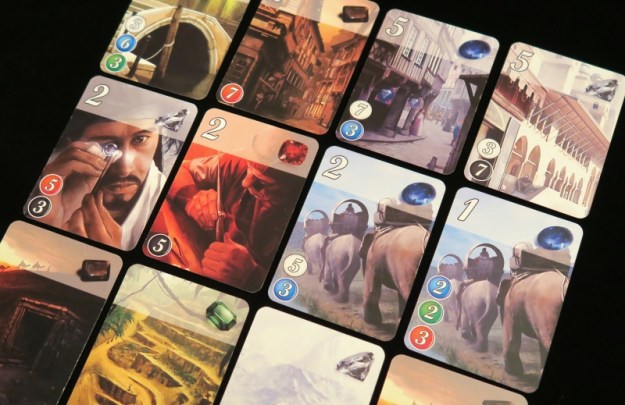
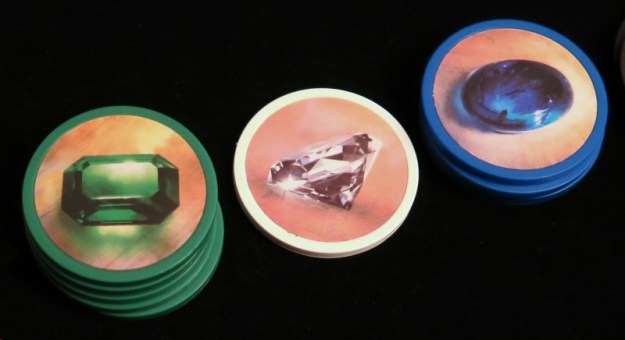
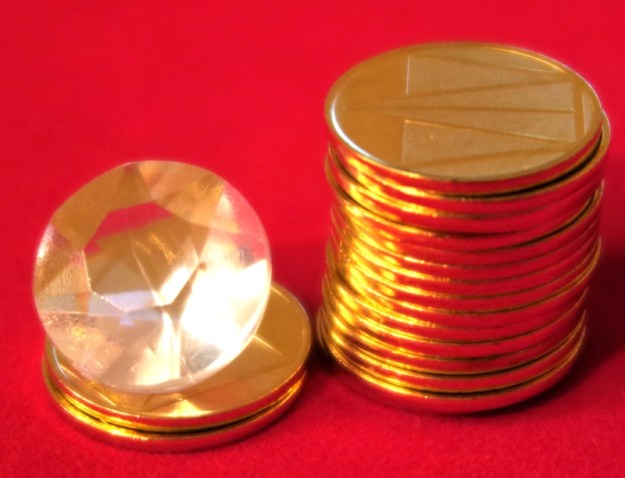
Ivory left for home, but Isle of Skye had not yet finished and, although there wasn’t time for Imhotep, there was still time for something quick.  So Teal introduced Green and Lilac to a game they’d not played before, called Diamonds.  This is a trick-taking game played with normal suited cards from one to fifteen where players are trying to win diamonds—not the suit, but the gemstones.  When players cannot follow suit they get to do a “Suit Action” based on what suit they actually play.  For example, playing a Diamond card gives one diamond gem from the supply placed into the player’s safe while playing a Heart gives one diamond from the supply to the pile in front of their safe.

Diamonds
– Image by boardGOATS

Similarly, playing a Spade allows the player to move one diamond from outside their safe into it, and on playing a Club the player steals one diamond from outside someone else’s safe and places it in front of their own. Additionally, at the end of the round of ten tricks, the player that won the most tricks in each suit gets to do that Suit Action one more time (in the case of a tie no-one does it).  With the game taking six rounds there is plenty of chances to gain diamonds.  It did not take long for the group to understand the game, although the for first few tricks the group were a little uncertain.

Diamonds
– Image by boardGOATS

Several times players found that although they had won, they couldn’t do anything as either the person they were supposed to steal from did not have any diamonds or, when they could move one diamond into their safe (from in front of it), they didn’t have any.  Plus, several times they found they had to steal from themselves so nothing happened.  The group also found that when they started to win tricks, they got control and were able to lead in suits the others didn’t have and so kept winning.  It proved to be a clever little game, but the group felt it probably plays much better with more people, so we might try it with a larger part of the group in future.  At the end of the game, however, Teal was the master diamond merchant with Green the apprentice.

Diamonds
– Image by boardGOATS

Learning Outcome:  A career in diamond trading is not for everyone.