Remembering Burgundy on his Birthday

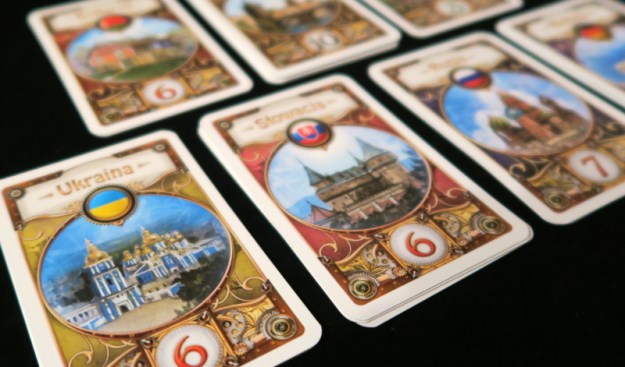
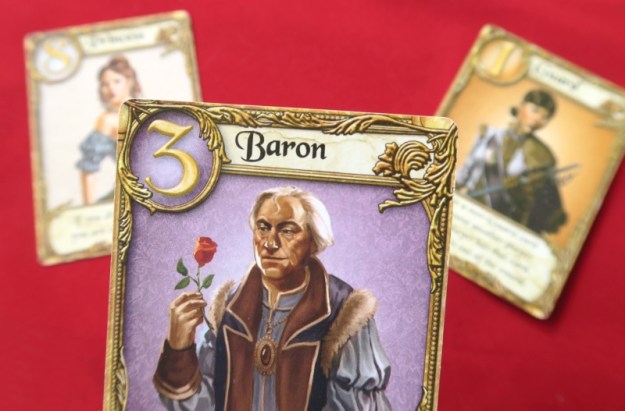
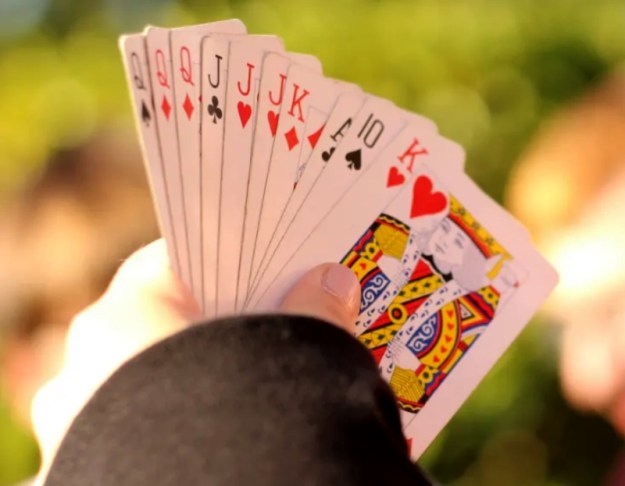
Burgundy (also known as Mike Parker) was an Oxfordshire gamer who sadly passed away at the end of December 2021 and is much missed.  He would have been sixty-four on Saturday 27th August and a small group decided that we couldn’t let his birthday pass unmarked.  So, at the South Oxford Crematorium, in Garford (where his ashes had been scattered), six people met to remember him and set light to a 6 Nimmt! card in his honour. The idea was a nice one, however, it turned out that a lighter would have been better than matches in the slight breeze, and 6 Nimmt! cards are not as flammable as we thought:  Burgundy would have been highly amused watching or perhaps he was teasing us by blowing out the flames.

6 Nimmt!
– Image by boardGOATS

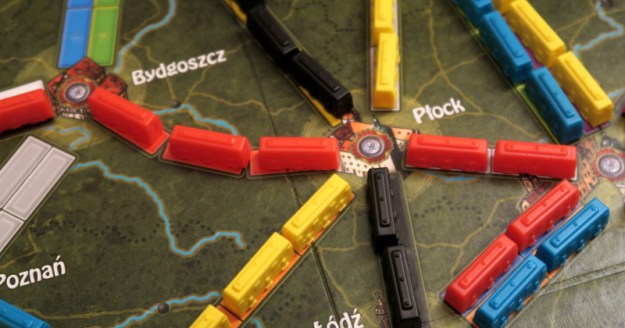
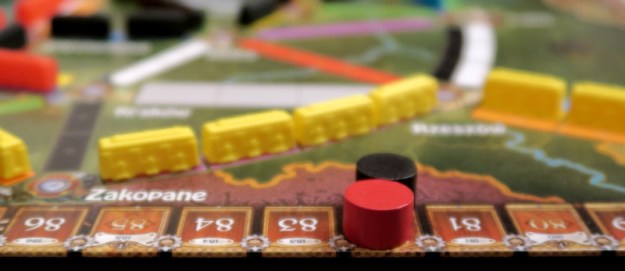
Eventually though, card number sixty-four was successfully burned, or rather charred (or at least most of it was), without doing too much damage to anybody’s fingers or setting fire to the tinder-dry countryside.  From there, the group went to The Fox in Steventon to honour Burgundy’s memory by playing some of his favourite games.  With six, the choices were limited without splitting into two groups, but one of Burgundy’s favourites was Ticket to Ride and the Team Asia expansion allowed everyone to play together.  It was a much tighter game than it had been earlier in the week and everyone played in the “Spirit of Burgundy” with lots of moaning when they picked up a card they didn’t want.  Team Purply-Black ran out the winners, just three points ahead of Team Pinky-Blue (who would have won had Pink let Blue take a chance and draw tickets on her last turn).

Ticket to Ride - Team Asia
– Image by Lilac

The group were going to squeeze in a quick game of 6 Nimmt! while waiting for food, but the cards (now one short of course) had barely been shuffled when food arrived.  Black, who missed out on on Ham, Egg & Chips at Burgundy’s wake, made up for it this time and then the group had to decide what to play next.  Bohnanza and 6 Nimmt! were options of course, but Green and Black were keen to play something heavier, though that would have meant splitting into two groups which somehow just didn’t seem right.  Concordia was another of Burgundy’s favourites and might have been an option with the Venus expansion, but that was moot as we didn’t have it.

Wingspan
– Image by boardGOATS

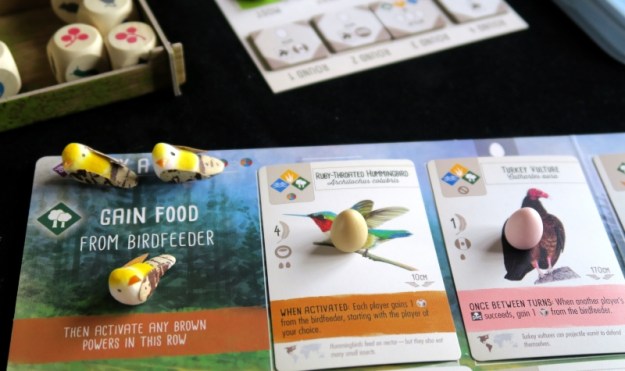
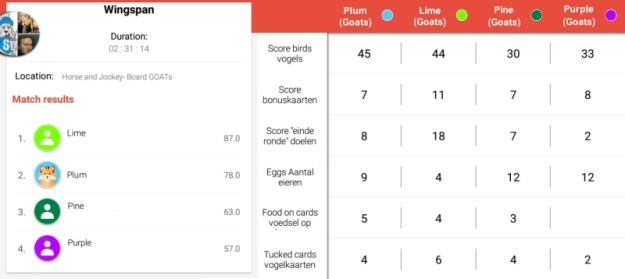
In the end, the group settled on Wingspan with the European expansion.  Although this only plays five, with two copies the group was able to make it work with an extra player.  This overpowers the “once per turn” (pink) cards, and leads to a lot of down time, but it felt the right thing to do for the occasion.  As a result of the slight unbalancing of the game, Blue got a lot of wheat, Green got an awful lot of worms, Pink and Purple Tucked a lot of cards, and Lilac was left at a bit of a disadvantage as she didn’t get a pink card at all.  Green was the eventual winner by some fifteen points, though it was very close for second with Blue just pipping Purple by a single point.  With the bar closing it was time to go home, but everyone felt that Burgundy would have approved, and would have enjoyed the evening too.

Mike Parker
– Image by Pushpendra Rishi

23rd August 2022

The evening started badly when Purple, Black, Plum and Pine all turned up hungry to a pub that wasn’t serving food and Blue was delayed taking her last opportunity to play with her hosepipe.  Eventually, Blue arrived and suggested getting food from Darren at “The Happy Plaice“, who delivers chips around the area and is in Stanford-in-the-Vale Village Hall car park on a Tuesday.  Blue and Plum nipped off to place an order and returned five minutes later with a collection time of 8pm, which left just enough time for a game of Azul.

Azul
– Image by boardGOATS

Azul is a simple, largely abstract game that we’ve had a lot of fun with since it came out at Essen five years ago.  The idea is that there is a market place where are a number of Factories are selling tiles.  Players can take all the tiles of one colour from one of these Factories and sweep the rest into the Remainders Bin in the centre of the table, or take all the tiles of one colour from the Remainders Bin.  These tiles are added to their one row in their display, but the catch is that they must be added to the same row and match any tiles already there with any left-overs scoring negative points.

Azul
– Image by boardGOATS

At the end of the round, any completed rows are scored:  one tile is moved across to the Mosaic taking its place in the row it was collected in and scoring points for any rows and columns they become part of.  The game ends when one player fulfills one entire row in their Mosaic, and since the mosaic is a five by five square, that means after a minimum of five rounds.  With bonuses added for completed rows, completed columns and sets of five of the same colour, the player with the most points is the winner.

Azul
– Image by boardGOATS

Pine started taking tiles from the bag and started debate about what colour the patterned pale blue tiles were.  He referred to them as “green”, when clearly they were blue.  However, when he pointed out that the blue tiles were blue, it made a bit more sense, though really, they were not green.  Plum opined that they might be cyan and Blue suggested turquoise, but pretty much everyone agreed that they weren’t green.  Pine continued to call them green though, probably partly to slightly annoy and confuse everyone else, but also because to him it was just easier and less confusing.

Another kitty picture of Plum's
– Image by Plum

Plum did unexpectedly well, unexpected because she was distracted when someone mentioned kittens, and for a while she took her turns very quickly so she could return to finding more kitty snaps to pass round.  Perhaps others found them equally distracting or maybe the kittens just gave Plum a bit of extra good luck.  Certainly luck played its part, when for example, she had the first player token and one of the factory tile had three of the cyan/turquoise/green tiles that she had fallen into collecting.  We don’t generally “play nasty” and in general, nobody really engages in hate drafting and the same was true this time, so luck played its part a few times.  Plum finished some way ahead of all the others scoring eighty-two, over twenty more than Pine in second place.

Azul
– Image by boardGOATS

Blue disappeared about half way through to collect the chip order and, on her return, Azul was over and almost everyone else had arrived.  So while the now very hungry folk tucked in, Green and Lilac started the “Feature Game” which was Scotland Yard.  The food was worth the wait though, because as Black commented, it was some of the best fish he’d had for a long time.  Orange, Lemon, Teal and Lime joined in setting up Scotland Yard, which is a semi-cooperative social and logical deduction game where one side is a team of detectives are trying to catch one player who is Mr. X and is on the run.  Mr. X moves around London taking taxis, buses or subways while the detectives, who nearly always know his mode of transport, work together to try to locate and then catch him.

Scotland Yard
– Image by boardGOATS

At the start of the game, the detectives are given a set number of tickets allowing them to travel by taxi, bus and on the underground.  In addition to taxi, bus and Tube tickets, Mr. X (in this case Green, as he was most familiar with the game) also gets two “Double move” tickets and five “Black tickets” which can be used on any service, but can also be used to travel along the Thames by River Boat.  Players can only move between locations if they are connected by a line with the colour dictating the transport type.  Only one player at a time can be at any station so Detectives must work together to not block each other off.

Scotland Yard
– Image by boardGOATS

Detectives can never share tickets with each other, and cannot hide their remaining tickets from Mr. X.  Once a Detective runs out of a certain type of ticket, they cannot use that service again.  Mr. X always moves first followed by the Detectives, and he writes down the destination of his next move in the next free space in the log book, then covers it with the ticket he used.  Mr. X must surface after his third, eighth, thirteenth, eighteenth and twenty-fourth (final) move, by making his move as normal and then placing his pawn where he is for that round. The Detectives win if they are on the same location at any time as Mr. X, whereas Mr. X wins if he evades the detectives until they run out of tickets.

Scotland Yard
– Image by boardGOATS

Since it wasn’t until the third round that Mr. X first appears, not a lot happened in the first couple of rounds and everyone just milled around their starting positions, edging towards the interchange stations.  When Mr. X duly appeared in round three, it was at Bank station, but Green decided not to hang around and played his double turn with a black ticket to disappear again, leaving everyone uncertain as to where he had travelled to.  There was much discussion and Lime was certain he had taken the Tube line to Kings Cross. Not everyone was in much position to travel far, so Lime took himself in that direction since he was already in the area, Lilac was closest to Mr X’s last known location and headed by taxi that way.

Scotland Yard
– Image by boardGOATS

Everyone else tried their best to head towards East London, some north of the river and some south.  Although Lime’s suggestion was a good one, and later Green admitted that he had missed that as an escape route, he had in fact taken a taxi towards the bridge in the hope of out-foxing everyone by staying somewhat close to his last known position.  For the next few turns, only Green knew that Lilac was actually tracking Mr. X only one space behind for most of the next several turns, until Lemon had arrived and then was also only one space behind.  In the second appearance, Green again did a double turn with a black ticket, but this time he only had a taxi or a bus as an option.

Scotland Yard
– Image by boardGOATS

Lime felt somewhat out of the game as he had chased a wild goose on his own towards Regents Park, but everyone else was closing in and it was looking extremely tight for Mr. X.  This time Mr. X used the bus, but the consensus amongst the detectives was that he had used another taxi and was close by.  As a result Green slipped past them and crossed the river.  There then followed a cat and mouse game in the south east corner. Green was unable to (secretly of course) get to another bus station as the detectives were too close, and he was left relying on taxis to shuffle around the streets.  Amazingly, he managed to keep just out of reach of the detectives, but when he had to reveal his location again, everyone knew what they had to do.

Scotland Yard
– Image by boardGOATS

By this time, Lime had managed to double back and was able to rejoin the action.  The detectives debated where Mr. X could possibly be with much discussion and gesticulation of locations on the board. As the end of the game neared and time was running out, the game seemed to swing away from the Detectives’ grasp. They started tripping over each other and then realised they had used far too many Taxis and ran out. Left with only buses and tubes, it became difficult to close the net and Mr. X was able to just flit around doubling back regularly to stay just out of reach and win the game.

Scotland Yard
– Image by boardGOATS

Everyone had enjoyed that game and nobody wanted to go home just yet, so as the other games were still ongoing, the group settled on a quick game of 6 Nimmt! as a short one for six players.   The game is very simple and everyone knows how to play:  simultaneously choose a card to play which is added to one of the four rows on the table.  They are added to the rows starting with the card with the lowest face value; each card is added to the row ending in the highest number card that is lower than the value of the card played.  If the card is the sixth card, instead the player picks up the five old cards.  The player with the fewest “nimmts” (bulls’ heads) is the winner.

6 Nimmt!
– Image by boardGOATS

6 Nimmt! did not fail to deliver it’s usual mix of lucky escapes and unfortunate catches to the amusement of all.  No-one escaped cards in the first round, but both Orange and Teal succeeded in being “nimmt free” in the second.  As a result it was these two who finished with the lowest score taking first and second place respectively.  Lilac and Lemon were less fortunate, and top-scored with the most nimmts overall.  That was enough for Lime and Teal who decided to head home. Green and Lilac considered leaving too, but eventually decided on a quick four player with Lemon and Orange, and Tsuro was the choice.

Tsuro
– Image by boardGOATS

Quite quickly, Orange, Lemon and Lilac moved quite close to each other, leaving Green to wind his own path on the other side of the board. A couple suitable tiles later, Orange and Lemon avoided a collision and headed off in different directions and away from Lilac. Everyone was able to meander their own way for a few more turns until Lilac realised she was headed to a dead end and in two tiles turn was guaranteed to run off the board.  Orange and lemon managed to survive for only one turn more, when Lemon was forced to play a tile that sent them both off the board. This was a lucky escape for Green as he would also have had to head off the board on his next tile.

Tsuro
– Image by boardGOATS

Meanwhile, as the five chip-eaters finished their supper (and made the rest of the pub clientele jealous with the smell),  Ivory and Blue tried to come up with something to play—either a game that played six or two smaller games.  Usually, the group would go down the route of two small games, but this time, Blue found the Asia expansion map for Ticket to Ride in Ivory’s bag, and as the Team Asia variant plays six and everyone loves Ticket to Ride, it wasn’t long before the decision was made.  This version of the game has only a few small rules tweaks, but the feel is completely different to every other version as players are working in pairs and teamwork is essential.

Ticket to Ride - Team Asia
– Image by boardGOATS

The basic rules are still the same:  players take it in turns to either take Train cards, or use the Train cards to pay to place Trains on the map with the number and colour of the cards matching that of the route claimed.  As usual, players are trying connect the locations marked on their Tickets for which they get extra points for completing and lose points if they fail.  The difference in the Team Asia variant is that players work in teams, and unusually for a game played in pairs, players sit next to their partners.  This is very clever and really makes the game work as it means one player can set up their partner.

Ticket to Ride - Team Asia
– Image by boardGOATS

The other rules tweaks are centered round cards that the players in a team share and cards players keep private.  At the start of the game, players place one of their Ticket cards into the shared area, so that both players can see them, other cards are kept private (though players can choose to take a turn to reveal two of their hidden cards to their partner).  When a player draws Train cards, one of these must be placed in the shared area with the other placed in their private hand—a decision players have to make when before they draw their second card.  Similarly, should a player draw more Ticket cards, only one can be shared while the others are kept private.

Ticket to Ride Demo
– Image by boardGOATS

Players also have separate pools of Train pieces (albeit with teams having the same colour), which is critical, because if one player runs out of pieces, they are significantly restricted in what they can do.  The game ends when one Team has only four Train pieces left (or fewer), at which point every player gets one more turn.  The game starts with everyone getting four Train cards and five Tickets from which they must choose at least three, a difficult choice, and one to share, another difficult choice.  The looks on everyone’s faces as their partner’s chosen Ticket was revealed told the tale for each pair.  While Blue and Ivory were reasonably satisfied, Pine and Plum were decidedly unimpressed and Black and Purple just shrugged.

Ticket to Ride - Team Asia
– Image by boardGOATS

After several attempts to drop just one Train piece in a random selection sort of way, Team Piney-Plum went first. Pine placed the first Train and everyone else groaned as they seemed to hit the ground running.  Everyone started placing trains in the south east corner of the map, with the teams moving out in different directions.  When Pine was clearly unimpressed with the Train cards available in the Market and shrugged taking anything, Ivory delightedly pointed out that he should have taken the one off the top of the pile when it turned out to be a Locomotive (wild) card.  Pine equally delightedly pointed out the same to Ivory when he did the repeated the feat couple of turns later.  From then on, it seemed that almost every time someone had the same decision, the same thing happened and, as a result, “Should have taken the one from the pile” became a frequent chorus.

Ticket to Ride - Team Asia
– Image by boardGOATS

Team Piney-Plum took the lucrative red line into Cawnpaw giving them fifteen points and an early lead which they never really reliquished during play.  In contrast, Team Bluey-Ivory got stuck with lots of single Train lines and lagged at the rear.  After some grunting, muttering and non-specific pointing, Ivory commented that they’d “take the coastal route”.  When Pine pointed out everyone who was listening knew where they were going, Blue pointed out all the possible coastal routes, but nobody was really fooled.  There were two things that stopped anyone from interfering: firstly, the group rarely plays “nasty”, but mainly, everyone was too worried their own issues to give anyone else more problems.  Indeed, when Ivory pointed out the singleton white route between Chunking and Nanning threatening to take it to block Team Purpley-Black, nobody really thought he was serious.

Ticket to Ride - Team Asia
– Image by boardGOATS

That didn’t stop people messing up each other’s plans however.  For example, when Blue spotted Pine had picked up two orange cards, she nipped in quickly and nabbed the line from Cawnpaw to Bombay with a pawful of Locomotive (wild) cards—this wasn’t out of spite though, it was simply critical to Team Bluey-Ivory’s plans and without it, they would have been very stuck.  Team Piney-Plum also had a bit of a tussle with Team Purpley-Black in the south east quadrant of the map, and then got in a bit more of a tangle with Team Bluey-Ivory around the Punjab.  However, with only two teams getting in each other’s way each case, everyone was mostly able to work round it and get to where they wanted to be.

Ticket to Ride - Team Asia
– Image by boardGOATS

Black was the first to take more Tickets (four, choose at least one, with won in the shared area) and then Ivory did the same.  And then Ivory had another go too, keeping a Ticket that made Blue squawk, but Ivory was right when he said he thought it could be done.  So much so that a couple of rounds later, Blue took a punt on Tickets too, and although she got unlucky, she did at least get a nice short route they could bin with little loss.  In contrast, Team Piney-Plum eschewed the option of taking Tickets as they were to busy struggling to complete their starting set and were focused on building a ridiculously roundabout route that covered almost all four corners of the map.

Ticket to Ride - Team Asia
– Image by boardGOATS

Towards the end of the game, Team Purpley-Black made a late dash to the north west, including a brave, and ultimately successful effort to build a Tunnel into Rawalpindi.  They were the only ones with the courage to try digging with all the Tunnel routes being high risk, low reward.  Indeed, Blue’s Ticket attempt gave her Team an opportunity for eighteen points, but she decided discretion was the better part of valour because even though it only needed one Train piece, it was a Tunnel section potentially needing up to seven cards.  As the game drew to a close, there was the usual scrabbling to get points at the end; Pine ran out of trains, but Plum still had a handful so didn’t trigger the end of the game until the next round.

Ticket to Ride - Team Asia
– Image by boardGOATS

At this point, Team Piney-Plum had a huge lead, and after the obligatory recount they increased their lead by taking the Asian Express bonus for the longest continuous route (with forty-five Train pieces).  Tickets were then added, starting with Team Purpley-Black.  They had lots of Tickets and quickly took the lead.  Team Bluey-Ivory were next—they also had a lot of completed Tickets, on average of a slightly higher value and one more than Team Purpley-Black as it turned out, which meant they just took the Asian Globetrotter Bonus and with it, the lead.  That left Team Piney-Plum, and although they completed all their tickets, they didn’t have as many and, were unable to overhaul Team Bluey-Ivory’s lead taking a valiant second.

Ticket to Ride - Team Asia
– Image by boardGOATS

The differences in strategies was interesting though.  Team Piney-Plum’s starting Tickets didn’t match at all so they went the round-about route almost everywhere, they mostly stuck to longer track sections and had a lot of cards in hand.  Team Bluey-Ivory built loads of short track sections to connect the end stations for their starting Tickets together and had a permanent shortage of Train Cards with just enough to complete their short term goal.  Team Purpley-Black prioritised getting tickets built a branched track to ensure they were all completed.  The one thing everyone agreed on though was how different the Team experience was to the usual game—not one to be played too often, but it made a nice change.

Ticket to Ride: Europe
– Image by boardGOATS

Learning Outcome:  You should always take the cards from the top of the pile…

Next Meeting, 23rd August 2022

Our next meeting will be Tuesday 23rd August 2022.  As usual, we will start playing shorter games from 7.30pm as people arrive, until 8pm when we will start something a little longer (table is booked from 6.30pm for those who would like to eat first).

This week the “Feature Game” will be Scotland Yard (rules, review & rules run through video), a semi-cooperative game where a team of detectives are trying to catch Mr. X who is on the run.  Mr. X moves around London taking taxis, buses or subways while the detectives, who nearly always know his mode of transport working together to trap him.

– Image by BGG contributor Gialmere

And speaking detectives…

Jeff was doing a stint in CID when his Sergeant asked him to take details of a non-dwelling burglary from the owner of the premises.

So, with his notebook at the ready, Jeff asked, “What is the nature of the business, sir?”

The man answered, “We deal in plant hire.”

Jeff looking a little confused, responded, “Don’t people buy plants?”

9th August 2022

Pink, Blue, Orange and Lemon were the first to arrive, very soon followed by Plum and Jade.  While they were waiting for food, the group decided to play a couple of quick games.  First up was Moneybags, a game we played for the first time a few months ago.  This is a very quick social deduction game with a similar premise to Ca$h ‘n Guns:  players are a gang of thieves distributing their loot.  In Moneybags, the “Godfather” first distributes the loot and players then take it in turns to either steal from another player, pass, or close their money bag and recuse themselves from the rest of the game.

Moneybags
– Image by boardGOATS

If a player is robbed, the victim can challenge if they think the thief was too greedy.  If the victim has less than the robber, they win their challenge and take all the money for themselves, otherwise the thief wins and they take all the loot.  After two rounds, the players that have not been eliminated compare the height of their piles of cash, and the one with the tallest stack is the winner.  Pink started sharing out the cash while Blue explained the game.  Blue then started, robbing Pink to demonstrate how it is done.  It wasn’t long before the first player, Plum was eliminated, and everyone really understood how things worked.

Moneybags
– Image by boardGOATS

When she was robbed, Lemon was unlucky to lose her challenge to Orange on a tie leaving only Blue, Pink and Orange left at the end of the round.  It was then a matter of comparing the three stacks to find that Orange was once again involved in a tie, but this time he lost to Pink on the tie-breaker (the winner being the player earliest in the turn-order).  Pink relinquished his right to being the Godfather though and gave it to Orange who filled the money bags for a second round.  Unfortunately, Orange failed to put any coins at all in Plum’s bag and put most of it in Lemon’s and Pink’s.  This made Lemon the first target and Pink the second.

Moneybags
– Image by boardGOATS

Ill-advised challenges left both Lemon and Blue eliminated in the first round and Orange by the end of the second.  Another three way comparison quickly pushed Pink into third leaving a close finish between Plum and Jade with Jade just sneaking in front.  Two games were enough, and Jade suggested the group move on to something new: MANTIS, a game from the same people as Exploding Kittens.  This is a simple set collecting game where, on their turn, players can choose to “Steal” or “Score”.  Players declare their plan (and their victim if they are stealing) before they turn over the top card of the deck.  When Stealing, if the colour matches cards belonging to their victim, then they take the cards and add them, face up to their array.

MANTIS
– Image by boardGOATS

When Scoring, if the colour matches any of their own cards, they turn over the cards and these become points—the first player to ten points is the winner.  While this sounds like pure chance, there is one thing that makes the game less random: the backs of the cards show three colours, one of which is the card colour while the others are red herrings (or herrings of another colour).  So whilst the game isn’t challenging, it rocks along nice and quickly.  Blue took points on her first turn to take an early lead, but everyone else soon caught up and overtook her.

MANTIS
– Image by boardGOATS

Food started to arrive, and everyone tried (and failed) to finish before eating; it took a couple more rounds before Pink scored his tenth point.  It was very close for second with almost everyone else on six or seven, but Orange just nicked it with eight.  While everyone tucked in to their food, the rest of the group arrived.  There was some debate as to who would play the “Feature Game” which was to be Alubari: A Nice Cup of Tea, but in the end, Green and Ivory took themselves and the game to the other side of the room to set up a four player game where they were eventually joined by Black and Purple.

Alubari: A Nice Cup of Tea
– Image by boardGOATS

Alubari is a re-implementation of the popular worker-placement game, Snowdonia.  It had been a while since any of the group had played Snowdonia, so they needed a quick refresher of the rules and to learn the new aspects of Alubari. The underlying mechanisms are essentially the same, but it has a slightly smoother feel, and of course, the setting is Darjeeling (in the Indian state of West Bengal).  In this version of the game, players harvest Tea Estates and assist in the building of the Darjeeling and Himalayan Railway, from Siliguri Town to the summit at Ghum.  In addition, players use Chai (made from from harvested tea leaves) which increases the power of their actions.  Like the original game, players take it in turns to place their two workers on the action spaces available on the board.

Alubari: A Nice Cup of Tea
– Image by boardGOATS

Once the workers have been placed, players carry out the actions in action order, that is to say, anyone who has a worker in Action A goes first, with the spaces within each Action numbered and activated in order.  The Actions are:  take Resources from the Stockyard; dig Rubble from the Tea Plantations; convert resources (Iron Ore into Iron Bars, Rubble into Stone or Stone into Rubble); lay Track; build Stations or buy Equipment; take Contract Cards, and finally, harvest Tea leaves or make Chai. Chai is very powerful because players can use it to to get an additional worker for the duration of one round.

Alubari: A Nice Cup of Tea
– Image by boardGOATS

Chai can also be used to enhance actions.  For example, players can normally take three Resources from the Stockyard including one Chai; paying a Chai increases the number of Resources they can take to five with a maximum of two Chai. Some of this mirrors Coal in the original Snowdonia game, but initially, there was a little confusion amongst players over the differences between Tea and Chai.  There is a distinction here between Tea and Chai, with Tea being the raw leaf product (represented in the art by a leaf) and Chai being the refined product (represented by a teapot).  Tea Harvests are shown by a leaf with an arrow which mean players collect Tea leaves equal to the number of tea estates owned by player multiplied by the current value of the Tea Harvest Track.

Alubari: A Nice Cup of Tea
– Image by boardGOATS

The Tea Harvest Track works the same way as the Excavation Work (aka Dig) Rate and the Track Work Rate:  they depend on the Weather.  The back of the contract cards show the weather; at the start of each round the current Weather disk is removed, the other Weather disks shuffled forwards and the empty space filled with a disk that matches the back of the top card in the Contract deck.  Thus, players can see what the weather will do for the next few rounds and use that to plan when to take actions.  In general, the Excavation and Track Work Rates are increased by sun, decreased by rain and Work stops altogether when it is foggy;  in contrast, the Tea Harvest Rate increases with rain, decreases with fog and is unaffected by sun.

Alubari: A Nice Cup of Tea
– Image by boardGOATS

At the start of each round, the Stockyard is refilled with Resources which are drawn blind from a bag.  As well as Iron Ore and Stone, the bag also contains a small amount of Chai and five Event Cubes.  When one of these is drawn, from the bag, the game plays itself according to a Rondel.  This design feature is intended to prevent players from hoarding Resources and thus slowing the game—the fewer Resources there are in the bag, the more likely it is that a white Event Cube will be drawn out.  The Events include Excavate, produce Tea, build Stations and lay Track.  This last is particularly important because the game ends at the end of the round when the final Track space, on the approach to Darjeeling is completed—this could be by a player or an Event.

Alubari: A Nice Cup of Tea
– Image by boardGOATS

Once the rules had been run through, the game got underway.  Right from the outset Black pointed out that it was through Contracts that the big scores were really made. The Contract Cards come in two parts:  a Special Action part and an end game bonus.   The Action can be used in any round, but its use must be declared before any Actions are resolved.  Whether the Action is used or not, players can claim the bonus at the end of the game, and it was these to which Black was referring.  Ivory took note of Black’s advice and very early on went for a hefty contract which would give him forty points if he could get five rail tracks.

Alubari: A Nice Cup of Tea
– Image by boardGOATS

Considering that there are only fifteen tracks in the game, with four players and the game itself sometimes building track through the Events, the Contract for five rail segments looked like a tall order.  However, as nobody was really paying attention to Ivory’s plans, with the help of a Chai super-boost, it proved easier than it should have been.  Aside from that, Ivory, along with Black and Purple began with a fairly typical Snowdonia game approach, collecting building supplies.  Green on the other hand, decided to experiment with the new Tea/Chai mechanisms and started clearing the Tea Estates.  Although Green did get the first Tea Estate, everyone else also got one soon after.

Alubari: A Nice Cup of Tea
– Image by boardGOATS

Green was able to continue this approach though, and by the first Tea Harvest, he had more estates than any one else.  Green was also the first to gain Equipment, going for a simple one, the Chai Boiler, from the Promo Pack, and gained two Chai with it. He was able to use those Chai to boost his later actions.  By halfway through the game he had built up quite a pile of Rubble, and only then realised that he could use this to build Stations.  This wasn’t the only game blunder made with Stations. It was only towards the end of the game that Black suddenly remembered the first town on the map, where players could use Tea leaves to pay to build the Station. The first space only cost three leaves, but gave a whopping twelve points and Purple make use of that as soon as it was pointed out.

Alubari: A Nice Cup of Tea
– Image by boardGOATS

Green took advantage of the Tea/Chai conversion after a very good Harvest, pushing himself to the top of the Chai track. He was then able to get a third worker and boost many of his actions the following round.  Through most of the game Ivory held the start player token, with Green and Black only taking it a couple of times with Ivory taking it back straight away.  The game was building nicely when suddenly, almost out of nowhere, it was over.  There were eight Tracks built when everyone except Purple chose to lay Tracks in the next round.  Green went first.  He needed to build two Tracks for his contract—he had the Steel but the Track Work Rate was one and he had run out of Chai so couldn’t increase it.

Alubari: A Nice Cup of Tea
– Image by boardGOATS

Next was Ivory who did have Chai, which allowed him to build two extra Track sections and he had the Steel to do it enabling him to build three in one go.  Black also had Chai, but only two steel. Seeing that he may not get another chance, he used the Chai, but still needed to lay one more track for his Contract.  So the game had gone from eight Track sections to fourteen in a single turn.  Green was primed to get his second Track section to complete his Contract, but unfortunately for him, the game had other ideas. With three white Event Cubes, the second event was Lay Track triggering the end of the game, but no Track left to be built. From there, it was just the usual calculations with players maximising points with the last workers and Chai.

Alubari: A Nice Cup of Tea
– Image by boardGOATS

Adding up the points, it turned out to be an incredibly close game. Purple and Green were within a whisker of Black who was the runner-up with sixty-nine and a half points (yes, this game does indeed give half points!).  It was Ivory who was the clear winner, however, with his five track Contract that shot his score to the dizzying heights of ninety-six.  In the post game discussion, the group agreed that some of the Chai boosts seemed more powerful than others, and the track laying bonus in particular seemed overly powerful. There also did not seem to be as many Tea Harvests as players expected (only three in the whole game including one from a Contract Card).  This was only one game though and it is highly likely that others will play out quite differently.

Alubari: A Nice Cup of Tea
– Image by boardGOATS

Meanwhile, on the other side of the room, after a bit of discussion, Blue swapped seats with Lime and he and Pink introduced Orange and Lemon to one of our favourite games:  Ticket to Ride.  We play this quite a bit in lots of different guises, so the plan was to start by playing a short game, the Demo edition, and then play a full sized version.  The game is very straight-forward and the basic play is the same across all editions:  on their turn, players can take train cards, build track by paying train cards, or take tickets which give end-game points.  While the basic mechanisms remain though, the map, the number of train pieces change and some editions add extra little rules.

Ticket to Ride Demo
– Image by boardGOATS

In the first, Demo game (played on the Europe map), Lemon managed to get lots of matching tickets which meant she gave everyone else a bit of a spanking.  Not being a native English speaker, Lemon queried the vernacular at which point Pink tried to explain that it was a sporting term, but everyone else including those on the next table insisted that he should explain it properly with all the meanings.  Lemon and Orange opted to spare his blushes by looking it up, only to blush themselves when they found it.  Much hilarity ensued and was shared with the neighbouring table.

Ticket to Ride Demo
– Image by boardGOATS

After the introductory game, Pink and “the Citruses” moved onto a “full version”, but in an effort to avoid “special rules” the group played a house ruled version of Ticket to Ride: Germany.  This version of the game has its heritage in the Märklin limited edition that was the third game in the series and was published about fifteen years ago. Märklin make model railways, a bit like Hornby, but with German trains.  The Märklin version of Ticket to Ride had special art work with a different Märklin train depicted on each individual card in the deck.  More importantly, however, it introduced a passenger mechanism which made the game considerably more complex than the original.

Ticket to Ride: Märklin
– Image by boardGOATS

With the Märklin edition sold out, about ten years ago, Days of Wonder (presumably reluctant to renew the license for the Märklin branding) re-released the game for the German and Austrian market as Zug um Zug: Deutschland.  This was a simpler version that used the same map, but without the passengers, although the 1902 expansion was released a a couple of years later to reintroduce them with a new, simpler mechanism.  A few years after that, about five years ago, the German game was released for the worldwide market including both the Deutschland base game and the 1902 expansion—the only difference was the omission of two tickets.

Ticket to Ride: Germany
– Image by boardGOATS

It was this newest Germany version of the game that the group played.  However, although the variant includes the passenger mechanism and there is no official variant in the rules “as written” to remove them, in order to keep things simple, the group omitted that part of the game, effectively playing Zug um Zug: Deutschland.  The game had just begun, when three rounds in, Pine arrived.  The others offered to include him, but he declined and, as a result, he didn’t play anything at all, all evening.  He did manage to recount the infamous game when he and Pink gave Blue and Burgundy a spanking over the Heart of Africa map as they got stuck in the middle blocking each other.

Ticket to Ride Map Collection: Volume 3 – The Heart of Africa
– Image by boardGOATS

The German version has two types of ticket:  long tickets (brown backed) and short tickets (blue backed).  At the start of the game, players choose four in any combination of the two types, but must first announce what combination of Tickets they are drawing.  Pink went for an almost exclusively long (brown) ticket strategy which he achieved with varied success, while the others went for a mixed ticket approach.  There was a little difficulty reading the tickets as the game uses a slightly gothic font which can be a little difficult to read, especially for those who’d forgotten their glasses.

Ticket to Ride: Germany
– Image by boardGOATS

Both Lemon and Lime claimed the long train line from Berlin to Hamburg which give them eighteen points, the equivalent of a long ticket.  And tickets were very important this time.  Pink began completing routes from Kiel to Switzerland and France (via Bremen and Köln) before taking more tickets.  To fulfill these, he extended his network to Hamburg in the north, but failed to get to Karlsruhe in the south which cost him eighteen points in failed tickets.  The game can be played in a relatively friendly way, or aggressively with players trying to shut each other out.  We play in the more self-focused, less confrontational way, so failed tickets are normally relatively unusual, as such, this game was remarkable in that it was a bit of a tale of missed tickets.

Ticket to Ride: Germany
– Image by boardGOATS

In addition to Pink, Orange was particularly unfortunate this time, failing to complete any tickets as he was unintentionally badly blocked.  The game was ended somewhat unexpectedly by Lime, partly because he picked up the long route (suddenly depleting his supply of trains), but mostly because people weren’t paying attention to the number of trains he had left.  He was more fortunate in his ticket draws as well and that contributed to his hundred and fifty-four points and him giving everyone else a serious trouncing (another word for Orange and Lemon to look up).  Lemon was the best of the rest finishing with ninety, over sixty points behind Lime.

Ticket to Ride: Germany
– Image by boardGOATS

While everyone else was playing with trains, on the next table, Jade introduced Lilac and Blue to his new acquisition that he picked up from UK Games Expo back in June, Old London Bridge.  This is a fairly typical Queen Games game, with lots of pieces, but not too challenging—just what everyone wanted on a warm night.  The game is set in 1136 after the great wooden bridge across the Thames was been consumed by fire.  Players are architects, each responsible for designing and building one section of the new bridge.  On their turn, players add one of the available buildings to their bridge section.  Each building has three attributes:  Location, Colour and Number.

Old London Bridge
– Image by boardGOATS

There are six different types of building, each with a special “power”.  Thus, Haberdashers allow players to take money, the Purple Chapel buildings allow players to move along the associated track etc..  The colour is important because if that colour matches other buildings already on their bridge, they get a boost—for example, if a player takes a blue Haberdasher building, and already has two other blue buildings, they get to do that action effectively three times, taking three times as much money.  Finally, buildings must be built in descending Number order—to reset, players have to build a park, which has no additional “power”.

Old London Bridge
– Image by boardGOATS

There are six building spaces on a central Rondel, each associated with a different pile of buildings and each with a money bonus that changes as the Rondel rotates at the start of each round.  Each Rondel space can only hold one player’s marker, thus each building type can only be built once per round.  One space is always deactivated (which one also changes as the Rondel moves), but the seventh space, the centre of the of the Rondel costs money, but allows players to take any building, including one that is currently unavailable (either because it has already been taken or was deactivated at the start of the round).

Old London Bridge
– Image by boardGOATS

Each round, players bid with Character Cards to see who gets to choose a building first.  Character Cards which have a numerical value, zero to four.  Where there is a tie, it is broken by players’ respective positions on the Purple Chapel track. Players start with a hand of Character Cards, but can add to these by building a Hostelry building—the higher the power, the more powerful the cards they can take.  At the end of the game, the players get bonus points depending on the value of the Characters they have left over.  In addition to the Haberdasher, the Hostelry and the Parks there are also two types of buildings in the Bridge Gate:  Purple Chapel Buildings and Red Gatehouse Buildings.

Old London Bridge
– Image by boardGOATS

Each of the Bridge Gate buildings have a track associated with them.  During the game, passing milestones on these tracks give money and break ties (Chapel Track) or give special tokens that allow players to bend the rules (Gatehouse Track).  Additionally, players get bonus points at the end of the game depending on their final position on these tracks.  The final building type is the Guild House.  These have no action associated with them, but are “Colour wild”, featuring all four colours, and as such, they boost every other building type.  At the end of the game, players add their residual money to bonus points for their finishing position on the Bridge Gate tracks, for unused Characters, and for having the fullest bridge (if a player can’t obey the Number rules, they may have been unable to build a building).

Old London Bridge
– Image by boardGOATS

Jade had only just started explaining the rules, when Plum announced that she had a “new religion”—Kittens, and shared photos.  From this point forward, every pause in the game became a “Kitty Paws” and was punctuated by more increasing levels of cuteness—definitely an improvement on the stuffed Pandas from last time.  Despite the undeniable distractions, everyone was still able to focus on the game and proceedings weren’t slowed at all.  Plum seemed to amass a vast amount of money in no time at all and after making a mess of her first turn, Blue got lots of orange buildings and lots of cards but was very slow to make any progress on the Purple Chapel track and lost every tie-breaker she was involved in as a result.

Plum's Kitty
– Image by Plum

Lilac was the first to run out of Character Cards and therefore ended up relying on her position on the Chapel track to ensure she didn’t get left with Hobson’s Choice every time.  In this she was helped by Jade who also ran out of cards.  Although Blue’s forest of Orange buildings meant she could get a lot each turn, her choice was often to do something she wanted but not get much of it, or take yet another orange building and to do something she didn’t really want and rely on probability to even things out in the end.  Things didn’t really even out, and as a result, Blue ended up with a lot of Character Cards.  Everyone else went for a much more balanced strategy focusing on one or two or maybe three Colours.  And Plum’s pile of loot grew ever larger.

Old London Bridge
– Image by boardGOATS

Towards the end of the game, Jade put on a massive spurt along the Red Gatehouse track and collected some Character Cards, while Blue finally made a move along the Purple Chapel track.  As a result, Jade who had led the Purple Chapel track for most of the game was pipped by Blue, and Blue who’d held a massive lead on the Red Gatehouse track was edged out by Jade.  Plum finished with the most cash with thirty, but in the end was only slightly ahead of Lilac and Jade.  Lilac who had just quietly got on with her game was the only player to fill all the spaces on her Bridge, despite running out of cards. In the ranking for players with the most buildings, there was a tie for second place.

Old London Bridge
– Image by boardGOATS

Initially, the tie was resolved as a friendly tie with both Plum and Jade getting three points for their second place and Blue taking one.  On reading the rules later, it turned out that end-game ties are also broken by position on the Purple Chapel track, giving Jade three points and Plum one.  In general, bonus points are actually much less significant than money.  This is because money is absolute and turned directly into points, but the bonuses only reflect placings (not how successful someone is);  the bonuses therefore have a maximum of five points in each case whereas players can finish with as much money as they can.

Old London Bridge
– Image by boardGOATS

In this case, however, it was very close for second place and the tie break for that bonus turned out to be critical:  Plum beat Jade on the friendly ties, but positions were reversed with the tie breaker from the rules as written.  Old London Bridge also includes alternate bonus conditions and had even one of these been in use, then the scores could have been quite different. There was no question about the winner though:  throughout, Lilac had just quietly got on with her own game doing everything well.  She was the only one to finish with all twelve buildings, finished with almost as much money as Plum, and had made good progress on both the Bridge Gate tracks.  With a final score of thirty-eight points, she was four points clear of whoever took second.  With time for just a few more “kitty pictures”, people started heading home.

Plum's Other Kitty
– Image by Plum

Learning Outcome:  Everyone Likes Train Games, and Kittens.

Boardgames in the News: Changes to Game Selling on BoardGameGeek

Many gamers have lots of older, unloved games that take up space that could be used for new or more exciting games.  There are lots of solutions to this problem, but one is to sell, but the question is, “Where?”  Historically, there have been two main solutions to this:  ebay and the BoardGameGeek Marketplace.  The advantages of ebay are the size of the market and the tools that are available, however, for many, the BoardGameGeek Marketplace has been the venue of choice for several reasons.  These include the feedback from names recognised on the forums, and the fact that sellers/buyers are dealing with gamers who talk the same language and typically care about similar things or at least understand their concerns (e.g. how well it is wrapped, marks on the back of cards, wear to the pieces etc.).

ebay Logo
– Image from wikimedia.org

As mentioned recently, in March, BoardGameGeek announced a new Marketplace to replace the old one.  This was to be a more professional offering produced in partnership with Marketbase and was rumoured to be required by the US Internal Revenue Service.  However, a week ago, it was announced that this new market place (which was still in the beta-testing phase and had not been released world-wide), was to be closed on 1st September with no new listings from 15th August.  The explanation given was that the “marketplace software and service provider was unable to replicate the same success across other communities and is now forced to close their marketplace offering.”  It is perhaps worth noting that although Marketbase claim there was a “150% month-to-month growth” any increase in sales was probably strongly influenced by a free shipping offer.

BGG Corner Logo 2022
– Image from boardgamegeek.com

The new Marketplace had been quite divisive and many people were pleased to see its demise, however, that was short-lived as yesterday, BoardGameGeek announced that the “Classic Marketplace” would also close on 1st September.  In its place, there will be new, commission-free “flea market” forum pages on each game page.  At this time, it is not clear how much of the subscription service, feedback and other features (like price tracking) will be retained and how, but it is clear that the current plan is to completely remove the old market place and with it, all the historic data.  This loss of information is a great shame as it means there is no evidence to support expectations of how much games are worth and as a result, reduces BoardGameGeek to the “Wild West” that is the FaceBook Marketplace and the myriad of FaceBook selling groups.

FaceBook Logo
– Image from cnm.edu

Next Meeting, 9th August 2022

Our next meeting will be Tuesday 9th August 2022.  As usual, we will start playing shorter games from 7.30pm as people arrive, until 8pm when we will start something a little longer (table is booked from 6.30pm for those who would like to eat first).

This week the “Feature Game” will be Alubari: A Nice Cup of Tea.  This is a re-implementation of the popular worker-placement game, Snowdonia.  The underlying mechanisms are essentially the same, but it has a smoother feel and of course, the setting is Darjeeling (in the Indian state of West Bengal) and it has addition of Chai, which players get from harvested tea leaves and adds to their actions.

Alubari: A Nice Cup of Tea
– Image by BGG contributor LordBalder

And speaking of a nice cup of tea…

One day, Jeff phoned his girlfriend, Jemima, and said, “Can you come round please? I have a killer jigsaw puzzle, and I can’t work out how to get started.”

Jemima asked, “What is it supposed to be when it’s finished?”

Jeff replied, “According to the picture on the box, it’s a rooster.”

So that afternoon, Jemima went round to Jeff’s flat and Jeff showed her where he had the puzzle spread all over the kitchen table. His girlfriend studied the pieces for a moment then looked at the box.

She turned to Jeff and said, “First of all, no matter what we do, we’re not going to be able to assemble these pieces into anything resembling a rooster.”

Then Jemima gently took his hand, “Secondly, I want you to relax. Let’s have a nice cup of tea, and then…” she said with a deep sigh, “We can put all these Corn Flakes back in the box.”

26th July 2022

Blue and Pink were first to arrive and were just finishing their supper when Ivory joined them soon followed by Pine.  Ivory and Pink were keen to play Ark Nova which is longer than our usual fare and therefore needed a quick and early start.  So, when Black and Purple arrived, they grabbed Black and headed over to the other side of the room.  Everyone else conformed to more typical hesitant behaviour and were a lot slower to get going.  This wasn’t helped by Blue who was explaining how Pink had managed to find the “Only Panda Themed Village in Cornwall” and when Lemon and Orange queried it, she felt the need to find the photos to prove it.

The Lanivet Inn
– Image by boardGOATS

Eventually, the group split into two with Purple, Blue, Pine and Teal playing the “Feature Game“, the Spiel des Jahres nominee, SCOUT.  Although this has a nominal and very tenuous “circus theme”, it really is well hidden and “pasted on” to what is otherwise a relatively traditional, though clever little Rummy-esque card game with a Bohnanza-type twist—players cannot change the order of the cards in their hand.  The idea is that players have a hand of cards and on their turn takes an action:  they play a run or a meld (set of cards of the same value à la Rummy), or take a card from the active set (the previously played set).  The first of these actions is called “Show” and players can only Show the set they want to play beats the previously played set (called the Active Set).  A set wins if it has more cards or the same number, but a higher value, and a meld always beats a run.

SCOUT
– Image by boardGOATS

When Showing, the cards played must be consecutive in the player’s hand, so a player can, for example, take a four, five and six from the beginning, middle or end of their hand.  It must beat the current Active Set, and it then becomes the new Active Set with the old one turned face down and added to its owner’s scoring pile.  In this way, the quality of the the Active Set is ever increasing—this mechanism makes SCOUT a ladder-climbing game, of which Tichu and Haggis are probably the best known.  The problem is that of course it will become progressively difficult to play cards (especially with the consecutive constraint), so players can also use the Scout action and take a card from the Active Set, for which it’s owner gets a Scout token as a reward.

SCOUT
– Image by boardGOATS

When Scouting, players can only take a card from the end of the Active Set, ensuring that runs retain their integrity and just become shorter and maybe of lower value.  A card that has been Scouted goes into the player’s hand, anywhere they like, so they can use this to connect two cards in a run, or enhance an already existing meld for example.  The really clever part of the game is that the cards have two values, and which value they take depends on which way up the cards are.  This is clever because it adds just enough flexibility to make the game work, while not making things trivial.

SCOUT
– Image by boardGOATS

At the start of the game, players are dealt a hand of cards and choose which way up the hand goes—not the individual cards, the whole hand.  From this point on, the hand stays the same way up, but when cards are added to a player’s hand (and only then), the added card can be rotated.  The game ends when either, one player runs out of cards, or when it gets to a player’s turn and they were the last person to Show.  In addition to Scout and Show, once during the game, players can also “Scout & Show” which is often used to bring about or prevent the game coming to an end.  Players then add up the number of scoring cards and tokens and subtract the number of cards in the their hand and the player with the most is the winner.

SCOUT
– Image by boardGOATS

The game is one of those games that is a bit odd to understand at first, so Purple (who started), began tentatively, but it wasn’t long before people were Scouting and Showing happily.  There was a bit of confusion when it came to Teal’s turn and he Scouted one of his own cards—a rules check didn’t answer the question of whether he should get a token (we called them Cadbury’s Chocolate Bars because of their colour) or not, so we decided not.  It was only later that we realised that of course players could not Scout from their own set, as a round of Scouting triggers the end of the game.  Pine was the clear winner with fourteen points, more than twice Blue in second, and in spite of forgetting he could Scout & Show which would have given him victory earlier.

SCOUT
– Image by boardGOATS

The game can be played in campaign mode where players get scoring tokens and add up the total after several rounds, however, we tend to prefer to play games like this as single, short, one-off games.  And this time, everyone wanted to “do a Lime” and give it a second go now they understood what they were doing.  It was about this time that Pine checked his phone for the first time and reported that the England versus Sweden semi-final in the Women’s European football championships was goalless, but that “Sweden were playing well”.  There was a general slightly pessimistic noise around the table and Teal began the second round.

SCOUT
– Image by boardGOATS

A cheer from the bar prompted Pine to check his phone again and everyone relaxed a little when he reported that England had scored their first goal.  This second game of SCOUT was much closer than the first with scores of eleven, twelve, thirteen and fourteen, with Blue the victor, just ahead of Teal.  It had been a lot of fun and everyone really appreciated the cleverness of such a simple little game and found it had really grown on them from the two rounds they’d played.  There were other games people fancied playing, however, so the group moved on to Trek 12: Himalaya, a Roll and Write game we first enjoyed playing a few months ago and was given a “Recommendation” by the Spiel des Jahres Award committee.

Trek 12: Himalaya
– Image by boardGOATS

Trek 12 is similar to On Tour which we played several times online, but is a little more complex.  In On Tour, two d10 dice are rolled and players combine them to make a two digit number, so a five and a four can be combined to make a forty-five and a fifty-four, one of which is then written in a location on the map.  Locations are connected by “roads” and players are aiming to make the longest continuous route of numbers that only increase.  Trek 12 does something similar in that two dice are rolled and the numbers combined to give one, but as the sum, difference, or product, alternatively players may choose one single die (either the larger or the smaller).

On Tour
– Image by boardGOATS

The catch is that each of these operations can only be used just four times each during the game.  The resultant number is then written on the map, but the theme is trekking so chains of ascending or descending numbers represent ropes while groups of the same number represent camps.  Another difference is that in On Tour player can write their numbers anywhere on their map, whereas in Trek 12 numbers have to be added next each other.  This means that it is advisable to start in the centre and work out, advice that Pink eschewed at his cost last time we played.  Scoring is more complex as well, since players score for the highest value in each rope/camp plus one for each other number in the rope/camp with bonuses for the longest rope/largest camp and negative points for any isolated numbers.

Trek 12: Himalaya
– Image by boardGOATS

This time the group  used the Kagkot map, rather than the Dunai map used last time.  Teal, Purple and Pine all started at much the same place putting a five in the middle, but from there things quickly diverged despite the plague of fives that were rolled.  Blue decided to do something different and started with a zero in the middle.  Everyone got themselves into a bit of a tangle, but Purple struggled the most.  Part of the reason might have been distraction caused by the updates on the football as, during the second half of the match, there was a second goal, then a third.  Everyone was still digesting the third which was described as “Outrageous” when a fourth went in just eight minutes later to leave the final score four-nil to England.

Trek 12: Himalaya
– Image by boardGOATS

Teal gambled on getting the high dice rolls he wanted, and jammily got them.  However, the game was won by Blue who put together lots and lots of very short ropes and small camps to give her high base scores, with one long rope to give a decent bonus and a final total just above the target set for the map in campaign mode.  While all this was going on, Lilac and Green were introducing Orange and Lemon to Carcassonne, an older, now classic Euro game that won the Spiel des Jahres award over twenty years ago.  The game is perhaps one of the best known tile-laying games and was the inspiration for the term “Meeple“.

Carcassonne
– Image by boardGOATS

On their turn, players draw a tile and add it to the central map.  The tiles feature some combination of Roads, Cloisters, City and Fields.  Once the tile has been placed, the player can then add a single Meeple from their supply to the tile placing it on one of the features so it becomes a Thief, Monk, Knight or Farmer (respectively).  Finally, any features that are completed are scored and the players gets their Meeples back.  In this context, completed means Roads that end with a junction at both ends, Cloisters that are completely surrounded by other tiles, and Cities without gaps where the wall is closed).  Fields or Farms are only scored at the end of the game.

Carcassonne
– Image by boardGOATS

In this way, players score one point for each tile in a completed Road, nine points for a completed Cloister and two points for each tile in a completed city (plus two for any Pennants).  Although players can’t add a Meeple to a feature that is already occupied, it is possible to end up with shared features.  This happens when two separately owned Roads (say) are joined together.  In this situation, the player with the most Meeples scores the points, or, if there is a tie, both players get the points.  And this is really the crux of the game—players can play nicely or nastily, working together to build big Cities, or muscling in and stealing them from other players just before they score, or even playing tiles to make Features difficult to complete.

Carcassonne
– Image by boardGOATS

At the end of the game, Farms and any still incomplete Features are scored (though they only give only one point for each tile and Pennant in a city and one point for each tile in a Cloister array).  A Farm is a continuous Field, i.e. a green space that a Meeple could “walk” around that might be bordered by Roads, City walls, River or the edge of the map.  Each Farm then scores three points for each City that it “feeds”, i.e. that borders the Farm.  Since Farms can be very high scoring, early Farmers in the right place can be very valuable as they mean other players have to work hard to join fields together if they want to share the points.  On the other hand, an early farmer can be cut off and left scoring very few points.

Carcassonne
– Image by boardGOATS

Additionally, since they are not recovered during the game, Farmers placed early are not scoring points during the game, so part of the skill of the game is timing when to place Farmers to maximise their value.  Scores are kept on a track, and the player with the most points at the end is the winner.  This time, although there were a number of expansions available, with Lemon and Orange were new to the game, the group only added the River expansion, which consists of a small number of tiles played at the start and helps to prevent the formation of one massive Field.  Lilac explained the rules: although it is mostly a simple game, the Farmers always cause a little confusion, in particular where the edges of the Fields were and how you might end up with more than one Farmer in a field.

Carcassonne
– Image by boardGOATS

Lilac placed the second river tile and with little other option available to her placed the first Farmer.  For the next few turns of placing River tiles, the question of when another player could place a farmer was often repeated, until Orange was able to get one with a road and bridge tile.  The River started running along the length of the table, expecting the board to develop more in the that direction than to the edges of the table. Unfortunately, fairly early on the river shifted sideways and the whole board developed across the table rather than along, so they had to shift the tiles a couple of times to make room (this was not meant to be the Discworld!).

Carcassonne
– Image by boardGOATS

Lilac took an early commanding lead on the score board, with Orange next to start scoring. It seemed to take ages before Lemon got her first points and even longer for Green to get going.  However, Lilac’s lead soon disappeared as Green, Lemon and Orange shared the points for one enormous city—they thought they would never complete it, but with three people after one particular tile, it was almost inevitable really.  Lilac meanwhile was after the single bend road tile to complete a roundabout with her Meeple on it.  Everyone else got that tile, everyone except Lilac of course.  It looked like it would never happen, but in the dying moments of the game, she finally got the tile she needed. It was only worth four points, but it gave her a spare Meeple.

Carcassonne
– Image by boardGOATS

With the Farmers now understood, with his last tile, Orange was able to complete a City and then place a Meeple on the field part of that tile to be sole farmer for one complete city. It was only three points, but more than the couple he could have scored by using the tile to complete a Road. Having spotted this useful use of a final Meeple, Lemon and then Lilac both did the same.  In the mêlée of farmers, Orange came out on top, managing to knock out Lilac’s and Green’s farmers, and Lemon scored a few too.  The end result was a victory for Orange, a close second for Lemon, with the veterans of Green and Lilac well behind.  Perhaps they did not play quite as aggressively as they could have done, but mostly they just didn’t get the right tiles and were simply out-played.

Carcassonne
– Image by boardGOATS

Meanwhile, on the other side of the room, Black, Pink and Ivory were playing Ark Nova, but as it was showing no sign of finishing soon, with both Carcassonne and Trek 12 finished, the two groups had a decision to make:  play two games (maybe with a quick game of Musical Chairs first) or play one large game.  Las Vegas was suggested as a possible large game (it plays eight with the Boulevard Expansion), and Living Forest (winner of the Kennerspiel des Jahres this year) was an option if breaking into two groups.  Time marched on, and nobody in the group is very good at decision making and before long it was too late to play Living Forest and Las Vegas can take a while to play.  So in the end, the group decided to introduce Orange and Lemon to an old favourite, 6 Nimmt!.

6 Nimmt!
– Image by boardGOATS

Although 6 Nimmt! didn’t win the Spiel des Jahres Award, we certainly think it should have done; it did get a recommendation from the Jury though and of course it won the Golden GOAT in 2020 (a very difficult year for everyone).  Teal had to play taxi for his family, so headed off leaving seven to play.  The game is very simple:  players simultaneously choose a card from their hand and play it face down in front of them.  Once everyone has chosen a card, the cards are revealed and played in order from lowest to highest.  The cards are added to one of the four rows on the table—they are added to the row that ends with the highest number that is lower than the card itself.

6 Nimmt!
– Image by boardGOATS

If the card added would have been the sixth card, instead the player takes the cards in the row and their card becomes the start of the new row.  If the card is lower than all the cards at the end of the rows, instead the player chooses a row and their card replaces that row.  At the end of the game, players sum the total of Bull’s heads or “Nimmts” shown on the cards in their scoring pile and the player with the least is the winner.  There are a hundred and four cards in the deck, and we play a variant where the game is played over two rounds, each with half the cards.

6 Nimmt!
– Image by boardGOATS

The delicious thing about 6 Nimmt! is that everyone feels that they are in control, until the moment when they aren’t.  Some people argue that it is a random game, but as the same players (like Burgundy) often seem to do well, it can’t be.  That said, and it is especially true for those that often do well (like Burgundy), when it goes wrong it can go catastrophically and spectacularly wrong.  As a result the suspense is murder and the game is loads of fun yet never seems to outstay its welcome.  Orange quickly got to grips with it and clearly quickly appreciated the jeopardy.

6 Nimmt!
– Image by boardGOATS

This time we played without the “Professional Variant” that had become so popular online, partly because it would not be fair on the people new to it, but mostly because everyone was tired and nobody was up to the mathematical gymnastics it required.  This time the first round was unusual, because everyone had similar scores.  Usually, at least one player manages to keep a clean or cleanish sheet and at least one player picks up lots of pretty coloured cards, but the range of scores at half way were between seven and thirteen.  That meant it was all to play for in the second half.

6 Nimmt!
– Image by boardGOATS

The second half was a little more varied with Green only collecting four Nimmts and Blue and Lilac collecting sixteen, but the net effect largely offset the differences in the first round.  Blue top-scored with twenty-seven, Pine was just behind with twenty-six and Lilac after him with twenty-three (she really is going to have to try harder if she is going to compete with the really high scorers).  The winner though was Purple with fifteen, one Nimmt less than the runner up, Green, in what had been a tight game, but a lot of fun, as always.

6 Nimmt!
– Image by boardGOATS

Ark Nova was still on-going, so Orange, Lemon and Lilac killed a few minutes with a quick round of Dobble.  This Snap-a-Like game is simple, but a lot of fun.  This time, players started with a single card and called a match with the central pile and grabbed a card.  Despite playing in English which is not his first language, Orange is remarkably good at this game, taking twenty-two cards, beating Lemon into second place.  From there, that side of the room just deteriorated into random chatter about random pub-type things (including the Voice of Jack and the demise of Frosts at Millets) as people ran out of steam and waited for Ark Nova to finish.

Dobble
– Image by boardGOATS

By this time, Black, Pink and Ivory were rapidly running out of time as last orders had been called some time ago.  Ark Nova is a much longer game than we usually play with an advertised playing time of upwards of two hours and reputedly considerably more with inexperienced players and setup time included.  It is all about planning and designing a modern, scientifically managed zoo—when this was first mentioned at the start of the evening, Pine looked all interested in the theme, but was quickly put off when Ivory added it was “a bit like Terraforming Mars with animals”.  That said, although it is quite complex, functionally it is not difficult to play on a turn by turn basis, though there is quite a lot to manage and keep a track of.

Ark Nova
– Image by boardGOATS

On their turn, players take one of six possible actions:  activating one of the five action cards (Cards, Build, Animals, Association and Sponsor) with a strength equal to the number above the card, or move a card back to the first space and take a cross token instead.  When activating a card players perform the action based on its power level.  The power level is dictated by its position in the row, with the level one power to the left and the level five to the right.  Once a card has been played, it is moved the first space in the player’s five card row (i.e.to the lowest power position on the left) moving the other cards to the right to replace the card removed, effectively incrementing their power by one.  During the game, players can upgrade and turn over the action cards to a more powerful second side using various bonuses.

Ark Nova
– Image by boardGOATS

The Cards action is the simplest action, which lets players draw cards from the deck (the number depending on strength) then advance the marker two spaces along the break track which defines when the round ends.  The Build action allows players to pay to construct one building on their zoo map.  Players can build basic enclosures with a size of one to five, but they can also build a petting zoo for animal storage or pavilions and kiosks (which give players appeal and money respectively based on adjacent filled enclosures).  With the upgraded build action, players can build multiple different buildings and have access to the large bird aviary and reptile house which allow the storage of multiple animals.

Ark Nova
– Image by boardGOATS

There’s no point of having enclosures without animals, and that’s where the animals action comes in:  it allows players to add animals into enclosures in their zoo. Some animals have a special requirement and need a symbol in their tableau and/or the upgraded animal card. Adding an animal to an enclosure has a cost, and then the player turns over the empty enclosure of at least the size needed or places the listed cubes into a special enclosure (an aviary or a reptile house).  The player then adds the animal card to their tableau and resolves the abilities on it and receives ticket sales along with possibly conservation points and reputation.

Ark Nova
– Image by boardGOATS

The association action allows players to take one task on the association board with different tasks available based on their power level.  This allows people to gain reputation points, acquire a partner zoo they don’t already own, gain a partner university, or support a conservation.  Finally the sponsor action allows players to play exactly one sponsor from their hand which offer ongoing abilities.  They can allow players to place unique tiles in their zoo and offer end game conservation point opportunities. Some Sponsor cards have conditions on their play similar to the animal cards.

Ark Nova
– Image by boardGOATS

Players take it in turns to take actions, resetting every time a break occurs, until the end game has been triggered.  There are two tracks, Appeal (Tickets) and Conservation that follow the same course, but in opposite directions.  The game end is triggered when one player’s pair of scoring markers cross, after which, everyone gets one more turn and then the end-game cards are scored.  The player with the largest overlap between their Conservation and Appeal values is the winner.  A player’s tokens can meet and pass at any point, but Conservation points are much harder to get than Appeal, so to compensate, each step on the early part of the Conservation track is equivalent to two Tickets on the Appeal track, while each Conservation step is worth three Tickets.

Ark Nova
– Image by boardGOATS

Pink started hard and fast with a simple animal strategy concentrating on upgrading his action cards to get the more powerful actions and getting extra workers.  In contrast, Ivory and Black started a little slower and focused on getting larger (Size five) pens, like the reptile house and the aviary.  These are more difficult to get, but are also more valuable.  Ivory then added a Stork and a Condor, while Black collected a Horse and engaged the services of a European Hobbit-like Expert.  The game was about half-way through when the other table heard a howl of delight from all three of them:  The Panda card had come out.  From this point forward, Pink’s primary aim was to get the Panda and find it a nice, cosy, bamboo-filled space in his zoo where he could love it and hug it at leisure.

Ark Nova
– Image by boardGOATS

Although Pink got a lot of Tickets early, his Conservation was very low which made him look like he wasn’t a threat.  Maybe Ivory and Black took their eye off him because of this, as they seemed surprised when Pink suddenly got ten Conservation points very quickly using the Association action which triggered the end of the game quite abruptly.  In a similar way to the recent game of Viticulture where Teal did the same thing, this meant everyone else had to make the best of things.  It was probably for the best, however, as by this time it was a real race against the clock.

Ark Nova
– Image by boardGOATS

In the end game scoring, Ivory also managed to get his Appeal and Conservation pieces to cross over, but Black was less fortunate finishing with a negative score.  It was close between Pink and Ivory, but Ivory scored more in the end-game scoring and took victory by a single point.  Even though it finished in a bit of a rush, they had all really enjoyed the game; Black commented that rather than being like Terraforming Mars, to him it felt more like Wingspan, which was probably just as well as he’s not very fond of Terraforming Mars.   As they rushed to pack the game away, Pink gave his Panda one last hug before putting him back in the box and going home.

Ark Nova
– Image by boardGOATS

Learning Outcome:  Pink Likes Pandas.

Boardgames in the News: Games Shop Closures – Is it really THAT Bad?

In an excellent recent article on the TabletopGaming website by Ludoquist co-owner, Nick Smith, listed some thirty games shops that have closed so far this year—in six months that is a lot, and behind every one there are the people, the gamers who were enthusiastic about gaming and have finished with debts, bankruptcy, a lot of stress and are likely now out of work.  Each closure is a tale of personal disaster and tattered dreams.  A closer look at this list, however, shows that nearly two thirds of the shops in this list are branded “Geek Retreat”, so what’s that all about?  Is there more to this than first meets the eye?

– Image from geek-retreat.uk

Geek Retreat is a franchise built on a successful venture in Glasgow and then in Newcastle.  Instead of the “Pay-to-Play” model used by a lot of games cafés, they rely on a commitment from customers to buy food and drink at intervals.  They are not simply board game cafés, to a greater or lesser extent they cater for a wider range of interests including collectable games, comics, Pokémon and miniatures.  This varies from venue to venue, indeed, one of the issues they have is that the only thing the shops really share is the branding.  As a result, some are reportedly excellent, while others have a reputation for being very smelly for example and some are cramped, cliquey or otherwise unappealing.

Geek Retreat
– Image from geek-retreat.uk

Further, there are rumours online about the Geek Retreat franchise itself.  In October 2020, Geek Retreat announced their intention to open a hundred venues—a ballsy move given the situation just a few months earlier due to the global pandemic and the fact that we had not yet been through the first Covid winter.  The positivity of that announcement was somewhat tempered by suggestions that the intention was to place these next to existing stores, muscle in in their trade and ultimately put them out of business.  There are other comments to the same effect, but Harry Antony on FaceBook was particularly vocifereous in October 2020:

“I spoke with the CEO of Geek Retreat over the phone because they wanted to find people interested in setting up and managing one of their shops,and they said they wanted to put a shop in every town in the UK, and they would get a contract with the council so only they could set up a gaming/geek culture shop in that town. What’s more, he asked where I lived, and I said I wouldn’t want to set up a shop there as there is already a newly-opened board game coffee shop here, and he said they would be able to put them out of business no problem. When I told him that they were friends of mine and they’ve worked on this for years, he said I need to not be soft and that business is a dog eat dog world. He also said they were arrogant for not taking Geek Retreat’s help to set up one of their franchise shops. I wouldn’t want anything to do with them.”

There is no question statements like this will not have helped the newly opening stores.  Further, with an alleged £5-10,000 upfront fee and 8-10% cut (on turnover, not profit), there is a suspicion that the arrangement is much better for the franchiser than the franchisee.  In a business which already has slim margins and at a difficult time, the high costs can be the difference between make or break.  Since the franchisees get relatively little from the brand due to the lack of consistency, it has been suggested that many of the most successful stores ultimately re-brand as an independent after a year or so.

Tabletop Gaming Logo
– Image from tabletopgaming.co.uk

That is not the case for most of the closed venues listed in the article on the TabletopGaming website, however.  These have closed, thanks largely to the current economic environment aggravated by the factors mentioned above, so perhaps it is no real surprise that the Geek Retreats have such a high attrition rate.  One of these closures is Geek Retreat Oxford.  This was opened in New Inn Hall Street in August 2021 by Matthew Wellington and Andra Gheorghe.  Just six months later it closed and it now looks like it will not be reopening.

Geek Retreat Oxford
– Image from nicelocal.co.uk

Oxford has a strong history of gaming venues with The Gameskeeper on the Cowley Road, Hoyle’s traditional games store at the junction of High Street and Longwall Street, and the highly popular Thirsty Meeples on Gloucester Green (which expanded and moved a couple of years ago).  That Geek Retreat Oxford, which received excellent reviews while it was open, lasted such a short time, is very sad.  But at least Oxford Geeks have other retreats—these need our continued support to ensure they survive the difficult times ahead.

Thirsty Meeples
– Image by boardGOATS

Next Meeting, 26th July 2022

Our next meeting will be Tuesday 26th July 2022.  As usual, we will start playing shorter games from 7.30pm as people arrive, until 8pm when we will start something a little longer (table is booked from 6.30pm for those who would like to eat first).

Following the recent announcement of the Spiel des Jahres Award Winners, this week the “Feature Game” will be the Spiel des Jahres nominee, SCOUT (review, rules & how-to-play video).  This is a short ladder-climbing game that should leave time to play some of the other games that received nominations or recommendations this year like Trek 12: Himalaya (how-to-play video) and Ark Nova (tutorial & play-through) or the Kennerspiel winner Living Forest (set up and rules video).

– Image by BGG contributor kalchio

And speaking of ladders…

Jeff ran into the house shouting, “Mum, Mum! I’ve knocked the ladder down outside!!”

His mother replied, “Well, don’t bother me, go and tell your dad.”

Jeff answered, “Um, he already knows, he’s hanging off the roof…”