Tag Archives: Cluedo

Boardgames in the News: A Monopoly on Monopoly?

The Christmas holidays are the time of year when many people who rarely play games get out something to play as a family.  For for some, the tradition is Scrabble, Pictionary or Cluedo, but for many, the game of choice is Monopoly.  This is one of the world’s best known games, and there are many thousands of different editions to choose from, including copies themed round different places, companies, events and even other games.  Last year, Neil Scallan from Hayes (west London) had a visit from the folks at Guinness World Records who counted his four thousand three-hundred and seventy-nine copies and confirmed he holds the record for the Largest Collection of Monopoly Boards.

– from youtube.com

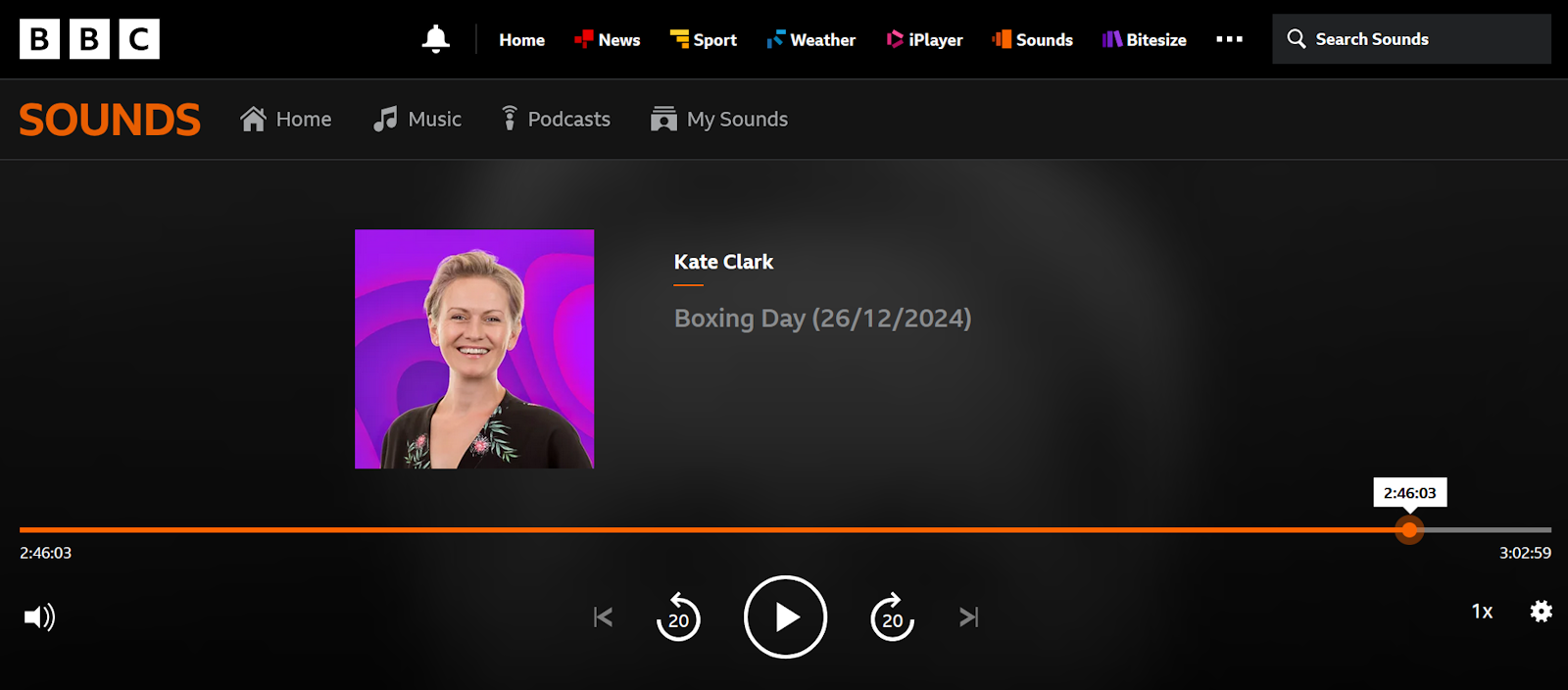
Although Monopoly is very well-known, it is a game that has a reputation for being overly long, often leading to family rows.  This is largely because most families don’t play by the “Rules as Written”, instead playing by the family’s “House Rules“, which are usually passed from generation to generation by word of mouth. There is generally nothing wrong with “House Rules”, however, in the case of Monopoly, they are often responsible for all the perceived problems as discussed by games designer and curator of the Museum of Board Games in Newent, Tony Boydell.  The interview with Kate Clarke for BBC Radio Gloucestershire, was broadcast on Boxing Day and can be found 2hrs 46mins in.

Kate Clarke on BBC Radio Gloucestershire
– Image from bbc.co.uk

Boardgames in the News: Games on Radio 4

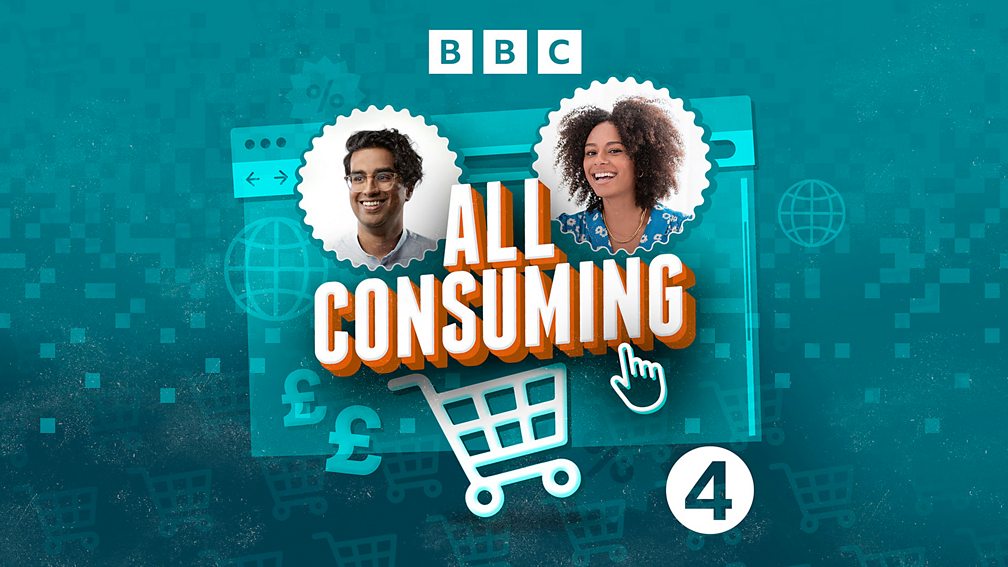
BBC Radio 4 often has short articles on games and from occasionally has longer programs that are dedicated to games or playing.  Recent examples include the “Why we Play” series and an episode of “Start the Week” discussing Videogames.  There has also been an episode of the magazine program “All Consuming“, dedicated to board games.  This is presented by Charlotte Stavrou and Amit Katwala and discusses everything from the Ancient Egyptian game of Senet to more recent classics like Azul, Monopoly and The Settlers of Catan.

Azul
– Image by boardGOATS

During the program, there are interviews with Dan Jolin, co-founder of the magazine, Senet and the World Monopoly Champion, Nicolo Falcone; there is also a visit to the Orc’s Nest in Covent Garden.  Traditional and historical games like Mancala, Chess, The Game of the Goose, Snakes and Ladders and Backgammon are discussed at length together with their history.  Moving on to more modern games, Articulate!, Splendor, Ticket to Ride, and Pandemic all get a mention.  The presenter, Amit Katwala also visits the hugely prolific designer Reiner Knizia in his office in Munich where he keeps a library of all his games including The Quest for El Dorado, Samurai, Lost Cities, Gold Rush, and Lord of the Rings.  There, they discuss how “critical mass” is important for success—reaching enough people is the key Dr. Knizia explains, and is why games like Go and Chess are so popular.

All Consuming
– Image from bbc.co.uk

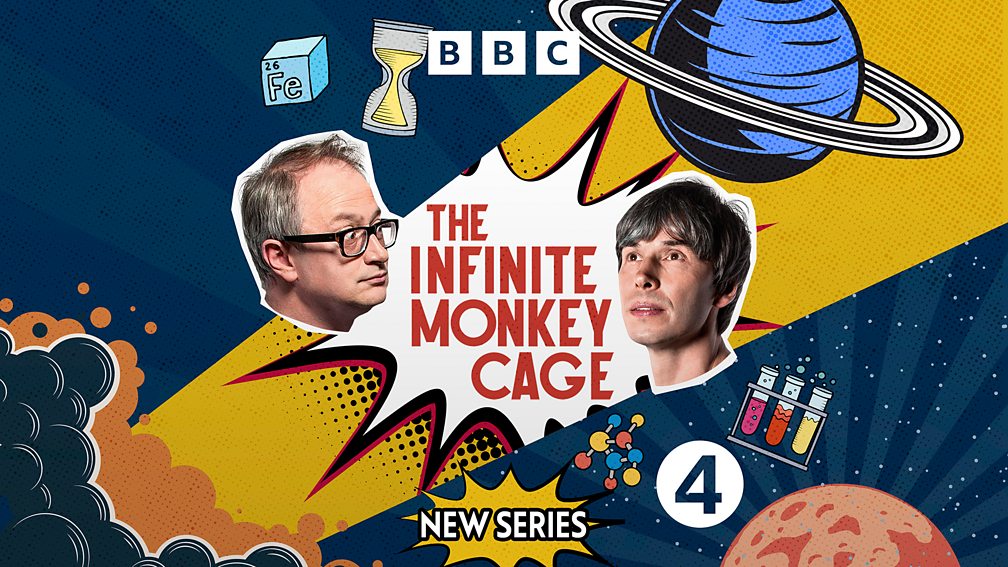
Last week there was also an episode of the comedic science program, “The Infinite Monkey Cage” with presenters Brian Cox and Robin Ince featuring Marcus de Sautoy from the Maths Department in Oxford, games designer Dave Neale and comedienne Jessica Fostekew. This begins with an introduction about playing Cluedo, moving on to a discussion about the definition of a game—something the philosopher Ludwig Wittgenstein apparently struggled with.  One possible definition discussed is that playing a game is a voluntary attempt to overcome unnecessary obstacles.  From there, conversation progresses to how people often refuse to play with those who are perceived as being good at playing games; Marcus de Sautoy explaining the maths behind his strategy for winning at Monopoly, and why Snakes and Ladders is so popular.

Senet
– Image by boardGOATS

There is also a game of Rock-Paper-Scissors (which makes interesting radio) with discussion about the World Championships, how to win and the fact that it isn’t as random as one might think.  There is a lot of discussion about modern Euro games as well as more traditional games and historical games, with Senet, The Mind, Cheat, Escape from Colditz, Rummikub, Royal Game of Ur, Scrabble and some of those mentioned above amongst those featuring.  The discussion touches on John Nash and Game Theory, the Prisoner’s Dilemma, The Ultimatum Game and the Golden Ratio.  For those who are interested in board games and gaming, this episode of The Infinite Monkey Cage is well worth a listen and both it and the episode of All Consuming are currently available on BBC Sounds.

The Infinite Monkey Cage
– Image from bbc.co.uk

14th May 2024

Pine was already sitting outside marking his birthday, when Blue and and Pink rocked up and ordered their tea.  Jade and Sapphire soon joined the group, ferried by newcomer, Tangerine who not only brought gamers, but also his shiny new copy of the “Feature Game“, Faraway, which he had won at Gweeplefest a few days earlier.  This game is has been a bit of a hidden gem whose popularity is rapidly gaining traction as more people play it.  It is quite a simple game, but one which really messes with the head.  Some of the group played it a few weeks back and it was so popular that it seemed a good idea to Feature it so more of the group could try it.
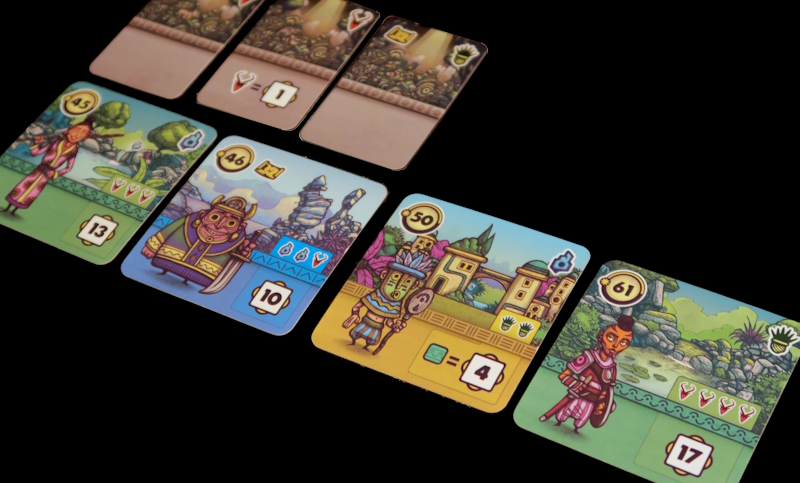
Faraway
– Image by boardGOATS

The story is that players are exploring the mysterious land of Alula in search of its secrets, meeting its inhabitants and listing its wonders in order to gain more fame than everyone else.  In practice, however, it is a fairly simple little card game with a market with a trick-taking type element.  Players simultaneously chose one of the numbered cards from their hand and starting with the the player that played the lowest card (similar to 6 Nimmt! or Kingdomino), everyone takes it in turns to choose one from the market to add to their hand.  Players then simultaneously choose another card, and again, choose one to add to their hand.  The game ends after everyone has played a total of eight cards, and then everyone scores.
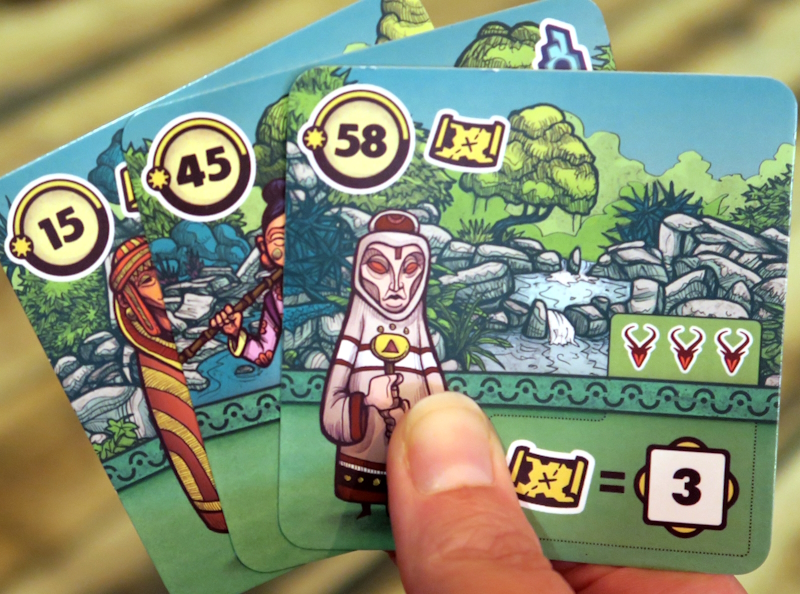
Faraway
– Image by boardGOATS

There are a couple of very clever things about the game.  Firstly, if the card someone plays is numbered higher than their previous card, they take a card from the Sanctuary deck.  These cards a really important because of the second clever element, the scoring.  Each card has a number and a colour, while some also have resources and some have also have scoring conditions.  The scoring is clever because the cards are played left to right, but the scoring is from right to left—at first glance, this looks like it makes things easy, because early in the game players find out what they need to get points and can then focus on getting the resources they need as the game progresses.

Faraway
– Image by boardGOATS

However, the scoring is tensioned against the ability to get Sanctuary bonus cards. This is because the scoring cards are generally those that have a higher number and are therefore the ones players want to play first (following them with resource cards which generally have a lower face value).  To get a Sanctuary card though, players have to play a higher value card than the immediately preceding one, and Sanctuary cards are very useful because they are eligible for scoring regardless of when they are played.  Thus, trying to play cards increasing and decreasing in value to score the most points backwards really messes with players’ heads!

Faraway
– Image by boardGOATS

Tangerine, started one game and explained the rules to half the group, comprising Plum, Byzantium, Blue, Pink and Pine, while he ate his supper.  Meanwhile, Jade and Sapphire took their copy to a neighbouring table where they were joined by Teal, Black and Purple, and started a second game.  Although it is a very simple game, the backwards forwards up and down thing got to several of the group at various points, including Blue (who lost the ability to count), Teal (who did all his scoring forwards instead of backwards), Pine (who struggled with the how maps worked) and Purple (who couldn’t get her head round the reverse scoring).  Jade’s game was the first to finish, with Sapphire beating jade into second place by a single point and Black taking third.
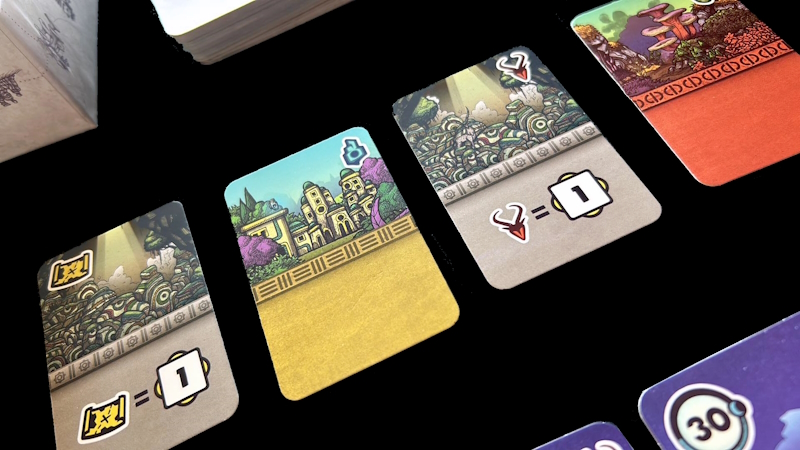
Faraway
– Image by boardGOATS

There was a general appreciation of the art and the mechanism though the theme was a bit invisible.  There had been such confusion, however, that the group decided to “do a Lime” and play again.  This time, the finishing order was exactly the same, but the game wasn’t as close with Sapphire’s eighty-two being the highest score of the evening.  On the other table, Plum was the victor with seventy, followed by Tangerine and Byzantium in third.  This game had taken a little longer, and with six, there is a lot of downtime, so although everyone had enjoyed it, the group decided to split into two groups of three.  Blue tempted Plum and Sapphire to a game of Calico with cries of “Kittens!”, while Pink and Pine lured Tangerine into a game of Ticket to Ride: San Francisco.

Ticket to Ride: San Francisco
– Image by boardGOATS

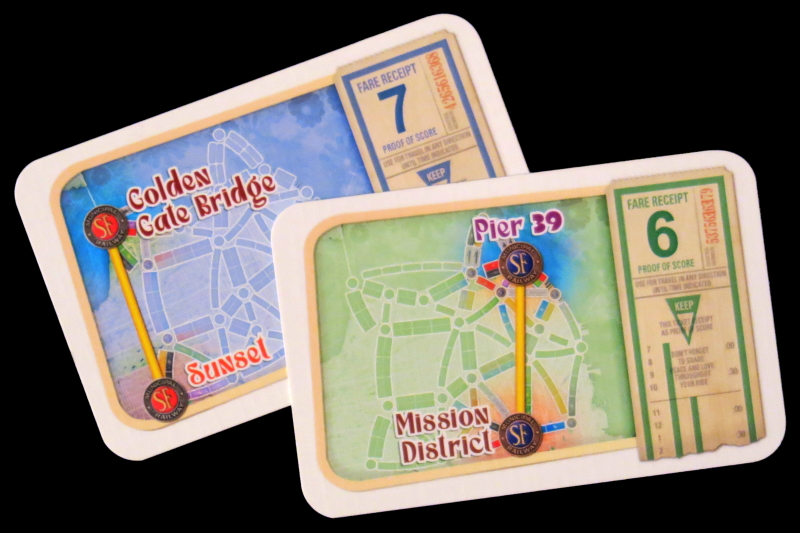
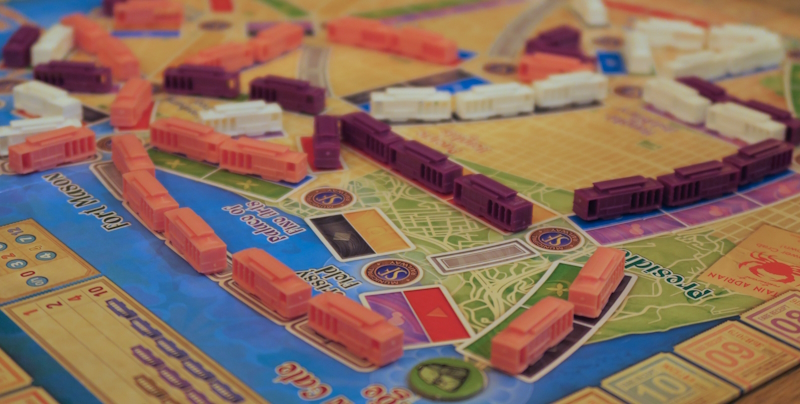
San Francisco is one of the smaller city versions of Ticket to Ride.  The game play is much the same as the original, but the maps are smaller, players have fewer pieces and they only play a maximum of four.  In all the games, players take it in turns to take coloured cards into their hand from the market, or play cards to place pieces on the board connecting locations to satisfy tickets and score points.  Each version of the game has its own specific unique rules, and this one is no exception with players collecting Souvenirs which give points at the end of the game.  Players collect these by building a route (in this case made of trolley cars rather than trains) to the cities where they are available.
Ticket to Ride: San Francisco
– Image by boardGOATS

Each player can only collect one of each Souvenir, but a full set of seven gives twelve points, which is a lot.  Tickets are also always key though.  This time, Pink escaped early from Alcatraz to Twin Peaks which gave him a high scoring eight points.  Unlike Pine (who always seems to draw routes he’s already completed), Tangerine was unlucky and and instead picked up some negative points late in the game.  It was very close between Pink and Pine though, but the Souvenirs made the difference and Pink (with five) just edged it, beating Pine (who only had two Souvenirs) by three points.
Ticket to Ride: San Francisco
– Image by boardGOATS

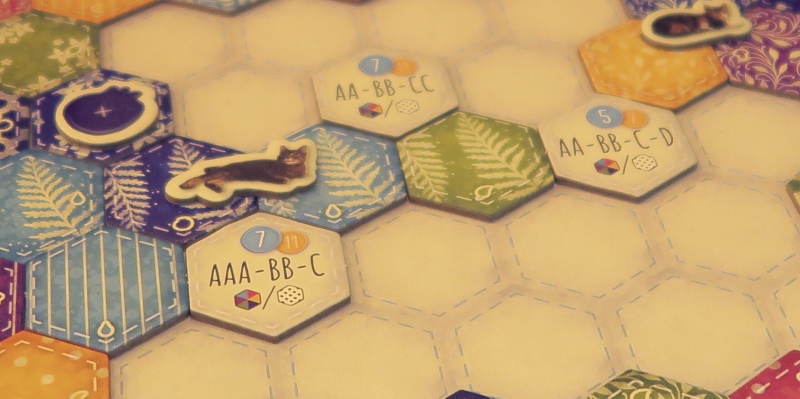
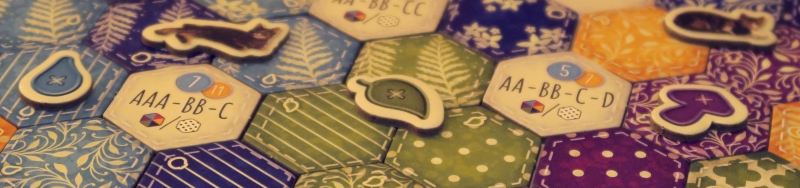
Meanwhile, the kitty-philes were playing the extremely frustrating game Calico, which is all about trying to entice cats to come and sleep on a patchwork quilt by making it with the patterns they like.  In this game, players take it in turns to place a coloured, patterned tile from their hand into their quilt board before taking a replacement from the market.  Everyone had played it before, but it had been a while, so the rules needed a bit of revision.  Each player starts with three tiles in a fixed location with scoring criteria for the neighbouring tiles—satisfying these for either colour or pattern gives points, with more points for for those that satisfy both (which is not easy).
Calico
– Image by boardGOATS

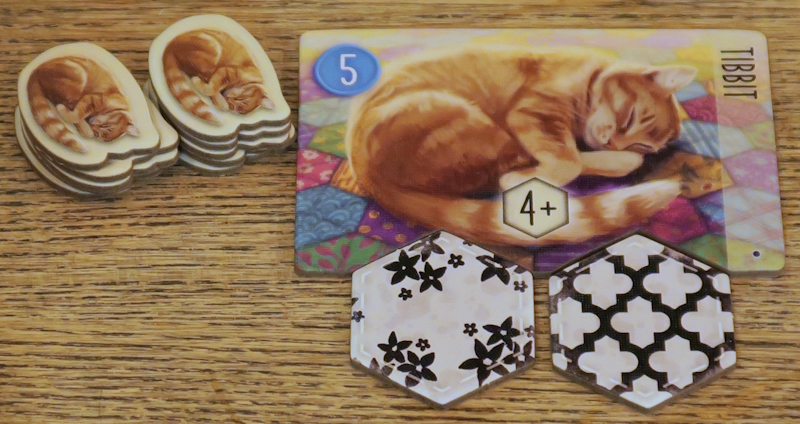
Players then also receive a coloured button for every group of three adjacent tiles of the same colour (with a bonus if they get all six possible colours).  Finally, there are the cats that give Calico its name.  This time the cats in question were Almond, Tibbit and Shop Cat (from the Kickstarter Promo).  Almond was attracted by a group of five tiles of one of the patters in a close packed predefined shape while Tibbit found a set of four tiles of one of the given patterns in any shape most appealing.  Shop Cat was lured to the player with the longest connected chain of tiles in one of the given patterns with the player with the second longest attracting a smaller cat (worth fewer points).

Calico
– Image by boardGOATS

This last one was the subject of some debate as Byzantium ended up with both the longest and second longest chain and it was unclear from the rules whether he would get both.  In the end he allowed the smaller Shop Cat to wander off, but fortunately it didn’t make any difference to the placings.  Almond looked by far the most challenging kitty to attract and initially it looked impossible without failing on the fixed starting challenges.  Plum thought she had made a mess of things, but Byzantium pointed out how Almond could be enticed  using some of the partial tiles around the border of her player board and she was the only one to ultimately have that particular kitty to cuddle.
Calico
– Image by boardGOATS

Blue started badly, and in this game, when that happens things usually only get worse, which they did.  Byzantium and Plum both picked up twenty-seven points for their buttons, but in both starting tiles and kitties, Byzantium had the edge (even without the second Shop Cat).  In the end his final score of sixty-one points gave him a significant margin of victory, by seven points.  Everyone agreed that Calico is a good game, but a very frustrating one when players can’t get the tiles they need.  So Byzantium echoed everyone’s feelings when he commented, “That was fun, but very frustrating—I’ll be ready to play it again in another eighteen months…”
Calico
– Image by boardGOATS

As Faraway and Ticket to Ride had both finished, Tangerine took Jade and Sapphire home and Teal also headed off.  That left Black, Purple, Pine and Pink to play a quick game of the old favourite, Coloretto.  This is a very simple set collecting game, that makes a great filler.  The idea is that players either take the top coloured chameleon card from the deck and place it on a cart, or take a card and add the cards to their collection.  Players score points for their largest three sets (up to six cards, worth twenty-one points), while everything else scores negatively.  The player with the most points is the winner.  Playing with the Jubiläumsausgabe edition, as usual, there was a discussion about what the Golden Joker does and how it differs from the normal Joker.

Coloretto
– Image by boardGOATS

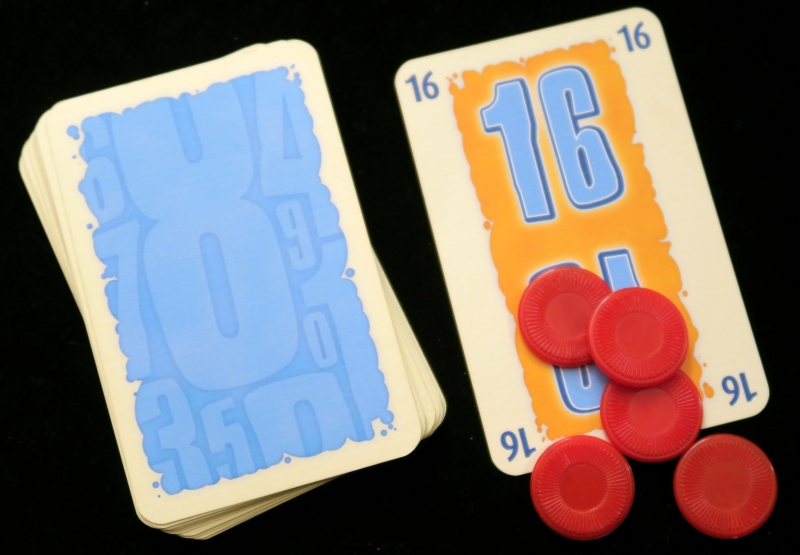
In the end, Pink was the victor and, for the second game in a row, pushed Pine into second place, this time with Black just behind.  The evening looked to be ending there, when a couple of people from the bar came over and asked what we were doing.  That led to a fairly wide-ranging discussion about Monopoly, Cluedo and Mystery of the Abbey amongst other games.  The evening really did come to an end eventually, after Pink and Blue had dragged one of the interested parties into a quick game of No Thanks!.  Unfortunately, there was a misunderstanding and he top-scored with ninety-three, but hopefully he understood that some of the games we play are not that complicated.
No Thanks!
– Image by boardGOATS

Learning Outcome:  Playing forwards and backwards at the same time makes heads hurt.
Game Plan: Rediscovering Boardgames at the V & A Museum of Childhood

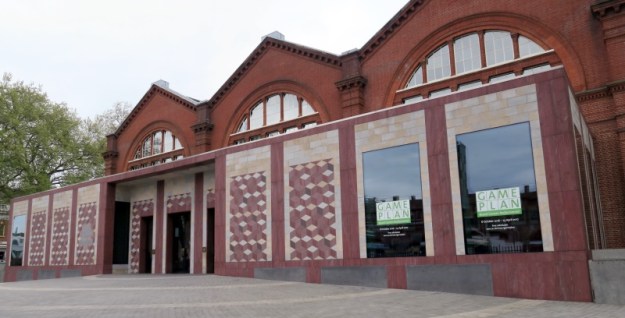
Inspired by the recent articles on Saturday Live and the Today Programme, on Easter Sunday, Pink and Blue decided to visit the V & A Museum of Childhood to see their “Game Plan: Board Games Rediscovered” exhibition.  Catching a train from Oxford Parkway and negotiating the London Underground, they arrived in Bethnal Green.  With its vaulted ceiling and exposed metal work, the Museum building looks for all the world like a re-purposed Victorian Civil building, a train station, swimming pool or maybe some sort of pumping station.  Much to their disappointment, however, after extensive discussion and investigation, it turned out that the building was designed for the purpose, albeit after relocation of parts from “Albertopolis” on Exhibition Road.

Game Plan: Board Games Rediscovered
– Image by boardGOATS

The exhibition itself was well presented and occupied a sizeable portion of the overall floor space.  Although it was located in one of the upstairs galleries, the exhibition was well advertised and, from entering the main hall, games were brought to the visitors’ attention with table space and signs offering the loan of games should people want to play.  It wasn’t an idle promise either, as there were several family groups making full use of the opportunity, albeit playing what might be called classic games rather than more modern, Euro games.

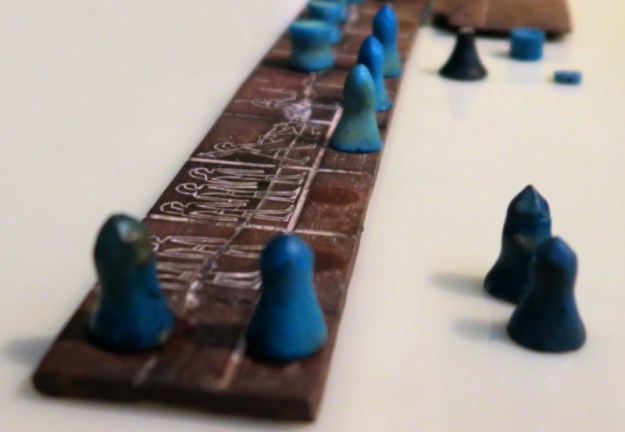
Senet
– Image by boardGOATS

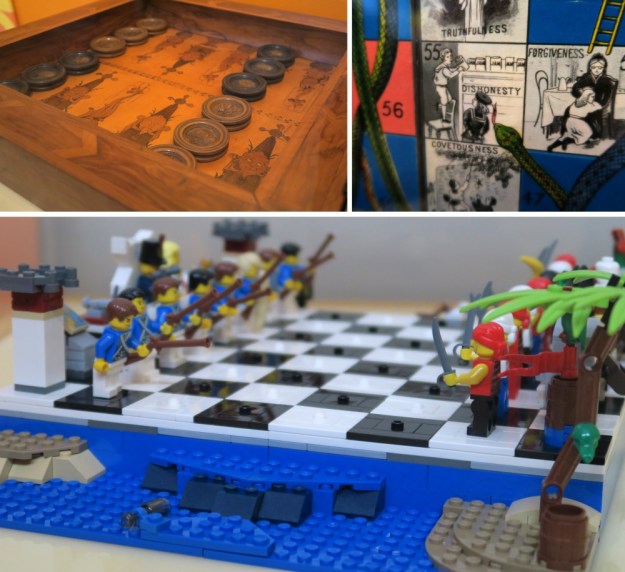
A quick look at the model train cabinet and brief spell side-tracked by one or two other exciting toys preceded entry to the exhibition which was shrouded by an eye-catching red screen.  The first exhibit was a copy of Senet, arguably one of the oldest games in the world – so old in fact that we’ve lost the rules and nobody knows how to play it.  This was followed by some traditional games including a beautiful wooden Backgammon set made in Germany in 1685 and decorated with sea monsters and a lot of fascinating Chess sets, old and new.  Next, there were some ancient copies of Pachisi (which evolved into Ludo) and Snakes and Ladders, both games that originated in India and were originally played seriously by adults.

Game Plan: Board Games Rediscovered
– Image by boardGOATS

Further round there were many other curious games, for example, The Noble Game of Swan from 1821, which was an educational game for children, itself developed from the much older, Game of the Goose.  Education was a bit of theme and there were a lot of games from the nineteenth and early twentieth century designed to teach geography in some form or another.  These included Round the Town, a game where players had to try to cross London via Charing Cross, and Coronation Scot, a game based on travelling from Glasgow to London inspired by the eponymous 1937 express train made to mark the coronation of George VI.

Game Plan: Board Games Rediscovered
– Image by boardGOATS

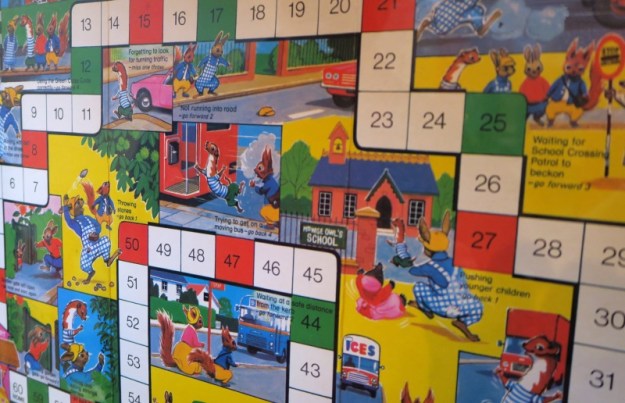
Education didn’t stop there either:  for those that had been members of RoSPA‘s “Tufty Club“, there was a game promoting road safety featuring Tufty the Squirrel and his mates Minnie Mole and the naughty Willy Weasel.  However, when designing this roll-and-move game, they clearly ran out of imaginative “adventures” with a road safety message, as they had to resort to “Picking and eating strange berries – Go back three spaces…”

Tufty Road Safety Game
– Image by boardGOATS

Progressing through the late twentieth century, there were the inevitable copies of the childhood classic games, including Game of Life, Risk, Cluedo, Mouse Trap, Trivial Pursuit, Connect 4, Scrabble and the inevitable Monopoly, all of which risked bringing a tear to the eye as visitors remembered playing them as children.  The exhibition eventually brought us up to date with modern Euro-style games, presenting copies of Ticket to Ride, Carcassonne and Settlers of Catan.

Pandemic
– Image by boardGOATS

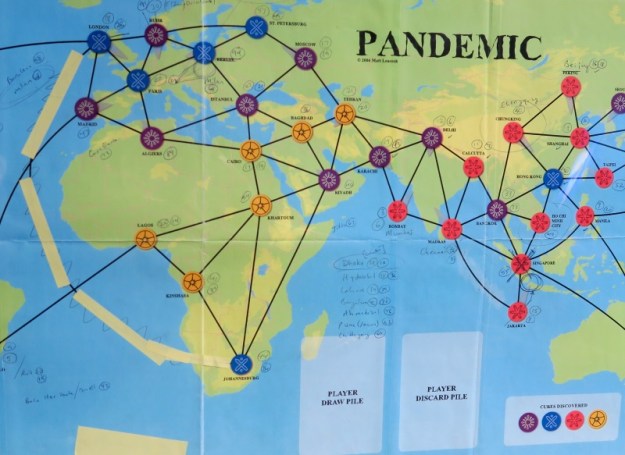
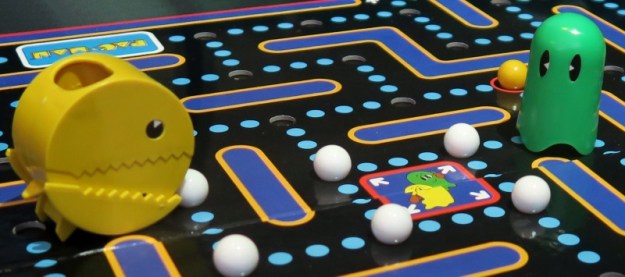
More interestingly, there was also an original prototype of Pandemic supplied by the designer, Matt Leacock, complete with his scribbles and bits of paper stuck over infection routes he decided to remove as the game developed.  One of the final display showed how the influence boardgames have had on the computer gaming industry is sometimes strangely reciprocated, with a copy of the Pac-Man game, including the title figure wrought in sunshine yellow plastic.

Pac Man
– Image by boardGOATS

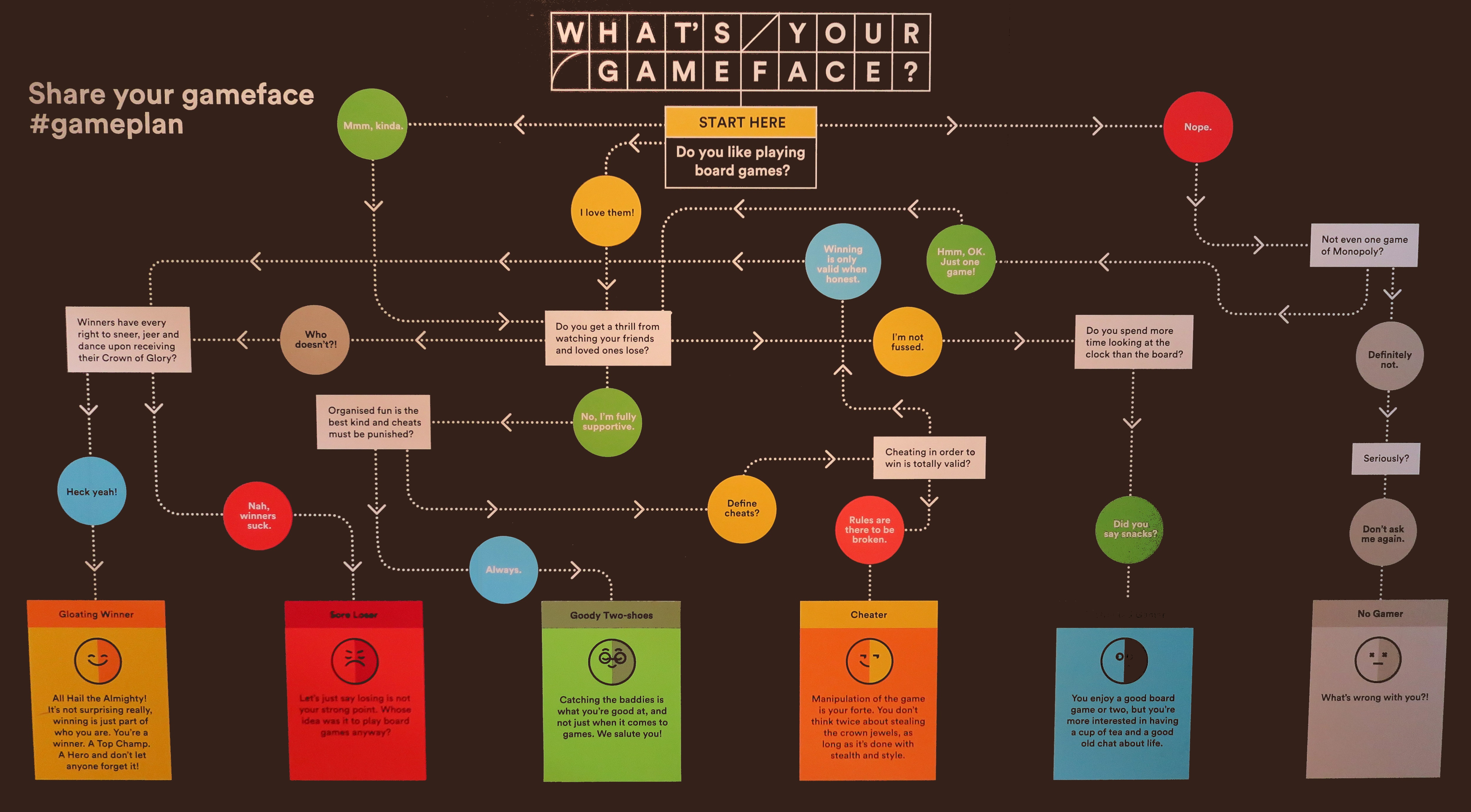
Leaving the exhibition, there was just one last game – “What’s Your Gameface?“.  This cute flow chart entertained Blue and Pink for far longer than is should have as they tested it out with all their friends, relatives and fellow gamers (nobody came out as “Cheater”).

Game Plan: Board Games Rediscovered
– Image by boardGOATS

With the exhibition done, there was still time for a wander round the rest of the museum and a quick cuppa in the cafe.  Reflecting on the exhibition, perhaps one of the best aspects had actually been the quotations that adorned the walls.  It seems luminaries from Plato to Roald Dahl have all had something to say on the subject of games.  Perhaps George Bernard Shaw supplied the most thought provoking comment though, when he said, “We don’t stop playing because we grow old; we grow old because we stop playing.”  With this in mind, we did what gamers do when they travel, so tea and cake was accompanied by two rounds of Mijnlieff, the super-cool noughts and crosses game.  With the museum closing, it was time to head home, but there was still time for a game or two of 3 Sind Eine Zu Viel! on the train back to Oxford…

Game Plan: Board Games Rediscovered
– Image by boardGOATS

The Exhibition is only open till 23rd April 2017, so there isn’t much time left and it is well worth a visit.

Boardgames in the News: What’s all this about a Hasbro-Mattel Merger?

In what is the latest of a long line of merger and acquisitions stories, it seems that the really big boys are now getting in on the act:  according to a report by Bloomberg, late last year, Hasbro initiated talks with Mattel for what would become the worlds largest toy company. This is not the first time a merger has been proposed; twenty years ago, Mattel attempted to buy Hasbro for $5.2 billion, but Hasbro resisted the deal with what Mattel described as a “scorched earth” campaign.  In the end, Mattel withdrew the offer citing an “intolerable climate” created by its competitor’s use of the media and politicians to fight the proposed takeover. Since then, there has been a lot of water under the bridge and representatives for Hasbro and Mattel have declined to comment, so we are left to speculate as to why the subject of a possible merger has arisen once more.

Hasbro & Mattel
– Image by boardGOATS with components from wikipedia.org

Both Hasbro and Mattel are currently valued at approximately $10 billion with an annual revenue in the region of $5 billion.  Hasbro owns brands as divers as Furby, My Little Pony, Playdoh and Nerf, but is perhaps best known amongst gamers for titles like Monopoly, Cluedo, Connect 4, Cranium, Battleship and Jenga.  Mattel brands perhaps tend to be aimed slightly more at the toy market with Barbie, Hot Wheels, Matchbox and Fisher-Price some of their biggest sellers.  There are also a number of games under the Mattel umbrella though, including UNO, Othello, Scene It?, Apples to Apples and Scrabble.  Clearly, both companies have a very similar portfolio, and are essentially direct competitors.  This has been very clearly demonstrated with Hasbro recently taking the licensing rights to Disney’s lucrative Frozen and Princess brands from Mattel, a change that will undoubtedly make a dent in their bottom line.  While changes are often a sign of a robust market, such seismic shifts are seldom good for the companies involved at least in the short term, often leading to restructuring and job losses – we have seen something similar with Mayfair Games and the recent loss of the distribution rights to the Catan Brand.

Scrabble
– Image used with permission of BGG contributor Susie_Cat

It seems there are two other key driving forces however.  Firstly, it would make them much stronger competition for the Danish company, Lego, which has been growing much faster than its U.S. rivals.  Secondly, both Hasbro and Mattel are looking to expand their presence in the digital market, with movie and computer game tie-ins similar to those seen with Hasbro’s Transformers franchise, and, according to Bloomberg, a merger would facilitate this.  The real question though is, regardless of whether or not Hasbro and Mattel can agree a deal, would the regulators let it happen?  In the last year alone, the U.S. Department of Justice has prevented Electrolux’s purchase of GE’s appliance business as well as stopping mergers between Office Depot and Staples, and Sysco and U.S. Foods, all due to concerns about industry concentration and the potential for higher prices resulting from the deals.  So it seems quite likely that a deal between Hasbro and Mattel would go the same way.  If they do merge, however, the giant Hasbro-Mattel would make Asmodee look like very small minnows indeed, right up until they get gobbled up too.

Lego
– Image from 3dprint.com

Boardgames in the News: So, What Are Euro-Games?

A couple of months ago at our game night, one of the gamers commented that there were a lot of good games from Europe.  This prompted a discussion about “traditional games”, “Euro-games”, “American games” and their relative merits.  Most people know all about traditional games even if they don’t know what gamers mean when they use the term:  traditional games are the games we all used to play as a child including Scrabble, Cluedo and love it or loath it, the dreaded Monopoly.  Some people also include in this list games like Chess, Go and Backgammon as well as traditional card games like Whist, Hearts and Rummy.

Go
– Image used with permission of BGG contributor ManCorte

But the front page of the boardGOATS website says, “We generally prefer to play “Euro” style games,” so, what do gamers mean by “Euro-games” or “Euro style games”?  Well, most of the traditional games we used to play as children were produced by publishers in the United States of America, companies like Milton Bradley (who made Scrabble) and Parker Brothers (who made Cluedo and Monopoly).  Incidentally, both these companies are now part of Hasbro, but the aggregation of smaller companies to form a larger one is a topic that’s been covered elsewhere.  While the “English” market was dominated by big players that concentrated on producing a few top sellers, in Germany there was no such dominance.  The effect this had was that the market consisted of a large number of small manufacturers producing more varied products.

Scrabble
– Image used with permission of BGG contributor Susie_Cat

This coupled with the traditionally strong German toy industry encouraged the growth of a culture of families playing games together on a Sunday afternoon. It was in this environment that the annual German Game of the Year, or Spiel des Jahres Award, highlighted a range of games from Rummikub in 1980, Torres in 2000 and Camel Up last year.  Over the years, the red pawn of the Spiel des Jahres logo, has become a mark of boardgaming quality, and for many German families, buying the game of the year is something they do every Christmas.  Therefore, the qualities espoused by these awards heavily influence the concept of the “Euro-game”.

Rummykub
– Image by BGG contributor OldestManOnMySpace

But what are these qualities that make a game “European”?  Well, that fount of all knowledge, Wikipedia, describes them as characterised by “simple rules, short to medium playing times, indirect player interaction and abstract physical components”.   It goes on to say, “Such games emphasize strategy, downplay luck and conflict, lean towards economic rather than military themes, and usually keep all the players in the game until it ends.”  On the whole this is not a bad summary, except that it is not very specific:  how simple are “simple rules” and how long are “short to medium playing times”?  Clearly these features are more about contrast, and although there are lots of different types of games including party games and war games, this comparison is usually between European style ames and American-style Games, aka “Ameri-Trash”.

Last Night on Earth
– Image used with permission of BGG contributor Bilben04

Although common, use of the term Ameri-Trash (or Ameritrash) is controversial as some see it as unnecessarily negative, however, although other terms have been suggested none have proved as popular or as persistent.  The term itself is over fifteen years old and was probably originally used disparagingly and applied to genuinely bad American games as a comparison with the much higher professional standards of games in Germany at the time.  Since then, the scope has been expanded and many fans of those American games have adopted the term as a badge of honour.

Merchant of Venus
– Image used with permission of BGG contributor kilroy_locke

American-style games tend to be long, usually over two hours, and classically involve a lot of luck and often feature dice rolling.  They are often considered to be a lot less “cerebral” or “puzzle-like” and, as a result, are sometimes described as “more fun”.  The reference to “trash” may in part reflect the style of the pieces which tend to include a lot of plastic pieces to go with the dice.  There is also often a lot of direct conflict in American-style games, where European games tend to be much more family friendly with indirect player interaction.  Classic Ameri-Trash games include:  Arkham Horror, Merchant of Venus, Cosmic Encounter and Last Night on Earth: The Zombie Game.  Sometimes there is also a book or film tie-in leading to games like Battlestar Galactica and Dune.  Even just comparing the titles with those of classic Euro-games like Puerto Rico, El Grande, Tikal and Agricola, the difference can clearly be felt.

Arkham Horror
– Image by BGG contributor igorigorevich

The most essential part of American-style games is the theme, however, which is often integral to the game mechanisms.  This encourages people fantasize they are part of the action when playing the game.  The miniatures, the long playing times, the complex interwoven rule-set and the interaction (often culminating in players being eliminated) all combine to draw players into the drama of the game.  In contrast, for Euro-games, the mechanisms are the focus, and the games can often be re-themed without much effort.  The theme is therefore used more as an introduction to the more abstract European strategy games, making them more accessible, rather than being an essential part of the emotional investment.

Relic Runners
– Image by BGG contributor cnidius

But things are not as simple as that.  The nature of modern boardgaming encourages cross-fertilisation.  There are more highly-themed, strategy-games available now and more long, strategic games with miniatures – these are sometimes referred to as “hybrid games”.  For example, games produced by the Days of Wonder (based in the USA), like Ticket to Ride and Relic Runners have a lot of plastic pieces, though the games themselves are quite strategic and generally run for no more than an hour.  Similarly, games like Escape: The Curse of the Temple and Space Alert use real-time and a sound-track to draw the players in, yet they are both short (Escape takes just ten minutes to play) and have no player elimination.  Vlaada Chvátil’s Dungeon Lords series of games, also have a lot of theme, but are also playable in a manageable time-frame, have a lot of strategy and a reasonably streamlined set of rules.

Dungeon Lords
– Image used with permission of BGG
contributor PaulGrogan

Confusingly however, “hybrid” has more recently also come to mean games that include some sort of mobile device application (and thus require a smart phone, tablet or similar).  Now, lots of games have Apps that help them a long a little (e.g. One Night Ultimate Werewolf), but games like Alchemists and XCOM: The Board Game don’t really function properly without them.  The question is, are these still boardgames?  In truth, they are a sort of hybrid computer-boardgame, but the point is, however appropriate the name, it is all about the game and the other people playing:  the bottom line is, if you enjoy playing it, it doesn’t matter what it is called.

Alchemists
– Image used with permission of
BGG contributor Mouseketeer

Boardgames in the News: Spiel des Jahres Awards

This week, Colt Express won the Spiel des Jahres Award.  Although it may seem strange, this German award is highly sought after and is the most coveted award in the world-wide world of boardgames.  The reason for this goes back nearly forty years when the “English” market was dominated by companies like Milton Bradley (who made Scrabble) and Parker Brothers (who made Cluedo and Monopoly).  These concentrated on producing a few top sellers, however, in Germany there was no such dominance.  So, the German market consisted of a large number of small manufacturers producing more varied products.  This, coupled with the traditionally strong German toy industry, encouraged the growth of a culture of families playing games together on a Sunday afternoon.

Spiel des Jahres
– Image from spieldesjahres.de

It was in this environment that the annual German Game of the Year, or Spiel des Jahres Award, began in 1978, with the stated purpose of rewarding excellence in game design, and promoting top-quality games in the German market.  The red pawn of the Spiel des Jahres logo, has since become a mark of quality, and for many German families, buying the game of the year is something they do every Christmas.  Thus, the award has been such a success that it is said a nomination can increase sales from a few hundred to tens of thousands and the winning game can be expected to sell up to half a million copies or more.

El Grande
– Image by BGG contributor Domostie

Over the last fifteen years, years, the Spiel des Jahres has generally gone from highlighting games like El Grande, Tikal and Torres (1996, 1999 & 2000), to rewarding lighter games like Dixit, Qwirkle and Camel Up (2010, 2011 & 2014).  The problem was particularly brought to light in 2002 when Puerto Rico, arguably one of the best games ever made was not rewarded because it was perceived as too complex.  The problem reared its ugly head again in 2008, but this time the jury awarded Agricola a special “Complex Game” award.  These two games are widely considered to be the pinnacle of “Euro-Games”: between them they’ve held the top position on the BoardGameGeek website for the best part of ten years, yet neither were awarded the top prize. The problem was that these games were not mainstream enough for the German family game market:  they were too complex for those families making their annual purchase. On the other hand, for frequent and dedicated boardgamers, these Spiel des Jahres games are too light.  So, for this reason, the Kennerspiel des Jahres or “Connoisseurs’ Game of the Year” was introduced in 2011 and for more serious gamers, this has largely superseded the Spiel des Jahres.  This year it was awarded to Broom Service, a reimplementation of Witch’s Brew which was itself nominated for the Spiel des Jahres in 2008.

Adel Verpflichtet
– Image by BGG contributor Henco

The Kennerspiel des Jahres is not the only prestigious award available to strategy games however.  In 1990, the German magazine “Die Pöppel-Revue”, introduced the Deutscher Spiele Preis or “German Game Prize”.  This is announced in October every year at the Internationale Spieltage in Essen.  In contrast to the Spiel des Jahres, the Deutscher Spiele Preis has gone from rewarding lighter games like Adel Verpflichtet (aka Hoity Toity, in 1990) and our group’s current favourite filler, 6 Nimmt! (winner in 1994) , to highlighting games like Russian Railroads and Terra Mystica (in the last two years).

Deutsche Spiele Preis
– Image from wikimedia.org

Boardgames in the News: Confusion at The Telegraph!

Anyone who plays modern boardgames knows how our hobby has been growing and growing.  Games like Carcassonne and The Settlers of Catan are now available in Waterstones and WHSmith, there has been a series of regular comments in The Guardian, there are repeatedly TV appearances, and boardgame cafés are sprouting up all over the place.  It seems strange then that last week, Harry Wallop from The Telegraph announced that “Card games and board games are dying out and it’s no great loss”.

Snap
– Image by BGG contributor loopoocat

The basis of this report is a survey carried out by Barclaycard which apparently indicated that games like Old Maid, Happy Families and Snap are in danger of dying out.  Strangely, on the same day, Martin Chilton, the Telegraph online Culture Editor reported that 67 per cent of the children surveyed said that they would like to learn how to play traditional games.  The really annoying thing about all this is that they focus solely on “traditional games”:  Martin Chilton’s article is entitled “The five best board games” and lists them as Chess, Scrabble, Monopoly, Cluedo and Backgammon.

Scrabble
– Image used with permission of BGG contributor Susie_Cat

On closer inspection, however, Harry Wallop’s article does include a link to a more interesting list of fifteen party games, including Pandemic, Camel (C)Up and Biblios.  While their definition of “Party Games” clearly leaves a lot to be desired, it is clear that someone at The Telegraph at least has heard of modern games.  Perhaps the most reassuring aspect of this though, is the response to Martin Chilton’s article in the comments section which includes a nearly eighty passionate responses pointing out better, modern, “classic games” and where to find information about them.

Biblios
– Image by BGG contributor creatsia

Let’s hope Mr Chilton and Mr Wallop read the comments and write a better article soon!

Boardgames in the News: Thirsty Meeples on Radio 2

The growing interest in boardgames continues with an item on the Chris Evans Breakfast show on Radio 2 featuring Simon Read from Thirsty Meeples (starts at 1:47:30).  Sara Cox was sitting in for Chris Evans and conducted the short telephone interview discussing the Oxford games Cafe.  Unfortunately she was a bit obsessed with “classics” like Monopoly, Scrabble, Cluedo, Connect 4 and Mouse Trap.  Simon did his best to talk about Survive:  Escape from Atlantis! and The Settlers of Catan, but in truth, while it was a nice little bit of advertising for the Thirsty Meeple, Sara was too determined to move onto Cold Play…

Sara Cox
– Image from bbc.co.uk

Boardgames in the News: The Hobby Grows and Grows

In the UK in the 1960s and 1970s, boardgames were only available from toy shops, and the range was limited to a relatively small number of “traditional” games, like Chess, Monopoly, Game of Life or Cluedo.  With the appearance of bigger, supermarket-like stores like Toys “R” Us in the 1980s and 1990s, a wider range became available and, occasionally, games like the early Spiel des Jahres winner, Rummikub, made their way onto our shelves.  As children grew up, they might graduate into playing Risk and eventually move onto longer, more complex games like those produced by Avalon Hill.  However, if you liked playing games, but war themes were not for you, it was quite difficult to find good alternative games to play.  They were there though:  games like Acquire and the 18xx railway games had been about for a long time, but these were the exception rather than the rule and were still an acquired taste.

Rummikub
– Image by BGG contributor OldestManOnMySpace

In contrast, in Germany, games like Scotland Yard were starting to become readily available and genuinely very popular.  The success of the Spiel des Jahres, which rewarded good games like Ra, El Grande, Tikal, and the 1995 winner, The Settlers of Catan, meant that boardgames were receiving a lot of publicity in Continental Europe.  The characteristics of these “German Games” (or “Euro Games”) typically include balance, with only a small amount of luck, and lack of player elimination.  As the market developed, beautiful boards and lots of wooden pieces also became an essential component.  Unlike war games, “Euro Games” tend to be less confrontational and much more suitable for family gaming.

The Settlers of Catan
– Image used with permission of BGG contributor kilroy_locke

In the 1990s, UK designers like Alan R. Moon and Richard Breese started publishing small numbers of “designer games”.  These were often largely assembled by hand and generally had a limited print run.  For example, only 1,200 copies of Elfenroads (precursor to the later, Spiel des Jahres winner Elfenland) were ever made and Keywood, the first of the highly acclaimed “Key Series“, was hand-made and had a print-run of just 200.  Given the exclusive nature of these games, it was not surprising then, that many teenagers either gave up on boardgames or moved on to collectable card games, like Magic: The Gathering or Role-Playing Games.

Elfenroads
– Image by BGG contributor dougadamsau

So it was with the growth of the internet that “Euro Games”, or designer boardgames became available to people in the UK.  Firstly, this was because it enabled people to find out about the games that were available, with sites like UseNet and eventually BoardGameGeek in 2000, providing a valuable source of information.  Secondly, internet shopping made “German Games” much more accessible.  The growth of the hobby meant an increase in boardgame publishers, and the appearance of designers like Reiner Knizia who were sufficiently prolific and successful to make a living from designing games.  Over the last fifteen years or so, the hobby has grown and grown and games like Carcassonne and The Settlers of Catan are now available in Waterstones and WHSmith, there are regular comments in The Guardian, there are repeatedly TV appearances, and boardgame cafés are sprouting up all over the place.  The question is, will it continue to grow, or have we reached a high water line?

Ernie
– Image from boardgamegeek.com