Tag Archives: Scrabble

Boardgames in the News: A Monopoly on Monopoly?

The Christmas holidays are the time of year when many people who rarely play games get out something to play as a family.  For for some, the tradition is Scrabble, Pictionary or Cluedo, but for many, the game of choice is Monopoly.  This is one of the world’s best known games, and there are many thousands of different editions to choose from, including copies themed round different places, companies, events and even other games.  Last year, Neil Scallan from Hayes (west London) had a visit from the folks at Guinness World Records who counted his four thousand three-hundred and seventy-nine copies and confirmed he holds the record for the Largest Collection of Monopoly Boards.

– from youtube.com

Although Monopoly is very well-known, it is a game that has a reputation for being overly long, often leading to family rows.  This is largely because most families don’t play by the “Rules as Written”, instead playing by the family’s “House Rules“, which are usually passed from generation to generation by word of mouth. There is generally nothing wrong with “House Rules”, however, in the case of Monopoly, they are often responsible for all the perceived problems as discussed by games designer and curator of the Museum of Board Games in Newent, Tony Boydell.  The interview with Kate Clarke for BBC Radio Gloucestershire, was broadcast on Boxing Day and can be found 2hrs 46mins in.

Kate Clarke on BBC Radio Gloucestershire
– Image from bbc.co.uk

Boardgames in the News: Games on Radio 4

BBC Radio 4 often has short articles on games and from occasionally has longer programs that are dedicated to games or playing.  Recent examples include the “Why we Play” series and an episode of “Start the Week” discussing Videogames.  There has also been an episode of the magazine program “All Consuming“, dedicated to board games.  This is presented by Charlotte Stavrou and Amit Katwala and discusses everything from the Ancient Egyptian game of Senet to more recent classics like Azul, Monopoly and The Settlers of Catan.

Azul
– Image by boardGOATS

During the program, there are interviews with Dan Jolin, co-founder of the magazine, Senet and the World Monopoly Champion, Nicolo Falcone; there is also a visit to the Orc’s Nest in Covent Garden.  Traditional and historical games like Mancala, Chess, The Game of the Goose, Snakes and Ladders and Backgammon are discussed at length together with their history.  Moving on to more modern games, Articulate!, Splendor, Ticket to Ride, and Pandemic all get a mention.  The presenter, Amit Katwala also visits the hugely prolific designer Reiner Knizia in his office in Munich where he keeps a library of all his games including The Quest for El Dorado, Samurai, Lost Cities, Gold Rush, and Lord of the Rings.  There, they discuss how “critical mass” is important for success—reaching enough people is the key Dr. Knizia explains, and is why games like Go and Chess are so popular.

All Consuming
– Image from bbc.co.uk

Last week there was also an episode of the comedic science program, “The Infinite Monkey Cage” with presenters Brian Cox and Robin Ince featuring Marcus de Sautoy from the Maths Department in Oxford, games designer Dave Neale and comedienne Jessica Fostekew. This begins with an introduction about playing Cluedo, moving on to a discussion about the definition of a game—something the philosopher Ludwig Wittgenstein apparently struggled with.  One possible definition discussed is that playing a game is a voluntary attempt to overcome unnecessary obstacles.  From there, conversation progresses to how people often refuse to play with those who are perceived as being good at playing games; Marcus de Sautoy explaining the maths behind his strategy for winning at Monopoly, and why Snakes and Ladders is so popular.

Senet
– Image by boardGOATS

There is also a game of Rock-Paper-Scissors (which makes interesting radio) with discussion about the World Championships, how to win and the fact that it isn’t as random as one might think.  There is a lot of discussion about modern Euro games as well as more traditional games and historical games, with Senet, The Mind, Cheat, Escape from Colditz, Rummikub, Royal Game of Ur, Scrabble and some of those mentioned above amongst those featuring.  The discussion touches on John Nash and Game Theory, the Prisoner’s Dilemma, The Ultimatum Game and the Golden Ratio.  For those who are interested in board games and gaming, this episode of The Infinite Monkey Cage is well worth a listen and both it and the episode of All Consuming are currently available on BBC Sounds.

The Infinite Monkey Cage
– Image from bbc.co.uk

Boardgames in the Nude: A Report in The Independent

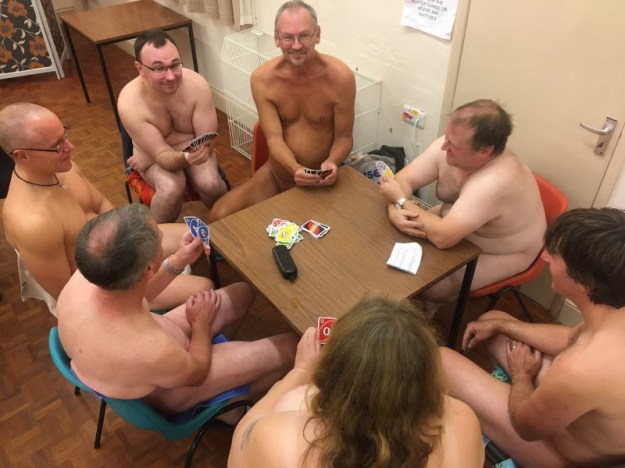
Board games have long been a tradition in Germany, as has naturism, but a recent report in The Independent suggests that in rural Lincolnshire they have taken to combining the two German traditions.  NakedLincolnshire organise “Social Nudity, Naturism and Clothes Optional Events”, and one of their recent events, attended by Colin Drury, was a games night in the Hemswell and Harpswell Village Hall.  The report suggests they played Chess, UNO, Snakes and Ladders, Scrabble and other family-friendly fayre, so perhaps someone might like to go along to their next event introduce them to some more modern games?

Uno
– Image from The Independent

Boardgames in the News: Games making Cameos on TV

Board games are an integral part of family life and growing up and, as such, they have a long tradition of appearing on TV programs.  For example, Kramer and Newman get wrapped up in a game of Risk in Seinfeld, Scrabble features in the second series of Hamish Macbeth and in The Simpsons, while Stratego was the game Fox Mulder was playing with his sister the night she was abducted in the X-Files.  Often, games are used to highlight something “geeky” or otherwise “cerebral”.  So, Rimmer was known to maintain a “Risk Campaign Diary” and often recounting games turn-by-turn to his crew mates in Red Dwarf, and in Star Trek: Voyager, Tom Paris and B’Elanna Torres were shown playing Quarto (though it is probably known by a different name in the twenty-fourth century).

Escape From Colditz
– Image from bbc.co.uk

More exiting games have started to appear on TV recently though.  A few years ago, we commented on how Mage Knight featured in the BBC romantic drama Last Tango in Halifax but that is by no means the only TV program to use a designer board game to create atmosphere.  The BBC has a bit of a penchant for including board games in their programs, and when they do, they often choose games that are outside the mainstream.  For example, in the 1970s police drama, Life on Mars featured people playing Escape from Colditz, and more recently, the second series of Killing Eve showed Villanelle playing Dixit.

Dixit on Killing Eve
– Image from bbc.co.uk

In this case, it is a plot device, as Villanelle’s protagonist is commented, “You are struggling with the rules of Dixit, a simple story telling game for players aged eight and upwards, and yet you claim to have two philosophy degrees.”  The BBC doesn’t have a monopoly on showing modern board games, however.  The Channel 4 program, The IT Crowd regularly featured a stack of games in the background that variously included Memoir ’44, Ticket to Ride, Shadows over Camelot, Mystery of the Abbey and War on Terror, while Settlers of Catan, Talisman, Ticket to Ride, and Race for the Galaxy are all shown on shelves in The Big Bang Theory, highlighting how games are still often seen as something for “geeks”.

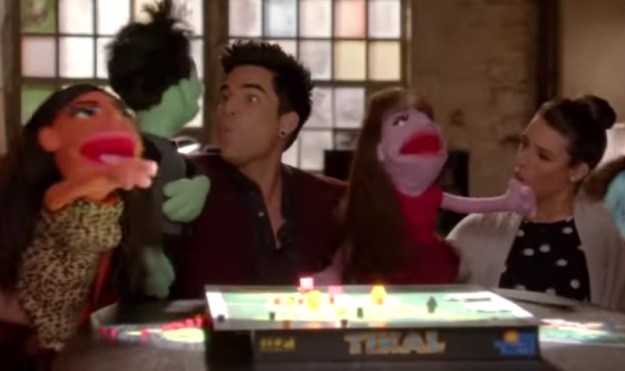
Tikal
– Image from youtube.com

The “geeky” angle may be changing though.  The Amazon thriller Reacher shows people playing Settlers of Catan in a safe-house, and there is a game shown in every series of the Canadian thriller, Orphan Black because co-creator John Fawcett is a gamer and the show has a “Board Game Advisor” (games featured include Gloomhaven, Runewars, Agricola, Descent, Dead of Winter and Scythe)Tikal even appeared in Glee during the fifth season where the cast sing, “What does the Fox Say?”  Some of these appearances may be paid product placement, in particular Arkham Horror in Limitless and Race for the Galaxy in Silicon Valley, with Rio Grande Games allegedly having confirmed that they have paid for games to appear in shows.  That is not the reason in all cases though.

Wingspan
– Image from itv.com

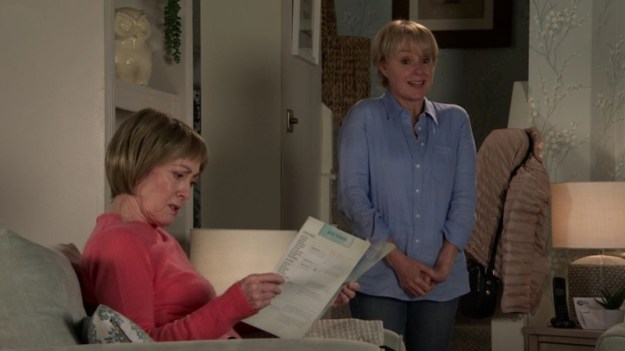
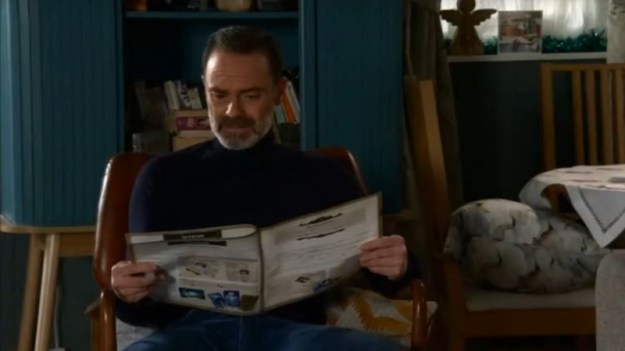
Last week, Wingspan appeared in the ITV soap-opera, Coronation Street with people shown reading the rules and references to having played later.  Designer Elizabeth Hargrave confirmed that this was not a case of product placement, commenting that the show got in touch and no money had changed hands.  It is possible that one of the script writers is a fan of modern board games as “Corrie” did something similar just over a year ago with Billy Mayhew shown struggling to fathom the rules to Mysterium shortly after Christmas. With the appearance of modern board games in programs like this, it is clear they are no longer solely the preserve of the “geeky”, though it would probably help if we could get rid of the “frowning over difficult rules” stereotype.

Mysterium
– Image from itv.com

Boardgames in the News: New Editions that aren’t an Improvement

Everyone has experienced a disappointing remake of a favourite film; while we always hope for an improvement, only occasionally do we get one.  Board games have a similar problem, but as with films, things are often not clear cut.  For example, the new version of Camel Up arguably has nicer art and a better pyramid dice shaker than the original.  The Crazy Camel mini expansion and the partnership betting (from the original Supercup expansion) also add quite a bit to the game play, especially at higher player counts, but the money isn’t as easy to handle and the dice and camels themselves are plastic and don’t feel as nice.

Camel Up
– Image by boardGOATS

Similarly, the recent editions of Glen More (Glen More II: Chronicles) and Snowdonia (the Deluxe Master set) are beautiful and include lots of extra content.  As previously discussed, this is at the expense of shelf-space though, and portability which means they are less likely to get played.  In other cases, the revision is considered a definite step back.  For example, the revised edition of Colosseum by TMG is widely believed to compare unfavourably with the original Days of Wonder edition.

– Image by boardGOATS

In a recent new edition of Monopoly, female players initially receive $1,900 with a salary of $240, while male players start with $1,500 receiving $200 when they pass “Go”.  On the plus-side, as part of the publicity, three teenage entrepreneurs received a grant of $20,580 each to invest in their own inventions.  Otherwise, Ms Monopoly is widely thought to be hugely patronising to half the population while claiming to celebrate empowering women, something that is apparent in the adverts.

– Video by Hasbro on youtube.com

These days, a lot of gaming is being done online.  One new electronic game that has been seen as a retrograde step is the new Scrabble app, Scrabble Go.  This is a new product that, thanks to changes in licensing, replaces the previous offering from Electronic Arts (EA).  The problem is that the new version seems to have been designed to appeal to the Candy Crush generation with vivid colours, treasure-style rewards and in-app purchases.  Unfortunately, Scrabble is a very traditional game and its players generally don’t appreciate that approach.  To date, nearly eight thousand of these have registered their disgust through an online petition.

Scrabble Go
– Image by boardGOATS from play.google.com

The Carcassonne app has also received a similar licensing-inspired change and although the new Asmodee version is less offensive, many seem to prefer the older, Coding Monkeys version.  So, before deciding to upgrade a game, keep in mind that a new version, often isn’t a better one.

Boardgames in the News: Radio 2 and Online

Over the last few years there has been a lot of anecdotal evidence that modern boardgames are becoming less of a niche activity, with a large number of reports in local and national media.  Last month alone, there was a prime-time article on BBC Radio 2‘s flagship Breakfast Show, where Chris Evans interviewed Dicky Duerden, Head of Games at the Chance & Counters Games Cafe in Bristol.  The interview took place shortly before 9am (2hrs 13 mins into the show) and discussed classic games like Connect Four and Kerplunk as well as their most popular games, Scrabble and Jenga.

Chris Evans
– Image from bbc.co.uk

The interview included a couple of nice little anecdotes, for example, Dicky Duerden explained that Battleship began life as a French game called “L’Attack” and was renamed twice, changing to “Salvo”, then “Broadside” before finally becoming “Battleship”.  He was also asked whether they have problems with players having temper tantrums and whether people lose pieces or walk off with them.  Apparently, Chance & Counters has heavy unflippable tables with shelves to store the games and cup-holders to help prevent spillage.  So, the most damage they’ve had to a game was when someone stole all the marbles from Hungry Hungy Hippos—presumably the thief couldn’t stand the noise!

Hungry Hungry Hippos
– Image from medium.com

Modern boardgames have also featured in print and other media channels.  For example, the literary and cultural commentary magazine, The Atlantic, recently reported how U.S. sales of boardgames grew by twenty-eight percent between spring 2016 and spring 2017.  They put this increase down to the rise in popularity of card games like Cards Against Humanity, Secret Hitler, and Exploding Kittens as well as what they initially refer to as “hobby” boardgames.  Although the article is written from a US perspective, it includes a nice commentary from Phil Eklund, head of Sierra Madre Games and designer of Pax Porfiriana, Greenland and Bios: Megafauna amongst others.  The interview with Phil Eklund is excellent and well worth a read; it includes discussion of Essen and Spiel des Jahres as well as discussion of a wide range of games including Power Grid, Biblios and El Grande rather than just the usual Settlers of Catan and Ticket to Ride.

Biblios
– Image by BGG contributor Schaulustiger

Every report about the growth of modern boardgames hides something less cheerful:  the number of stores that have closed in recent time.  As demand for modern games increases, so does their availability at places like Amazon, and that increases the pressure on an already squeezed niche.  In the last year or so, several excellent and well established stores have closed including Shire Games and Northumbria Games.  With prices continuing to rise—a new big-box game is rarely below £50 these days—and the growth of crowd-funding, more and more gamers are looking for discounts where they can.  The boardGOATS are lucky to have three excellent outlets locally, Eclectic Games (in Reading), Thirsty Meeples and The Gameskeeper (both in Oxford).  Perhaps the Chris Evans interview will encourage more people to pay them a visit.

Money
– Adapted from Image by Petras Gagilas (flickr.com)

Game Plan: Rediscovering Boardgames at the V & A Museum of Childhood

Inspired by the recent articles on Saturday Live and the Today Programme, on Easter Sunday, Pink and Blue decided to visit the V & A Museum of Childhood to see their “Game Plan: Board Games Rediscovered” exhibition.  Catching a train from Oxford Parkway and negotiating the London Underground, they arrived in Bethnal Green.  With its vaulted ceiling and exposed metal work, the Museum building looks for all the world like a re-purposed Victorian Civil building, a train station, swimming pool or maybe some sort of pumping station.  Much to their disappointment, however, after extensive discussion and investigation, it turned out that the building was designed for the purpose, albeit after relocation of parts from “Albertopolis” on Exhibition Road.

Game Plan: Board Games Rediscovered
– Image by boardGOATS

The exhibition itself was well presented and occupied a sizeable portion of the overall floor space.  Although it was located in one of the upstairs galleries, the exhibition was well advertised and, from entering the main hall, games were brought to the visitors’ attention with table space and signs offering the loan of games should people want to play.  It wasn’t an idle promise either, as there were several family groups making full use of the opportunity, albeit playing what might be called classic games rather than more modern, Euro games.
Senet
– Image by boardGOATS

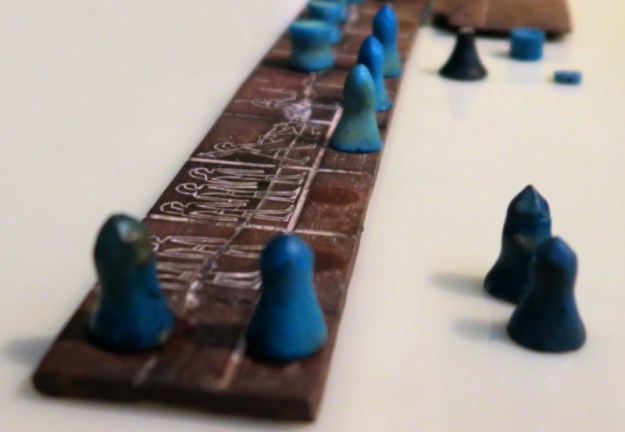
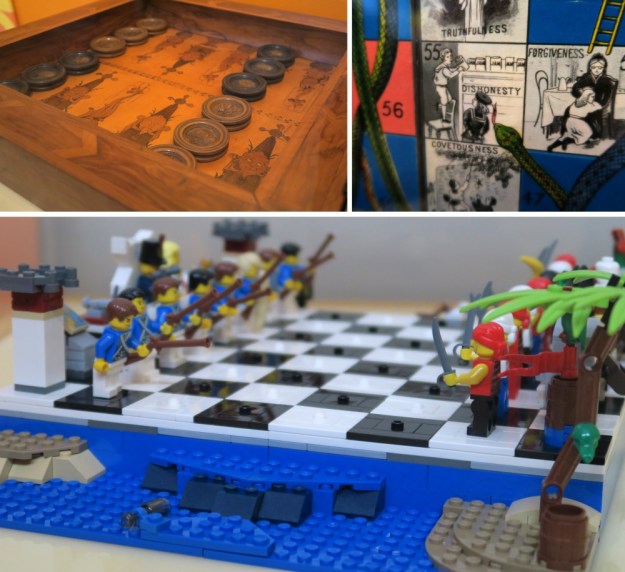
A quick look at the model train cabinet and brief spell side-tracked by one or two other exciting toys preceded entry to the exhibition which was shrouded by an eye-catching red screen.  The first exhibit was a copy of Senet, arguably one of the oldest games in the world – so old in fact that we’ve lost the rules and nobody knows how to play it.  This was followed by some traditional games including a beautiful wooden Backgammon set made in Germany in 1685 and decorated with sea monsters and a lot of fascinating Chess sets, old and new.  Next, there were some ancient copies of Pachisi (which evolved into Ludo) and Snakes and Ladders, both games that originated in India and were originally played seriously by adults.
Game Plan: Board Games Rediscovered
– Image by boardGOATS

Further round there were many other curious games, for example, The Noble Game of Swan from 1821, which was an educational game for children, itself developed from the much older, Game of the Goose.  Education was a bit of theme and there were a lot of games from the nineteenth and early twentieth century designed to teach geography in some form or another.  These included Round the Town, a game where players had to try to cross London via Charing Cross, and Coronation Scot, a game based on travelling from Glasgow to London inspired by the eponymous 1937 express train made to mark the coronation of George VI.

Game Plan: Board Games Rediscovered
– Image by boardGOATS

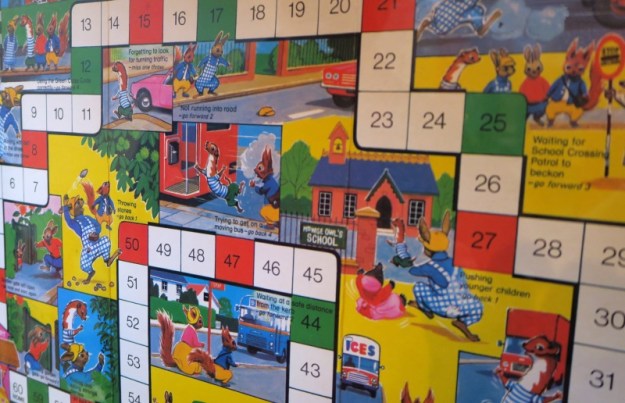
Education didn’t stop there either:  for those that had been members of RoSPA‘s “Tufty Club“, there was a game promoting road safety featuring Tufty the Squirrel and his mates Minnie Mole and the naughty Willy Weasel.  However, when designing this roll-and-move game, they clearly ran out of imaginative “adventures” with a road safety message, as they had to resort to “Picking and eating strange berries – Go back three spaces…”
Tufty Road Safety Game
– Image by boardGOATS

Progressing through the late twentieth century, there were the inevitable copies of the childhood classic games, including Game of Life, Risk, Cluedo, Mouse Trap, Trivial Pursuit, Connect 4, Scrabble and the inevitable Monopoly, all of which risked bringing a tear to the eye as visitors remembered playing them as children.  The exhibition eventually brought us up to date with modern Euro-style games, presenting copies of Ticket to Ride, Carcassonne and Settlers of Catan.
Pandemic
– Image by boardGOATS

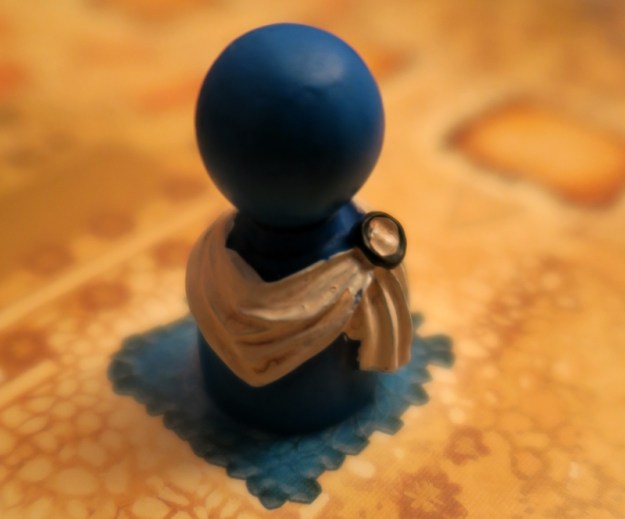
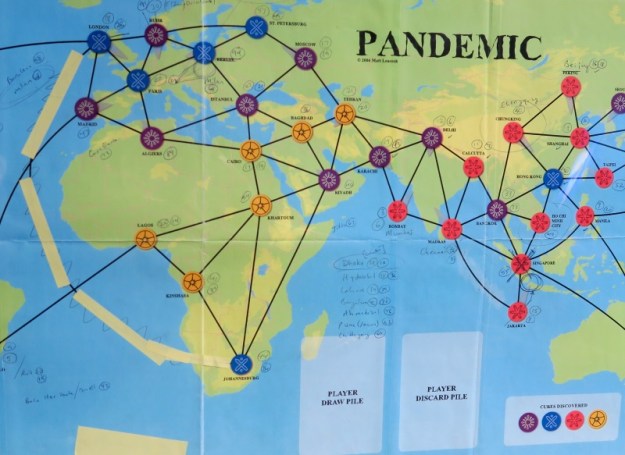
More interestingly, there was also an original prototype of Pandemic supplied by the designer, Matt Leacock, complete with his scribbles and bits of paper stuck over infection routes he decided to remove as the game developed.  One of the final display showed how the influence boardgames have had on the computer gaming industry is sometimes strangely reciprocated, with a copy of the Pac-Man game, including the title figure wrought in sunshine yellow plastic.
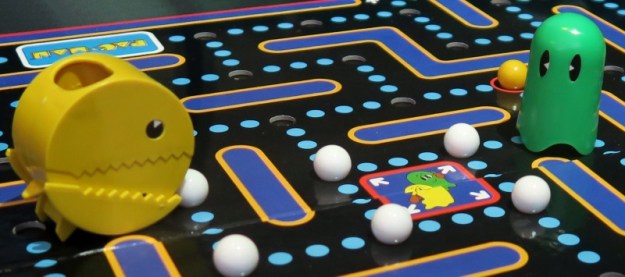
Pac Man
– Image by boardGOATS

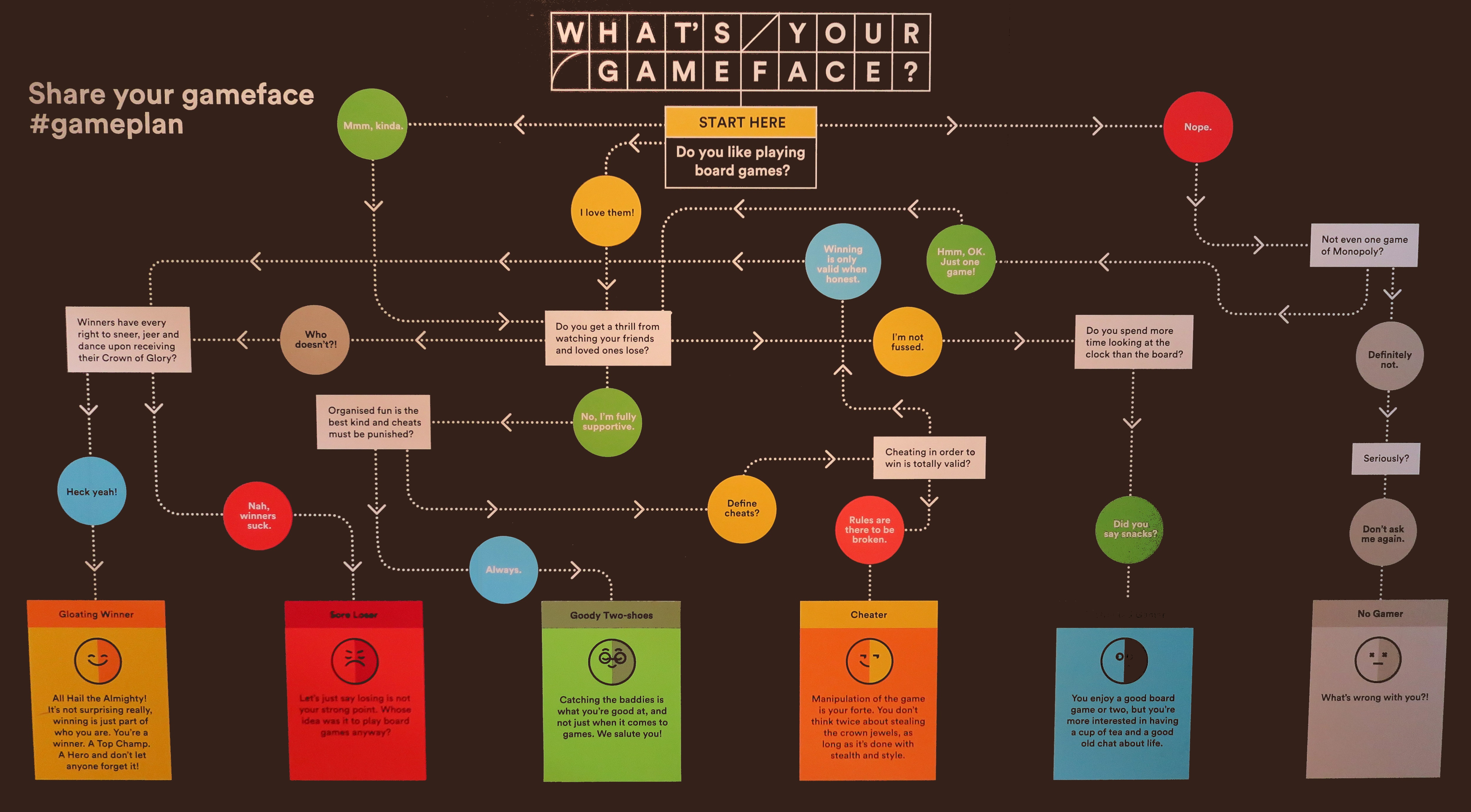
Leaving the exhibition, there was just one last game – “What’s Your Gameface?“.  This cute flow chart entertained Blue and Pink for far longer than is should have as they tested it out with all their friends, relatives and fellow gamers (nobody came out as “Cheater”).
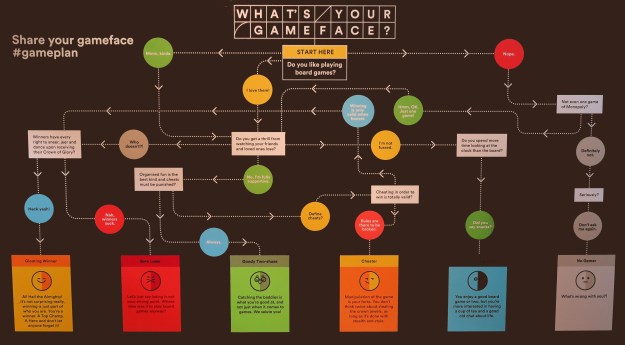
Game Plan: Board Games Rediscovered
– Image by boardGOATS

With the exhibition done, there was still time for a wander round the rest of the museum and a quick cuppa in the cafe.  Reflecting on the exhibition, perhaps one of the best aspects had actually been the quotations that adorned the walls.  It seems luminaries from Plato to Roald Dahl have all had something to say on the subject of games.  Perhaps George Bernard Shaw supplied the most thought provoking comment though, when he said, “We don’t stop playing because we grow old; we grow old because we stop playing.”  With this in mind, we did what gamers do when they travel, so tea and cake was accompanied by two rounds of Mijnlieff, the super-cool noughts and crosses game.  With the museum closing, it was time to head home, but there was still time for a game or two of 3 Sind Eine Zu Viel! on the train back to Oxford…

Game Plan: Board Games Rediscovered
– Image by boardGOATS

The Exhibition is only open till 23rd April 2017, so there isn’t much time left and it is well worth a visit.

Boardgames in the News: What’s all this about a Hasbro-Mattel Merger?

In what is the latest of a long line of merger and acquisitions stories, it seems that the really big boys are now getting in on the act:  according to a report by Bloomberg, late last year, Hasbro initiated talks with Mattel for what would become the worlds largest toy company. This is not the first time a merger has been proposed; twenty years ago, Mattel attempted to buy Hasbro for $5.2 billion, but Hasbro resisted the deal with what Mattel described as a “scorched earth” campaign.  In the end, Mattel withdrew the offer citing an “intolerable climate” created by its competitor’s use of the media and politicians to fight the proposed takeover. Since then, there has been a lot of water under the bridge and representatives for Hasbro and Mattel have declined to comment, so we are left to speculate as to why the subject of a possible merger has arisen once more.

Hasbro & Mattel
– Image by boardGOATS with components from wikipedia.org

Both Hasbro and Mattel are currently valued at approximately $10 billion with an annual revenue in the region of $5 billion.  Hasbro owns brands as divers as Furby, My Little Pony, Playdoh and Nerf, but is perhaps best known amongst gamers for titles like Monopoly, Cluedo, Connect 4, Cranium, Battleship and Jenga.  Mattel brands perhaps tend to be aimed slightly more at the toy market with Barbie, Hot Wheels, Matchbox and Fisher-Price some of their biggest sellers.  There are also a number of games under the Mattel umbrella though, including UNO, Othello, Scene It?, Apples to Apples and Scrabble.  Clearly, both companies have a very similar portfolio, and are essentially direct competitors.  This has been very clearly demonstrated with Hasbro recently taking the licensing rights to Disney’s lucrative Frozen and Princess brands from Mattel, a change that will undoubtedly make a dent in their bottom line.  While changes are often a sign of a robust market, such seismic shifts are seldom good for the companies involved at least in the short term, often leading to restructuring and job losses – we have seen something similar with Mayfair Games and the recent loss of the distribution rights to the Catan Brand.

Scrabble
– Image used with permission of BGG contributor Susie_Cat

It seems there are two other key driving forces however.  Firstly, it would make them much stronger competition for the Danish company, Lego, which has been growing much faster than its U.S. rivals.  Secondly, both Hasbro and Mattel are looking to expand their presence in the digital market, with movie and computer game tie-ins similar to those seen with Hasbro’s Transformers franchise, and, according to Bloomberg, a merger would facilitate this.  The real question though is, regardless of whether or not Hasbro and Mattel can agree a deal, would the regulators let it happen?  In the last year alone, the U.S. Department of Justice has prevented Electrolux’s purchase of GE’s appliance business as well as stopping mergers between Office Depot and Staples, and Sysco and U.S. Foods, all due to concerns about industry concentration and the potential for higher prices resulting from the deals.  So it seems quite likely that a deal between Hasbro and Mattel would go the same way.  If they do merge, however, the giant Hasbro-Mattel would make Asmodee look like very small minnows indeed, right up until they get gobbled up too.

Lego
– Image from 3dprint.com

Boardgames in the News: Is Boardgaming a Sport?

A judicial review of the status of Bridge, began earlier this week, following the funding body, Sport England‘s decision not to class the card game as a sport.  Sport England have reportedly claimed that Bridge was no more a sporting activity than “sitting at home, reading a book”.  In contrast, the English Bridge Union (EBU) contests that Bridge is a “mind sport” that exercises the “brain muscle”.

Bridge
– Image from innontheprom.co.uk

Contract Bridge is a trick-taking card game for four players where the two teams bid for how many tricks they will win.  Once the contract has been made, the hands are played out and if the number of tricks agreed is achieved, the team who made the contract win.  The case against Bridge being classed as a sport depends on the definition of a sport:  Sport England defines a sport as an “activity aimed at improving physical fitness and well-being, forming social relations and gaining results in competition”.

Bridge
– Image from goodsamchurch.wordpress.com

The case for Bridge as a sport includes the fact that other EU countries (including the Netherlands, Ireland and Poland) recognise Bridge as a sport, and that Sport England include angling, model aircraft flying, quoits and rambling in their list of sports as well as popular pub games like darts and pool.  Perhaps more importantly, sports are defined in the 2011 Charities Act as activities “which promote health involving physical or mental skill or exertion”.  Lawyers for the EBU are reported to have told the High Court that Bridge was based on rules, fairness and competition – just like other activities classified as sports and Heather Dhondy, winner of three world and five European gold medals made the case in the Independent last year based on the stamina required for tournament play.

Bridge
– Image from bbc.co.uk

The bottom line is that this is all about funding.  If Bridge is classed as a sport they can apply for National Lottery Funding allocated by Sport England.  Sport England has a finite pot and claim it is their job to get the nation fitter, but in reality they are probably concerned they will be heavily criticised by the media and the general public if they give money to a bunch of people “sitting about playing cards”.  Of course, the courts cannot really decide if bridge is a sport, only whether it was reasonable for Sport England to have ruled it was not.  To date, judgement has been reserved and at the end of the High Court hearing, Mr Justice Dove gave no indication as to when he would give his ruling.

Chess
– Image used with permission of BGG contributor duchamp

The final say, however, will perhaps depend on the International Olympic committee (IOC). In 1999, the IOC said that Bridge and Chess should be considered “mind sports”.  If this is taken to its logical conclusion, Bridge, Chess and perhaps other boardgames like Scrabble will eventually become Olympic sports and medals will be awarded every four years.  Indeed, Chess and Bridge are among twenty-six sports that have applied for inclusion in the 2020 Olympic Games in Tokyo.  Since Team GB are the Kings of “sitting-down sports” (cycling, sailing, rowing, equestrian etc.), it seems inevitable that these would be sports we should excel at.  If there were even a small chance of increasing Britain’s tally of Olympic gold medals, Sport England would undoubtedly change their view.

Scrabble
– Image used with permission of BGG contributor Susie_Cat

Boardgames in the News: Twenty Awesome Games according to The Guardian

The Guardian boardgame section has produced a number of interesting articles over the last few months, including one about a French Scrabble champion who doesn’t speak French; an article discussing the impact of political boardgames, and a review of the cooperative war game, 7 Days of Westerplatte, where players take on roles of Polish defenders trying to save their city from attack in September 1939.

7 Days of Westerplatte
– Image used with permission of BGG contributor henk.rolleman

Their latest article is entitled, “20 Awesome Board Games You May Never Have Heard Of” and as well as the inevitable usual suspects, there are indeed a number of even less widely known games.  Popular franchise games are included like spin-offs from A Game of Thrones and Firefly to catch the eye of the general public, but these have a good reputation amongst gamers too.  Twilight Struggle also makes its second newsworthy appearance in a month, as well as the slightly less well known gateway games, Dominion and 7 Wonders.

Twilight Struggle
– Image used with permission of BGG contributor killy9999

More interesting are some of the other inclusions.  For example, Survive: Escape from Atlantis! is an excellent game that is very easy to teach, but has a nasty edge, with players trying to save their meeples while encouraging monsters to attack everyone else’s.  Although it is a great game to play with teenagers and students, for some reason it very rarely makes this sort of list.  Similarly, newer games like the 2014 Pandemic spin-off, Pandemic: Contagion and this years’s Spiel des Jahres winner, Colt Express also get a mention.

Colt Express
– Image used with permission of BGG contributor punkin312

It’s not all light family fare either and games like the well regarded semi-cooperative game, Dead of Winter, make an appearance as well as older “Geek Fayre” like Netrunner and Civilisation.  Perhaps the biggest surprises though are Antiquity and Euphoria: Build a Better Dystopia.  These are both much more obscure games:  Antiquity is produced in very small numbers by Splotter (and is currently out of print), and Euphoria is the product of a very successful KickStarter campaign by Stonemaier Games.  The inclusion of games off the beaten track, shows that the Guardian boardgames coverage is from people who know their subject matter much better than those at the Telegraph!  As such, these Guardian articles are always well worth a look and it will be interesting to see what comes of their quest to find the worst games people have played.

Dead of Winter: A Crossroads Game
– Image used with permission of BGG contributor mikehulsebus