Boardgames in the News: What is Asmodee’s Grand Plan?

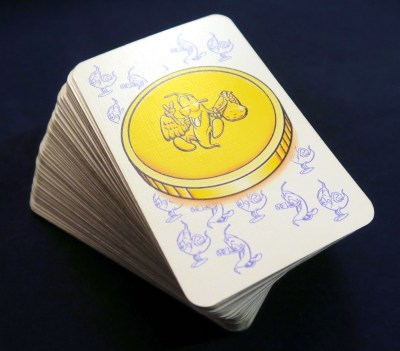
Four years ago, Eurazeo bought a small French games company called Asmodee from the investment firm, Montefiore.  Asmodee were a small company hitherto primarily known for a clever little kids game called Dobble.  With the financial might of their parent company behind them, over the next few years, Asmodee proceeded to gobble up many larger, well-established companies, including Days of Wonder, Fantasy Flight Games, Z-man Games and most recently, Lookout Spiele.  Those companies produced some of the best known modern games including Ticket to Ride, Carcassonne, Pandemic, Agricola and Star Wars X-Wing Miniatures Game.  Not content with that, they also acquired the rights to the English language version of the Settlers of Catan (now known simply as “Catan”) and all the related Catan games as well as gobbling up a number of smaller and/or newer companies like Space Cowboys (producers of Splendor and Black Fleet) and Plaid Hat Games (producers of Dead of Winter and Mice and Mystics) and entering into a distribution agreement with many others.  There are now very few games companies of any substance that are not somehow tangled in the Asmodee web.

Star Wars: X-Wing Miniatures Game
– Image used with permission of BGG contributor adamfeldner

The last major purchase was F2Z Entertainment in 2016, and since then it has been relatively quiet.  With the new year comes a new wave of acquisition, however, so at the end of January Asmodee announced that they were in exclusive negotiations with Rebel.  Rebel is a relatively small, Polish company responsible for games like K2 as well as Polish editions of many popular games like 7 Wonders and Codenames.  Perhaps more importantly, Rebel also produces the Polish language versions of many of the Asmodee games and is the largest distributor in Poland.  And Poland is a big country, smaller than France or Germany, but bigger than Italy and the UK,  globally Poland is the thirty-forth largest country by population.  That is a lot of Poles and they do like playing board games in Poland.

K2
– Image used with permission
of boardgamephotos

This announcement was almost immediately followed by the bombshell that Asmodee had acquired all the residual assets from Mayfair and with it, Lookout Spiele. Although this is by far the largest deal in recent months, Asmodee have not been resting on their laurels and there has been a lot going on behind the scenes.  In December last year they announced that Esdevium was to be renamedAsmodee UK” bringing them in line with the “Asmodee North America” and “Asmodee Canada” brands.  At around the same time, Eurazeo announced that French publisher Purple Brain Créations would be joining the Asmodee Group.  Furthermore, they have also been streamlining their distribution network in North America.  Having reduced the number of distributors they deal with to five in 2015, in June last year Asmodee North America announced an exclusive distribution deal with Alliance Game Distributors, effectively creating a monopoly of supply within the USA.  This coupled with their Minimum Advertised Price policy (or MAP) gives them a stranglehold on the US market in a way that would never be allowed in Europe.  Whether they are planning to take that one step further and acquire Alliance themselves still remains to be seen, but that looks like a real possibility.  Finally, they have been pushing in a new direction, developing electronic versions of some of the most popular games through their studio, “Asmodee Digital“.

Asmodee Logo
– Image from
escapistmagazine.com

So what is Asmodee‘s Grand Plan?  Where will it all end?  Well, there are still a couple of other large manufacturers out there that are not yet part of Asmodee.  Looking at the companies they have already absorbed there is a clear trend: they typically have one particular feature that Asmodee are interested in.  In the case of Days of Wonder, that was the Ticket to Ride series, with Z-man Games it was Pandemic and Carcassonne, and with Rebel, it was probably their distribution network that caught the eye of the executives at Asmodee.  Going forward, the most obvious targets are probably Rio Grande Games, Czech Games EditionQueen GamesHans im Glük and maybe 2F, or Pegasus Spiele (who have just announced a partnership with Frosted Games).  For example, it would be surprising if Rio Grande Games have not been approached given the popularity of games like Dominion and Race/Roll for the Galaxy.  Similarly, Czech Games Edition are a small company with some very juicy morsels including Galaxy Trucker, Dungeon Lords/Petz, and the hugely successful Spiel des Jahres winner, Codenames.

Codenames
– Image by boardGOATS

Ultimately they may or may not add some or all of these to the Greater Asmodee Empire, but it is clear that at some point, eventually, there will be nothing left worth taking over and growth of the company will plateau, so what happens then?  And this is the crux of the matter. Some have speculated that the aim is to add Hasbro to Asmodee’s ever growing dominion, but Hasbro has a market value of $11.9 billion—Asmodee are mere minnows in comparison.  On the other hand, the parent company, Eurazeo are worth approximately $5.7 billion, which at least puts them in the same ball park, although even they are small by comparison.  According to the “Vision” page on the Eurazeo website:

The purpose of Eurazeo is to identify, accelerate and enhance the transformation potential of the companies in which it invests, even long after its exit. An active and committed shareholder, Eurazeo assists its holdings in the long term – 5 to 7 years – with control over exit timing. An extensive role enabling it to combine business development and corporate social responsibility.

So, it would seem that Eurazeo is not looking to hold onto Asmodee for the long haul, instead they will be looking to maximise Asmodee’s growth and then make their exit, probably in the next two to five years.  So the big question is, how are Eurazeo going to make their “controlled exit”?  With this in mind it seems unlikely that acquiring Hasbro is on the agenda, but making Asmodee attractive to Hasbro just might be…

Hasbro Logo
– Image from stickpng.com

Boardgames in the News: Playing Pig in Forbus, Tennessee

Pig (aka Spoons) is a simple little card game that uses a form of card drafting where players repeatedly pass a single card to the left and pick up a card from the right.  The game is fun and can be quite manic until the point that a player has four of a kind, when they put their finger on their nose (or grab a spoon from the centre of the table).  Everyone else copies and the last person to notice and put their finger on their nose (or get a spoon) is the loser, or “Pig”.  In Forbus, Tennessee, the game Pig is very different however, and taken much more seriously.  The Forbus Pig game is a partnership trick taking game, similar to Bridge, but is only played in the local area.  The “18th Annual World Pig Tournament” was won last weekend by Larry Padgett.

Larry Padgett winning the "18th Annual World Pig Tournament".
– Image from facebook.com

The interesting part of the Forbus Pig game is the bidding and card values.  Dealer is chosen by blind draw, and deals nine cards to each player.  The players then bid to name the “trump” suit.  Each player has only one bid per hand and must raise the current bid or pass.  The bids represent the number of points a player thinks their partnership can make in the hand, and the starting bid must be at least seven. Once the bidding has been concluded, the trump suit is named by the winner.  Players then discard all their non-trump (or “trash”) cards or a minimum of three cards, to ensure that everyone has six cards or fewer.  This hand is then “topped up” by the dealer to ensure that everyone has a hand of six cards.  Anyone discarding trumps must declare it and in general only the one trump (the deuce) is discarded and the Three will then score instead.

Bridge
– Image from innontheprom.co.uk

When play starts, the highest bidder leads.  Players forced to follow suit if they lead with a trump, but unlike Whist/Bridge do not have to follow if the lead is a trash (non-trump) card.  In each hand, the trump with the highest rank wins.  And this is where the game is clever:  the card ranks and card scores are not the same.  So, while the Ace is the highest ranking card, the Five (or “Pig”) is the highest scoring card, so a player can win a trick with a non-scoring card like the King and take the points provided by other, lower ranking cards.  In another idiosyncrasy, the Jack and Five (or “Pig”)of the suite in the same colour as the trump, the “Off Jack” or “Off Pig” suit also score.  The winner of the trick takes the cards and places them face down before providing the next lead. Non-trumps, or trash cards are deemed to have no rank, so if nobody plays a trump, the trick is won by the person who led.  Once all six tricks in the hand have been played, the scores are calculated.

Rank
Score
 
Rank
Score
Ace
1

Eight
0
King
0

Seven
0
Queen
0

Six
0
Jack (Main)
1

Five (Main Pig)
5
Jack (Off)
1

Five (Off Pig)
5
Joker
1

Four
0
Ten
1

Three
0
Nine
0

Two
1

In general, both teams score, so if one team scores ten and the other score six, both scores are added to the teams’ running totals.  The catch is that the team who won the bidding must exceed the amount they bid.  In other words, a team who bid and won with ten, must score ten or more, if they fail, their bid is subtracted from their running total.  The maximum number of points available is sixteen, but players who are confident can score “doubles” by bidding, for example, “double sixteen”.  In this case, if they achieve sixteen, they will score thirty-two.  Only bids of fourteen, fifteen and sixteen can be doubled and they are high risk, because of course players who fail to make their winning bids will lose that number of points and “double sixteen” is thirty-two.  This is a a lot of points to lose in a game which ends ends when one team finishes a hand with more than fifty-two points, or less than minus fifty-two with the team with the most winning.

Cards
– Image from aberryhousecarehome.co.uk

There are actually a lot of games like Pig that have a strong local tradition, but are not widely known, indeed the “official rules” for Forbus Pig are not easy to come by, even in these days of the internet.  Aside from the recent “18th Annual World Pig Tournament”, this particular game has been reported in the national media thanks to its influence on the local economy of the little town of Forbus in Tennessee.  Everyone in Forbus plays Pig, but its epicentre is the General Store.  There’s no money involved in Pig, but despite that, it is strangely compelling to watch and draws a sizeable crowd, making the Store the centre of the small community.

Forbus General Store
– Image from facebook.com

Next Meeting – 20th February 2018

Our next meeting will be on Tuesday, 20th February, at the Horse and Jockey pub in Stanford-in-the-Vale.  As usual, we will be playing shorter games from 7.30pm as people arrive, until 8pm when we will start something a little longer.

This week, the “Feature Game” will be Marshal & Prisoners, the second expansion to the gorgeous train robbing game, Colt Express.  The expansion adds extra characters and a prison wagon complete with prisoners and a marshal to guard them.  Players who succeed in freeing prisoners can use their special powers as well as their own in the race to be the richest bandit in the West!

Ave Caesar
– Image used with permission of boardgamephotos

And speaking of prisoners…

Jeff had been caught dealing drugs and was serving his sentence in the Scrubs.  One day, his father, an elderly farmer, came to visit, with some bad news.  His father explained the farm was in difficulty.

“Son, the ground is frozen and is much too hard for me to dig myself at my age.  I can’t afford extra men or to hire machines though.  I don’t think we will be able to plant crops this year, which will means we will go bankrupt and lose the farm.”

Later, Jeff went back to his cell and wrote a short letter to his father.

Dear Dad,

Please be aware that a very good friend of mine will be visiting soon. There is a large quantity of stuff he is collecting. It is well hidden on the farm, but he will know exactly what to do.

Lots of Love,
Jeff.

Some weeks later Jeff’s father went to visit again.

“Well, son, your friend never showed up, but before I even got your letter the police came round, searched the whole house and dug up all the land around.  They didn’t find anything though…”

Jeff smiled, “Happy planting, Dad.”

6th February 2018

With seven of us and the “Feature Game”, Ave Caesar, only playing six, we started the evening with a small problem.  The general consensus was that the game is more fun with more people, so splitting into two small groups didn’t feel right.  Blue offered to sit out as she was still eating, as did Burgundy and almost everyone else as well, but in the end, Purple and Black teamed up so we could all play together.  An older family game dating from 1989, Ave Caesar is also a fairly simple game.  The idea is that each player has a deck of movement cards, a chariot, and a coin, and the aim of the game is to be the first player to cross the line after completing three laps of the track.  On the way round each player must pay tribute to Caesar on the way by pulling up in front of the Emperor in his dedicated pit lane, chucking their Denarius into the game box and crying “Hail Caesar!”.

Ave Caesar
– Image by boardGOATS

There are some nasty, unforgiving little features about this game.  For example, the track is generally a maximum of two lanes wide.  Worse, players can only use each of their cards once and don’t have lot of spare moves, so the outside lane should be used sparingly otherwise they may run out of moves before they complete their final lap.  Even worse than that, each player starts with a hand of three cards and plays one, then refreshes their hand.  The snag is that players cannot jump or move through occupied spaces and must use every space on the card they play, in other words, they cannot play a five for example if there are only three spaces they can move.  These “nasty features” can make the game very frustrating, but are also the clever part as they provide the challenge.

Ave Caesar
– Image by boardGOATS

There have been several editions of the game, but the original Ravensburger is widely believed to be the best because it has slightly longer tracks which makes for a tighter game as players have fewer moves to spare.  It is well understood that the newer version that we were playing with could be improved by removing a five card from each player’s deck.  So we started sorting and counting cards, and finding a five to remove from each deck.  With this done, all those eating had also finished and Burgundy started with a modest two.  Blue was second and, with two sixes in hand felt that it was a good idea to get rid of one of them nice and early.  The problem with sixes is that you can’t play them when you are in the lead, but they can be quite difficult to play from the back as there has to be enough space in front to play them.

Ave Caesar
– Image by boardGOATS

Burgundy’s two proved to be a mistake as everyone else promptly overtook him and left him stuck at the back for most of the rest of the lap.  In fact, he was so stuck, that he ended up missing three turns on the first lap alone.  In contrast, Blue had broken away from the pack and was looking at lapping Burgundy, but this had its own problems as she needed to get rid of her sixes, which she couldn’t do while in the lead.  Blue went to hail Caesar on her first lap to give people a chance to catch up.  After a bit of moaning that he hated Bank-holiday traffic, Pine finally managed to break away from the log-jam and take the lead giving Blue a chance to ditch a six, and everyone else a chance to make some progress too.  Everyone else that is, except Burgundy who was doing an excellent job of bringing up the rear.

Ave Caesar
– Image by boardGOATS

During the second lap, Pine just managed to nip in and pay his dues to Caesar, while Green followed and then reduced his chariot speed to a crawl and “Hailed” three times successfully causing a queue behind.  It was the third lap where things started to get interesting though with everyone jockeying for position to try to make sure that they didn’t have to waste moves.  Blue had a bigger problem though, she was miles in front, but still had to draw her final six from the deck and then play it.  She tried hanging back, reluctant to give away the size of her problem, but that card stayed in the pack.  Finally, as she drew her last card, she found her final six, but it was too late and Team Black and Purple cantered past and pipped her to the finish.  Green trotted in taking third place and leading the rest of the pack home.  Ironically, had she not suggested removing the fives at the start of the game, Blue would have won easily, but that would have been boring.

Ave Caesar
– Image by boardGOATS

It hadn’t been Ivory’s sort of game, so to placate him we offered him Yokohama, a game he’s been angling to play since before Christmas, but there wasn’t quite enough time for that, so he went for Sagrada instead and was joined by Pine and Blue.  This is a very pretty little game with many features in common with one of our current favourites, Azul.  It has simple rules, but lots of complexity and is essentially an abstract with a very thin theme, but for some reason that doesn’t seem to matter.  In Sagrada, players build a stained glass window by building up a grid of dice on their player board. Each board has some restrictions on which colour or shade (value) of die can be placed there and players take it in turns to take dice from a pool and add them to their window.  Depending on the difficulty of the starting grid, players start with a small number of favour tokens which act as “get out of jail free” options and allow them to use special tools to rearrange some of the dice, either during “drafting”, or sometimes those already in their window.

Sagrada
– Image used with permission of BGG contributor punkin312

Points are awarded for fulfilling certain criteria, depicted on cards drawn at random at the start of the game.  Although completing the window can be challenging in its own right if the dice don’t roll well, it is the objective cards that are the key to the game.  Each player has their own private objective which scores for the number of pips displayed on dice of a given colour in that player’s window. There are also three public objectives which everyone can use to score points; in this case we were scoring for coloured dice diagonally adjacent; complete sets of one to six and pairs of five and six. The game starts with each player choosing a window from two double-sided cards dealt at random.  The hard ones come with a lot of favour tokens; this time almost all the options available seemed to be the difficult ones, which made Blue especially wary given the dogs’ breakfast she made of the game at New Year playing a challenging window.

Sagrada
– Image used with permission of BGG contributor punkin312

Everyone seemed to go for different strategies this time.  Blue went for the public “diagonals” goal, making a pretty Battenburg pattern, but only managed to get one five, so struggled with the other objectives.  In contrast, Ivory did well getting pairs of five and six, but only got one three, so couldn’t score so well for the sets.  Pine completely ignored the diagonals and really concentrated on his private goal and getting complete sets of one to six.  It was a really tight game and Blue and Ivory were to rue those dice they’d failed to get as Pine finished with forty-three points, just two ahead of Ivory and three clear of Blue.  Despite finishing second, Ivory was much happier with this game than Ave Caesar and was up for giving something else a go.  Pine was keen to play Animals on Board again, and it is a nice enough little game and not long so Ivory was happy to give it a go too.  The idea is that players are collecting animals to go in their cardboard ark.  Each set of animals in the game is numbered from one to five and a selection are drawn at random and placed face up in the centre of the table.

Animals on Board
– Image used with permission of BGG contributor punkin312

On their turn the active player either divides one of the groups in the middle into two parts (and takes a box of fruit for their pains) or takes the animals from one of the groups, paying for them with boxes of fruit at a rate of one per animal.  At the end of the game (triggered when one player picks up their tenth animal) Noah claims any pairs of animals and the remaining animals are scored: singletons score their face value and sets of three or more score five per animal.  It was quite tight, Ivory collected four rhinos and Pine managed three hippos.  Blue brought the game to a sudden and unexpected end when she unexpectedly found herself with a large set she could take profitably, leaving her with two sets of three, foxes and zebras, and with it, the she took the game.

Animals on Board
– Image used with permission of BGG contributor punkin312

Meanwhile, on the neighbouring table, Black, Pink, Burgundy and Green were playing the classic, Settlers of Catan (now known simply as “Catan”).  Despite being over twenty years old now, it still holds up as a good family game in a way that some other games of the same vintage do not.  The game is played on an iconic variable tile game board on which players build settlements and cities on the nodes and roads along the edges.  One of the things that makes the game so popular is the lack of down time: a turn consists of rolling dice, trading and then buying and/or building.  Each hexagon on the board is numbered and rolling the dice gives resources to every player with a settlement on the hexagon on the number rolled.  Since each node is on the corner of three hexagons, players frequently get resources during other players’ turns.  Everyone is potentially involved in the trading of course, so the only part of anyone’s turn that is not shared is the buying and building phase, but this is usually quite short.

The Settlers of Catan
– Image by boardGOATS

This time, the random layout of tiles gave an even spread, but the number tokens placed on them had an unusual symmetry:  both eights were on the mountains (giving stone), both threes were on the fields (giving wheat) and both nines were on the clay beds (giving brick).  Green started and inevitably chose the choice spot with that would give him wool, wood and clay, much to Burgundy’s chagrin. Black was last to place and decided to connect his two roads and settlements, so by the time it Green got his second turn, he had very little option and ended up with a port location which would yield only two cards to everyone rather than three.  The dice seemed to be rolling according to the predicted distribution with the red numbers (six & eight) coming up often.  This gave Burgundy a lot of stone and wood, but due to his lack of brick he quickly converted a settlement to a city which only increased his supply of stone.

– Image by boardGOATS

Unfortunately for him, all these extra resources counted against him as the other number to come up regularly was seven, so meaning the robber was moved and everyone had to reduce the number of resource cards they were holding to seven.  Burgundy often was higher due to his regular double productions, but to make it worse he frequently seemed to because of his own demise since he was the one who kept rolling the sevens—three times in succession at one point! With that kind of luck he really began to wonder if he should just pack it in right then and go play something else.  While Burgundy was struggling with his own security though, Purple and Green were steadily building their kingdoms. Purple gained another settlement and converted one of her others into a city. Green had spread out from his choice spot to build another settlement on the port side of the value eight mountains and in the other direction to another port with more clay, giving him the longest road, and with it two bonus points, for the moment at least.

The Settlers of Catan
– Image by boardGOATS

Black seemed to be languishing, unable to get traction and the cards he needed for expansion. Catan requires investment for growth, but he had barely two coins to rub together to invest with at all.  Once Green had built on the mountain-side the eight rolls seemed to dry up and he struggled to get enough stone or wheat to convert his settlements to cities.  Purple’s hidden development card made everyone think she had an extra hidden point, and possibly the lead. Certainly the early rolls went in her favour and it was beginning to look like this could be her game. Green’s long road brought him into the running, and the power of Burgundy’s cities meant he wasn’t far behind. The production Burgundy’s cities provided meant he was able to go after longest road and take it from Green, thus starting a little road building war between the two.

The Settlers of Catan
– Image by boardGOATS

With nowhere else on the board worth building on, Burgundy decided on an alternative strategy and started trading for development cards. He managed to place two knights and was about to take the Largest Army, until everyone else reminded him he three army cards for that. It only delayed the inevitable though, as one round later he played a third knight card, claimed the Largest Army and two points with it. He easily built two more roads and with it retook the Longest Road card for a second time simultaneously revealing he had a one point development card in his hand.  This meant he went from five points on the board to a total of ten points in one turn and with it finished the game.  Purple and Black revealed they also had a one point development card to give them both six points and joint second place.

The Settlers of Catan
– Image by boardGOATS

Both tables finished at about the same time and, as Ivory headed home, Burgundy commented that he’d like to give NMBR 9 a go.  Everyone else chimed in that they’d be happy to join him , but Pine and Purple got there first and with no set up time got started quickly.  The game is very simple: one player turns over a card and calls the number and players each take one tile of that number and add it to their tableau.  All the tiles are roughly number-shaped and each player will play a total of twenty tiles, numbered zero to nine, with each one appearing twice.  Tiles must be placed such that at least one edge touches a previous tile. Tiles can be placed on top of other tiles as long as there are no overhanging parts, and the tile sits squarely on more than one other tile. At the end of the game the number tiles are multiplied by the level they sit on minus one. So, a five on the third level scores ten points (5 x (3-1)).

NMBR 9
– Image used with permission of BGG contributor punkin312

Unlike a lot of games, it is very difficult to tell who is winning, as the largest scores come late in the game when adding tiles to the higher layers.  However, the lower layers must be able to  accommodate the later tiles as and when they come out, otherwise a player can’t take advantage of the opportunities they may offer.  This time Burgundy “got lucky” and was able to squeeze a seven, an eight and a nine onto his third level giving him a massive forty-eight points for them alone and a bit of a land-slide victory.  We’ve played this game a few times now as a group and all the previous games have been quite close.  Other Bingo-type game like Take it Easy!, Das Labyrinth des Pharao or Karuba, have been relatively unpopular with the group as they feel like multiplayer solitaire, but somehow, in our group, everyone gets involved helping everyone else out, which makes this game much more enjoyable.

NMBR 9
– Image used with permission of boardgamephotos

The other three chatted for a few minutes before deciding to play a quick game of Kingdomino as it is a game we know well and can play quickly and without committing too much thought.  It  consists of dominoes featuring two terrain “tiles” with some tiles also depicting one or more crowns.  Players are building their kingdoms by placing dominoes where one end must either connect to another domino matching at least one of its terrain types or to the starting tile (which can be considered to be “wild”).  All dominoes must fit in a five-by-five space and if one or more dominoes cannot be placed according to these rules, then they are discarded. At the end of the game, each player multiplies the number of tiles in each contiguous region of terrain with the number of crowns on the tiles in that region and adds them up together with any bonuses to give their score.

Kingdomino
– Image by boardGOATS

The game was really tight with each player capitalising and building on different terrain types:  Black took forests, Green took pasture and Blue took sea.  There were three points between first and third, but it was Black who finished at the front, just one point ahead of Blue.  With three players, some tiles are removed from the game at random.  Like last time, almost all the tiles removed were  the high-scoring mountain and marshland tiles, but at least this time nobody’s game plan depended on them.  It did encourage some discussion, though with Black commenting that he didn’t like the game with three because of this uncontrolled randomness, and Blue commenting that perhaps the tiles that are taken out should be turned face up and displayed so that players can at least see what won’t be available.  Maybe a variant for another time.

Kingdomino
– Image by boardGOATS

Learning Outcome: Some games stand the test of time, others not so much.

Boardgames in the News: The Consequences of Losing Catan—The Demise of Mayfair

The dramatic growth of Asmodee has been the subject of much comment over the last few years, but more recently it appeared to have slowed a little.  It would seem that perhaps the consequences are now beginning to kick in though.  Nearly two years ago, Asmodee acquired the rights to the English Language edition of the Catan series of games from Mayfair Games.  At the time there was some speculation as to the effect this would have on Mayfair as the Catan range had dominated their catalogue and provided a high proportion of their revenue.  The loss of such a large part of their portfolio inevitably led to major restructuring particularly as the then CEO of Mayfair, Pete Fenlon, left to become the CEO of the new Asmodee owned “Catan Studio” taking a bunch of other people with him.

The Settlers of Catan
– Image by boardGOATS

Thus, Mayfair not only lost the Catan franchise, but also their entire development team and graphics department. Essentially, they were left with Alex Yeager as lead developer, head of acquisitions, and marketing manager and a catalogue of about a hundred games including some of the popular 18xx series, Martin Wallace’s Steam, Caverna: The Cave Farmers, Lords of Vegas and Nuns on the Run.  Mayfair also had a controlling influence in the German company, Lookout Games which they had acquired back in 2013, and this partnership had produced games like Isle of Skye: From Chieftain to King, Costa Rica and Patchwork. The Mayfair strategy was primarily to focus on the partnership with Lookout while continuing to support their existing catalogue, and then, once that was stable, further develop the Mayfair-exclusive products.

Mayfair
– Image from twitter.com

Questions were first asked when Mayfair didn’t exhibit at PAX West or PAX Unplugged, despite featuring in the exhibitor list, though they did present as usual at BGG.CONAt the beginning of November, however, Alex Yeager announced that he had left Mayfair, and this, together with the earlier departure of Julie Yeager and Chuck Rice indicated that the chairs were being shifted on the deck of the Titanic, and there were rumours that Mayfair was in trouble.  Mayfair had not independently produced a new title since the loss of the Catan franchise, but they still had their controlling stake in Lookout Games and producing the English language version of the popular Lookout range of games seemed like the basis for a strong partnership.

Lookout Spiel
– Image from lookout-spiele.de

Lookout Spiele was a highly successful German company responsible for developing games like Agricola, and more recently Bärenpark and Grand Austria Hotel.  At Spiel in October, Mayfair and Lookout shared an extremely popular booth, and it seemed so successful that there were rumours that another merger was on the cards. Sadly however, this was not the case, and on Friday it was announced that Mayfair had sold its three remaining assets (their games inventory, the IP, and their 74% stake in Lookout GmbH) and was closing their doors after thirty-six years.  Simultaneously, Asmodee acquired the remaining 26% of Lookout from the original owner, Hanno Girk and on Friday announced their take-over of Lookout.  With that, one of the most productive and popular of the German board game companies joined the likes of Days of Wonder, Fantasy Flight Games, Space Cowboys, Z-man Games, Pearl Games, Ystari, Plaid Hat Games and of course Catan as yet another “Studio” in the great Asmodee Empire.

Asmodee
– Image from lookout-spiele.de

Boardgames in the News: Radio 2 and Online

Over the last few years there has been a lot of anecdotal evidence that modern boardgames are becoming less of a niche activity, with a large number of reports in local and national media.  Last month alone, there was a prime-time article on BBC Radio 2‘s flagship Breakfast Show, where Chris Evans interviewed Dicky Duerden, Head of Games at the Chance & Counters Games Cafe in Bristol.  The interview took place shortly before 9am (2hrs 13 mins into the show) and discussed classic games like Connect Four and Kerplunk as well as their most popular games, Scrabble and Jenga.

Chris Evans
– Image from bbc.co.uk

The interview included a couple of nice little anecdotes, for example, Dicky Duerden explained that Battleship began life as a French game called “L’Attack” and was renamed twice, changing to “Salvo”, then “Broadside” before finally becoming “Battleship”.  He was also asked whether they have problems with players having temper tantrums and whether people lose pieces or walk off with them.  Apparently, Chance & Counters has heavy unflippable tables with shelves to store the games and cup-holders to help prevent spillage.  So, the most damage they’ve had to a game was when someone stole all the marbles from Hungry Hungy Hippos—presumably the thief couldn’t stand the noise!

Hungry Hungry Hippos
– Image from medium.com

Modern boardgames have also featured in print and other media channels.  For example, the literary and cultural commentary magazine, The Atlantic, recently reported how U.S. sales of boardgames grew by twenty-eight percent between spring 2016 and spring 2017.  They put this increase down to the rise in popularity of card games like Cards Against Humanity, Secret Hitler, and Exploding Kittens as well as what they initially refer to as “hobby” boardgames.  Although the article is written from a US perspective, it includes a nice commentary from Phil Eklund, head of Sierra Madre Games and designer of Pax Porfiriana, Greenland and Bios: Megafauna amongst others.  The interview with Phil Eklund is excellent and well worth a read; it includes discussion of Essen and Spiel des Jahres as well as discussion of a wide range of games including Power Grid, Biblios and El Grande rather than just the usual Settlers of Catan and Ticket to Ride.

Biblios
– Image by BGG contributor Schaulustiger

Every report about the growth of modern boardgames hides something less cheerful:  the number of stores that have closed in recent time.  As demand for modern games increases, so does their availability at places like Amazon, and that increases the pressure on an already squeezed niche.  In the last year or so, several excellent and well established stores have closed including Shire Games and Northumbria Games.  With prices continuing to rise—a new big-box game is rarely below £50 these days—and the growth of crowd-funding, more and more gamers are looking for discounts where they can.  The boardGOATS are lucky to have three excellent outlets locally, Eclectic Games (in Reading), Thirsty Meeples and The Gameskeeper (both in Oxford).  Perhaps the Chris Evans interview will encourage more people to pay them a visit.

Money
– Adapted from Image by Petras Gagilas (flickr.com)

Next Meeting – 6th February 2018

Our next meeting will be on Tuesday, 6th February, at the Horse and Jockey pub in Stanford-in-the-Vale.  As usual, we will be playing shorter games from 7.30pm as people arrive, until 8pm when we will start something a little longer.

This week, the “Feature Game” will be Ave Caesar, the quick playing, savage, Roman chariot racing game.  Players are required to race three laps of the track, and must stop to “Hail Caesar” before they can finish. The game is light, wasting too many moves taking the longer, outside-routes on corners, can leave players without enough moves to finish the race…

Ave Caesar
– Adapted from image by BGG contributor Narl

And speaking of Romans…

It had been a hard fought campaign, and on his return Julius Caesar felt it was necessary to addressing his people.  A crowd gathered in the Colosseum to hear what he had to say.

“Friends, Romans and countrymen. I have returned from my campaign in France where I killed fifty thousand Gauls!”

The crowd rose to its feet cheering, “Hail almighty Caesar!”

At this point a voice pipes up, “Caesar lies!”

There’s a stunned silence as everyone looks round to see who dares suggest such a thing.  After a pause, the voice continues, it is Brutus Jeffus who continues, “I’ve discovered Caesar only killed twenty-five thousand Gauls!”

The crowd are aghast, but Caesar replies, “That maybe true, but you must remember that away Gauls count double in Europe…”

23rd January 2018

Once the inevitable pizzas were dealt with, we settled down to the “Feature Game”.  This was Cities of Splendor, the expansion to Splendor, a splendid little game that we’ve played quite a lot since its release in 2014. The base game is really quite simple, but although a lot of groups apparently find it very dull, our group seem to find quite a lot of mileage in its subtlety and trying to get the better of Burgundy who mostly seems pretty unbeatable.  According to the rulebook, players are Renaissance merchants trying to buy gem mines, transportation methods and artisans in order to acquire the most prestige points. The most wealthy merchants might even receive a visit from a noble, which will further increase their prestige.  Despite all this, the game itself is, in truth, really quite abstract.  Players have essentially have three options on their turn: they can pick up gem tokens; buy a development card, or reserve a development card (and take a Gold token).

Splendor
– Image used with permission of boardgamephotos

When picking up tokens, the active player can either take three different gems, or, as long as there are four or more available, two the same, with a hand-limit of ten.  These are then used to buy development cards which provide the player with a permanent supply of gems of a given colour and sometimes, some prestige points. The development cards come in three decks, and the Level Three cards as significantly more difficult to obtain, often requiring many gems.  Sometimes it can be a good idea to reserve a particular card, preventing another player from taking it and getting a Gold token in return, which can be used in place of any gemstone when buying a development card.  At the start of the game there is a small number of noble tiles each with with a requirement (e.g. four opals and four rubies); the first player to fulfil this requirement gets the noble and the associated number of prestige points.  The first player to fifteen prestige points is the winner.

Cities of Splendor
– Image used with permission of BGG contributor punkin312

The expansion, Cities of Splendor, consists of four small modules:  Trading Posts; Strongholds; The Orient, and the eponymous Cities.  We were a little concerned that these expansions were going to take a game we enjoyed largely because it is so very simple, and make it unnecessarily complex (a phenomenon we had experienced previously with some parts of the Between Two Cities expansion, Capitals).  However, unusually, these modules must be used independently of each other, each providing a really very small tweak to the game, but potentially changing the dynamics quite dramatically.  For example, Strongholds provides three little plastic towers for each player, which can be moved by the active player whenever they take a development card.  The active player can either place or move one of their own strongholds, or remove someone else’s, thus providing another way to reserve a development card.  Alternatively, this effectively provides a way for everyone to “gang up” on one player, so this module has been renamed the “Get Burgundy” module…

Cities of Splendor
– Image used with permission of BGG contributor punkin312

We only had one copy of the expansion, but with several copies of the base game we decided to split into two groups, each playing different modules.  The groups were split along the lines of who wanted to get beaten by Burgundy and who didn’t.  The first group to get going contained Black and Blue, who were optimistic that the changes introduced by the expansion might upset Burgundy just enough to give someone else a chance to win.  As they don’t normally get the chance to play with them, they started with nobles drawn at random from the 2016 and 2017 Brettspiel Advent calendars and the promotional set and then had to decide which expansion module to use.   Rather than opting for the “Get Burgundy” module, they decided it would be fairer to choose something else and opted for the Trading Posts module.  This provides an additional small board with five “Posts” with specific requirements, which if fulfilled give players extra options.  For example, a player with one diamond and three ruby development cards is allowed to collect a single token every time they buy a development card.

Splendor
– Image used with permission of BGG contributor punkin312

Although Splendor is normally quite a thoughtful game, it usually moves along quite quickly. However, the addition of the expansion, slowed the normal fast pace quite noticeably as everyone spent more time working through the options for each turn, especially at the start.  It wasn’t unpleasantly slow though, particularly as everyone had plenty to think about during the down time. Burgundy grabbed lots of diamonds and quickly began to claim some of the special powers available from the Trading Posts, making particularly good use of the first one which allowed him to collect a token every time he picked up a development card.  Black tried to go for the last two Trading posts, one of which gave him two a point for each other Trading Post he had claimed and another which gave him a straight five points.  Blue had started well, but was finding that all the diamond cards had evaporated which brought her game to an abrupt halt.

Splendor
– Image used with permission of boardgamephotos

It wasn’t long before Burgundy was picking up his second noble, and with Black two turns away from finishing the game himself, the game came to an end as Burgundy claimed his fifteenth point, six more than anyone else.  Meanwhile, on the neighbouring table, they were playing with The Orient Module.  This provides ten extra development cards at each of the three levels, a total of six of which are placed face up (two from each level).  These red-backed, “Orient” cards have interesting and unusual powers.  For example, there is a level one card which acts as a single use, pair of gold tokens which can be used at any time during the game.  The other card available from the level one deck is an “Association” card which is immediately associated with one other card and increases the yield of that card by one.  There are also some double gem cards and one that enables players to reserve a noble.  Everyone made good use of the double gold cards and the “money bag” Association cards (aka “onion” cards) in the first row of Orient cards.

Splendor
– Image used with permission of BGG contributor punkin312

The second row expansion cards remained in place for quite some time. Purple took a lot of development cards using gold tokens, Green plodded away with opal and sapphire development cards, while Red was trying to hold on to her double gold cards to use on those difficult to get top row cards.  Eventually Green claimed a level two Orient card, a double red gem, which got him to within a whisker of getting the first noble, but Red had other plans.  An Orient card swiftly enabled her to reserve the noble, take from under Green’s nose and thus preventing him from taking a commanding lead.  Before long, Green was back, however, having built up his opals and diamonds which enabled him to claim Isabelle of Castile (with four opals and four diamonds). Then it was only a matter of time, Red claimed her noble, but couldn’t stop Green taking a top row card to finish the game with sixteen points leaving Purple, who had started, very frustrated—she was just one turn from claiming her reserved card which would have given her the last noble and fifteen points.

Splendor
– Image used with permission of boardgamephotos

Red had really enjoyed the extra challenge and had felt that the higher level expansion cards hadn’t really come into play and fancied giving it another go.  So, unusually for the group, rather than packing up, it got a second game.  There was a brief debate whether going first in Splendor is an advantage or not and the discussion spread to the next table.  It seems to be perceived wisdom, but there was a debate about whether the fact that players at the end of the round can get an extra turn (and so play for more points) might offset that.  Ultimately, no-one felt it made much of a difference and since Purple had started last time, it was between Green and Red, so they played Rock-Paper-Scissors to decide. With the excitement building, the count began, 1, 2, 3!  Round One was a draw: both had paper.  With the tension so tight you could cut it with blunt knife they started across the table at each other and prepared for the second round; a switch from paper was likely, but which way: Green went Scissors, but Red took the game with a well timed Rock and started the second game of Splendor.

Splendor
– Image used with permission of BGG contributor punkin312

Playing for a second time did not change the amount of thought that went into each turn; it always felt like a conundrum, one where several moves looked like good ones.  Perhaps the Orient cards hadn’t been shuffled very well, but all the level one “Onion” Association cards came out first and the double gold cards seemed to be stuck at the bottom of the pile. Red claimed to not know what she was doing, but made efficient use of her “Onions” nonetheless.  Purple continued her gold token strategy making sure she took whatever looked useful to Green while Green ironically, just couldn’t get any green emerald cards.  In fact the emerald development card handicap became quite a problem, especially since the other two were holding on to their green tokens and while an “Onion” card might have helped, he still needed one emerald card to start with! Eventually, Green was forced to change his strategy and picked up a level two expansion card to reserve the noble he was after before someone else had the chance to pinch it—all the more critical since it was the only one he could get under the circumstances.

Splendor
– Image used with permission of boardgamephotos

Red took the lead when she gained her first noble, but she said it wouldn’t last long, and she was right. Purple was next and was able to reserve a noble for herself, then Green claimed his reserved noble. The game continued to be quite tight and even though Green managed to claim a second noble, it wasn’t enough to end the game. That privilege fell to Red who finished with seventeen points. Purple was left with nothing she could do to increase her score, but that led to a debate as to what Green might be able to do. With twelve points, green needed five to draw level with Red and there was a five point card he could claim on the table. However, if Purple took that he would then only be able to claim a three point card, unless the card purple took was replaced with another five point development he could claim.  Purple decided to play king-maker and took the card leaving an unhelpful replacement card leaving him two points behind Red, the winner.

Splendor
– Image used with permission of BGG contributor punkin312

Since Red, Green and Purple had gone onto a second game, Blue and Black decided to do likewise and have another pop at Burgundy.  This time, Blue went on the offensive and decided that black opals were essential to her game plan and a couple of rounds in, suddenly realised that she had almost all the black tokens and there were no attainable opal development cards available.  With the others in dire straights, Blue was able to completely strangle the game.  The problem with this strategy is that holding all the tokens of one colour is a very powerful position to be in, but that power is useless unless those tokens are spent and then the power is gone.  Additionally, the other players will inevitably build up their cards in other colours and eventually this will lead to accessible cards for the rare gem turning up.  So, timing is critical and there is a lot of luck involved as well.  Perhaps the key part is to ensure that the amount of effort put in to controlling the game doesn’t exceed the value obtained.  Inevitably, Blue didn’t have the perfect timing required and eventually Burgundy broke free, finishing the game with a massive twenty points, leaving the others standing.

Splendor
– Image used with permission of BGG contributor dotkeller

The fact that both tables wanted to give their module another go says a lot about what we thought of them.  Clearly, the changes to the rules were not enormous but added a nice little bit of variation to a game we’ve played and enjoyed a lot.  Inevitably, we felt some of the Trading Posts some seemed much more powerful than others.  For example, the second Post enabled a player to take an extra gem of a different colour when taking two gems of the same colour.  The problem with this is that taking two tokens of the same colour is only possible if there are at least four tokens available in that colour.  In the two and three player games this is relatively unusual until later on when players have a lot of cards and no-longer need tokens, by which time it is too late.  In the four player game, we felt this would become much more valuable though.  On the other table, the players still felt they had been unable to use the high value Orient cards, even after a second attempt.  This led to a lot of discussion, in particular whether raising end-game trigger from fifteen to twenty, might encourage their use.  Certainly it could be an interesting variant to try on another occasion, either way, Cities of Splendor is certainly going see the table again for lots of reasons: it has breathed new life into the old game, we have two the other two modules to try, and Burgundy went straight out and bought a copy as well!

Kingdomino
– Image used with permission of boardgamephotos

While Burgundy was finishing beating Black and Blue black and blue, the other group were looking for something to play.  Red had started the evening relating her failed attempts to acquire Kingdomino for less than a fiver.  She had been keen to get hold of it even though she had not played it, so this seemed an opportune moment for Red to be properly introduced to the game.  It’s such a simple game that the rules explanation was quickly done:  Players take a domino which they add to their kingdom and then place their meeple on one of the dominoes on display for the next round.  There are a couple of really clever bits to this game though.  Firstly, since the dominos have a numerical value and are set out and taken, from low to high, players going for the more valuable tiles are trading this value against their position in the turn order.  Secondly, the two ends of the dominos depict terrain and when placed one end must connect to terrain of the same type already in the kingdom (or connect directly to the start tile).  Since all dominoes must fit in a five-by-five space (or be discarded) keeping options open is an essential part of the game.

Kingdomino
– Image used with permission of boardgamephotos

Finally, some tiles also depict one or more crowns, which are the key to scoring as each player multiplies the number of tiles in each contiguous region of terrain with the number of crowns on the tiles in that region.  This means that no matter how big an area is, it is worthless without any crowns.  Although it is a simple little game, it is easy to make a fatal mistake, and that’s exactly what happened this time.  Somehow, Purple messed up her grid patterns, but worse was to come.  She had been targetting mountains and pastures, while both Red and Green were looking to forests and lakes to fill their kingdoms. With only three playing a dozen dominoes were removed and it was not until the end of the game (face down).  It was only at the end of the game that it became apparent why Red and Green had found it so much easier to fulfil their plans—the high scoring mines and lots of pasture (including three of the crown tiles) had been removed. The odds had been heavily stacked against Purple this time.  With the others both getting a full set of bonus points, it was very close between first and second despite the fact that Green had played the game several times.  In the end there was only two points  in it, with Green the narrow victor.

Kingdomino
– Image used with permission of boardgamephotos

On the other table, Cities of Splendor had finished and the group were looking for something to play.  Inspired by the nearby game of Kingdomino, Black spotted Queendomino which he had not yet played.  Blue commented that she was happy to play it and be proven wrong, but that she felt it took all the good things in a great little game and broke it.  In her mind, the comparison was similar to that of Tsuro and Tsuro of the Seas.  The former is a short, light game that plays lots of people and despite player elimination is still great fun with minimal downtime.  On the other hand, playing Tsuro of the Seas at the Didcot Games Club had, on one notable occasion, ended up with Burgundy getting knocked out a couple of turns in and spending the next hour and a half as a spectator.   In Blue’s eyes, Queendomino’s first offence was the fact that instead of the tidy little box that Kingdomino came in, it had a huge, Ticket to Ride sized box, mostly because there was a tile-tower included.  This offended her sense of efficiency, but wouldn’t have been so bad, if it had worked properly.  Although the magnetic closing mechanism was cool, Blue in particular had repeated difficulties getting the tiles out of the bottom, a problem that was exacerbated as the stack got smaller and the reduced mass pressed less on the tile being drawn out, making it increasingly difficult.

Queendomino
– Image used with permission of BGG contributor Toynan

As for the game, the basic mechanism is the same as Kingdomino, however, there is an extra tile type: red building plots.  These act exactly the same as the other terrain types, except that there are a number of building tiles on display that payers can buy and add to their kingdom.  This building display is only refilled at the end of the round which can make being late in the turn order more of a problem.  This can be compounded if someone chooses to bribe the dragon to burn down one of the buildings.  Amongst other things, these buildings provide knights and turrets that players can use to collect taxes and score more points.  While this has the potential to make the game deeper, the downside is that it can make the already slightly mathsy scoring even worse.  Despite all this and Blue’s really rather appalling rules explanation, everyone was surprisingly keen to give it a go.  Burgundy inevitably, tried to profit from the new components and eagerly started collecting wooden turrets.  Blue and Black were a little more circumspect, though both of them picked up a few knights and used them to good effect to collect enough in taxes to ensure they were able to build a couple of nice buildings.

Queendomino
– Image used with permission of BGG contributor Toynan

In the end, it surprisingly close, and after several re-counts, Black was deemed the winner, six points ahead of Burgundy in second place.  Looking at the scores, it turned out that both Black and Blue had made most of their points on the original terrain, and it was arguable how much the new buildings had really helped.  Burgundy’s entire game plan had revolved around the new buildings, but somehow, although it looked like he was running away with it, the game hadn’t quite panned out like that.  Blue asked what the others thought of it and Burgundy commented that he’d be happy to give it another go, but that was in complete contrast to Black, who’s one word answer, summed up Blue’s feelings, “Terrible”.  At some point point during the game, Red had asked whether Blue would feel better about the game if it didn’t have the tower, to which Blue replied that it wasn’t the tower per se, it was more that the tower was a metaphor for all all the stuff they had added to the original Kingdomino game:  it was nice to look at, but fiddly, totally un-necessary and overall made the whole experience much less enjoyable.  With that, she had removed the tiles from the tower and immediately felt better about the whole thing, but not enough to save the game from being sold at the earliest opportunity.  So, Burgundy might not get his second chance to play it after all.

Queendomino
– Image used with permission of
boardgamephotos

Meanwhile on the next table, everyone was feeling a little tired, but as the hugely complex game of Queendomino, was still going on, Red and Green decided not to leave Purple relegated to observer, and chose to play one more short game.  The game in question was Battle Kittens, primarily because it’s got kittens in it, but also because it’s quite quick.  This was a game Blue picked up on a trip to Reading with Green, and, as he had enjoyed it more than she had, he’d received it as a little gift at the GOATS New Year Party.  At it’s core, it is a card drafting game where players draft their hand of kitten cards and then send them off to battle.  Each of the three arenas will contest three of the four kittenny attributes: agility, strength, wisdom and cuteness.  Players decide which kittens they want to put into each arena and then resolve any special cards with the highest total running out the winner.  At various times, both Purple and Red had a victory cruelly snatched away from them to the benefit of Green. The first time this happened was to Red who had a high score with three kittens and had it ended there she would have won that battle.  Unfortunately, she was forced to take a King card first, and lost all her other kittens and ended up losing the battle. Similarly, in the second round, Purple managed to get some really good Crown cards and won a couple of battles quite convincingly, but they either gave more fish for coming second or gave an equal number for first and second place and thus did nothing to dent Green’s growing pile of fish as his kittens gambolled their way to victory.

Battle Kittens
– Image by boardGOATS

Learning Outcome: Some expansions really add to the game, others can take a great game and make it “terrible”.

Next Meeting – 23rd January 2018

Our next meeting will be on Tuesday, 23rd January, at the Horse and Jockey pub in Stanford-in-the-Vale.  As usual, we will be playing shorter games from 7.30pm as people arrive, until 8pm when we will start something a little longer.

This week, the “Feature Game” will be Cities of Splendor, the expansion to Splendor, a splendid game that we’ve played quite a lot.  Cities of Splendor consists of four modules to be used independently (Cities, Trading Posts, Orient and Strongholds).  The idea is that with multiple copies of the base game we can play more than one of the modules at the same time.

Cities of Splendor
– Image used with permission of BGG contributor punkin312

And speaking of Cities…

Jeff was visiting London with his young son, Joe. They came from a very quiet village, so they were amazed by almost everything they saw. They were particularly fascinated by two shiny, silver walls that could move apart and back together again.

Joe asked his father, “What is that, Dad?”

Jeff replied, “I’ve no idea—I’ve have never seen anything like it in my life!”

While Jeff and Joe were watching wide-eyed, a very old lady in a wheelchair rolled up to the moving walls and pressed a button. The walls opened and the lady rolled between them into a small room. The walls closed and the boy and his father watched small circles of lights with numbers above the walls light up: 1…2…3…4…5…

As they watched, the circles began to light up in the reverse direction: 5…4…3…2…1…

After a moment’s pause, the walls opened up again and, Jeff’s and Joe’s eyes nearly popped out of their heads as a beautiful young woman stepped out.

There was a stunned silence, then Jeff whispered to his son, “Quick Joe, run and get your Mother…!”

9th January 2018

The evening started with a quick pre-pizza game of Love Letter.  We’ve played this micro game quite a bit over the years and it still comes out thanks to its amazing ability to fill tiny slivers of time.  It’s simplicity is the key though: from a deck with only sixteen cards, each player starts with only one card in hand.  On their turn, the active player draws a second card, and then chooses one to play, trying to eliminate other players from the game.  The winner is the last player remaining, or the player with the highest value card (on the rare occasion that the deck is exhausted first).  The very first card played set the tone for the whole evening, when Magenta played a Guard and correctly identified Blue as the Princess taking her out of the round without even playing a card.  Just to add insult to injury, Magenta pulled the same stunt in the third round too.  Blue got her revenge eventually, but it took several tries and in reality wasn’t all that satisfying even though she managed to prevent Magenta from winning a single hand and ensured Red took victory.

Love Letter
– Image by boardGOATS

With a full compliment of gamers and pizza consumed, it was time to start gaming in earnest. The first game on the table was the “Feature Game”, Scoville.  This is an unusual game with auction, set collecting and “travelling salesman” elements, as well as a cool colour combination mechanic.  The individual elements of the game are not terribly complex, but because the rounds are quite long it is easy to lose track of things making the game a bit susceptible to analysis paralysis.  Each round starts with a blind bidding phase for turn order with the winner choosing his position on the player order track.  This is key because while the next phase, Planting takes place in turn order, the following stage, Harvest, takes place in reverse player.

Scoville
– Image used with permission of BGG contributor punkin312

During the Planting phase, each player first chooses a card from the market and gets the chili or chilis depicted on it.  Then they must plant a chili, either one they have just received, or one they already had behind their player screen.  Chilis are planted in a plot in massive communal player field on the central game board.  The position chilis are planted in is crucial, not only to the player doing the planting, but also to everyone else, as once a chili has been planted everyone can use it and nobody can remove it from the field.  Once everyone has planted a chili, then, in reverse player order, everyone takes it in turn to harvest.  Players move their Farmer meeple three steps around the field taking chilis as they go.  This is the clever part: the chili players get depend on the the cross-breed of the two chilis in the fields on either side.

Scoville
– Image by boardGOATS

Thus, if a player’s Farmer passes or stops between a red chili and a blue chili, they get a purple chili.  Similarly a combination of a yellow and a blue chili will give a green chili.  Once everyone has harvested, people get a chance to do something with their chilis:  take sell them for cash; get points for using them in a recipe, or exchange them for more chilis, points and/or cash at the farmers market.  The game is split into two halves, “morning” and “afternoon”, with the afternoon consisting of more exciting chilis available at the start of the round before planting.  When there are fewer recipe cards than there are players, the game is over and the winner is the player with the most points.

Scoville
– Image used with permission of BGG contributor punkin312

There was the usual debate as to who was going to play what, but as there were nine of us five ended up playing Scoville.  Blue got the “luck” of the draw and went first.  During setup, we’d had a discussion about the fact that going last is often a good thing as it means harvesting first, but in the early stages everyone went for planting as early as possible, leaving Burgundy to plant last and harvest first.  And harvesting first turned out to be a good thing for Burgundy because it meant he was the first to get an award for harvesting a second generation chili (i.e. a purple, orange or green one).  These awards are worth points at the end, and the earlier ones are worth the most.  It was a trick Burgundy pulled off a couple of times, netting him what felt like an unbeatable amount of points, however, the game had hardly started.

Scoville
– Image by BGG contributor chizcw

Everyone seemed to be struggling with something.  The first problem was distinguishing between the red, brown and purple chilis; there are a lot of little wooden pieces and many of them have similar colours, a problem exacerbated by the fact that a critical light-bulb had failed.  Beyond that, the game is fairly straightforward, however, it was the first time we had played it and people spent rather a long time staring blankly at the board, trying to decide where to plant their chilis.  Worse, since farmers cannot pass through or stop on a space occupied by another farmer, the amount of planning players could do in advance was severely limited.  This meant that players had a bit of a habit of getting in each others’ way and it wasn’t long before Burgundy and Magenta had managed to separate themselves from Blue, Pine and Red who had managed to wonder off in the other direction.

Scoville
– Image used with permission of BGG contributor punkin312

The problem with this was that Magenta and Burgundy had managed to acquire white, black and better yet, the clear sparkly chilis and planting these generated was more productive giving Burgundy even more awards.  At least, that was the way it started, but Magenta had other idea and cleverly managed to manipulate the turn order to ensure that she obstructed Burgundy in such a way as to beat him to the most lucrative of the high value awards.  Red, Pine and Blue could do little more than watch, feeling there was no way they could compete, but then, gradually, they began to build up collections of chilis and spend them on recipes which the found could also yield lots of points.  Unfortunately, by this time Burgundy and Magenta had run out of awards to compete for and were also turning their greedy eyes towards the points available for recipes…

Scoville
– Image used with permission of BGG contributor punkin312

With their better area of the field and only two players working it, perhaps it was inevitable that Burgundy and Magenta would be in a better position to grow the chilis needed for the most valuable recipes.  In the process, they managed to trample Pine into the ground and rub chili in his eyes by ensuring that he couldn’t take any recipe cards in the last couple of rounds because he couldn’t get the chilis he needed.  The last couple of rounds were a bit of an anti-climax, as everyone could see what was going to happen and we somehow managed to drag it out for longer than really necessary too.  No-one was in any doubt that the first and second places were going to Burgundy and Magenta, but the others hadn’t been paying enough attention to know which way round it was going to be.  In the end, Magenta finished with a massive one-hundred and eleven points, over twenty more than Burgundy in second, a difference that was almost as large as the range that covered everyone else.  It had been a much longer game than expected and everyone agreed that with fewer players it would have dragged less towards the end.

Scoville
– Image used with permission of BGG contributor punkin312

Meanwhile, on the next table, the other group were playing First Class, a modular, train-themed card drafting game, where two of five option modules are added to the basic card set, giving the game a lot of variety.  Although Black and Ivory had played it before, Green and Purple were new to the game so they needed a run-through of the rules and only the first two modules were used.  In First Class, players are competing rail line managers, working to upgrade their trains and improve their routes from Venice to Constantinople along path of the Orient Express.  Over three two-stage rounds, players select and activate action cards from a central area, each of which has their own deck of action cards.

First Class
– Image used with permission of boardgamephotos

At the start of the round players draw cards from the phase deck until there are three rows of six cards in the middle of the table.  During their turn the active player does two things: choose a card from the offer and then use it.  When the number of cards removed from one row is equal to the number of players, the row is removed from the game entirely.  The action cards allow players to extend their route; move their trains; improve their carriages; move their conductors, or expand their train.  There are also contract cards that may be drafted which have a specific condition that must be met during the game; meeting that condition may receive give bonus actions, points, or both.

First Class
– Image used with permission of boardgamephotos

After the first couple of rounds, Black and Ivory gave away what seemed to be the best tactic for this game, going for track cards and moving their Locomotive Meeple. This worked as not only did it give bonuses each time the train landed on a city space, it also gave bonuses at the end of each round (depending how far the train had got). Green had been building up his carriages and trying to get his Conductor to the end of his train as quickly as possible, since the largest bonuses seemed to be for the first person to get him to the end of their train.  However, when he looked across at Black and Ivory’s approach he felt that he had read the game completely wrongly as he had not realised that the mini-train track bonuses came up every round.

First Class
– Image used with permission of
BGG contributor ckirkman

Green continued regardless and quickly filled his train with zero point carriages, relentlessly pushing his Conductor to the end as fast as possible. He was of course rewarded for getting his Conductor there first, and so he spent the rest of the game trying to build up the value of his carriages to pick up as many points as possible. In contrast, Purple’s game plan was a little more measured and she did a little of everything, but that did mean that her Locomotive Meeple wasn’t travelling very far and neither were her guards as her long train wasn’t very long.  Black and Ivory were less interested in developing a long train and kept building up the value of their carriages, including some very useful double multiplier cards which meant that it seemed that Black and Ivory were chuffing away to victory while Green and Purple were running off the rails.

First Class
– Image by BGG contributor Wizzy Parkerir

Purple’s game was rescued in the second half by a masterful placement of a Locomotive Meeple bonus multiplier. She had applied it to the second bonus space; one which gave her two more forward movements of her Locomotive Meeple. In one go she leapt forward a total of six spaces, giving her three bonuses which would then score again for her at the end of each round.  With her Locomotive Meeple making it to the end of her track she then followed Green’s example of getting the Conductor to the end of the train taking the second place bonus on that. By the end of the game, Black and Ivory’s trains had also mostly reached their desired length and Green’s carriage values had increased.  In the final scoring, however, it was Black and Ivory that steamed home at the front with Ivory taking first place with one hundred and ninety-four.  Green had not gone into a siding as he had feared, and was only seven points behind Black, showing that this game probably does have more than one route to victory.

First Class
– Image used with permission of
BGG contributor ckirkman

Learning Outcome: Just because a game has enough pieces for five players, doesn’t mean it is a good idea for five people to play it.